Alamut Castle
Alamut Castle, Iran
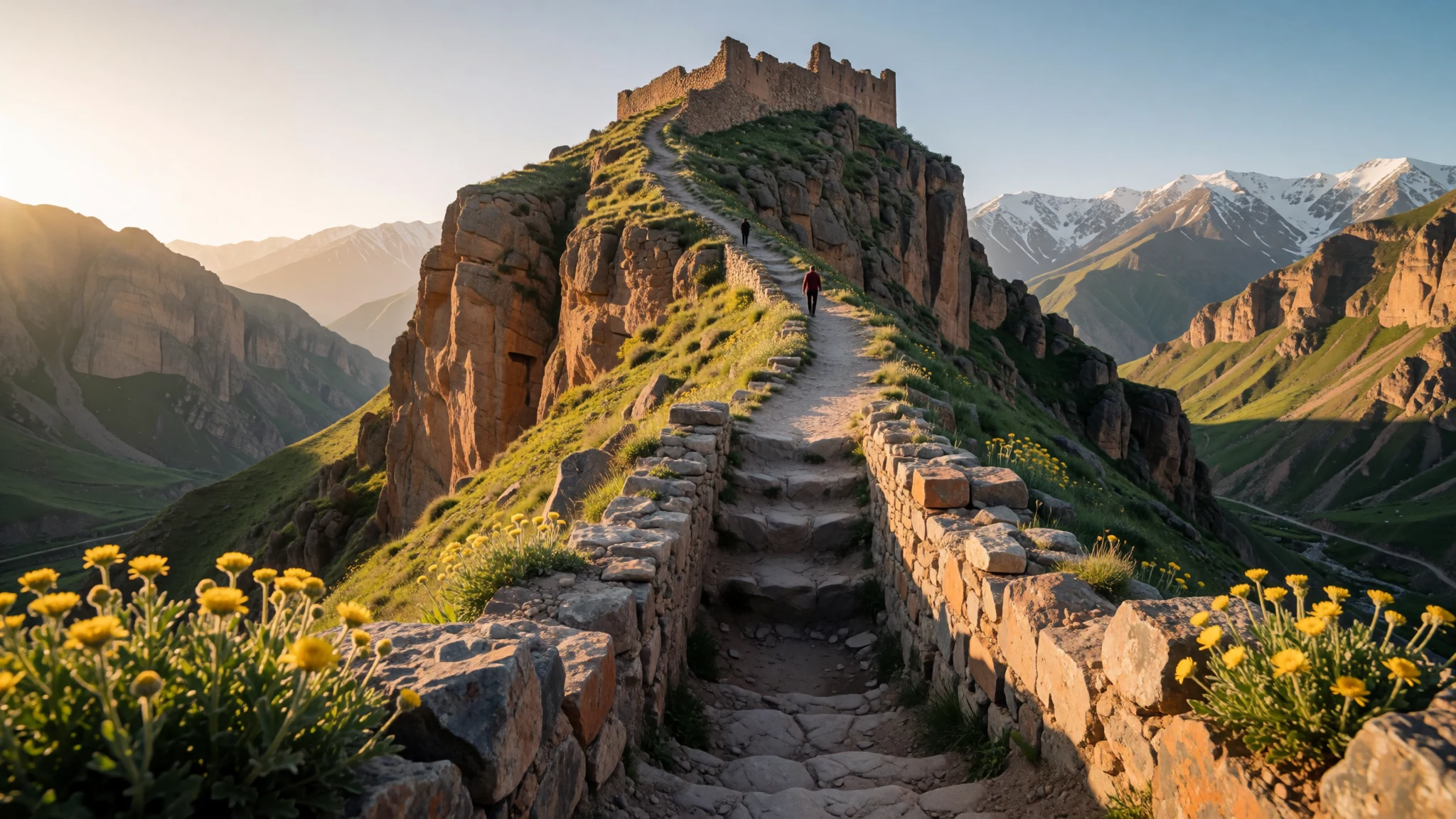
A ruined eagle's-nest fortress high in the Alborz, where a medieval state, a lost library and a long-lived legend all began.
The place
Alamut Castle is a ruined mountain fortress in Qazvin province, northern Iran, standing on a rocky ridge at 2131 metres and about 200 km from Tehran. The name is usually translated as 'Eagle's Nest', and the position fits: the crag looks over the Alamut region on the Caspian side of the Alborz range, with the village of Gazor Khan at its foot. Little is left standing. Visitors find broken walls, rock-cut rooms and foundations strung along the ridge, so the appeal lies in the setting, the climb and the history rather than in intact halls. Between 1090 and 1256 the castle served as headquarters of the Nizari Ismaili state, a scattered network of strongholds across Persia and Syria, each sitting in country that was mostly unfriendly. Later writers praised Alamut's gardens and its library, and imagined it as a place where thinkers of different schools could work and disagree; how much of that was reputation is hard to judge from the stones. The site is now a World Heritage property, listed together with several smaller associated fortifications in the surrounding valleys, which makes the whole region worth reading as one story rather than a single crag. Realistically it is a day trip from Qazvin or Tehran, or a night in a valley guesthouse. The climb is steep, the top is exposed to wind, and snow can close the approach in winter. Crowds stay modest except on Iranian holiday weekends, when the car park fills.
Its story
Alamut Castle's history starts with an eagle, at least in the telling. Around 840 the Justanid ruler of Daylam, Wahsudan ibn Marzuban, was out hunting when a bird landed on a high rock; he saw the military value of the spot and had a fortress built there. Local speech called it Aluh amukht, probably 'Eagle's Teaching', and the letters of that name add up, in the old alphabetic number system, to 483, the Islamic year in which the castle changed hands. That handover came in 1090, when the Ismaili missionary Hassan-i Sabbah took it and began the Alamut period of Nizari history. New names followed: supporters called it the Land of Good Fortune after an early Seljuk siege failed, while enemies preferred the Lock of Satan. Alamut outlasted Seljuk and Khwarazmian pressure, but not the Mongols. In 1256 Rukn al-Din Khurshah surrendered, and the invaders pulled the fortress apart and destroyed its library. Nizari forces retook it in 1275, a reminder that the Mongol campaign did not erase the community in one blow, but it fell again and by 1282 was held by a son of Hulegu Khan. After that it mattered only locally, passing between regional powers until it was left to decay. Later European stories of drugged young followers sent out as killers, which Marco Polo's travels helped spread, are better treated as legend than as record. Local belief also ties the castle to the mythical king Keyumars, probably a muddle with a later ruler of the same name.
What to see
- The castle ridge and summit ruins — Gazor Khan, Alamut region, Qazvin province
The ruins crown a narrow rock spur, reached by a steep stair climb that is hard going at altitude. Up top are fragments of wall, rock-cut chambers and foundations. Give it time to read the layout, and note how little flat ground there is. Wind is constant, so bring a layer.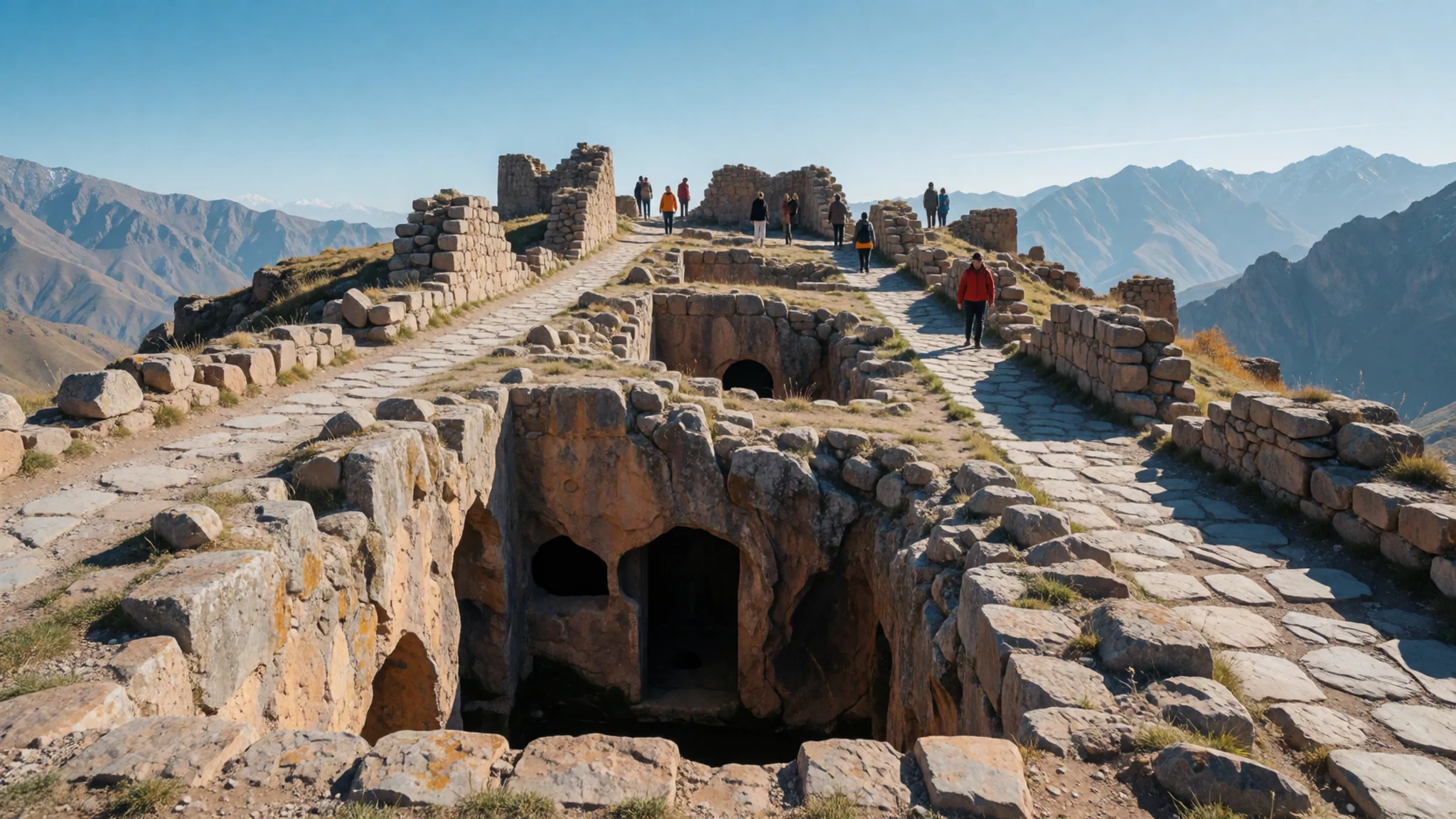
- The valley view from the top — Summit of Alamut Castle
The reason the site was chosen is clear from the summit: the ground falls away on several sides and the approaches can be watched for miles. Spring brings green slopes and fruit blossom lower down; autumn is clearer and drier. Haze and cloud can spoil the outlook, so allow a spare day if the weather matters.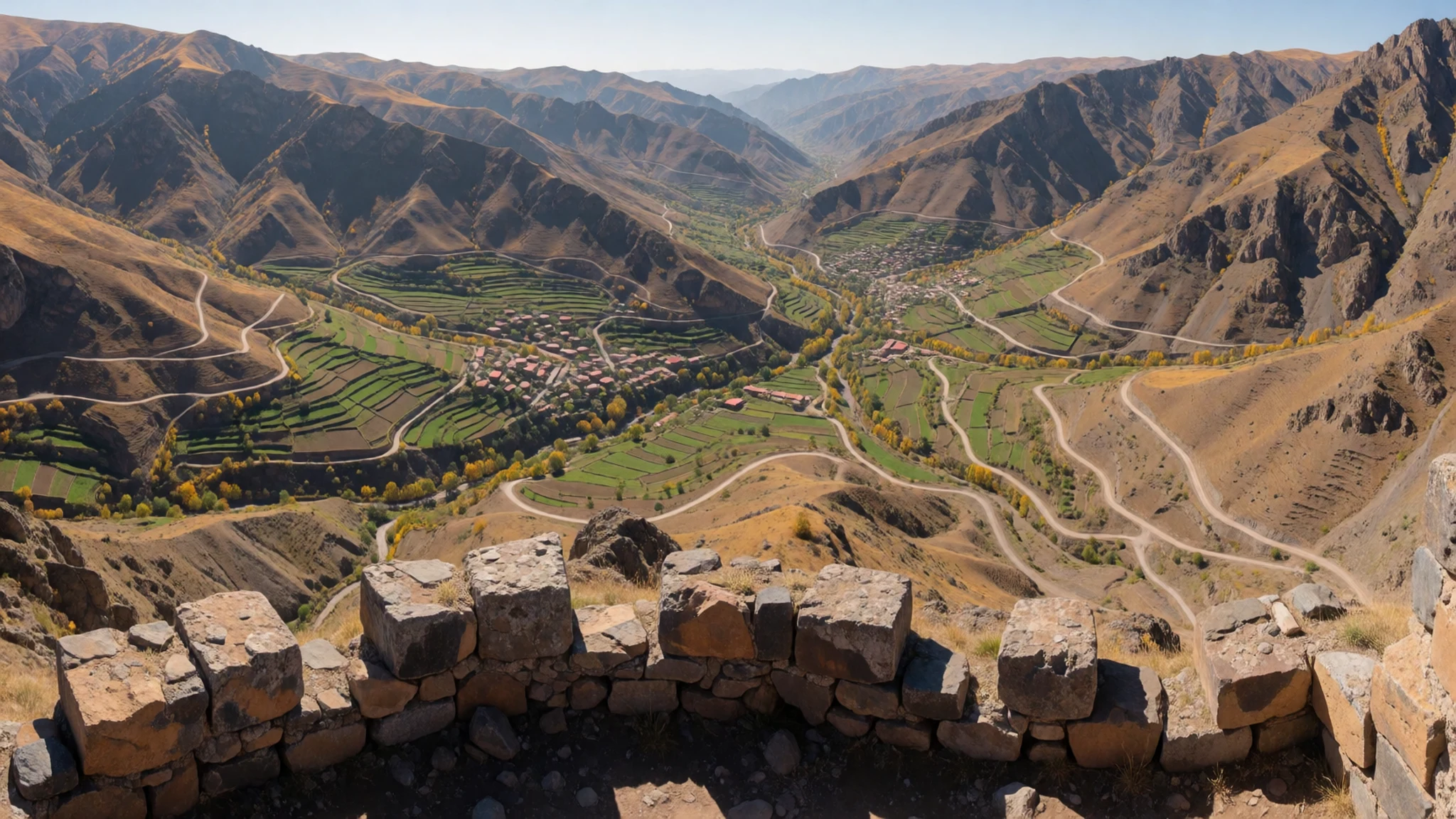
- Gazor Khan village and the guesthouses below the rock — Gazor Khan, below the castle
The village at the foot of the crag is where most visitors park, drink tea and decide whether to climb. Simple guesthouses and pensions here make an overnight stay easy, which lets you reach the ruins early before the weekend crowds arrive and look up at the rock in evening light.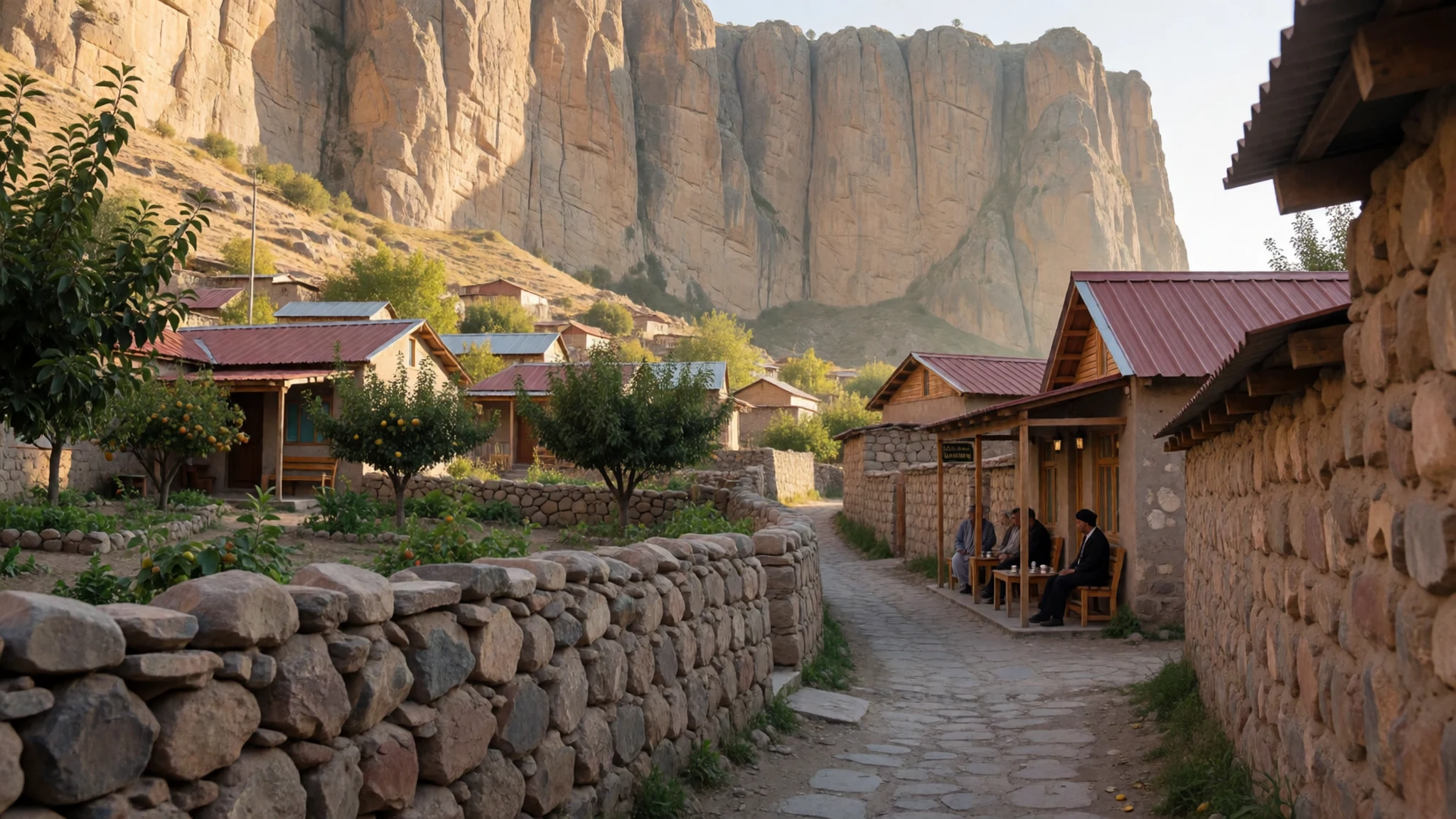
- Lambesar and the associated fortifications — Alamut valleys, Qazvin province
Lambesar is one of the smaller castles listed alongside Alamut as part of the wider Nizari network in these valleys. Visiting even one of them changes the picture, showing Alamut as the head of a chain of strongholds rather than a lone fortress. Ask locally about road conditions and access before setting off.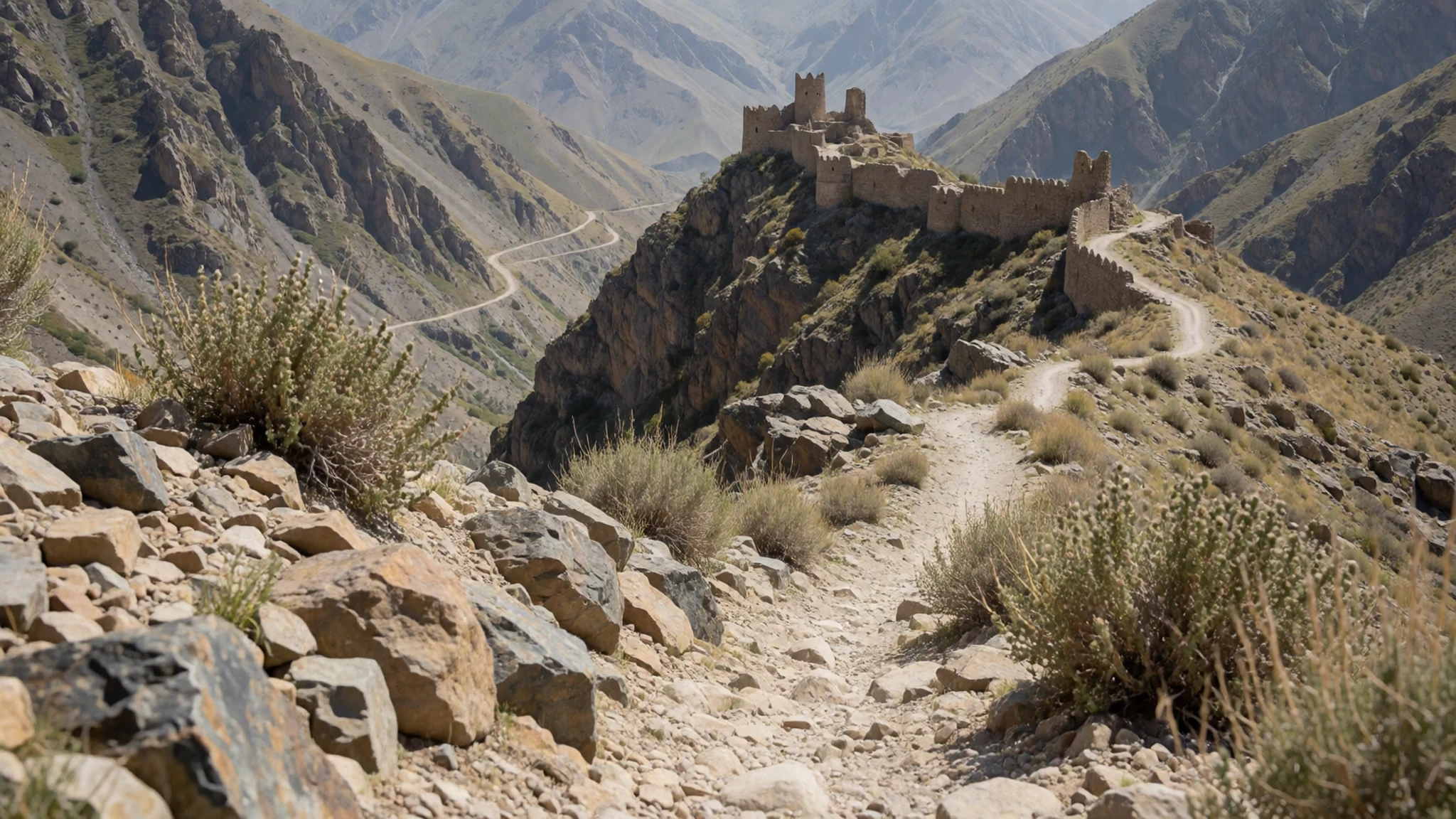
- Qazvin old city — Qazvin city
Qazvin is the usual base for reaching the castle and rewards an afternoon in itself. Wander the covered bazaar, the old caravanserai courtyards and the quiet back lanes, then set off for the mountains next morning. It is also where to stock up on cash, snacks and sweets for the trip.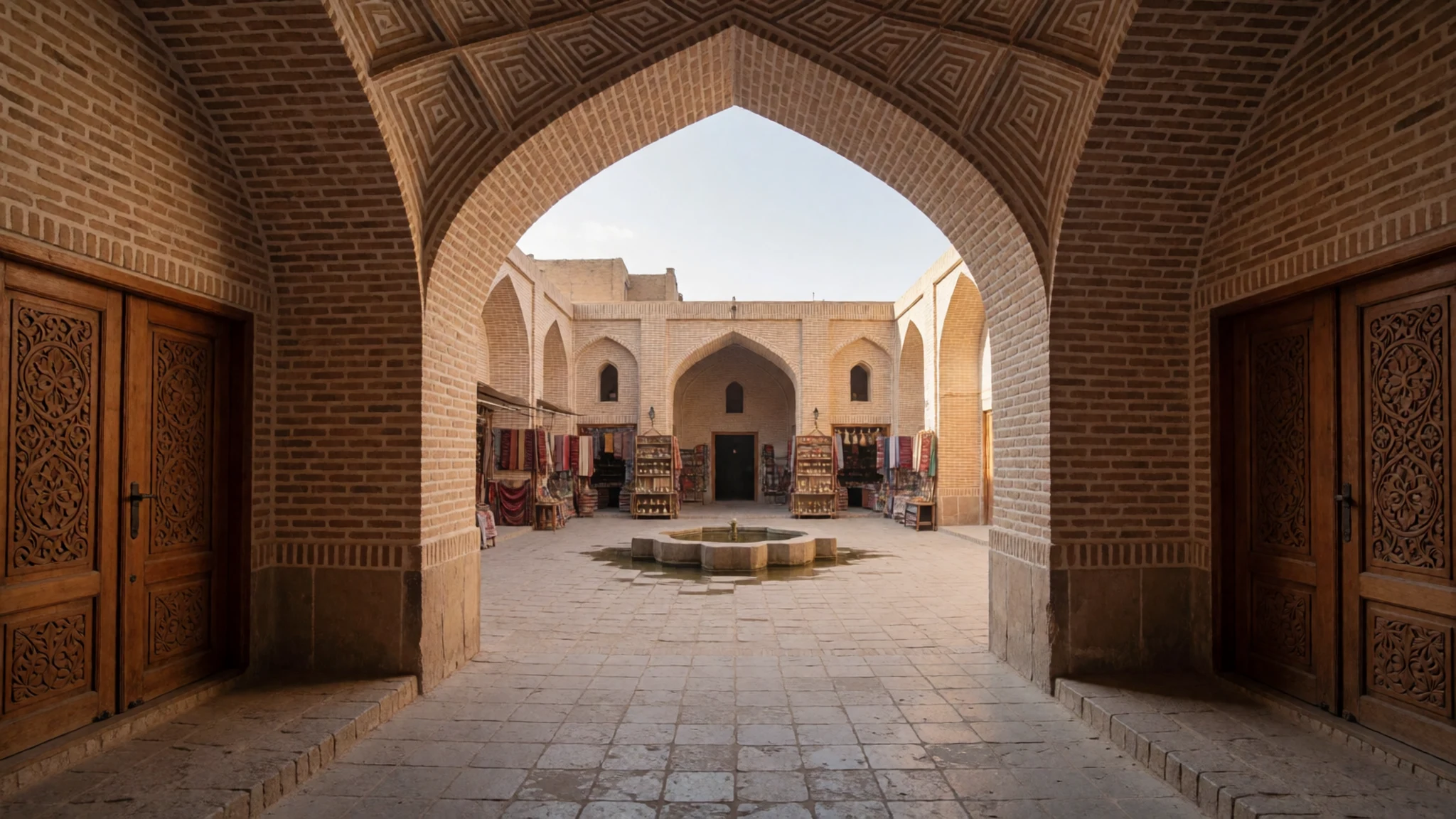
Culture
Alamut Castle belongs to the story of the Nizari Ismailis, a branch of Shia Islam whose medieval state was run from this ridge, and Iranians visit it as heritage, as legend and as a good mountain outing. Most visitors are Iranian families, students and walking groups, so the mood on the climb is sociable rather than hushed. The valley below is farming country with orchards, walnut trees and villages where hospitality is a habit. Expect to be offered tea, and expect a polite back-and-forth over refusals and payment, the convention Iranians call taarof; accept the tea, and pay for what you use. Persian is the language of the valley, a few greetings go a long way, and English is patchy outside Qazvin and Tehran. The popular 'assassin' reputation comes largely from hostile medieval accounts and later European retellings, and local guides tend to prefer talking about the library, the scholars and the engineering of the fort. Iranian teams have spent many years excavating and documenting the site, and the ruins are fragile, so the rule against climbing on walls or pocketing stones is worth taking seriously. Religion is part of daily life, so public behaviour is conservative, and couples tend to keep affection private. Ask permission before photographing local people, especially women and families, and keep to the worn paths so the fragile walls stay intact.
What to wear
Alamut Castle sits in rural Qazvin province, where traditional dress is now seen mostly on older villagers. Women's everyday outfits traditionally combine a loose headscarf, a long tunic and a patterned gathered skirt, often in cotton or wool, while men in the mountains favoured wool coats, felt and hand-knitted socks against the cold. Hand-woven and knitted woollens are still common as winter staples. Day to day, people now wear what they would in Tehran or Qazvin: for women a long loose coat or tunic over trousers with a headscarf, and for men trousers and shirts, with a padded jacket in winter. For visitors, the practical rules are clear. Women must cover their hair and wear a loose top that covers the hips and arms in public in Iran, and it is easiest to carry a light scarf that stays on in the wind. Men should avoid shorts and sleeveless tops. The castle itself is a climb on uneven stone steps, so wear sturdy trainers or walking shoes with grip, not sandals. At 2131 metres the weather turns quickly, so bring a windproof layer even in summer, a warm layer outside the warmest months, and sun protection. Winter needs boots, gloves and a proper coat.
What to eat
- Grilled trout — Roadside eateries and guesthouses in the Alamut valley
Trout from cold mountain streams is a common valley meal, usually grilled whole and served with rice, herbs and lemon. It suits a long walk well. Look for it at the simple roadside eateries and guesthouse kitchens in the valleys below the castle.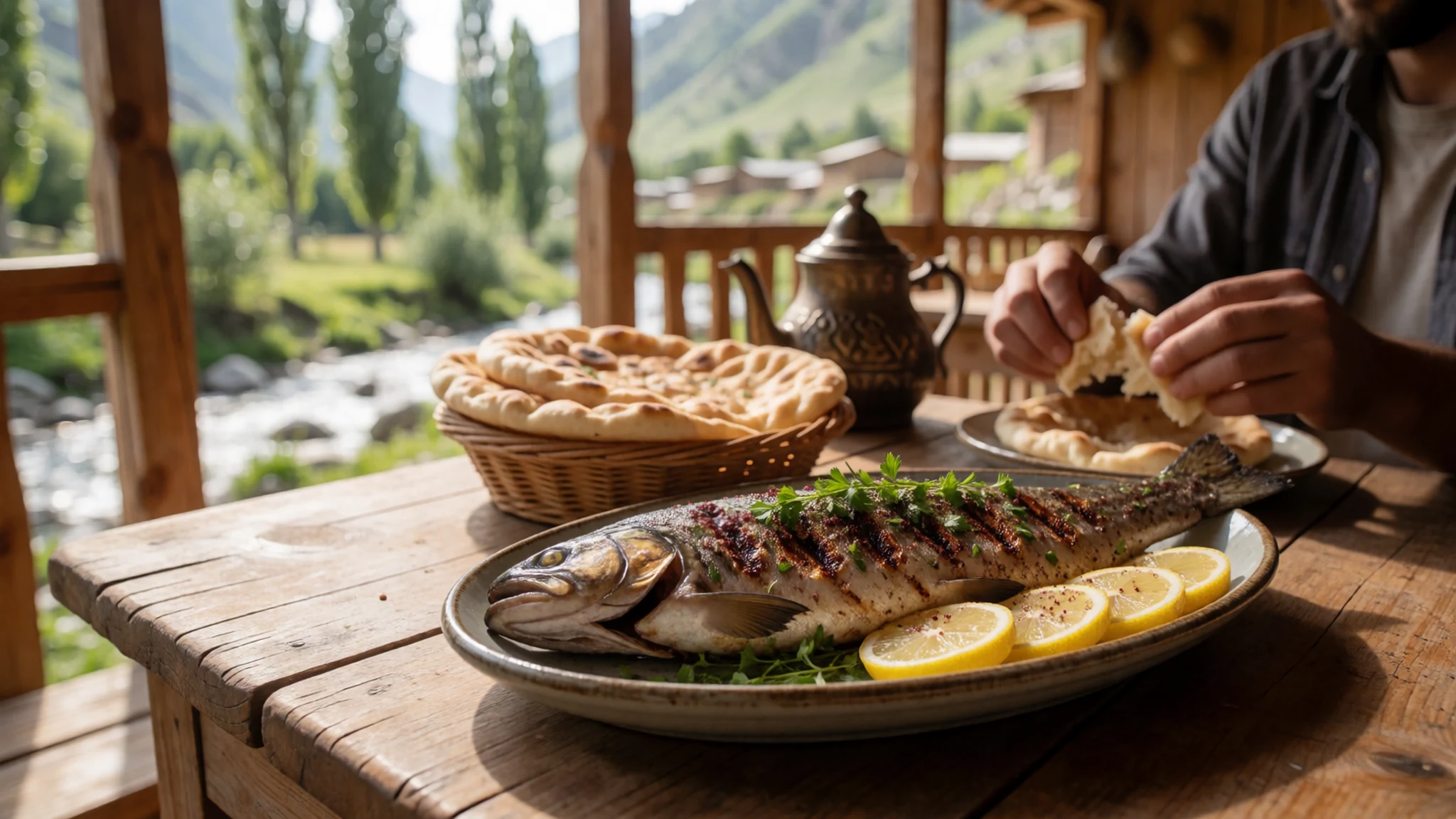
- Abgoosht (dizi) — Traditional eateries in Qazvin and larger villages
A slow-cooked stew of lamb, chickpeas and beans, served in two stages: first the broth with torn bread, then the mashed meat and pulses. Hearty, filling and good on a cold day. Traditional eateries in Qazvin and the larger valley villages often have it.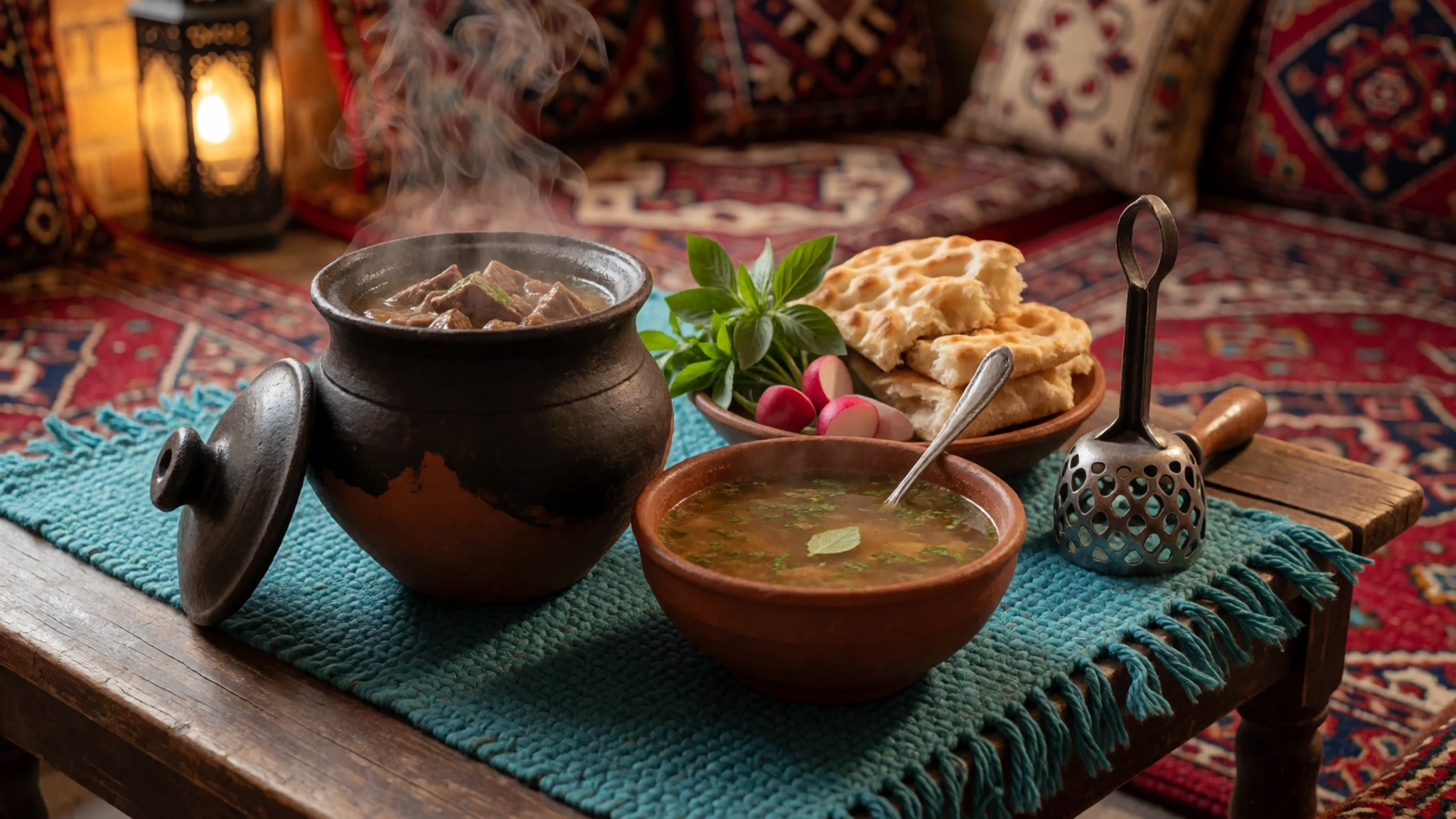
- Ash-e reshteh — Village cafés and family kitchens
A thick, herb-heavy soup of noodles, beans and greens, usually finished with dried mint and a sour whey topping. It is vegetarian-friendly and warming, and common in winter and early spring. Ask in village homes and simple cafés rather than expecting it everywhere. - Kebab koobideh — Kebab houses in Qazvin city
Minced lamb or beef pressed onto flat skewers, grilled over charcoal and served with rice, grilled tomato and flatbread. It is the dependable choice almost anywhere in Iran, and Qazvin has plenty of kebab houses for a meal before or after the mountains. - Qazvin baghlava — Sweet shops near Qazvin bazaar
Qazvin is known for its baghlava, a layered pastry with nuts, sugar and a touch of rosewater or cardamom, usually sold by the box. It travels well and makes a sensible gift or hiking snack. Look for sweet shops around the bazaar.
Plan it
Best time. May–June and September–October, when the mountain air is clear and the climb is comfortable. Summer afternoons can be hot on the ridge, and winter brings snow, ice and possible road closures, so check conditions locally first.
How long. 1–2
Getting there. Fly to Imam Khomeini International Airport near Tehran, then travel by road or rail to Qazvin. The last leg to Gazor Khan is by hired car or taxi into the mountains, usually arranged in Qazvin or Tehran. Allow several hours from Tehran each way.
Budget. mid
Tips
- Start early to climb in cooler air and beat weekend crowds
- Carry cash in rials, since cards from abroad generally do not work in Iran
- Bring water and snacks, as there is little on the ridge
- Wear shoes with proper grip; the steps are steep and uneven
- Book a valley guesthouse ahead if staying overnight in spring or autumn
Etiquette
- Women should carry a headscarf and wear a loose top; men should avoid shorts
- Ask before photographing local people
- Do not climb on the walls or remove stones
Nearby
Sources
- Wikidata Q4706020 (CC0)
- Wikipedia: Alamut Castle (rev 1382572226) (CC BY-SA 4.0)
- Wikivoyage: Alamut (CC BY-SA 4.0)
- Photo: Alamut Castle, Qazvin Province, Iran — Ninara (CC BY 2.5)
- Photo: Iran - Qazvin - Alamout Castle — Alireza Javaheri (CC BY 3.0)
- Photo: Assassin fortress of Alamut. Persian miniature — Basawan (Public domain)
- Photo: Alâ al Dîn Muhammad drugging his disciples, The Travels of Marco Polo (Public domain)
- Photo: Capture of Alamut (1256), Jami' al-tawarikh — Sayf al-Vâhidî (Public domain)
- Photo: Qazvin - Alamout Castle — Alireza Javaheri (CC BY 3.0)
- Photo: A pension under Alamut — Alen Ištoković (CC BY 3.0)
- Photo: Alamoot — Aliazizollahi (CC BY-SA 4.0)


