Bishapur
Bishapur, Iran
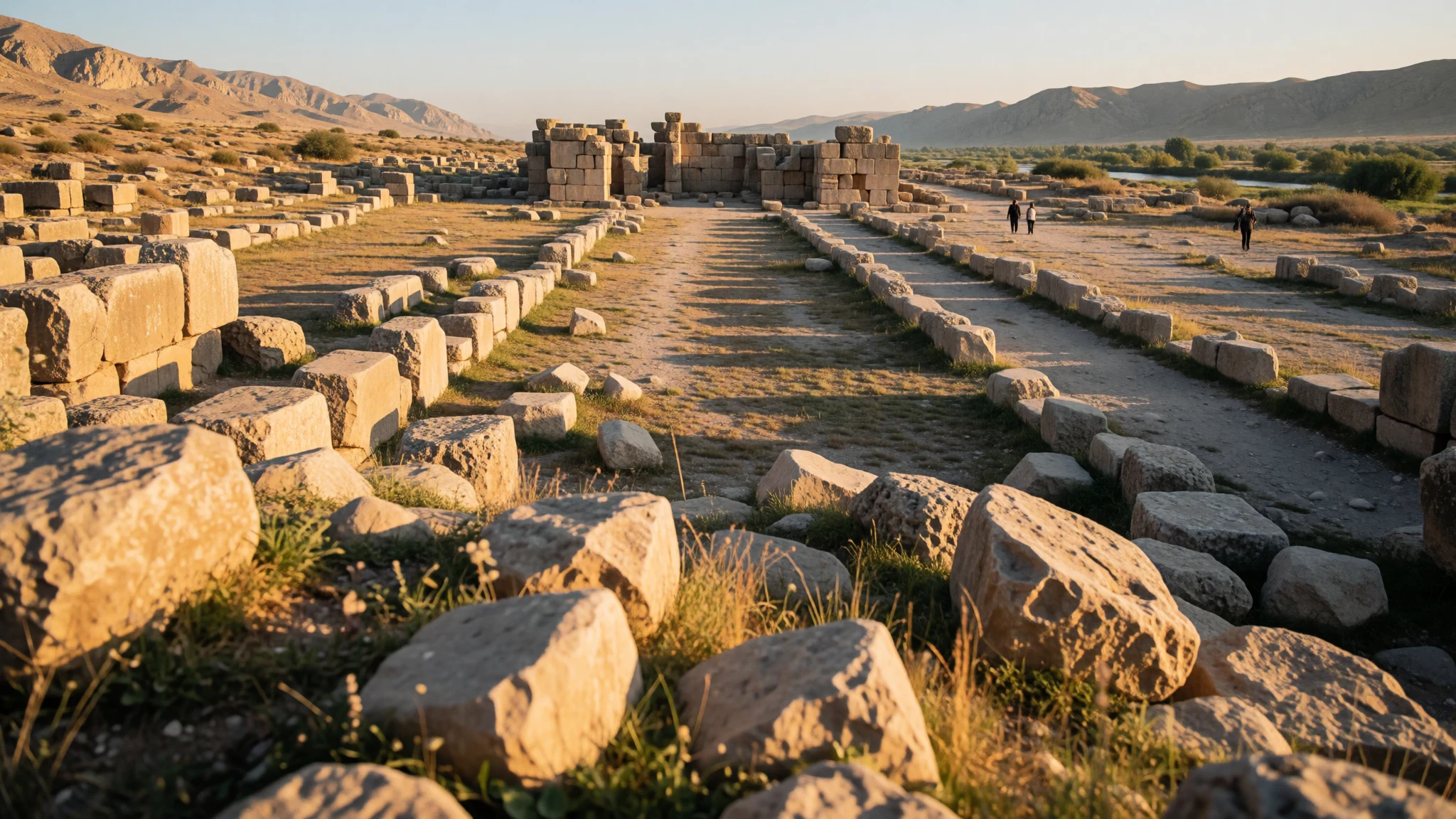
Explore the monumental ruins of Bishapur, a Sasanian capital in southwestern Iran showcasing unique Greco-Roman urban planning and dramatic rock reliefs.
The place
Bishapur stands as a monumental window into the ancient Sasanian Empire, situated in the verdant landscape of southwestern Iran near Kazerun. Spanning a considerable area of roughly two hundred hectares, this archaeological site reveals the ambition of an imperial capital designed to rival the greatest cities of antiquity. Unlike the winding, organic layouts typical of many ancient Near Eastern settlements, Bishapur was laid out on a precise rectangular grid system with two intersecting main axes dividing the urban space. This distinctive urban form reflects the direct influence of classical planning principles brought by foreign engineers and captive builders following imperial campaigns.
The setting combines rugged mountains with the fertile banks of the Shapur River, creating a dramatic backdrop for the remains of royal palaces, grand courtyards, and subterranean water reservoirs. The structural fabric demonstrates a sophisticated mastery of stone cutting, vaulted brickwork, and decorative stucco that once adorned the civic spaces. Walking through the archaeological zone reveals fragments of mosaic floors and stately column bases that hint at the former grandeur of the royal courts. Though centuries of conflict, shifting trade routes, and the eventual rise of nearby Kazerun led to the abandonment of the urban core, the surviving remains continue to convey the architectural confidence of a major imperial seat. Today, travellers journeying into this corner of Fars province encounter a quiet landscape where monumental history rests beneath the open sky, surrounded by dramatic cliffs and flowing water.
Its story
The history of Bishapur is inextricably bound to the military triumphs of the Sasanian sovereign Shapur I, who ordered the foundation of the settlement in the third century AD. According to historical accounts and monumental inscriptions, the city was established to commemorate a decisive victory over the Roman Empire, specifically celebrating the defeat and capture of Roman emperors. To construct his new capital, the king enlisted foreign architects and skilled craftspeople, incorporating classical urban grids into the Iranian plateau.
The settlement arose on the site of an older place known as Din-Della, which had roots stretching back through previous dynastic eras before suffering destruction during earlier conquests. Under Sasanian rule, the city flourished as an administrative heartland and the birthplace of subsequent royal rulers. It served as an active hub of political power, trade, and cultural exchange until the seismic shifts brought by the Islamic conquest of Persia in the seventh century. As regional power structures shifted and conflict damaged the infrastructure, the inhabitants gradually migrated toward neighbouring Kazerun, leaving the grand palaces and temples to quiet abandonment. Over the subsequent centuries, windblown earth and alluvial deposits slowly covered much of the street grid, preserving the architectural layout until modern archaeological excavations began uncovering the stone foundations, intricate mosaics, and monumental cliff carvings that now draw scholars and heritage travellers to the valley.
What to see
- The Anahita Temple — Central archaeological zone
Set deep into a sunken stone chamber below the surrounding ground level, this monumental water sanctuary is dedicated to the ancient divinity of fertility and water. Massive interlocking stone blocks without mortar form the walls, allowing water from nearby channels to flow through the sacred precinct in a sophisticated hydraulic system. - The Royal Ceremonial Hall — Palace precinct
This expansive architectural complex features large vaulted iwans and niches decorated with finely carved stucco motifs. It served as an important gathering space for royal audiences and court functions, displaying the sophisticated masonry and decorative arts characteristic of the height of the Sasanian imperial administration. - The Chowgan Valley Rock Reliefs — Chowgan Valley gorge
Carved directly into the sheer limestone cliffs of the adjacent gorge, a series of monumental rock panels depicts imperial triumphs, royal investitures, and submission scenes involving foreign armies. These dramatic carvings remain among the most significant visual records of imperial Sasanian propaganda. - The Citadel and Water Reservoirs — Upper ridge overlooking the ruins
Perched on the high ground overlooking the ancient city grid, the remains of the defensive fort include deep, rock-cut cisterns designed to secure a reliable water supply during times of siege. The elevated position offers comprehensive views across the entire archaeological park and the surrounding river valley.
Culture
Bishapur exists within the cultural landscape of the Fars province, a region steeped in Persian poetry, folklore, and craft traditions that bridge ancient heritage with contemporary Iranian life. Local communities near the archaeological site maintain strong traditions of hospitality, welcoming visitors with tea and traditional storytelling connected to the surrounding mountains and river valleys. Traditional music, carpet weaving, and regional culinary arts form an integral part of daily life in nearby towns like Kazerun, where families gather during seasonal celebrations and national holidays. The heritage of the Sasanian era is a point of regional pride, often referenced in local crafts, architecture, and educational curricula across the province. When visiting sacred or historical heritage locations in Iran, dress modestly with loose-fitting clothing that covers arms and legs, and always remove footwear when entering designated prayer spaces or carpeted interiors.
What to wear
In the towns and rural areas surrounding Bishapur, traditional attire reflects practical adaptation to the warm southern climate and long-standing cultural norms of the Fars province. Traditional garments often feature lightweight woven textiles, embroidered vests, and locally produced cotton fabrics designed for comfort during field work and travel across rugged terrain. Today, residents wear modern clothing, with men typically dressed in trousers and shirts, while women wear standard Iranian modest dress consisting of a manteau or tunic paired with trousers and a headscarf. For travellers exploring the open-air archaeological ruins of Bishapur, practical attire is essential. Bring comfortable walking shoes suitable for uneven stone surfaces, a wide-brimmed hat, and breathable layers to protect against the intense regional sun. Modest clothing that covers the shoulders and legs is required throughout public spaces in Iran, and carrying a lightweight scarf is recommended for women.
What to eat
- Kazeruni Citrus Rice Dishes — Local eateries and family kitchens in nearby Kazerun
Fragrant basmati rice infused with local bitter orange peel, saffron, and tender pieces of chicken or lamb, reflecting the abundant citrus orchards found throughout the surrounding district. - Ghormeh Sabzi — Traditional restaurants across Fars province
A slow-simmered herb stew prepared with parsley, coriander, fenugreek, kidney beans, and dried limes, cooked alongside tender chunks of lamb for a deep, aromatic flavour profile. - Ash-e Kardeh — Village teahouses and regional markets
A traditional wild-herb soup unique to the southern Zagros mountain communities, prepared with local fermented greens and grains to create a warming, tart broth. - Kebab-e Koobideh — Traditional kebab houses throughout the region
Skewers of seasoned minced lamb and beef grilled over hot charcoal, served alongside buttered saffron rice, grilled tomatoes, and fresh flatbread.
Plan it
Best time. March to April for mild, pleasant weather and blooming landscapes, or October to November when autumn temperatures cool down; avoid the intense summer heat from June to August.
How long. 1–2
Getting there. Fly into Shiraz International Airport, then arrange a private taxi or rental car for the drive west toward Kazerun and the archaeological site of Bishapur.
Budget. mid
Tips
- Arrive early in the morning to explore the ruins before the midday sun peaks.
- Hire a local guide in Kazerun to fully appreciate the inscriptions and reliefs.
- Carry sufficient cash for local transport and food, as card machines are rarely available for travellers.
- Bring plenty of drinking water, as facilities within the archaeological park are very limited.
Etiquette
- Dress modestly in loose clothing covering arms and legs throughout your visit.
- Ask permission before photographing local residents in nearby villages.
- Respect all archaeological barriers and refrain from touching carved stone reliefs.
Nearby
Sources
- Wikidata Q477898 (CC0)
- Wikipedia (rev 1378185298) (CC-BY-SA 4.0)
- Wikivoyage (CC BY-SA 4.0)