Anzali Lagoon
Anzali Lagoon, Iran
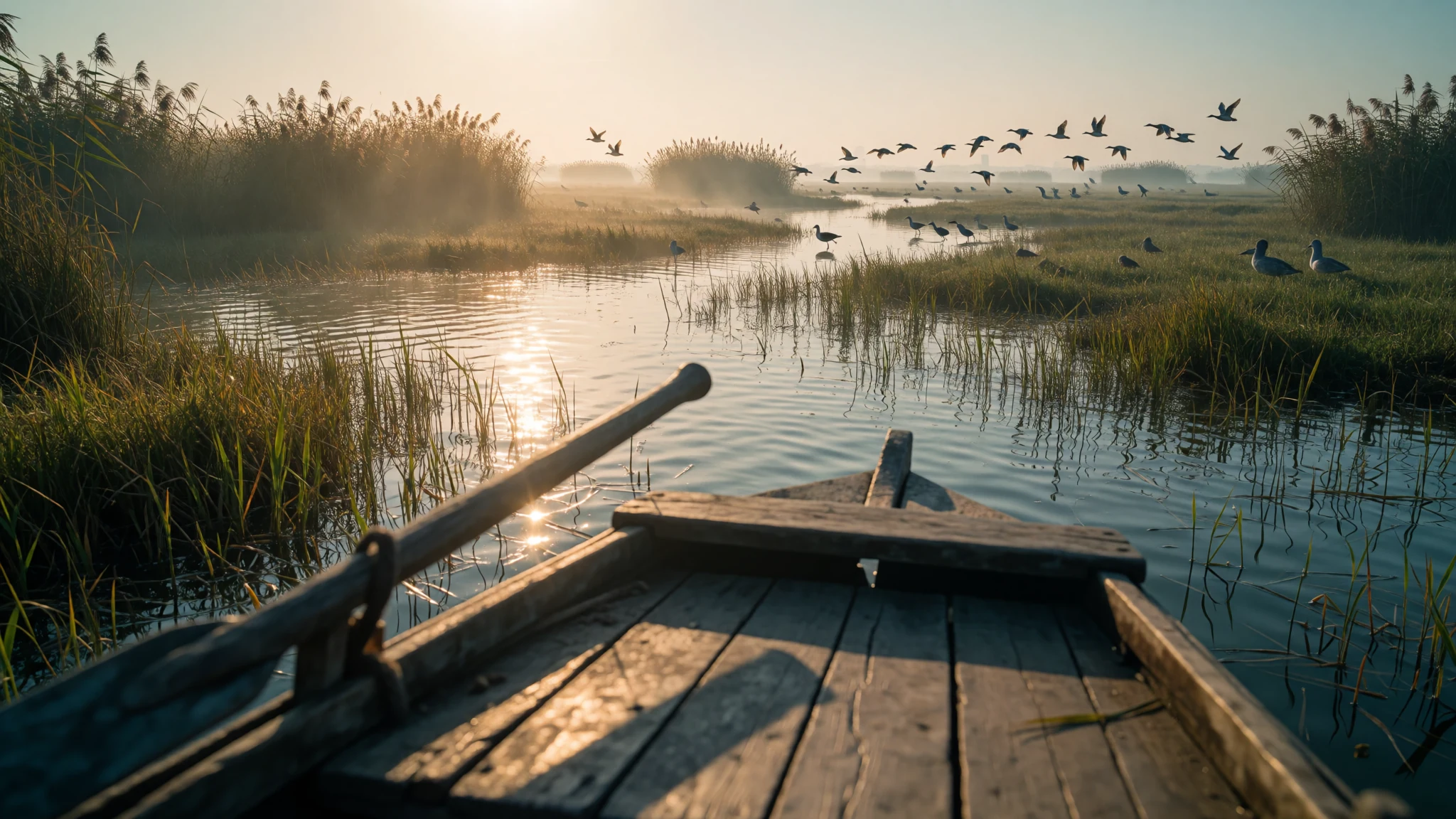
Visit Anzali Lagoon to witness a fragile international wetland where quiet waters meet rich bird life along the Caspian shore.
The place
Anzali Lagoon sits as a remarkable coastal liman in the northern Iranian province of Gilan, right along the edge of the Caspian Sea near the port city of Bandar-e Anzali. The wetland environment physically splits the town into two distinct halves, creating a watery maze where land and sea blur together. Because of its specific geographical position, the area experiences high levels of humidity and rainfall that set it apart from most other wetlands across the country, though water levels fluctuate considerably depending on seasonal rains and dry spells. The wider ecosystem encompasses protected zones such as the Selke Wildlife Refuge and the Siahkesheem Marsh, providing crucial habitats for a great variety of wildlife.
Recognised internationally for its ecological importance, Anzali Lagoon earned protection under the Ramsar Convention. Yet this watery expanse faces serious environmental pressures. Urban waste and industrial runoff from nearby settlements have accumulated in the basin, threatening the survival of numerous animal species and dozens of resident and migratory birds. Local authorities and conservationists continue to grapple with how to balance regional development plans with the preservation of this delicate coastal habitat. Travellers arriving here find a landscape of quiet reed beds and floating vegetation, framed by the grey-blue expanse of the Caspian Sea and the damp, fertile air of the northern coastal plain.
Its story
The environmental history of Anzali Lagoon is one of continuous physical transformation, shaped by shifting sea levels, changing upstream irrigation practices, and human intervention over generations. Historical studies show that the lagoon possessed significantly higher water salinity during the nineteenth and early twentieth centuries than it does today. Over the decades following the nineteen-thirties, the overall surface area of the wetland shrank dramatically, contracting to a fraction of its former expanse due to siltation, land reclamation, and changing water flows from tributary streams.
More recently, environmental dynamics have shifted again. Rising water levels in the broader Caspian basin have increased the interchange of water between the sea and the lagoon, while upstream agricultural irrigation has altered the balance of salt transport in incoming freshwater streams. This tug-of-war between fresh river inputs and brackish sea surges creates a gradient of salinity, with fresh waters dominating near tributary mouths and brackish conditions prevailing closer to the main harbour opening.
Despite ongoing ecological challenges, the wetland remains a notable destination for naturalists and bird watchers who come to observe the seasonal movements of waterfowl. Formal recognition arrived on twenty-first December nineteen seventy-five, when the site was officially registered under the Ramsar Convention on Wetlands. This designation placed international attention on the lagoon's biological richness, underscoring its dual identity as a fragile natural sanctuary and a heavily impacted coastal waterway.
What to see
- Selke Wildlife Refuge — Southern Anzali Lagoon
Located along the southern fringes of Anzali Lagoon, this protected sanctuary offers a quiet refuge for waterfowl and wading birds. Visitors can observe herons, egrets, and migratory ducks from designated viewing points while taking care not to disturb the sensitive nesting grounds nestled among the dense reed beds and flooded meadows.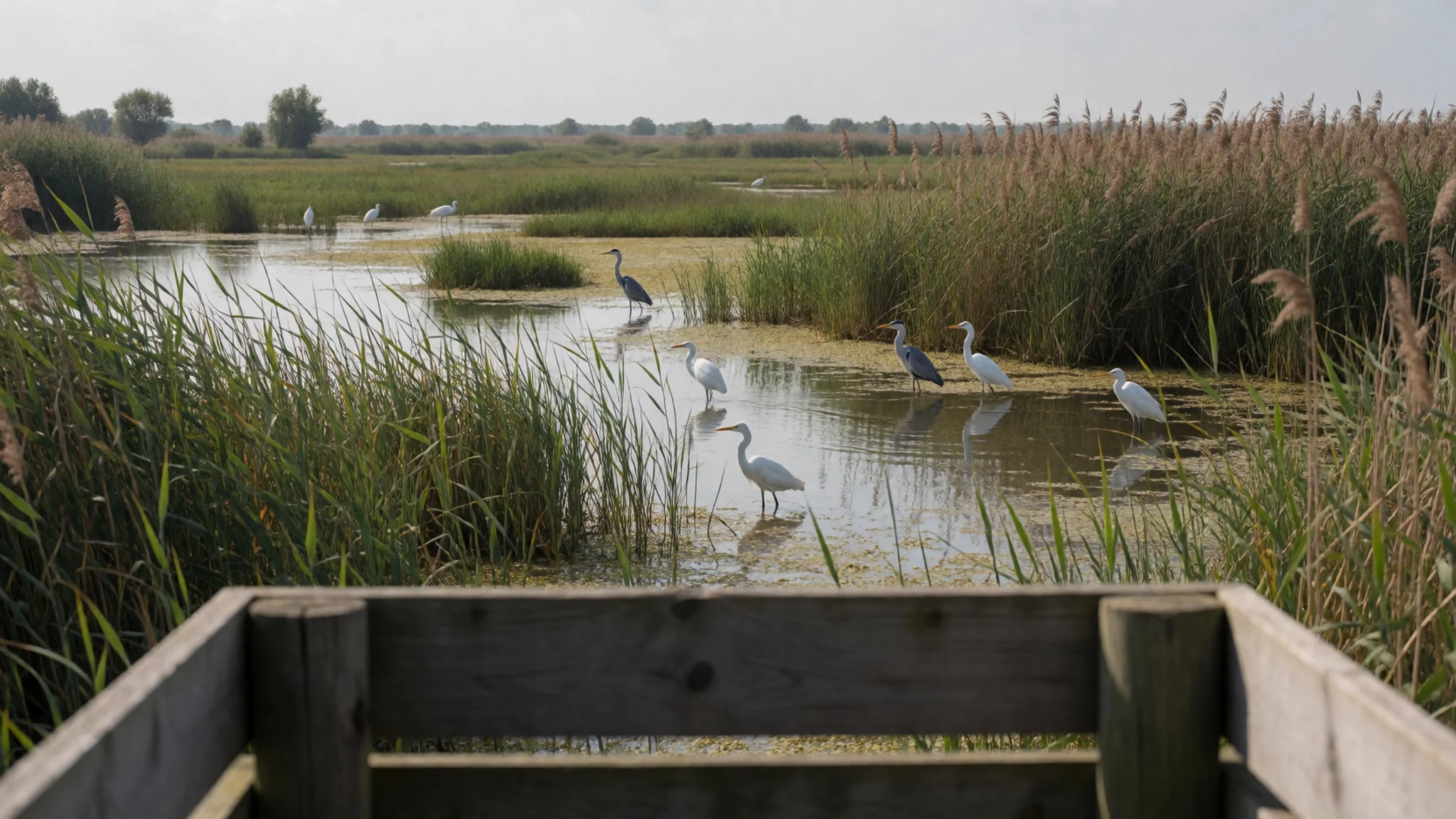
- Siahkesheem Marsh — Western Anzali Lagoon
This ecological reserve forms an integral part of the wider wetland system, characterised by shallow waters choked with aquatic plants and bordered by damp lowland forests. It serves as an essential breeding ground for diverse fish and bird populations, making it a focal point for ecological observation and conservation studies in the province.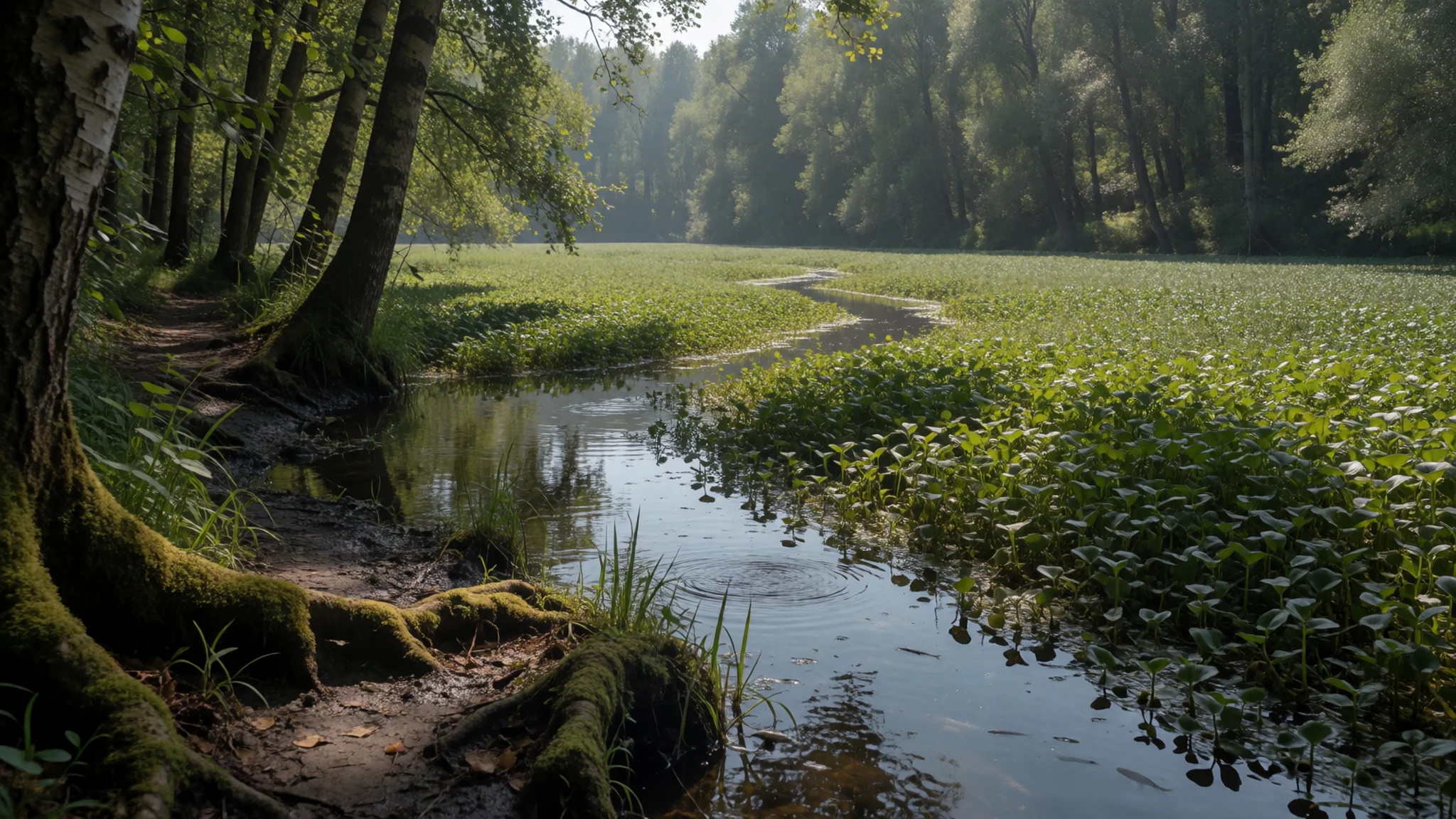
- Bandar-e Anzali Harbour Front — Bandar-e Anzali
The bustling port area where the lagoon meets the open waters of the Caspian Sea provides a lively contrast to the quiet reed channels. Travellers can watch local fishing boats navigate the brackish currents, observe daily maritime commerce, and see how the coastal waterway physically divides the northern port city into two distinct halves.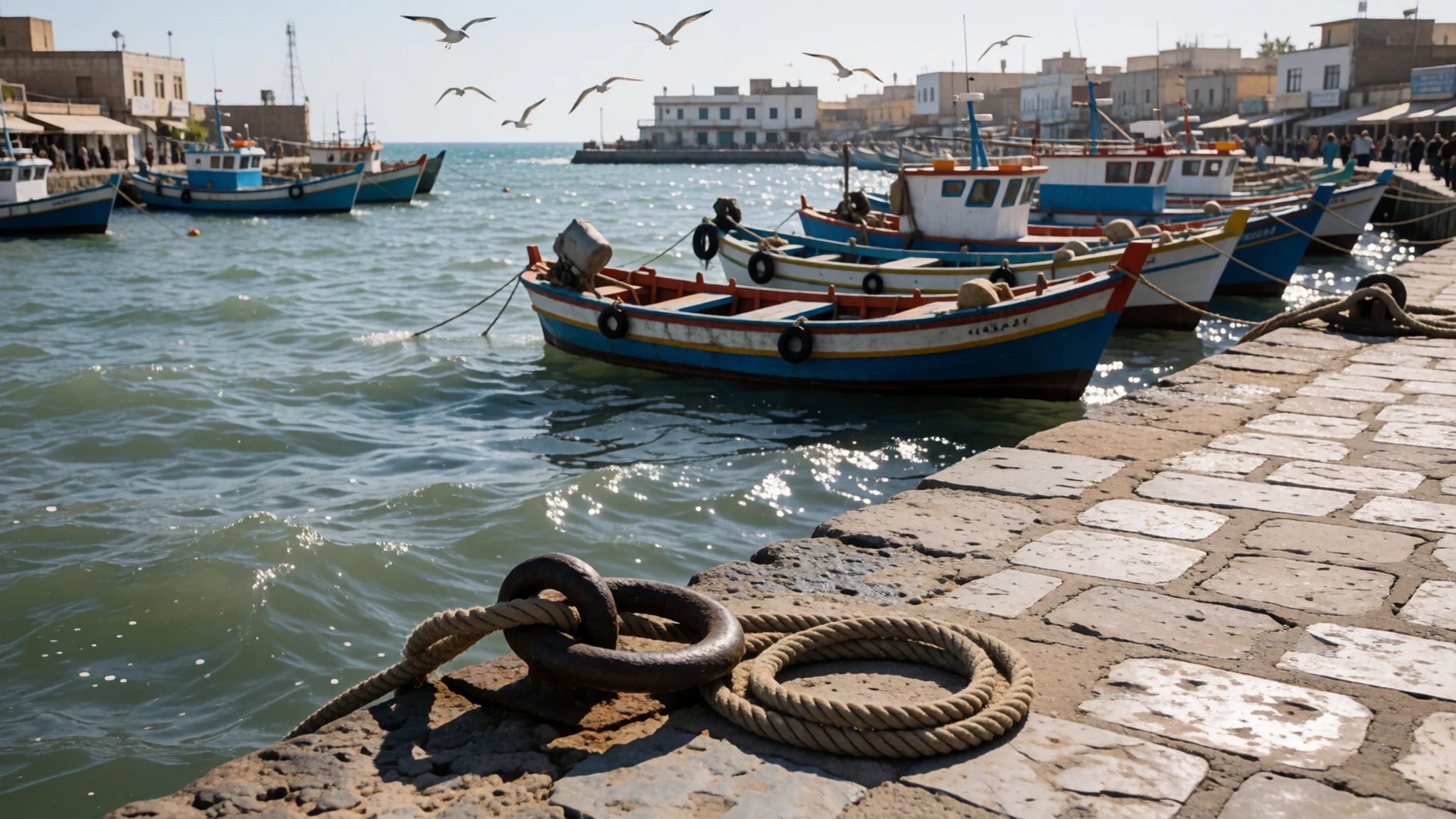
- Lagoon Island Settlements — Central Lagoon Waters
Scattered across the shallow waters of Anzali Lagoon are small islands where traditional local houses stand on elevated foundations. These unique waterfront dwellings offer a glimpse into a distinct vernacular architecture adapted to high humidity, seasonal flooding, and a lifestyle intimately connected to the surrounding wetland environment.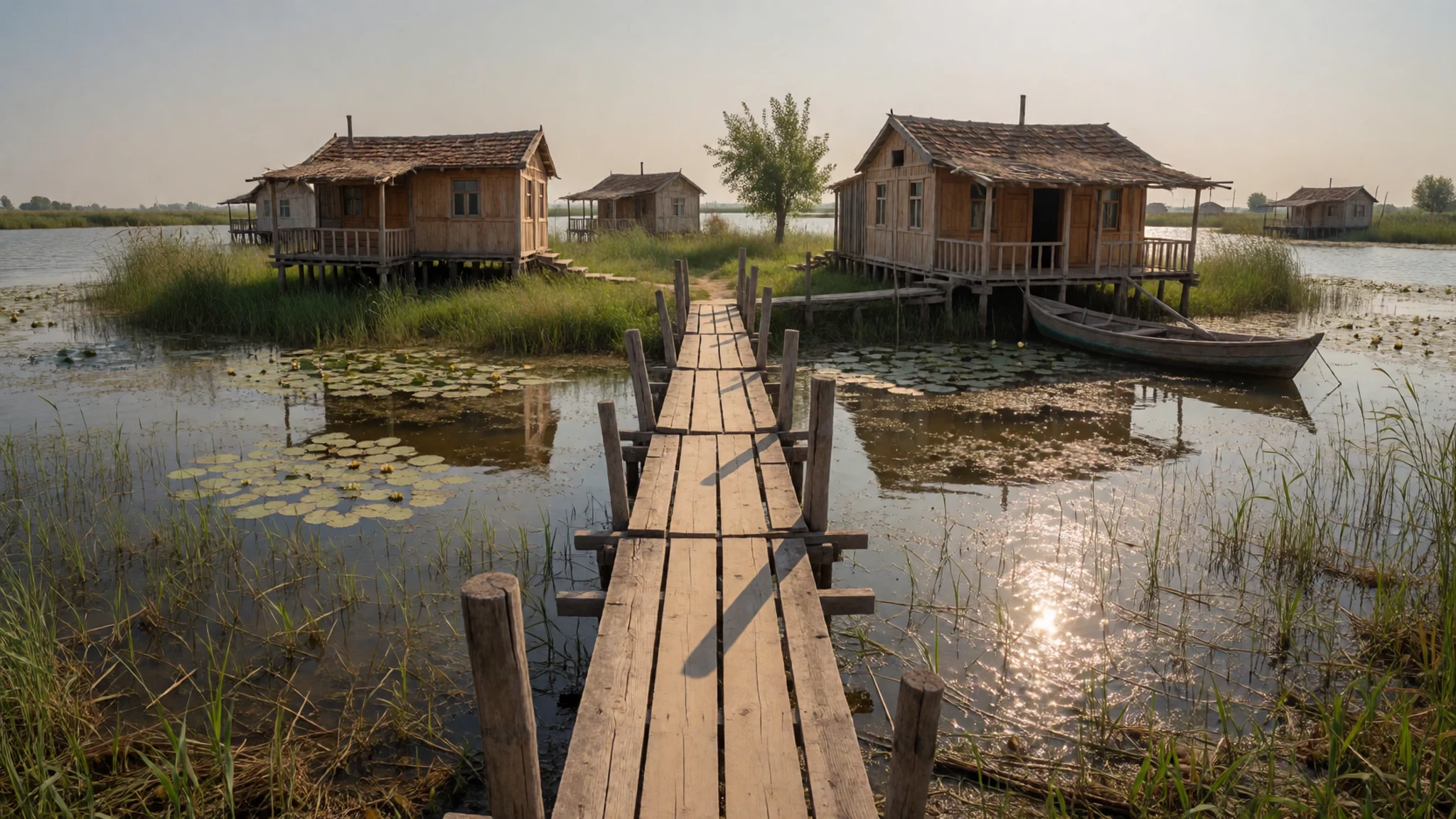
Culture
At Anzali Lagoon and across the surrounding province of Gilan, visitors encounter a deeply hospitable culture rooted in regional traditions and warm social customs. While international media often portrays Iran through a tense political lens, ordinary Iranians are famously welcoming, generous, and genuinely curious about travellers from other lands. Conversations over tea are common, and guests are treated with immense care and respect. Persian etiquette places a high value on politeness; locals use honorifics such as Aghaye for men and Khanoome for women, frequently employing plural verbs and pronouns to show deference. When greeting, people often raise a hand to shake or offer a warm hug, accompanied by the welcoming phrase Kheili Khosh Amadid. At the same time, society retains a degree of insularity, and outsiders should remain mindful of local sensitivities regarding photography and political discussions. If you are male, avoid initiating a handshake with a woman unless she offers her hand first.
What to wear
Around Anzali Lagoon and the humid northern province of Gilan, traditional clothing reflects both practicality and regional heritage. Historically, communities living near the Caspian Sea wore loose, lightweight garments suited to heavy rainfall and subtropical humidity, utilising local textiles and natural fibres. Today, urban residents in nearby Bandar-e Anzali dress in standard contemporary Iranian styles, with men wearing trousers and shirts, while women wear trousers or skirts paired with coats or tunics, accompanied by a headscarf. For visitors exploring the wetland, clothing should balance local modesty standards with comfort in a damp, humid climate. Lightweight, breathable fabrics such as cotton work best for warm days, while a waterproof layer is essential given the region's frequent rainfall. Women must observe national dress codes by wearing a headscarf, loose trousers, and a tunic or coat that covers the arms and hips. Men should wear full-length trousers rather than shorts. Sturdy walking shoes or sandals are recommended for navigating damp paths and boat docks around the lagoon.
What to eat
- Mirza Ghasemi — Local roadside tea houses and traditional restaurants in Gilan province
A smoky Gilani specialty made from roasted aubergines cooked with garlic, tomatoes, and eggs, seasoned with turmeric and olive oil. It is typically served warm or at room temperature with flatbread, and can be found in traditional eateries across Bandar-e Anzali.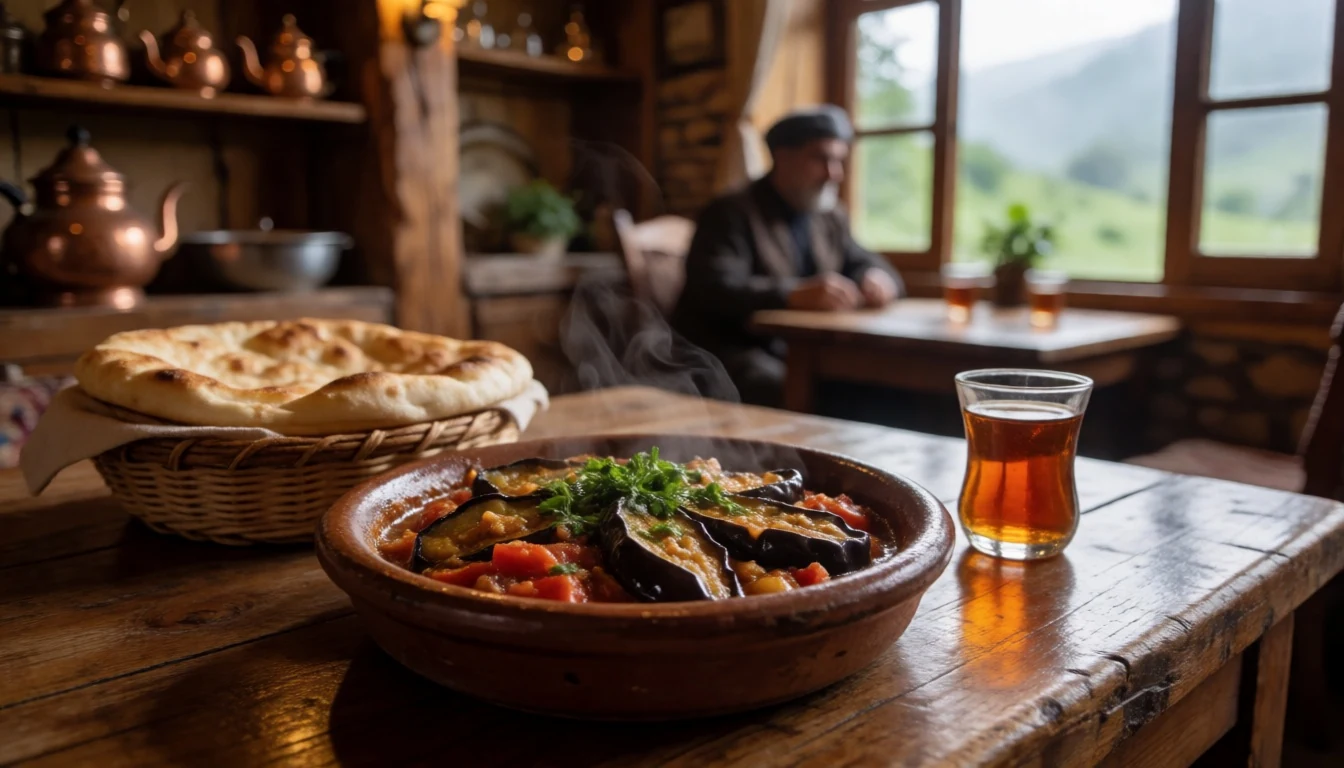
- Baghali Ghatogh — Traditional eateries near the Caspian coast
A comforting northern stew featuring regional butter beans cooked with fresh dill, garlic, and turmeric, simmered until tender and finished with a gently poached egg. It is a staple dish served alongside savoury Persian rice in family-run restaurants throughout the coastal region.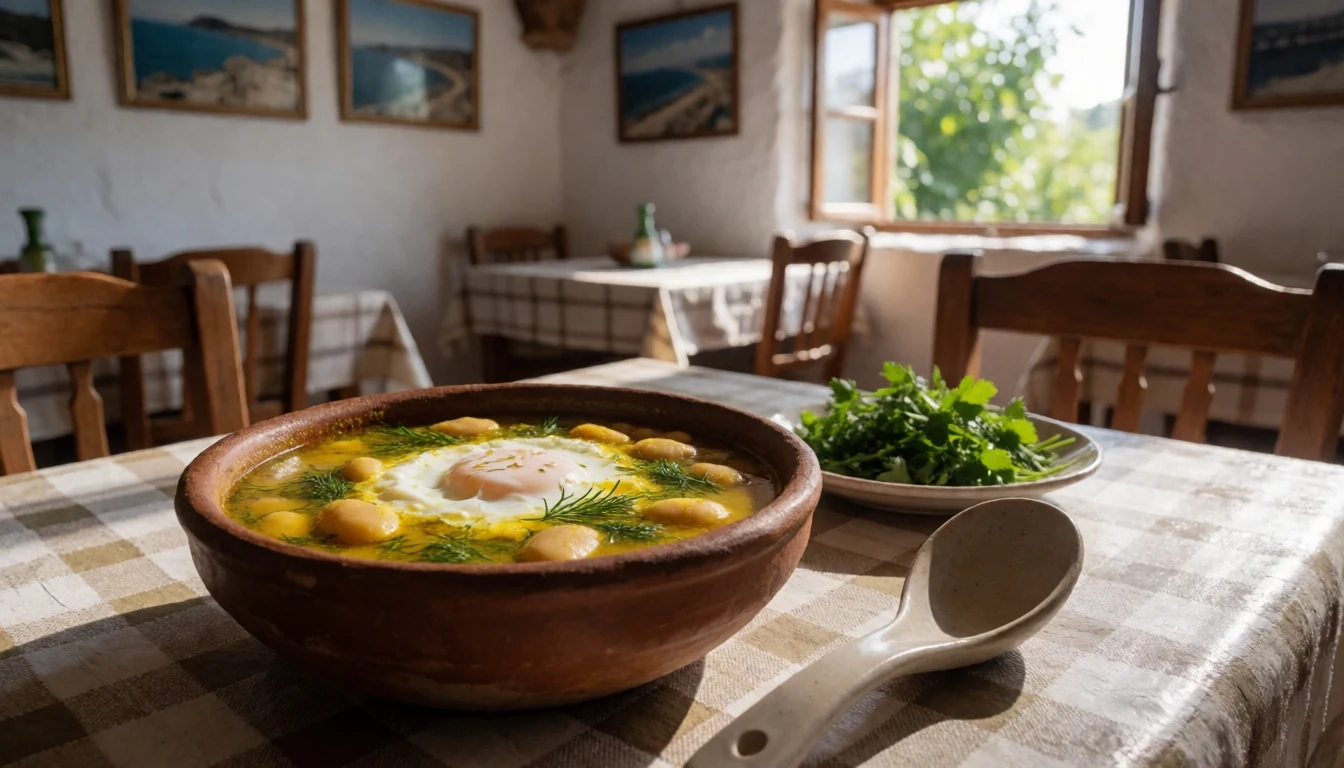
- Fresh Caspian Fish — Seafood markets and waterfront restaurants in Bandar-e Anzali
Given its proximity to the sea and the lagoon, local menus heavily feature freshly caught fish such as whitefish or mullet. These are often stuffed with a fragrant herb, walnut, and pomegranate paste before being baked or fried, available in seafood spots near the harbour. - Zeytoon Parvardeh — Local food stalls, markets, and restaurants across Gilan
A renowned Gilani accompaniment made from green olives marinated in a rich paste of crushed walnuts, pomegranate molasses, garlic, and wild mountain herbs. It is served cold as a starter or side dish at virtually every meal in the province. - Fesenjan — Traditional restaurants and family dining tables across northern Iran
A rich and tangy Persian stew prepared by simmering poultry in a thick sauce made from ground walnuts and tart pomegranate paste. Though enjoyed nationwide, northern preparations take special pride in the local quality of walnuts and pomegranate orchards.
Plan it
Best time. Spring (March to April) and autumn (October to November) offer the most pleasant weather for exploring Anzali Lagoon, avoiding the heavy summer humidity and winter rains.
How long. 2–3
Getting there. Fly into Tehran, then take a scenic bus or private taxi across the Alborz mountains toward Bandar-e Anzali on the Caspian coast (about 5 to 6 hours).
Budget. mid
Tips
- Hire a local boatman with a licensed guide to navigate the inner reed channels safely.
- Bring a waterproof jacket and dry bags for cameras, as humidity and sudden rain are common.
- Carry sufficient Iranian Rial in cash, as international credit cards are not accepted locally.
- Respect local environmental guidelines and avoid littering within the protected wetland boundaries.
Etiquette
- Always accept offered tea and food graciously, as refusing hospitality is considered impolite.
- Dress modestly according to national guidelines, keeping arms and legs covered in public spaces.
Nearby
Sources
- Wikidata Q4778433 (CC0)
- Wikipedia Anzali Lagoon (CC-BY-SA 4.0)
- Wikivoyage Iran (CC-BY-SA 4.0)