Keelung
Keelung, Taiwan
Keelung is Taiwan's rainy northern port, where a working fish dock, old forts and a famous night market sit within a short ride of Taipei.
The place
Keelung sits at the northern tip of Taiwan, a harbour city of about 359,000 people squeezed between steep green hills and the sea. The centre lies only about ten metres above sea level, and the mountains that close it in to the east, west and south explain both its tightly stacked streets and its reputation for weather. Its nickname is the Rainy Port, and drizzle can turn up in any month. The deep, sheltered water on the northern side made the bay a natural landing place long before container cranes arrived, and ships still shape the skyline, with terminals, fish docks and a vessel-traffic tower along the waterfront. Keelung belongs to the same urban belt as Taipei and New Taipei, so it works as an easy day out from the capital, yet it feels like a different town: salty, working, a little weathered in places, and unbothered about it. Mornings belong to the fish market and the harbour edge. Evenings belong to the lanes around the night market, where eating is the whole point of going. The name is said roughly 'kee-lung' (Chinese: 基隆, Jīlóng), and older maps and signs may spell it Chilung or Jilong. The city became a first-level administrative unit in 2018, a change that mattered more to officials than to anyone walking the waterfront. Visitors who come only for a quick lunch miss the parks on the headlands, the coastal rock formations and the old defences, which are best seen in the clearer spells between showers.
Its story
Keelung's recorded story begins with the Ketagalan, the indigenous people who lived around this bay before any European ship arrived. In the 1620s the Spanish, working from Manila, built a fort here called San Salvador de Quelung, an outpost meant to give their trade a foothold in the north of the island. The settlers who came with it were a mixed lot: Chinese traders from Fujian, Japanese Christians, Filipinos and people from Mexico who had crossed the Pacific by galleon to Manila first. From 1642 the Dutch East India Company took the site, made the fort smaller and renamed it, and Dutch control lasted, with a short gap, until 1668. Afterwards the harbour passed to the Qing dynasty, and its position made it a target again in the nineteenth century, when fighting involving Chinese and European forces reached Keelung during the First Opium War and the Sino-French War of the 1880s. After the First Sino-Japanese War, Taiwan was ceded to Japan in 1895, and under Japanese rule the city was known as Kirun. It joined the Republic of China's Taiwan Province in 1945. Layers of that past still show: a forgotten fort here, a foreign cemetery there, and a harbour that has kept changing hands because it is simply a good place to anchor.
What to see
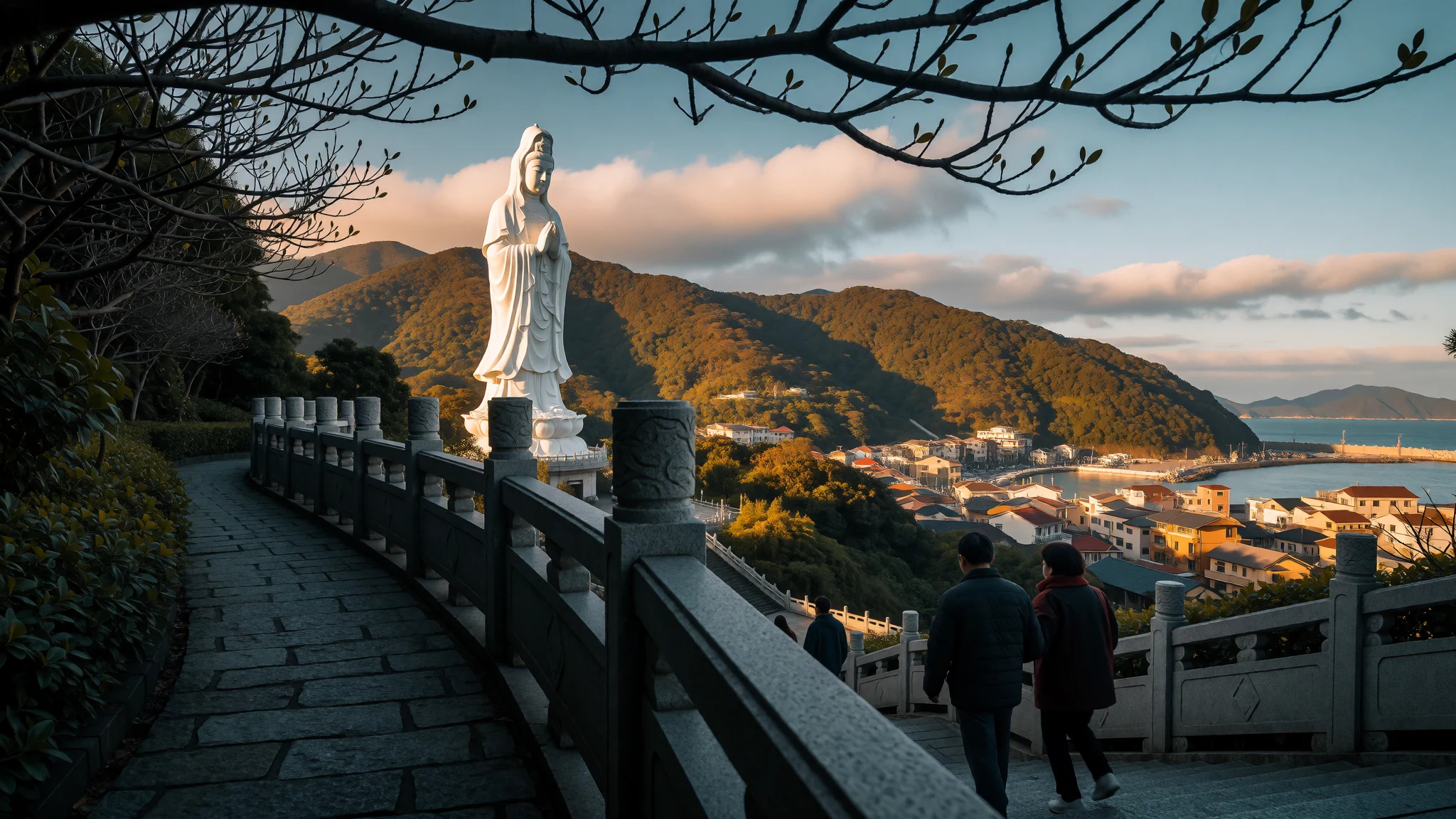
- Zhongzheng Park and the Guanyin statue — Central Keelung, above the harbour
A white statue of Guanyin, the Buddhist figure of compassion, stands at the top of Zhongzheng Park and looks over the town and the harbour mouth. The climb is steady rather than hard. Go on a clear morning, since cloud can wipe out the view completely.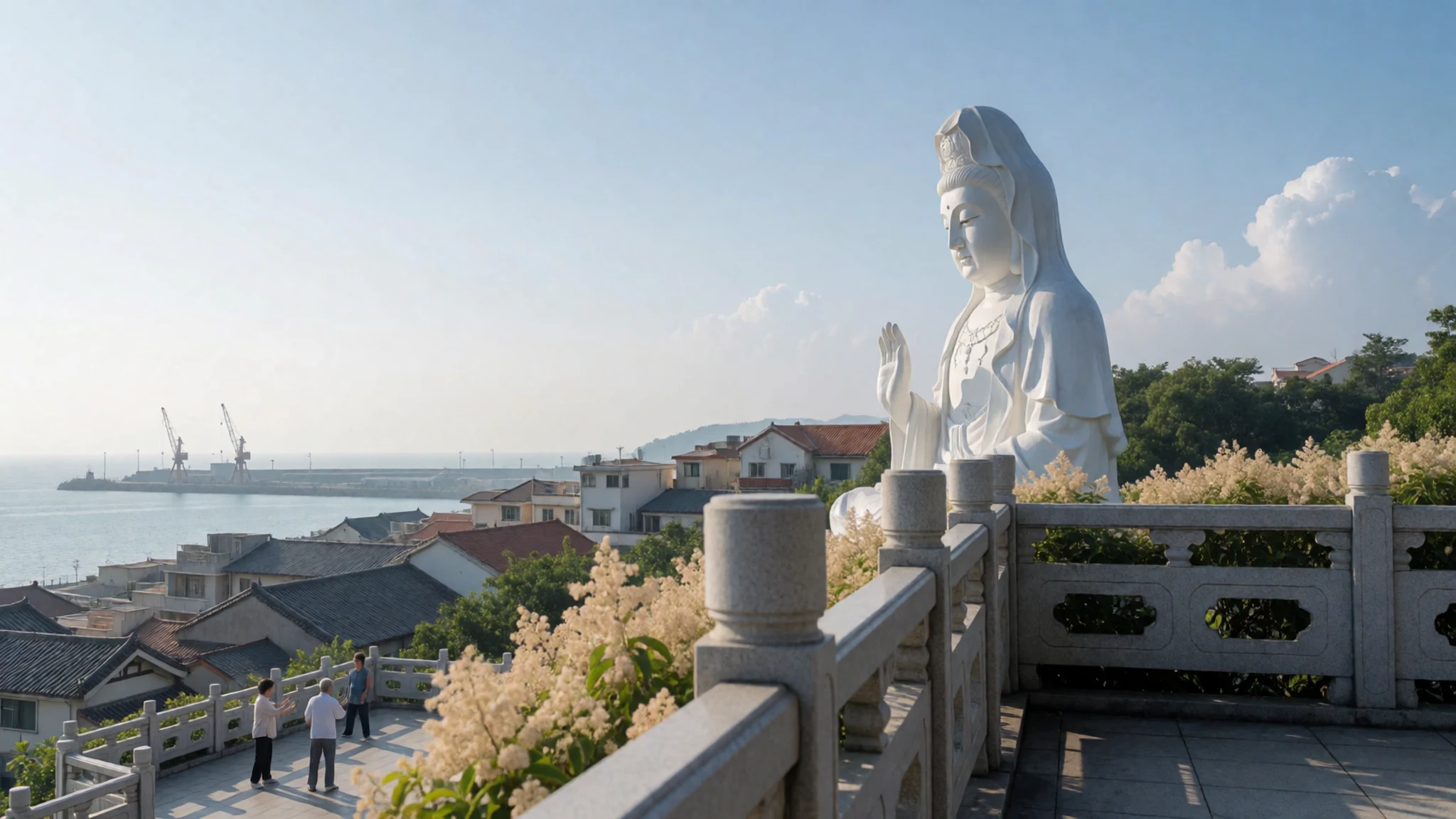
- Ershawan Fort — Eastern headland of Keelung Harbour
The Qing government built this coastal fort in 1840 to guard the sea entrance, and it was used in the fighting with French forces in the 1880s. Its Chinese name, Haimen Tiansian, means roughly the perilous gate to the sea. Stone gateways and gun positions face the water.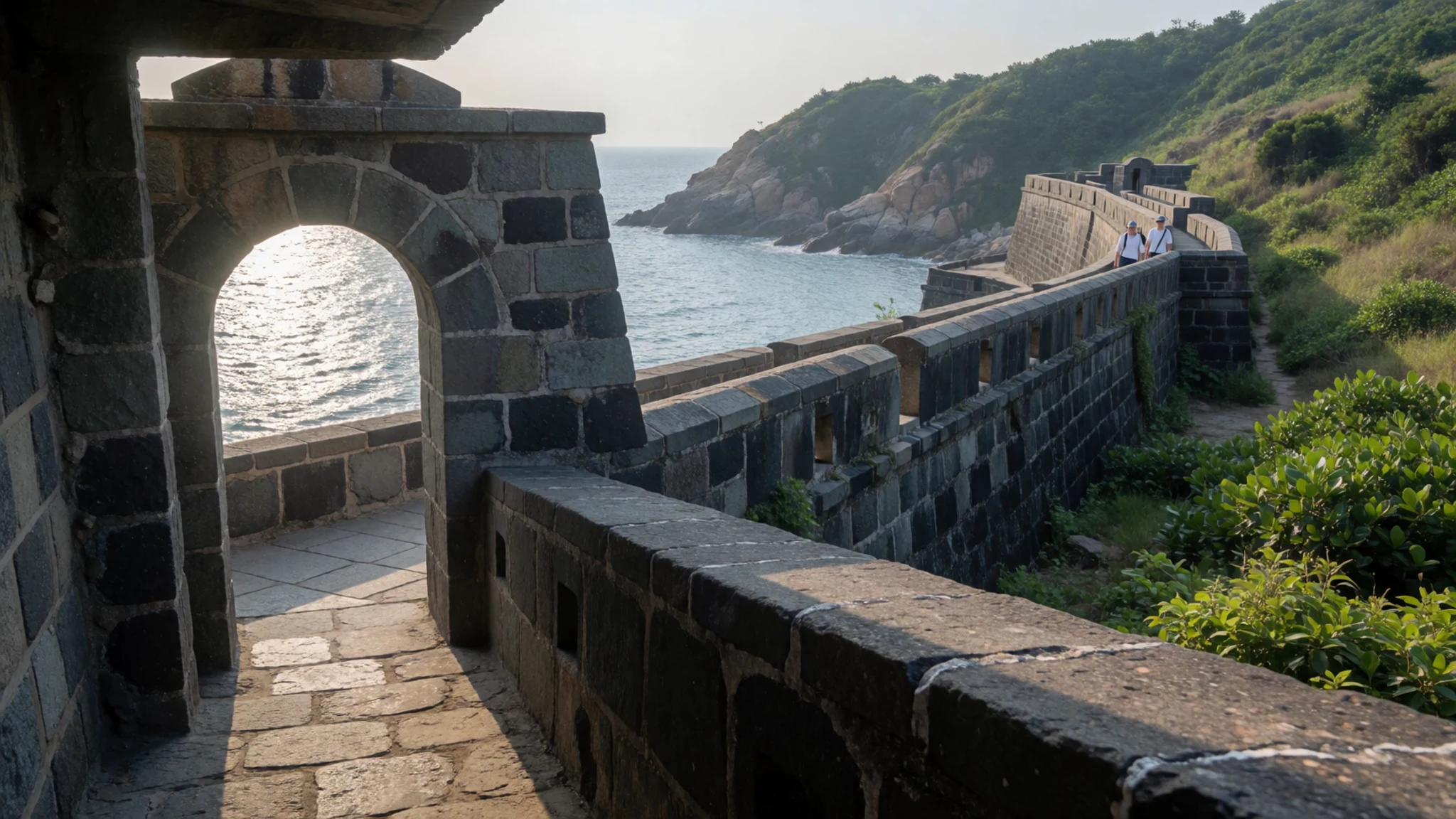
- Keelung French Cemetery — Near the harbour, Zhongzheng district
A quiet, small burial ground left over from the Sino-French War of the 1880s, close to the harbour and a manageable distance from the railway station. It is a sombre place and worth a short, respectful visit as a reminder of how recently this port was a battlefield.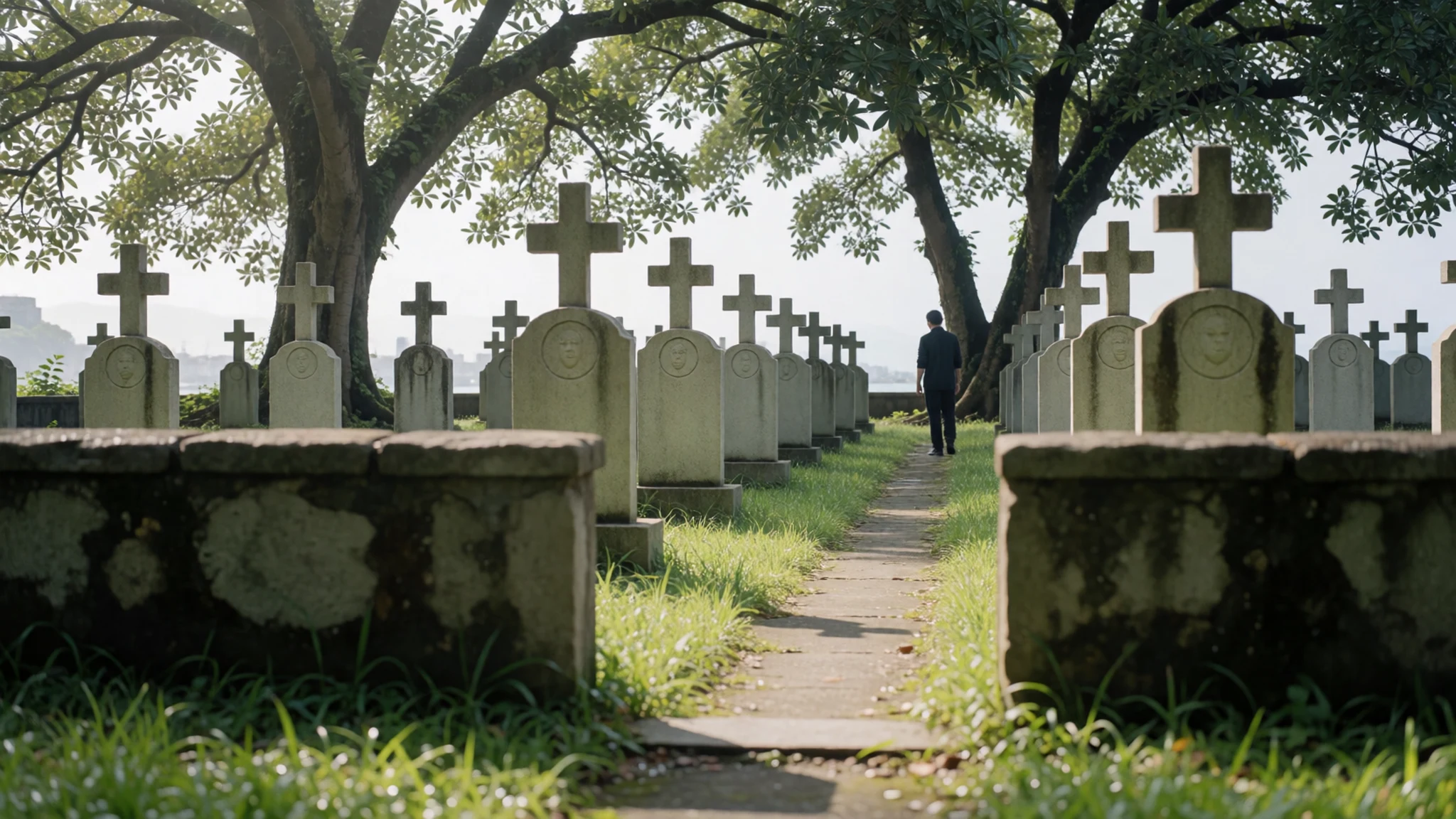
- Heping Island — North-east of the city centre
Heping Island, once called She-liao, guards the entrance to the harbour, and the Spanish placed a fort here in the 1620s. Today the island is mostly a coastal park, with odd weathered rock shapes along the shore and sea air that can turn blustery quickly.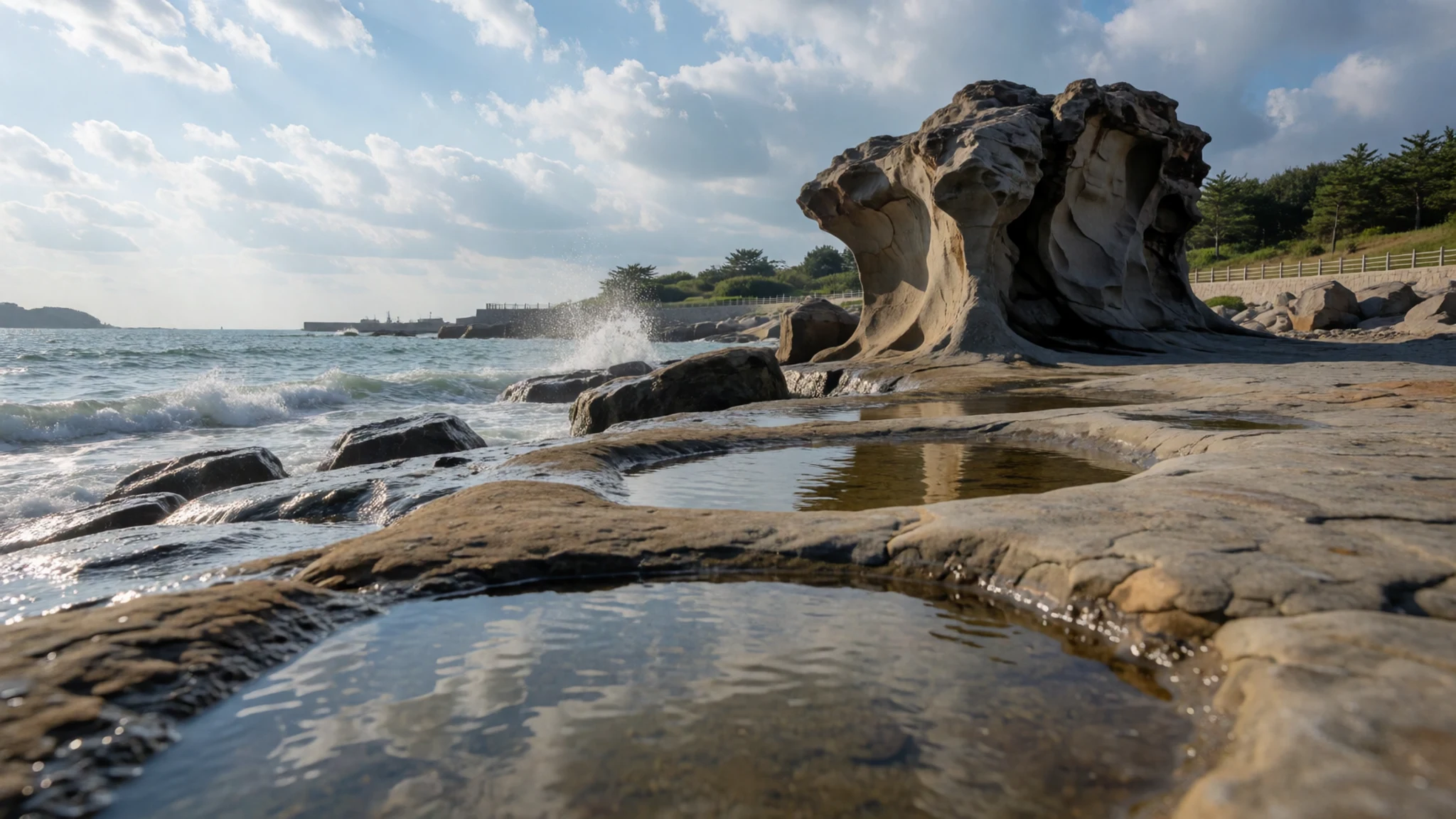
- Kanziding Fish Market — Harbour front, central Keelung
A working distribution centre for fish in northern Taiwan, best seen early in the morning when the catch is being sorted and sold. Expect wet floors, loud trading and a strong smell. It is a place to watch and take in, not a tidy attraction.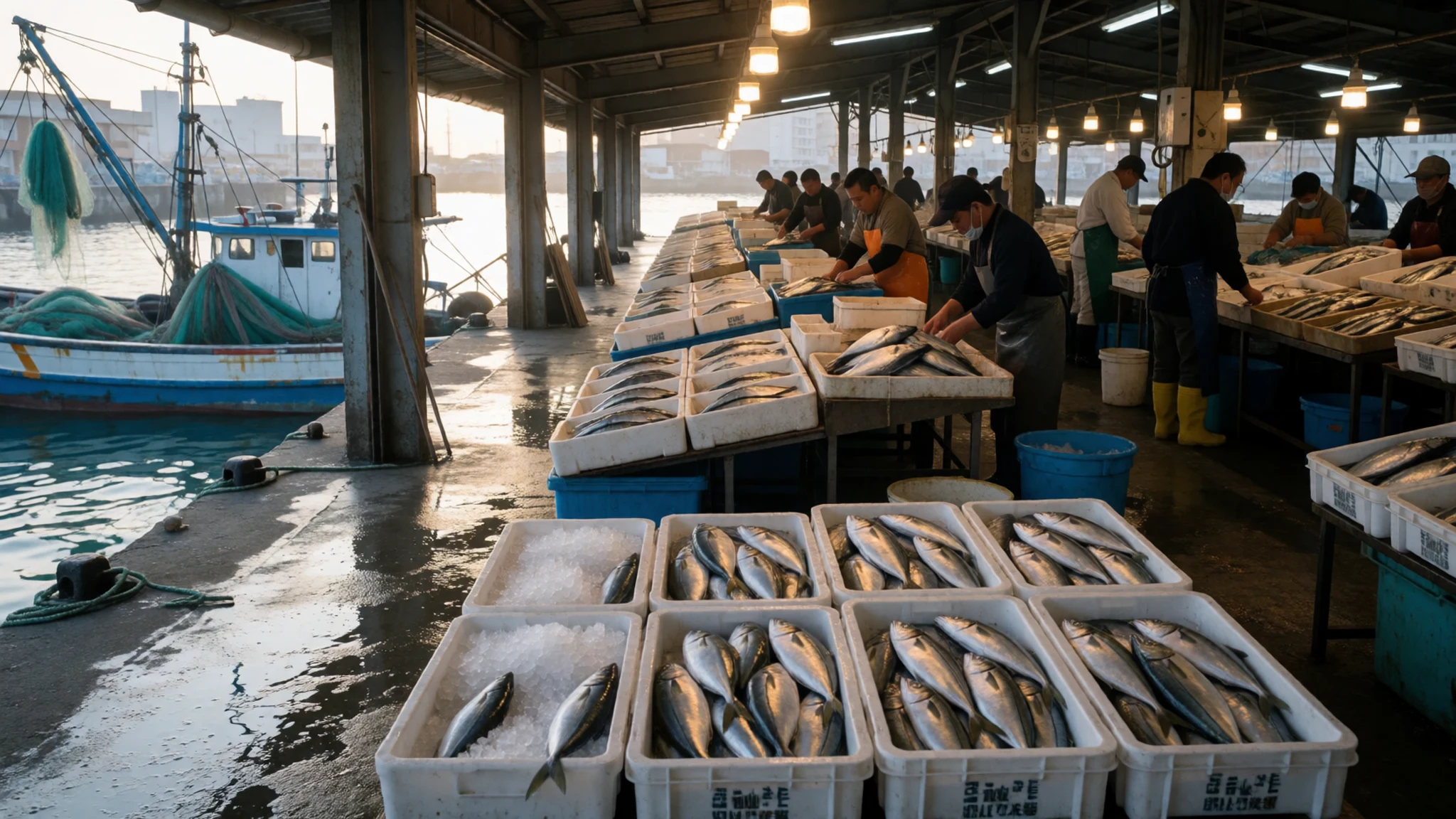
Culture
Keelung's culture is that of a port: practical, direct, and tied to the sea and the weather. Fishing families, dock workers and the traders who have passed through for four centuries all left habits behind, and the city's mix of Hokkien-speaking, Mandarin-speaking and indigenous heritage shows in names, food and festivals. Temples are everyday places here rather than museum pieces. The night market is named after the temple entrance beside it, and the lanes around the shrine fill with people eating after work, then pausing to burn incense or offer a short prayer. Guanyin, the Buddhist figure of compassion, looks over the harbour from the hill, a fitting patron for a city that has depended on safe passage for sailors. Conversation tends to turn to rain, fish and football-style rivalry with Taipei, and locals are generally happy to point visitors to a favourite stall if asked politely. The mood is relaxed and unpolished. Because Keelung lives by its harbour, history is not hidden: forts, foreign graves and wartime remnants are simply part of the landscape, often with only a short explanatory board. Festivals centred on the sea and on ancestors bring processions, drums and food offerings through the streets, and are lively but orderly. When you step into a working temple, keep your voice low, do not photograph worshippers at prayer without asking, and never point your feet or camera at the altar.
What to wear
Keelung has no single local costume, and what counts as traditional dress depends on who you ask. The Ketagalan and other indigenous peoples of Taiwan have their own woven and embroidered garments, usually from cotton, ramie or other plant fibres, with patterns that identify a community; these appear mostly at cultural events and festivals now. Among Han Chinese settlers, the historical everyday clothes were plain cotton jackets and trousers, with the long-sleeved changshan and the fitted qipao worn for formal occasions and still seen at weddings and performances. Working fishermen traditionally wore practical, waterproof layers, and that spirit survives. Today most people in Keelung dress simply and for the weather: light trousers or jeans, T-shirts, a jacket, and almost always a compact umbrella or a rain jacket. Scooter riders wear lightweight rain ponchos. Young people follow the casual, slightly sporty style common across Taipei. For a visitor, the sensible choice is a waterproof layer, quick-drying clothes and shoes with good grip, because pavements, harbour steps and hillside paths get slippery. Summer is hot and humid, so breathable fabrics matter, while winter mornings can feel damp and chilly. For temples, covered shoulders and knees are the polite choice, though standards are relaxed. Leave heels and flimsy sandals at the hotel if you plan to climb to the park or walk the fort paths.
What to eat
- Oyster omelet — Stalls along the lanes of the Miaokou night market
Small oysters are cooked into a soft egg and starch batter, then glazed with a sweet-savoury red sauce. It is a Taiwanese street classic, and the version in Keelung usually tastes especially fresh because the sea is so close.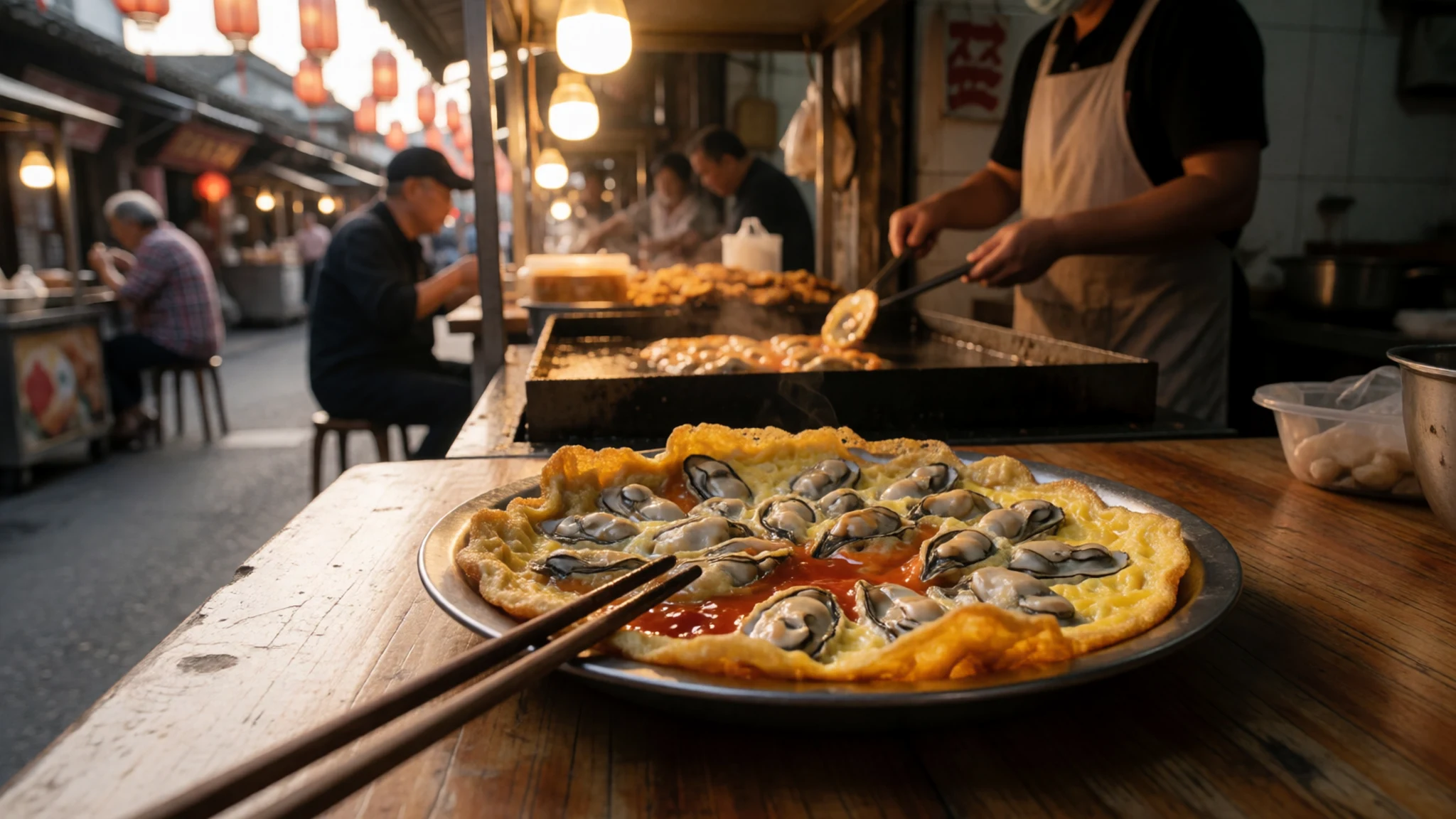
- Fish ball soup — Small noodle and soup counters around the night market
Springy balls of minced fish float in a light, clear broth, often with a few greens or herbs. It is a simple, comforting bowl that suits a damp day, and a fair test of how good the local fish really is.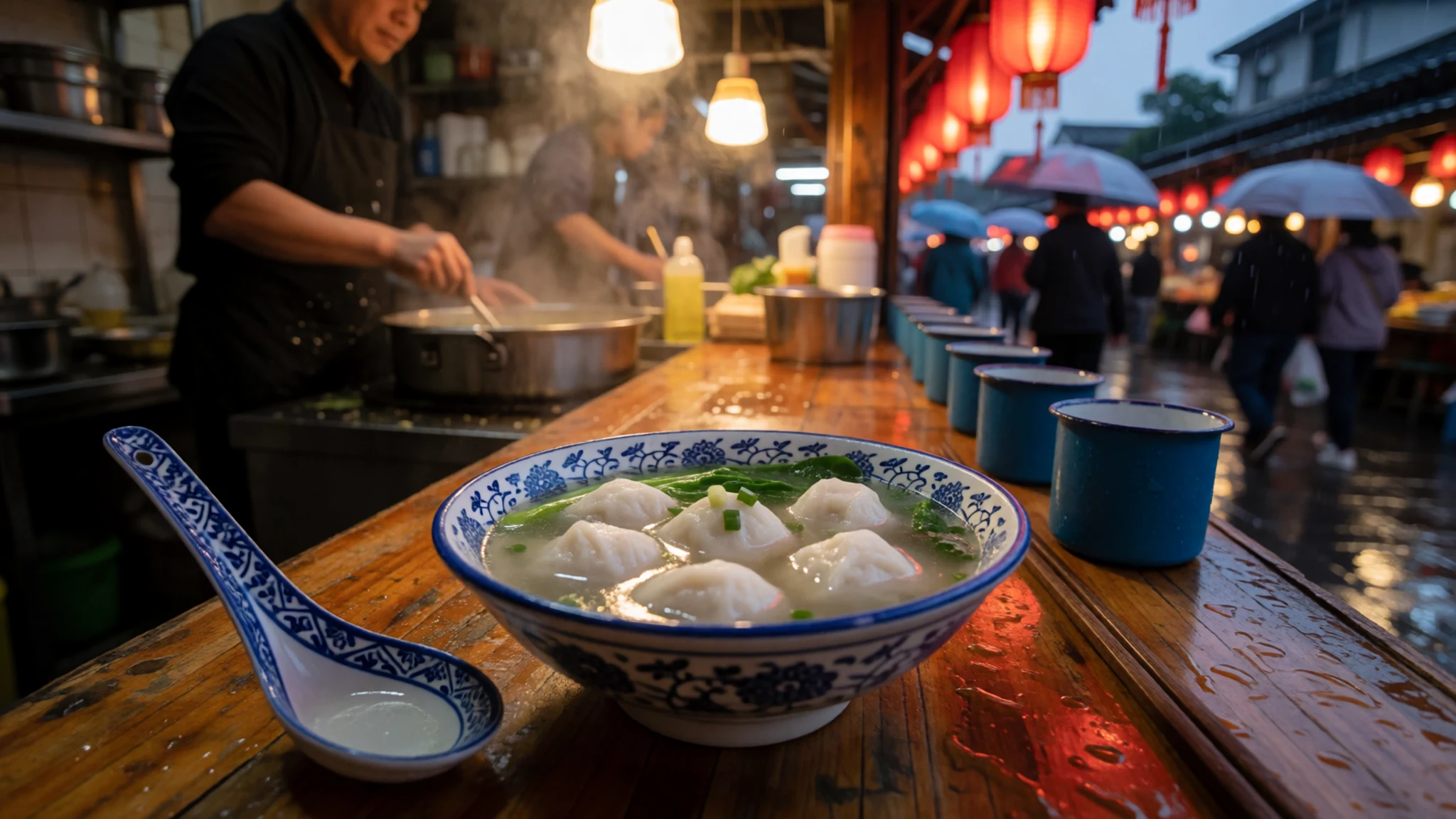
- Tianbula — Fried-snack stalls in the night market lanes
Taiwan's own take on tempura: fish paste and other ingredients are fried until golden, then served with a sweet, mild sauce. It is chewier and more savoury than the Japanese original, and easy to eat on the move. - Stinky tofu — Street stalls across the night market area
Fermented tofu, deep-fried until crisp outside and soft within, served with pickled cabbage and chilli sauce. The smell announces it from a distance, but the taste is milder than the warning suggests. Try one portion before judging it. - Fresh seafood by the dock — Seafood market and eateries near the fishing boats on the north-east shore
Choose a fish or shellfish from the display, and the kitchen cooks it to order, often steamed, fried or in a soup. Prices vary with the catch, so ask before ordering. It is simple, local and best eaten soon after the boats unload.
Plan it
Best time. March–April and October–November are the most comfortable, with milder temperatures and better chances of clear spells. Summer is hot and humid with thunderstorms and the occasional typhoon, and the colder months are damp and grey. Rain is possible in any season, so pack for it.
How long. 1–2
Getting there. Fly into Taiwan Taoyuan International Airport or Taipei Songshan Airport, then reach Taipei and take a commuter train or a freeway bus to Keelung; trains run often through the day. Check that Keelung is the final destination on the train, as some services branch off towards the east coast before the port.
Budget. low
Tips
- Carry a compact umbrella or rain jacket whatever the forecast says
- Visit the fish market early in the morning, before the best stock is gone
- Go to the night market in the evening, and bring small cash for the stalls
- Climb the hillside parks first thing, while clouds are least likely to cover the view
- Check the official city website before travelling for events, closures and transport changes: https://www.klcg.gov.tw/tw/klcg1/
Etiquette
- Keep your voice low and ask before photographing worshippers in temples
- Queue patiently at popular stalls and do not block the narrow lanes while eating
- Be respectful at the cemetery and old forts, which commemorate people who died in war
Nearby
Sources
- Wikidata Q249996 (CC0)
- Wikipedia: Keelung (rev 1384562255) (CC BY-SA 4.0)
- Wikivoyage: Keelung (rev 5423440) (CC BY-SA 4.0)
- Photo: Keelung Skyline (Taiwankengo) (CC BY-SA 4.0)
- Photo: Keelung Dawulun Battery Barrack Site (TS Lai) (CC BY-SA 4.0)
- Photo: Zhengbin Fishing Port (Supanut Arunoprayote) (CC BY 4.0)
- Photo: Vessel Traffic Service Centre in Port of Keelung (Taiwankengo) (CC BY-SA 4.0)
- Photo: Heping Island Park sea rabbit rock (寺人孟子) (CC BY-SA 4.0)
- Photo: Keelung City Montage (Sleepingstar) (CC BY-SA 1.0)
- Photo: Map of Coal Mines on Formosa Island (Francis L. Hawks) (Public domain)
- Photo: Map of the Taipei area (Army Map Service, 1950) (Public domain)


