Juwangsan
Juwangsan, South Korea
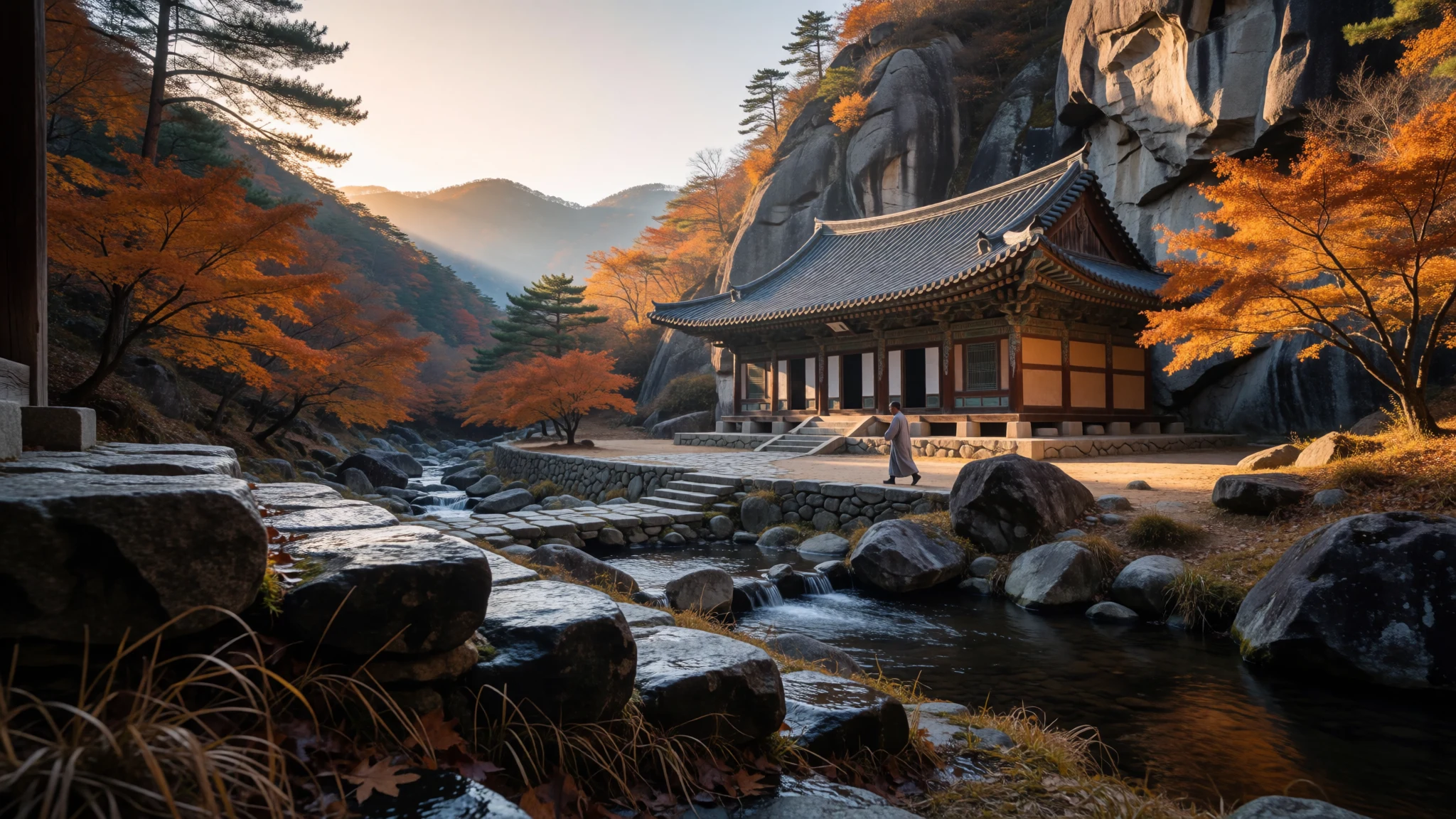
Juwangsan National Park in South Korea offers sheer grey rock walls, waterfalls and a quiet temple valley, best walked on a weekday in autumn.
The place
Juwangsan National Park sits in North Gyeongsang province, South Korea, shared between the counties of Cheongsong and Yeongdeok and forming part of the Taebaek mountain range. It was given protected status in 1976, and its Korean name is 주왕산국립공원. The landscape is one of steep grey rock walls, narrow gorges and wooded valleys, with streams that run into pools and tumble over waterfalls. Most walks begin near the temple of Daejeonsa and follow the valley upstream, so the going is gentle at first and steeper where paths climb towards the ridges. The country around the park is farmland and small towns, a long way from the crowded cities of the coast. Cheongsong is known for its orchards, and in autumn the roads near the park are lined with fruit sellers. North Gyeongsang as a whole is regarded as one of the more conservative parts of Korea, shaped by Confucian ideas and old temples, and Juwangsan suits that mood: people come to walk, picnic and look at rock rather than to party. Weekends in October, when the leaves turn, bring heavy traffic and queues for parking and buses, while weekdays are far calmer. Summers are hot and wet, and winters are cold, with frost and sometimes ice on the paths. The nearest big city is Daegu, and Pohang lies on the coast. Most visitors treat the park as a day trip, or as an overnight stop on a longer drive through the province.
Its story
Juwangsan takes its name from a legend rather than from a surveyed fact. The story, told with variations, concerns a man called Juwang who is said to have come from China, gathered followers, and was driven out. He is supposed to have taken refuge among these cliffs and sheltered in a cave, until soldiers sent by the Korean kingdom of the time tracked him down. The Hanja characters in the park's name, 周王山, carry his title, and local guides still point out rock formations and waterfalls that they link to the tale. Historians treat the details cautiously, but the legend explains why so many features here have personal names. The mountain also has a long Buddhist history. Daejeonsa, the temple at the entrance to the valley, and several small hermitages higher up gave the gorge a role as a place of retreat, and monks and pilgrims walked these paths long before there were tourists. The modern chapter began in 1976, when the area became a national park and the trails, bridges and viewing points were laid out for visitors. Since then the park has become a favourite for autumn colour and for school and family outings from across the region. It has never become a household name abroad, which is part of its appeal. The story of the place is still mostly told in Korean, on the signboards and by the people who run the tea stalls near the gate.
What to see
- Daejeonsa temple — Park entrance, Budong-myeon, Cheongsong
Daejeonsa is the temple at the foot of the valley, and the usual starting point for walks. Its main hall sits directly beneath the grey cliffs, which makes it an easy place to understand the mountain's scale before heading upstream. Arrive early for quiet courtyards and softer light.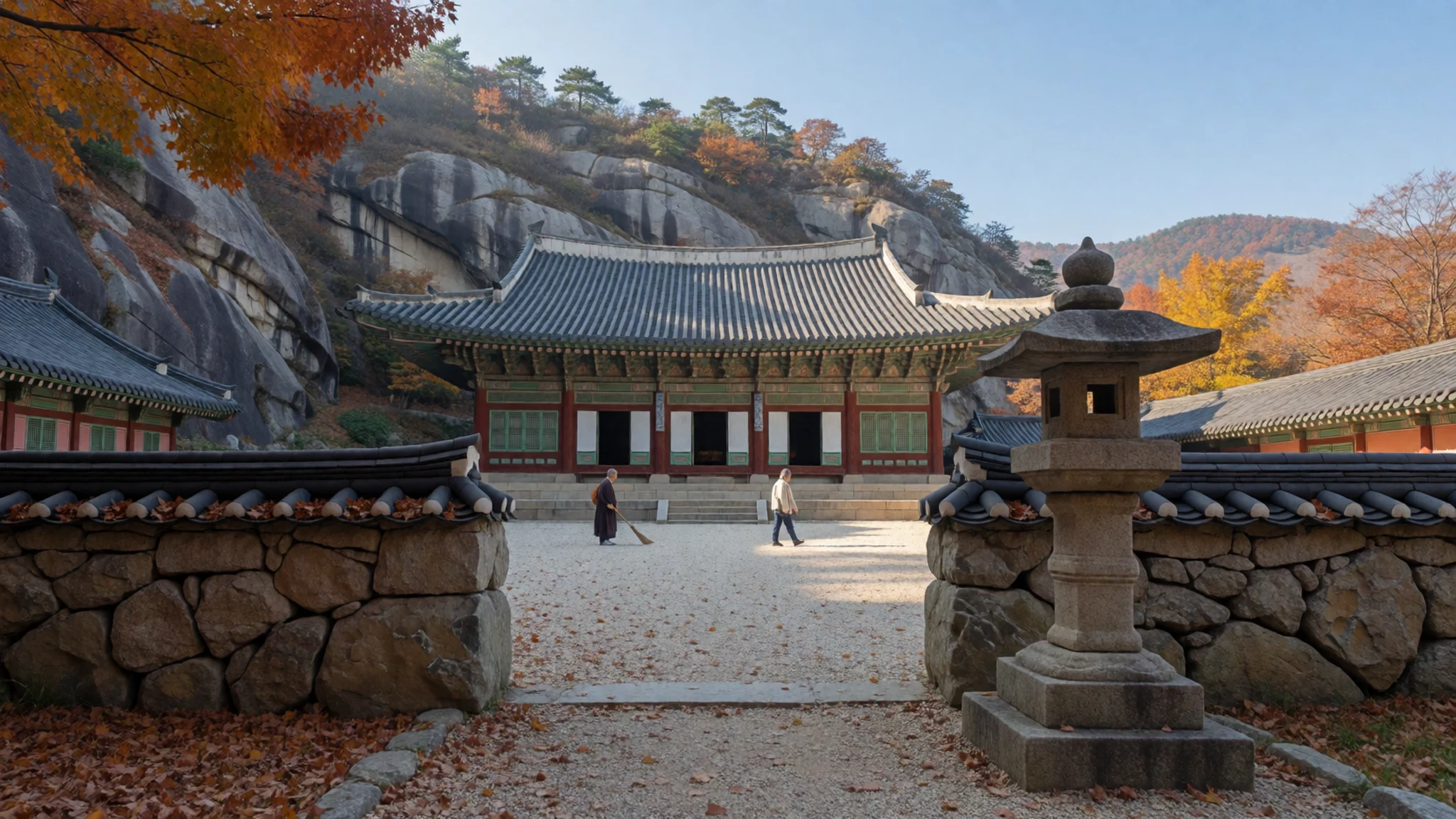
- Jusanji pond — Upper valley, Cheongsong side
Jusanji is a still pond held between steep, wooded slopes, and in autumn the trees double themselves in the water. It is located in a separate area of the park and requires a vehicle or a long trek to reach. Weekday mornings are the best time for reflections without crowds.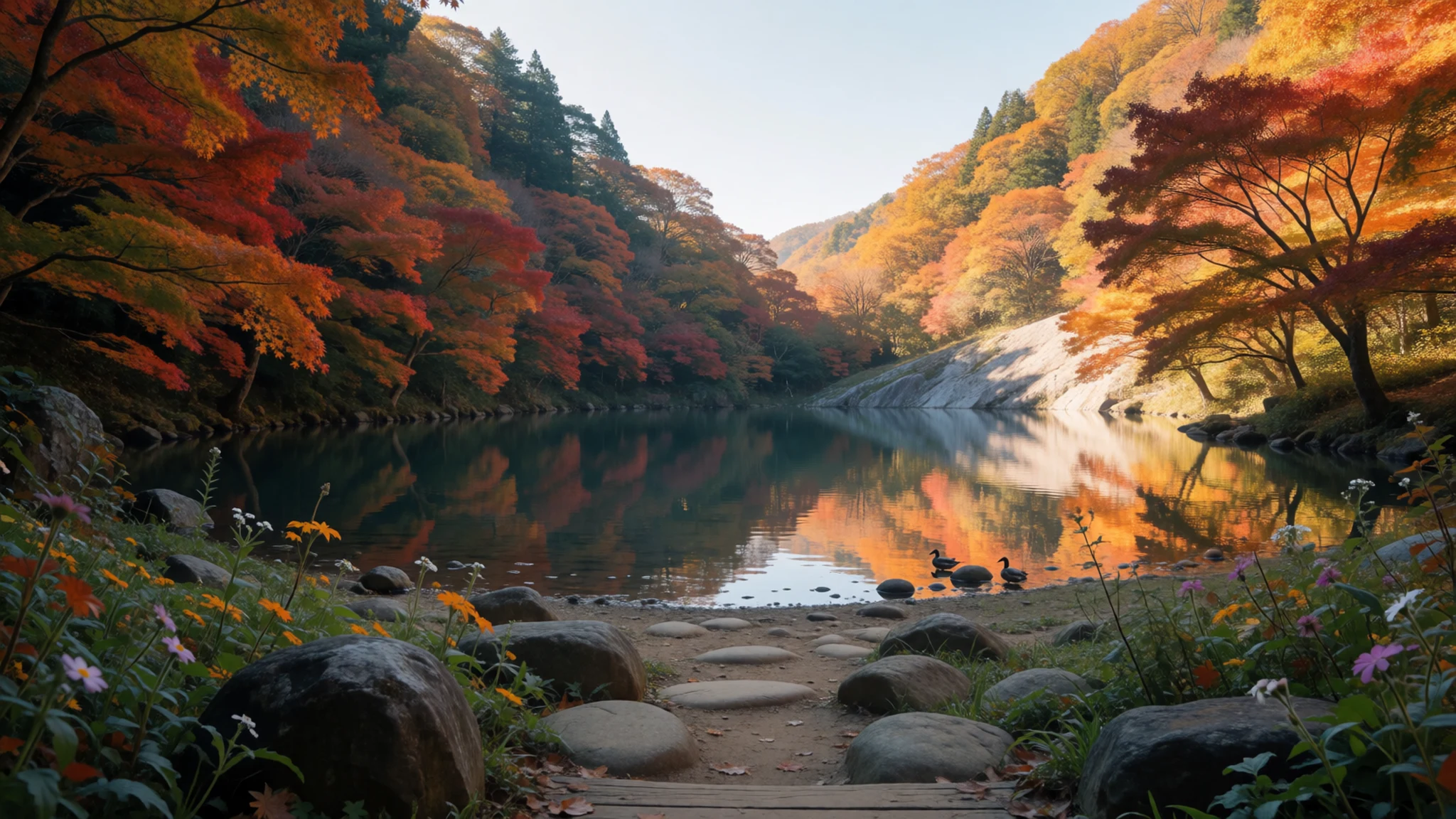
- The three waterfalls — Valley trail above Daejeonsa
The valley trail links three waterfalls, usually named Yongchu, Yongyeon and Jeolgu. Water flow depends on recent rain, so they are fullest after wet weather and thinner in dry spells. Allow time for stairs and boardwalks, and check with the park office which sections are open that day.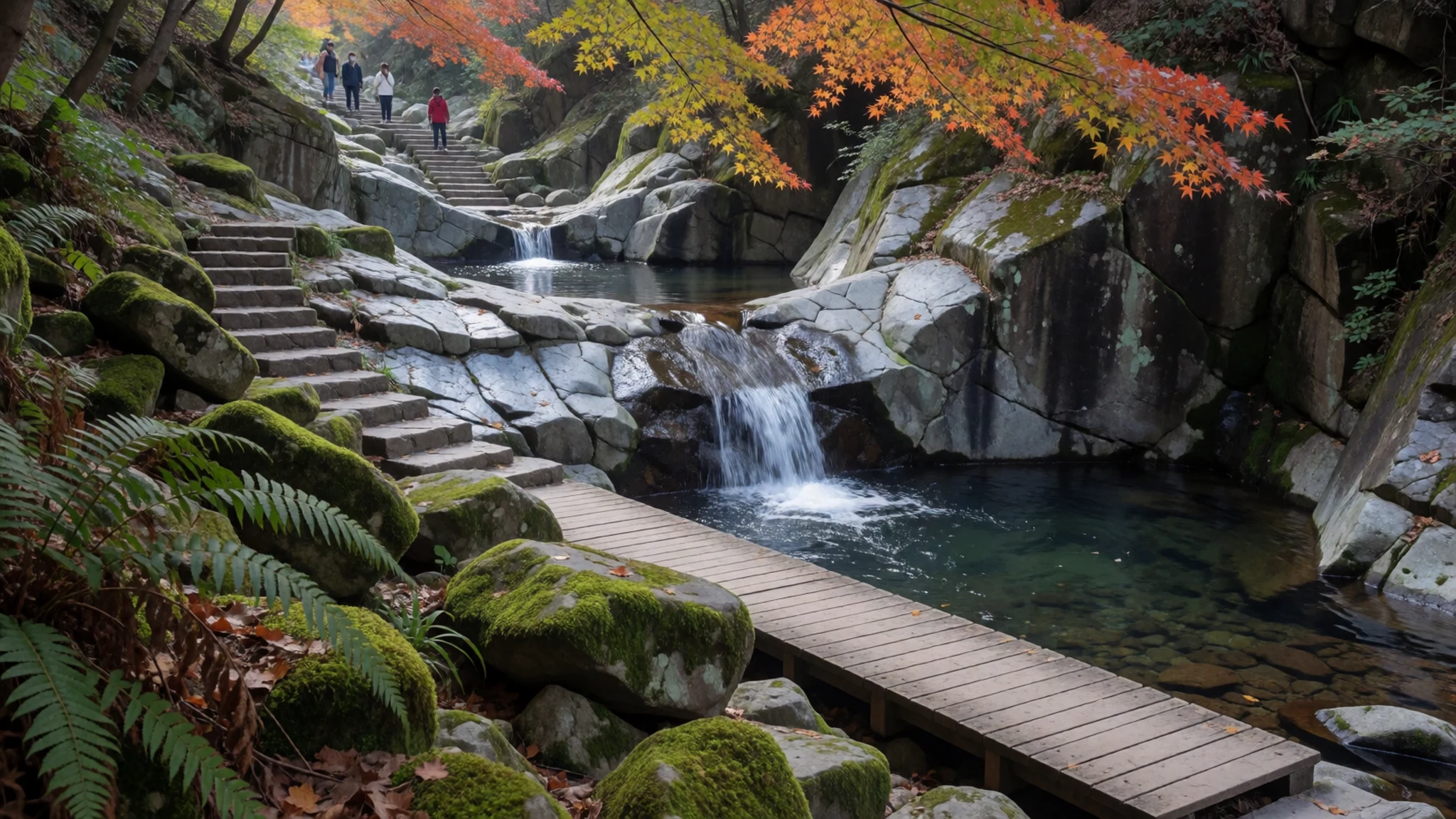
- Gigam rock and the ridge views — Higher trails above the gorge
Above the gorge, the walking turns steeper and the rock walls come into view as individual towers and faces. Visitors enjoy spotting shapes in the stone, from animals to faces. This is the part of the park that needs proper shoes, water and a clear sense of the daylight left.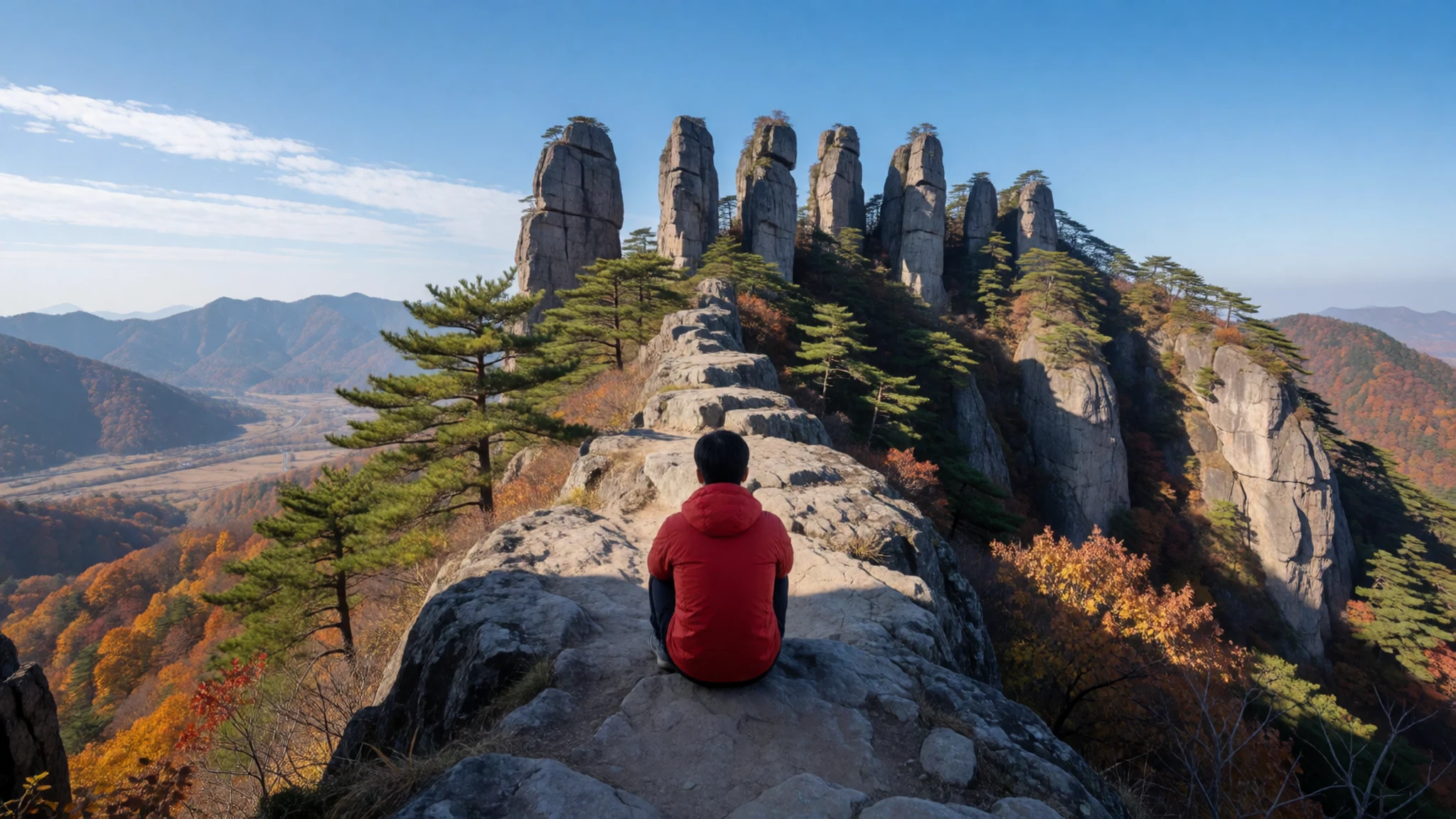
- Budong-myeon village and park road — Gongwon-gil, Budong-myeon, Cheongsong
The village at the park gate is a practical base, with small eateries, stalls and guesthouses along the road. It is worth a slow walk at the start or end of the day, to see local produce, especially fruit in season, and to ask staff about trail conditions.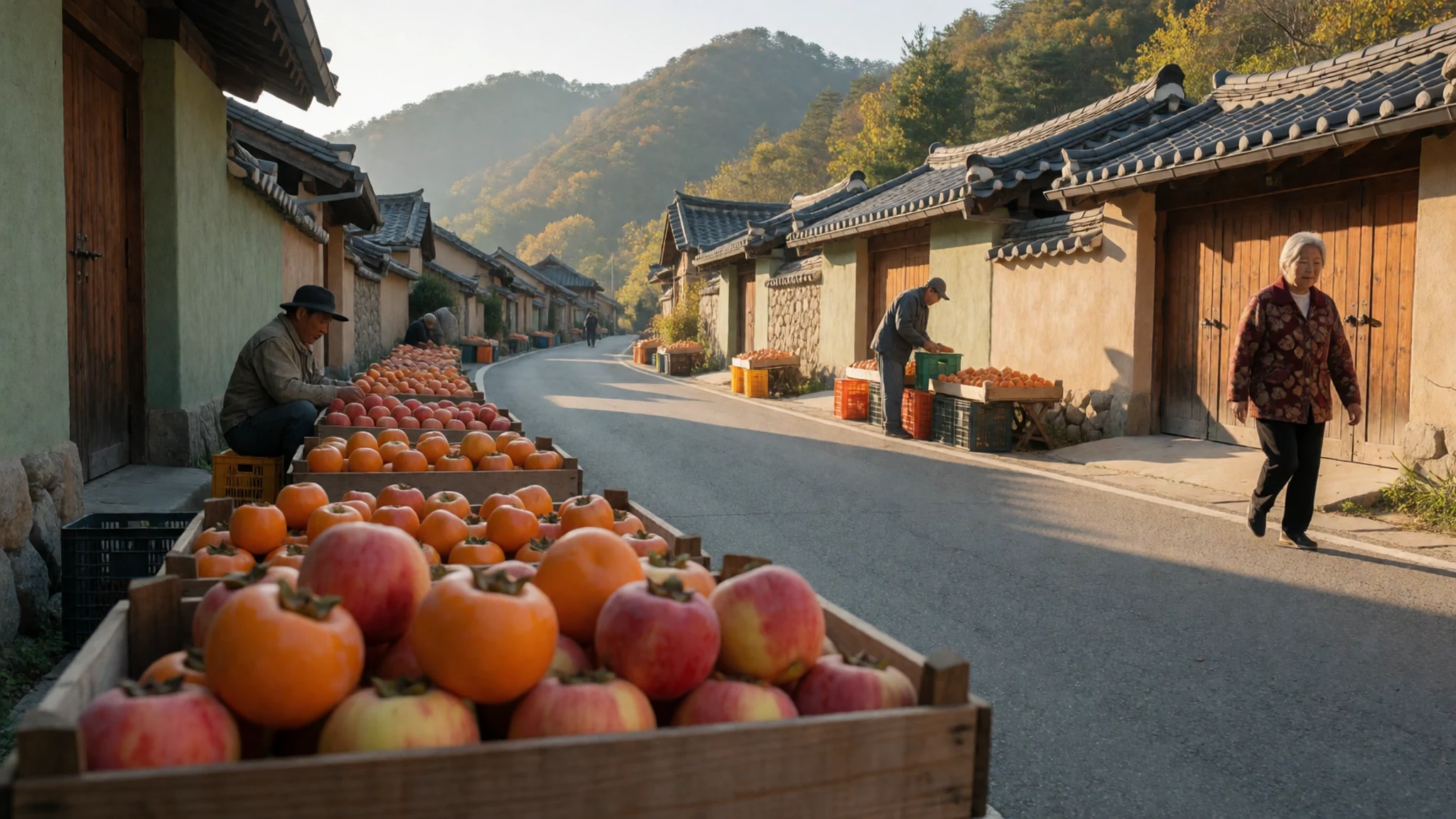
Culture
Juwangsan National Park sits in a region where Confucian habits and Buddhist practice both remain visible in daily life. North Gyeongsang is often described as the more traditional side of Korea, and visitors notice it in the courtesy shown between generations, the care with which meals are shared, and the quiet manner of people in temple grounds. Daejeonsa, at the foot of the valley, is a working temple as well as a sightseeing stop, so monks and worshippers use the same courtyards as walkers. Hiking is a very social pastime in Korea. Groups often walk together in matching outdoor clothing, share food on the trail, and greet passers-by with a short hello. Fellow walkers on narrow paths will usually step aside for each other, and it is polite to do the same. The legend of Juwang is a part of local identity, so guides and signboards often refer to it, and listening with interest goes down well. Autumn weekends are a national event, with families, school trips and photography clubs all arriving at once. Patience matters then, whether in a queue for a bus or at a viewpoint. Rubbish is taken home or put into the proper bins, and loud music from phones is not welcome on the paths. At Daejeonsa, keep your voice low, do not step into prayer halls with your shoes on, and ask before photographing monks or worshippers.
What to wear
Juwangsan National Park lies in a part of Korea where traditional dress is mostly kept for festivals, weddings and national holidays. The hanbok, with its short jacket and full skirt for women and jacket and loose trousers for men, is made from silk for formal occasions and from lighter ramie or hemp in summer. The Andong area nearby is associated with fine hemp cloth, and modern hanbok makers sometimes use it. Colour traditionally signalled age and occasion, with brighter shades for the young. Day to day, people here wear what suits the farm or the office, and on the mountain that means serious outdoor clothing. Korean hikers are known for bright jackets, technical trousers, walking poles, gloves and visors, even on a short walk, and the style is practical rather than showy. A visitor should dress for the weather and the terrain. In spring and autumn, wear layers: mornings in the valley can be cool, and the afternoon warm. Summer calls for light, quick-drying fabrics and a rain jacket, while winter needs a proper coat, hat and gloves. Footwear matters most: shoes with grip are needed for wet rock, steps and gravel. For Daejeonsa, no special robes are needed, but shoulders and knees should be covered, and hats are removed inside halls. Socks without holes are sensible, since shoes come off at many doors.
What to eat
- Andong jjimdak — Restaurants in Andong, a drive from the park
Chunks of chicken braised with potatoes and glass noodles in a sweet, spicy, dark soy sauce. It is the best-known dish of North Gyeongsang and is served on large shared plates, so come hungry and with company.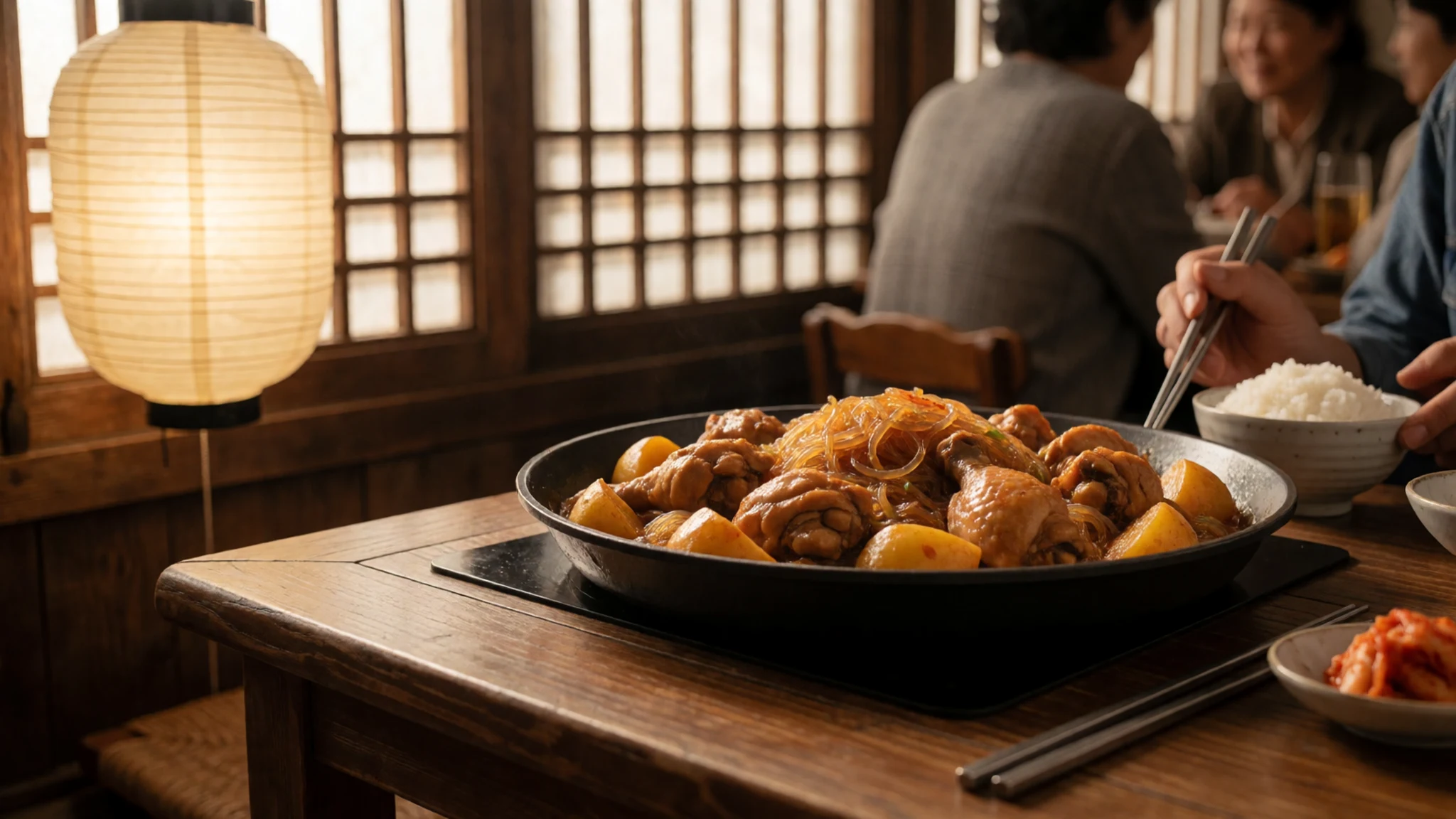
- Andong soju — Traditional drinking houses and restaurants in Andong
Andong is known for its own style of soju, a spirit made with more care than the bottled kind sold nationwide. It is sipped slowly with food, and in Korean company someone else will usually pour your glass.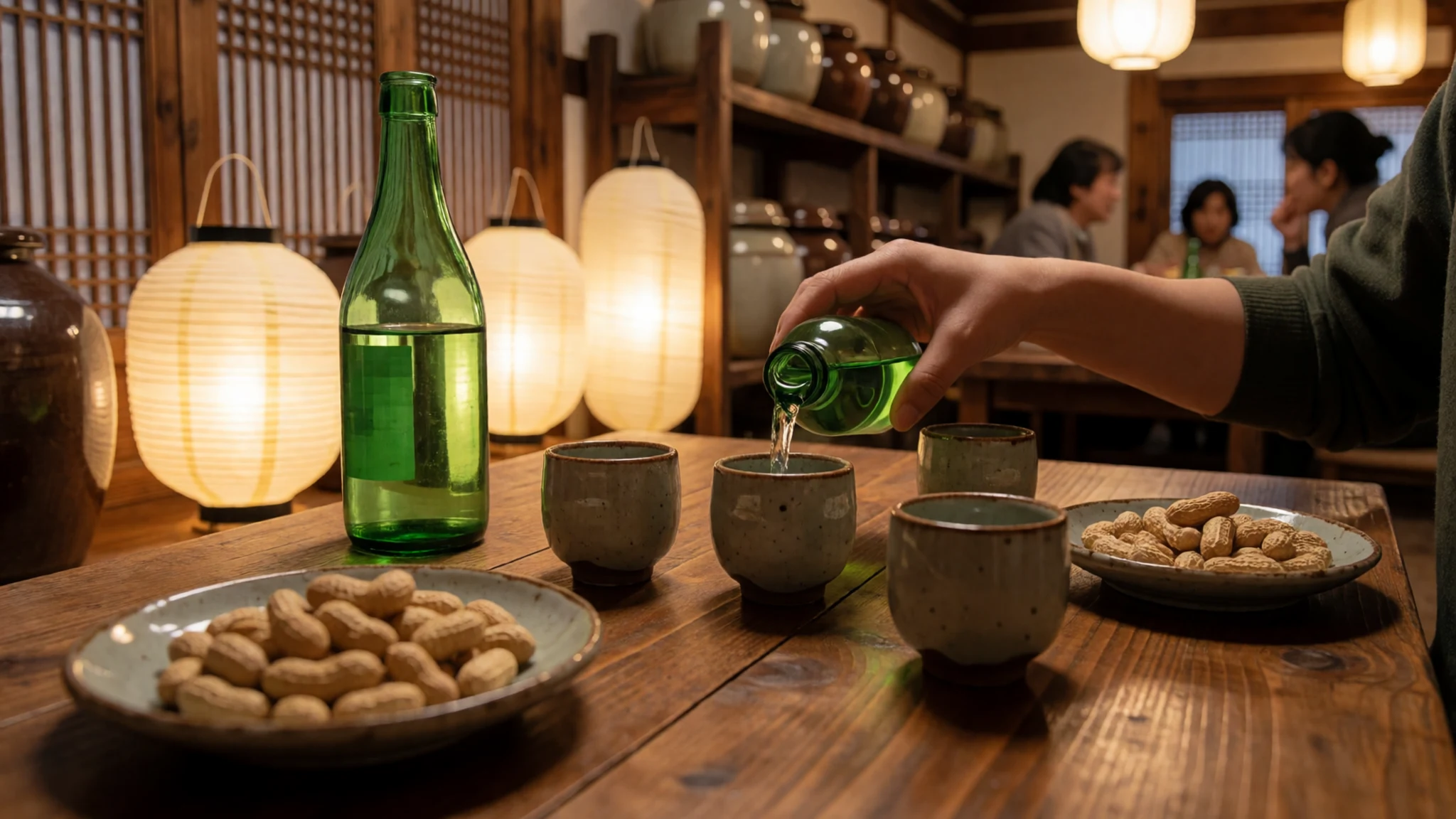
- Pink sikhye — Eateries in Andong and local markets
Sikhye is a sweet rice drink, usually cloudy white. In Andong it is made with red pepper powder, giving a pink colour and a mild spicy kick. Try it with peanuts or pine nuts, as locals do. - Sanchae bibimbap — Family eateries along the park road at Budong-myeon
Rice topped with mountain vegetables, seasoned greens and a spoon of chilli paste, mixed at the table. It is a sensible meal before or after a hike and is easy to find near trailheads. - Cheongsong apples — Fruit stalls and roadside stands around Cheongsong, in autumn
The orchards around Cheongsong supply stalls beside the roads near the park each autumn. Buy a bag to eat on the trail, or sliced fruit from a stall. Ask the seller which variety is sweetest that week.
Plan it
Best time. Mid-October to early November for autumn colour, though weekends are very busy; April and May for fresh green leaves and fuller streams. Summer is hot and wet, and winter is cold with possible ice on the paths.
How long. 2
Getting there. Fly to Daegu (TAE), Busan or Seoul, then take the KTX high-speed train or an intercity bus towards North Gyeongsang. The last leg is by bus or taxi to Cheongsong and on to Budong-myeon at the park gate; check current timetables locally.
Budget. mid
Tips
- Visit on a weekday in autumn, and arrive early to avoid queues for parking and buses
- Check the official national park website for trail openings and any seasonal closures before you set off
- Carry water, snacks and a rain jacket, as valley weather changes quickly
- Wear shoes with proper grip, since rock and steps become slippery after rain
- Carry some cash for small stalls and eateries near the park gate
Etiquette
- Keep voices low in temple grounds and remove shoes before entering halls
- Take all rubbish with you or use the proper bins
- Step aside on narrow paths and greet other walkers
Nearby
Sources
- Wikidata Q494689 (CC0)
- Wikipedia: Juwangsan National Park (rev 1362777308) (CC BY-SA 4.0)
- Wikivoyage: North Gyeongsang (rev 5347338) (CC BY-SA 4.0)
- Photo: Juwangsan.jpg (Isipau) (Public domain)
- Photo: Budong-myeon.jpg (gary4now) (CC BY 3.0)
- Photo: Daejeonsa & Juwang Mt.jpg (Trainholic) (CC BY-SA 4.0)
- Photo: Juwangsan national park animal ghost in the rock.jpg (garycycles3) (CC BY 2.5)
- Photo: Juwangsan national park pond.jpg (garycycles3) (CC BY 2.5)
- Photo: Juwangsan National Park, Korea - panoramio.jpg (gary4now) (CC BY 3.0)
- Photo: Juwangsan national park.jpg (garycycles3) (CC BY 2.5)
- Photo: Yeongdeok county banner.jpg (gary4now) (CC BY 3.0)


