Juknokwon Bamboo Garden
Juknokwon Bamboo Garden, South Korea
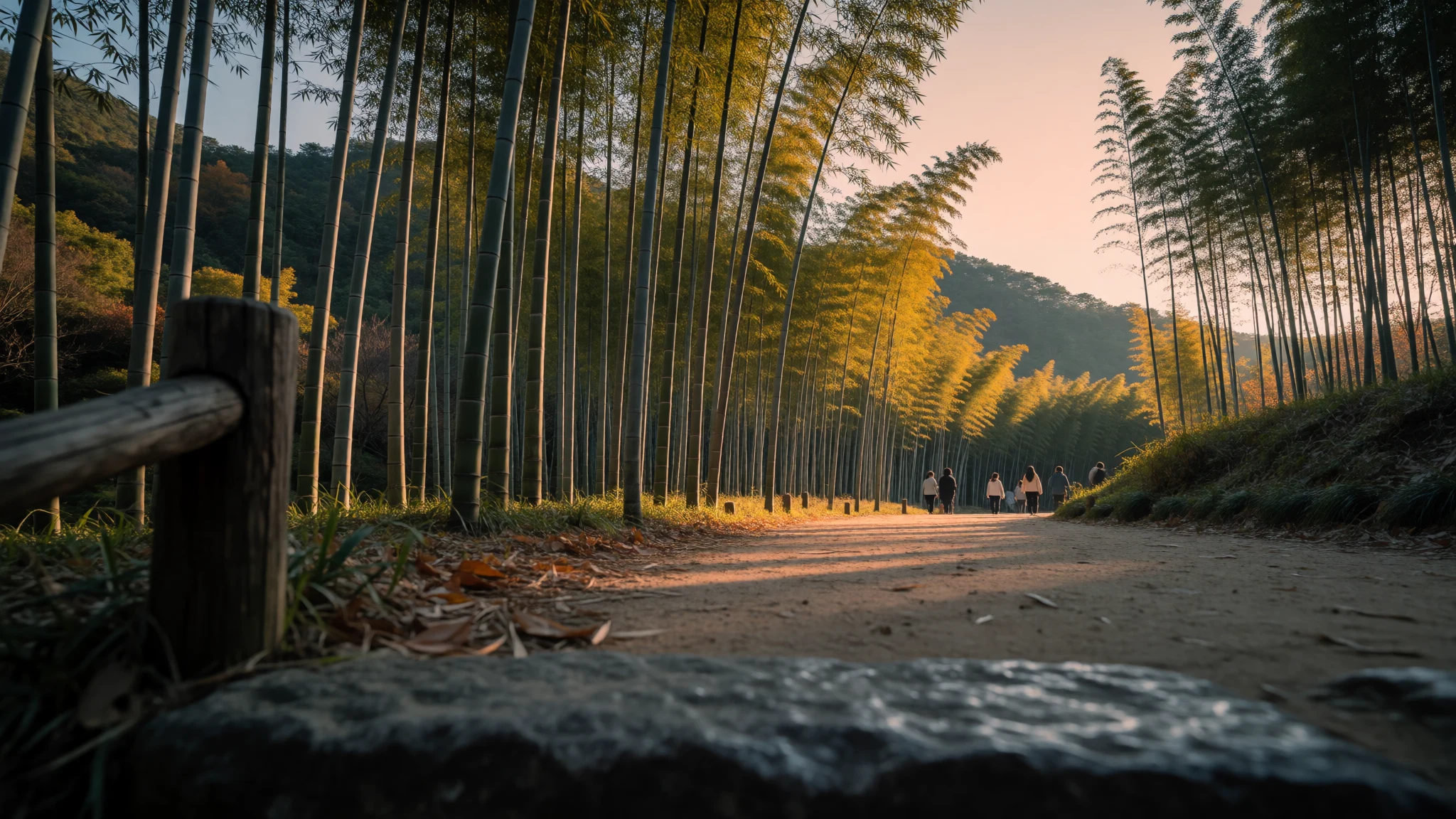
Juknokwon Bamboo Garden in Damyang offers shaded bamboo paths, creaking stems and a slow, green walk in South Korea's south-west.
The place
Juknokwon Bamboo Garden (Jungnokwon, 죽녹원) is a bamboo forest on the edge of Damyang, a small county town in South Korea's south-west, close to the city of Gwangju. Wikidata classes it simply as a forest, and that is the right expectation: this is a managed grove laid out with walking paths, not a formal garden of flowerbeds and lawns. Stems rise far overhead and close in on both sides, so the light turns green and the air feels cooler than the street outside. Wind moving through the canopy produces a dry rattling and creaking that many visitors remember longer than any view. The paths climb and dip over a modest hill, with wooden steps, small pavilions and a few lookouts where the grove opens onto the town's rooftops and the farmland beyond. The pace is unhurried. Most people walk a loop in an hour or two, pausing for photographs where the stems stand straightest. Outside the gates, Damyang sells bamboo in many forms: baskets, chopsticks, tea, ice cream and food steamed inside the hollow stems. The official website, https://www.juknokwon.go.kr, is the place to check opening times and any entry charge before setting out. Crowds build at weekends, on public holidays and in the pleasant seasons of spring and autumn, when the narrow paths feel busy. Weekday mornings are calmer. Damyang is small enough to explore on foot, which makes the garden easy to pair with a meal in town.
Its story
Juknokwon Bamboo Garden belongs to a long Korean habit of admiring bamboo. In scholarly tradition it was one of the four gentlemen of ink painting, alongside plum, orchid and chrysanthemum, praised because it bends in storms without breaking and stays green through winter. Poets and painters used it as shorthand for steadiness and integrity, and bamboo screens, brush holders and fans carried that meaning into ordinary homes. Damyang, the county that holds the garden, became known for turning the plant into everyday objects. Baskets, winnowing trays, blinds, furniture and fans came from local workshops, while the surrounding countryside supplied the stems. That craft identity explains why a patch of managed forest sits so comfortably at the centre of the town's image. The garden itself is a modern amenity rather than an ancient site. Its official website sits on a government domain, which fits a public project meant to showcase the county's signature plant and give visitors a reason to stay a while. No founding date is given here because none is confirmed. What visitors meet is therefore two stories at once: an old cultural symbol and a deliberate effort to share it. Nearby, Damyang's older garden pavilions and tree-lined avenues belong to the same tradition of scholars retreating to the countryside to write, drink tea and watch the weather.
What to see
- The main bamboo paths — Inside the garden
The wide central paths are where the garden looks like its photographs: tall, straight stems on both sides and a tunnel of green light overhead. Go early or on a weekday for the quietest stretches. The sound of leaves and stems knocking together in the wind is half the experience.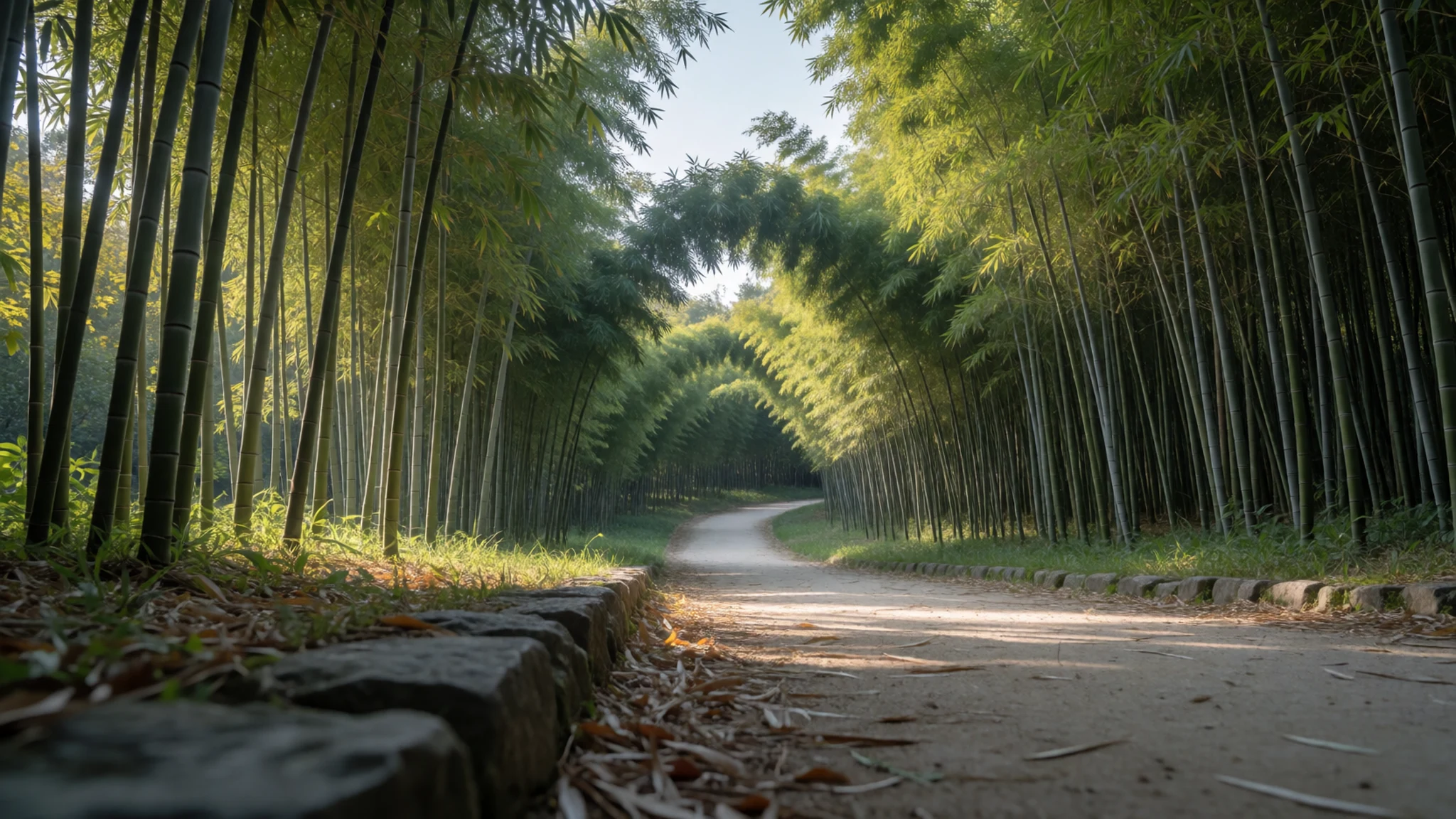
- Lookouts over Damyang — Upper paths of the garden
Where the grove thins on the upper slopes, small pavilions and viewing spots look over Damyang's rooftops and the farmland around it. They make a natural place to rest after the climb and to see how the garden sits against the town it belongs to.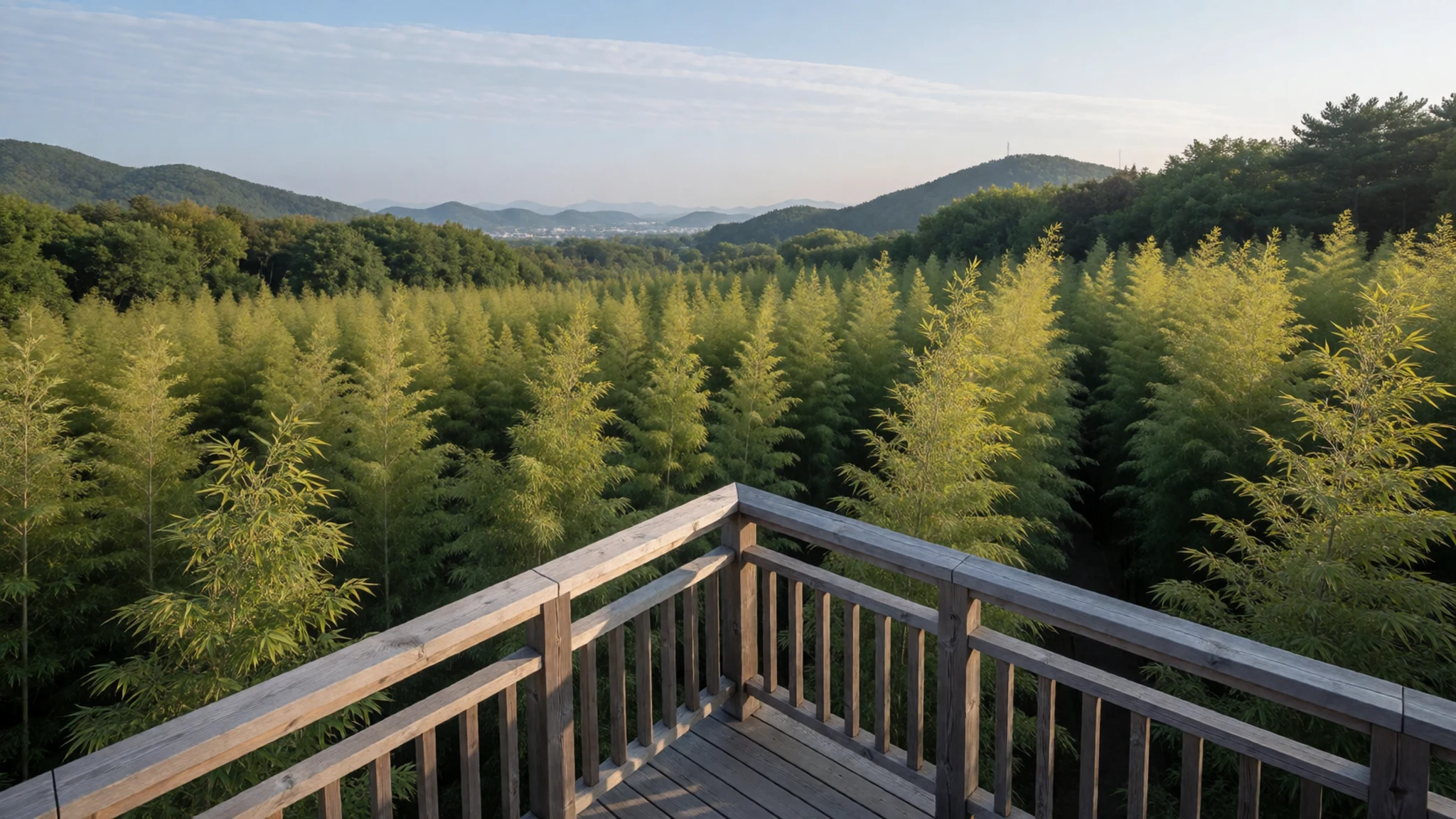
- The garden café — Inside the garden
A café sits within the bamboo, with seating among the stems. It suits a pause with bamboo-leaf tea or a cold drink in warm weather. Check what is on offer when visiting, as menus and opening times change with the season.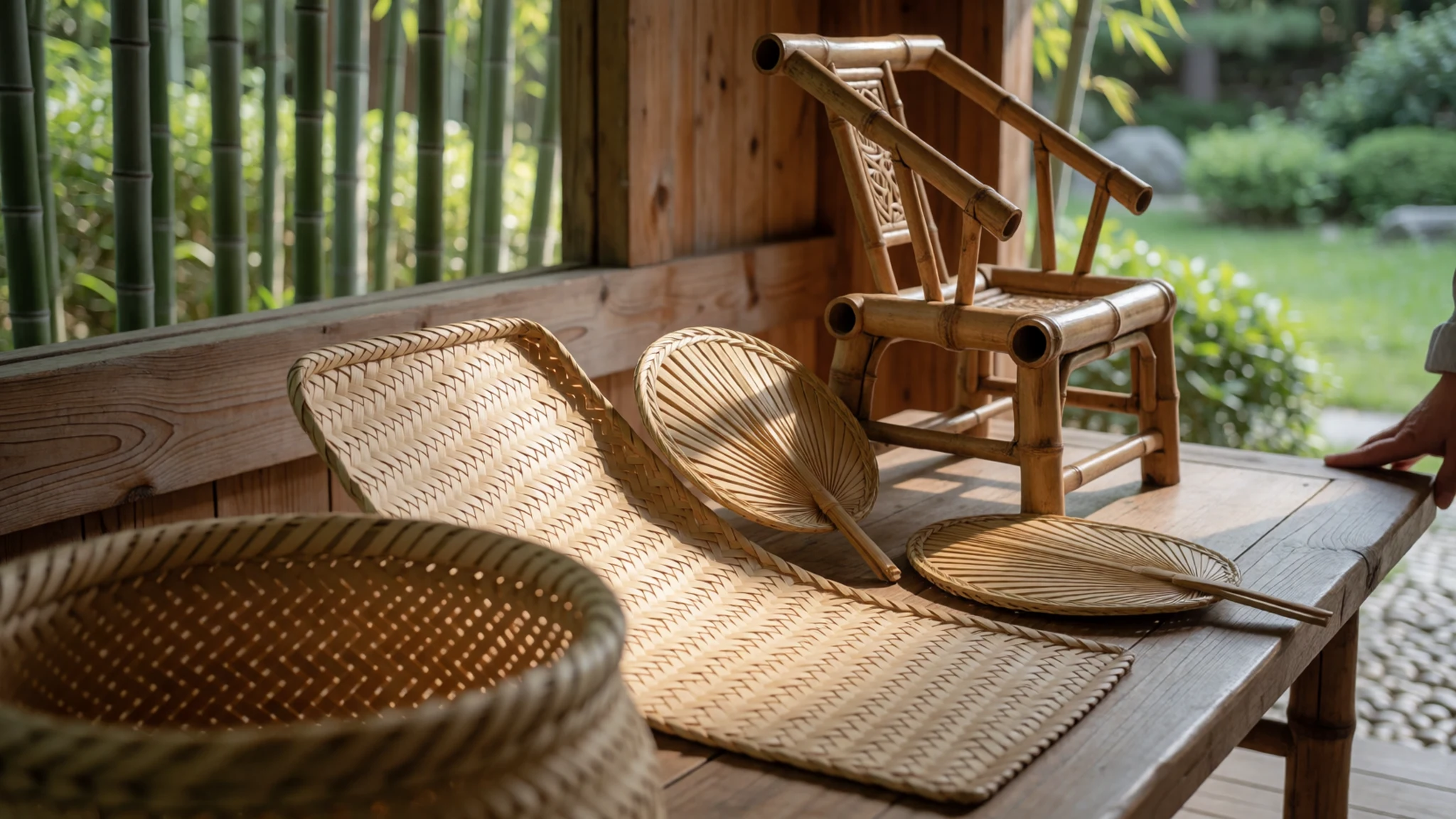
- Bamboo stalls and fair grounds — Around the garden entrance
Stalls and kiosks around the garden have sold bamboo goods and snacks, and the area has hosted a World Bamboo Fair. Baskets, small utensils and bamboo-themed souvenirs are the usual finds. Carry some cash for small stalls, and compare items before buying.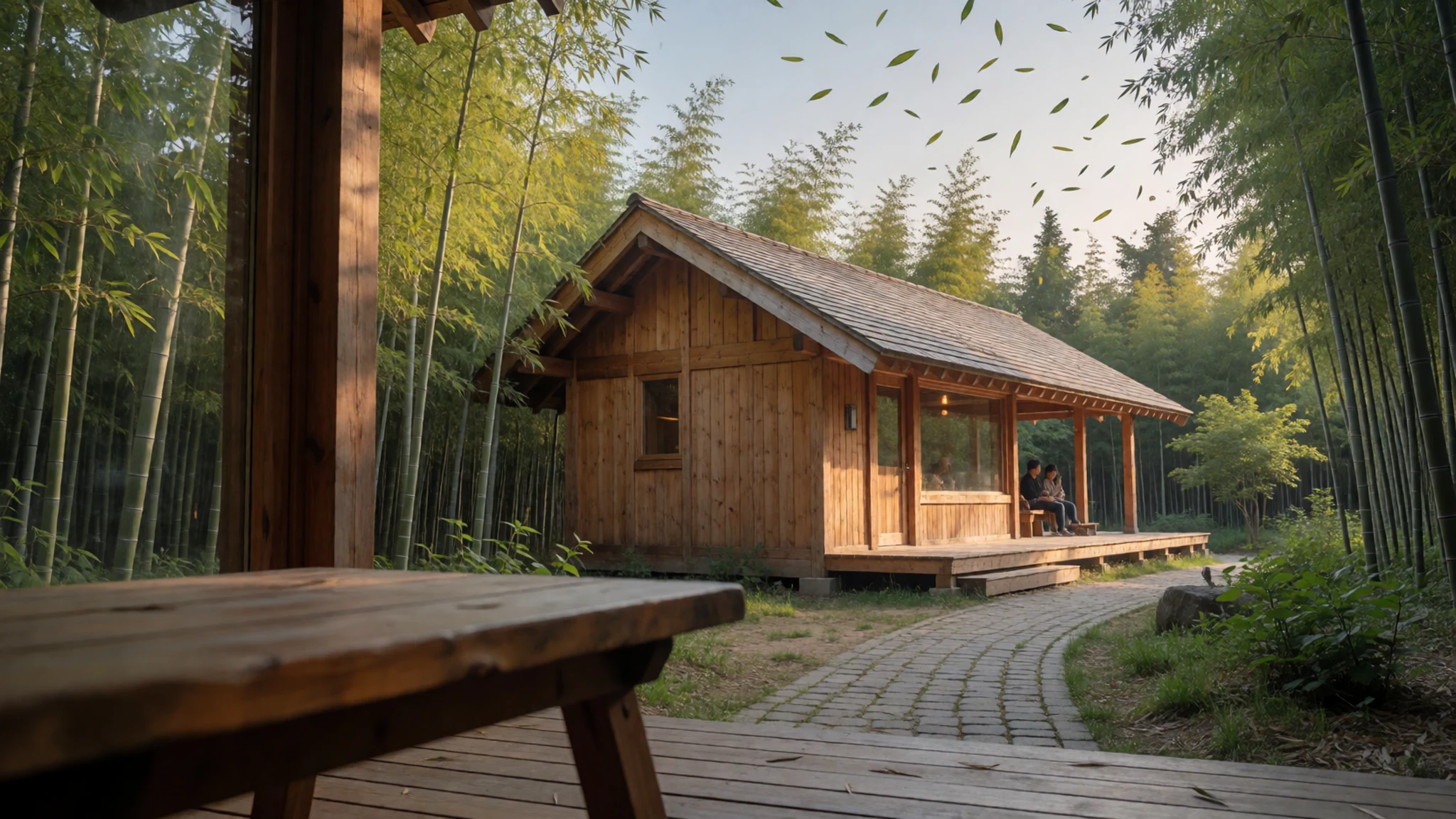
- The quieter side loops — Edges of the garden
Branching paths away from the main route draw fewer people, and the grove feels denser and more silent there. They are the best bet for unhurried photographs and for hearing the stems creak. Paths can be slippery after rain, so footwear with grip matters.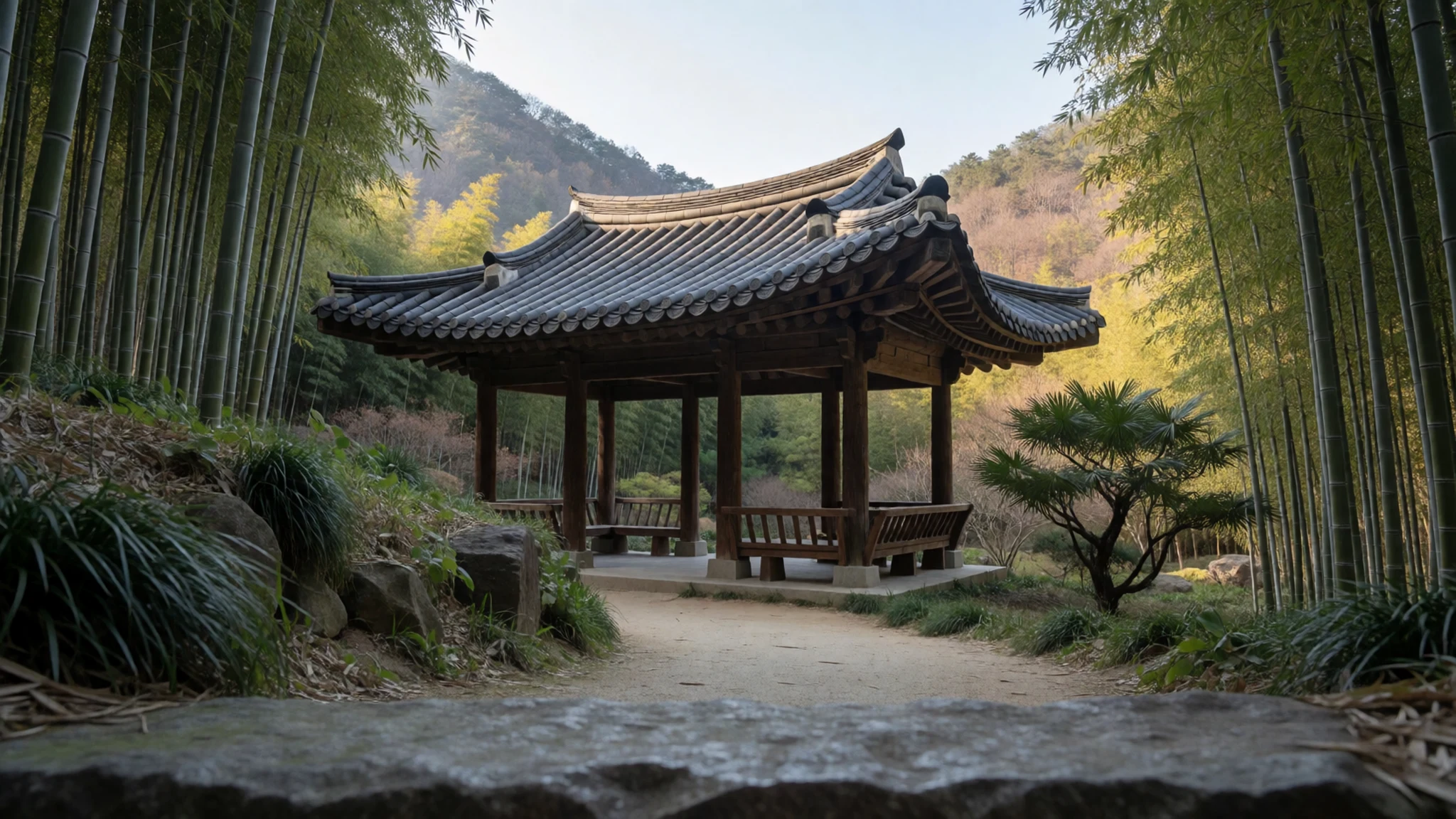
Culture
Juknokwon Bamboo Garden sits inside a culture that has read meaning into bamboo for centuries. Its hollow, upright stems and evergreen leaves stood for integrity and perseverance, and scholars hung bamboo paintings in their studios as a quiet reminder of those virtues. In Damyang that symbolism meets a practical craft tradition, with local households long making baskets, blinds, fans and tools from the cut stems. Today the garden is a favourite outing for Korean families, couples and school groups, and it fits a wider habit of walking in nature for health and calm, often followed by a shared meal. Many Koreans treat a walk like this as a social occasion rather than a solitary one, so the paths can be lively with chatter, especially at weekends. The mood still stays gentle: people stop to photograph the stems, sit in pavilions and talk in low voices. Tea has a natural place here, and bamboo-leaf tea is the local favourite. Spring brings the first shoots, a seasonal food as well as a sign of the year turning. Damyang's wider reputation for garden pavilions and slow countryside living supports the same idea, that stepping into green space is part of ordinary life. Visitors should keep to the marked paths, never carve or write on the stems, and keep their voices low so the grove stays peaceful for everyone.
What to wear
Around Juknokwon Bamboo Garden in Damyang, traditional dress means hanbok, the Korean garment made up of a short jacket (jeogori) and either a full wrapped skirt (chima) for women or trousers (baji) for men, with a long outer coat (durumagi) added in cold weather. Fabrics range from silk for formal occasions to ramie, hemp and cotton for everyday and summer wear. Hanbok is worn today mainly at festivals, weddings and the Lunar New Year and Chuseok holidays, and some visitors rent it for photographs in tourist towns, so ask locally whether that is possible. Day to day, people in Damyang dress as in the rest of South Korea: practical, tidy casual clothes, with hiking-style trousers, light jackets and sturdy trainers for outings like this one. Younger visitors often favour coordinated outfits and sun hats. Visitors should dress for the weather and the terrain. Summers are hot and humid, so breathable cotton or quick-dry fabrics, a hat and a refillable water bottle help. Spring and autumn call for light layers, as shaded bamboo feels cooler than the streets. Winter can be cold, so bring a warm coat. The garden has no strict dress code, but modest, comfortable clothing is the norm. Wear closed shoes with good grip, since wooden steps and earth paths turn slippery in rain. A light waterproof jacket is worth packing in the rainy months.
What to eat
- Tteokgalbi — Traditional restaurants in Damyang town
Grilled patties of chopped short rib, shaped around the bone and seasoned with a sweet-savoury marinade. Damyang is closely associated with the dish, and it is served at the town's traditional restaurants, usually with rice and many small side dishes.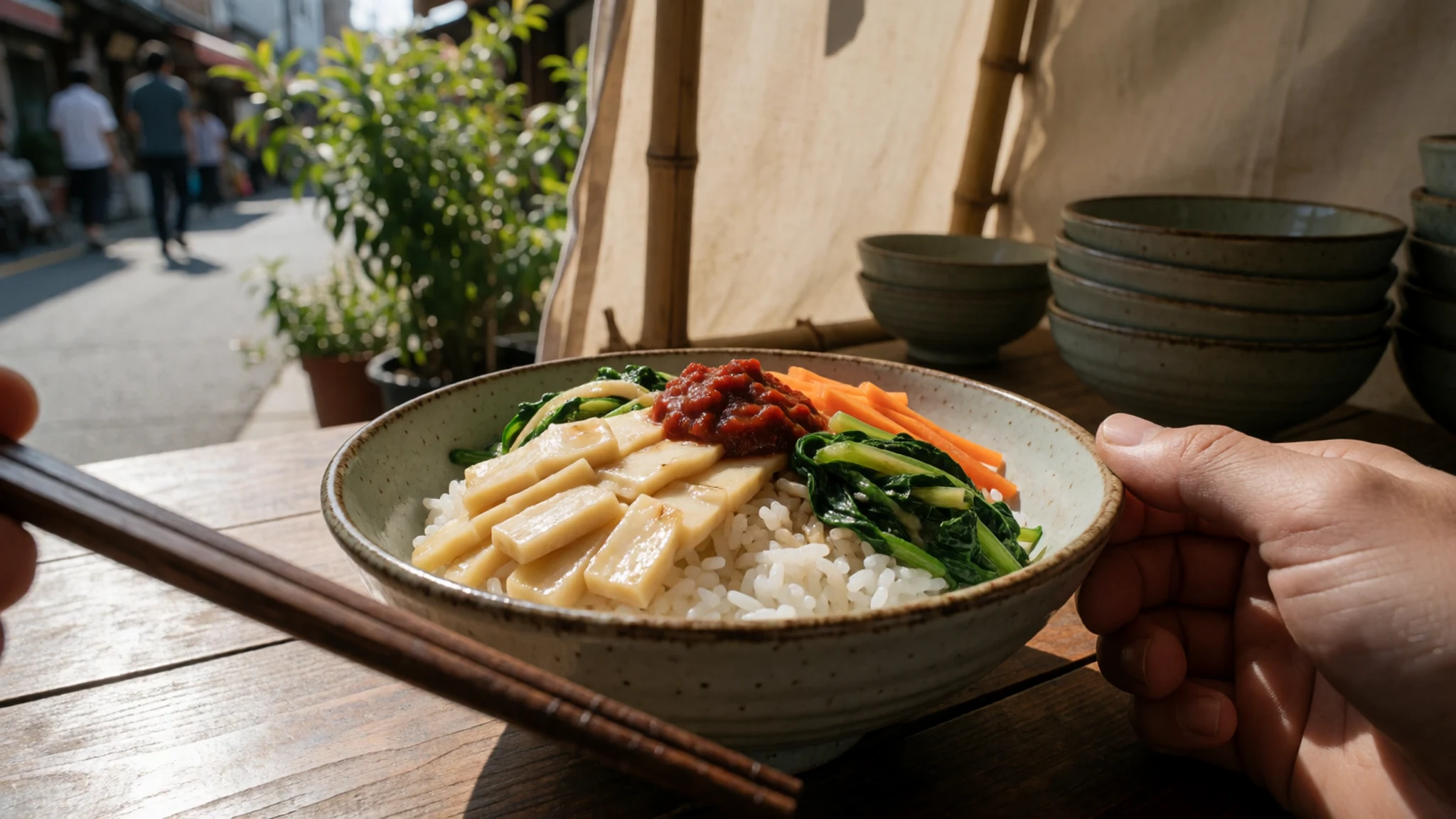
- Daetongbap — Restaurants in the streets near the garden
Rice steamed inside a bamboo tube, often with nuts, beans and grains, so that it absorbs a faint woody fragrance. It tends to arrive as part of a set meal with side dishes, and suits the garden's theme neatly.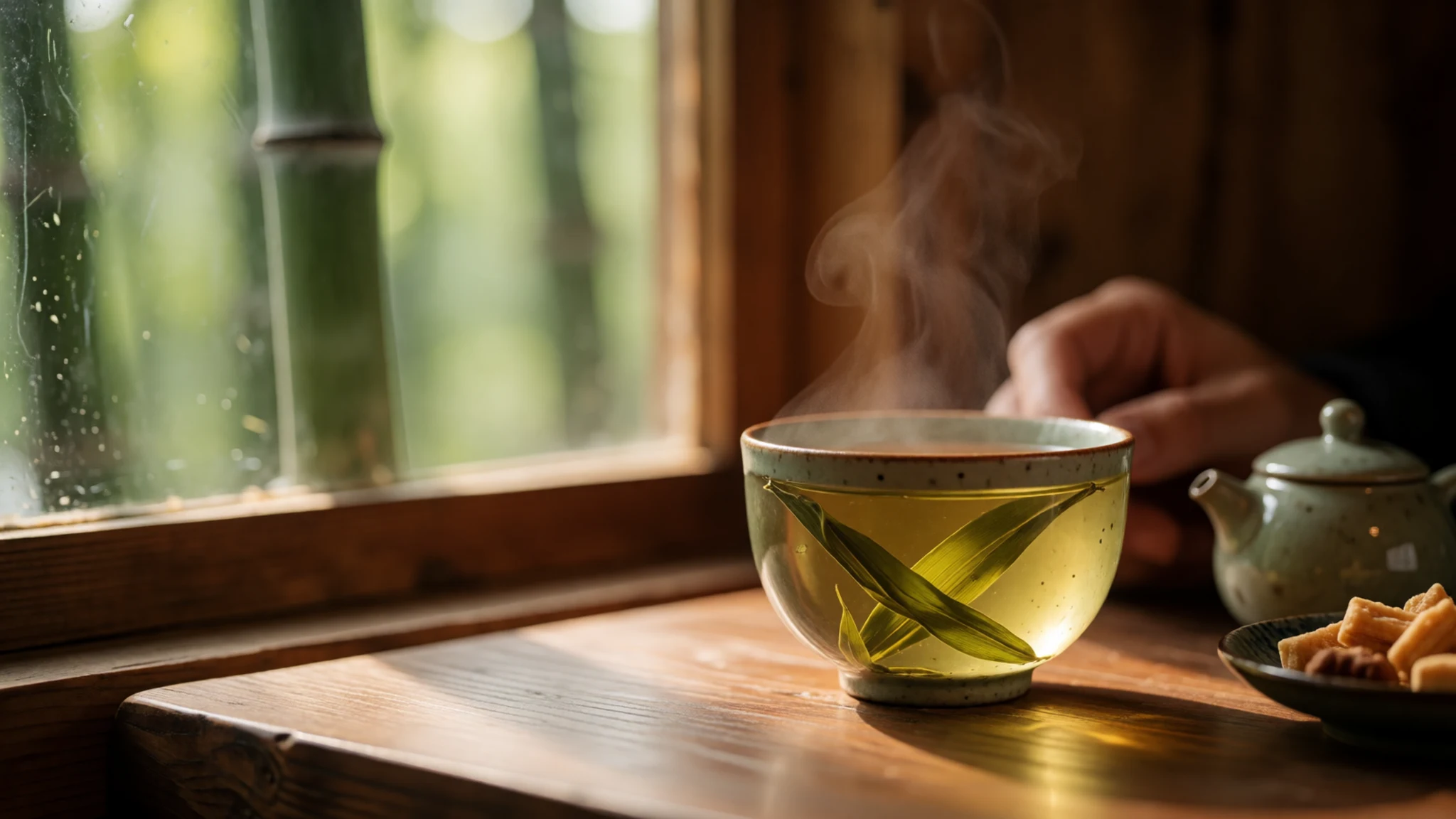
- Damyang guksu — Noodle eateries in Damyang town
Wheat noodles in a clear, light broth, often topped with seasoning and vegetables. It is a simple, quick lunch that eases the heat of summer or the chill of winter, and it is easy to find in small noodle eateries. - Bamboo-leaf tea — Tea rooms and souvenir stalls around the garden
A pale, gently grassy tea made from bamboo leaves, served hot or cold. It is a calming drink after a walk and a popular small gift to take home, sold in bags at souvenir stalls. - Bamboo-shoot dishes — Local restaurants in Damyang, mainly in spring
In spring, young bamboo shoots appear in stews, stir-fries and side dishes, with a crisp, slightly sweet bite. Availability is seasonal, so ask at local restaurants what is in season during the visit.
Plan it
Best time. April–May and October–November for mild, comfortable walking and fresh green or autumn light; June to August is hot, humid and includes the rainy season, while winter is cold.
How long. 1
Getting there. Fly to Seoul Incheon, then take a long-distance train or bus to Gwangju and a local bus or taxi on to Damyang; check current timetables and the garden's own website before travelling.
Budget. low
Tips
- Go on a weekday morning to avoid the weekend crowds
- Check opening times and any entry charge on the official site, https://www.juknokwon.go.kr
- Carry water and wear shoes with grip, as paths are hilly and can be wet
- Keep some cash for small stalls and market snacks
- Pair the garden with a meal in Damyang town
Etiquette
- Stay on the marked paths and do not carve or write on the bamboo
- Keep voices low in the quiet side loops
- Take rubbish away or use the bins provided
Nearby
Sources
- Wikidata Q63135681 (CC0)
- Wikipedia (CC BY-SA 4.0)
- Wikivoyage (CC BY-SA 4.0)
- Christian Bolz, Damyang Jungnogwon Café, via Wikimedia Commons (CC BY-SA 4.0)
- hyolee2, 2015 World Bamboo Fair Damyang 32, via Wikimedia Commons (CC BY-SA 4.0)
- Mar del Este, Bamboo forest in Damyang (1), via Wikimedia Commons (CC BY-SA 4.0)
- Mar del Este, Bamboo forest in Damyang (2), via Wikimedia Commons (CC BY-SA 4.0)
- Mar del Este, Bamboo forest in Damyang (3), via Wikimedia Commons (CC BY-SA 4.0)
- Mar del Este, Bamboo forest in Damyang (4), via Wikimedia Commons (CC BY-SA 4.0)
- Mar del Este, Bamboo forest in Damyang (5), via Wikimedia Commons (CC BY-SA 4.0)
- Mar del Este, Bamboo forest in Damyang (6), via Wikimedia Commons (CC BY-SA 4.0)


