Jinju Castle
Jinju Castle, South Korea
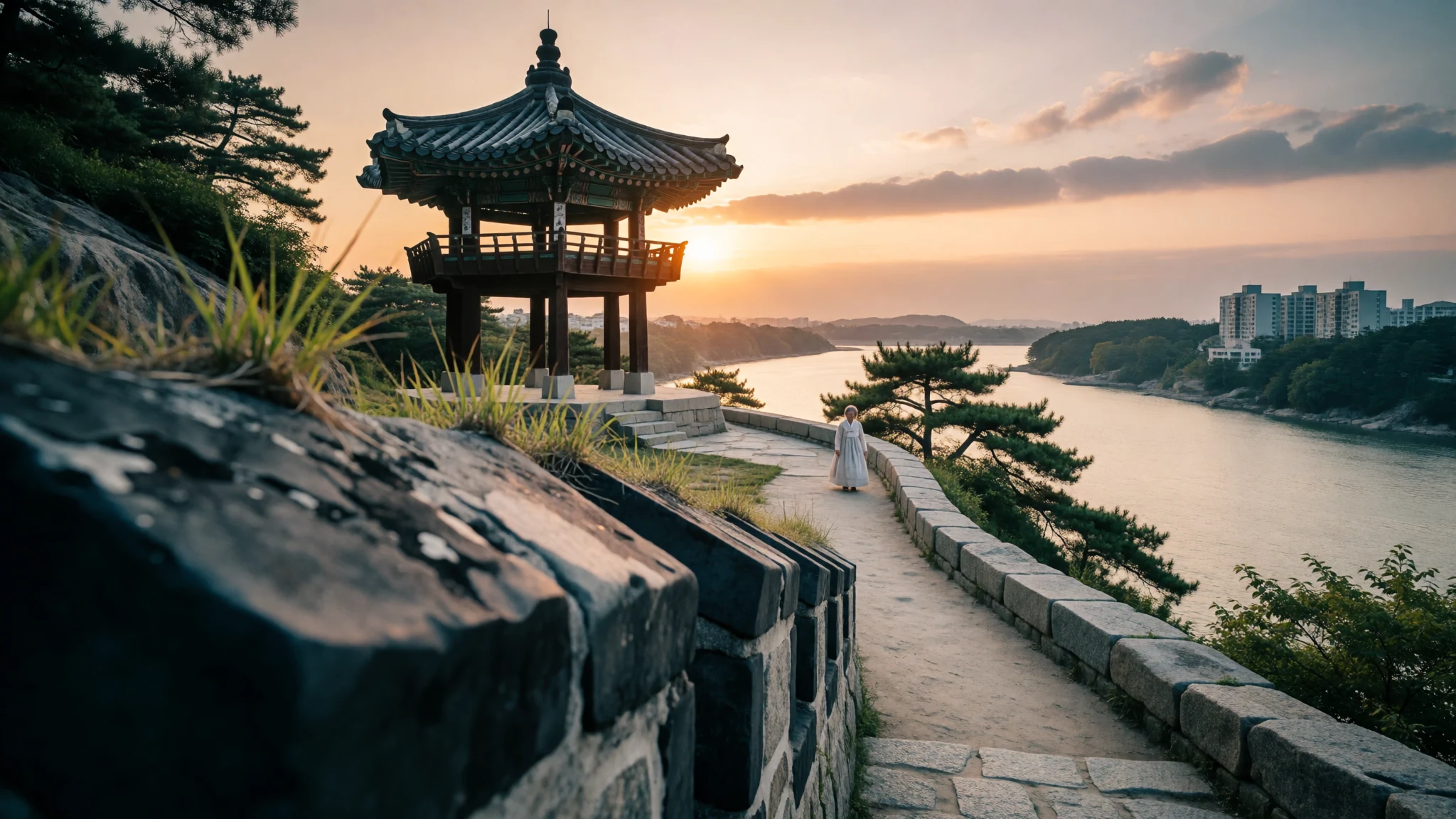
Jinju Castle is a rebuilt fortress above the Nam River, where Korea's war with Japan, a legendary courtesan and quiet riverside walks meet.
The place
Jinju Castle (Jinjuseong, 진주성) stands on the north bank of the Nam River in the south of South Korea, in the middle of Jinju city. What survives today is a walled compound of stone ramparts, gates, command pavilions, shrines and a museum, laid out like a green park with a cliff edge dropping to the water. It has been protected as Historic Site No. 118 since 1963. The river explains the whole place. It gave the fortress a natural defensive side, and it still divides the modern city: the castle, downtown, the intercity coach station and most places to stay are on the northern bank, while the railway station and the express coach station are across the water. Jinju is a small city by Korean standards, with almost 350,000 people in 2022, and its colleges and national universities give it a youthful, unhurried feel. That shows in the evenings, when students and families drift between the castle grounds, the riverside and the cafés nearby. The compound is compact enough to cover on foot in a morning or an afternoon, though a slow visit with the museum and the shrines will fill a day. Weekends and festival periods are busier than weekdays, and in summer the early hours are far kinder for walking the ramparts. Busan, the large port on the south coast, is a coach ride away, which helps explain why this spot has so often mattered to soldiers and officials.
Its story
Jinju Castle began as an earthen fortress, and the story of its walls is largely a story of threats from across the sea. The defenders replaced the mud with stone in 1377, but raiders brought that wall down within two years, and the stone circuit was only finished in 1380. After that the fortress guarded a route running inland from the southern coast, and its garrison always expected trouble. The great test came in the Imjin War, when Japanese armies invaded Korea. Jinju was fought over in two separate sieges. The first is remembered as a defence that held; the second ended with the fortress falling after a bitter struggle, and the civilians inside suffered alongside the soldiers. The museum on the grounds is devoted to that war, and the pavilion on the cliff served as a command post during the fighting. Tradition adds a more intimate story. Nongae, a gisaeng (a trained entertainer), is said to have charmed a Japanese commander onto a rock above the river after the second siege and carried him over the edge with her. Historians treat the details with caution, but Jinju honours her with a shrine and an annual festival. Much of what stands today has been rebuilt on the old lines, so the site reads as a memorial as much as an intact medieval fort.
What to see
- Gongbukmun Gate — Edge of the fortress, Jinju
Gongbukmun Gate is one of the entrances to Jinju Castle, a tiled-roof gatehouse set into the stone rampart. It is a sensible place to start, because the walls on either side show how the fortress was built and where later rebuilding has been done. Walk through slowly, then climb the nearest stretch of rampart for a first view of the grounds.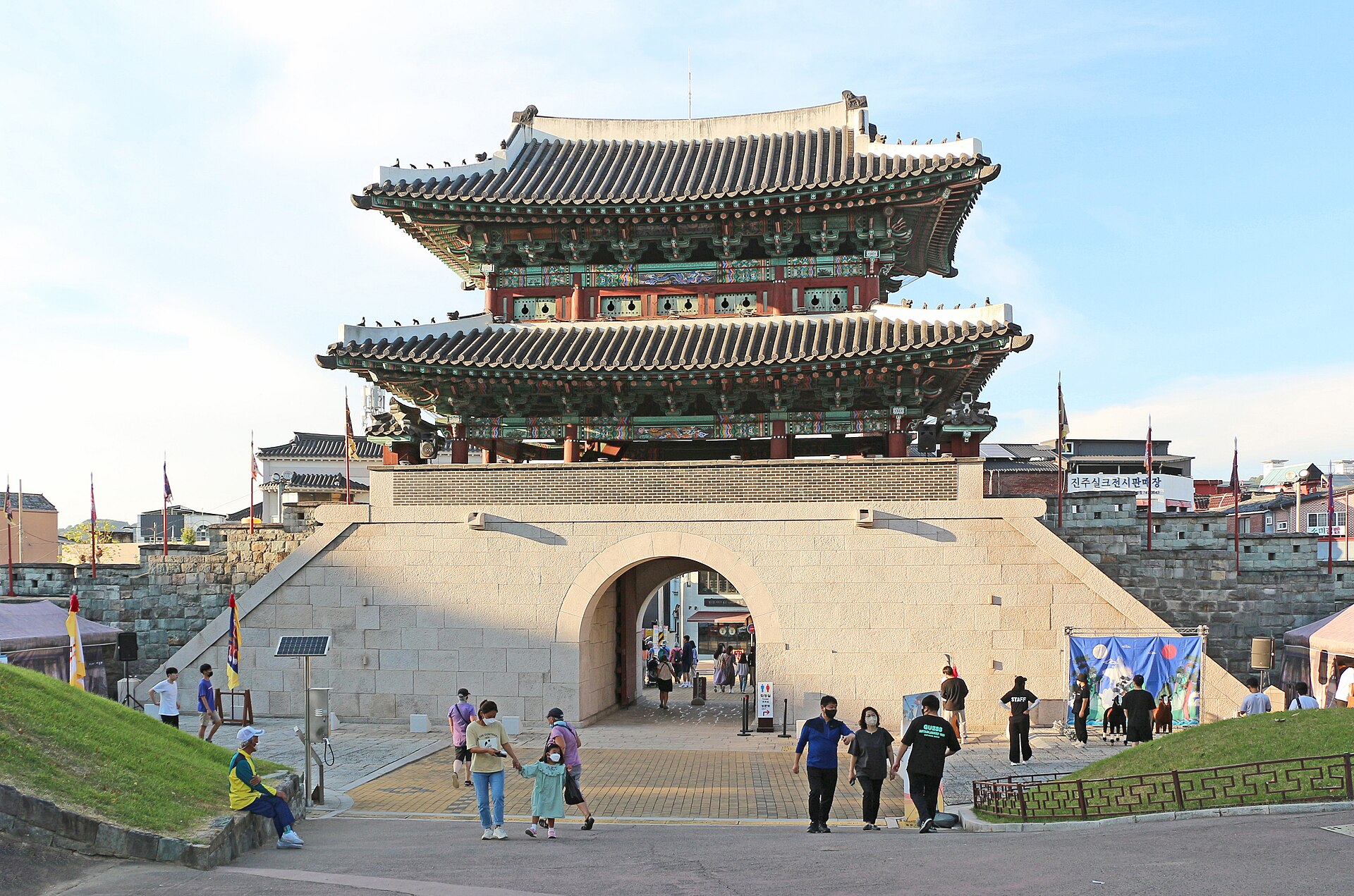
- Chokseongnu Pavilion — Cliff above the Nam River
Chokseongnu Pavilion is the cliff-top building that served as a command base during the battles of Jinju. It stands at the edge of the bluff with wide views over the Nam River, and its timber floor is a good place to pause out of the sun. Late afternoon light on the water is the best reason to linger.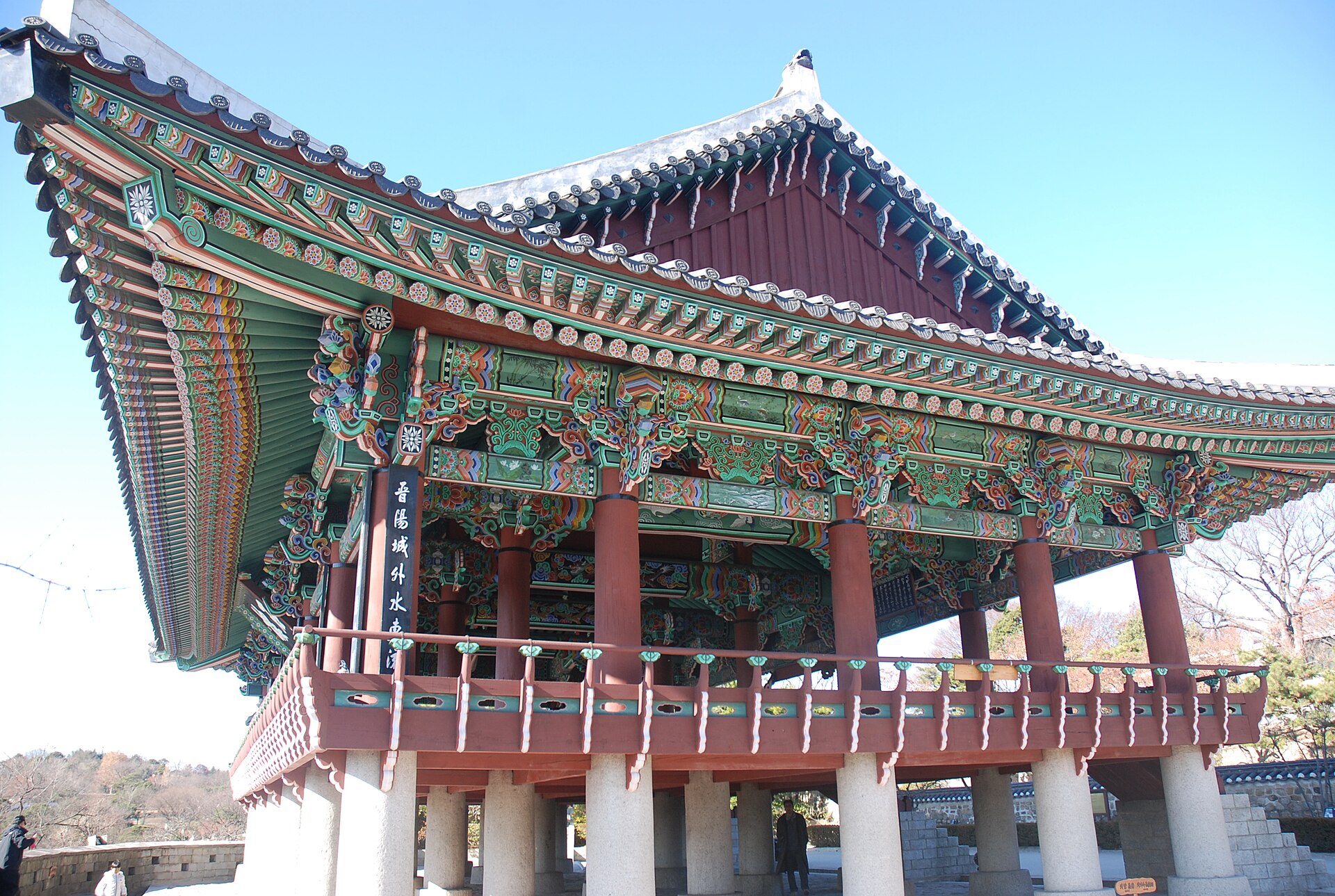
- Jinju National Museum — West end of the fortress
The museum sits at the west end of the fortress. It is a branch of the national museum devoted mainly to the Imjin War, with displays on the invasion, the sieges and the weapons used. A further collection covers exchanges between Korea and Japan over the centuries. It is small, so an hour is plenty, and it gives the rest of the site its context. - Nongae Shrine — Riverside edge of the fortress
Nongae Shrine commemorates the gisaeng said to have died taking a Japanese commander with her over the cliff. It is small and calm, and it makes most sense after the museum has explained the war. The city's yearly Nongae Festival celebrates the same story, so the shrine is busiest around then. - Chongtong cannons and the hwacha — Inside the castle grounds
Displays of weapons around the grounds show how the defenders fought. Chongtong, early Korean gunpowder cannons, appear in several sizes, and the hwacha is a wheeled frame that launched volleys of arrows at once. The labels help, and children tend to enjoy this stop more than the shrines.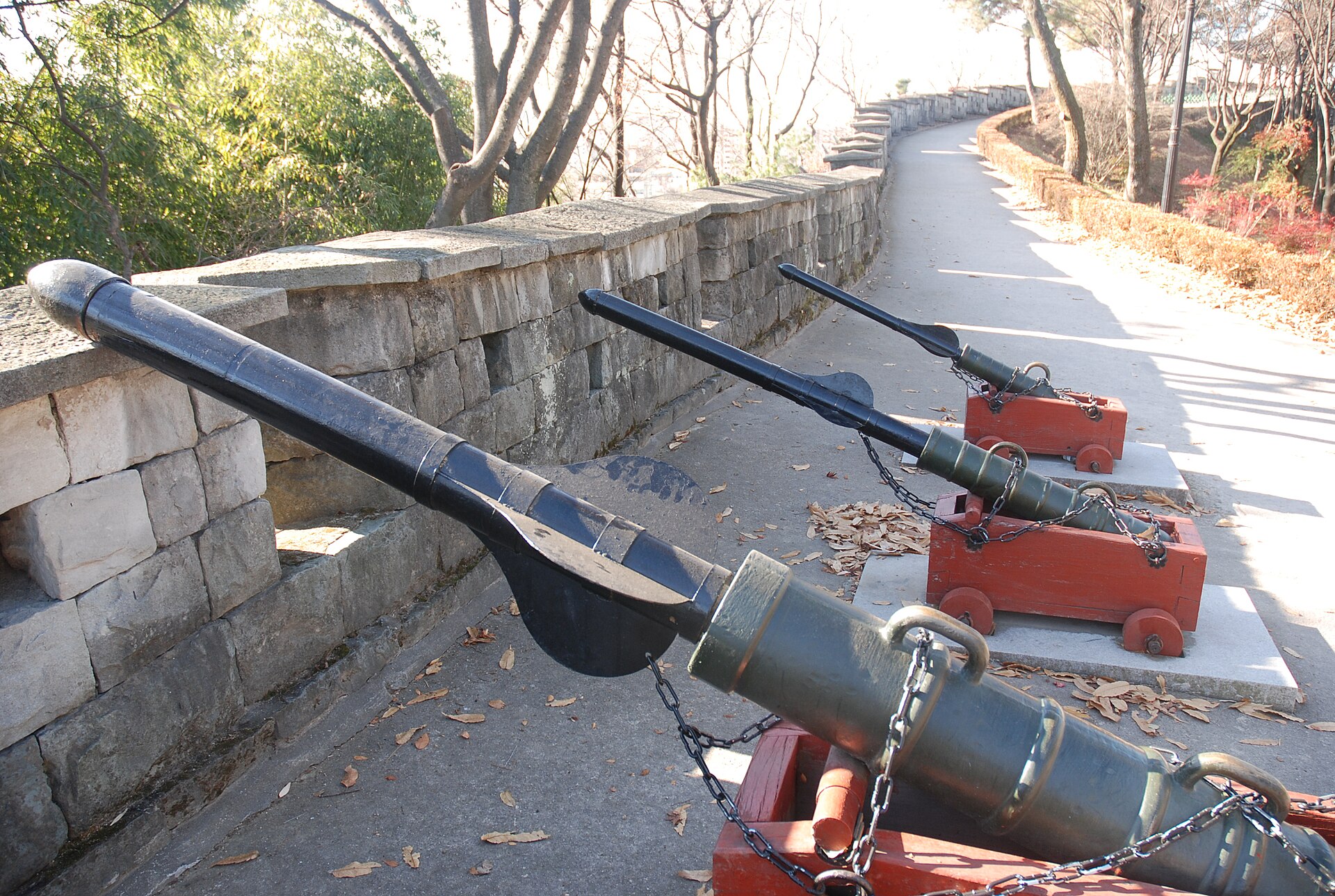
- Musical Fountain — Near the fortress, Jinju
The Musical Fountain, near the fortress, puts on a show of water and light timed to music that ranges from classical to pop. It is an evening stop, best after dark, and a cheerful contrast to the military history of the day. Schedules change, so ask locally or check the city tourism site before planning around it.
Culture
Jinju Castle carries two strands of Korean culture side by side: the Confucian tradition of scholarship and ritual, and the memory of war. Inside the grounds is Chunggoe Seowon, a seowon, or Confucian academy and shrine, the kind of place where scholars once studied and honoured respected figures. Elsewhere in the city, the small Eunyeolsa Shrine is tied to the Confucian scholar Gang Mincheom. The student population of present-day Jinju continues that learned reputation in a modern way. The war memory is most vivid in the story of Nongae, the gisaeng who became a symbol of local resistance. The Nongae Festival remembers her each year with ceremony, performance and public celebration. The Gaechun Art Festival, which has its own memorial monument at the site, belongs to the city's arts calendar. Jinju's relationship with Japan is more layered than simple grievance: the museum covers the invasion and also centuries of exchange, and locals mostly treat the castle as history rather than hostility. Curious visitors are generally welcomed, and a little knowledge of the Imjin War goes a long way in conversation. At the shrines and memorials, speak quietly, do not climb on the monuments or walls, and ask before photographing people in ceremonial dress.
What to wear
At Jinju Castle, traditional dress means hanbok: a short jacket (jeogori) over a wrap skirt (chima) for women, and a jacket with loose trousers (baji) for men. Fabrics include silk for formal and festive wear, ramie and hemp for the hot months, and cotton for everyday use. Hanbok comes out at Seollal and Chuseok, at weddings and at heritage events, and the Nongae Festival is a natural moment to see period costume, including gisaeng-style outfits. Day to day, Jinju dresses like any provincial Korean city: students in casual layers and trainers, office workers in neat, understated clothes, and older walkers in hiking-style jackets and sun visors. Sportswear is perfectly normal at a castle that doubles as a park. Visitors need little formality. Summers are hot and humid, so light, breathable fabrics, a hat and a refillable water bottle matter, and a thin rain layer helps in the wet season. Winters are cold, so layers are sensible. The ramparts, steps and gravel paths favour flat, comfortable shoes. Covering shoulders and knees is not strictly required at the shrines, but tidy, modest clothing is polite, and shoes come off before stepping into any raised wooden hall.
What to eat
- Jinju bibimbap — Traditional restaurants near the fortress and downtown
Rice topped with seasoned vegetables and often raw beef, mixed at the table with chilli paste. Jinju is known for its own style of the dish, and set meals are easy to find in traditional restaurants near the fortress and downtown. - Jinju mulnaengmyeon — Long-running noodle restaurants in the city
Cold noodles in a chilled broth, topped with cucumber, egg, slices of beef jeon and thin threads of red chilli. Some restaurants serve a fresh salad and a hot soup alongside, a good lunch on a humid day. - Grilled eel (jangeo-gui) — Traditional-style houses in the city centre
Eel grilled over heat and brushed with a sweet-savoury glaze, eaten with wraps and condiments. A few eel restaurants in Jinju occupy ornate traditional houses, which makes them easy to spot even without an English sign. - Yukhoe — Korean restaurants downtown
Raw beef cut into thin strips and dressed with sesame oil and seasoning, usually topped with an egg yolk. It suits people who enjoy raw dishes, and it appears on the menus of many downtown Korean restaurants. - Steamed buns, honey bread and patbingsu — Jinju Central Market
Bakery counters sell fluffy steamed buns and honey bread, while patbingsu, shaved ice with sweet red beans, cools a hot afternoon. A traditional bakery inside the central market is a popular stop for all three.
Plan it
Best time. April–May and October–November, when the weather is mild and the walk round the ramparts is comfortable. Summer is hot and humid with a wet season, and winter is cold, so those months suit shorter visits.
How long. 1–2
Getting there. Sacheon Airport, about 20 km from the city, has daily flights from Seoul's Gimpo Airport, then a bus of about 25 minutes into town. Busan's Gimhae International Airport is about an hour and a half away. Coaches from Busan and Seoul are the easiest overland route, and Jinju Station has KTX train services. The intercity coach terminal is within walking distance of the castle; from the railway or express coach stations on the south bank, take a short taxi or walk across the river.
Budget. low
Tips
- Visit early on summer mornings to beat the heat and the weekend crowds.
- Check the official site (https://www.jinju.go.kr/tour.web) for opening times and any entrance fees before you go.
- Check which coach terminal your ticket uses: the intercity terminal is close to the castle, the express terminal is across the river.
- Jinju is a very safe city, so evening walks by the river and the fountain are fine.
- Budget travellers can look at a jjimjilbang, a Korean bathhouse with sleeping floors, for a cheap night.
Etiquette
- Take off your shoes before stepping onto a raised wooden floor at a shrine or hall.
- Keep your voice low at the shrines and memorials, and do not climb on monuments or walls.
- Ask before photographing people in ceremonial dress.
Nearby
Sources
- Wikidata Q12618350 (CC0)
- Wikipedia: Jinjuseong (rev 1339337344) (CC BY-SA 4.0)
- Wikivoyage: Jinju (rev 5405888) (CC BY-SA 4.0)
- Photo: Gongbukmun Gate at Jinjuseong Fortress, Bernard Gagnon (CC0 1.0)
- Photo: Jinju castle north headquarters, Kang Byeong Kee (CC BY 3.0)
- Photo: Chongtongs at Jinju Castle, Kang Byeong Kee (CC BY 3.0)
- Photo: Shinkigeon-style Hwacha, Kang Byeong Kee (CC BY 3.0)
- Photo: Jinju castle rampart along Nam River, Kang Byeong Kee (CC BY 3.0)
- Photo: Choksuk Pavillion, Kang Byeong Kee (CC BY 3.0)
- Photo: Chunggoe Seowon, Kang Byeong Kee (CC BY 3.0)
- Photo: Gaechun Art Festival Memorial Monument, Kang Byeong Kee (CC BY 3.0)


