Jindo Island
Jindo Island, South Korea
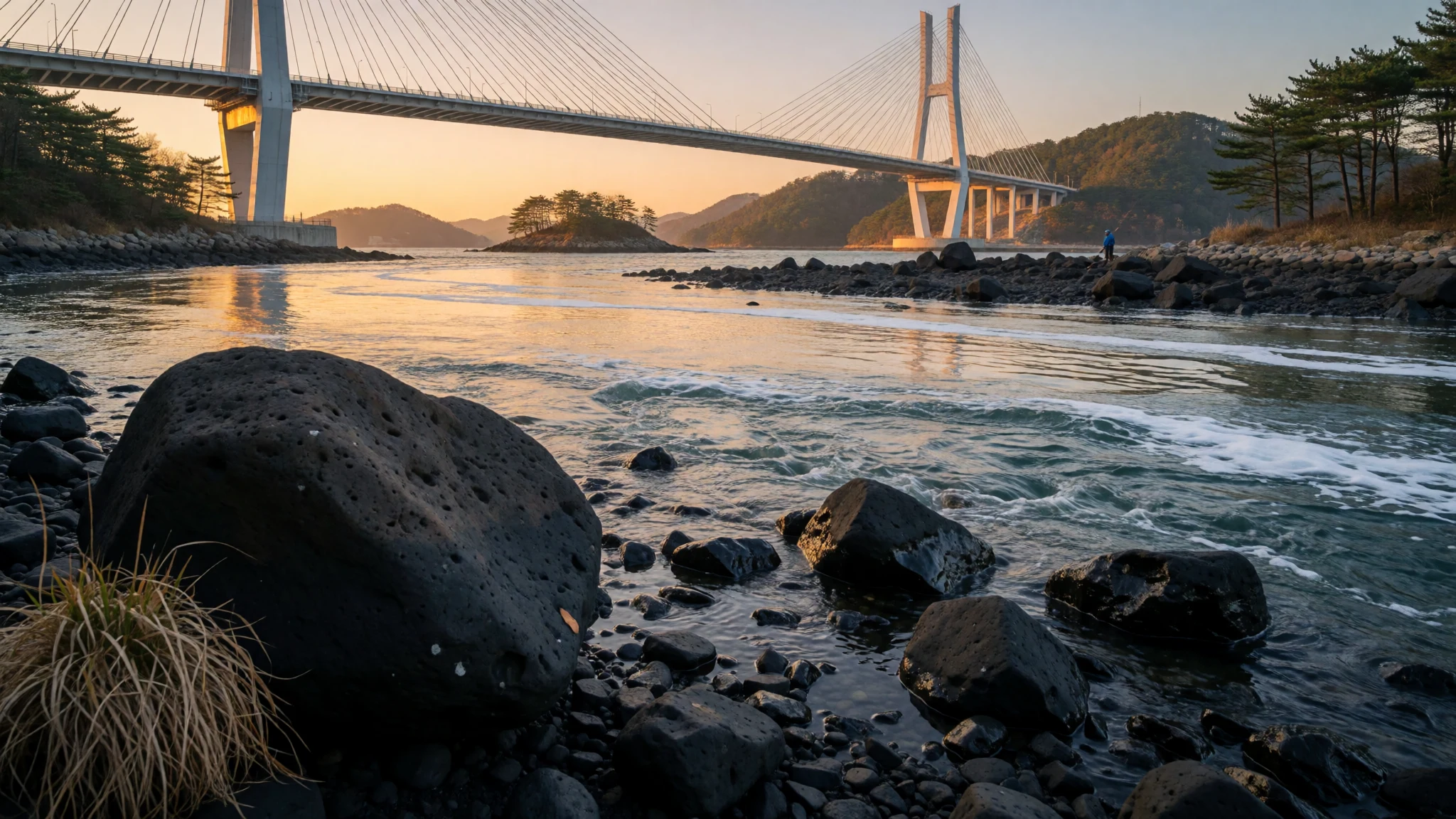
Jindo is a quiet South Korean island where a roaring tidal strait, a famous naval victory and a parting sea road share one coast.
The place
Jindo is an island off the south-west corner of the Korean Peninsula, in South Jeolla province, and it anchors a county made of scattered islands. The county contains roughly 230 small islands. Only 45 have people living on them. The total population of these inhabited islands is about 4,855. As a result, the local mood is defined by fishing and farming communities, not resort strips. A cable-stayed bridge, 484 metres long, crosses the Myeongnyang Strait and joins the island to the mainland, and most visitors arrive over it by bus from Mokpo. The strait is narrow and fast, and it was once called Uldolmok, the roaring channel, for the sound of its tide. The island rises to 485 metres, so the interior is hilly, with glimpses of the sea from many ridges. Koreans know Jindo for the naval battle fought in the strait, for the Jindo dog, and for a tidal path that opens across the sea towards the small island of Modo. That path, stretching roughly 2.9 km in length and reaching 40 metres in width, appears for roughly an hour on a variable day in spring or summer, and it draws hundreds of thousands of people. On other days Jindo is calm: long coastal drives, sunset viewpoints on the west coast, and seafood eaten near the water. Distances are real. The island is several hours by bus from Seoul, so it suits a slow stay better than a day trip, and the sights are spread out enough that a car or taxi helps.
Its story
Jindo's written history begins with the name Haeyangdo, given in 995, after an earlier life as Okju, one of the states of the Three Kingdoms era. In 1001 it took the name Jindo, which it still carries, though people had lived here since prehistoric times. The 13th century brought the Mongols. The island sheltered the Sambyeolcho rebels who resisted them, until the Mongols captured it and cleared out its settlements. Families came back afterwards, but Japanese pirate raids kept the island close to empty for much of the following century. The event Koreans most associate with Jindo came on 16 September 1597, during the Imjin War. In the Myeongnyang Strait, Admiral Yi Sun-sin met a Japanese fleet of 133 warships with just 13 panokseon, the sturdy wooden warships of the Joseon navy, and won. The narrow channel and its violent tide did much of the work. The strait's old name, Uldolmok, the roaring channel, comes from those currents, which are loudest in spring. The battle later became the basis of the film Roaring Currents, so many Korean visitors arrive already knowing the story. Today a bridge spans the water where the fighting happened, and the memory sits easily beside ordinary island life of nets, small harbours and tide tables. Standing at the strait as the water runs hard makes the old account easy to believe.
What to see
- Jindo Bridge and Jindo Tower — Northern Jindo, near the Myeongnyang Strait
The cable-stayed Jindo Bridge crosses the Myeongnyang Strait where the 1597 battle was fought. Jindo Tower stands on Manggeumsan hill beside it, with a café, a restaurant and a wide view over the channel. Watching the tide race beneath the span explains the strait's old name better than any signboard.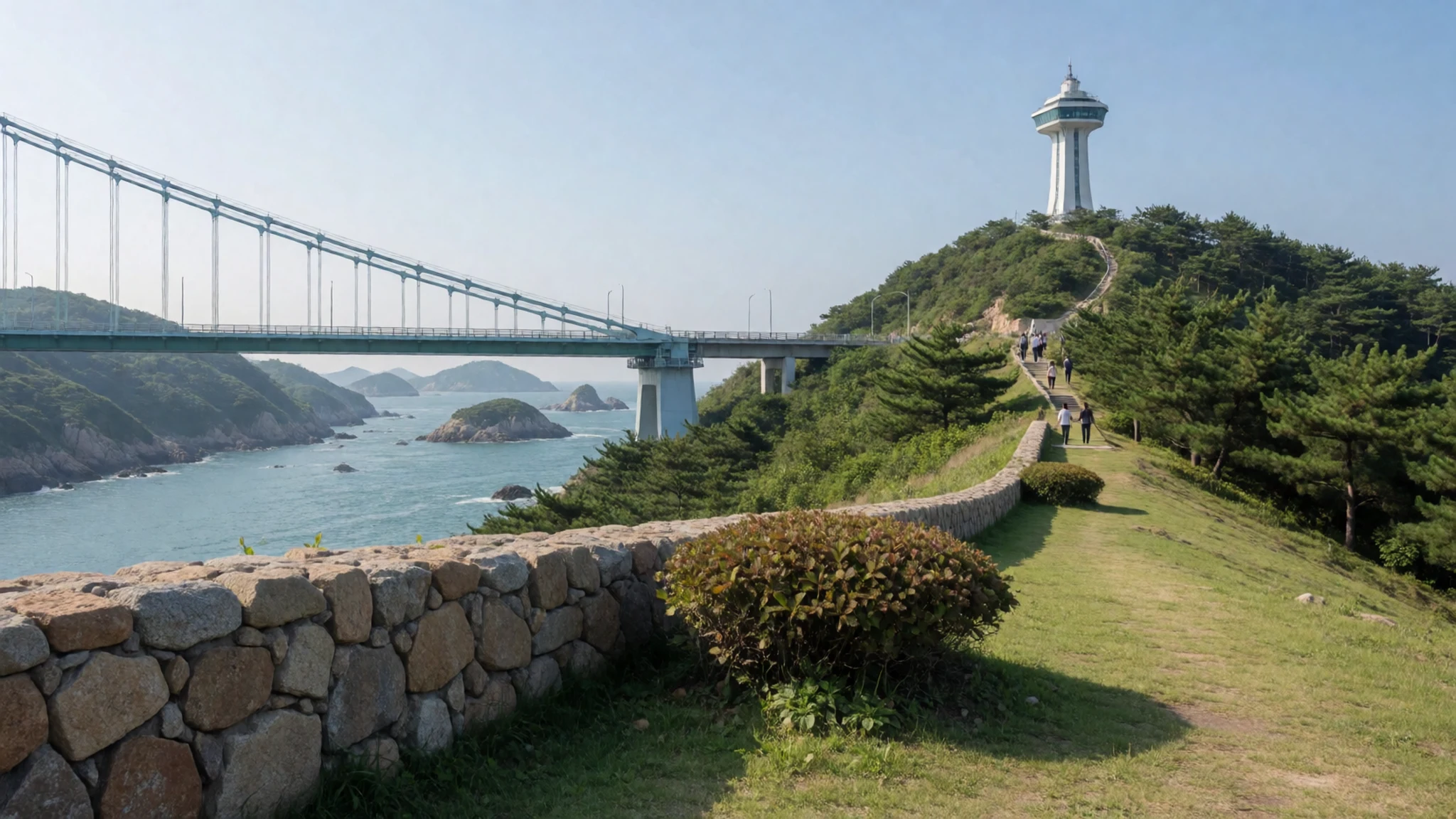
- Sebang Nakjo Observatory — West coast
On Jindo's west coast, Sebang Nakjo is a lookout used for sunsets, with small islands scattered across the water and the sea turning copper behind them. It sits not far from the National Recreation Forest, so the two combine well in one afternoon. Plan the drive back before dark.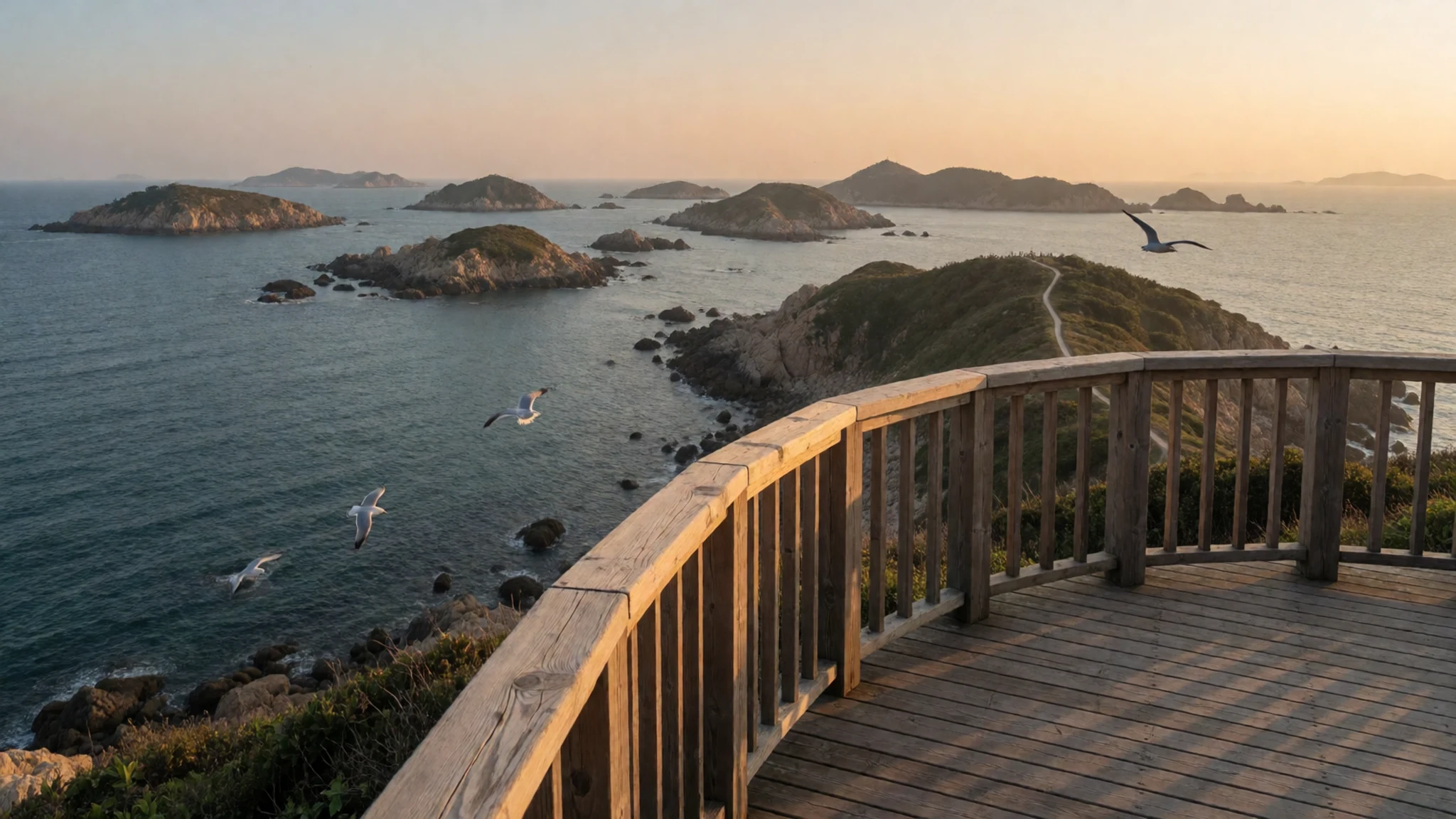
- Gagye Beach and the sea road — Eastern Jindo, facing Modo
Gagye Beach is the usual base for the tidal sea road towards Modo, a short distance south. When the water draws back, a strip of seabed becomes walkable for about an hour, and festival stalls and crowds gather. Ssanggyesa Temple, Unlimsanbang and Yongjangsanseong Fortress are close by, so the area rewards a full day.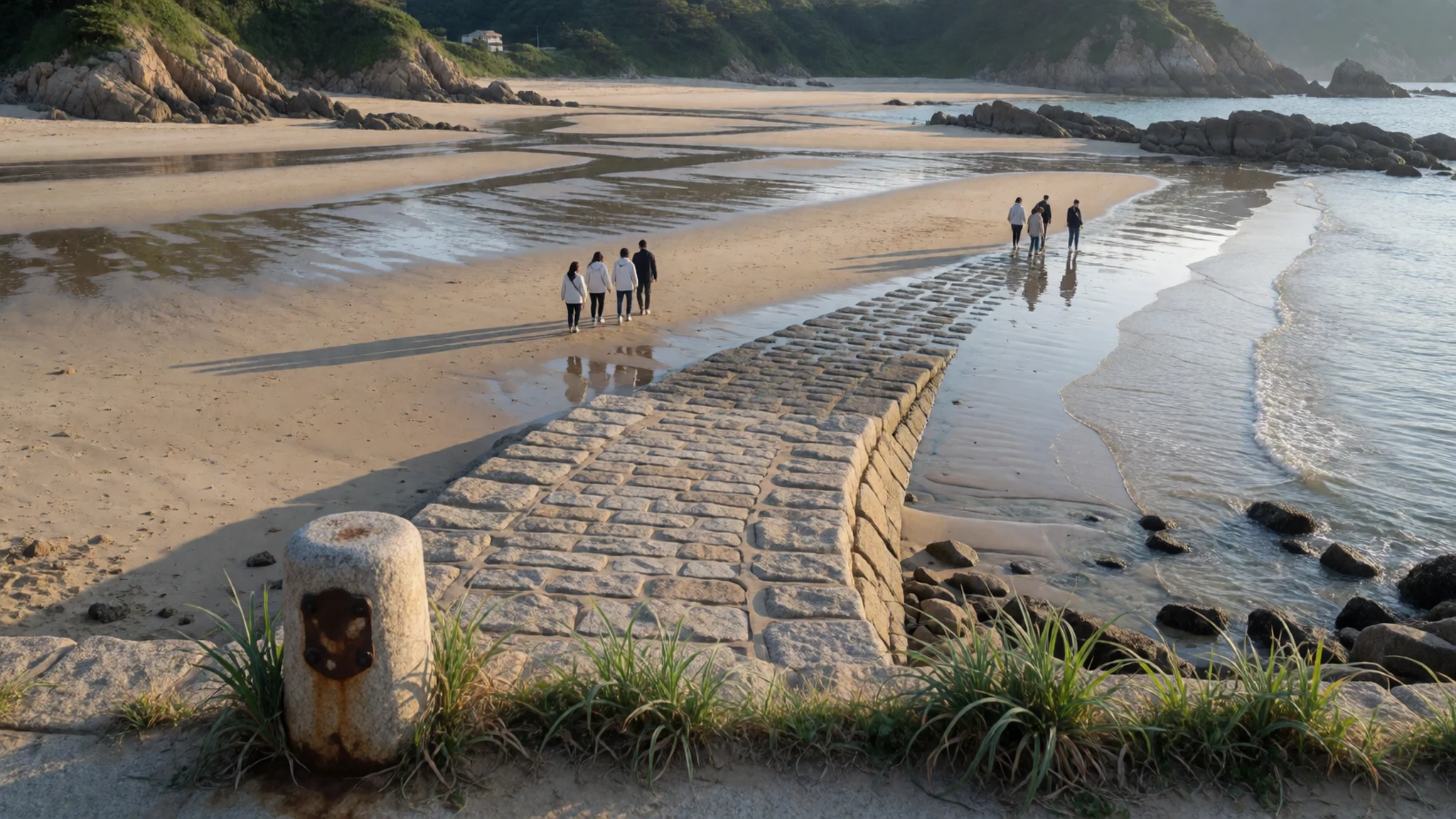
- Jindo Dog Theme Park — Near Jindo-eup
Jindo is home to the Jindo dog, and this park near the main town is devoted to the breed. It has a promotion centre, a race course, an agility-style course, a medical centre and a children's sledding slope, with dog sports shown daily. Check the schedule locally. It suits families and anyone curious about the breed.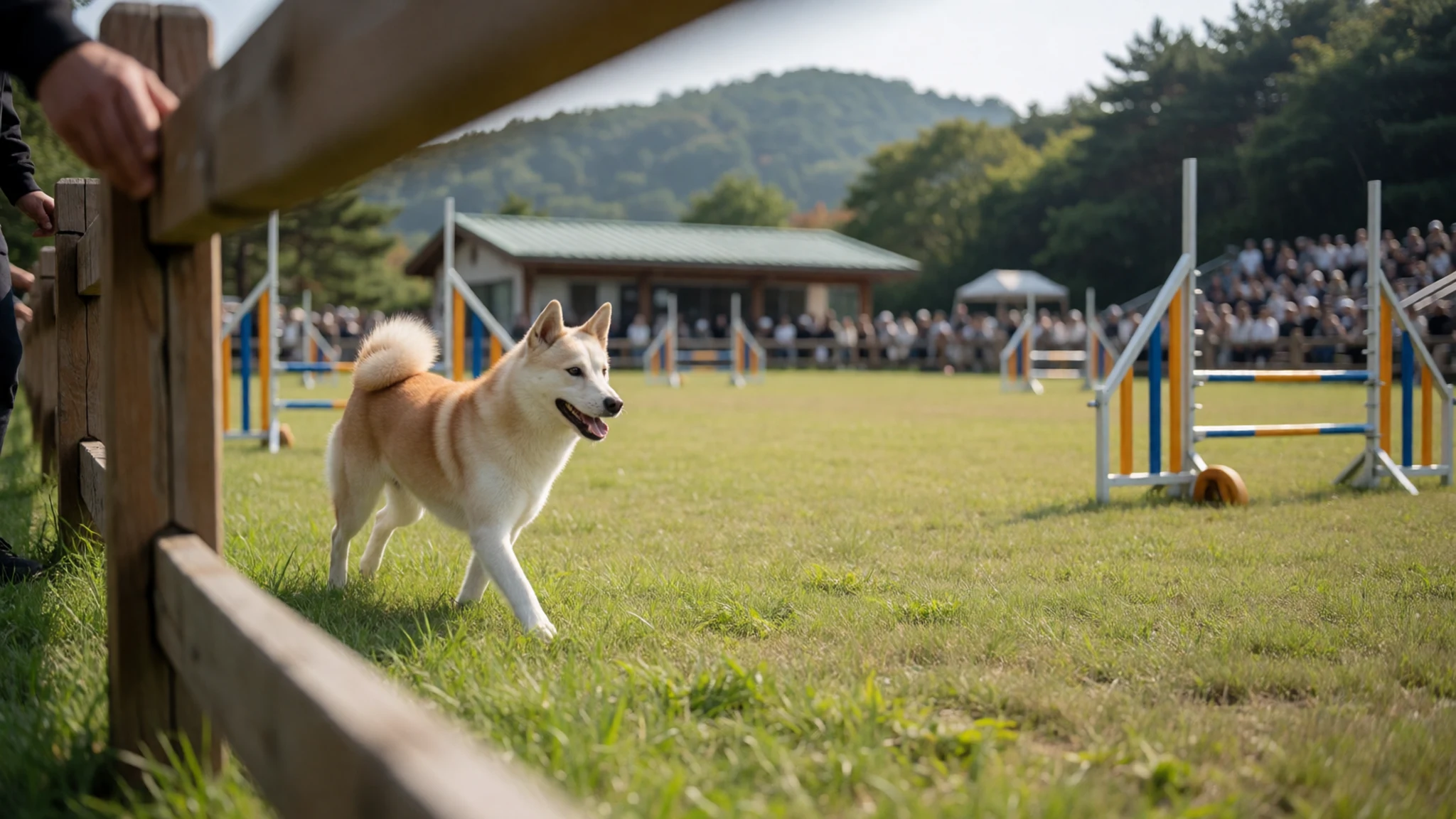
- Unlim Mountain Room — Eastern Jindo
Unlim Sanbang is the studio where He Yu, a painter of the late Joseon period, lived out his later years. It makes a quiet counterpoint to the battle sites and shows Jindo as a place of brush and ink as well as war. It is a short drive from Gagye Beach, so the two pair well.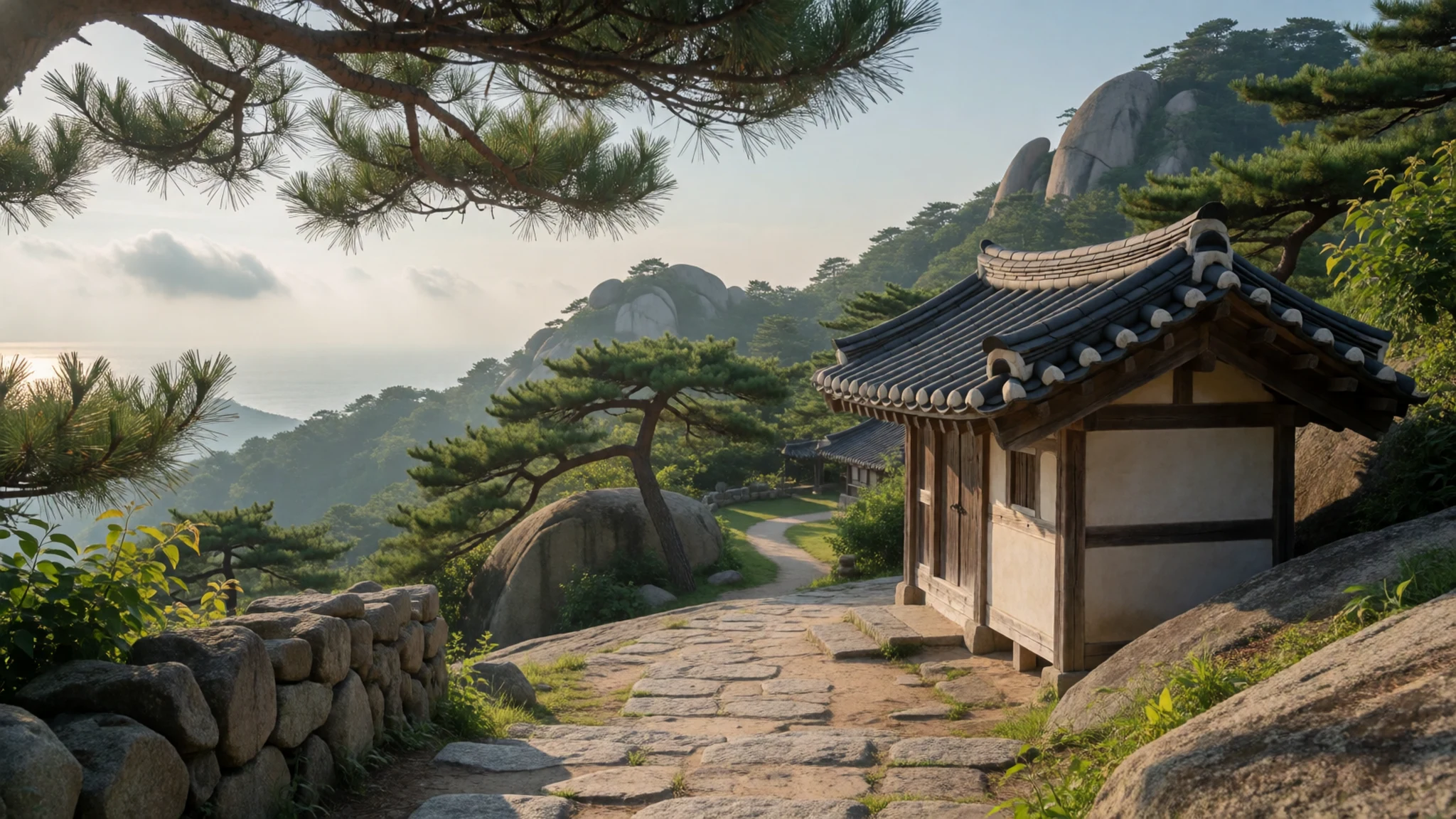
Culture
Jindo's culture is shaped by the sea, by memory of the 1597 battle and by a strong island identity. Admiral Yi Sun-sin is remembered with real affection across Korea, and the strait where he fought is treated with quiet pride rather than spectacle. The tidal sea road gives the island its biggest gathering: local festivals form around the parting of the water, and families walk out together towards Modo. The island also takes its dogs seriously. The Jindo dog has its own park, with races and displays, and islanders speak of the breed as a local treasure. Daily life follows the tide and the season. Fishing communities start early, meals centre on whatever the sea gave that week, and neighbours know one another. Hospitality in South Jeolla is generous, and a polite refusal of a second helping may be gently argued with. Painters such as He Yu, who spent his later years at Unlim Mountain Room, also tie the island to the scholar-artist tradition of the Joseon era, so the coast has a contemplative side as well as a martial one. Visitors who show curiosity about the tide, the dogs and the history usually get friendly answers. On sea-road days, follow the marshals' instructions, keep to the marked path, leave shells and sea creatures where they lie, and be back on shore before the water returns.
What to wear
Jindo's traditional dress is the Korean hanbok: a short jacket called jeogori worn over a full skirt, the chima, for women, and jeogori with loose trousers for men, with a long coat, the durumagi, added for formality. Fabrics include silk for celebrations, ramie and hemp for hot summers, and cotton for everyday and winter wear. Hanbok appear now mainly at weddings, the Lunar New Year and Chuseok, and at festivals and cultural shows. Day to day, islanders dress for work and weather: waterproof boots and sturdy gloves in the fishing villages, wide-brimmed hats and long sleeves against the sun in the fields, and ordinary casual clothes in Jindo-eup. Visitors should dress for the coast. Pack layers and a windproof jacket, since sea breezes cool quickly, and a sun hat for summer. Closed shoes with grip suit the muddy tidal flats and the hill paths. Water shoes help on the sea road if you intend to walk out onto wet ground. Dress is relaxed, but shoulders and knees covered is a sensible rule when visiting Ssanggyesa Temple or someone's home. Bring a light waterproof for sudden showers, particularly in the rainy months.
What to eat
- Nakji (octopus) dishes — Seafood eateries around Jindo-eup and the south coast
Small octopus is a signature of the island, served stir-fried with chilli, in hot pots or lightly cooked. The portions arrive with many side dishes. Look for eateries that specialise in nakji; they usually serve it fresh from the morning's catch.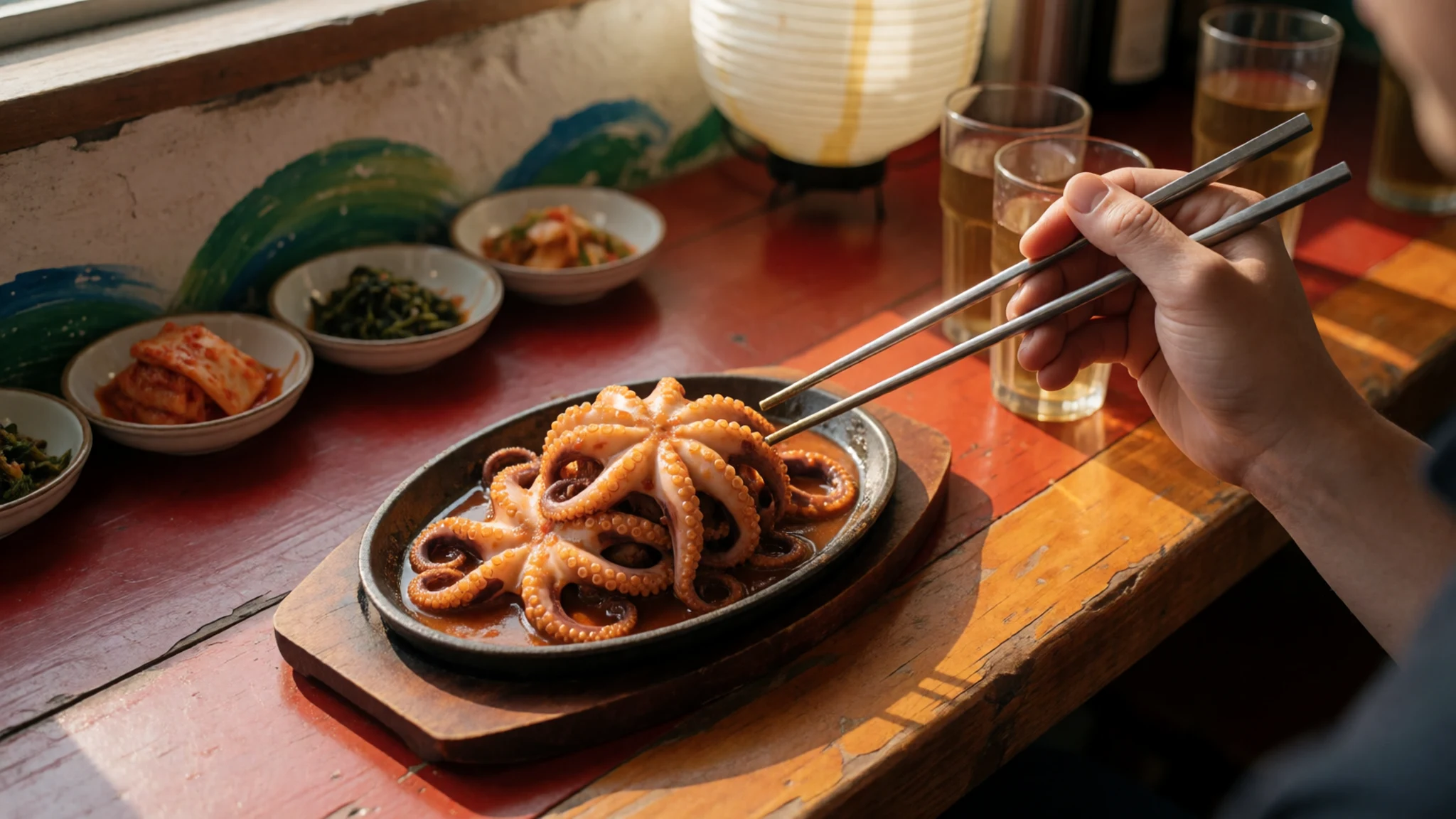
- Seasonal fresh seafood — Fishing harbours and seafood restaurants near the coast
The sea around Jindo supplies fish, shellfish and more, and menus change with the season. Ask what came in that day. Seafood spots near the harbours tend to serve whatever is freshest, usually with rice and a spread of small dishes.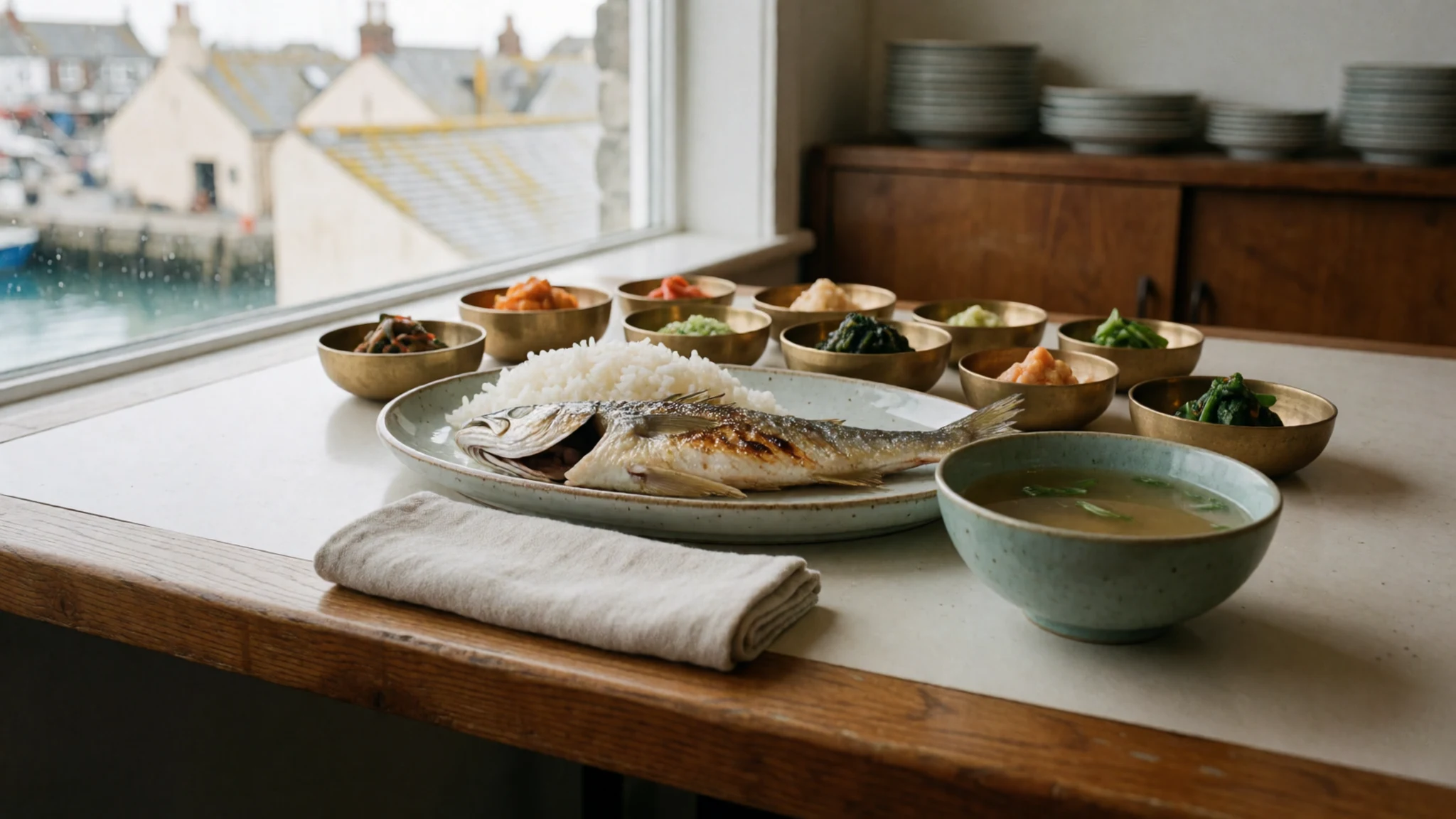
- Jjigae (stews) — Family-run Korean restaurants near Jindo Sol Beach
Jjigae are bubbling, spicy or savoury stews, often built on seafood, tofu or vegetables. A good choice after a cold, windy day on the coast. Family-run Korean restaurants near the beach and in the main town serve them with rice. - Pork cutlet (tonkatsu) — Casual restaurants near Jindo Sol Beach
For anyone wanting something familiar after days of seafood, crisp pork cutlet is a reliable option in casual restaurants near the beach. It is a Korean take on the Japanese dish and often comes with rice, cabbage and a sauce. - Coffee and light bites — Converted-house cafés near the coast, such as around Modo
A few cafés in converted houses near the shore serve coffee, tea and light snacks with sea views. They are good places to wait out a rainy hour or to sit between sights, though opening days vary, so check before travelling.
Plan it
Best time. April–May and October–November. Spring and autumn are mild and clear for walking and coastal drives, and the tidal sea road opens on a variable day in spring or early summer, so check dates before booking. Midsummer is hot and humid, and late summer can bring typhoon weather. Winter is cold and windy on the exposed coast.
How long. 2–3
Getting there. Most visitors come by bus. Express coaches run from Seoul Express Bus Terminal and from Incheon, and intercity coaches run about hourly from Mokpo and Gwangju, with Mokpo the usual hub. Coaches stop at the main Jindo Bus Terminal in Jindo-eup. If you are heading for the Myeongnyang Strait or the north, ask for the flag stop at Nokjin, just across the bridge, which saves backtracking. The last coach back to Mokpo leaves in the evening, so check the time.
Budget. mid
Tips
- Check the official site, http://tour.jindo.go.kr/english/, for sea-road festival dates and arrive early on those days, as the crowds are huge.
- Sights are spread across the island, so hire a car or arrange a taxi for the day.
- Carry some cash as well as a card for small eateries and rural shops.
- Aim for the west coast viewpoints before sunset and plan the drive back in daylight.
- Seafood menus change with the season, so ask what is fresh before ordering.
Etiquette
- Follow marshals' instructions on the sea road and return to shore before the water comes back.
- Remove your shoes where you see a raised floor or shoes lined up at a door, especially in homes and temple buildings.
- Ask before petting a Jindo dog or photographing local people at work.
Nearby
Sources
- Wikidata Q485651 (CC0)
- Wikipedia: Jindo (island), rev 1377446932 (CC BY-SA 4.0)
- Wikivoyage: Jindo, rev 5405855 (CC BY-SA 4.0)
- Photo: 진도대교 Jindo Bridge, old ccc (CC BY-SA 2.0)
- Photo: The Jindo Bridge in South Korea, Doo ho Kim (CC BY-SA 2.0)
- Photo: Jindo 004, User:Piotrus (CC BY-SA 2.5)
- Photo: Jindo 005, User:Piotrus (CC BY-SA 2.5)
- Photo: Jindo 006, User:Piotrus (CC BY-SA 2.5)
- Photo: Jindo 007, User:Piotrus (CC BY-SA 2.5)
- Photo: Jindo 008, User:Piotrus (CC BY-SA 2.5)
- Photo: Jindo 009, User:Piotrus (CC BY-SA 2.5)


