Iriomote Island
Iriomote Island, Japan
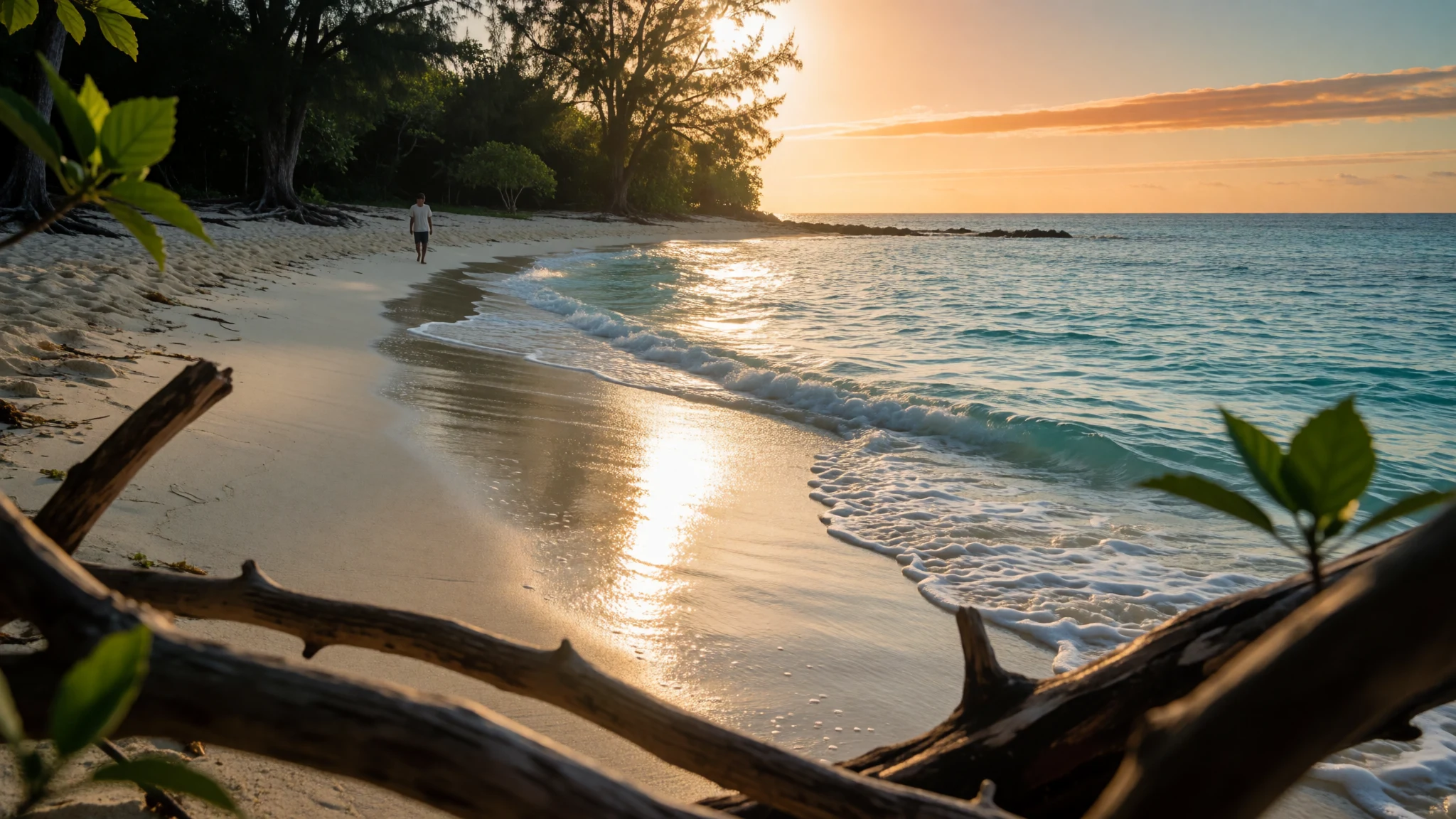
Iriomote Island keeps a wild tropical coast of mangrove rivers, jungle waterfalls and empty beaches far south in Okinawa.
The place
Iriomote Island sits in the Yaeyama group at the southern end of the Ryukyu chain, a mountainous, river-cut island wrapped in tropical rainforest and edged by mangrove, coral and pocket beaches. Most of the interior is steep and green, with short, fast rivers running off the ridges into quiet inlets. Two small settlements do most of the receiving: Uehara on the northern shore and Ōhara on the south-east, linked by a coastal road that does not circle the whole island. Between them the forest comes down to the water, and long stretches of shore have no village at all. The feel is closer to a national park with a few fishing hamlets than to a resort coast. Boats, not a causeway, tie the island to Ishigaki, and the day is shaped by ferry times, weather and how much walking or paddling someone is willing to do. Rivers are the roads into the interior. Flat water under mangrove gives way, upstream, to clear pools and waterfalls reached on foot. Beaches on the western side open onto the East China Sea; the eastern coves look toward the rest of the Yaeyama islands. Wildlife is part of the ordinary landscape, not a separate attraction. The Iriomote cat, a small wild felid found only here, moves at dusk along roads and stream beds, and visitors are asked to treat it as a neighbour rather than a sighting to chase. Mangrove crabs, coral-reef fish and fruit bats share the same compact map. Heat and humidity last much of the year, rain falls in short heavy bursts, and summer seas can stop the boats. Milder months repay several nights on the rivers.
Its story
Iriomote Island belonged for centuries to the Yaeyama world under the Ryukyu Kingdom, a place of small coastal communities who fished, grew millet and rice in limited pockets, and crossed to Ishigaki and Taketomi by small boat. The interior stayed forest. Disease, especially malaria, kept settlement thin along the river mouths, so the island never filled with towns the way the larger Okinawan islands did. People lived with the forest rather than clearing it. Through the modern period the island passed, with the rest of the Ryukyus, from the kingdom into the Japanese state, then under United States administration, and later back to Japan. Public-health work eventually ended malaria as an everyday threat, and new households put down roots at Uehara and Ōhara. Even then the population stayed small, and farming, fishing and a little forestry remained the base. A wild cat known to local people was later described by scientists and became the emblem of everything the island had kept: dense cover, clean streams and a road system slow enough that animals still cross it. Tourism arrived late and in great numbers, by ferry rather than by jet. Travellers came for the rivers and the waterfalls, then for kayaks under the mangrove and for beaches with more crabs than umbrellas. The same attention brought rules. The cat's survival depends on slower driving, less night disturbance and forest left standing, and those limits now shape how the island sells itself. Iriomote's story is a long habit of leaving the middle of the island alone, and a recent decision to keep that habit while letting visitors in.
What to see
- Urauchi River — north-west coast
The Urauchi is Iriomote Island's main route inland from the north-west. A small boat or kayak leaves the mangrove near the river mouth and pushes upstream between roots and overhanging trees until the channel shallows. From the landing, a footpath continues toward the falls. Go early; afternoon rain can swell the stream and the boats stop when the weather turns.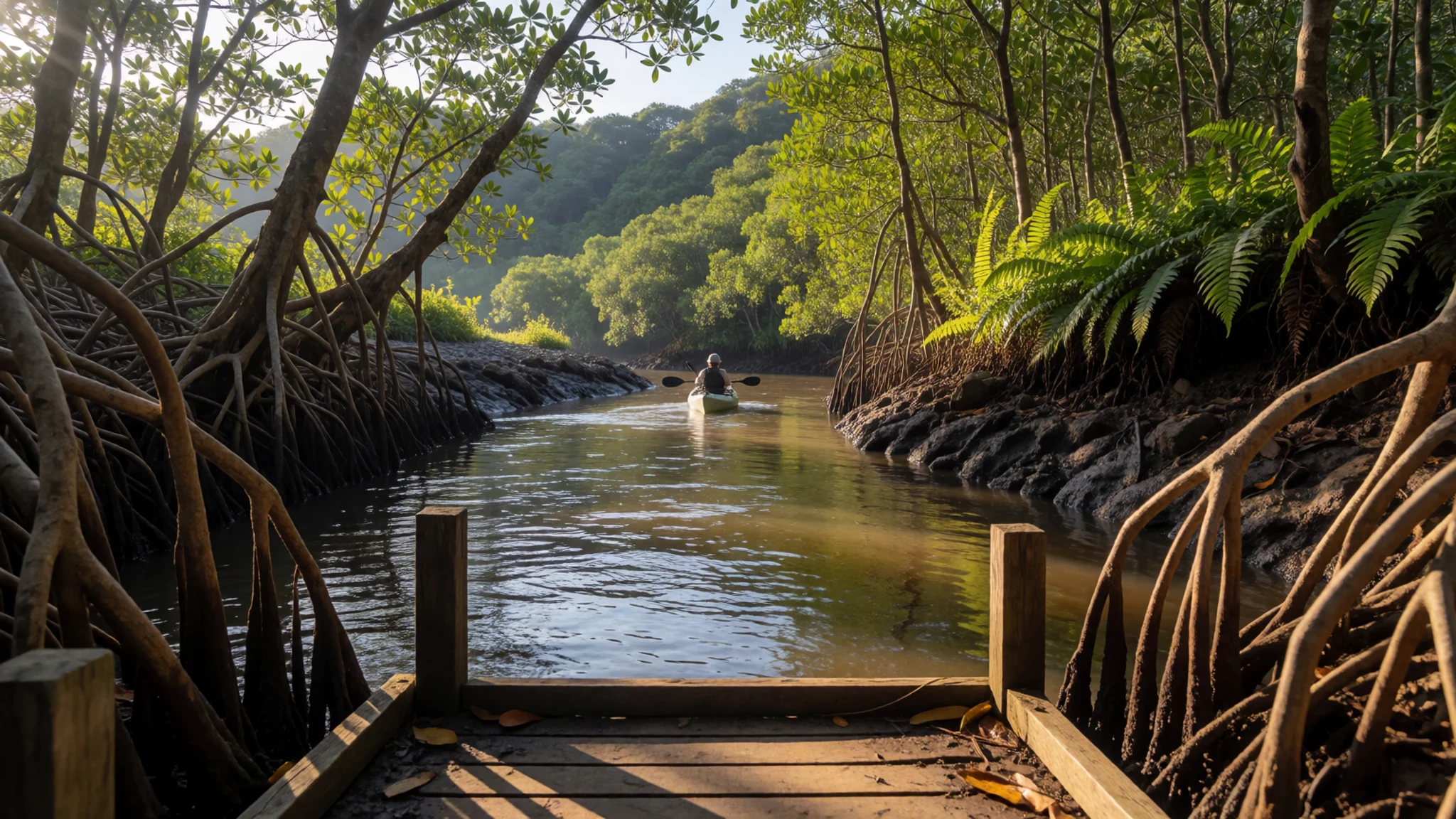
- Pinaisara Falls — northern interior
Pinaisara Falls drops through forest on the northern side of Iriomote Island, a short boat ride from the north coast and then a walk in. The pool under the fall is the point of the trip. Mud, roots and sudden rain make the path slower than it looks on a map. Local guides based around Uehara run it as a half-day, and they will cancel when the water rises.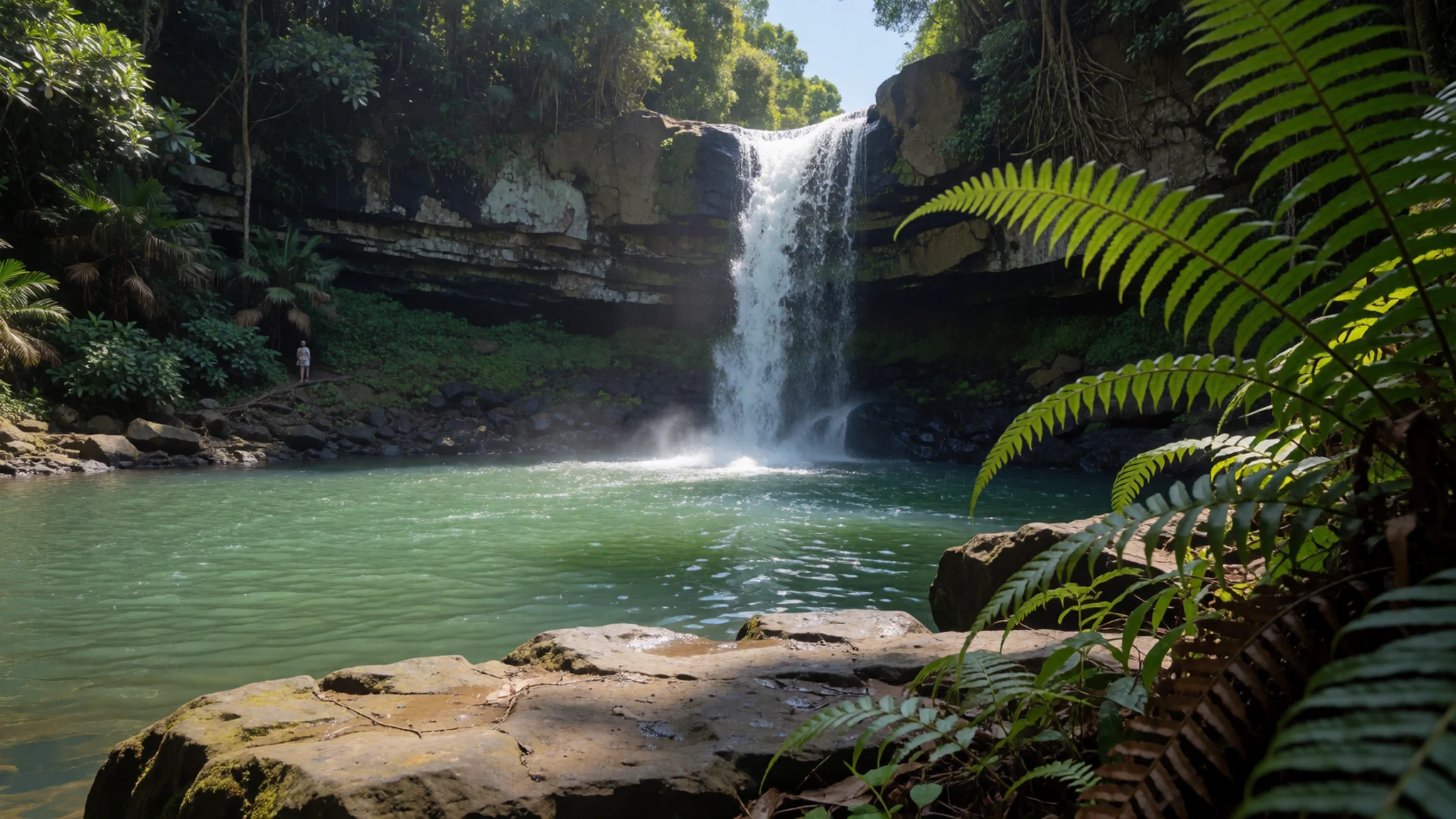
- Mariyudo Falls — Urauchi valley
Mariyudo Falls sits upstream of the boat landing on Iriomote Island's Urauchi River, a forest walk that stays damp even on a bright morning. The fall is broad, spilling over a rock lip into a shaded basin. Many groups turn around here rather than pushing on to Kampire. The trail is uneven, so leave time for the walk back before the last boat.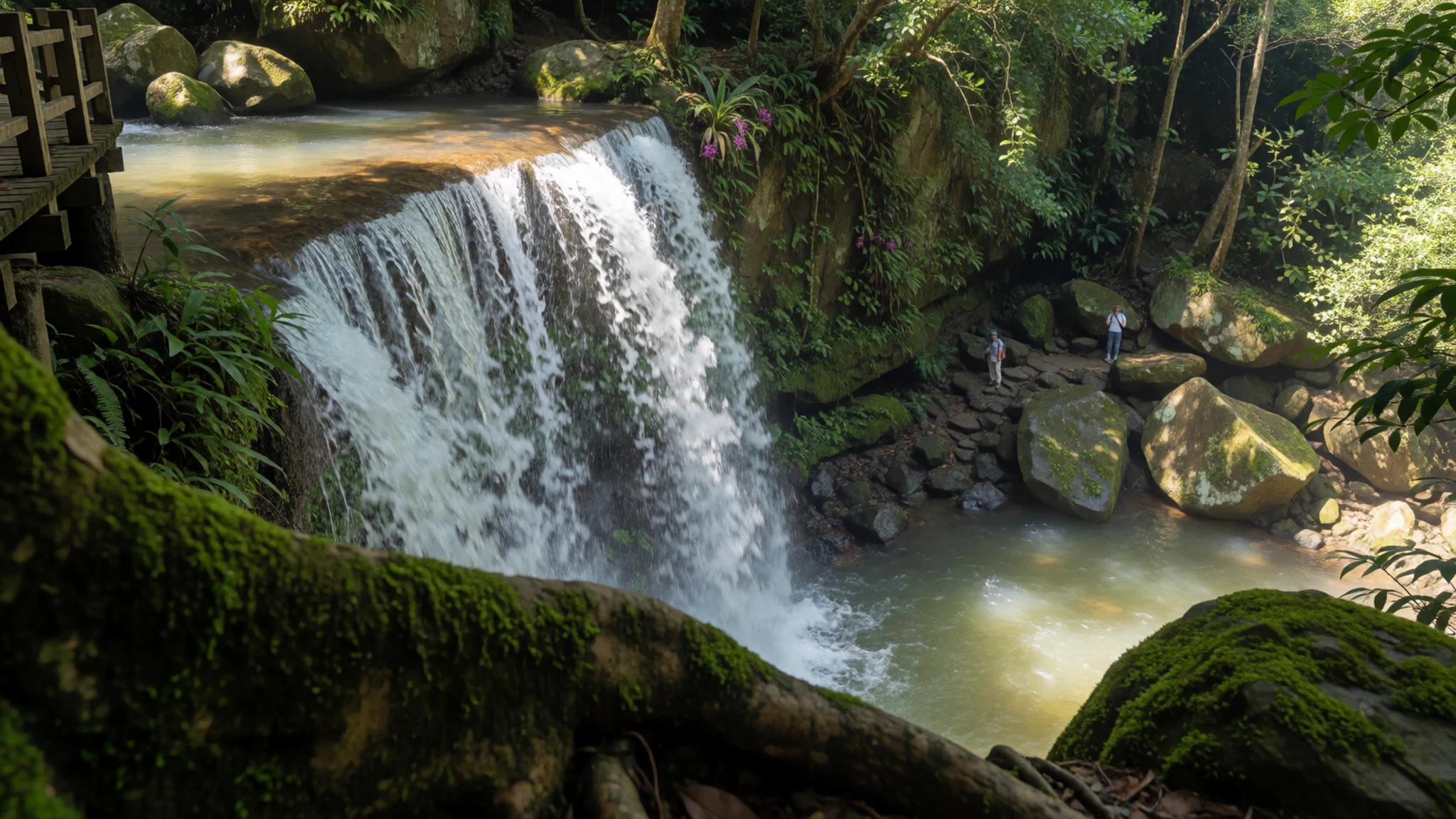
- Kampire Falls — upper Urauchi valley
Kampire Falls lies further up the same Urauchi trail on Iriomote Island, past Mariyudo, where the path narrows and the forest closes in. Fewer people continue this far, which is the appeal and the caution: the walk is longer, the ground slick, and the boat will not wait forever. The fall itself is a tall ribbon in a tight gorge. Start early and tell someone the plan.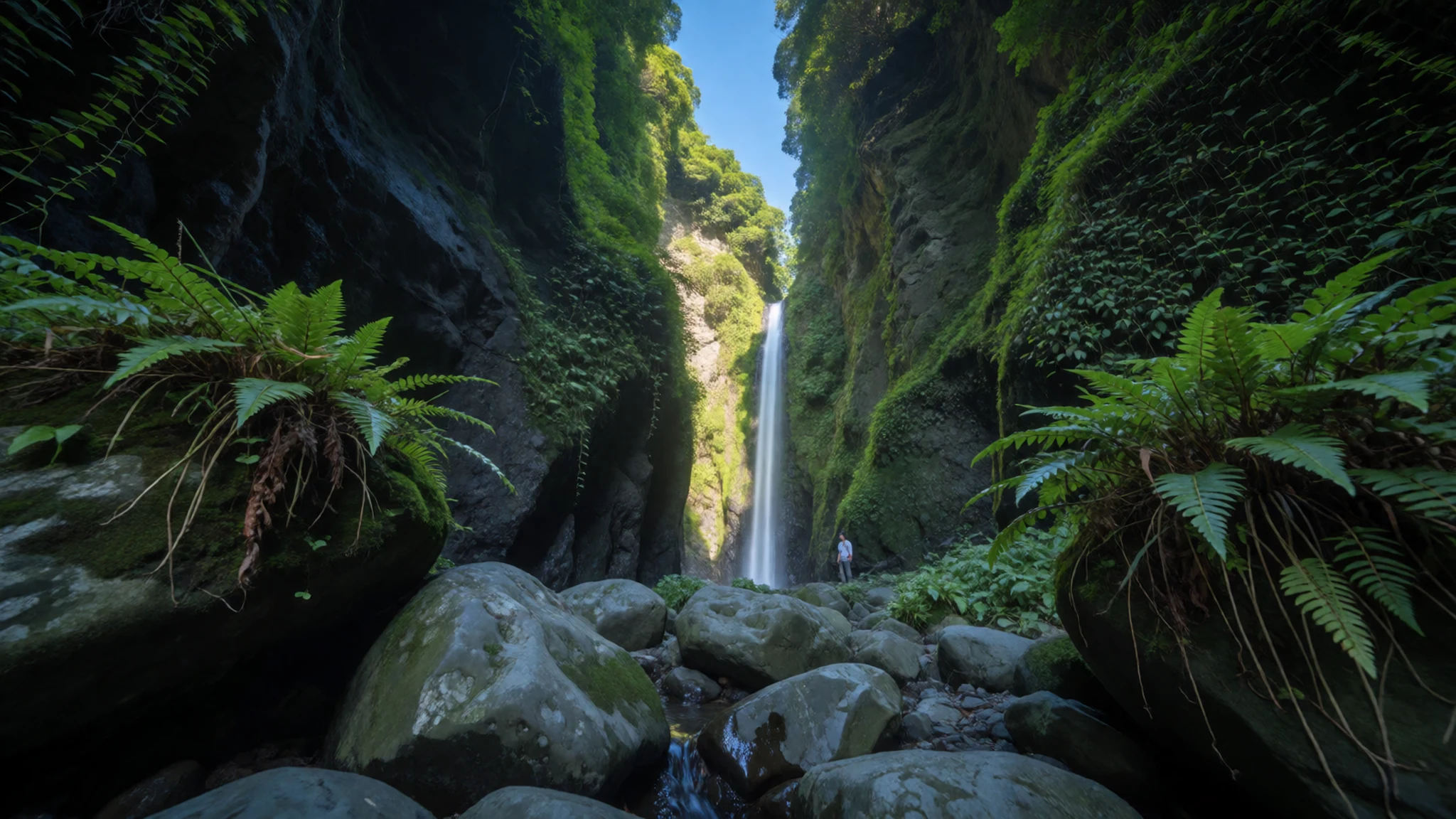
- Tudumari-no-hama — western shore
Tudumari-no-hama, also called Tsukigahama, is a crescent of pale sand on the western shore of Iriomote Island. The beach faces open sea, with trees behind it and almost no buildings. Swimming depends on the swell; on a calm day the water shows the bottom close in. No town sits on the sand, so bring water and a ride back. People stay for sunset.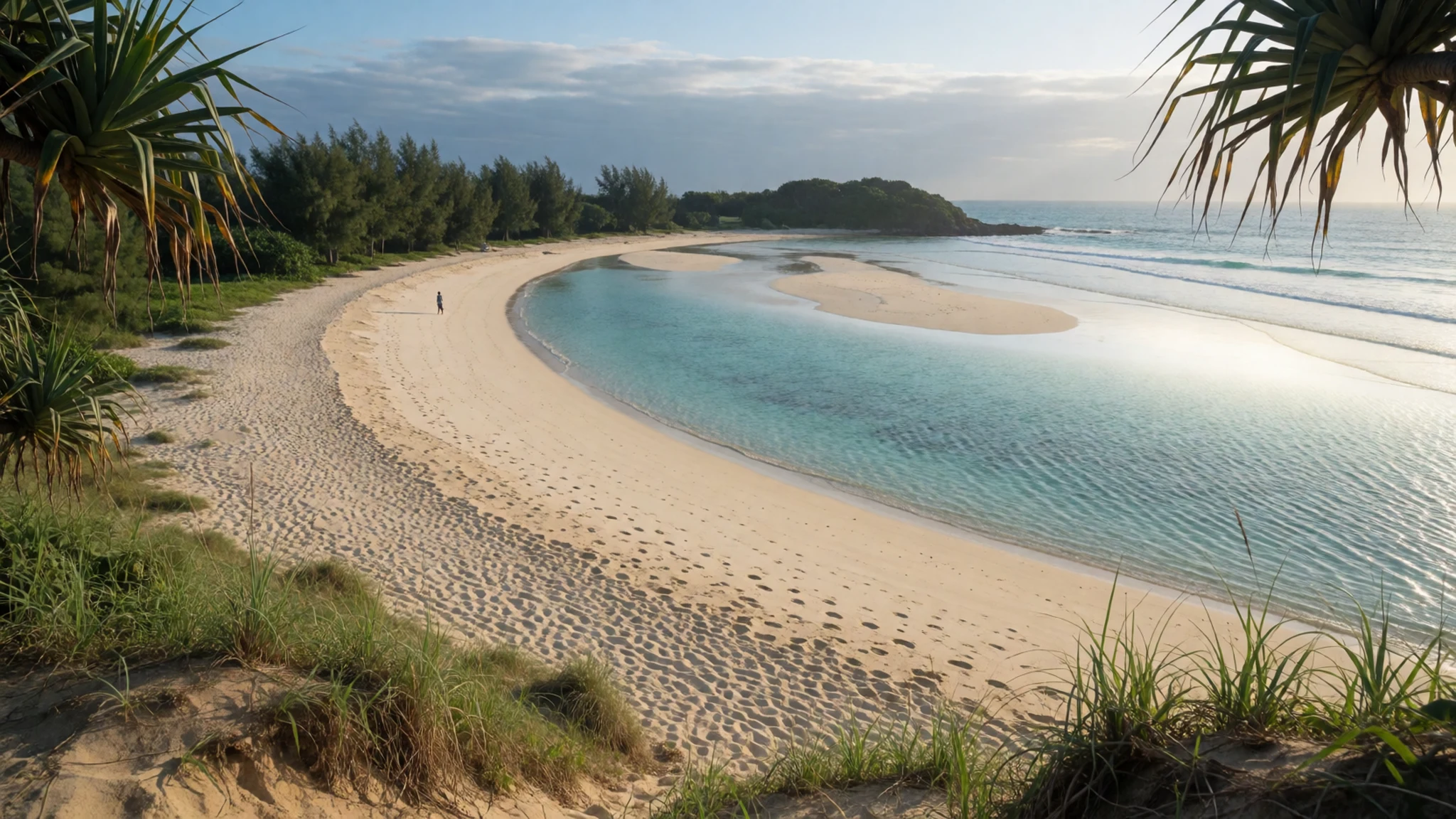
- Nakama River mangroves — south-east, near Ōhara
The Nakama River mangroves line a broad channel on the south-eastern side of Iriomote Island, near Ōhara. A guided boat moves slowly under a closed canopy, with crabs on the mud and the odd kingfisher ahead of the bow. It is an easier outing than the waterfall walks, and a sound choice when interior trails are slick. Morning light is kinder than midday glare on the water.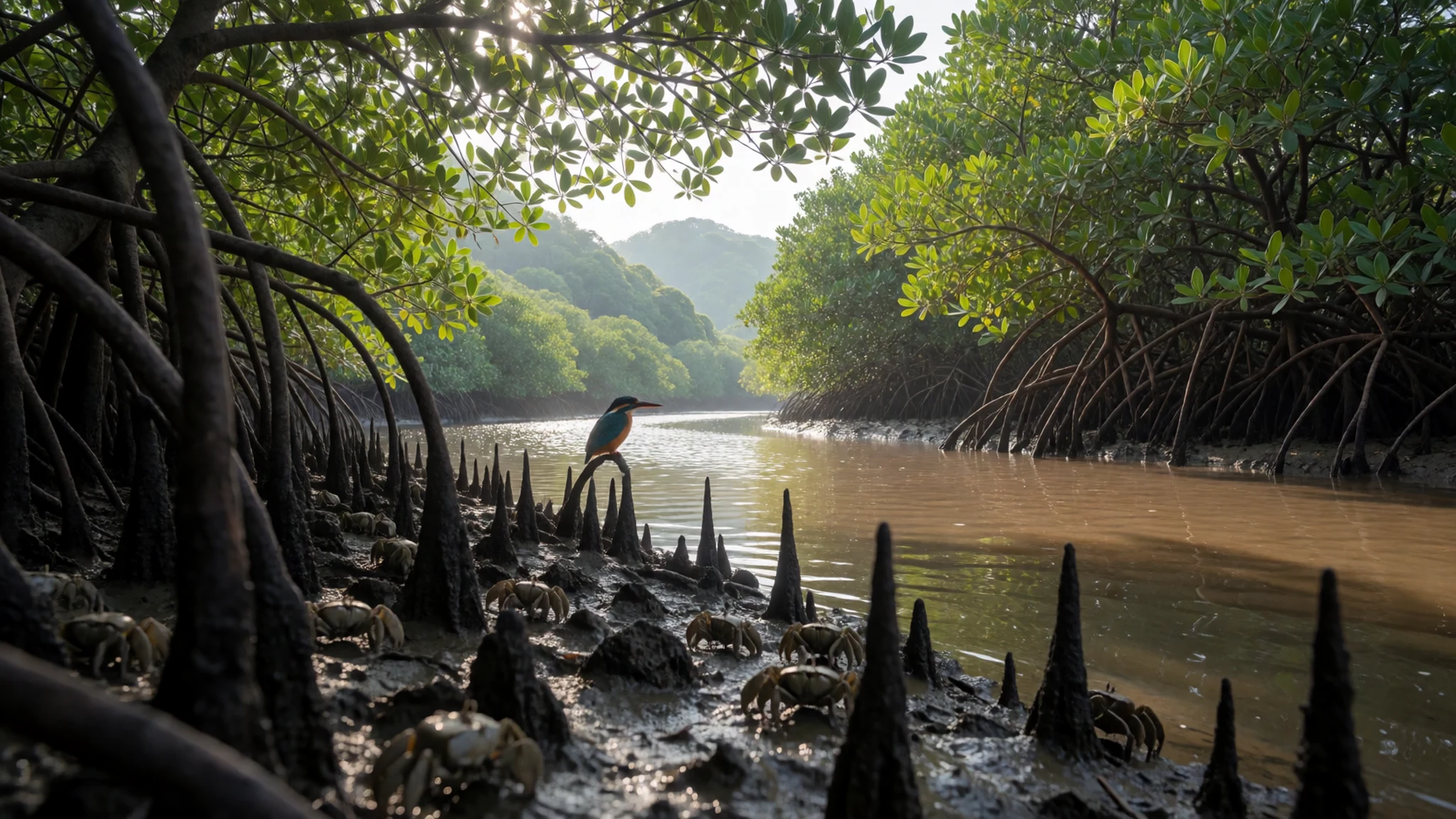
Culture
Iriomote Island shares the Yaeyama culture of the southern Ryukyus: songs with the sanshin, harvest rites for the fields and the sea, and a dialect a visitor from Tokyo will not follow unaided. Hamlets still keep festivals through the farming year, with drumming, processions and shared food, even where younger people now work on boats, in guesthouses or over on Ishigaki. Ancestors and local deities are honoured at utaki, sacred groves, and at small shrines that belong to the community rather than to tourism. Weaving, especially the geometric minsaa sash of the Yaeyama islands, remains a recognised craft, given as a token of long life and safe return. The Iriomote cat sits inside the same care for the forest. Signs, slower night driving and lessons in school treat the animal as a duty, not a product. Daily talk is about the ferry, the wind and whose field needs hands. If you drive on Iriomote Island after dark, slow down for the wild cat and do not feed it or follow it off the road.
What to wear
On Iriomote Island the traditional dress of the Yaeyama islands is still brought out for festivals and rites: an indigo or bashō-fibre kimono-like robe, a minsaa sash with its small geometric weave, and, for some dances, a costume tied to the particular rite. Bashōfu, cloth beaten from the fibre of the ito-bashō banana, is a textile closely associated with the wider Ryukyus: light, slightly stiff, and made for humid weather. Everyday wear on the island looks nothing like that. People dress for heat, boats and mud: short sleeves, quick-dry trousers, sun hats, sandals or rubber boots, and a rash guard when they are on the water. Visitors should do the same. Pack light, covering clothes in breathable fabric, a rain shell, and shoes with grip that can be soaked on river trails; flip-flops will not do for the falls. Shoulders and knees covered are the polite choice at a shrine or a festival, and swimwear stays on the beach. Bright reef colours are for the boat, not for a festival ground. A spare set of clothes in a dry bag is worth more here than anything smart.
What to eat
- Yaeyama soba — eateries in Uehara and Ōhara
Yaeyama soba is the everyday noodle on Iriomote Island: thin wheat noodles in a light pork broth, usually with pork and scallion. Eateries in Uehara and Ōhara serve it at lunch. Choose the island style rather than a heavy mainland ramen after a morning on the water.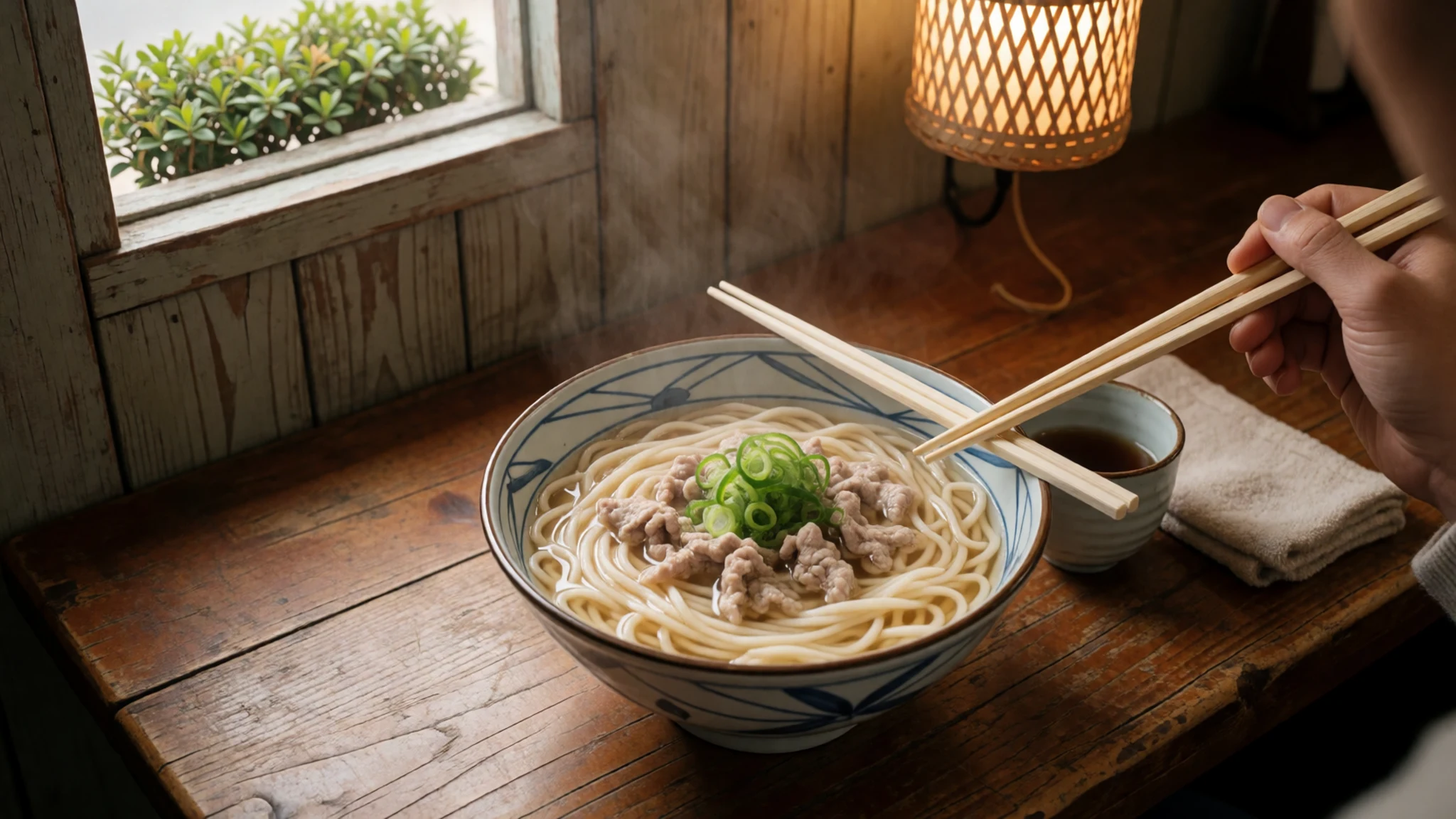
- Gurukun sashimi — harbour eateries in Uehara and Ōhara
Sashimi on Iriomote Island follows the boats, often gurukun, a reef fish served very fresh with soy and ginger. Harbour eateries in Uehara and Ōhara plate it in the evening. Order it the day it lands; the card changes with the catch.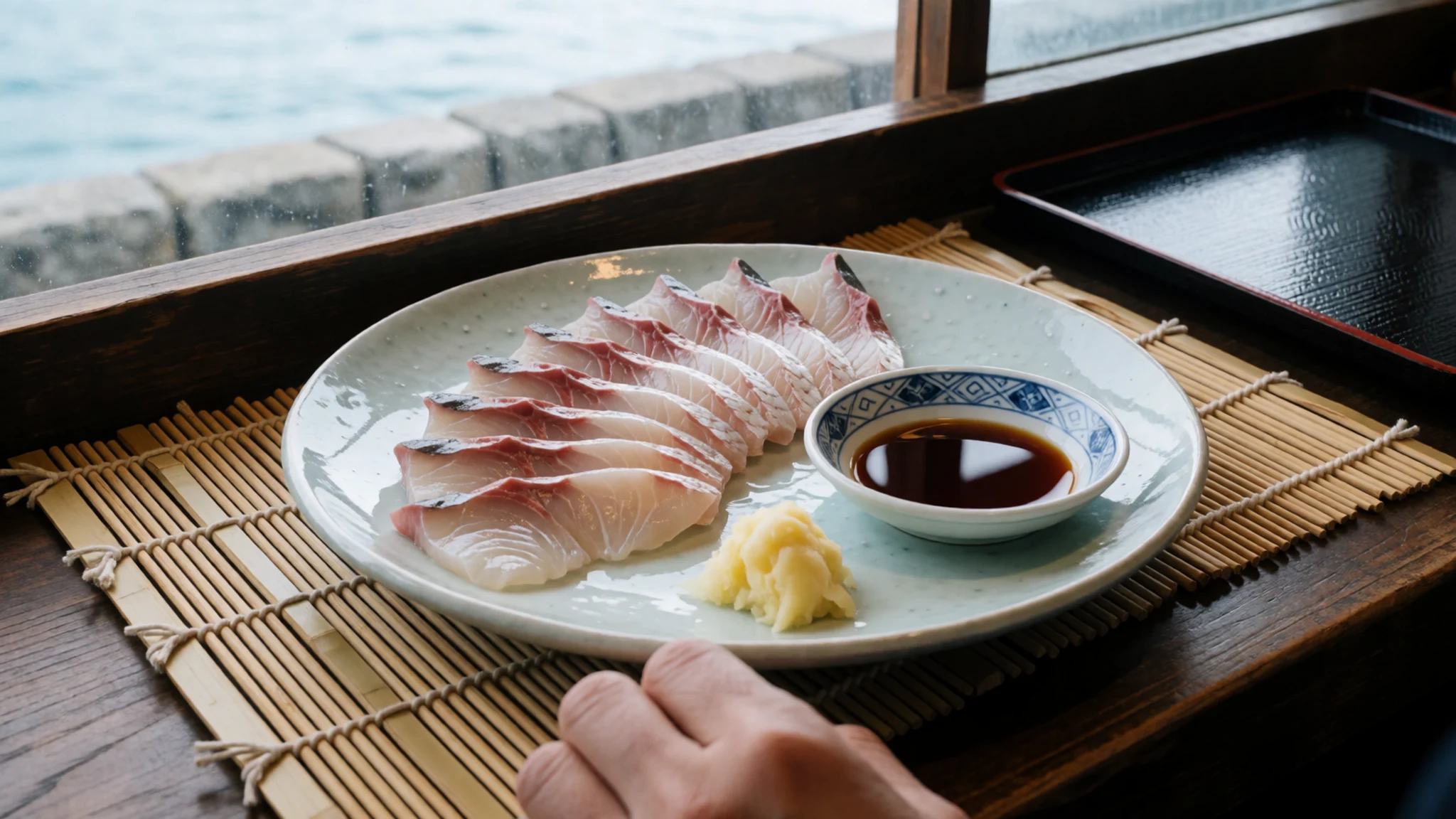
- Goya champuru — small kitchens by the ferry ports
Goya champuru, bitter melon stir-fried with tofu, egg and pork, is a home-style side in family eateries on Iriomote Island. The bitterness is deliberate and sits well in humid weather. Look for it in set lunches at small kitchens by the ferry ports. - Rafute — family eateries in Uehara and Ōhara
Rafute is pork belly simmered with soy and awamori until soft, and Iriomote Island kitchens plate it for a generous dinner. It is rich, so it comes with rice and pickles. Family eateries in Uehara and Ōhara serve it when the cooking is local rather than tour-minded. - Umi-budō — seafood eateries and market stalls
Umi-budō, or sea grapes, are tiny green seaweed bubbles served cold as a starter on Iriomote Island, with a little soy. Seafood eateries and small market stalls sell them in season. They spoil quickly, so eat them here rather than carrying them home. - Island fruit — roadside stalls and shops in Uehara and Ōhara
Pineapple, mango and papaya grow sweet on Iriomote Island and are sold cut at roadside stalls and in the shops of Uehara and Ōhara. A bag of fruit makes breakfast before a river trip. Buy in the morning, when the stalls are freshly stocked.
Plan it
Best time. On Iriomote Island, December to March bring the easiest heat and the lighter rains, with February the driest month of the year. July and August are the hottest, August and September the wettest, and typhoons run from June to September; winters are milder, but north winds can rough up the crossing from Ishigaki.
How long. 3–4
Getting there. Fly into Painushima Ishigaki Airport, then a high-speed ferry or the car ferry to Uehara or Ōhara on Iriomote Island. The landing depends on that day's sailing; check the operator before you book the flight. The island has no airport of its own.
Budget. high
Tips
- Book the ferry and the first night before you fly to Iriomote Island; sailings and beds are limited.
- Start waterfall walks in the morning, before rain and before the return boat.
- Carry cash; small eateries and village shops may not take cards.
- If you drive, use the coastal road slowly, especially after dusk, because the Iriomote cat crosses without warning.
- Take drinking water; once you leave the villages the trails sell nothing.
Etiquette
- Do not feed, call or follow an Iriomote cat, and slow right down if one is on the road.
- Stay on marked paths, and leave plants, coral and star sand where they are.
- At a shrine or utaki, keep to the public edge, speak quietly, and ask before you photograph anyone.
- On a shared mangrove boat, keep voices low so the birds stay.
Nearby
Sources
- Wikidata: Iriomote Island (CC0)
- Wikipedia: Iriomote Island (CC BY-SA 4.0)
- Wikivoyage: Iriomote (CC BY-SA 4.0)
Wildlife
- Kingfisher (bird)
The common kingfisher is a small bird of rivers, also called the river kingfisher. On Iriomote you may spot the odd one flash ahead of your boat when a guide takes you slowly beneath the closed canopy, where crabs scuttle on the mud. No season or hour is fixed, so simply go with a guide, keep the boat unhurried and let the bird appear in its own time.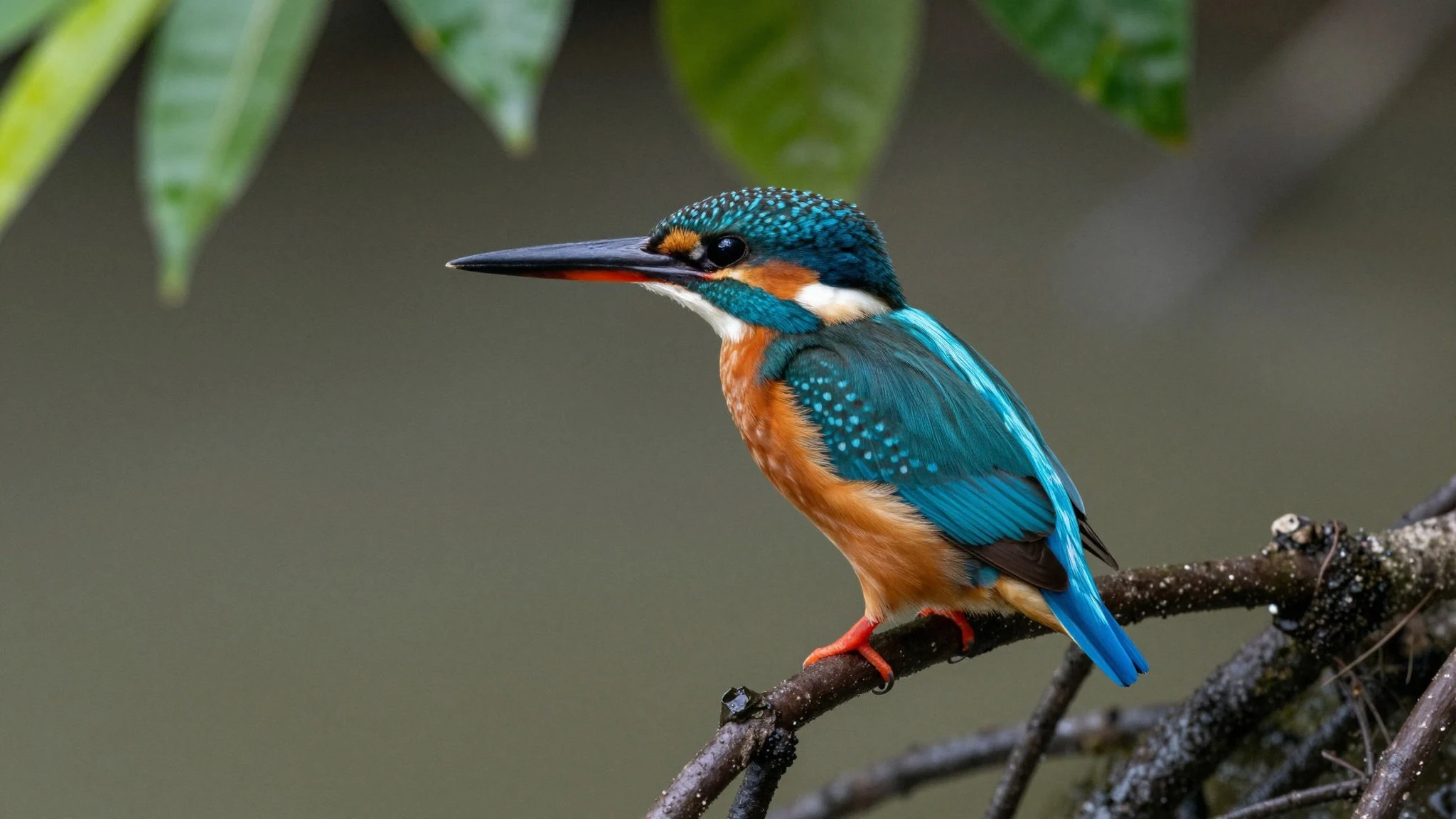
- Iriomote cat (animal)
The Iriomote cat is a small wild cat that belongs to this island and nowhere else, a local cousin of the leopard cat. Its home is Iriomote itself, and it tends to wander at dusk, along roads and beside stream beds. The kindest way to look for it is to think of it as a neighbour rather than a prize: give it room, and do not go chasing after it. - Fruit bat (animal)
The Ryukyu flying fox is a fruit-eating bat, one of the big bats sometimes called megabats. On Iriomote it shares the island's small map with mangrove crabs and reef fish, and it favours forest and swampy ground. No season or hour can be promised for seeing it. It is listed as vulnerable, hurt by lost habitat and by hunting, so enjoy it gently and leave it undisturbed.