Iracoubo
Iracoubo, France
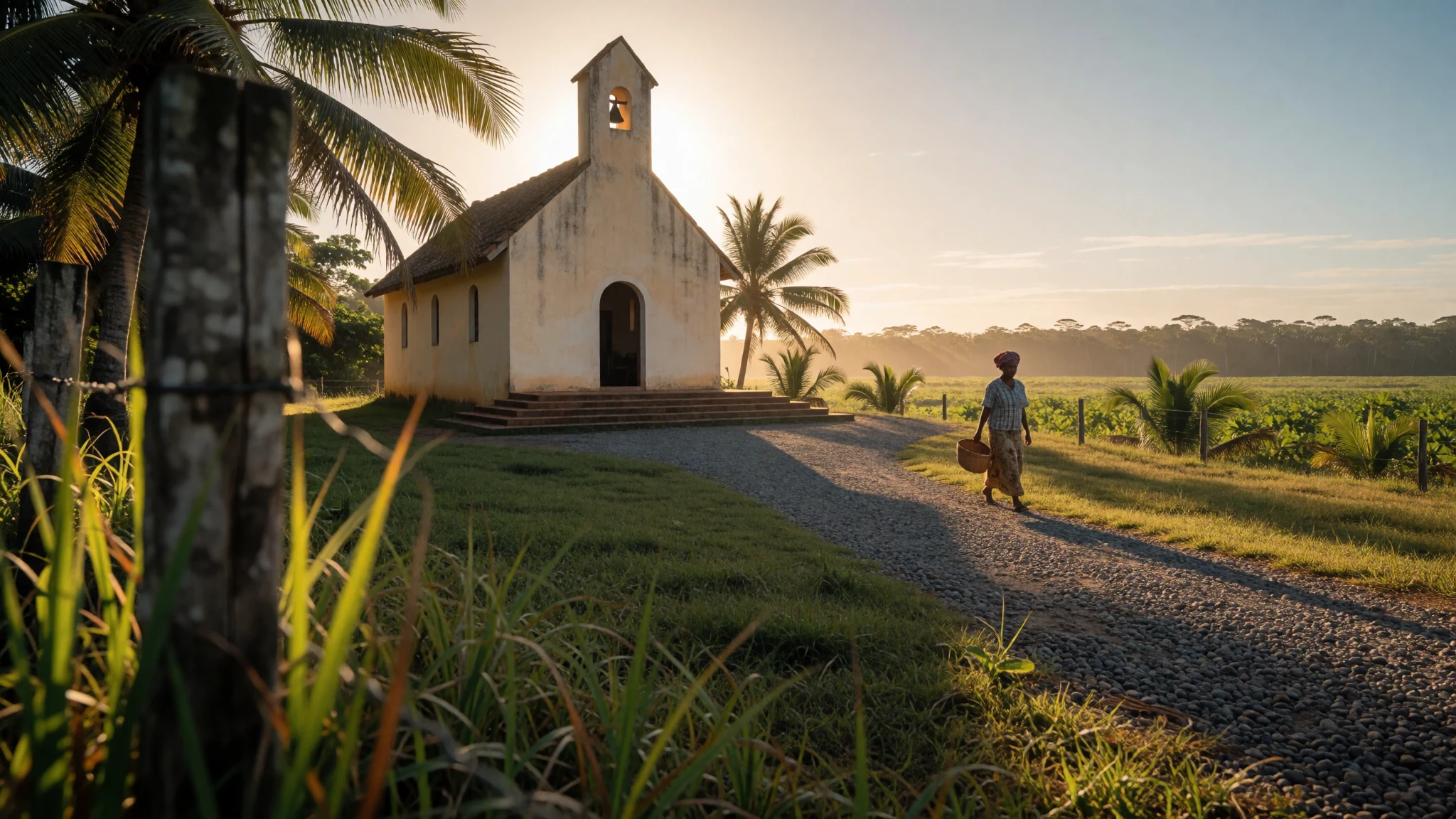
Iracoubo is a quiet Guianese coastal village on the road to Cayenne, worth a stop for its richly painted convict-decorated church.
The place
Iracoubo is a small coastal commune in French Guiana, the French overseas department on the north-east shoulder of South America, and only 1,662 people live there. The village stands about 2 m above sea level on the coast road, between Sinnamary to the east and the hamlet of Organabo, with the hamlet of Bellevue 5 km to the west. Creole speakers call it Yakoubo. The setting is flat, wet and green: a low coastal plain, mangrove swamps along much of the shore, and behind them the great forest that belongs to the Amazon system. The climate is tropical, hot and humid, with little change in temperature through the year and heavy rain in most months. Life is unhurried. Farming, hunting and fishing carry the local economy, and the village centre is a scatter of small shops, a gendarmerie and a church that draws the few visitors who stop. Most travellers pass through on Route nationale 1, the road joining Saint-Laurent-du-Maroni with Cayenne, so Iracoubo works best as a pause on that drive rather than a base. French Guiana is part of France and the European Union but sits outside the Schengen Area, so arrival formalities differ from mainland France. Heat, insects and long empty stretches of road come with the territory. Nightlife and resort beaches are not the offer here; the draw is a working village, a painted church and the Atlantic edge of the forest.
Its story
Amerindian families were the first people at Iracoubo, with settlement around Organabo, long before European plans reached this coast. A settlement attempt in 1626 failed. In 1765 the Galibi, who had crossed into Suriname to escape an epidemic, came back. Early in the nineteenth century the place grew out of a cotton plantation owned by a Colonel Jacquet, and in 1859 the plantation's cotton shed was given to the community and became its church. Later in that century Kalina families were living along the Rococoua river, at Counama and Organabo. The big change came in 1886, when Father Raffray arrived and began a proper church dedicated to Saint Joseph, which opened in 1893. Its interior was painted by Pierre Huguet, a convict of the penal colony that operated across French Guiana until 1951, and the walls and ceiling are crowded with decoration. The building was listed as a monument in 1978. The economy shifted again in 1912, when bananas and rosewood arrived and gave farming a lift. Agriculture, hunting and fishing still dominate. The wider story is visible in the setting: a plantation shed turned chapel, a convict's brushwork in a village church, and a road that links the settlements of a coast once reached mainly by sea.
What to see
- Saint-Joseph church — Iracoubo village centre
Saint-Joseph church is the reason to stop in Iracoubo. Outside it looks modest, but the walls and ceiling inside are covered in painted decoration by Pierre Huguet, a convict artist, completed for the opening in 1893. It began as a converted cotton shed. Check locally for opening times before making a detour; village churches rarely keep fixed hours.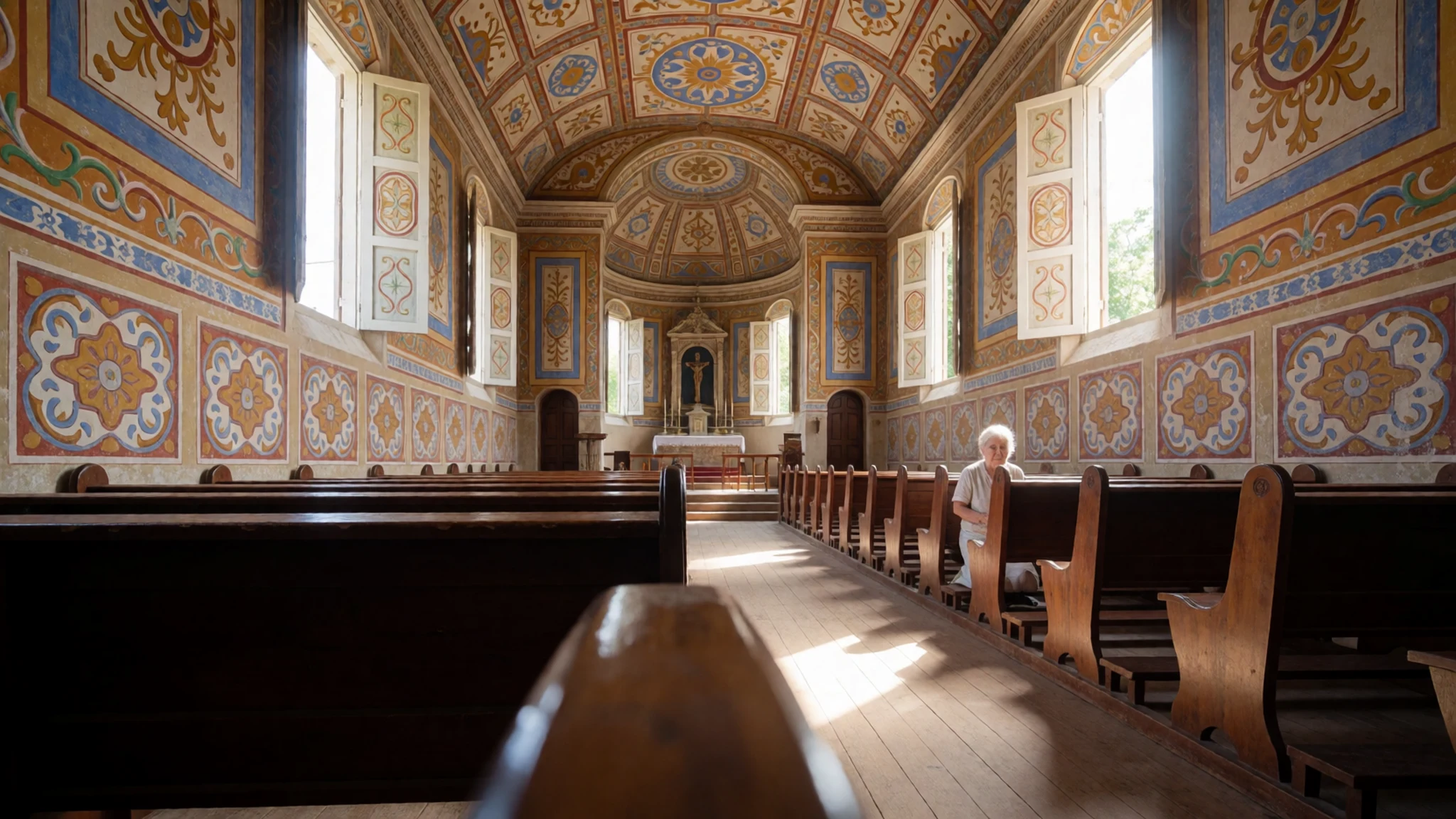
- Trou Poisson — South of Iracoubo
Trou Poisson lies south of Iracoubo and is close to deserted today. It holds the grave site of clergy exiled to the colony in the years of the French Revolution, which gives the place a quiet, melancholy interest. Ask in the village about the state of the track and whether the visit is practical in wet weather.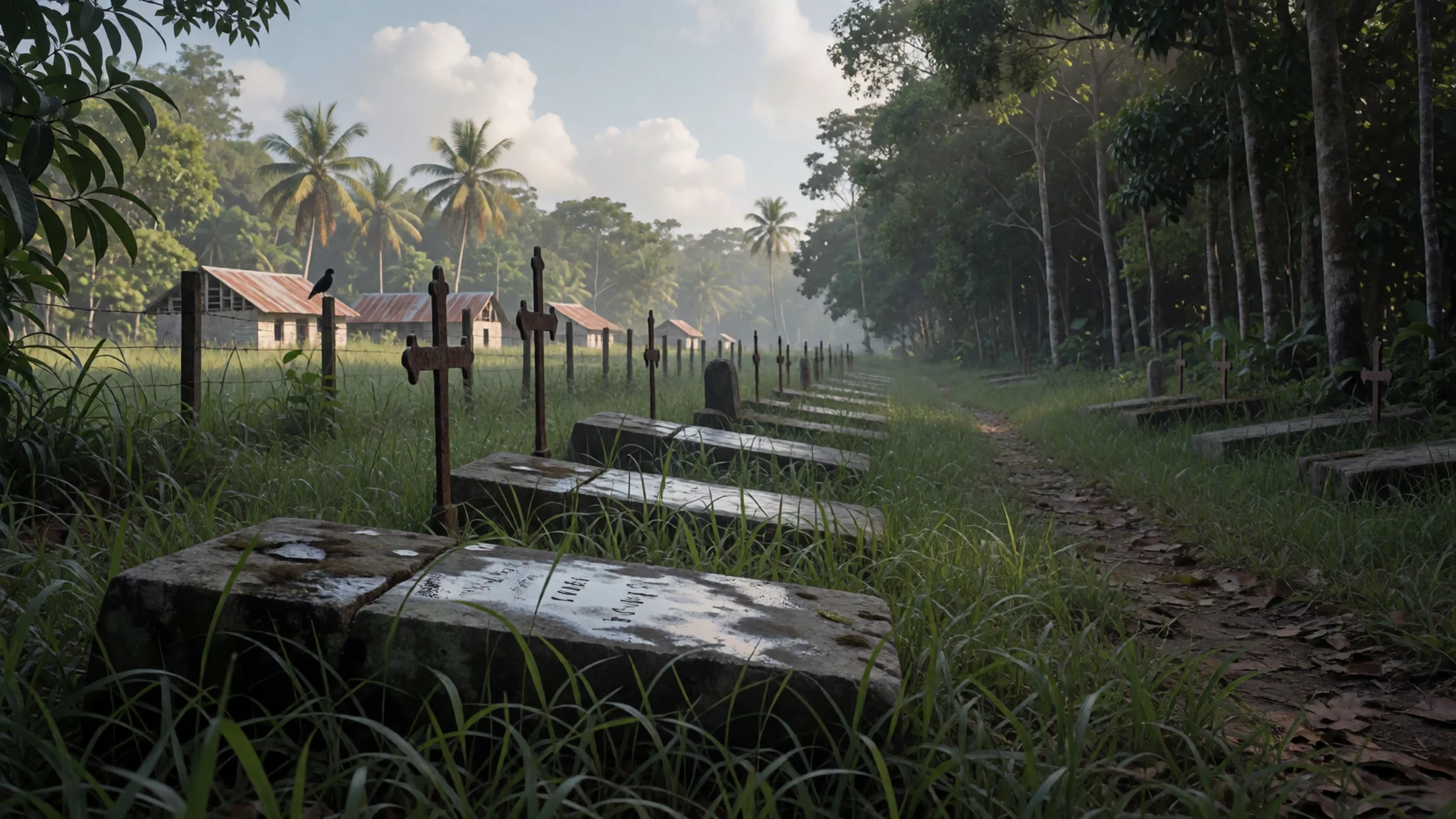
- The Atlantic shore — Coast road near Iracoubo
The sea near Iracoubo is not a postcard beach. It is muddy water, mangrove edges and wide horizons, with birds working the shallows. Stop at a pull-off on the coast road for a look at where the forest meets the ocean. Swimming is better left alone; ask residents about local conditions first.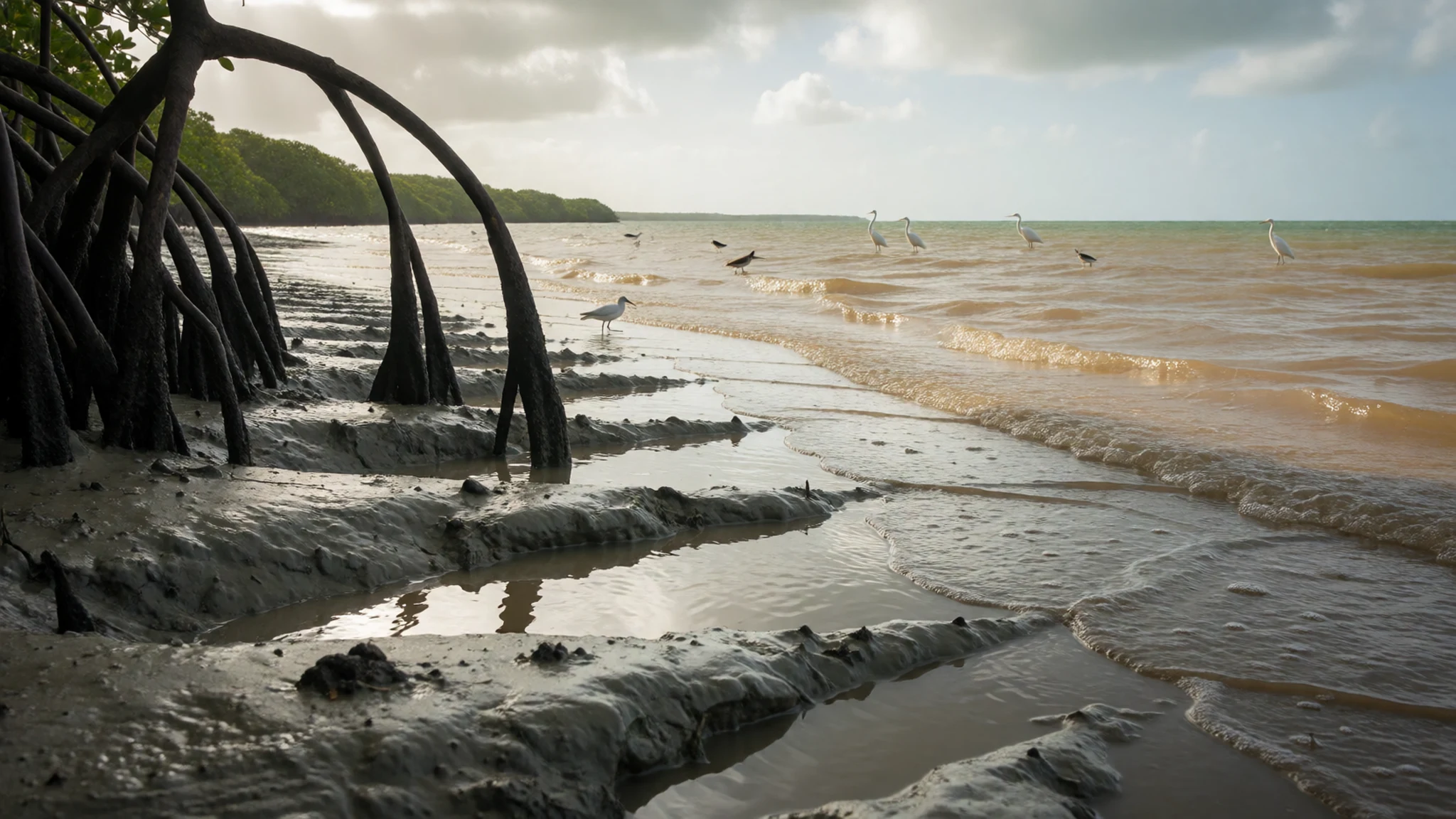
- Plage les Hattes, Awala-Yalimapo — North-west French Guiana
Plage les Hattes, at Awala-Yalimapo in the north-west of French Guiana, is a nesting beach for giant leatherback turtles. It sits a long drive from Iracoubo, so it suits a separate day or an overnight. Ask locally or at the tourism office which months turtles come ashore, and go with a guide.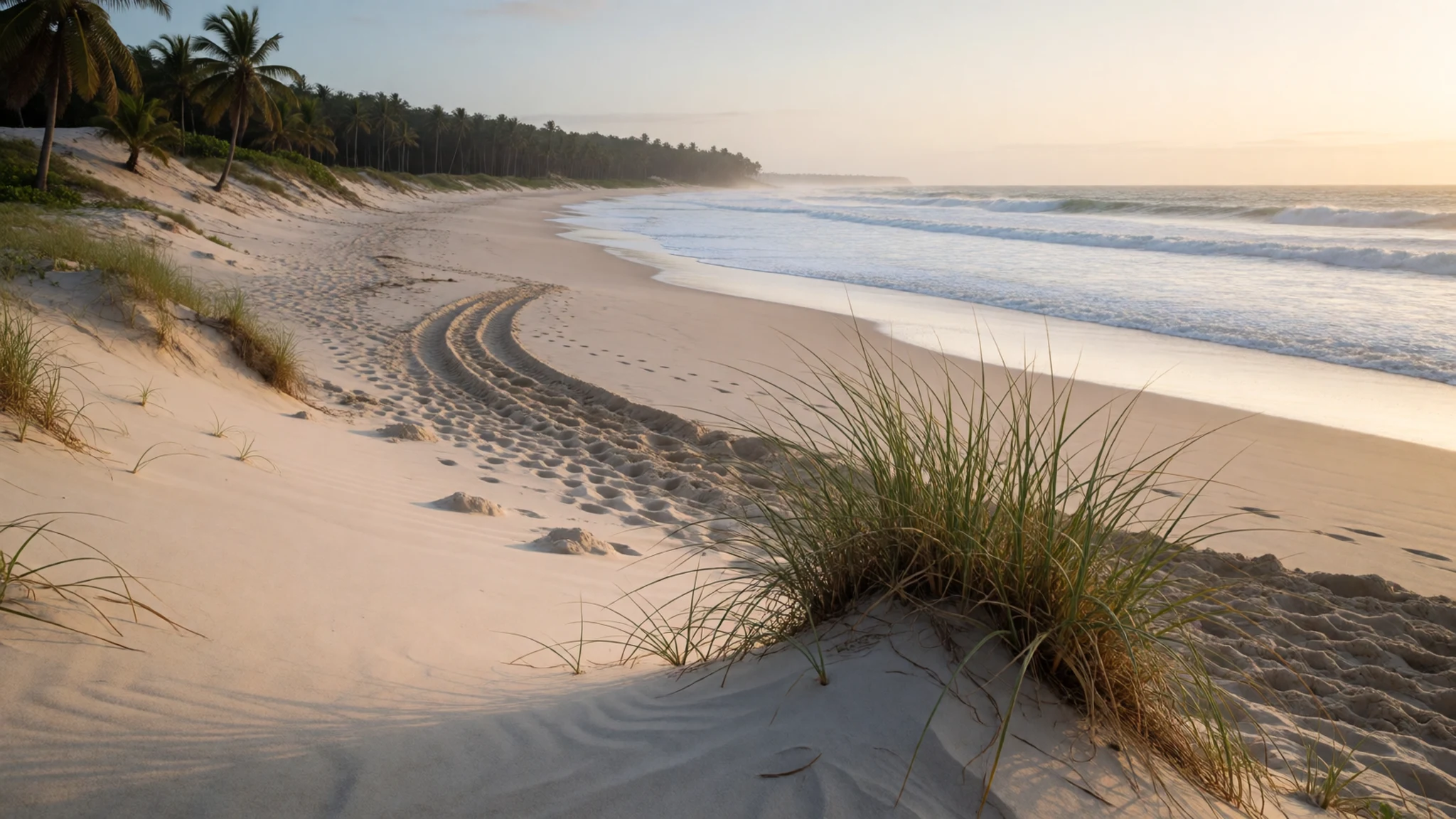
- Cayenne market — Cayenne, Place Victor Schoelcher
The main market in Cayenne, around Place Victor Schoelcher, is the easiest way to see the range of local life in one place. Stalls sell handicrafts, tropical fruit, spices and perfumes, along with Asian food such as Vietnamese noodle soup and fresh juices. Go in the morning, before the heat builds.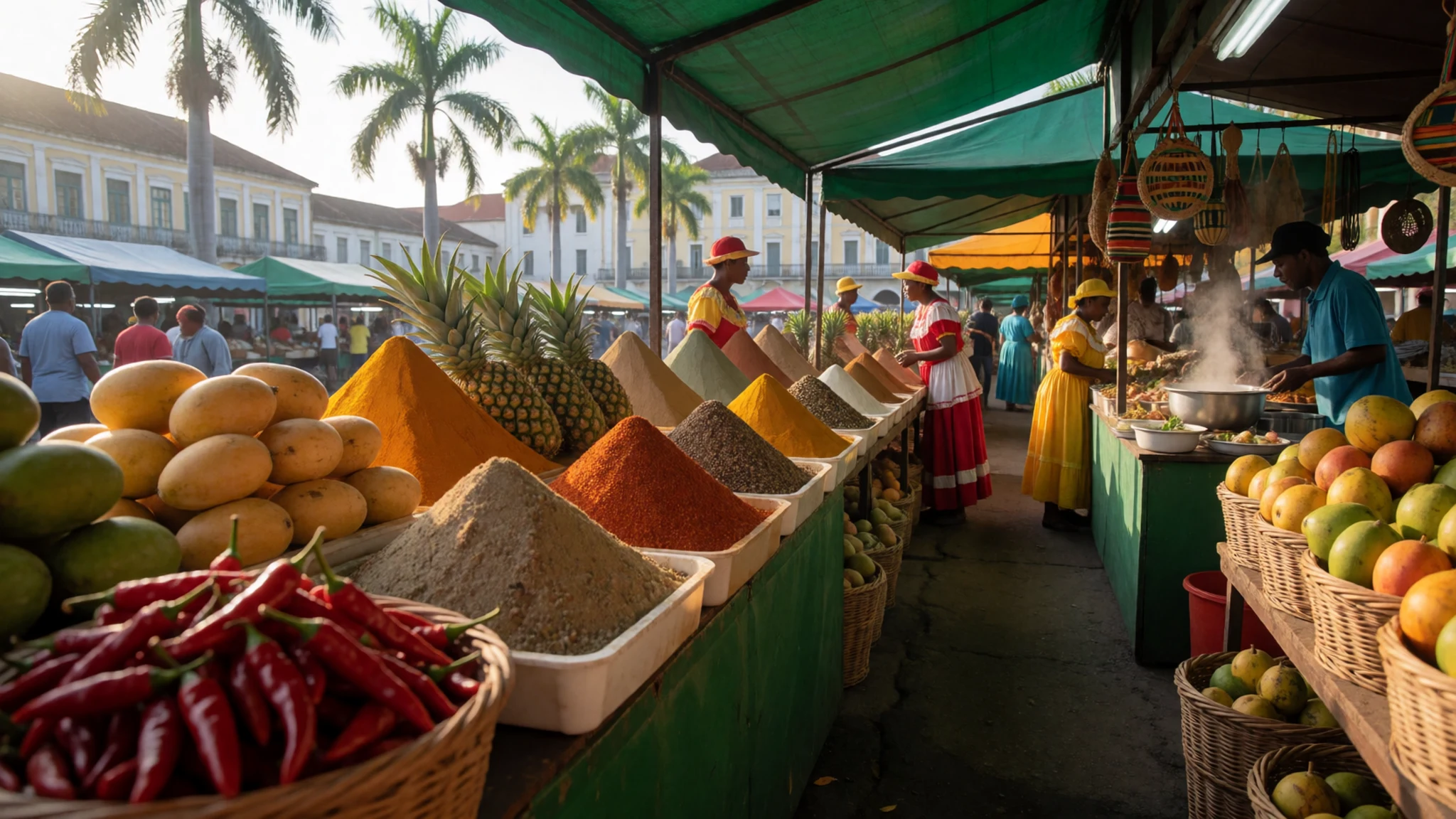
- Guiana Space Centre, Kourou — Kourou
The Guiana Space Centre near Kourou is where the European Space Agency launches its communication satellites. Guided visits and a small museum are available; check the official site for current arrangements. If a launch date happens to fall during a trip, it can shape the whole itinerary.
Culture
Iracoubo shares the Creole culture that runs through French Guiana, layered over a much older Amerindian presence in the Kalina, Galibi and neighbouring peoples. Residents are proudly French, and that identity is not up for debate: suggesting that French Guiana is somehow not really France causes offence. The mainland is called métropole or metropolitan France, not simply France. French is the language of administration and school, Guianese Creole is spoken at home and in the street, and a few polite words of French go a long way in a village where little English is heard. People are generally glad to talk about their history, food and beliefs, and the church at the centre of Iracoubo is a point of local pride. Slavery is a painful subject here and is best left alone unless a local raises it. Village life is quiet in the heat of the day, with shops closing for a long midday break and activity picking up again in the late afternoon. Hunting and fishing remain part of ordinary life, and some menus include meat from threatened species such as caiman and certain turtles, which visitors can and should decline. When you step into Saint-Joseph church, keep your voice low and ask before photographing anyone at worship.
What to wear
Traditional dress in Iracoubo reflects the Creole heritage of French Guiana. Women have long worn the Creole dress of layered cotton with lace trim, finished with a head wrap in madras, a checked cotton fabric, usually kept for festivals, church feasts and cultural events. Among the Kalina and other Amerindian peoples, beadwork and woven plant fibre adornments carry the older tradition and appear at ceremonies. Day to day, people wear what suits a hot, humid coast: light T-shirts, cotton shirts, shorts or knee-length skirts, and sandals or flip-flops, with a cap or hat against the sun. Rain gear matters more than warm layers. The village is relaxed about clothing, but dress is modest in town and noticeably more so for church. A visitor should pack lightweight, quick-drying clothes in breathable fabrics, long sleeves and trousers for evenings when insects bite, and a light waterproof for the downpours. Covered shoulders and knees are sensible for the church. Closed shoes with grip suit muddy tracks and forest paths, while sandals are fine for the village and the coast road. Sun protection and insect repellent are as much part of the outfit as the clothes.
What to eat
- Blaf de poisson — Small village eateries along Route nationale 1
Blaf de poisson is fish cooked in a light seasoned court-bouillon, a staple of Guianese home cooking. It arrives with rice and is usually milder than other dishes. Look for it at village eateries and family-run places along the coast road.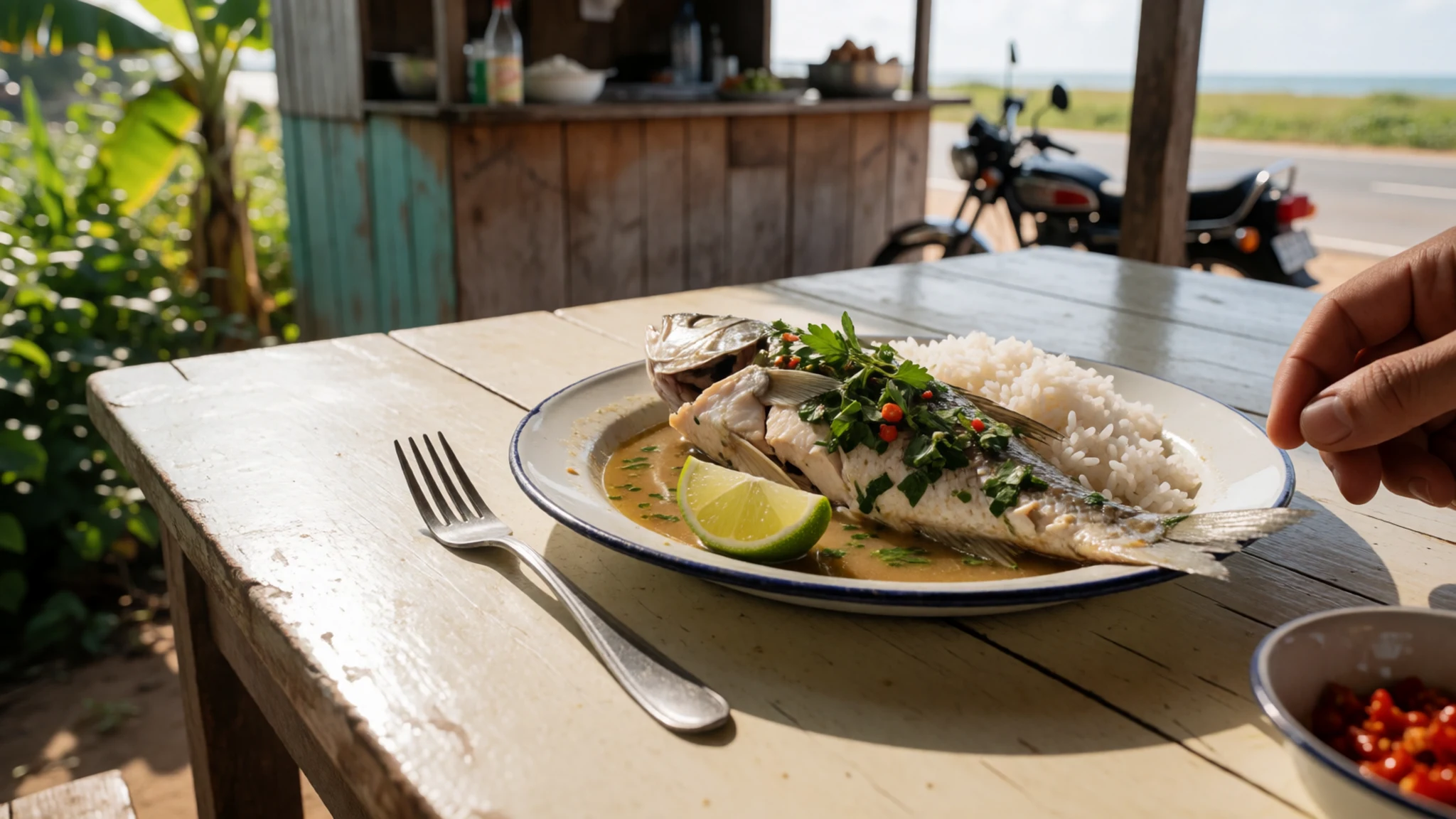
- Colombo — Home-style restaurants in coastal villages
Colombo is a Creole stew of pork or chicken in a fragrant spice paste, served with rice. It is warming and rich rather than fiery. Home-style restaurants and weekend family tables are the best bets, and it often appears as a dish of the day.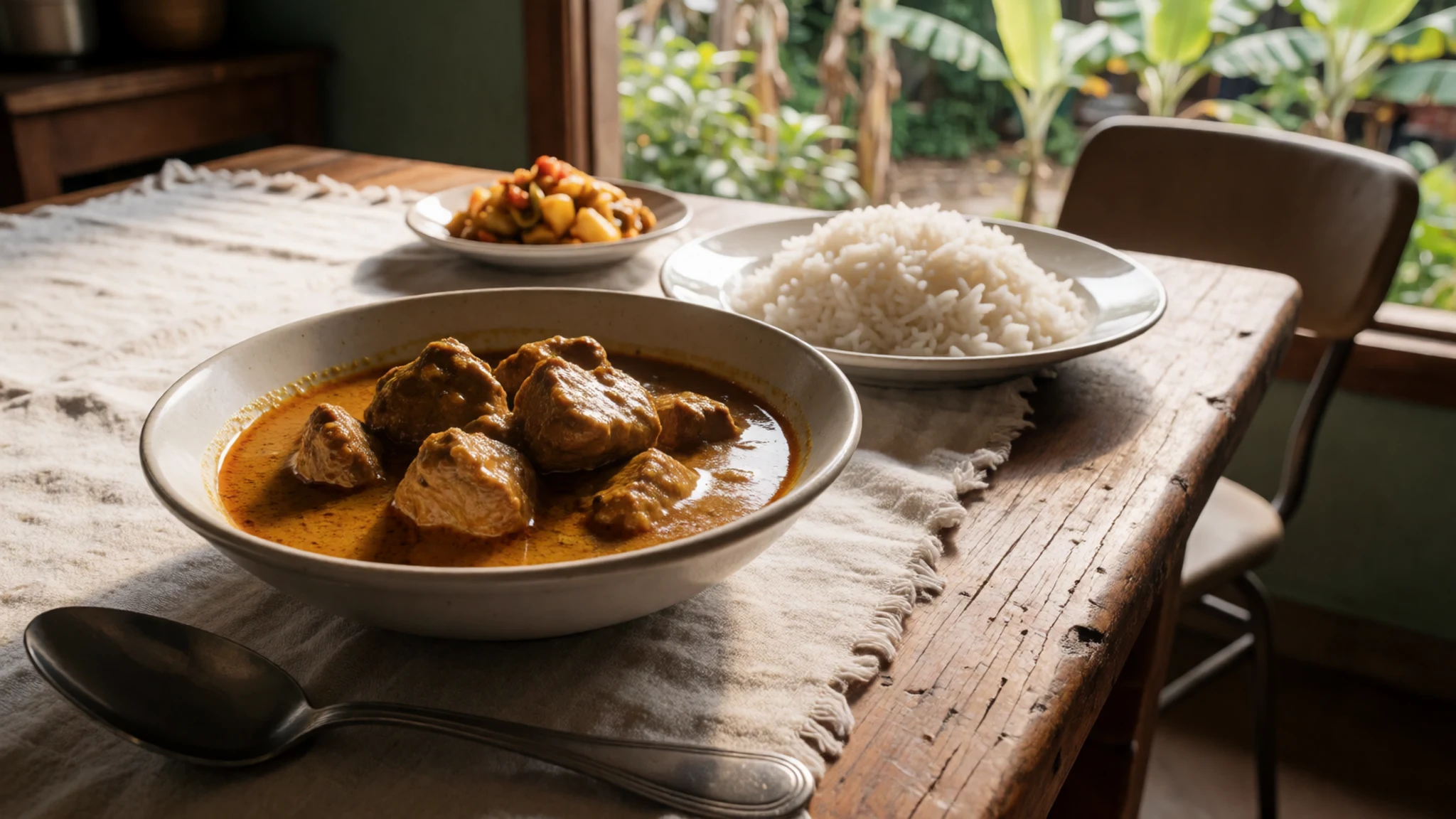
- Pimentade — Local eateries and market stalls
Pimentade is fish in a tomato sauce seasoned with chilli and lemon, a good test of tolerance for local heat. Ask for it less spicy if needed; cooks are used to the request. It suits lunch with rice or couac, the dried cassava flour. - Kalalou — Creole home-cooking restaurants
Kalalou, also written kalou, is a fish dish cooked with spinach and okra, a pairing that shows the African influence on Guianese Creole cooking. It is earthy and thick, eaten with rice. It is usually found where cooks prepare food for neighbours and families. - Bouillon d'awara — Festival tables and community celebrations
Bouillon d'awara is a broth made from the fruit of the awara palm, a traditional dish with deep roots in the region. It is often linked to festive occasions and holidays, so it appears at celebrations more than on daily menus. Ask locally about where it is being served. - Wassaï juice — Markets, snack stalls and roadside shops
Wassaï juice is made by soaking, kneading and filtering the pulp of the wassaï palm fruit, then serving it cold. Many people sweeten it with milk, and some take it with fish or couac. It is a good way to cool down in the heat.
Plan it
Best time. August to November is usually the drier stretch, which makes the coast road easier and the forest tracks less muddy. Rain and humidity stay high through most of the year, and the temperature barely changes, so pack for heat in any month.
How long. 1–2
Getting there. Fly to Félix Eboué Airport (CAY) near Cayenne, the only international airport, then drive west along Route nationale 1 toward Saint-Laurent-du-Maroni; Iracoubo is on this road, between Sinnamary and Organabo. A hire car is the practical option, as public transport is limited.
Budget. mid
Tips
- Carry a yellow fever vaccination certificate: it is mandatory for entry, and airlines may ask to see it before boarding.
- Carry cash and a card, because small village shops may not take cards.
- Check passport and visa rules early: French Guiana is outside the Schengen Area, and Schengen visas for mainland France are not valid here.
- Fill up the fuel tank and stock up on water in larger towns before driving the coast road.
- Use insect repellent and sun protection every day, especially at dawn and dusk.
Etiquette
- Call mainland France métropole rather than simply France when talking to locals.
- Avoid raising the subject of slavery unless a local brings it up.
- Keep voices low and ask before taking photos inside the church or of people.
Nearby
Sources
- Wikidata Q432072 (CC0)
- Wikipedia: Iracoubo (rev 1381993022) (CC BY-SA 4.0)
- Wikivoyage: French Guiana (rev 5383674) (CC BY-SA 4.0)
- Photo: église d'Iracoubo (Guyane), User:Spooky (CC BY-SA 2.5)
- Photo: Église Saint-Joseph, Psu973 (CC BY 3.0)
- Photo: Lage der Gemeinde Iracoubo, Tschubby (CC BY-SA 1.0)
- Photo: overview ocean, hopje (CC BY 3.0)
- Photo: brigade de gendarmerie d'Iracoubo, Don-vip (CC BY-SA 4.0)
- Photo: Cayenne tribu Iracoubo, Madame Georges Evrard (Public domain)
- Photo: general store L. S. Jean-Pierre, Broken rusk (CC BY-SA 2.5)
- Photo: iracoubo, Chatsam (CC BY 3.0)


