Inagua
Inagua, The Bahamas
Inagua is the Bahamas far from the resort crowds: flat salt country, flamingo wetlands, a tiny port town and a very long way from anywhere.
The place
Inagua is the southernmost district of the Bahamas, made up of Great Inagua and the far smaller Little Inagua, and it lies well away from the resort islands most visitors picture. Matthew Town, the only settlement on Great Inagua, holds the district council offices, a police station, a grocery store and a scatter of low painted houses facing the sea. The land is very flat, with an elevation of only about 33 metres, so the sky does most of the work: wide, bright and often windy. Much of the interior is shallow lagoon, scrub and salt pans, while the coast is rough fossil reef rock rather than the soft white sand of postcards. That is the honest picture. Inagua suits people who like birds, big horizons and working landscapes, not people who want beach clubs and nightlife. Salt is still the working heart of the island, and the evaporation ponds shape both the scenery and the local economy. Flamingos use the wetlands, and local guides know where to find them. Heat is steady through the year, shade is scarce, and mosquitoes can be fierce after rain. Services are thin: a few small guesthouses, a handful of eateries and limited shopping, so planning ahead matters. The effort of getting here keeps numbers low, and a visitor may share a road or a shoreline with almost nobody all day.
Its story
The first settlers on Inagua were the Lucayan people, a Taíno group who paddled dugout canoes across from Hispaniola and Cuba in the centuries before Columbus. Names of Lucayan origin survive in Spanish records, among them Inagua, said to mean a small eastern island, and Baneque, a big-water island. The Spanish also called the larger island Heneagua, possibly from a phrase meaning that water could be found there, which would have mattered to any sailor on this dry coast. The surrounding reefs then took a heavy toll on shipping. Many treasure-laden vessels were lost here over roughly three centuries. The richest were Spanish galleons: the Santa Rosa, wrecked in 1599, and the Infanta, wrecked in 1788. French and British naval and merchant ships followed them onto the rocks, including HMS Lowestoffe and HMS Statira. Salt gave the island a steadier living. Rakers were already producing it for Spanish colonies in the seventeenth century, and it was an established trade well before the district's founding date of 1800. A stranger footnote sits at Northeast Point, where Henri Christophe, king of northern Haiti, built a summer retreat. Today the same shallow lagoons that once fed small salt rakers feed an industrial works on the north shore, and the old prison and main house in Matthew Town are reminders of how long people have lived on this exposed, treeless island.
What to see
- Matthew Town waterfront and old prison — Matthew Town, Great Inagua
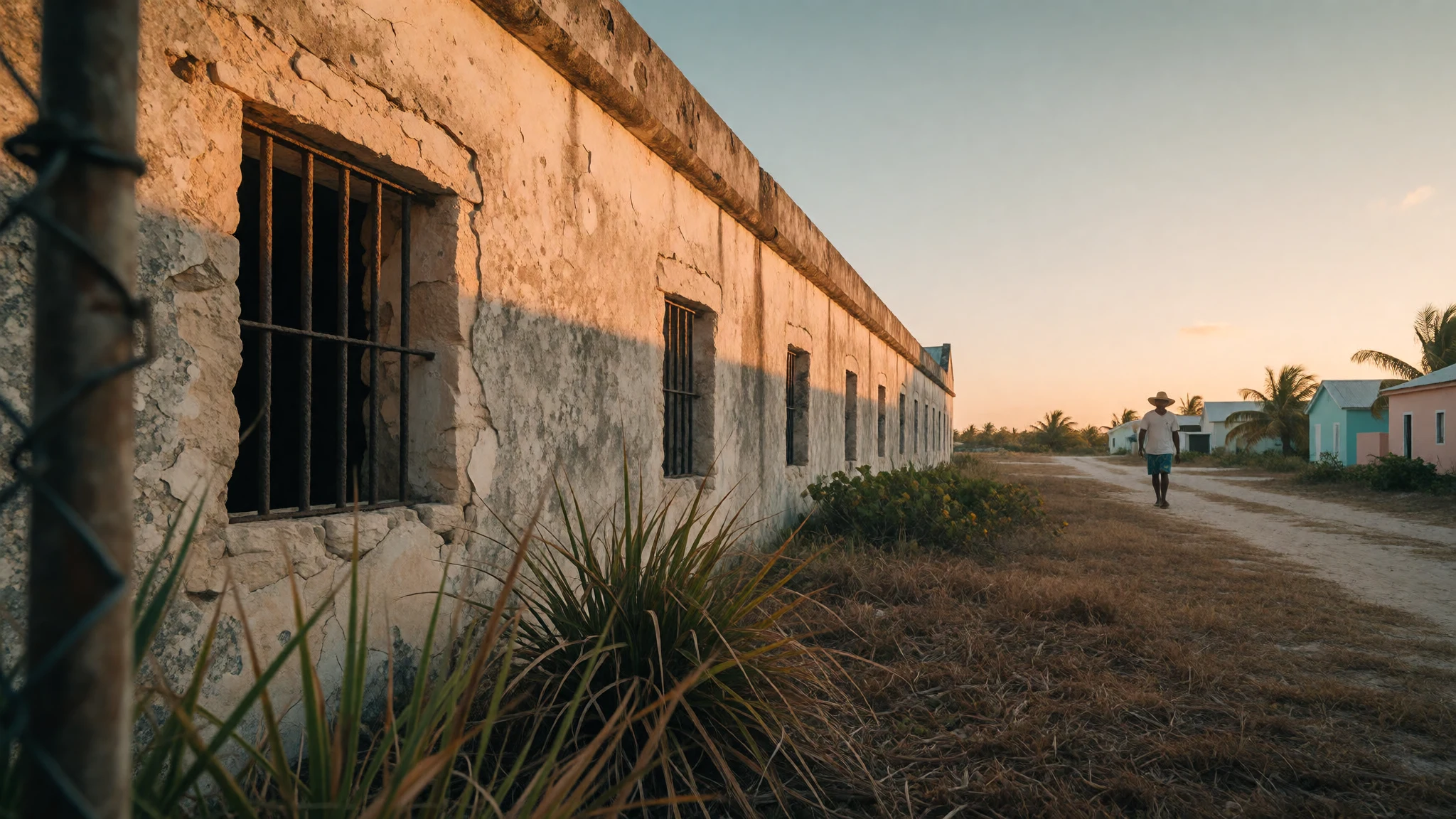
Matthew Town is small enough to walk end to end. The old prison, with its barred windows, is a quiet piece of colonial-era stonework, and the harbour front, painted houses and local shops give a fair sense of daily island life. Go early, before the heat builds.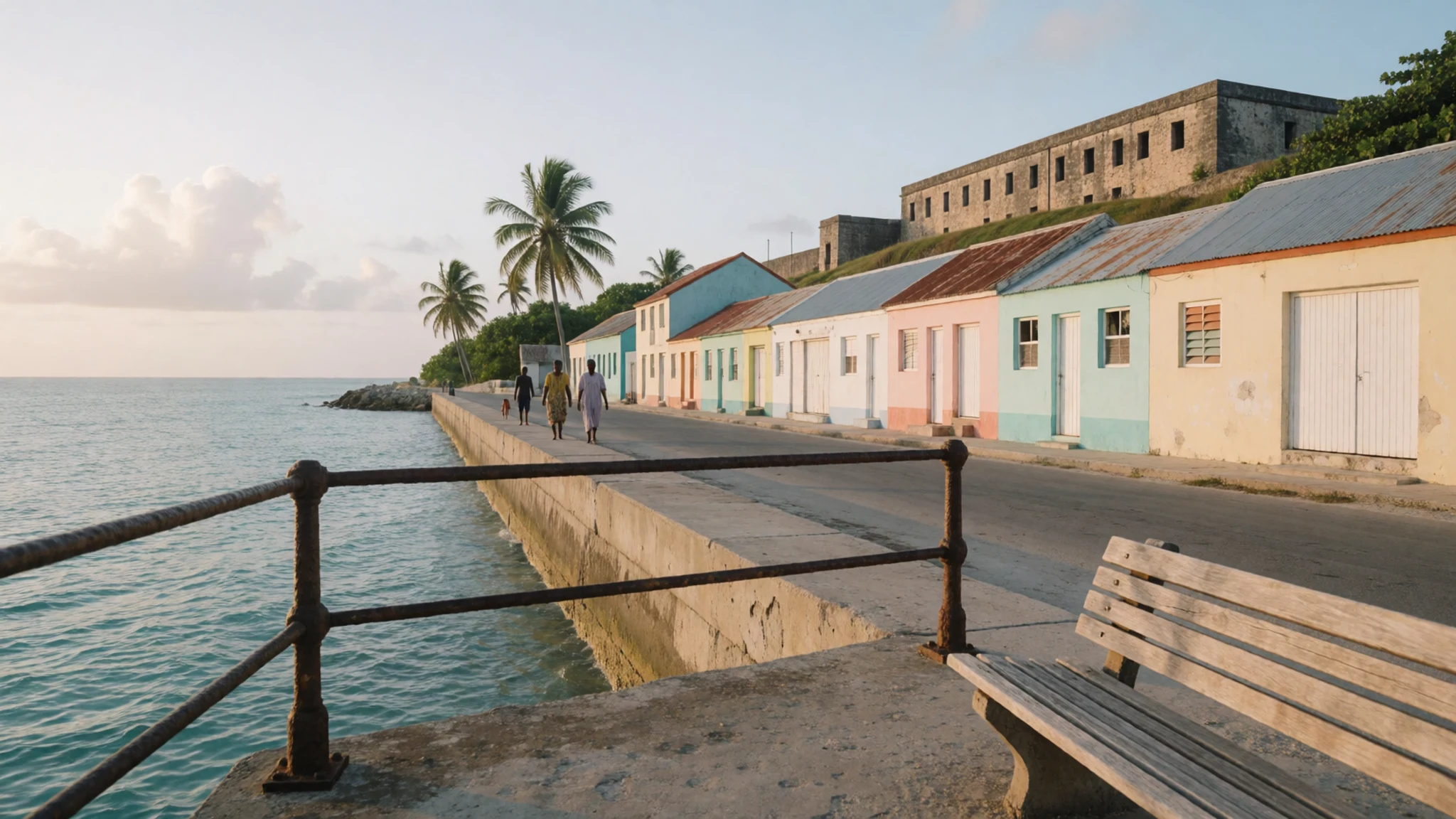
- North shore limestone coast — North coast, Great Inagua
The northern shore exposes fossil reef limestone left by older, higher seas, now weathered into sharp grey rock. It is a place for geology and wind-blown views rather than swimming. Wear sturdy shoes, bring water, and keep clear of the waves breaking on the rocks.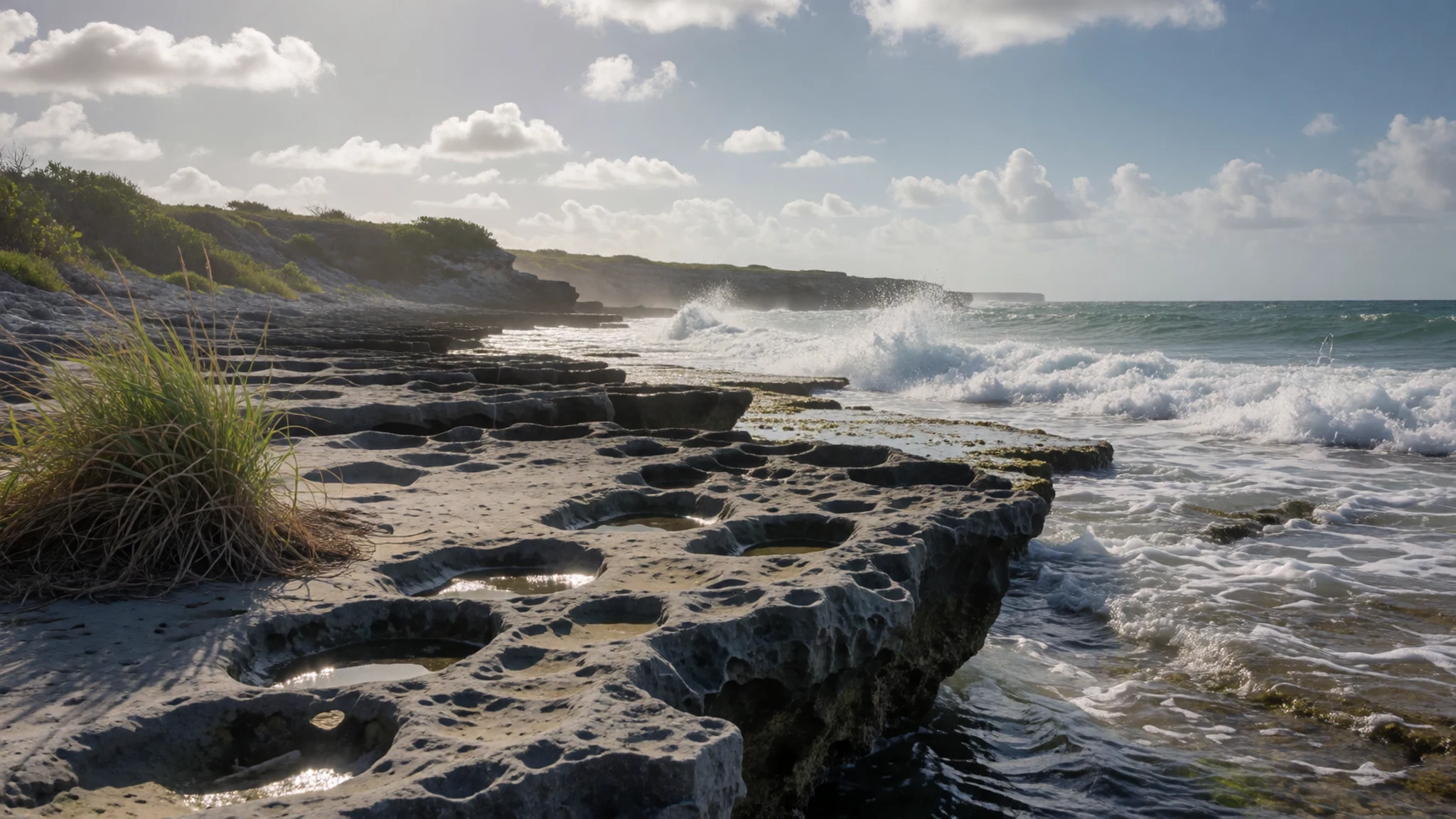
- Salt works — North shore, Great Inagua
Part of the salt operation sits on the north shore, with shallow ponds, mounds of harvested salt and industrial buildings under a huge sky. Access depends on the operator, so ask locally or check ahead before heading out. The colours of the ponds change with the light.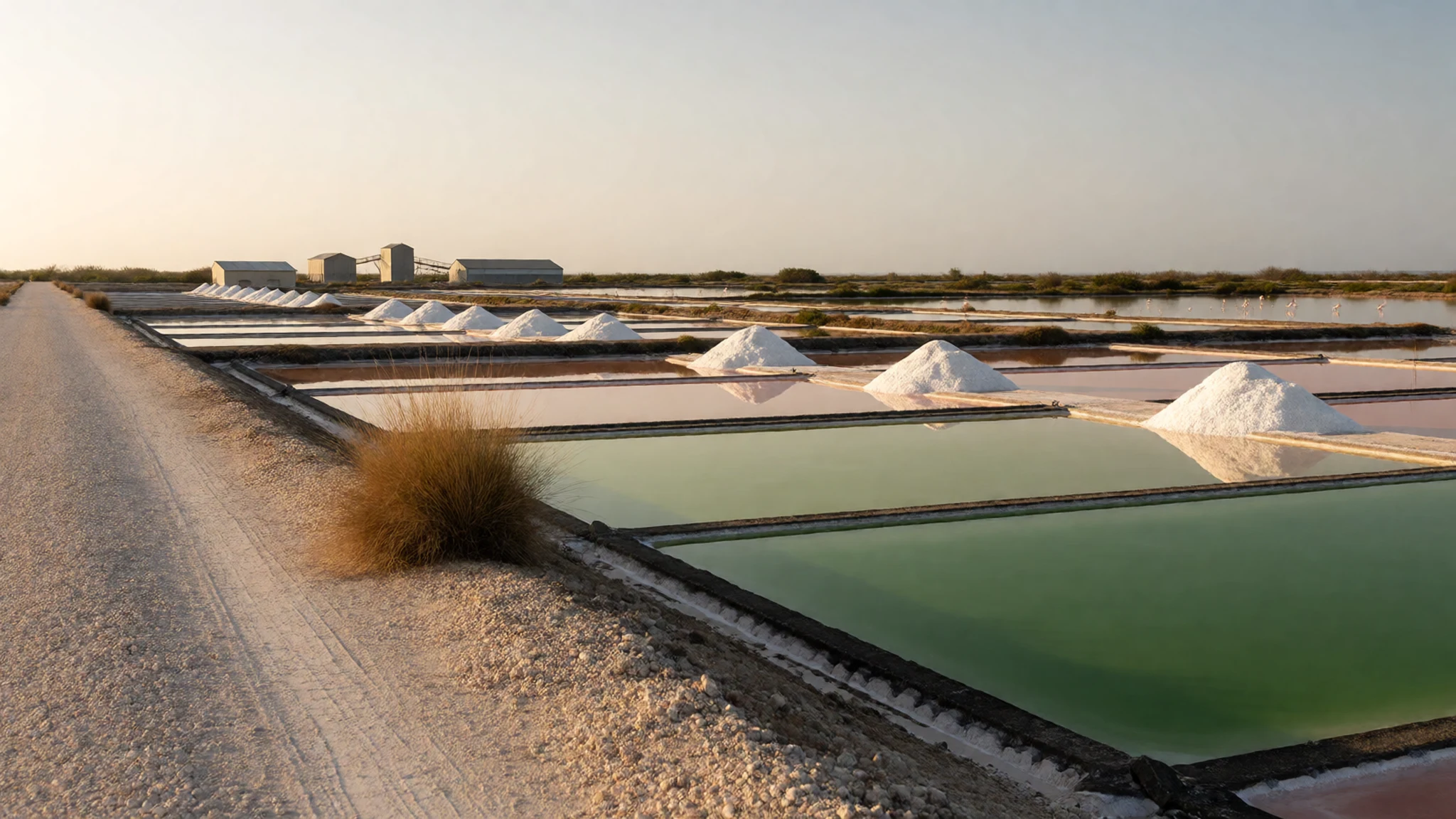
- Flamingo wetlands — Interior wetlands, Great Inagua
The shallow lakes and wetlands inland are the main draw for wildlife watchers, with flamingos and other waterbirds feeding in the shallows. A local guide improves the odds and keeps disturbance low. Binoculars help, and so do a hat, repellent and patience in the midday glare.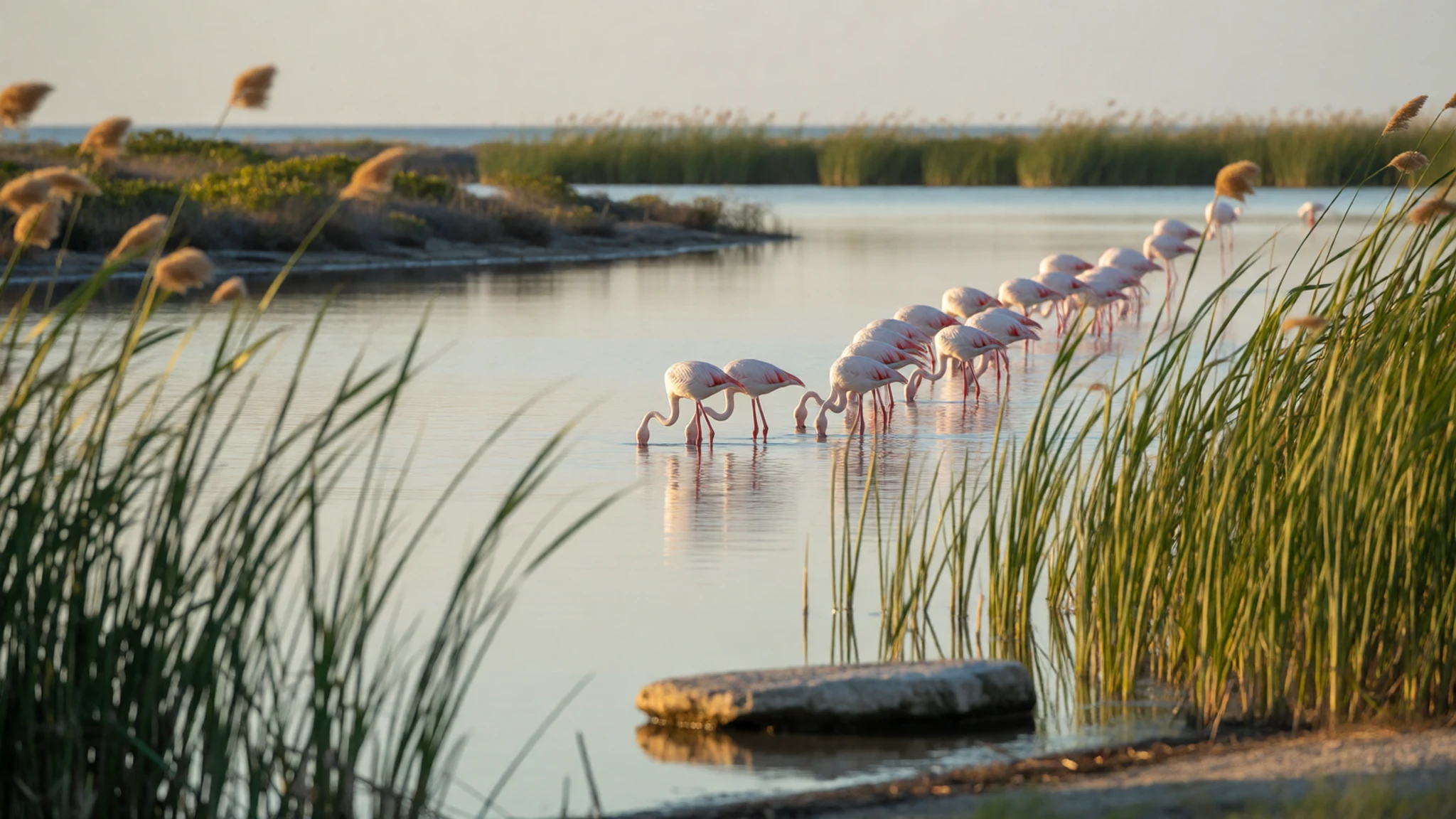
- Northeast Point — Northeast Point, Great Inagua
At the far northeastern tip stand the remains linked to Henri Christophe's summer retreat, a curious trace of Haitian royalty on a Bahamian shore. The track out is rough and exposed, so go with someone who knows it and carry plenty of water and a spare tyre.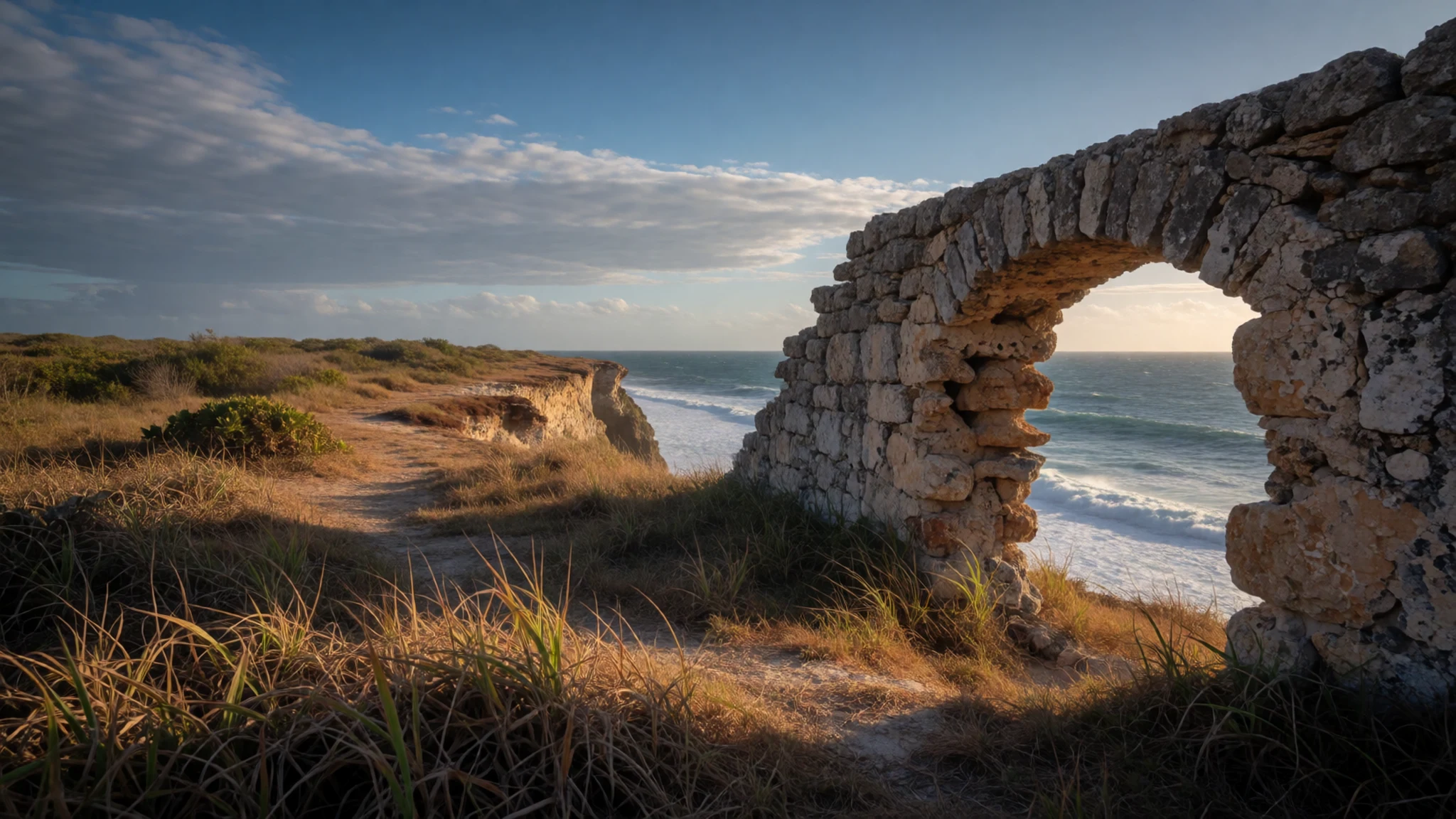
Culture
Inagua is a small community, and everyone in Matthew Town seems to know everyone else. Bahamian manners here are direct but friendly: people expect a proper greeting before any request, and they are quick to notice a visitor who skips it. Pace is relaxed. Shops, eateries and offices run on island time, and being in a hurry changes nothing except your own mood. Church matters, and Sunday is quieter than other days, with families dressed up and the town noticeably slower. Salt work has shaped working life for generations, and many families have a link to it, so people tend to be proud of the trade rather than apologetic about its industrial look. Music and food belong to the wider Bahamian culture rather than to Inagua alone: junkanoo rhythms, cowbells and goatskin drums at festival times, conch in many forms, and gospel on the radio. Because the island is remote, neighbours help each other, and local knowledge of tides, tracks and weather is worth listening to. Visitors who talk to people, buy from small shops and hire local guides tend to be remembered kindly. Hurricane season has left its mark on buildings and on memory, and people speak of storms as a fact of life, not a story for tourists. Greet people with a polite good morning or good afternoon before asking anything, wait your turn patiently in shops, and ask before photographing anyone.
What to wear
The best-known Bahamian festive dress comes from Junkanoo, the street parade held around Christmas and New Year, where costumes are built from cardboard, crepe paper and glue, with fringe, feathers and bright colour, then worn with goatskin drums and cowbells. Straw work is the other old craft: palm fibre is plaited into hats, bags and mats, and Androsia batik, a cotton cloth dyed in Andros, is common in dresses and shirts. Everyday clothing on Inagua is plainer. People wear light cotton shirts, shorts or long skirts, sandals or trainers, and caps against the sun. Salt-works staff and boat crews wear sturdy work clothes, boots and hats. On Sundays many people dress smartly for church, with pressed shirts, dresses and often hats. Visitors should dress for strong sun, wind and rough ground. Light, long-sleeved cotton or linen protects better than bare skin, and a wide-brimmed hat and sunglasses are worth packing. Sturdy closed shoes are useful on the sharp limestone shore and for birdwatching tracks, with sandals for the town. Reef shoes help for rocky entries to the water. Beachwear belongs at the beach, so cover shoulders and knees in town, in shops and at church. Bring insect repellent, and a light waterproof for squalls.
What to eat
- Cracked conch — Small local eateries, Matthew Town
Conch is the national dish, with the meat pounded, battered and deep-fried until crisp, then served with lime and hot sauce. It is plain, filling and everywhere in the Bahamas. Look for it at small local eateries in Matthew Town, often alongside fried fish.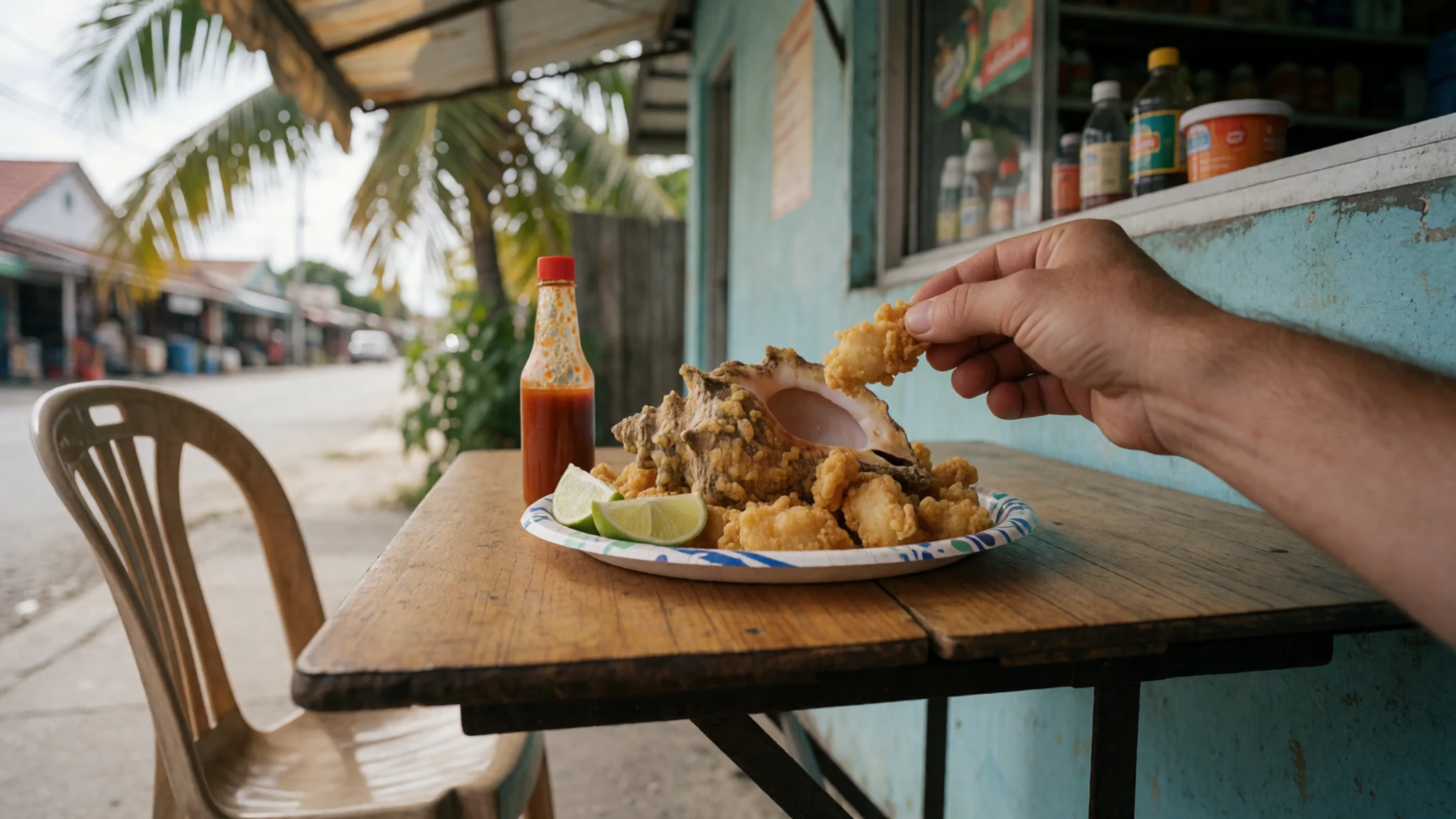
- Conch salad — Roadside stands and harbour-side eateries
Raw conch is chopped fine and dressed with lime, onion, pepper and sometimes citrus juice, a fresh, sharp contrast to the fried version. It is best eaten the day the shellfish is landed, so ask where the catch came from.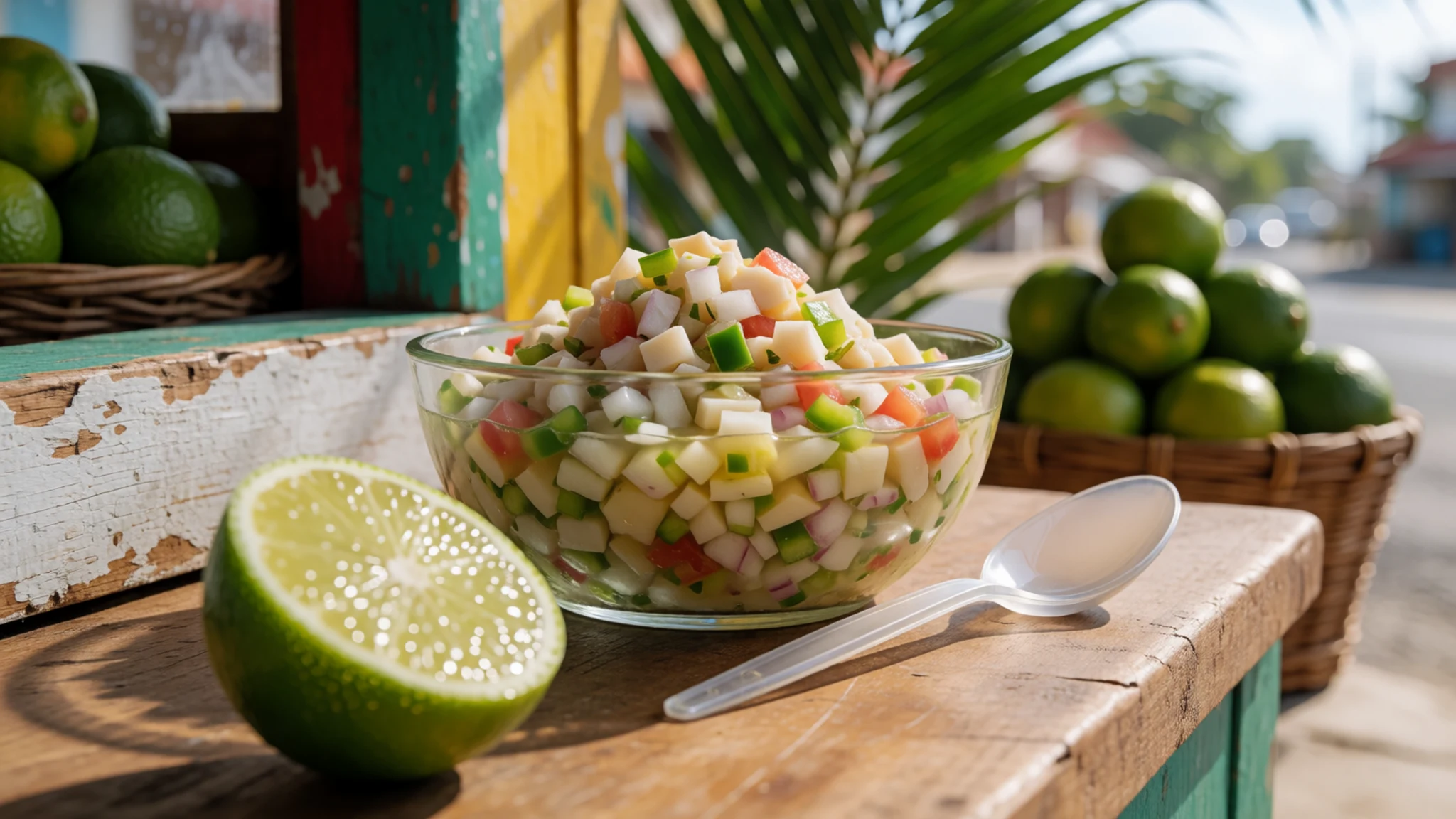
- Peas and rice — Local eateries and home-style kitchens
Pigeon peas cooked with rice, onion, tomato and thyme make the usual side dish across the islands. It is soft, savoury and a good base for fish or chicken. Home cooking varies, so each plate tastes slightly different. - Fried or steamed fish — Harbour-side eateries, Matthew Town
Fresh snapper or similar reef fish is typically fried whole or steamed with peppers and onion, and served with rice or fried plantain. Check what boats have brought in that day, since supply on a small island can be uneven. - Goombay Punch and Kalik — Grocery stores and any local bar or eatery
Goombay Punch is a pineapple-flavoured soft drink that locals call a sweet soda, sold in cans at grocery stores. Kalik is the Bahamian beer, cold and light, a sensible companion to fried food in the heat.
Plan it
Best time. December to April, when it is drier and a little cooler, with steadier sea breezes for walking and birdwatching. Summer and early autumn are hotter, more humid and wetter, and fall within the Atlantic hurricane season, though serious storms are uncommon.
How long. 2–3
Getting there. Fly to Nassau, then take a small scheduled aircraft to Matthew Town's airport on Great Inagua; check the airline for current schedules, and expect the last leg to be a short drive or pick-up from the guesthouse.
Budget. mid
Tips
- Book flights and accommodation well ahead, as seats and rooms are few
- Carry enough cash, since cards and cash machines may be limited
- Bring plenty of drinking water, sun protection and insect repellent
- Arrange a local guide in advance for the wetlands and remote tracks
- Stock up on essentials in Matthew Town, as shops are small and supplies vary
Etiquette
- Greet people before asking for anything
- Ask before photographing residents or private property
- Keep well back from nesting and feeding birds
Nearby
Sources
- Wikidata Q1353668 (CC0)
- Wikipedia: Inagua (rev 1377388199) (CC BY-SA 4.0)
- Wikivoyage: Bahamas (rev 5413599) (CC BY-SA 4.0)
- Photo: North shore of Great Inagua (Public domain)
- Photo: Main house, Matthew Town (Public domain)
- Photo: Matthew Town, Great Inagua (Public domain)
- Photo: Old prison, Matthew Town (Public domain)
- Photo: Prison window, Matthew Town (Public domain)
- Photo: Police station, Matthew Town (Public domain)
- Photo: Grocery store, Matthew Town (Public domain)
- Photo: Morton Salt facilities, Great Inagua (Public domain)


Wildlife
- Flamingo (animal)
The American flamingo is a big flamingo, also known as the Caribbean flamingo, and the one kind that lives wild in North America. On Inagua it spends its time in the wetlands, and local guides know just where to look, so go out with one. Stay well back, keep your voice low and your movements slow, and never offer food, so the birds carry on undisturbed and wild.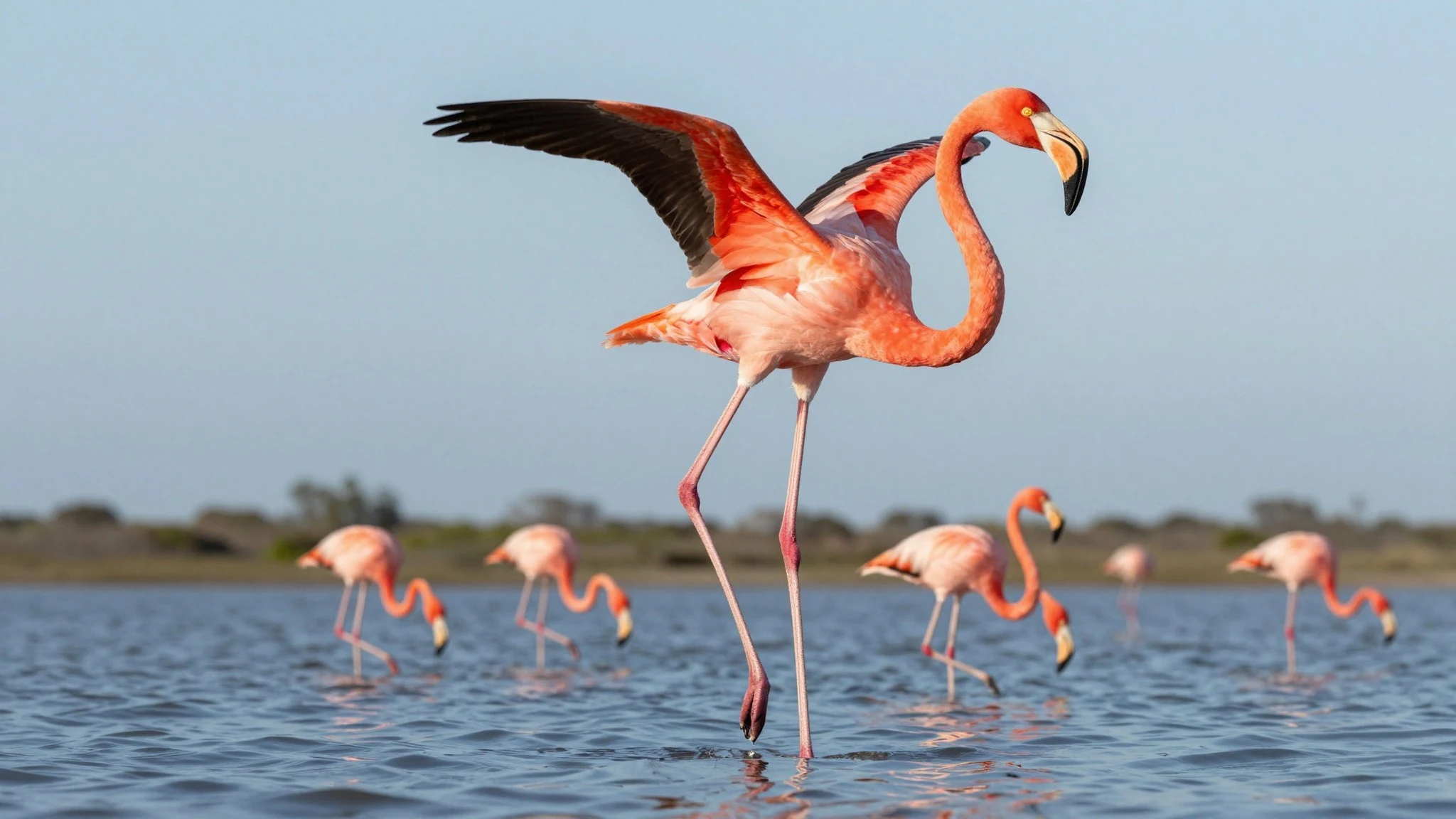
- American flamingo (bird)
The American flamingo is a big flamingo, also known as the Caribbean flamingo, and the one kind that lives wild in North America. On Inagua it spends its time in the wetlands, and local guides know just where to look, so go out with one. Stay well back, keep your voice low and your movements slow, and never offer food, so the birds carry on undisturbed and wild.