Hwangmaesan
Hwangmaesan, South Korea
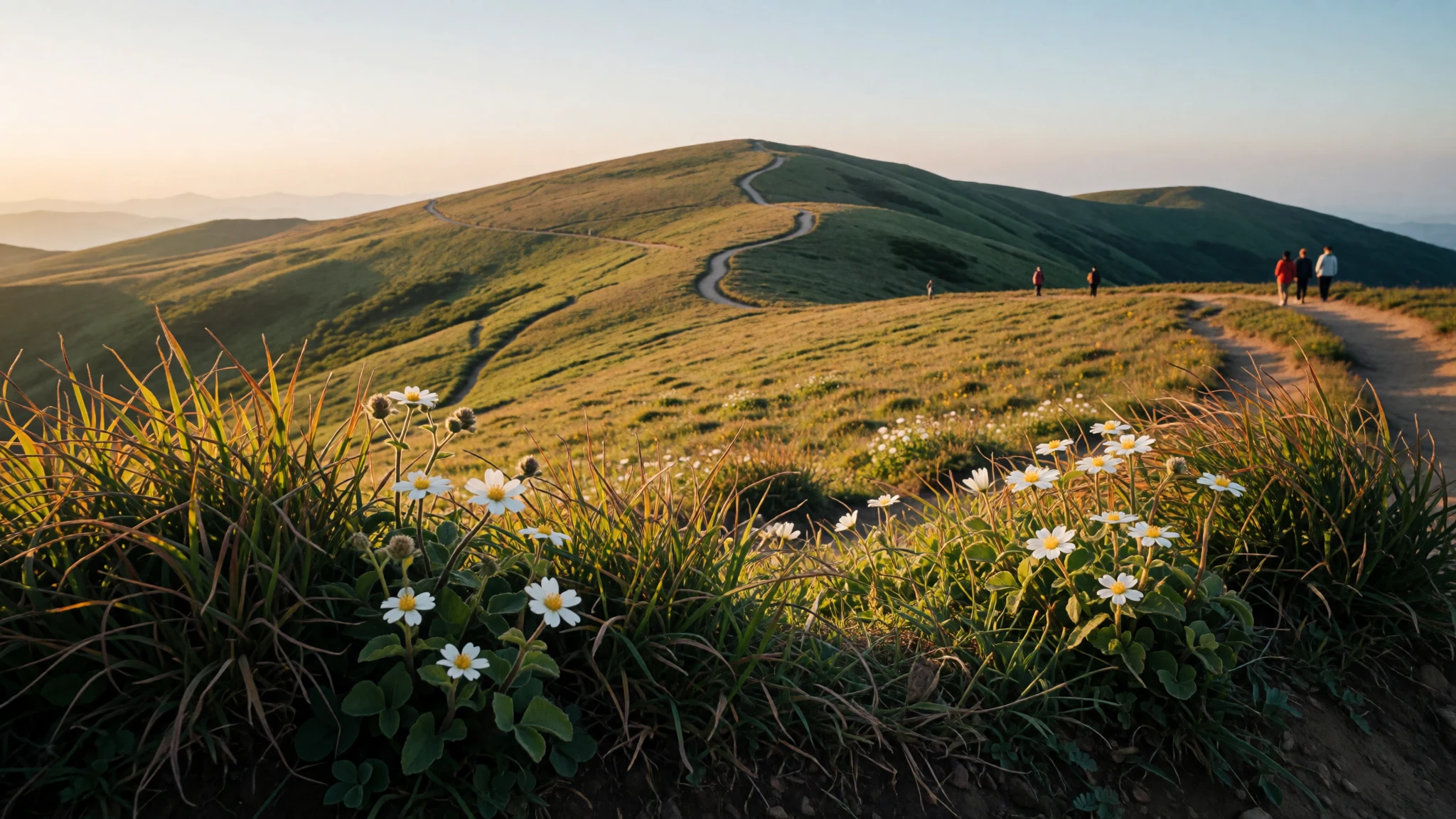
Hwangmaesan is a South Gyeongsang peak where royal azaleas flush the ridges in spring and maples burn in autumn, far from the coast crowds.
The place
Hwangmaesan is a mountain in South Gyeongsang Province, in the south-east of South Korea, and its summit stands at 1,108 metres. It lies in Hapcheon county, an inland, rural corner of the province rather than the busy coast. That distinction matters for anyone planning a trip. Many visitors to South Gyeongsang end up in Busan, with its fish market and beaches, or at the heritage sites around Jinju and the Gaya burial mounds. Hwangmaesan sits apart from all that, a ridge of rock and grass that people climb for views, for spring flowers and for autumn colour. The best-known flower is the royal azalea, a pink-flowering shrub that spreads across the upper slopes and draws crowds on bloom weekends. The mountain also carries the stone walls of a fortress, Hwangmaesanseong, whose gateway and ramparts are photographed in autumn colour. Roads wind up through azalea banks to the trailheads, so the approach is as scenic as the walk itself. Facilities follow the usual pattern of Korean mountain parks: marked paths, a few stalls near the car parks, and signage mostly in Korean. The region as a whole is easy to reach from Seoul by fast train, but the last stretch to Hapcheon needs a bus, taxi or car. It suits a long day or a night nearby, with reasonable fitness, sturdy shoes and a wish for open country over city lights.
Its story
Hwangmaesan's written history is thin in the sources used here, so its story is best told through the province around it. During the Korean War, South Gyeongsang was the one stretch of the south that Communist forces never occupied, and a long list of the country's presidents were born here. That record of holding firm and producing leaders gives the region a weight beyond its farmland and fishing ports. Older layers sit nearby too: the Gaya burial mounds, left by a confederacy that ruled the area from about the first to the sixth centuries CE, and the historic fortress at Jinju. Hwangmaesan belongs to the same habit of using high ground. Korean mountains made natural lookouts, and a fortress wall such as Hwangmaesanseong turns a ridge into a refuge when a valley below is no longer safe. Today those stone lines are a pleasure rather than a defence, softened by azaleas in late spring and by russet leaves in October. The mountain's modern fame is simpler than its past. Photographers and weekend walkers have made it a regional favourite, and the azalea-lined road to it is photographed almost as often as the summit. Seen that way, a climb here is a small lesson in the province's character: practical, rooted in the land, and quietly proud of being hard to overrun.
What to see
- Hwangmaesanseong fortress — Hwangmaesan, Hapcheon
Hwangmaesanseong, the fortress on the mountain, is the main man-made sight. Its stone walls and gateway follow the ridge, and photographs taken in October show them framed by red and gold leaves. Walk part of the wall for views over the surrounding hills, and allow time to stop often.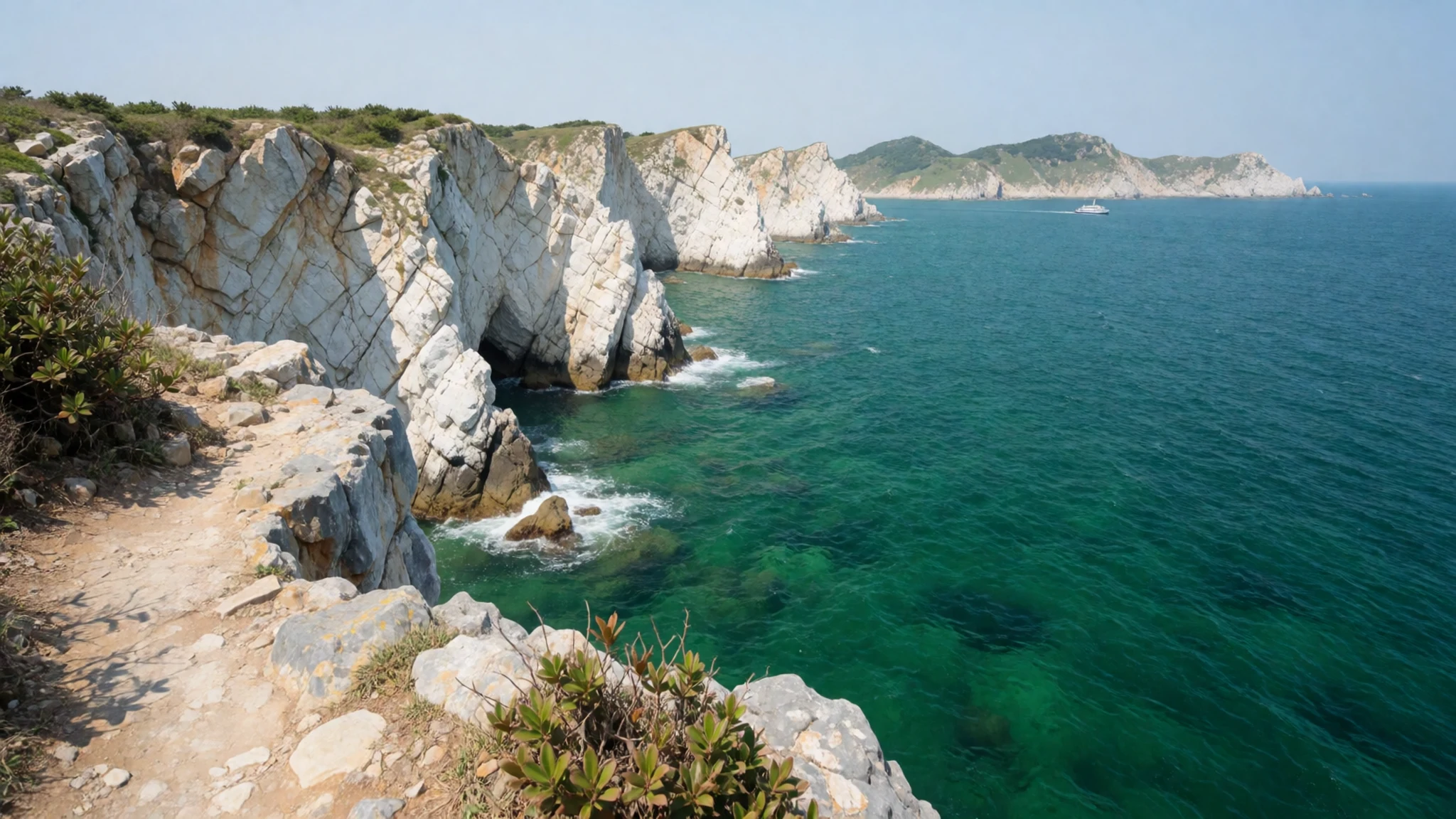
- Royal azalea slopes — Upper slopes, Hwangmaesan
The upper slopes of Hwangmaesan are known for royal azaleas, which turn the hillsides pink in late spring. Bloom time shifts with the weather, so check local reports before travelling. Weekends in flower season bring heavy traffic and full car parks, and weekdays are much calmer for photography and walking.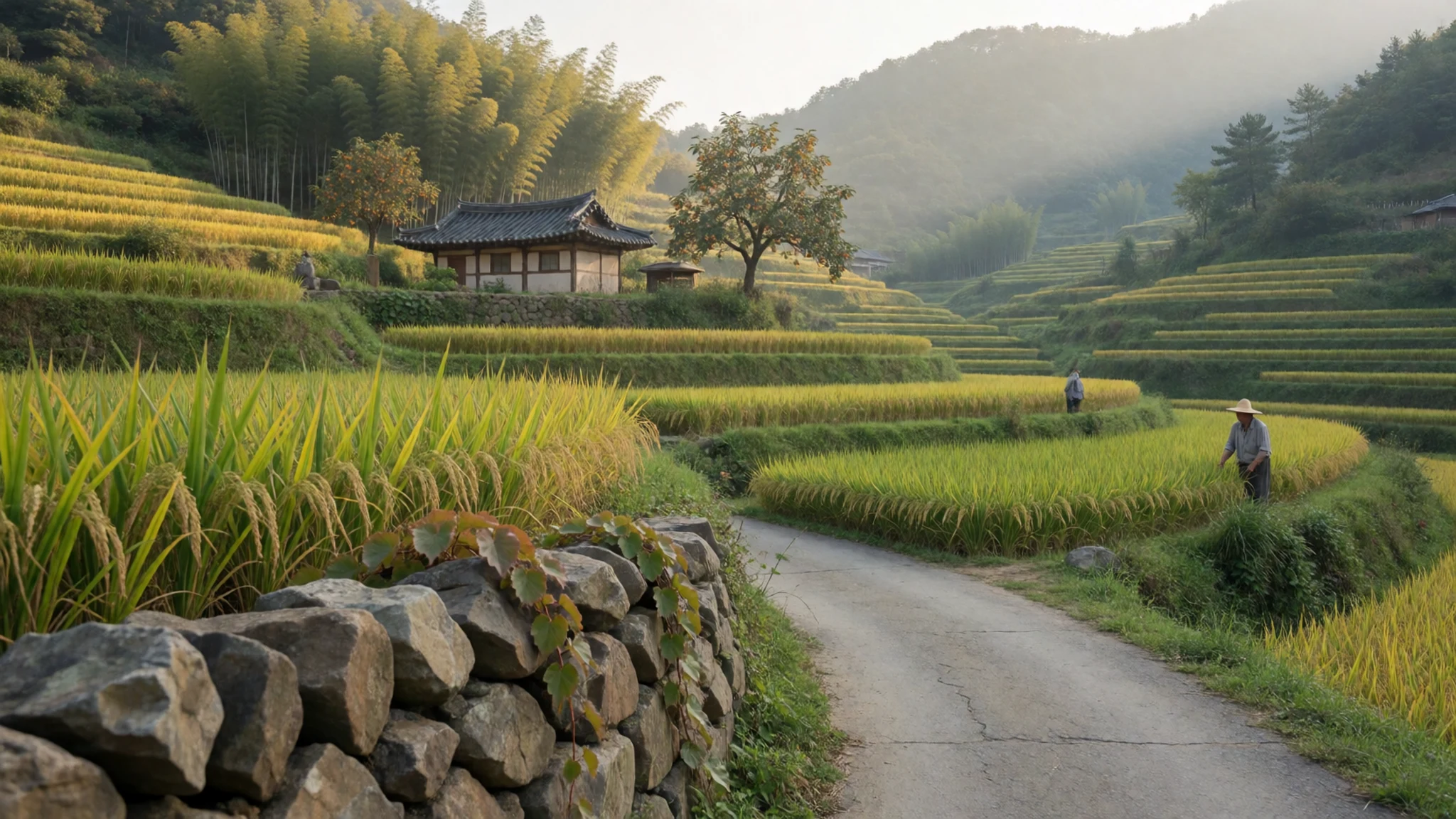
- The summit ridge — Hwangmaesan summit
The summit of Hwangmaesan reaches 1,108 metres, enough for wide views across the hills of Hapcheon and the neighbouring countryside. The climb is a proper hike on marked paths rather than a stroll, so carry water, wear grippy shoes and start early in warm months. In autumn the slopes below glow with colour.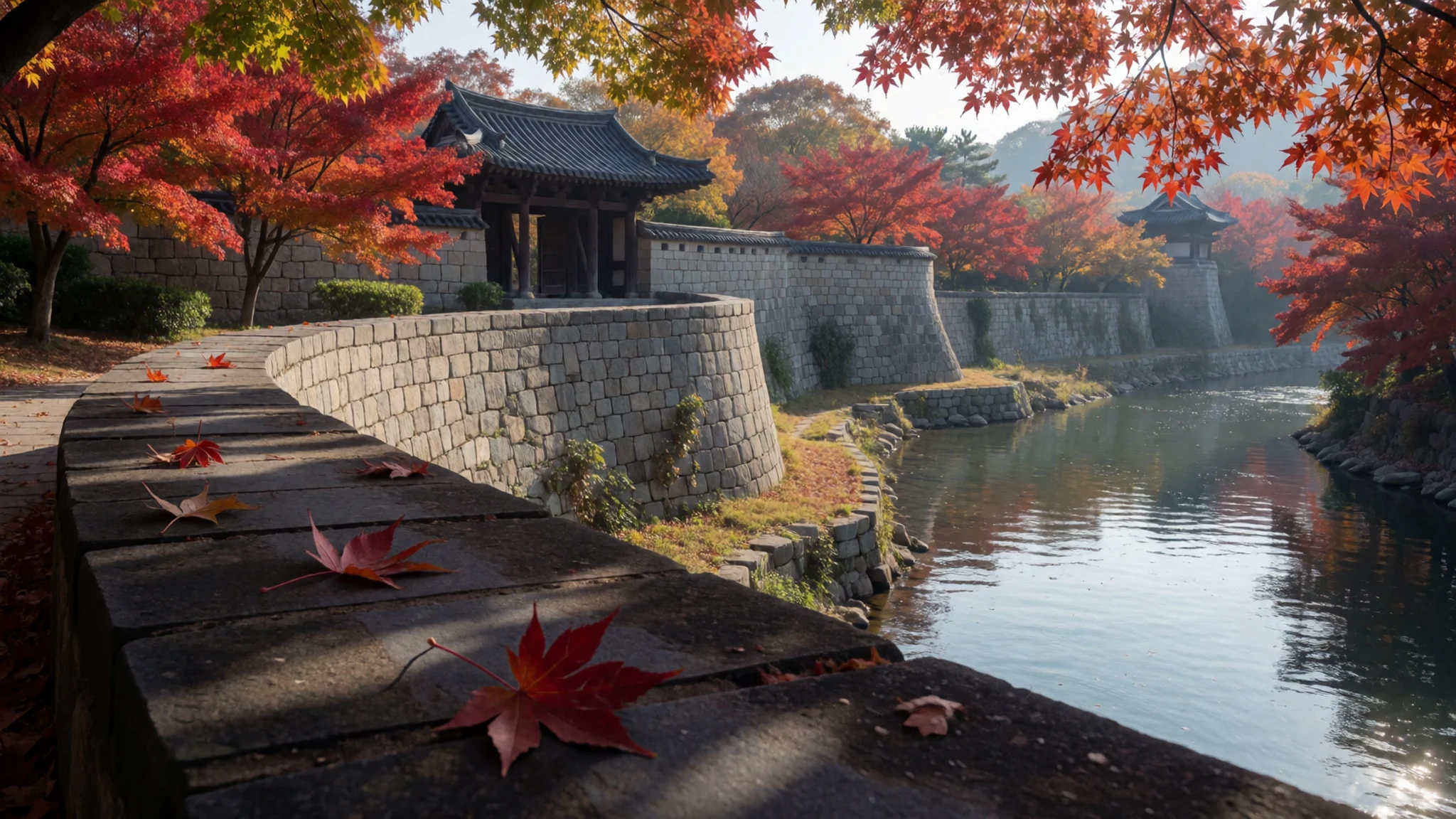
- The azalea road — Approach road, Hapcheon
The road to Hwangmaesan is a sight of its own in flower season, lined with azalea banks that photographers return to year after year. Driving or taking a taxi lets the road be enjoyed slowly, but traffic can crawl on bloom weekends, so an early start saves hours.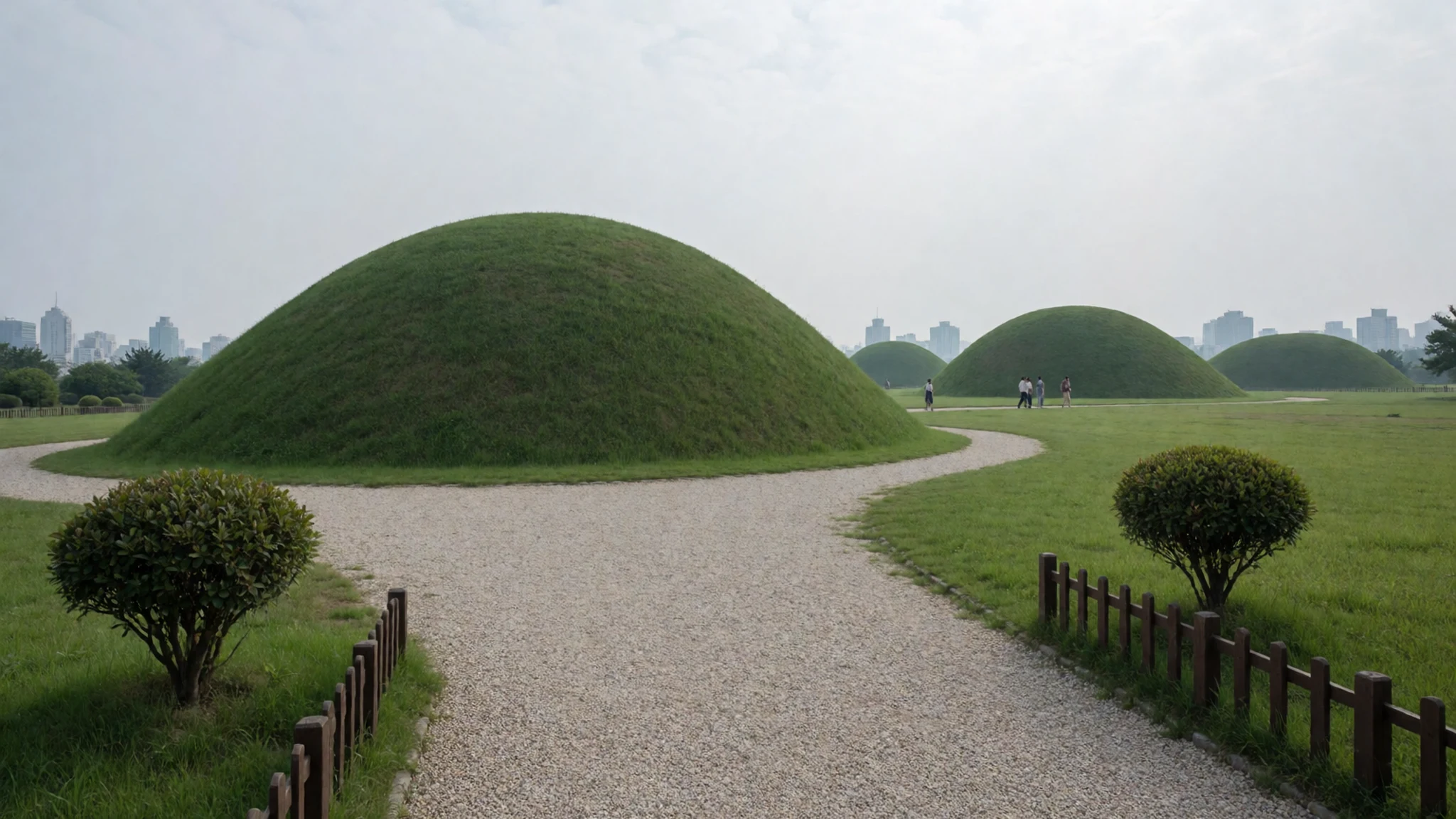
- Jinju fortress — Jinju, South Gyeongsang
Jinju, elsewhere in South Gyeongsang, has a historic fortress that suits a second day. It gives a lowland, city-side counterpart to Hwangmaesan's ridge walls, and pairs well with the Gaya burial mounds, five components of which lie in the province. Check the official site for opening details.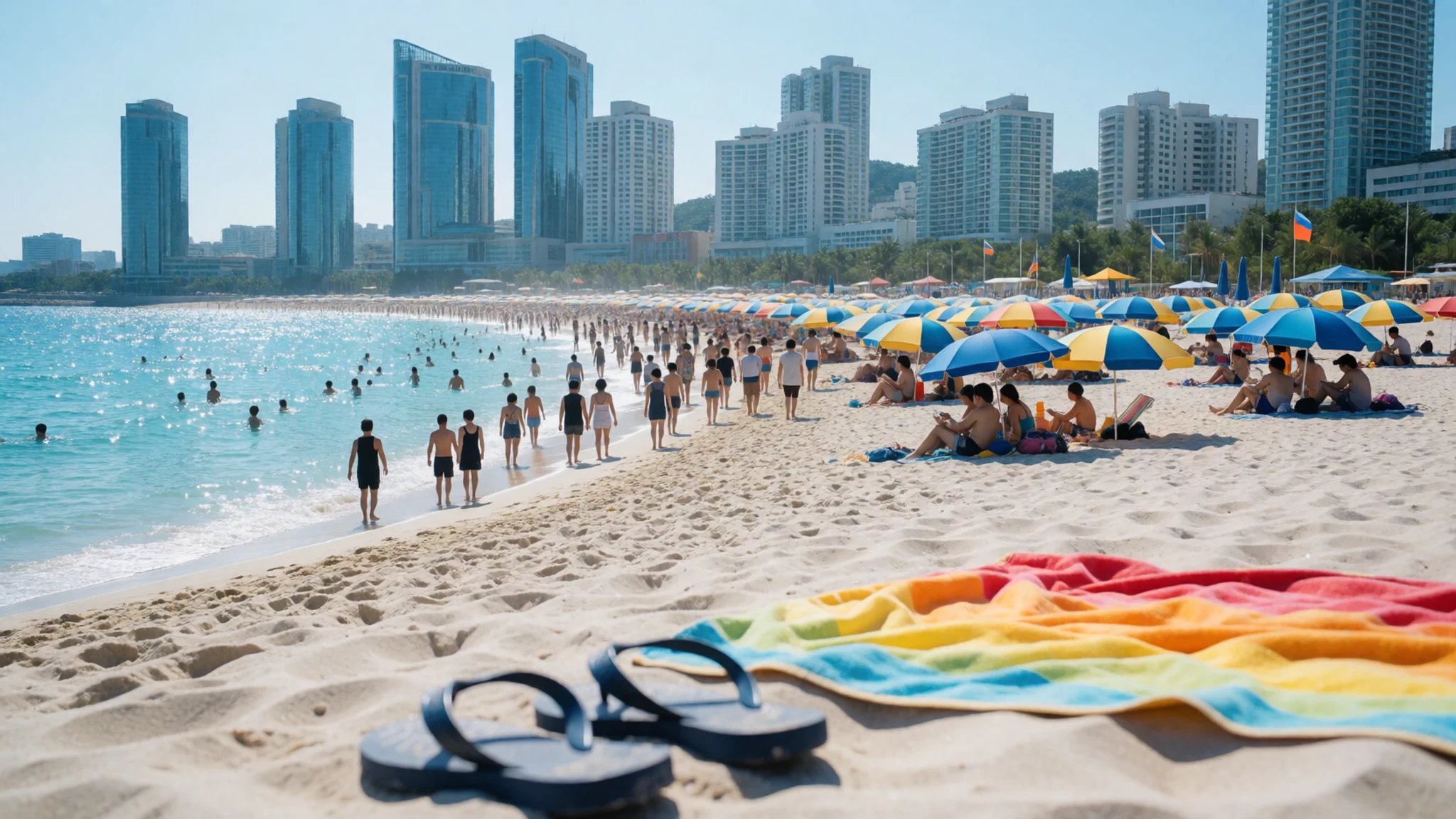
Culture
Hwangmaesan sits in a country where hiking is a mainstream pastime rather than a niche one, and the mountain follows that culture closely. Weekend trails fill with walkers of all ages in bright technical gear, and a quick greeting to those passing on a path is normal. After a descent, groups often gather over food and drink at stalls or restaurants near the car parks, so the end of the walk is as social as the climb. Seasonal flowers matter too: azaleas in spring and leaves in autumn are treated as events, and families plan outings around bloom forecasts. The fortress walls reflect a long regional habit of defence, and South Gyeongsang remembers the Korean War as a time when its territory held out. Local people in the Hapcheon countryside are generally reserved with strangers but helpful when asked, and a few words of Korean, such as a polite hello, go further than long explanations in English. English signage is patchy on rural paths, so a downloaded map helps. Keep to the marked paths, stay off the fortress stonework, and carry all your rubbish down with you.
What to wear
Hwangmaesan is a hiking mountain, so the fashion story has two halves: the traditional clothing of Korea and the practical gear actually seen on the trail. Traditional dress is hanbok, made up of a short jacket called jeogori worn over a full skirt (chima) for women or loose trousers (baji) for men. Fabrics range from silk for formal occasions to ramie and hemp for summer and cotton for everyday wear. Hanbok appears today mainly at weddings, the Lunar New Year and Chuseok harvest holidays, and in photographs at heritage sites. Day to day, people in the Hapcheon countryside wear ordinary modern clothes, and on the mountain that means technical hiking wear in bright colours: breathable layers, walking poles, caps and sturdy boots, often matched in groups. For visitors, the priorities are practical. Spring mornings and autumn evenings can be cold at altitude, so pack a fleece and a wind-proof shell, with a hat and sunscreen for open ridges. Boots or trail shoes with real grip matter more than style on rocky paths and stone steps. Shorts are fine in summer, though the heat is humid and rain showers are common. Anyone adding a temple or village stop should carry a light scarf or shirt to cover shoulders and knees, and slip-on shoes help where footwear comes off.
What to eat
- Sanchae bibimbap — Simple restaurants near the trailheads
Sanchae bibimbap is rice topped with seasoned mountain greens and herbs, served with a spoonful of chilli paste to stir through. The greens change with the season, and the flavours are earthy and slightly bitter. Look for it at the simple restaurants clustered near trailheads and car parks.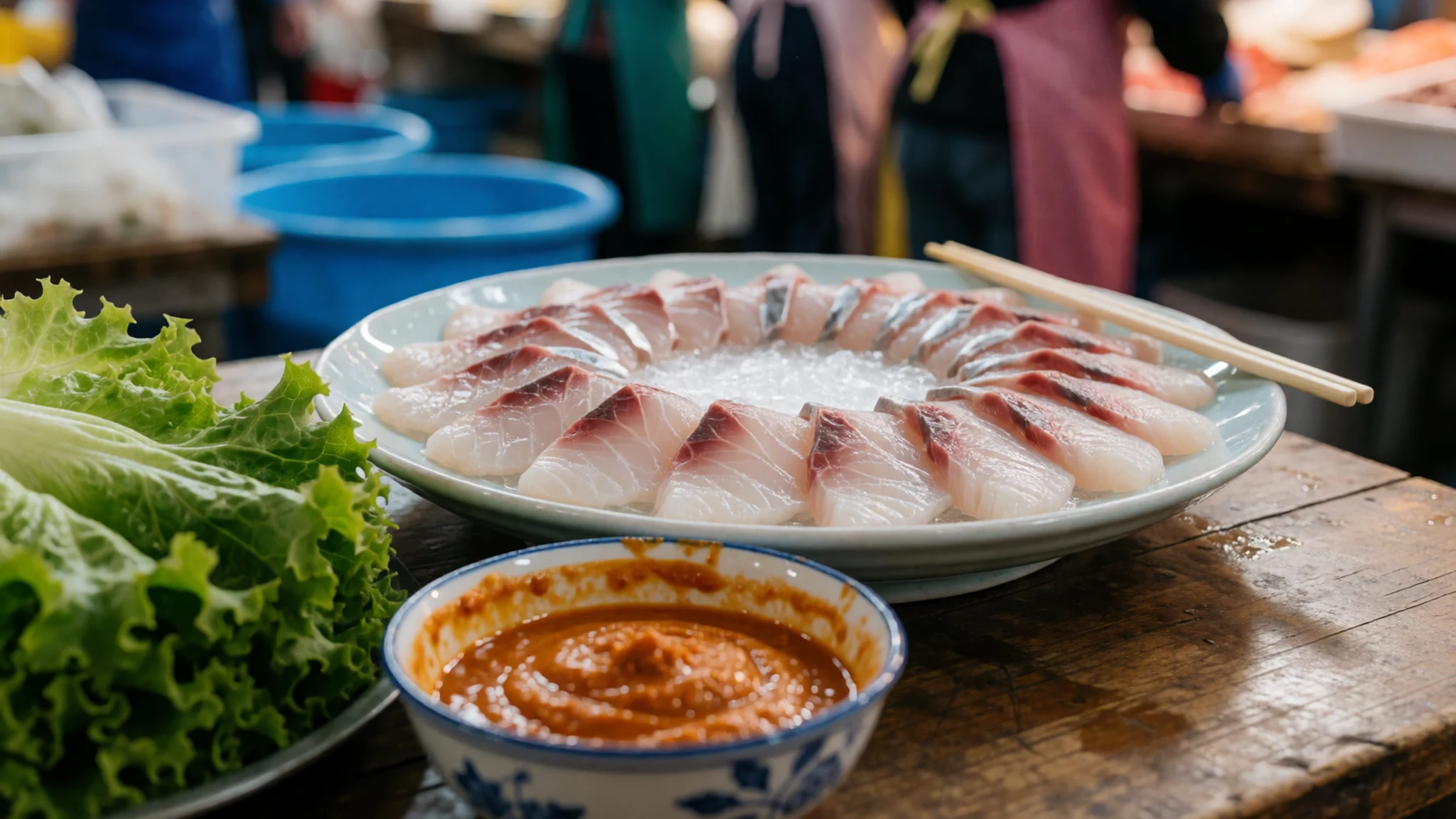
- Dwaeji gukbap — Neighbourhood soup restaurants in Hapcheon
Dwaeji gukbap is a hot pork-and-rice soup, cloudy from long simmering and seasoned at the table with salted shrimp, chives and chilli. It is a hearty meal in the southern provinces, ideal after a climb. Neighbourhood soup restaurants in Hapcheon are a good place to look for it.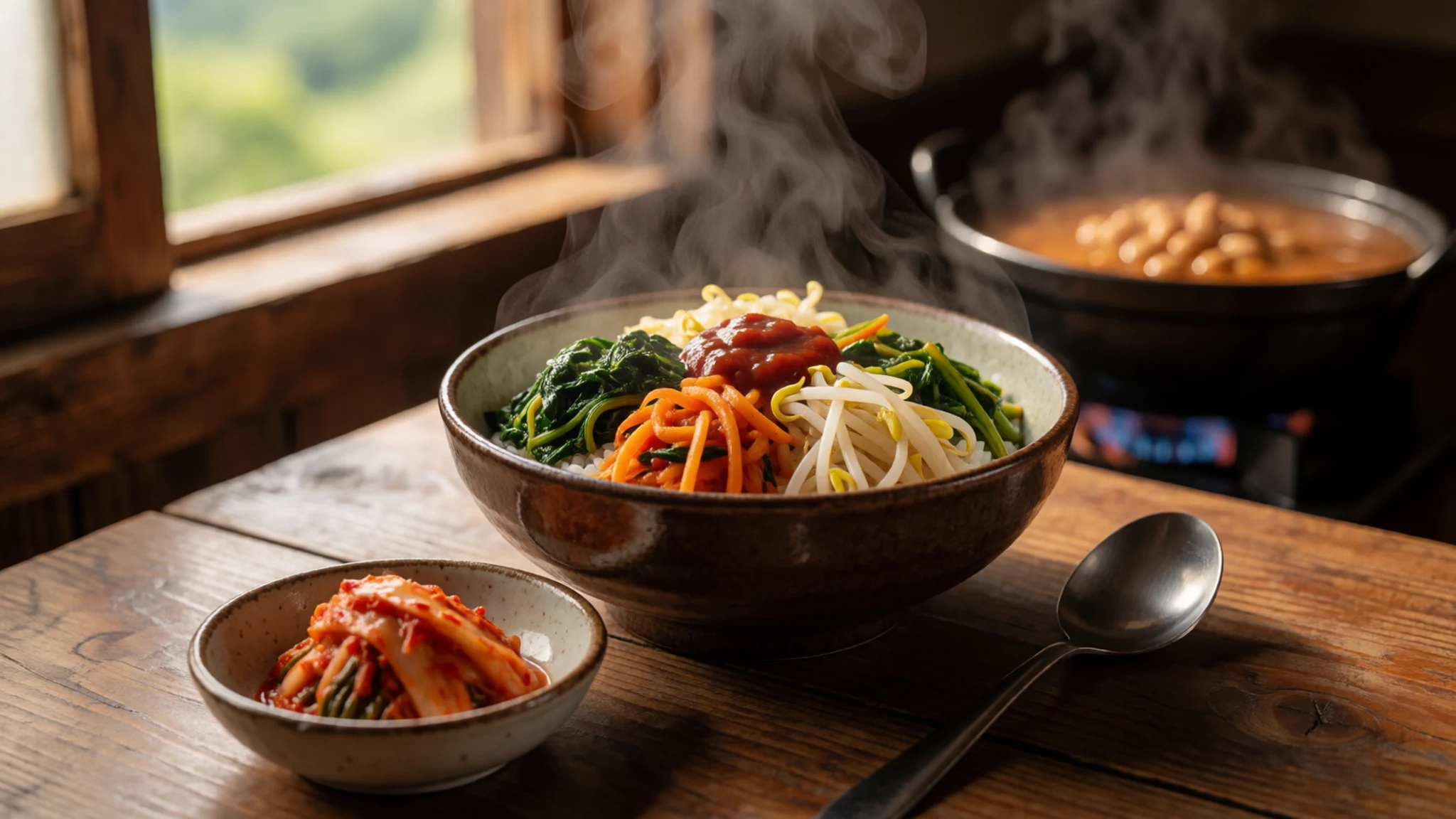
- Pajeon and makgeolli — Trailhead eateries and casual drinking places in town
Pajeon is a crisp spring-onion pancake, often with seafood or vegetables, eaten with a bowl of makgeolli, a lightly fizzy, milky rice drink. The pairing is a classic reward after a hike. Find it at trailhead eateries and at casual drinking places in town. - Dotori-muk — Village restaurants in the Hapcheon countryside
Dotori-muk is a soft, faintly bitter jelly made from acorn starch, sliced and dressed with soy, sesame and chilli. It is a light, traditional mountain-country dish, often served as a side. Look for it in village restaurants and as a banchan alongside a larger meal. - Seafood at Jagalchi — Jagalchi fish market, Busan
Busan's Jagalchi fish market is the place for raw fish, grilled mackerel and shellfish if a coastal stop is added to the trip. Fish is chosen at the stalls, then often eaten upstairs or at nearby restaurants. Mornings are when the stalls are in full swing.
Plan it
Best time. May for royal azaleas (bloom timing shifts with the weather) and October to early November for autumn colour. Summers are hot, humid and showery, and winters are cold on the high ground.
How long. 1–2
Getting there. KTX high-speed rail links Seoul with the main southern stations, and flights reach Busan's Gimhae airport (PUS), Incheon (ICN) or Sacheon (HIN). Hwangmaesan lies inland in Hapcheon, so the last leg is a regional bus, a taxi or a hire car from a nearby city; check bus connections locally before setting out.
Budget. low
Tips
- Visit on a weekday in azalea season, as weekends bring heavy traffic and full car parks
- Start walking early for cooler air and softer light for photographs
- Carry water, snacks and an offline map, since rural signage is mostly in Korean
- Keep some cash for small stalls and rural taxis
- Check the local forecast and local tourism information for bloom timing and any path closures
Etiquette
- Greet other walkers with a nod or a short hello on narrow paths
- Carry all litter off the mountain
- Stay on marked paths and off the fortress walls
Nearby
Sources
- Wikidata Q5952045 (CC0)
- Wikipedia: Hwangmaesan (rev 1369296990) (CC BY-SA 4.0)
- Wikivoyage: South Gyeongsang (rev 5250104) (CC BY-SA 4.0)
- Photo: Hwangmaesan Mountain in autumn, Choi2451, via Wikimedia Commons (CC BY 3.0)
- Photo: Hwangmaesanseong in autumn, Choi2451, via Wikimedia Commons (CC BY-SA 4.0)
- Photo: Royal Azalea In Mt Hwangmae, Dae Wook Kim, via Wikimedia Commons (CC BY 3.0)
- Photo: The Way To Hwangmaesan (106796859), Seong Gyu Eok Men, via Wikimedia Commons (CC BY 3.0)
- Photo: The Way To Hwangmaesan (106796897), Seong Gyu Eok Men, via Wikimedia Commons (CC BY 3.0)
- Photo: The Way To Hwangmaesan (106796903), Seong Gyu Eok Men, via Wikimedia Commons (CC BY 3.0)


