Hustai
Hustai, Mongolia
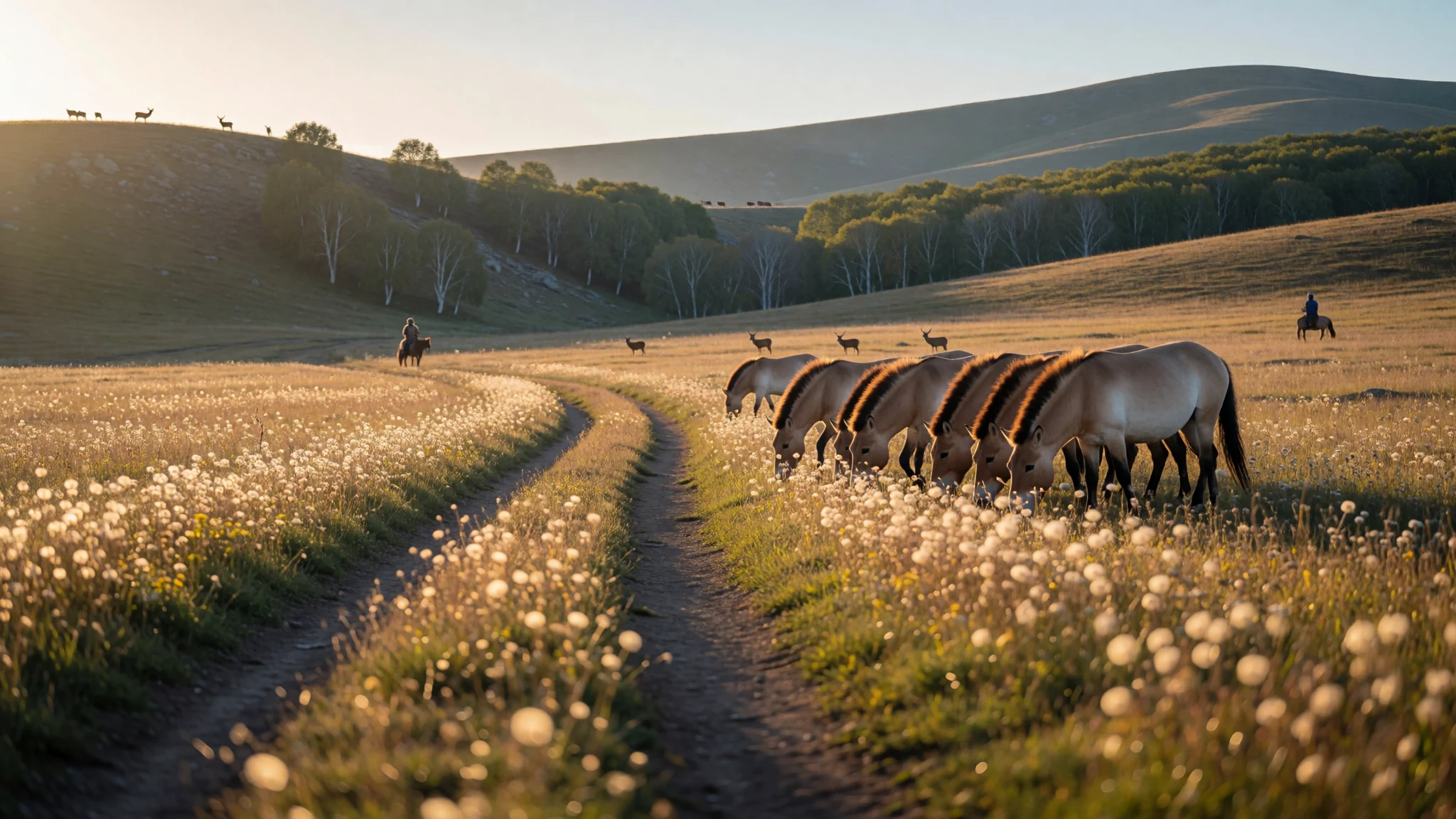
Hustai is the steppe reserve where the takhi, Przewalski's horse, runs free on the grassland again.
The place
Hustai (Хустай), also called Khustain Nuruu, is a protected stretch of mountain steppe in central Mongolia, west of Ulaanbaatar. The name refers to birch, and pale birch woods still mark the gullies and north-facing slopes between ridges of grass. The land is open: dry grass, low hills, and wide views that change with the light rather than with buildings. There is no town inside the boundary. A small visitor camp of gers sits near the entrance, and from there the reserve is mostly track, sky and animals.
The reason most people come is the takhi, Przewalski's horse, stocky and dun, with a stiff mane and a dark stripe along the back. They are not tamed stock. They move in bands across the valleys, and the proper way to watch them is from a distance, usually with a park guide, without trying to close the gap on foot. Red deer, marmots and birds of prey share the same ground, and Mongolian herders still work the country around the park edge with their own horses and flocks.
Wind is the constant. Summer brings strong sun and sudden showers; nights cool quickly once the sun drops. Winter locks the steppe hard. Paths are rough dirt, so a visit is a drive and a walk on uneven grass, not a paved circuit. Hustai asks for patience: the horses may be on a far slope, the light may be flat at midday, and the reward is the plain itself with a wild horse still in it.
Its story
Hustai's modern story turns on an animal that had vanished from the grassland. The takhi, Przewalski's horse, once ranged across the Central Asian steppe. Hunting, hard winters and competition with livestock pushed it out of the wild, and for a time it existed only in zoos and breeding collections far from Mongolia. The horse in those collections was never a domestic breed: it remained the wild takhi, short-coupled and wary, unlike the Mongolian riding horse herders still use.
Bringing it back meant choosing ground that could carry a free-ranging herd without turning the animal into a paddock exhibit. Hustai's mountain steppe, with its valleys, birch cover and limited settlement, became that ground. Captive-bred takhi were released here and left to form their own bands, find water and keep clear of people. The project is tied to the park's protection: the horses stay wild only if the grass, the quiet and the boundary hold.
Around that scientific effort sits an older life. Mongolian families have grazed these hills for generations, moving with the season, and the park has had to sit beside that pasture rather than pretend the steppe was empty. Visitors today see both layers at once: a wild horse that returned within living memory, and herders whose horses, sheep and gers are still the working culture of the country outside the core reserve. Hustai is less a monument than a working argument about what the steppe can hold if the wild horse is given room.
What to see
- Takhi — central valleys
Hustai's takhi are the sight the reserve is built around. They keep to small bands on the open grass and shift away if a vehicle closes in. Guides drive to a valley where a group has been seen and stop well short. Watching is done from the track, with binoculars, rather than on foot.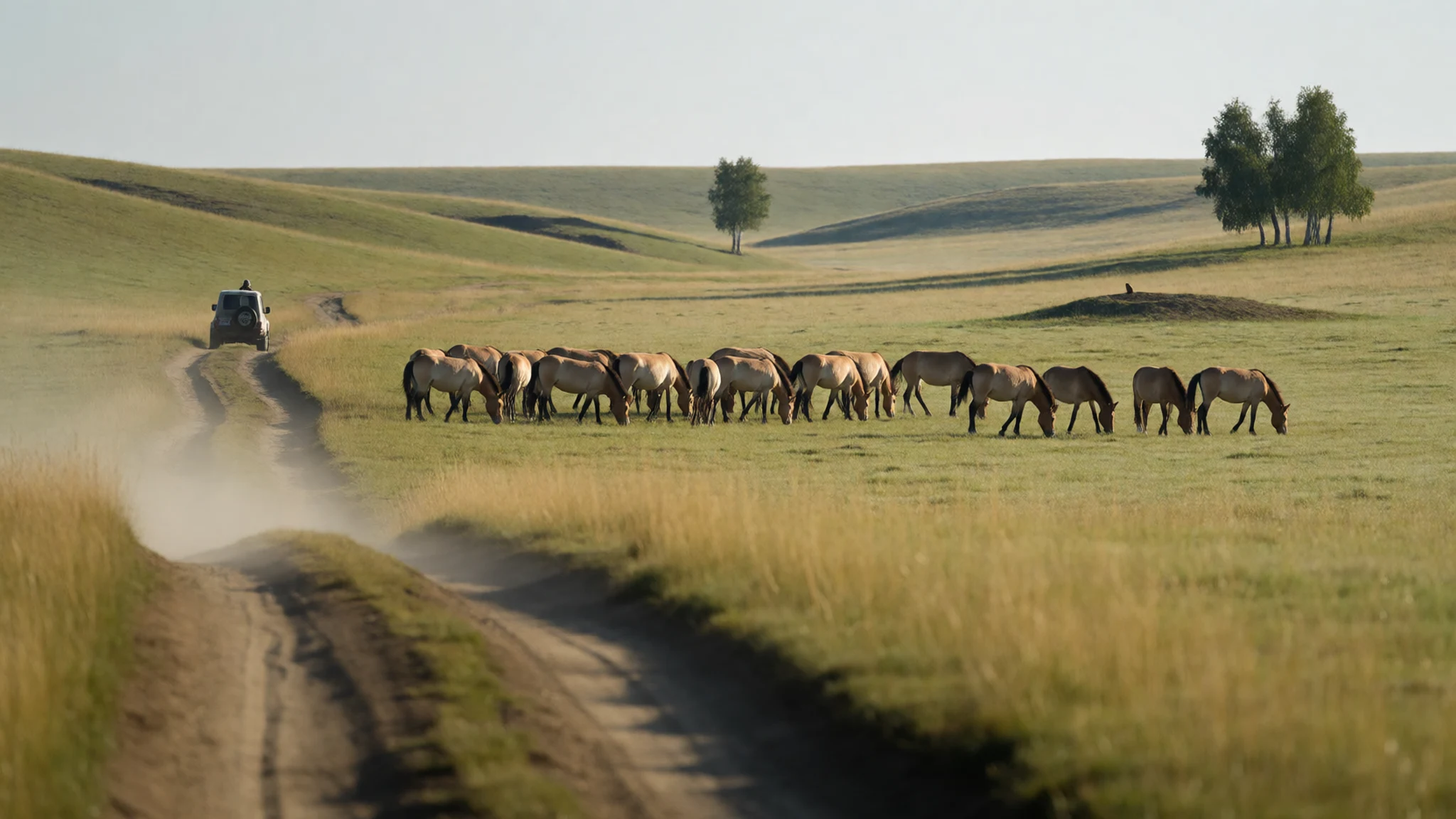
- Eastern ridges — eastern ridges
Hustai's eastern ridges open a long view across the park: grass falling towards a pale horizon, with trees only in the folds. The track climbs just enough to lay the country out, and the wind is stronger here than down at the camp. It is a place to stop and look. Vehicles that remain on the track leave the thin turf intact.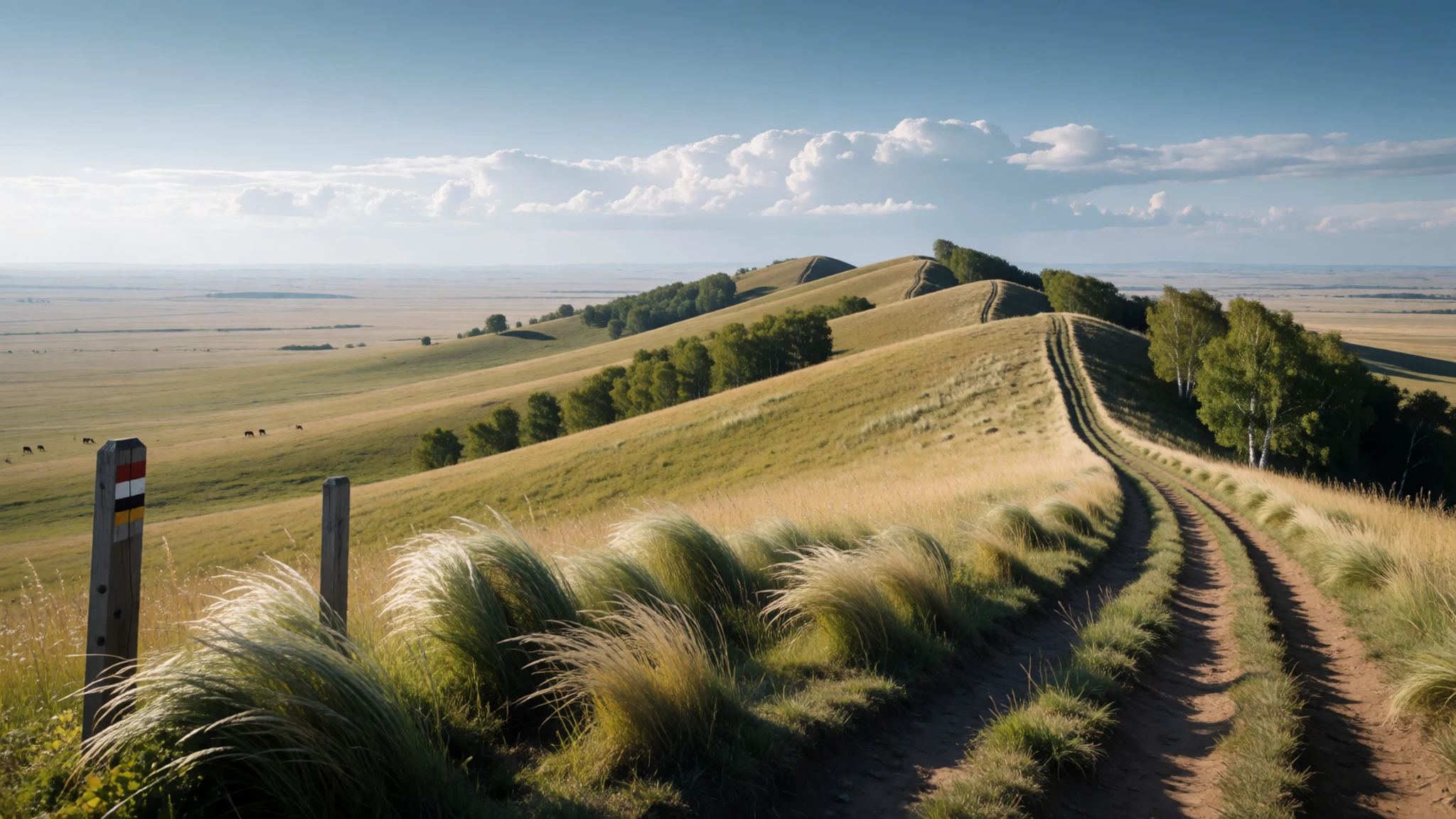
- Birch gullies — north-facing gullies
Hustai takes its name from birch, and the trees are the surprise in a park that looks, from the road, like pure grass. They gather in cooler gullies and on slopes that hold a little more moisture, white trunks against dark green. Under them the plants stay low: grasses, small flowers and shrubs that never make a closed forest. Any walk here is short and uneven.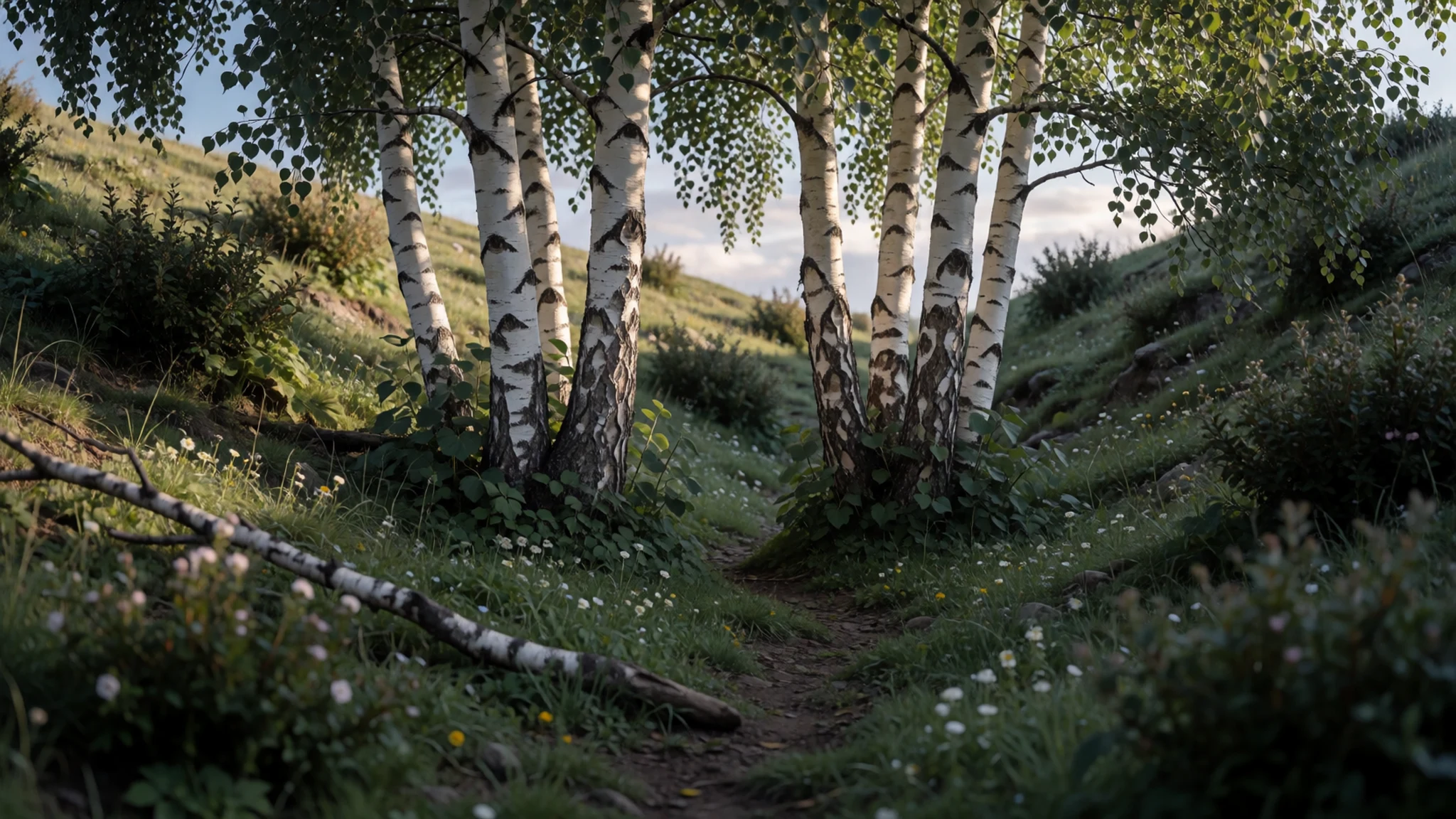
- Entrance gers — park entrance
Hustai's visitor gers stand near the entrance, round felt tents on wooden frames, and they are the usual base for a night in the park. Each is a single room, with beds along the wall and a stove at the centre, the felt the only real break from the wind. Meals are shared in a dining ger, because there is no settlement to walk into.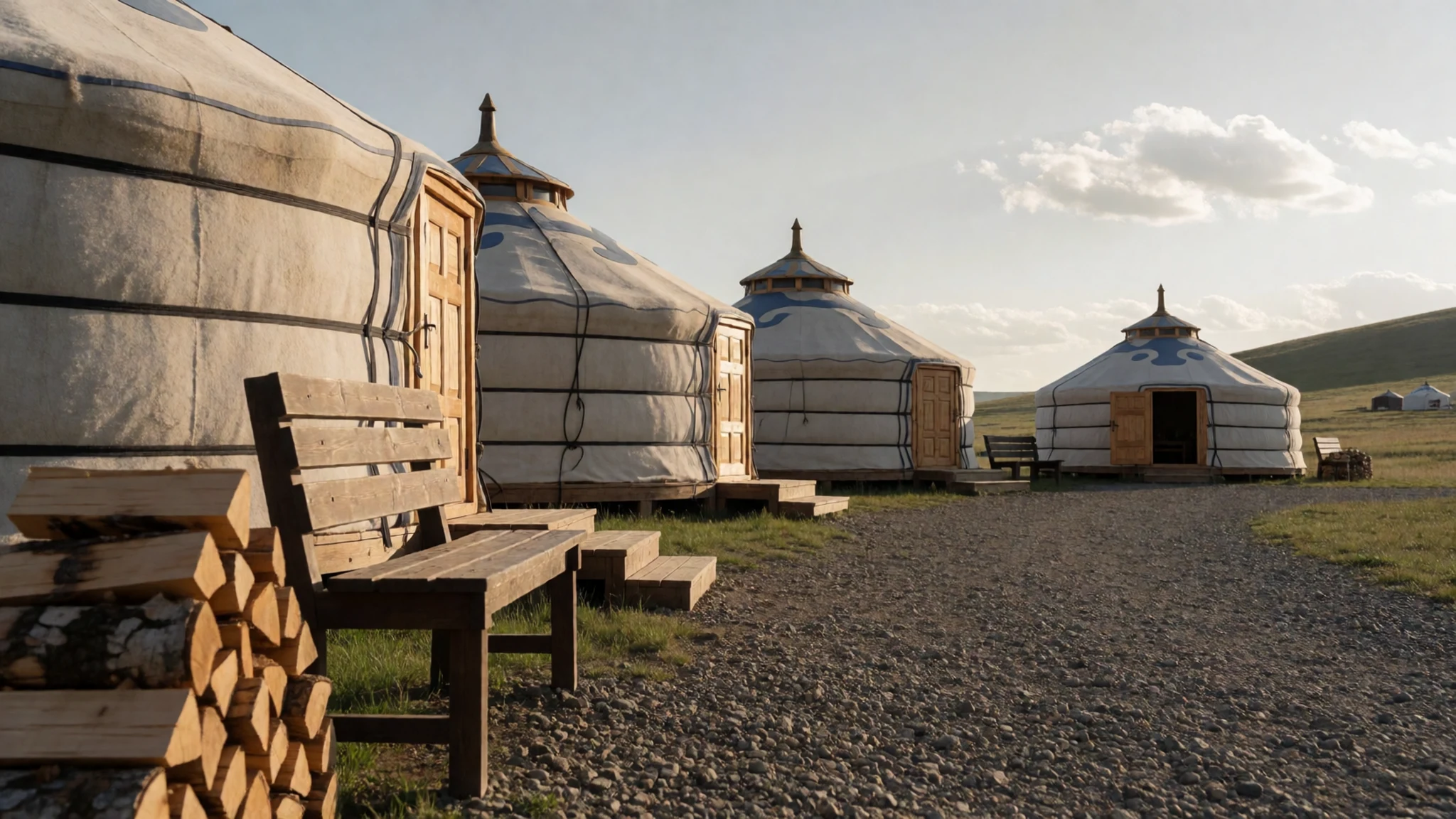
- Central steppe — central steppe
Hustai's central steppe is the reserve with the horses out of the frame: a wide floor of grass between low ridges, empty of fences. Marmot burrows puncture the turf, and red deer may show on a far slope when a group stays quiet. The gradient is gentle and the exposure is not; shade disappears once the sun is high.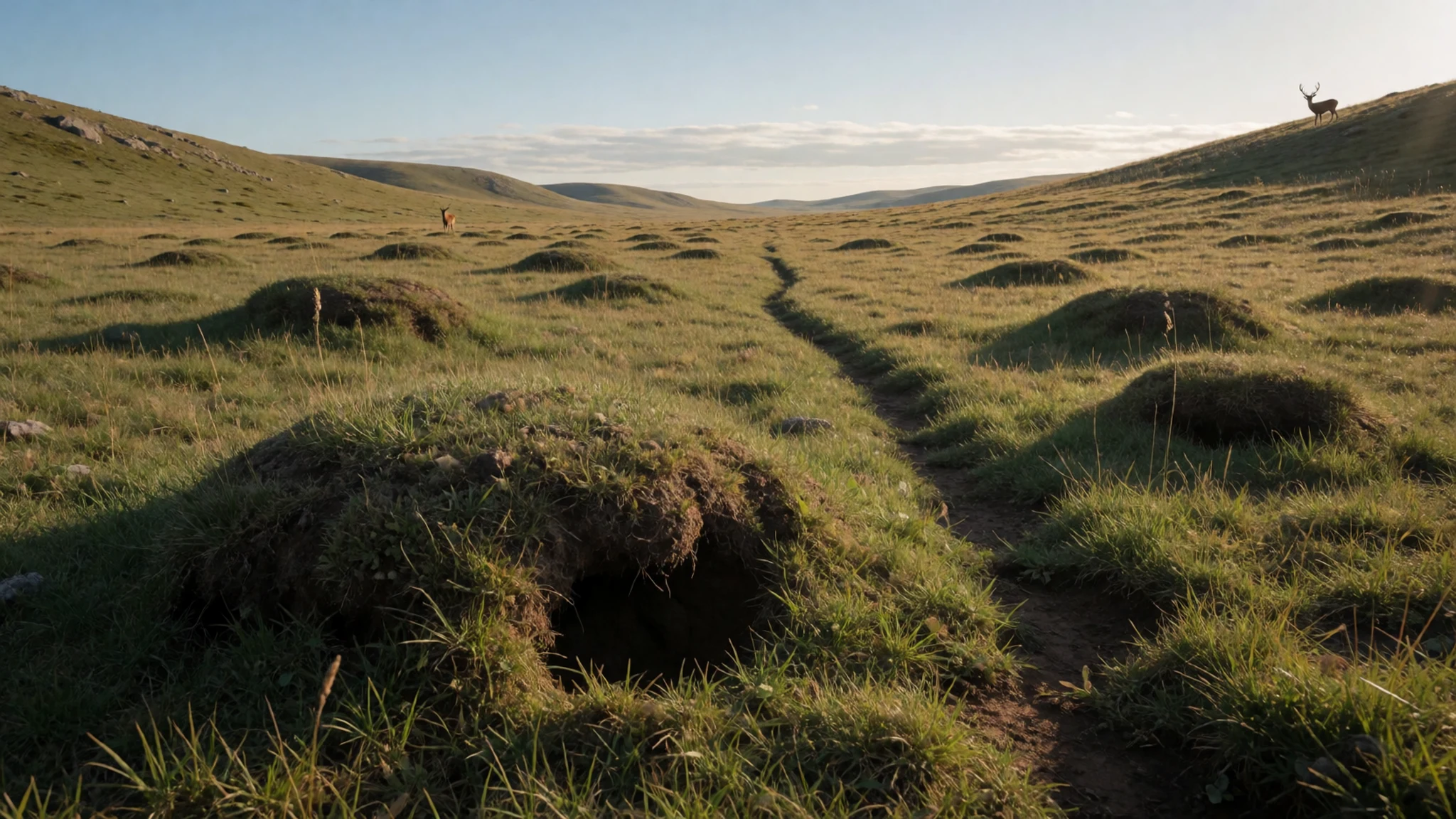
- Herders' horses — park boundary
Hustai's boundary is where the wild takhi's ground meets working pasture. Herders keep Mongolian horses here, smaller and more varied in colour than the dun takhi, and used both for riding and for milk. Flocks and gers sit outside the strict core. A visit that follows only the wild horse misses this second tradition on the same road. Photographs of people belong only after a clear yes.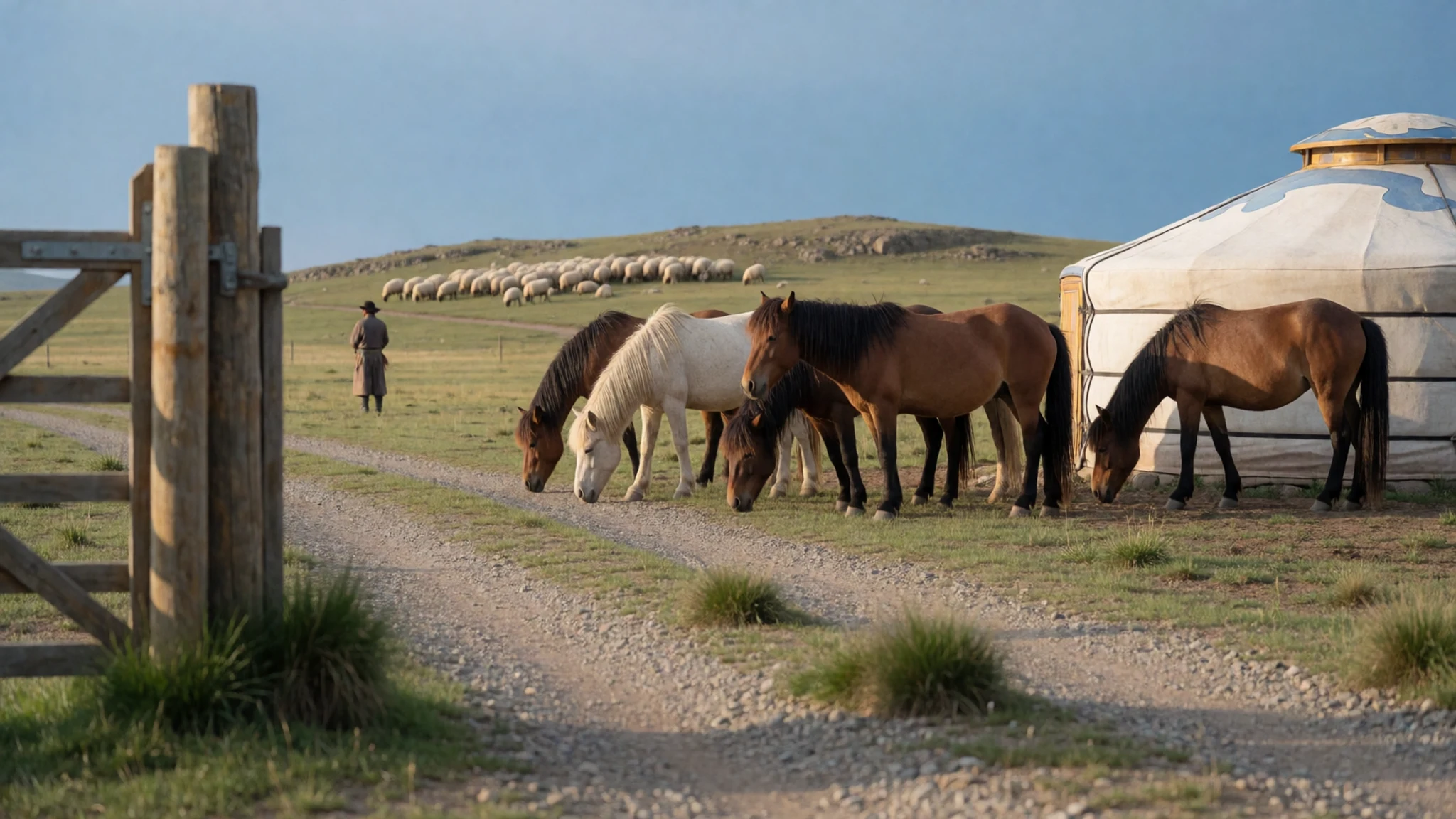
Culture
Hustai sits inside a herding culture that still organises the year by grass, weather and animals. The ger is the travelling house: felt over a wooden lattice, the door usually facing south, and a stove that makes the room habitable when the steppe wind rises. Hospitality runs on tea. A guest who is waved in is expected to sit, accept a bowl, and not treat the family space as a public room. Horses are not scenery. For herders they are transport, status and the source of airag in season, so the takhi's return is followed with pride and also with a practical eye on pasture.
Stone cairns, or ovoos, mark passes and high points as signs of respect for the land. Passing them clockwise and leaving every stone in place is part of moving through this country. Naadam, the midsummer games of wrestling, racing and archery, is when the deel and the ceremony show most clearly in the towns that people pass through on the way to the park. At Hustai, watch the takhi only from the distance a guide sets, and do not feed or call them.
What to wear
Hustai is not a place of shop-window fashion, so clothing follows the steppe and the ger. The traditional garment is the deel, a long robe with a high collar, closed by a wide sash and worn over trousers by men and women. Silk appears at festivals and formal calls; everyday deel are cotton, wool or padded cloth, often with leather boots that can take mud and a stirrup. The sash is not decoration alone: it shuts the robe and holds small things. Herders still put the deel on for work and for Naadam, adding a felt or fur hat when the wind cuts.
On the road from Ulaanbaatar, and around the park entrance, daily dress is now mixed: jeans, quilted jackets, trainers and caps sit beside the deel. A visitor does not need traditional clothes to be polite. The ground wants layers. Sun on the open grass can be fierce while a ger evening turns cold, so a windproof jacket, long trousers and closed shoes with a tread are the useful set. A hat and a spare warm layer cover the months when the camp is actually in use. In a family ger, covered shoulders and shoes removed at the door match what hosts do themselves.
What to eat
- Buuz — the dining ger at the park entrance, or a roadside canteen on the Ulaanbaatar road
Hustai visitors meet buuz as soon as they sit down: steamed dumplings of mutton, pinched closed at the top. They arrive as a small stack and they are the hot meal that makes sense when the wind is up.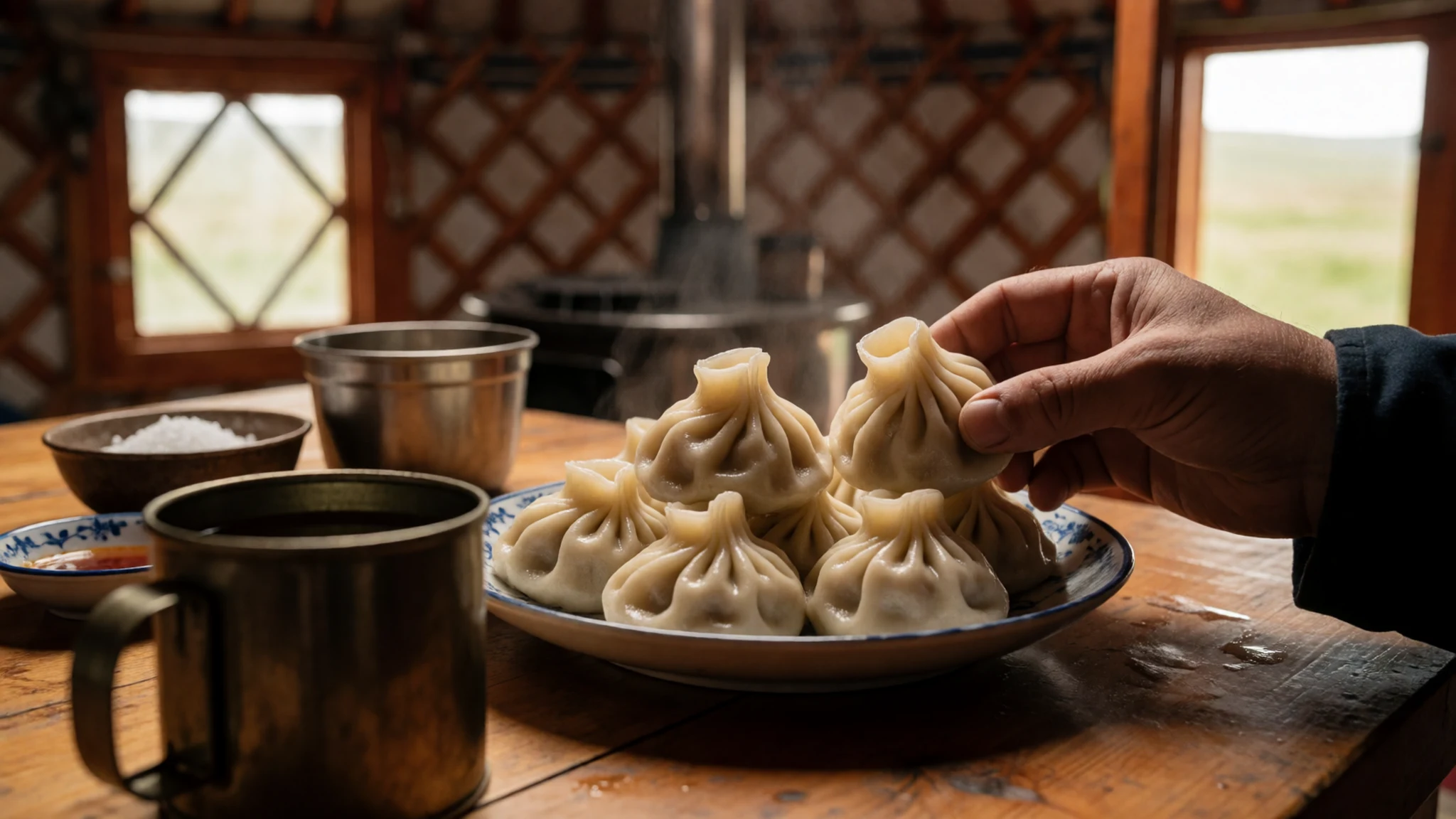
- Khuushuur — roadside canteens between Ulaanbaatar and the park
Khuushuur is the road food of a Hustai day: a flat fried pastry sealed around minced mutton, crisp at the rim and hot in the middle. It needs no table, which suits a stop on the steppe highway.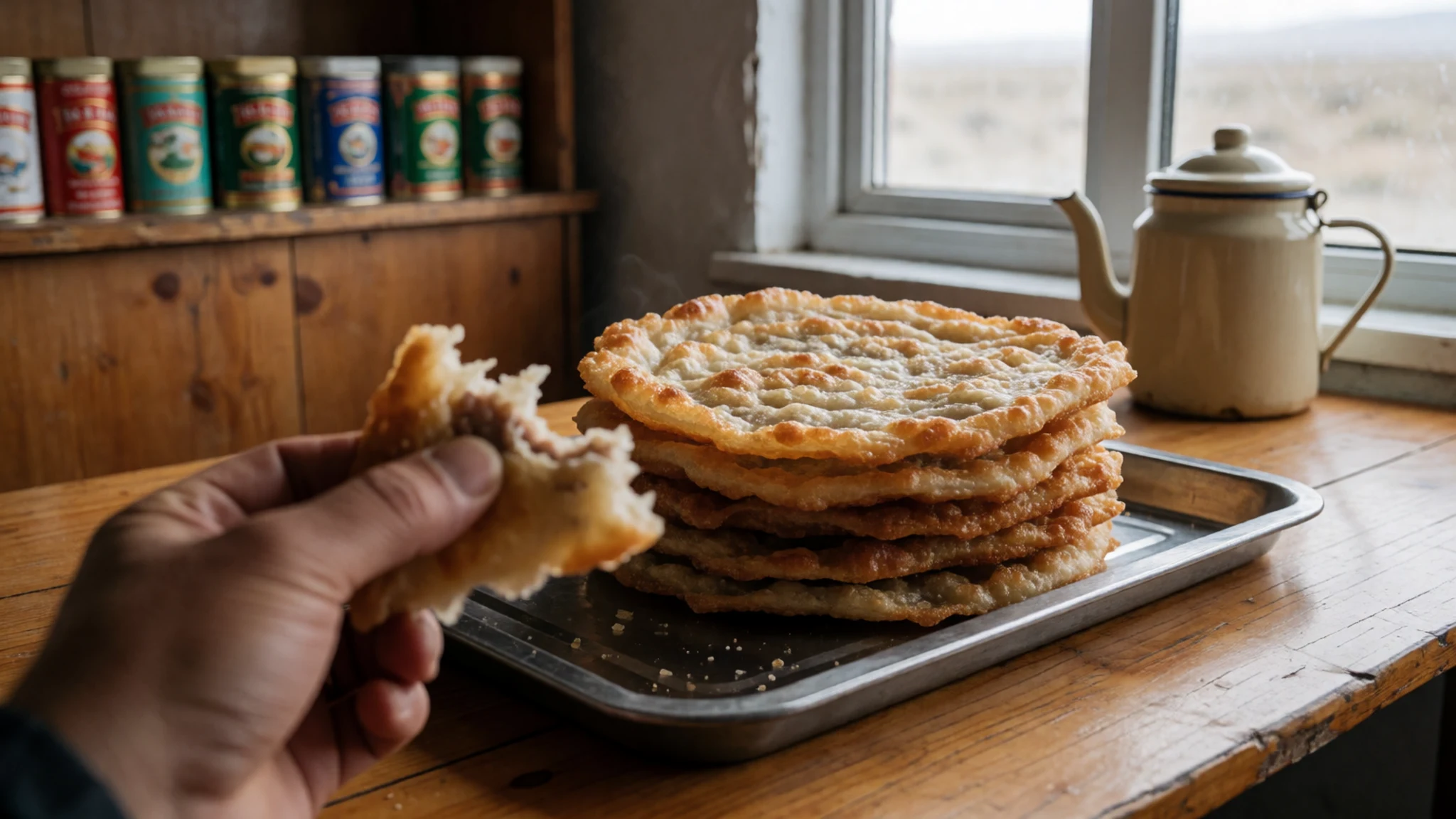
- Tsuivan — the shared dining ger at the entrance camp
Tsuivan is a Hustai camp plate for a real hunger: noodles fried with mutton and a few vegetables, the meat and dough cut together in the pan, then steamed briefly under a lid. It is heavier than buuz and welcome after a cold drive. - Suutei tsai — gers that welcome guests, including the entrance camp
Suutei tsai is the drink that marks a stop in Hustai. Black tea is boiled with milk and a pinch of salt, then poured into a bowl. Taking the bowl in both hands is the ordinary courtesy; refusing it reads as cold. - Aaruul — herder gers and small shops on the Ulaanbaatar road
Aaruul is dried milk curd, and around Hustai it is the snack herders actually carry. The pieces are hard, sour and a little sweet, meant to be chewed slowly. They need no fridge, which suits a day with no shop inside the park. Gers offer it beside the tea.
Plan it
Best time. May through October are the comfortable, practical months at Hustai. September stays cooler, with fewer insects; July is the hottest and the wettest, and August brings short storms and more visitors on the tracks. Outside that stretch the steppe is bitterly cold and the visit becomes an expedition rather than a day out.
How long. 2–3
Getting there. Fly into Chinggis Khaan International Airport at Ulaanbaatar, then go west by road. Hustai has no station of its own. The last leg is a hired car or a camp transfer on a road that is almost all paved, fit even for a bicycle, ending at the entrance gers. After rain, a local driver is the sensible choice.
Budget. mid
Tips
- Start early or stay for late light if the takhi are the aim; at midday they are often high on the slopes.
- Arrange a park guide or a driver in Ulaanbaatar before the day; independent walking towards the horses pushes them off their ground.
- Carry cash for the camp and for roadside canteens; card payment is not something to count on.
- Bring drinking water and a warm layer even in summer; the steppe offers little shade and the temperature falls after sunset.
- Confirm how entry works with the ger camp or a Ulaanbaatar operator before leaving town.
Etiquette
- Do not feed, call or approach the takhi; watch from where the guide stops.
- Ask before photographing herders, and do not walk through a family camp uninvited.
- Pass an ovoo clockwise without removing stones, and take shoes off in a ger when other shoes are at the door.
Nearby
Sources
- Wikidata (CC0)
- Wikipedia (CC BY-SA 4.0)
- Wikivoyage (CC BY-SA 4.0)
Wildlife
- Red deer (animal)
The red deer is among the biggest deer in the world, with the males called stags and the females hinds. At Hustai it shares the open ground with marmots and birds of prey, while herders work the land around the park edge. Keep well back, move slowly and speak softly, and let a guide help you find a good viewpoint. Never feed the deer; wild animals are best left to find their own food.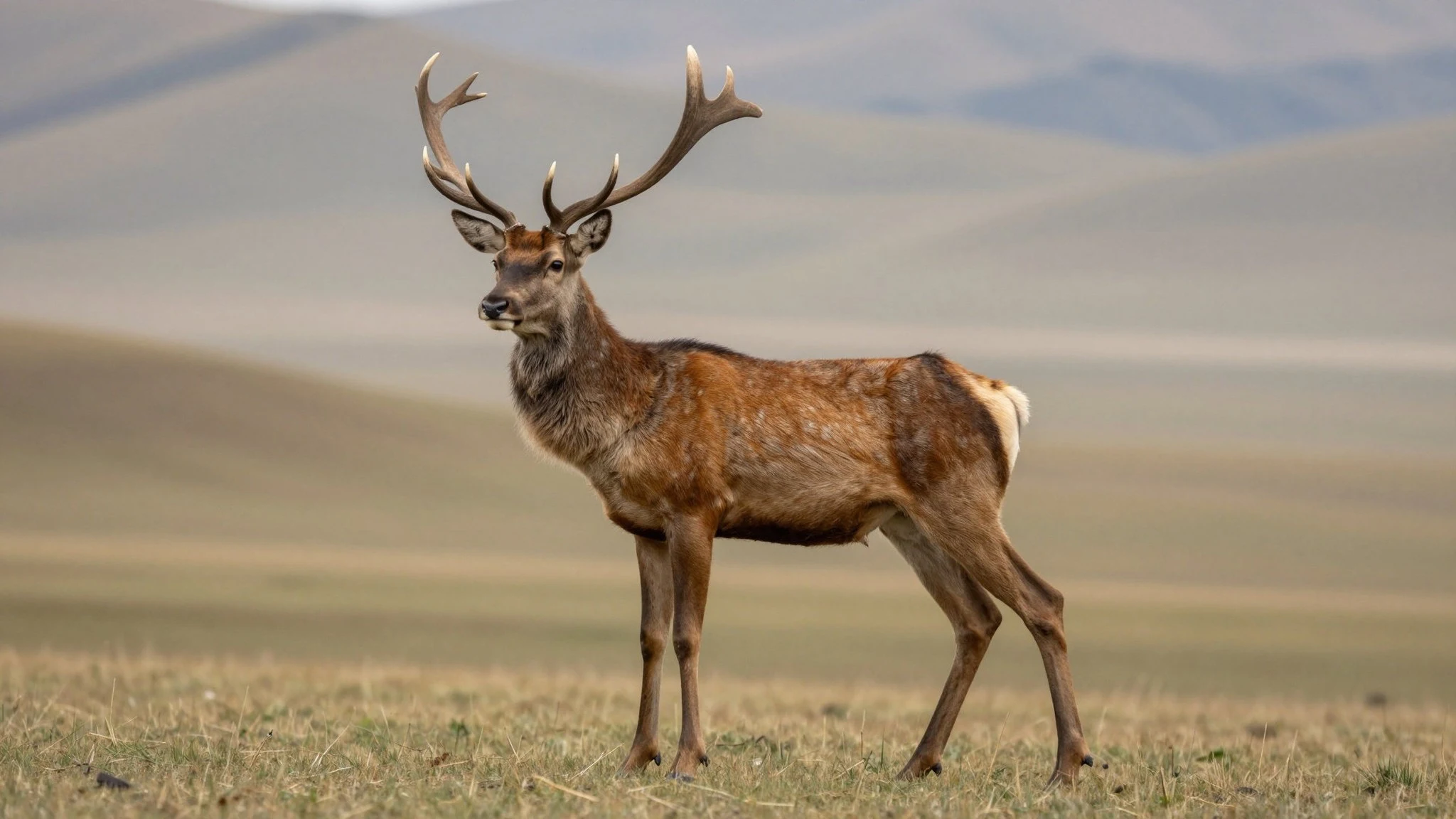
- Takhi (animal)
The takhi, or Przewalski's horse, is a rare wild horse that once vanished from the wild and has since been welcomed back to Mongolia. In Hustai, the steppe reserve, it roams freely over open grassland once more. Watch from a respectful distance, ideally with a guide, and keep your voice low so the herd stays calm. Never feed it, because these horses are wild and should stay that way. Binoculars will bring you close without disturbing anyone.