Hualien
Hualien, Taiwan

Hualien is the Pacific-side city where mountains, Amis culture and a working harbour meet, and the practical base for the east coast.
The place
Hualien sits on a narrow coastal plain in eastern Taiwan, the Pacific to the east and the Central Mountain Range close behind the streets. The centre is low-rise and practical: a harbour grid, the Meilun River, and a railway station that handles ordinary trains and the tourist expresses crossing the river bridges toward Ji'an. Scooters fill the junctions, morning stalls open early, and by late afternoon the light on the water is hard and bright.
This is not a preserved historic core. Much of a walk is everyday civic Taiwan — offices, schools, repair shops, apartment blocks — with the drama kept to the edges. North of the centre, Qixingtan is a dark-gravel shore facing the open ocean, better for watching weather than for swimming. Inland the land lifts quickly into forested ridges, and cloud and rain pile up against them more often than on the western plain.
People use Hualien as a threshold. Travellers sleep near the station or the coast, eat at the night market, and leave in the morning for Taroko, the rift valley or the fishing harbours along the shore. Residents live with that rhythm too: a port and a county seat that has rebuilt after earthquakes and still feels closer to weather and mountains than to the big western cities. Evenings are for eating outdoors. The harbour lights and the surf at Qixingtan carry the place more than any downtown view does.
Its story
The earlier name was Kilai, written 奇萊, for the Sakizaya; Japanese rulers renamed it Karenkō, 花蓮港, because Kilai sounded like kirai, 'dislike', and after 1945 the name was shortened to 花蓮. Before either name, the plain was Amis country: Pangcah communities fishing, farming and moving with the seasons between the river mouths and the hills. Han settlers came later, in smaller numbers than on the western plain, and the settlement stayed modest until the colonial government built a harbour and a railway.
That decision made the modern city. Tracks and a port turned Hualien into the administrative and supply centre for a long coast. Timber, stone, fish and official business moved through the station and the docks. Pine Garden, a Japanese-era hilltop club, and the street grid around the harbour still mark the period, even where the buildings have been replaced. After the colonial years the city remained the county seat and the place where east-coast journeys begin and end.
Earthquakes have edited the map more than any planner. The coast sits where plates meet, and strong shocks have damaged schools, temples and the station; rebuilding is part of the local story. The station travellers use now is a reconstruction, and the low skyline is as much caution as taste. A Buddhist movement grew up beside that practical city: the Tzu Chi foundation, based in Hualien, built halls, a university and a volunteer network that many residents treat as ordinary civic life. Amis harvest gatherings and Sakizaya memory remain public facts of Hualien, not a preface to it.
What to see
- Qixingtan — North of the centre, on the Pacific shore
Qixingtan, also called Chihsingtan, is the gravel shore on Hualien's northern edge. The beach is dark stone rather than sand, and the Pacific sits as an open horizon with the mountains off to the side. Visitors walk and watch the wind. Swimming is poor, and the stones are hard underfoot, so most people stay on the path above the spray.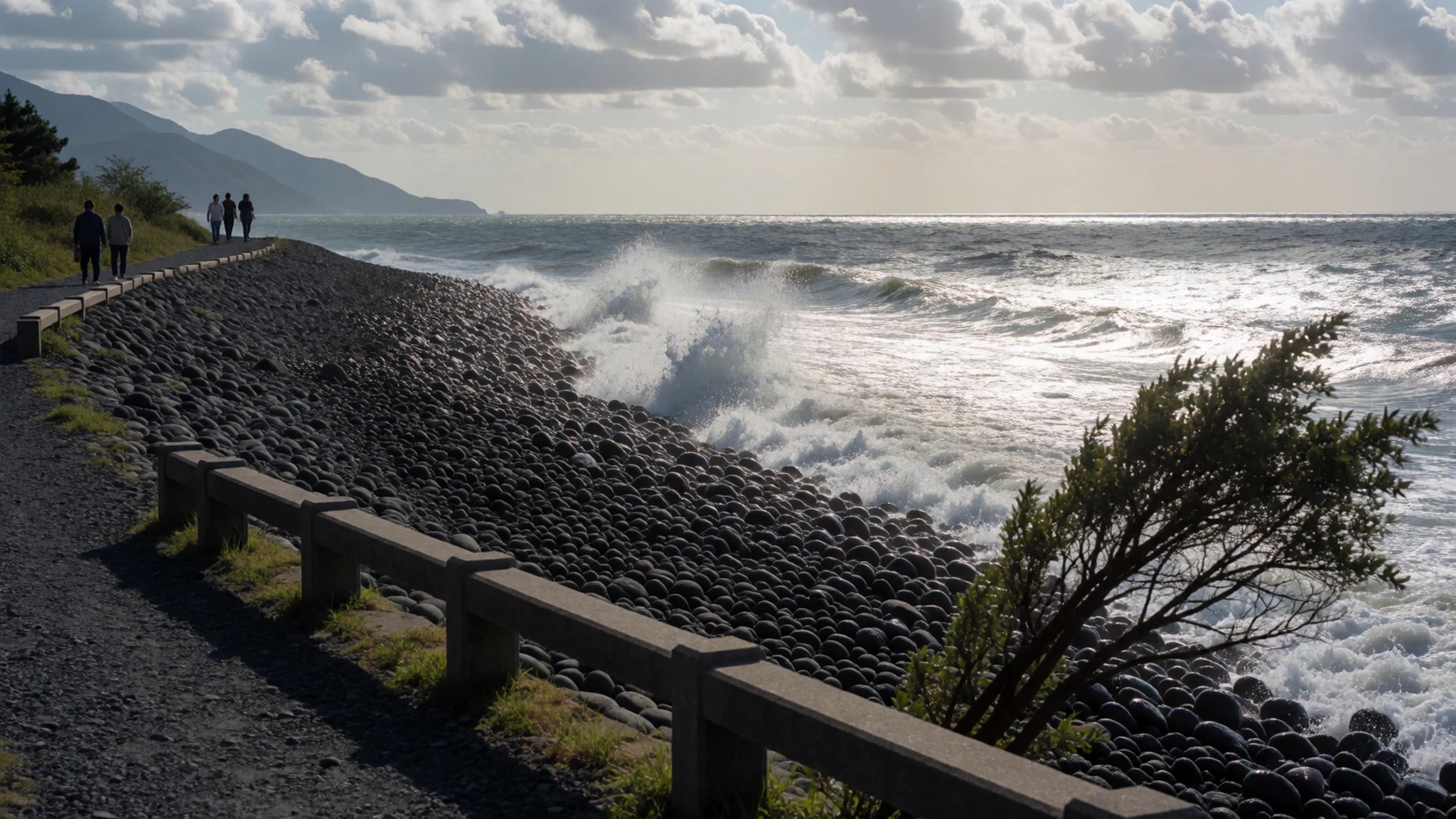
- Dongdamen Night Market — East of the centre, near the old east gate
Dongdamen Night Market is Hualien's main evening gathering place, a covered and open-air run of stalls east of the old centre. Families come for grilled seafood, dumplings, fruit and small games, and the aisles stay busy after dark. It is a working local market as well as a stop for travellers, so the crowd is mixed and popular trays sell through.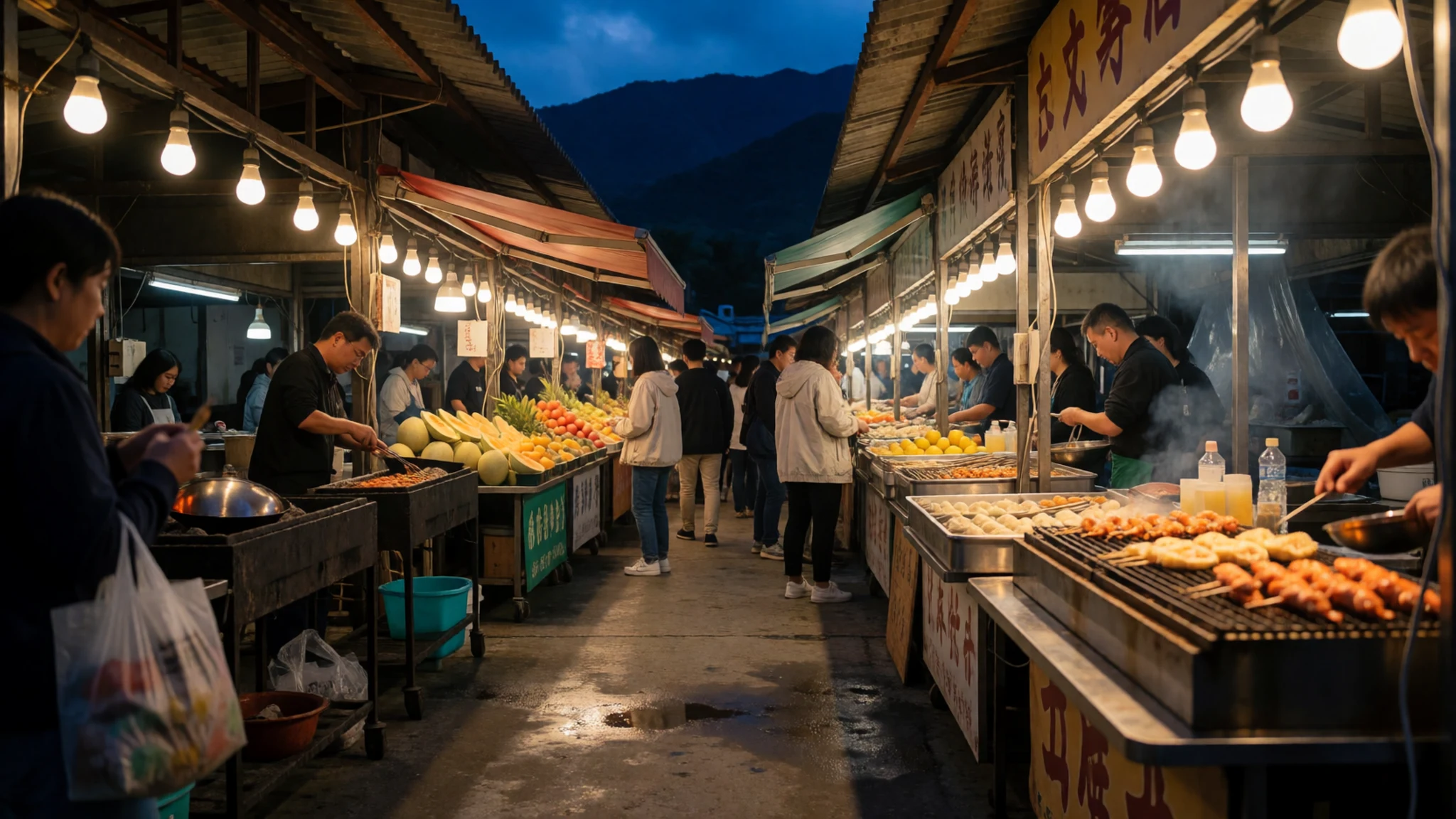
- Hualien Railway Station — North-centre, at the end of the main commercial streets
Hualien Railway Station is the city's front door, rebuilt after earthquake damage and a short walk from the commercial streets. Ordinary expresses and local trains share the platforms with tourist services that continue south across the river bridges. The forecourt is where arrivals sort themselves into buses, taxis and hired scooters.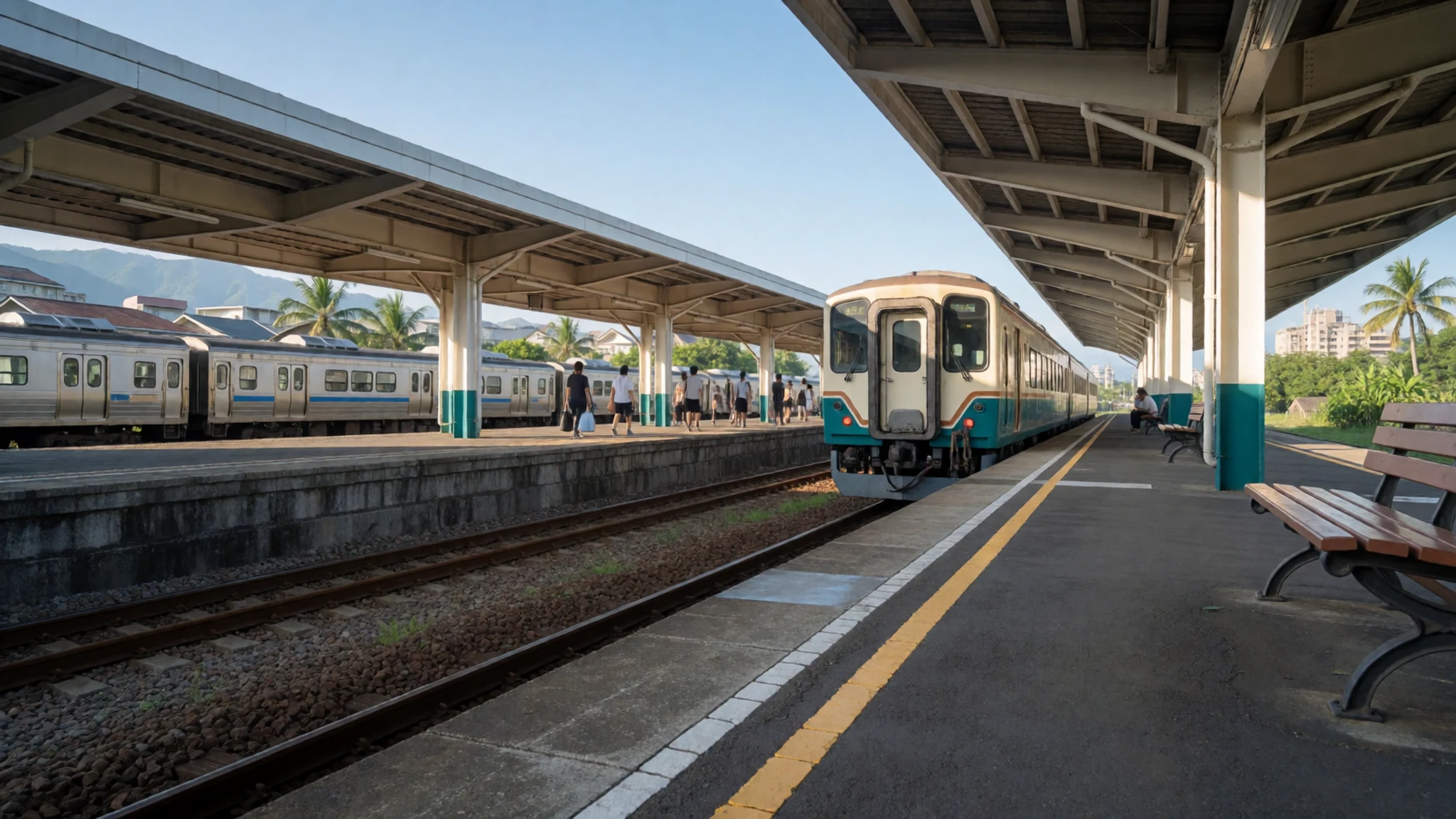
- Pine Garden — Meilunshan, east of the centre
Pine Garden, or Songyuan, is a wooden Japanese-era building on the Meilunshan hill above the eastern streets of Hualien. It began as an official club; the surviving timber rooms and the garden are what visitors come for. The hill is low, but it lifts the view over rooftops toward the Pacific. Check the official site before a visit, because the rooms are not open every day.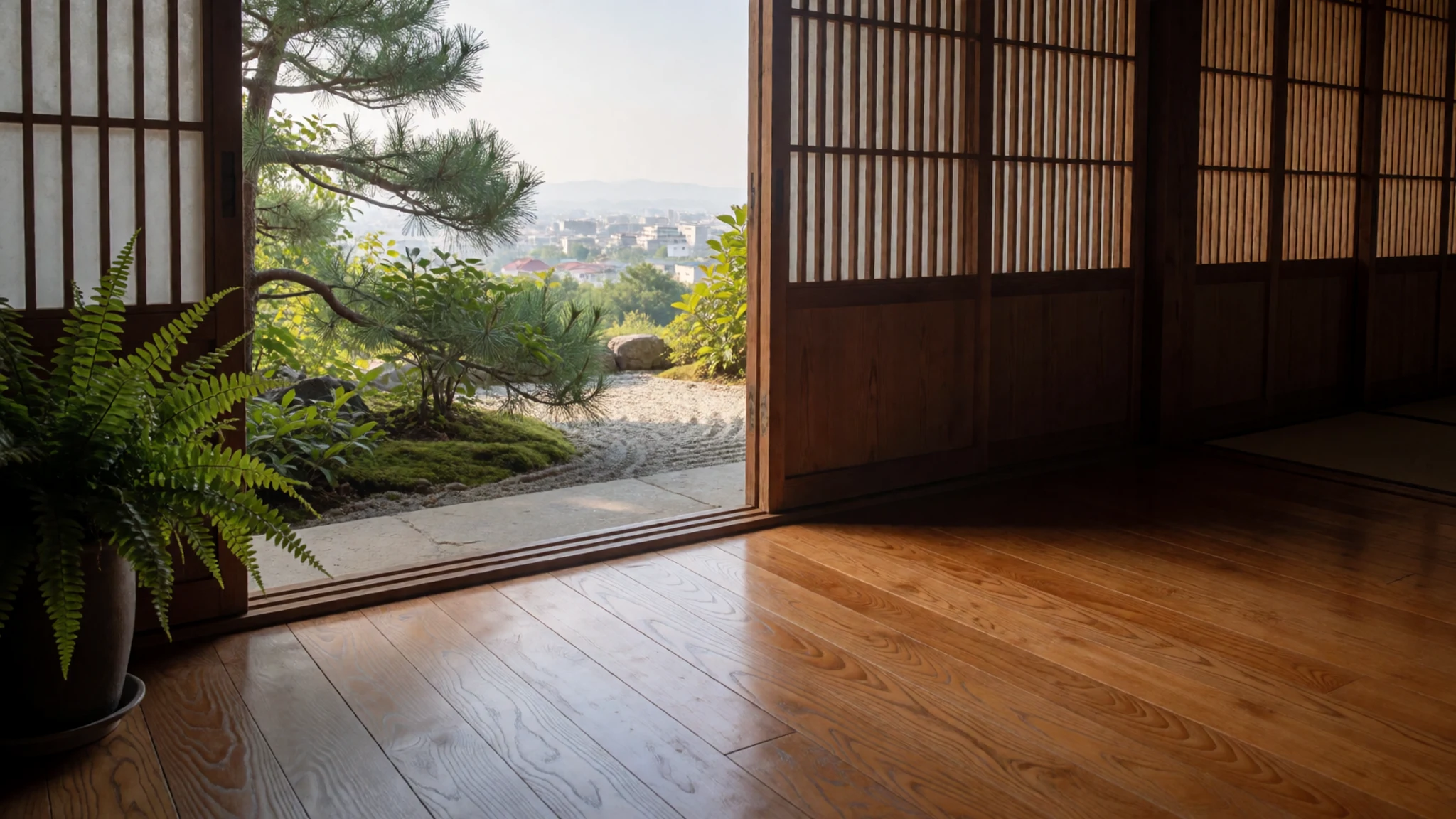
- Jing Si Hall — Tzu Chi complex, west of the station
Jing Si Hall is the public face of the Tzu Chi Buddhist foundation in Hualien, a broad pale building easy to pick out from a distance. The halls are for teaching, ceremony and quiet visiting, not a neighbourhood temple with incense and a crowded forecourt. Dress is modest and voices stay low. Photography inside is a matter of asking first.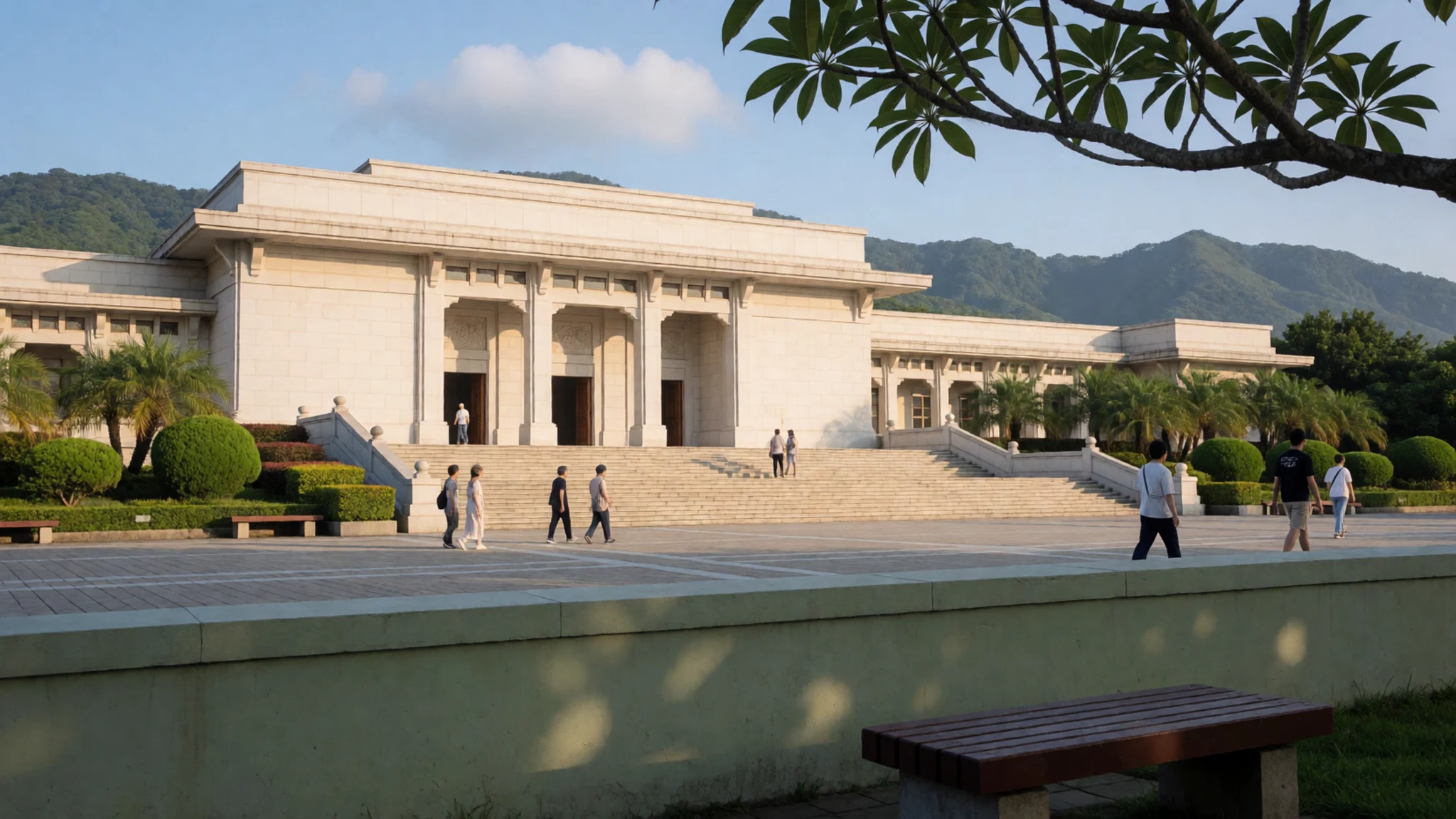
- Mugua River bridge — Ji'an Township, just south of the city
South of Hualien, in Ji'an Township, the railway crosses the Mugua River on a long bridge beside the coastal highway. Tourist trains, including the Formosa Express, run this stretch in daylight, and from the road the carriages stand out against the water and the fields. It is a short side trip from the city. Ordinary trains use the same corridor.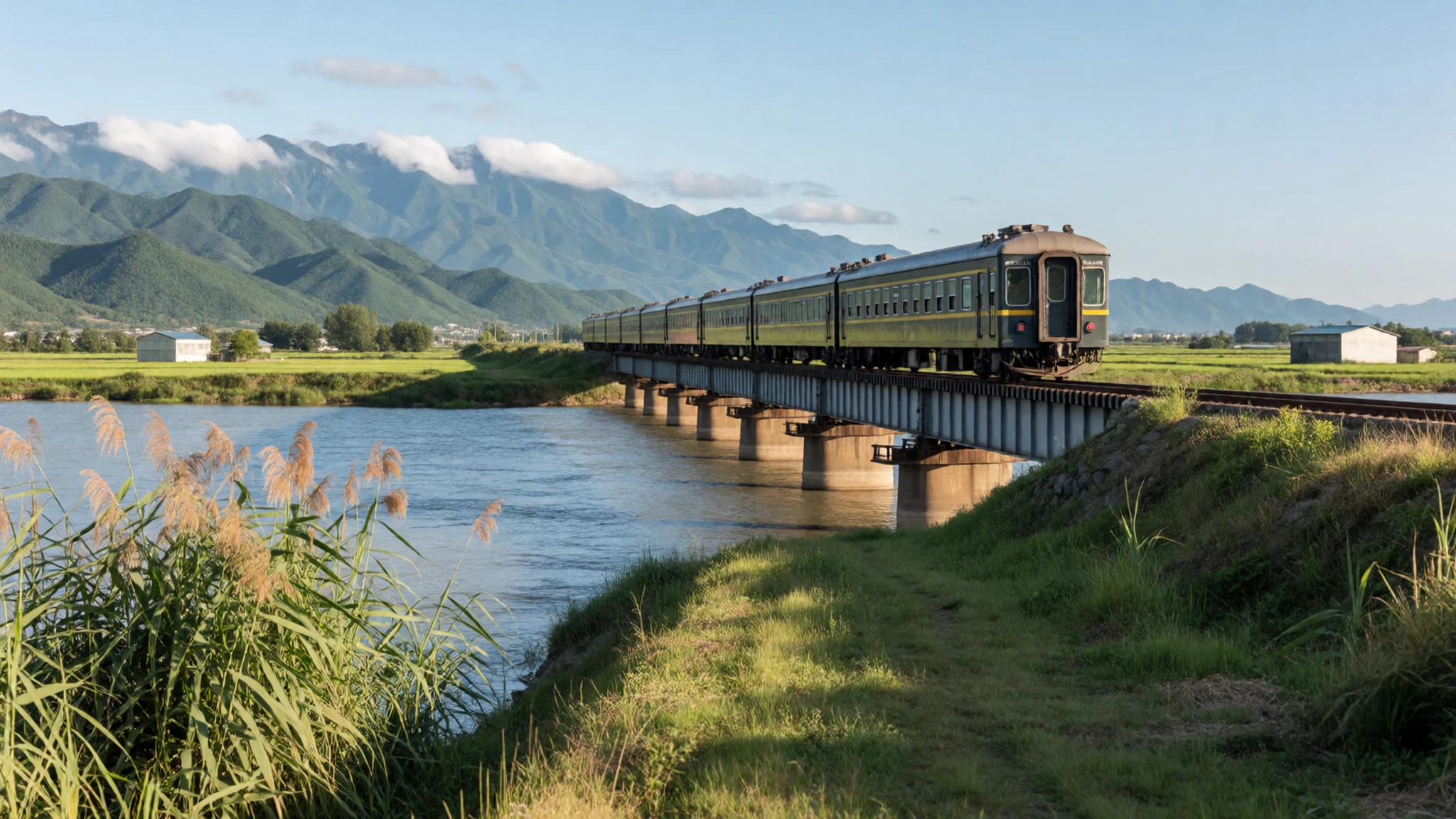
Culture
Hualien's culture mixes Amis and other indigenous traditions, Hoklo and Hakka settler life, and a strong Buddhist volunteer ethic. The Amis, who call themselves Pangcah, are widely present in the city and along the coast: fishing families, harvest gatherings, age-group dances and a calendar that still marks the millet and the sea. Sakizaya communities share this eastern plain and keep their own rites. Those festivals are community events first. Visitors are sometimes welcome at the edge of a gathering, and sometimes not.
Everyday Han Taiwanese life fills the streets in the usual ways — night markets, temple days, school uniforms, scooter traffic — but the civic landmark many residents name first is not a shrine. Tzu Chi, founded in Hualien, asks its volunteers for modest dress, vegetarian meals and practical charity, and that tone carries into Jing Si Hall. Japanese-era traces survive in Pine Garden and in the station grid, but they sit lightly on a city that has rebuilt itself. Language moves between Mandarin, Taiwanese Hokkien, Hakka and Amis.
At an indigenous festival or inside a temple hall in Hualien, ask before you photograph people, and step back if a ceremony is underway.
What to wear
Hualien still shows indigenous dress on festival days, especially among Amis communities, though almost nobody wears it for a weekday errand. Amis ceremonial clothing uses strong red, black and white, with geometric weaving, beadwork and embroidered bands, plus headwear and sashes that mark age and occasion. Bark cloth belongs to an older textile history; what dancers wear now is woven cloth, made for the harvest gathering and then stored. Sakizaya festival dress is related but not the same, and it is poor manners to treat every indigenous outfit in Hualien as interchangeable.
Ordinary clothes are the practical Taiwanese mix: light shirts, trousers or skirts, trainers and a scooter helmet, with a rain jacket never far away. Office workers dress simply, students wear uniform or streetwear, and hikers are obvious from their packs. Night-market evenings do not require anything smarter.
A visitor to Hualien should pack for humid heat, sudden rain and walking on footpaths and gravel. Breathable clothes, a light waterproof and shoes with a grip matter more than a formal outfit. Covered shoulders and knees, and shoes easy to slip off, will do for Jing Si Hall and smaller temples. A hat helps on the exposed shore at Qixingtan, where shade is scarce.
What to eat
- Bianshi — Old-centre dumpling shops
Hualien bianshi are small, thin-skinned dumplings in a clear savoury broth, closer to a wonton than to a stuffed bao. Shops in the old centre have served them for generations, often with a vinegar-and-garlic dip and a bowl of noodles on the side.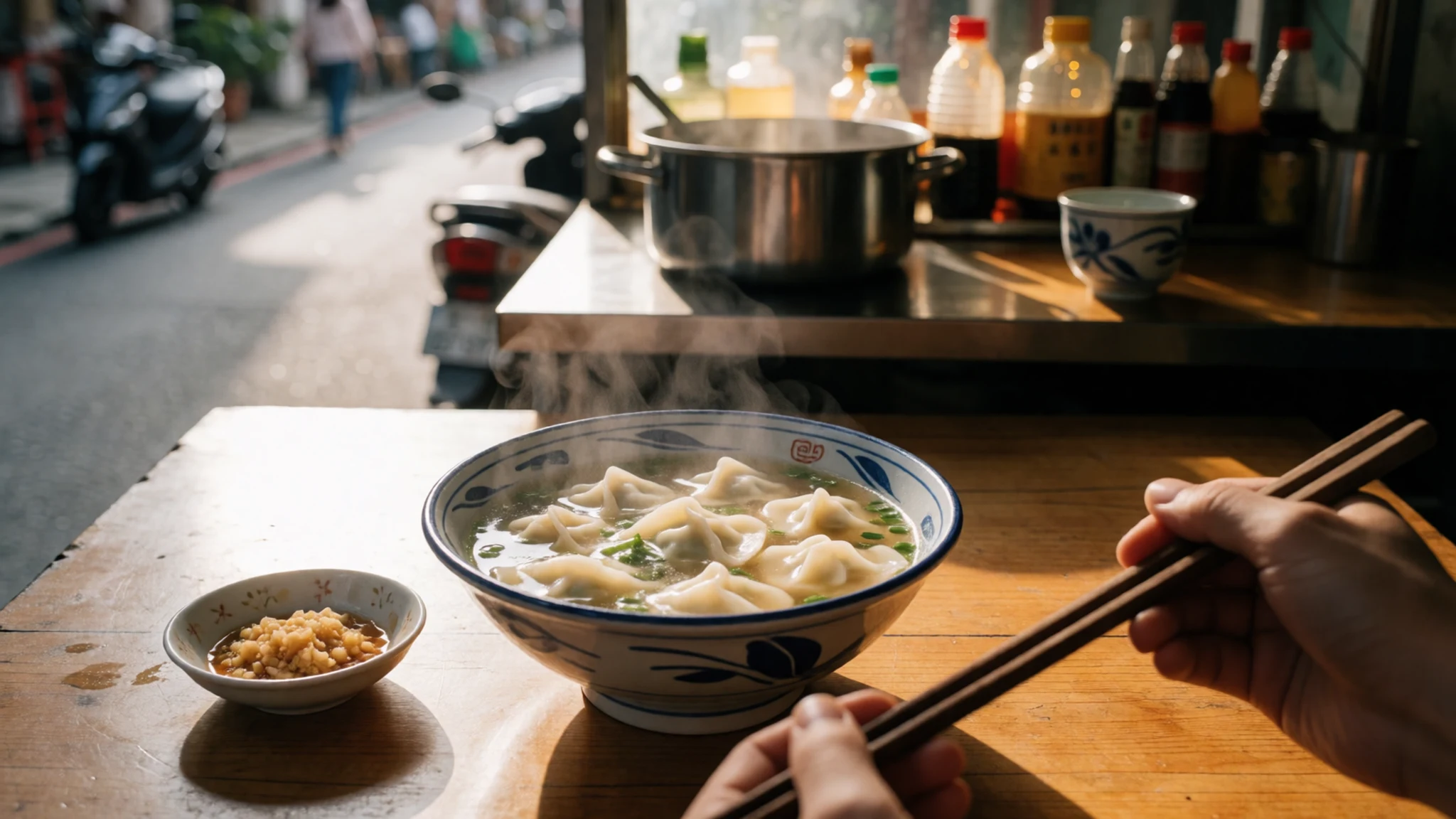
- Mochi — Zhongshan Road shops and night-market stalls
Hualien mochi is pounded glutinous rice, soft and slightly elastic, sold plain or filled with red bean, peanut or sesame. Specialist shops along Zhongshan Road box it up for the train ride home, and night-market stalls sell smaller pieces to eat warm. The morning batch is the one worth buying.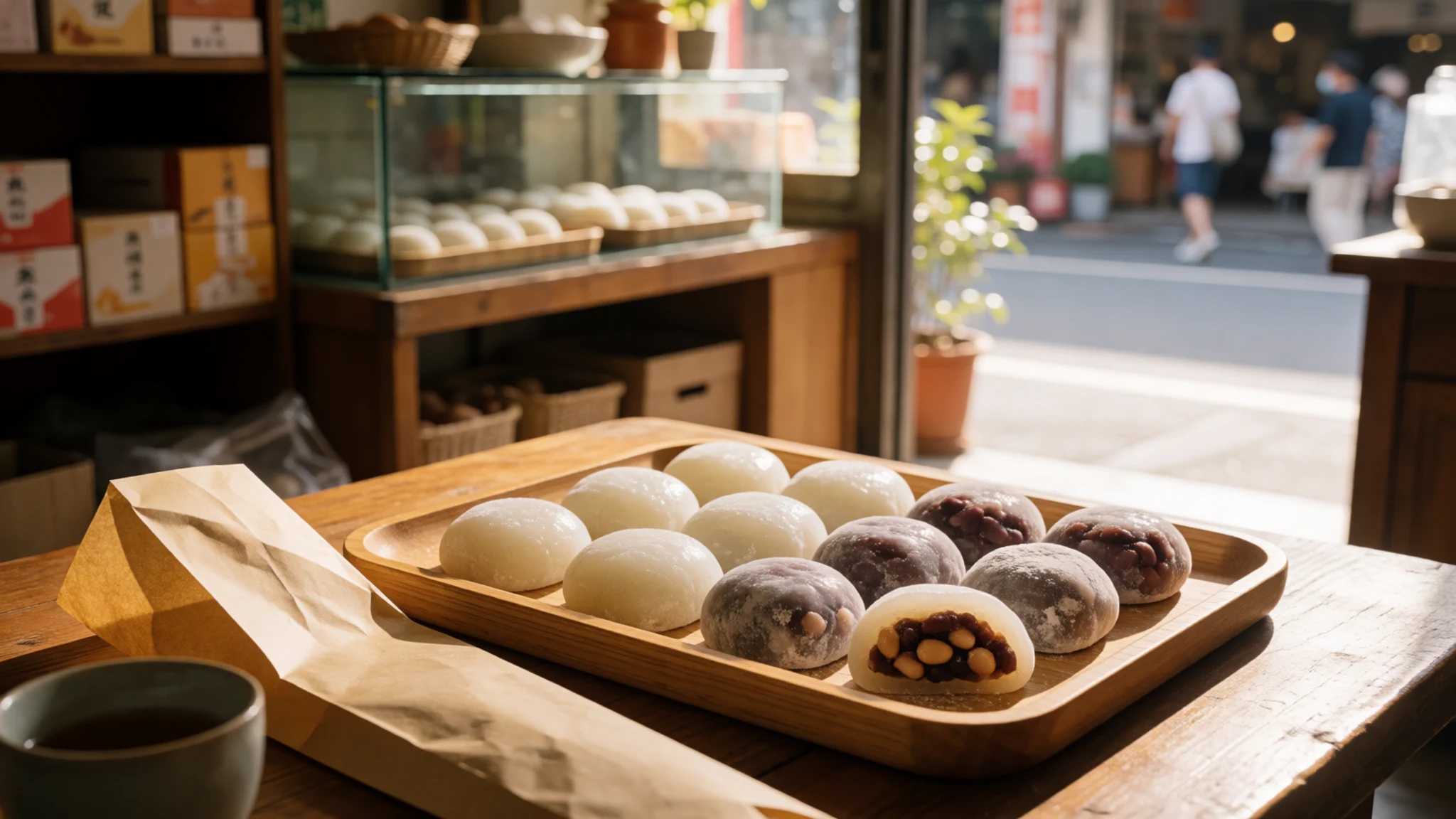
- Peeled chili — Family eateries around the city
Peeled chili, baopi lajiao, is a Hualien staple: green chilies blistered until the skin slips off, then stir-fried with sliced meat. Family eateries around the city serve it with rice, either as a side or as the plate itself. - Bamboo rice — Indigenous eateries and community kitchens on the coastal side
Amis kitchens in and around Hualien cook rice or millet in fresh bamboo, then split the tube at the table so the rice comes out scented with the wood. Plates beside it often carry bird's-nest fern, other foraged greens and grilled fish rather than a heavy meat course. - Grilled seafood — Dongdamen Night Market
Grilled seafood is the charcoal stall everyone smells first at Hualien's Dongdamen Night Market: squid, shrimp and small fish blistered and handed over in paper. A savoury sauce and a squeeze of lime are the usual finish, and people eat while they walk.
Plan it
Best time. March, April, October and November in Hualien are the comfortable stretch: warm enough for the coast, with modest rain, clear of July, the hottest month, and of August, the wettest. Summers are hot, humid and prone to storm closures. Winter can be cool and dry, and December is the driest month, even when the west of Taiwan is bright.
How long. 2–3
Getting there. Hualien Airport is in neighbouring Xincheng Township, about a ten-minute drive from the city, with domestic flights from Taipei and a few other cities. Taiwan Railways reaches Hualien Station on the north-link coast line and from the south on the east-coast line. From the station the centre is a short taxi, bus or walk. Drivers follow the main coastal highway.
Budget. mid
Tips
- Book Taroko transport and any popular trail entry before weekend and holiday mornings, because rain can close the routes.
- Carry cash for night-market stalls and smaller eateries, where cards are less often accepted.
- Use the station neighbourhood as a base if the days depend on trains.
- Start a Qixingtan walk in the morning, before the onshore wind strengthens.
- Check the weather the evening before a mountain day and keep the next morning flexible.
Etiquette
- Ask before photographing people at indigenous festivals or in Amis communities.
- Remove shoes where you see them lined up at a hall or temple door.
- Keep voices low inside Jing Si Hall and do not interrupt a ceremony.
Nearby
Sources
- Wikidata Q249996 (CC0)
- Wikipedia — Hualien City (CC BY-SA 4.0)
- Wikivoyage — Hualien (CC BY-SA 4.0)