Hovgården
Hovgården, Sweden
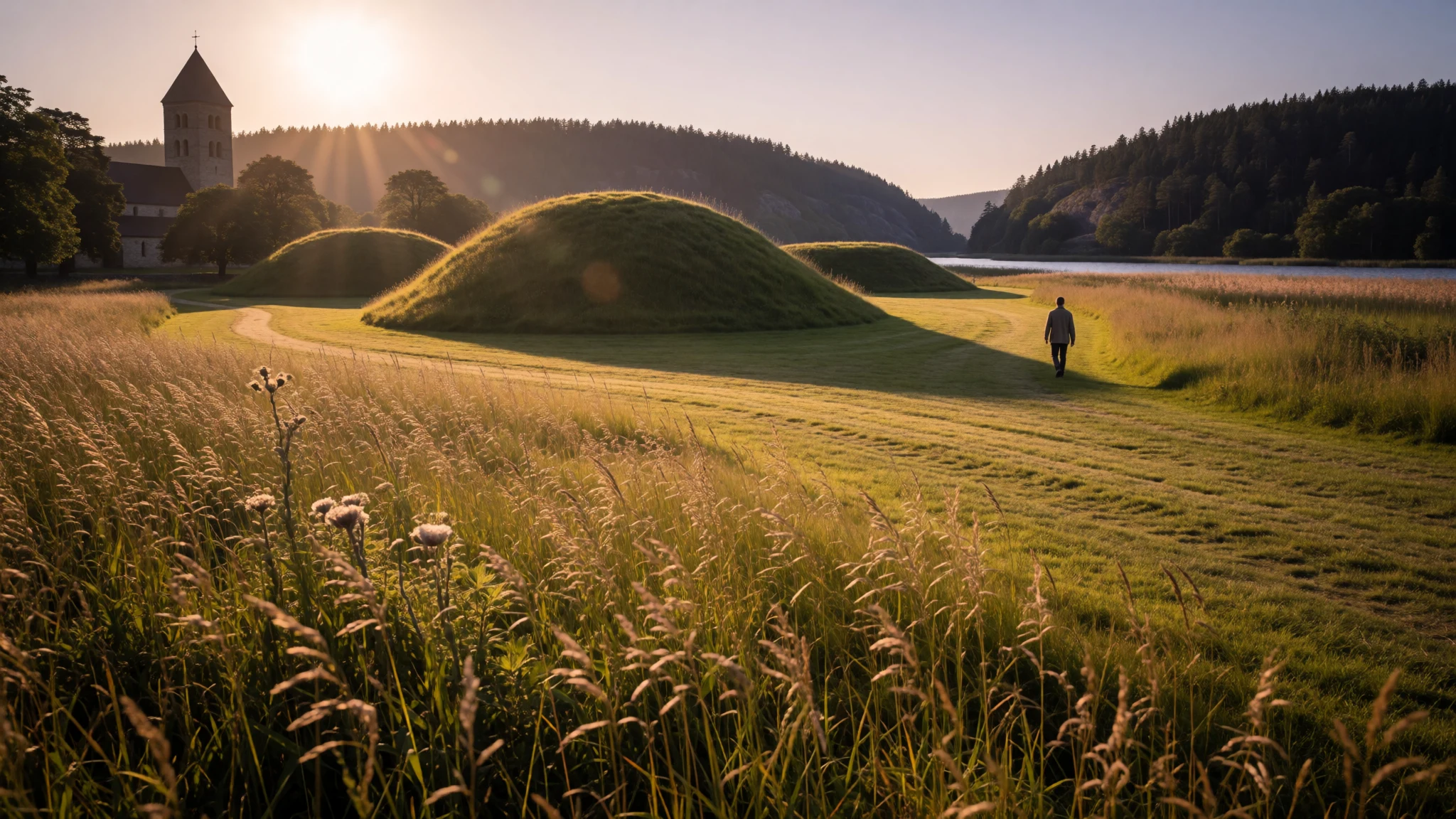
Hovgården is a quiet Swedish lakeside farmland where Viking-age royal burial mounds sit beside a medieval church, a short boat ride from Stockholm.
The place
Hovgården lies on Adelsö, an island in Lake Mälaren, in Ekerö Municipality, west of central Stockholm. It is a working rural landscape rather than a monument park: low fields, a narrow valley running north towards wooded ridges, farmyards and a Romanesque church, with the lake always close. The big mounds stand just north of that church, grassy and rounded, easy to mistake for natural hills until the scale of them registers.
The site makes sense only alongside Birka, the trading town on the neighbouring island of Björkö, just to the south. This sentence is about Birka, not Hovgården, so check whether it belongs in the Hovgården reading. Hovgården is believed to be where the kings and chieftains who oversaw that trading centre had their seat. Together the two were inscribed as a UNESCO World Heritage Site in 1993.
The fields around the mounds have been farmed for generations, and the layout of meadows and old farmyards has changed little since the 1800s. That continuity is much of the appeal. The land here is also still rising slowly after the last Ice Age, and Mälaren was once an inlet of the Baltic Sea, so a place that now feels inland was once reached by salt water. Expect open skies, wind off the lake, birdsong and very few other visitors, with nothing like the crowds of central Stockholm. Facilities are limited, so it suits a slow, unhurried half-day of walking.
Its story
Hovgården has been used by people for a very long time. On Adelsö, the oldest traces are Bronze Age grave fields and mounds north of the farm. Burials continued into the Iron Age, and at Hovgården itself about 124 graves have been recorded, running from the Roman Iron Age through to the early Middle Ages. That suggests the place was lived in without a break across more than a thousand years.
The name of the big mounds, Kungshögar, simply means king's mounds; the second part comes from the Old Norse word for a barrow. Three of the five large mounds north of the church carry that name. When one was excavated in 1917, it held the cremated remains of a rich man from around the year 900. He had been burned in a boat, in costly clothes but with no weapons, alongside horses, cattle and dogs. Who he was is still a matter of guesswork, and popular stories that name a particular legendary king are speculation rather than evidence.
The usual reading is that a royal estate here was a way of keeping hold of Birka and its trade. Yet when Birka was abandoned, the estate carried on. A runestone, catalogued as U 11, was raised beside the royal mounds around 1070 and says it was carved for the king, which shows the site still mattered long after the Viking trading town had faded.
What to see
- The Kungshögar royal mounds
The group of large grass-covered mounds north of the church is the core of the visit. Walk around them slowly and compare their sizes. They are fenced from nothing, just set in open fields, so the sense of scale comes from standing beside them and looking across the farmland to the lake.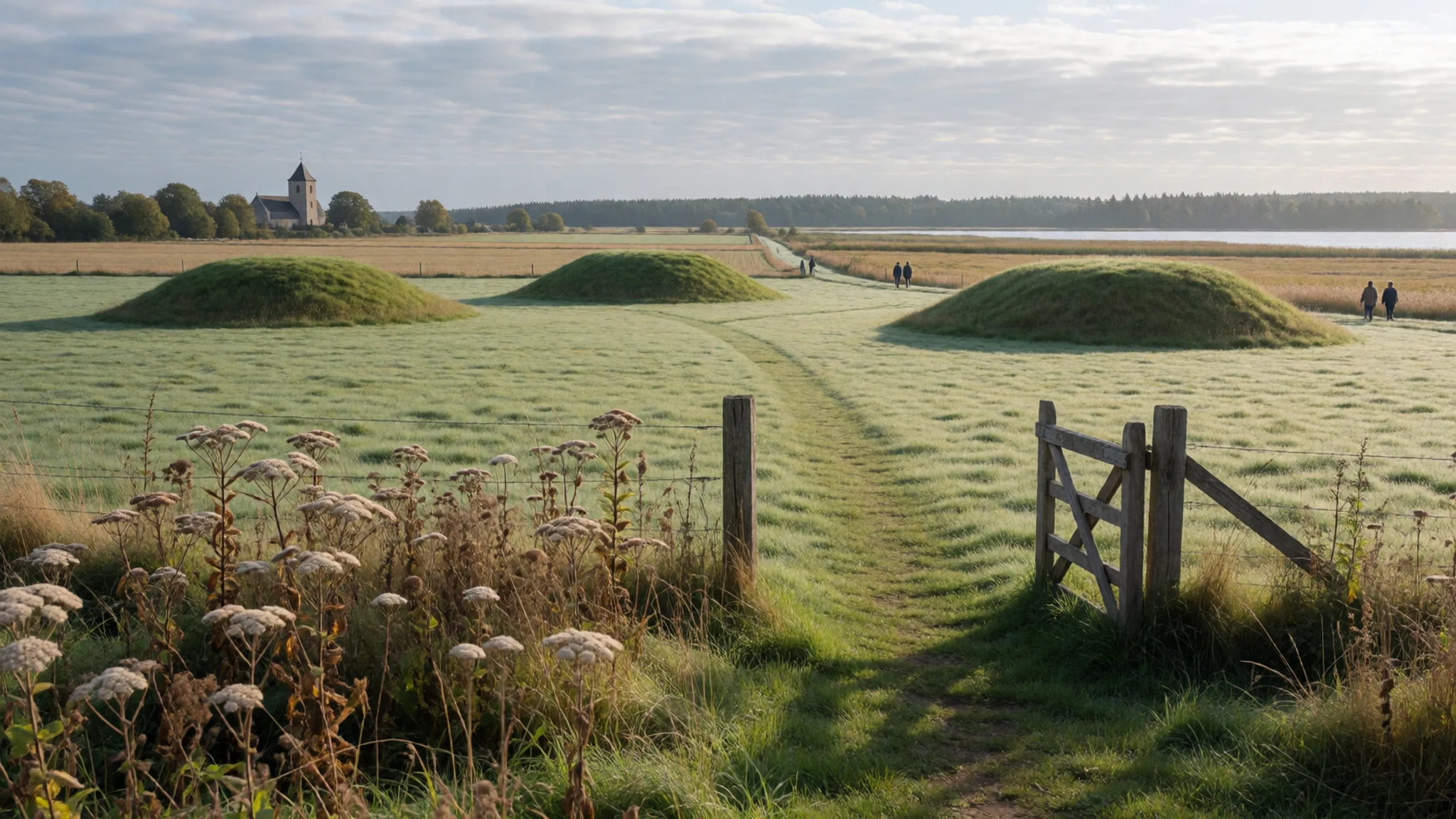
- Adelsö Church
The Romanesque church stands beside the mounds and gives the best view of how medieval and Viking-age landscapes overlap. Its position next to the royal burials is rarely accidental in Scandinavia. Opening times vary by season, so check locally before relying on going inside.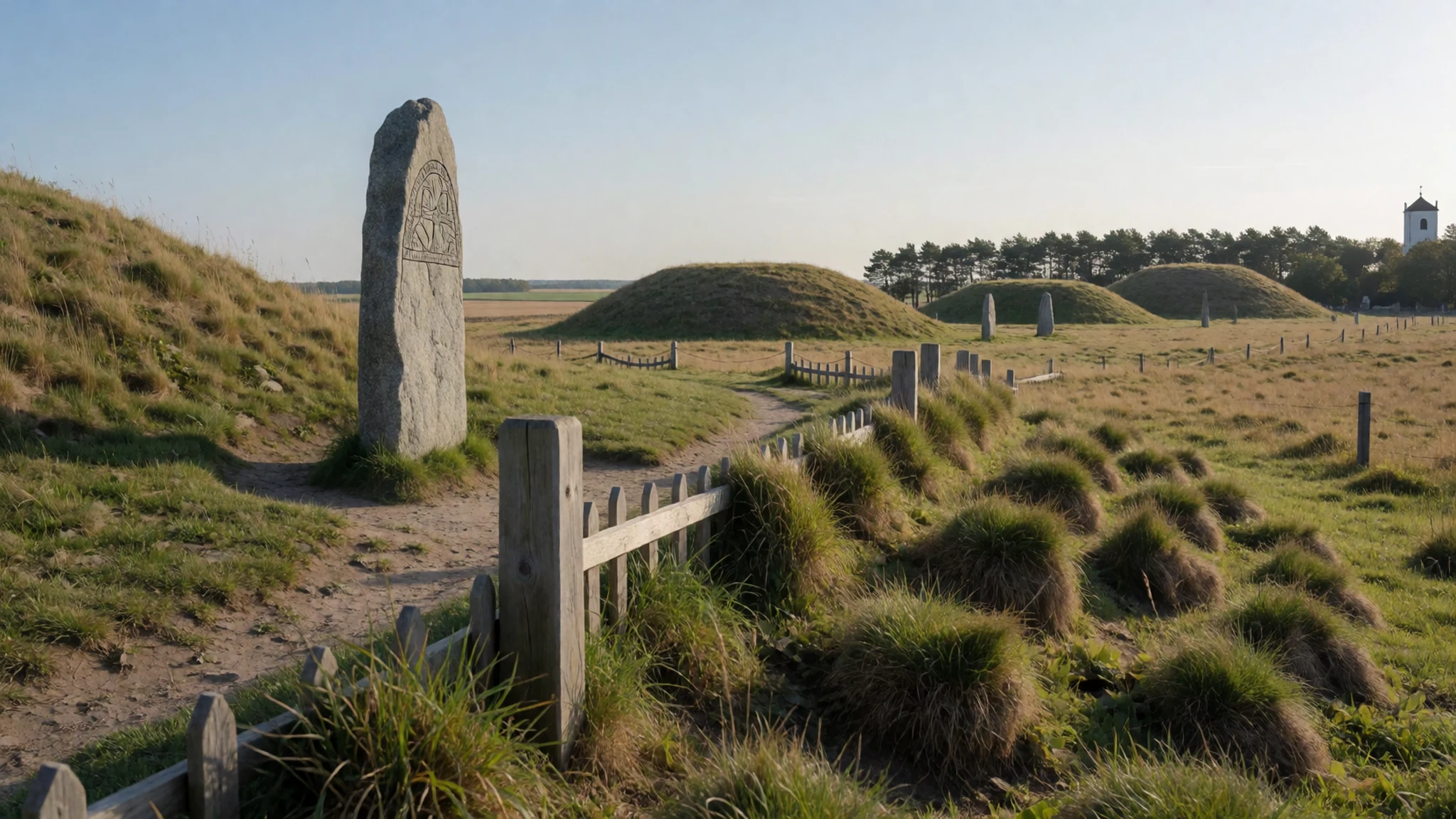
- Runestone U 11
This runestone, from around 1070, stands next to the royal mounds and states that it was made for the king. It is a short, rewarding stop: look at the carved ribbon of text and imagine the estate still active long after Birka's traders had gone. Light is best on a bright morning.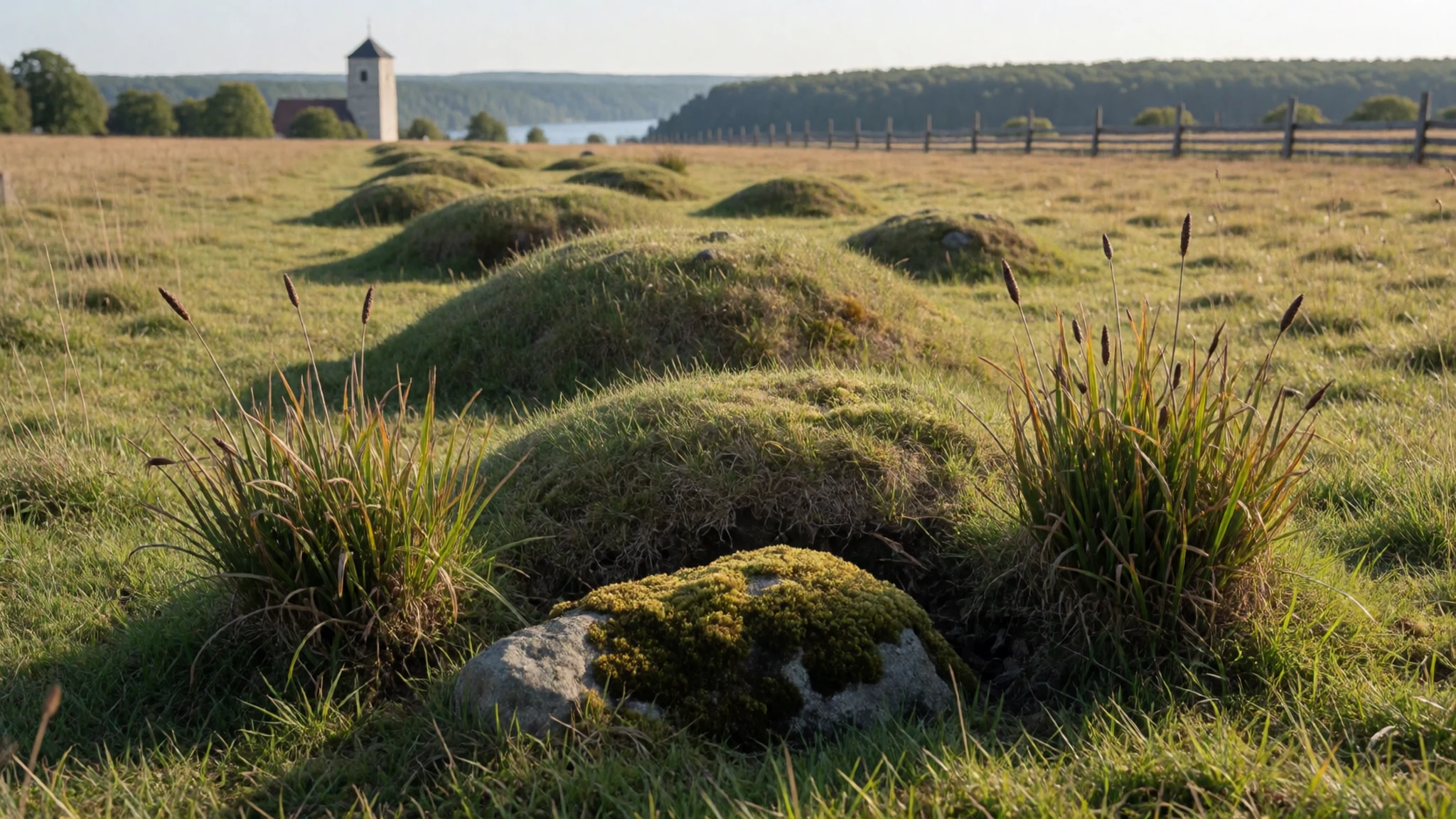
- Alsnö hus ruins
The ruins of Alsnö hus, a medieval royal hall site on Adelsö, add a later chapter to the island's story. What remains is modest, mostly walls and outlines, but it shows that rulers kept using this small island for centuries after the Viking period ended.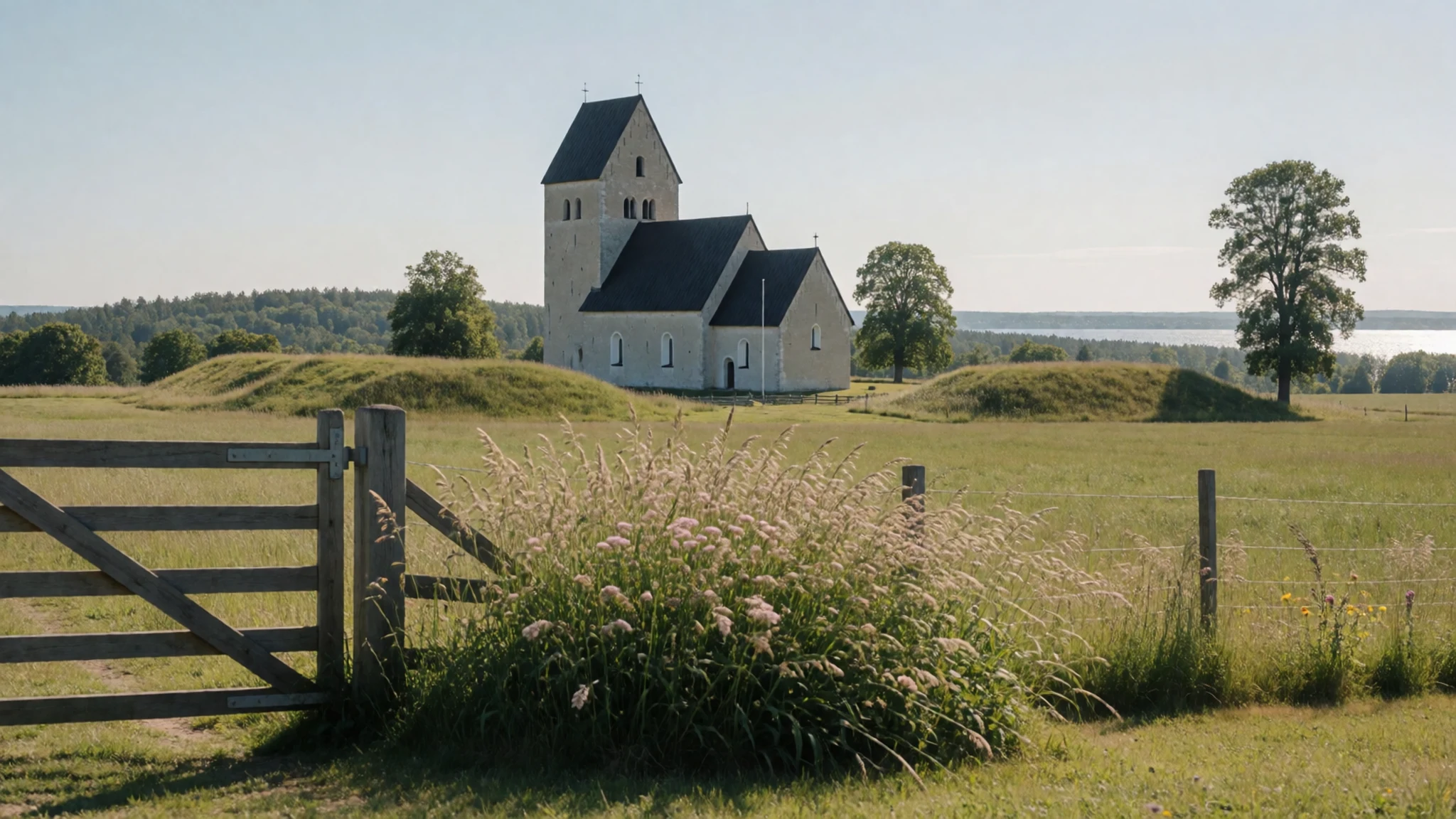
- Birka on Björkö
The Viking-age trading town that Hovgården is thought to have governed lies on the island just south, reached by a separate boat trip. It is the other half of the World Heritage Site and well worth pairing with Adelsö, though check the boat schedule well ahead as sailings are seasonal.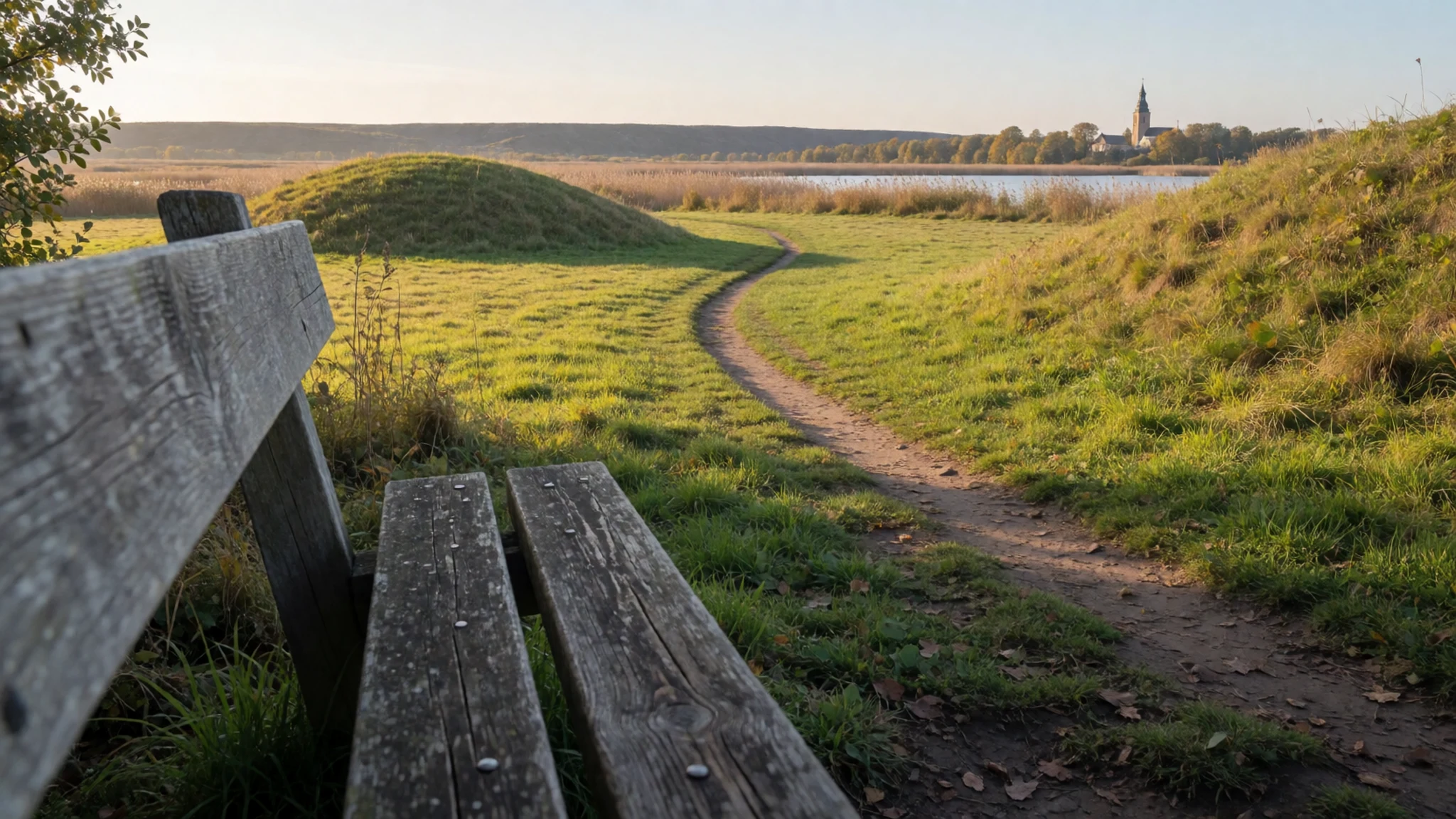
Culture
Hovgården is best understood as a place of memory rather than a place of ceremony. Nobody lives in the mounds' shadow in a ritual sense today; the culture here is that of an island farming community with a parish church, a long local pride in its royal past, and the broader Swedish habit of treating the countryside as shared space.
The Viking-age burials give a glimpse of beliefs about death: a boat, animals, fine clothes and no weapons, laid on a pyre. Archaeologists read these as signs of status and ritual, but much of the meaning is lost, and honest guides say so. The later runestone shows another side of the culture, where kings and landowners used carved stone to announce claims and loyalty in public.
Sweden's tradition of everyman's right, allemansrätten, lets people walk across open land, but it comes with duties: leave no mess, disturb nothing, and keep a respectful distance from homes and working farms. That matters at Hovgården, where the mounds sit amid private farmland and a living parish.
Stay on the paths and field edges, never climb on the mounds or the runestone, and take every scrap of rubbish away with you.
What to wear
Hovgården sits in a part of Sweden where traditional dress belongs to festivals rather than daily life. Regional folk costume, folkdräkt, is made mainly of wool and linen, with embroidered bodices, aprons and caps for women and breeches and waistcoats for men, and it appears at midsummer, weddings and local celebrations. Viking-age clothing, known mostly from graves like the one excavated here, was also wool and linen, which fits the fine garments found with the cremated man.
Today people on Adelsö dress as most Swedes do in the countryside: practical, layered, outdoor-ready clothing in muted colours, with waterproof jackets, sturdy shoes and often a fleece. Nobody dresses up to visit the mounds, and nobody will look twice at hiking gear.
A visitor should plan for changeable lake weather. In summer, light trousers or a skirt, a long-sleeved layer and a rain jacket cover most days, and sun protection helps on the open fields. In spring and autumn add a warm hat and a proper jumper, as wind off Mälaren is cool. Winter needs insulated boots and thermals. Footwear matters most: paths are grassy and can be wet or muddy, so waterproof walking shoes are better than sandals. There are no strict dress rules, though modest, quiet clothing suits a visit to the church.
What to eat
- Smoked or pickled herring — cafés and delicatessens around Ekerö and Stockholm
Herring is a staple across Sweden, served pickled in sweet or mustard sauces or lightly smoked, usually with boiled potatoes, rye bread and sour cream. Look for it in cafés and farm shops around Ekerö and in Stockholm.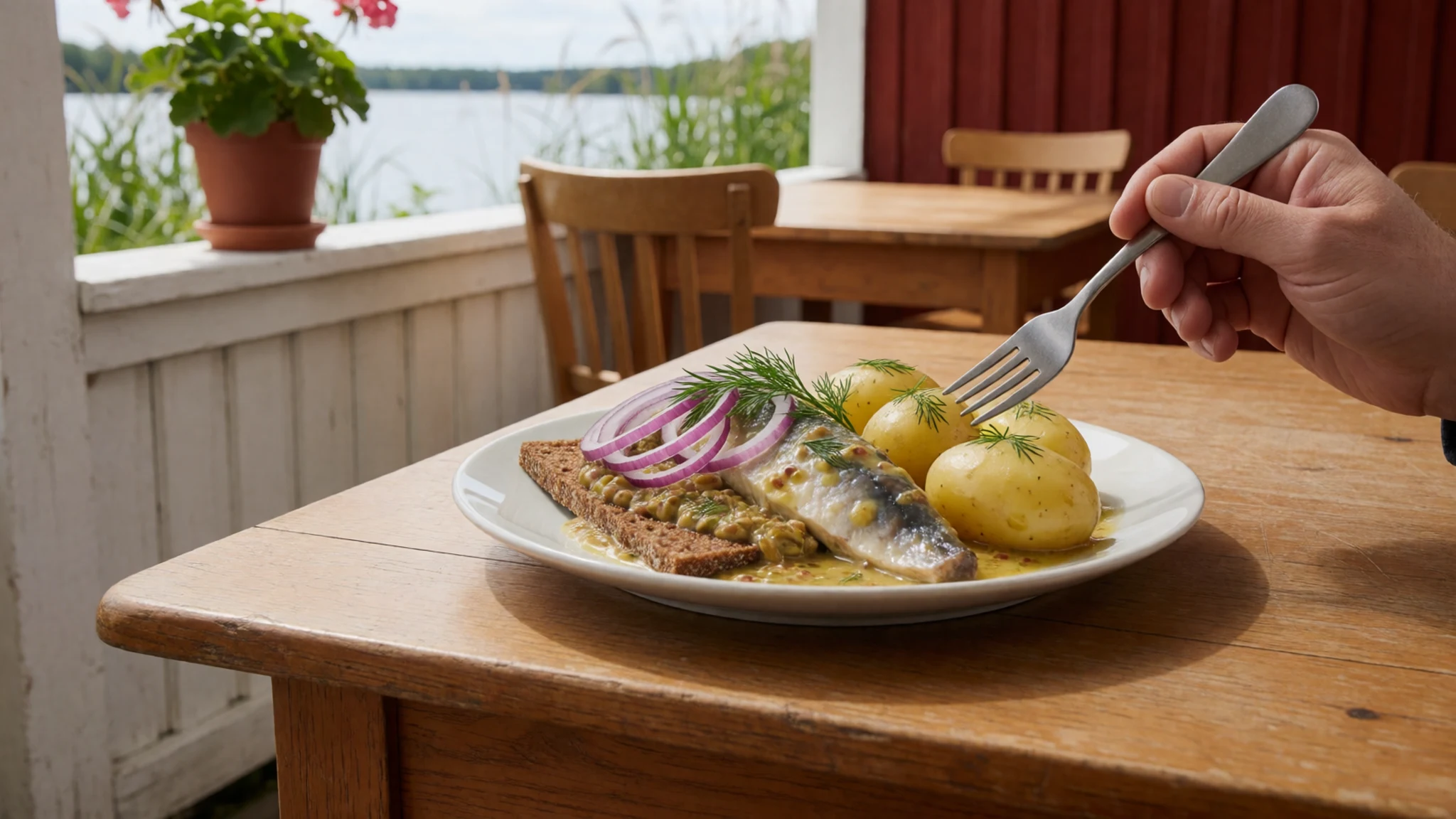
- Gravlax — lakeside cafés and Stockholm food halls
Salmon cured with salt, sugar and dill, sliced thin and served with mustard sauce. It is a classic of Swedish tables and a good light lunch before or after a walk around the island.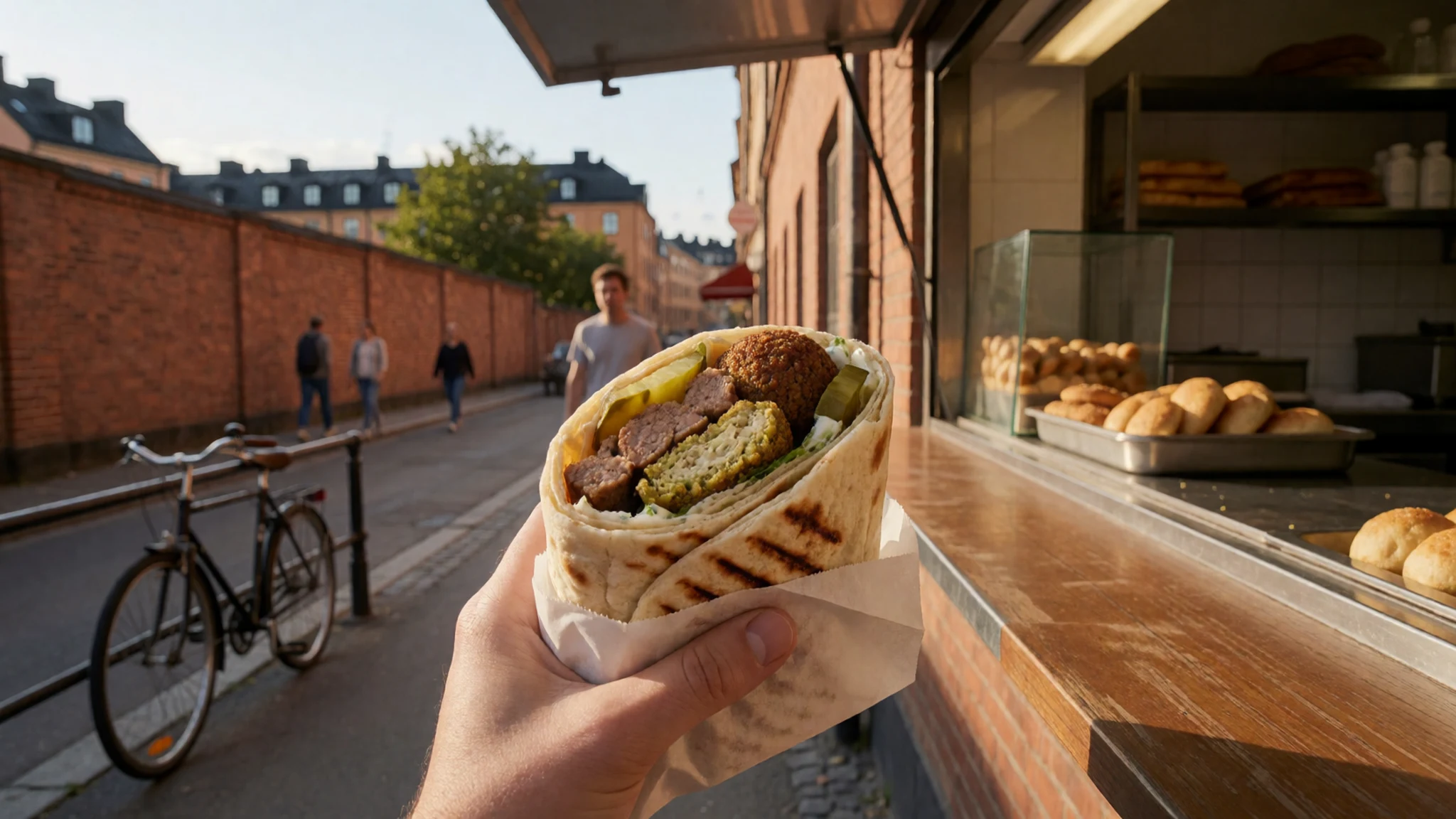
- Lake fish with potatoes — waterside restaurants and summer cafés near Mälaren
Seafood and freshwater fish are common in Stockholm County, and local catch is often available. Perch or pike-perch, pan-fried and served with boiled potatoes and butter sauce, is a simple, satisfying dish where lakes are close. - Köttbullar — home-style eateries in Stockholm and Ekerö
Swedish meatballs come with creamy gravy, lingonberry jam and potatoes. They are everywhere, from home-style eateries to modern restaurants, and a reliable choice if you want something filling after a day outdoors. - Cinnamon bun (kanelbulle) — any village bakery or café
A spiralled, cardamom-scented bun that anchors the Swedish coffee break, or fika. Take one with coffee while looking out over the water; bakeries and village cafés usually have them fresh in the morning.
Plan it
Best time. May to June and August to September, when days are long or mild and the fields are green or golden. July is warm and busier; winters are cold, dark and some seasonal services may not run.
How long. 1
Getting there. Fly to Stockholm Arlanda, then take the Arlanda Express or a train to Stockholm Central Station. From there, public transport and a short ferry link reach Adelsö; check current timetables and the ferry operator before you travel.
Budget. mid
Tips
- Check ferry and boat times in advance, as services can be seasonal and limited
- Bring food and water, since options on the island are few
- Start in the morning to allow time for Birka as well
- Wear waterproof shoes for damp grass
- Carry a card and a little cash for small local sellers
Etiquette
- Stay on paths and never climb on the mounds or runestone
- Respect private farmland and homes
- Take all rubbish away with you
Nearby
Sources
- Wikidata Q1916655 (CC0)
- Wikipedia: Hovgården (CC BY-SA 4.0)
- Wikivoyage: Stockholm County (CC BY-SA 4.0)
- Photo: Hovgården royal tumuli and Adelsö Church (Public domain)
- Photo: Runestone U 11 (CC BY 3.0)
- Photo: Alsnö hus ruins (CC BY 3.0)
- Photo: Middle royal tumulus (Public domain)
- Photo: Kungshögarna (2) (CC BY 3.0)
- Photo: Kungshögarna (4) (CC BY 3.0)
- Photo: Kungshögarna (6) (CC BY 3.0)
- Photo: Kungshögarna (1) (CC BY 3.0)


