Kalmar Castle
Kalmar Castle, Sweden
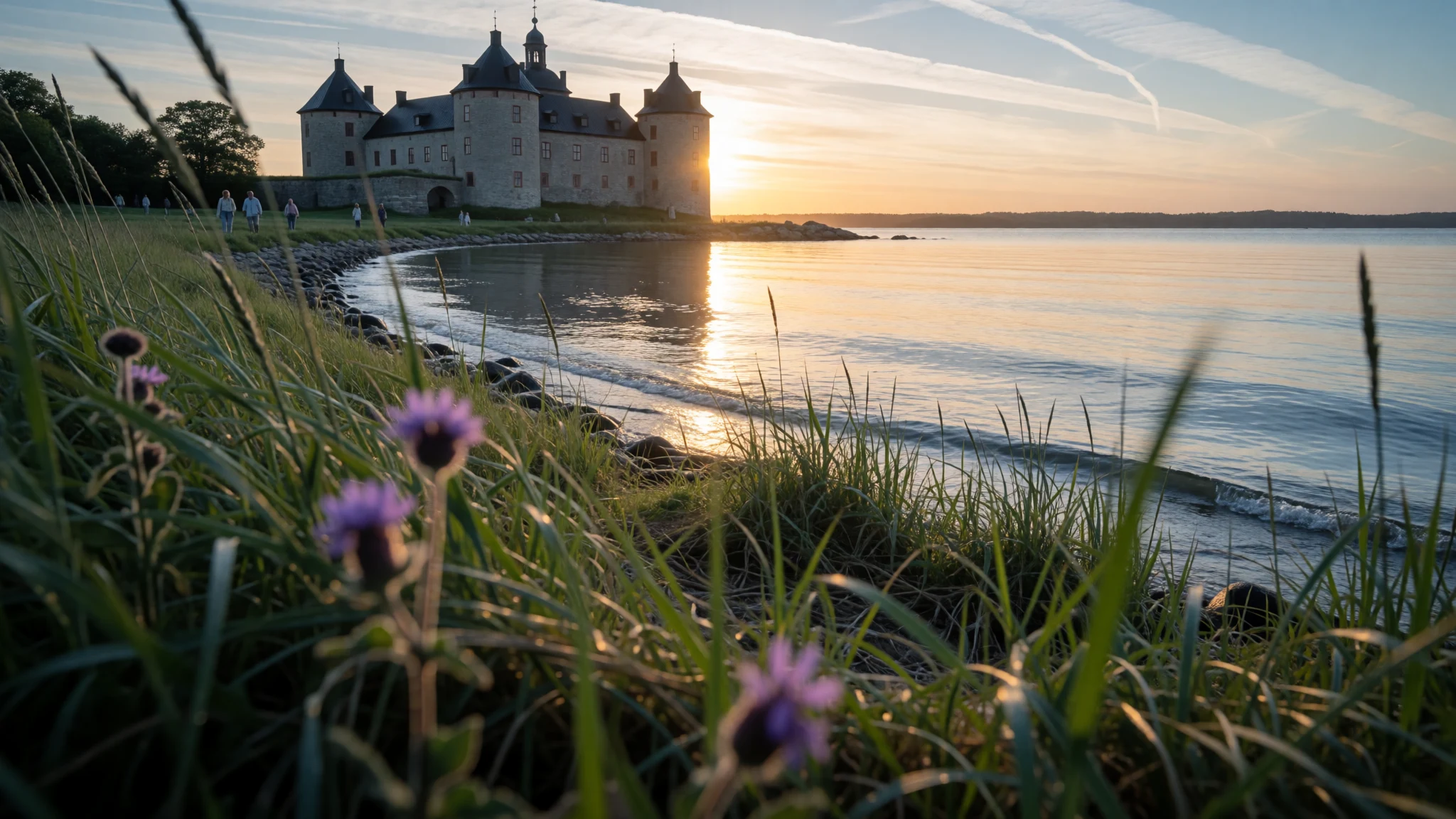
Kalmar Castle is a medieval fortress turned Renaissance palace on the Baltic shore, where Nordic kings once made and unmade unions.
The place
Kalmar Castle stands on the Baltic shore in the town of Kalmar, in the Swedish province of Småland, facing the strait that separates the mainland from the island of Öland. The facts record dates it to around 1200, though a round defensive tower was already on the spot in the twelfth century. The site was chosen for a reason. Kalmar once sat close to the Danish border, and the castle earned the nickname Rikets nyckel, "the Key to the Kingdom", because whoever held it controlled a way into Sweden from the south. What visitors see today is two buildings in one. The medieval fortress survives in its thick walls, round corner towers and gatehouses. Inside that shell, the Vasa kings of the sixteenth century built a Renaissance palace, with grander rooms and larger windows than any fortress would need. The state property management agency, which oversees the site, calls it the finest surviving Renaissance castle in the region. The setting helps. Water surrounds much of the site, and the approach over a bridge and through a gatehouse still feels like entering a defended place. Kalmar itself is a small, easy town, and the castle is a short walk from the centre. Crowds build in the summer holidays, when families and school groups arrive, while the shoulder months are calmer. Wind off the Baltic can turn cool even in July, so the courtyards are better enjoyed with a spare layer to hand.
Its story
Kalmar Castle began as a round tower in the twelfth century, built beside a harbour on Kalmarsund. Late in the thirteenth century King Magnus Ladulås wrapped the old tower in a larger fortress: a ring wall, rounded corner towers and a pair of square gatehouses. In 1397 the castle hosted the agreement that created the Kalmar Union, which bound Denmark, Norway and Sweden, then including Finland, under one monarch, Queen Margaret I of Denmark. The union proved fragile, and Sweden rebelled against Danish rule in 1520. During that revolt the garrison was led by Anna Eriksdotter Bielke. Her husband, Johan Månsson Natt och Dag, had died in the middle of the fighting, and she took over his lands and held Kalmar against the Danes. The biggest change came under the Vasa dynasty. Gustav I began strengthening the castle in the sixteenth century, and his sons Eric XIV and Johan III carried the work on. Johan III launched a major rebuilding soon after his coronation, and in 1574 the architect Domenicus Pahr started the renovation that turned a fortress into a residence fit for a Renaissance king. That layering explains the building as it stands: a soldier's plan on the outside, a ruler's taste for comfort and display within. Few Nordic buildings pack medieval defence, a union of crowns, a woman's defiance and royal ambition into one set of walls.
What to see
- The gatehouse and bridge approach — Castle entrance, Kalmar
The main approach to Kalmar Castle crosses the water by bridge and passes through the gatehouse, a good place to grasp the defensive design. Notice how the round towers and heavy wall sit against the lighter Renaissance additions above. Walk the full outer path as well, since the view changes sharply from the shore side.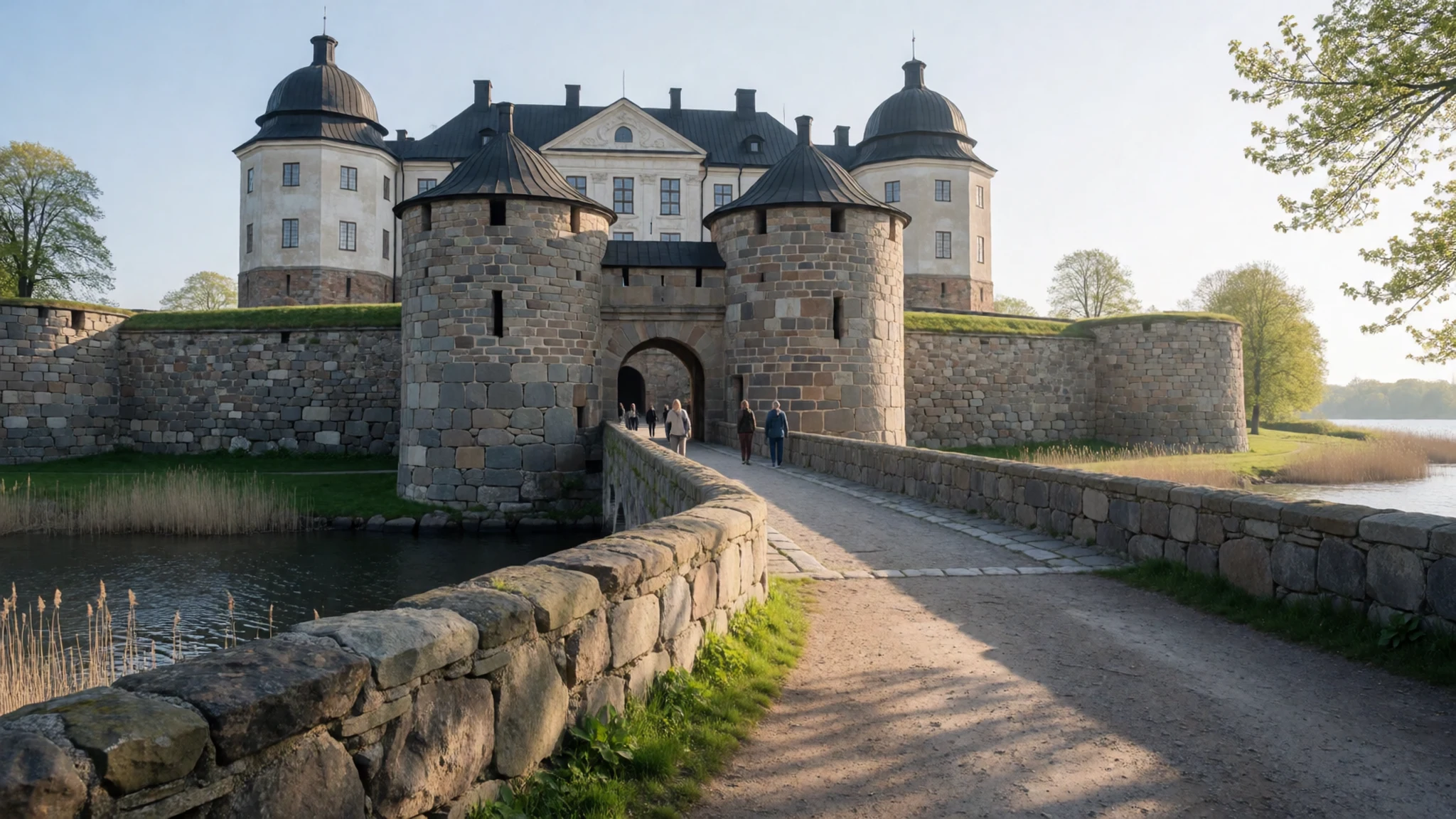
- The north-eastern shoreline — Castle grounds, waterfront side
The north-eastern side of Kalmar Castle faces the water and offers a different picture from the formal front: towers rising straight from the grounds, with Kalmarsund beyond. It works well for photographs in soft morning or evening light, and it is usually quieter than the entrance, where tour groups tend to gather.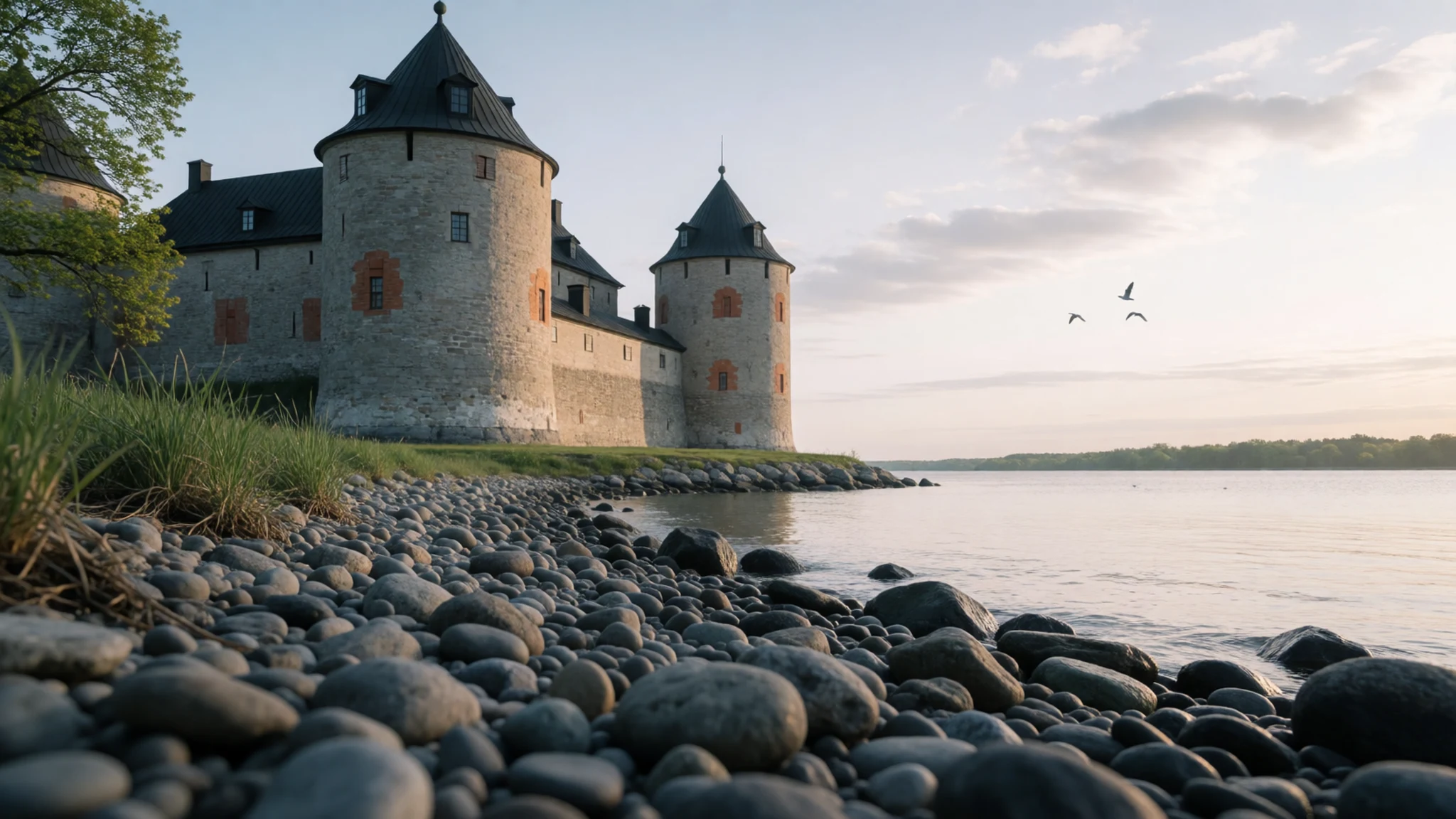
- The inner courtyard — Inside the castle walls
The courtyard at Kalmar Castle shows how the Vasa kings fitted a palace inside a fortress. Stand in the middle and turn slowly: medieval defensive masonry on one side, the larger windows and decorated façades of the sixteenth-century rebuild on another. It is a quick way to read the building's two lives.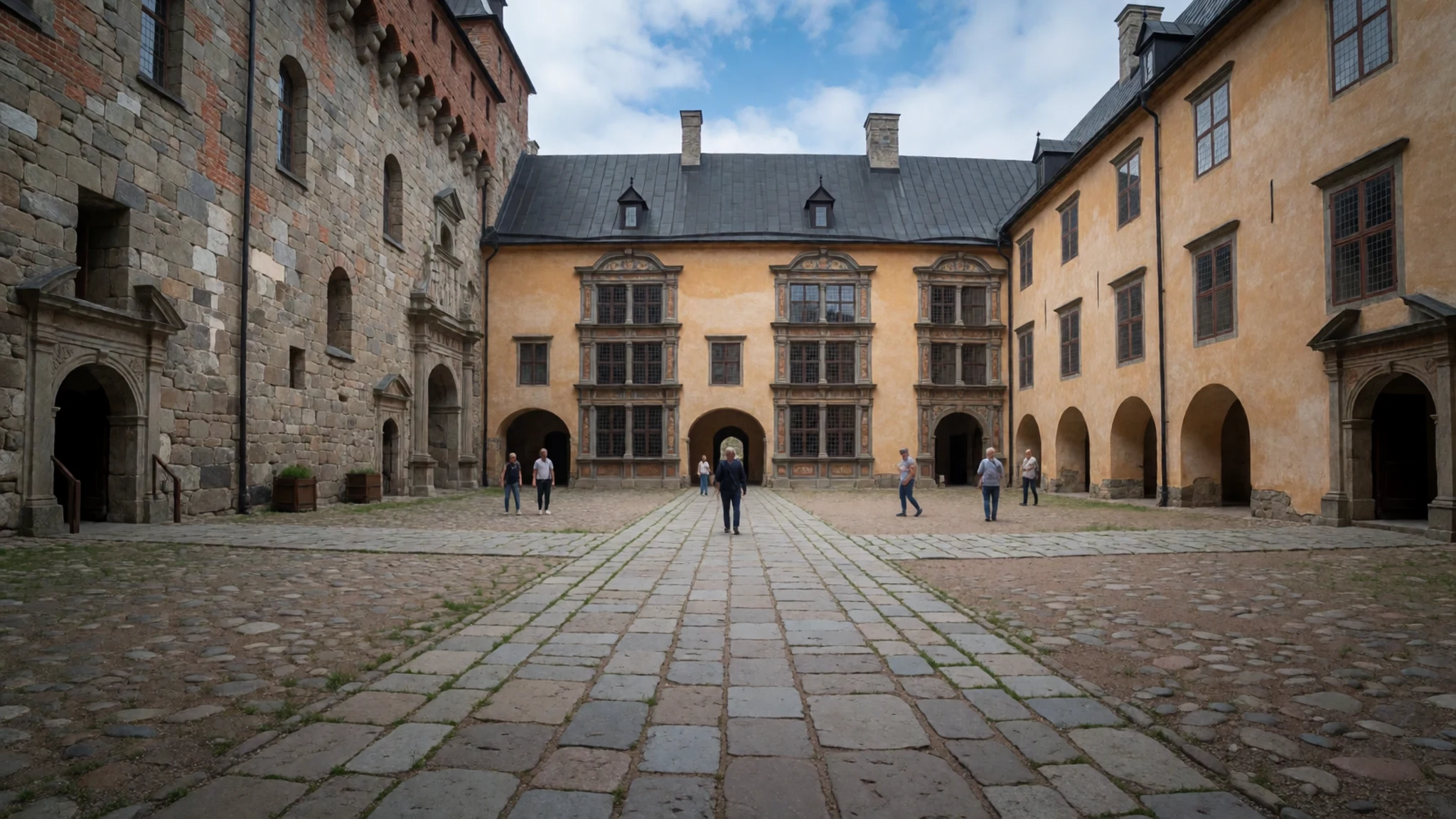
- The royal apartments — Interior, Kalmar Castle
The royal apartments inside Kalmar Castle are where the Renaissance palace is most obvious, with richly decorated rooms from the Vasa era. Allow unhurried time here, because the detail rewards close looking. Which rooms and tours are open varies by season, so check the official site, kalmarslott.se, before planning the visit.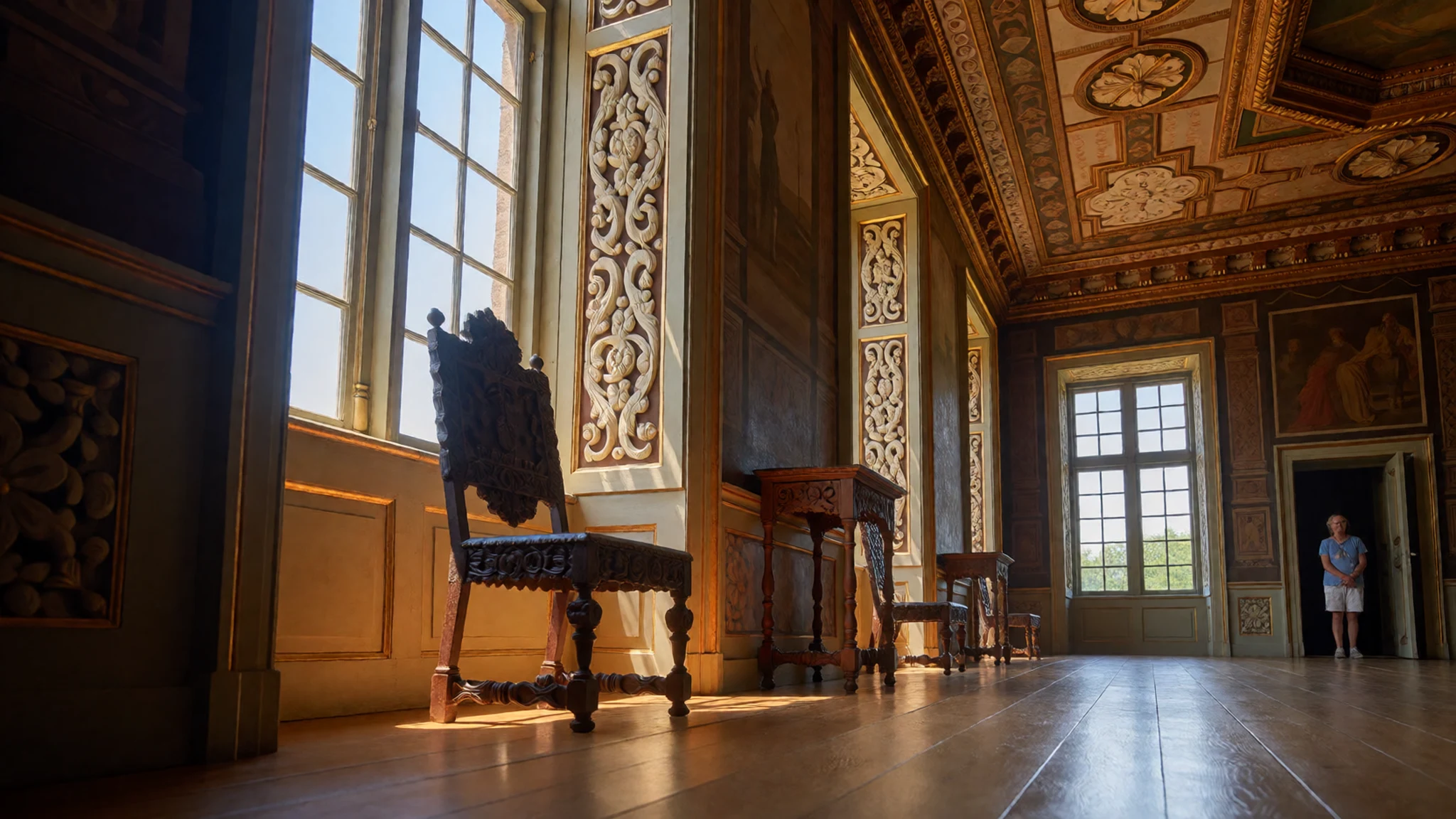
- Kalmar town and waterfront — Central Kalmar
Kalmar, the town around the castle, rewards an hour or two on foot. Cafés and shops cluster in the centre, and the waterfront shows how the castle sits against the old harbour. A stroll along the shore makes a calm end to the visit, particularly on a summer evening.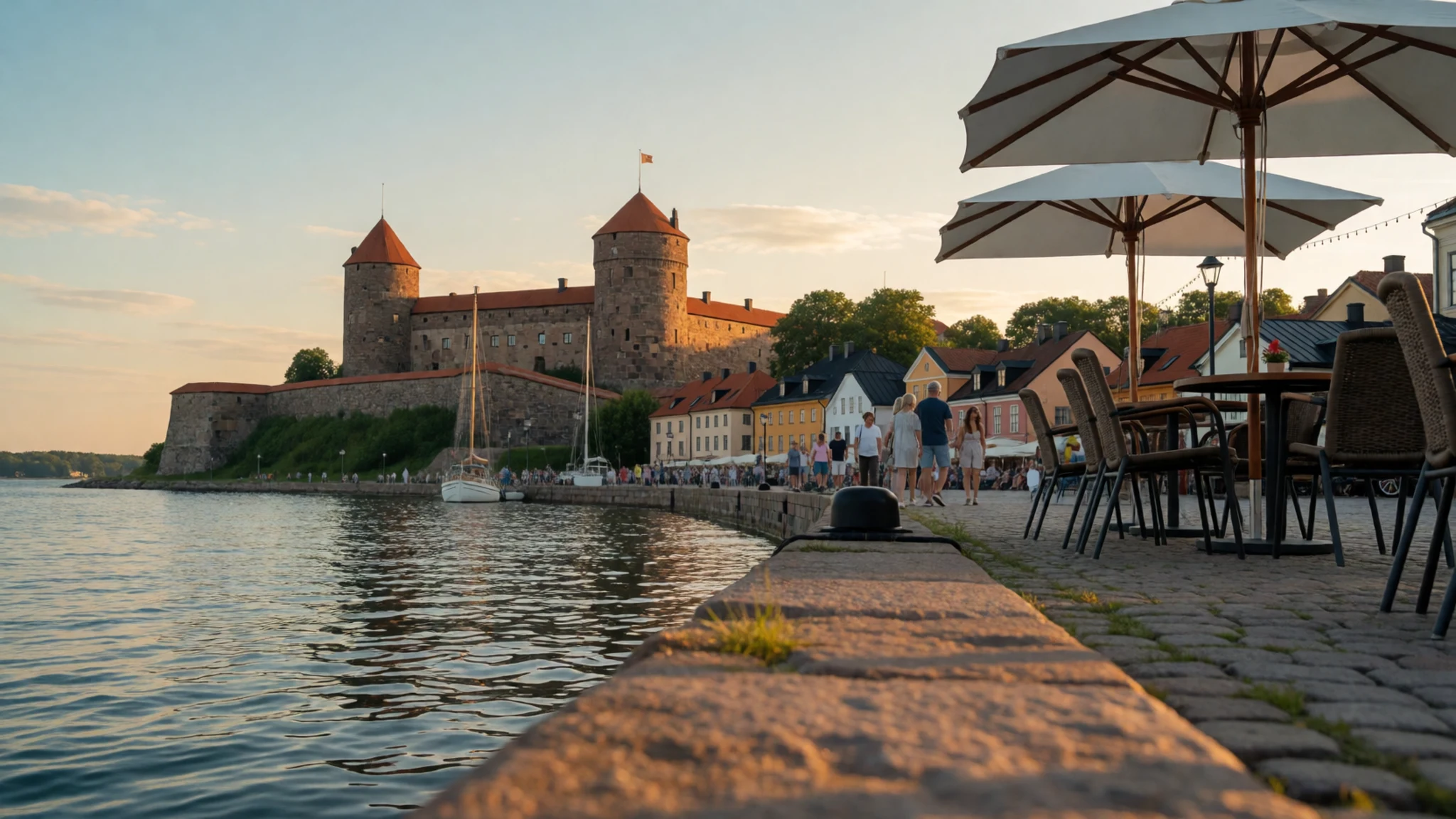
Culture
Kalmar Castle sits in a country where people are generally secular, egalitarian and informal, and a visit follows that tone. Staff and fellow visitors tend to be direct and unfussy, and displays of rank are played down, which is a neat contrast with a building made to impress by kings. Swedes value orderly behaviour: queuing in turn, keeping to marked paths and speaking at moderate volume. Alcohol is a good example of the country's double nature. Restraint is the rule before work or driving, yet drinking is a regular part of festivals such as Midsommar and Valborg. A visitor who abstains will find that ordinary and rarely questioned, though it helps to expect cheerful offers at celebrations. Drugs, including cannabis, are treated strictly, with fines and a criminal record for possession, so relaxed attitudes elsewhere should not be assumed. Local pride in the castle's history is real, and curiosity about the Kalmar Union or the Vasa kings usually starts a friendly conversation. Visitors from India and the UK will find the pace calm and the social distance a little wider than they may be used to; this is courtesy, not coolness. Cards and mobile payments are the normal way to pay almost everywhere. Queue in turn, keep your voice low in the historic rooms, and follow the castle's signs on where photography is allowed.
What to wear
Kalmar Castle is in Småland, where traditional dress, folkdräkt, varies from parish to parish. The common elements are wool and linen: wool bodices, skirts and breeches in strong colours, linen blouses and shirts, aprons, and caps or scarves, often finished with embroidery or woven bands. Today this dress appears at Midsommar, weddings, national celebrations and folk music events, usually worn by members of local heritage groups rather than as daily wear. Everyday clothing in Kalmar is relaxed and practical: jeans, neat trousers, knitwear, waterproof jackets and trainers, mostly in muted colours, with little emphasis on labels. Smart casual is enough even for a restaurant dinner. Visitors should dress for the weather rather than the building, because the castle stands beside the Baltic and wind can cut across the open grounds. Layers work in every season, with a waterproof shell, plus a hat and gloves outside summer. Wear comfortable, grippy shoes, since approaches and courtyards can be uneven and historic floors and stairs are worn. The castle has no dress code and no head-covering rules, so modesty norms are relaxed and ordinary summer clothes are fine. A warm layer still helps inside the thick-walled rooms, which can feel cool on a bright day.
What to eat
- Pickled herring (sill) — Traditional Swedish restaurants and lunch cafés in central Kalmar
Pickled herring is a Swedish staple, served with bread or potatoes at summer lunches and on the smörgåsbord at traditional holidays. Expect several marinades, from sweet to sharp. It is an acquired taste for some, so order a small plate first.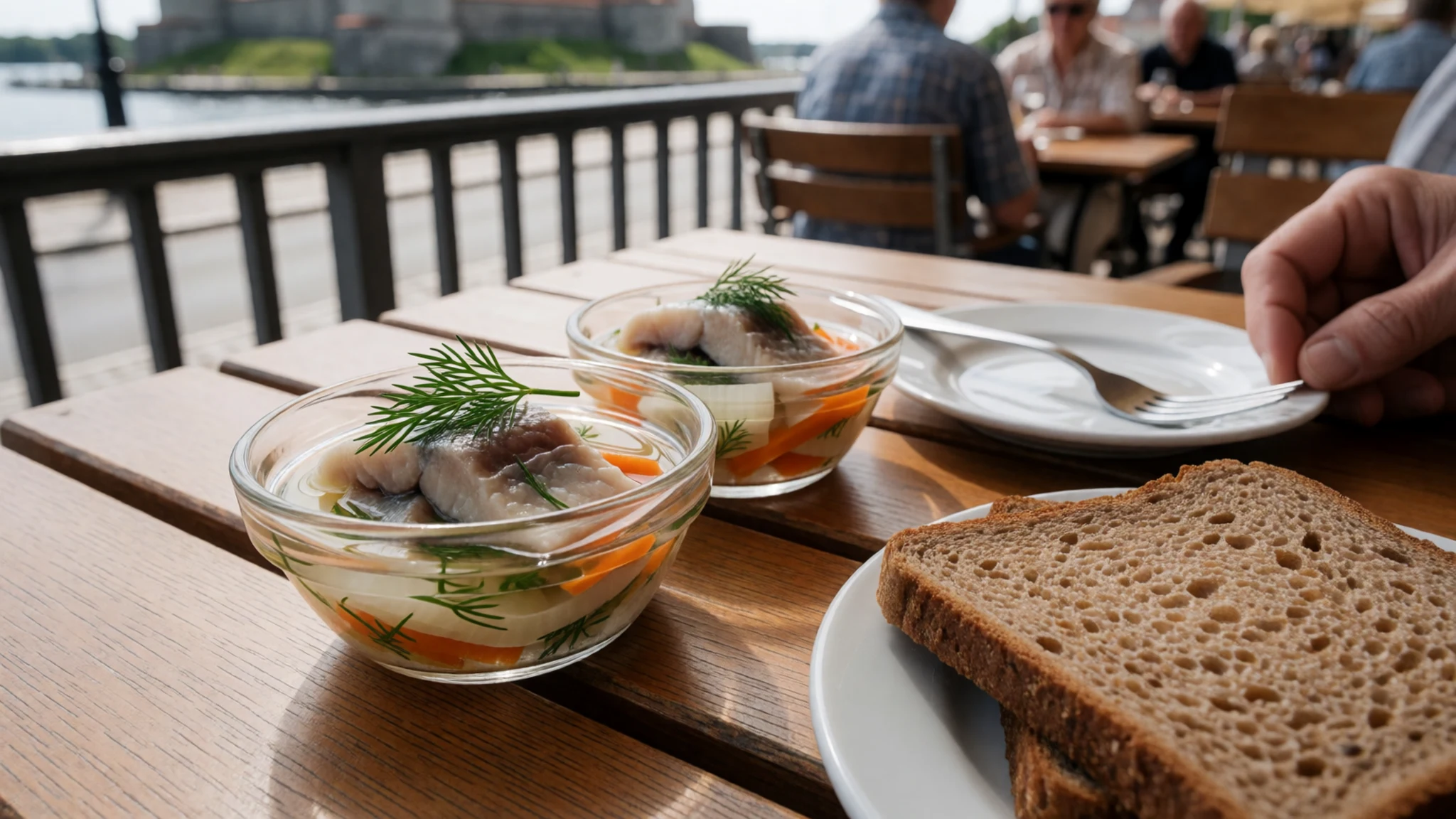
- Gravlax — Waterfront restaurants and the food hall in town
Cured salmon, known as gravlax, is sliced thin and served with bread or potatoes and a sweetish mustard sauce. It is a gentle introduction to Swedish fish dishes and works as a starter or a light lunch.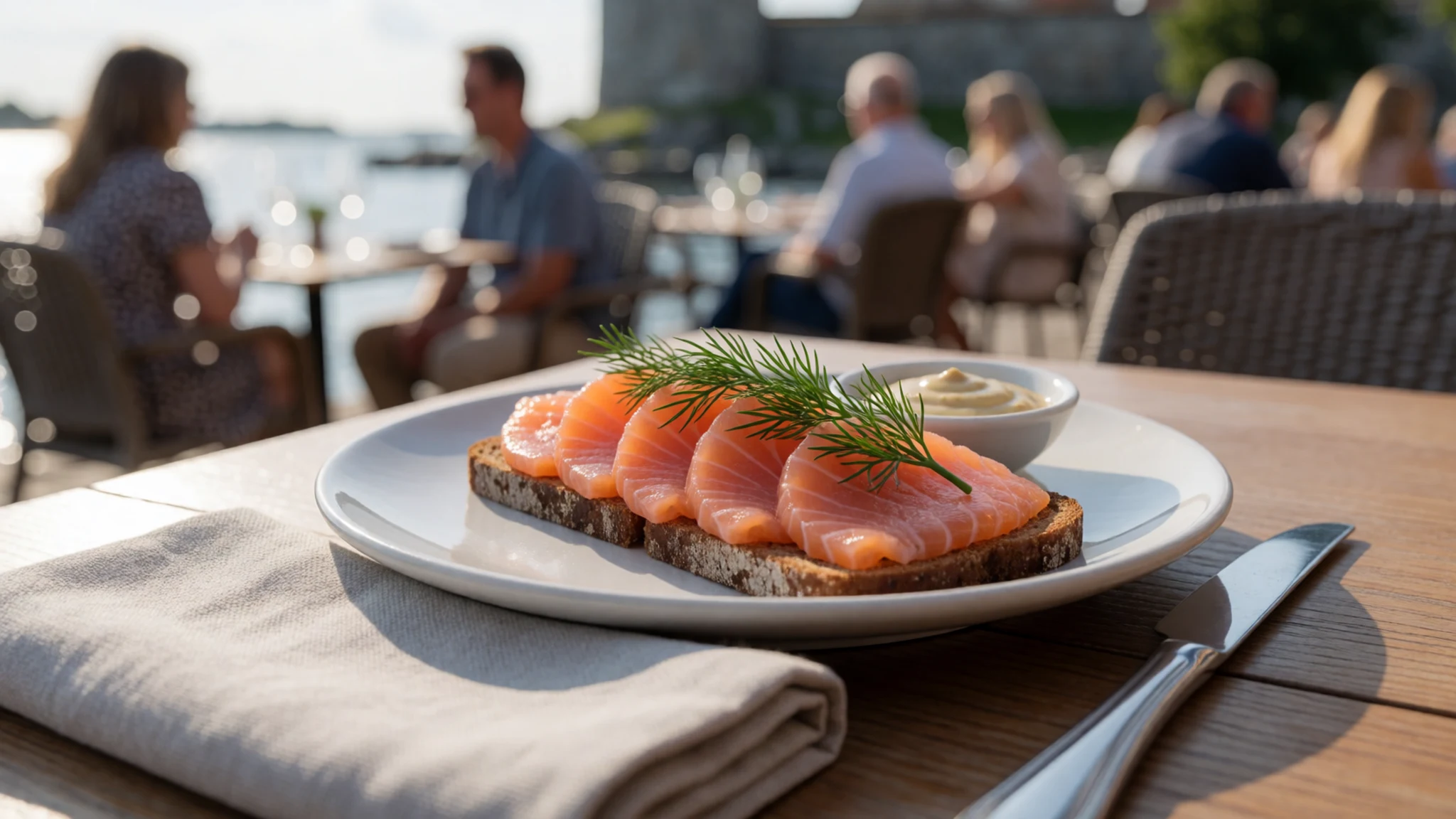
- Meatballs (köttbullar) — Everyday restaurants offering husmanskost, the home-style cooking
Köttbullar are the best-known Swedish dish abroad: small meatballs with potatoes, brown sauce and lingonberry jam. The tart berries cut the richness. Pork and beef versions are common, so ask if diet matters. - Pytt i panna — Lunch restaurants with a dish-of-the-day menu
Pytt i panna is a hash of diced meat, onion and potato, fried until crisp and usually topped with a fried egg and pickled beetroot. It is hearty, filling and a sensible choice after walking the castle. - Kroppkakor — Regional restaurants and cafés around Kalmar
Kroppkakor are potato dumplings filled with pork and onion, a favourite of Småland and nearby Öland. They are served with melted butter and lingonberries. Vegetarians should check the filling before ordering.
Plan it
Best time. Late May to early September, when days are long and the grounds and waterfront are at their most pleasant; July is the busiest month. Winter is quieter but cold and dark, and opening may be reduced, so check first.
How long. 1–2
Getting there. Kalmar has a regional airport (Kalmar Öland) and a railway station in the town centre; from either, the castle is a short taxi, bus or walk. Check Swedish rail operators for routes from Stockholm or southern Sweden.
Budget. mid
Tips
- Check the official site, kalmarslott.se, for opening times, tickets and tours before travelling
- Arrive early in summer to see the courtyard and grounds before the groups
- Carry a windproof layer, as the shore is exposed even on sunny days
- Cards and mobile payments are accepted almost everywhere, so little cash is needed
- Tap water is safe to drink, so bring a refillable bottle
Etiquette
- Queue in turn and keep to marked paths
- Keep voices low in the historic rooms
- Follow signs on photography in the interiors
Nearby
Sources
- Wikidata Q648226 (CC0)
- Wikipedia: Kalmar Castle (rev 1373182798) (CC BY-SA 4.0)
- Wikivoyage: Sweden (rev 5427652) (CC BY-SA 4.0)
- Frontal view of Kalmar Castle — Martin Grädler (CC BY 3.0)
- Kalmar slott (Slottet 1; f.d. stg 353) — L.G.foto (CC BY-SA 4.0)
- Illustration from Nordiska taflor (Albert Bonnier, 1865) — unknown author (Public domain)
- The Royal Castle of Kalmar — Hstad (CC BY 3.0)
- Kalmar, Sweden: the castle from the North-Eastern side — Albabos (CC BY 3.0)
- The Royal Castle of Kalmar — Hstad (CC BY 3.0)
- The Royal Castle of Kalmar — Hstad (CC BY 3.0)
- The Royal Castle of Kalmar — Hstad (CC BY 3.0)


