Gotland
Gotland, Sweden
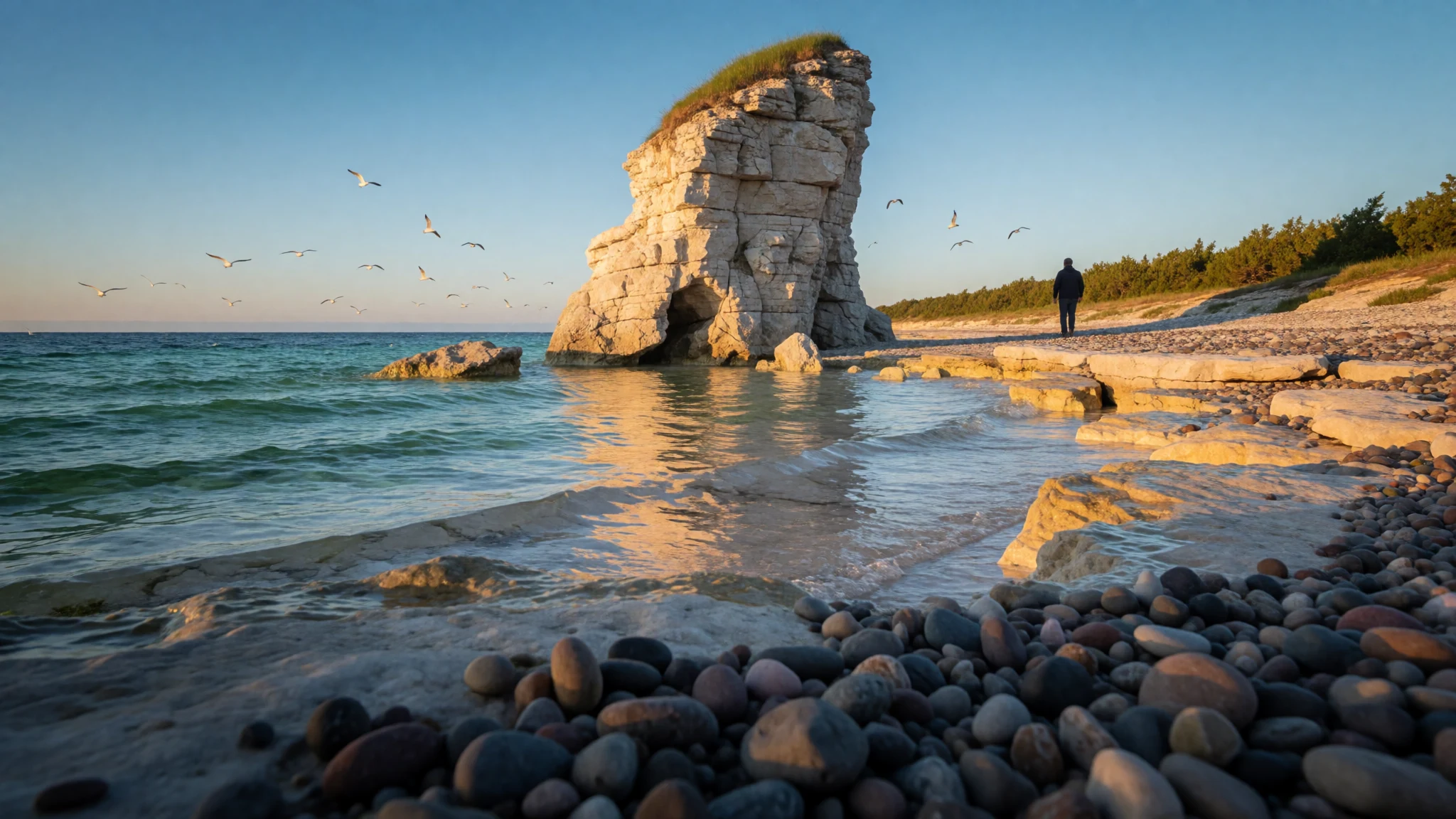
Gotland is Sweden's largest island: limestone sea stacks, medieval churches and a walled old town, all set in a quiet Baltic summer.
The place
Gotland is Sweden's largest island, lying out in the Baltic Sea and run as its own county, municipality and diocese. It is a fully integrated part of the country with no special autonomy. The county also covers smaller islands: Fårö and Gotska Sandön to the north, and Lilla and Stora Karlsö to the west. Roughly sixty thousand people live here, and about 23,600 of them are in Visby, the only real town. The rest of the island is villages, farms, pine woods, flat heath and a long, mild-watered shoreline.
The island is narrow, yet it is long enough that driving between the furthest inhabited points takes in about 170 kilometres. Together with its outlying islands it makes up less than one percent of Sweden's land area, and it is the least populated county in the country. That small population swells in summer, when mainland Swedes arrive in large numbers for the sunny weather and easy beaches. Visby and the resort towns fill up, restaurants run full and nightlife concentrates in the old town.
Outside high summer the island feels quite different: empty roads, shuttered seasonal cafés and wide quiet coastline. Gutnish, the old island language, was once clearly distinct from mainland Swedish. Today almost everyone speaks Swedish, though some residents still use Gutnish at home. A first visit is easiest with a car or bicycle, because sights are scattered along the coast and inland lanes rather than gathered in one place.
Its story
Gotland's story begins long before written records. People have lived on the island since prehistory, and the Ajvide settlement is one of the archaeological sites that shows it. A recent DNA study of 56 individuals found that two genetically distinct groups lived close together in the Middle Neolithic with very little mixing: seal hunters of the Pitted Ware culture, and farmers of the Funnelbeaker culture whose ancestry traced back to Anatolian farmers. The same study found early plague strains in both groups. Later, the Corded Ware expansion brought steppe herder ancestry into the region.
By the Iron Age the islanders were the Gutes. Their own medieval account, the Gutasaga, says the island was first settled by a man called Þieluar, and that the Gutes descend from him. It is a founding tale rather than a record, but it shows how strongly the island thought of itself as a separate people.
That sense of separateness runs through later centuries. Viking Age burial fields and a tenth-century village site at Stavgard, where the main house was 60 metres long, show a settled, trading community. Silver hoards found across the island, some now in the Gotland Museum in Visby, point the same way. In the Middle Ages Visby gained its defensive wall, built in the 13th century, and parishes built stone churches that were hardly altered after the 15th century. Much of what a visitor sees today is that medieval layer, left largely intact.
What to see
- Visby ring wall and old town — Visby
Visby's medieval wall, dating from the 13th century, still encircles the old town, and the whole is a UNESCO World Heritage Site. The best way to take it in is to walk the lanes inside and then follow the wall outside. Summer brings crowds and some pickpocketing risk, so early mornings are calmer. - Langhammars rauks, Fårö — Fårö, north coast
Rauks are limestone stacks left standing after the sea wore away the softer material around them. On Fårö, the Langhammars area is a good place to see them against open water, with a small fishing village nearby. Go on a bright, calm day, and allow time to walk slowly along the shore.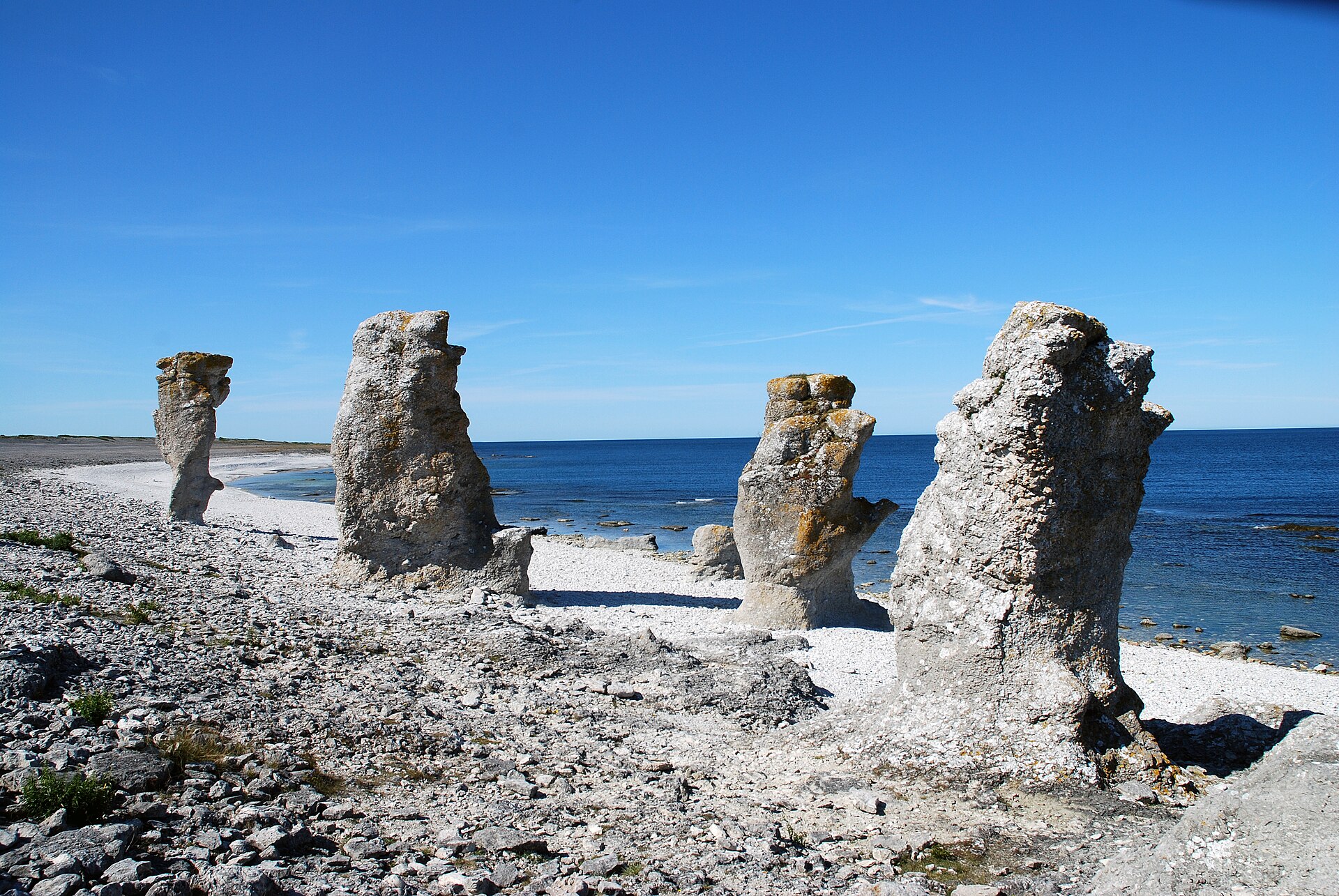
- Medieval parish churches — Across the island, e.g. Tofta
There are over 90 medieval churches scattered across the island, and most have not been modernised since the 15th century. That makes them unusually unaltered by Swedish standards. Tofta church is one example. Opening times vary by parish and season, so check locally before planning a route around them.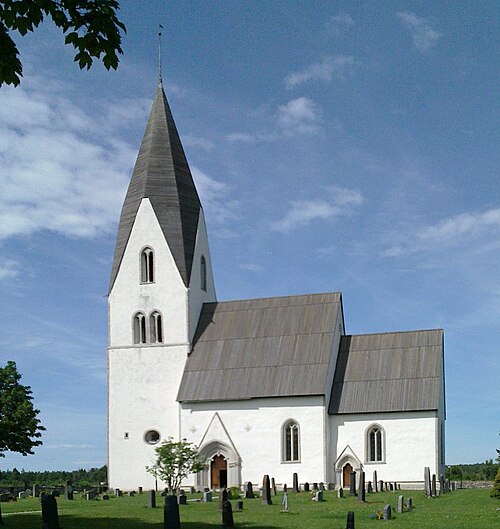
- Gotland Museum and the silver hoards — Visby
The Gotland Museum in Visby holds finds from across the island, including silver hoards buried in the Viking Age and later. It is a good first stop for understanding the island's trading past before heading out to the villages and churches. Check the official site for current opening arrangements.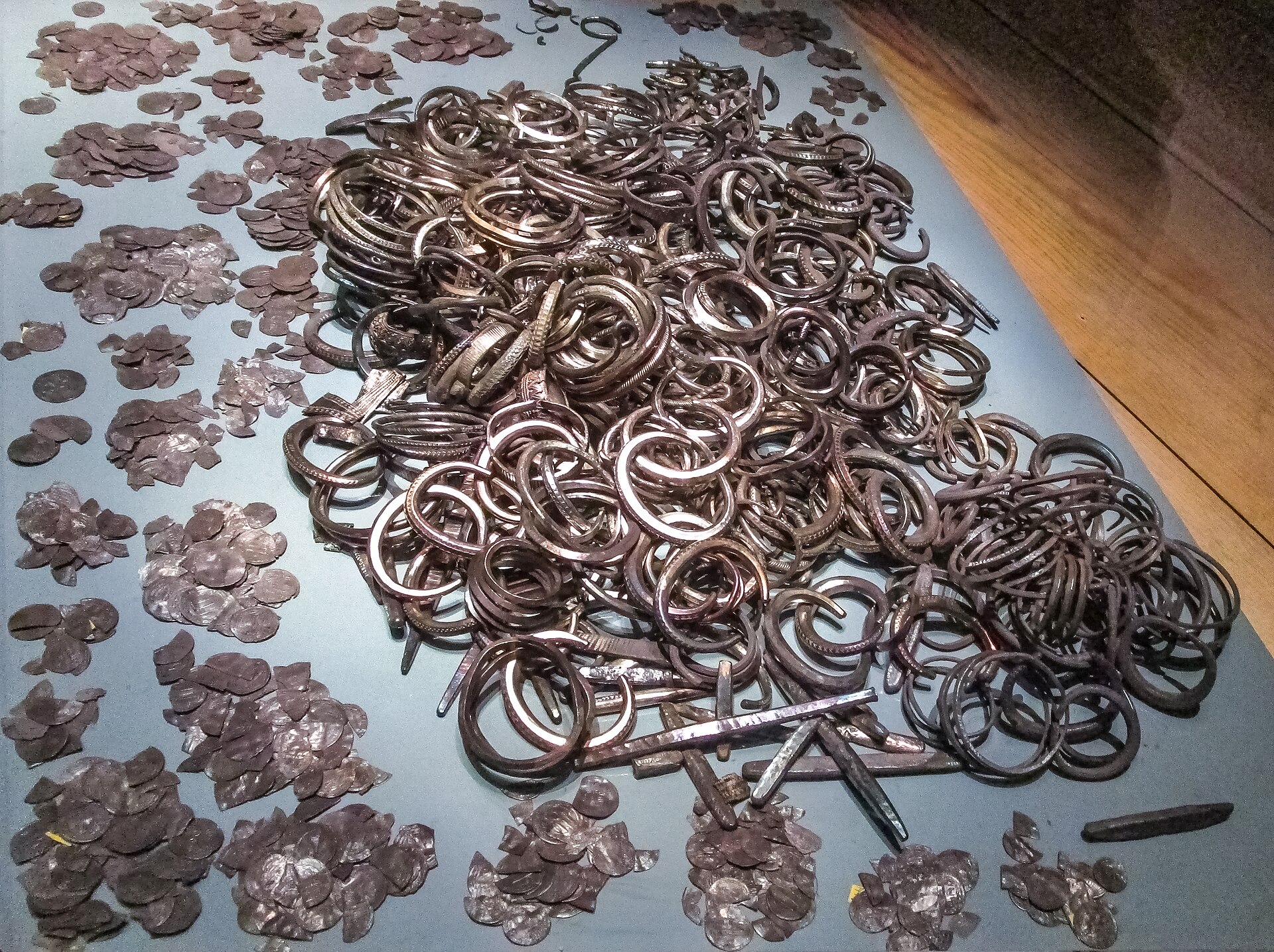
- Lojsta moor and the Gotland ponies — Central Gotland
The Gotland pony, or gotlandsruss, lives semi-wild in a reserve on Lojsta moor in central Gotland. It is also a popular riding breed. The moor is open, quiet and good for a slow stop between coast and church, though the ponies are animals, not an exhibit, and sightings are never guaranteed.
Culture
Gotland keeps a strong sense of its own identity inside Sweden. The old island language, Gutnish (Gutamål), has largely given way to Swedish, yet many residents still speak it, and the Gutes' own saga remains a point of local pride. Visitors hear it less than they might expect, because daily life runs in standard Swedish, and English is widely understood in Visby and the resort towns.
Its heritage is physical. Medieval churches stand in nearly every parish, and Visby's wall encloses an old town that UNESCO recognises as a World Heritage Site. Runestones and silver hoards add older layers. The island also has about 3,700 stones with mysterious grinding grooves. Archaeologists connect them with an unknown industrial process in the High Middle Ages, and some have even proposed Stone Age dates, though that method has been heavily criticised.
Summer is the social season. Mainland Swedes arrive for the sun and sea, and Visby is lively, with nightlife centred there. Life in the countryside is quieter and more private. Local food is sold from roadside stalls, often on an honesty basis, and small farms and church parishes are ordinary working places rather than sights. Sheep and other livestock are everywhere, and road traffic is usually calm.
When visiting a parish church or a roadside stall, keep your voice low, treat the place as a living community, and do not wander onto private farmland or into churchyards during a service.
What to wear
Gotland's traditional dress belongs to the wider Swedish folk costume tradition, with regional variants worn for church festivals, weddings and midsummer events. It is built mostly from wool and linen, often with embroidered bodices, aprons and caps for women and breeches and waistcoats for men. Locally raised sheep have long supplied the wool, and knitting and weaving remain active crafts. Specific patterns and colours vary by parish, so a local museum or craft shop is the best place to learn more.
Everyday dress is simple and practical. In summer, islanders and visiting mainlanders wear shorts, linen shirts, sundresses and sandals or canvas shoes, with a jumper or windproof jacket ready for evenings. In Visby the look is relaxed but tidy. Cyclists wear helmets, and many people carry a light waterproof, since the Baltic weather changes quickly.
Visitors should pack in layers. A light waterproof jacket and a warm jumper are useful even in July, because sea breezes can feel cool, particularly on the north coast. Comfortable walking shoes matter for Visby's cobbled lanes and for the uneven limestone shore at the rauks. Sandals are fine on sandy beaches, but wear closed shoes in woods and on rocky ground. Swimwear is for beaches only, so cover up in town. Medieval churches have no strict dress code for visitors, but shorts and a shirt with sleeves feel respectful, and hats are removed indoors. In winter and shoulder seasons bring a proper windproof coat, a hat and gloves, as the island is exposed.
What to eat
- Lamb dishes — Village restaurants and farm eateries
Lamb appears in many forms on Gotland, from roasts to grilled cuts, and it reflects the island's long sheep farming. A speciality is sheep's head, called lambskalle, though it is hard to find on menus. Try ordinary lamb at village restaurants and farm eateries. - Saffron pancake (saffranspannkaka) — Cafés and traditional restaurants, especially around Visby
Gotland's best-known dessert is a baked pancake flavoured with saffron, usually served with whipped cream and dewberry jam, which locals call salmbär. It is soft, lightly spiced and filling, and it appears on many traditional menus and in cafés. - Roadside strawberries, fish and ice cream — Marked stalls along rural roads
On bike or car routes, marked roadside stalls sell strawberries, fresh fish and ice cream. It is an easy way to eat local produce and to support small producers directly. Carry a little cash or a card, and check the sign for how to pay. - Gotlandsdricke — Private homes; rarely in bars
Gotlandsdricke, also called drikke or drikku, is a home-brewed drink that resembles beer. It is rarely sold in bars or restaurants, and tasting it usually means knowing a local household that makes it. Treat it as a rare treat rather than something to expect. - Local beer: Wisby pils and Klosteröl — Bars and restaurants in Visby and resort towns
Wisby pils and Wisby Klosteröl are the island's local beers, easy to find on tap and in bottles. A cold glass suits a summer evening in Visby, when restaurants and bars are busy. Book ahead in July and early August.
Plan it
Best time. June to August is the main season, with sunny weather, mild sea water and everything open, though Visby and the resort towns are crowded and restaurants fill. May and September are quieter and still pleasant. Outside those months many seasonal places close and the Baltic can turn stormy.
How long. 3–5
Getting there. Fly to Visby airport from Stockholm, a short hop of under an hour, or from Gothenburg, with more routes from other cities in summer. Alternatively, take the Destination Gotland ferry from Nynäshamn or Oskarshamn on the mainland, about three hours, straight into Visby harbour. You can bring a car.
Budget. mid
Tips
- Book ferries, cars and Visby accommodation well ahead for July and early August.
- Hire a car or bicycle, because sights are spread across the island and public transport is limited.
- Watch for sheep and other livestock on country roads, especially at dusk.
- Visit Visby's lanes early in the morning to avoid crowds and pickpockets.
- Carry a card and a little cash for roadside stalls, and check the official sites for opening times.
Etiquette
- Keep your voice low in churches and churchyards, and respect any service in progress.
- Leave farm gates as you found them and stay off private land.
- Avoid the waterfront during storms, and follow local safety advice at the shore.
Nearby
Sources
- Wikidata Q1027830 (CC0)
- Wikipedia: Gotland (rev 1381716882) (CC BY-SA 4.0)
- Wikivoyage: Gotland (rev 5413553) (CC BY-SA 4.0)
- Schorle, Helgumannen, Fårö (CC BY 3.0)
- Berig, Runestone U 614, Torsätra (CC BY-SA 1.0)
- W.carter, Spillings Silver Hoard 2 (CC BY-SA 4.0)
- Karl Brodowsky, Tofta church (CC BY 3.0)
- Mrkommun, old municipalities of Gotland (Public domain)
- Administrative map of Gotland, 1805 (CC BY-SA 4.0)
- Kelisi, Gotland 2022 OSM map (CC BY-SA 4.0)
- allen watkin, Langhammars rauks (CC BY-SA 2.0)


