Hamra National Park
Hamra National Park, Sweden
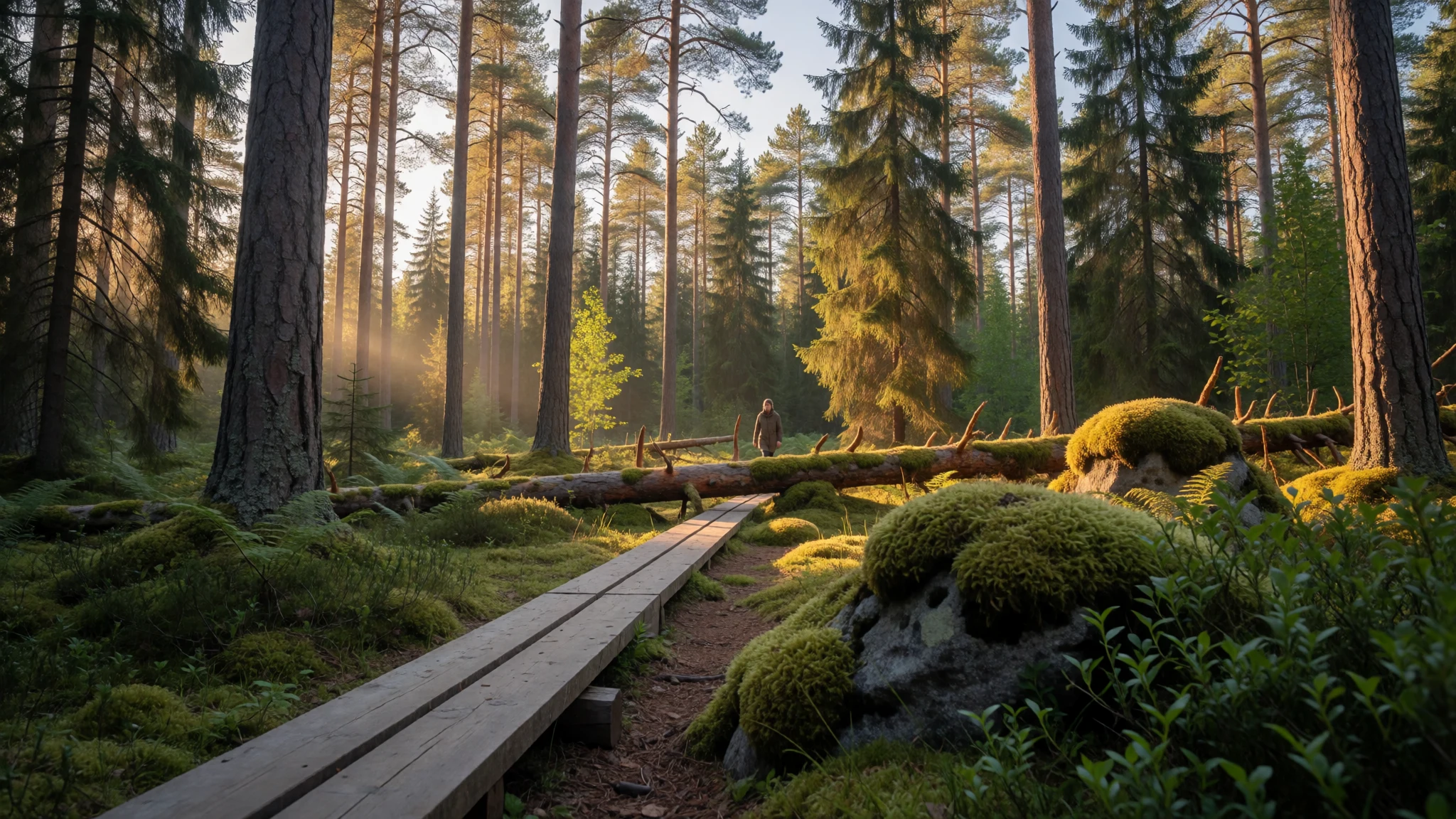
Hamra National Park is a small patch of old forest, bog and quiet lakes in central Sweden, made for slow walking.
The place
Hamra National Park lies in Ljusdal Municipality, Gävleborg County, on the edge of Dalarna in central Sweden, and it forms part of the Orsa Finnmark landscape. It is a small park, founded in 1909 and enlarged in 2011 to about 1,383 hectares, so a visit is measured in hours on foot rather than days of trekking. The ground is mostly forest: tall pines on the drier rises, spruce in damper hollows, and wet bog between them where the trees thin out. Fallen trunks are left to rot where they drop, which gives the woods a shaggy, unmanaged look that the working forests around them lack. Svansjön, a lake inside the park, gives an open view, and a viewing platform above it is the easiest place to take in the whole mood: dark water, a ragged shoreline and a wall of conifers. The wider region, Gästrikland and Hälsingland, is the gateway to Norrland and is mostly hilly forest, so the park feels like a concentrated sample of the country around it rather than a break from it. Mornings often bring mist that hangs low over water and bog, which suits photographs and quiet. The weather turns quickly, the ground can stay soggy after dry spells, and in summer the insects are part of the experience. Facilities are modest: an information point near the main entrance, marked paths and not much else. That is much of the appeal. Hamra is a place for noticing detail, not for ticking sights off a list.
Its story
Hamra National Park began in 1909 as a very small protected area of only 28 hectares, set aside while the forests around it were being cut for timber and fuel. For most of the following century it stayed that size, a pocket of old trees in a landscape worked hard by foresters. In 2011 it was enlarged to about 1,383 hectares, which turned a curiosity into a place with room for a proper walk, and for the bogs, shores and woodland that together behave like a working ecosystem. The forest's human past is still visible. A ruined treehouse hut, a koja, survives as a reminder of the forest workers who once spent long days here, and the region around the park built its living on timber, farming and seasonal grazing. The name Orsa Finnmark is usually read as a pointer to Finnish-speaking settlers who farmed this poor, forested ground in earlier centuries. The story is therefore not one of wilderness untouched by people but of choices: which patch to protect, when, and how large it should be. Today the park sits within Sweden's national park system, and the official national parks site carries the current rules and conditions. The place rewards an eye for slow processes: lichens on branches, fungi on dead wood, moss swallowing old stumps, and saplings crowding into the gap where an old tree came down. Seen that way, the park is less a monument than a long experiment in leaving things alone.
What to see
- Svansjön lake — Inside the park, near the main trail network
Svansjön is the park's main lake, a dark sheet of water edged by pines and reeds. Early morning is the time to go, when mist often lies on the surface and the only sounds are birds and wind in the branches. Paths near the shore can be wet underfoot, so waterproof boots earn their place.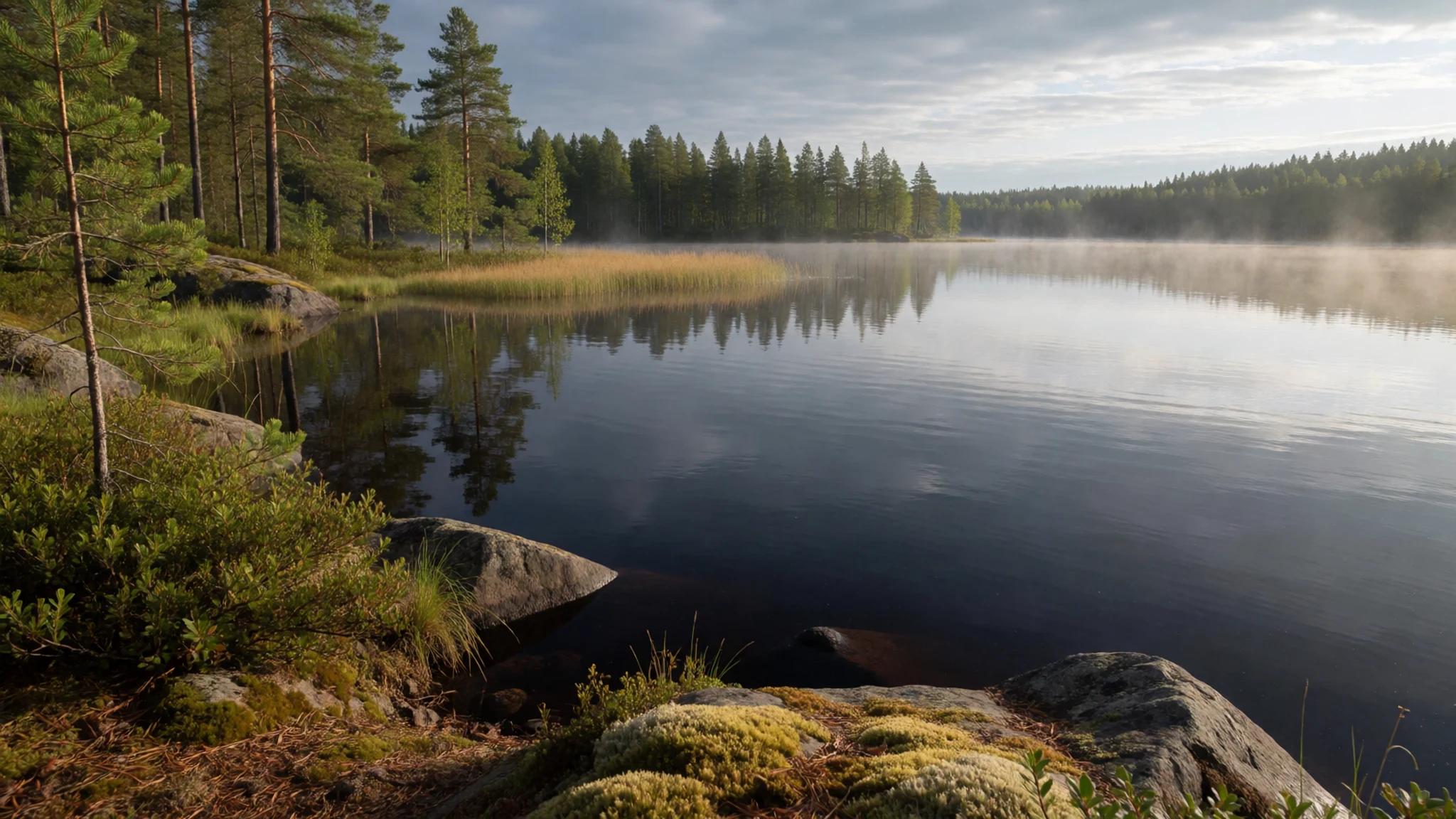
- Svansjön observation platform — Above the lake shore
A wooden platform gives a raised view across Svansjön and the forest beyond, which is the clearest way to understand how the park is laid out: water, bog and conifers in layers. It is a good place to stop with a flask, and to scan the treeline for birds.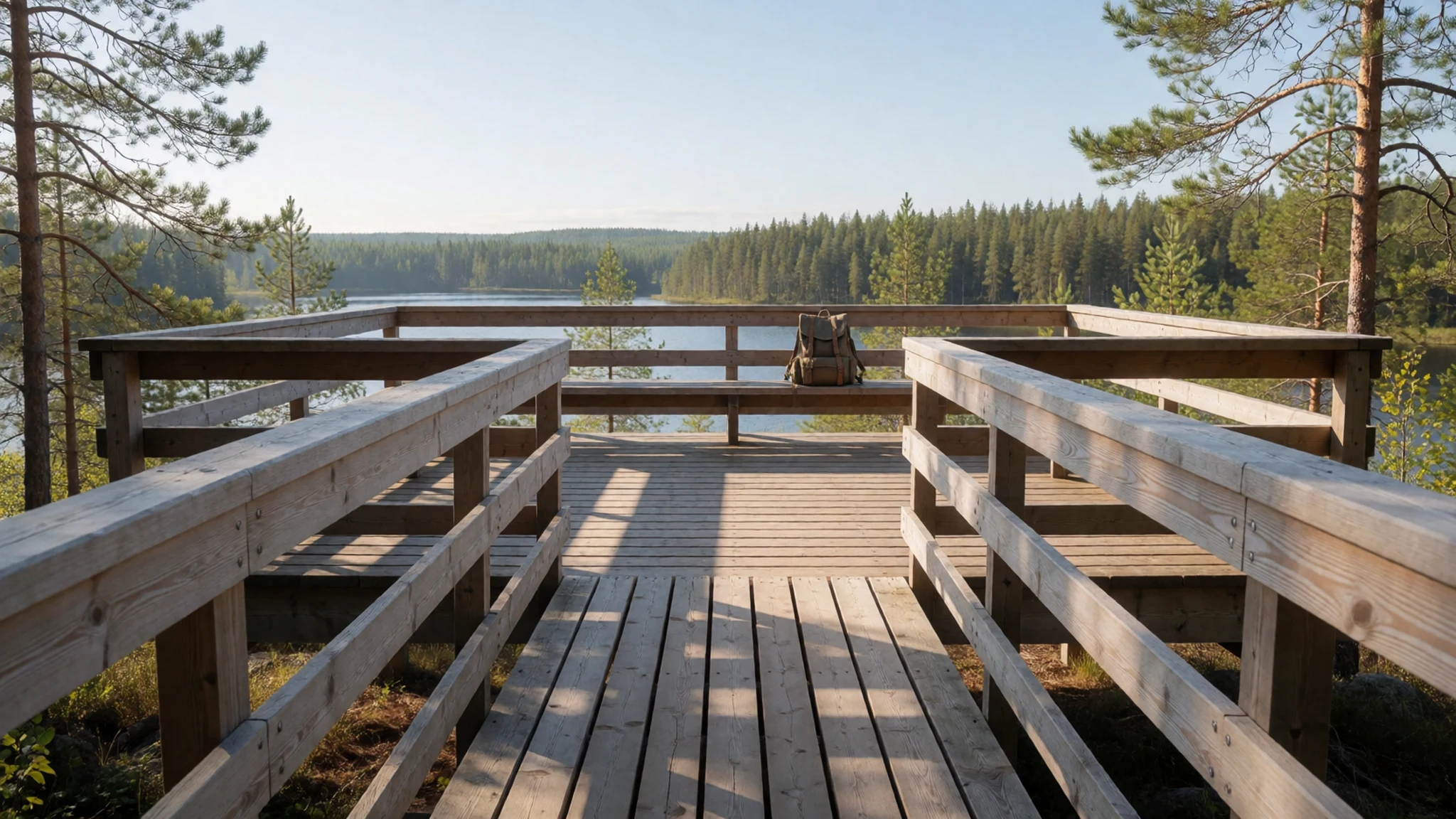
- The old-forest paths — Forest trails within the park
The walking routes pass through tall pine and spruce where dead trunks lie where they fell and moss covers nearly everything. Progress is slow because there is always something to look at: fungi, lichen, woodpecker holes. Stay on the marked path, as the ground beside it can be soft bog.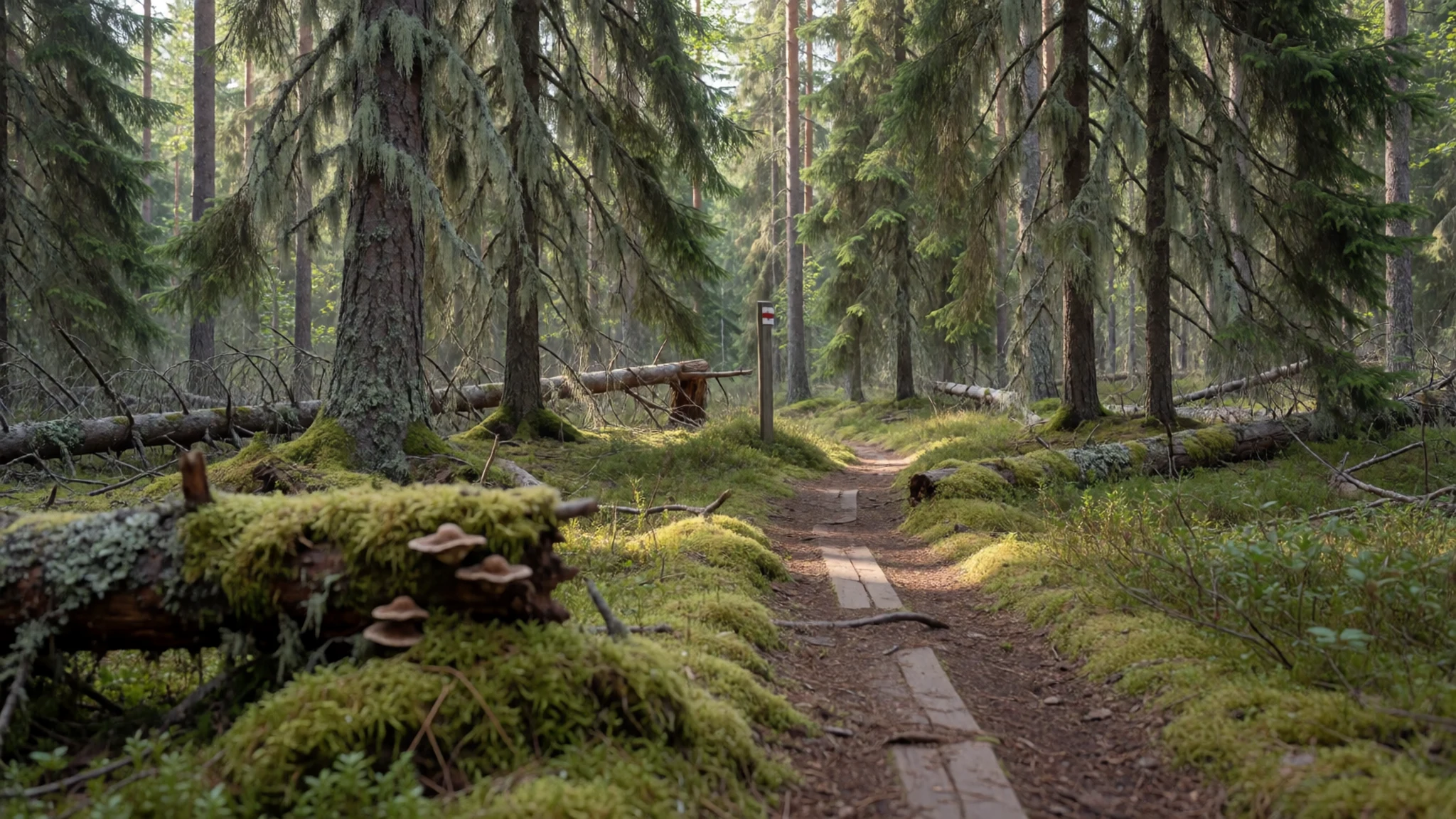
- The koja treehouse ruin — In the forest within the park
A ruined timber hut in the trees is what remains of a shelter used by forest workers. It is a small, tangible link to the park's working past, when this ground was valued for timber. Look from the path rather than climbing on it, since the structure is old and fragile.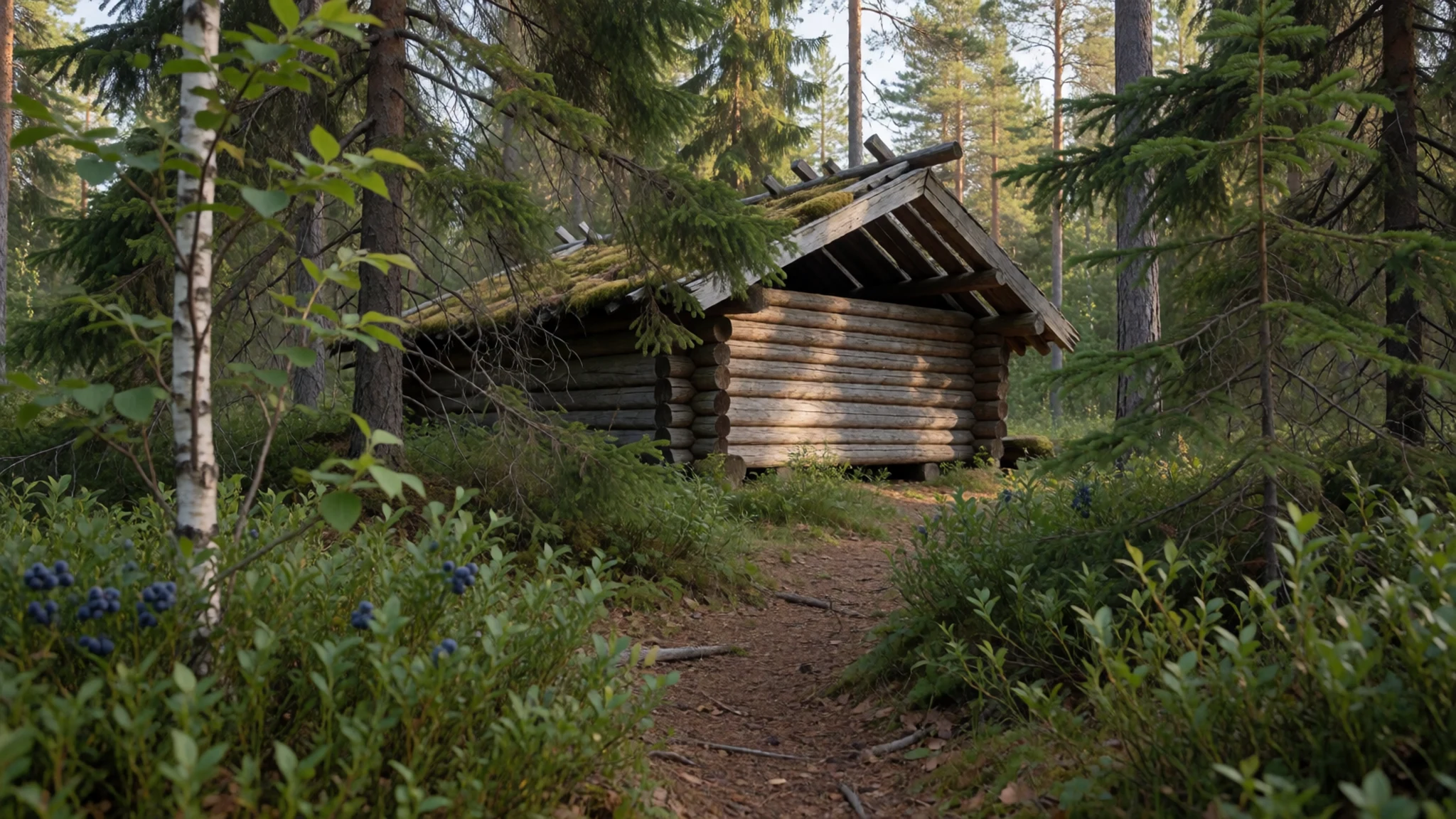
- Main entrance information point — Main entrance
Near the main entrance, an information point carries maps and notices about trails and conditions. Start here to get your bearings and to read any current closures or advice before heading out. For up-to-date rules, check the official national parks website listed in the plan.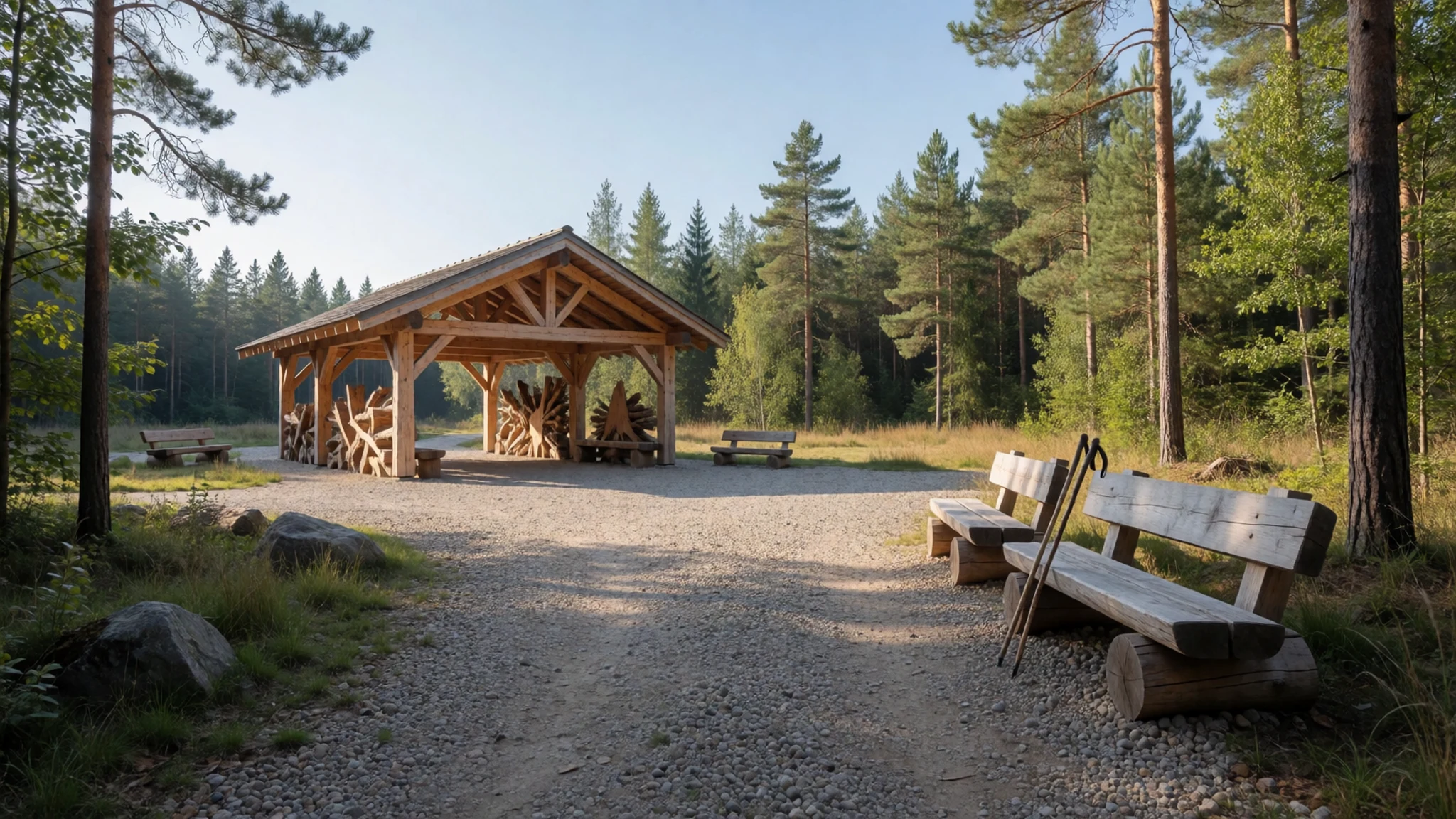
- Fågelsjö farm country — Fågelsjö, a short drive from the park
West of the park, the village of Fågelsjö is listed in Wikivoyage with a traditional farm, Bortom Åa. It is a useful contrast to the forest: this is the Hälsingland farming tradition, with large timber buildings in cleared land. Check opening arrangements in advance, as small farms may only open at set times.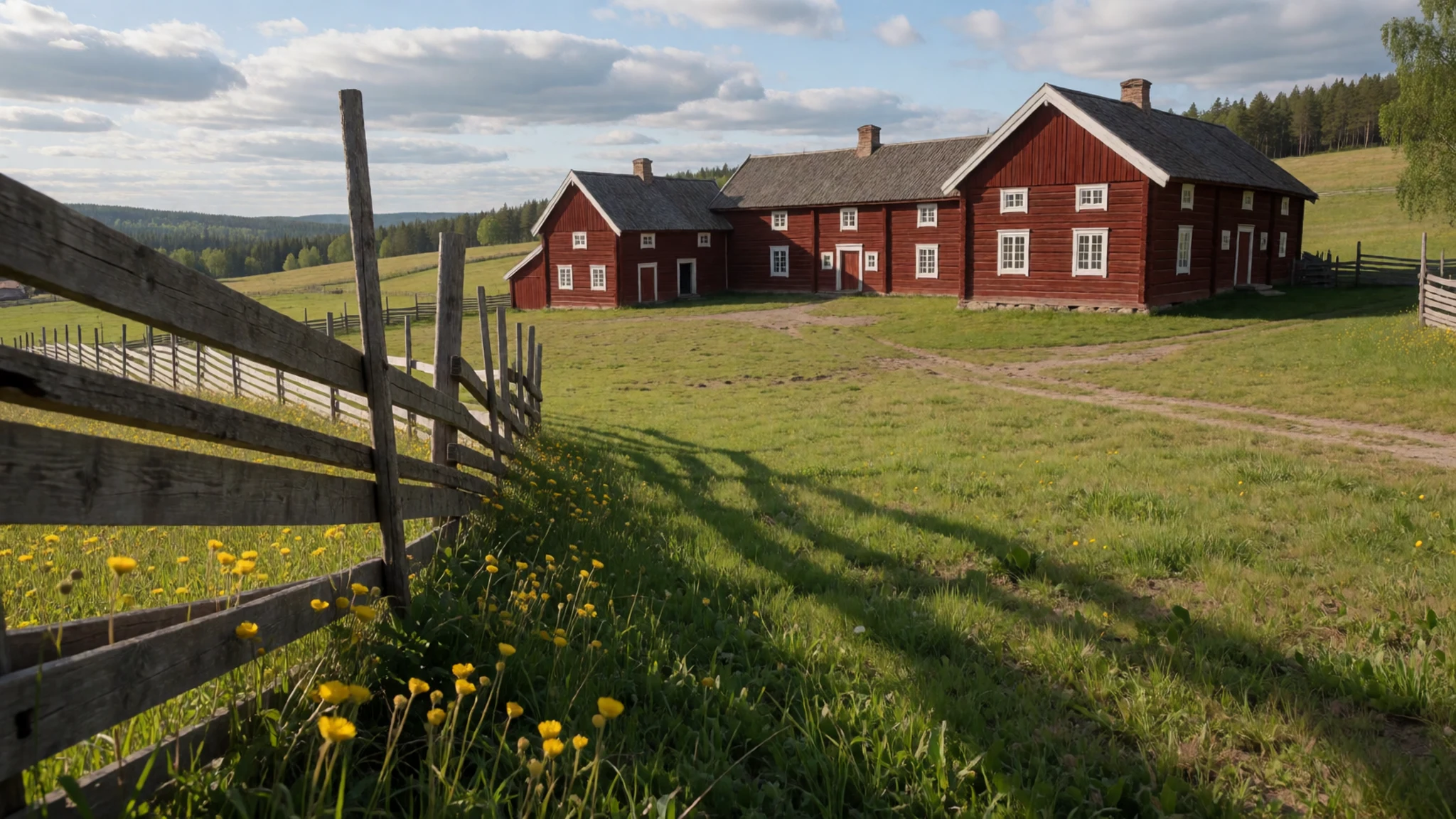
Culture
Hamra National Park sits in a part of Sweden where Hälsingland and Dalarna share a strong folk culture, and that shapes how people relate to the forest. Both regions are regarded as prominent examples of Nordic folk tradition, with music, dance, costume and carved or painted woodwork still part of community life. Annual gatherings such as Delsbostämman and the Hälsingehambo dance keep old fiddle tunes and steps in circulation, and summer festivals draw people in traditional dress. Close to the park, the large timber farms of Hälsingland, several of them recognised on a World Heritage listing, show how families once invested in decoration and hospitality despite long winters. Outdoor life is also a cultural habit here. Swedes expect to walk, pick berries and mushrooms, fish and ski, and the tradition of public access to nature, known as allemansrätten, rests on responsibility rather than restriction. In the forest, that means quiet voices, taking litter home and leaving wildlife alone. Bogs and old trees are treated with a kind of low-key respect rather than reverence. Conversation with locals is usually direct and friendly, with silence treated as comfortable rather than awkward. Winters bring snow and a different rhythm, but the habit of going outdoors carries on. In Hamra, as elsewhere in Sweden, the important thing is to take pleasure in nature without leaving a mark on it. Stay on the marked paths, carry all your rubbish out with you, and check the park's official rules before lighting any fire or picking anything.
What to wear
In Hamra National Park and the villages around it, traditional dress belongs to the folk culture of Hälsingland and Dalarna. Folk costume, or folkdräkt, varies by parish but typically combines wool skirts or breeches, fitted bodices or waistcoats, linen shirts and blouses, embroidered or woven aprons and caps or scarves. Wool and linen are the core textiles, with bright reds, blues and whites often set against darker cloth. It is worn mainly for midsummer, weddings, church occasions and folk gatherings such as Delsbostämman, not day to day. What people actually wear now is practical Scandinavian outdoor clothing: waterproof jackets, fleeces, wool base layers, walking boots and caps, with jeans and plain knitwear in town. Colours tend to be muted, which suits forests and lakes. For a visitor, comfort and dryness matter more than style. Bring a proper waterproof jacket, layers that can be added or removed, and sturdy waterproof boots or shoes with good grip, since paths can be wet and roots are slippery. Long trousers help with ticks and brambles, and a light head net or insect repellent is worth carrying in summer. Autumn and spring need a warm hat and gloves, and winter calls for serious insulation. There are no modesty rules for the park itself. If you visit a village church or a farm, ordinary neat clothes are fine, and removing muddy boots indoors is the sensible habit.
What to eat
- Tunnbröd with fillings — Village bakeries and local shops near the park
Thin flatbread is a staple across northern Sweden and Hälsingland, often rolled around butter, cheese, smoked meat or fish. It is quick, filling and easy to carry on a walk. Look for it in village bakeries and grocery shops.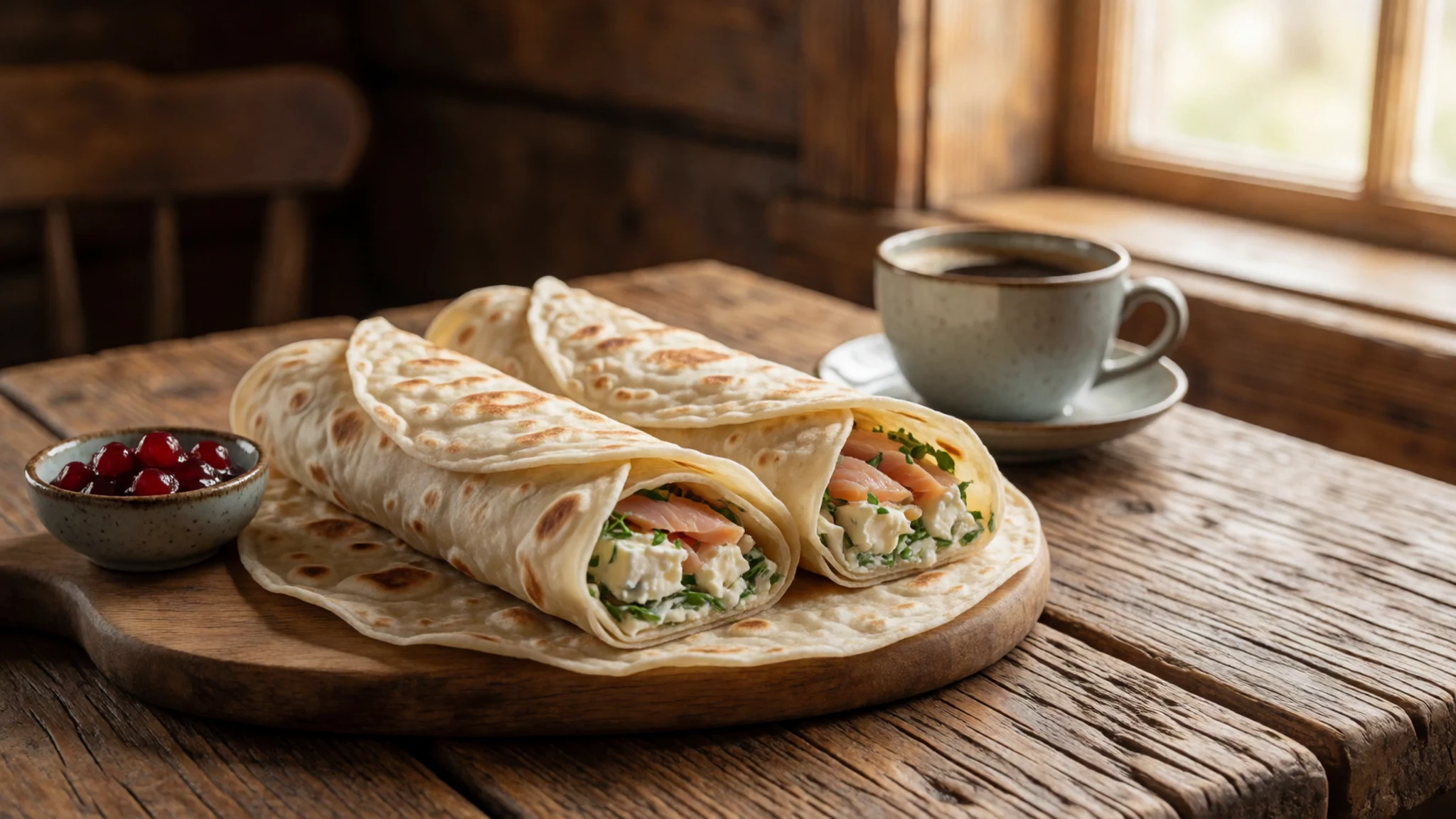
- Pytt i panna — Roadside eateries and cafés in Ljusdal and nearby villages
A hash of diced potato, onion and meat, fried until crisp and usually topped with a fried egg and pickled beetroot. It is simple comfort food, ideal after a day on wet ground.
- Moose stew — Country restaurants and farm eateries in the region
Game from the surrounding forests, usually moose or similar, appears in slow-cooked stews with root vegetables and often lingonberry on the side. Availability varies by season, so ask rather than expect it. - Blueberry pie and wild berries — Farm shops, village cafés and the forest itself in season
Forest berries, especially blueberries and lingonberries, turn up fresh in late summer and in jams and pies all year. Pickers may find them along forest edges, subject to the usual rules of public access. - Fika with cinnamon bun — Any village café or bakery in Hälsingland
Fika is the Swedish coffee break, usually a cinnamon or cardamom bun with filter coffee. It is a daily habit rather than a treat, and a good way to dry off after a wet walk.
Plan it
Best time. June to September for the easiest walking: long daylight, soft light on the lakes and bogs, though summer brings insects. September adds autumn colour and fewer bugs. Winter gets plenty of snow across this part of Sweden, so paths and access can be harder.
How long. 1–2
Getting there. Fly to Stockholm-Arlanda, the nearest international airport; Gävleborg County itself has hardly any commercial flights. SJ trains run from Stockholm, and the Härjedalingen coach links Stockholm with Hälsingland, including Ljusdal. The last stretch to the park is simplest by car, so check the official site for current access advice.
Budget. mid
Tips
- Check the official site, http://www.sverigesnationalparker.se/park/hamra-nationalpark/, for current rules, trail conditions and access before setting out
- Start early: mist over the lake is best in the morning and the paths are quiet
- Carry water, food and a map, as facilities in and around the park are limited
- Pack insect repellent in summer and check for ticks after walking
- Cards are widely accepted in Sweden, but bring a little cash for small farm sales
Etiquette
- Stay on marked paths and keep clear of the bogs
- Take all rubbish home and leave wildlife and dead wood undisturbed
- Keep voices low, as the quiet is much of the point
Nearby
Sources
- Wikidata Q569960 (CC0)
- Wikipedia: Hamra National Park (rev 1339897901) (CC BY-SA 4.0)
- Wikivoyage: Gävleborg County (rev 5406778) (CC BY-SA 4.0)
- Hamra National Park, Sweden. — Hardo Müller (CC BY-SA 2.0)
- Hamra — Länsstyrelsen Gävleborg (CC BY 3.0)
- Forest in Hamra national park, Sweden — Hardo Müller (CC BY-SA 2.0)
- Information point, Hamra national park — Tomas Arlemo (CC BY 3.0)
- Ruin of a treehouse, Hamra national park — Länsstyrelsen i Gävleborg (CC BY 3.0)
- Svansjön lake in Hamra national park — Länsstyrelsen Gävleborg (CC BY 3.0)
- Brume sur le parc national de Hamra — Länsstyrelsen Gävleborg (CC BY 3.0)
- Observation platform over Svansjön lake — Tomas Arlemo (CC BY 3.0)


