Ale's Stones
Ale's Stones, Sweden
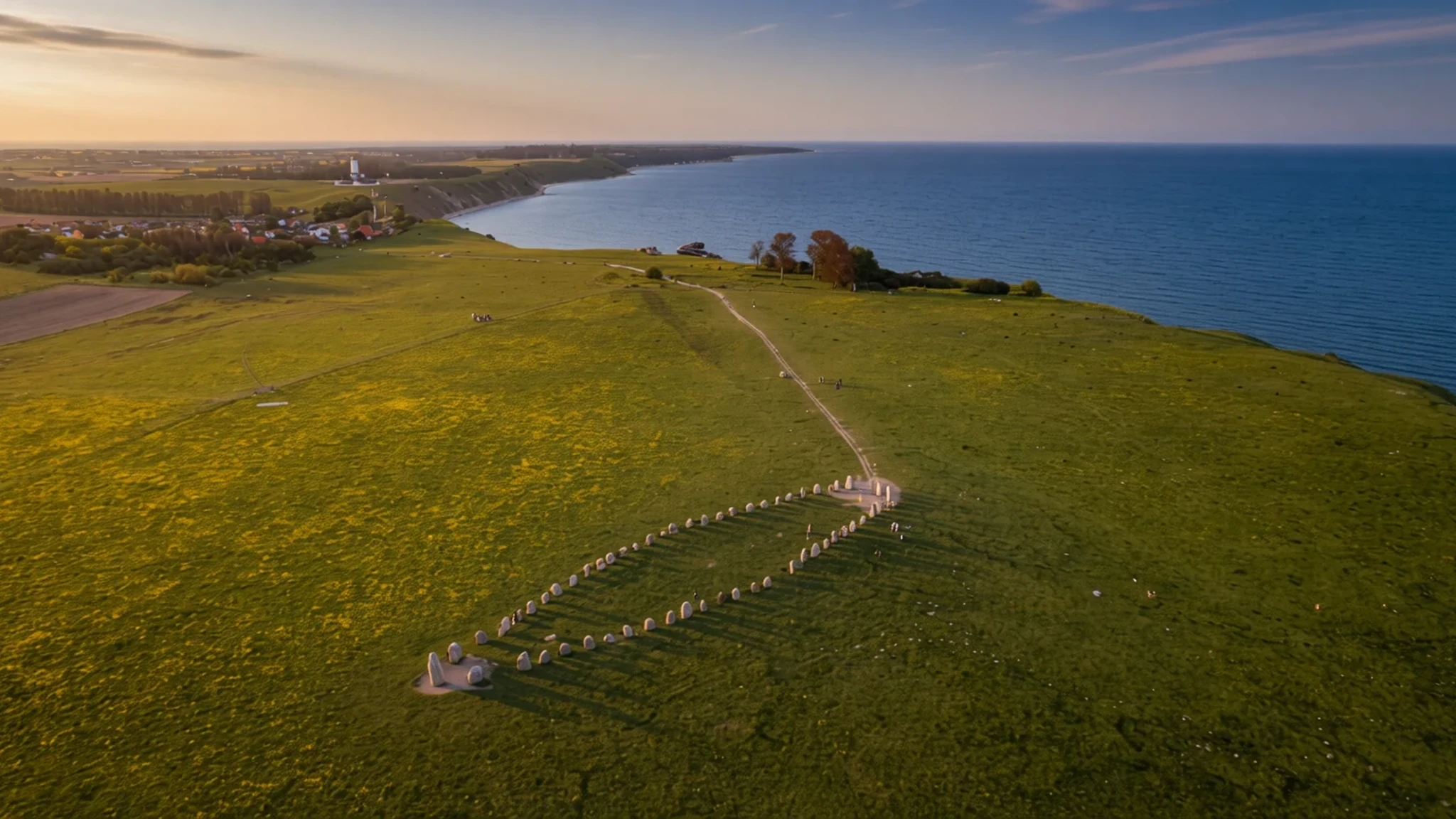
Ale's Stones is an oval ship of grey boulders on a grassy Scanian clifftop, with the Baltic spread out below.
The place
Ale's Stones (Ales stenar) stands on the south coast of Scania, in southern Sweden, on a grassy ridge above the Baltic near the fishing village of Kåseberga. It sits about 32 m above sea level, which is enough to give the whole site a long view over open water and farmland. The nearest town is Ystad.
The monument is a stone ship: an oval outline of 59 large boulders laid out over a length of 67 m. The stones at the two ends are clearly taller and heavier than those along the sides, so the bow and stern read at once, even from a distance. Individual boulders weigh up to 5 tonnes. The stone is rough, grey and lichen-patched, and in low light it looks more like a drawing in the grass than a built thing.
There is no building, no ticketed enclosure and no fence in the way of the stones, only the turf, the wind and the sky. The setting does much of the work. On a clear day the sea is a flat bright band to the south, and cloud shadows move across the ridge. In bad weather the place feels exposed and a little bleak, which suits it.
It is small. Most people walk the full circuit in a few minutes, and the interest lies in lingering: watching the light change, reading the shape of the ship, and looking out to sea in the direction it points. Wikidata classes it both as a stone ship and as an archaeological site, and that double identity is a fair summary: part grave monument, part landscape sculpture, part puzzle.
Its story
Ale's Stones has no written history of its own, so what is known comes from science and guesswork. Radiocarbon dating of organic remains at the site has produced seven results. One points to material about 5,500 years old. The other six cluster around 1,400 years ago, and that later date is considered the most likely moment when the monument was raised, towards the end of the Nordic Iron Age.
That places the builders in a world of small kingdoms and sea travel, centuries before the first written chronicles arrived in Sweden with Christianity around the year 1000. Few and brief written records survive from the Viking Age, so the people who arranged these boulders left their reason for doing so to the stones themselves. Stone ships of this kind are generally understood as burial monuments, and Ale's Stones is often described as one of the ancient Iron Age burial monuments of the country, though no tidy account of who was commemorated survives.
The older radiocarbon result is a reminder that the ridge may have been used long before the ship took shape. Carbon dating can only speak for the organic material it tests, so one early date does not prove an early monument, but it keeps the question open.
The name is its own small mystery. Folk tradition ties it to a king called Ale, but the dating leaves that story as legend rather than record. Popular theories also link the layout to the sun and the seasons. Treat these as ideas rather than established fact. What can be said plainly is that someone around 1,400 years ago chose this high, windy edge of Scania and spent serious labour hauling and placing 59 boulders in the shape of a ship.
What to see
- The stone ship itself — Kåseberga ridge
The oval of 59 boulders is the reason for the trip. Walk the whole outline, then stand at one end and look along the length of 67 m. The taller stones at the bow and stern are easiest to appreciate from this angle, and the sea sits behind them.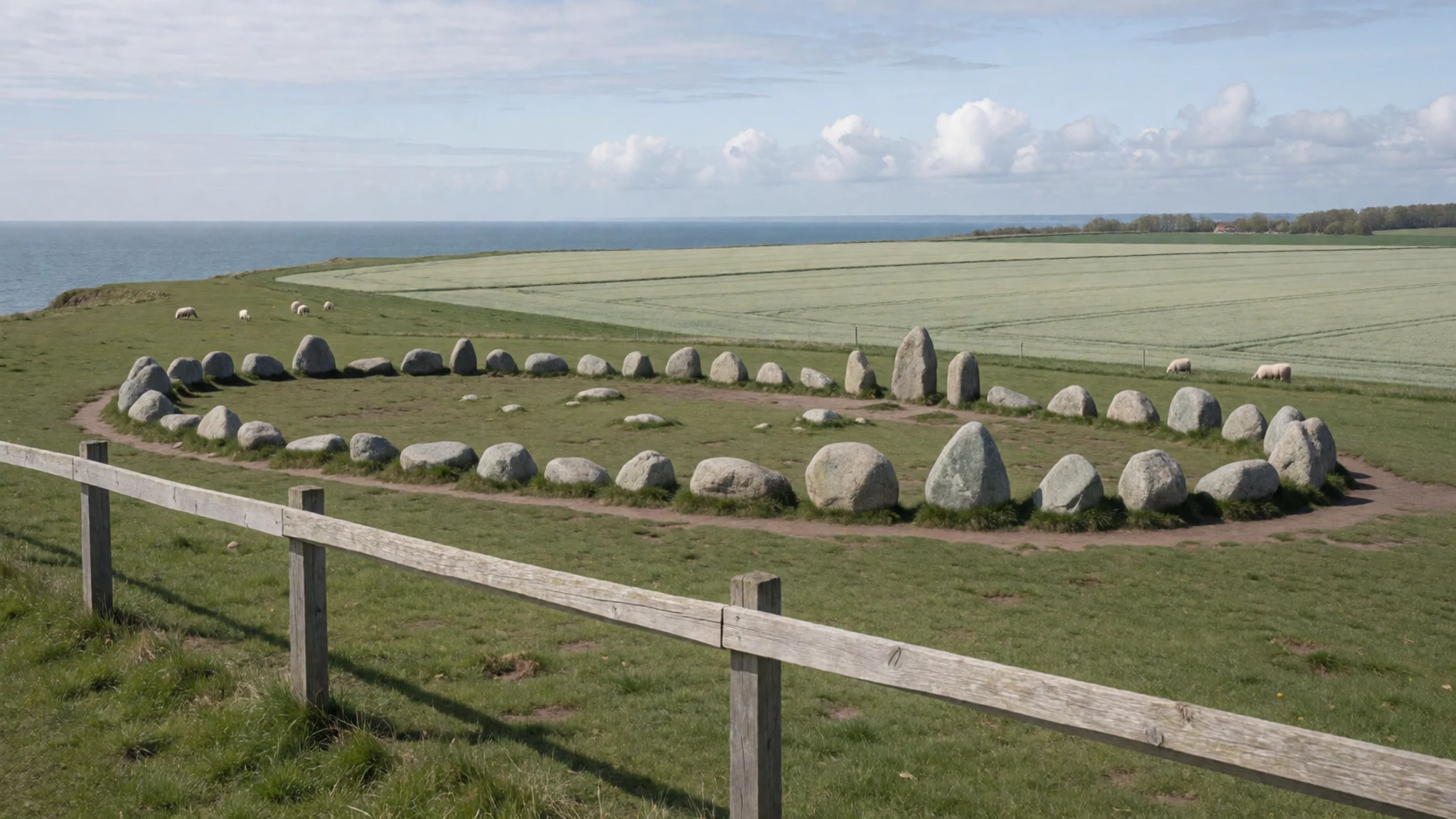
- The view over the Baltic — Clifftop beside the stones
The ridge stands about 32 m above sea level, and the outlook south is as much part of the visit as the stones. Pick a clear day, bring a layer against the wind, and give the horizon a few minutes before you leave.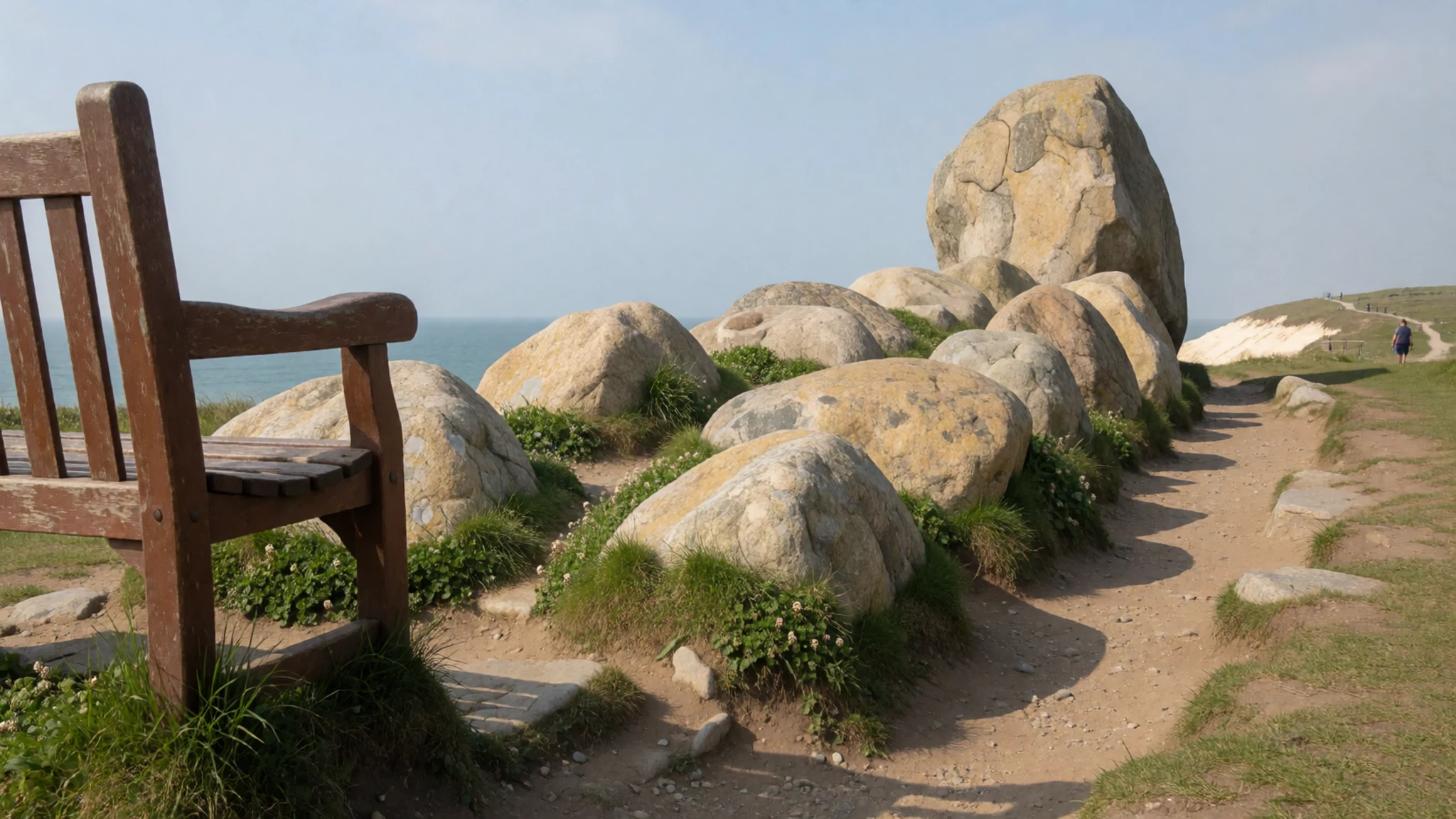
- Kåseberga harbour — Kåseberga
Below the ridge, the small fishing village of Kåseberga has a working harbour and a short seafront. It is a gentle place to wander before or after the climb, and a natural spot to sit with something to eat while the weather does its work.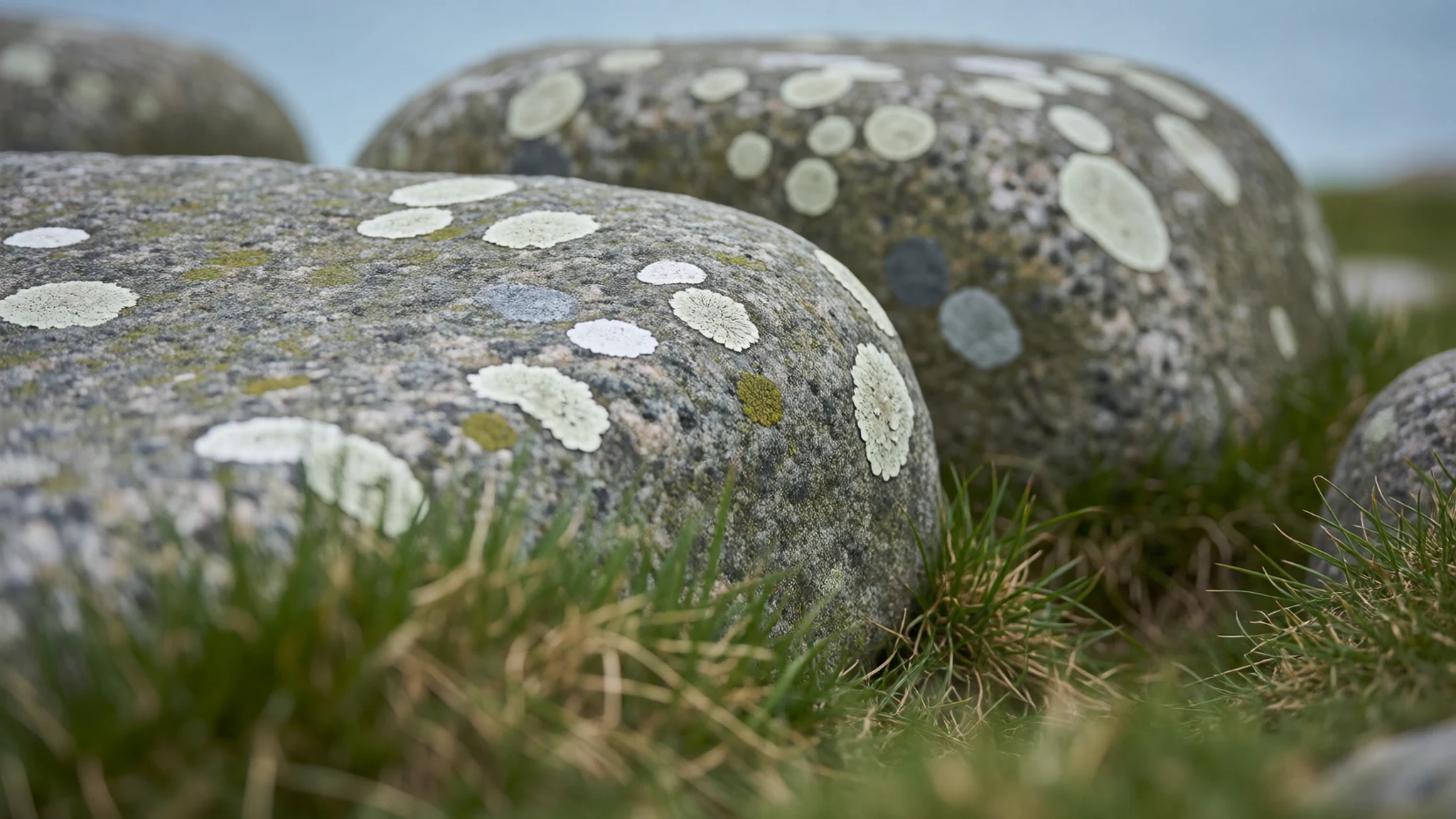
- The stones in low light — Kåseberga ridge
Early morning and evening light picks out the lichen and the shape of each boulder, and the grass takes on colour. Photographers favour these hours, and the site is usually quieter then too, which helps if you want the ship to yourself.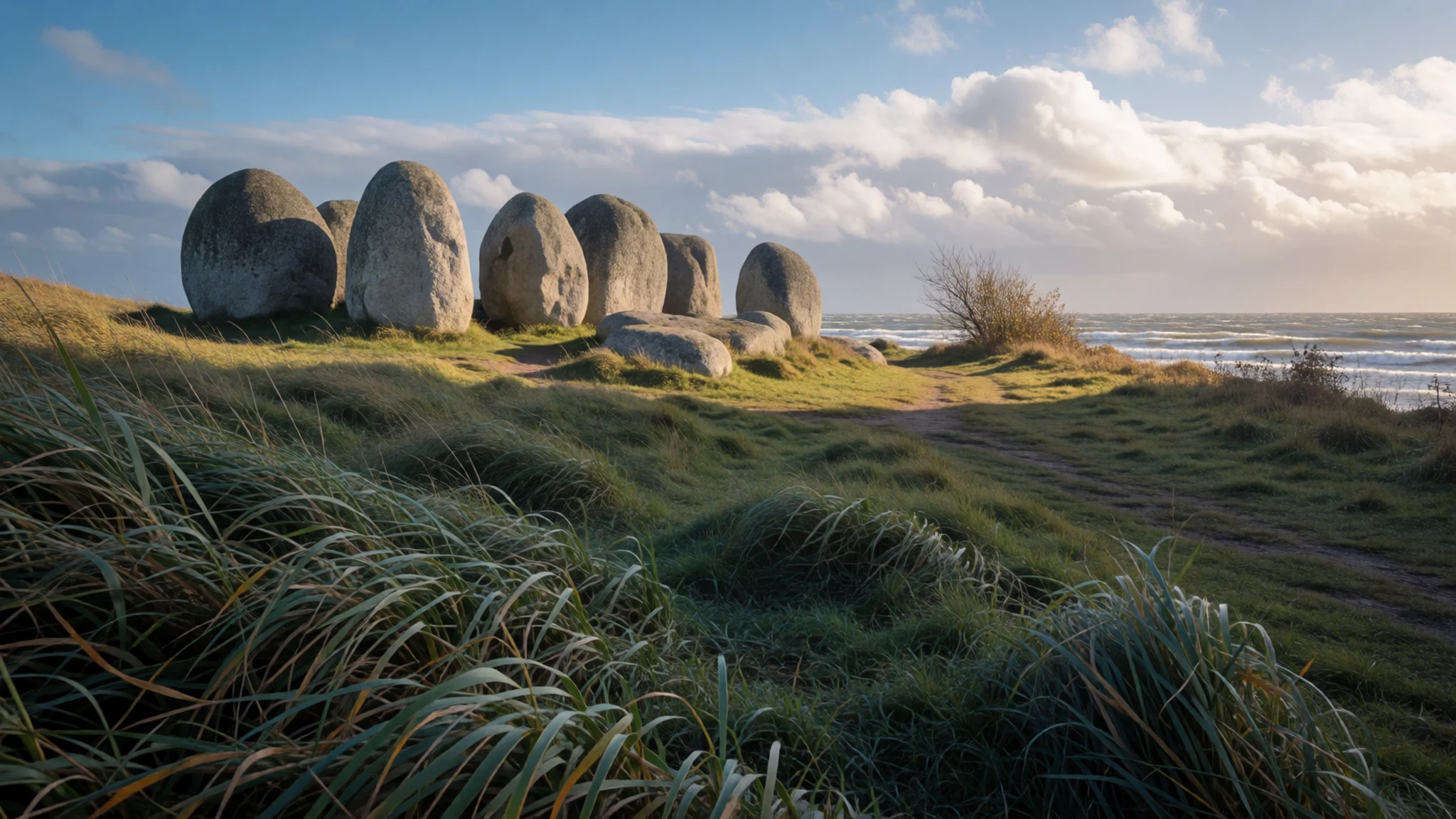
- Ystad old town — Ystad
The medieval town of Ystad lies a short drive west. It is known through the Kurt Wallander novels set here, and its old streets make a good half-day to pair with the stones, especially if the weather turns on the coast.
Culture
Ale's Stones sits in a region of Sweden where history is treated as part of everyday landscape rather than something kept behind glass. The monument is open ground that people simply walk to, and it is used by locals for walks, picnics and quiet time as much as by visitors.
Swedish society is broadly liberal, secular, egalitarian and environmentally minded, which means few cultural clashes for most travellers. Privacy and personal space matter. Strangers rarely strike up conversation uninvited, and silence is not read as rudeness. Expect courteous, low-key helpfulness if you ask for it, and queues that people actually respect.
Alcohol is part of many Swedish traditions, such as Midsommar, but it is taken seriously around driving, where even one beer before the wheel is considered one too many. Drugs, including cannabis, are strongly frowned upon and bring a fine and a criminal record. Sweden's relationship with nature is also relaxed and practical: people expect visitors to enjoy the outdoors and to leave it as they found it.
The stones themselves have no formal ritual attached, but they are an ancient monument and are treated with the respect owed to a burial site. Locals and visitors alike tend to move quietly, speak softly and keep the mood calm, particularly when the site is busy.
Please do not climb on the stones, lean on them or take anything away, and take all your rubbish with you when you leave.
What to wear
Ale's Stones has no regional costume of its own that visitors will meet, and Scania is not a place where traditional dress turns up in daily life. Folk dress, known as folkdräkt, survives in Sweden mainly for festivals such as Midsommar, weddings and local heritage events, and it is typically made from wool and linen with embroidered or woven details that vary by parish. Scanian outfits differ from those further north, so a local museum is the best place to see them properly.
Day to day, people on this coast wear what suits changeable weather: practical jackets, jeans or walking trousers, comfortable trainers and plain, understated colours. Swedish style tends to be tidy and unflashy, and nobody will look twice at outdoor gear in a village or on a clifftop.
For a visit, dress for wind and exposure. The ridge above the Baltic is open and can feel several degrees colder than Ystad, even in summer, so a windproof layer is sensible all year. Add a light waterproof, since showers pass quickly. Footwear matters more than fashion: the path is grassy and can be muddy or slippery after rain, so closed shoes with grip are better than sandals. In sunny months bring a hat and sun cream, because there is little shade. In the colder months, add a warm hat and gloves.
No special modesty rules apply here, since the stones are not a place of worship in current use.
What to eat
- Smoked fish — Harbour-side smokehouses and kiosks in Kåseberga
Kåseberga is a fishing village, and smoked fish is its signature plate. Expect warm-smoked herring or salmon served with bread or potatoes, simple and rich, best eaten outdoors near the water with a cold drink.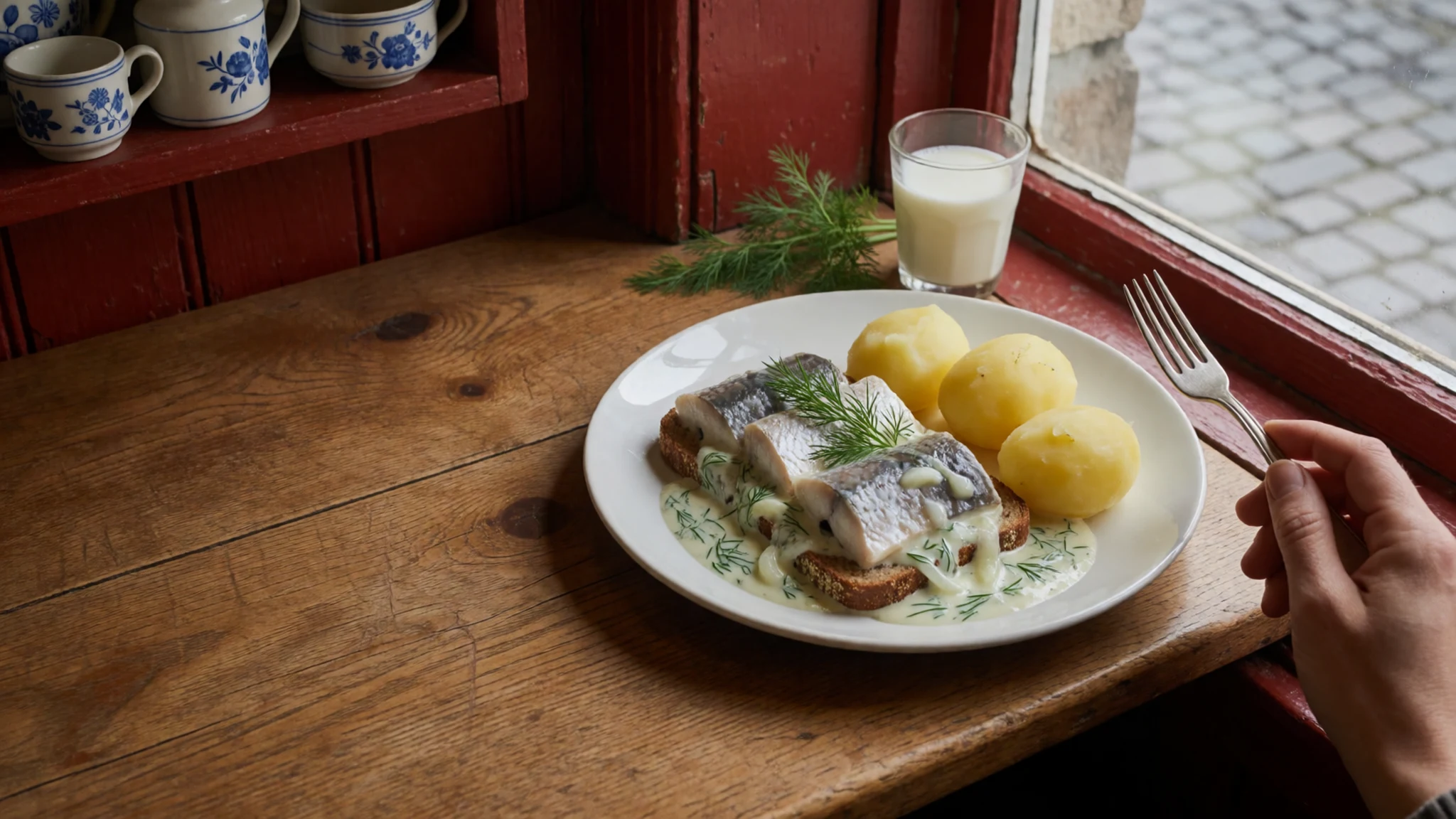
- Pickled herring (sill) — Cafés and restaurants in Ystad and Kåseberga
Sill is a staple of Swedish summer lunches and of the smörgåsbord at traditional holidays. It comes in several marinades and is usually served with bread or new potatoes, often with sour cream or chives.
- Gravlax — Restaurants and delicatessens in Ystad
Cured salmon, flavoured with salt, sugar and dill, sliced thin and served with bread or potatoes. It is one of the many forms of salmon in Swedish cooking and is easy to find across the south. - Meatballs (köttbullar) — Traditional eateries in Ystad
The most internationally famous Swedish dish: small meatballs served with potatoes, brown sauce and lingonberry jam. It is everyday husmanskost, home-style food, and a reliable choice for a hearty lunch. - Pytt i panna — Everyday lunch places in Ystad
A hash of diced meat, onions and potatoes, fried together and topped with a fried or boiled egg, usually with sliced beetroot alongside. It is plain, filling and good after a windy walk.
Plan it
Best time. May to September, when days are long and the weather is mildest. Midsummer light is generous for the stones, but the ridge is exposed to wind in every season, so pack a warm layer even in July.
How long. 1
Getting there. Fly to Copenhagen or Malmö, then continue by train or car to Ystad. The last leg from Ystad to Kåseberga is a short drive or a local bus in season, so check current timetables with the regional transport operator.
Budget. mid
Tips
- Go early or late in the day for softer light and fewer people
- Wear closed shoes with grip, as the grass can be wet
- Bring a windproof layer even in summer
- Check opening arrangements for local cafés and smokehouses before relying on them, especially outside summer
- Combine the stones with a half-day in Ystad
Etiquette
- Do not climb on or lean against the stones
- Take all rubbish away with you
- Keep voices low out of respect for an ancient burial monument
Nearby
Sources
- Wikidata Q686510 (CC0)
- Wikipedia: Ale's Stones (rev 1373919084) (CC BY-SA 4.0)
- Wikivoyage: Sweden (rev 5427652) (CC BY-SA 4.0)
- Photo 01 — Ales stenar bred.jpg (CC BY 3.0)
- Photo 02 — Wikimalte (CC BY-SA 4.0)
- Photo 03 — David Castor (CC BY 4.0)
- Photo 04 — Pål-Nils Nilsson (CC BY 2.5)
- Photo 05 — Benjamin Lindholm (CC BY-SA 4.0)
- Photo 06 — Viswanth05 (CC BY-SA 4.0)
- Photo 07 — Mivashanti (CC BY 3.0)
- Photo 08 — Håkan Dahlström (CC BY 2.5)


