Kiruna
Kiruna, Sweden
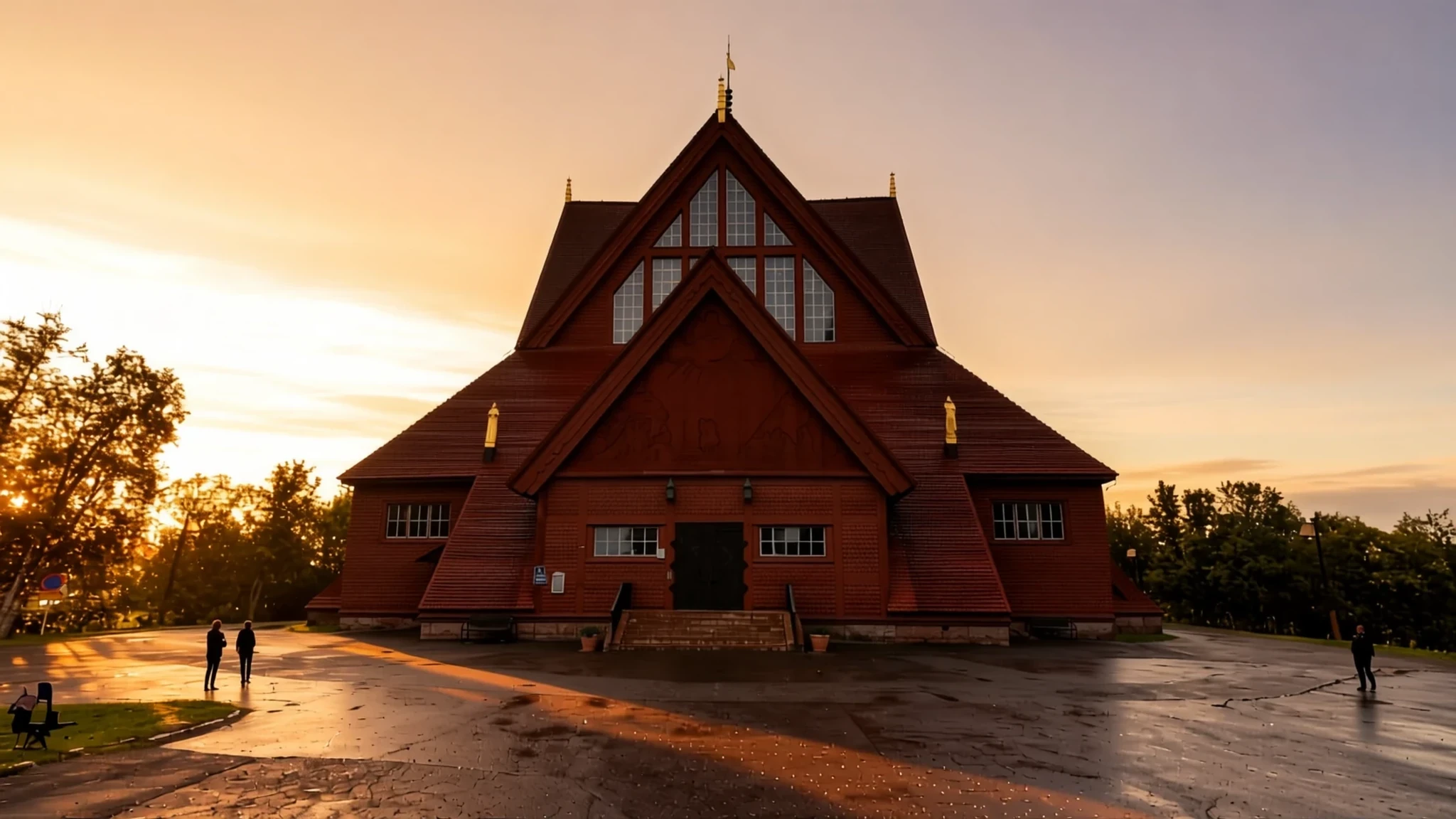
Kiruna is a working mining town far north of the Arctic Circle, where the winter dark, the northern lights and the iron mine make for a very different kind of city break.
The place
Kiruna is a mining town in the far north of Sweden, in the province of Lapland and well above the Arctic Circle. About 17,000 people live here, and it is the seat of Kiruna Municipality, a large and thinly settled area of forest, lakes and mountains. The town stands at around 550 metres above sea level on a hill, with the Torne river to the north and the Kalix river to the south. To the west and north-west the Scandinavian Mountains rise clearly above the rooftops, and on a clear day the high peaks are visible from the centre.
Mining is the reason the town exists. The iron ore in the nearby hills of Kiirunavaara and Luossavaara is still the main economic base, and the mine is being worked deeper, so parts of the town are being moved to make room for it. Luossavaara has stopped being mined and now carries a ski slope instead, while Kiirunavaara remains the working heart of the operation.
The town has a second identity as a centre for science and space. The Esrange space centre lies nearby, and the Institute of Space Physics and a university department of space science are based here. Winter is long and dark, which suits the people who come for the northern lights, and the Sámi culture of the region gives the town a distinct voice that shows up in its theatre and museums.
Its story
Kiruna's story begins with iron. People have lived in this region for thousands of years, and the Sámi knew the ore in the two hills of Kiirunavaara and Luossavaara long before any town stood there. Outsiders heard rumours of the metal in the late seventeenth century, and when a cartographer mapped the area he gave the hills grand royal names, yet the local names outlasted them.
For a long time the ore stayed in the ground. The remoteness and the harsh climate made mining hard to justify, and the ore that was taken out early on moved in summer and was carried by sledge in winter, pulled by reindeer and horses. The phosphorus in the ore made it poor quality until a steelmaking process made it possible to separate the phosphorus out, and that changed the calculation.
Transport decided the rest. A company won the concession to build a railway from the Luleå coast towards Narvik, and that line made it practical to move ore out of the interior. The town was founded in 1900 to serve the mine, and it grew quickly from a settlement into a company town shaped around the needs of the works.
Today the story continues in the ground beneath the streets. The pit keeps expanding, and houses and public buildings are being moved to make room for the mine as it reaches closer to the town.
What to see
- Hjalmar Lundbohmsgården — Kiruna town centre
This house is linked to Hjalmar Lundbohm, the first manager of LKAB, the mining company whose work is the reason Kiruna was built at all. It stands in the town and is one of the few places where you can connect the town's streets to the man who set its course. Check locally whether it is open to visitors before you plan a visit, because opening arrangements for historic houses in northern towns can change with the season.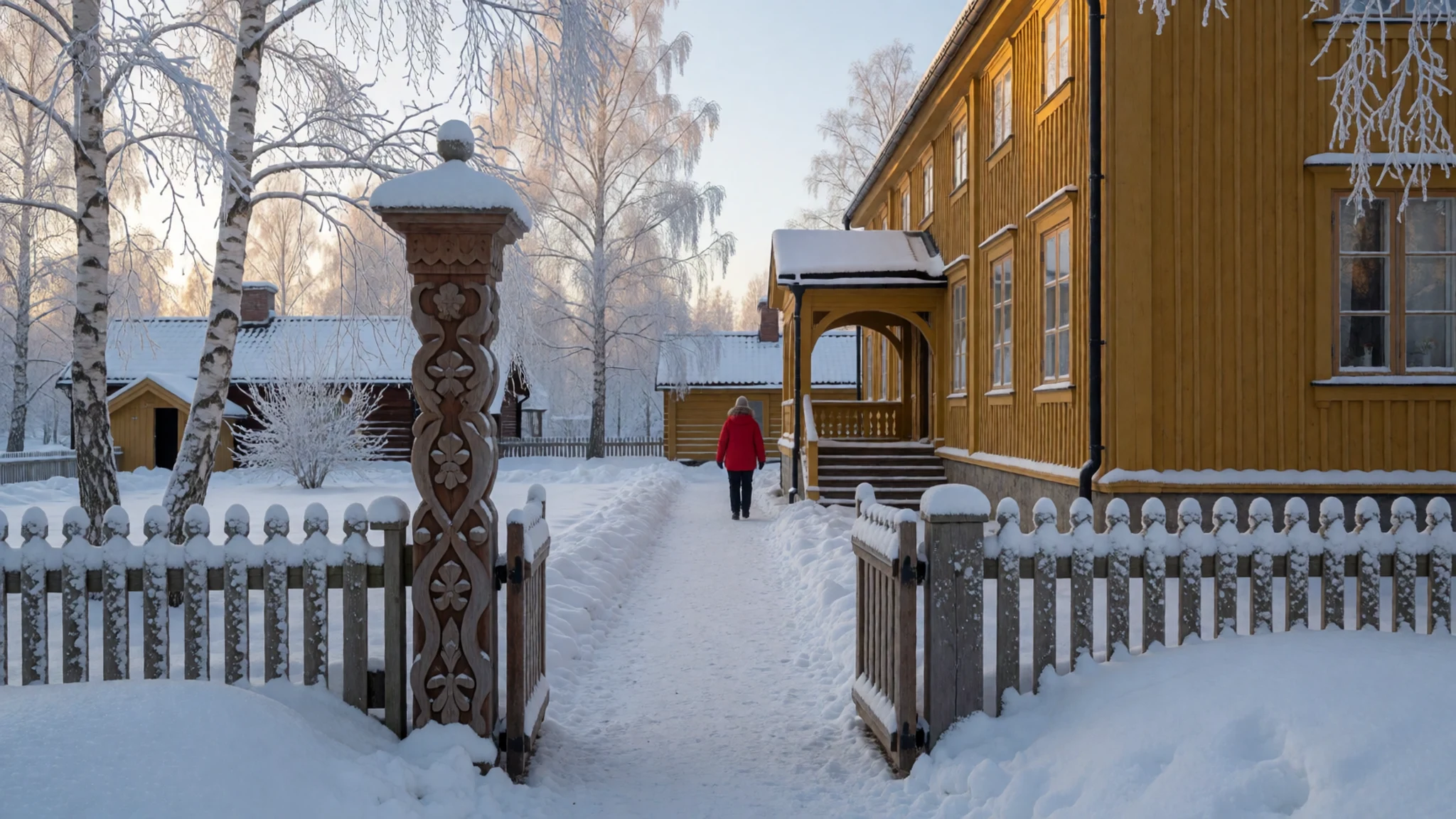
- Kiruna kyrka — Kiruna town centre
Kiruna Church is one of the largest wooden buildings in Sweden and is known for its tent-like structure. The architect Gustaf Wickman designed it in the early twentieth century, and it was voted the best-looking church in Sweden. Go in during opening hours and treat it as a working place of worship, so keep your voice low and check any notices about photography.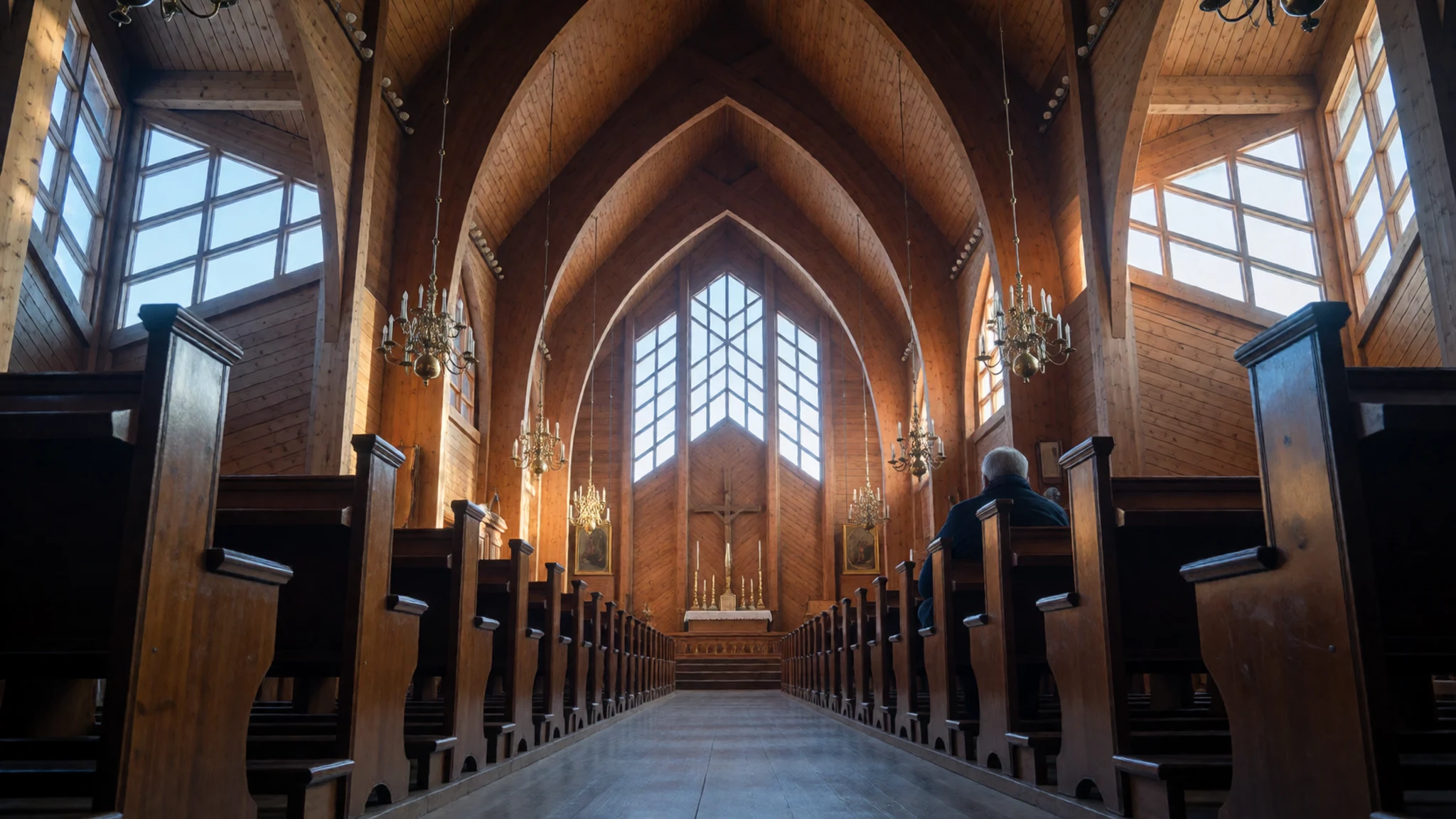
- Kiruna stadshus — Kiruna town centre
Kiruna City Hall houses the local government and often hosts exhibitions, so the building itself is a useful stop for seeing modern civic architecture in a town shaped by the mine. It also has a small art collection that includes work by well-known Swedish artists. Public buildings like this keep office hours, so check the times ahead if you want to see the displays.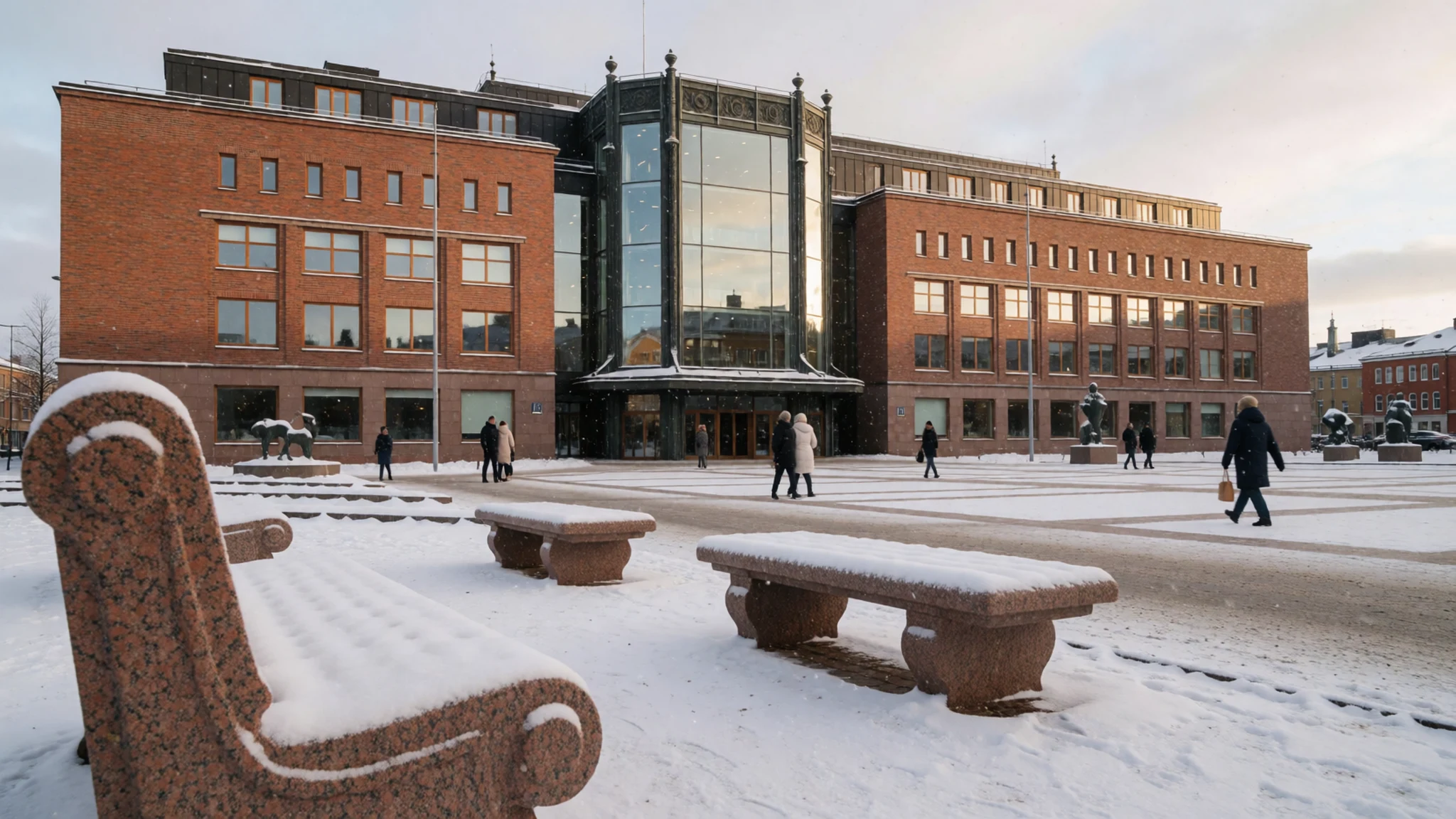
- Kiruna mine tour — Kiirunavaara, at the edge of the town
The guided tour is almost three hours long and takes you to LKAB's visitor centre 540 metres underground. It is the best way to understand how the ore body is worked, and the tour runs to a set schedule, so book through the operator well ahead. Dress for cold and dust, and wear sturdy footwear, because the underground areas are not a place for thin shoes.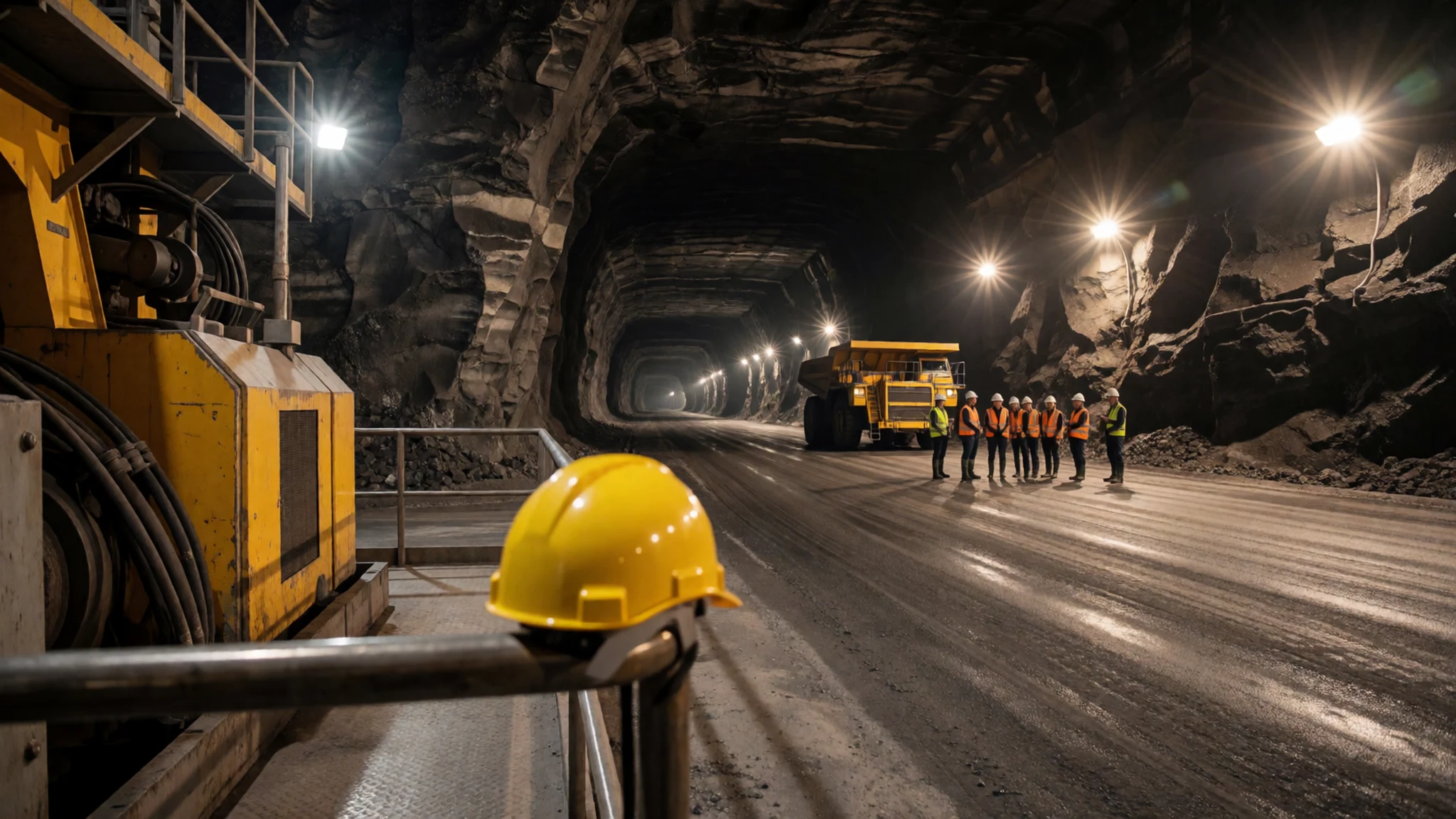
- Luossavaara — Luossavaara hill, above the town
Luossavaara is a hill with a wide view over Kiruna and the mountains beyond. Mining has stopped here, and in winter and spring the slopes carry alpine skiing on ski lifts. Go up in clear weather, when the views of the town and the Scandinavian Mountains are at their best, and dress for wind on the open ridge.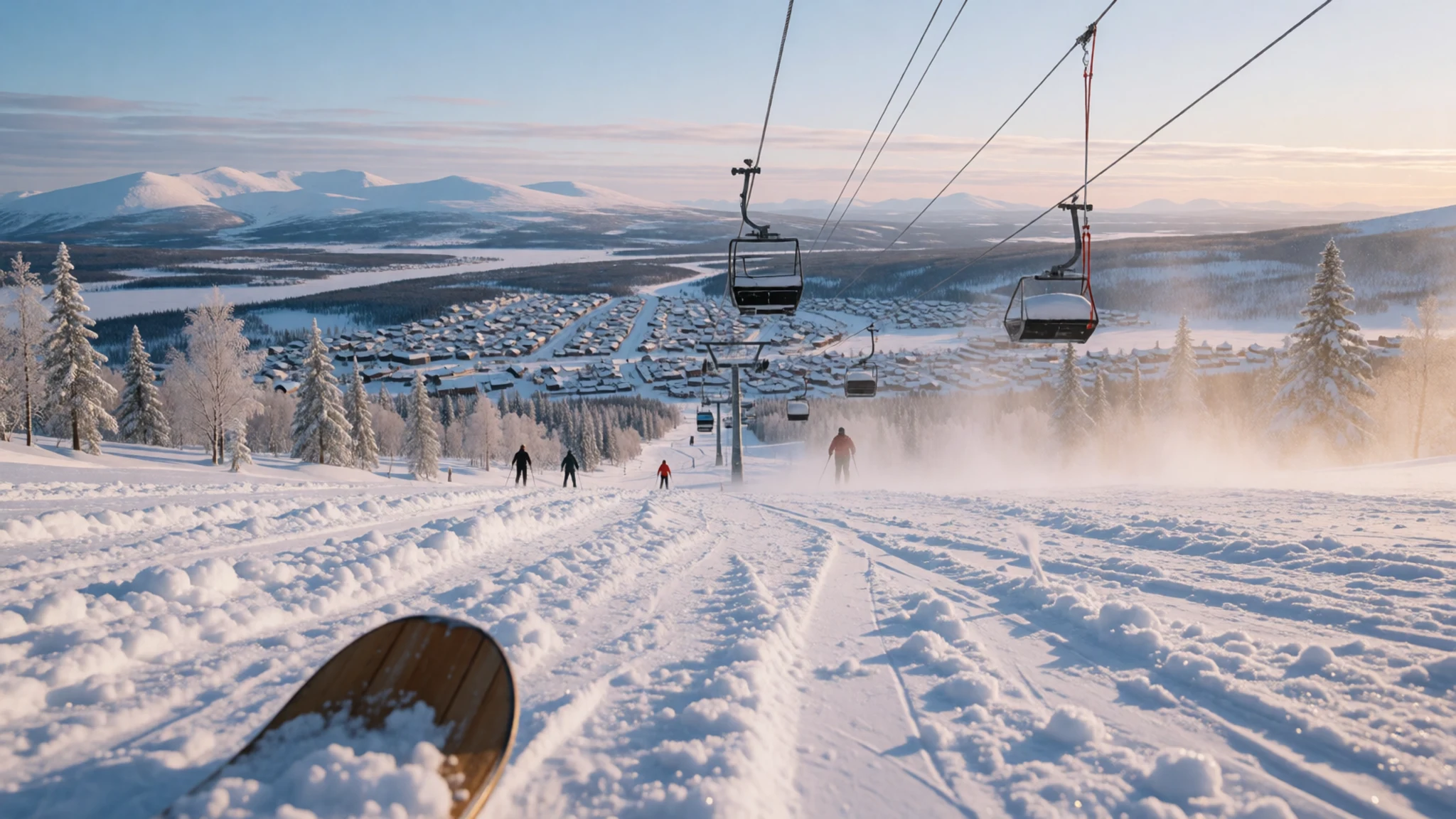
Culture
Kiruna sits in Sámi land, and Sámi languages and identity are part of everyday life here. The town has a professional Sámi theatre that works from Sámi culture and raises current issues, and the Samegården hotel hosts a small museum about Sámi culture. Folkets hus, the community centre, has a cinema and a theatre, so local life and visitor entertainment often share the same buildings.
Mining is the other strand of identity. The town's whole history is tied to the iron works, and the mine still shapes the streets, the housing and the way the town talks about its future. Winter is dark and quiet for long stretches, so the best way to join in is to go to a film, a concert or a market and take the slower local pace as it comes.
Please ask before photographing people, particularly Sámi residents or anyone taking part in a cultural event, and do not treat their dress or traditions as a backdrop for your pictures.
What to wear
Kiruna's traditional dress is the gákti, the Sámi costume worn across the north, and its textiles carry the identity of the region. The gákti is usually made from wool cloth in a form that varies with family and district, with coloured bands and trim, and with metal ornaments on the belt and jewellery. It is worn at festivals, family occasions and public events, and a visitor will see it most often at cultural gatherings rather than in daily life.
What people wear now in Kiruna is practical Nordic winter clothing: insulated down jackets, wool layers, waterproof boots and hats. Fashion in the town is understated, and the focus is on staying warm and dry through long, cold months rather than on style.
A visitor should dress in layers, starting with a thermal base, adding a fleece or wool mid-layer and finishing with a windproof, insulated outer shell. Pack warm gloves, a hat that covers the ears and footwear with good grip for icy pavements. Modest dress is not a strict rule here, but if you attend a church service or a cultural event, dress neatly and keep hats and outdoor layers off your head indoors.
What to eat
- Reindeer kebab and reindeer sandwiches — Any diner in the town centre
Reindeer is the local speciality and turns up almost everywhere, from simple kebabs to sandwiches layered with thin slices of the meat. It makes a cheap and filling meal that suits the cold. Order a kebab first if you want to try it without committing to a full dish.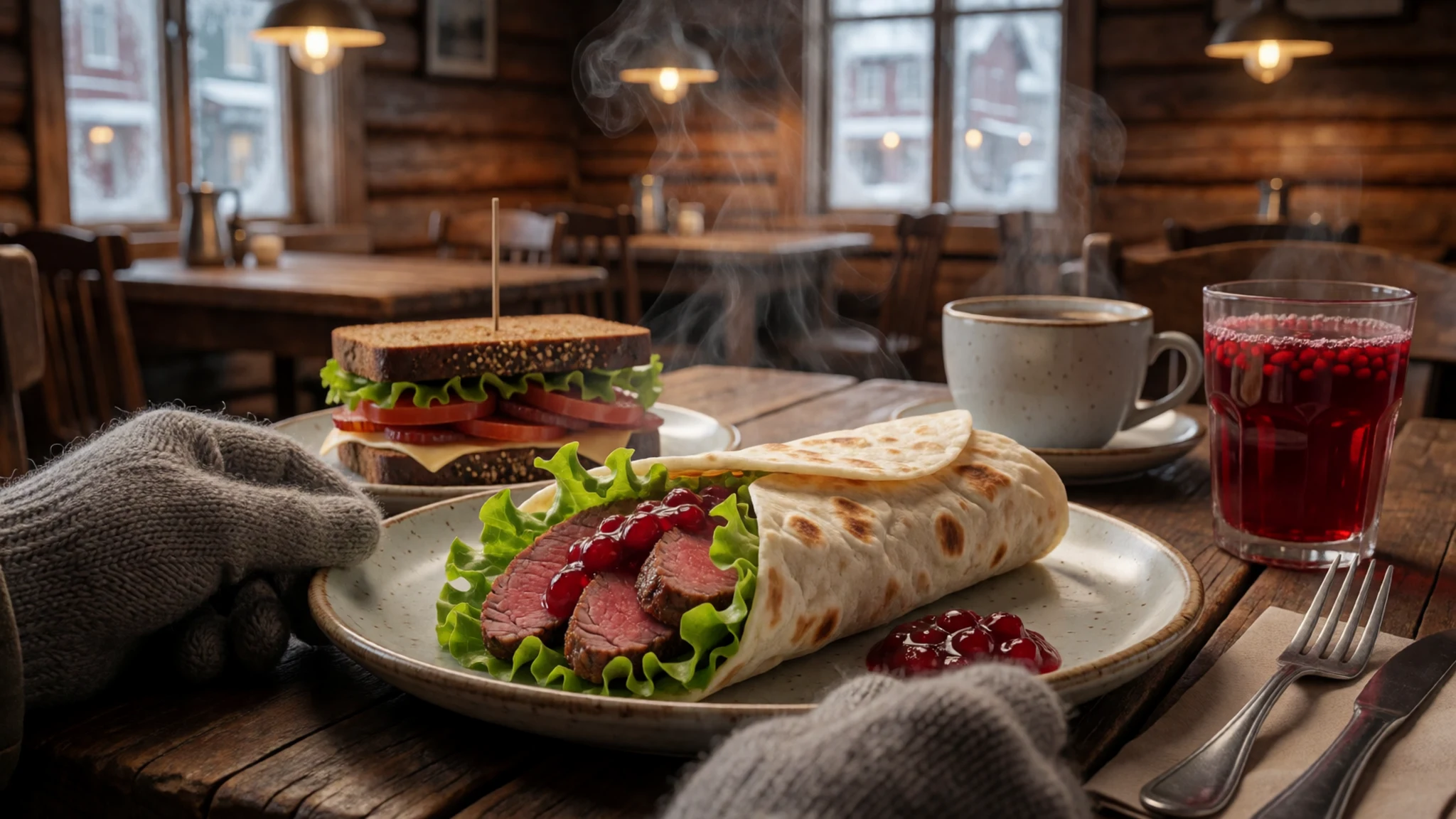
- Reindeer and moose at a street-food stall — Stejk Street Food, a street-food spot in the town centre
Stejk Street Food serves reindeer and moose meat, steaks and arctic cheese in a casual setting. It is closed from Monday to Wednesday, so plan your visit for the rest of the week. Go for the local meat cooked simply and try the arctic cheese alongside it.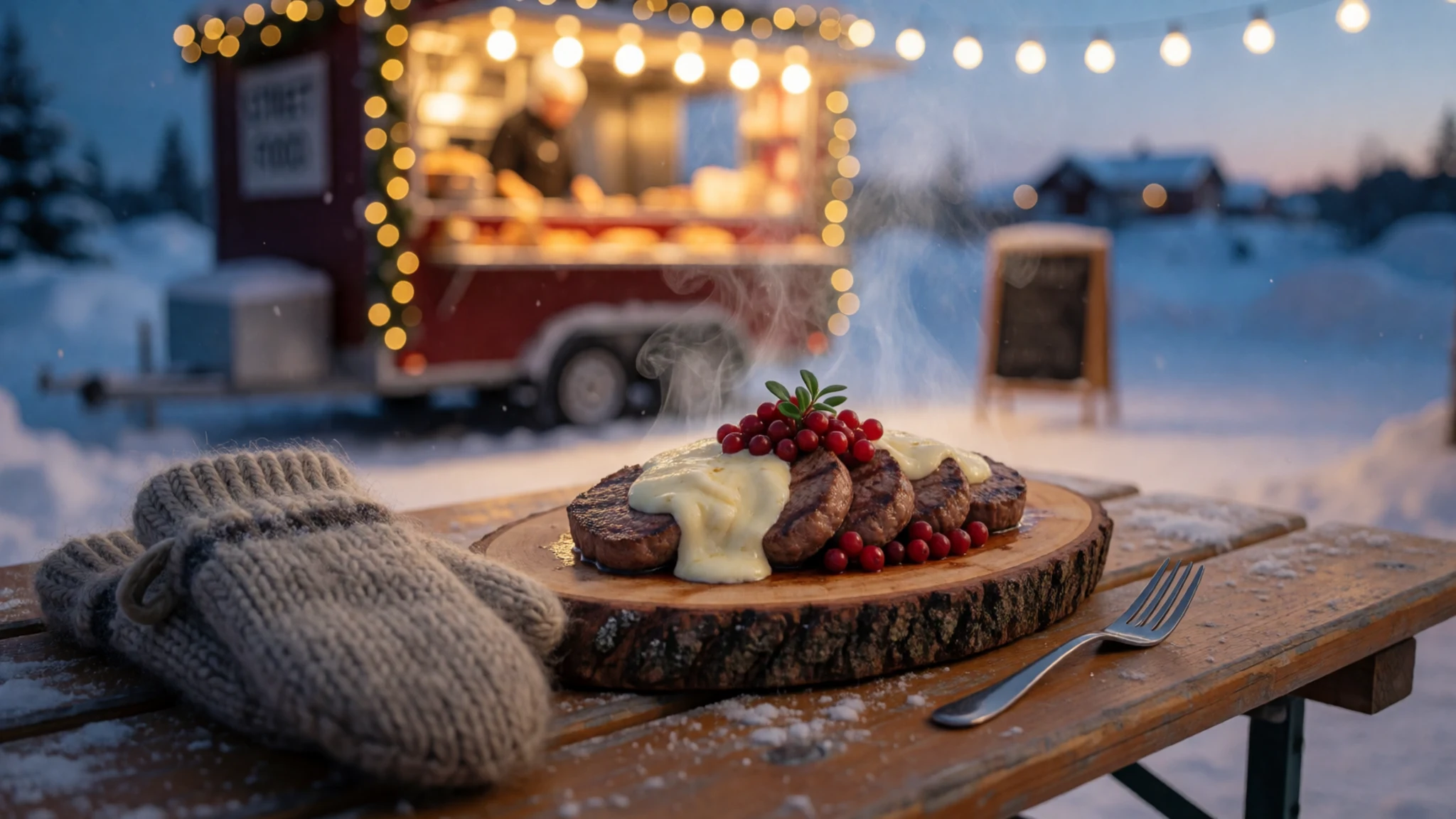
- American-style diner burgers — Empes Gatukök, a diner in the town centre
Empes Gatukök serves burgers in the style of an American diner, with outdoor seating in summer. It is a good choice when you want something quick and familiar after a day outside. Eat outside if the weather allows, because summer seating is one of the best parts of the place. - Norrbotten ingredients at a bar and kitchen — Mommas Bar & Kök, a bar and kitchen in the town centre
Mommas Bar & Kök focuses on local Norrbotten ingredients, which makes it a good place to taste the region's produce in a relaxed bar setting. Scandic Kiruna also has a rooftop Sky Bar nearby, which suits a drink with a view. Book ahead on busy evenings. - Food hall with reindeer and wood-fired pizza — Spill Saluhall & Eatery, a food hall in the town centre
Spill Saluhall & Eatery is a food hall with a deli, reindeer and vegetarian dishes, and a wood-fired pizza oven. It is the easiest place in town to find something for a mixed group. Browse the deli counter for local cheese and cured meats to take away.
Plan it
Best time. Winter, roughly February to March, suits most visitors: snow cover, long dark nights for the northern lights, and skiing on Luossavaara. Late winter brings a little more light, which helps with outdoor sightseeing. The northern lights are regularly visible during the winter months, so clear forecasts matter more than the calendar.
How long. 2–3
Getting there. SAS flies direct from Stockholm Arlanda and from Umeå to Kiruna Airport, a few kilometres outside the centre. An airport bus meets arrivals and departures, or you can book a taxi in advance. The train is the slow route: the night train from Stockholm takes most of a day, so a sleeping car is worth the extra cost.
Budget. mid
Tips
- Book flights and airport transfers early, because the town is small and seats fill up in winter
- For the northern lights, plan two or three nights with a clear forecast and step away from the brightest streetlights
- Dress for cold and wind even on bright days, since layers matter more than one heavy coat
- Book the mine tour ahead and leave a half-day free for it
- Carry a card and check locally which places accept cash before you go
Etiquette
- Keep to the marked routes and the instructions of your guide during the mine tour
- Ask before photographing Sámi people or taking part in cultural events
- Keep noise low in residential streets, especially in the dark season
Nearby
Sources
- Wikidata Q83232 (CC0)
- Wikipedia (rev 1377819194) (CC BY-SA 4.0)
- Wikivoyage (rev 5409374) (CC BY-SA 4.0)
- IORE passing Vassijaure station (CC BY 3.0)
- Kiruna City Hall (CC BY 3.0)
- Kiruna population development 1900–2000 diagram (Public domain)
- Aurora in Kiruna (CC0 1.0)
- Church of Kiruna (CC BY-SA 3.0 de)
- Kiruna town centre building (CC BY 3.0)
- Kiruna city panorama from Luossavaara (CC BY 3.0)
- The Ice Hotel near Jukkasjärvi (CC BY 3.0)


