Birka
Birka, Sweden
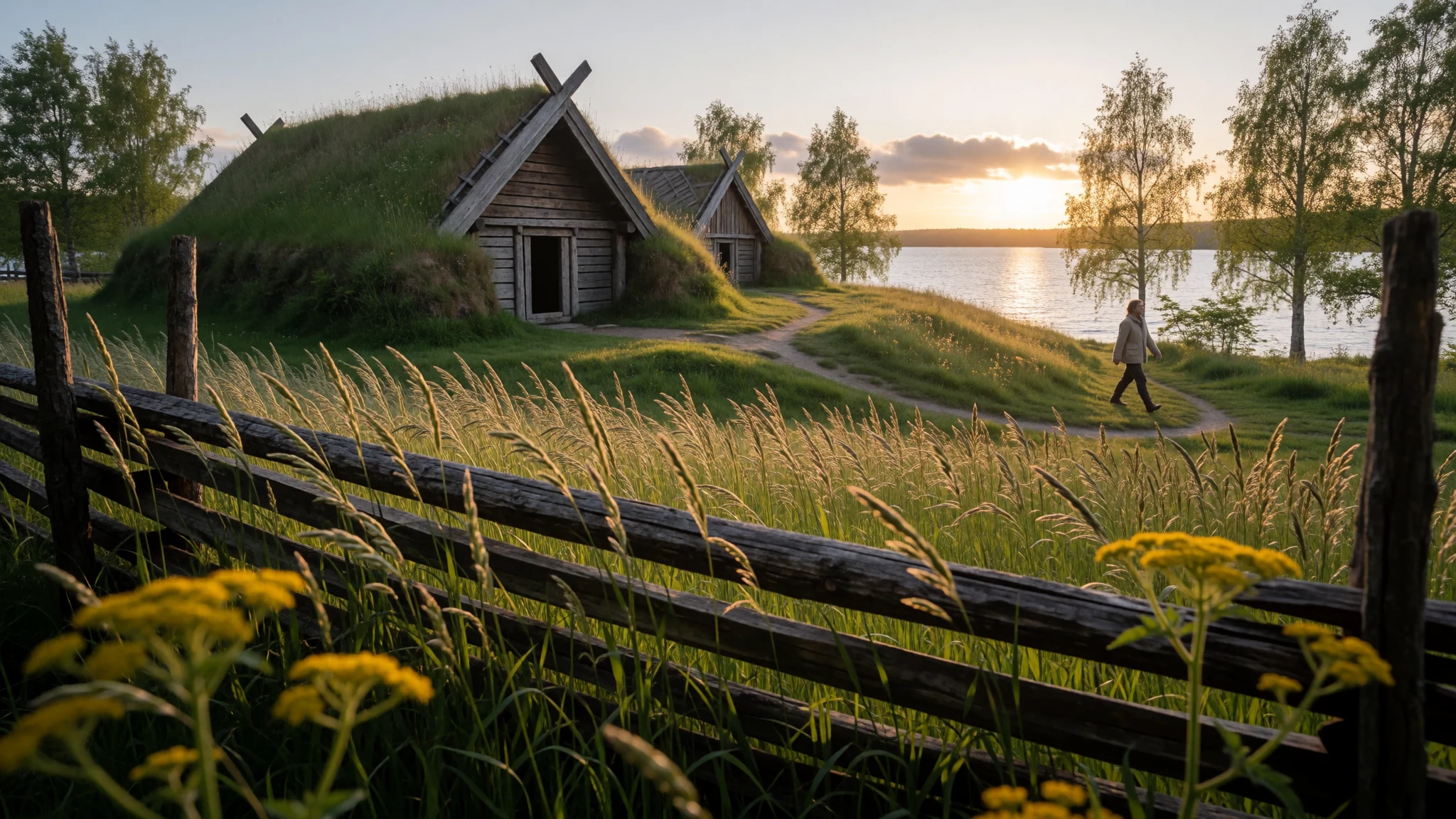
Birka is a quiet island in Lake Mälaren where Sweden's earliest town once traded with Baghdad, Byzantium and the Baltic.
The place
Birka sits on Björkö, a low, birch-covered island in Lake Mälaren, west of Stockholm in Ekerö municipality. The name Björkö simply means Birch Island, and the setting suits it: meadows, small woods, lake views and very little traffic. The Viking-age town stood on the northern part of the island, and what remains is mostly earth rather than masonry. Visitors walk across grassland to see banks, hollows and a stretch of rampart, with the town's old harbour area and a huge cemetery of grave mounds nearby. Most of the evidence sits underground or in museum cases, so the place rewards a little reading beforehand.
Birka was founded around 750 and was abandoned around 975. Estimates for its population run to a few hundred people at a time, so this was a compact, busy trading settlement rather than a city in the modern sense. Together with Hovgården on the neighbouring island of Adelsö, it has been a UNESCO World Heritage Site since 1993 (listing 555-001). Hovgården is linked to the royal estate of the period, which is why the two islands are protected as one complex.
The lake itself has changed. Land in this region is still rising after the last ice age, and Mälaren was once a bay of the Baltic Sea. That is why a trading port with ship access to the open sea now lies on an inland lake. Today Birka feels remote, yet in its day it was a gateway between Scandinavia and the wider world.
Its story
Birka began around 750 as a trading port, set up either by a king or by merchants wanting to control the flow of goods. It is counted among the earliest urban settlements in Scandinavia. From here, routes ran east through Ladoga and Novgorod along the Dnieper to the Byzantine Empire and the Abbasid Caliphate, making Birka the Baltic end of a very long chain of exchange.
The town's own exports were products of the north: furs from trappers and from peoples such as the Sami, plus iron goods, antler combs, walrus tusk, amber and honey. In return came glass, metalware, Rhineland pottery and fine textiles. Graves have yielded Chinese silk and Byzantine embroidery worked with very fine gold thread. Coins tell the same story, with silver dirhams from the Middle East far outnumbering English or Carolingian pieces.
In 831 Saint Ansgar founded the first known Christian congregation in Sweden here. The faith did not take hold quickly, and the town carried on as a mostly pagan trading place for generations. Birka then faded in the later tenth century; coin dating suggests it was dying out around 960. Sigtuna, a Christian town founded to the north-east, took over its role. Ansgar's memory survives in a cross on the island, put up long after his time, which now stands among the meadows as a quiet marker of the mission.
What to see
- The excavation fields and Black Earth — Northern Björkö
The old town lay in a layer of dark, organic soil that archaeologists call the Black Earth, because centuries of habitation left it rich in ash, bone and rubbish. Excavation trenches have been dug here over many decades. Walking the open ground helps you picture where timber houses and workshops once stood.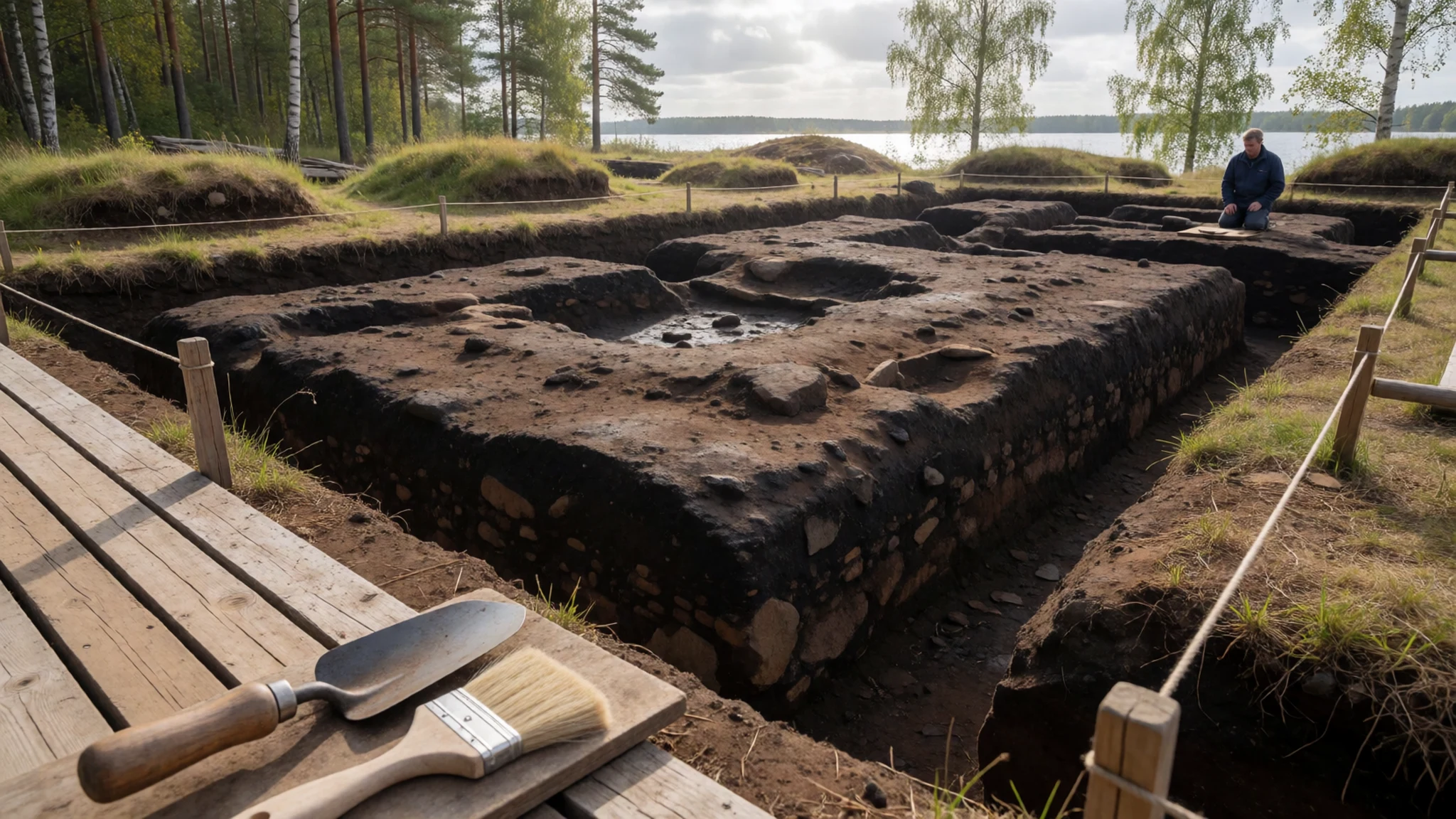
- The rampart and its gateway — Edge of the town site, Björkö
A defensive wall once enclosed the town on its landward side, and a gap in it marks an entrance used by people and carts. The bank is low and grassy, so it needs a little imagination, but it shows how the settlement protected its trade goods and harbour.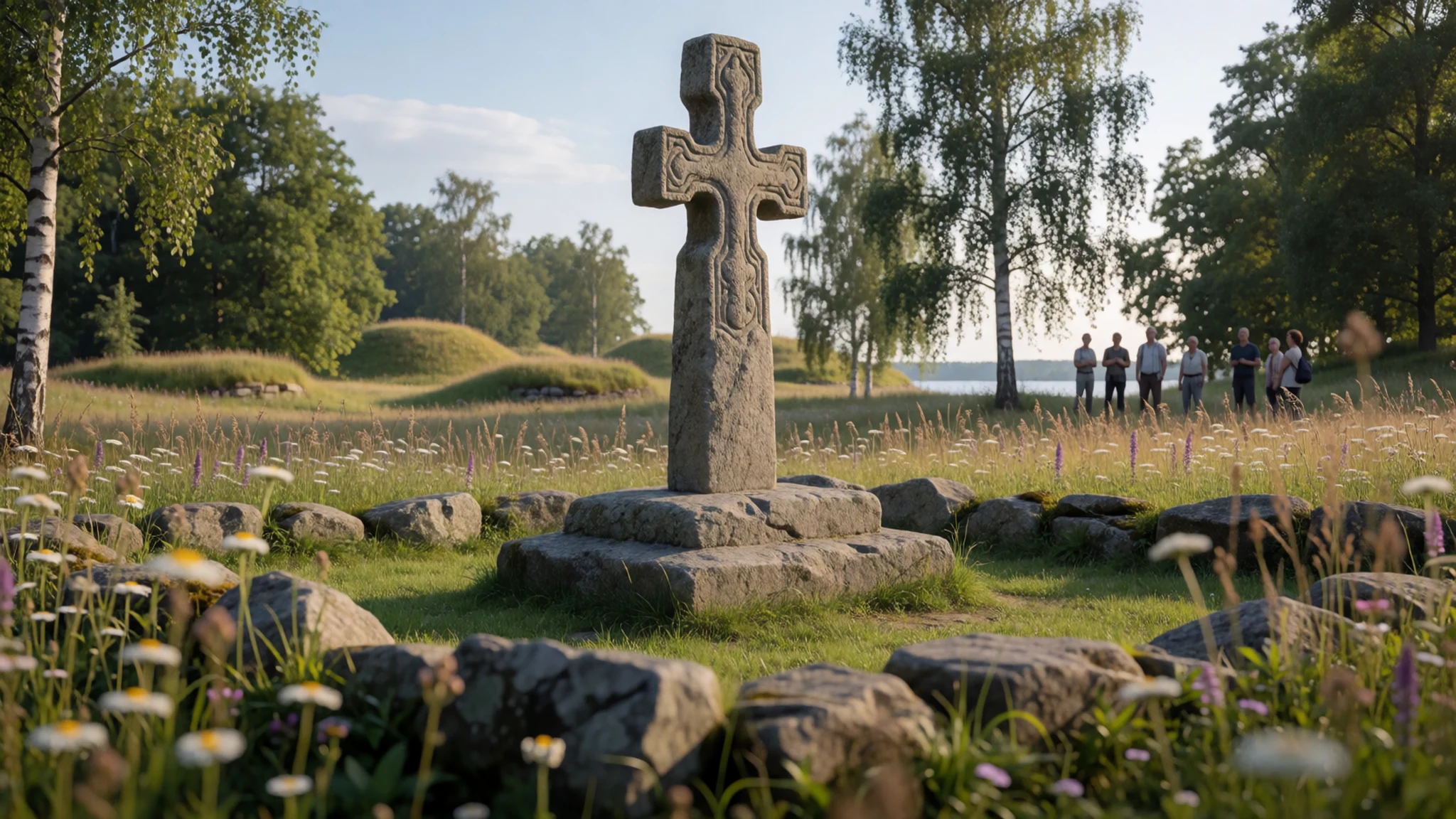
- Reconstructed Viking houses — Visitor area, Björkö
Timber-and-thatch houses have been rebuilt near the visitor area to show how families and craftspeople lived. Interiors are small, smoky and dim, which is exactly the point. They suit families, and staff or guides on the island often explain how the buildings were put together.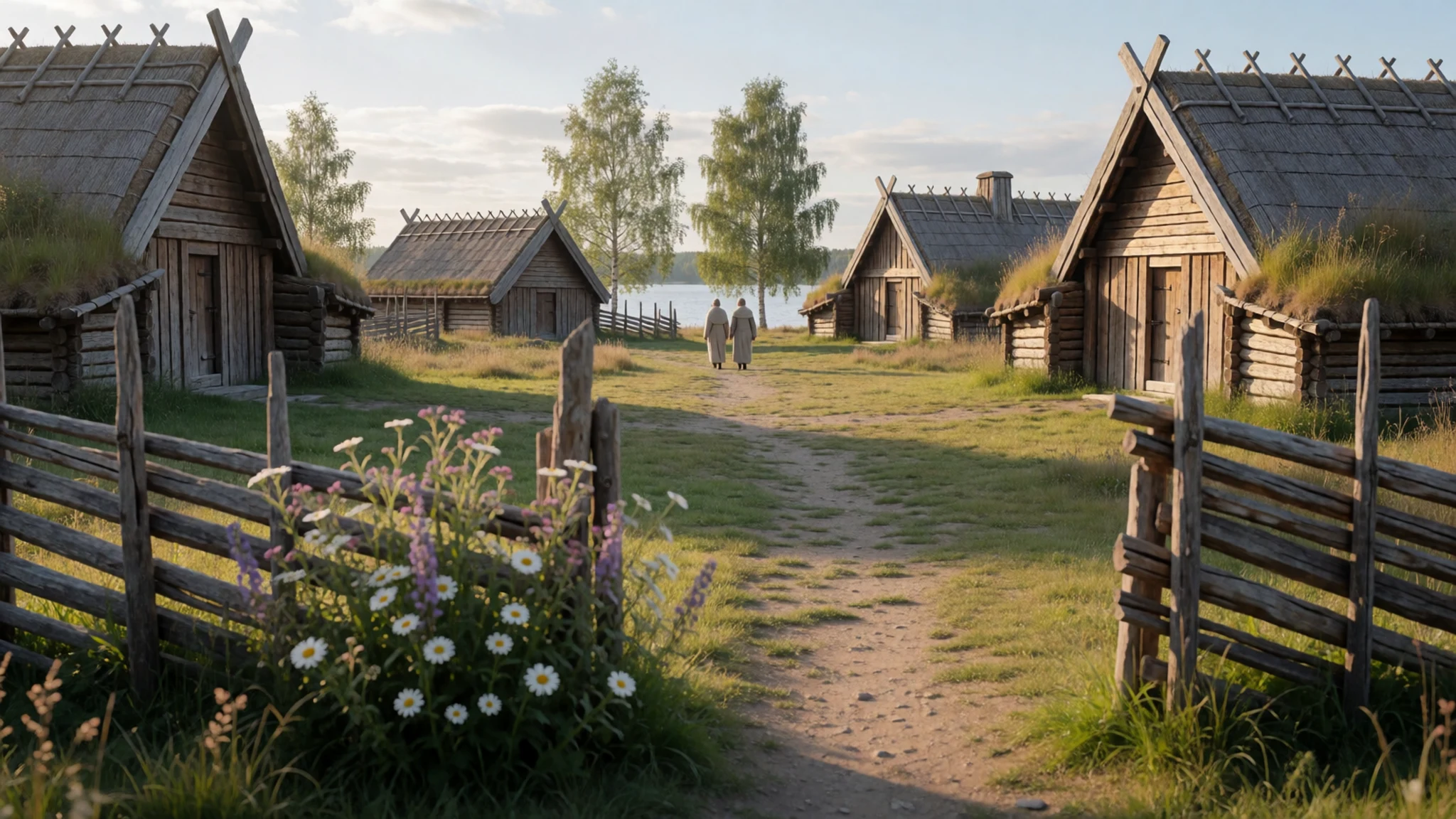
- Reconstructed boats — Shoreline, Björkö
Replica Viking-age boats near the shore remind visitors that everything at Birka depended on water. Cargo, silver, furs and people all arrived and left by hull. Seeing how shallow and open they are makes the long river routes to the east feel even more daring.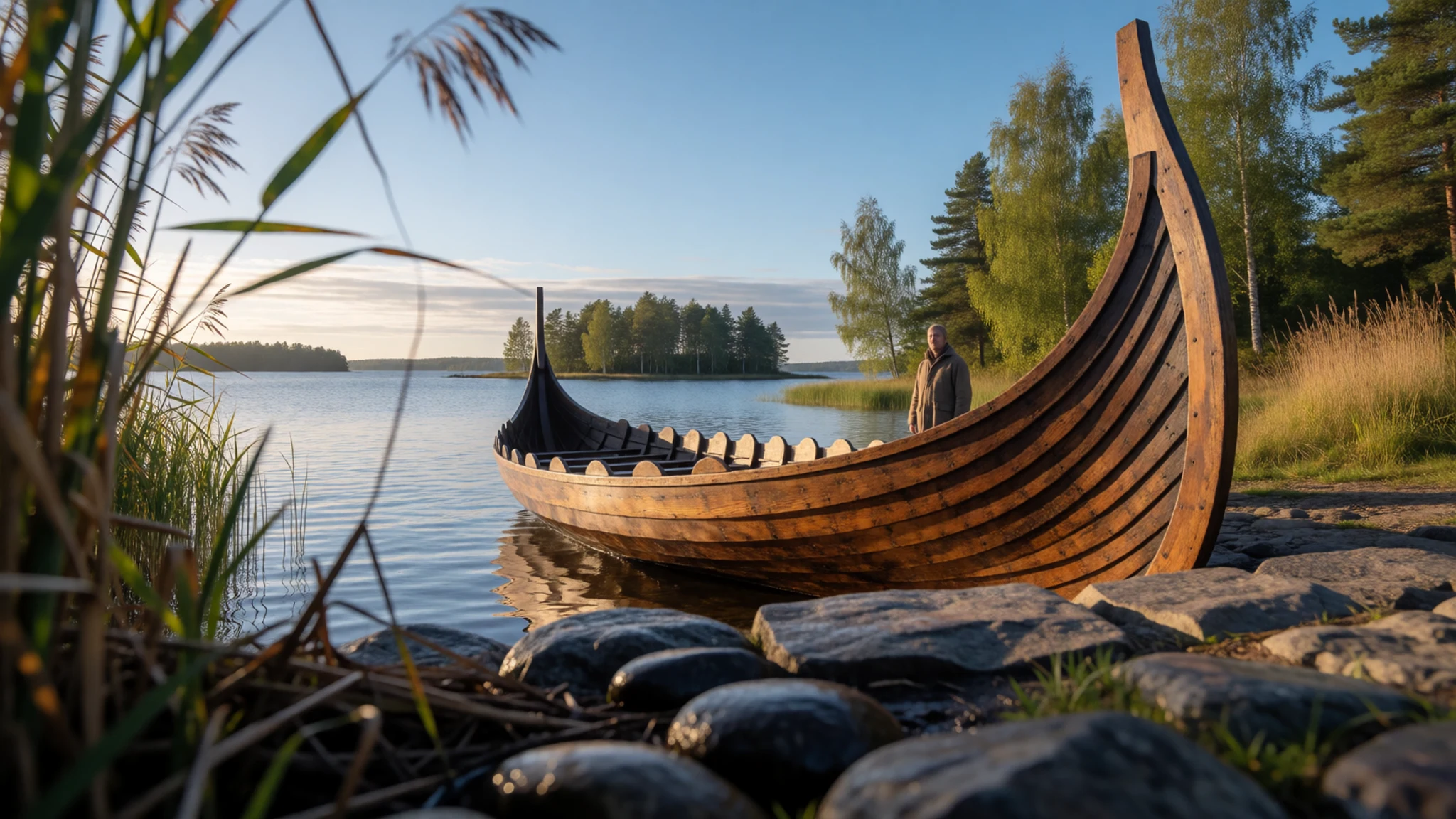
- The Ansgar Cross — Björkö
A stone cross on a rise commemorates Saint Ansgar and the first Christian congregation recorded in Sweden. It is a modern monument, not a Viking one, but its position gives a good view over the island and the lake. Many visitors pause here for a quiet moment before walking on.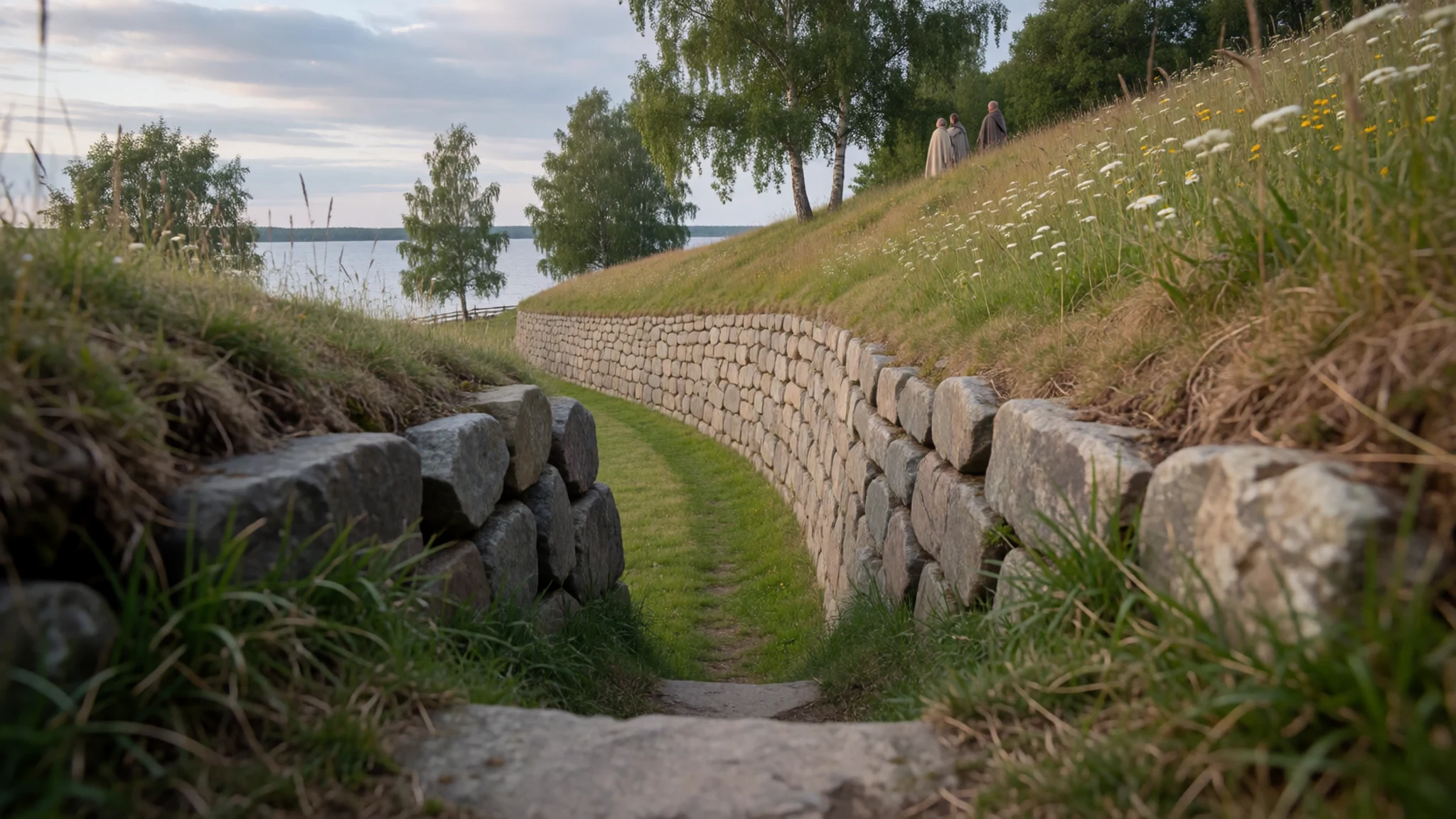
Culture
Birka's culture is known mostly through what its people left behind rather than through living tradition. Graves, jewellery, tools, coins and textile fragments show a society that mixed local craft with far-off goods: northern furs and antler combs sat alongside silk and silver from distant lands. Researchers are still examining finds that link Birka with trade reaching the Middle East, so the picture keeps changing.
The island's story also holds two belief worlds. Most residents followed older Scandinavian customs, including burial in mounds with objects for the next life, while Ansgar's mission brought a small Christian congregation in 831. Today the island is quiet and open, and the Swedish tradition of everyone's right to roam the countryside, with care, shapes how people enjoy it: walking, picnicking, swimming in the lake and watching birds. Local guides and museum staff explain the finds clearly, and school groups are common in early summer.
Much of the real heritage is in the ground, and the Swedish approach is to keep it untouched. Reconstructed houses and boats are there to make the past easier to picture, not as copies to climb on. Visitors who come with a little background reading tend to enjoy it far more, because the site is subtle rather than dramatic.
Stay on the marked paths, never dig or collect anything, and leave the grave mounds and the rampart exactly as you find them.
What to wear
Birka has no living costume tradition, but its graves have preserved clothing remains that say a good deal. Viking-age people here wore woollen and linen garments, held with brooches and decorated with braids, and wealthier residents had imported silk, gold-thread embroidery and brocade trims from Byzantium and the East. Fur trim was common, since furs were a main local trade good. Fragments recovered from burials show how fine some of this work was.
Today, Swedes dress simply and practically, especially on a day out by the water. Expect outdoor jackets, walking shoes, jeans and layers, with little formality. Living-history events on the island sometimes feature costumed staff in reconstructed Viking dress, which is worth watching if one is on.
For a visit, dress for weather rather than for a dress code. Even in summer the lake breeze can be cool, and showers arrive without warning, so a light waterproof and a warm layer help. Comfortable closed shoes are best: paths are grassy, uneven and sometimes muddy, and the rampart and mounds involve gentle slopes. In midsummer bring a hat, sun cream and insect repellent, as the meadows can be buggy. There are no religious dress rules at the site, though a cap off and a quiet voice at the cross is a courteous habit. Swimwear is fine for the lake if you choose a suitable spot away from the archaeological areas.
What to eat
- Smoked or pickled herring — Lakeside cafés and Stockholm eateries
Herring is a staple across Sweden and is served pickled, fried or smoked with boiled potatoes, dill and crispy bread. Order it at a waterside café or in the restaurant at the island's visitor area, if open, or at any Stockholm lunch spot.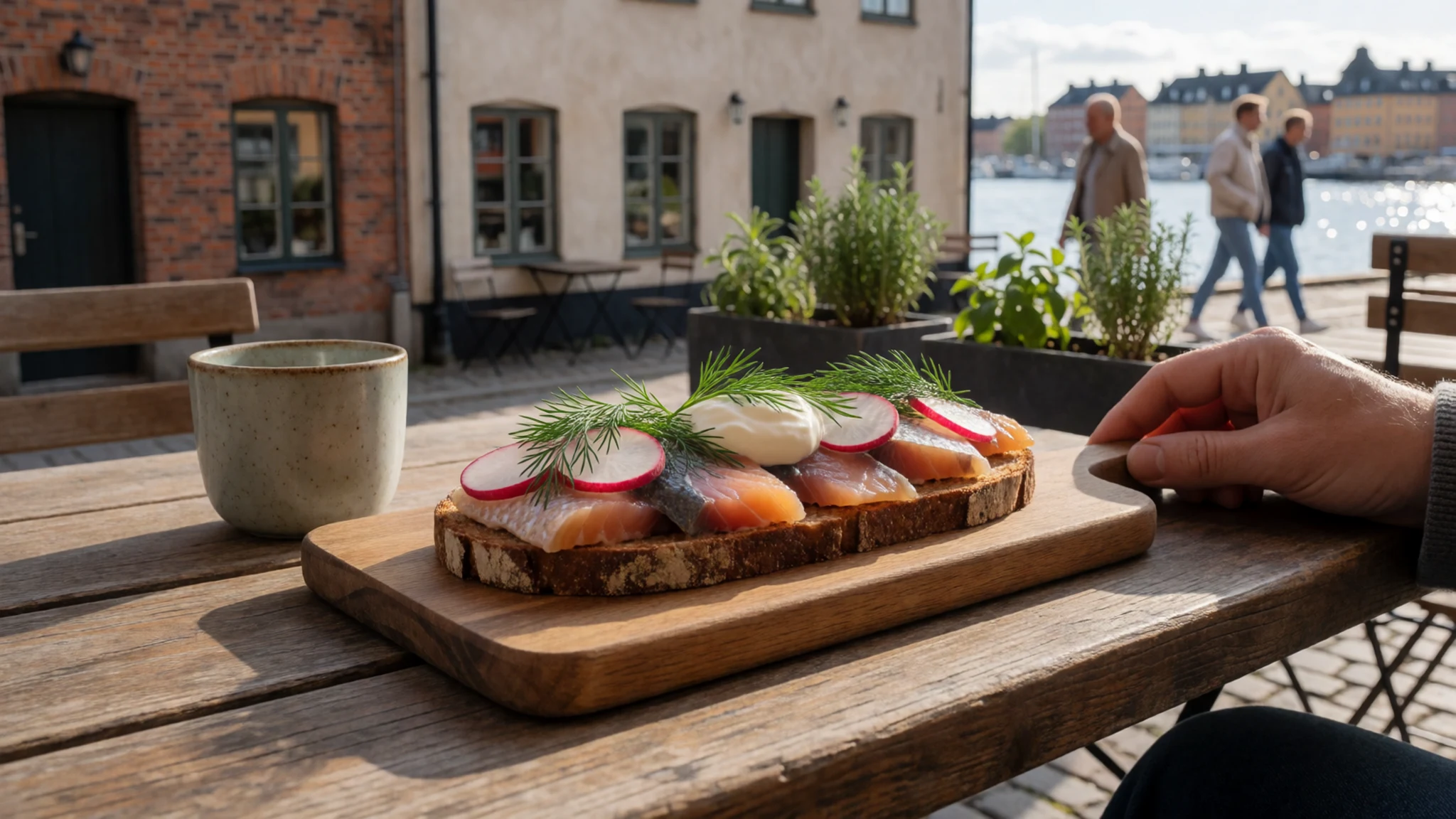
- Gravlax — Cafés and restaurants around Ekerö and Stockholm
Salmon cured with salt, sugar and dill is sliced thin and often served with a mustard-dill sauce on bread or potatoes. It suits a light lunch and is on most Swedish menus around Mälaren, from café counters to proper restaurants.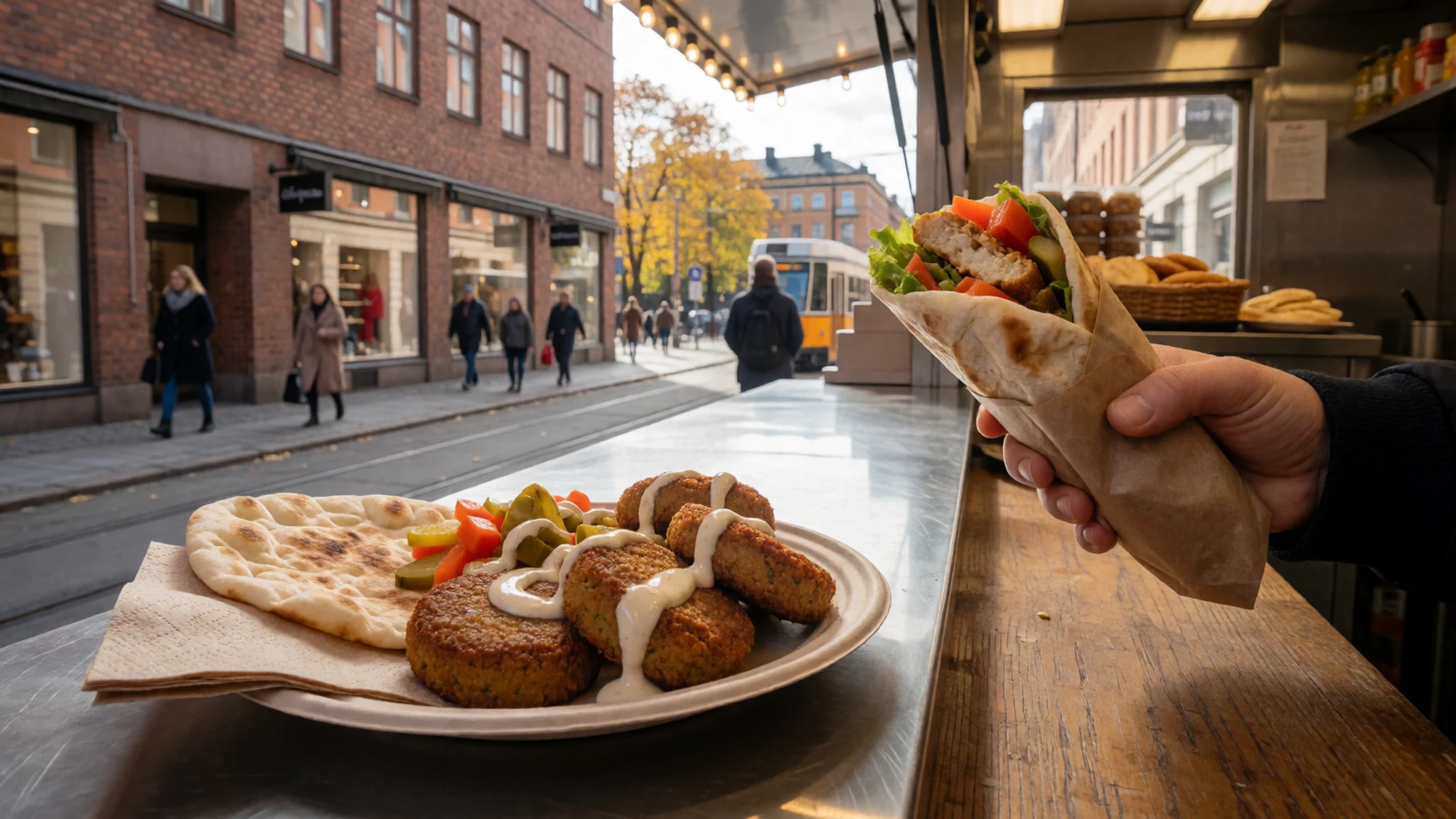
- Local lake fish — Waterside restaurants in Ekerö
Perch, pike-perch and other freshwater fish from Mälaren appear on menus when in season, usually pan-fried with butter and potatoes. Ask what the day's local catch is; the Stockholm area offers plenty of seafood.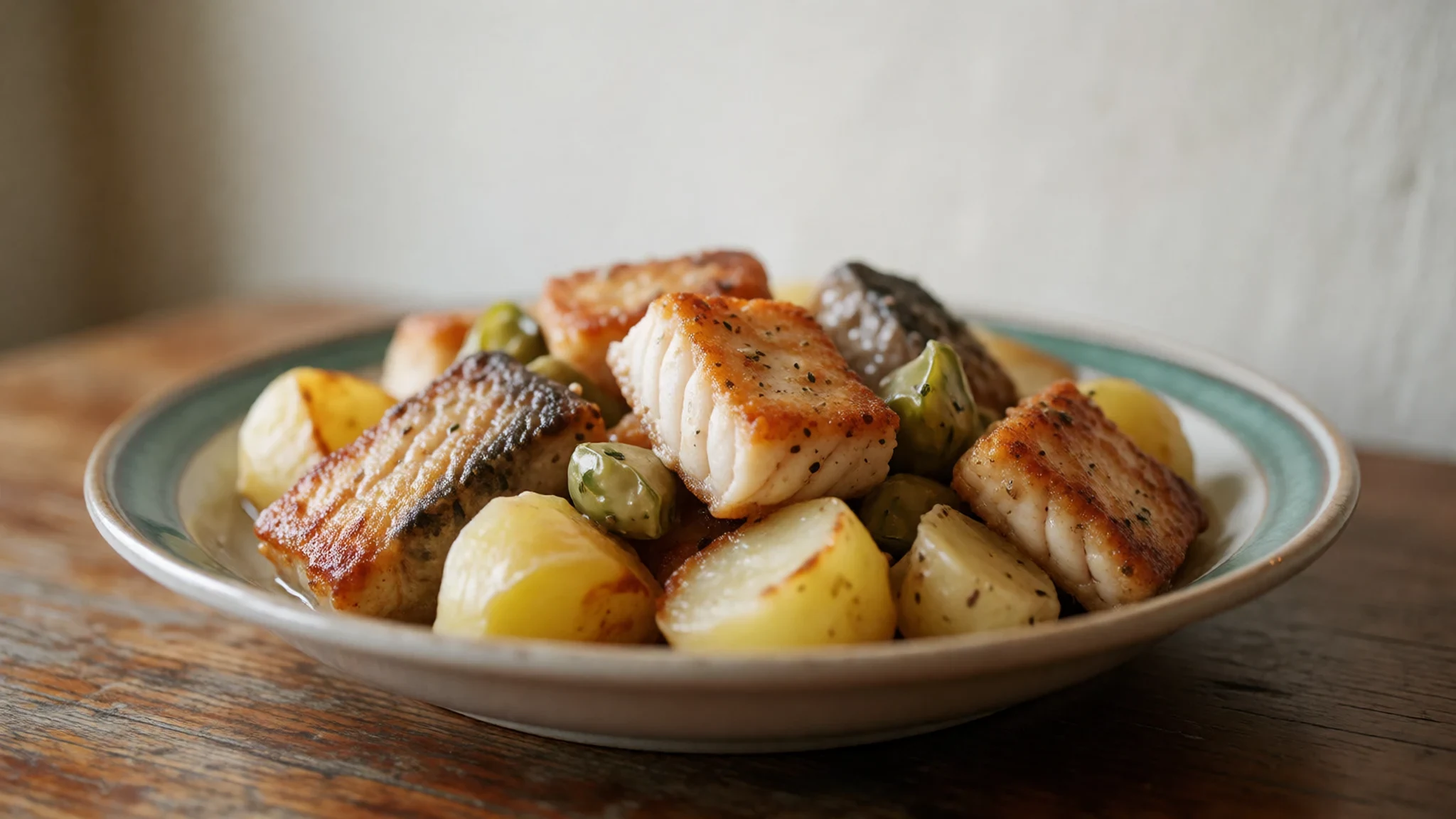
- Köttbullar — Café and canteen counters, Stockholm
Swedish meatballs come with potatoes, gravy, cream sauce and lingonberry jam. They are plain, filling comfort food, easy to find, and good value after a windy walk across the island.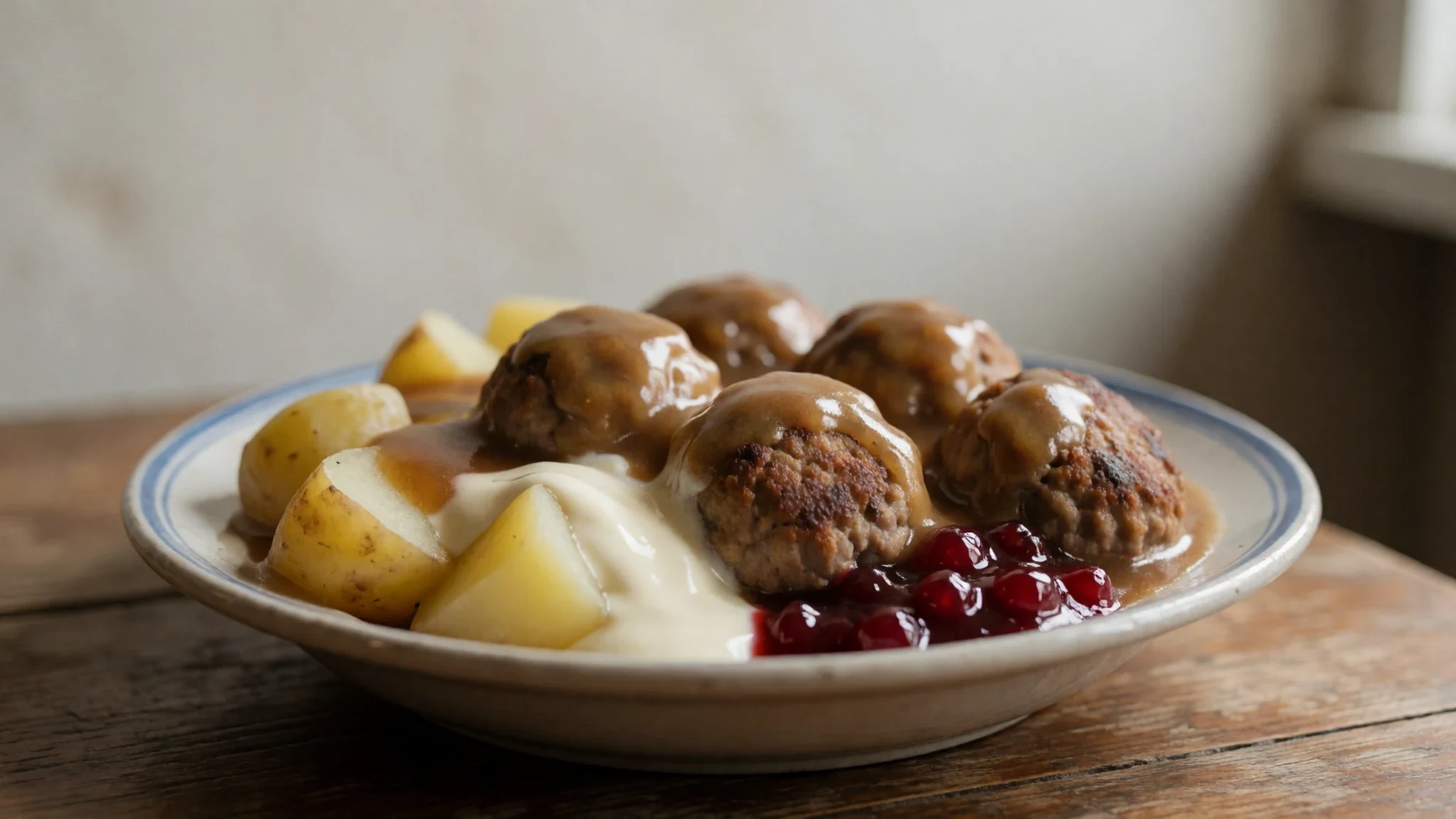
- Kanelbulle and coffee — Bakeries and café kiosks
A cinnamon bun with coffee is the standard Swedish break, called fika. Many visitors carry a flask and a bun to eat on the meadows, or find them at a café on the boat route.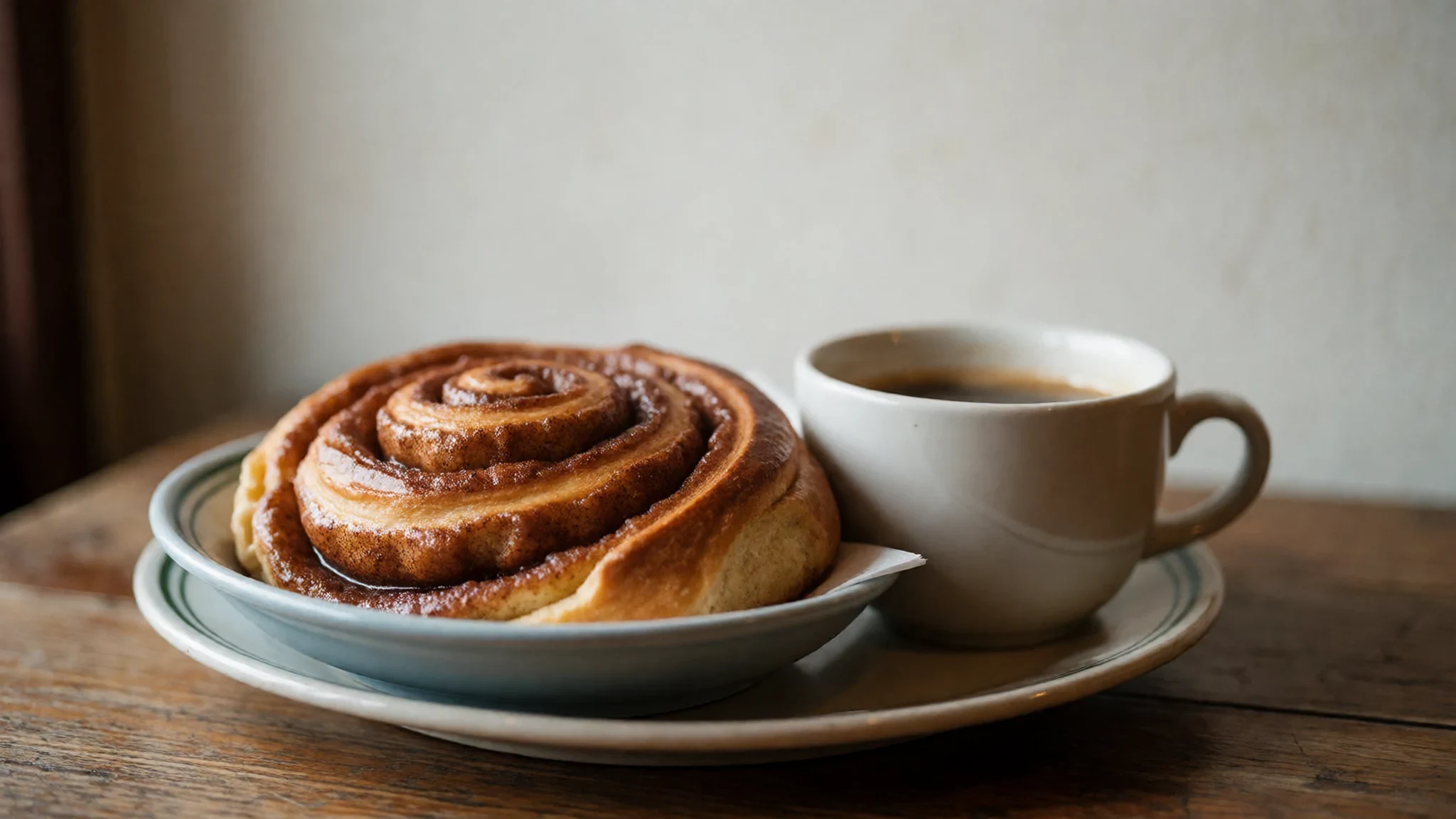
Plan it
Best time. May to September, when boats run most reliably and the island is green and mild; June to August is warmest and busiest. Winters are cold, dark and the site is largely closed to visitors.
How long. 1
Getting there. Fly to Stockholm Arlanda, then take the Arlanda Express or local train to Stockholm Centralstation. From the city, reach Birka by a seasonal boat across Lake Mälaren; check the official operator's timetable and booking details before you travel.
Budget. mid
Tips
- Book the boat ahead in summer and check the return time so you do not miss it
- Bring water, snacks and a picnic, as the island has limited facilities
- Pack a waterproof layer and insect repellent, as weather and bugs both change quickly
- Wear sturdy shoes for grass paths and gentle slopes
- Check the official site for the opening season, guided tours and any events
Etiquette
- Keep to the paths and leave the mounds and rampart undisturbed
- Never dig, collect or remove any object from the site
- Respect quiet areas, especially around the Ansgar Cross
Nearby
Sources
- Wikidata Q208177 (CC0)
- Wikipedia: Birka (rev 1365497055) (CC BY-SA 4.0)
- Wikivoyage: Stockholm County (rev 5418531) (CC BY-SA 4.0)
- Alex Peterson, Birka excavation (CC BY 3.0)
- Holger.Ellgaard, Ansgar Cross (CC BY 3.0)
- Holger.Ellgaard, Viking houses (CC BY 3.0)
- Holger.Ellgaard, Viking boats (CC BY 3.0)
- Holger.Ellgaard, Map of Birka (CC BY 3.0)
- Suecia 1-069, Björkö (Public domain)
- Nick-D, defensive wall entry (CC BY-SA 4.0)
- Holger.Ellgaard, Black Earth excavations (CC BY 3.0)


