Histria
Histria, Romania
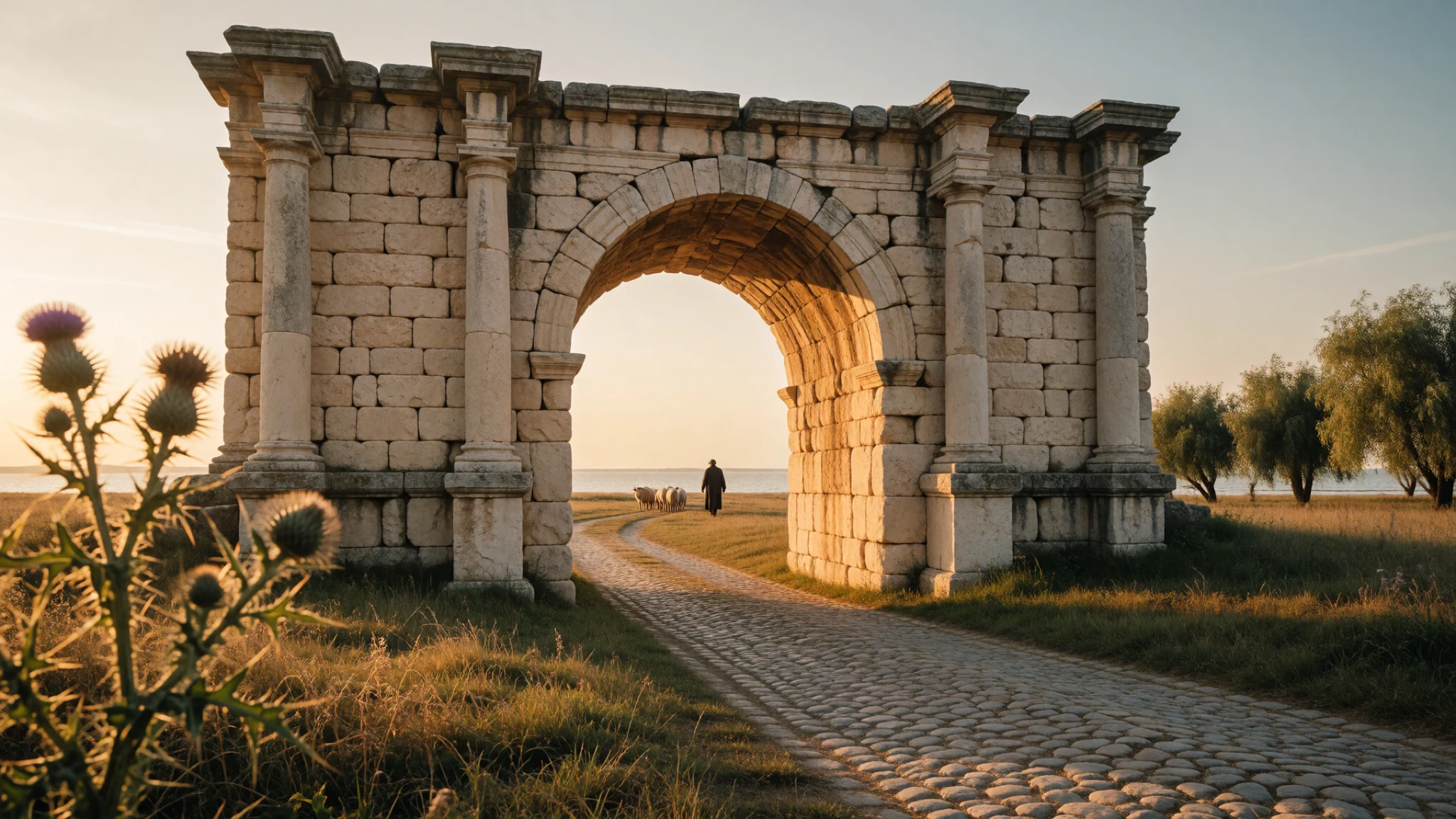
Histria is a quiet Greek and Roman ruin on a Romanian lagoon, where a vanished harbour town can be read straight from the ground.
The place
Histria sits on the shore of Lake Sinoe, a lagoon in Dobruja, in south-eastern Romania, close to the village of Istria and a little north of Năvodari. Greek settlers from Miletus founded it beside the Black Sea, and the ruins are what remain of a trading port that lasted well over a thousand years. The sea is no longer in front of it. Silt carried down by the Danube built a bar across the old bay and turned open water into a lagoon, so the site now looks over reedy shallows rather than waves. Part of the ancient town lies under that water. The layout is easy to read on the ground: the acropolis with its sanctuaries stood on the highest point near the old shore, the everyday town spread to the west, and a second bay to the south served as the harbour. Today it is low, open and exposed, with grass and wildflowers around grey and honey-coloured stone, and birds over the lagoon. There is little shade and no skyline, which suits the place: it rewards slow walking and a bit of imagination. Greek and Roman walls overlap, so a single patch of ground shows several centuries of rebuilding. Expect a quiet site, far from the crowds of the Romanian coast's resort towns.
Its story
Histria began as a trading post. Settlers from Miletus, the Ionian city that sent colonists across the Black Sea region, founded it near the Danube's mouth in the seventh century BC, to do business with the local Getae. Ancient writers gave slightly different founding dates, and none can be checked today. The colonists organised themselves into tribes brought from the mother city and ran Histria as an independent city-state with farmland stretching west. Fishing and grain added to the income from trade. Diggers have found Athenian painted pottery, coins and countless fragments of storage jars, evidence of links with Miletus, Rhodes, Samos and Athens, while local workshops made pottery, metalwork and glass. Raids by Scythians pushed the town to build new walls in the sixth century BC, and a later attack, probably by the same people, destroyed it around the turn of the fifth century. The citizens rebuilt, with new temples and more industry. Caught between the Odrysian kingdom and the Scythians, Histria still prospered through the Classical age. Rome absorbed it in the first century AD, as part of the province of Moesia. Centuries on, invasions made the place impossible to defend, and it was abandoned in the seventh century AD. The Danube's silt then finished the job by cutting it off from the sea.
What to see
- The Roman main gate — Entrance area of the site
The Roman gateway is the natural place to start. Its worn stone blocks mark the line of the later fortified town, and standing in it gives a sense of scale before the ground opens out. Take a minute to look along the wall in both directions.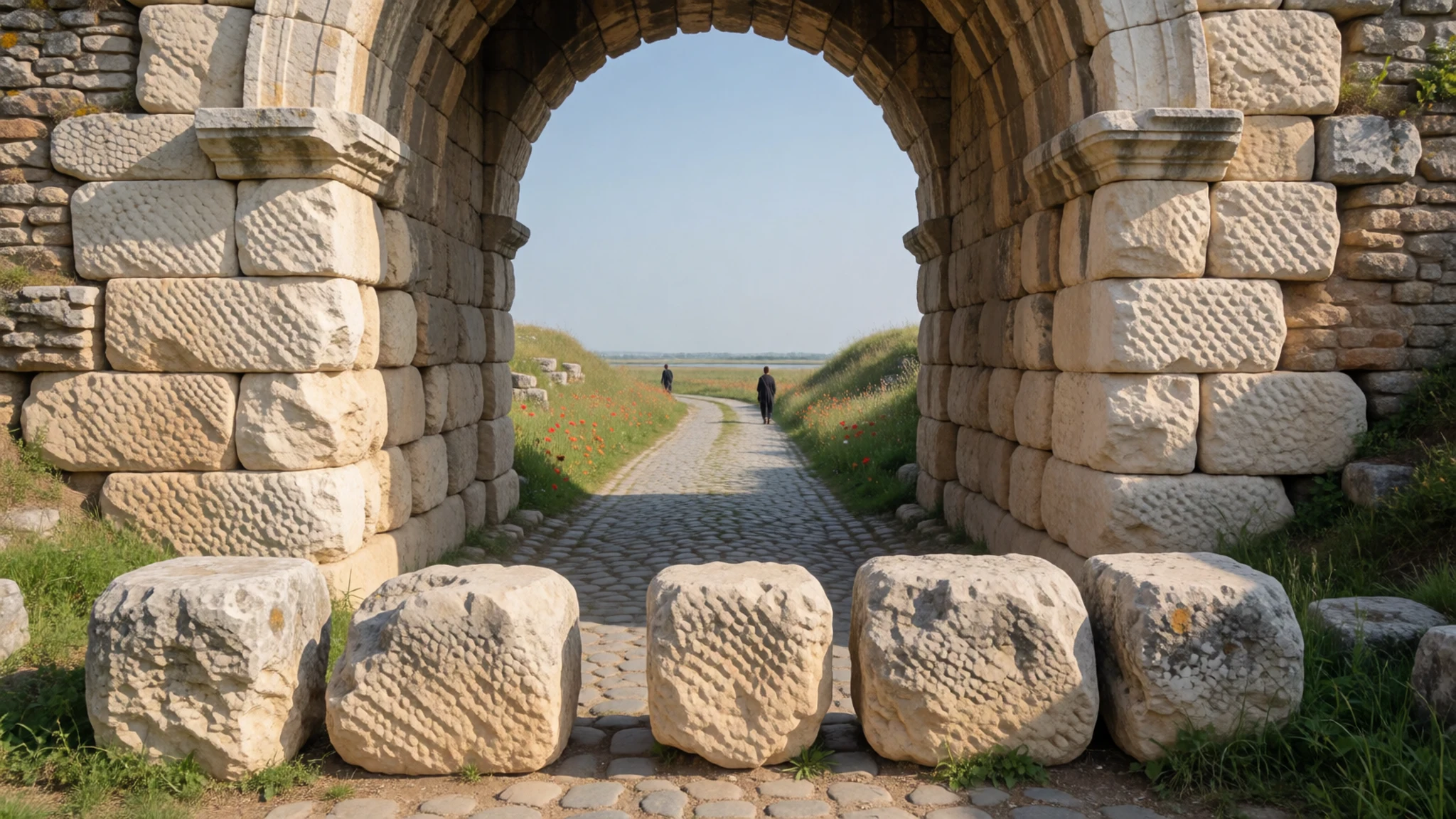
- Greek and Roman city walls — Around the old town
Several lines of fortification survive, built at different times as the city shrank, grew and came under threat. Walking beside them shows how defences were pulled back and patched. The site plans in the app help you tell the Greek lines from the Roman ones.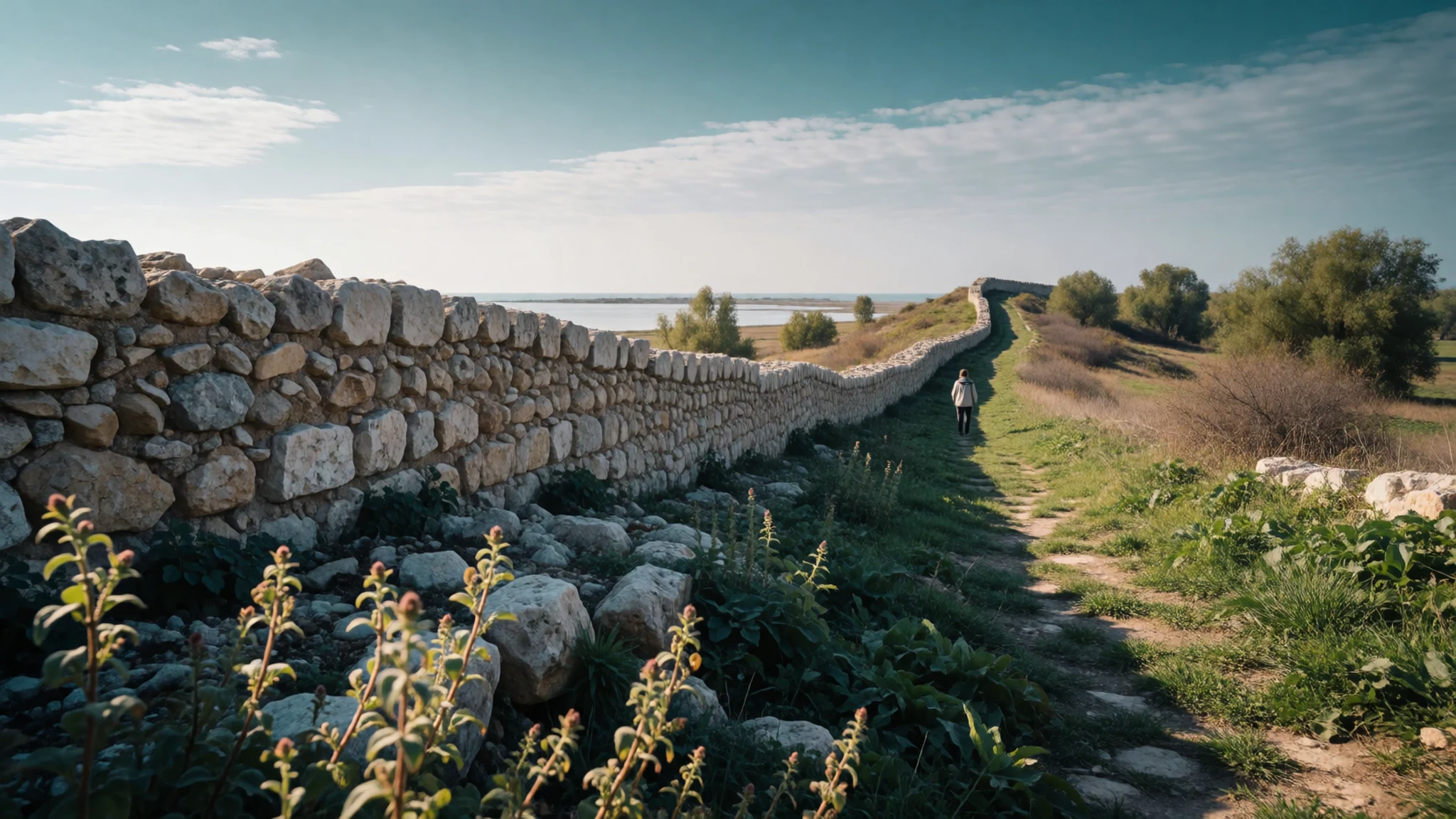
- The acropolis and sanctuaries — Highest ground near the former shore
The sacred quarter stood on the highest point of the old peninsula, once overlooking open sea. Temple foundations and bases are low, so read them as outlines on the ground. The view over the lagoon helps you picture where the water used to reach.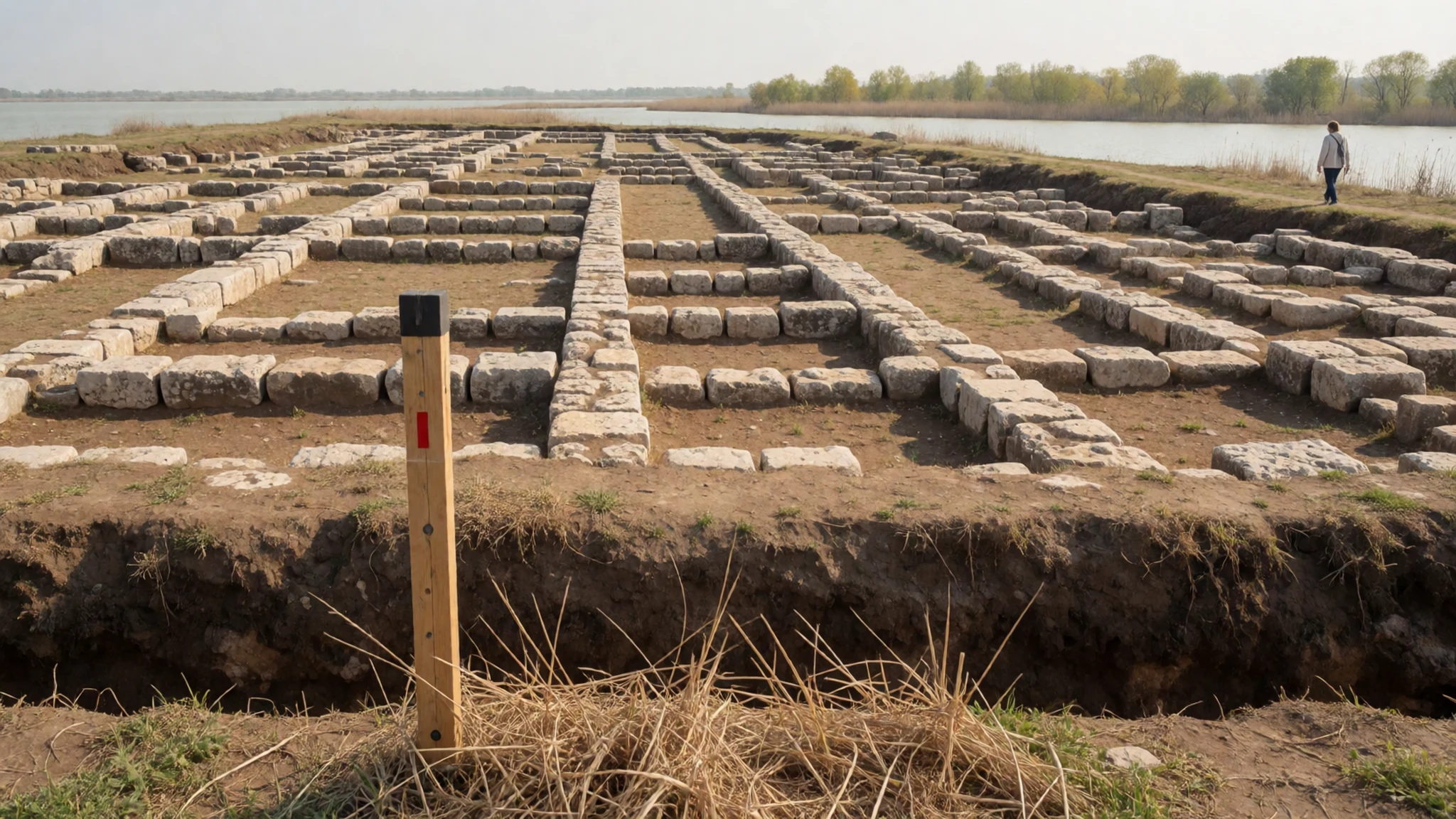
- The residential quarter — West of the acropolis
Away from the temples lies the ordinary town, where street lines, house footings and workshop remains show how people lived and worked. It takes imagination, but this is where the pottery, glass and metalwork found at the site were made.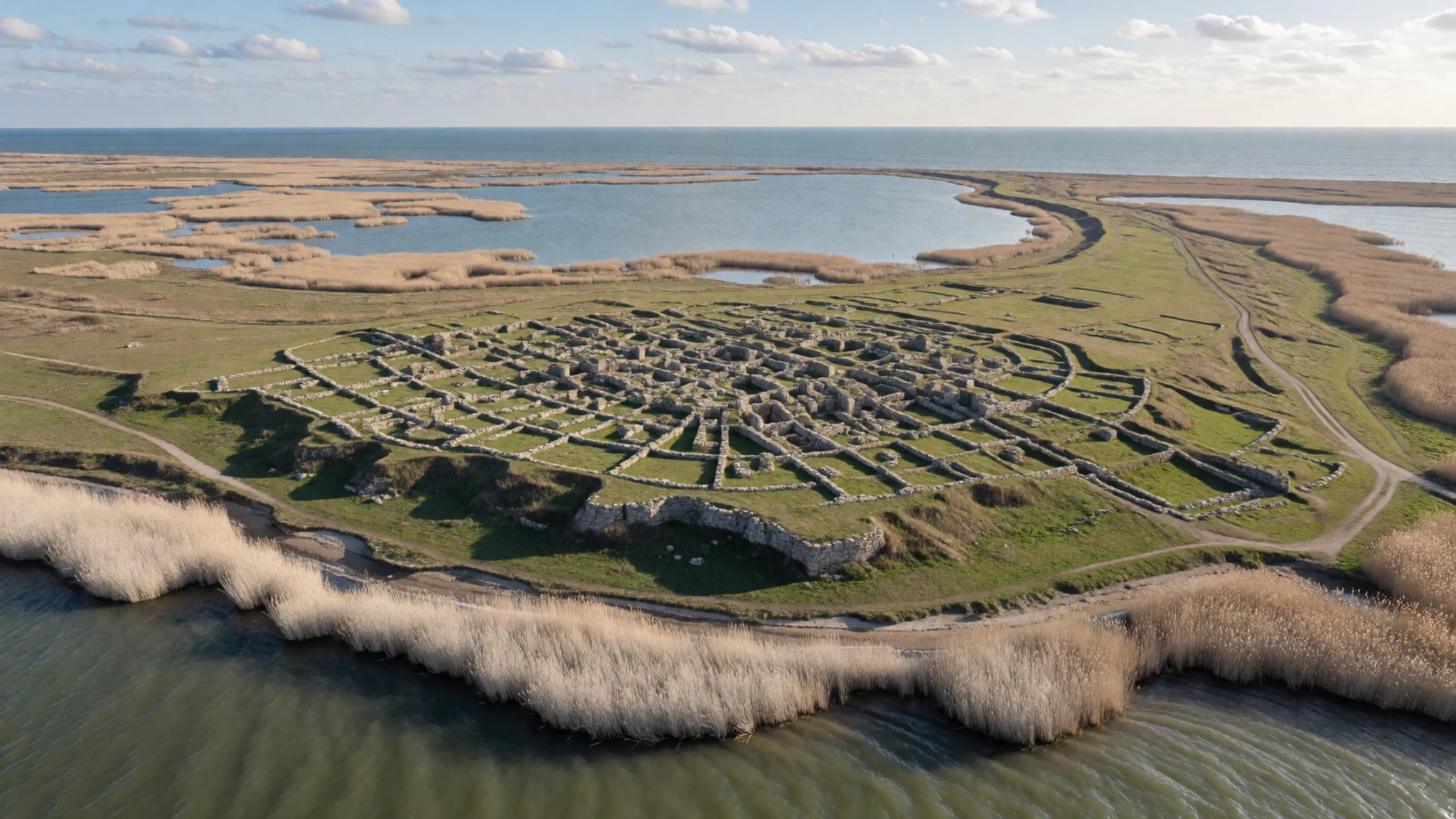
- The Lake Sinoe shore — Edge of the site
Walk to the water's edge for the clearest lesson in how the coast changed. Reeds, shallows and birdlife now fill what was once a bay with ships in it. Some of the ancient city lies beneath the surface, out of reach.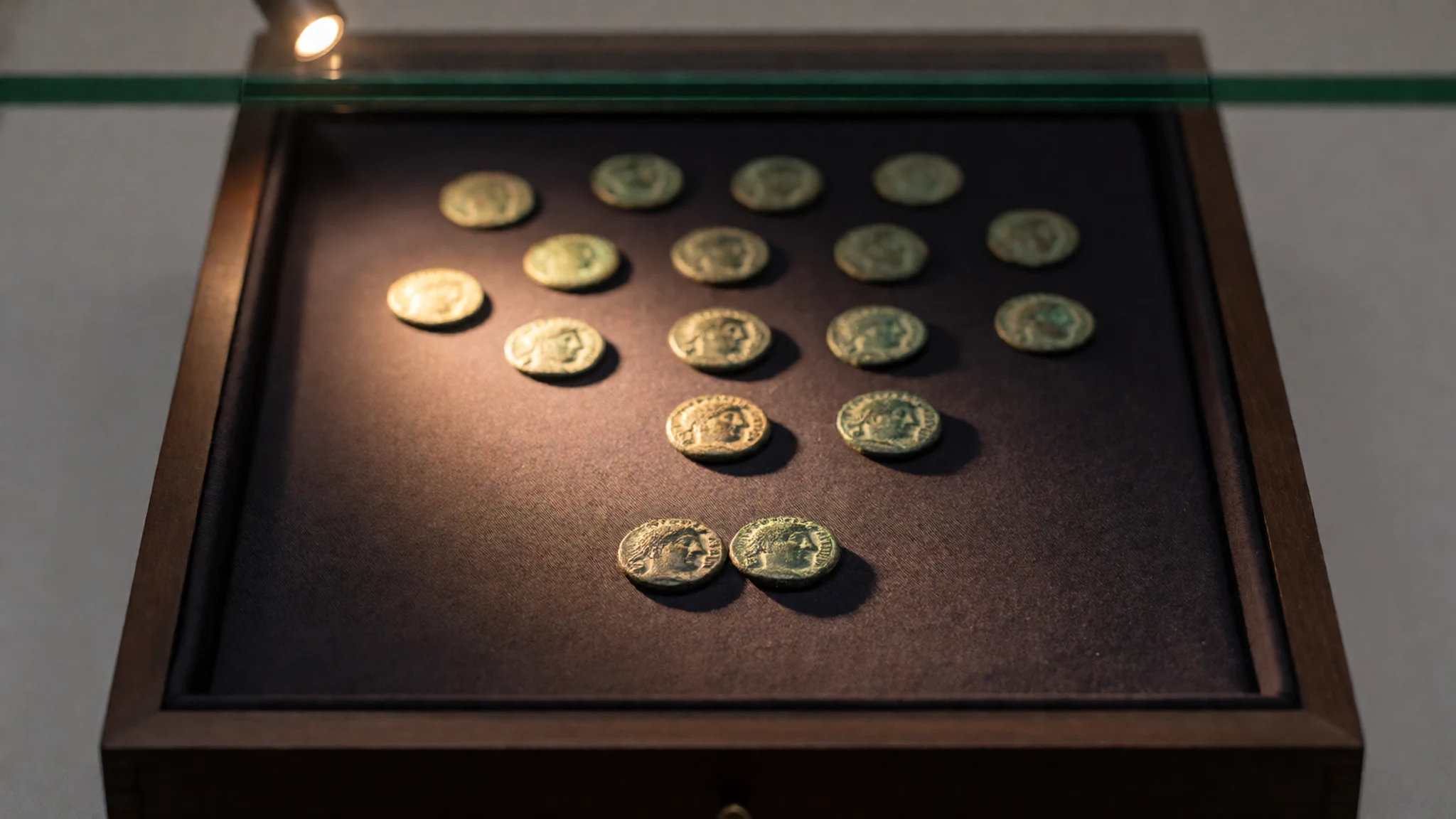
Culture
Histria's culture is layered rather than living. Its founders were Greek, but they traded with the Getae, a local people, so even the earliest town was a meeting of worlds. The colonists brought the civic life of Miletus: tribes, assemblies, sanctuaries and a taste for the gods of the Greek homeland, including the Dioskouroi, the twin heroes who appear on the city's silver coins. Later came Roman governors, Roman building and Latin, and later still the long quiet of the abandoned site. The region around it, Dobruja, has long been mixed, with Romanian, Turkish, Tatar, Bulgarian and other communities, and you will see that in village names, food and faces around Istria. In Romania, Histria is treated as a national archaeological treasure and a place for school visits, local history and research, rather than a showpiece. Digging has gone on here for generations, so some areas may be roped off or covered for protection. The site rewards people who read a little first: the coins, pottery and inscriptions found here are what tell the story, and they are shown in museums as well as on the ground. Do not climb on the ancient walls or lift loose stones and potsherds as souvenirs, because the site is protected and every fragment belongs where it was found.
What to wear
Histria's ancient wearers dressed as Greeks did: the chiton, a tunic of wool or linen, and the himation, a wrap-around cloak, with sandals and, for travellers, a broad-brimmed hat. Under Rome the toga and tunic joined them. The traditional dress of Dobruja and wider Romania is the embroidered blouse, the ie, made from cotton, linen or hemp and decorated with patterns that differ from region to region, worn with wrapped or woven skirts and woollen waistcoats. These come out for festivals, weddings and national days rather than daily life. Today people around Istria and Năvodari wear ordinary modern clothes: jeans, shirts, trainers, and work clothes among farmers and fishers. For a visit, think of an exposed archaeological site with almost no shade. Wear light, breathable layers with long sleeves or sunscreen, a hat and sunglasses in summer, and a windproof layer in spring and autumn, when the lagoon wind can be sharp. Shoes matter most: choose sturdy, flat-soled trainers or walking sandals with a grip, since the paths are uneven, with loose stone and grass. After rain, the ground can be muddy. There are no strict dress rules at the ruins, though modest, neat clothes are right if you also visit a village church.
What to eat
- Saramură de peşte — Village eateries around Istria and Lake Sinoe
Fish braised in a peppery, tomato-based brine is a classic of Dobruja's lagoons and the Danube delta country. It is usually served with polenta. Ask what the local catch is, since the fish varies with the season and the day.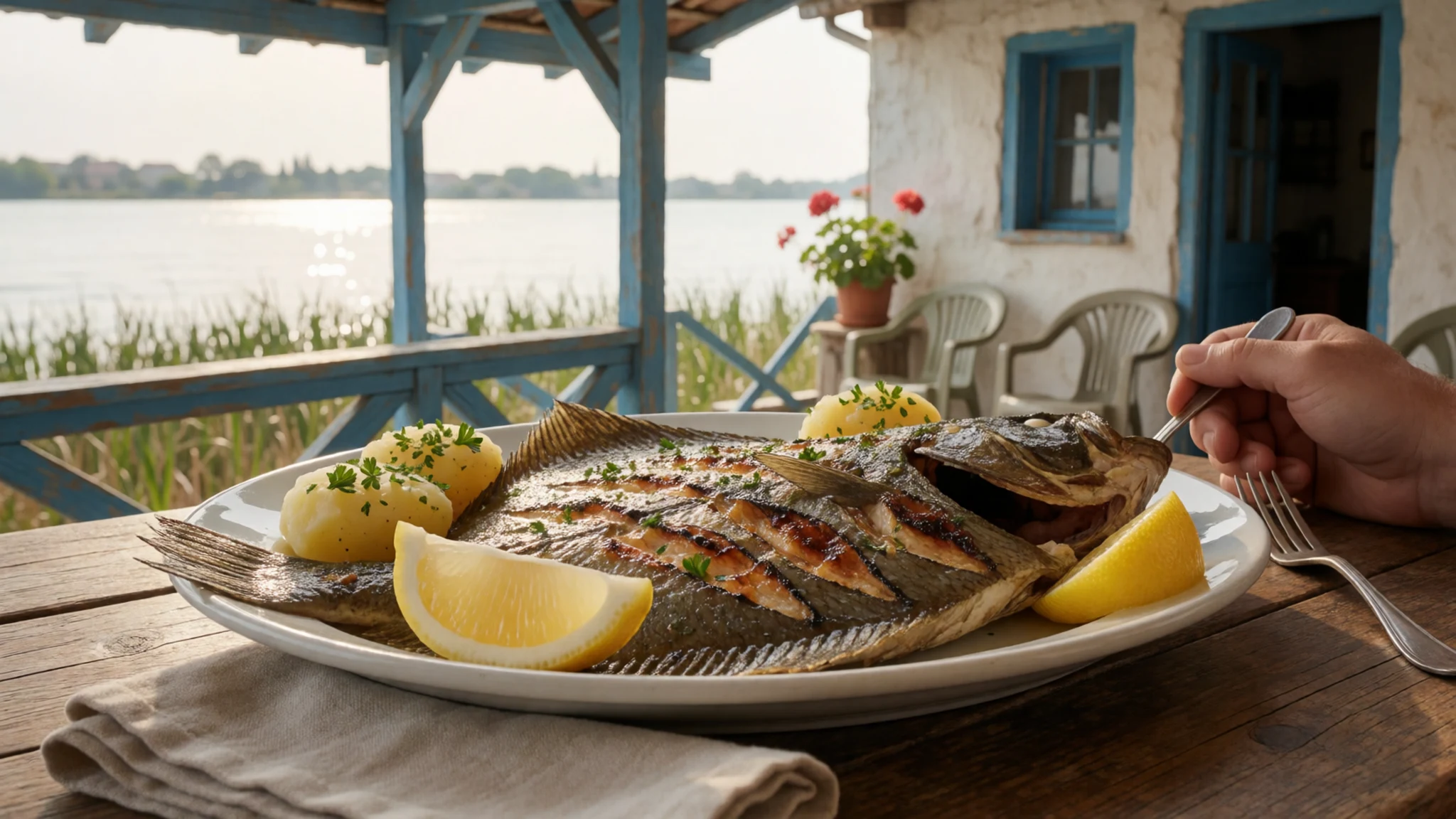
- Ciorbă de peşte — Roadside restaurants on the way from Constanța
A sour fish soup, often finished with lemon or fermented bran liquid and sometimes served with hot chillies on the side. It suits a cool day at the ruins, and many eateries in the area make their own version.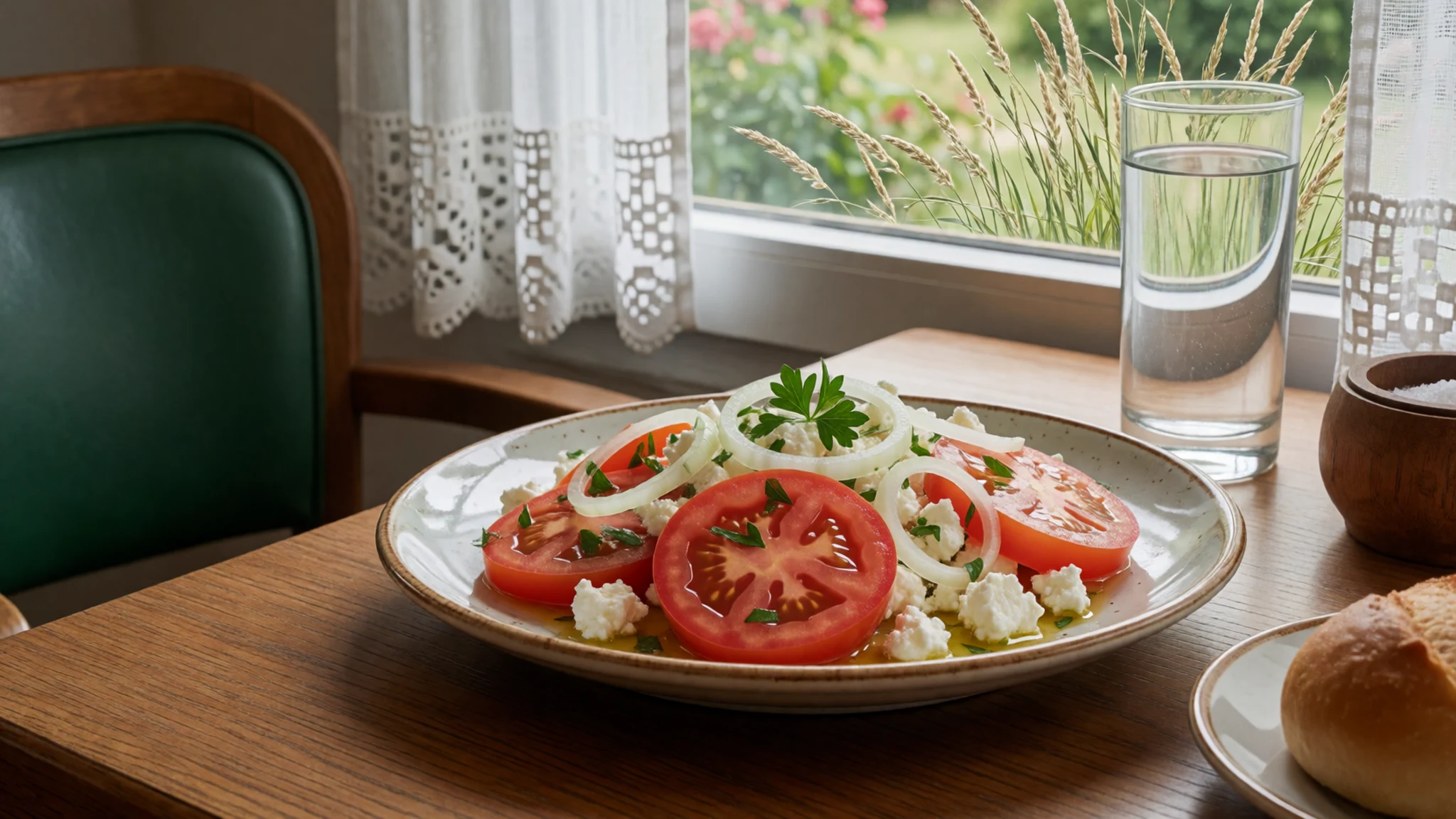
- Mămăligă — Family-run eateries and village homes
Cornmeal porridge cooked until firm is the staple side across Romania. It comes with fish, stews, cheese and sour cream. Plain and filling, it is the base of countless local meals and tastes better than it sounds. - Mici — Grill stalls and summer terraces in Năvodari and Constanța
Small, skinless grilled sausages of minced meat and spices, usually eaten with mustard, bread and a cold drink. They are quick, cheap by most travellers' standards, and common at stalls and cafés around the coast in summer. - Papanași — Restaurants and cafés in Constanța and larger towns
Fried or boiled doughnuts made with soft cheese, served with sour cream and sweet fruit jam, usually cherry or blueberry. It is a heavy dessert made for sharing, and is common on Romanian menus after a full meal.
Plan it
Best time. May–June and September–October, when it is warm enough to walk the open site comfortably. July and August can be very hot with almost no shade, and winter is cold, grey and windy by the lagoon.
How long. 1
Getting there. Fly to Constanța's Mihail Kogălniceanu airport or to Bucharest, then continue by car, taxi or a transfer towards Năvodari and the village of Istria. The site is on the lagoon shore at the end of a local road. A car makes it far easier, since public transport is limited.
Budget. low
Tips
- Check opening days and ticket details on the official site or with the local museum before you set out
- Bring water, a hat and sun cream, because there is almost no shade
- Go early or late in summer to avoid the heat and the light glare on the stones
- Carry some cash for small village eateries, and have a card as backup
- Pair the visit with the lagoon shore and a fish lunch nearby, and give yourself unhurried time with the plans
Etiquette
- Stay on marked paths and off the ancient walls
- Do not take stones or pottery fragments from the site
- Keep voices low and take litter away with you
Nearby
Sources
- Wikidata Q1164460 (CC0)
- Wikipedia — Histria (ancient city), rev 1374182010 (CC BY-SA 4.0)
- Wikivoyage — Histria (CC BY-SA 4.0)
- 2006 0814Histria Main Gate Roman20060404.jpg (Public domain)
- Histria city walls — Rjdeadly (CC BY 4.0)
- Relief map of Romania — Nzeemin (CC BY 3.0)
- Plan of Histria — Rjdeadly (CC BY 4.0)
- Histria aerial view — Neighbor's goat (CC BY-SA 4.0)
- Plan of Greek walls of Histria — Rjdeadly (CC BY 4.0)
- Moesia, Istros, 4th century BC silver drachm — Asi7777 (CC0 1.0)
- Plan of Roman walls of Histria — Rjdeadly (CC BY 4.0)


