Horezu monastery
Horezu monastery, Romania
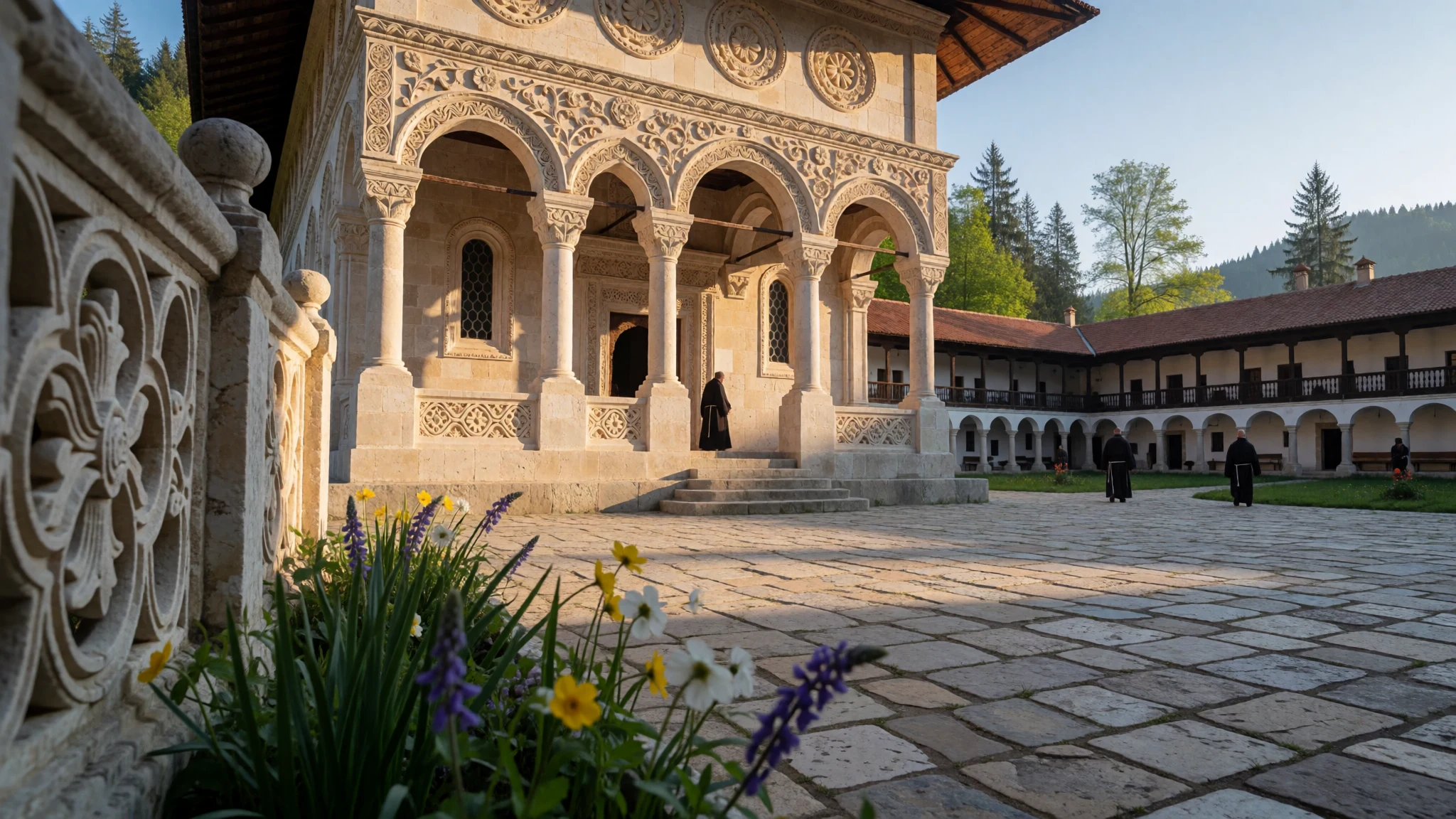
Horezu monastery is a standout Brâncovenesc ensemble—dense with sculpted detail, painted work and a strong sense of craft.
The place
Horezu monastery (Mănăstirea Hurezi) sits just outside the town of Horezu in Vâlcea County, Romania, in Wallachia’s hill-and-valley country. It was founded in the late 17th century by Prince Constantin Brâncoveanu, and the buildings carry the hallmarks of Brâncovenesc style: a careful balance of shapes, religious compositions that feel composed rather than crowded, and a generosity with carved and painted ornament.
What makes the place feel “alive” is that you’re not just looking at one church façade. The monastery works as an ensemble. Inside and out, there are reminders of how architecture and devotion were treated as one project—stonework, decorative details, and the way painted surfaces sit within the structure. In person, the sculpted elements read clearly even from a short distance: they catch light differently across the day, so the monastery looks changed between a late morning walk and an afternoon return.
Plan for a slow route, not a quick check-box. Crowds are usually manageable compared with the big-ticket destinations in Europe, but weekends and national holidays can bring local day-trippers. The site is outdoors as well as indoors, so weather matters; spring and autumn tend to be the comfortable windows when the landscape around Horezu looks its best.
If the UNESCO label is the headline, the real draw is craftsmanship you can see—an architectural purity and detailed finishing that rewards attention.
Its story
Horezu monastery traces back to a period when Wallachia’s rulers and artisans were investing in culture as a kind of long-term statement. Prince Constantin Brâncoveanu founded the monastery in Horezu, and the buildings became a showcase for what later came to be grouped as Brâncovenesc style.
Brâncovenesc style isn’t just “pretty Baroque.” It’s a blend that turns up across the region—mixing influences while still feeling distinctly Romanian in its proportions and decorative choices. At Horezu, the result is an architecture that looks ordered: symmetry where you expect it, rhythm where you can’t help but notice patterns, and a way the decoration sits alongside the religious purpose rather than fighting it.
The monastery’s carved detail and painted religious work are also a clue to the wider cultural ecosystem around it. A religious centre needed artists, stonecutters, painters and woodworkers, and Horezu became part of that network. Over time, the area’s reputation for craft broadened beyond the monastery: the region is also known for traditional pottery.
Visiting today, the monastery reads like a conversation between political ambition and everyday skill—an old stone complex that still makes sense as a place to pause. It’s not a “theme-park” kind of heritage. The atmosphere is quieter, more deliberate, and more about looking carefully than taking lots of photos quickly.
What to see
- Monastery approach views — Horezu town approach
Approach Horezu monastery from the road and you get an immediate sense of the ensemble—church volumes set within the monastery complex. The ornate stonework and painted surfaces start to show even before the main buildings.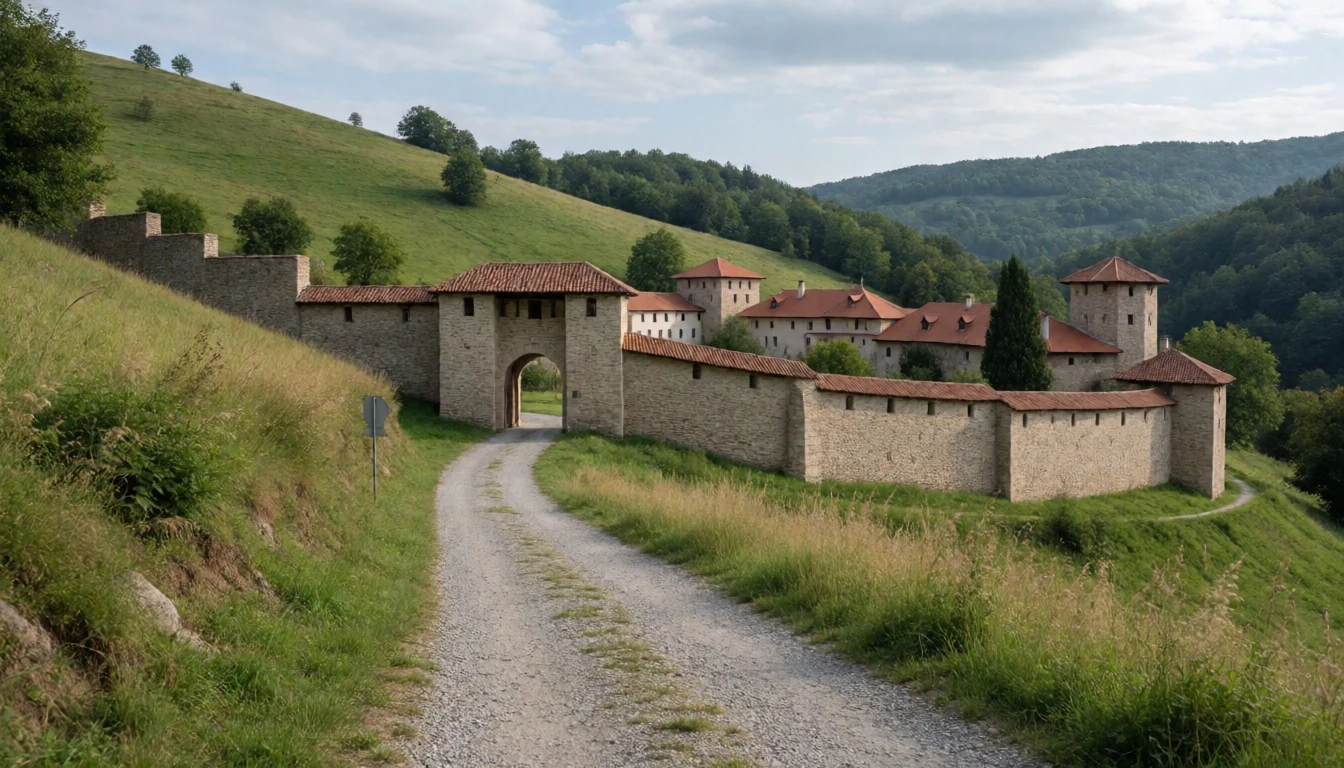
- Main church and courtyard detail — Main church courtyard
At the main church, the exterior decoration is where Horezu surprises people: sculpted motifs frame the religious architecture, and the courtyard setting helps you judge proportions. Look for how carving transitions into painted surfaces.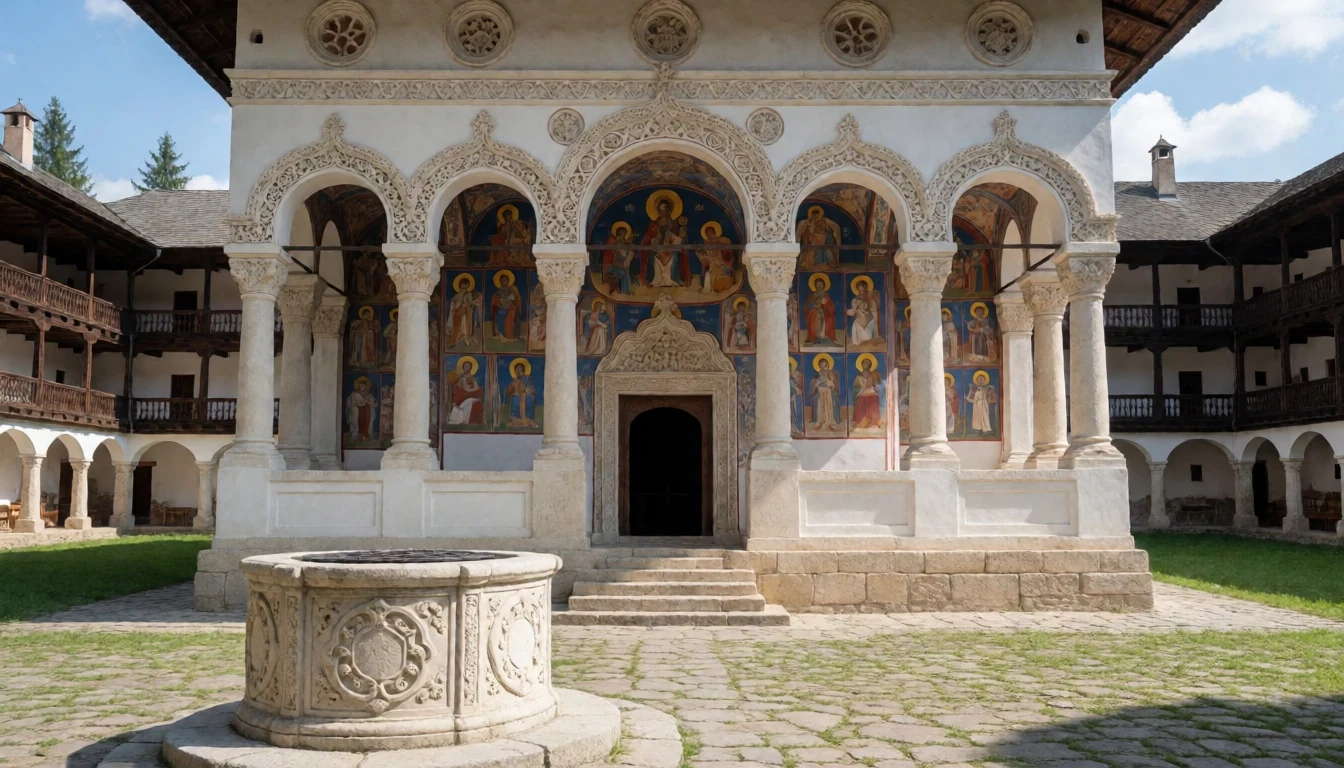
- Ensemble photography angles — Monastery perimeter
For wider shots, step back and use the monastery’s open sightlines to capture the church within the surrounding buildings. Afternoon light often makes the relief work read clearly, without turning the scene into glare.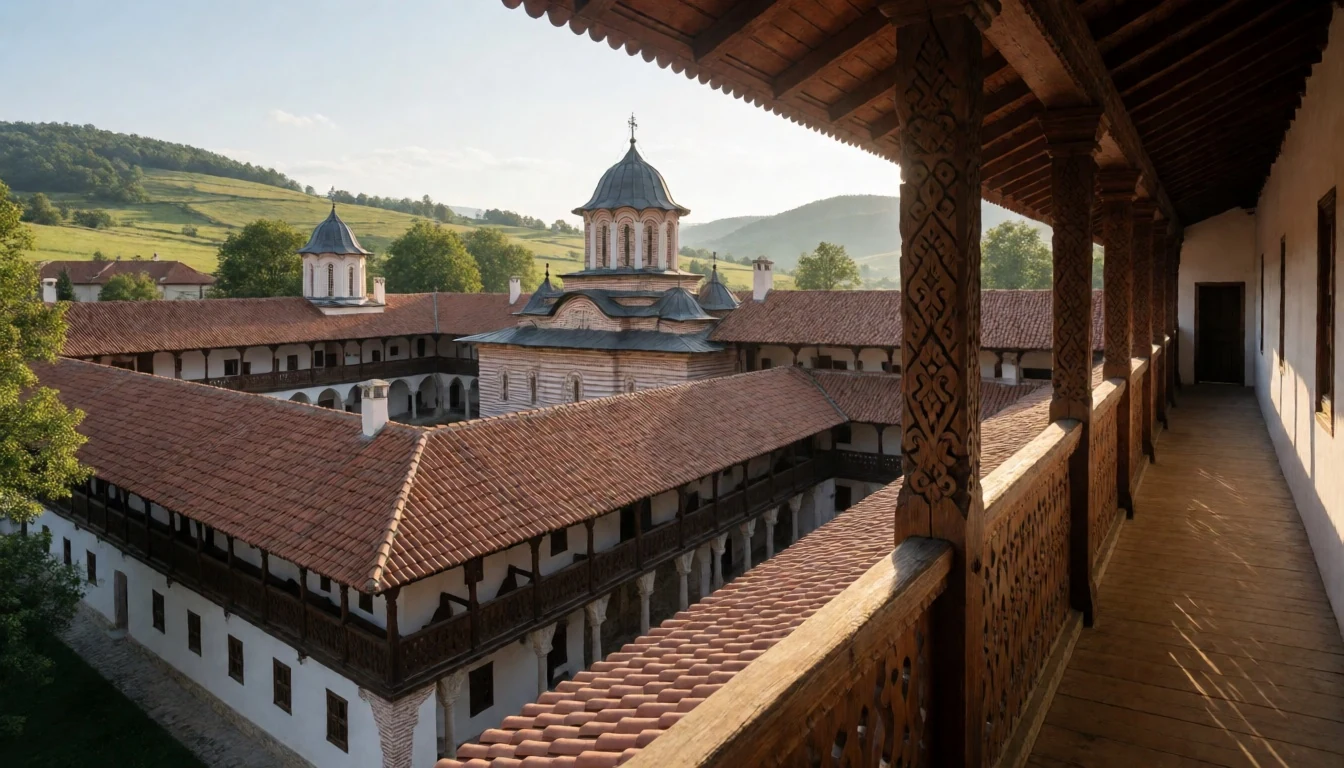
- Wider exterior perspectives — Monastery grounds edges
Walk the outer edges of the complex for perspectives that show the monastery’s layout rather than one façade alone. From these angles, the building volumes and decorative density feel more intentional and less concentrated.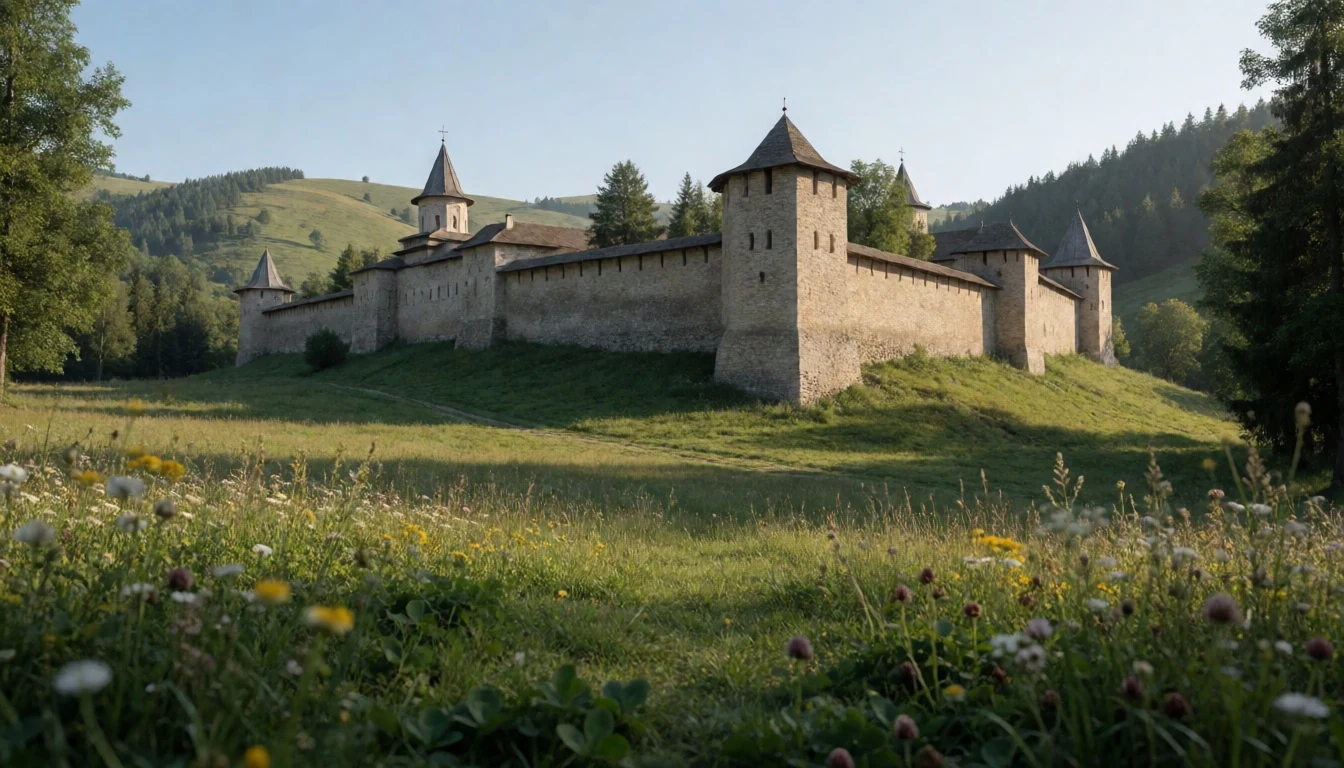
- View from the monastery grounds — Monastery grounds
From within the monastery grounds, you can catch views that include the religious buildings and the countryside beyond. This is a good moment to slow down—no rushed path, just settling into the scale of the complex.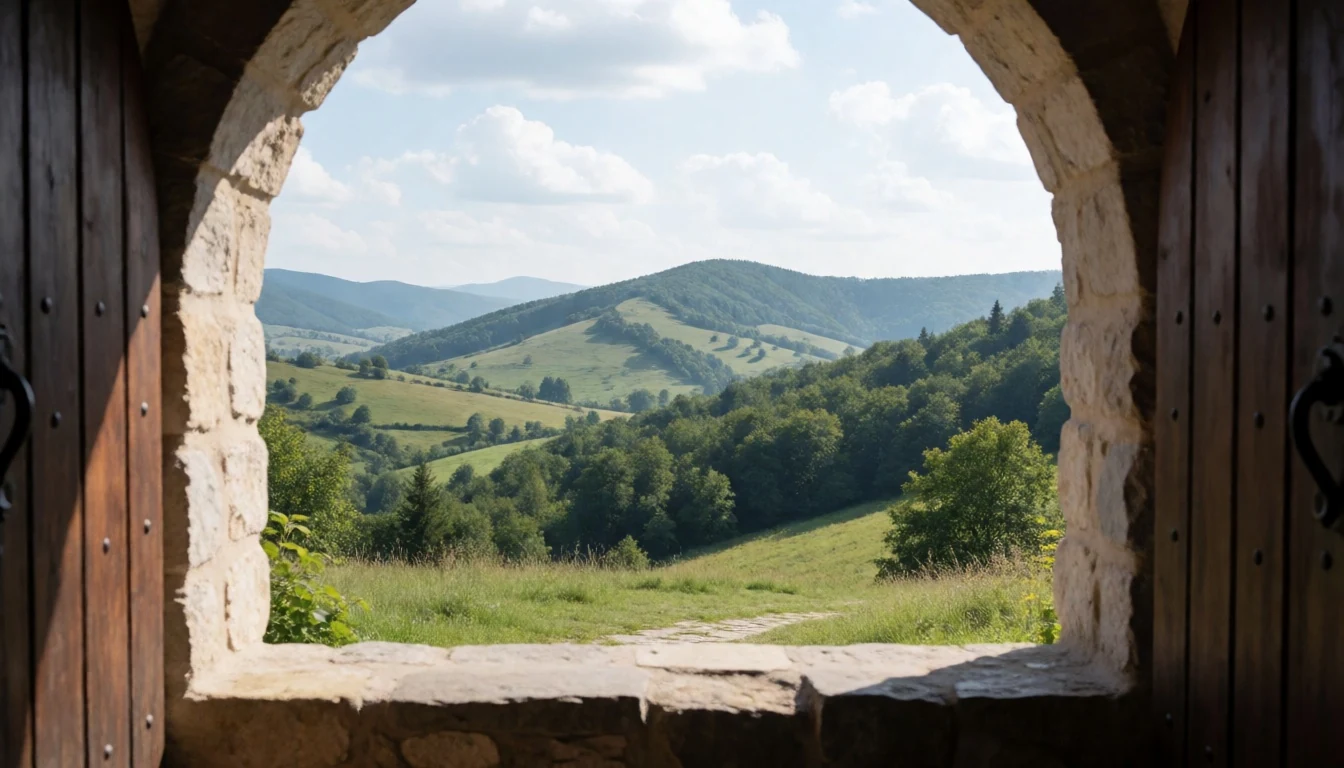
Culture
Horezu monastery is a working religious site as well as a heritage attraction, so the main cultural rule is to behave as if you’re walking into someone’s worship space. Expect quieter interior moments where conversation should drop, and follow whatever guidance is posted locally about where visitors may stand. Clothing also matters: dress modestly and avoid very short or sleeveless outfits, especially near the church entrances.
Photography is usually the first thing people wonder about. Even when photography is allowed, keep your focus on the architecture and artwork, and avoid blocking entrances or aisles. If you see staff or clergy guiding visitors, pause and step aside; the flow inside can be narrow.
A small practical cultural difference from some “open” museums is that visitors often approach details respectfully rather than treating every surface like a selfie backdrop. In other words, it’s fine to admire—just don’t handle barriers or lean into restricted areas to get a better shot.
Visitor etiquette tip: dress modestly, keep voices low inside the church, and only photograph where you’re clearly allowed.
What to wear
At Horezu monastery, the dress code is basically about modesty and comfort for stone-and-outdoor walking. Traditional Romanian dress may appear at cultural events or in local displays, but on a normal visit most people wear everyday clothing with a respectful tone—think long trousers or long skirts, tops that cover shoulders, and layers that cope with changing weather.
If you want to blend in, the traditional look in this region often features richly patterned textiles and strong colours, especially in headwear for formal occasions, and it’s usually seen during festivals rather than as everyday streetwear. For visitors, that means you don’t need to wear folk costume; you do need to avoid outfits that feel too revealing for a church setting.
Footwear matters because you’ll likely walk on uneven stone and courtyard areas. Choose shoes with grip and bring something that can handle damp ground if conditions are wet. In cooler months (spring or late autumn), add a light warm layer for standing still near the church entrances while looking at details.
What to eat
- Ciorbă (sour soup) — Local restaurants in and around Horezu
Ciorbă is a comforting Romanian sour soup, often built around vegetables and a tangy base. It’s usually easy to find in regional eateries around Horezu and nearby towns, especially at lunchtime.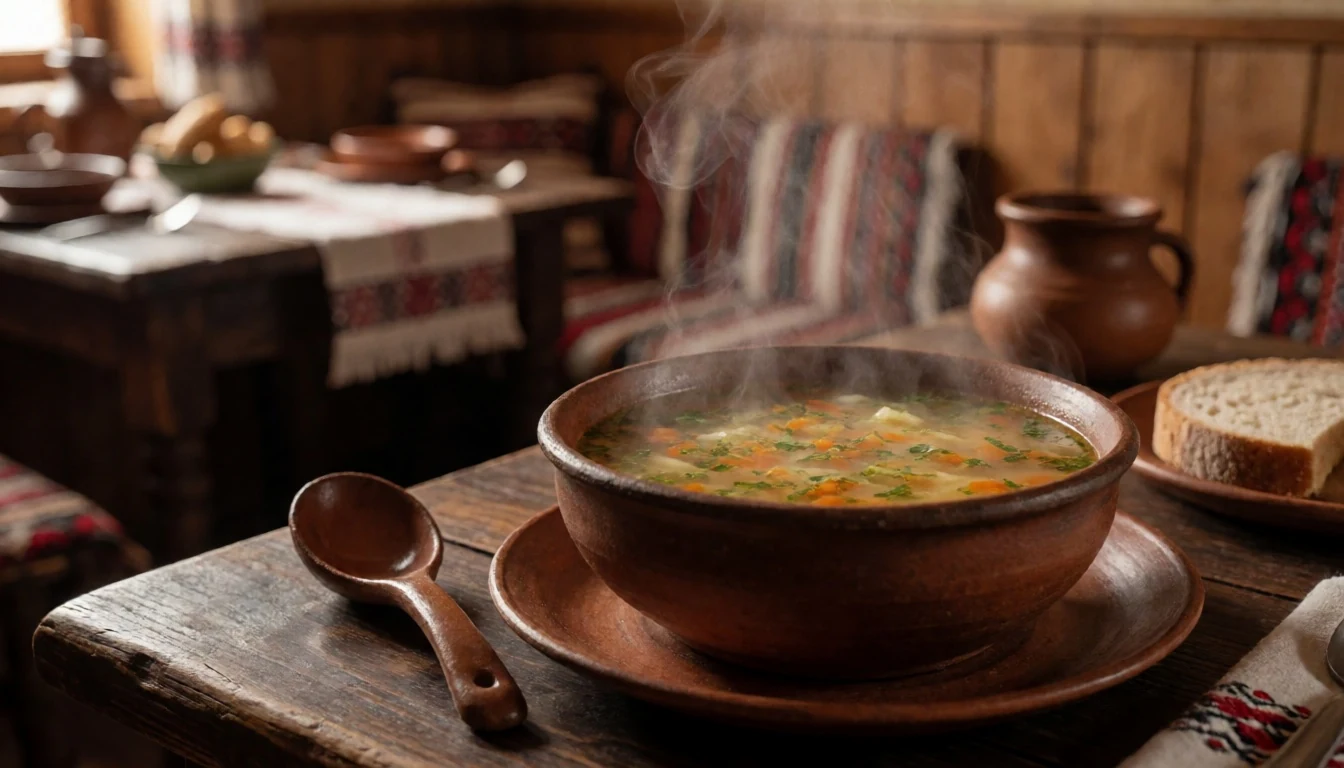
- Mămăligă with cheese — Regional restaurants and guesthouse dining rooms
Mămăligă (polenta) is a staple here, commonly served hot with cheese and sometimes sour cream. Look for it on menus in county-area restaurants—simple, filling and a good match for a monastery day’s walking.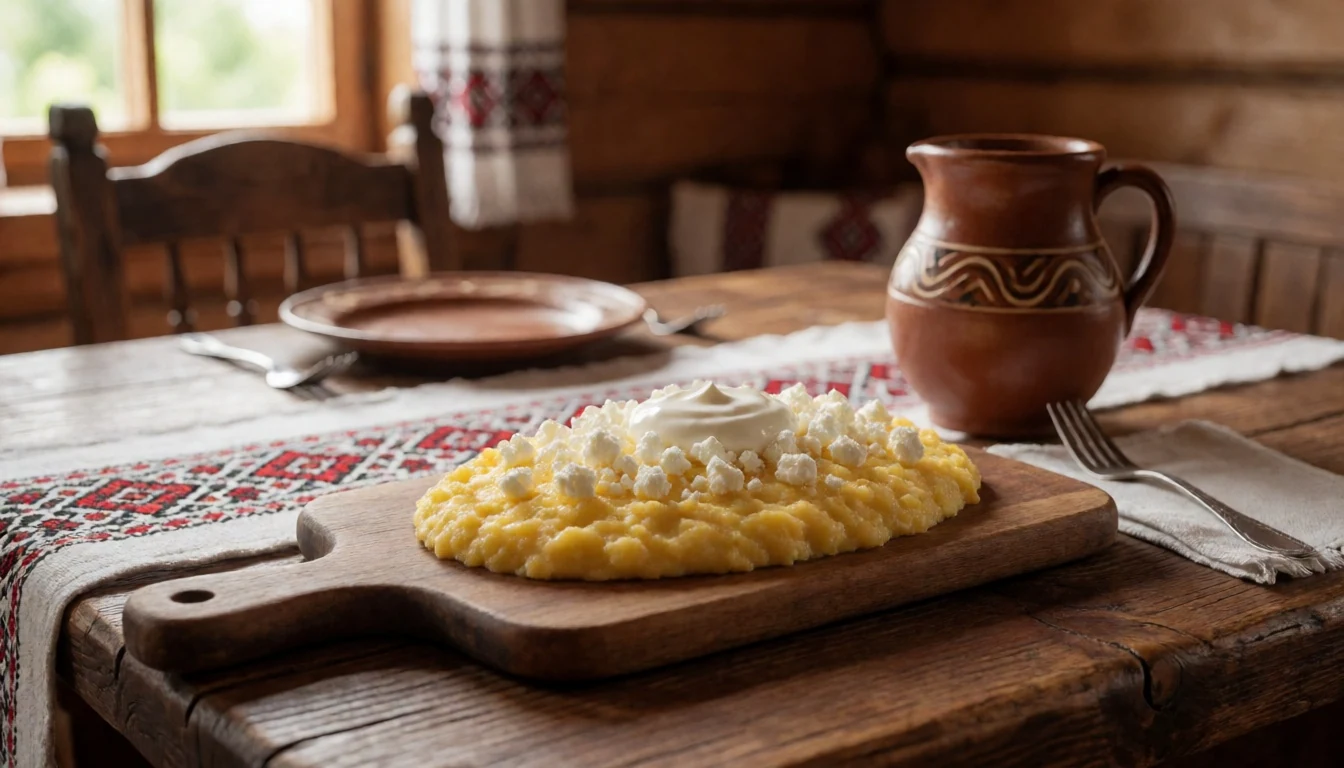
- Cabbage rolls (sarmale) — Village and town eateries around Vâlcea County
Sarmale—cabbage leaves stuffed with a savoury filling—show up across Romania and are a cosy choice when the weather turns cool. Many local menus in Vâlcea offer it as a main course, often with tomato flavours. - Traditional pastries — Bakeries and markets in Horezu
Look out for Romanian pastries such as layered sweet bakes and nut-filled treats. They’re often sold in town bakeries or at small local stalls, and make an easy snack between visits and viewpoints. - Local honey — Local markets and speciality food stalls
The area around Horezu is known for traditional food crafts, and honey is a common local buy. It’s usually available from sellers at markets or food shops, and it works as a quick sweet finish to a meal.
Plan it
Best time. April and October are the most comfortable months for walking, with milder temperatures and moderate rainfall; the hottest period is July–August, and the wettest months are May–June.
How long. 3–4
Getting there. Fly into a major Romanian airport, then travel to the Vâlcea area. From there, Horezu is commonly reached by regional buses: hourly connections from Râmnicu Vâlcea (around one hour) and less frequent buses from Târgu Jiu (about two hours), followed by local transport if needed.
Budget. mid
Tips
- Aim to start early so the monastery courtyard feels calmer before day-trippers arrive
- If travelling by bus, build in buffer time for less frequent services from Târgu Jiu
- Carry water and a light layer—outdoor time around the complex adds up
- Use a mix of interior and exterior breaks to avoid the hottest part of the day in summer
Etiquette
- Keep voices low inside the church and follow any on-site guidance
- Avoid blocking entrances or aisles when taking photos
- Dress modestly for a place of worship
Nearby
Sources
- Wikidata Q733069 (CC0)
- Wikipedia (rev 1378591939) (CC BY-SA 4.0)
- Wikivoyage (rev 5404209) (CC BY-SA 4.0)
- Photo photos/01-horezu-church.jpg (CC BY 3.0)
- Photo photos/02-horezu-bis-man-sv.jpg (CC BY-SA 3.0 ro)
- Photo photos/03-vedere-a-manastirii-din-fata-panoramio.jpg (CC BY 3.0)
- Photo photos/04-ansamblul-bisericesc-al-manastirii-horezu-unesco-2-mai-2008-.jpg (CC BY 3.0)
- Photo photos/05-horezu3.jpg (Public domain)
- Photo photos/06-2-panoramio-eug-sim.jpg (CC BY 3.0)
- Photo photos/07-m-n-stirea-hurezi-30.jpg (CC BY 2.5)
- Photo photos/08-m-n-stirea-hurezi-20.jpg (CC BY 2.5)


