Oradea
Oradea, Romania
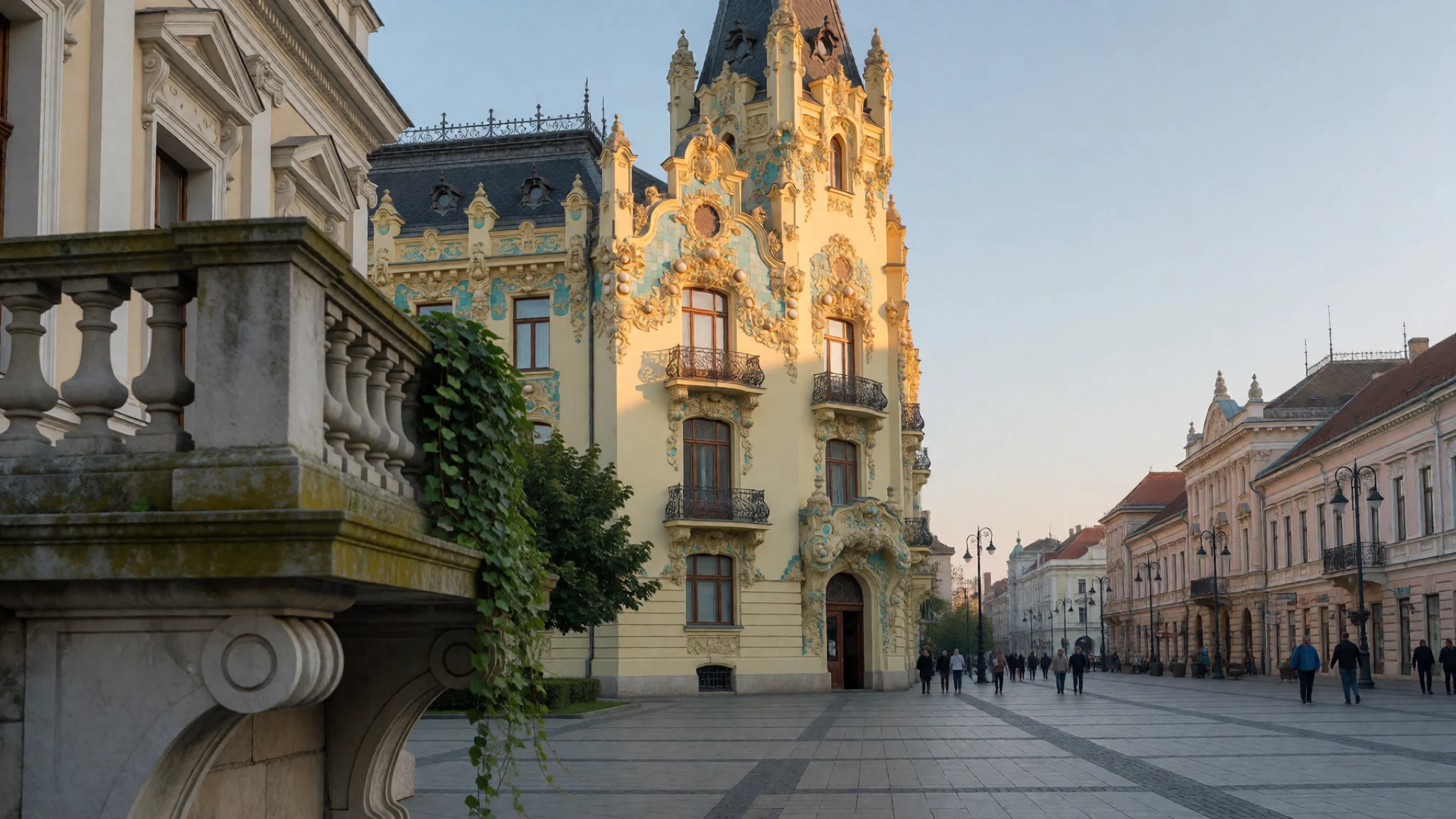
Oradea rewards travellers with stunning Secessionist architecture, healing thermal baths, and a rich multicultural history on the edge of Crișana.
The place
Oradea sits along both banks of the Crișul Repede River in western Romania, serving as the county seat of Bihor. The municipality covers a broad expanse of the Crișana plain where the waters meet the lower ridges of the hills, creating a natural basin that has drawn settlers since Neolithic times. Visitors approaching from the nearby western border find an urban landscape defined by wide squares, riverside walks, and an extraordinary concentration of decorative facades.
The municipal area feels open and walkable, anchored by grand civic buildings that reflect a long history of Austro-Hungarian heritage blended seamlessly with modern Romanian life. The urban core is celebrated for its pastel-tinted palaces, intricate ironwork balconies, and grand pedestrian avenues like Republicii Street, where every turn reveals sculpted plaster and sweeping curves typical of Central European urban planning.
Beyond the central architectural district, the city acts as a gateway to regional relaxation. Nearby natural springs and thermal waters feed health resorts that have drawn visitors for generations. The atmosphere is unhurried compared to larger capitals, giving you space to sit in open-air courtyards, observe daily life along the river terraces, and appreciate how different cultural traditions have shaped the fabric of this northwestern hub over centuries of governance.
Its story
Oradea holds a layered history shaped by shifting kingdoms, empires, and regional principalities over nearly a millennium. Written chronicles record early settlements and medieval fortifications established on the river terraces as an episcopal centre and strategic border outpost. Throughout the Middle Ages, the local citadel served as a crucial stronghold between Central and Eastern Europe, enduring sieges, territorial partitions, and changing royal dynasties.
Control of the region shifted repeatedly through the centuries. The area spent significant eras under Hungarian royal administration, the Principality of Transylvania, and the Ottoman Empire before becoming part of the Habsburg monarchy and later the Austro-Hungarian Empire. Following the First World War, the municipality integrated into the Kingdom of Romania, entering a new phase of cultural and administrative development.
This multicultural legacy remains visible in the streetscape today. Different communities—Romanian, Hungarian, Jewish, and German—have all left distinct architectural and social markers across the neighbourhoods. The city's museums and historic religious sites preserve the memory of these diverse influences, offering visitors a tangible sense of how a frontier settlement transformed into a vibrant European crossroads.
What to see
- The Oradea Fortress — Fortress district
This historic fortification sits within the southern part of the city, featuring medieval ramparts, deep moats, and restored bastions that now host cultural exhibitions and craft workshops. Visitors can walk along the massive stone walls and explore the central courtyards to understand the defensive history of the region. - Black Eagle Passage — Central shopping district
This dramatic glass-roofed arcade cuts through the heart of the central shopping district, displaying ornate Secessionist stained glass, sweeping curves, and intricate yellow-and-brown ceramic tiles. Built in the early twentieth century, it remains a lively indoor thoroughfare filled with cafes and historic details. - Baroque Palace — Ecclesiastical quarter
Designed in a grand Viennese style, this monumental palace was constructed to serve as a bishop's residence and features an impressive symmetrical facade pierced by numerous classical windows. Located near the cathedral, the building anchors the city's ecclesiastical quarter and houses regional art collections. - Moon Church — Central river area
This distinctive religious building takes its name from a unique mechanical sphere mounted on its tower that rotates to depict the phases of the moon in real time. Standing near the river, the church combines traditional Orthodox architecture with ingenious early engineering. - Băile Felix — Southern health resort district
Located just a short journey south of the main municipal area, this renowned health spa resort draws visitors to its natural thermal waters and shaded parklands. It offers a relaxing retreat with outdoor swimming pools fed by mineral-rich springs that remain warm throughout the year.
Culture
Oradea carries a distinct cultural identity shaped by its location in the Crișana region, where Romanian and Hungarian traditions blend naturally in daily life. You will hear multiple languages spoken in the markets and cafes, reflecting a long-standing tradition of multi-ethnic coexistence. Traditional crafts, folk music, and seasonal festivals are celebrated across the community, maintaining links to rural heritage even as the urban centre modernises. Polite greetings are standard when entering shops and restaurants, and a calm, courteous demeanour is appreciated by locals. When visiting historic churches, synagogues, or museums across Oradea, dress modestly with covered shoulders and knees, and keep your voice low in prayer spaces.
What to wear
In Oradea, traditional folk dress from the Bihor and Crișana regions features intricately embroidered linen blouses, dark wool waistcoats, and pleated skirts accented with vibrant geometric patterns, worn today primarily during folk dance festivals, national holidays, and cultural celebrations. For everyday wear, urban residents dress in contemporary European styles, favouring smart-casual jackets, comfortable footwear for walking on historic paving stones, and layered clothing suited to changing seasonal temperatures. Visitors should pack comfortable walking shoes, a waterproof jacket for sudden showers, and modest attire with covered shoulders and knees if entering local churches or religious sanctuaries.
What to eat
- Central European Goulash — Traditional eateries in the city centre
A hearty, slow-cooked meat and vegetable stew seasoned with paprika and caraway, reflecting deep Hungarian culinary roots across local taverns and traditional eateries throughout the city centre. - Transylvanian Meat Pastries — Downtown bakeries and street kiosks
Savoury baked dough parcels stuffed with seasoned minced meats, onions, and herbs, commonly purchased from downtown bakeries and busy street kiosks during daytime strolls. - Biergarten Grills — Outdoor garden courtyards by the river
Succulent grilled sausages, marinated pork cutlets, and roasted vegetables served with crusty bread and mustard in lively outdoor garden courtyards along the riverbanks. - Local Wood-Fired Pizza — Casual cafes inside historic commercial arcades
Thin-crust artisanal pizzas baked in traditional stone ovens using regional cheeses and cured meats, popular in casual cafes tucked inside historic commercial arcades.
Plan it
Best time. May to June and September offer pleasant weather for walking the historic streets and exploring thermal baths without summer heat.
How long. 2–3
Getting there. Arrive by regional train connections from major hubs in Romania or Hungary; note that ongoing rail modernisations may involve replacement bus links for certain regional approaches.
Budget. mid
Tips
- Wear comfortable shoes for walking on uneven cobblestones and historic squares
- Book sleeper trains well in advance if travelling long distances across the country
- Keep your belongings secure in crowded railway stations and busy tourist areas
- Carry some local currency for small purchases in traditional markets
Etiquette
- Dress modestly with covered shoulders and knees when visiting sacred sites
- Greet shopkeepers politely when entering local businesses
Nearby
Sources
- Wikidata Q93358 (CC0)
- Wikipedia (CC BY-SA 4.0)
- Wikivoyage (CC BY-SA 4.0)