Bran Castle
Bran Castle, Romania
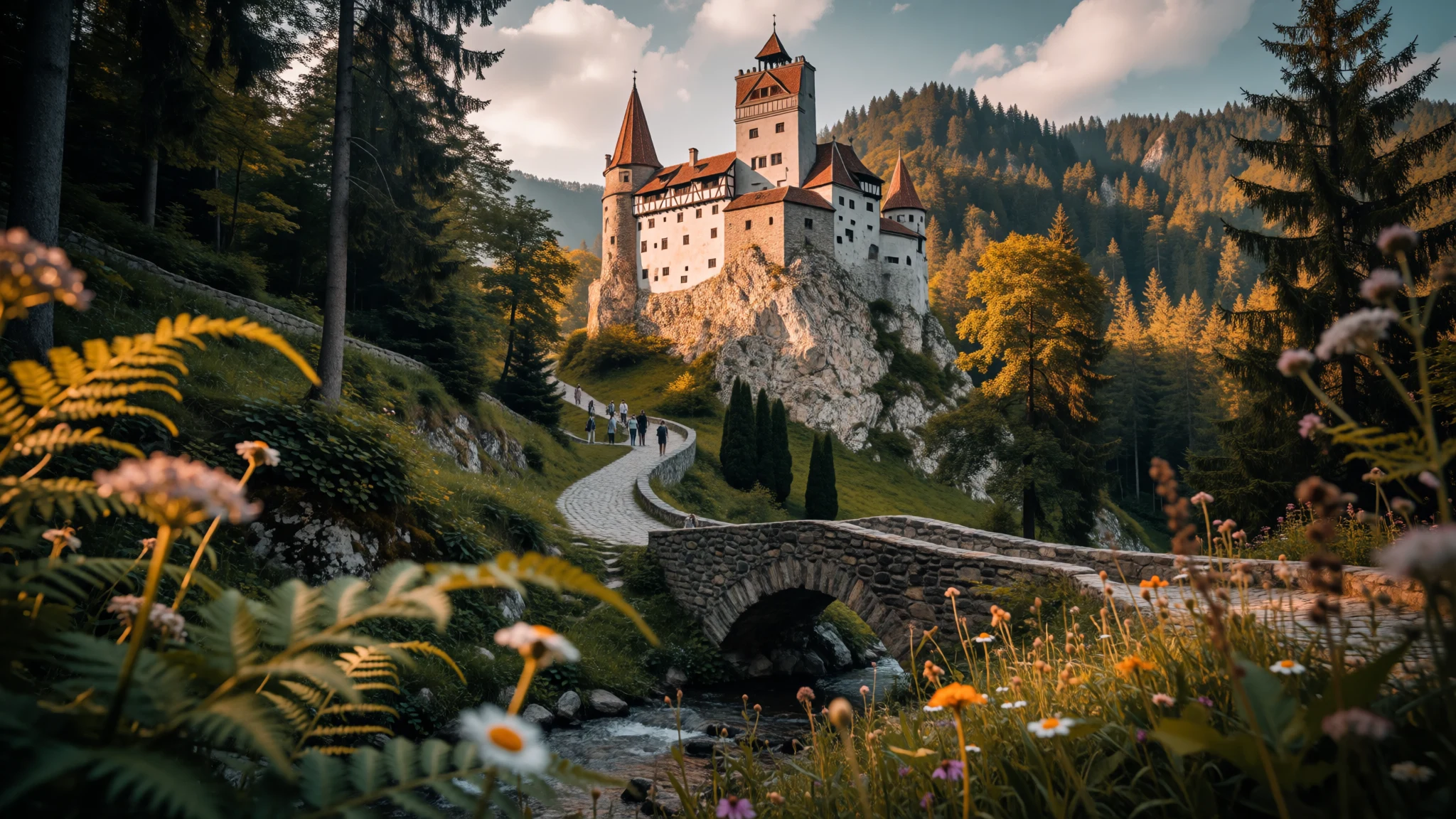
Bran Castle is a handsome border fortress with a royal interior, and a lesson in how a legend can outgrow the facts.
The place
Bran Castle stands on a rocky rise above the village of Bran, on the Transylvanian side of what was once the frontier with Wallachia, south-west of the city of Brașov. The village sits where the road squeezes through a gap in the Carpathians, and the castle was built to watch that gap. From the road, white walls and red-tiled roofs climb the rock in an uneven jumble of towers and chimneys, which is why it photographs so well. Inside, it is now a museum. The rooms are small and linked by narrow stairs and a secret passage between floors, and the collection centres on furniture and art gathered by Queen Marie, so the mood is closer to a royal summer retreat than a barracks. Outside Romania the castle is sold as Dracula's home. The truth is thinner. Bram Stoker's novel of 1897 describes a crumbling ruin that looks nothing like this, and there is no sign Stoker ever knew the place. Vlad the Impaler has only a loose connection. Souvenir stalls and tour operators lean hard on the legend, and the lane up to the gate can become a slow shuffle in high summer. At the foot of the hill, an open-air museum shows peasant cottages, barns and water-powered machinery from the Bran area. Bran is best approached as a good-looking border fort with a well-kept royal interior, set in a village that has learned how to sell a myth. Visitors can walk through alone or join a guided tour.
Its story
Bran Castle's story begins before its stone walls. A chronicle that historians treat with caution says Székely settlers were placed here in the eleventh century to guard the pass against raiders from the steppe, though proof is thin. Firmer ground arrives in the early thirteenth century, when the king of Hungary gave this region to the Teutonic Order, a crusading military brotherhood, to defend the frontier. The knights raised a timber stronghold called Dietrichstein, meaning Dietrich's Stone, probably named after a commander recorded in a document of the period. Royal troops destroyed it when the Order was driven out of the kingdom. The stone castle came later. In 1377 Louis I of Hungary issued a charter allowing the Saxons of Kronstadt, today's Brașov, to build a fortress at their own cost and with their own labour. The village of Bran began to grow beside it. The purpose was practical: a strongpoint on a trade route that merchants had used for a very long time. In the following century the castle took part in the defence against the Ottomans, and eventually it became a customs post for goods moving between Transylvania and Wallachia. By the late Middle Ages it belonged to the city of Brașov. The vampire association came far later and owes more to marketing than to archives. The royal furnishings visitors see today come from the collection of Queen Marie, and the building now works as a museum.
What to see
- The castle rooms and secret passage — Bran village
Bran Castle's interior is a warren of small rooms joined by steep, narrow stairs, furnished with carved wood, textiles and art from Queen Marie's collection. A hidden stair links the floors and is a hit with children. Tours can be guided or self-guided; check the official site, bran-castle.com, for tickets and opening arrangements.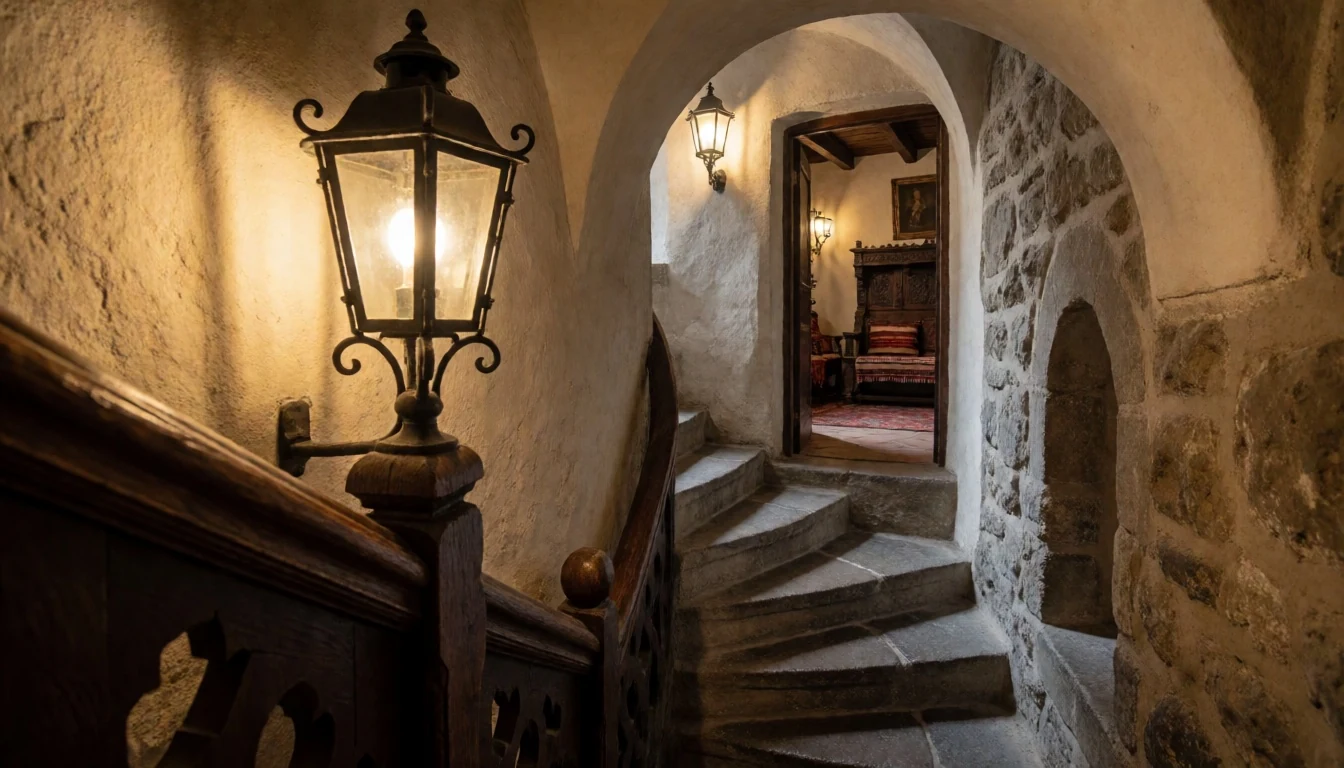
- Courtyard and round tower — Bran Castle
The inner courtyard of Bran Castle gives the clearest sense of how the fortress was packed onto its rock: timber galleries, a well, and a round tower rising among irregular walls. It is also the best spot to look out over the village roofs and the wooded hills beyond.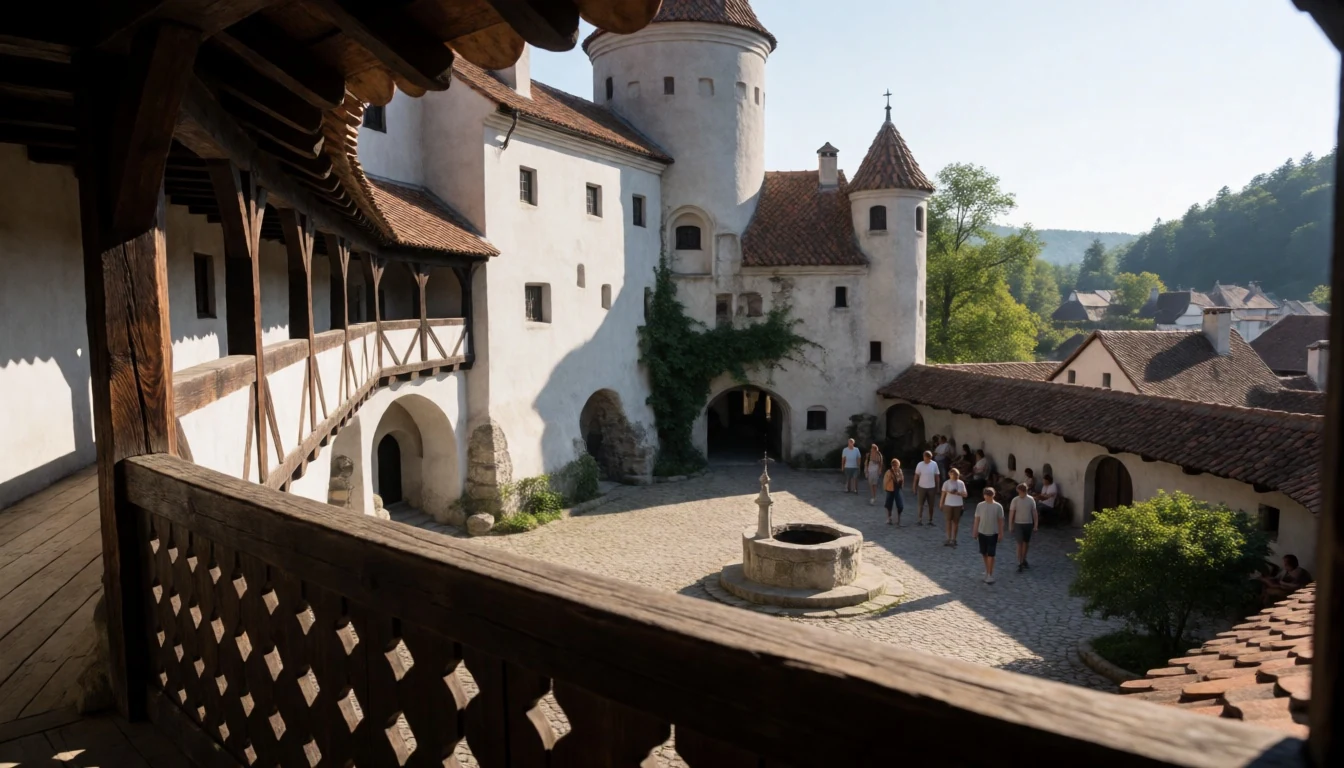
- Village Museum of the Bran Area — Castle park, Bran
This open-air museum sits in the castle's park and gathers traditional buildings from around Bran: timber cottages, barns and water-driven machinery. It is a quieter hour than the castle, and it shows how shepherds and farmers lived in the shadow of the fortress.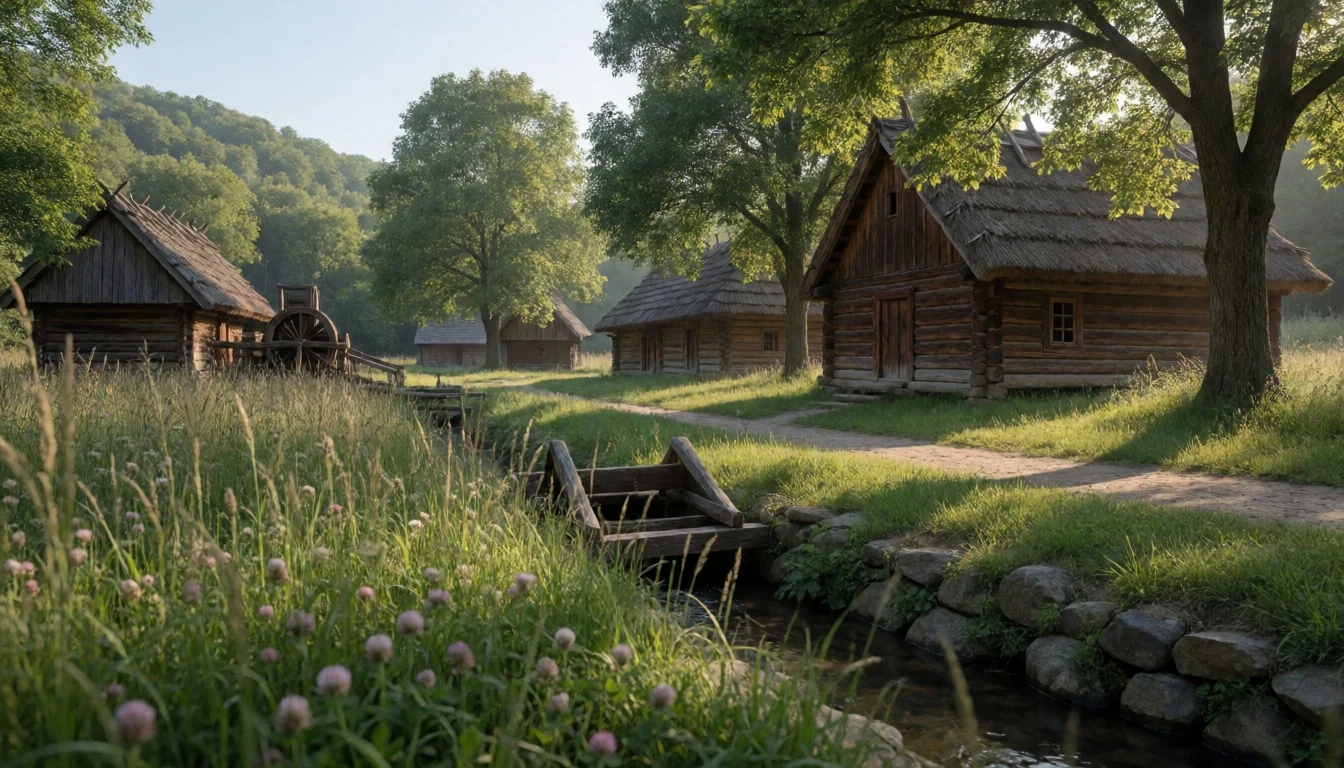
- Medieval Custom Museum — Bran village
A small museum close to the castle, tied to Bran's long role as a customs post on the route between Transylvania and Wallachia. It suits visitors who want the trade and border story rather than the vampire one, and it takes little time to see.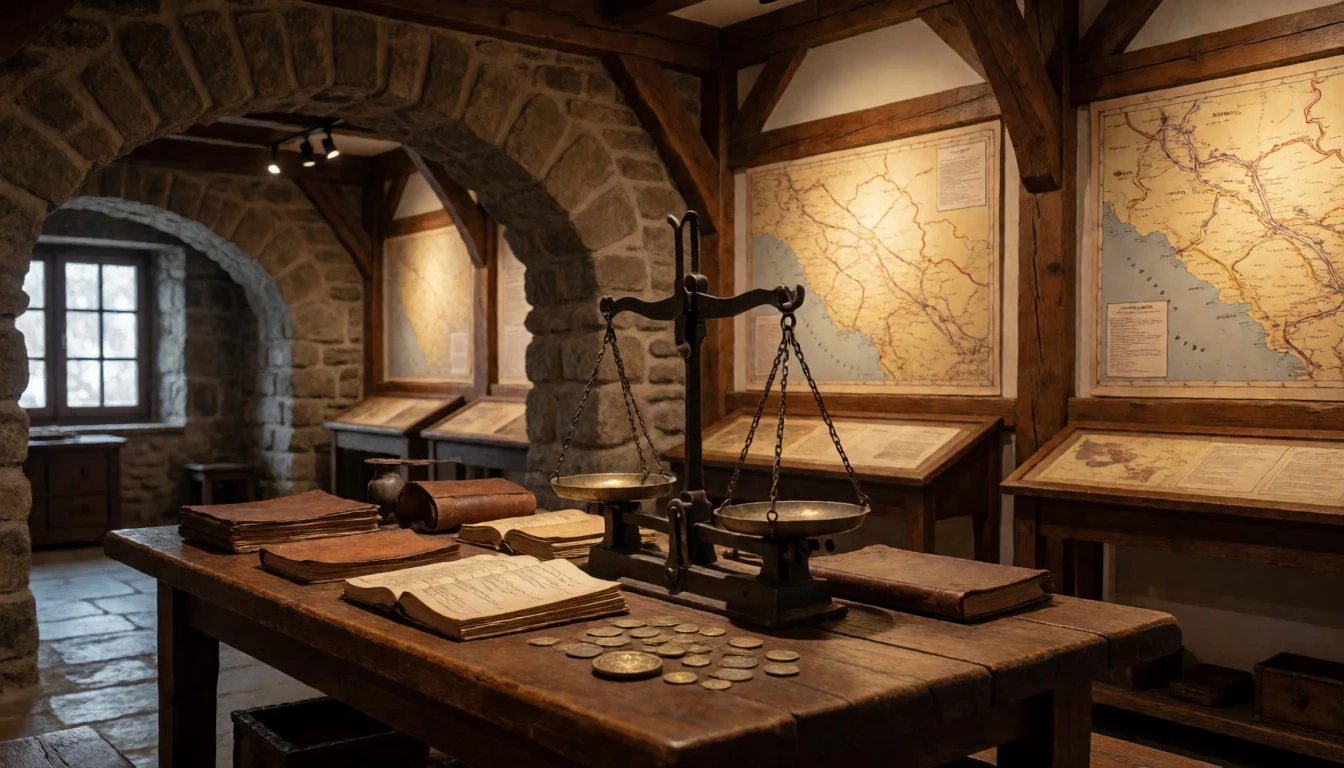
- Hills and Piatra Craiului — West of Bran
Walking trails lead into the hills above Bran, and Piatra Craiului National Park lies on the mountain ridge to the west. Paths range from gentle village lanes to serious mountain routes. Check the weather and carry a map, because conditions change quickly at height.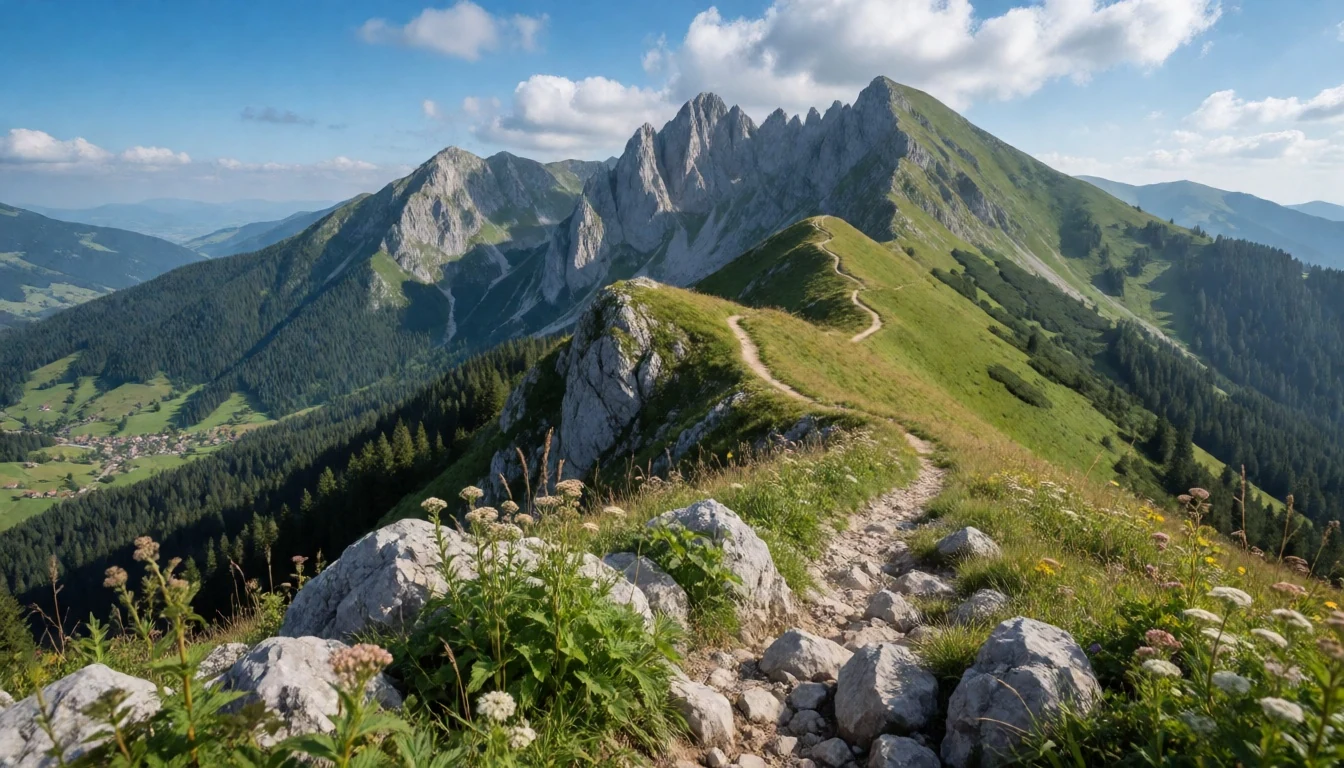
Culture
Bran Castle sits in a corner of Transylvania where Romanian, Hungarian and Saxon German histories overlap, and the village around it carries traces of all three. The fortress itself was built by Saxons from Brașov under a Hungarian royal charter, while its later furnishings belong to the story of the Romanian monarchy. Local life has long been rural. Sheep farming, cheese-making and woodwork shaped the area, and the open-air museum below the castle keeps that peasant world on show. Most visitors arrive for Dracula, and the village plays along with vampire mugs, T-shirts and carved wooden figures. Locals tend to be pragmatic about it. Romanians generally regard Stoker's count as a foreign invention, and the historical Vlad is remembered as a ruler of Wallachia with a hard reputation, not as a vampire. Guides and museum labels usually keep fiction and fact apart, and a polite question about the difference is welcome. Orthodox churches in the district and the fortified Saxon churches around Brașov show the other layers of the region's culture and are worth a detour for anyone with time. Hospitality in family guesthouses is warm, and meals are generous, so arriving hungry is sensible. Keep voices low and move on promptly in the castle's small rooms, and do not touch the furniture or textiles, which are museum pieces.
What to wear
Bran Castle lies in a region where traditional dress is still worn with pride. The classic Romanian outfit centres on the ie, an embroidered blouse in linen, cotton or hemp, with patterns that differ from village to village. Women add a wrapped or pleated skirt, a woven belt and sometimes a headscarf. Men wear white shirts, wide trousers, a felt hat and, in the cold, a sheepskin waistcoat called a cojoc, with leather opinci on the feet. Wool from local flocks supplied the heavier winter garments. These outfits appear at weddings, church festivals and folk performances, and in the open-air museum. Day to day, people in Bran dress much like the rest of central Europe: jeans, fleeces and padded jackets in winter, and sturdy waterproof boots for farm work and the mountains. Embroidered blouses also turn up in shops as everyday fashion. Visitors should plan for changeable mountain weather, which means layers and a light rain jacket even in summer, and a warm hat and gloves from late autumn. Shoes with a good grip matter most, because the castle's stairs and the cobbles outside are uneven and slippery when wet. Nothing formal is needed for the castle, but covered shoulders and knees are polite if stepping into a church on the way.
What to eat
- Kürtőskalács (chimney cake) — Stalls and bakeries in the centre of Bran village
A sweet dough wound round a spit, baked over embers and rolled in sugar until the outside caramelises. Eaten warm and torn off in strips, it is the classic snack for a walk around the village. Wikivoyage recommends a stall in the town centre.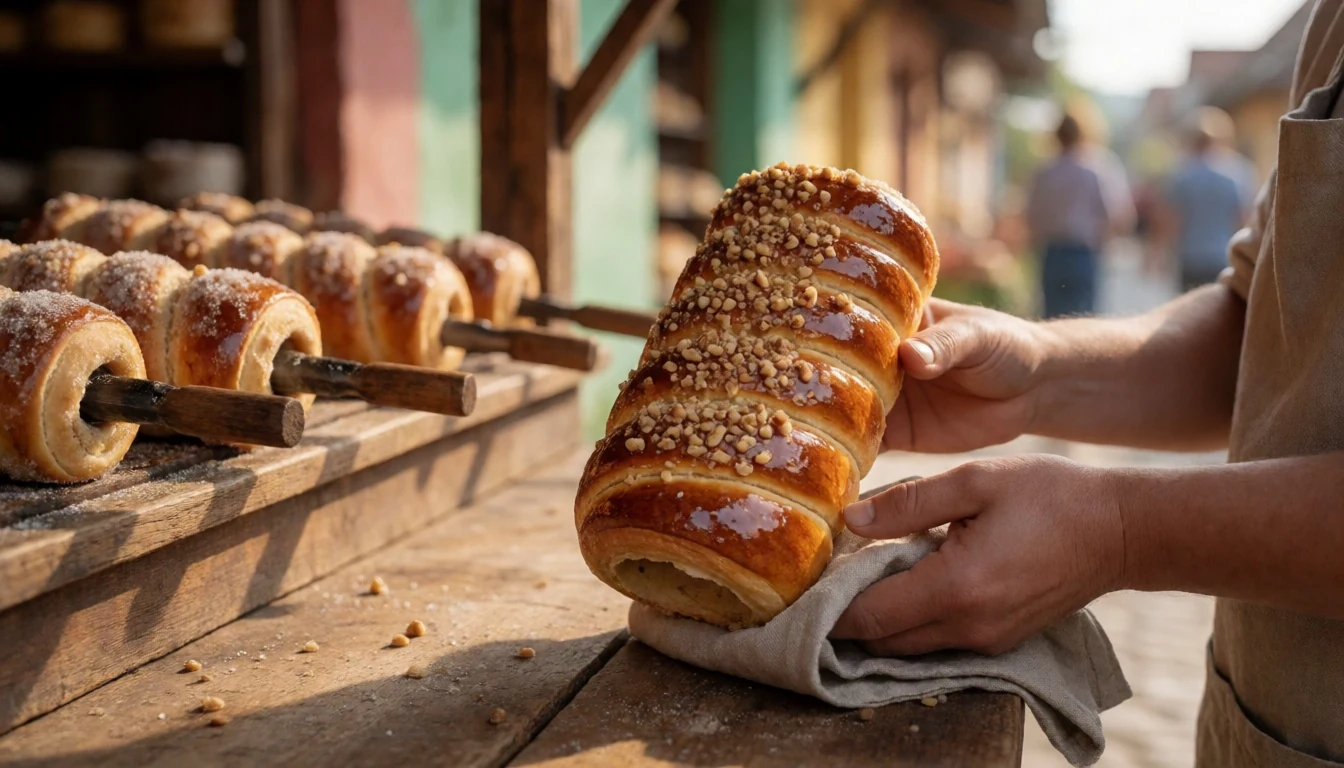
- Papanași — Traditional restaurants and guesthouse dining rooms along the main road
A Romanian dessert of cheese dough shaped into a ring with a small ball on top, fried or boiled, then buried under sour cream and sweet fruit jam. It is filling enough to share, and a good reward after climbing the castle stairs.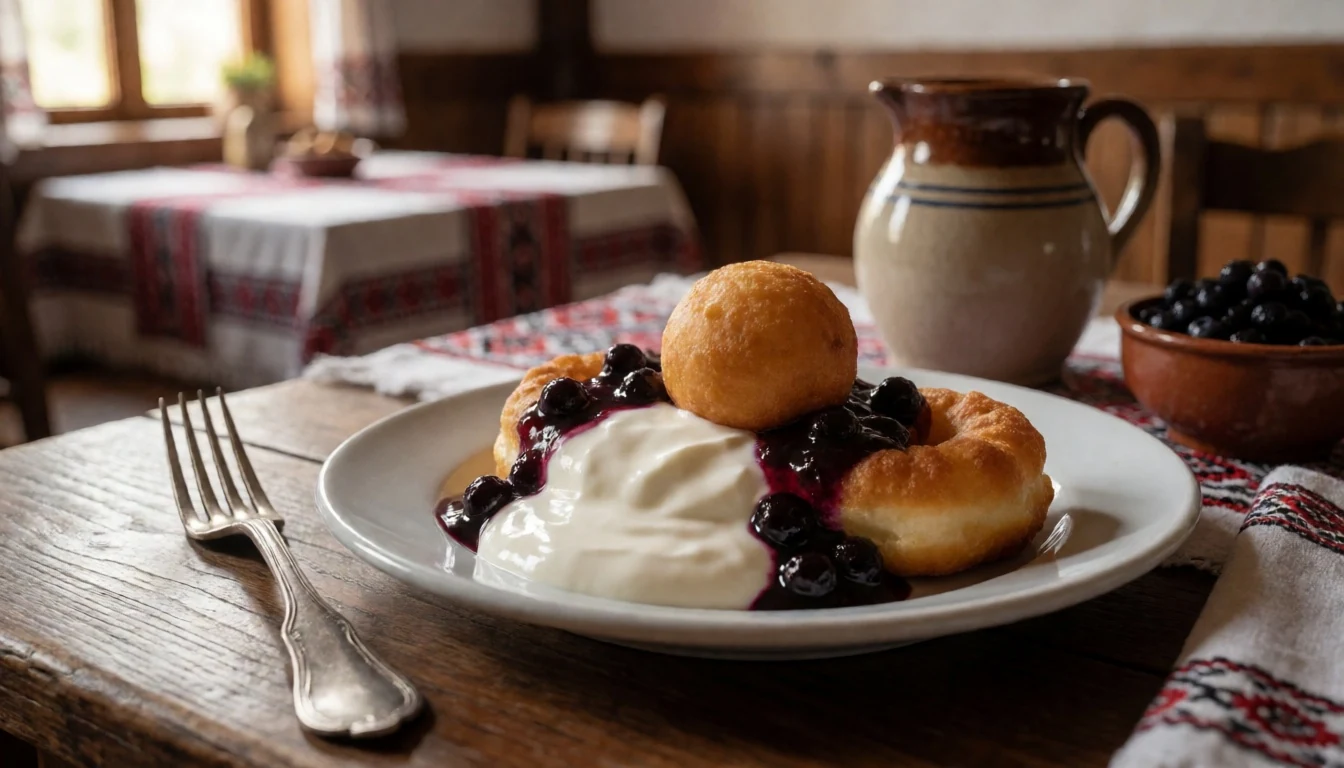
- Sarmale with mămăligă — Family guesthouses and village eateries
Cabbage leaves wrapped around minced meat and rice, simmered slowly and served beside mămăligă, a firm cornmeal porridge, usually with sour cream. It is home cooking at its most comforting, and a sensible choice on a cold, wet day. - Brânză de burduf — Roadside stalls and farm gates around the Bran pass
A pungent, salty sheep's cheese traditionally packed into pine bark or a sheepskin pouch, which gives it a resinous edge. It belongs to the mountain pastures around Bran and is easy to buy as a souvenir, wrapped for the journey. - Ciorbă — Any traditional restaurant or eatery in Bran and Brașov
A family of sour soups, soured with fermented bran liquid or lemon and finished with sour cream and hot peppers. Meat and vegetable versions are common, and ciorbă usually opens a meal. It is a good test of how seriously a kitchen takes local cooking.
Plan it
Best time. May–June and September–October, when the weather in the Carpathian foothills is mild and the hills are green or turning. July and August are warm but busy, and winter is cold with snow, which looks good but makes the steps slippery.
How long. 1–2
Getting there. Fly to Bucharest, then take a train or bus to Brașov, which takes about three hours. From Brașov, regular buses run to Bran in under an hour, and the walk up to the castle gate is short. Drivers from Cluj-Napoca or Sibiu can bypass Brașov by a shortcut into Râșnov.
Budget. mid
Tips
- Arrive at opening time or late in the day to avoid the tour-group crush in the narrow rooms
- Check the official site, bran-castle.com, for tickets, opening arrangements and any booking advice
- Pair Bran with the citadel at Râșnov, which is on the road back towards Brașov
- Wear shoes with a good grip, since stairs and cobbles are uneven and slippery when wet
- Carry some cash for small stalls and roadside cheese sellers
Etiquette
- Keep to the marked route in the small rooms and let groups pass
- Do not touch furniture, textiles or walls in the castle
- Ask before photographing people at stalls or in village homes
Nearby
Sources
- Wikidata Q390275 (CC0)
- Wikipedia: Bran Castle (rev 1380002599) (CC BY-SA 4.0)
- Wikivoyage: Bran (rev 5395815) (CC BY-SA 4.0)
- Todor Bozhinov, Bran Castle TB1 (CC BY 3.0)
- Dobre Cezar, Castelul Bran2 (CC BY-SA 3.0 ro)
- Vislupus, Bran Castle 002 (CC BY-SA 4.0)
- Sîmbotin, Castelul Bran 2012 (CC BY-SA 3.0 ro)
- Pmatlock, Bran castle 09 (CC BY 3.0)
- Myrabella, Bran castle courtyard round tower (CC BY 3.0)
- Kyle Thayer, Castle Bran (Public domain)
- Alessio Damato, Bran castel secret passage (CC BY 3.0)


