Constanța
Constanța, Romania
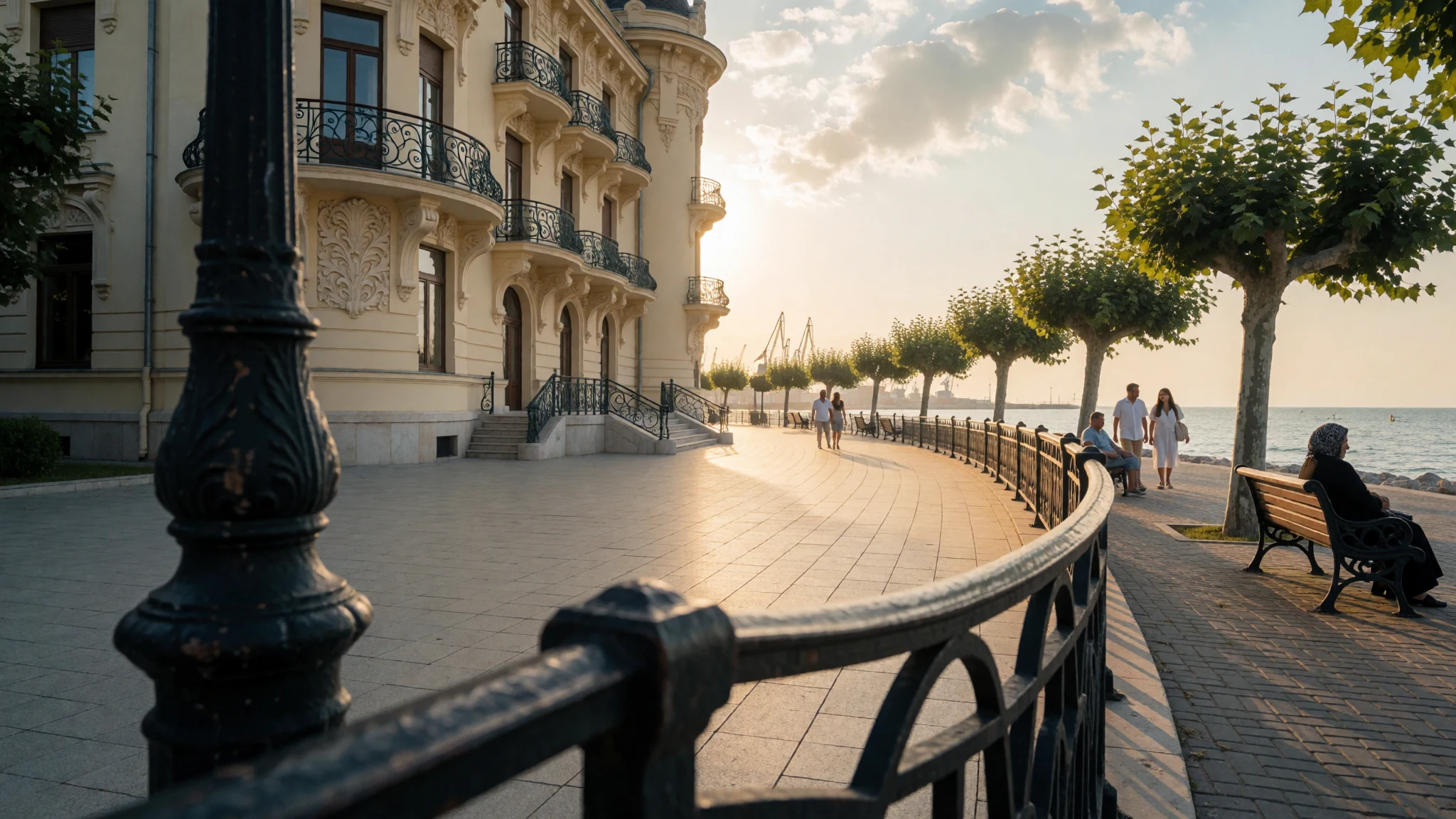
Constanța is a Black Sea port where Roman mosaics, an Art Nouveau casino and a mosque sit within a short walk of the water.
The place
Constanța sits on the Black Sea coast of Northern Dobruja, in south-eastern Romania, and is the county seat of Constanța County. About 264,000 people live in the city, which stands at roughly 1 m above sea level, so the sea is never far from sight or mind. It is Romania's principal Black Sea port, and the harbour works stretch for kilometres along the shore north and south of the old centre. Cranes and moored ships are as much part of the skyline as the seafront buildings.
The old core sits on a small headland, and that shapes how the place feels. Streets run down towards the water, a pedestrianised area gives the centre a relaxed pace, and the promenade is where much of the town's social life happens. Beyond the centre, residential districts spread inland, while resort strips such as Mamaia lie north along the sand.
The population is mostly Romanian, though the city has small Tatar and Greek communities, together with Turkish and Romani residents. That mixture is visible in the architecture: a mosque stands a few minutes from an Orthodox cathedral, and Roman remains lie under squares used by everyday traffic. The layers sit close together.
Constanța is not a polished resort. Paint peels in places, some grand buildings wait for repair, and the port is a working one. Visitors who like lived-in cities with a sea view will be well served; those wanting a tidy beach holiday are better off heading to the resort towns nearby. Summer fills the seafront with families, while winter leaves it wind-bitten and quiet.
Its story
Constanța began as Tomis, a Greek colony on the Black Sea shore, founded in the same era as neighbouring colonies at Histria, Orgame and Kallatis. The site offered a good natural harbour, farmland nearby, and the Carasu valley, a short route from the sea to the Danube. Those assets help explain why so many powers wanted it.
Rome took control, and Tomis became a provincial port. The Roman poet Ovid was exiled here and spent his last years writing homesick verses about a cold, remote frontier; the statue in the centre commemorates him. After Rome came a sequence of rulers: the Byzantine Empire, the First Bulgarian Empire, Byzantium again, the Second Bulgarian Empire and the Despotate of Dobruja. Ottoman rule followed and lasted for centuries, leaving a modest port town rather than a great city.
The turning point came with the Russo-Turkish War, after which the area passed to Romania. The town then had just over five thousand inhabitants. Romania invested in the harbour, and new public buildings rose in the early twentieth century. During the First World War the city changed hands among the Central Powers and Bulgaria before returning to Romania. Industry and the port expanded through the Socialist period, and the city grew to its present size of about 264,000. Today that long sequence of rulers is visible in the museum cases, the mosque and the Roman remains under the streets.
What to see
- Old Casino — Seafront promenade
The Old Casino stands on the seafront promenade, an Art Nouveau building designed by two architects, Petre Antonescu and Daniel Renard. It dates from the years before the First World War and has become a familiar symbol of the city. Its condition varies, so enjoy it from the promenade and check the city hall website before planning to go inside.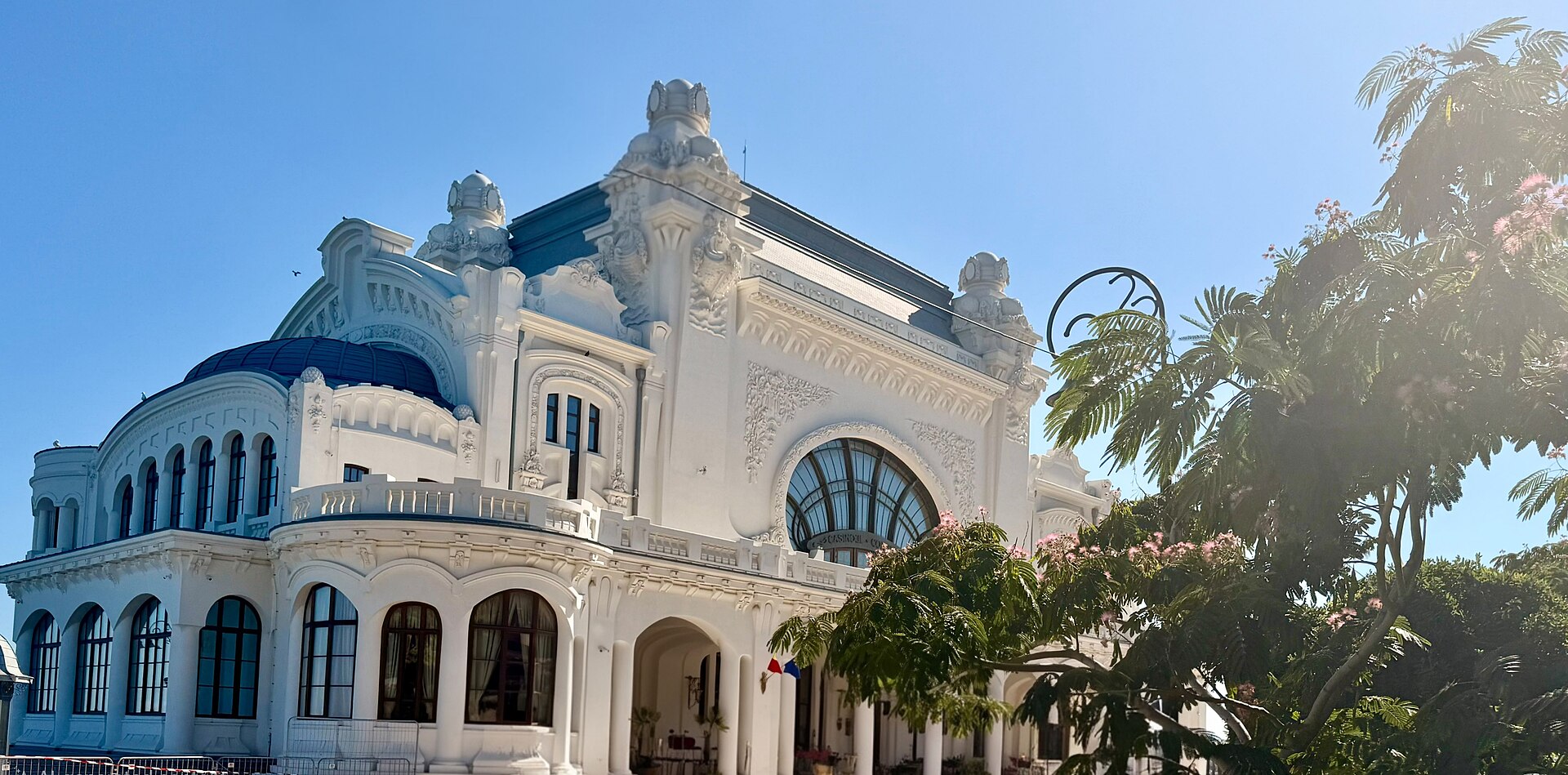
- Statue of Ovid — Old centre, Ovidiu Square
The statue of Ovid, by the sculptor Ettore Ferrari, stands in a square in the old centre and honours the Roman poet who lived out his exile at Tomis. It was paid for by public subscription in the nineteenth century, and a matching statue stands in Sulmona, the poet's birthplace. It makes an easy meeting point before visiting the nearby museum. - Grand Mosque of Constanța — Old centre
King Carol I presented the Grand Mosque of Constanța to the city's Muslim community. Its Moorish design nods to Sultan Mehmed II, and it was among Romania's first public buildings made of concrete. Check locally before visiting, since access for non-worshippers depends on prayer times and the day.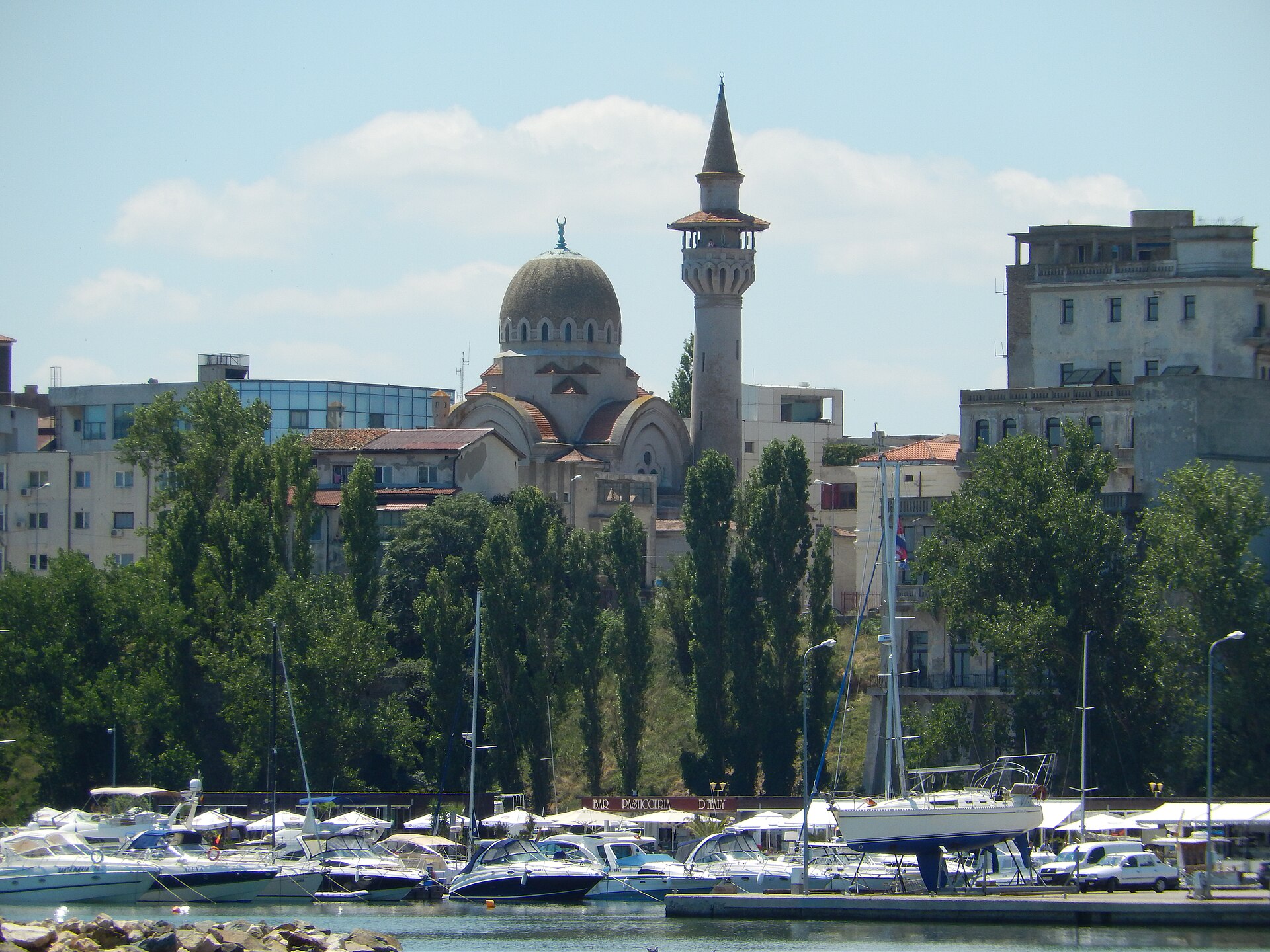
- Roman Mosaic Edifice — Ovidiu Square
The Roman Mosaic Edifice was found by accident when workers laying services in Ovidiu Square uncovered the remains of a large structure from ancient Tomis. Its mosaic floors, in geometric patterns, belonged to a building tied to the port's trade. It is a reminder that the modern square sits above the Roman town. Check the official page for access, as arrangements change. - National Museum of History and Archaeology — Old centre, Ovidiu Square
The National Museum of History and Archaeology holds Greek and Roman finds from Tomis and the surrounding region, among them the Glykon snake sculpture, a figure of Fortuna with Pontos, a two-faced Nemesis and rows of amphorae. It is a good place to make sense of the ruins around the square. Check the official site for opening times.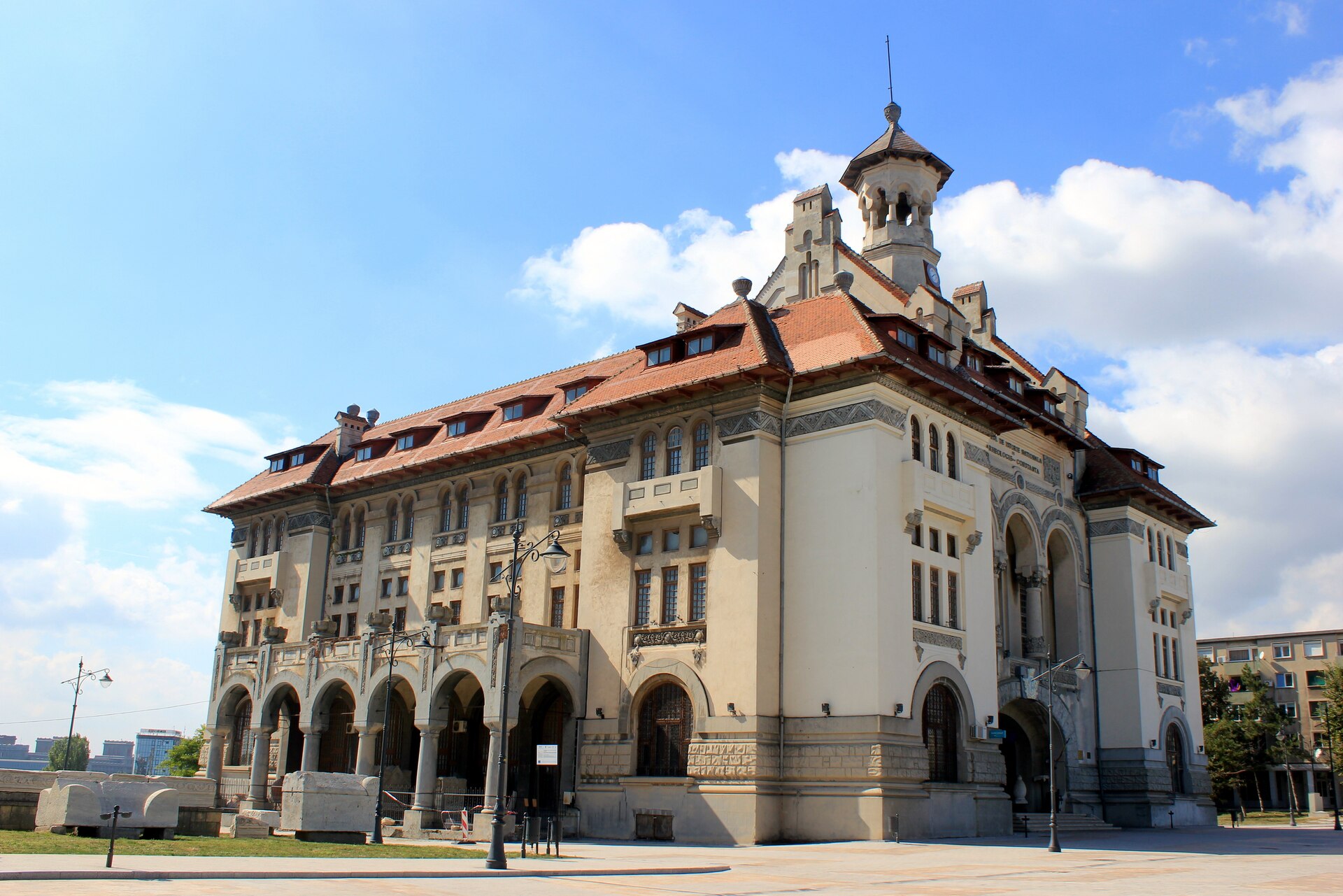
Culture
Constanța's culture blends Romanian, Greek, Turkish, Tatar and Romani threads over a deep Roman and Byzantine past. Orthodox churches and a mosque have stood within a short walk of each other for generations, and the Muslim community, though small, still uses its mosque. Greek communities were substantial in earlier centuries, and traces survive in names and old buildings.
Daily life follows the sea. On warm evenings people drift to the promenade for a slow walk and an ice cream, cafés spill onto the pedestrianised streets, and conversation is lively. Ovid, the exiled Roman poet, is a point of local pride, with a square and a statue in his name. The port shapes work and identity too, since many families depend on shipping and the harbour.
Museums are a good way into the layers of history, because Greek, Roman and later finds are gathered in one place. A museum of folk art, housed in the former old post office, shows traditional crafts. The cathedral of Saints Peter and Paul remains an active place of worship, so services take priority over sightseeing.
At the mosque, cover shoulders and knees and remove your shoes before stepping onto the carpet, and in Orthodox churches dress modestly and ask before photographing worshippers.
What to wear
Traditional dress in Constanța follows the pattern of Dobruja and southern Romania, with some influence from the Turkish and Tatar communities who lived along this coast. The signature piece is the ie, a loose blouse of cotton, linen or hemp embroidered at the neck and sleeves, worn with a woven wrap skirt, an apron and, in cold weather, a sheepskin waistcoat. Men's costume pairs a white linen shirt with a sash and a waistcoat. These garments now appear mainly at weddings, folk festivals and church or school celebrations, and the folk art museum shows them up close.
Everyday dress is plain and European: jeans, trainers and linen shirts along the promenade, with smarter outfits for evenings out. Beachwear takes over in summer, as at any Black Sea resort.
Visitors should dress for the season. Summer is hot and sunny with a sea breeze, so light cotton or linen, a sun hat and sandals work well, with a thin layer for muggy nights. Winter is windy and raw, so bring a windproof coat, hat and gloves. Comfortable shoes suit the uneven pavements of the old centre and the archaeological ground. For the mosque and churches, carry a scarf or light shawl, and keep shoulders and knees covered.
What to eat
- Mici — Casual grill restaurants on the edge of the city
Mici are skinless grilled sausages of minced meat seasoned with garlic and spices, usually served with bread and mustard. They are a staple of Romanian grill menus and a fair test of any eatery's quality. Expect them at casual grill places on the city's outskirts. - Pork soup and stew — Traditional Romanian restaurants near the old centre
Romanian home-style pork soup and slow-cooked stew are the cold-weather staples, often with polenta (mămăligă) or bread on the side. Portions are generous, and flavours lean towards sour and smoky rather than spicy. Look for restaurants serving traditional Romanian dishes near the old centre. - Clătite (pancakes) — Traditional restaurants and cafés in the pedestrian streets
Clătite are thin pancakes rolled around jam, sweet cheese or chocolate, eaten as dessert or a snack. They suit a cool evening after a promenade walk. Traditional restaurants list them on dessert menus, and cafés in the pedestrian streets often have a version. - Shawarma — Fast-food eateries in the centre
Shawarma is easy street food in the centre: sliced grilled meat in flatbread with salad and sauce, quick and filling. It is a practical choice between sights or after the seafront. Fast-food eateries sell it alongside pizza and burgers. - Black Sea fish — Seafront restaurants and port-side eateries
Fish from the Black Sea turns up grilled or fried on menus, often with polenta, garlic sauce or a simple salad. Catches vary by season, so ask what is fresh. Seafront restaurants and port-side eateries are the obvious places, though quality is uneven.
Plan it
Best time. May–June and September are the best months. June is hot and sunny with a sea breeze, and September can be warmer than June because the sea stores summer heat. Spring arrives early but stays cool, and winter is milder than inland Romania but windy, with sea storms common between December and March.
How long. 2
Getting there. Mihail Kogălniceanu International Airport lies just outside the city, and trains and buses run to Constanța from Bucharest. The last leg is a local bus or taxi, or a walk into the old centre. Check the operators' sites for timetables.
Budget. low
Tips
- Book beach-season stays well ahead for July and August; the resort strip at Mamaia fills first
- Explore the old centre on foot, since the main sights sit close together
- Carry some cash for small eateries and kiosks, though larger places usually take cards
- Bring a windproof layer outside summer, as the sea wind can feel cold
- Check the city hall website (https://www.primaria-constanta.ro/) for events and opening arrangements
Etiquette
- Cover shoulders and knees for mosque and church visits, and remove shoes at the mosque
- Ask before photographing worshippers or people at prayer
- Keep voices low in religious buildings and give services priority
Nearby
Sources
- Wikidata Q79808 (CC0)
- Wikipedia: Constanța (rev 1382886141) (CC BY-SA 4.0)
- Wikivoyage: Constanța (rev 5400739) (CC BY-SA 4.0)
- Photo: Constanta Historisches Museum, Julian Nyča (CC BY-SA 4.0)
- Photo: Constanta Casino, Andymxm (CC BY-SA 4.0)
- Photo: St Peter and Paul Cathedral, Diego Delso (CC BY-SA 4.0)
- Photo: National History Museum in Constanța, bdmundo.com (CC BY-SA 2.0)
- Photo: Costanza moschea, Luca Sironi (CC BY 3.0)
- Photo: Muzeul de Artă Populară, Postoiu Roxana (CC BY-SA 4.0)
- Photo: Pedestrianized area, Andymxm (CC BY-SA 4.0)
- Photo: Situl arheologic Orașul antic Tomis, Postoiu Roxana (CC BY-SA 4.0)


