Bucharest
Bucharest, Romania
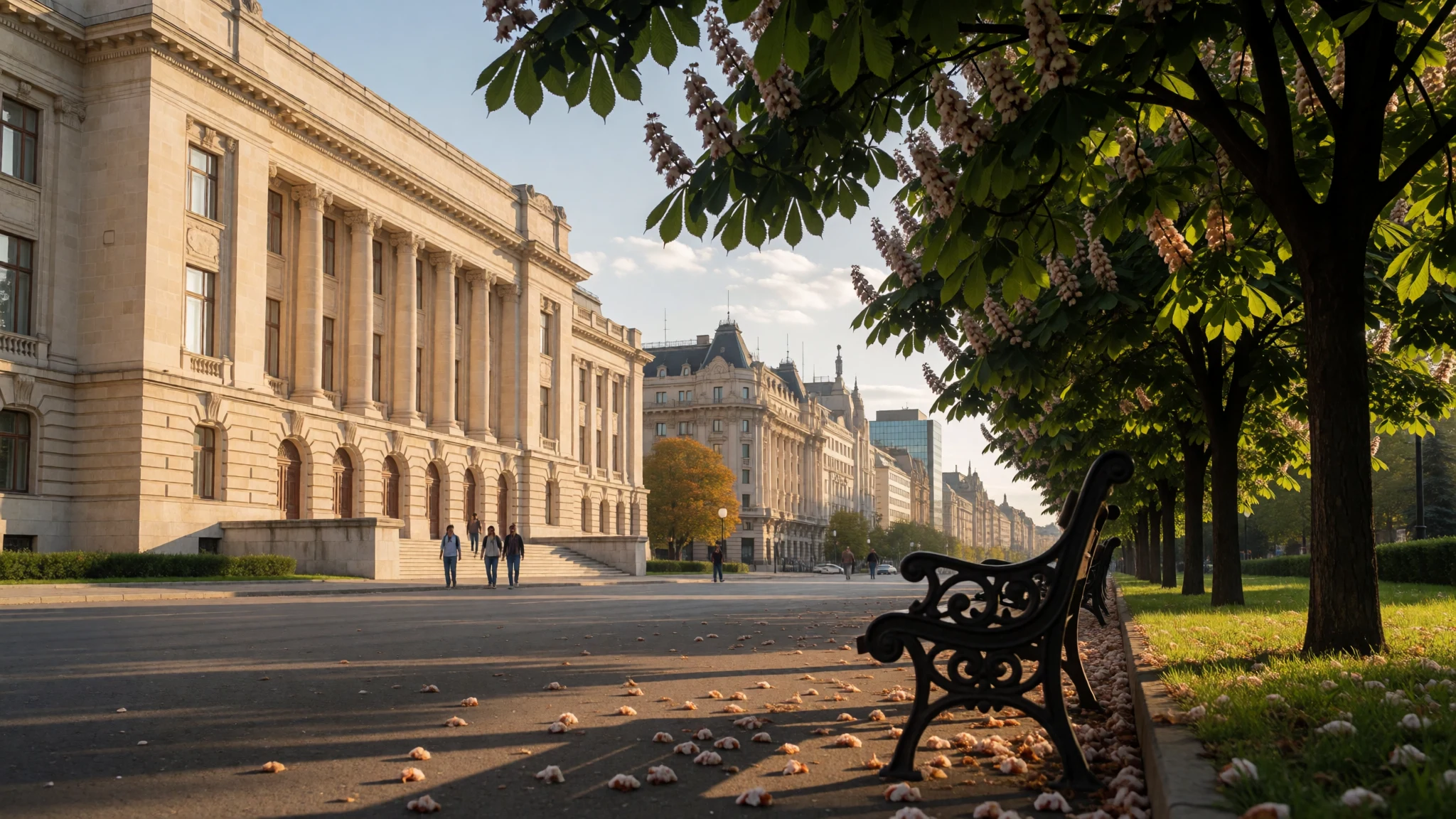
Bucharest rewards slow walks between eclectic boulevards, a loud old centre and the vast parliament complex.
The place
Bucharest is the capital of Romania and its largest city, set on the River Dâmbovița in the south-east of the country at about 70 metres above sea level. The municipality has the standing of a county in its own right, an enclave ringed by Ilfov County and divided into six sectors, each with its own mayor. Government sits here, together with the offices, theatres and markets that make the city the country's political and commercial centre.
Beyond the built-up streets, Ilfov County wraps the municipality on every side, so the capital stops at a county line rather than fading into open country. That tight edge is one reason the centre feels dense, while the outskirts jump quickly into suburbs, warehouses and lakes.
The street plan mixes a low historic core with wide nineteenth-century boulevards and the heavy concrete of the late socialist decades. University Square and Calea Victoriei still read as a civic stage of pediments, domes and lime trees, while newer glass rises towards Floreasca and the lakes. People call the older grandeur the "Paris of the East", a nickname from the years when the Romanian Kingdom was filling the city with eclectic blocks. War damage and later clearances left gaps; what remains is a capital that changes character every few streets, from cobbled lanes by the river to long, straight avenues built for parades.
Winters are cold and often snowy, summers hot and humid, and the open plain lets the wind through. Day to day, Bucharest feels like a working European capital: trams, cafés, construction dust, and a centre that rewards a long walk more than a rush between monuments.
Its story
Bucharest enters the written record in 1459, named as a citadel and already the seat of Wallachia's ruler, Voivode Vlad the Impaler. Trade and princely business gathered here through the following two centuries, while the court still shifted from place to place. In the mid-sixteenth century Mircea Ciobanul raised the Old Princely Court, Curtea Veche, and later princes treated the town as a summer residence. Târgoviște stayed a rival for the rank of capital. Ottoman suzerainty increased the weight of southern Muntenia, and the settlement on the Dâmbovița gained from that turn.
The Wallachian court made Bucharest its permanent home under Constantin Brâncoveanu. Fires, earthquakes and occupations ruined large parts of the town more than once across the next two centuries, and each rebuilding left a slightly different plan. From the eighteenth century the Ottomans appointed Greek Christian administrators, the Phanariotes, to run it; in Ottoman Turkish the name was Bukreş. The Romanian name, in local script, is București.
Bucharest later served as capital of the United Principalities and then of the Kingdom of Romania. Boulevards, theatres and eclectic blocks multiplied, and the nickname "Paris of the East" stuck. The Second World War destroyed much of that fabric. Communist governments afterwards cut new axes through the centre and built at a monumental scale. That era ended with the 1989 revolution, when crowds filled the squares and the old regime fell. The capital readable on foot today is the stack of those layers: princely court, Phanariote streets, kingdom avenues and socialist clearances.
What to see
- Palace of the Parliament — west of the centre
The Palace of the Parliament dominates western central Bucharest, a vast stone complex begun for Nicolae Ceaușescu and still not entirely finished. It houses the Chamber of Deputies, the Senate and the National Museum of Contemporary Art. The building's bulk cleared a whole quarter. Interior routes and access rules change, and the official site is the place to confirm a tour.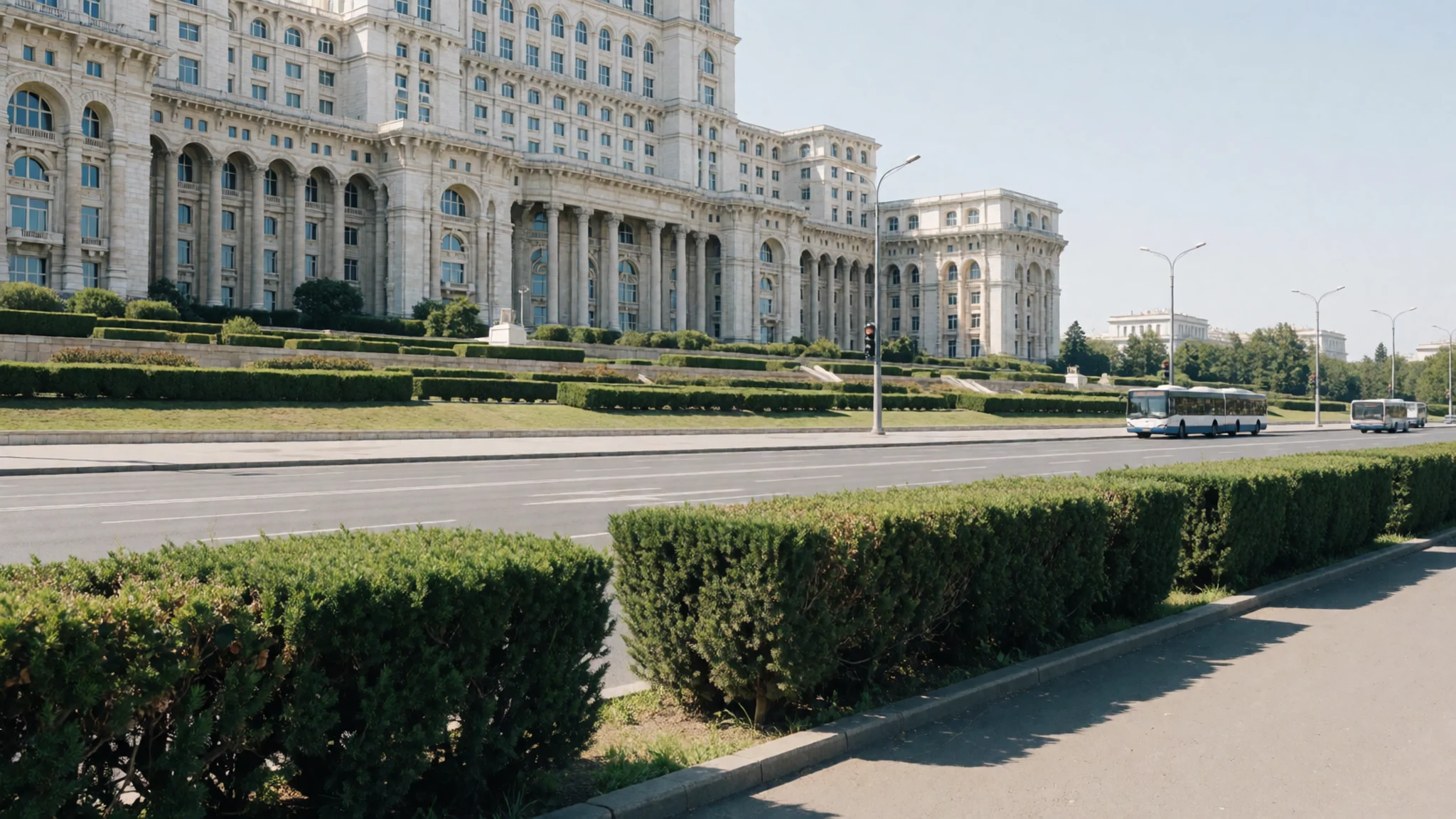
- Old City — historic centre, by the Dâmbovița
Bucharest's Old City is the part of the historic centre that escaped the late clearances, running from the Dâmbovița on the south towards Calea Victoriei on the west and Calea Moșilor on the east. Low houses, courtyards and church towers share the lanes with bars and cafés. By day the walk is about the river and the ruins of the princely court; after dark this is the noisiest quarter.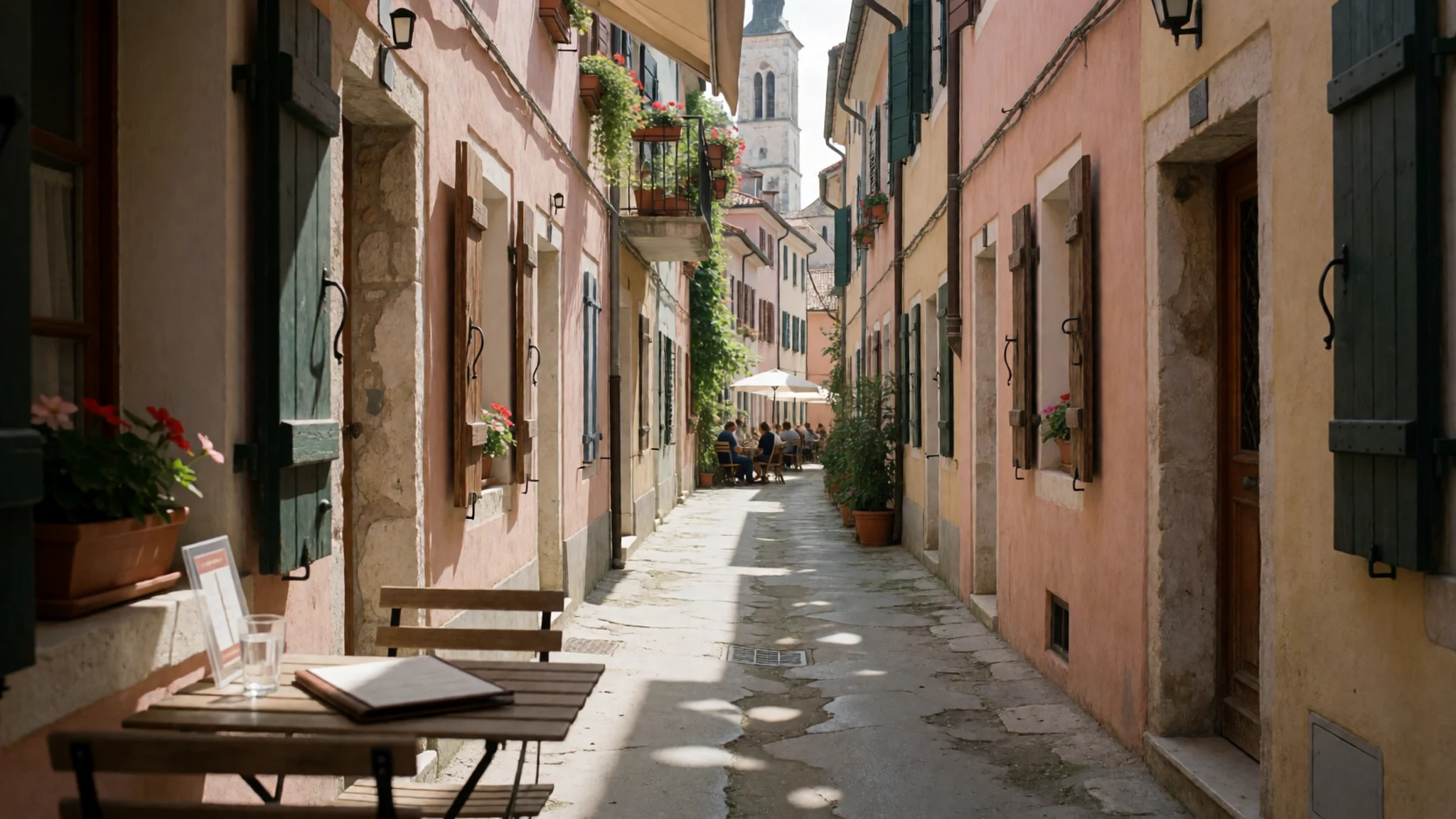
- Revolution Square — central avenue
Revolution Square, in central Bucharest, is remembered as a focus of the 1989 revolution. A tall monument in the middle honours people who died there. The space sits on the city's main avenue, with University Square a short walk southeast along the east–west boulevard, so it suits a pause on a longer stroll rather than a long stop. Traffic rarely lets up, and the memorial is clearer from the pavement than from the roadway.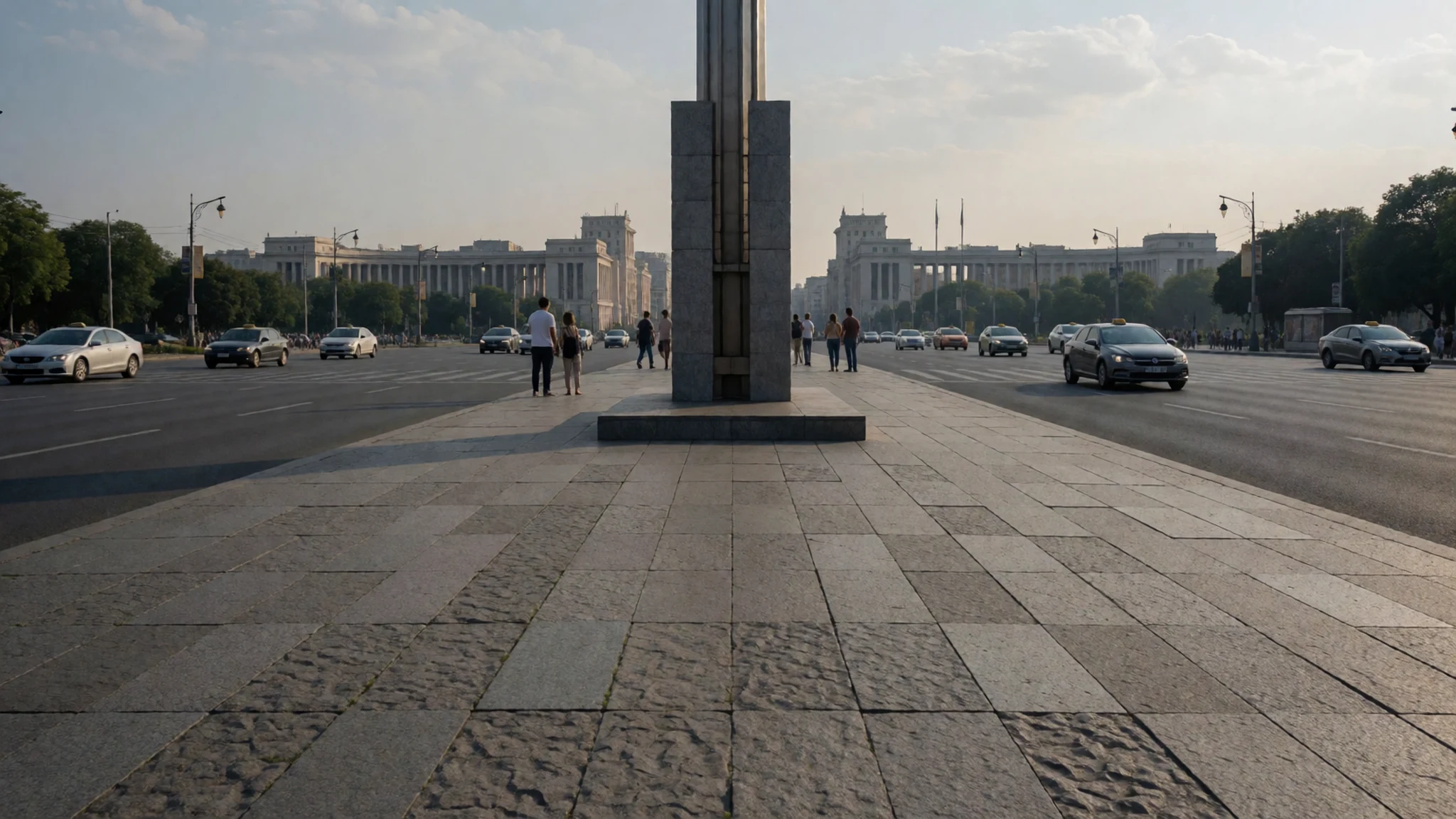
- Arch of Triumph — north, on the main avenue
The Arch of Triumph stands in northern Bucharest where the main avenue runs towards the lakes. Earlier arches stood on this spot from the late nineteenth century; the present one is a later rebuilding, modelled on the triumphal arch in Paris. Trees along the boulevard frame it. The traffic circle is wide, so the arch works as a landmark on a ride north rather than a place to linger.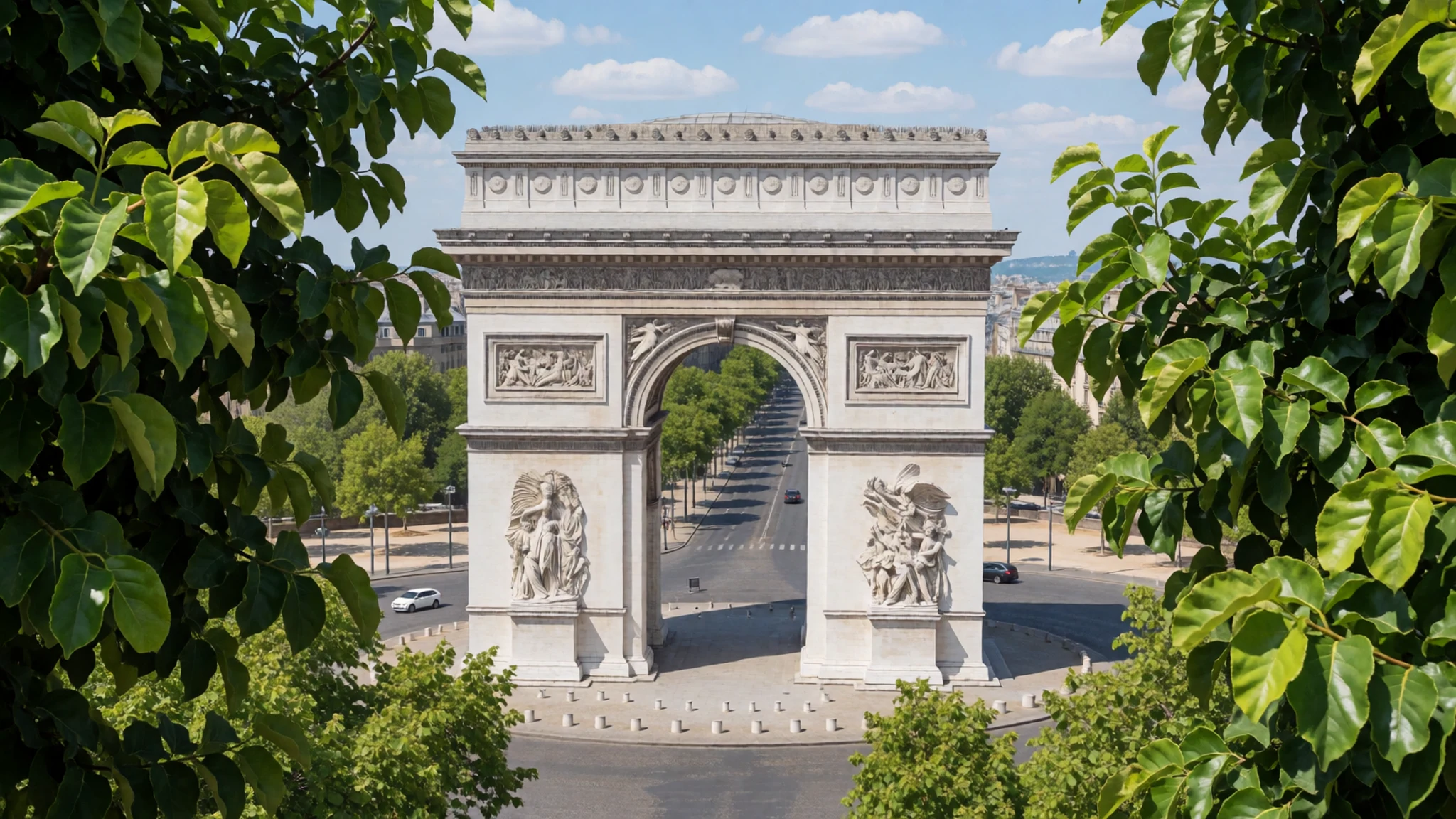
- Romanian Athenaeum — centre, near Revolution Square
The Romanian Athenaeum is Bucharest's domed concert hall and the home of the George Enescu Philharmonic, a short walk from Revolution Square. A columned rotunda and a low dome face a small garden just off the avenue, and the hall carries the city's main symphonic season. It survives from the capital's eclectic boom with its outline intact. The dome justifies the detour, even when the doors are shut between concerts.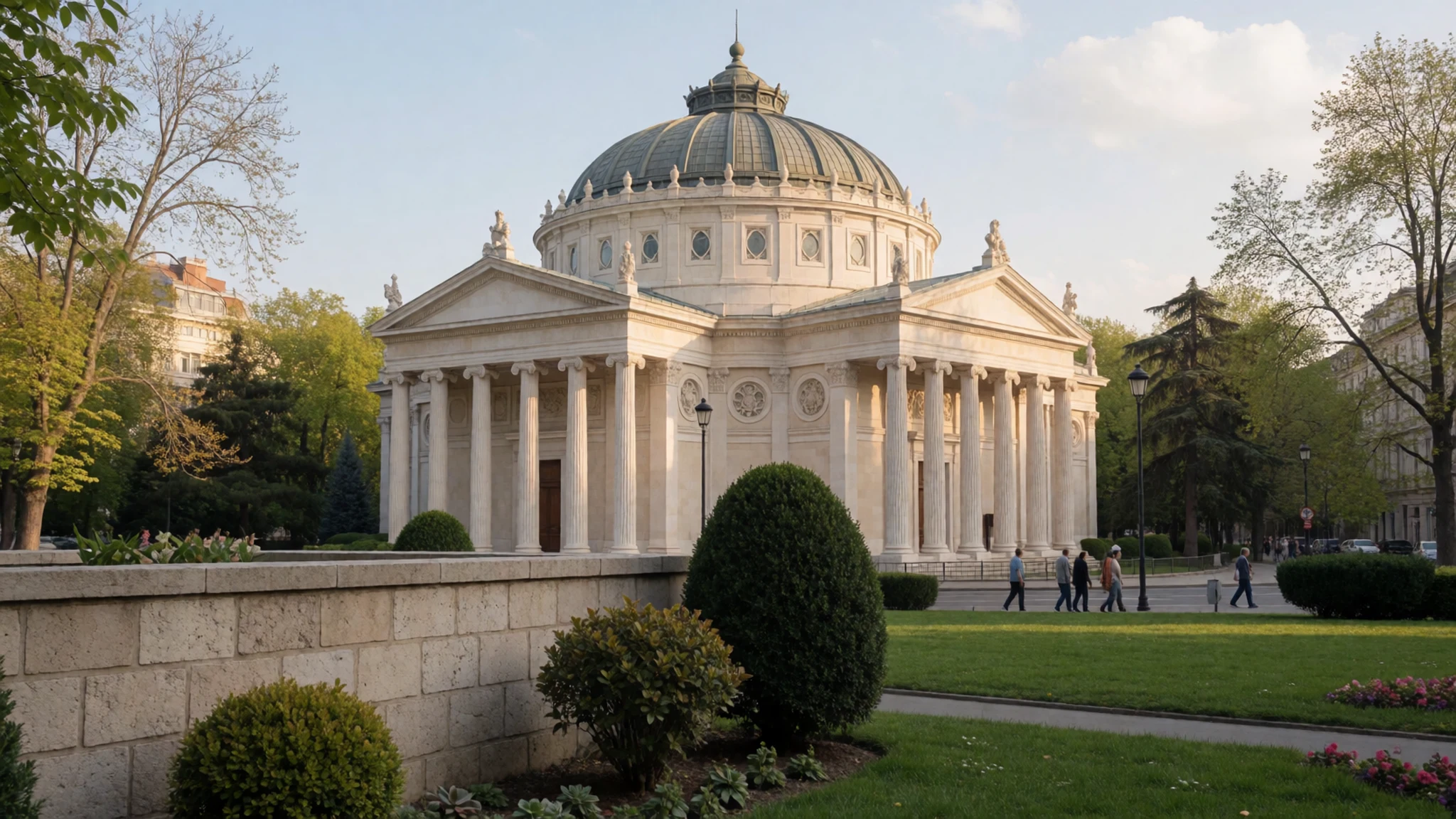
Culture
Bucharest's cultural life has no single regional style of the kind associated with the Black Sea coast or with Transylvania. It folds Romanian work together with whatever a European capital is hosting: the philharmonic at the Athenaeum, contemporary art inside the parliament complex, small galleries, and a loud nightlife in the Old City. Buildings carry as much of the story as the programme. The Palace of the Parliament, raised under Nicolae Ceaușescu, is a working legislature and a monument to years most residents recall without warmth. The Arch of Triumph, modelled on the arch in Paris, belongs to the other streak, a kingdom that liked to picture itself in Western European form.
Orthodox and other churches still break up ordinary residential streets, and major feasts can fill a pavement with candles and slow processions. Squares do double duty: the same open space hosts celebrations and protests, and Revolution Square remains the reference for the fall of communist rule. Concert halls and museum rooms are used to foreign visitors.
When you step into an Orthodox church, cover shoulders and knees, keep your voice down, and ask before photographing worshippers or the iconostasis.
What to wear
Bucharest keeps Romanian traditional dress for the stage, for folk ensembles and for festivals more than for the working day. The women's ensemble centres on the ie, a white blouse with dense embroidery at the neck, the cuffs and the front placket, worked in wool or cotton thread on a light cloth, and worn with a wrapped skirt, the fota or the vâlnic, plus a woven belt. The older men's costume is a white shirt, a dark vest and trousers, with leather opinci remembered more in the countryside than in the capital. Full outfits appear at concerts, on national days and in museum displays, not on the metro.
Weekday clothes are ordinary European city wear: jeans, trainers, heavy coats in winter and lighter shirts once the summer heat arrives. Office streets off Calea Victoriei and the business blocks of Floreasca look like any continental downtown.
A visitor does well to copy that, with a few local adjustments. Summers are hot and humid, so breathable cloth and a hat help; winters call for a warm coat, a hat and shoes that cope with snow and slush. A scarf or another layer that covers shoulders and knees is sensible for Orthodox churches. The centre means pavements and rough cobbles, so comfortable closed shoes matter more than thin soles.
What to eat
- Mici — Old City grills and park terraces
Mici, also called mititei, are small skinless grilled sausages of spiced minced meat, eaten with mustard and bread. In Bucharest they turn up at beer terraces and grill stands across the Old City and along the parks on warm evenings.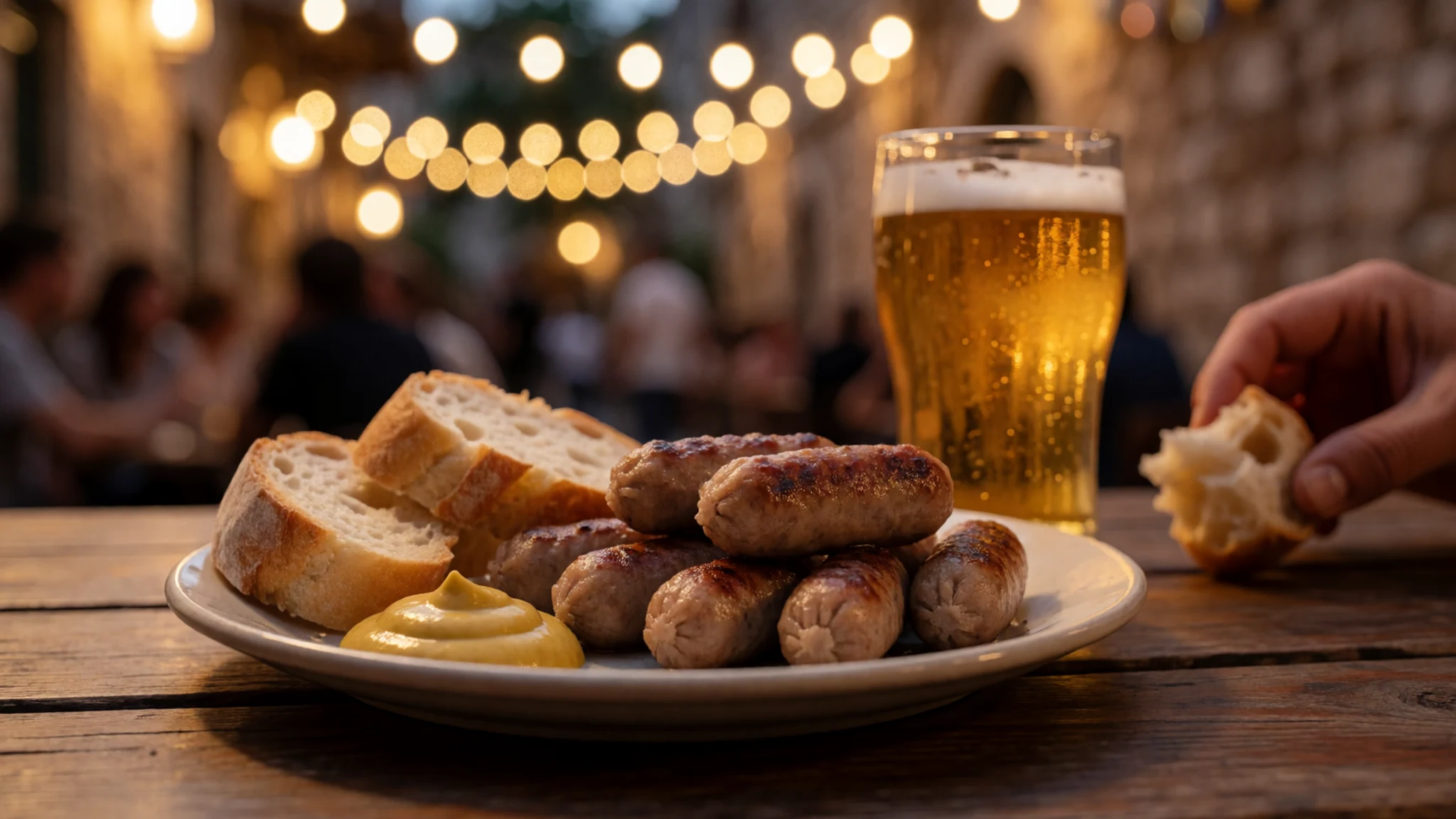
- Ciorbă de burtă — Old City eateries and office-district canteens
Ciorbă de burtă is a sour tripe soup, finished with garlic and cream, and a regular midday bowl in Bucharest. Traditional Romanian eateries in the Old City and simple canteens near the office streets still list it as a starter or a light lunch.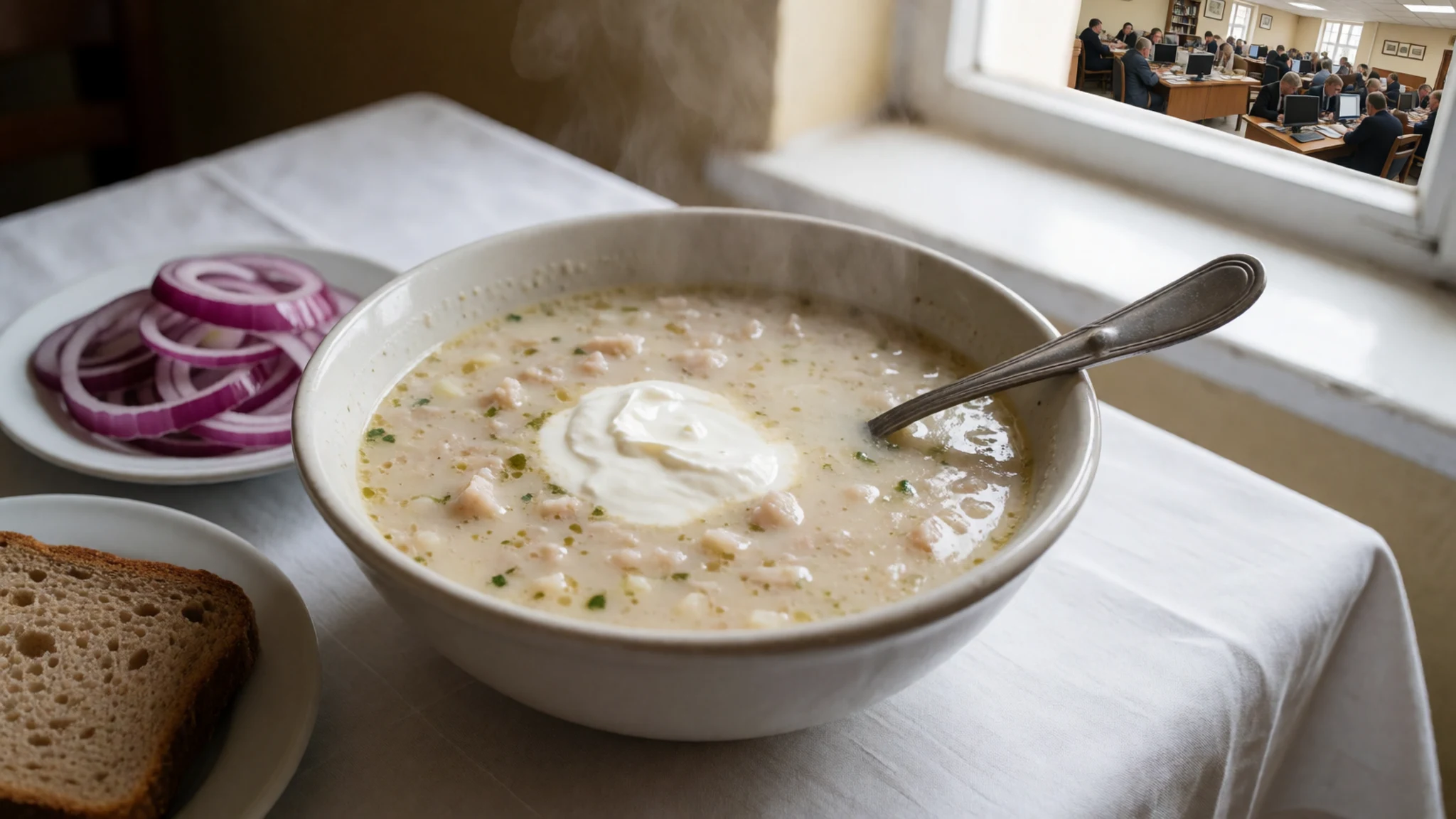
- Sarmale — Old City and neighbourhood Romanian eateries
Sarmale are cabbage rolls — usually cabbage leaves, sometimes vine leaves — filled with minced meat and rice and simmered in a light tomato sauce. In Bucharest, homestyle Romanian eateries in the Old City and in quieter neighbourhood dining rooms serve them as a full plate, often with bread and sour cream. - Mămăligă — Old City and neighbourhood dining rooms
Mămăligă is a firm maize porridge, the Romanian cousin of polenta, served in Bucharest under grilled meat, stews or a mound of cheese and sour cream. Homestyle eateries in the Old City and in neighbourhood dining rooms serve it as the starch beside meat or cheese, not a course alone. - Papanași — traditional eateries around the Old City
Papanași are fried rounds of sweet cheese dough, usually a large piece with a smaller one on top, served with sour cream and a tart fruit jam. In Bucharest they appear as dessert in traditional eateries around the Old City, after a heavy main course. - Covrigi — Calea Victoriei, University Square and metro entrances
Covrigi are large soft pretzels, often still warm, sprinkled with salt or seeds, and the ordinary Bucharest street snack. Bakeries and pretzel windows on Calea Victoriei, around University Square and beside metro entrances sell them from early morning.
Plan it
Best time. April, May and October, when walking is most comfortable. July is the hottest month and June the wettest; winter is cold, windy and often snowy on the open plain.
How long. 3–4
Getting there. Henri Coandă International Airport, north of Bucharest, then a train, express bus or taxi into the centre. Mainline trains arrive at Gara de Nord; metro and city buses cover the last leg to the old centre and University Square.
Budget. low
Tips
- Reserve a Palace of the Parliament visit ahead, then recheck the route on the official site; access changes
- See the Old City in the morning, before bars take over the lanes
- Carry some cash for bakeries, church stalls and smaller eateries that still prefer it to cards
- Ride the metro for the long north-south hops and walk once you are in the centre
- In summer, keep water with you and leave outdoor walking for the morning and the evening
Etiquette
- In an Orthodox church, cover shoulders and knees, speak quietly, and ask before photographing people or icons
- Ask before photographing strangers, especially worshippers, performers in traditional dress, and people at a protest
- A simple bună ziua is the right greeting in shops; there is no need for a long introduction
- Queue at counters and give up a seat on buses and the metro for older passengers
Nearby
Sources
- Wikidata Q19660 (CC0)
- Wikipedia (rev 1383687745) (CC BY-SA 4.0)
- Wikivoyage (rev 5396319) (CC BY-SA 4.0)
- Photo photos/01-bucharest-skyline-01.jpg (CC BY-SA 2.0)
- Photo photos/02-bucharest-university-square-cropped.jpg (CC0 1.0)
- Photo photos/03-biblioteca-central-de-la-universidad-de-bucarest-bucarest-ru.jpg (CC BY-SA 4.0)
- Photo photos/04-56-calea-victoriei-bucharest-01.jpg (CC BY-SA 4.0)
- Photo photos/05-ateneo-rumano-bucarest-ruman-a-2016-05-29-dd-73.jpg (CC BY-SA 4.0)
- Photo photos/06-palatcec2.jpg (CC BY-SA 4.0)
- Photo photos/07-bucharest-business-district-cropped.jpg (CC0 1.0)
- Photo photos/08-bucuresti-de-sus.jpg (CC BY 3.0)


