Heuksando Island
Heuksando Island, South Korea
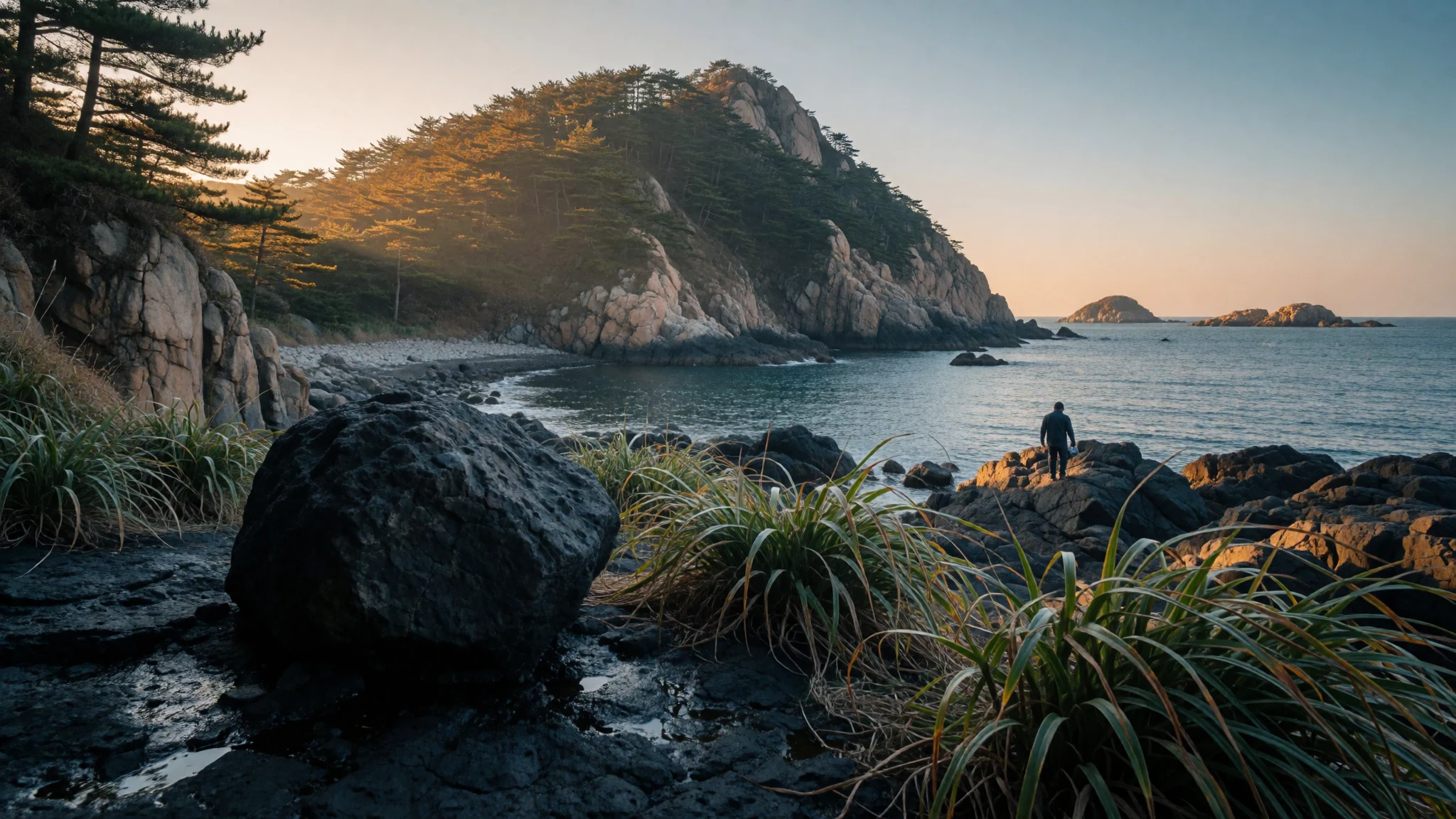
Heuksando is a steep, remote fishing island in the Yellow Sea, where the draw is raw seafood, sea cliffs and a slow pace.
The place
Heuksando sits far out in the Yellow Sea, off the south-west corner of South Korea, and is governed from Sinan County in Jeollanam-do. Its name (흑산도) means roughly 'black mountain island', a fair description of the dark, steep hills that rise almost directly from the water. About 3,100 people live here, nearly all of them in a handful of fishing villages strung along a ragged coast, with the harbour at Yedori serving as the island's front door. The landscape is mostly slope. Forested ridges carry named peaks such as Munamsan, Gitdaebong, Seonyubong and Sangnasan, while below them come sea cliffs, small stony coves and tiny vegetable plots squeezed between houses. Flat ground is scarce, so the roads cling to the shoreline and climb in tight bends. The island belongs to a coast fretted with islands, most of them uninhabited, in a province known for seaweed, oysters and some of the mildest winters on the peninsula. Rainfall is generous, which keeps the hillsides green. The sea is the real boss here. Fog, wind and swell regularly disrupt ferries, and a trip that looks simple on a map needs slack in the schedule. Heuksando is also the gateway to a wider scatter of rocky islets, which makes it the natural base for anyone wanting boats, walks and quiet rather than beaches with sunbeds and crowds.
Its story
Heuksando has long been a place that mainland Korea looked towards with some unease. Its distance from the coast made it a useful lookout over the western sea, and the ruins on the Sangnasan ridge are a reminder that people once watched these waters for trouble. The same remoteness made it a place of exile in the Joseon era, when officials who fell out of favour were sent to far islands to live under watch. The best-remembered of them is the scholar Jeong Yak-jeon, who spent his banishment here studying the marine life around him and recording local fishermen's knowledge of fish, shellfish and seaweed. His surviving book is still read in Korea as an early natural history of the western sea, and the island treats him with quiet pride. Fishing, not farming, has always paid the bills. Skate caught in these waters became the island's signature, prized across the country in its fermented form, and boats still head out through the same channels. In 1969 the island was placed within the administrative boundaries of Sinan County, and since then it has slowly opened to visitors through ferry links and a national park that covers the surrounding sea and islets. The population is small and ageing, as on many Korean islands, and younger families are rarer than in the 1960s. Visiting today means arriving in a working community with a long memory, not a resort built for tourists.
What to see
- Yedori village and harbour — Yedori, south-east coast
Yedori is where ferries land and where most of the island's life is concentrated. The harbour front fills with fishing boats, skate hung out to dry, and small eateries. A slow walk through the lanes behind it shows stone walls, tiny shrines and steep gardens. Mornings, when catches come in, are the liveliest hour.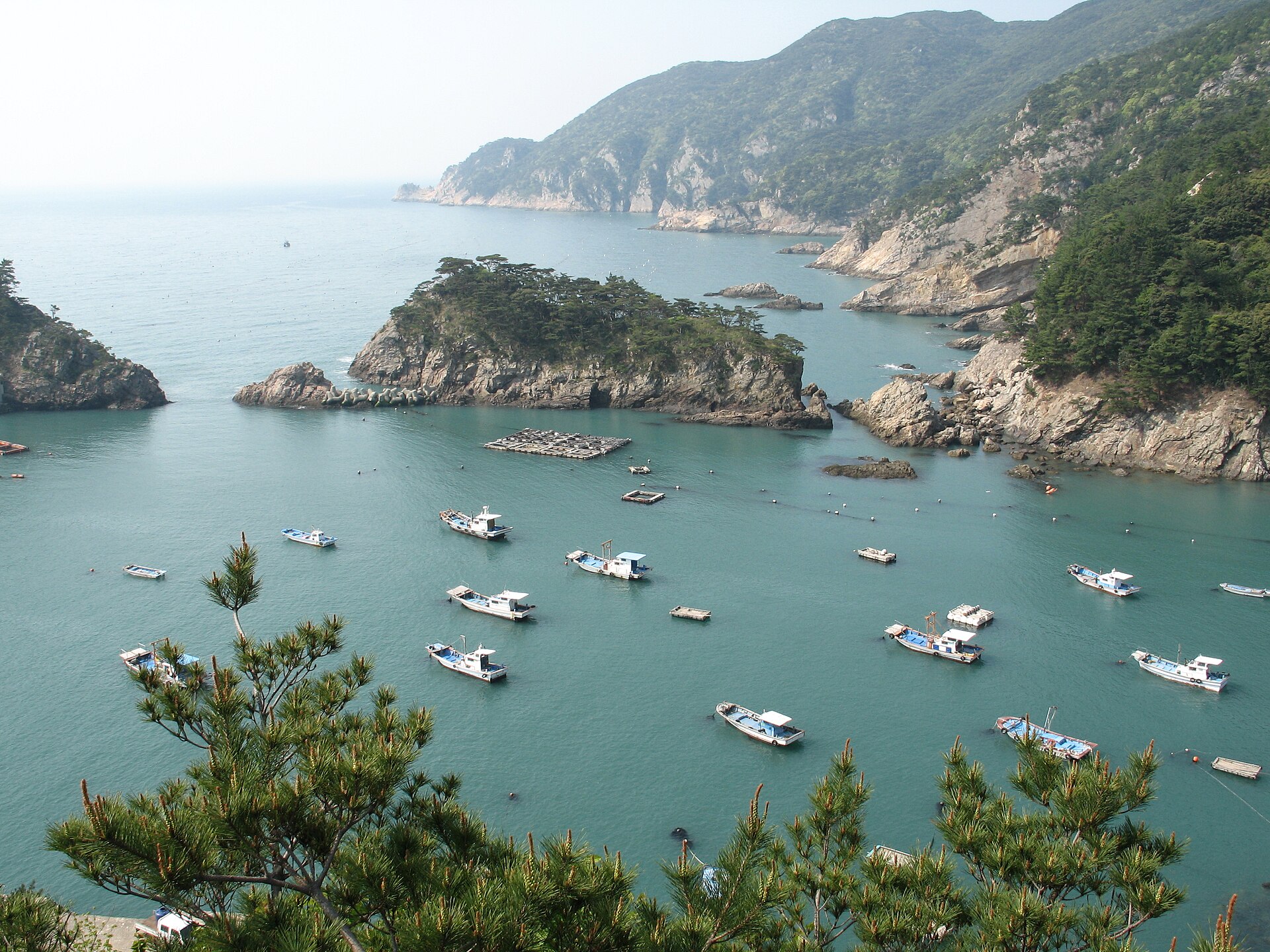
- Sangnasan ridge and fortress remains — Above Yedori
Sangnasan is a modest summit, but the ridge above the harbour gives a long view across clustered islands and open sea. The remains of an old lookout fortification lie along the path, and signs help with the history. The climb is steep in places, so wear proper shoes and go early in warm months.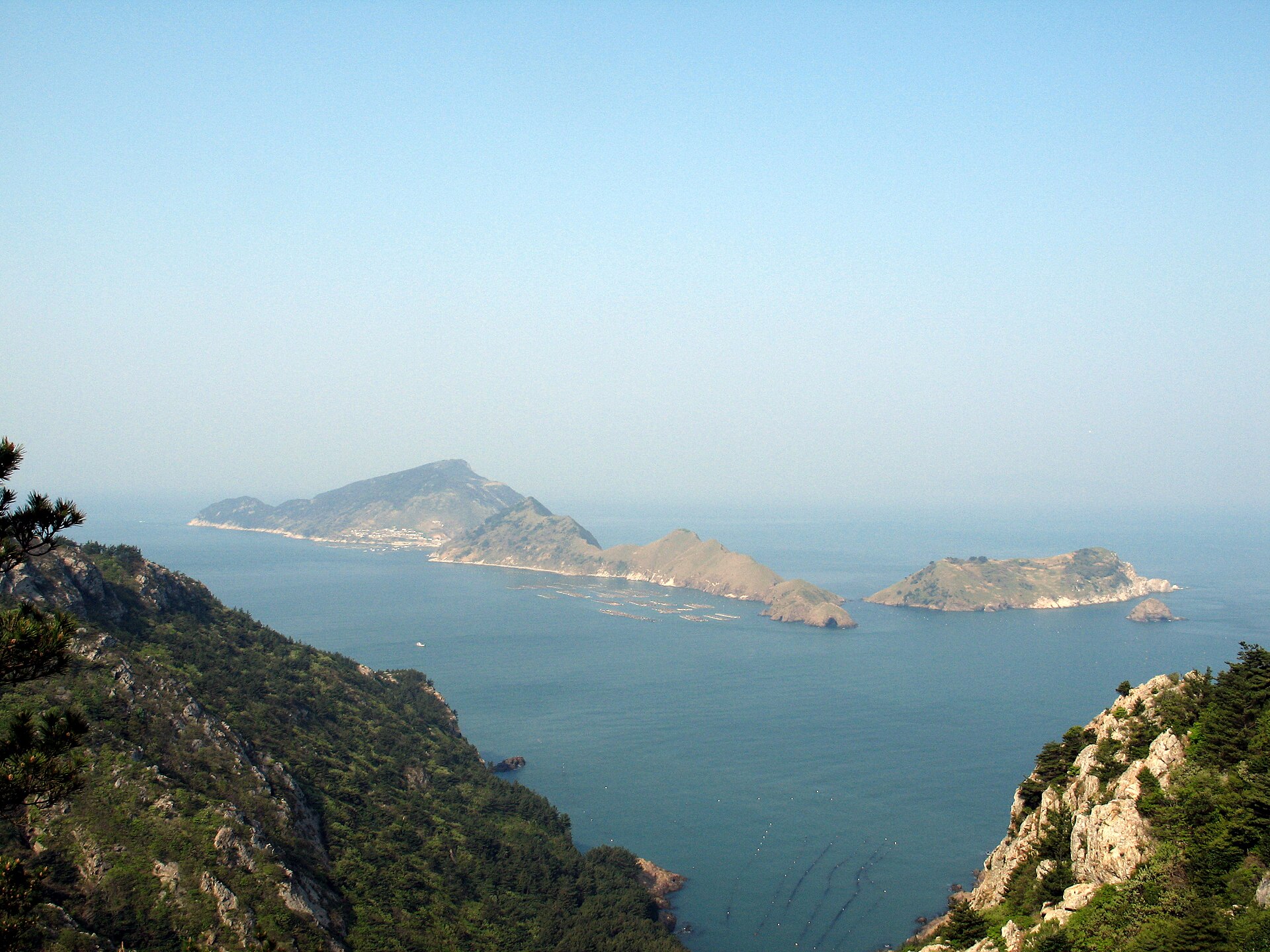
- Gitdaebong summit trail — Interior ridges
Gitdaebong is among the island's named peaks and rewards a hike with wide views over coves, ridges and the national-park waters beyond. Trails are rough underfoot and can be slippery after rain. Ask locally about the current state of the path before setting out, and carry water because shade and shops are scarce.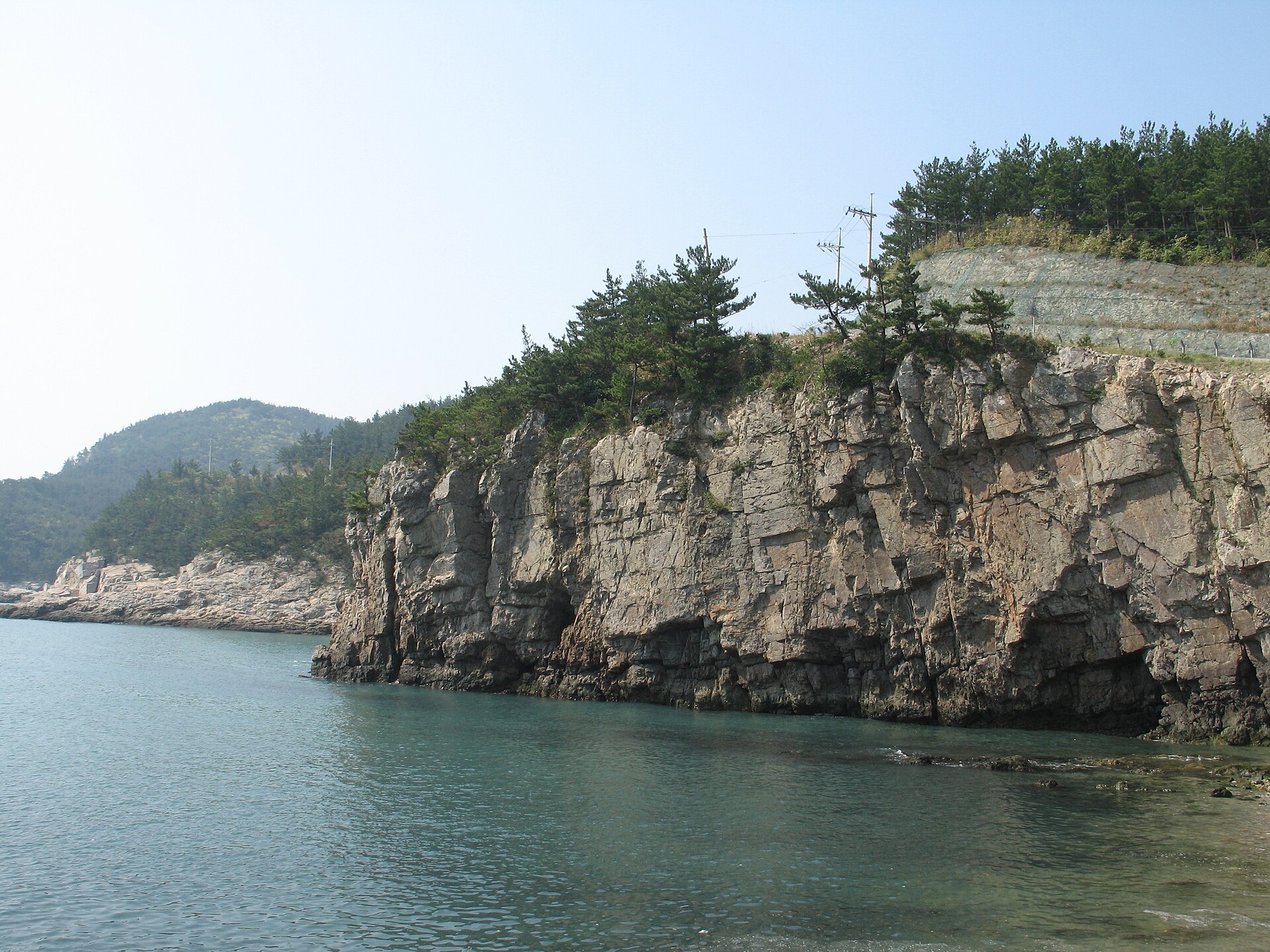
- Coastal road viewpoints — Island coast road
The road around Heuksando is the easiest way to see the sea cliffs and small coves without a long hike. Pull-ins appear at several bends, with views over wave-cut rock and clusters of fishing floats. Buses and taxis cover the circuit, but timings are sparse, so ask at the harbour first.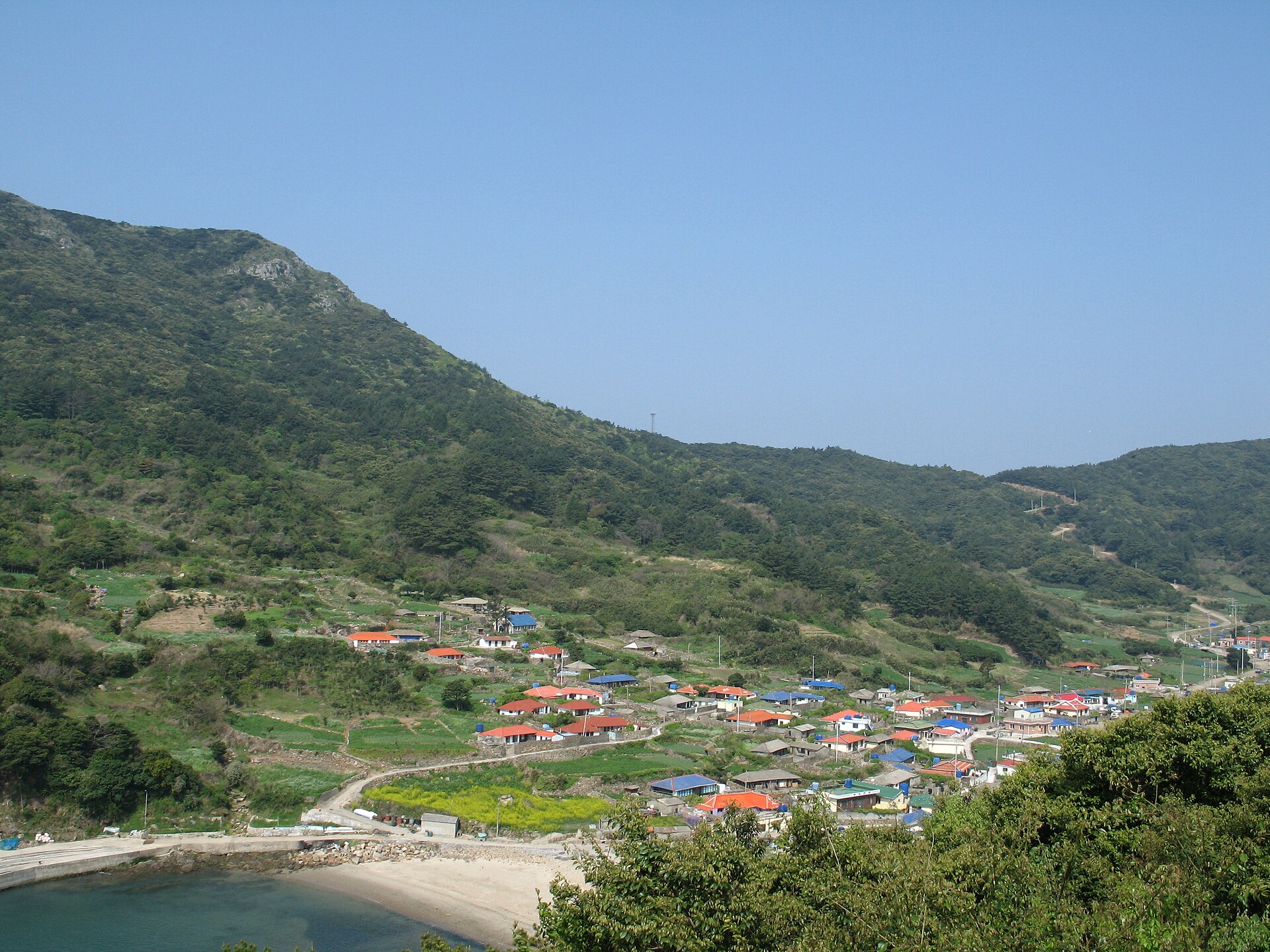
- Chotdaebawi (Candlestick Rock) — Dadohaehaesang National Park, by boat from Yedori
Chotdaebawi is a tall, slim rock stack in Dadohaehaesang National Park, reached by boat from Heuksando. The trip also passes bare islets where fishermen work from small boats. Sea conditions decide whether trips run, so keep a spare day and check with the harbour or the park office.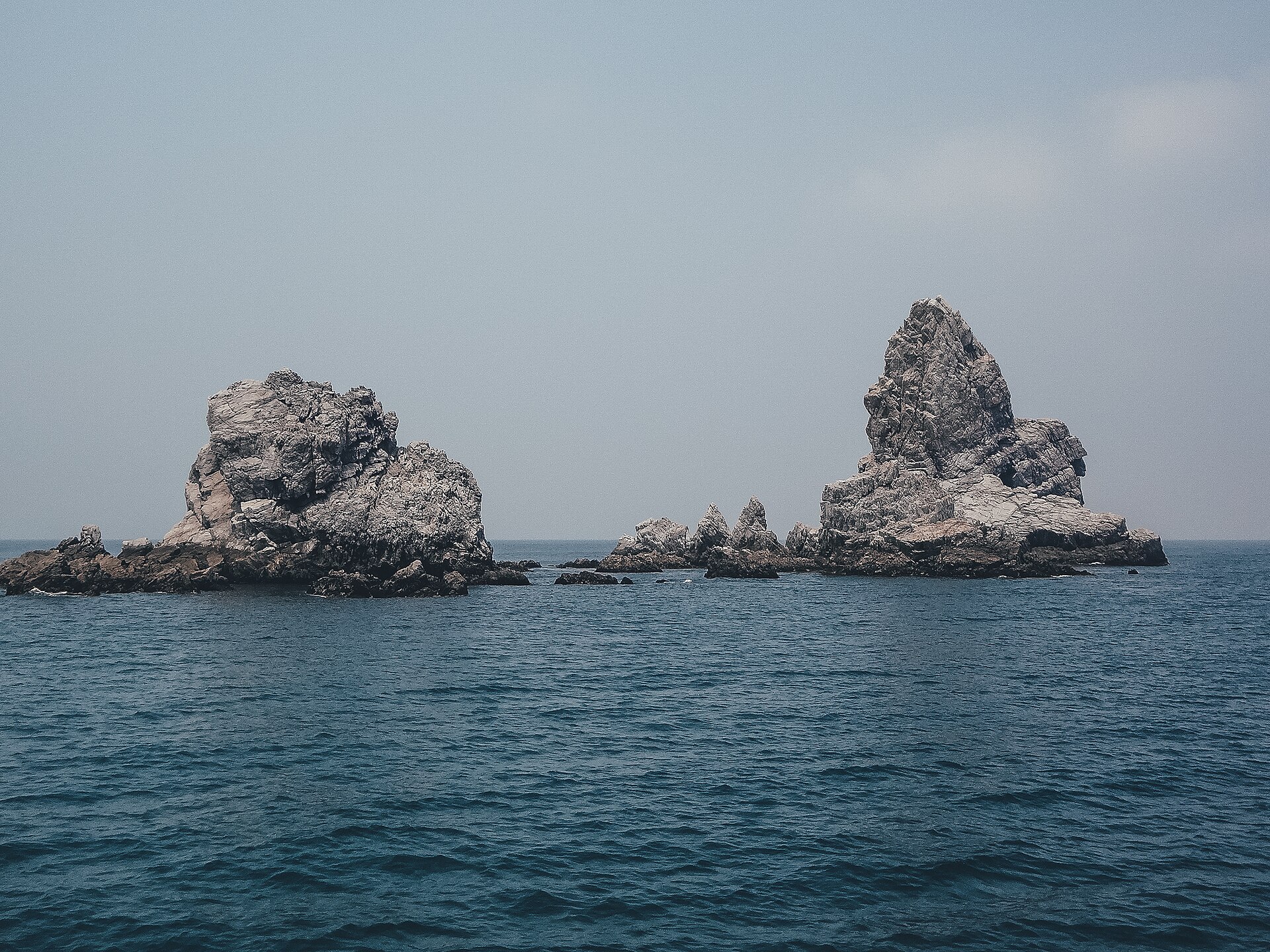
Culture
Heuksando's culture is shaped by the sea and by isolation. Daily rhythm follows tides, weather and fishing seasons, and neighbours depend on one another when a storm closes the ferry or a boat is late. Skate is the island's emblem, and the way it is cured, cut and shared at a table says as much about local identity as any monument. Fishing communities across Korea's south-west coast keep small shrines and seasonal rites to ask for safe return from the water, and some of that spirit lingers around the harbours here, though much has quietened as the population has aged. Older residents speak a regional Korean with its own cadence, and they are generally friendly but reserved with strangers, warming quickly when a visitor shows interest in the fish or the village. Exile left its own trace. The memory of the scholar Jeong Yak-jeon, who studied marine life here, gives the island a quiet intellectual pedigree that locals like to mention. Meals are communal, with many small side dishes shared across the table. Mainland pace does not apply: shops can close early, and an unexpected weather day rearranges everyone's plans. Visitors who accept that tend to enjoy it. Ask before photographing anyone at work on the quay, and never step onto a boat or touch drying fish or nets without being invited.
What to wear
Heuksando's traditional dress is the Korean hanbok, a jacket (jeogori) and wrap skirt (chima) for women, with jacket and baggy trousers (baji) for men. Fabrics range from silk for celebrations to ramie and hemp for summer, which are light and breathable, and cotton for ordinary wear. On the islands the hanbok is now mostly seen at weddings and on holidays such as Seollal and Chuseok, when families dress up for ancestral rites and photographs. Everyday clothing is practical and shaped by the work. Fishermen and harbour workers wear waterproof aprons, long rubber gloves, rubber boots and caps, often in bright colours that show well against grey water. Older women in the villages favour patterned tops and trousers, a sun visor or wide hat, and sturdy shoes. Younger people dress much as they would on the mainland, in jeans, trainers and light jackets. Visitors should dress for weather, not for style. Bring layers and a windproof, waterproof shell, because sea wind can feel cold even on sunny days. Closed shoes with grip suit wet harbour stones and steep trails. A hat and sun protection matter in summer, when the heat and humidity are real. There are no strict dress rules for visitors, though modest, tidy clothing is courteous in villages and at any small shrine.
What to eat
- Hongeo-hoe (fermented skate) — Harbour-front eateries in Yedori
Fermented skate is the island's best-known dish, with a sharp ammonia smell and a chewy texture that divides opinion. It is usually sliced thin and eaten with salt or a dipping sauce. First-timers often try a small piece before committing to a plate. - Hongeo samhap — Island seafood restaurants near the harbour
This combines slices of skate with boiled pork and aged kimchi, wrapped together in a leaf or eaten in layers. It makes a gentler introduction to skate than the fermented slices alone, because the pork and kimchi soften its edge. - Hoe (raw fish) — Raw-fish restaurants by the quay
Fish caught in the surrounding waters is sliced raw and served with sesame leaves, garlic, chilli paste and a spread of side dishes. The choice depends on the season and the day's catch, so ask what came in that morning. - Seaweed soup (miyeok-guk) — Village eateries and family-run guesthouses
A clear, comforting soup made with seaweed from nearby coastal waters, often simmered with fish or shellfish stock. It is a common island breakfast, and a good choice after a rough ferry crossing or before a long walk. - Grilled fish with side dishes — Small eateries in fishing villages
A set meal of grilled local fish, rice, soup and small dishes of seaweed, pickles and greens. Portions are generous, and the contents change with the catch. Eaters who dislike strong smells will find this the easiest meal on the island.
Plan it
Best time. April–May and September–October bring mild, clearer weather and fewer ferry cancellations, with good light for hiking. Summer is warm and humid, with frequent rain, and winter winds and fog can cancel sailings.
How long. 2–3
Getting there. Take the KTX Honam Line from Seoul to Mokpo (about three hours), then a ferry from Mokpo's passenger terminal to Heuksando. Gwangju airport has limited domestic flights, so check ferry operators' official sites for current sailings and booking.
Budget. mid
Tips
- Book ferries ahead in holiday weeks and check the weather the day before
- Keep a spare day in the plan, since fog and wind can cancel sailings
- Carry cash and some food, as cards and shops are patchy outside the harbour
- Ask at the harbour or park office before booking boat trips to the outer islets
- Pack layers and grippy shoes for steep, wet trails
Etiquette
- Ask before photographing people at work on the quay
- Do not touch drying fish, nets or boats
- Keep noise down in villages in the early morning and at night
Nearby
Sources
- Wikidata Q478199 (CC0)
- Wikipedia: Heuksando (rev 1376102875) (CC BY-SA 4.0)
- Wikivoyage: South Jeolla (rev 5386870) (CC BY-SA 4.0)
- Photo: Korea-Heuksando Island-10, Gaël Chardon (CC BY-SA 2.0)
- Photo: Korea-Heuksando Island-01, Gaël Chardon (CC BY-SA 2.0)
- Photo: Korea-Heuksando Island-02, Gaël Chardon (CC BY-SA 2.0)
- Photo: Korea-Heuksando Island-03, Gaël Chardon (CC BY-SA 2.0)
- Photo: Korea-Heuksando Island-06, Gaël Chardon (CC BY-SA 2.0)
- Photo: An Uninhabited Island in Dadohaehaesang, Sohyeon Bak (CC BY 3.0)
- Photo: Chotdaebawi (Candlestick Rock), Sohyeon Bak (CC BY 3.0)
- Photo: Chotdaebawi, Sohyeon Bak (CC BY 3.0)


