Hedeby
Hedeby, Germany
Hedeby is a Viking trading town on the Schlei, where reconstructed longhouses, a good museum and quiet water make the Viking Age feel local.
The place
Hedeby, also called Haithabu in German, lies in Schleswig-Holstein in northern Germany, just south of the town of Schleswig. It sits at the inner end of the Schlei, a long, narrow inlet that runs in from the Baltic, with the bay of the Haddebyer Noor on its eastern side. Today the ground is mostly open grass, a low semicircular rampart and wide skies, with reed-edged water beyond.
The position explains everything. Hedeby stood between the Frankish lands to the south and the Danish kingdom to the north, and between two seas. Goods could come in from the Baltic, be hauled a short way overland to the Treene river, and reach the North Sea through the Eider, avoiding the long and risky sail around the top of Jutland. That made it a natural market, a role later played by Lübeck.
The River Eider, just a few kilometres to the south, was Denmark's southern boundary from 811 until 1864. The site was rediscovered in the late nineteenth century, excavations began in 1900, and the Viking Museum opened beside it in 1985. In 2018 Hedeby was inscribed as a UNESCO World Heritage Site together with the Danevirke earthworks.
Expect a gentle, spread-out visit: a museum, a short walk to the reconstructed houses, and a wander over the former town plot. It is rural, so weather and wind matter more than queues. The nearest bigger town is Schleswig, across the water, which is useful for meals and lodging.
Its story
Hedeby first appears in the Frankish chronicles of Einhard in 804, when Charlemagne spent the summer in the region as the Saxon Wars drew to a close. Four years later the Danish king Godfred wiped out Reric, a rival Slav trading centre, and the chronicles say he moved its merchants to Hedeby. That decision may have given the young town its early push.
The same sources say Godfred strengthened the Danevirke, an earthen barrier across the south of the Jutland peninsula. It joined the town's own defences to form a line from the western marshes to the Schlei in the east. Hedeby itself was ringed by earthworks on its north, west and south sides. Late in the ninth century the outer northern and southern parts were given up and life gathered in the central area. A semicircular wall about 9 metres (29 ft) high was later raised to guard the western approach.
Between 800 and 1000 trade grew sharply. Hedeby sat on the north–south route between the Frankish world and Scandinavia and the east–west route between the Baltic and the North Sea. Together with Birka and Schleswig it helped lay the ground for the Hanseatic League, which emerged by the twelfth century. It was also a node in the Viking slave trade that reached the Byzantine and Islamic worlds, an uncomfortable part of its wealth.
Around 965, the traveller Ibrahim ibn Yaqub described Hedeby as a huge city lying at the farthest edge of the world's ocean. The town was destroyed in 1066 and abandoned, and Schleswig grew up on the far shore of the Schlei.
What to see
- Viking Museum Haithabu — Next to the site, Busdorf
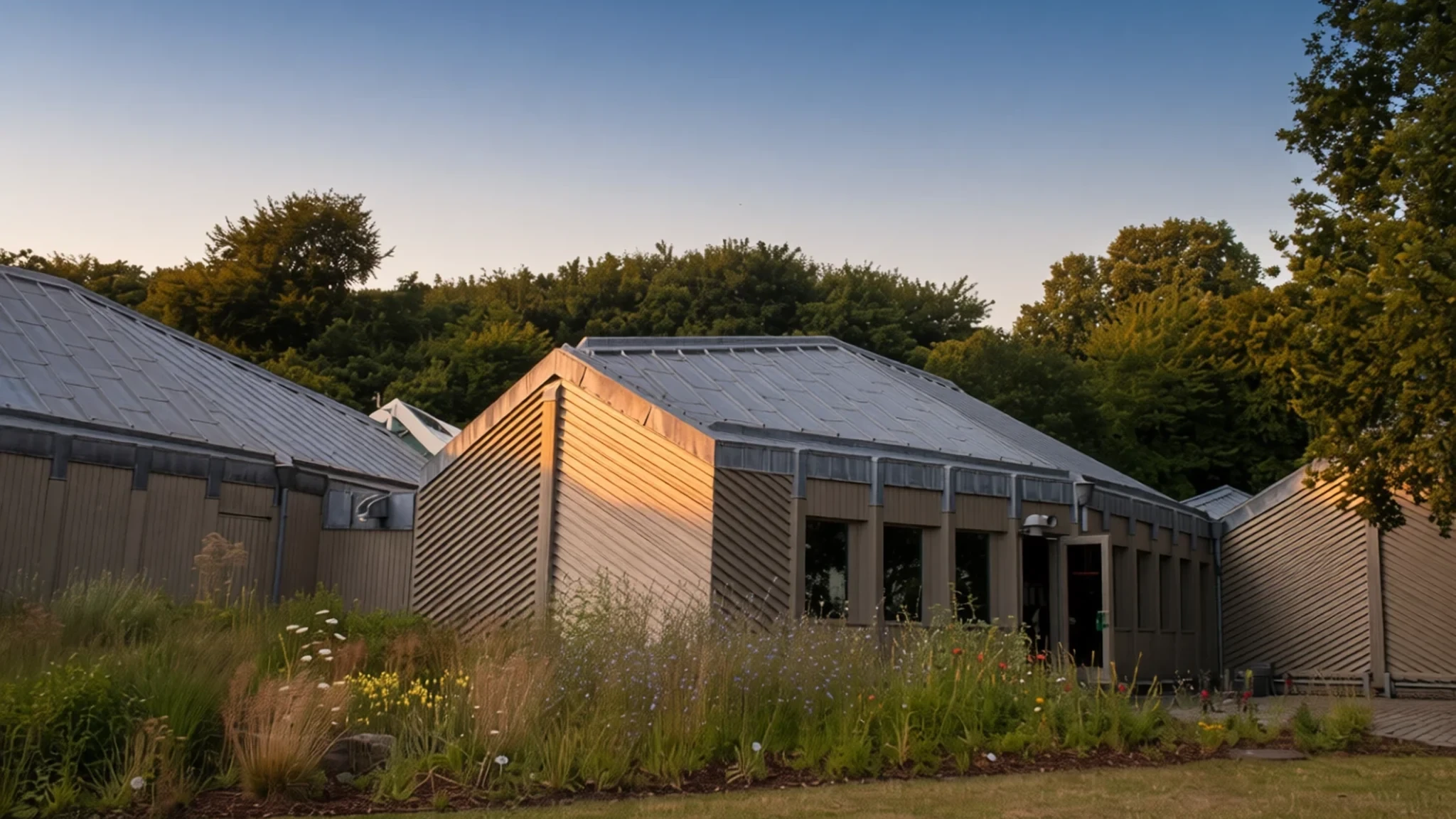
The museum stands beside the site and is the best starting point, putting the excavated town in context before you walk it. Its entrance building is modern and low. Check the official site for opening times and ticketing before travelling, as seasonal hours vary.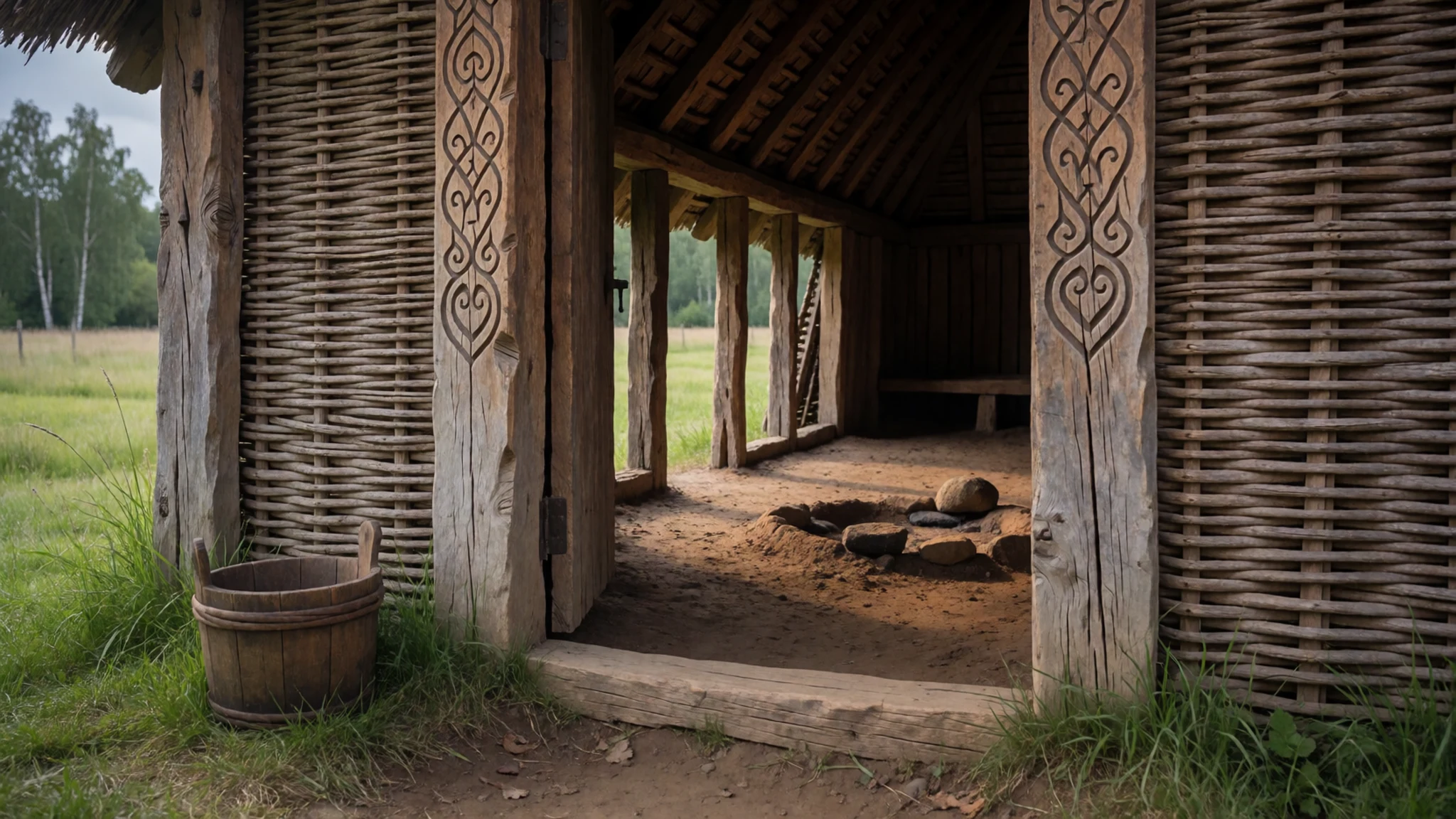
- Reconstructed Viking houses — Outdoor area by the museum
A group of seven houses rebuilt in the outdoor area of the museum shows how townspeople lived and worked. Thatched roofs, timber walls and small interiors give a sense of scale that foundations in the grass cannot. They photograph best in soft morning or evening light.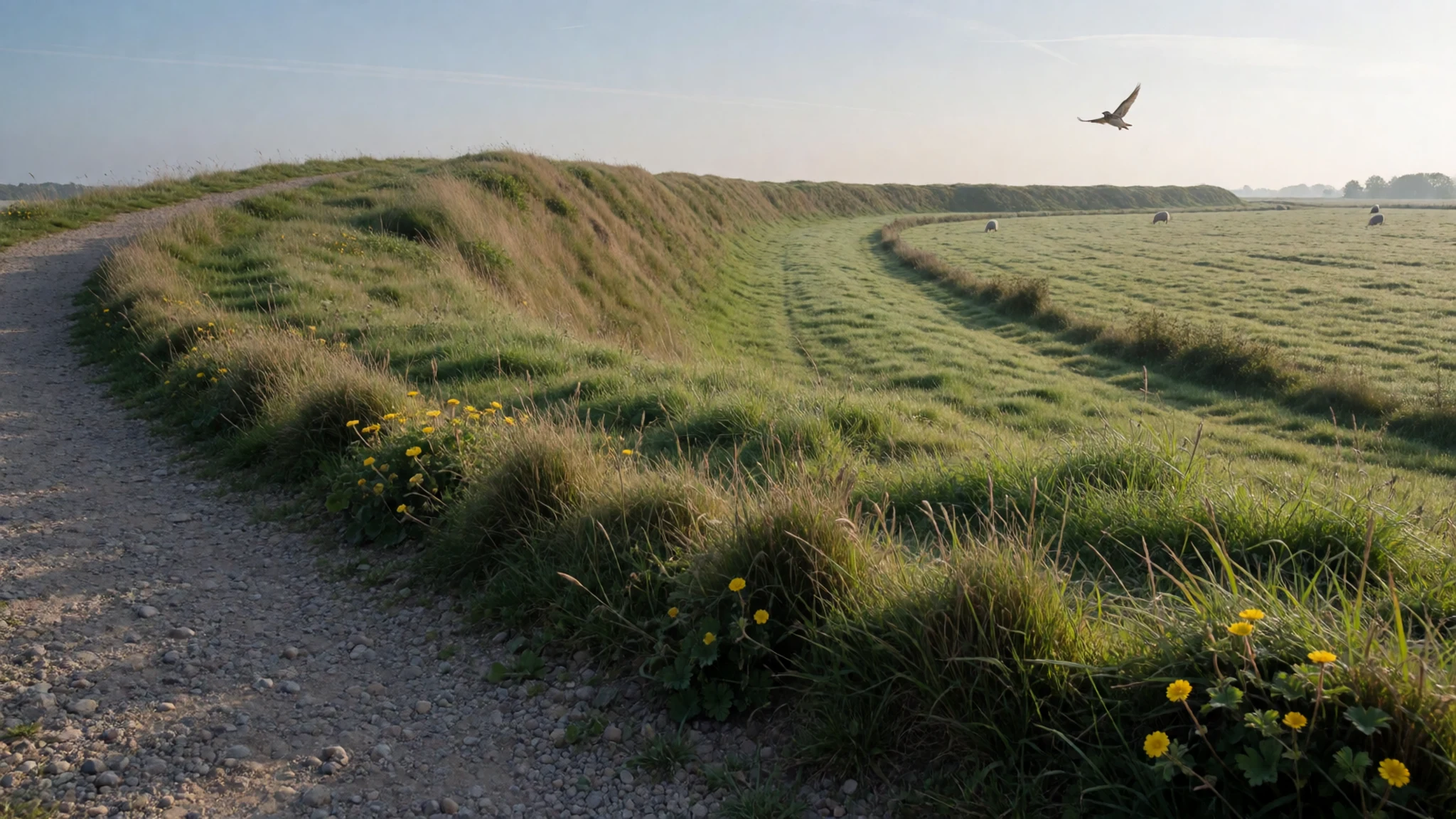
- The semicircular rampart — Western edge of the site
The old western defence of the town survives as a curving earth bank enclosing the former settlement. Walking along it helps explain how small the walled area really was, and how the town opened east to the water. The ground is uneven and can be wet after rain.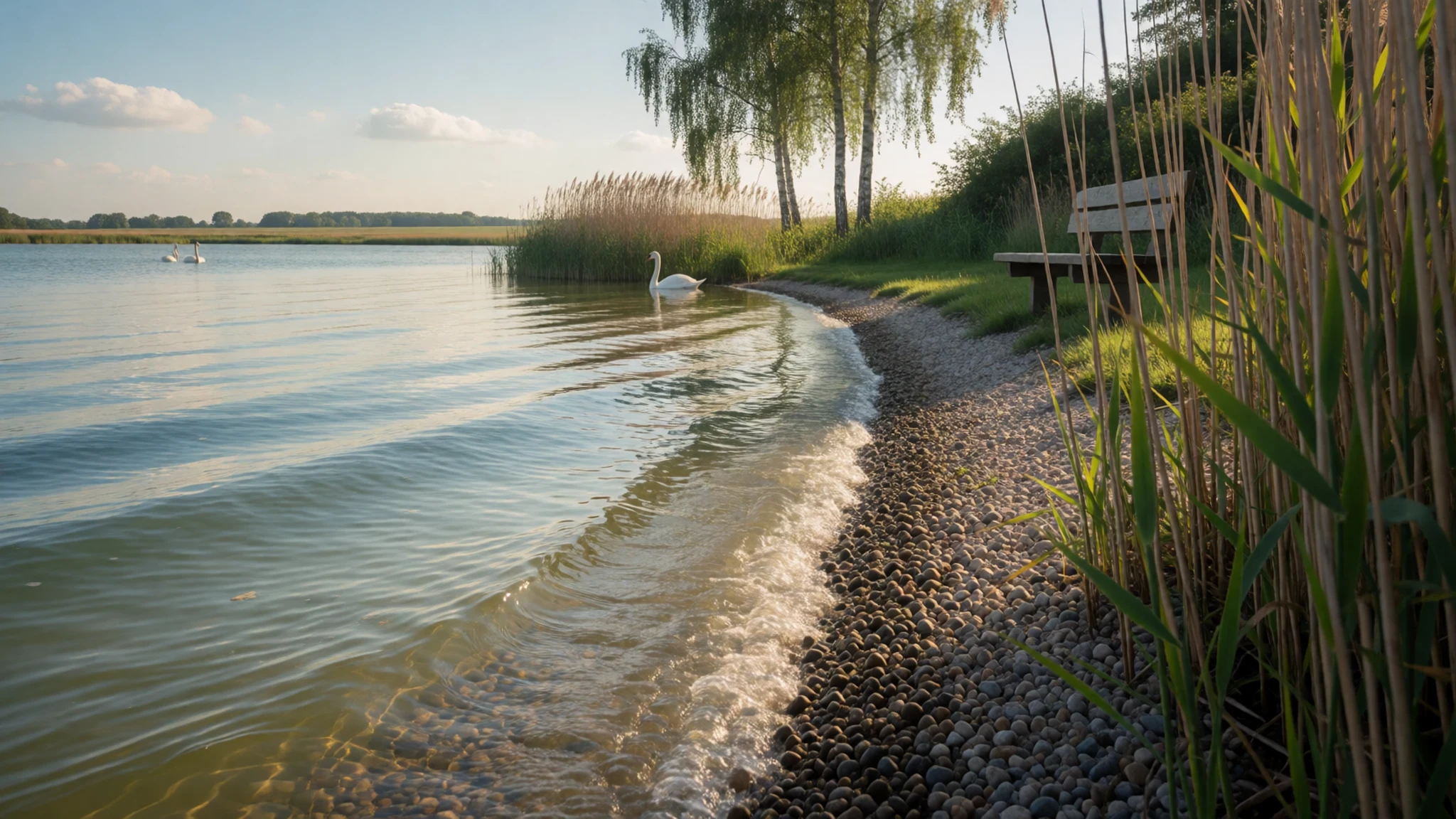
- Haddebyer Noor shoreline — Eastern side of the site
The bay on the town's eastern side was its harbour approach. Standing by the reeds, looking out along the water towards the Schlei, you see why ships came here and why the position was so useful. It is quiet, good for birds and a slow pause.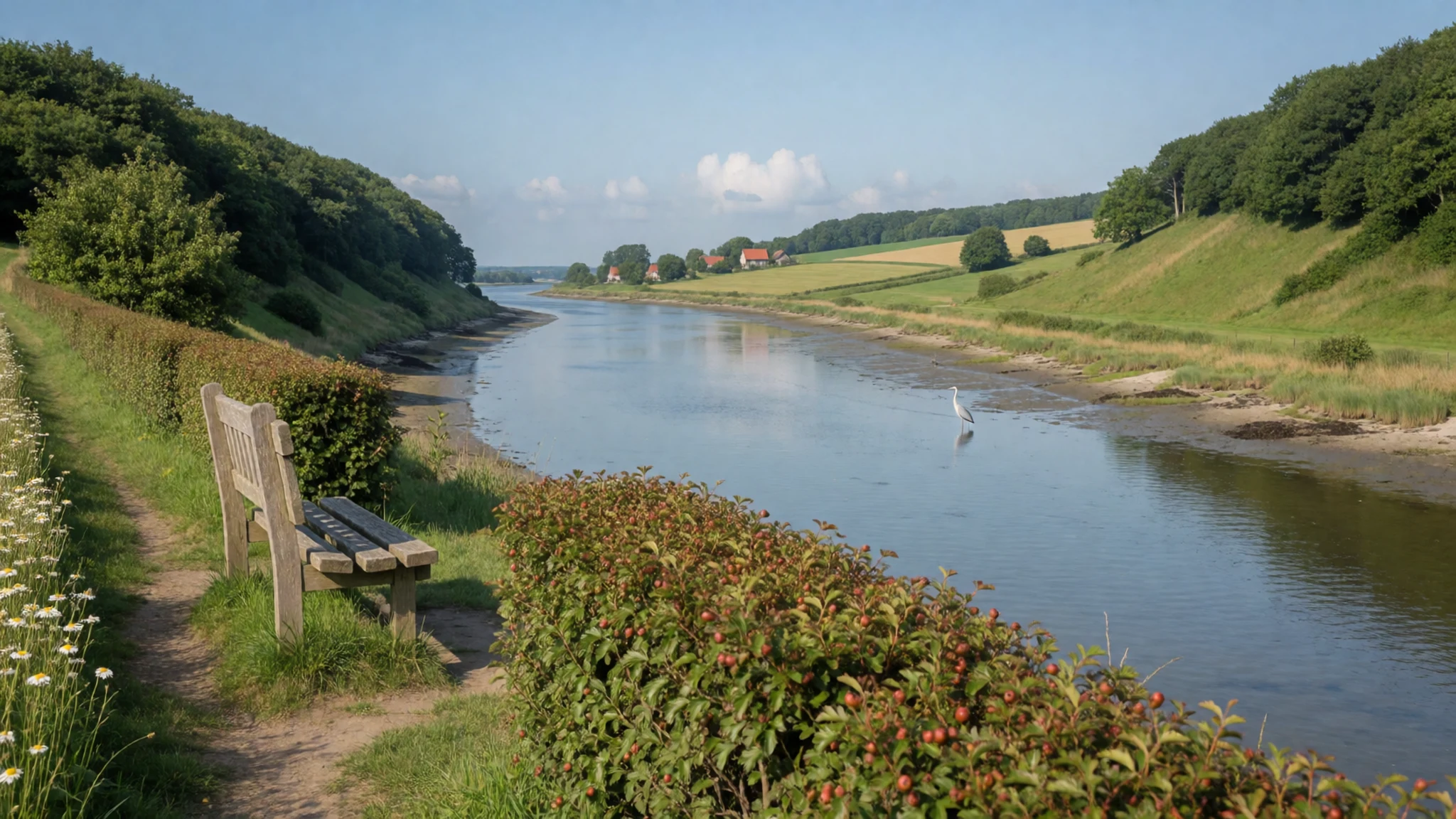
- The Danevirke earthworks — Near Hedeby, Schleswig-Flensburg
The Danevirke is the long defensive earthwork that once joined Hedeby's walls to form a barrier across the peninsula. It is part of the same World Heritage listing. Sections lie close by, and local information boards explain the route. Wear sturdy shoes, as paths are grassy.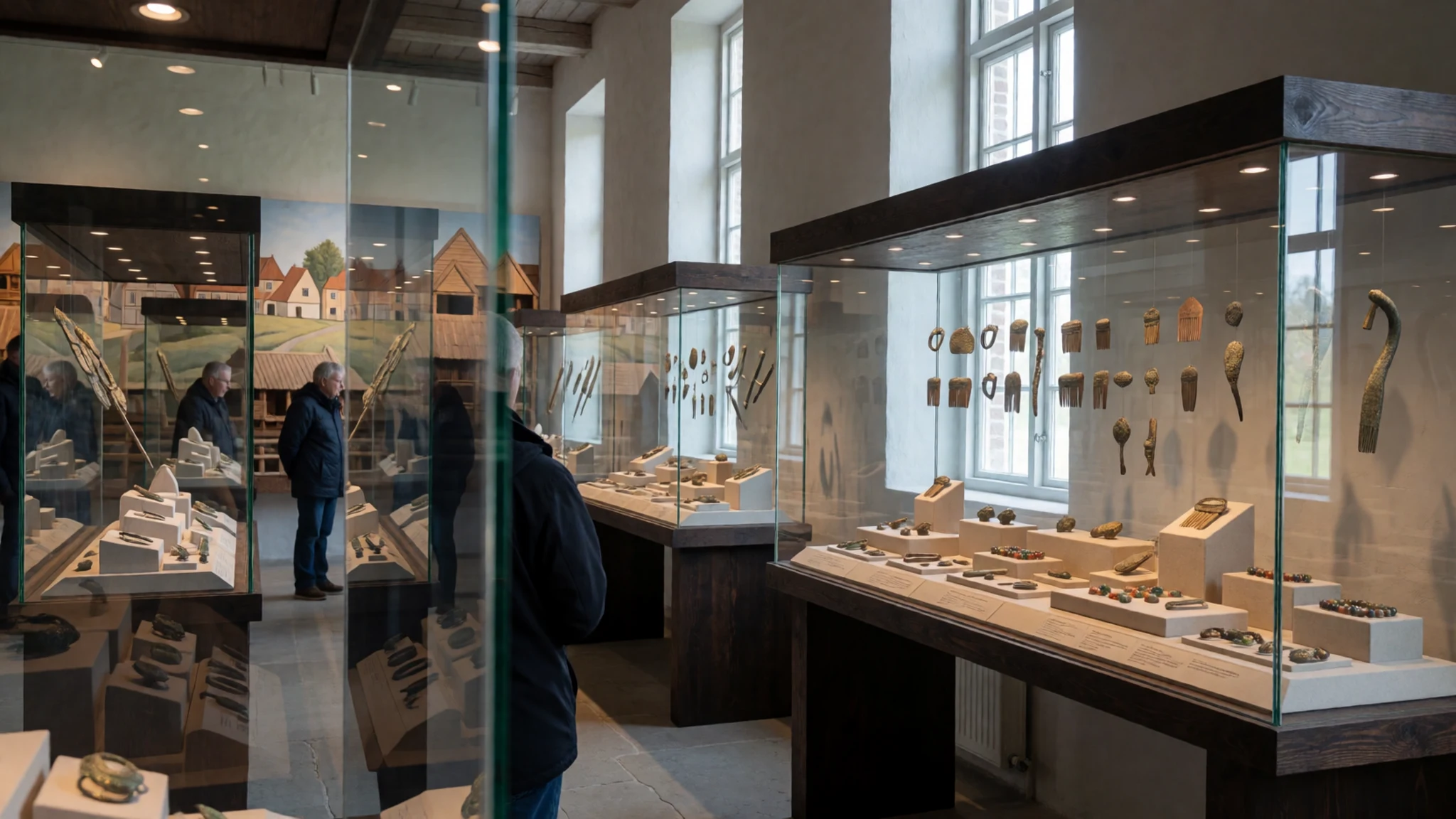
Culture
Hedeby's culture is a question of how a place is remembered. The Danes who built the town were part of the wider Viking world, which meant traders, craftspeople, ship-handlers and raiders as much as warriors. The site now belongs to Germany, and the region of Schleswig has a long mixed Danish and German history, so you will hear both languages and see both place names, such as Haithabu and Hedeby, and Schlei and Slien on maps.
The Viking Age is a living interest here. The museum and the outdoor houses are used for demonstrations and events, and the town of Schleswig across the water carries on the story. Hans Christian Andersen mentions Hedeby in his tale The Marsh King's Daughter, a small literary link for readers.
The site is also a protected archaeological monument, not a park for play. The grassy plots hide the remains of streets and buildings, and the rampart is a historic earthwork. Locals tend to be quiet, practical and friendly in a north German way, and people visit for walks and cycling as well as history. The museum is a place for reading and looking rather than rushing.
Please stay on the marked paths and do not climb on the rampart or the reconstructed buildings, since the earthworks and thatch are fragile and the whole site is protected.
What to wear
Hedeby has no single living costume tradition, but the Viking Age dress known from finds and re-creations is what the museum shows. Men wore woollen tunics, trousers and cloaks, often fastened with metal brooches or pins; women wore long woollen or linen dresses with a layered apron-style over-dress held by brooches. Wool and linen were the main textiles, with dyed trims for those who could afford them. Such clothing was everyday wear, not ceremony.
Nowadays people in Schleswig-Holstein dress simply and for the weather: waterproof jackets, fleeces, jeans and walking shoes. You will see cyclists and hikers in practical layers. At events, volunteers and re-enactors sometimes wear historical costume, which is part of the show rather than local daily clothing.
For a visit, dress for an exposed, windy site beside water. Bring a waterproof layer in any season, a warm layer even in summer, and a hat in colder months. Sturdy, closed shoes or trainers with grip are best, since paths are grass and can be muddy after rain. Sun protection helps on bright days because there is little shade. There are no dress codes for the museum or the site, and no religious-modesty rules apply, although a light scarf or buff is handy against the wind.
What to eat
- Fresh Baltic and Schlei fish — Fish smokehouses and eateries around the Schlei
Herring, plaice and other local fish are staples of the Schlei coast, served fried, pickled or smoked. They suit the history, since fishing and trading went together here. Look for them at lakeside eateries and small fish smokehouses near the water.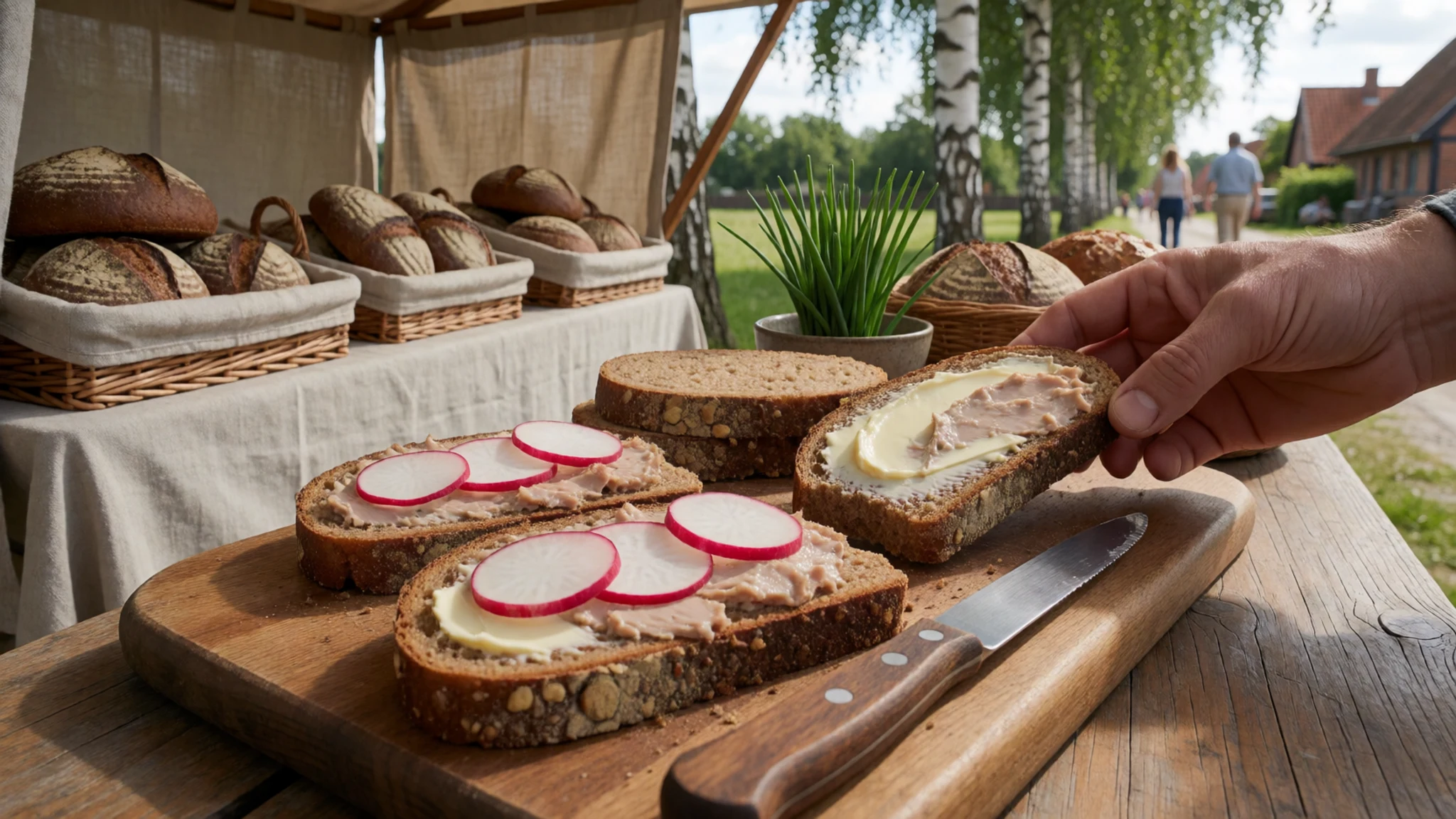
- Fischbrötchen — Harbour kiosks and fish stalls in Schleswig
A bread roll filled with pickled herring, smoked fish or prawns and onion, the typical quick northern German snack. It is cheap, filling and easy to eat on a walk by the water.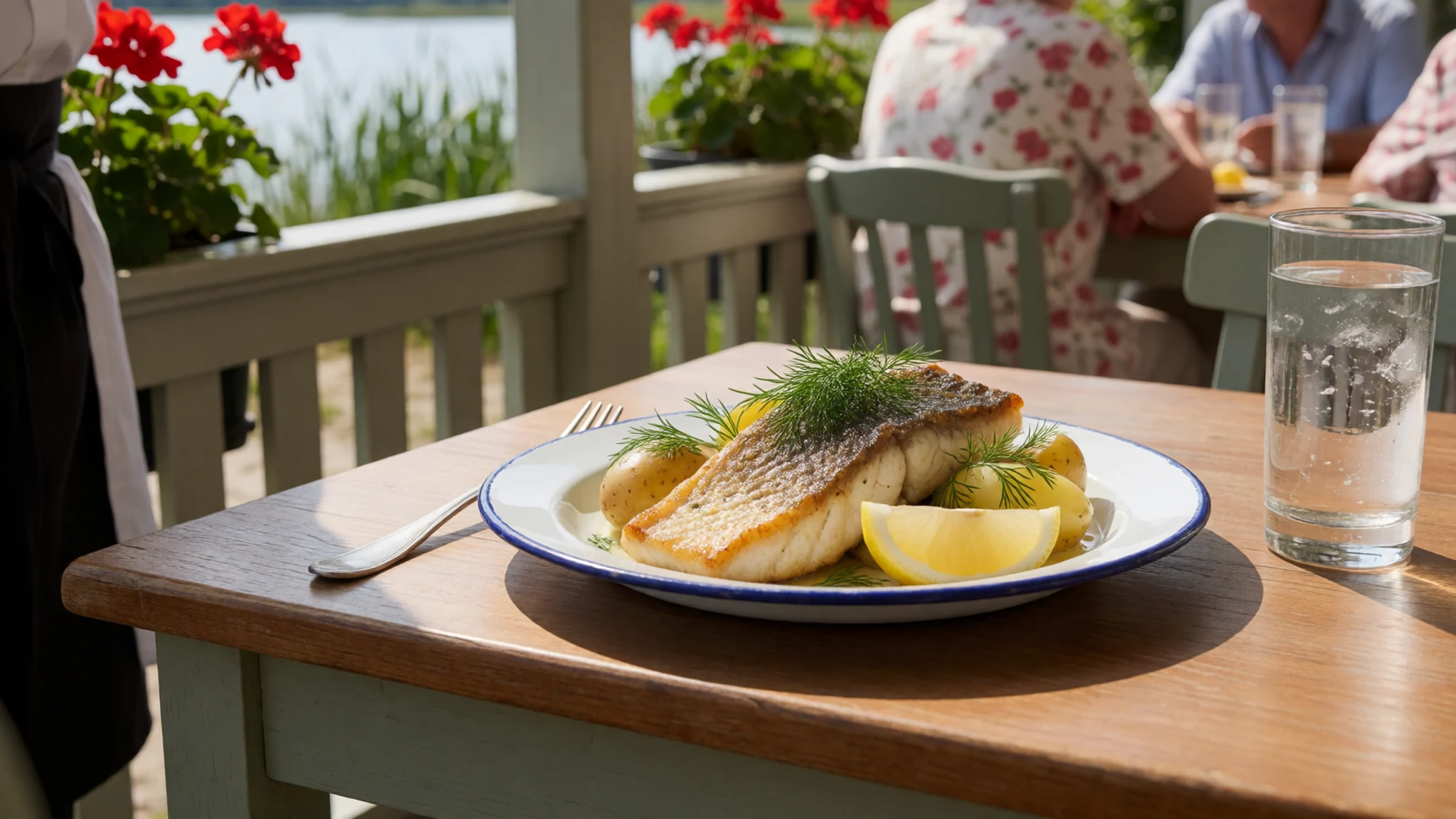
- Labskaus — Traditional north German inns in Schleswig and nearby towns
A northern German dish of mashed corned beef, potato and beetroot, often with a fried egg and pickled cucumber. It looks odd but is hearty, a sailors' meal with a long local history.
- Grünkohl — Country inns across Schleswig-Holstein in autumn and winter
Kale stewed with smoked sausage and pork, mostly eaten in the colder months. It is a regional winter comfort dish and a good reason to visit off-season. Ask for it at village inns.
- Cake and coffee — Cafés in Schleswig's old town
Afternoon cake with coffee is a firm habit in northern Germany and Denmark, and a good break after a windy walk. Fruit tarts and cream cakes are the usual choices.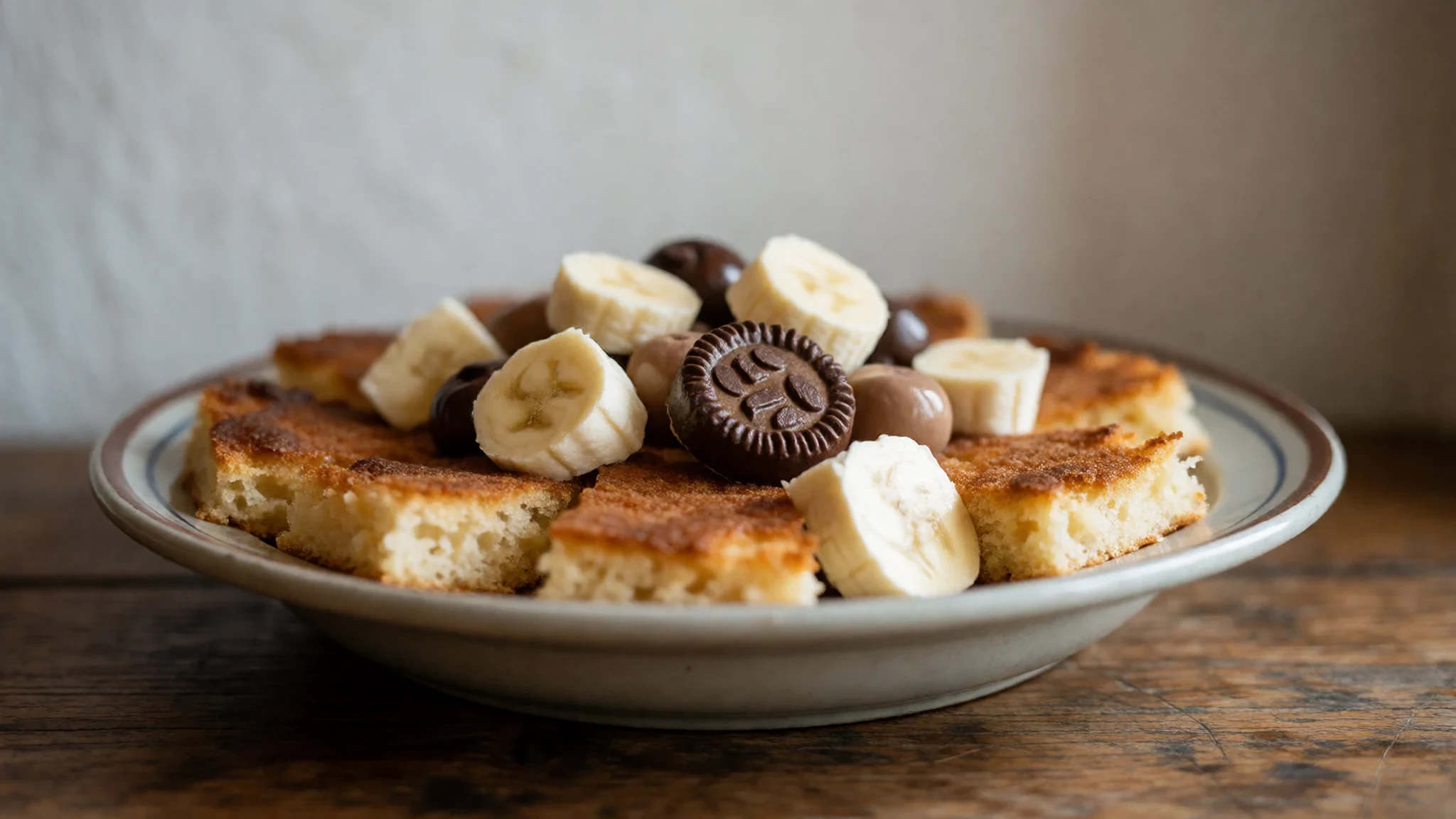
Plan it
Best time. May to September, when days are longest and mildest and walking on open ground is comfortable. Summer is the busiest period, but the site is rural and rarely crowded. Winters are cold, wet and windy, and some outdoor features may be closed.
How long. 1
Getting there. The nearest large airport is Hamburg, about two hours away by train and road. Take a train to Schleswig, then a local bus or taxi, or cycle, to the museum entrance. Driving from Schleswig takes a few minutes. Check the official site for current directions.
Budget. low
Tips
- Check the official site for opening times and ticket details before you go: http://www.schloss-gottorf.de/haithabu
- Start with the museum, then walk the outdoor houses and the rampart
- Bring a waterproof layer, as the site is exposed to wind and rain
- Pair it with a half day in Schleswig, across the water
- Carry some cash and a card for small cafés and kiosks
Etiquette
- Stay on marked paths and off the rampart and reconstructed houses
- Keep voices low in the museum and respect any rules on photography
- Take litter with you
Nearby
Sources
- Wikidata Q165414 (CC0)
- Wikipedia: Hedeby (rev 1365735697) (CC BY-SA 4.0)
- Photo 01, Matthias Böhm (CC BY-SA 4.0)
- Photo 02, Kai-Erik Ballak (CC BY 3.0)
- Photo 03, Wikitour (CC BY-SA 2.0)
- Photo 04, EstherJoh (CC BY 3.0)
- Photo 05, Matthias Süßen (CC BY-SA 4.0)
- Photo 06, Kai-Erik Ballak (CC BY 3.0)
- Photo 07, Caravaca (CC BY-SA 2.5)
- Photo 08, Pinguino del socialismo (CC BY-SA 4.0)
- Wikivoyage (CC BY-SA 4.0)


