Hampyeong
Hampyeong, South Korea
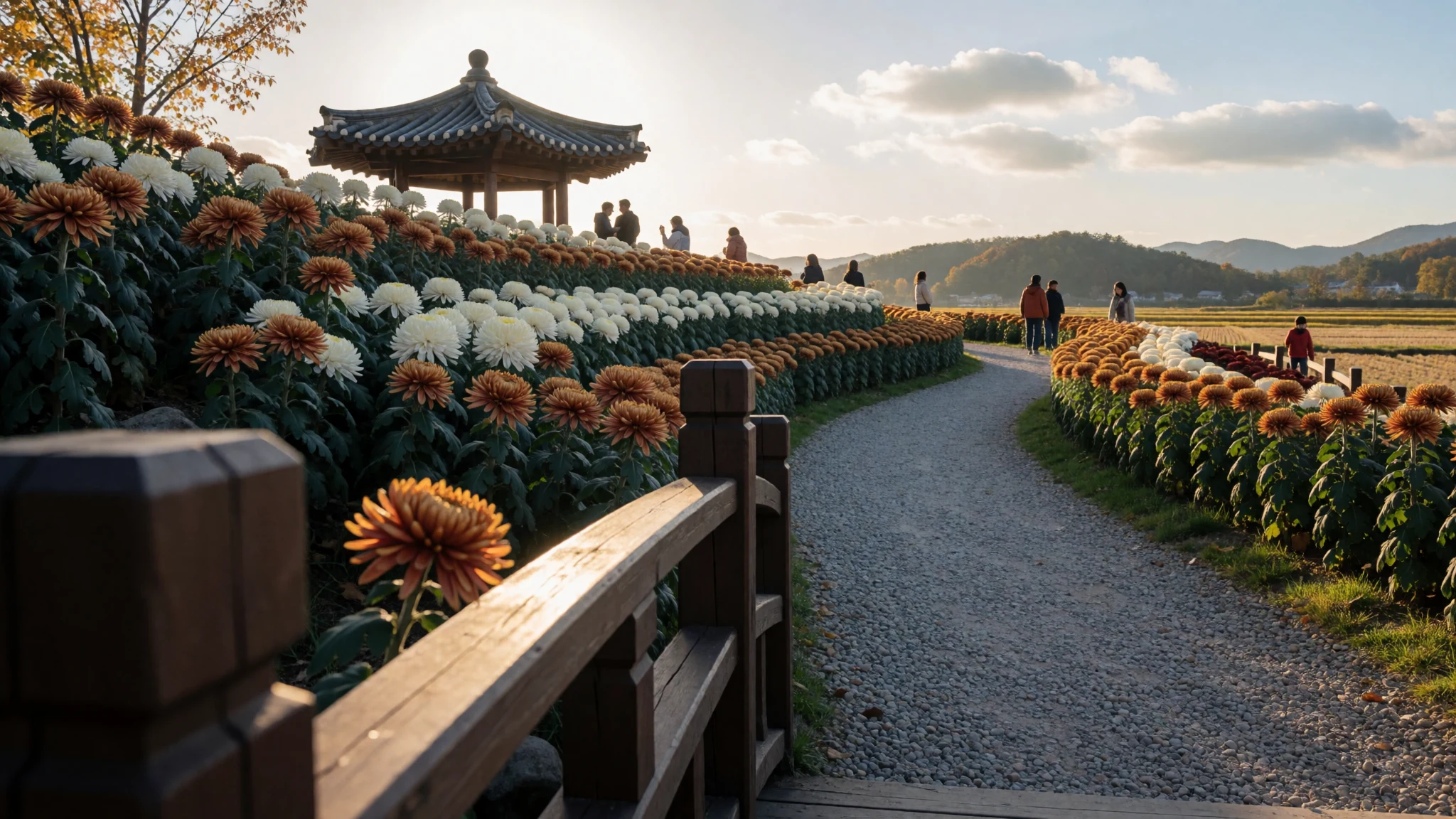
Hampyeong is a quiet farming county in south-west Korea that fills with butterflies in spring and chrysanthemums in autumn.
The place
Hampyeong sits in South Jeolla Province (Jeollanam-do), in the north-west of the province and close to the south-western end of the Korean Peninsula. It is a county rather than a city: a farming district of rice fields, low hills and villages, with a modest county town at its centre. On the map it measures roughly 26 km from east to west and 29 km from north to south, small enough to cross in well under an hour by road. Position is a large part of its appeal. The West Coast Expressway and several national routes run through or beside it, which puts Gwangju about 46 km away and Seoul some 439 km. That makes Hampyeong an easy day trip from Gwangju, and a sensible stop on a drive down the west coast towards Mokpo. There is no skyline and no crowded old quarter. What the county offers is space, flat green country, and a calendar built around two seasonal festivals that fill the Expo Park grounds with butterflies in spring and chrysanthemums in autumn. Outside those weeks the place is quiet, and a weekday visit can feel almost empty. The pace is slow, the roads are good, and English signs and menus are thin on the ground, so a translation app earns its place. The county office runs the official website, which is the best source for current event dates. Most people come for a day; those who stay longer tend to use Hampyeong as a base for slow driving through the surrounding Jeolla countryside.
Its story
Hampyeong's recorded past begins before the Korean kingdoms, when the south-west belonged to Mahan, a loose confederation of small polities. Dolmens, the stone burial monuments of that era, still stand in the area, and they are the main evidence that one or two of those polities lay within today's county. Under the Baekje kingdom the land was divided between two districts, Gulrae and Daji. Later, under Silla and then Goryeo, the Gulrae district was known as Hampyeong, and the name has stuck ever since. The early Joseon dynasty redrew the map again. During the reign of King Taejong, Hampyeong was merged with neighbouring Mopyeong into a single district made up of townships called myeon. Those townships remain the basic unit of local administration, although several were merged, renamed or added during the twentieth century. In 1989 the district was formally renamed a county, and in the 1960s the central township was raised to town status, known as an eup. The result is a place whose boundaries have shifted many times but whose name has barely changed. For a visitor, the dolmens and the township names are the clearest links to that long record, and the county office is the place to ask where the stones can be found.
What to see
- Hampyeong Butterfly Festival (함평나비대축제) — Hampyeong Expo Park
Held at Hampyeong Expo Park from late April into early May, this is the event the county is best known for, drawing over a million visitors in a typical year. Weekends bring families, school groups and queues. Dates shift annually, so check the county's official site before building a trip around it.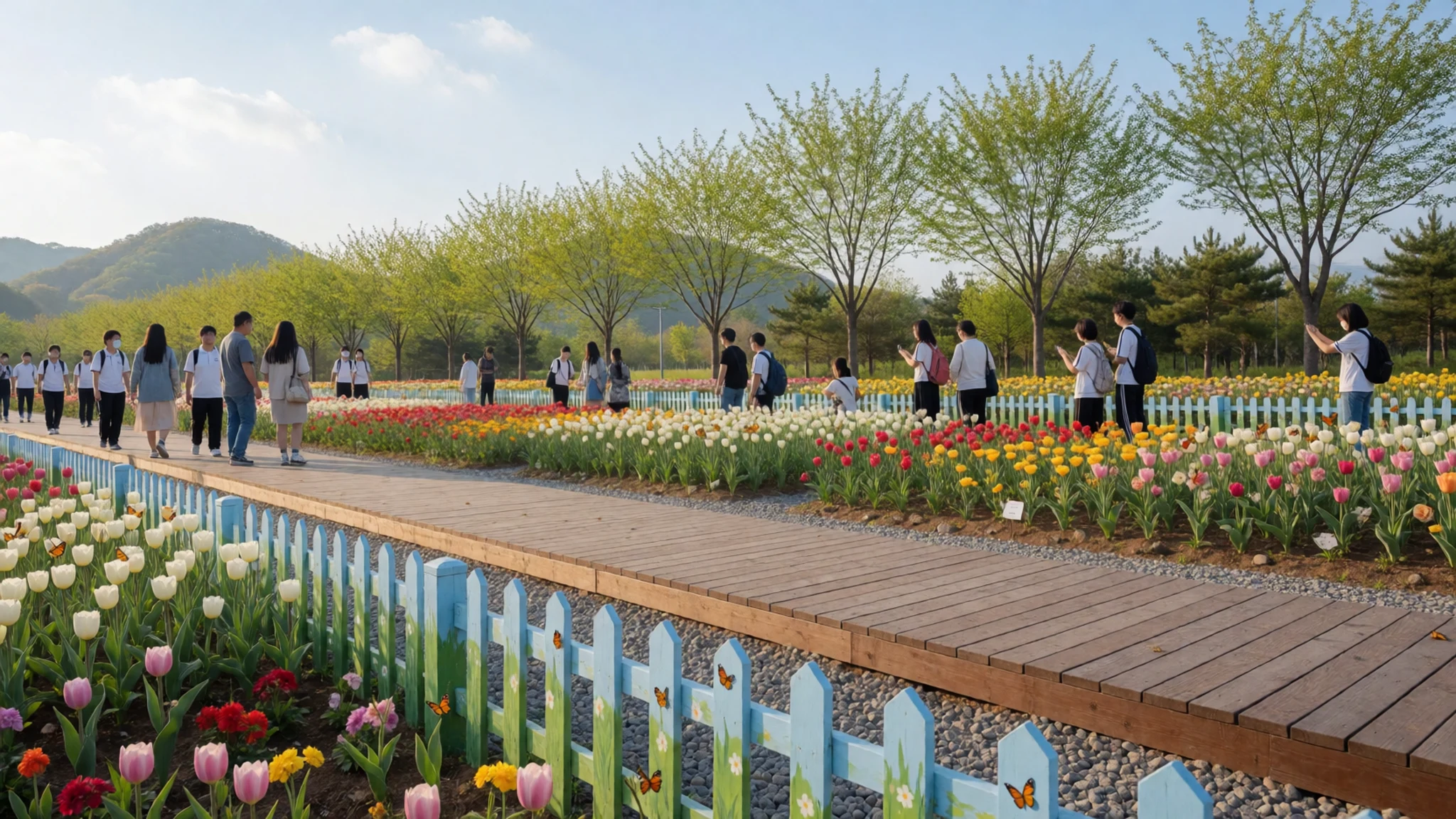
- Korea Chrysanthemum Festival (대한민국 국향대전) — Hampyeong Expo Park
From late October to early November the Expo Park grounds turn into chrysanthemum gardens and displays, with a new theme each year; the latest gardens were built around myths. It is likely to be cooler and calmer than the spring festival, and the autumn light suits photography. Confirm dates on the official site.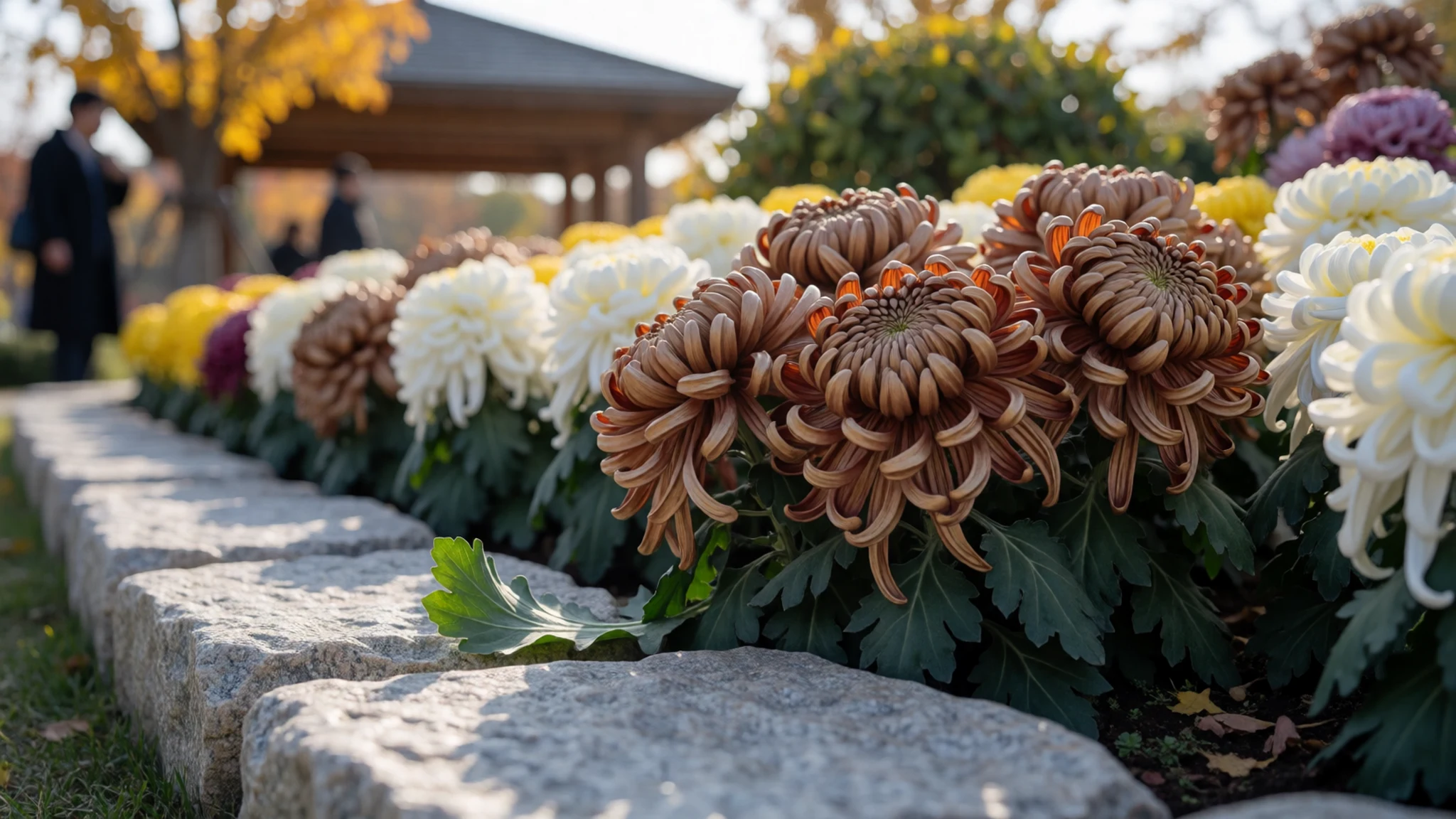
- International Butterfly Hall — Hampyeong Expo Park
Photographs taken at the festival's international butterfly hall show caterpillars of Sasakia charonda, sometimes called the Japanese emperor butterfly, feeding on leaves of the Chinese hackberry (Celtis sinensis, pangnamu in Korean). The indoor displays therefore seem to include early life stages as well as adult butterflies. Opening arrangements vary, so check ahead.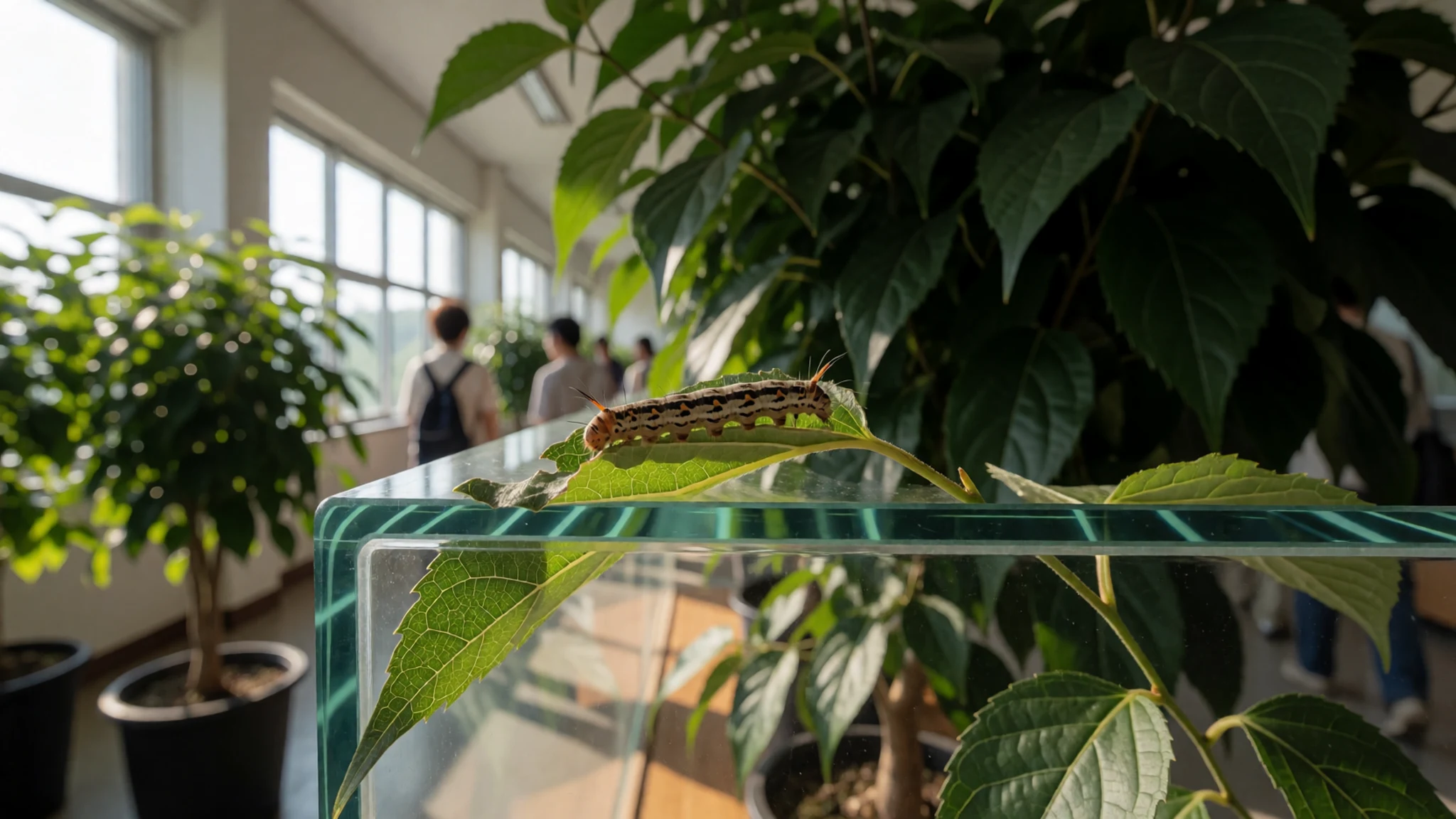
- Myeongcheon Hanok stay — Hampyeong county
Hampyeong has traditional hanok guest houses, among them Myeongcheon Hanok, which the county office has promoted with photographs. A stay means a timber-and-tile house with a heated floor and Korean-style meals, which suits a slow overnight after a long festival day. Book well ahead in festival weeks and ask the county office for current contacts.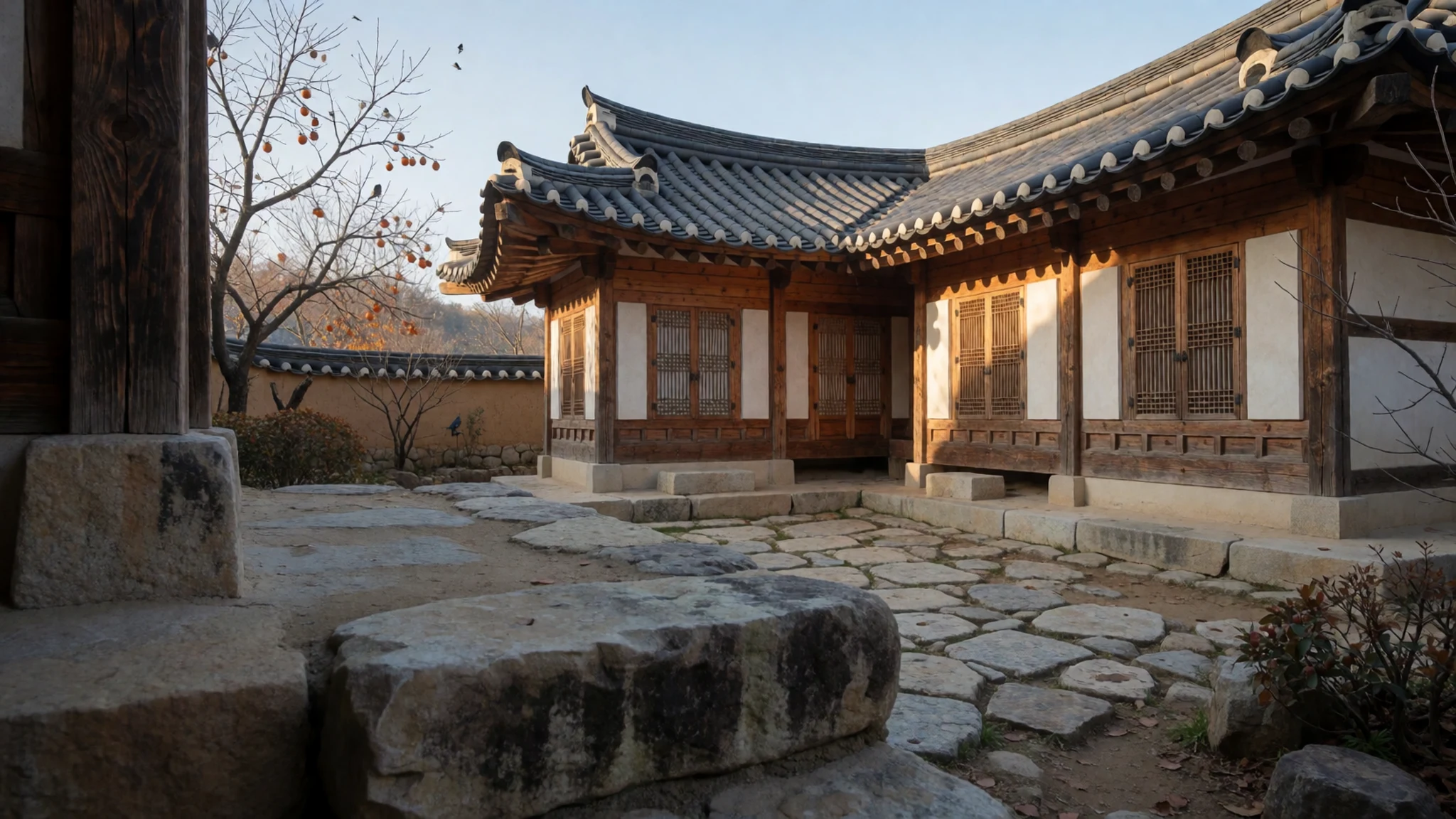
- Local dolmens — Farmland around the county
Scattered across the county are dolmens, the stone burial monuments that point to settled communities long before the Korean kingdoms. They are quiet sites in farmland rather than attractions with facilities. Ask the county office or local people for current locations, and wear shoes with grip, since field paths turn muddy after rain.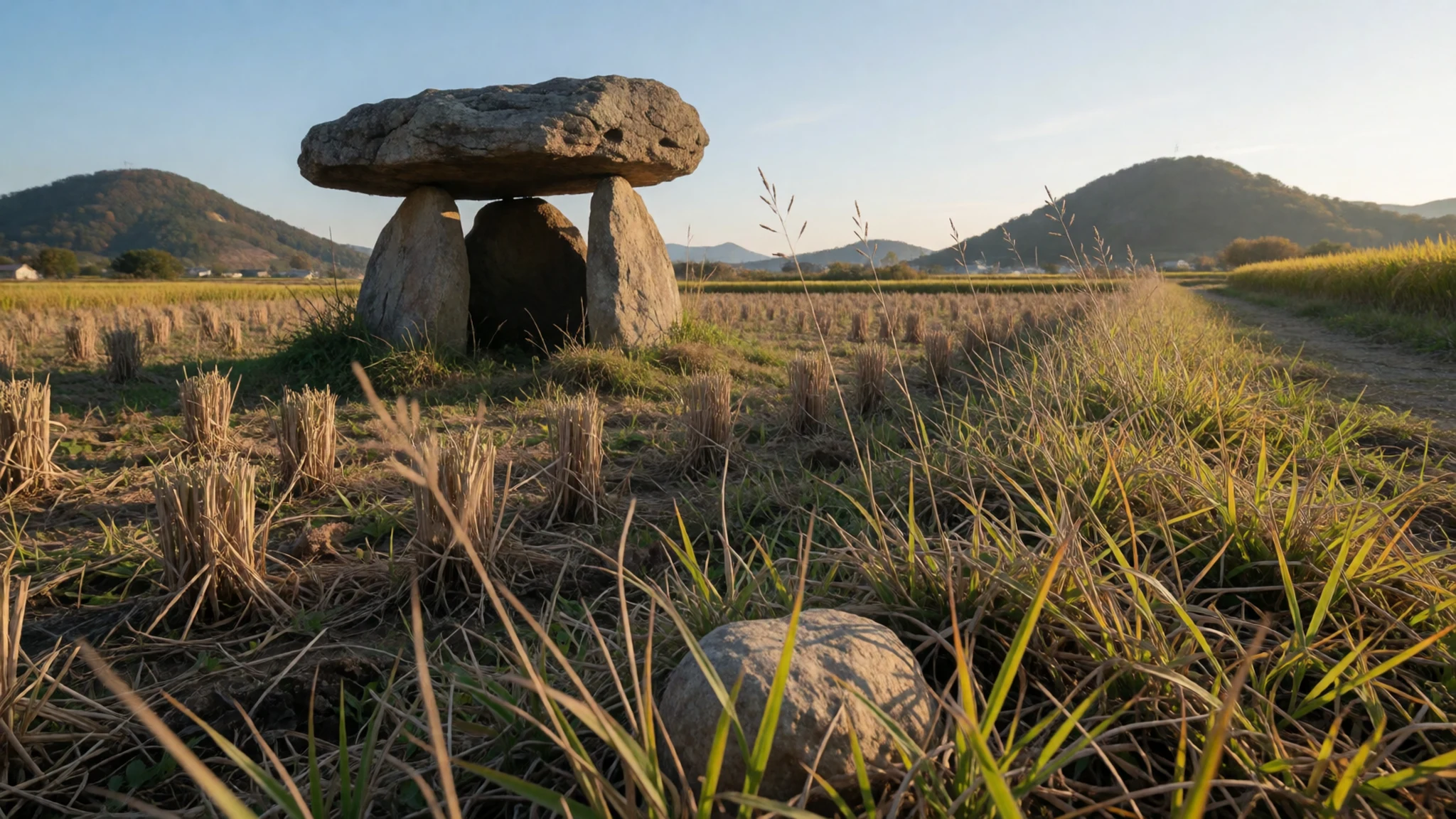
Culture
Hampyeong belongs to the Jeolla region, which Koreans associate with generous eating, rice farming and a strong tradition of regional music and storytelling. Daily life here follows the farming year, and the two big festivals work as a shared calendar for the county: planting and spring openings, then the autumn harvest mood of the chrysanthemum displays. Village life still carries the older habits of seasonal holidays, ancestor remembrance and respect for elders, so family groups are common, and several generations often visit the festivals together. Hampyeong's butterfly theme is also a statement of local pride. The county has built its identity around clean countryside and ecology rather than heavy industry, and festival staff, volunteers and local farmers take visible care over how the grounds look. Traditional wooden houses, or hanok, are part of that heritage, and staying in one gives a closer sense of rural Korean home life than any display can. Conversation tends to be polite and fairly formal with strangers, warming quickly over food. A small effort with greetings is always appreciated, and a bow of the head with a simple hello goes a long way. Take your shoes off at the door of any hanok or raised-floor restaurant, and never touch, chase or pick up the butterflies in the festival halls.
What to wear
Traditional Korean dress in Hampyeong is the hanbok, the same garment worn across the country: a short jacket (jeogori) over a full wrap skirt (chima) for women, and a jacket with loose trousers (baji) for men. Fabrics include silk for formal wear, ramie and hemp for summer, and cotton for everyday clothes. Hanbok is now mostly kept for the lunar new year, the autumn harvest holiday, weddings and festival days, and some visitors hire one for photographs where rental is offered. Everyday dress today is plain and practical: jeans, trainers, windproof jackets, and in the fields, long sleeves, wide-brimmed hats and rubber boots. Younger people follow Seoul and Gwangju styles, and a festival crowd looks like any Korean weekend outing. Visitors should dress for the weather and the ground. Late April and October are mild but can turn cool by evening, so layers and a light waterproof help. Summer is hot and humid, which calls for light cotton and a hat, and winter needs a proper coat. Expo Park involves a lot of walking on paved and grassy paths, so comfortable shoes matter more than smart ones. There is no strict modesty code, though covered shoulders and knees are a courteous choice at any temple. Shoes that slip off easily save time at hanok and restaurants.
What to eat
- Yukhoe-bibimbap — Beef restaurants around the county town
Rice topped with seasoned raw beef, vegetables and a raw egg yolk, mixed with chilli paste at the table. It is a dish often served at beef restaurants around the county town. Choose it if you are comfortable with raw beef and want a light, savoury meal.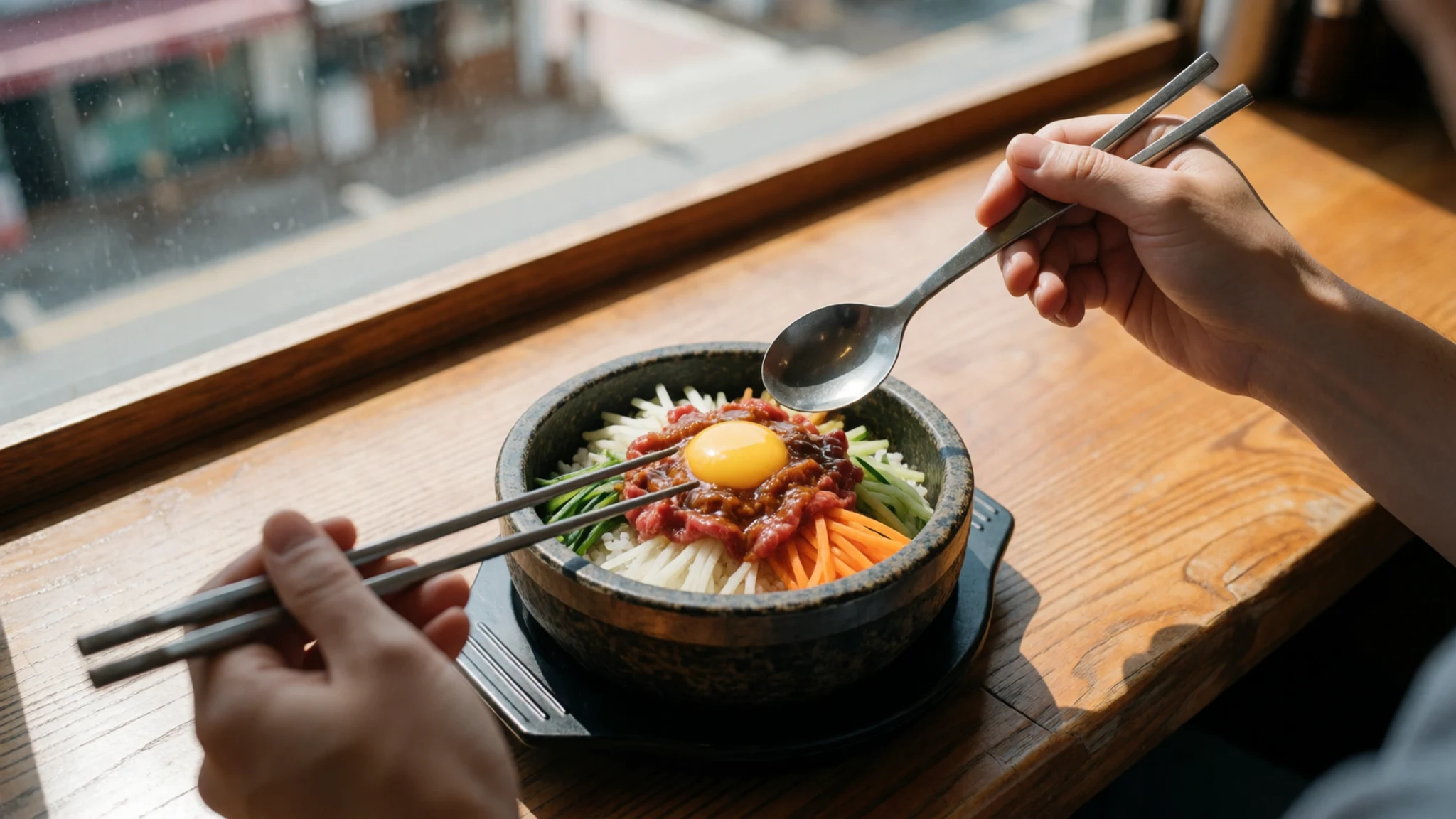
- Hanwoo barbecue — Barbecue restaurants in the county town
Korean native beef grilled at the table over charcoal or gas, then wrapped in lettuce or perilla leaf with garlic and bean paste. It is a meal for groups rather than one person, and usually comes with soup and side dishes. Look for barbecue restaurants in the town centre.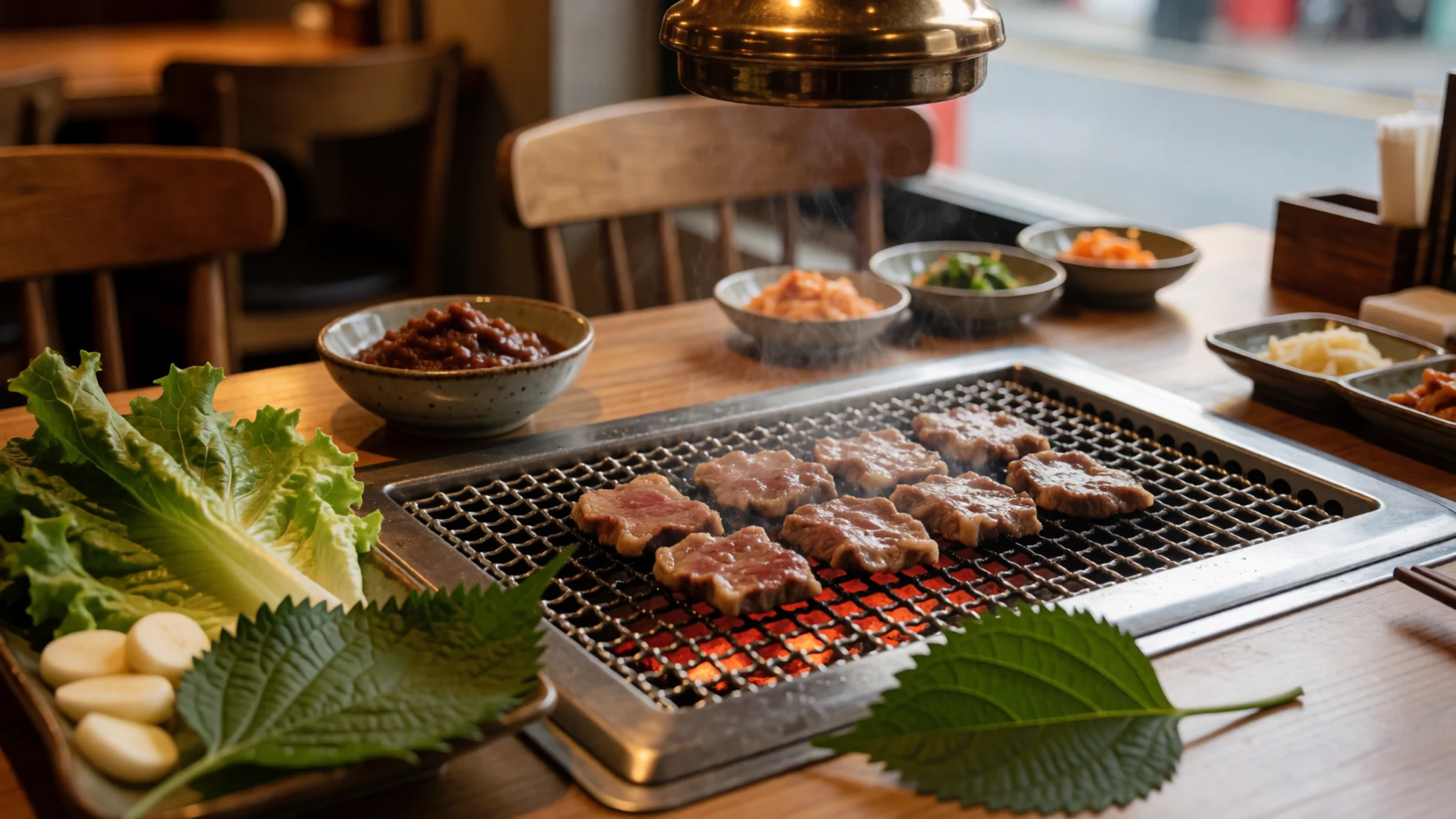
- Jeolla set meal (hanjeongsik) — Set-meal restaurants in the county town
Jeolla is known for tables crowded with small dishes: fermented kimchi, seasoned greens, pickles, fish and stews, arriving all at once with rice. Portions are generous, and the variety changes with the season. Set-meal restaurants in the county town are the easiest place to try it. - Nakji-bokkeum — Seafood restaurants on the main roads
Small octopus stir-fried in a fiery chilli sauce with vegetables, usually eaten with rice and sometimes with noodles stirred into the leftover sauce. It is a west-coast favourite, and it is hot, so ask for milder if chilli is a worry. Seafood restaurants along the main roads serve it. - Roasted sweet potato (goguma) — Street stalls near the market and Expo Park in autumn and winter
In colder months, sweet potatoes are roasted whole, with a sticky, sugary flesh inside the charred skin. They are cheap, filling and eaten on the move, and make a good snack on a cold autumn festival day. Look for roadside stalls and carts near markets and festival grounds.
Plan it
Best time. Late April to early May for the butterfly festival, and late October to early November for the chrysanthemum displays. Both periods are mild and green or golden. Summer is hot and humid with rain, and winter is cold, quiet and mostly out of season for outdoor sights.
How long. 1–2
Getting there. Fly to Muan International Airport (near Mokpo) or Gwangju Airport. From Gwangju, express buses run about every half hour, and there are also city buses and a train to Hampyeong station. Mokpo is under an hour away by express bus or train. The last leg to the festival grounds is by local bus or taxi.
Budget. low
Tips
- Check festival dates on the official site (http://www.hampyeong.jeonnam.kr/eng_new/) before booking, because they change each year
- Go on a weekday or early in the morning during festival weeks to avoid weekend queues
- Carry a card and some cash, as small stalls and rural eateries may take only one
- Bring a hat, water and sun cream for the open Expo Park grounds in spring
- Install a translation app, since English signs and menus are limited
Etiquette
- Take shoes off where there is a raised floor or a rack by the door
- Do not touch or pick up the butterflies or plants in festival displays
- Greet people politely and ask before photographing individuals, especially farmers and older residents
Nearby
Sources
- Wikidata Q50340 (CC0)
- Wikipedia: Hampyeong County (rev 1378973378) (CC BY-SA 4.0)
- Wikivoyage: Hampyeong (rev 5430192) (CC BY-SA 4.0)
- Photo: Hampyeong butterfly festival banner (User:Piotrus) (CC BY 3.0)
- Photo: 함평군 행정지도 (장길산) (Public domain)
- Photo: Hanok stay at Myeongcheon Hanok (Hampyeong County Office) (CC BY-SA 2.0)
- Photo: 함평여고 전경 (Ssk21) (CC BY 3.0)
- Photo: 함평여고 기숙사 (Ssk21) (CC BY 3.0)
- Photo: Map Hampyeong-gun.png (CC BY 3.0)
- Photo: Sasakia charonda larva 01 (dalgial) (CC BY-SA 2.5)
- Photo: Sasakia charonda larva 02 (dalgial) (CC BY-SA 2.5)


