Hallyeohaesang
Hallyeohaesang, South Korea
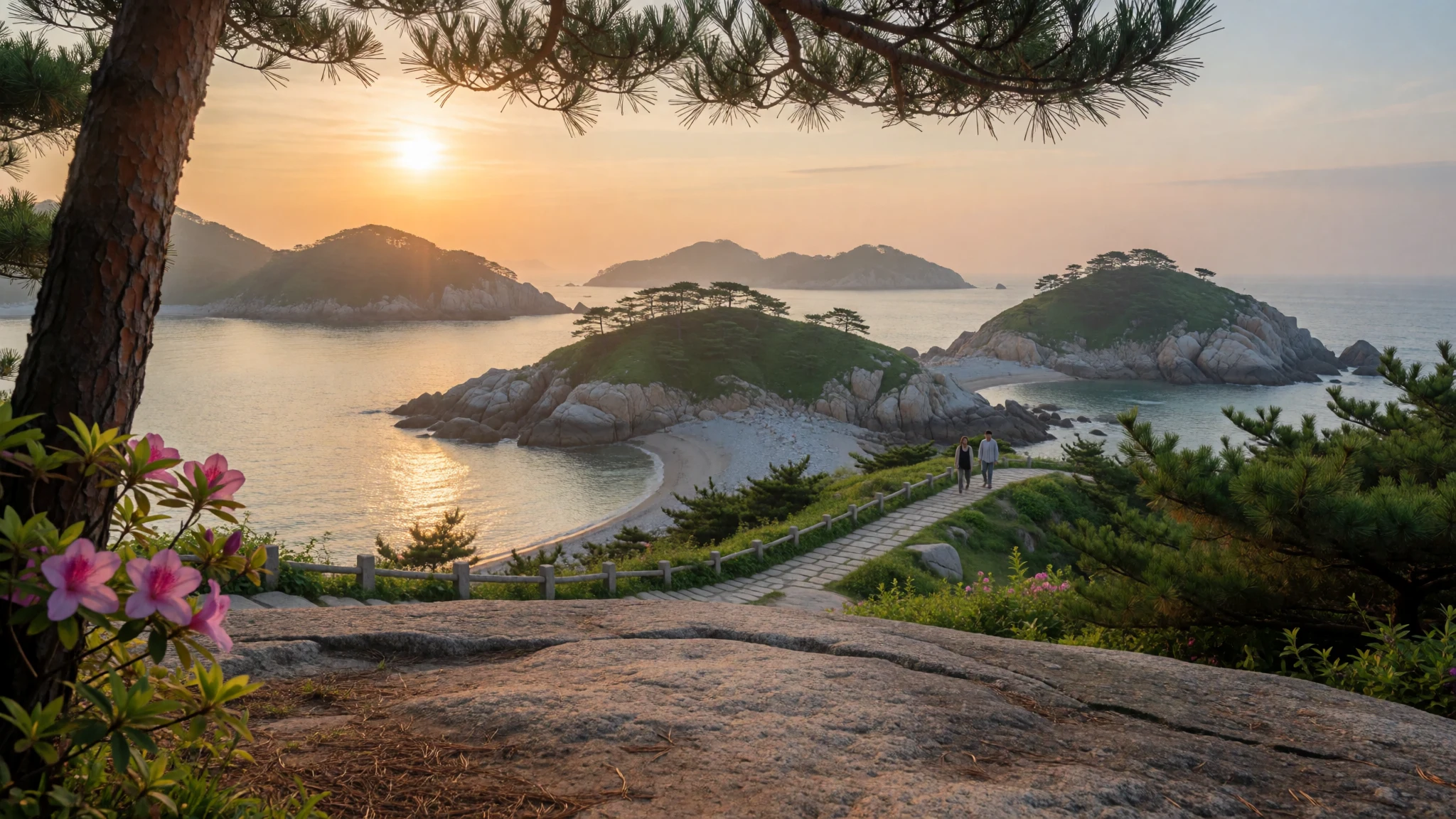
Hallyeohaesang is a sea park of ferries, bridges and small islands on South Korea's warm southern coast, with working fishing harbours beside the views.
The place
Hallyeohaesang National Park is a marine park strung along the southern coast of South Korea, from the port city of Yeosu in the west towards the island of Geoje in the east. It was designated in 1968 and is divided into six districts: Sangju-Geumsan Mountain, Namhaedaegyo, Sacheon, Tongyeong-Hansan, Geoje-Haegeumgang and Yeosu-Odongdo. Most of the protected area is sea rather than land, and that shapes the experience. This is a park seen from ferries, bridges and headlands more than from long hiking trails. Islands of all sizes sit close together, many of them uninhabited, with pine-topped rock, small pebble beaches and channels where fishing boats share the water with oyster and seaweed farms. The Korean name, 한려해상국립공원, points to a calm, graceful stretch of sea. Because the districts lie far apart, the park works less as one destination than as a chain of bases. Yeosu and its island of Odongdo anchor the western end, Tongyeong and Geoje the eastern end, with the Namhae bridge and the mountain district of Geumsan in between. The climate is mild by Korean standards, since the south coast is among the warmer parts of the peninsula, though summers are humid and late-season typhoons can cancel ferries. Local waters supply much of the country's oysters and seaweed, so a working fishing economy sits right beside the scenery.
Its story
Hallyeohaesang National Park owes its character to the way people have used this coast. For centuries the sheltered channels between islands were fishing grounds and sea lanes, and the towns on the shore, Tongyeong above all, grew around harbours and boatbuilding. The waters are also tied to Korea's naval memory. Admiral Yi Sun-sin fought Japanese fleets in these narrow straits with fast, armoured turtle ships, and shrines, statues and museums around Tongyeong and Hansan island keep that story alive. In the twentieth century the scenery itself became a resource. The park was designated in 1968, which placed the islands and surrounding sea under national protection and, over the following decades, brought a visitor economy of ferries, viewpoints and island gardens. Oedo, off Geoje, is a good example: a married couple turned a small island into a botanical garden, and it is now a regular stop on boat tours. Farming of oysters and seaweed continues around the park, so protection here means managing a working sea rather than fencing off a wilderness. Bridges have changed the map too. Namhaedaegyo links island and mainland roads, so places once reached only by boat now receive day trippers by car. The result is a park where heritage, aquaculture and holiday traffic overlap, and where the quietest corners are still found by catching an early ferry to a smaller island.
What to see
- Odongdo — Yeosu-Odongdo district
Odongdo is a small island joined to Yeosu by a breakwater path. Its coastal walks run under dense camellia and bamboo, ending at a lighthouse and sea views. It is easy to cover in a couple of hours, and best on a calm weekday morning when the paths are quiet.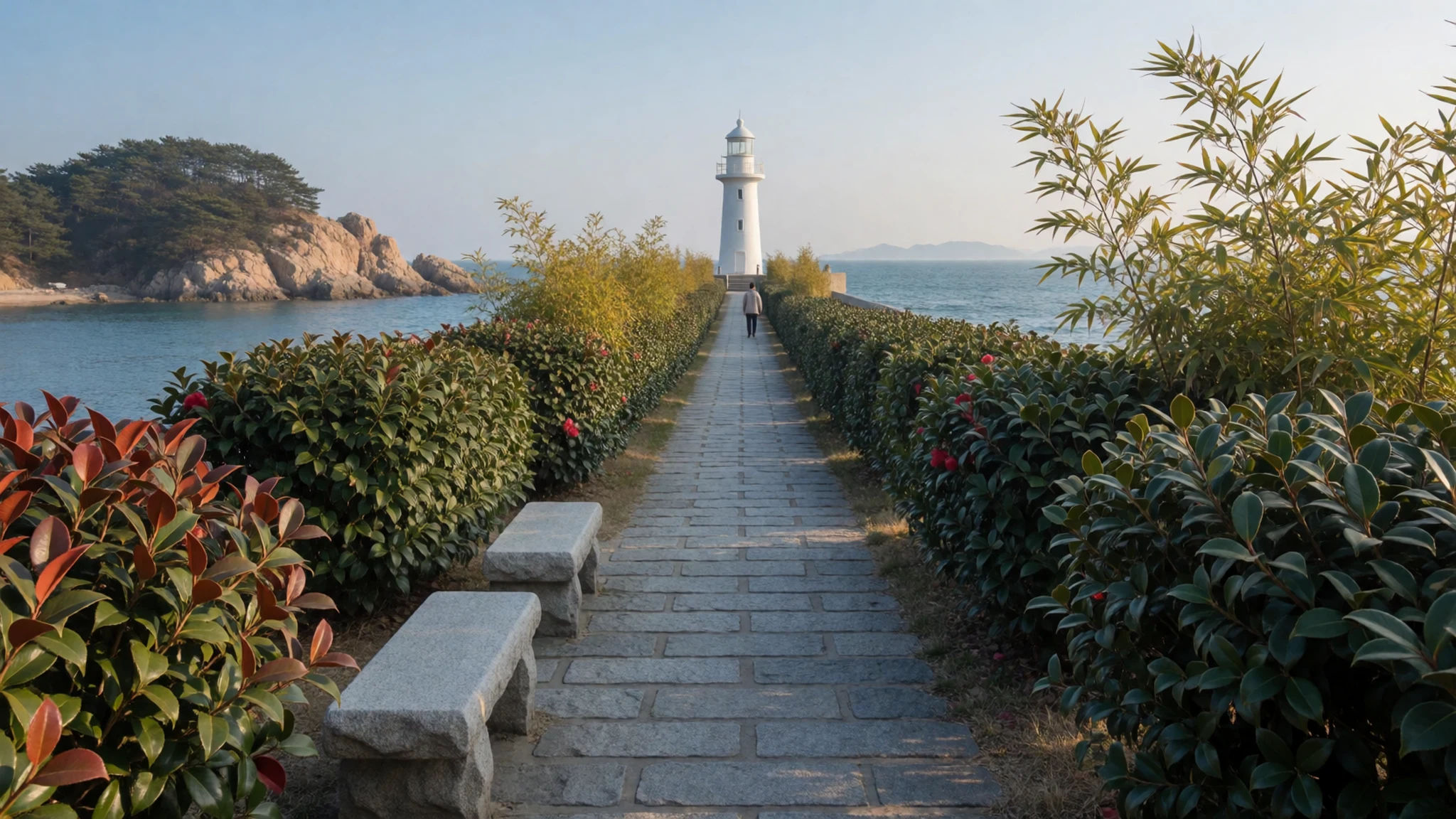
- Oedo Botanical Garden — Geoje-Haegeumgang district
Oedo is a small island off Geoje that a couple shaped into a western-style botanical garden. Visitors arrive by boat from Geoje or nearby ports, and the visit is timed by the ferry. Expect clipped hedges, statues and sea views, with crowds peaking at weekends and in spring.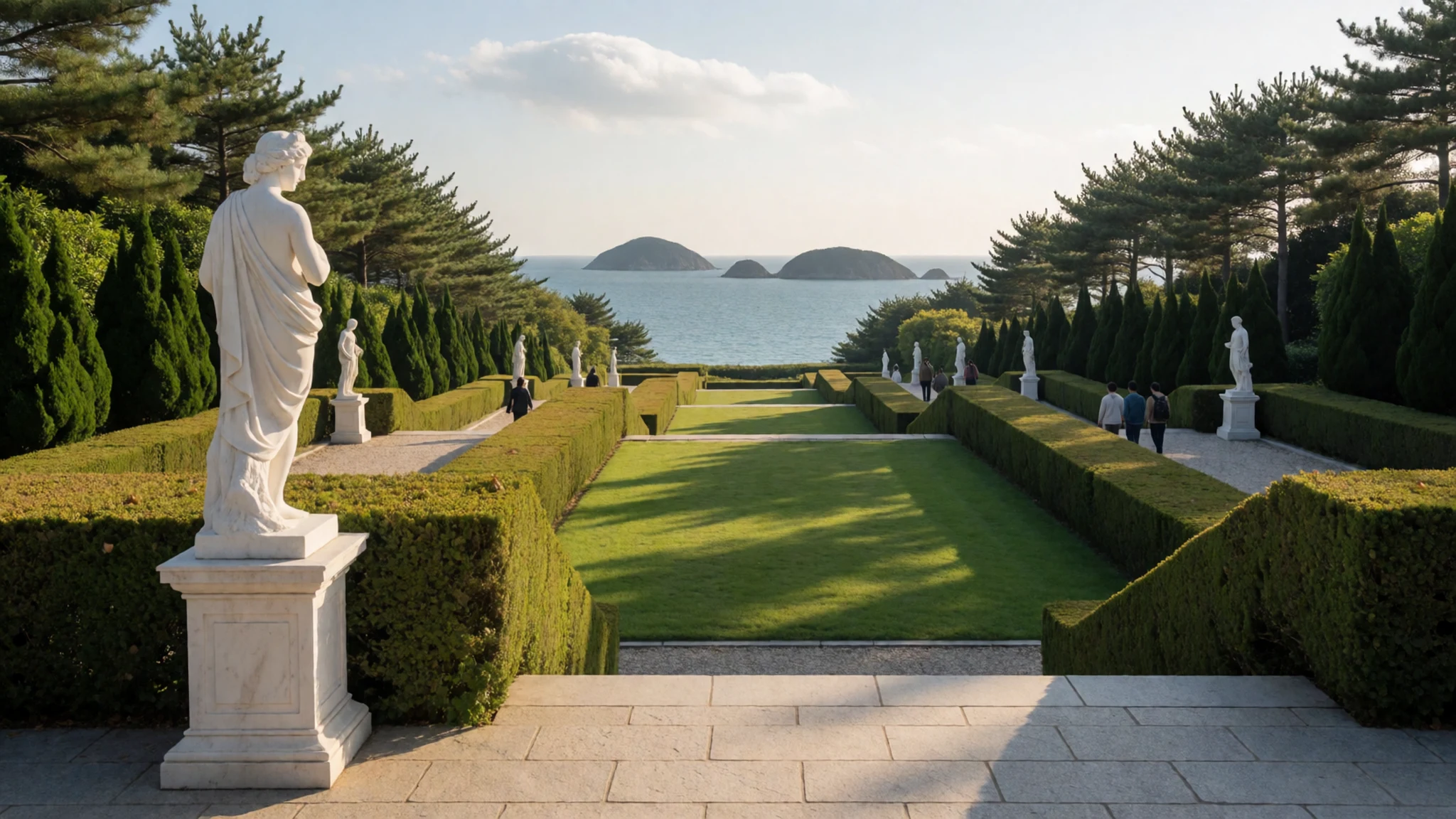
- Namhaedaegyo bridge — Namhaedaegyo district
Namhaedaegyo is the suspension bridge that carries road traffic between Namhae island and the mainland. It matters to travellers because it makes the island reachable without a ferry. Stop at the viewing areas on either side to watch ships pass through the narrow strait below.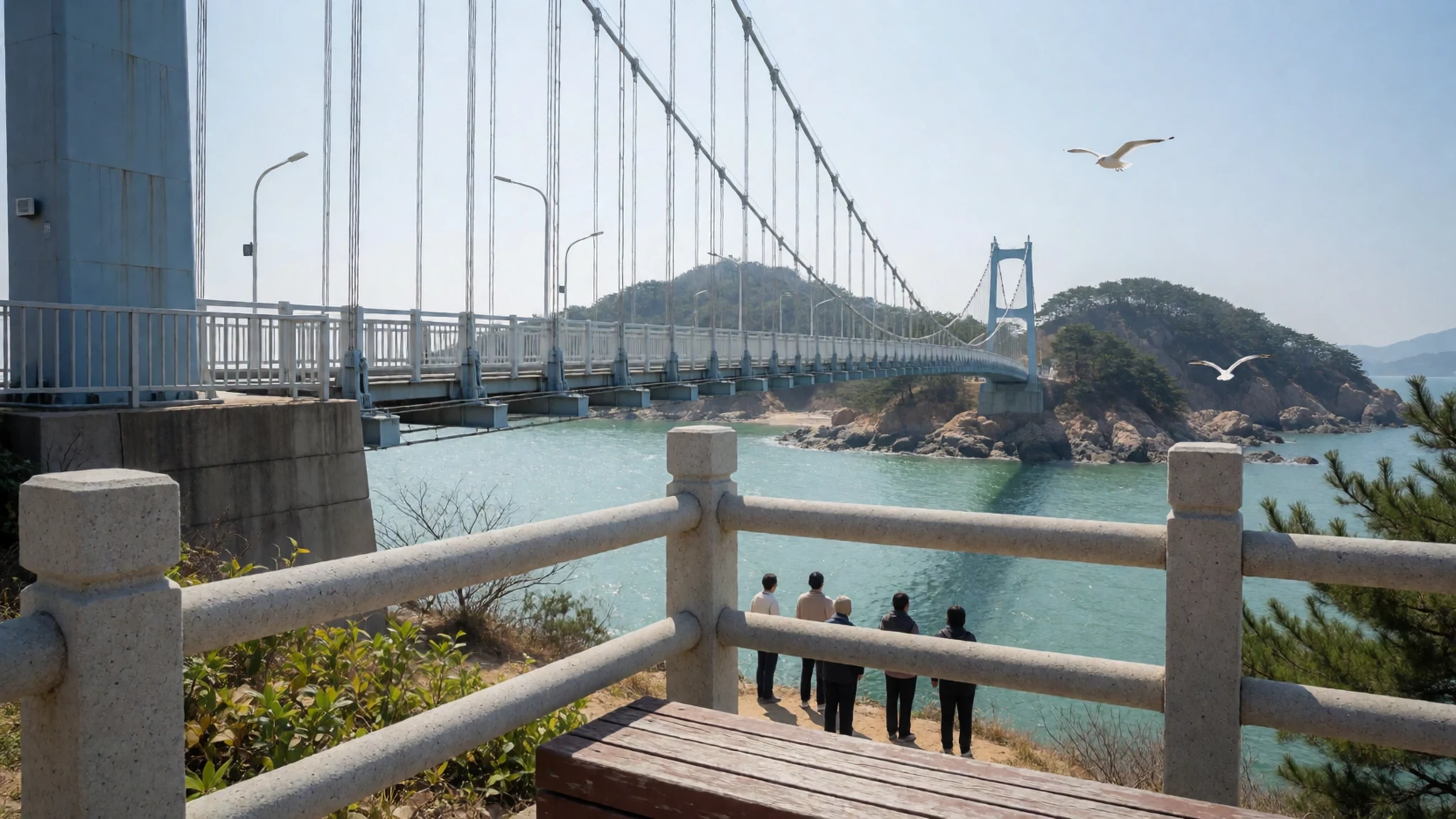
- Tongyeong and Hansan island — Tongyeong-Hansan district
Tongyeong is the working harbour town from which boats cross to Hansan island, tied to the naval campaigns of Admiral Yi Sun-sin. The islands around it form the classic park scene of green humps in blue water. Take a cruise or the cable car for the widest view.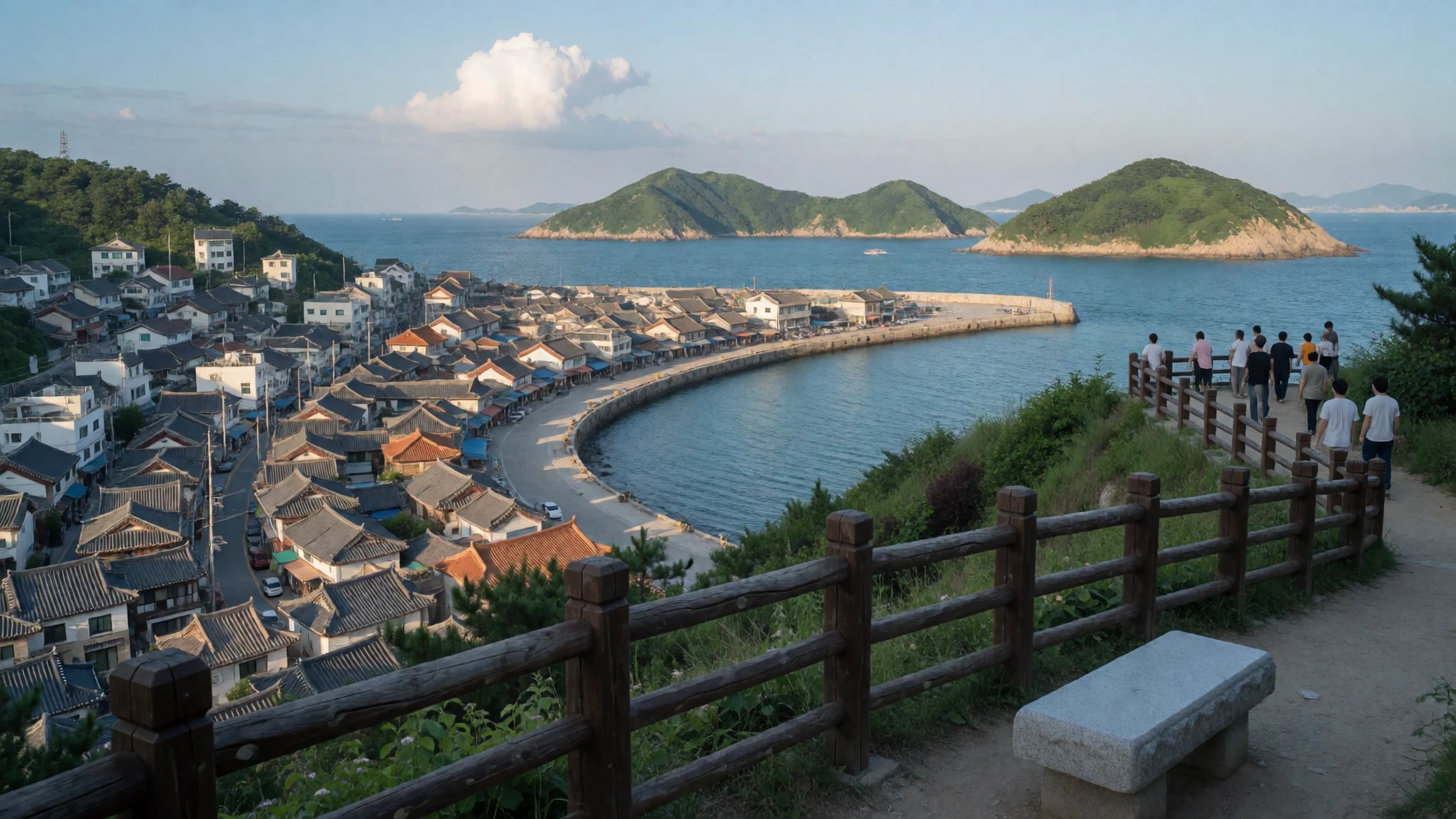
- Haegeumgang coast — Geoje-Haegeumgang district
Haegeumgang is the sea-cliff stretch at Geoje's southern edge, usually seen from a sightseeing boat that runs close to rock stacks and pine-covered islets. Sea conditions decide whether boats sail, so keep the plan flexible and check with the operator on the day.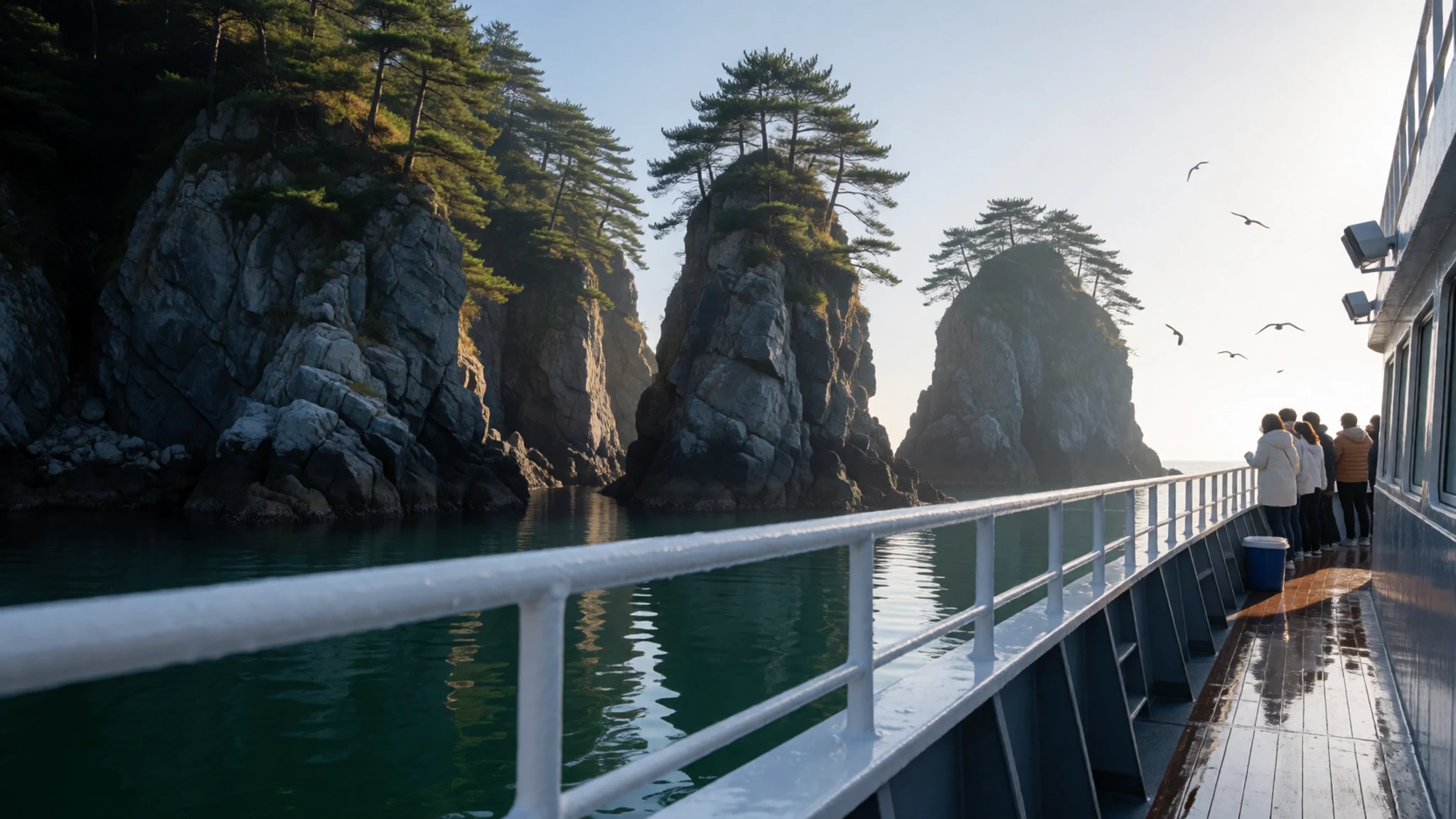
- Geumsan and Sangju — Sangju-Geumsan Mountain district
Geumsan is a rocky mountain on Namhae island, with a hillside Buddhist hermitage and wide views over the sea. Nearby Sangju has a pine-fringed beach that suits a summer swim. Walk up in the cooler morning hours, as the climb is steep in the humid season.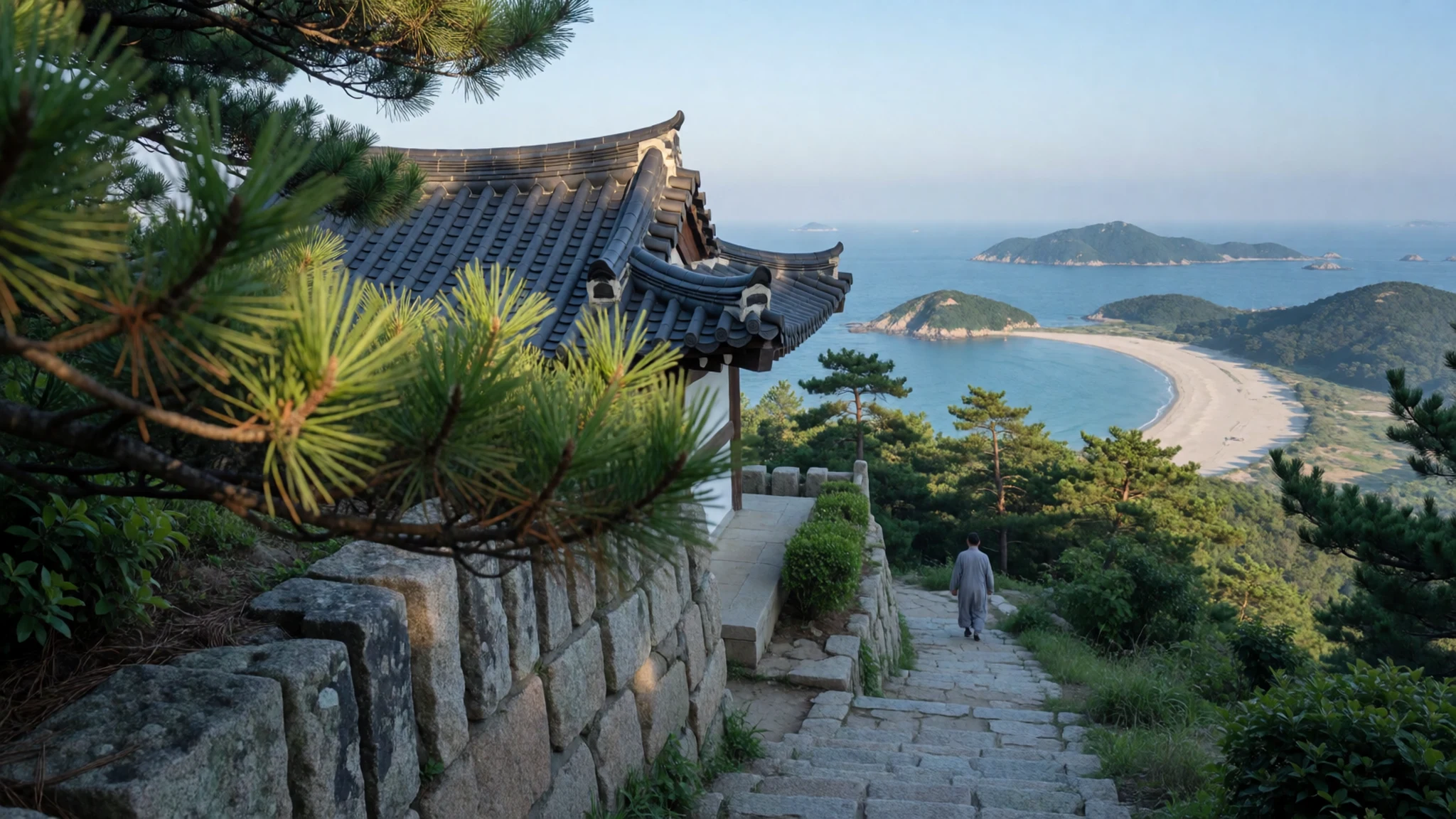
Culture
Hallyeohaesang National Park sits on a coast whose culture is built around the sea. Life in the fishing villages follows the tides and seasons, with boats leaving early, catches sold at harbour markets and oysters and seaweed hung or spread out to process. Households here take seafood seriously, and a meal often begins with several small side dishes and a pot of something hot from the day's catch. Naval history also runs deep. Around Tongyeong and Hansan island, the memory of Admiral Yi Sun-sin is treated with real respect, and shrines and memorials are visited by Korean families and school groups as much as by tourists. Buddhism shapes the quieter side of the park, from the hermitage on Geumsan to temples on the mainland shore, where visitors will meet shaved-headed monks and the sound of wooden bells. Festivals follow the farming and fishing calendar, and national holidays such as Seollal and Chuseok bring families home, so ferries and roads can be crowded and some small businesses close for a few days. English is less common in smaller harbour towns than in Seoul, so a translation app and a few polite Korean phrases go a long way. At Buddhist hermitages and naval shrines in the park, keep your voice low, follow any signs about photography, and do not photograph worshippers without asking.
What to wear
Hallyeohaesang National Park lies in a region where traditional Korean dress is mostly kept for festivals. The hanbok consists of a short jacket, the jeogori, worn with a wrap skirt, the chima, for women or loose trousers, the baji, for men. Fabrics include silk for formal wear and ramie and hemp for hot summers, while cotton served everyday work. Families wear hanbok at Seollal, Chuseok and weddings, and some tourists rent one in Seoul or other cities. Day to day, people on this coast dress for work and weather. Fishing communities favour rubber boots, waterproof jackets and wide sun hats, while day trippers wear hiking clothes, windcheaters and trainers. In towns like Tongyeong and Yeosu, smart-casual city clothing is normal. Visitors should plan for sun, wind on boats and uneven ground. Bring layers, a hat, sunscreen and shoes with grip, as wet piers and rocky paths are slippery. In summer, light quick-drying cloth copes best with humidity, and a rain jacket is useful in the wet season. Swimwear belongs on beaches rather than in towns. For Buddhist hermitages and shrines, cover shoulders and knees, and be ready to take off shoes at the entrance to a hall.
What to eat
- Raw fish (hoe) — harbour fish markets in Tongyeong and Yeosu
Hoe is sliced raw fish, chosen live from tanks and cut to order, then eaten with leaf wraps, chilli paste and garlic. Harbour markets let you pick the fish and have it served at an upstairs eatery. The catch changes with the season.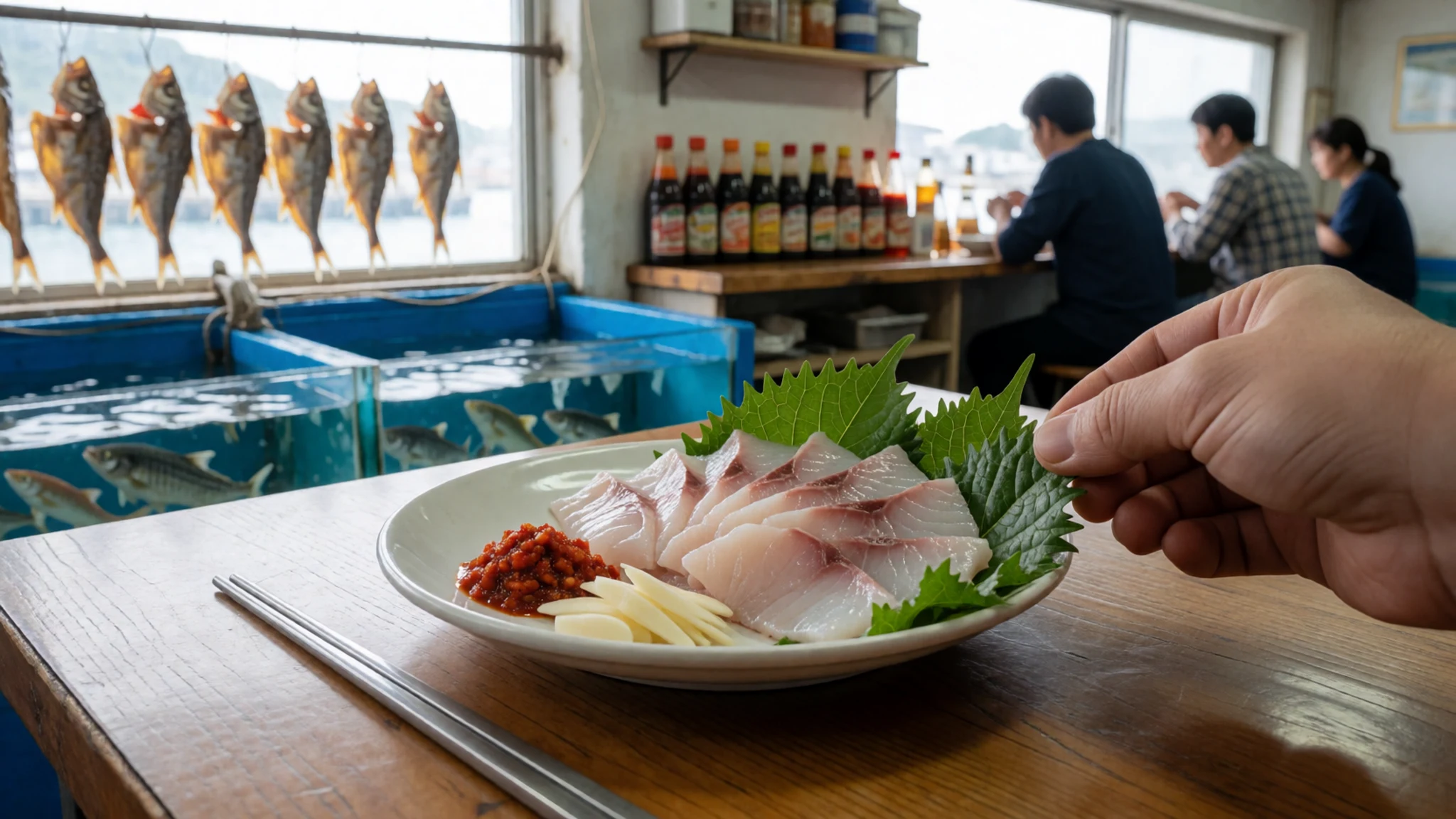
- Chungmu gimbap — snack stalls near Tongyeong harbour
Chungmu gimbap is a plain seaweed roll of rice, served with spicy squid and radish kimchi on the side rather than inside. It began as a fisherman's carry-along meal and is now a signature snack in Tongyeong, eaten at small counters near the quay.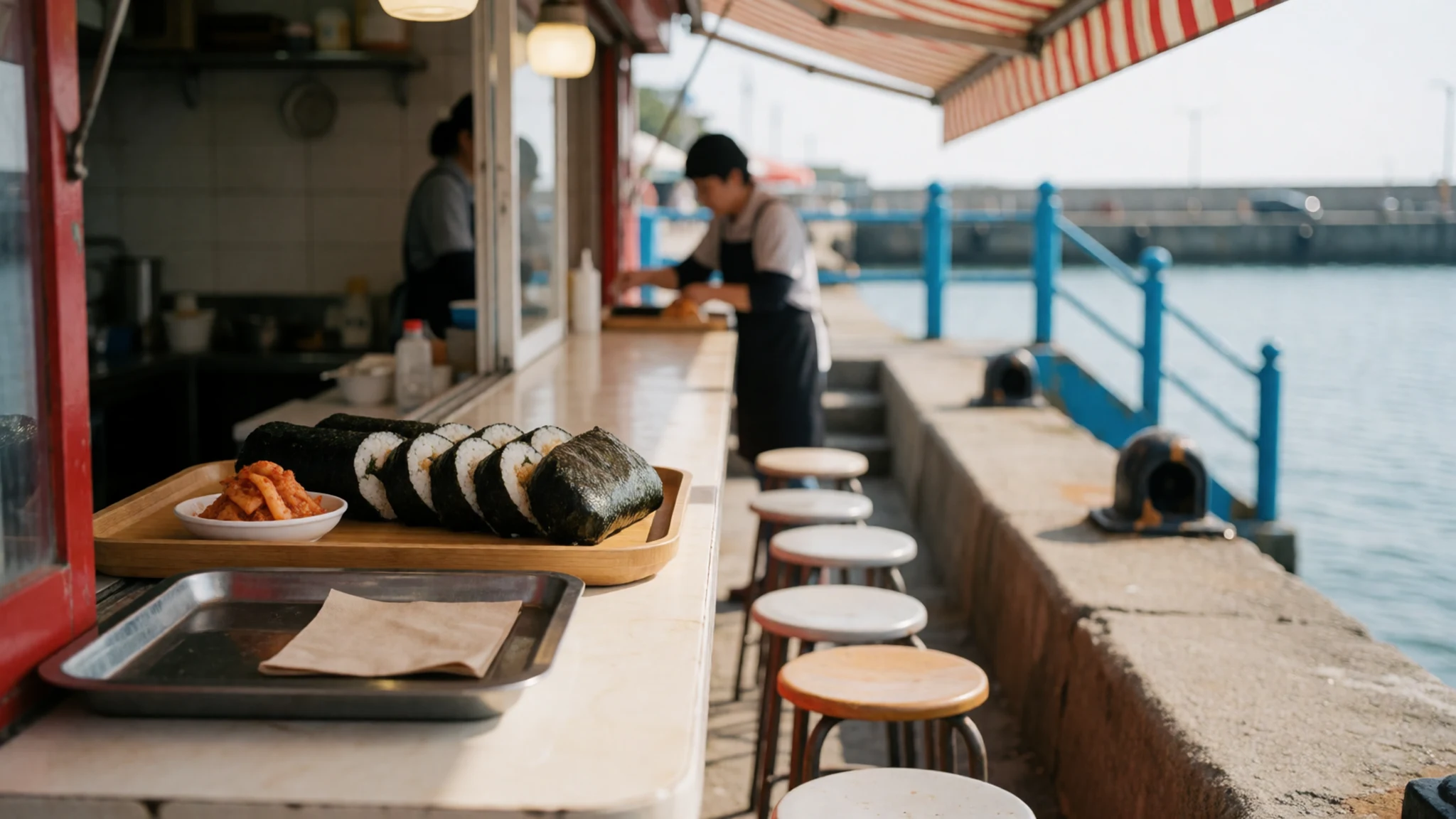
- Oysters (gul) — oyster-farming bays around Tongyeong and Geoje
Oysters are farmed in sheltered bays across the park and sold grilled, steamed, raw or in rice dishes. Local eateries near the water serve them in cold months when they are at their best. Choose busy places where shells are opened to order. - Soy-marinated crab (ganjang gejang) — traditional restaurants in Yeosu
Ganjang gejang is raw crab cured in a seasoned soy brine and eaten with rice, often scooped from the shell. It is rich and salty, popular in Yeosu, and a dish where the rice does half the work. Newcomers may prefer a small portion. - Mustard-leaf kimchi (gat kimchi) — Yeosu markets and home-style restaurants
Gat kimchi uses sharp, peppery mustard leaves fermented with chilli and fish sauce. It is a regional speciality of the Yeosu area, served as a side dish and good with grilled fish. The flavour is pungent, so try it with plain rice.
Plan it
Best time. April–May and October–November, when days are mild and skies are usually clear for ferries and viewpoints. The south coast is warm, so summer is hot, humid and wet, and late summer can bring typhoons that cancel boat services. Winter is cooler and quieter, with some island services reduced.
How long. 3–4
Getting there. Yeosu airport (RSU) has many flights from Seoul Gimpo, and the KTX high-speed train on the Jeonla Line runs from Seoul to Yeosu. For Tongyeong, Geoje and Namhae, continue by intercity bus or hire car from a larger city, then take a ferry to the islands.
Budget. mid
Tips
- Book weekend and holiday ferries and island garden visits ahead, as spring and autumn weekends are busy
- Start boat trips early, since morning seas are calmer and queues shorter
- Check sailing times with the operator on the day, because wind and fog can cancel boats
- Carry some cash for small harbour stalls and island kiosks, and keep a card as backup
- Bring water and sun protection, as islands have little shade and few shops
Etiquette
- Keep your voice low and ask before photographing people at hermitages and shrines
- Take your litter back to the mainland, as many islands have no bins
- Take off shoes when entering temple halls or traditional eateries with raised floors
Nearby
Sources
- Wikidata Q488070 (CC0)
- Wikipedia: Hallyeohaesang National Park (rev 1362740992) (CC BY-SA 4.0)
- Wikivoyage: South Jeolla (rev 5386870) (CC BY-SA 4.0)
- Photo: Oedo botanical garden, Steve46814 (CC BY 3.0)
- Photo: finless porpoise hunting mullet, 냥이 (CC BY-SA 2.0 kr)
- Photo: Hallyeo National Marine Park, Olga Lipunova (CC BY-SA 4.0)
- Photo: Tongyeong, Hallyeo National Marine Park 01, Junho Jung (CC BY 3.0)
- Photo: Tongyeong, Hallyeo National Marine Park 02, Junho Jung (CC BY 3.0)
- Photo: Tongyeong, Hallyeo National Marine Park 03, Junho Jung (CC BY 3.0)
- Photo: Tongyeong, Hallyeo National Marine Park 04, Junho Jung (CC BY 3.0)
- Photo: Tongyeong, Hallyeo National Marine Park 05, Junho Jung (CC BY 3.0)


