Haedong Yonggungsa
Haedong Yonggungsa, South Korea
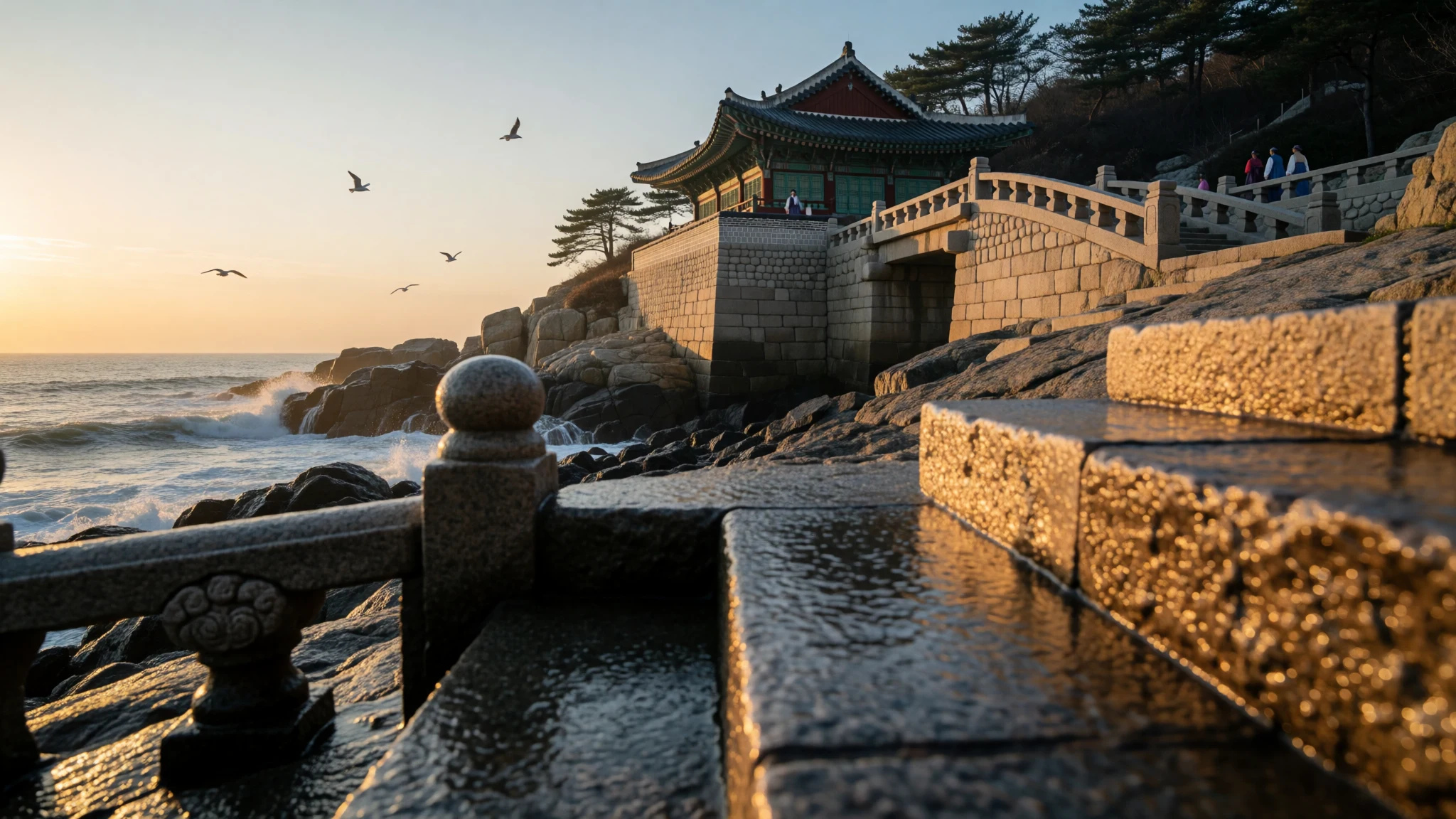
Haedong Yonggungsa is a Buddhist temple built along the Busan shoreline, where prayer halls meet rocks and surf.
The place
Haedong Yonggungsa (해동 용궁사) is a Buddhist temple in Gijang-gun, on the north-eastern edge of Busan, South Korea. Most Korean temples sit inland among hills, so a large complex built right at the water stands out at once. Its halls, stairways and bridges step down towards the sea, and the sound of waves carries through the courtyards. The temple is dedicated to Haesu Gwaneum Daebul, the Sea Goddess Buddha of Mercy, a form of Gwaneum, the figure known in China as Guanyin. Busan itself is a port city at the southern tip of the Korean peninsula, with more than 3.6 million people, and it has a more relaxed mood than Seoul. It is known for beaches, seafood and an international film festival. The temple lies east of the centre, beyond the beach districts around Haeundae, which makes it an easy half-day outing from the main visitor areas. Climate shapes any visit. Summers are hot and humid, with temperatures often above 30°C, and typhoons can arrive between July and September. Winters are mild and snow is rare, so the temple can be visited in every season, though the weather decides how comfortable the exposed steps and rocky edge feel. The grounds draw sightseers as well as worshippers, and at weekends and festivals the paths fill. Buddha's Birthday is the busiest time, when paper lanterns cover the complex. The official website, http://www.yongkungsa.or.kr/, is the place to check opening arrangements before going.
Its story
Haedong Yonggungsa claims to have been first built in 1376, a date that has been disputed, so the temple's age is best treated as tradition rather than settled record. That caution suits a place whose appeal has never rested on old timber alone. What stays constant is the dedication. Haesu Gwaneum Daebul, the Sea Goddess Buddha of Mercy, is an aspect of Gwaneum, the bodhisattva of compassion who attends to the suffering of the world. For a coastal community, a merciful figure of the sea has an obvious meaning: fishing families and sailors have long had reason to pray for safe returns, and a temple facing open water gives that prayer a direct setting. The name points the same way. Yonggung means the dragon king's palace beneath the sea, an idea from East Asian folklore, and the temple reads as that palace brought ashore. In recent decades the complex has also become a destination for travellers, helped by its closeness to Haeundae Beach and the east side of Busan. Its calendar still follows Buddhist time. On Buddha's Birthday, paper lanterns decorate the grounds and the place feels like a working temple rather than a viewpoint. Visitors who arrive then should expect devotion and crowds in equal measure, and should treat the lanterns as offerings rather than scenery.
What to see
- The stone bridge and main hall — Main approach, Gijang-gun, Busan
The stone bridge at Haedong Yonggungsa leads towards the main hall across a short span above rock and water, and it is the view most often photographed. Crossing slowly gives time to watch the hall come into focus against the sea. Mornings are calmer for photographs; later in the day the bridge becomes a queue.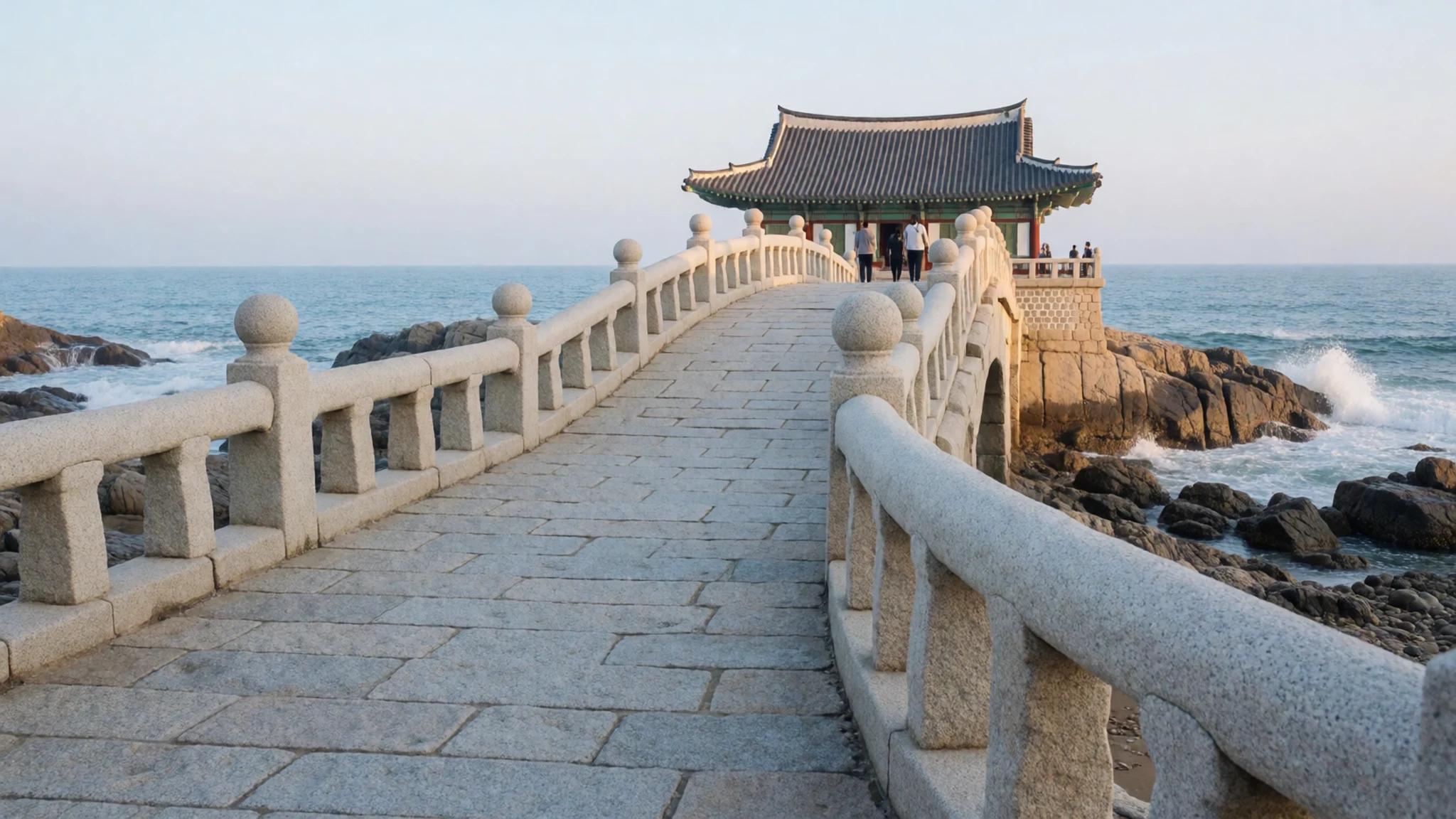
- The seaside terraces — Seaward side of the complex
Along the water's edge, the temple's terraces and stairways overlook a rocky shore where waves break just below the walls. This setting is what separates Haedong Yonggungsa from inland temples. Choose a dry day and watch the footing, because spray and sea air can leave stone steps slick, especially in typhoon season from July to September.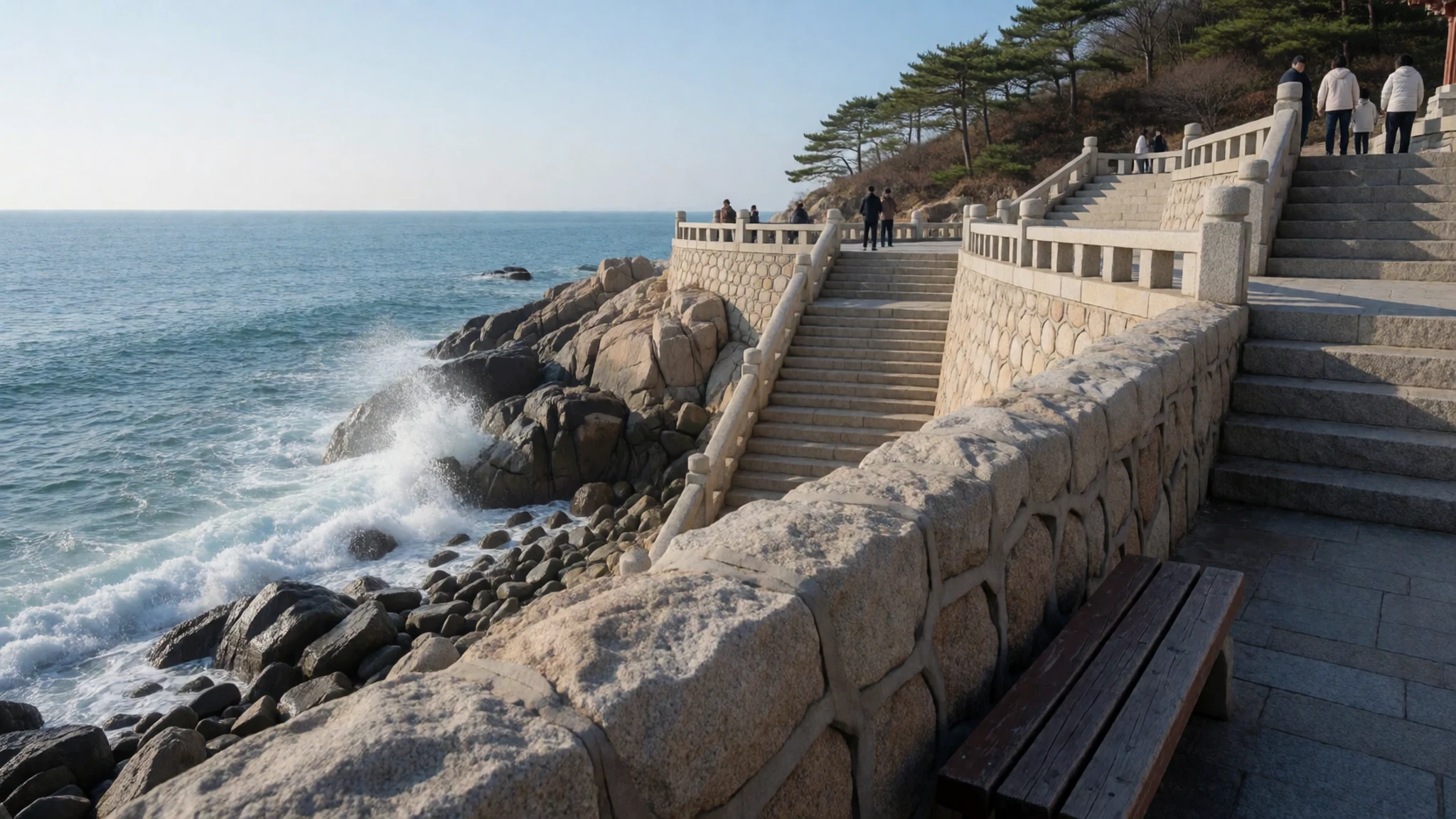
- Haesu Gwaneum Daebul — Main shrine area
The temple honours Haesu Gwaneum Daebul, the Sea Goddess Buddha of Mercy, and this figure is the reason many Koreans come to pray rather than simply look. Pause at the shrine quietly, let worshippers go first, and notice the offerings left by families. It is the clearest way to understand Haedong Yonggungsa as a living place of worship.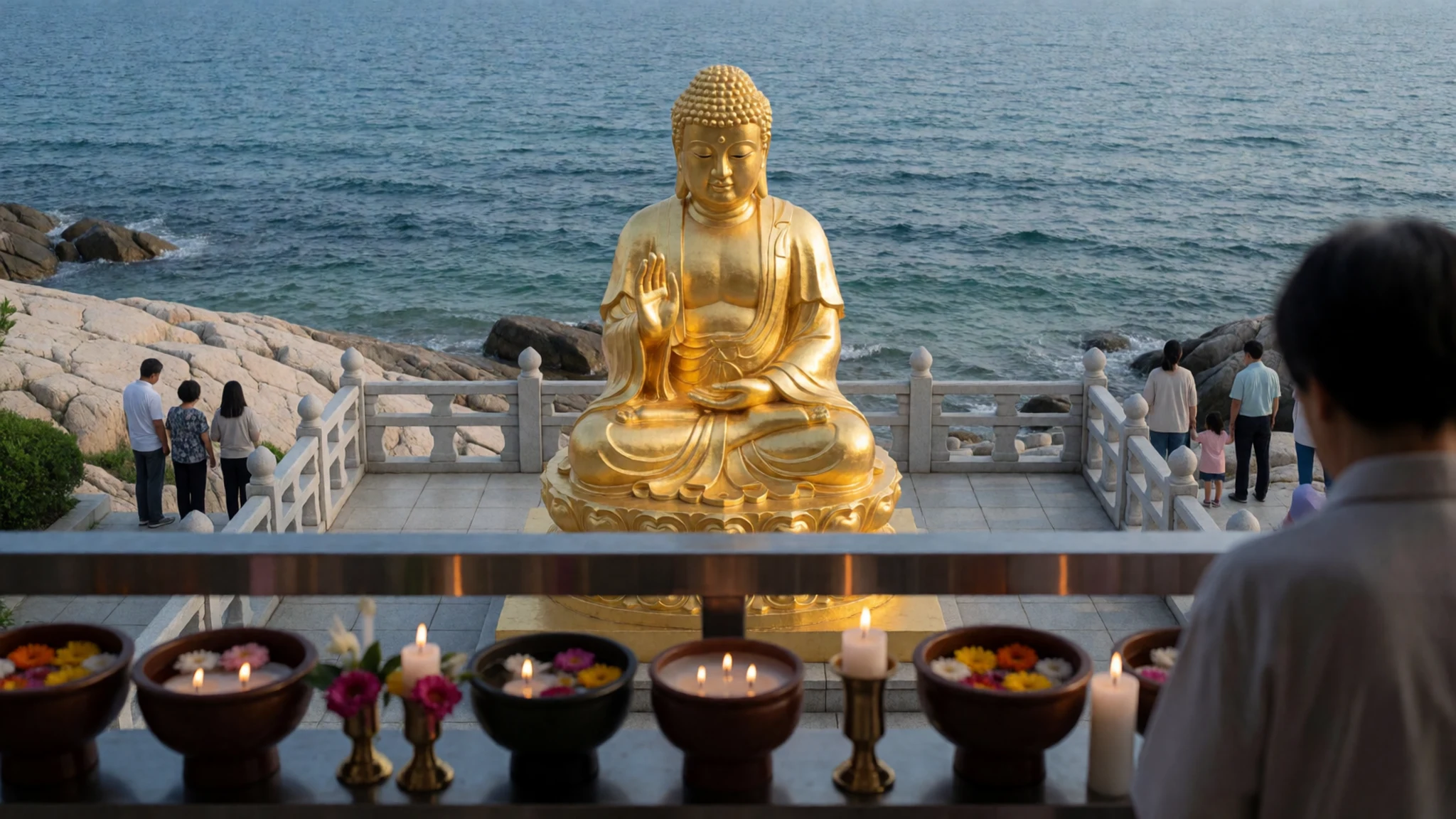
- Lanterns at Buddha's Birthday — Throughout the temple grounds
When Buddha's Birthday arrives, paper lanterns are strung across the grounds of Haedong Yonggungsa and the complex changes character, with colour overhead and devotion below. It is also the busiest time, so patience is needed on the paths and stairs. Visitors who prefer quiet should come on an ordinary weekday instead.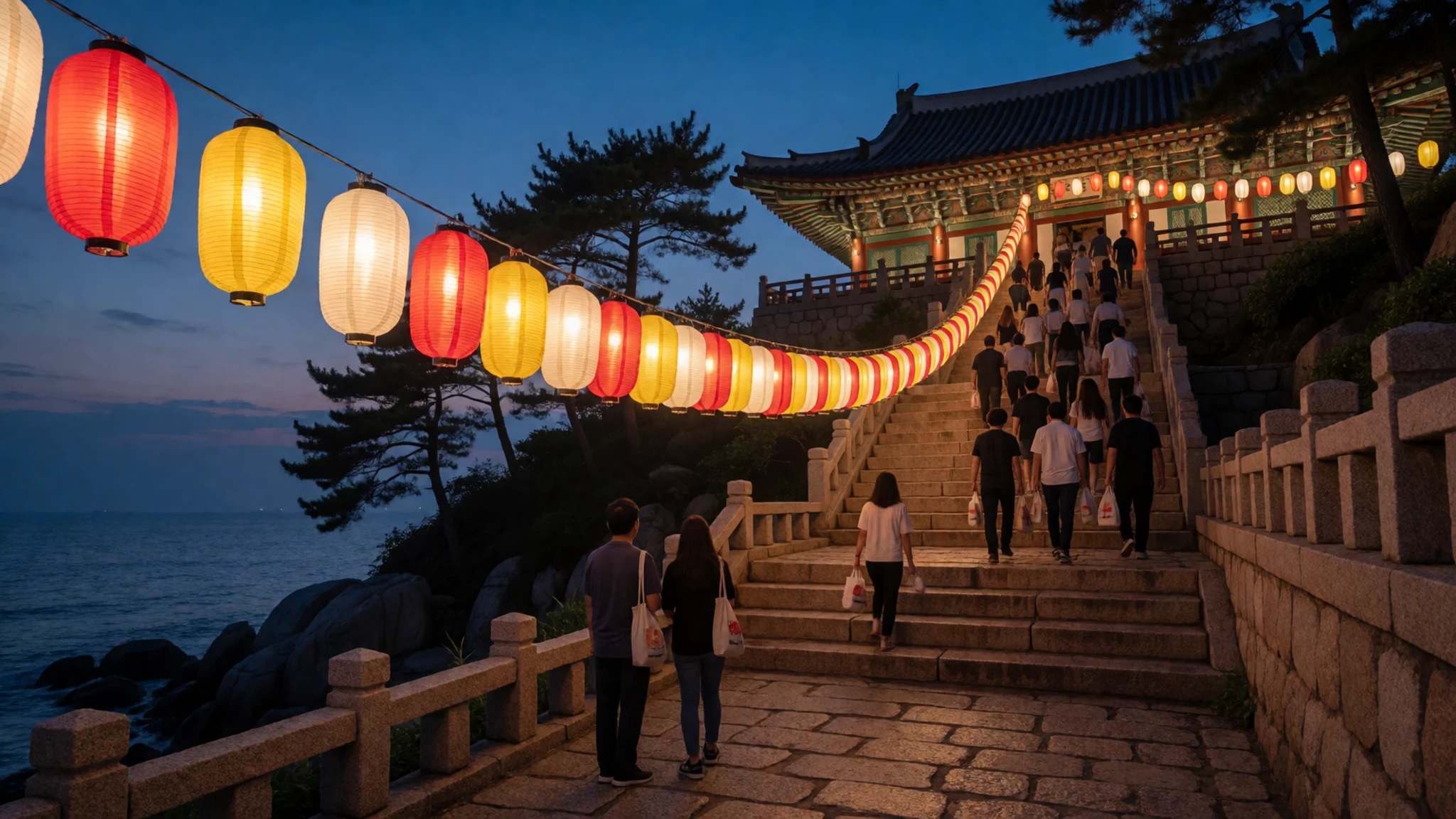
- Haeundae Beach — Haeundae, East Busan
Haeundae Beach lies a short journey south-west of the temple and pairs well with a visit. After the quiet of the prayer halls, the beach offers seafront walking, cafes and an evening in a very different Busan. Summer weekends are crowded, while winter days are mild and much emptier, which suits a long coastal stroll.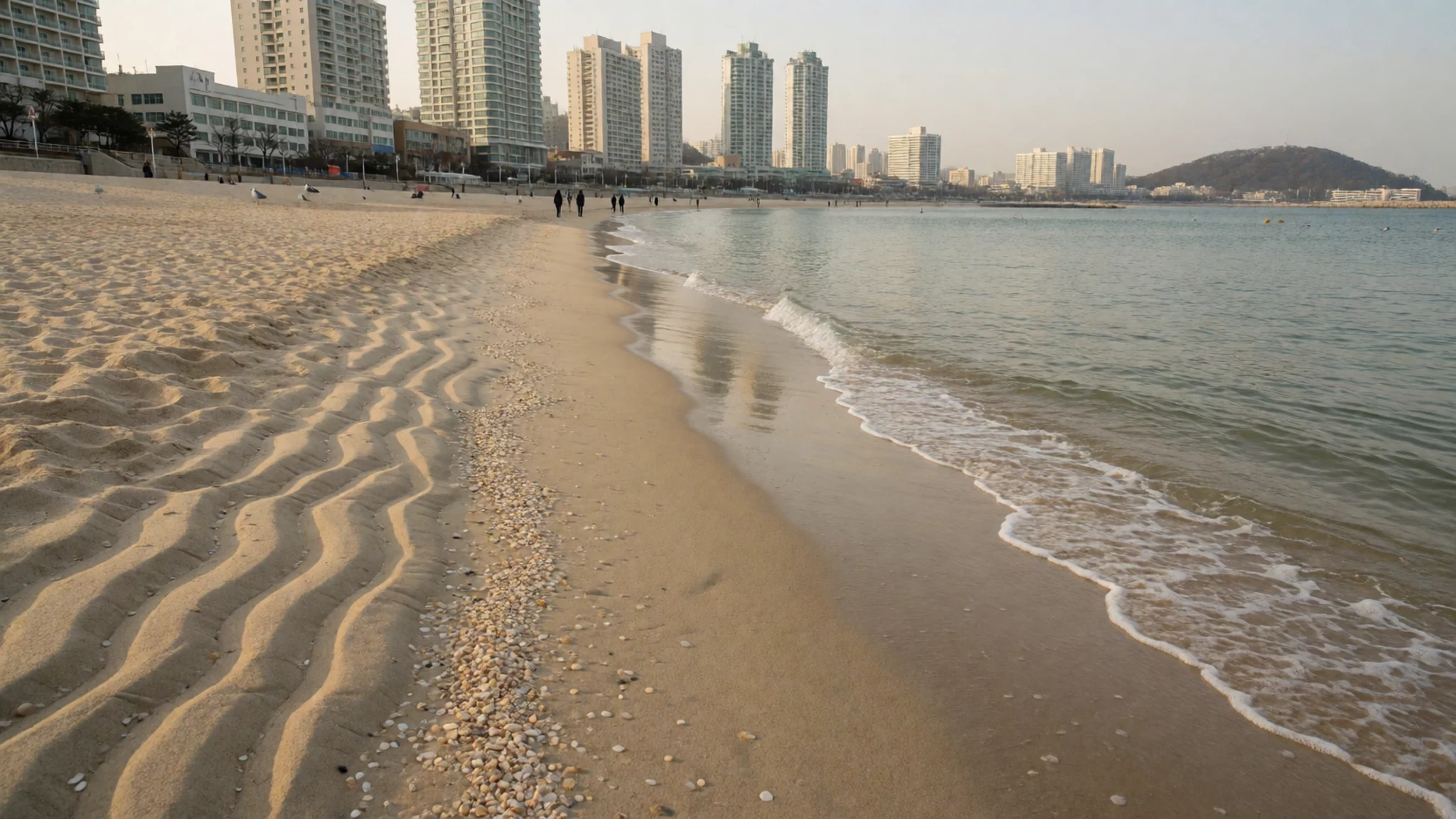
Culture
Haedong Yonggungsa is a working Buddhist temple, and the rhythm of Korean Buddhism sets the tone more than the scenery does. Worshippers come to bow before the Sea Goddess Buddha of Mercy, light candles or incense, and ask for health, safe journeys and family wellbeing. Gwaneum, the compassionate bodhisattva, is loved across East Asian Buddhism, and a sea-facing form of her suits a coast where people have long depended on the water. The temple year follows the lunar calendar. Buddha's Birthday is the main celebration, when paper lanterns hang across the complex, often carrying a family's wishes. Visitors may notice monks chanting, worshippers bowing with palms together, and quiet queues at the main shrine. Because the temple is also a sightseeing stop, two worlds share one narrow site: prayer and photography. Regular worshippers handle that with patience, and a visitor who matches their pace will feel welcome. Weekends and festival days bring larger crowds and more noise, so early hours suit anyone who wants to hear the waves and the chanting. Take off your shoes before entering any prayer hall, keep your voice low near worshippers, and do not photograph people at prayer without asking.
What to wear
Haedong Yonggungsa is a place where traditional and everyday Korean dress meet on the same steps. The traditional garment is the hanbok: a short jacket (jeogori) worn with a full wrapped skirt (chima) for women, or with trousers (baji) for men, cut from silk, ramie, hemp or cotton depending on the season. Light ramie and hemp suit summer, while silk and padded cotton suit winter and formal occasions. Hanbok appears at festivals, weddings and Lunar New Year, and some visitors hire one for photographs. Buddhist monks and nuns wear plain robes, usually grey or brown, and lay worshippers dress simply. Day to day, local people wear contemporary clothes: casual layers, sportswear, outdoor jackets and trainers, with smarter outfits kept for weekends. A visitor should dress for the coast and the temple at once. Cover shoulders and knees as a courtesy in the prayer halls, and avoid large slogans or very short hems. Wear flat shoes with good grip, as stairs and stone paths can be wet. In summer, bring a hat, sunscreen and light cotton or linen; in winter, a windproof layer matters because the sea wind is cold. Shoes come off at hall doors, so intact socks are sensible.
What to eat
- Grilled fish — Jagalchi fish market, Central Busan
Fresh fish grilled over heat is the simplest way to taste Busan's catch. The city's main seafood market is the best-known place for it, and early arrival gets the freshest choice. Many stalls and eateries there serve it with rice and side dishes.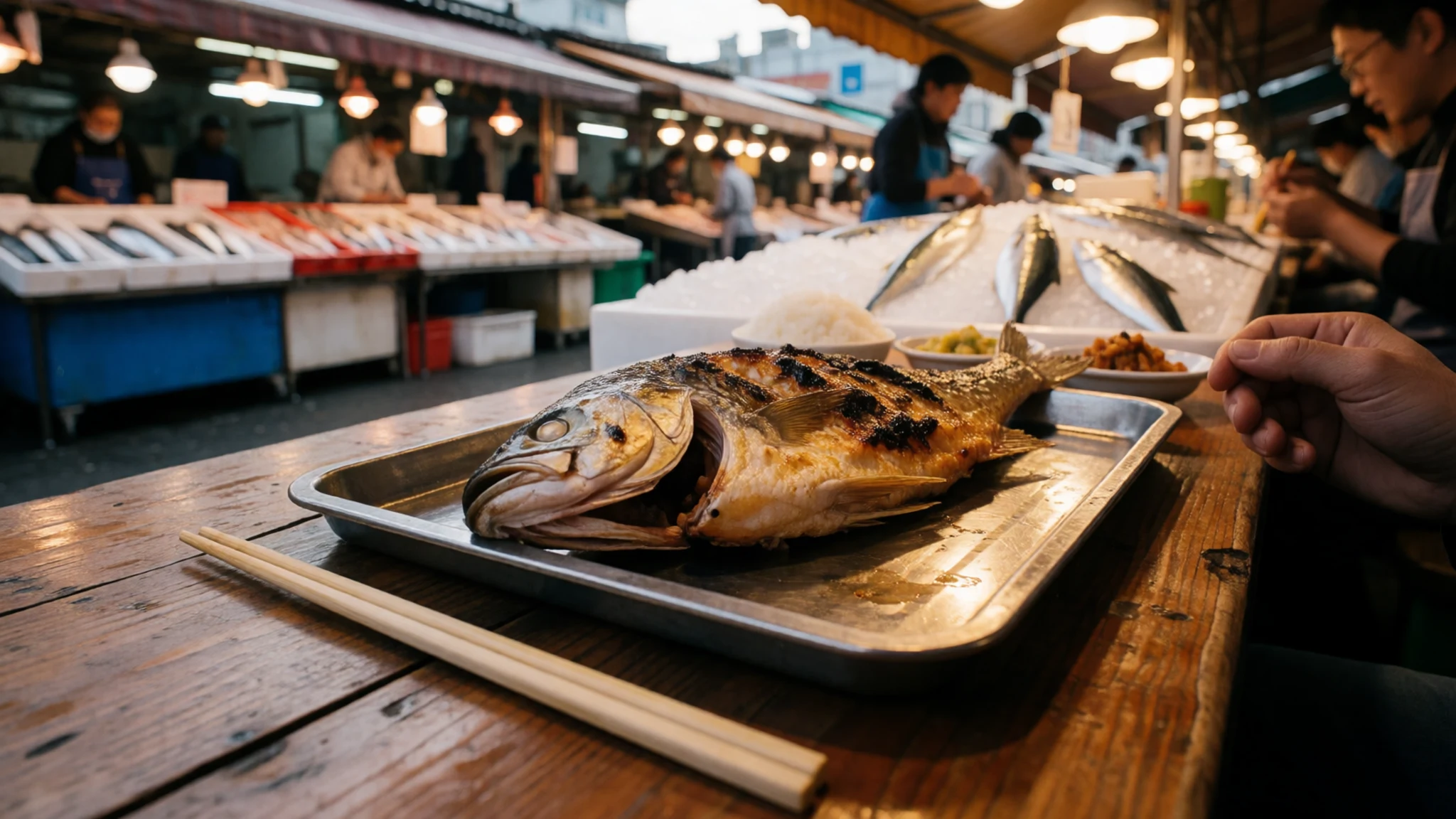
- Hangover soup (haejangguk) — Eateries around Jagalchi fish market
This hot, savoury Korean soup is traditionally eaten to settle the stomach after a night out, and it makes a warming breakfast near the fish market. Versions vary, so ask what the eatery's speciality contains, especially if avoiding meat or seafood.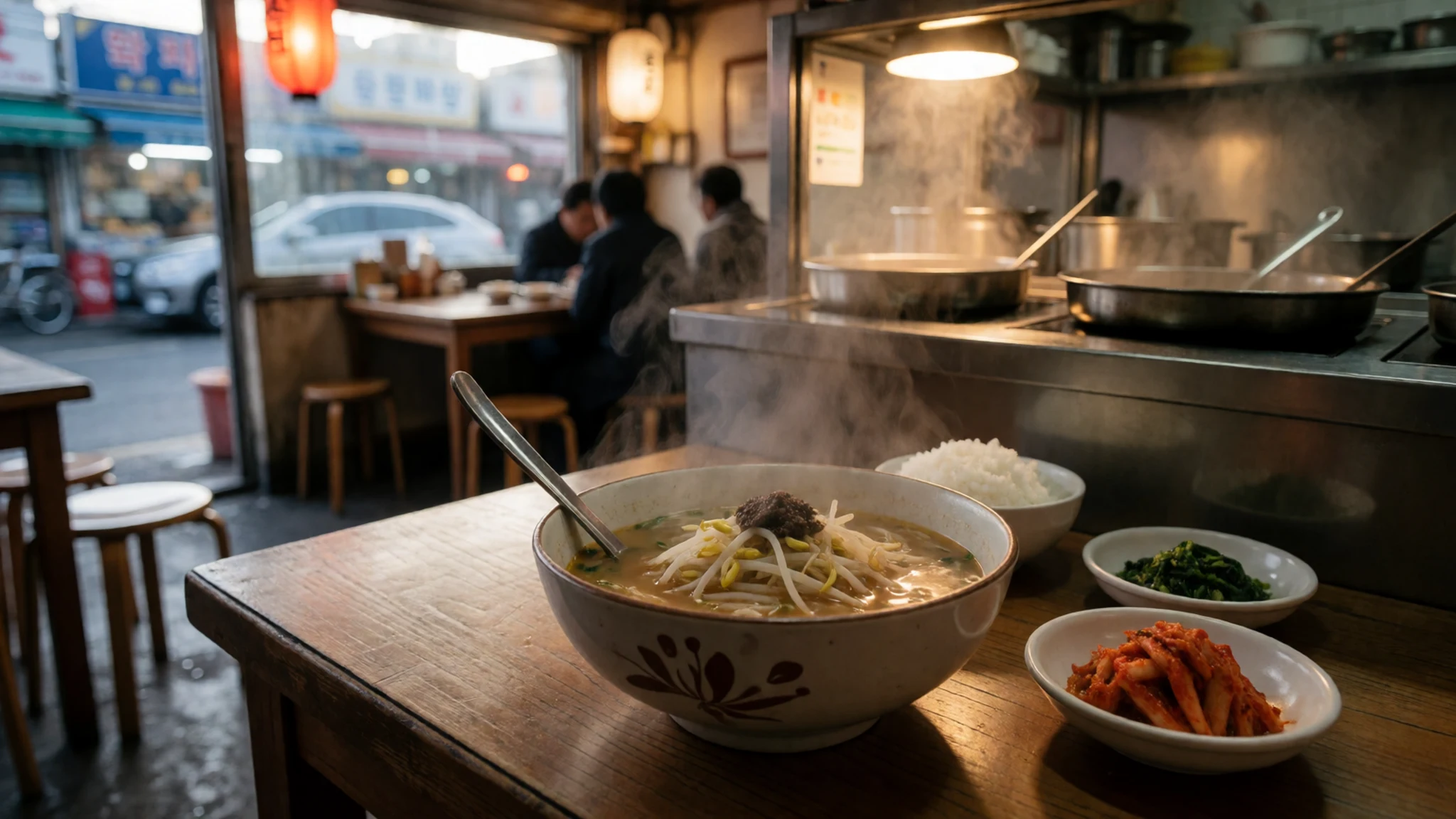
- Pork and rice soup (dwaeji gukbap) — Specialist soup restaurants across Busan
A bowl of pork broth with rice, served with kimchi and seasonings that diners add themselves, counts among the foods most associated with Busan. It is filling, cheap by local standards and quick to eat, which suits a stop between sights. - Chungmu-style gimbap — Stalls in the International Market, Central Busan
Chungmu gimbap is a plain rice roll served with spicy seasoned squid and radish on the side, rather than filled inside. The separate sides keep the rice dry and let each bite be adjusted to taste. It is a common light lunch. - Ssiat hotteok — Street stalls in the International Market area
This sweet Korean pancake is fried until crisp outside and stuffed with seeds and sugary syrup. It is eaten hot from the griddle, so mind the molten filling. It makes a cheap snack on a market wander.
Plan it
Best time. April–May and October–November for mild, comfortable weather. Summers are hot and humid, often above 30°C, with typhoons possible from July to September; winters are mild and snow is rare. Buddha's Birthday brings lanterns and crowds.
How long. 2–3
Getting there. Fly to Gimhae International Airport (PUS) and continue into Busan by metro, limousine bus, local bus or taxi. From Seoul, KTX high-speed trains reach Busan via Daegu and Daejeon. For the last leg from east Busan or Haeundae, take a bus or taxi to the temple in Gijang-gun.
Budget. mid
Tips
- Go early on a weekday to avoid the heaviest crowds, especially around Buddha's Birthday.
- Check the official site, http://www.yongkungsa.or.kr/, for current opening arrangements before travelling.
- Wear grip-soled shoes, as the stairs and stone paths near the sea can be wet.
- Combine the visit with Haeundae Beach or the east Busan coast for a full day out.
- Carry a card and some cash for market food and small purchases.
Etiquette
- Remove shoes before entering any prayer hall.
- Keep your voice low and do not photograph worshippers without asking.
- Dress modestly, with shoulders and knees covered.
Nearby
Sources
- Wikidata Q2494268 (CC0)
- Wikipedia: Haedong Yonggungsa (rev 1377451902) (CC BY-SA 4.0)
- Wikivoyage: Busan (rev 5404804) (CC BY-SA 4.0)
- Photo: Haedong Yonggungsa Temple, Busan, South Korea, by Anna L Martin (CC BY 2.5)
- Photo: 해동용궁사 사찰 전경, by 박혜민 (CC BY 3.0)
- Photo: Haedong yonggungsa temple 1, by Sgroey (CC BY-SA 4.0)
- Photo: Haedong yonggungsa temple 8, by Sgroey (CC BY-SA 4.0)
- Photo: Haedong Yonggungsa Temple view on sea, by Londenp (CC BY-SA 2.5)
- Photo: Haedong yonggungsa temple 7, by Sgroey (CC BY-SA 4.0)
- Photo: Haedong Yonggungsa Temple 20200522 001, by Mobius6 (CC BY-SA 4.0)
- Photo: Stone bridge and main hall, by lumoplank (CC0 1.0)


