Guryongpo
Guryongpo, South Korea
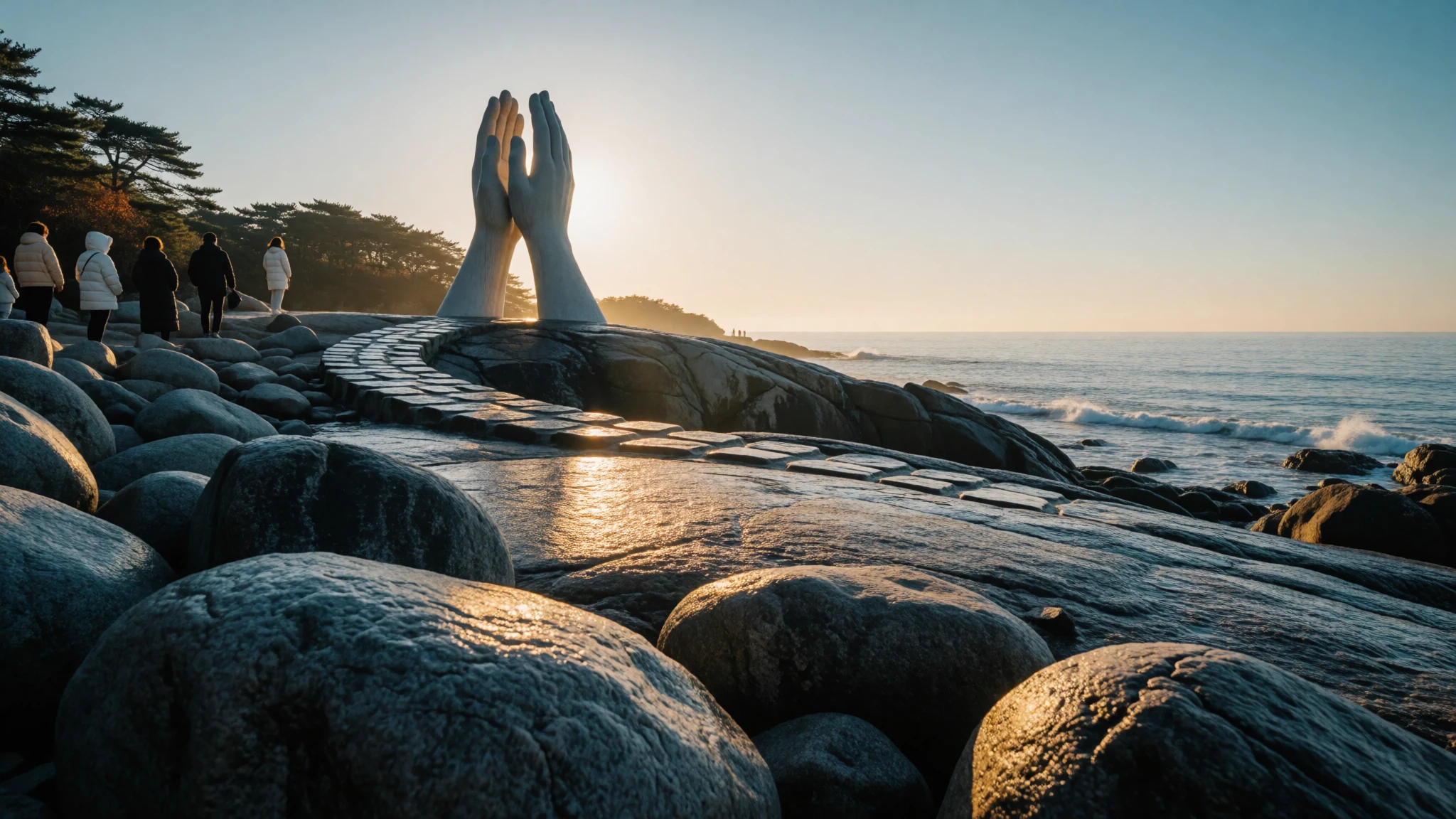
Guryongpo is a working fishing harbour on Korea's East Sea coast, where a sunrise headland, a small beach and dried-fish traditions sit together.
The place
Guryongpo is a coastal town on the south-eastern edge of Pohang, in North Gyeongsang Province, facing the East Sea. Officially it is a eup, the Korean administrative rank for a town, and it belongs to Nam-gu, one of Pohang's districts. Pohang itself lies about 110 km north of Busan and about 360 km south-east of Seoul, so Guryongpo feels like the quiet end of a long road rather than a stop on the way to somewhere else.
The contrast with the rest of Pohang is sharp. The city's bay is dominated by the POSCO steelworks, whose striped chimneys are lit in colour after dark. Guryongpo is a different world: a working harbour with a modest beach, boats tied up along the quay, fish laid out to dry and the smell of salt over everything. The town office sits inland in Hudong-ri, but the life of the place is down at the water.
Visitors are mostly Korean families and weekenders, so English signage is thin and a translation app helps. Summer weekends bring crowds to the sand and the harbour restaurants; weekdays outside July and August are far calmer. Costs stay reasonable compared with Busan or Seoul, with small guesthouses and pensions rather than big resorts. Just north, the headland village of Homigot is the usual place to watch the sunrise, and the coast road between the two is easy to enjoy at a slow pace.
Its story
Guryongpo grew from a fishing landing rather than a planned town. The name is usually read as "nine dragons harbour", and local tradition links it to dragons rising from the sea, a fitting image for a coast that depends on what the water gives. For generations the economy turned on boats, nets and the cold East Sea winds that dry fish on racks along the shore.
In the early twentieth century the harbour drew Japanese fishing families during the colonial period, and a lane of buildings from that era still stands near the waterfront. It is now kept as a heritage street, with the old post office among the best-known frontages. The township, then called Changju-myeon, was upgraded to the town of Guryongpo-eup in 1942, a sign of how much the harbour had grown.
The food that defines the town came out of the same setting. Gwamegi, a partly dried fish, is the local speciality, and the Guryongpo Gwamegi Culture Museum explains how it is made and why the trade matters to the town. A short way north, the New Millennium Memorial Hall near Homigot was built to mark a sunrise event and to express hopes for Korean unification. Together these places show a town shaped by sea, weather, a layered past and a long view eastward.
What to see
- Guryongpo harbour and beach — Guryongpo harbour
The harbour is the heart of Guryongpo, with boats at the quay, fish stalls and a small beach close by. It is the best place to understand the town. Come early in the morning for working boats and quiet light, and expect more people on summer weekends.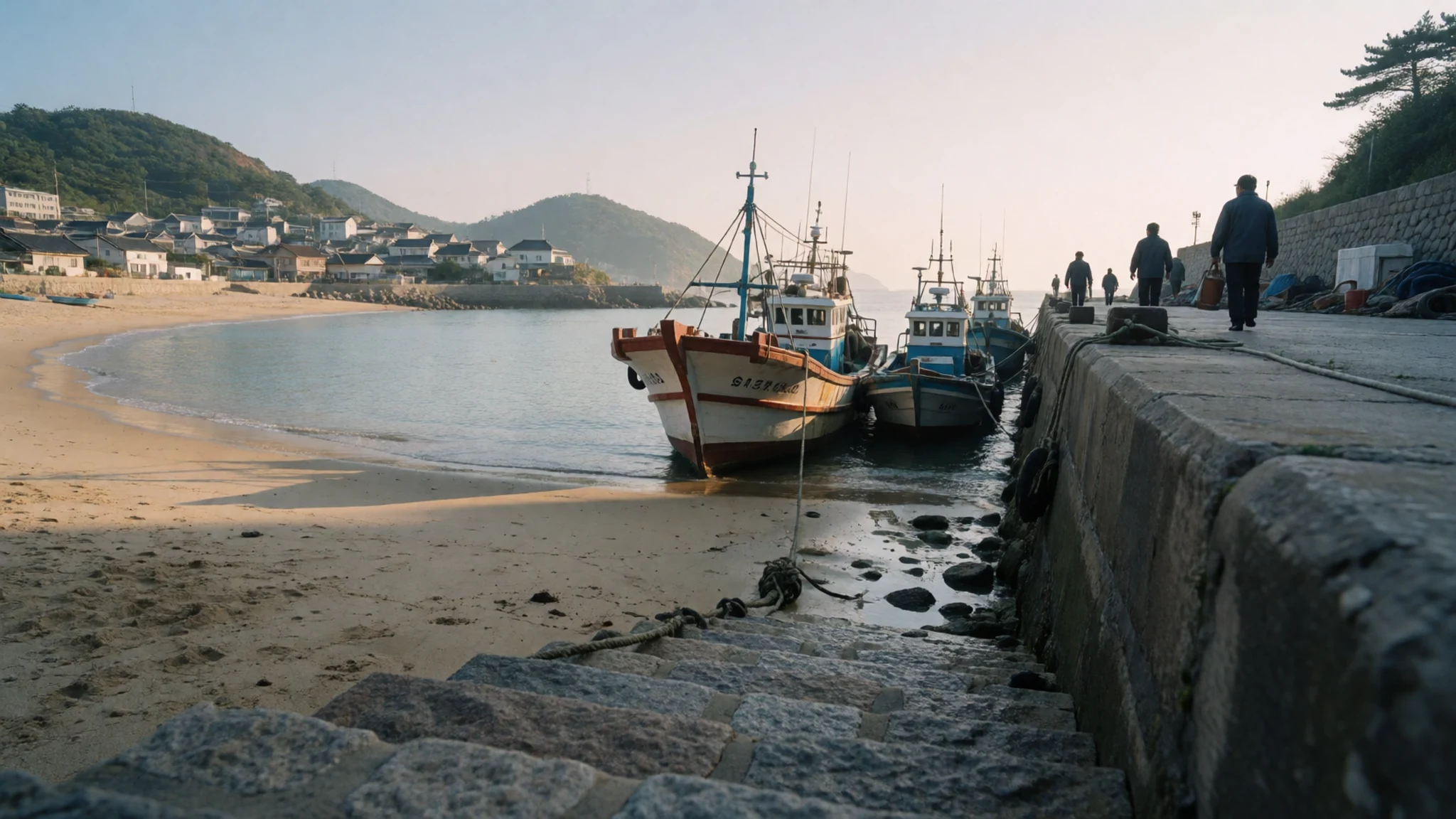
- Guryongpo Gwamegi Culture Museum — Guryongpo town centre
This small museum explains gwamegi, the partly dried fish that Pohang is known for, including how it is prepared and how the trade grew around the harbour. It makes a useful stop before tasting the fish itself. Check the official town website for opening details.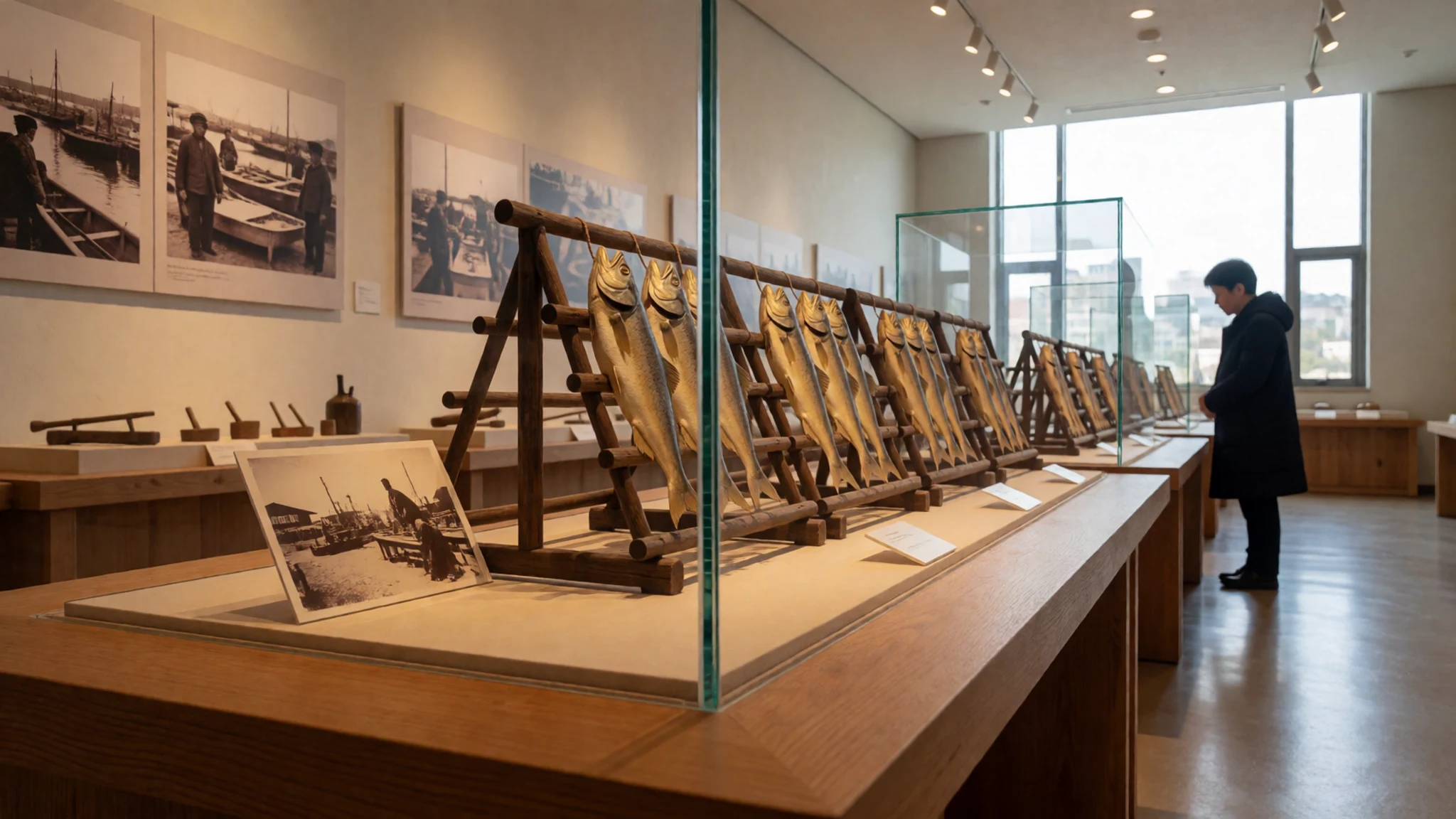
- Japanese-era lane and old post office — Near the harbour
Near the waterfront, a street of early twentieth-century buildings recalls the years when Japanese fishing families settled here. The old post office is a favourite photograph. Some buildings now hold cafés and small displays, and the lane is easy to cover on foot in under an hour.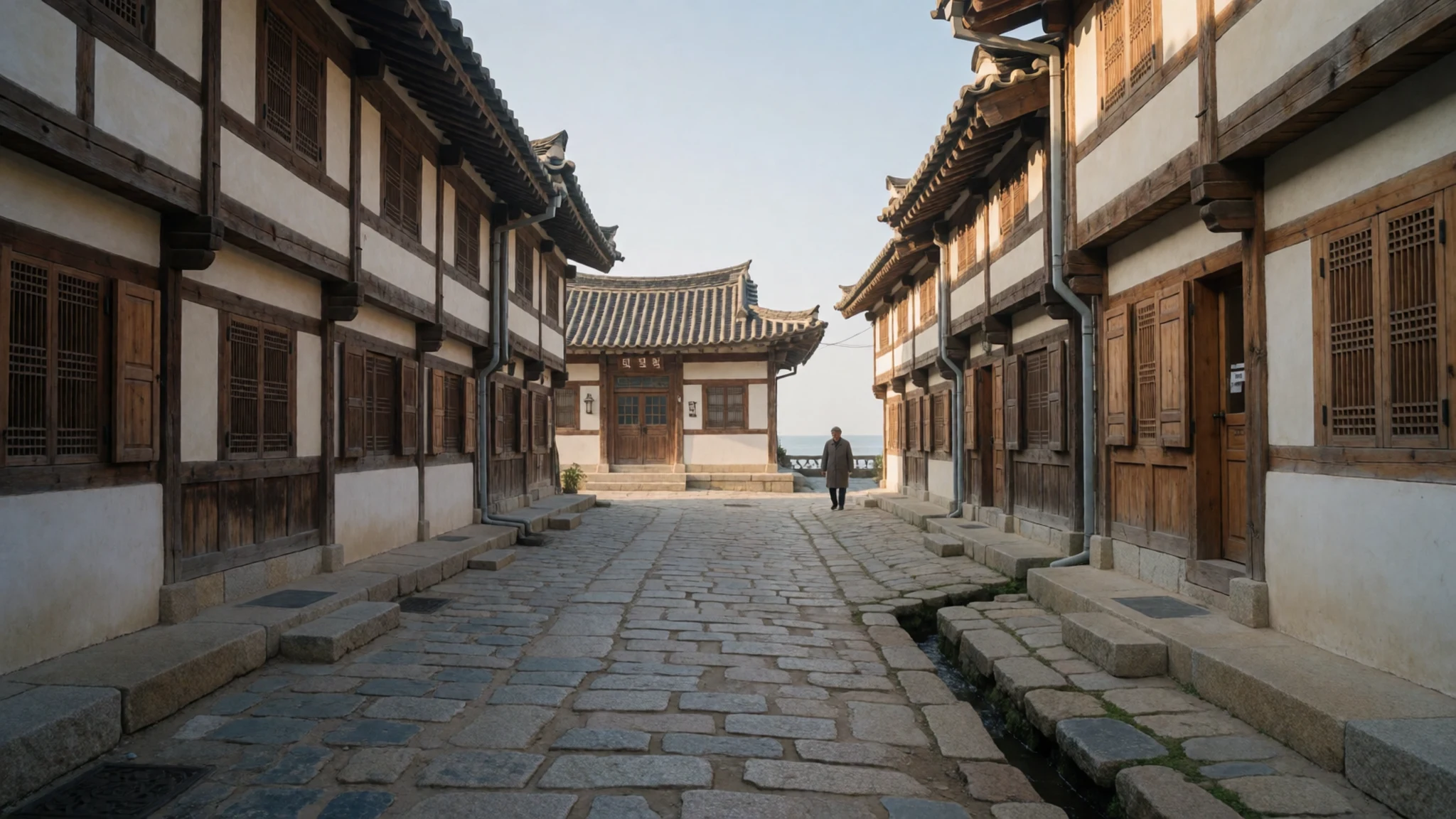
- East Sea shore at Hajung-ri — Hajung-ri coast
The shoreline at Hajung-ri gives a plain, open view over the East Sea, away from the harbour bustle. It suits a quiet walk, a flask of tea and a long look at the horizon. Rocks and surf here deserve respect, so keep a safe distance from the edge.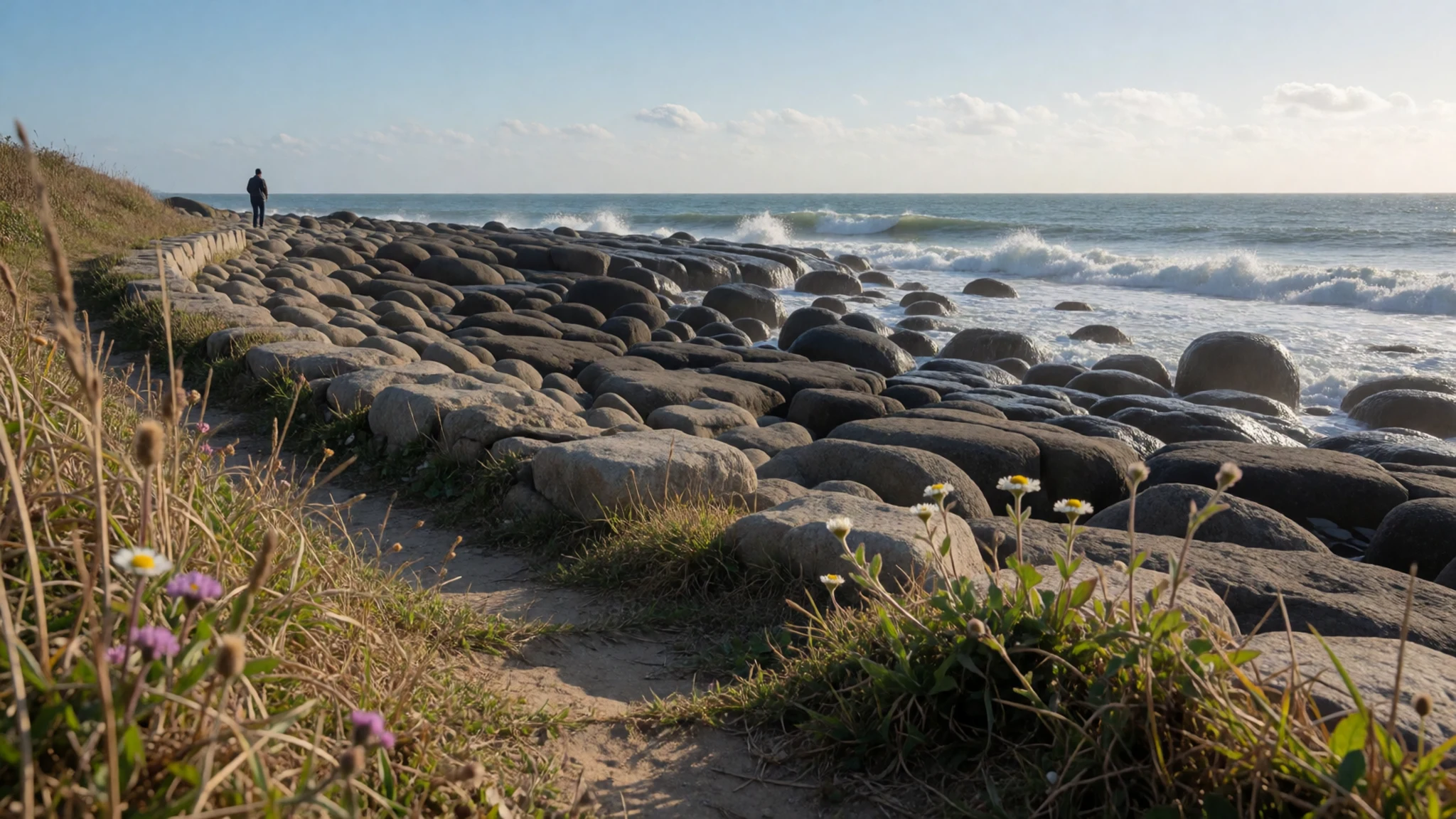
- The Hands of Harmony, Homigot — Homigot, north of Guryongpo
At the fishing village of Homigot, a short way north, a sculpture of hands rises near the water. The beaches here are too rocky for swimming, so people come for the sculpture and the sunrise. Arrive before dawn on clear mornings, and dress warmly.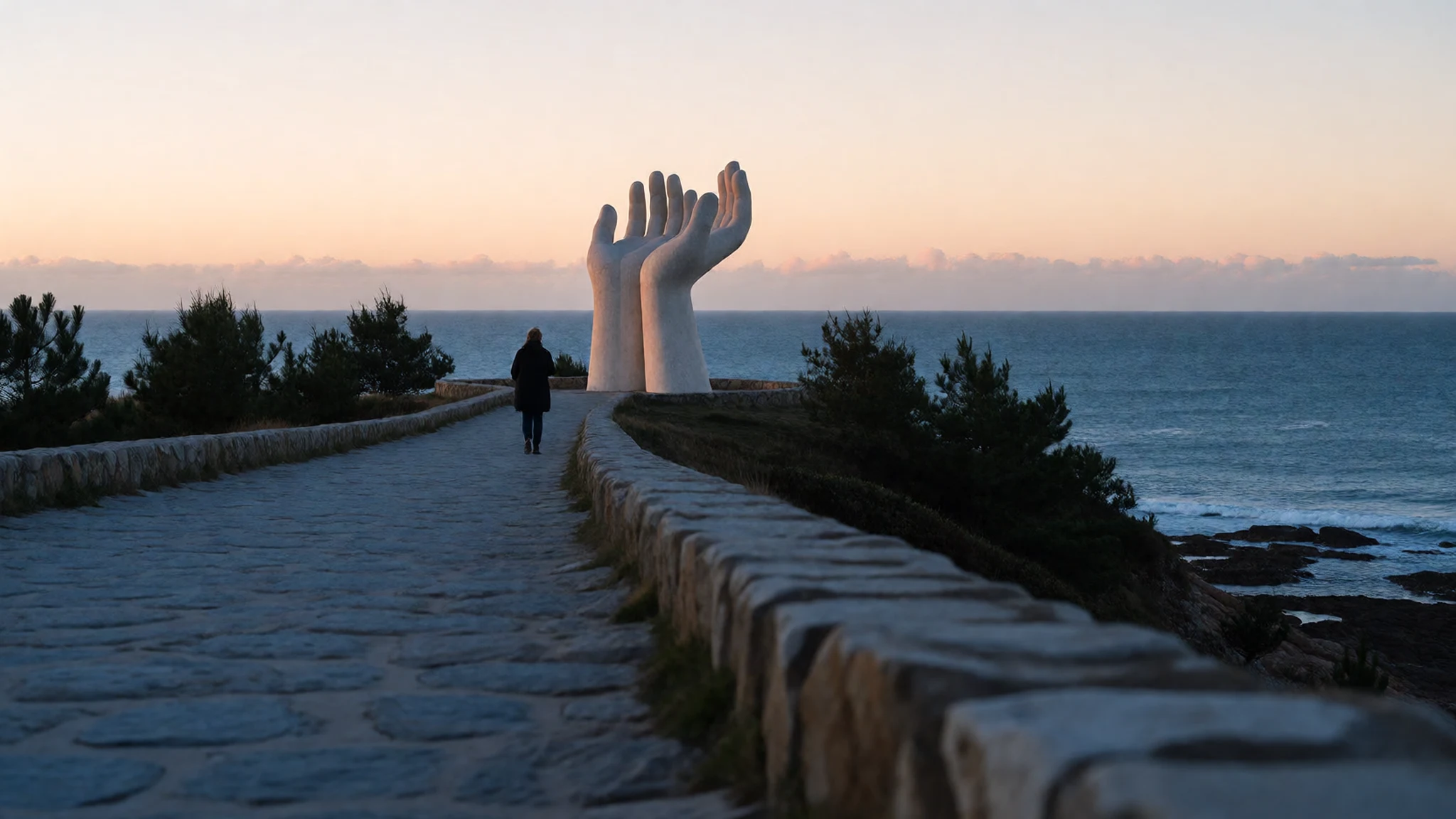
- New Millennium Memorial Hall — Near Homigot
Close to Homigot, this memorial hall was built to commemorate a sunrise event held to welcome the new millennium and to express hopes for unification of Korea. It pairs well with the sunrise viewing point nearby and gives some background to why people gather on this headland.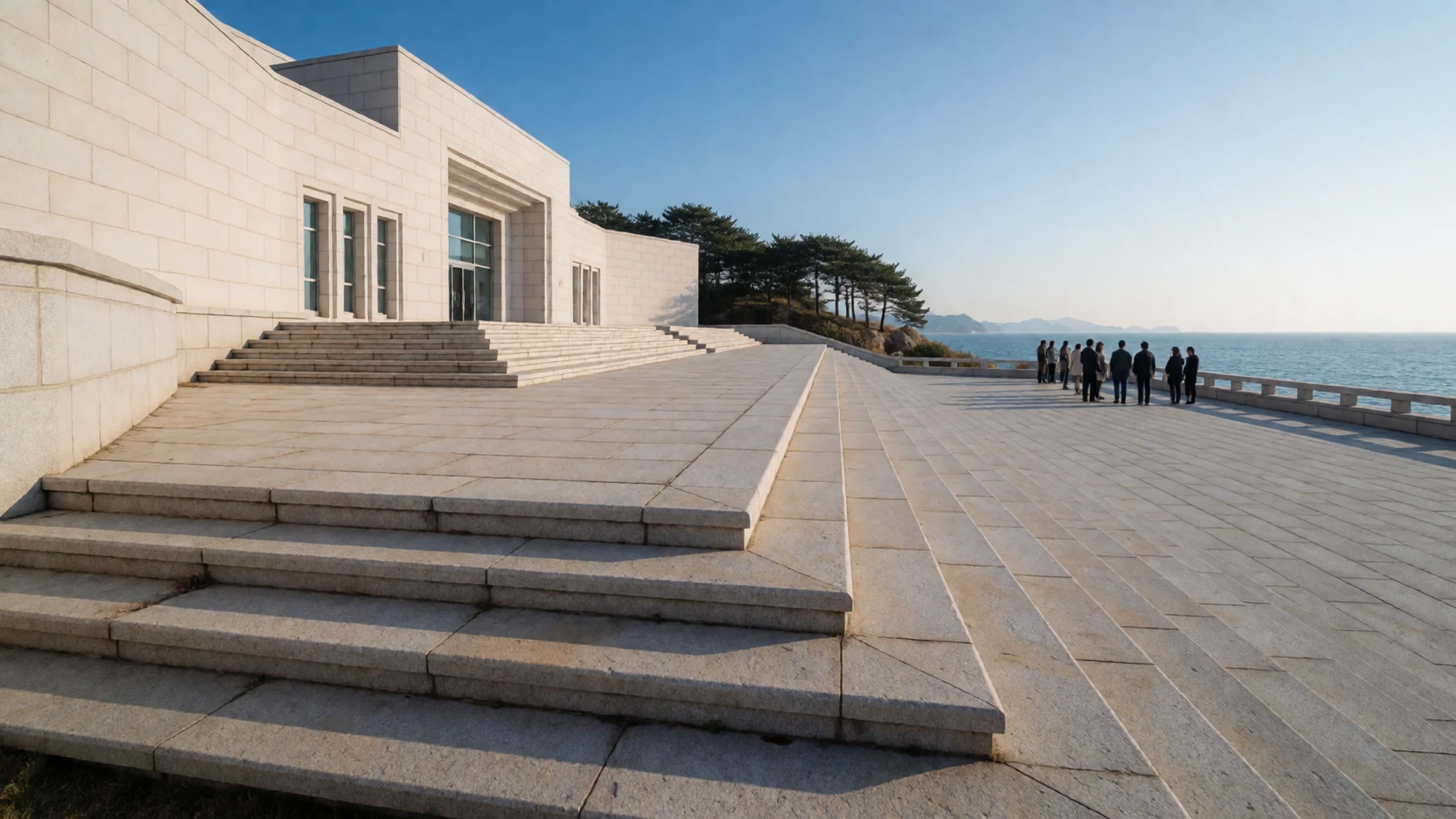
Culture
Guryongpo's culture is the culture of a Korean fishing harbour: practical, weather-conscious and built around the catch. Daily rhythm follows the boats, with early starts, fish auctions and drying racks that fill in the cold months. The town's best-known food tradition, gwamegi, is a direct result of that life, and locals talk about it with pride.
The sea also shapes belief and ritual. Fishing communities along the East Sea have long marked the new year and the start of the season with prayers for safe voyages, and the Homigot headland draws crowds at dawn on the first day of the year to watch the sun come up over the water. Visitors who come then should expect crowds, cold wind and a friendly, shared mood.
The town's history is layered. The Japanese-era lane near the harbour reminds residents of a difficult colonial period as well as of the fishing economy that grew then, so it is best approached as heritage rather than a theme park. Meals are generous and shared, with side dishes placed in the middle of the table, and drinking is social, with glasses refilled for one another.
When eating with Koreans, wait for the oldest person to start, and use both hands when receiving or pouring a drink from an elder.
What to wear
Guryongpo is a fishing town, so everyday dress matters more here than ceremony, but the traditional costume still appears on festive days. Hanbok, the traditional Korean dress, consists of a short jacket (jeogori) with a wrap skirt (chima) for women and trousers (baji) for men. Fabrics include silk for formal wear and ramie or hemp for light summer pieces. Families wear hanbok at Seollal (lunar new year) and Chuseok (the autumn harvest holiday), and sometimes for weddings and photo outings.
What people wear now is practical and weather-led. On the harbour, workers wear waterproof boots, rubber aprons and gloves, while townspeople favour windproof jackets, caps and fleeces for the sea breeze. On summer weekends, families come in shorts, sun hats and beach sandals, and many visitors from the city dress in casual sportswear and trainers.
For visitors, layers are the sensible choice: a light waterproof or windproof jacket even in warm months, a warmer coat and hat for winter sunrise at Homigot, and sun protection for summer. Shoes with a good grip help on wet quays and rocky shore. Swimwear belongs on the beach only, and shoulders and knees are best covered when visiting any temple in the Pohang area.
What to eat
- Gwamegi — Fish restaurants and drying racks around the harbour
The local speciality, a partly dried fish with a chewy, concentrated flavour. It is typically eaten with seaweed, garlic and chilli paste, and often paired with a glass of soju. The tradition suits the cold, windy months when the fish hang to dry.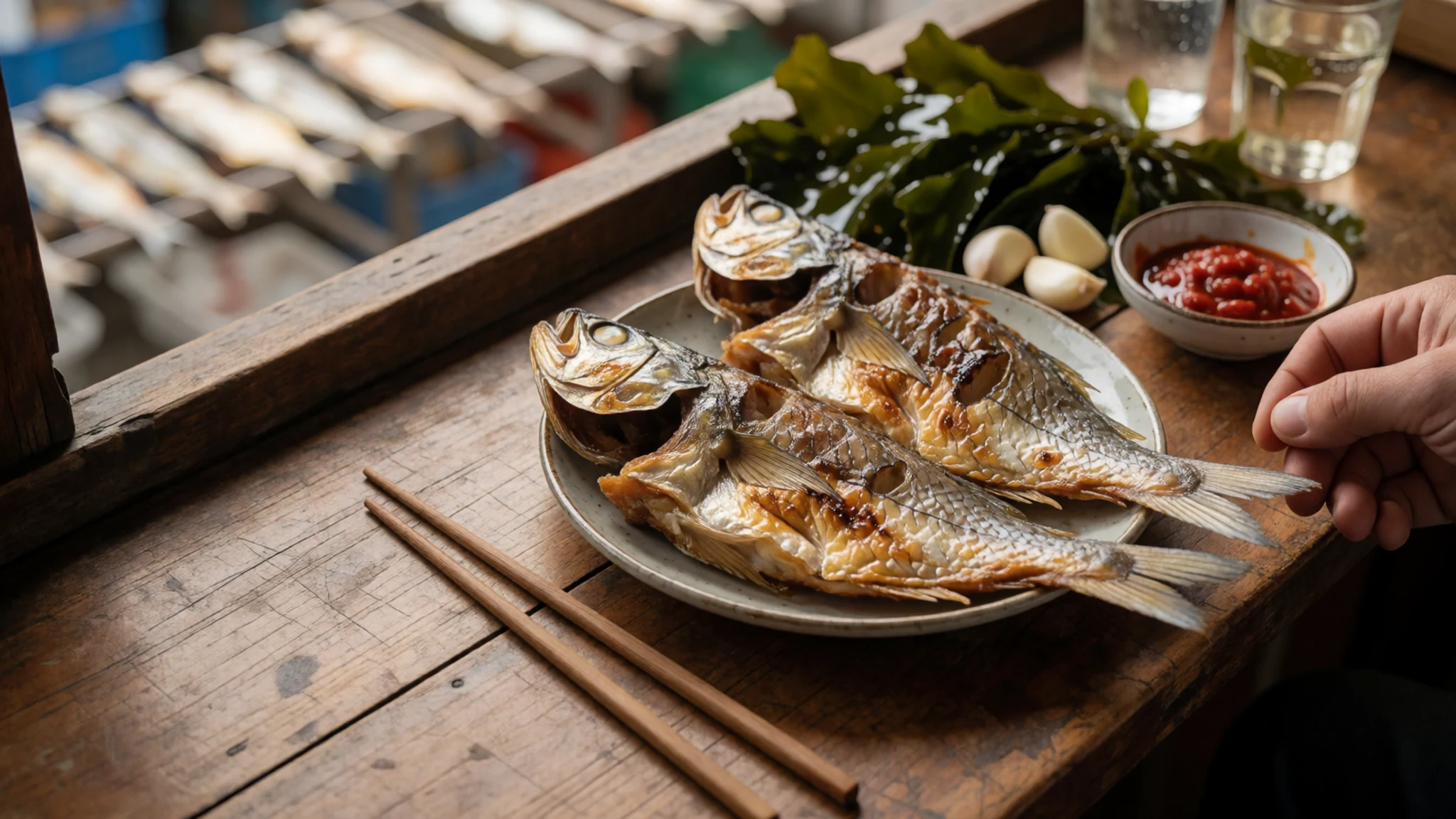
- Mulhoe (cold raw fish soup) — Raw-fish restaurants near the harbour
Thin slices of fresh raw fish in a cold, tangy, slightly sweet chilli broth, usually with vegetables and ice. It is refreshing in summer heat and an easy way to taste the morning catch without ordering a whole platter.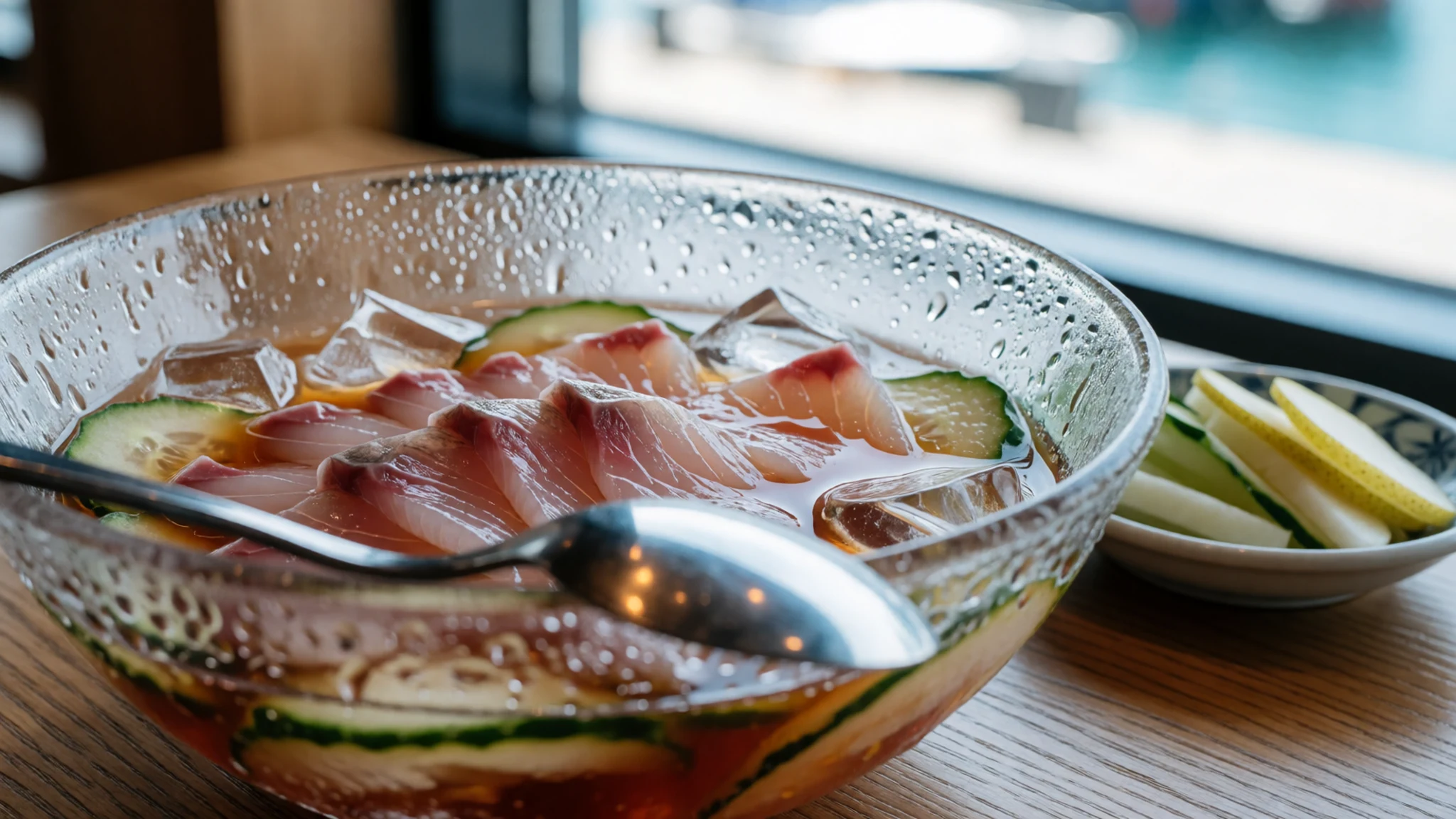
- Maeuntang (spicy fish stew) — Family-run seafood restaurants in town
A hot, red, chilli-rich stew of fish and vegetables, served bubbling at the table with rice and side dishes. It is warming on cold days and a good use of the day's catch. Ask about the spice level if you are sensitive to heat. - Sashimi (hoe) — Seafront restaurants with tanks of live fish
Raw fish served in fresh slices with lettuce, garlic, chilli paste and dipping sauces, often finishing with a stew made from the leftover bones. Menus change with the season and catch, so ask what is fresh that day. - Dried fish and seafood snacks — Harbour stalls and Jukdo Market in Pohang
Packets of dried squid, fish and other seafood make easy gifts or a snack for the road. They are also the standard accompaniment to beer in Korean pubs, where such snacks are called anju. Prices vary, so compare a few stalls first.
Plan it
Best time. Late spring (May–June) and early autumn (September–October) bring comfortable sea air and clearer skies for sunrise. July and August are warm, humid and busy at the beach, while winter is cold and windy but is the season for gwamegi drying on the racks.
How long. 1–2
Getting there. Pohang is the gateway, with rail and two bus stations; it lies about 110 km north of Busan and about 360 km south-east of Seoul. From Pohang, take a local bus or taxi south-east to Guryongpo. Check timetables on the official operators' sites.
Budget. mid
Tips
- Reach Homigot before dawn if you want the sunrise, and bring a warm layer even in summer
- Book pension or guesthouse rooms early for summer weekends, when the beach and harbour fill up
- Carry a card and some cash, as small stalls may prefer cash
- Ask at restaurants what is fresh that day, since menus follow the catch
- Check the official town website for museum details before you go
Etiquette
- Wait for the eldest person to begin eating and use both hands when receiving a drink from an elder
- Keep a safe distance from wet rocks and the water's edge, and do not climb on fishing gear
- Ask before photographing fishermen or people at work
Nearby
Sources
- Wikidata Q12585395 (CC0)
- Wikipedia: Guryongpo (rev 1377447338) (CC BY-SA 4.0)
- Wikivoyage: Pohang (rev 5414564) (CC BY-SA 4.0)
- Photo 01: Korea-Pohang-Goryongpo Beach-01, Junho Jung (CC BY 3.0)
- Photo 02: East Sea taken from Hajung-ri, Guryongpo, Pohang, Choi2451 (CC BY 3.0)
- Photo 03: Korea-Pohang-Guryongpo Beach-02, Junho Jung (CC BY 3.0)
- Photo 04: Korea-Pohang-Guryongpo Beach-Visitors-01, Junho Jung (CC BY 3.0)
- Photo 05: Korea-Pohang-Guryongpo harbor-food-01, Junho Jung (CC BY 3.0)
- Photo 06: Pohang Guryongpo Post Office, Neoalpha (CC0 1.0)


