Guiana Space Centre
Guiana Space Centre, France
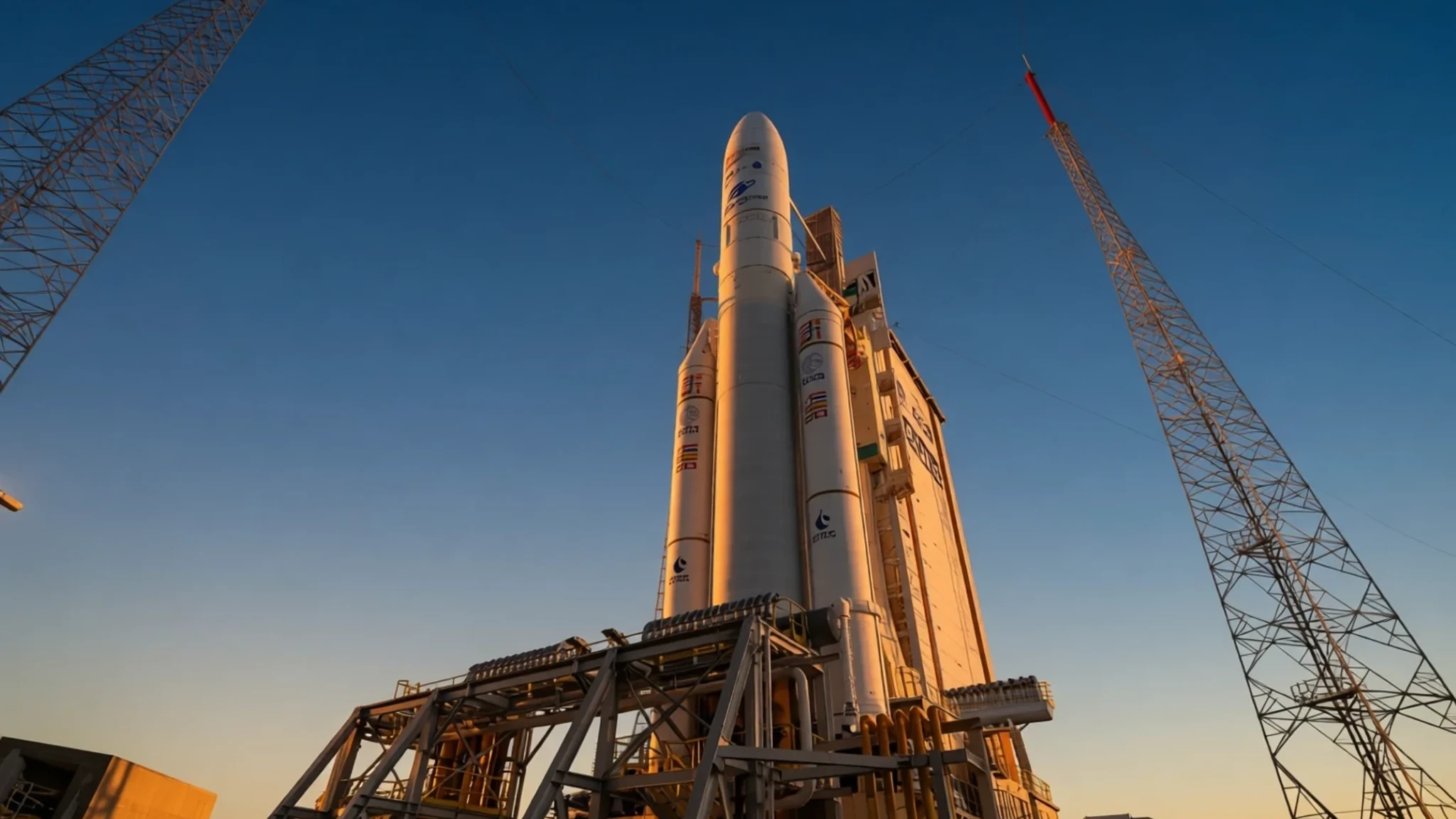
The Guiana Space Centre puts European rockets on an equatorial coast, with rainforest behind the pads and open ocean ahead.
The place
The Guiana Space Centre spreads along the Atlantic edge of French Guiana, a short drive from the town of Kourou and a long way, in every other sense, from the cities that design the rockets it launches. Low coastal ground runs between mangrove, savanna and tall rainforest, and the launch complexes sit inside that green, facing east so vehicles climb out over water rather than over towns. From the viewpoint on Montagne des Singes the site reads as a scatter of gantries, lightning masts, roads and clearings rather than a single building. Closer in, each pad has its own personality: the Ariane 6 complex, medium to heavy, whose construction left a wide scar of concrete in the trees, a Vega C complex for the medium-lift rocket, and the old Soyuz complex with its flame trench, since handed to MaiaSpace. The Jupiter control centre is the human-scale counterpart, a block of rooms and antennas where countdowns are run. Kourou itself is a planned coastal town that grew up with the range: a grid of streets, a waterfront, a market, and neighbourhoods where space-agency staff and Guianese families live within the same humid weather. Heat sits on the day from mid-morning, rain arrives in sudden sheets, and the forest edge is never far from a security fence. Visitors who come for a launch see the odd double life of the place most clearly then — ordinary Kourou carrying on, and a closed range waiting on a clock. Between launch campaigns the centre is quieter, a working industrial landscape of checkpoints, antennas and wide empty aprons, with monkeys and birds still using the woodland that the roads cut through.
Its story
The Guiana Space Centre exists because France needed a launch coast of its own, and French Guiana offered open ocean to the east and a latitude close to the equator. A rocket heading east gains from the Earth's spin, and that gain is greater near the equator than from European latitudes, so the same vehicle can lift more towards orbit. The early range was a French national project on a coastal strip beside Kourou, with a deep-water approach for equipment that would not fit a small road. In time the site became a shared European workplace. Ariane grew up here pad by pad, until a heavy launcher and its mobile gantry were as ordinary on this skyline as the trees. The range later made room for a Soyuz complex, a northern design adapted to rainforest rain and salt air, and for Vega, a smaller launcher with its own ensemble. A further Ariane pad rose beside the older ones when a new heavy vehicle took over. The rhythm has stayed steady. Hardware arrives by ship and by air, is stacked in tall white buildings, rolls to the pad and waits on weather. Jupiter calls the count, Kourou looks up, and then the roads between the pads return to heat, puddles and patrols.
What to see
- Ariane launch apron — Ariane launch zone
At the Guiana Space Centre the heavy-lift apron is a cleared island of concrete in the coastal scrub. A mobile gantry shelters the vehicle, then rolls clear before flight, leaving lightning masts and a flame path aimed at the Atlantic. Visitors see it from a distance. The zone closes on launch day and fills with cranes between campaigns, while the forest stays hard against the fence.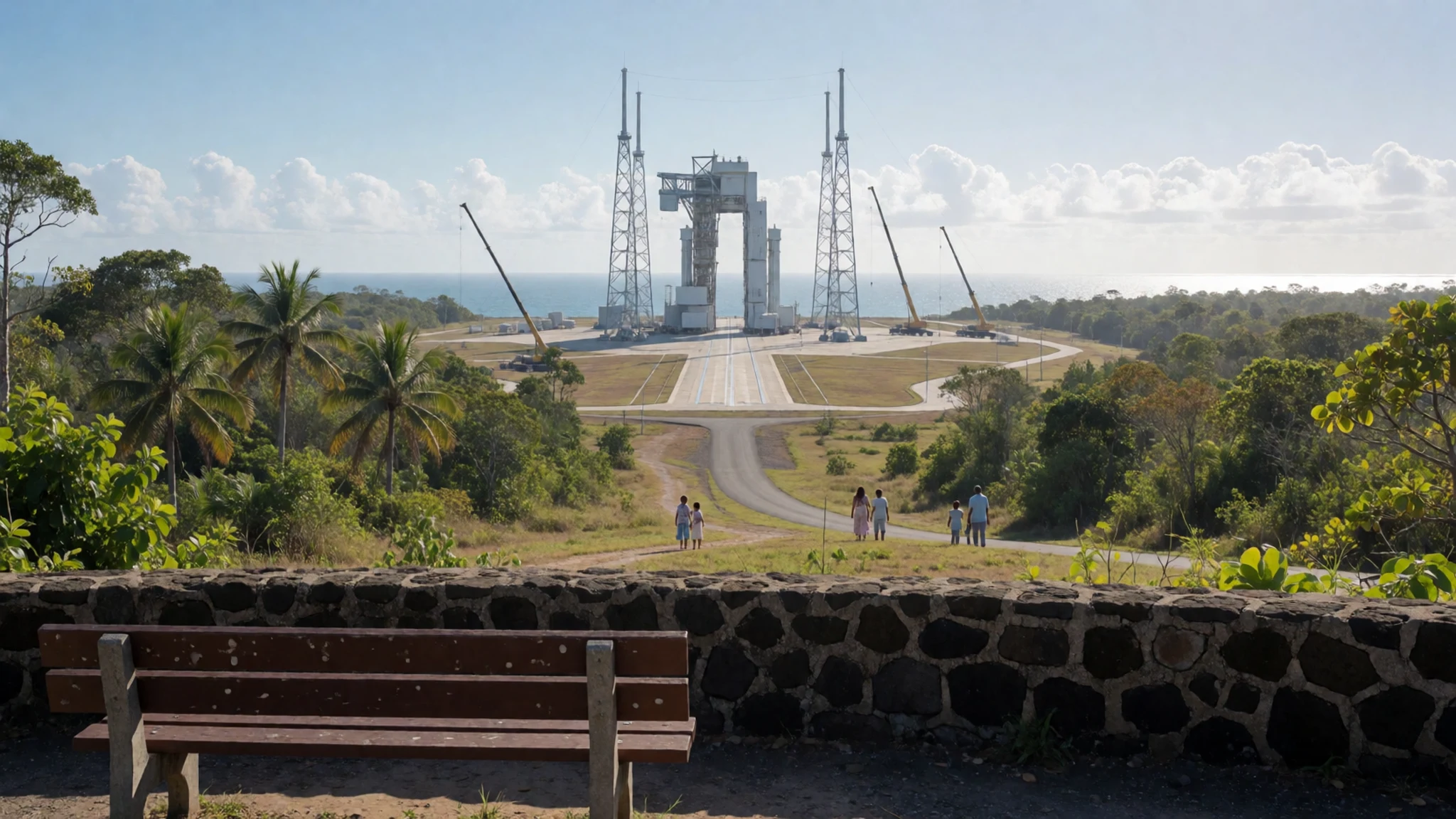
- Montagne des Singes — Montagne des Singes
Montagne des Singes is the hill from which the Guiana Space Centre becomes one picture. Pads, roads and clearings sit in a green plain running to the Atlantic, Kourou off to the side and forest filling every unused gap. Down among the fences the range feels like separate compounds. From this lookout it is a single coastal workshop. Morning is the kinder hour, before haze and heat soften the view.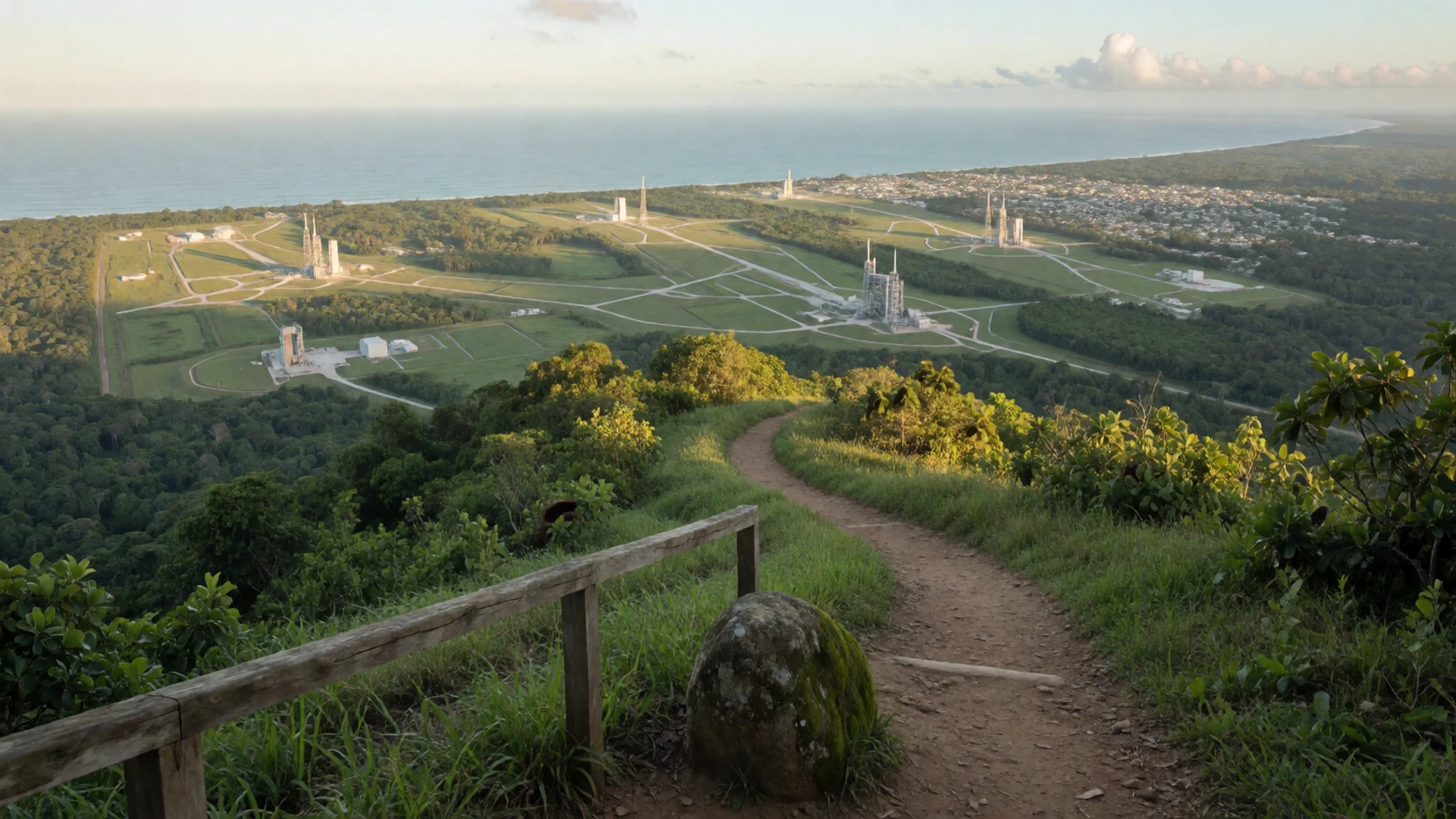
- Vega launch ensemble — Vega launch ensemble
The Vega ensemble at the Guiana Space Centre is the smaller pad, set apart from the heavy-lift towers. Its gantry stands over a concrete apron ringed by lightning masts, with trees closing the view on every side that is not a road. The approach is still a controlled range road, not a casual viewpoint. In the site photograph the complex looks like a white instrument set in a clearing.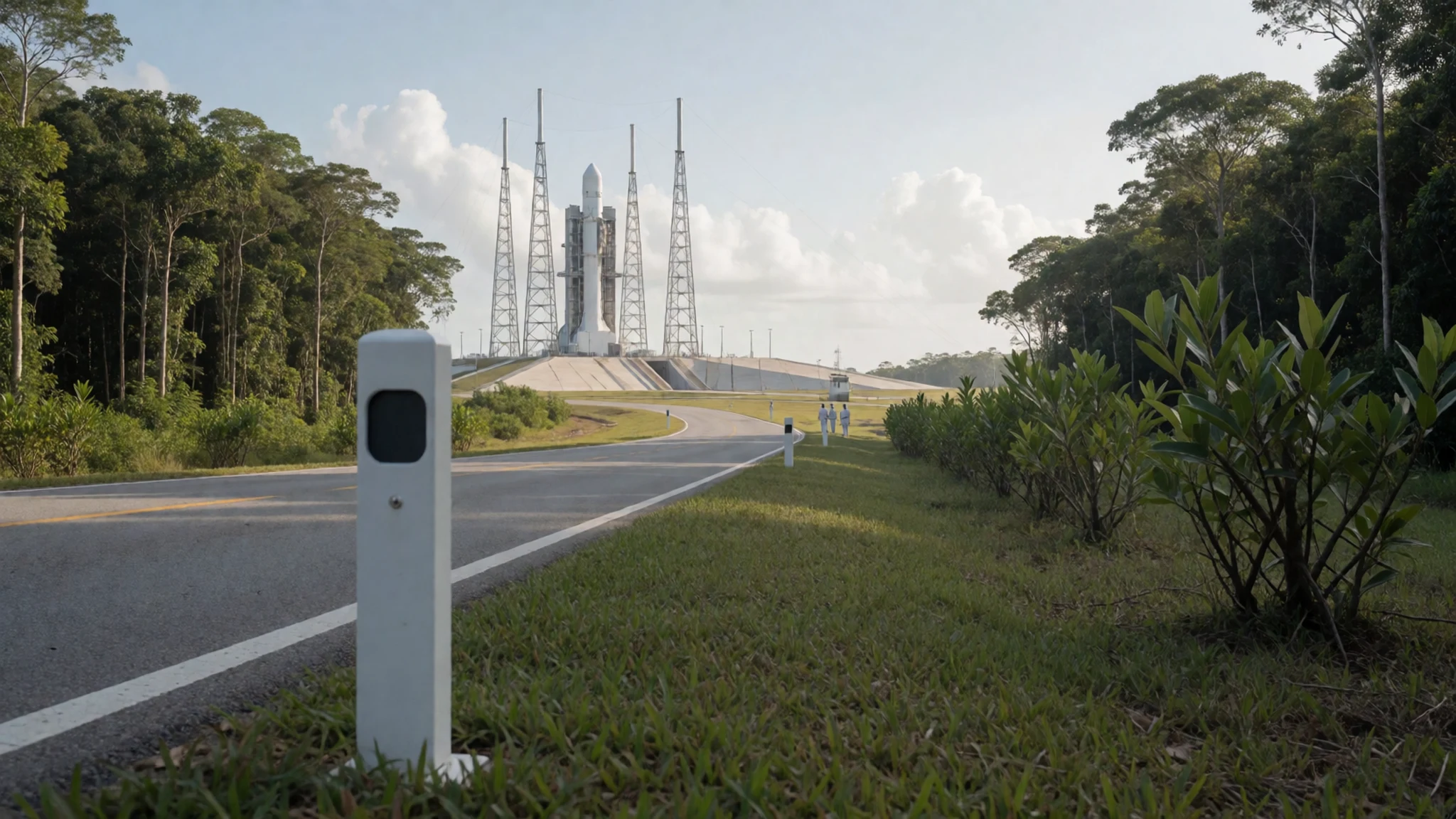
- Soyuz launch pad — Soyuz launch zone
The Soyuz pad at the Guiana Space Centre looks slightly foreign even among machines built elsewhere. The flame trench in the site photograph is the clue: a deep concrete channel for engines first flown far from rainforest. Rain, salt wind and fast-growing scrub have weathered the Kourou compound, so it feels both imported and local. No Soyuz campaign will close it; those launches have ended and the pad has passed to MaiaSpace.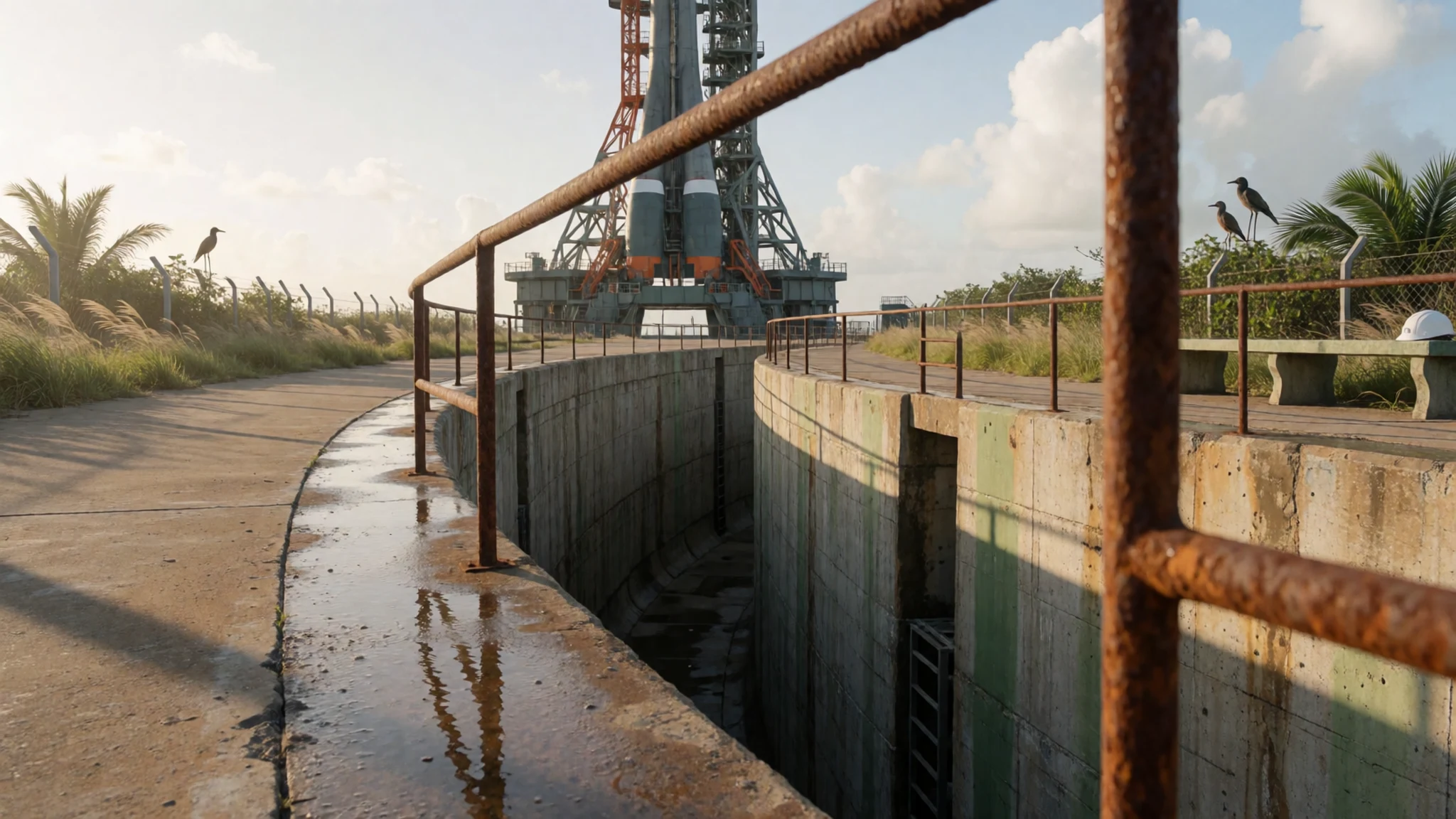
- Jupiter control centre — Jupiter control centre
Jupiter is the Guiana Space Centre's control centre, where a launch becomes a procedure rather than a view. The building is plain from outside; the drama sits in the rooms, the clocks and the voice nets. The Kourou tracking station, down its own access path, follows the vehicle after liftoff. On an ordinary day Jupiter's public face is a secure door and a quiet car park.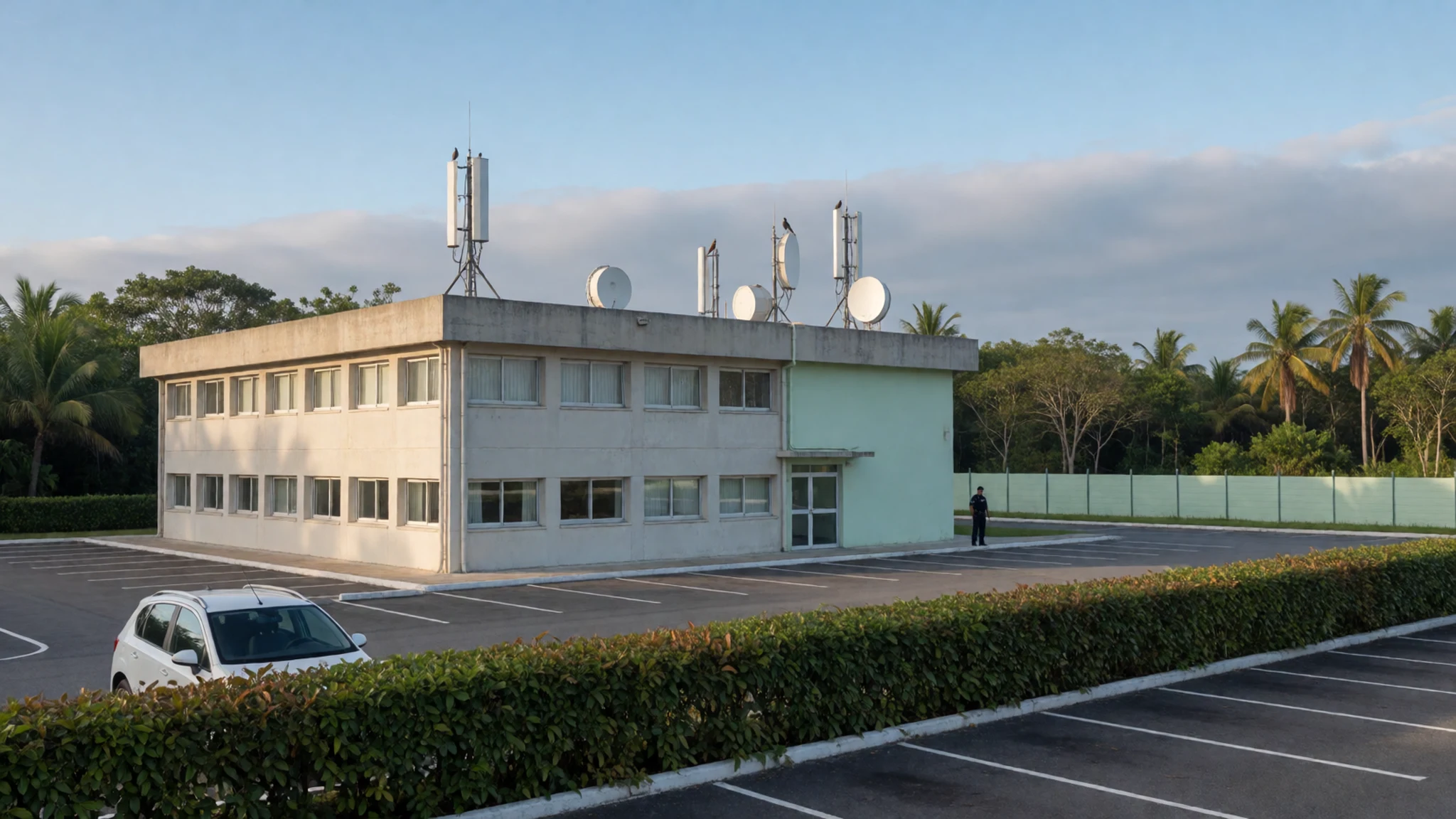
Culture
The Guiana Space Centre sits inside a society that was already layered before any rocket arrived. French Guiana's daily life draws on Creole custom, French public life, Indigenous nations of the interior and the coast, and neighbours from Brazil and Suriname who cross the same shops and markets. In Kourou that mix is especially plain, because the spaceport brought engineers and technicians into a small coastal town and did not erase the town that was there. Launch campaigns have become part of local time: roads close, viewpoints fill, and people who have nothing to do with the countdown still know when one is due. Carnival is the other clock. In the weeks before Lent, Touloulou nights take over the dance halls — women masked and covered head to toe, choosing partners while the band plays — and the space centre's staff join a calendar that belongs to the country, not to the range. Churches, football pitches and riverside Sundays matter as much as a successful flight. French is the language of the gate and the school; Creole is the language of the market and the joke. A visitor should stay behind every closed barrier on launch day, and should ask before photographing people in town.
What to wear
The Guiana Space Centre looks, at the gate, like a European technical site: polo shirts, light trousers, closed shoes and a badge on a lanyard. Kourou's clothing is older than that dress code. Traditional Creole dress is built on madras, the bright checked cotton of the headwrap, the scarf and the full skirt of the costume guyanais. Gold jewellery, chosen to be seen, belongs with that cloth on feast days. At carnival the Touloulou inverts the display: hair, face and body covered, often in satin and lace, so she can dance unrecognised. Indigenous festive dress uses beadwork, woven fibre and feathers, and it belongs to ceremony, not to the spaceport. What people wear now, on an ordinary weekday, is lighter and mixed. Cotton T-shirts, football shirts, shorts, sundresses and sandals fill the market; school uniforms appear in the morning; offices and the centre lean towards European casual clothes, with high-visibility layers only inside technical zones. A visitor does better in breathable cotton, a hat and a rain jacket than in anything smart. Long sleeves and trousers help against sun and mosquitoes. Closed shoes suit range roads and muddy tracks, and covered shoulders are the polite choice if the day includes a church in town.
What to eat
- Bouillon d'awara — Creole eateries and family kitchens in Kourou
In Kourou, beside the Guiana Space Centre, bouillon d'awara is a feast stew, especially around Christmas and Easter. Awara palm fruit gives the pot its body, with salt meat, smoked fish and vegetables cooked for hours. Creole eateries and family kitchens in town serve it; the range does not.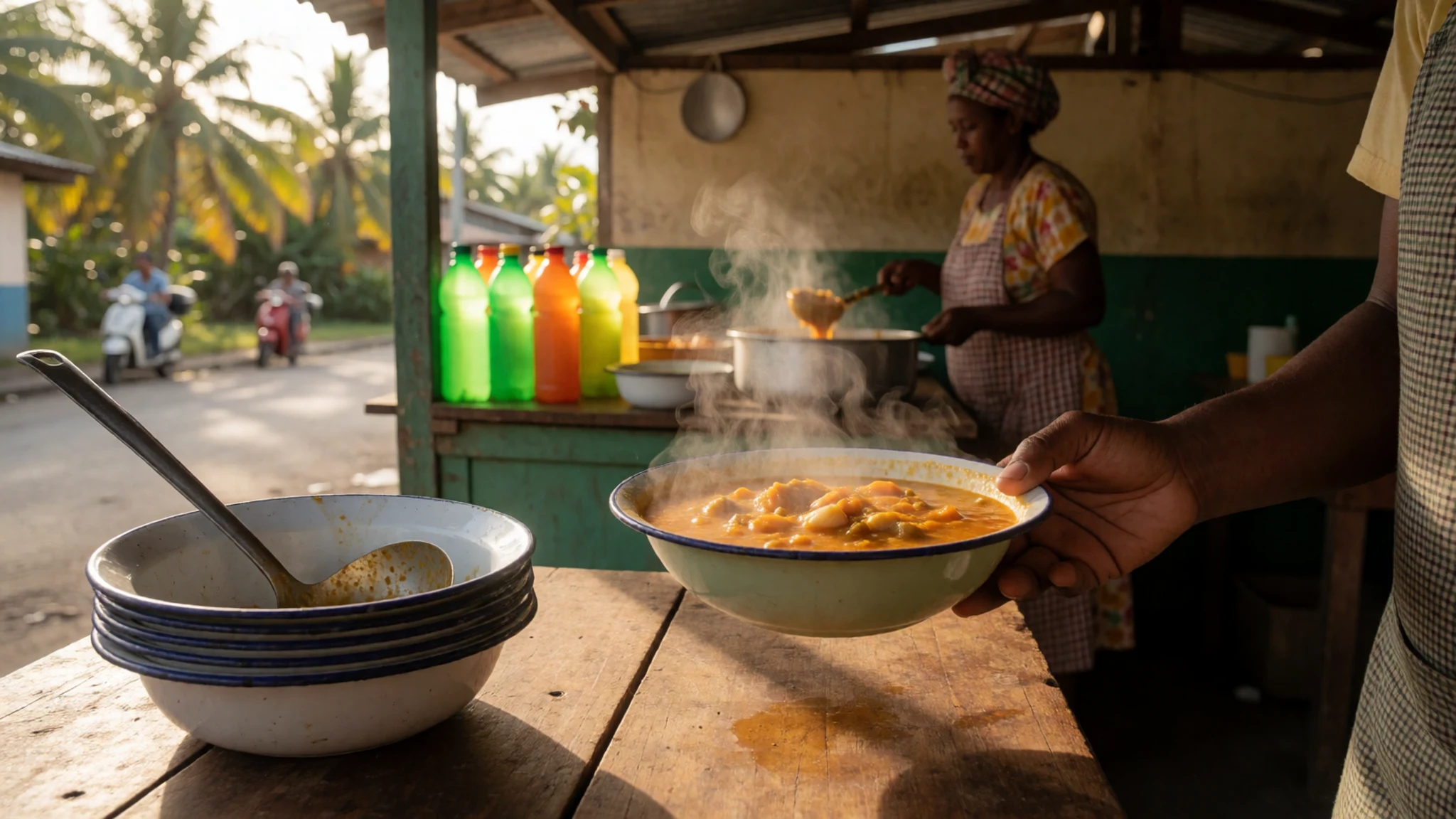
- Colombo — Creole eateries and lunch counters in Kourou
Colombo, in the town beside the Guiana Space Centre, is Kourou's Creole curry: chicken, pork or vegetables with a spice paste and rice. Creole eateries on the main streets and lunch counters used by off-duty spaceport staff serve it as an ordinary midday plate.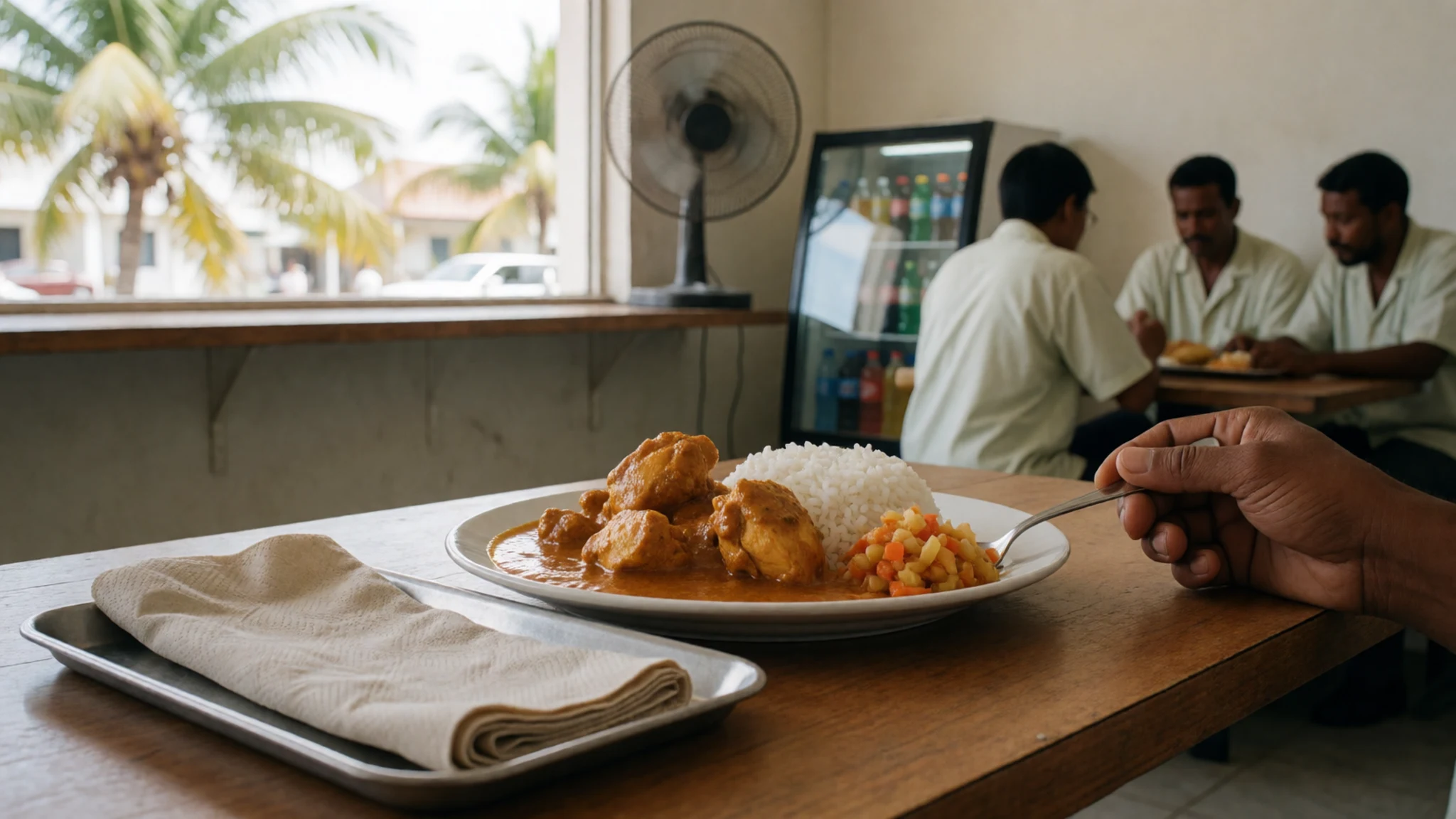
- Accras de morue — Market counters and snack stalls in Kourou
Accras de morue, salt-cod fritters, are the food of waiting around the Guiana Space Centre, when a launch slips and the rain starts. The batter is spiced, the fish salty, the chilli usually beside them. Market counters and snack stalls in Kourou fry them through the day. - Blaff — Waterfront eateries and Creole dining rooms in Kourou
Blaff is the Creole fish stew of the coast the Guiana Space Centre launches over. Fish sits in a sharp broth of lime, garlic, onion and chilli, and comes with rice or couac. Waterfront eateries and simple Creole dining rooms in Kourou are the places to ask for it. - Couac with grilled fish — Kourou market stalls and neighbourhood eateries
Couac, toasted cassava meal, links plates in Kourou to the forest hinterland behind the Guiana Space Centre. Dry and nutty, it soaks up sauce beside grilled fish or stew. Market stalls sell it by the bag, and neighbourhood eateries put it on the plate.
Plan it
Best time. The Guiana Space Centre is hot and humid in every month, with lighter rains from August to November, when being outdoors around Kourou is easier. A downpour can still arrive on any afternoon. A published launch date matters more than the season.
How long. 2–3
Getting there. The Guiana Space Centre is reached via Cayenne Félix Éboué Airport, then the coast road northwest to Kourou. Public access, when offered, is arranged from the town; the pads are not walk-in. Check the official site before travelling, because tours and launch viewings follow the campaign calendar.
Budget. high
Tips
- Reserve a public visit or a launch viewing as soon as the date is posted; campaigns move.
- Begin outdoor plans early, before the heat builds and storms stack up.
- Carry cash alongside cards; smaller stalls in Kourou still prefer it.
- Keep drinking water and mosquito repellent in the bag, and use both.
- Leave slack in the timetable on launch day; holds and postponements are part of the work.
Etiquette
- Stay behind closed barriers on the range, and do not fly a drone anywhere near it.
- Ask before you photograph people in the market, at the waterfront or during carnival.
- Cover shoulders and keep your voice low if you go into a church in Kourou.
Nearby
Sources
- Wikidata Q183152 (CC0)
- Wikipedia: Guiana Space Centre (CC BY-SA 4.0)
- Wikivoyage: Kourou (CC BY-SA 4.0)