Gobi Gurvansaikhan
Gobi Gurvansaikhan, Mongolia
Gobi Gurvansaikhan is where Mongolia's desert turns out to hold mountains, singing dunes, ice-filled gorges and camel herds, all in one huge park.
The place
Gobi Gurvansaikhan National Park lies in southern Mongolia, in Ömnögovi Province, along the northern edge of the Gobi Desert. It was created in 1993 and later enlarged to its present boundaries, and it is the biggest national park in the country, a long ribbon of land that runs much further from east to west than from north to south. The name means 'Three Beauties' and comes from three subranges, the East, Middle and West Beauty, which make up the eastern half of the park. Those mountains surprise many first-time visitors, because the Gobi here is not one uniform sea of sand. The park holds rocky desert, great belts of dune, dried-out basins, salty streams, springs and small oases, with steppe grass on the higher ground. The wildlife list is long and includes the snow leopard, which almost nobody sees, along with Gobi camels, argali sheep, Siberian ibex, wild asses called onagers, and both Mongolian and goitered gazelles. Plant life is richer than the bare ground suggests, with several hundred species recorded. Most trips start in Dalanzadgad, the provincial town, which has flights to Ulaanbaatar and the last reliable shops and fuel before the park. Distance is the real planning issue: sights are scattered, tracks are barely signed, and a day of driving between two of them is normal. Summer heat, winter cold and spring wind shape everything, so the season matters more here than at most national parks.
Its story
Gobi Gurvansaikhan National Park has a layered history, and the oldest layer is geological. At Khermen Tsav, in the west of the park, red cliffs mark what was once a sea floor, and fossils from the age of dinosaurs have turned up there. The ground tells of water long before the desert arrived. The human story is quieter. Herding families have moved camels, goats, sheep and horses across this country for generations, following thin pasture and seasonal water, and many still live in felt-covered gers beside the tracks that visitors use. Formal protection began with the Yolyn Am valley in the Zuun Saikhan mountains, set aside in 1965 for its ice and wildlife. The wider park followed in 1993 and was expanded later, which turned a single valley into a vast reserve of mountains, dunes and gravel plains. The dunes of Khongoryn Els gained a further label when they were named among the 'Nine Wonders of Mongolia', a title that has since appeared on many tour itineraries. Tourism here is still young and runs mostly through Dalanzadgad, family guesthouses and small ger camps. That keeps the park feeling like a working landscape rather than a managed attraction, with herders, rangers and visitors sharing the same wells and tracks. The pressures are familiar ones: grazing, a short and crowded summer season, and the wear of vehicles on fragile ground. How those are balanced will decide what the Three Beauties look like in decades to come.
What to see
- Khongoryn Els — Southern edge of the park, Ömnögovi
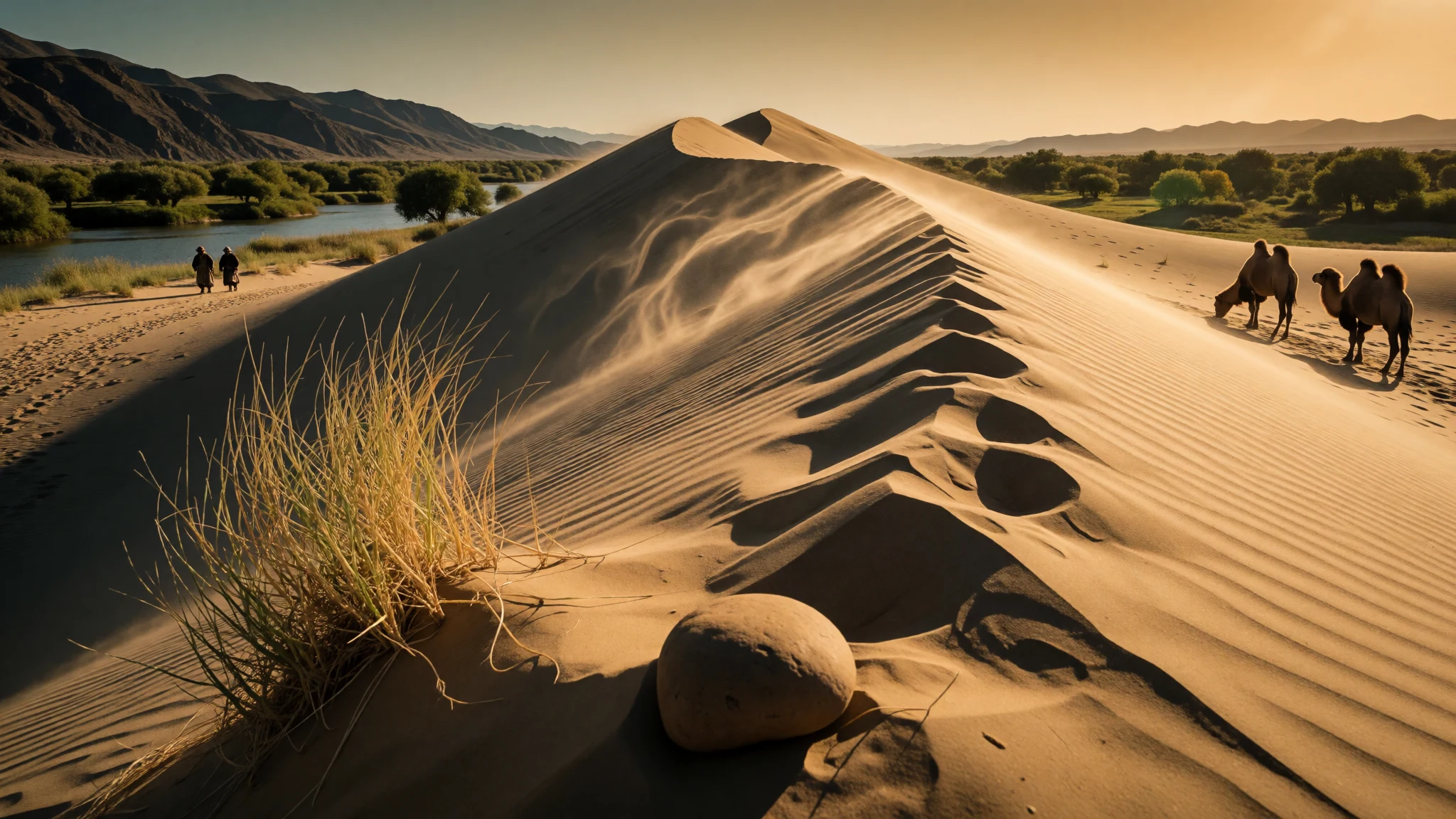
Khongoryn Els, also called the Singing Sands, is a vast belt of dunes backed by mountains, with a small river and green pasture along its foot. When wind drives the sand, the dunes give off a low hum. Climbing the crest is slow work in loose sand, so go early or near sunset. Camels graze nearby.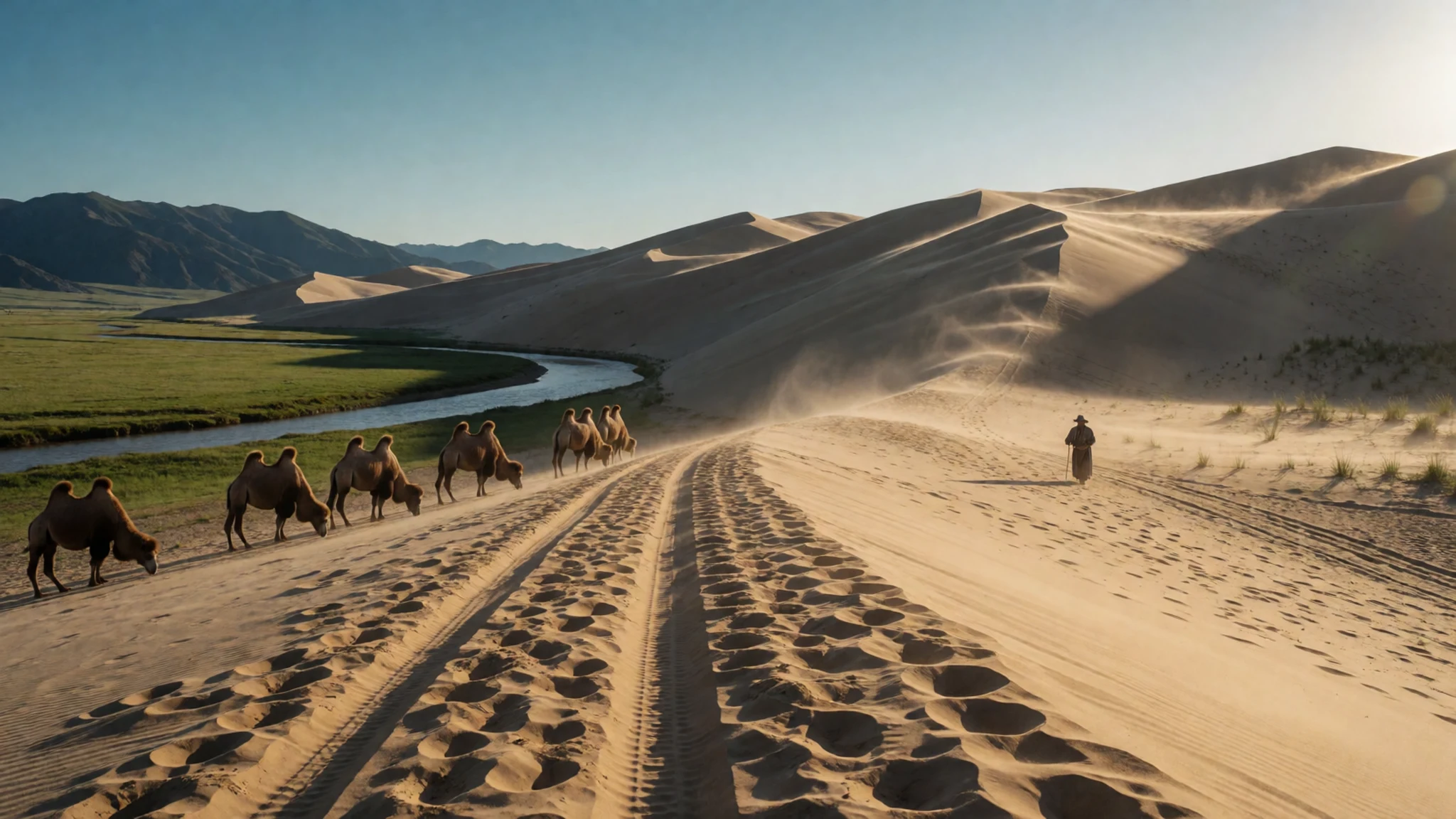
- Yolyn Am — East Saikhan mountains, near Dalanzadgad
Yolyn Am is a narrow gorge in the northeastern part of Zuun Saikhan Mountain, reached by a paved road from Dalanzadgad and then an easy walk beside a stream. The valley closes in gradually, and a thick sheet of ice often survives in the shade well into summer. Expect cold air, wet feet at crossings and ibex on the cliffs.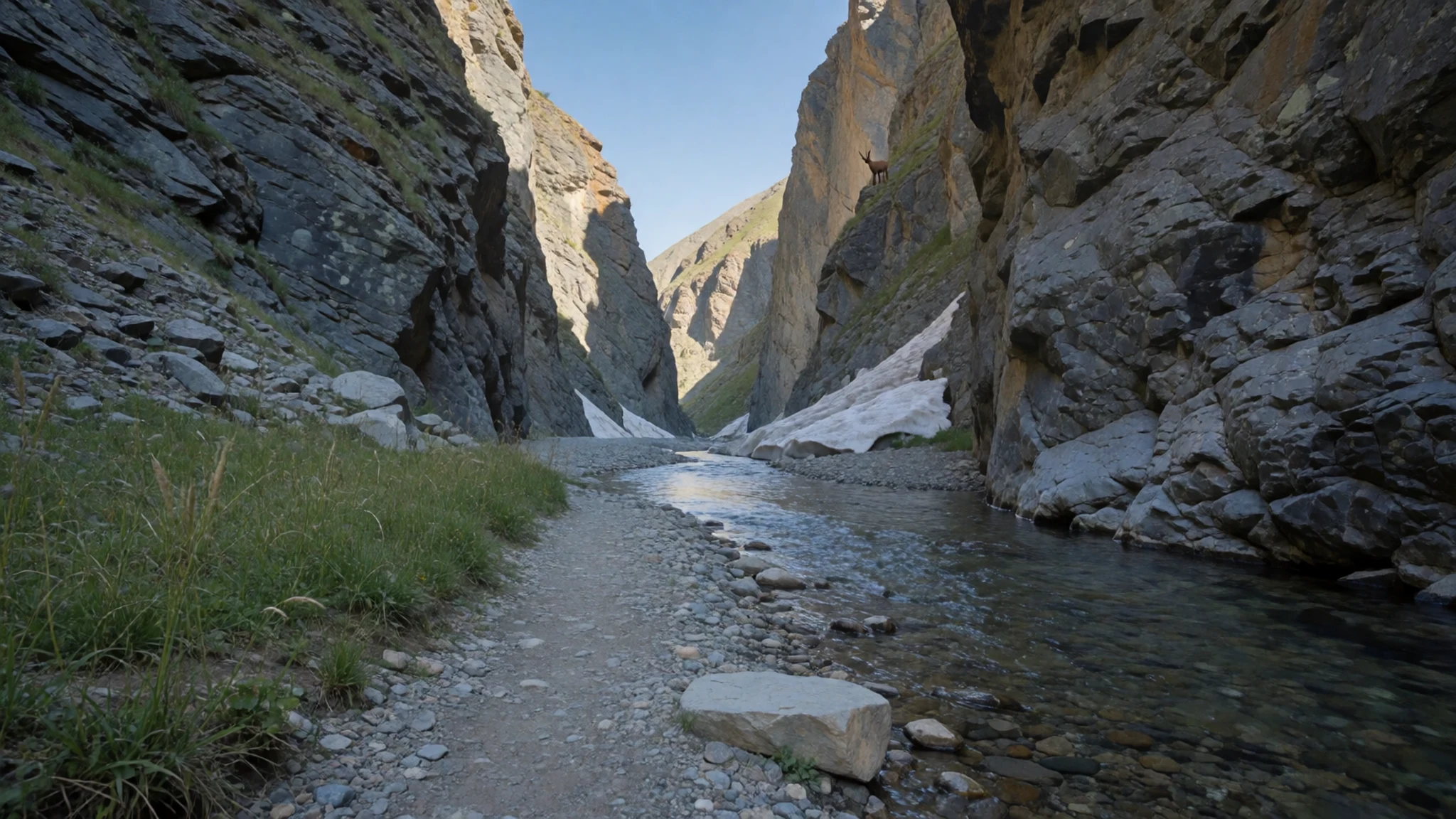
- Khermen Tsav — Western part of the park
Khermen Tsav, also spelled Hermentsav, is a canyon of red and ochre cliffs cut into what was once a sea floor. Fossils from the age of dinosaurs have been found here, and the eroded walls look like ruined towns at dusk. It lies in the remote west, so the trip is a proper expedition by four-wheel-drive.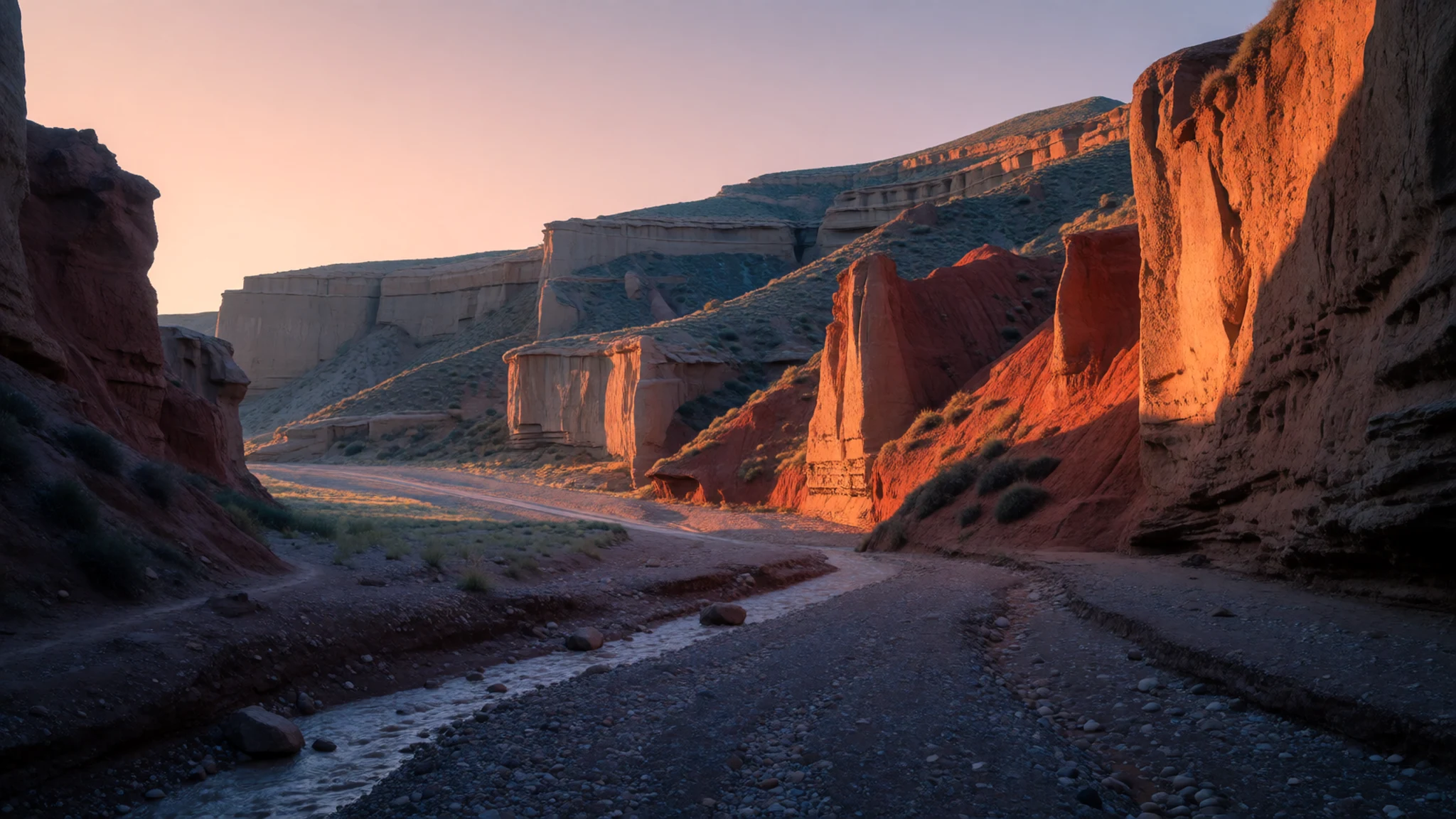
- Dungeneegyn Am — South-west Zuun Saikhan, Bayandalai area
Dungeneegyn Am is a gorge system in the south-west of the Zuun Saikhan range, with cliffs, canyons, caves and a stream. Mountain sheep and goats are often seen on the slopes. It draws fewer visitors than Yolyn Am, but it needs a driver who knows the tracks and a sensible plan for water.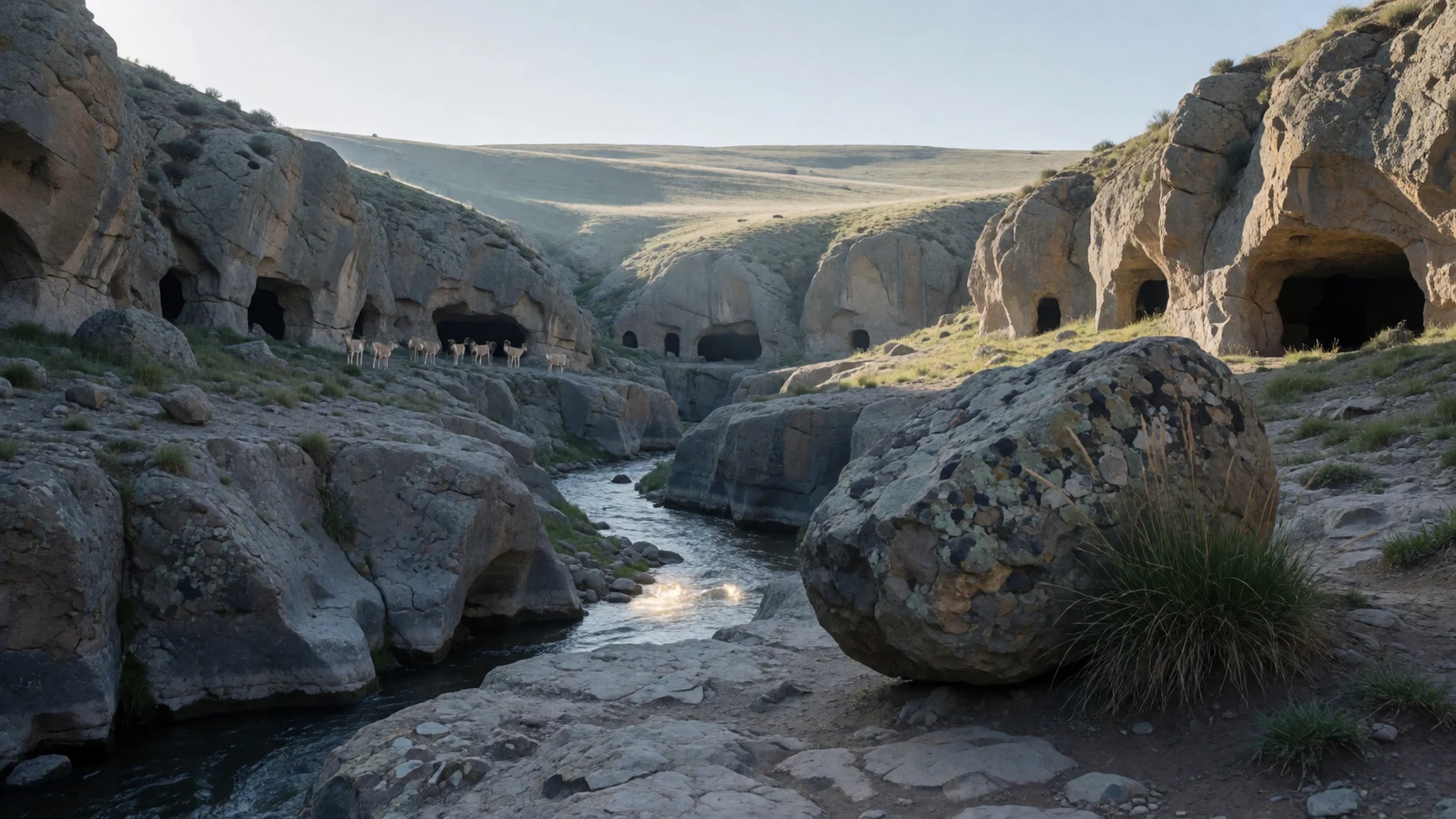
- Wildlife of the Saikhan ranges — Mountain slopes and basins across the park
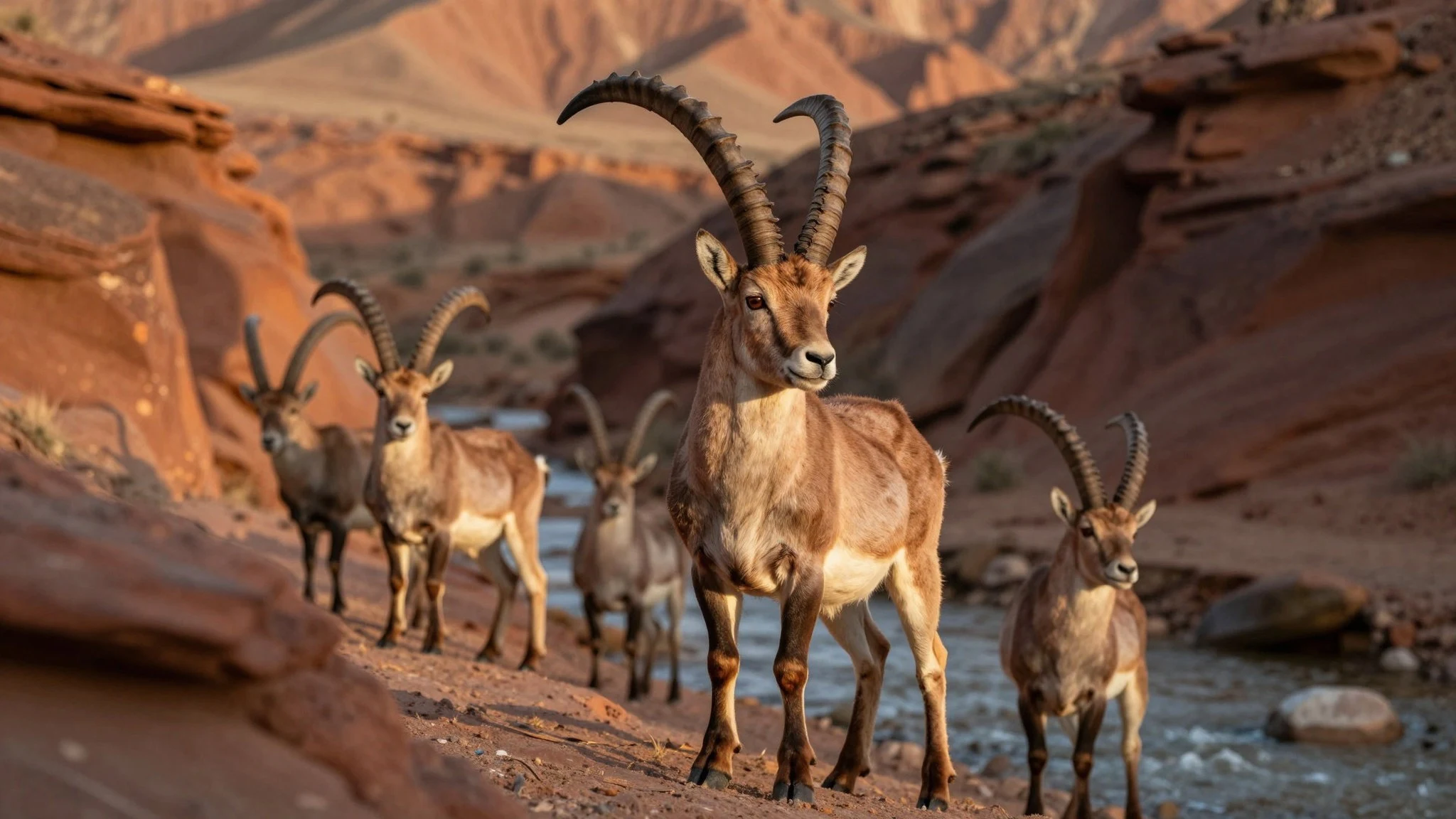
The Saikhan mountains shelter argali, Siberian ibex and, very rarely seen, snow leopards. Gobi camels, onagers and gazelles use the plains below. Binoculars and patience at dawn work better than any promise. A ranger or herder guide improves the odds, but sightings are never guaranteed.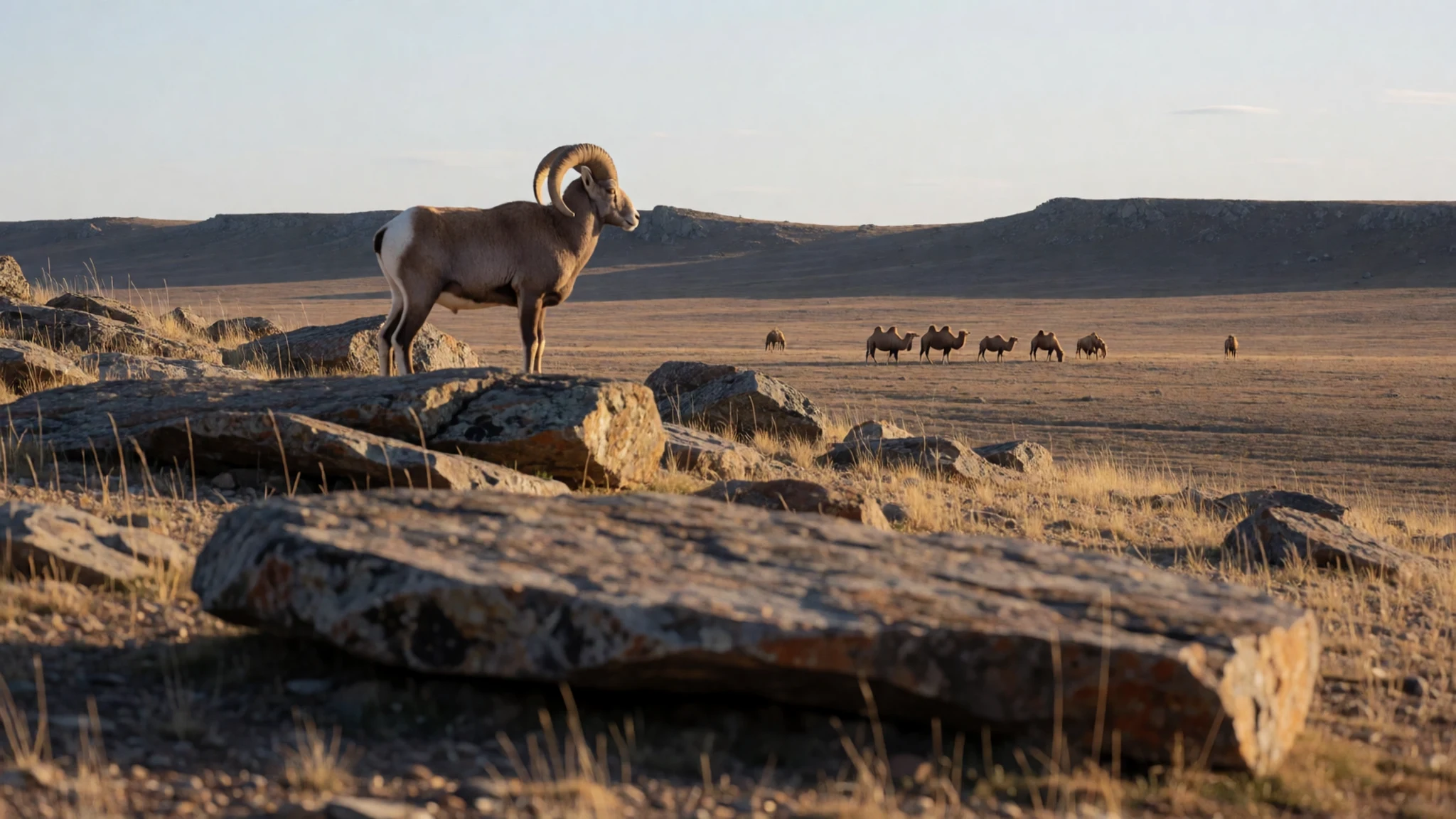
Culture
Gobi Gurvansaikhan is herding country, and the culture visitors meet is mostly that of its nomadic families. Camels, goats, sheep and horses set the rhythm of the year, and households move between seasonal camps for pasture and water. The ger, a round felt-covered tent with a wooden frame, is home and workshop in one, with the stove at its centre and a fixed order inside: the place of honour faces the door, and the sides of the tent are traditionally divided between men and women. Hospitality is a duty rather than a favour. A traveller who reaches a ger is usually offered salty milk tea, dried curd and sometimes fermented mare's milk, and is expected to accept at least a taste. Buddhism is the main religion, often woven with older beliefs in sky, mountain and spirit. Cairns of stones called ovoo mark passes and hilltops, and drivers often stop at one for luck, walking round it clockwise and adding a stone. Summer festivals feature wrestling, archery and horse racing, though dates vary, so ask locally. The desert is treated with respect: water sources are shared, and herders notice what visitors do at wells, springs and camps. Wait to be invited into a ger, never step on its threshold, and accept any offered food or drink with your right hand supported by your left.
What to wear
Gobi Gurvansaikhan's traditional dress is the deel, a long wrap-over robe with a high collar, fastened at the right shoulder and tied with a broad sash. Summer deels are cotton or silk, often in deep blue, burgundy or green, while winter ones are lined with sheepskin or padded with wool. Leather boots with upturned toes and felt or wool hats complete the outfit. It is worn at festivals, weddings and the Mongolian new year, and many older herders still wear it every day because it shields against wind and sun and doubles as a blanket. Younger people in Dalanzadgad and the countryside mostly wear jeans, trainers, fleeces and football shirts, often with a deel thrown over the top for work with animals or for cold evenings. Visitors should plan for big swings in temperature: a hat with a brim, sunglasses, sun cream and a light scarf or buff against dust in the day, then a warm fleece and windproof jacket for nights, which can be cold even in summer. Sturdy closed shoes or light boots suit rocky gorges and loose sand, and sandals are fine only at camp. Cover shoulders and knees in any monastery or at a shrine, and carry a rain layer for sudden storms.
What to eat
- Buuz — Local eateries in Dalanzadgad and family gers
Steamed dumplings filled with minced mutton or beef, onion and a little salt, eaten by hand with plenty of juice inside. They are a staple of family tables and celebrations alike, and turn up at roadside eateries across the province.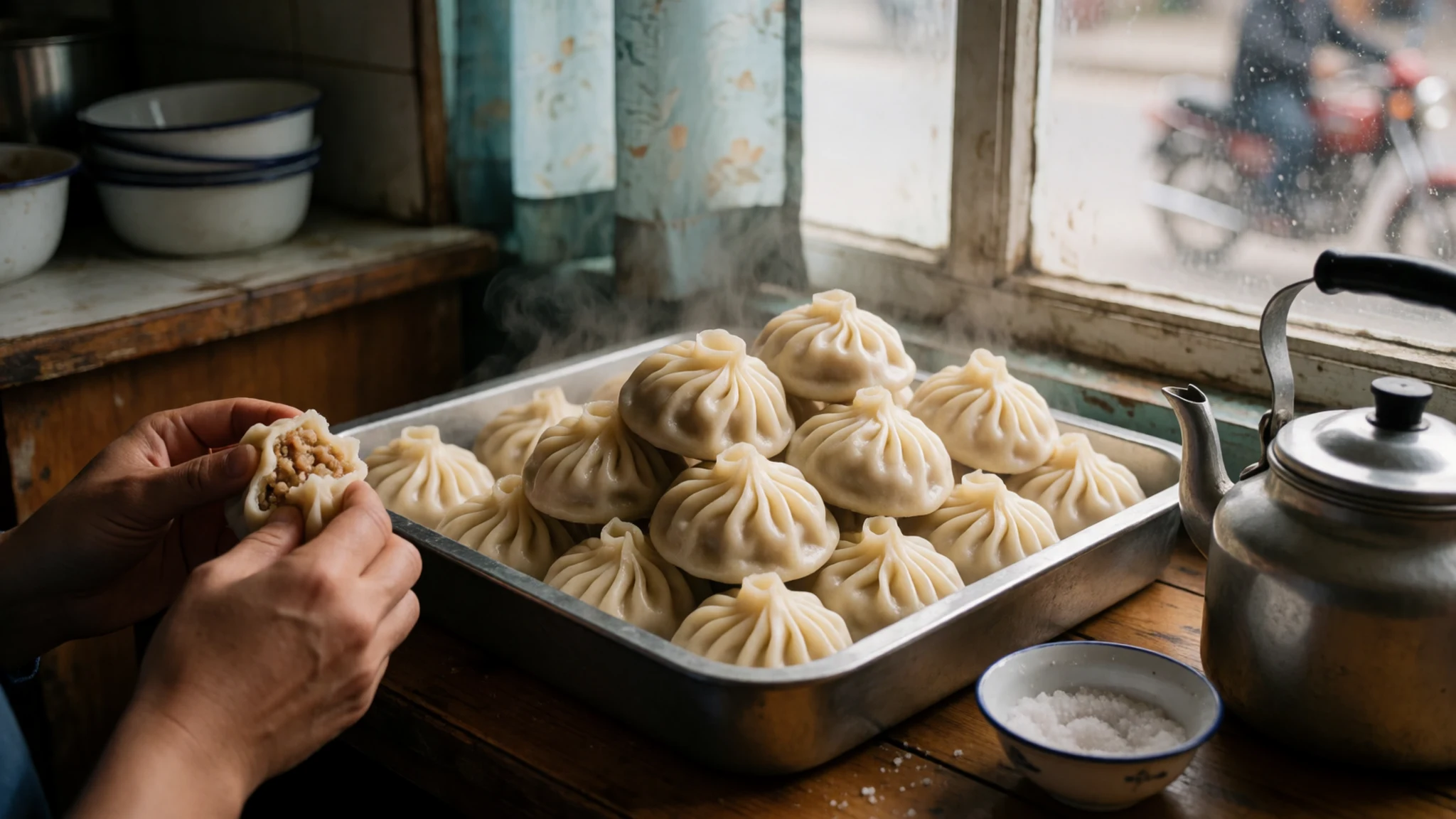
- Khuushuur — Roadside canteens and small eateries in Dalanzadgad
A flat, fried pastry pocket stuffed with minced meat and onion, crisp at the edges and very greasy in the best way. It is a quick, filling lunch for drivers and herders and is usually served hot, with tea.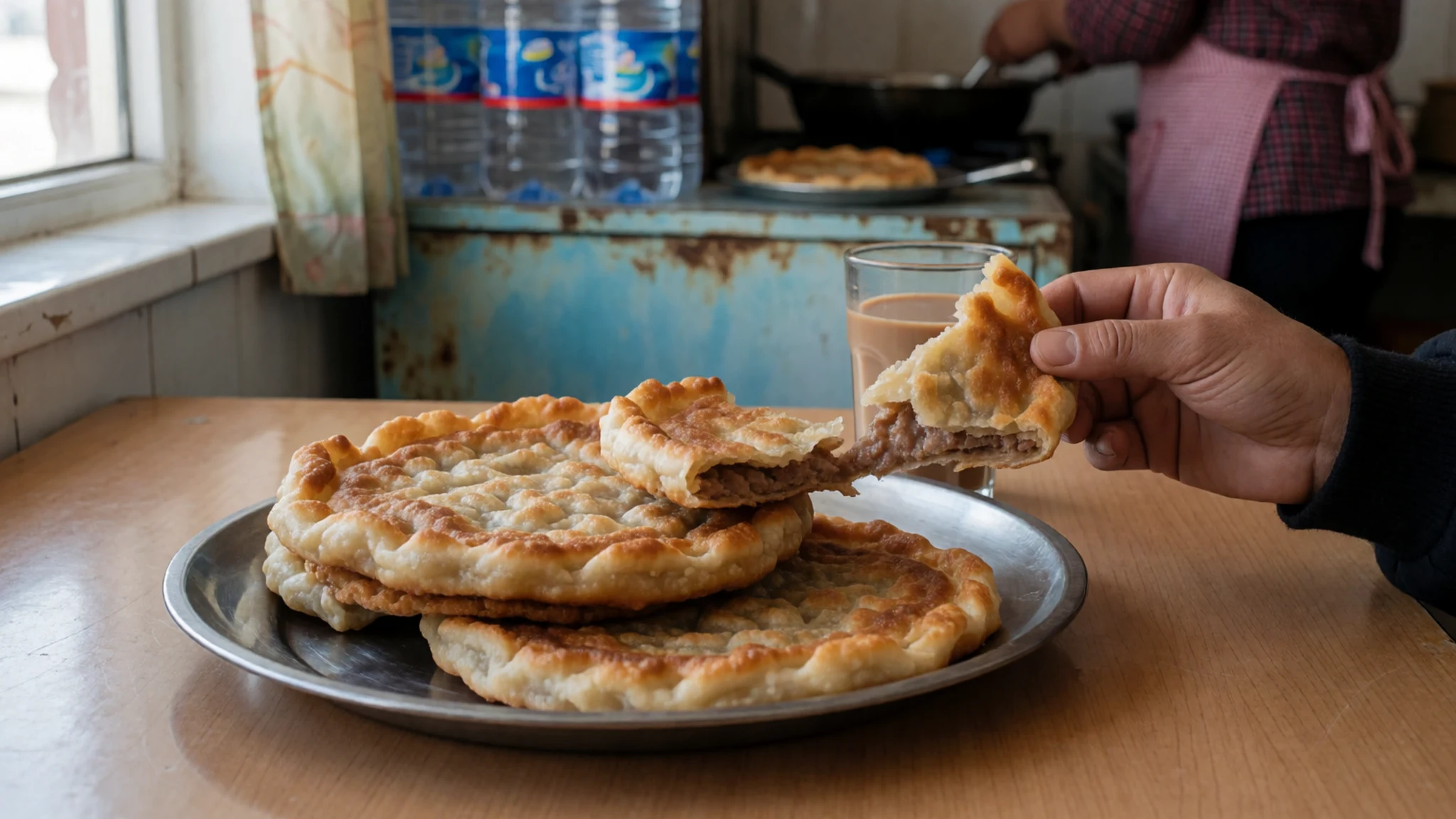
- Tsuivan — Guesthouses, ger camps and family homes
Hand-cut noodles steamed or stir-fried with mutton and chopped vegetables such as carrot and cabbage. It is a heavy, warming dish that suits cold evenings after a day on dusty tracks, and portions are generous. - Aaruul — Offered by herding families; also sold in the town market
Hard dried curd, sour and chewy, made by herding families and left to dry in the sun on the roof of the ger. It lasts for months, travels well and makes a useful snack for long drives, though the sourness takes getting used to. - Airag — Herder gers in summer
Fermented mare's milk, lightly fizzy and sour, drunk in summer from a shared bowl. Its taste is strong for newcomers, and a small sip is polite. It is made seasonally, so it is mainly found in warm months. - Suutei tsai — Any ger, guesthouse or camp
Milk tea made with salt, usually boiled with tea leaves and plenty of milk, and served constantly to guests. It is closer to a light soup than to sweet tea, and is a good way to settle a dusty stomach.
Plan it
Best time. June to September: days are the hottest and wettest, camps and roads are working and the ice in Yolyn Am lingers into summer. July and August can be hot, with sudden thunderstorms. Spring is windy and dusty, and winter is very cold, with many camps closed.
How long. 5–7
Getting there. Fly from Ulaanbaatar to Dalanzadgad, the usual gateway, or make the long road trip, which takes most of a day. From Dalanzadgad, hire a driver or join a tour. Yolyn Am has a paved road, while the dunes and Khermen Tsav involve unpaved tracks and several hours of driving each way. Check the airline for current schedules.
Budget. mid
Tips
- Book drivers and ger camps well ahead for July and August
- Carry cash in tögrög, as cards and signal are unreliable outside Dalanzadgad
- Take more water, fuel and snacks than seems necessary, since services are thin
- Climb the dunes early or near sunset to avoid midday heat
- Use a driver who knows the tracks and stay on them to protect fragile ground
Etiquette
- Ask before photographing herders and their families
- Take all rubbish with you and do not wash in or pollute springs
- Do not feed or chase wildlife or livestock
Nearby
Sources
- Wikidata Q1533528 (CC0)
- Wikipedia: Gobi Gurvansaikhan National Park (rev 1362736556) (CC BY-SA 4.0)
- Wikivoyage: Gobi Gurvan Saikhan National Park (rev 5402868) (CC BY-SA 4.0)
- Relief map of Mongolia — NordNordWest / Виктор_В (CC BY 3.0)
- Bactrian camels at Khongoryn Els — User:Doron (CC BY 3.0)
- Argali (Ovis ammon darwini) in Mongolia — James Eaton (CC0 1.0)
- Small oasis on the way to Khermen Tsav (22) — Ljuba brank (CC BY-SA 4.0)
- Small oasis on the way to Khermen Tsav (23) — Ljuba brank (CC BY-SA 4.0)
- Typical vegetation (24) — Ljuba brank (CC BY-SA 4.0)
- Typical vegetation (25) — Ljuba brank (CC BY-SA 4.0)
- Gecko (26) — Ljuba brank (CC BY-SA 4.0)


Wildlife
- Snow leopard (animal)
The snow leopard is a big, spotted mountain cat with thick, pale-grey fur, small round ears and broad paws made for cold, high places. In Gobi Gurvansaikhan it belongs to the Saikhan mountains, yet it is so rarely seen that almost nobody spots one, so think of it as a lovely bonus rather than a promise. Go with a local guide, keep well back, stay quiet, and never feed it or try to get close.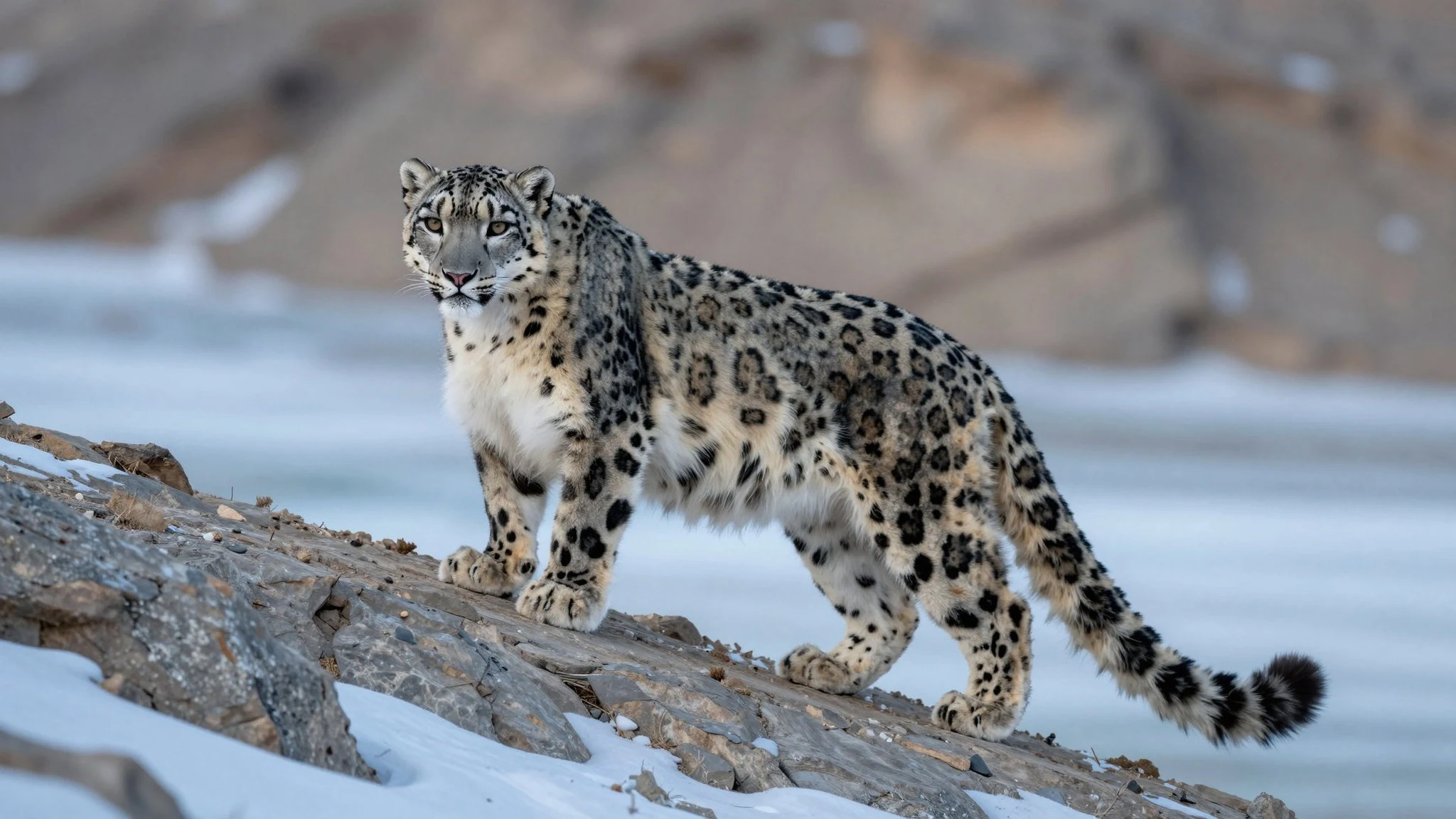
- Siberian ibex (animal)
The Siberian ibex is a sturdy wild mountain goat, the longest and heaviest of its whole group. In Gobi Gurvansaikhan it shares the Saikhan mountains with argali sheep. Its numbers seem to be slipping, and it is listed as near threatened, so it deserves a gentle visit. Go with a guide, watch from a good distance, keep your voice low and your movements slow, and never feed it.