Garm
Garm, Germany
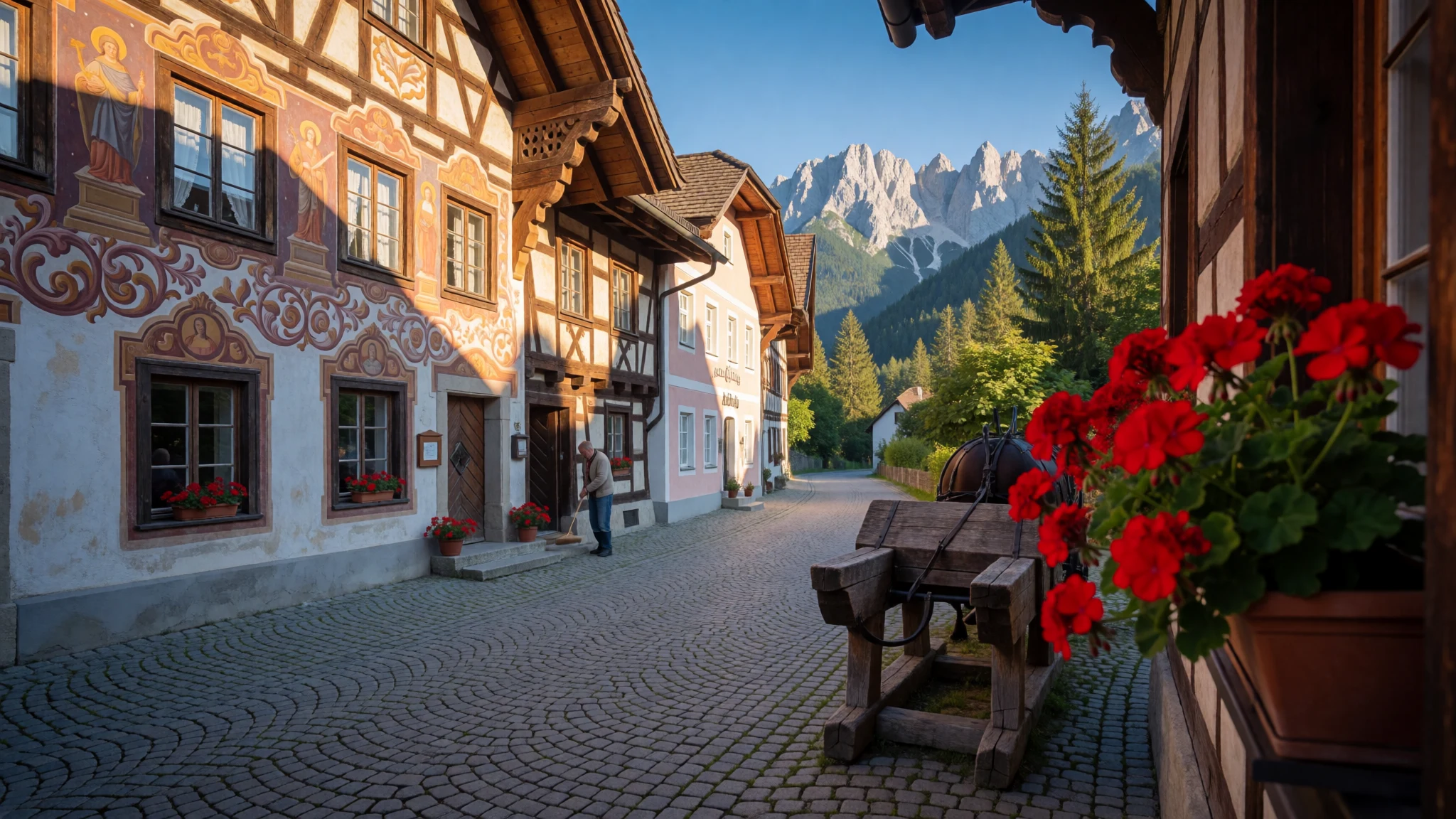
Garmisch-Partenkirchen is a Bavarian Alpine town where gorges, cable cars and Germany's highest peak sit a short walk from the high street.
The place
Garmisch-Partenkirchen sits in a broad Alpine valley in southern Bavaria, close to the Austrian border, at about 708 metres above sea level. It is a market municipality of roughly 28,000 people and the administrative seat of its district. Most visitors know it as a ski and hiking base, and the setting explains why: steep limestone walls rise directly behind the rooftops, with the Zugspitze, Germany's highest mountain at 2,962 metres, dominating the skyline to the south-west.
The town is really two places stitched together. Garmisch lies to the west and Partenkirchen to the east, and locals still talk about them as distinct neighbourhoods with their own character. Partenkirchen has the older, narrower street plan and painted façades; Garmisch is the busier half, with the station, shops and the cable-car links.
The climate is cooler and wetter than much of Bavaria. Winters are properly cold and snowy, summers are mild and often thundery, and rain can arrive in any month. Mountain weather changes fast, so plans here are built around the forecast rather than the calendar.
The town has a significant American military community on its edge, which gives it a slightly more international feel than a typical Alpine village. Winter sport competitions are held here regularly, a legacy of the 1936 Winter Olympics. In practice, the town works as a comfortable, well-organised base: hotels, guesthouses and a youth hostel are all on offer, and trails start almost from the last houses.
Its story
Garmisch-Partenkirchen has a split past. Partenkirchen began as the Roman settlement of Partanum, a stop on the trade route linking Venice with Augsburg, and appears in records from the year 15. Its main street, Ludwigstrasse, still follows the line of the Roman road. Garmisch turns up in writing some eight centuries later under the name Germareskauue, roughly 'Germar's district'.
From the late 13th century the valley belonged to the County of Werdenfels and was ruled by the prince-bishops of Freising, a state that lasted until 1803. A bishop's official, the Pfleger, governed from Werdenfels Castle on a rocky crag north of Garmisch.
The centuries that followed were hard. When Atlantic shipping took over from overland trade after about 1500, the valley lost its commercial purpose. The valley floor was marshy and poor farmland, predators threatened livestock, and plague returned more than once. Fear and hardship fed witch hunts, the worst between 1589 and 1596, when 63 people, over a tenth of the population, were burned or strangled. The castle where they were tried became a place of dread and was abandoned in the 17th century.
The modern town is much younger. In 1935 the two communities were merged by official decree, in order to give Germany a host town large enough for the 1936 Winter Olympics, the first Games to include alpine skiing. Residents still see themselves as Garmischer or Partenkirchner first.
What to see
- Partnachklamm — Olympic ski stadium area, Partenkirchen
A narrow gorge cut by the Partnach river, with a path chiselled into the rock wall and spray falling from above. It is popular and can be crowded, so early starts help. Waterproofs are wise even in summer, and a torch is useful in the darker sections. Check the official site for opening and entry details.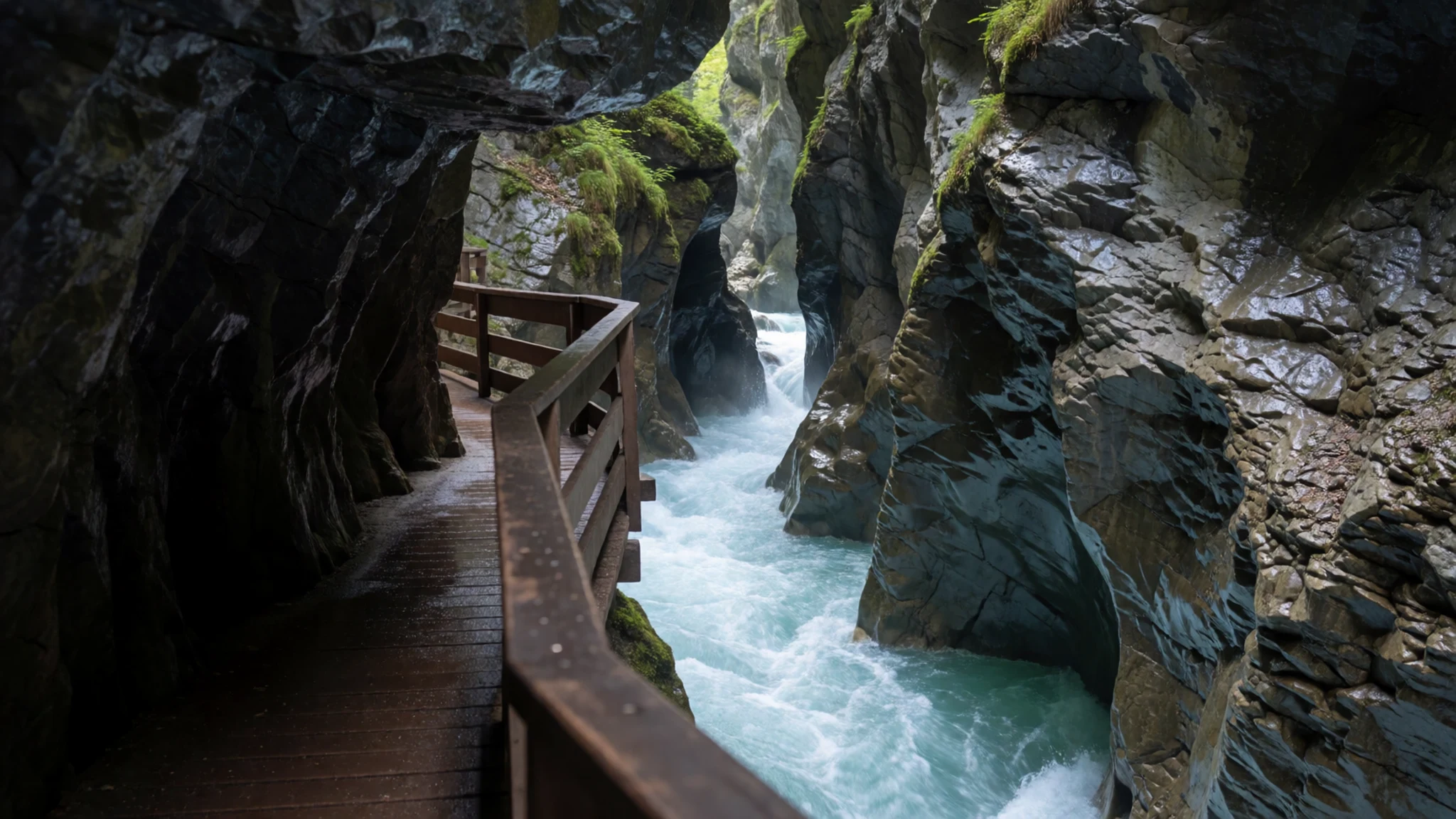
- Höllentalklamm — Hammersbach, Grainau side of the valley
A wilder, more demanding gorge than the Partnachklamm, open only in summer. It is reached by the Zugspitze railway to Hammersbach or by the local bus from the Eibsee. Expect wet rock, tunnels and a mountain-hut walk afterwards. Confirm the season and conditions locally before setting out.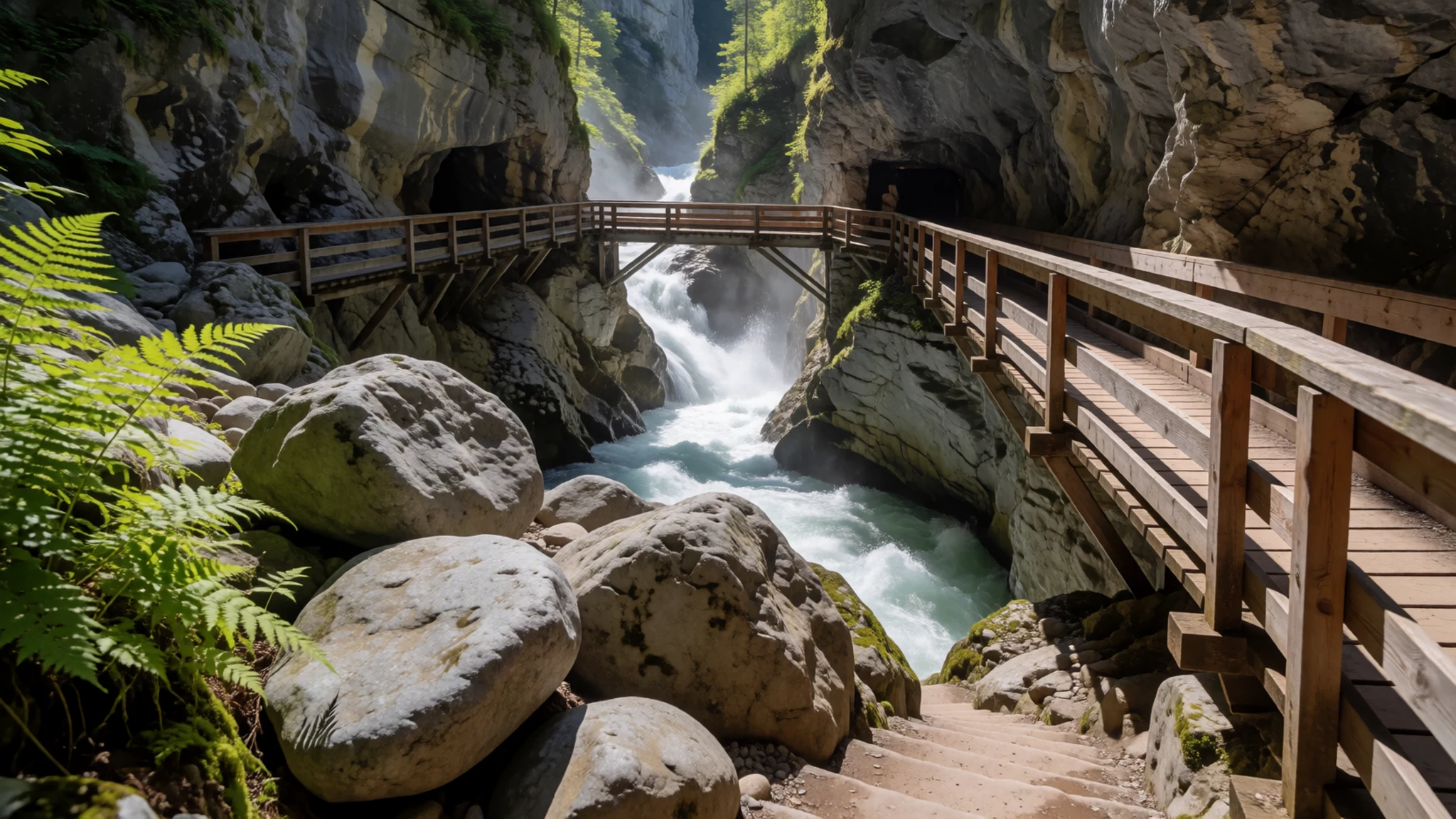
- Zugspitze — Eibsee and Zugspitze massif, south-west of the town
Germany's highest mountain, at 2,962 metres, with its summit on the Austrian border. Cable cars and a rack railway make the top reachable without climbing, though hikers also take long routes up. Cloud often hides the view, so check webcams and forecasts first, and carry warm layers because the summit is far colder than town.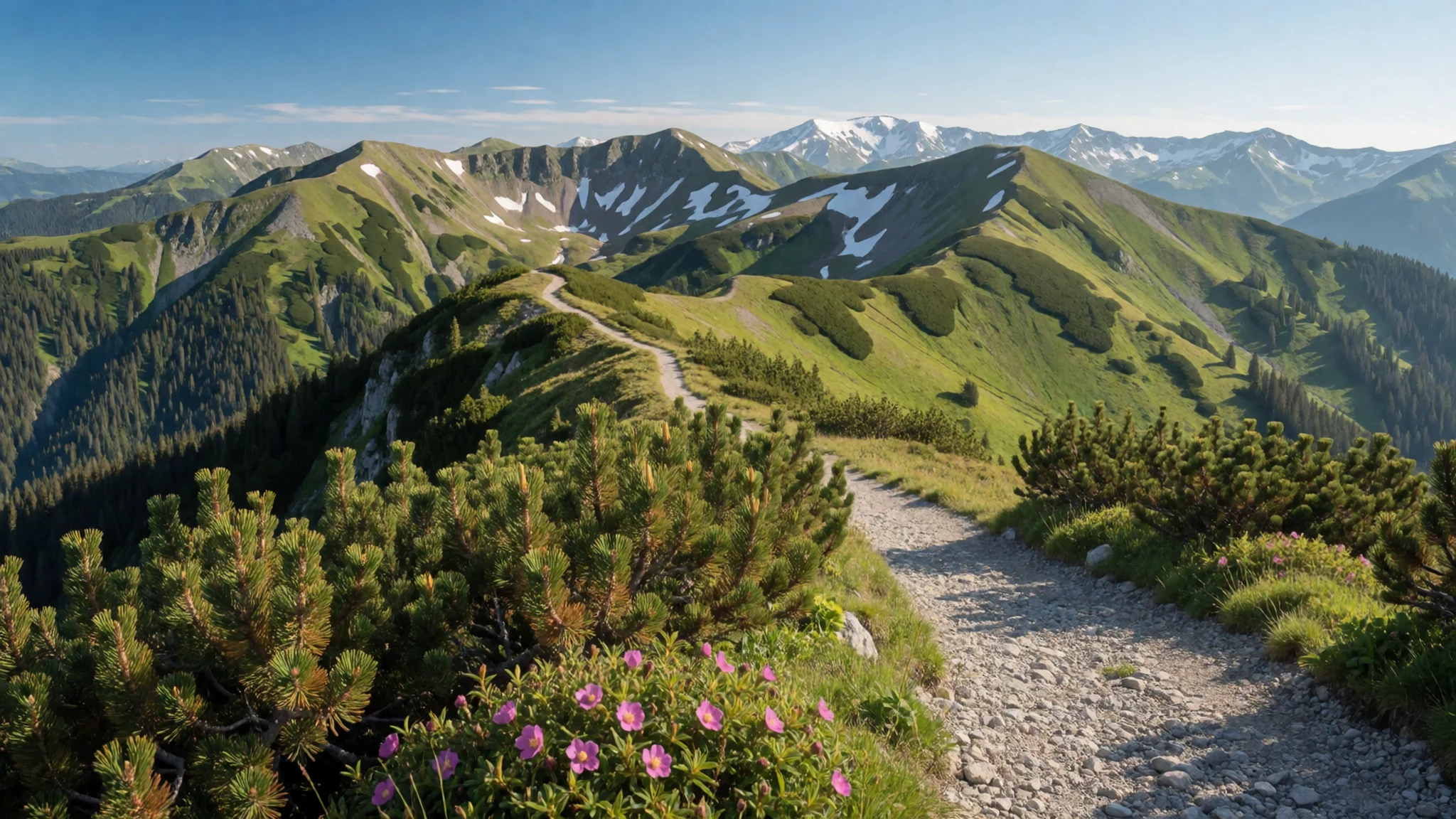
- Schachen viewpoint — Wetterstein mountains, south of the town
The Schachentor is a viewpoint on the route to the Schachen, one of the royal retreats linked with King Ludwig II of Bavaria. This is a full day out in the mountains rather than a stroll, with a long climb on forest tracks. Go in settled weather and allow ample daylight for the return.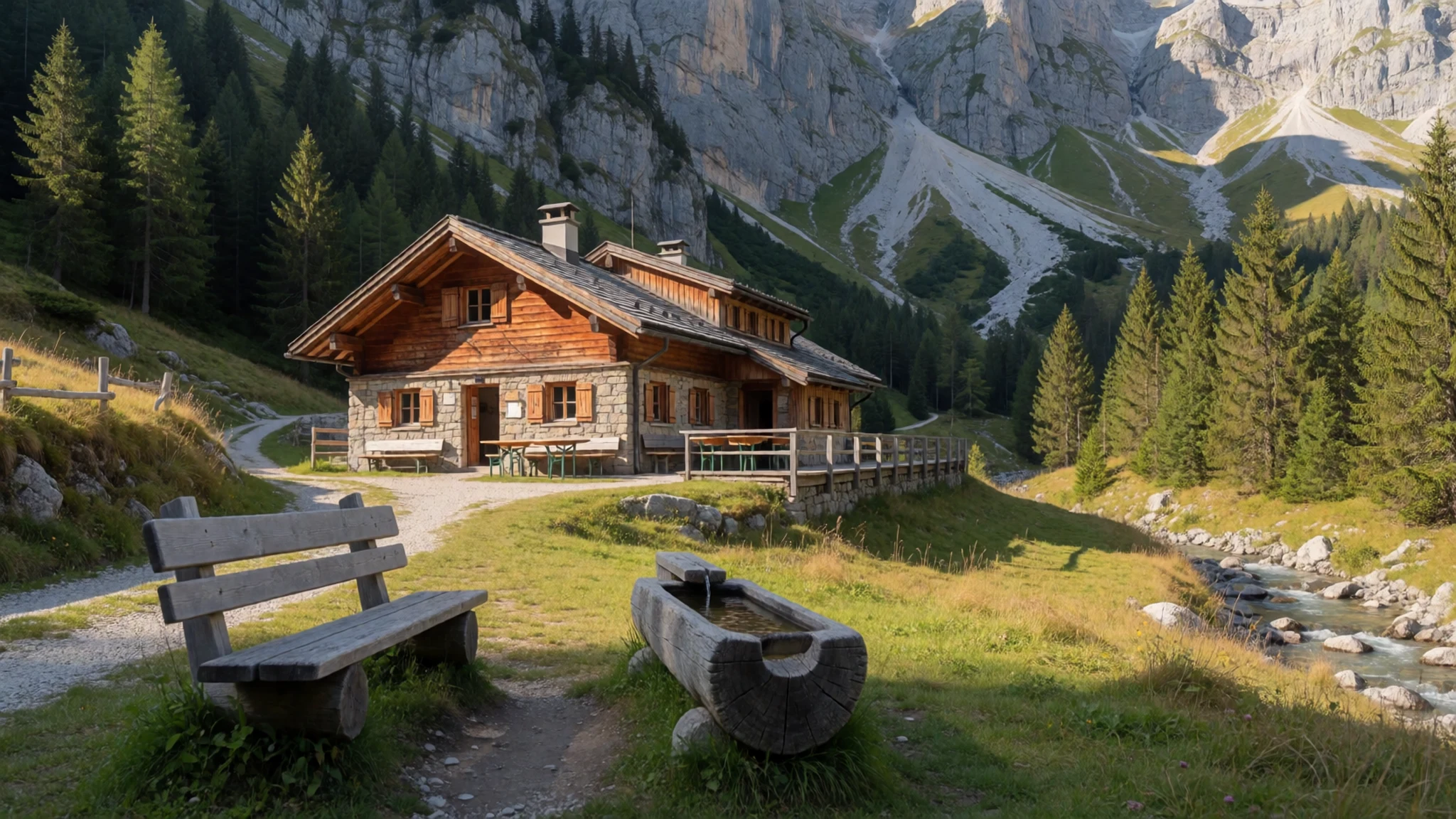
- Ludwigstrasse, Partenkirchen — Partenkirchen, eastern half of the town
The main street of old Partenkirchen follows the course of the Roman road. It is a gentle place to wander, with painted house fronts, small shops and cafés, and views of the peaks at the end of the street. It is a good wet-weather option, and quieter in the early morning.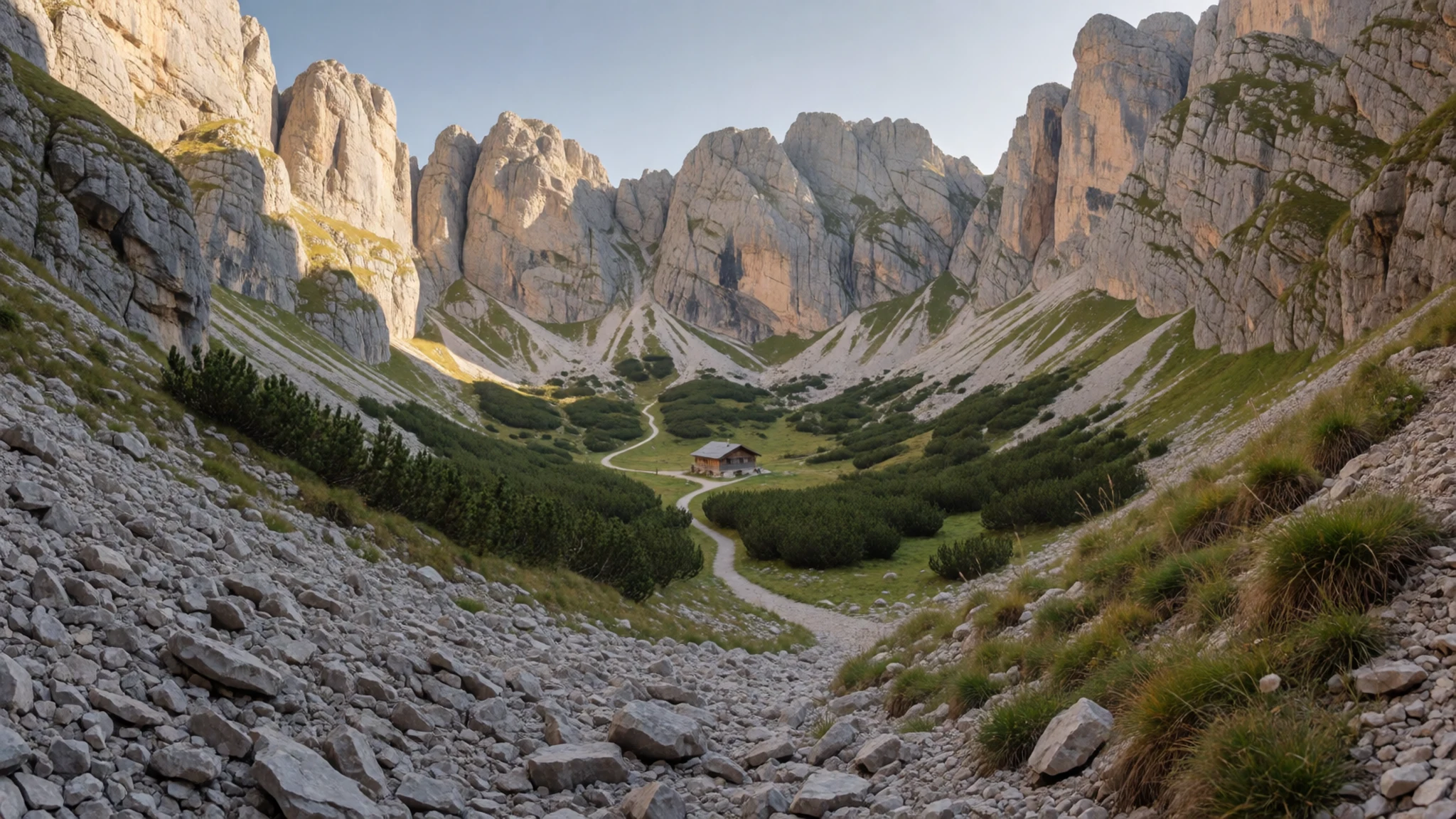
Culture
Garmisch-Partenkirchen is a Bavarian town, and its culture is Alpine and Catholic in the way of the region: wayside crosses, painted church towers, house façades decorated with saints and scenes, and village customs tied to the farming and religious year. Locals speak a Bavarian dialect, with Garmasch-Partakurch as the town's own name for itself, and the standard greeting you will hear in shops and on trails is Grüss Gott.
The two halves of the town keep separate identities. Partenkirchen is the older, more traditional quarter, while Garmisch is more commercial. Mountain life shapes everything. Skiing, hiking, climbing and mountain-hut culture are part of ordinary weekends, and the local sports clubs matter. The Winter Olympic history of 1936 remains a visible part of the town's sporting identity, although it is also tied to an uncomfortable political past, and the town's decision to merge itself was not a voluntary one.
There is also a large American military community nearby, and English is widely understood. Many visitors from Munich come for the day, so weekends and public holidays can be busy on the roads, trains and cable cars.
Bars and inns tend to run on a relaxed schedule. Meals are unhurried, tables are often shared in beer-hall style, and conversation is quiet rather than loud. Rubbish is sorted carefully, and quiet hours in residential areas are taken seriously.
On mountain paths and in huts, greet people you pass with a friendly Grüss Gott, and take all your rubbish back down with you.
What to wear
Garmisch-Partenkirchen is a place where Bavarian Tracht, the traditional dress, is still worn by choice. Women wear the dirndl, a bodice-and-skirt dress worn with an apron, usually in cotton, linen or silk. Men wear Lederhosen, leather breeches, with checked shirts, woollen socks and a loden jacket. Loden is a dense, water-resistant boiled wool, ideal for the mountain climate. Felt hats are sometimes finished with a tuft of chamois hair. Tracht comes out for church festivals, weddings, village fairs and beer-tent celebrations.
Day to day, the town dresses for the outdoors. Walking boots, waterproof jackets, fleeces and rucksacks are normal on the high street, and well-cut Tracht-inspired jackets and knitwear appear in shop windows. In the evening, people dress neatly but casually; restaurants rarely expect anything formal.
Visitors should plan around mountain weather. Bring layers, a proper waterproof jacket and a warm hat, even in summer, because conditions at altitude differ sharply from the valley. Sturdy, broken-in walking boots with good grip are essential for gorges, where paths are wet and slippery, and for any trail above the treeline. In winter, add insulated boots, gloves and thermal underlayers. Churches are active places of worship, so cover bare shoulders if you step inside. Wearing a dirndl or Lederhosen as a visitor is welcome in festival settings, though it is not expected at all.
What to eat
- Käsespätzle — Traditional Bavarian inns and mountain huts
Soft egg noodles layered with melted mountain cheese and topped with crisp fried onions. It is hearty, filling food after a day on the trails. Look for it at traditional inns in the town and at mountain huts.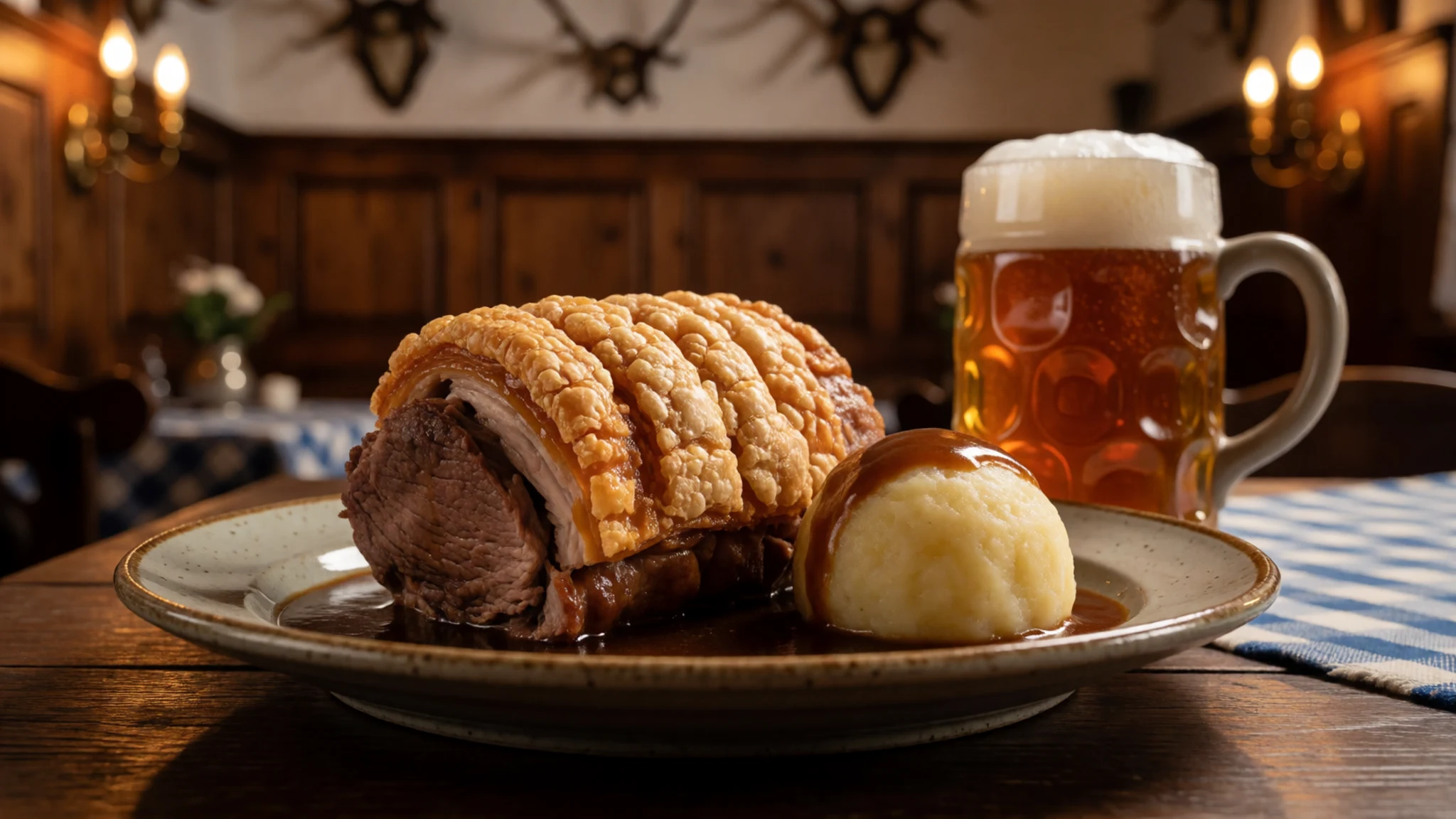
- Weisswurst — Bavarian inns, late morning
Pale veal sausages, gently simmered and traditionally eaten in the morning with sweet mustard and a soft pretzel. The skin is not eaten. Expect them on late-breakfast menus in local inns, rather than at dinner.
- Schweinebraten — Bavarian restaurants in Garmisch and Partenkirchen
Roast pork with a crackling crust, usually served with a bread dumpling and a dark gravy, sometimes with red cabbage. It is a classic Sunday lunch and widely available in the town's Bavarian restaurants. - Kaspressknödel — Alpine huts and village inns
Flat, pan-fried cheese dumplings, often served in a clear beef broth or on salad. They are a staple of Alpine kitchens, and a good vegetarian option at mountain huts and village inns. - Leberkäse with a pretzel — Butchers and bakery counters on the high street
A thick slice of baked meatloaf-style loaf, eaten warm in a roll with mustard. It is a cheap, quick snack, and good before a walk.
Plan it
Best time. June to September for hiking, when trails and the gorges are open, though thunderstorms and rain are common. December to February suits skiing, with cold, snowy weather. May and October can be quiet and changeable.
How long. 2–3
Getting there. Fly to Munich airport, then take a train to Munich main station and an hourly regional train to Garmisch-Partenkirchen; the express is faster than the stopping service. Long-distance buses also stop outside the main station. By car the drive from Munich is under an hour, but weekends and holidays can be much slower.
Budget. mid
Tips
- Check the weather and webcams before you buy a ticket for the Zugspitze; cloud can hide the view.
- Visit the gorges early in the morning, when they are quieter, and bring a waterproof jacket.
- Weekends and public holidays are very busy on roads and trains from Munich, so travel on weekdays if you can.
- Check the official website, https://www.gapa.de/, for gorge opening, lift times and current prices.
- Tap water is safe to drink, and mountain huts usually take cash, so carry some.
Etiquette
- Say Grüss Gott to people you meet on trails and in shops.
- Stay on marked paths and take all your rubbish back down with you.
- Keep noise low in residential streets, especially in the evening and on Sundays.
Nearby
Sources
- Wikidata Q127043 (CC0)
- Wikipedia: Garmisch-Partenkirchen (rev 1377597244) (CC BY-SA 4.0)
- Wikivoyage: Garmisch-Partenkirchen (rev 5402632) (CC BY-SA 4.0)
- Photo 01-garmisch-p.jpg (Milei.vencel) (CC BY-SA 4.0)
- Photo 02-garmisch-partenkirchen.jpg (Octagon) (CC BY 3.0)
- Photo 03-garmisch-partenkirchen-luftbild.jpg (Maximilian Dörrbecker) (CC BY-SA 2.5)
- Photo 04-f-rstengang-freising-garmisch.jpg (Valentin Gappnigg) (Public domain)
- Photo 05-prince-bishopric-of-freising.jpg (Lubiesque) (CC BY 3.0)
- Photo 06-max-liebermann-bildnis-richard-strauss.jpg (Max Liebermann) (CC BY-SA 4.0)
- Photo 07-magdalena-neuner-2011.jpg (GraceKelly) (CC BY-SA 2.0)
- Photo 08-140721-z-dz751-011-14527556767.jpg (Jim Greenhill) (CC BY 2.5)


