Garden of Morning Calm
Garden of Morning Calm, South Korea
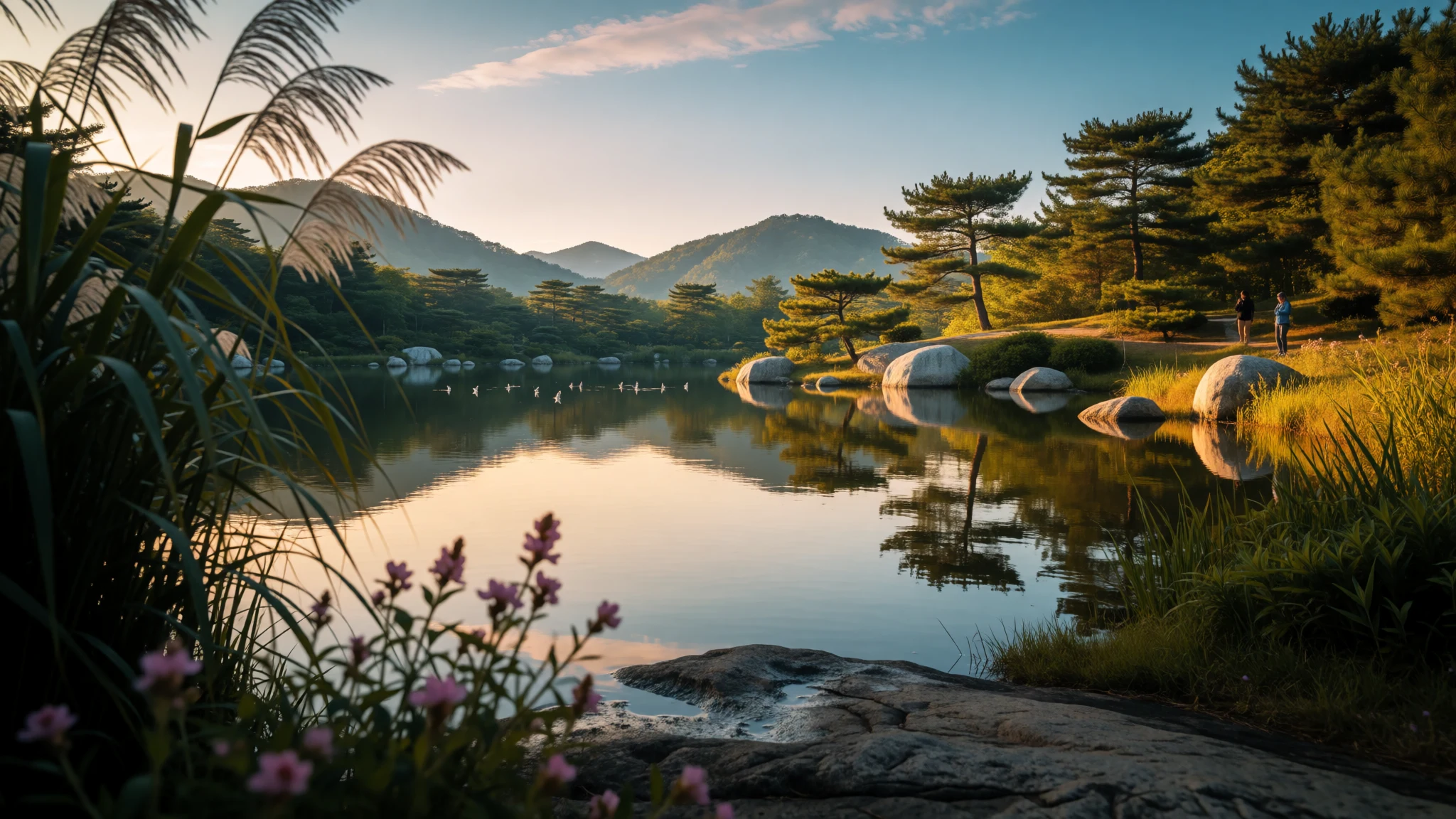
A hillside arboretum north-east of Seoul where themed gardens, a lake and seasonal flowers make an easy, calm day away from the city.
The place
The Garden of Morning Calm (아침고요수목원) is an arboretum in Gapyeong, a county of hills and river valleys in Gyeonggi Province, north-east of Seoul. Its name borrows an old nickname for Korea, "land of the morning calm", and the layout tries to earn it. Paths bend between ponds, rockeries, lawns and clipped pines instead of running straight, and the planting is divided into themed sections rather than one big display. By 2024 there were 22 of them, ranging from flower-heavy beds to quieter corners built around stone, water and conifers. The aim is to show Korean ideas about gardens and design, where a view is framed, borrowed from the ridges behind and slowed down by a turn in the path. It holds thousands of plant species, so it works as a collection as much as a park. Gapyeong sits where the Seoul commuter belt thins into mountains, which means the air is often cooler than in the capital and wooded slopes close in on every side. The garden suits a day trip better than a base for several nights, and it is busiest at weekends, in blossom weeks and in autumn colour. Winter has its own draw: an evening light festival turns the grounds into a lit walk, in real cold, so a visit then feels quite different from one in spring. Expect a fair amount of walking on gentle slopes and steps.
Its story
The Garden of Morning Calm began as one man's idea rather than a state project. Han San-kyung, a professor at Sahmyook University, first conceived it in 1992, and the land was bought in 1994. The site was unpromising: a stony, barren plot that earlier farmers had cleared by burning off the vegetation, leaving thin soil. Han and his wife designed much of the garden themselves and did a good share of the physical labour. Money ran short at one stage, and the couple sold their house and moved into a small home on the property so the work could continue. The garden opened to the public in 1996 with ten themed sections, and further sections have been added steadily since, reaching 22 by 2024. That slow growth explains the feel of the place. It reads as a garden tended and extended over decades, not one laid out from a single master plan. The name links it to a longer idea of Korea as a land of mountains and quiet early light, and the founders chose it deliberately to set the tone for visitors. Today the arboretum is a popular attraction in Gapyeong, and its seasonal festivals, especially the winter lights, draw crowds from Seoul and the towns around it. The story of private persistence is worth keeping in mind while walking its paths.
What to see
- The autumn hillsides — Main garden slopes
Garden of Morning Calm in October is mostly about the slopes: maples and other deciduous trees turn red and gold against the dark green of pines. Paths climb gently to give views back over the grounds. This is also the busiest season, so weekday mornings give a calmer walk and cleaner photographs.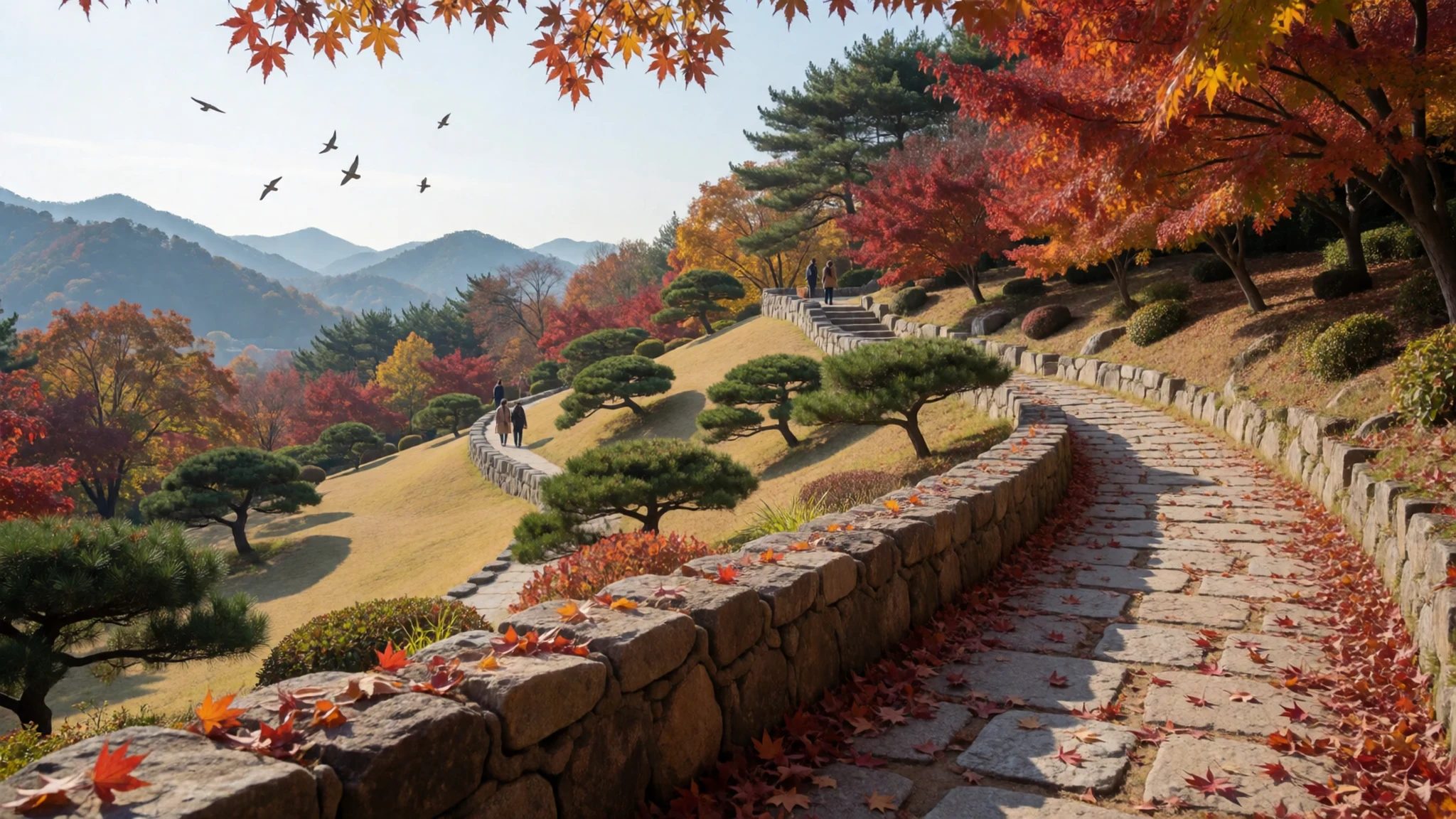
- The lake — Central grounds
A still stretch of water forms one of the garden's quieter focal points, with trees and plantings reflected on its surface. Benches and paths around the edge invite slow walking rather than quick photographs. Early in the day, before tour groups arrive, the reflections are at their best and the only sound is birdsong.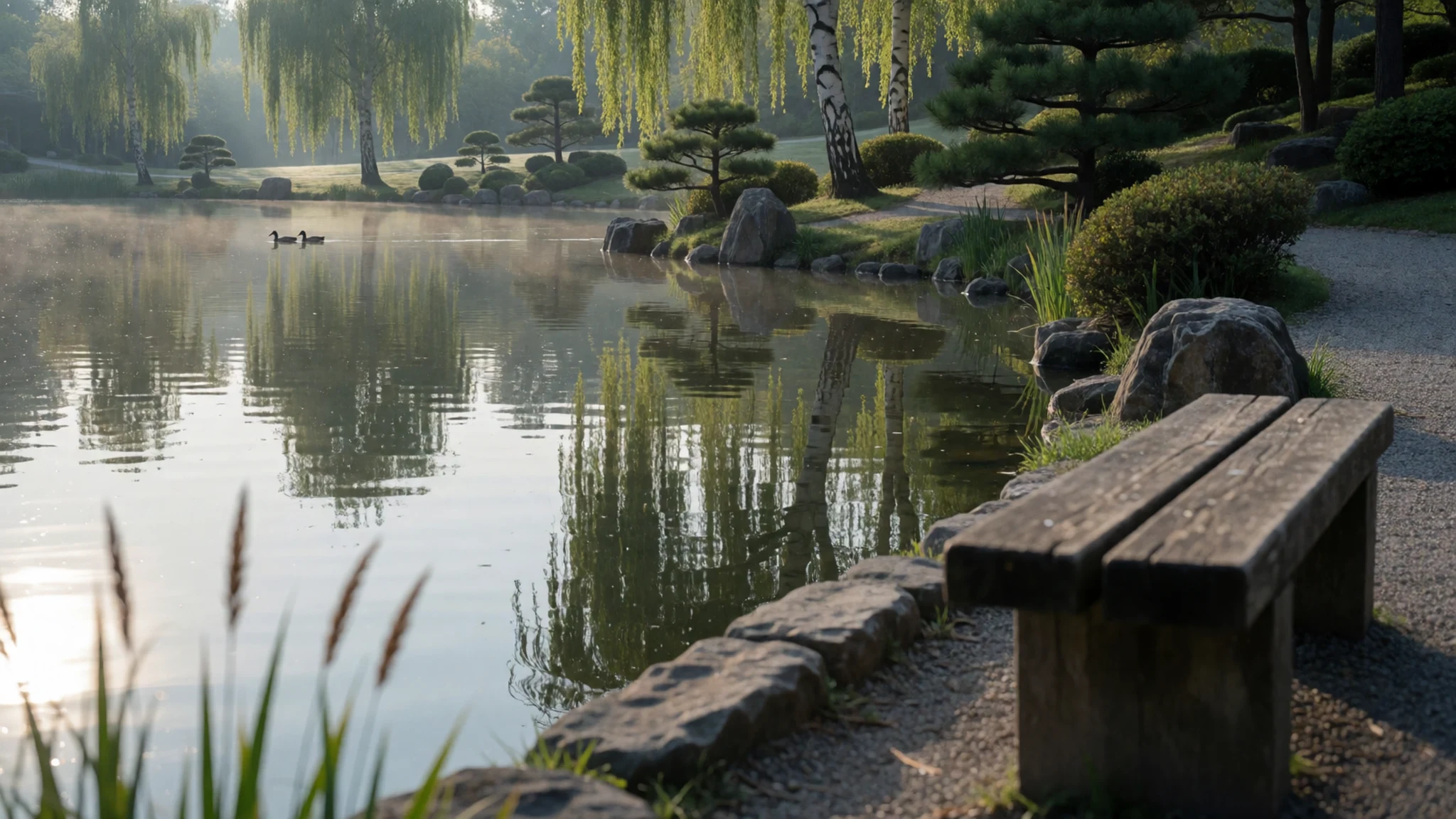
- The floral tunnel — Flower sections
Arched structures covered in flowers form a walk-through tunnel that Korean visitors photograph heavily. It works best when the planting is in full bloom, so timing matters, and queues for pictures build at weekends. Come outside peak hours if the aim is to walk through rather than wait.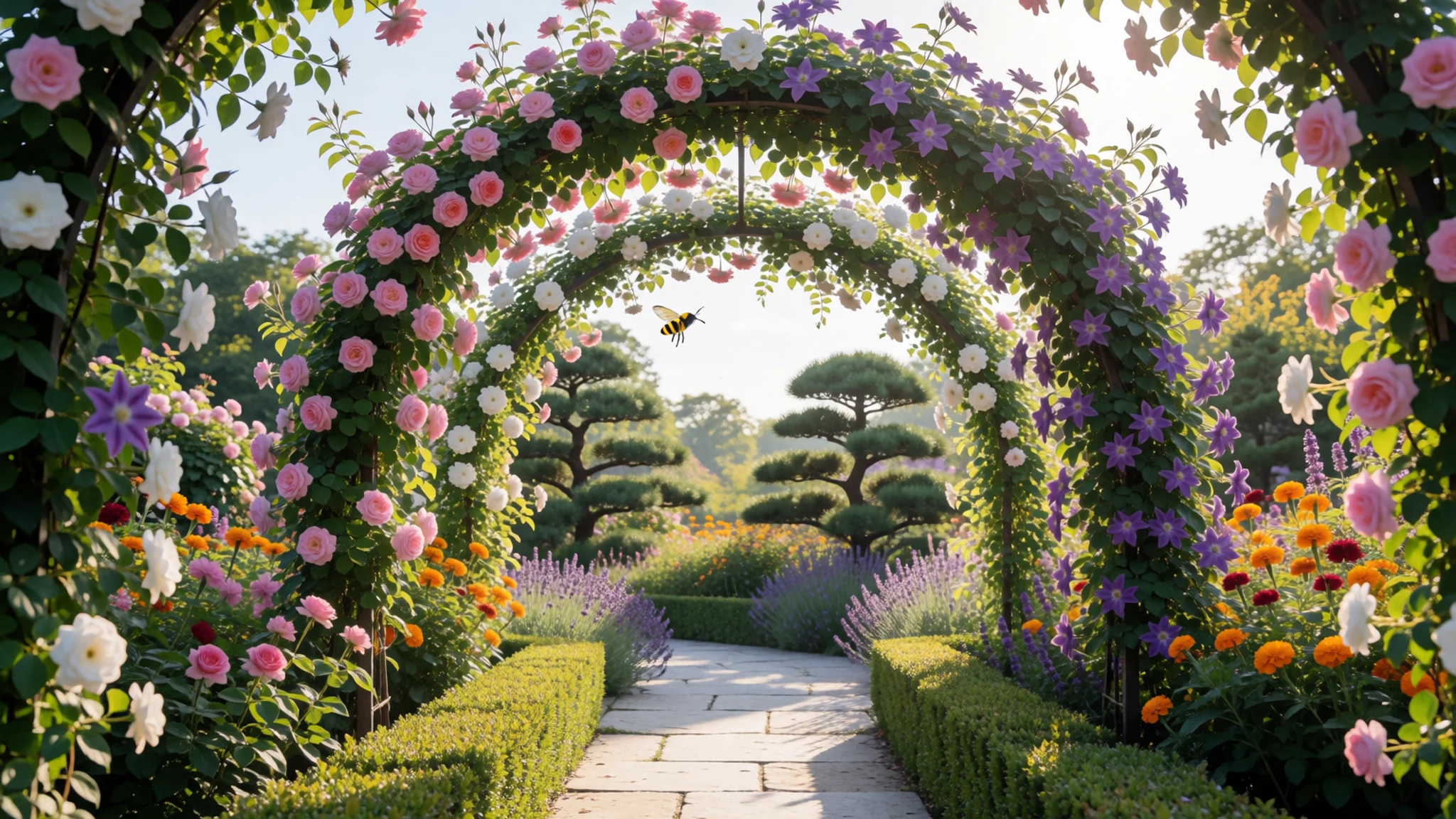
- Wildflower festival beds — Festival beds
During the wildflower festival, beds of meadow plants and cottage-style flowers fill the grounds with mixed colour. The effect is looser and more natural than the clipped lawns elsewhere in the garden. It is a good moment for anyone interested in how Korean gardeners blend native and introduced species.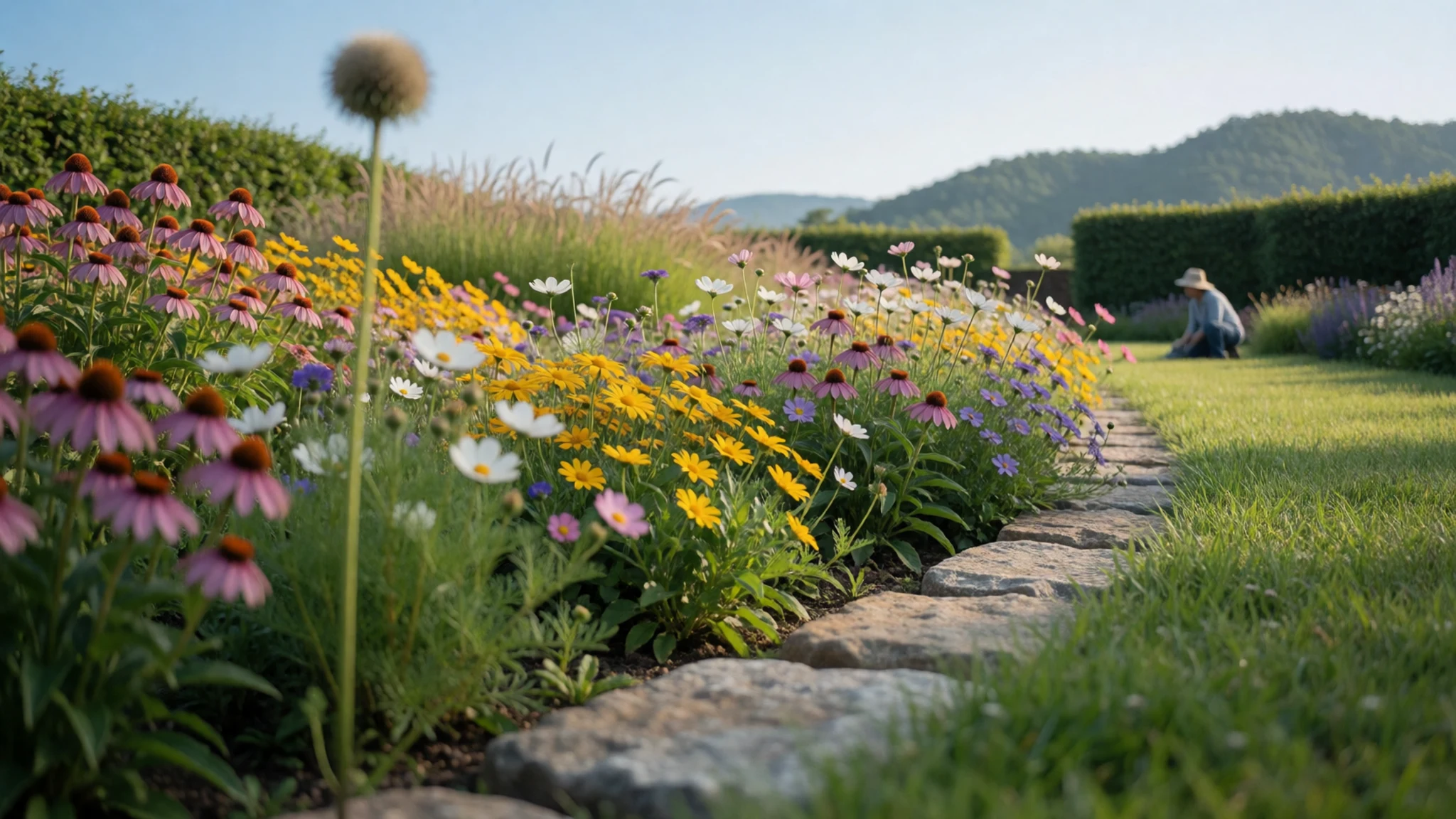
- Rhododendrons and spring bulbs — Spring planting areas
Spring brings rhododendrons, primulas and bulb flowers such as the harlequin flower, planted among the rocks and shrubs. Labels help with identification, and the collection rewards slow looking at the details of petals and leaves. Late April and May usually give the richest mix, though weather moves the dates each year.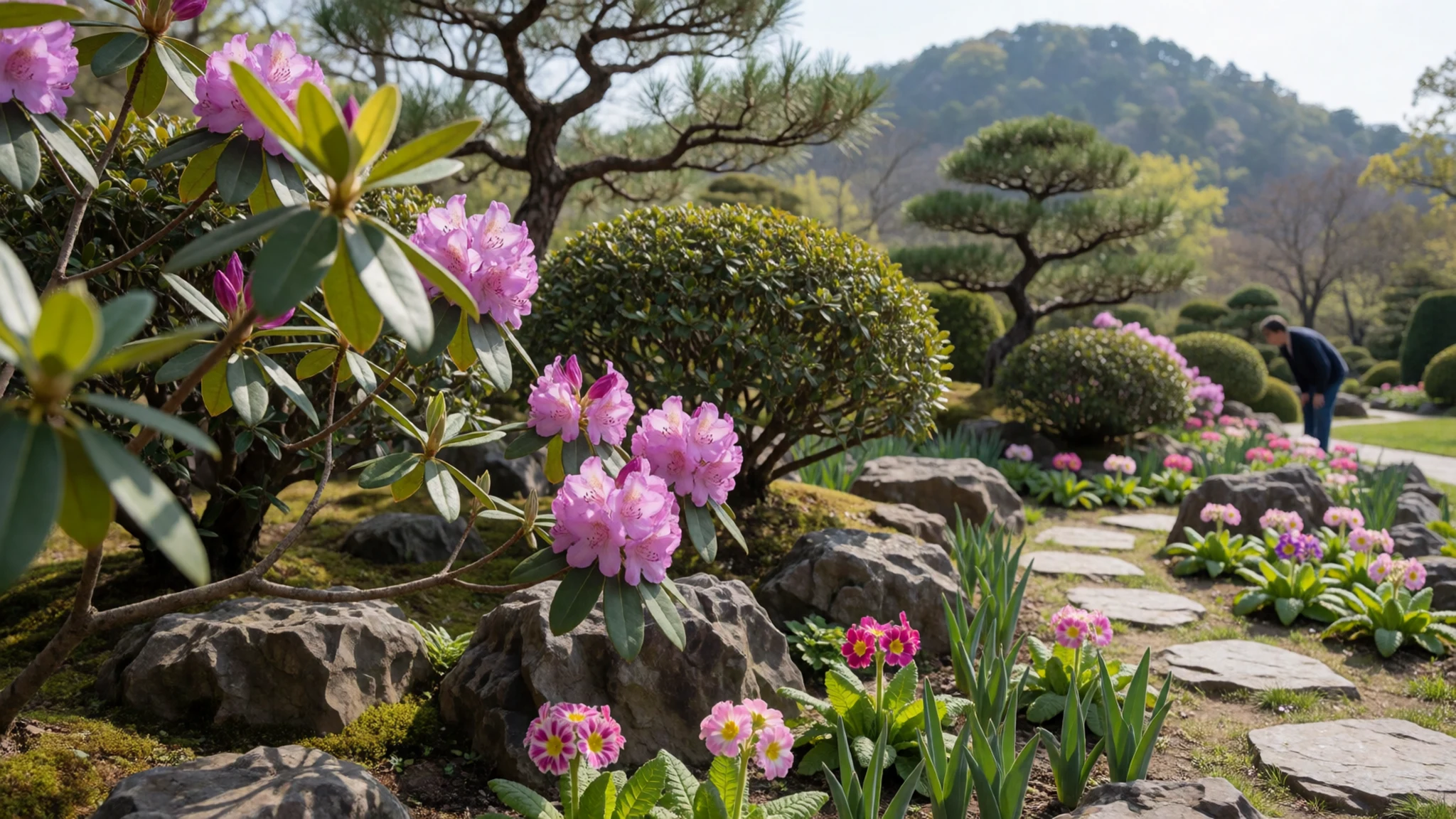
Culture
The Garden of Morning Calm reflects a Korean habit of going out to see flowers and leaves at the right moment of the season. Families, couples, friends and school groups time visits to blossom, wildflower weeks and autumn colour, and the garden stages festivals to match. Walking, picnicking in nearby spots and taking photographs are all part of the outing, and posed portraits in front of a favourite tree or tunnel are normal and good-humoured. The garden's design draws on Korean ideas of landscape: water, stone and trees arranged to feel unforced, with views opened and closed along the path so that the visitor discovers each scene in turn. The name itself comes from a nickname for Korea, and many Korean visitors treat the place as a quiet, cultured retreat from Seoul rather than a theme park. Gapyeong is also a weekend escape for city residents, so the surrounding valley has cafés, pensions and riverside leisure spots that fill up on fine days. Winter's light festival adds a more playful mood, with young couples and families walking after dark among illuminated displays. Staff keep the grounds tidy, and visitors are expected to leave them that way. Stay on the marked paths, do not pick flowers or step into the beds when taking photographs, and give people queuing for popular spots a fair turn.
What to wear
Around the Garden of Morning Calm, the traditional dress is hanbok: a short jacket (jeogori) over a full wrap skirt (chima) for women, and a jacket with loose trousers (baji) for men, sometimes with a long overcoat (durumagi) in cold weather. Fabrics include silk for festive wear, ramie and hemp for summer cloth, and cotton for everyday use. Hanbok appears mainly at the Lunar New Year, Chuseok, weddings and family milestones, and some visitors dress up for photographs at scenic places, though it is not required at the garden. Day to day, Koreans wear practical modern clothes. Garden visitors favour smart-casual outfits, trainers, hats in summer and bright hiking-style jackets in autumn, and many people dress with a view to being photographed among the flowers. For a visitor, comfort matters more than style. Wear sturdy, flat, closed shoes, because paths include slopes, steps and occasional damp ground. Spring and autumn mornings can be cool, so carry a light layer; summer is hot and humid, so choose breathable cotton, a hat and sun protection, and carry a compact umbrella for sudden rain. Winter needs a proper coat, gloves, a hat and warm footwear, especially for evening festival walks. No special modesty rules apply here, though ordinary smart-casual dress is normal.
What to eat
- Pajeon with makgeolli — Casual eateries and pubs in Gapyeong town
A crisp savoury pancake of spring onions, often with seafood, eaten with a bowl of cloudy rice wine. A comfortable post-walk order in Gapyeong, particularly on a cool or rainy day.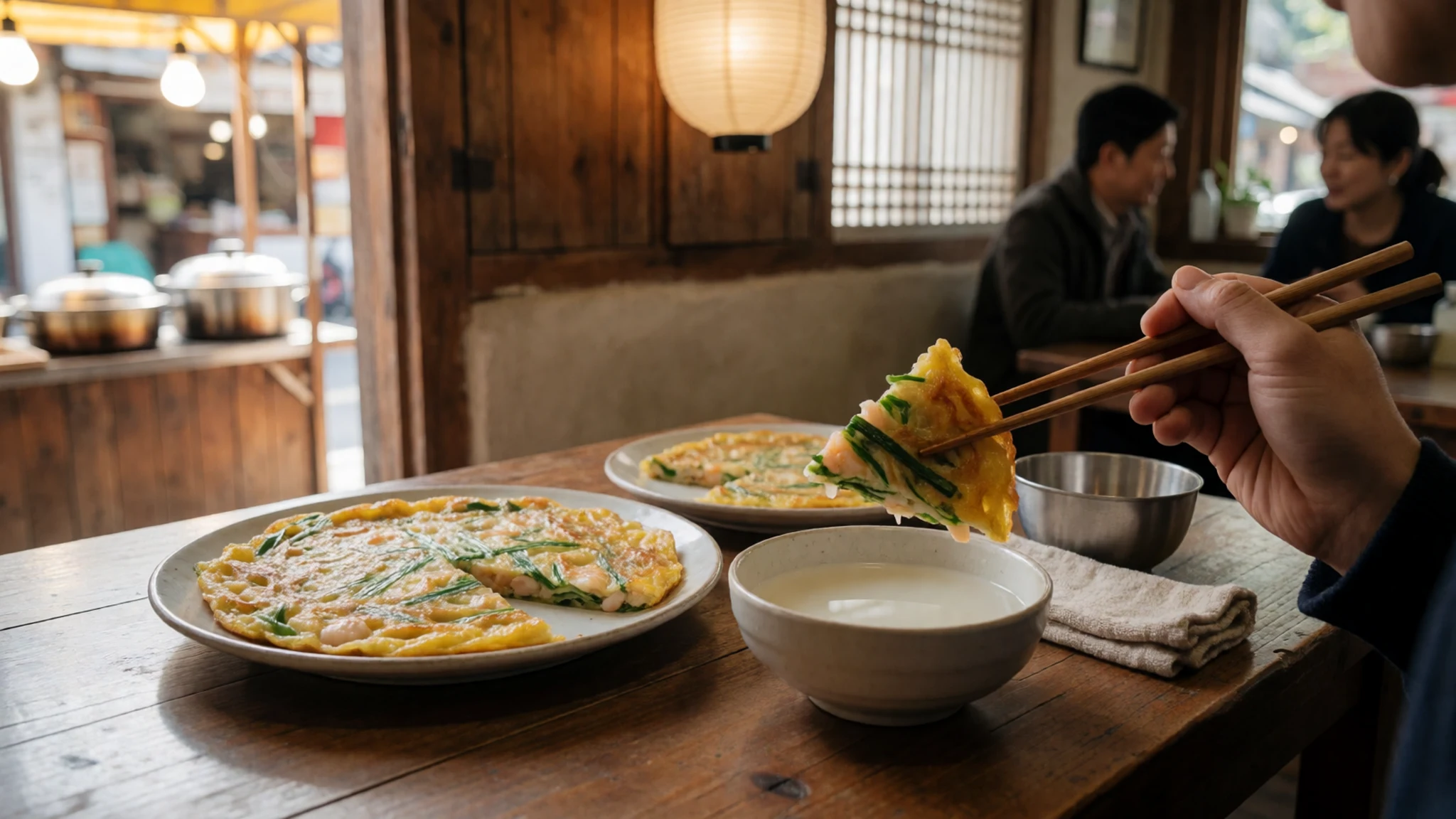
- Dakgalbi — Dakgalbi restaurants in Gapyeong and nearby Chuncheon
Spicy marinated chicken stir-fried with cabbage, sweet potato and rice cakes on a large hot plate at the table. It is shared among the group, and the leftover sauce is often fried into rice.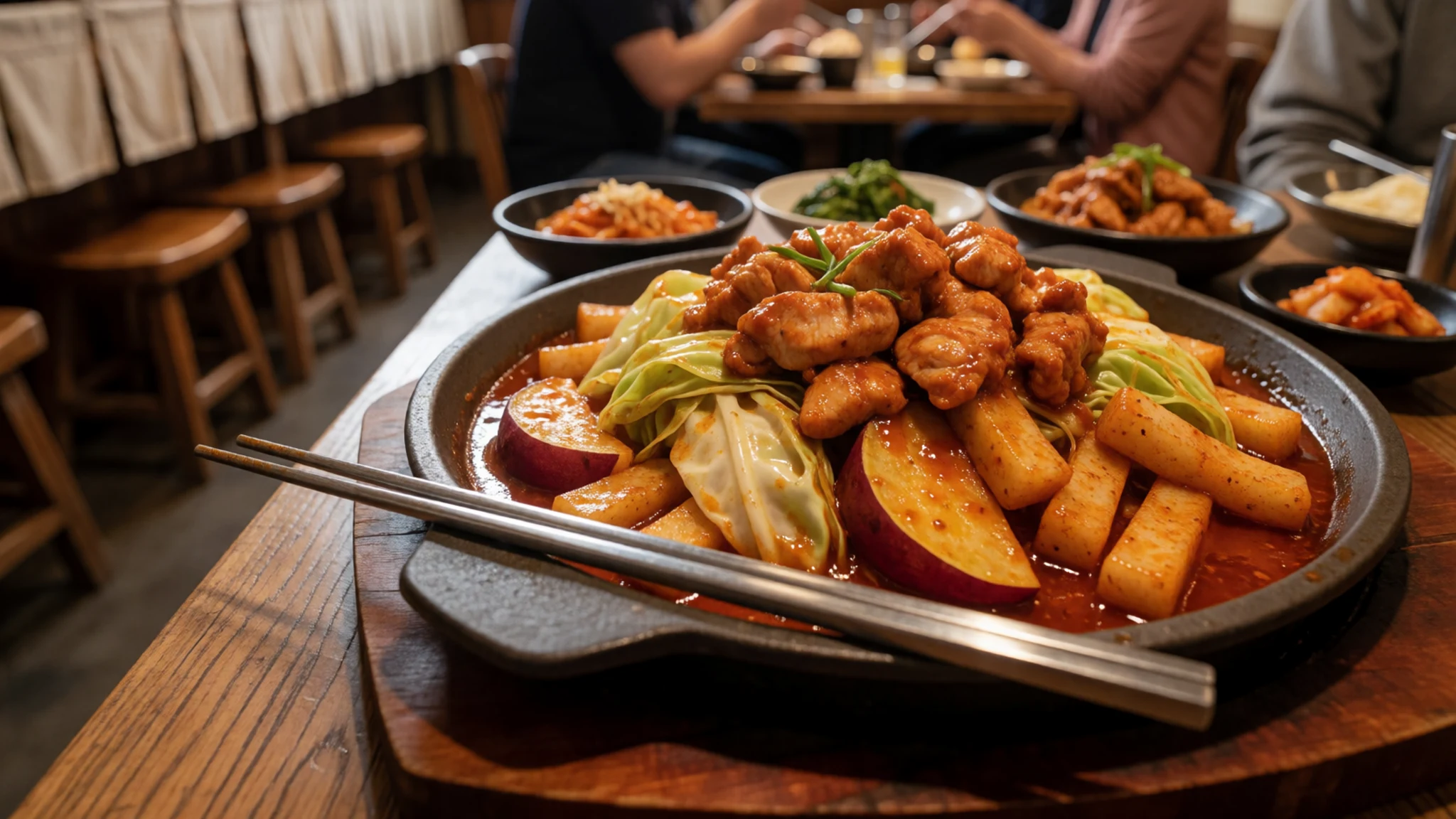
- Jatjuk (pine nut porridge) — Traditional Korean restaurants in the Gapyeong area
A smooth, mild porridge made from pine nuts and rice. Gapyeong is known for its pine nuts, so this suits a gentle lunch or a warm start on a cold day. - Sanchae bibimbap — Countryside restaurants near the garden
Rice topped with seasoned mountain greens, mushrooms and roots, mixed with chilli paste. It makes a good vegetarian-friendly meal that fits the hill setting, though check whether egg or meat is included. - Hotteok and roasted chestnuts — Street stalls near Gapyeong station and in the town market
Hotteok is a hot, sweet filled pancake sold from street stalls, usually with brown sugar and nuts. In autumn, roasted chestnuts are a common snack beside the road and at stations.
Plan it
Best time. Late April to May for spring flowers and rhododendrons, and October for autumn colour. The winter light festival is a cold-weather option. Summer is hot, humid and rainy, so flowers and crowds are variable.
How long. 1
Getting there. Fly to Incheon International Airport, then take the Seoul subway system to the Gyeongchun line, which runs from Seoul to Gapyeong and is known as a scenic rail route. From Gapyeong, continue by local bus or taxi to the garden, and check the garden's official website for current transport options.
Budget. mid
Tips
- Check the garden's official website for opening dates, ticketing and festival schedules before travelling
- Go on a weekday morning in blossom and autumn weeks to avoid the heaviest crowds
- Wear comfortable walking shoes and bring layers, as the hillside is cooler than Seoul
- Carry water and a card plus a little cash for snacks and local buses
- For the winter light festival, dress warmly and plan the return journey before the last trains
Etiquette
- Stay on the marked paths and keep out of the flower beds
- Do not pick flowers or plants
- Give other visitors a fair turn at popular photo spots
Nearby
Sources
- Wikidata Q3162596 (CC0)
- Wikipedia: Garden of Morning Calm (CC BY-SA 4.0)
- Wikivoyage: Gyeonggi (CC BY-SA 4.0)
- Photo 01: 아침고요수목원 가을 풍경, 날개 at Korean Wikipedia (CC BY 3.0)
- Photo 02: Lake in the Garden of Morning Calm, Clément Chevallier (CC BY-SA 4.0)
- Photo 03: Floral Tunnel, Rhie Cudanin (CC BY 3.0)
- Photo 04: 아침고요수목원 들꽃 축제, Kwon jung sik (CC BY-SA 4.0)
- Photo 05: Primula sinensis, 阿橋 HQ (CC BY-SA 2.0)
- Photo 06: Harlequin Flower, 阿橋 HQ (CC BY-SA 2.0)
- Photo 07: Rhododendron brachycarpum, 阿橋 HQ (CC BY-SA 2.0)
- Photo 08: Oreorchis patens, 阿橋 HQ (CC BY-SA 2.0)


