Gamcheon Culture Village
Gamcheon Culture Village, South Korea
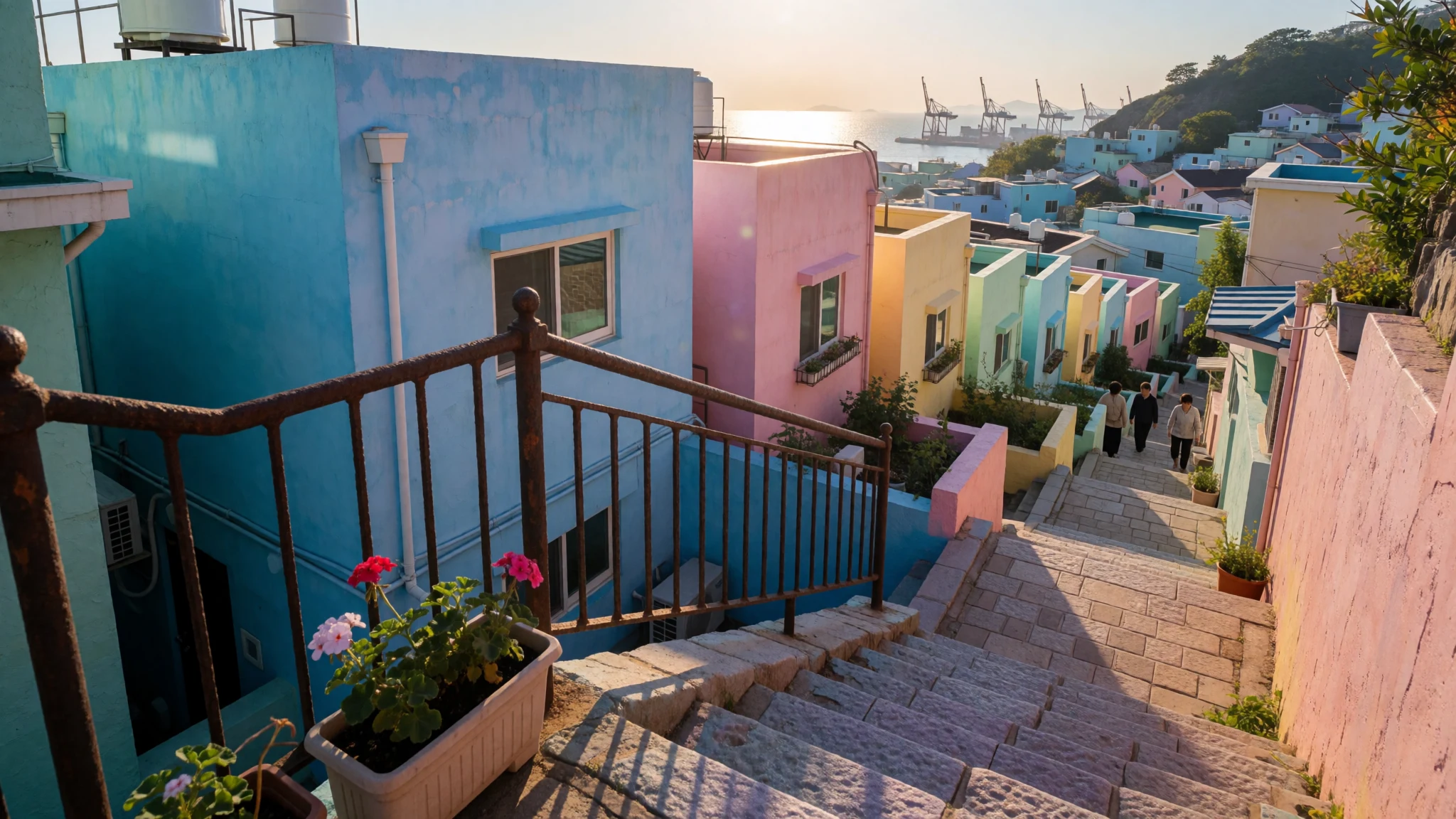
Gamcheon Culture Village turns a steep Busan hillside into a walkable maze of pastel houses, murals and small art spaces where people still live.
The place
Gamcheon Culture Village (감천문화마을) climbs a steep hillside in Gamcheon-dong, in Busan's Saha District, near the southern tip of the Korean peninsula. Small, boxy houses are stacked in terraces up the slope, each roof almost level with the next house's doorstep, painted in pastel blues, pinks, yellows and greens. Between them run narrow lanes, staircases and dead-end passages where a map is more use than instinct. The nicknames "Korea's Santorini" and "the Machu Picchu of Busan" get repeated often, though both are loose. There are no whitewashed domes here; the character comes from Korean working-class hillside housing and a deliberate art project. Busan is a city of more than 3.6 million people and South Korea's second city. Its climate is subtropical, with hot, humid summers, typhoons possible from July to September, and mild winters in which snow is rare. Gamcheon is a long way from the beaches of Haeundae and is usually seen as a morning or half-day outing. It remains a residential neighbourhood, so cafés, small shops and galleries share the lanes with family homes and washing lines. Crowds build through late morning, especially at weekends and on public holidays, and one tour group can block a lane for minutes. Summer heat on the stairs is real and shade is scarce. Weekday mornings give the calmest walking and the softest light on the painted walls.
Its story
Gamcheon Culture Village began as a planned settlement in the 1920s and 1930s, when Busan's city administration moved working-class families to a hillside set apart from the port but close enough to supply labour. The arrival that shaped it most came in 1955, in the years of post-war recovery, when around 800 families settled on the slope. Among them was a religious community called Taegeukdo, an ascetic branch of Jeungsanism, which became part of the village's identity. The first houses were timber, and as families grew, residents added second storeys and packed the hillside ever tighter. Despite this growth, poverty and poor living conditions persisted for decades, and the area was a place most Busan residents had little reason to visit. The turn came in 2009, when the Ministry of Culture, Sports and Tourism backed a public-art renovation meant to make the village a cultural hub. Art students, professional artists and residents were all asked to repair, paint and decorate. The Empty House Residency Preservation Project then gave vacant homes a second life as studios and exhibition spaces. With better infrastructure, fresh paint, new shops and small museums, and several dozen art installations, the village changed from a neighbourhood outsiders avoided into one that draws visitors from across Korea and abroad. The change brought income and local pride, and it also brought visitor pressure on people who still live there, a tension the community continues to manage.
What to see
- The entrance overlook — Village entrance, Gamcheon-dong
The first wide view of Gamcheon Culture Village comes from the overlook near the entrance, where the whole hillside of pastel roofs spreads out below. It is the place to understand the layout before descending. Bus-stop viewpoints nearby give a similar outlook, and cloudy autumn days soften the colours attractively.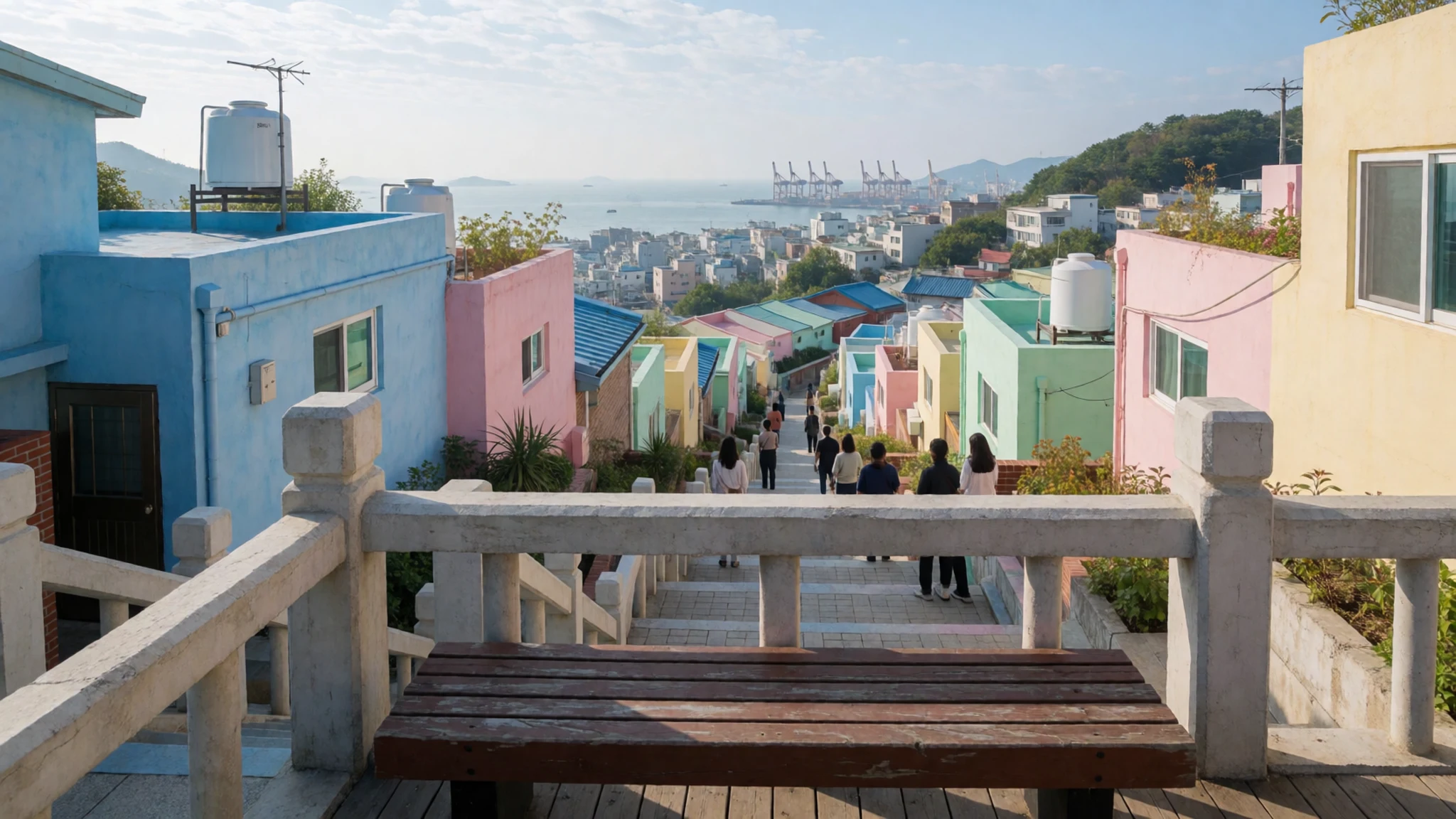
- The Little Prince and the fox — Upper viewpoint, Gamcheon-dong
A statue of the Little Prince sitting beside a fox, looking over the rooftops, is the village's best-known photo spot. Queues form here at busy times, so patience helps. The harbour side of the slope below makes a fine backdrop on clear days, and early mornings are quieter.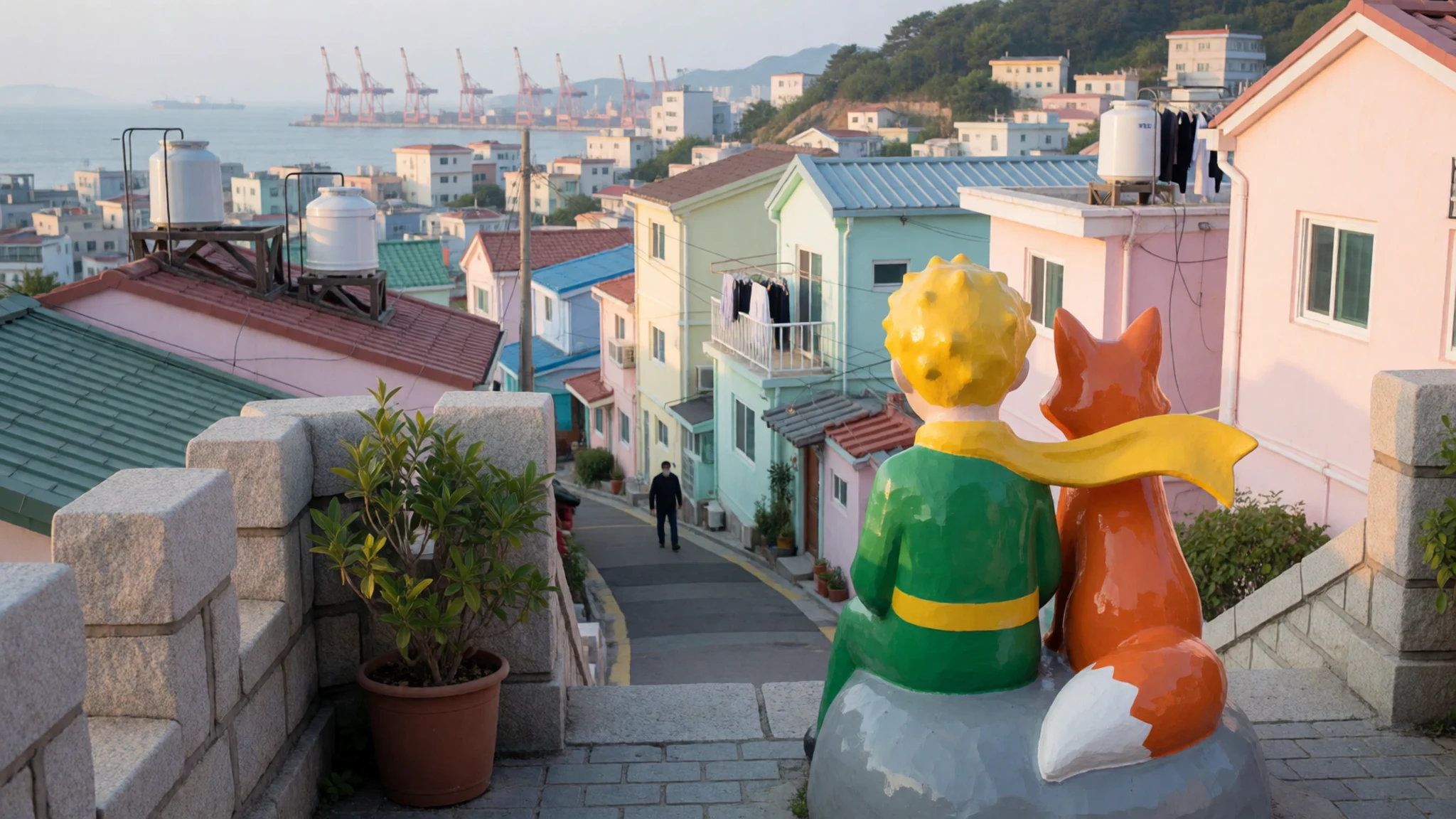
- Backstreets and staircases — Central lanes, Gamcheon-dong
Wandering the narrow lanes is the real activity here. Staircases double back, murals appear around corners, and small installations are tucked into walls and corners. Getting slightly lost is part of the point. Following the lanes downhill is easier on the legs than climbing back up them.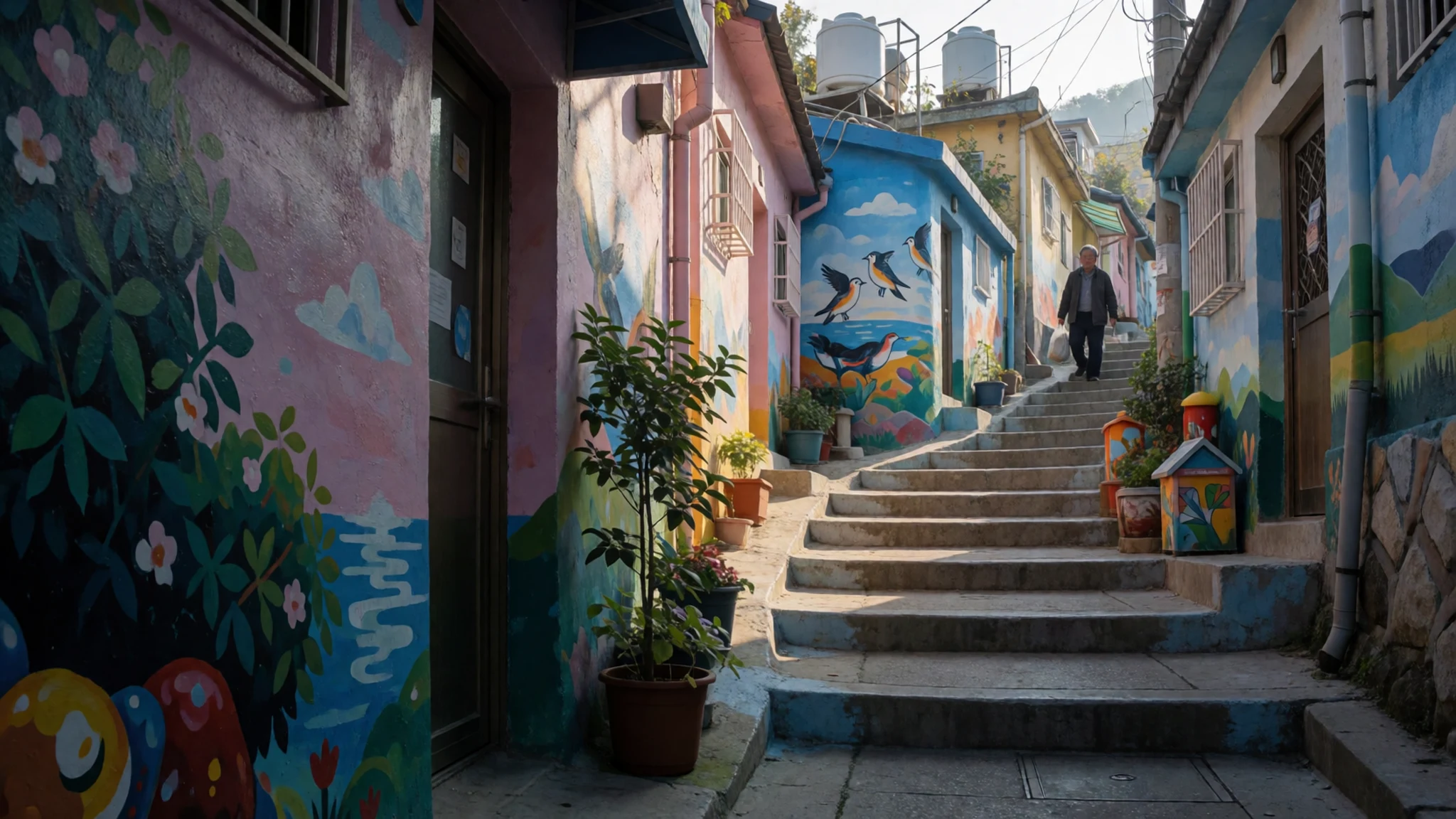
- Art spaces in former empty houses — Scattered through the village
Several vacant homes were turned into studios, galleries and small museums as part of the Empty House Residency Preservation Project. Opening arrangements change, so the official village site is the place to check what is currently running before planning a route around any one space.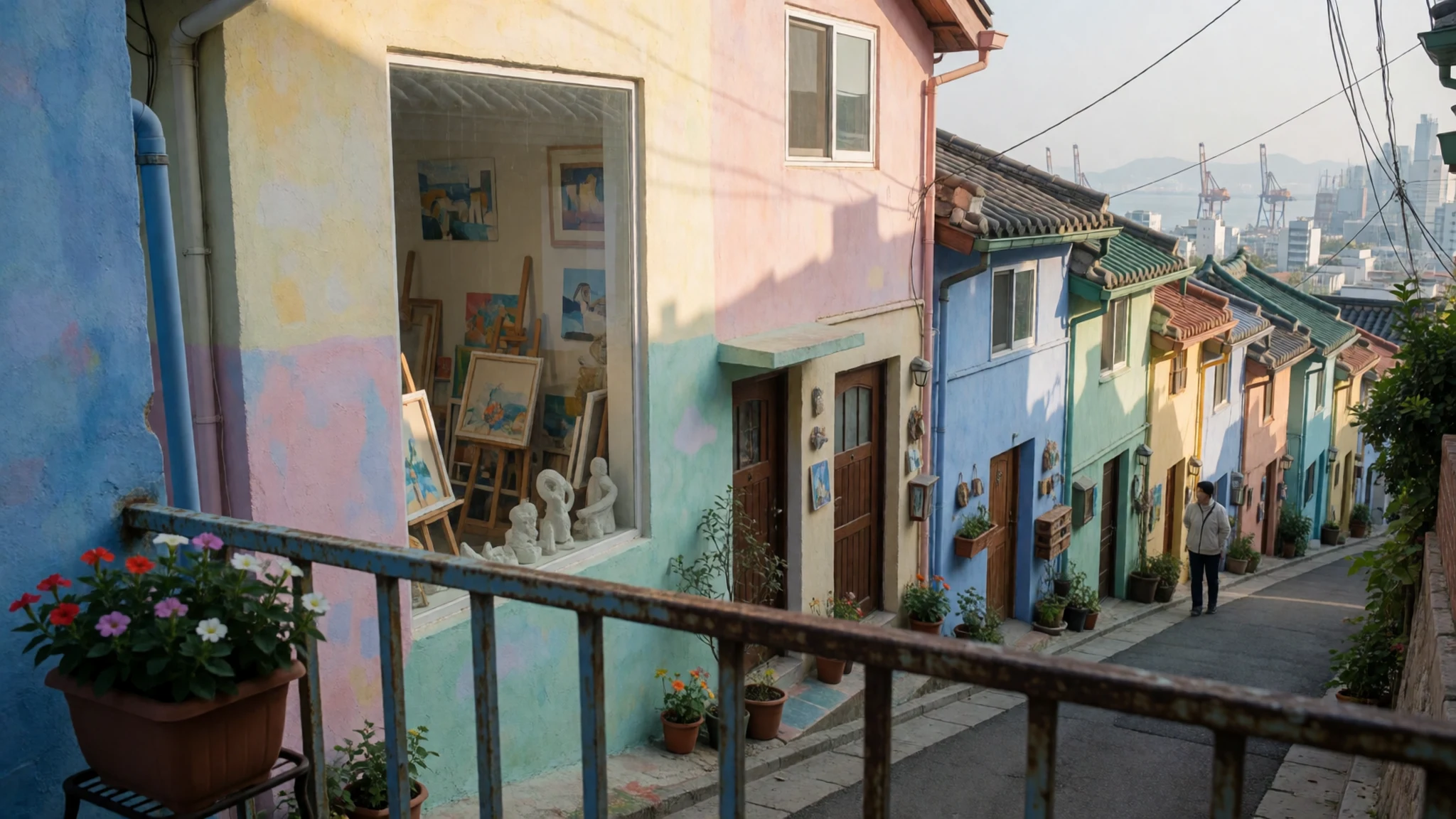
- Café terraces and rooftops — Along the main lanes
Small cafés and rooftop seats around the village give a reason to stop and look over the terraced roofs while resting from the stairs. They suit a slow break in the middle of a walk, and the better ones fill quickly at weekends and holidays.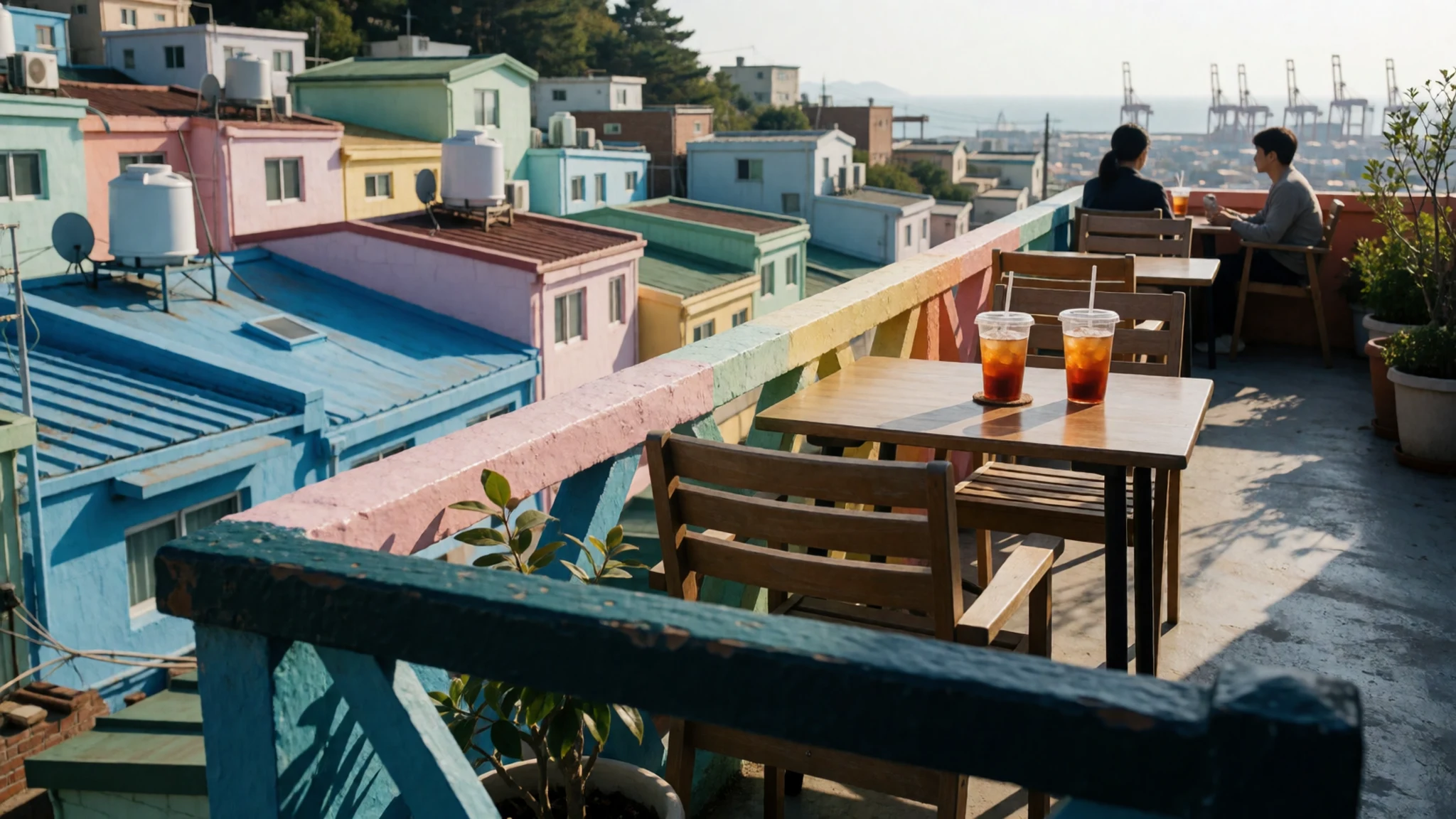
Culture
Gamcheon Culture Village is first of all a neighbourhood, and its culture is the overlap of two things: a working-class hillside community with decades of hard living behind it, and an art project that deliberately changed how the place is seen. The older layer includes the Taegeukdo community, an ascetic religious group connected with Jeungsanism, which settled here with the large wave of families in the mid-1950s. The newer layer is visible in murals, sculptures and small installations, many made with residents and art students. Daily life continues alongside: people hang laundry, carry shopping up steps and rest on doorsteps. Korean visitors often come as couples, friends in matching outfits, school groups or families on weekend outings, and photographing is the main activity. Many residents have welcomed the new income, though not all enjoy constant visitors, and the village runs its own guidance for tourists, which the official site sets out. Korean etiquette values quietness in residential lanes, and respect for older residents is expected. Public art here is meant to be seen but not touched or climbed. Small independent shops and cafés are usually the best way to contribute to the local economy, and buying something modest from a village business is a sensible way to repay the time spent walking its lanes. Keep your voice low, never photograph into windows or doorways, and ask before pointing a camera at any resident.
What to wear
Around Gamcheon Culture Village, the traditional dress of Korea is the hanbok: a short jacket (jeogori) over a wrap skirt (chima) for women, and a jacket with loose trousers (baji) for men. Fabrics range from silk for formal and festive wear to ramie and hemp for hot summers, and cotton for everyday and winter layers. Hanbok is now mostly worn for weddings, family ceremonies and festivals such as Seollal and Chuseok, though visitors in Busan often rent one for photographs, and colourful hanbok against the painted houses is a common sight. Everyday dress in the village is the same as elsewhere in urban Korea: casual, practical and often neat, with sportswear, jeans, trainers and layered knitwear in cooler months. Younger visitors tend to coordinate outfits and carefully match the pastel walls. For a visitor, the terrain matters more than any dress code. The lanes are steep, uneven and often stepped, so comfortable shoes with good grip are essential, and sandals with thin soles are a poor idea. Summers are hot and humid, so light, breathable cotton or linen, a hat and sunscreen help. Typhoon season and sudden rain call for a light waterproof. In cooler months a windproof layer is useful on exposed slopes. No religious modesty rules apply across the village, though covered shoulders and knees are polite if visiting a temple elsewhere in Busan.
What to eat
- Grilled fish — Jagalchi fish market area
Grilled fish is a classic Busan breakfast or lunch, served with rice and side dishes. The Jagalchi fish market area, where much of the city's seafood is landed, has many small eateries serving it from early morning, with options ranging from simple counters to sit-down rooms.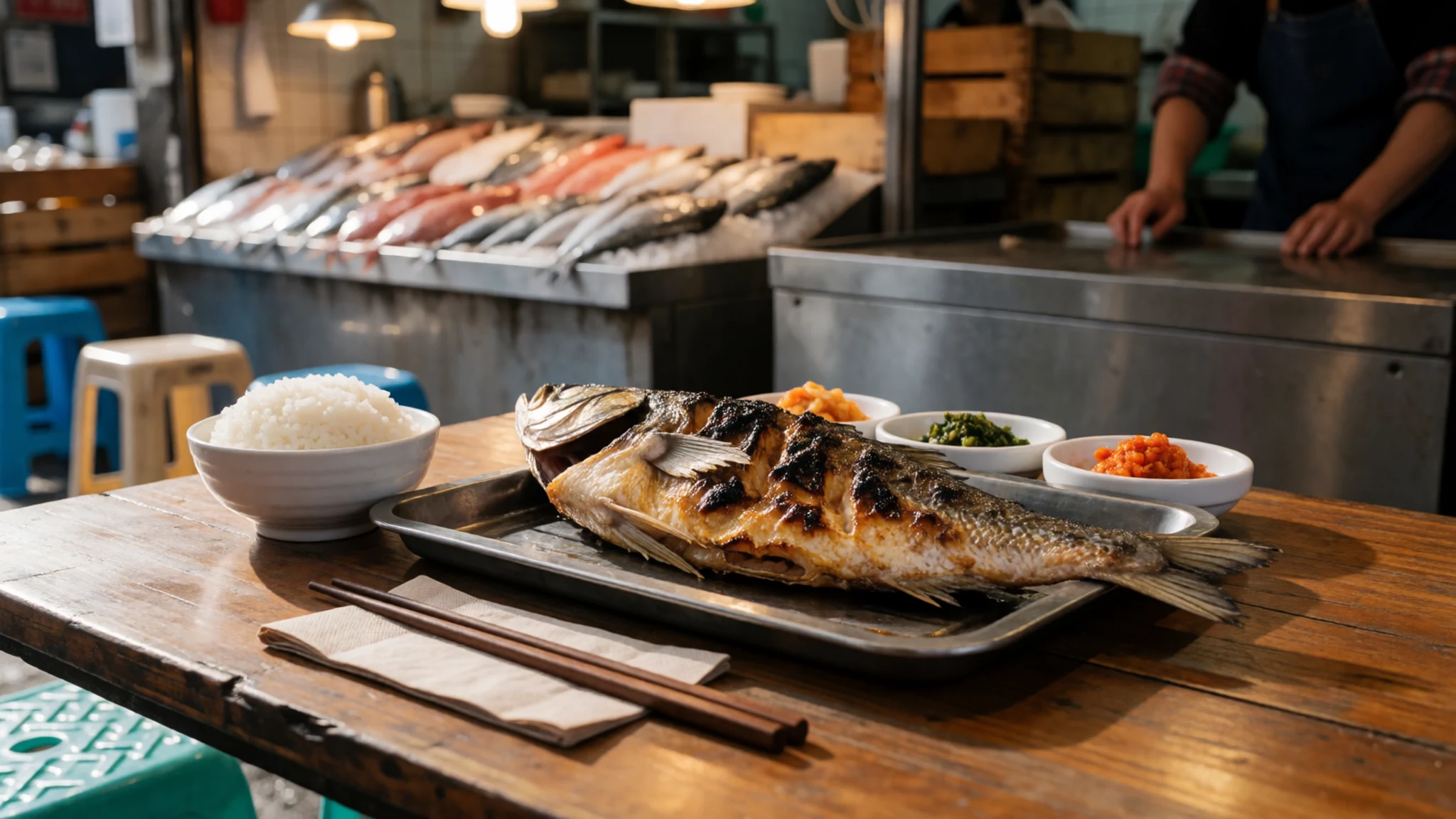
- Hangover soup (haejang-guk) — Eateries around Jagalchi market
Haejang-guk is a hot, savoury Korean soup traditionally eaten to recover after a heavy night. Versions vary in broth and ingredients, so ask what is in the pot. It is a warming option on cooler mornings and widely available near the market.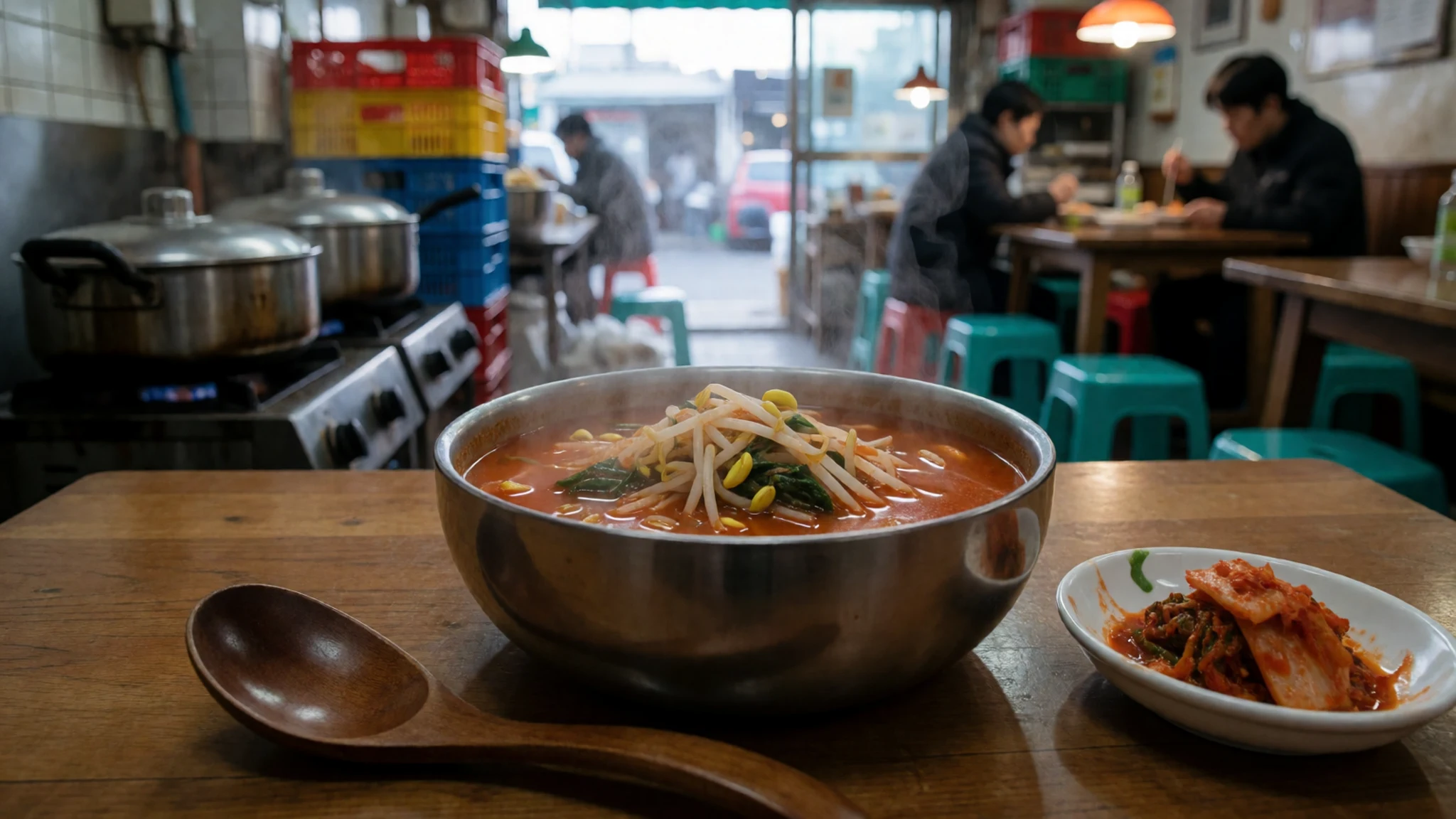
- Spicy glass noodles — International market stalls, central Busan
Chewy, translucent sweet-potato noodles in a chilli-red sauce are a staple of Korean market snacking. Heat levels vary, so asking about spice before ordering is wise. Many stalls serve them in small portions, ideal for sampling more than one thing. - Chungmu-style gimbap — Market food stalls in central Busan
Chungmu gimbap is a small roll of rice and seaweed served plain, usually with spicy squid and radish on the side. The pairing of sharp, spicy sides with simple rice makes it a light, cheap snack and an easy first taste of Busan street food. - Ssiat hotteok — Street stalls at the International market
Ssiat hotteok is a sweet fried pancake stuffed with seeds and brown sugar, served hot from the griddle. It is particularly good on cooler days after a walk. Eat it straight away, as the sugar filling can be extremely hot.
Plan it
Best time. April–May and October–November are the most comfortable months for walking the steep lanes, with milder air and clearer skies. July–September is hot and humid, with typhoons possible, and winters are mild but can feel breezy on the exposed slope.
How long. 1
Getting there. Fly into Gimhae International Airport (PUS), then take the metro, limousine bus, local bus or taxi into Busan. From Seoul, the KTX and SRT high-speed trains are a better option than flying. For the last leg, use a local bus or taxi from the nearest metro station, and check the official site for the current route.
Budget. low
Tips
- Go on a weekday morning to avoid the heaviest crowds and the hottest hours
- Wear shoes with good grip, as the lanes are steep, uneven and stepped
- Carry water and sunscreen in summer, as there is little shade
- Check the official site at https://www.gamcheon.or.kr/ for maps, opening arrangements and any visitor guidance before you go
- Keep some cash for small shops, though most cafés accept cards
Etiquette
- Keep your voice low in the lanes, as people live in every house
- Do not photograph into windows or doorways, or residents without asking
- Do not touch, climb on or move art installations
Nearby
Sources
- Wikidata Q18641306 (CC0)
- Wikipedia: Gamcheon Culture Village (rev 1383778231) (CC BY-SA 4.0)
- Wikivoyage: Busan (rev 5404804) (CC BY-SA 4.0)
- Photo: Christophe95, Gamcheon Culture Village 1 (CC BY-SA 4.0)
- Photo: Bl00dnFl4mes, Gamcheon Houses 2024 (CC BY-SA 4.0)
- Photo: Wkjekf, Gamcheon culture village view (CC BY 4.0)
- Photo: xiquinhosilva, Ami-dong Tombstone Culture Village 55502105537 (CC BY 4.0)
- Photo: xiquinhosilva, Ami-dong Tombstone Culture Village 55503107511 (CC BY 4.0)
- Photo: Ken Eckert, Backstreet in Gamcheon, Busan, Korea (CC BY-SA 4.0)
- Photo: RonanHoogmoed, Busan Gamcheon Village 2022-10-09 (CC BY-SA 4.0)
- Photo: Wkjekf, Busan street (CC BY 4.0)


