Fujian Tulou
Fujian Tulou, People's Republic of China
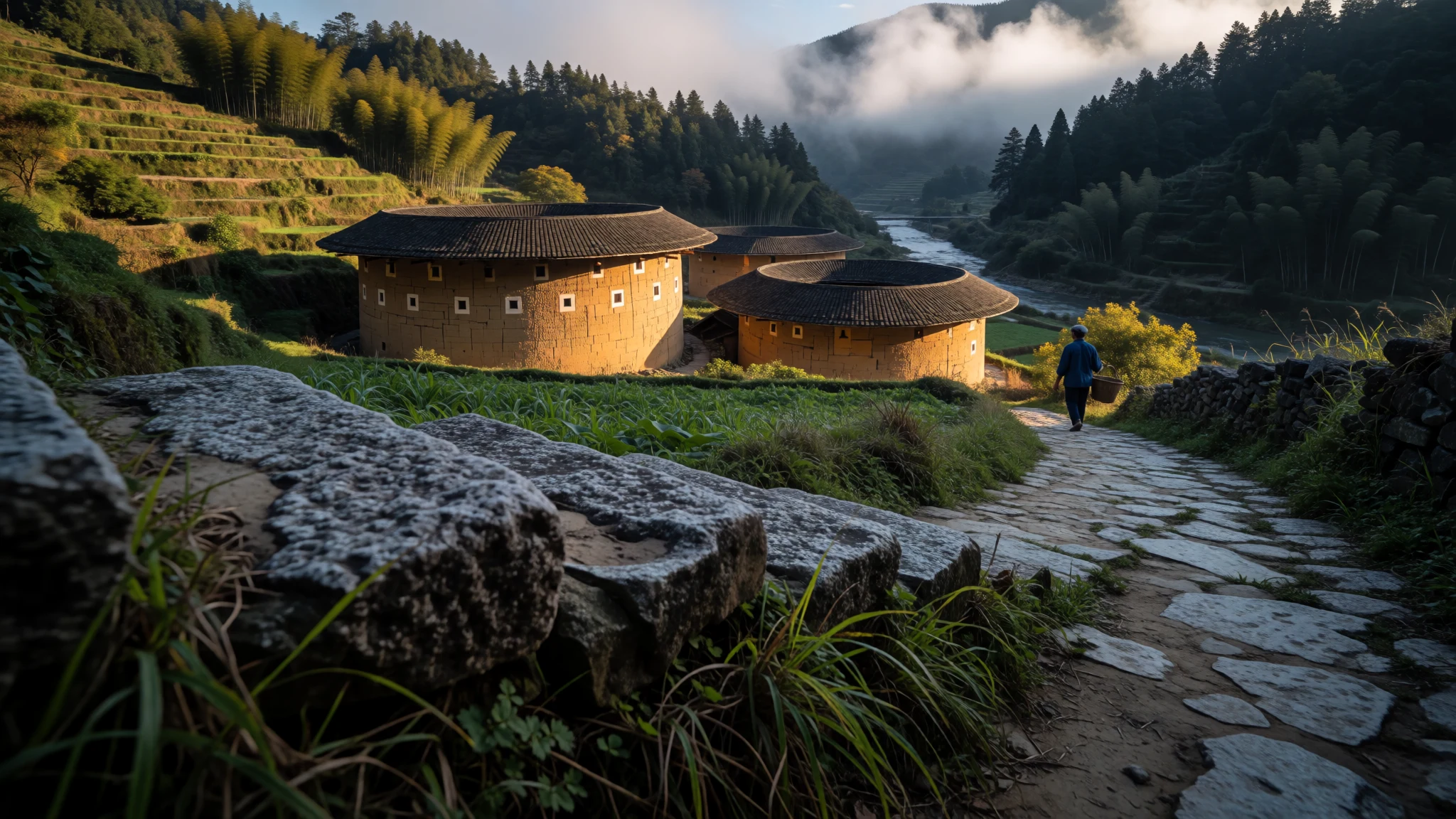
Fujian Tulou are clan-sized earthen houses in the Yongding hills, still half village and half monument.
The place
Fujian Tulou are communal earthen houses scattered through the river valleys of southwestern Fujian, chiefly in Yongding County in Longyan and neighbouring Nanjing and Pinghe counties in Zhangzhou. Built by Hakka families, and in some valleys by other southern Chinese clans who adopted the same form, each building is a village under one tiled roof: thick rammed-earth walls, a courtyard at the centre, and wooden galleries stacked above kitchens and stores.
The plan is usually a ring or a square. Round houses read as closed cylinders from the valley path, with a single main gate and almost no windows at ground level. Inside, the ground floor is given over to kitchens and workrooms, the middle levels to grain, and the upper galleries to bedrooms that open onto a shared corridor. A well and an ancestral hall share the courtyard with daily life.
The earth itself is the structure. Walls are pounded in courses from local soil, strengthened with stone footings and wooden frames, and left to weather to a dull ochre. Roofs are broad and grey-tiled, with deep eaves that throw rain off the wall. In the hills around Chuxi, Hongkeng and Gaobei the buildings sit among rice terraces, tea slopes and bamboo, often in loose clusters rather than as a single monument in a park.
Some houses are still lived in. Washing hangs on the galleries, dogs sleep by the gate, and a family may be cooking while visitors walk the public corridor above. Others are looked after mainly for visitors, with the ancestral hall swept and the upper floors open as a circuit. The two kinds of visit feel different, and Fujian Tulou includes both: houses made for defence and storage, and a countryside that still farms.
Its story
Fujian Tulou grew from the southward settlement of Hakka clans in the hills where Fujian meets Guangdong and Jiangxi. A family group that farmed a valley needed more than a row of cottages. It needed room for many households, space for the harvest, and a gate that could be shut. The earthen ring, and the square compounds that stand beside many rings, met that need: shared outer walls, separate kitchens, and a hall for the ancestors who anchored the clan's claim to the land.
Raising a house was collective work. Courses of damp earth were pounded between wooden frames, then left to dry before the next course went on, while carpenters built the timber galleries that would carry the upper floors. A clan might spend years on one building, and a later generation might wrap another ring around the first when numbers grew. That is why some houses read as nested circles. The ancestral hall sits on the axis opposite the gate, and rooms were shared out by generation and branch, so the plan is a family tree as well as a piece of construction.
The walls also answered unrest. Narrow openings, a gate made to be barred and neighbours who could hear a shout from any gallery made the house a refuge in decades when banditry and rebellion moved through the southeast. Ordinary life stayed agricultural. Rice, vegetables, tea, tobacco and bamboo passed through the ground-floor kitchens, and the upper rooms were for sleeping and for stores.
Many people left for coastal cities, and some buildings fell quiet. Fujian Tulou today is both a clan landscape and a visitor landscape. Chengqi Lou, Zhencheng Lou and the houses at Chuxi are still somebody's surname and somebody's valley, even when a ticket desk stands at the gate.
What to see
- Chengqi Lou — Gaobei, Yongding County
Chengqi Lou is the round Fujian Tulou in Gaobei that local people dub the King of Tulou. One gate opens onto a courtyard of four rings, with the ancestral hall on the axis. Rammed earth forms the outer wall and timber forms the galleries. Coach groups arrive here first, so morning is the calm hour. Families still use some lower rooms, and the stairs are steep.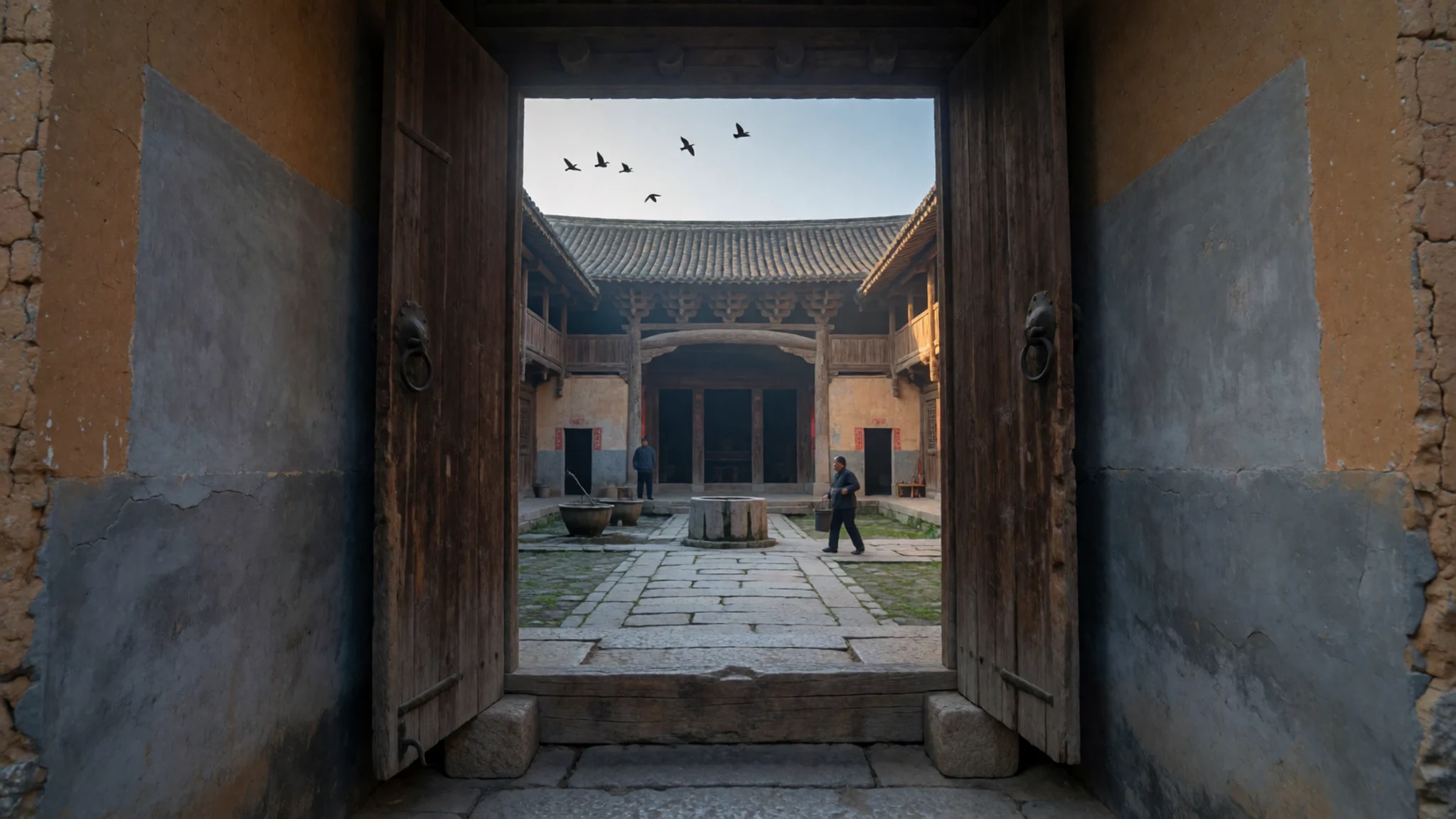
- Zhencheng Lou — Hongkeng, Yongding County
Zhencheng Lou is a round Fujian Tulou in Hongkeng, among other clan houses on the valley floor. Its ancestral hall is the part to linger in: carved wood, a formal axis and lower light than the galleries. Kitchens sit below and bedrooms above, on a regular residential ring. The lane outside still carries farm traffic as well as visitors.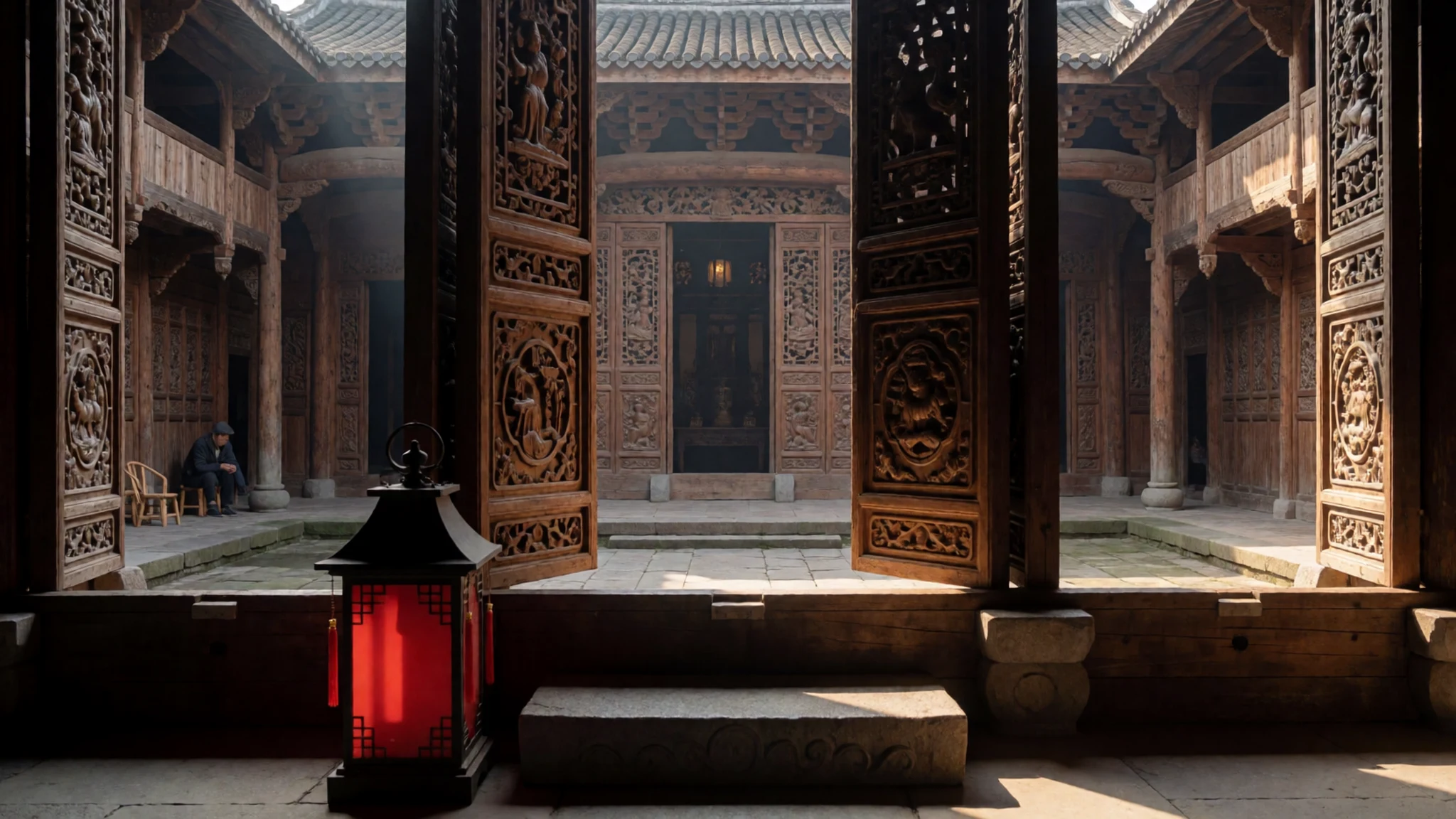
- Chuxi cluster — Chuxi, Yongding County
The Chuxi cluster groups several Fujian Tulou in a small Yongding valley that can be walked as one place. Jiqing Lou, built in 1419, is the old round house of the set, plainer than later houses and still legible as a clan home. Earthen walls, timber galleries and a shared court repeat at a domestic scale. The gateways are quietest early.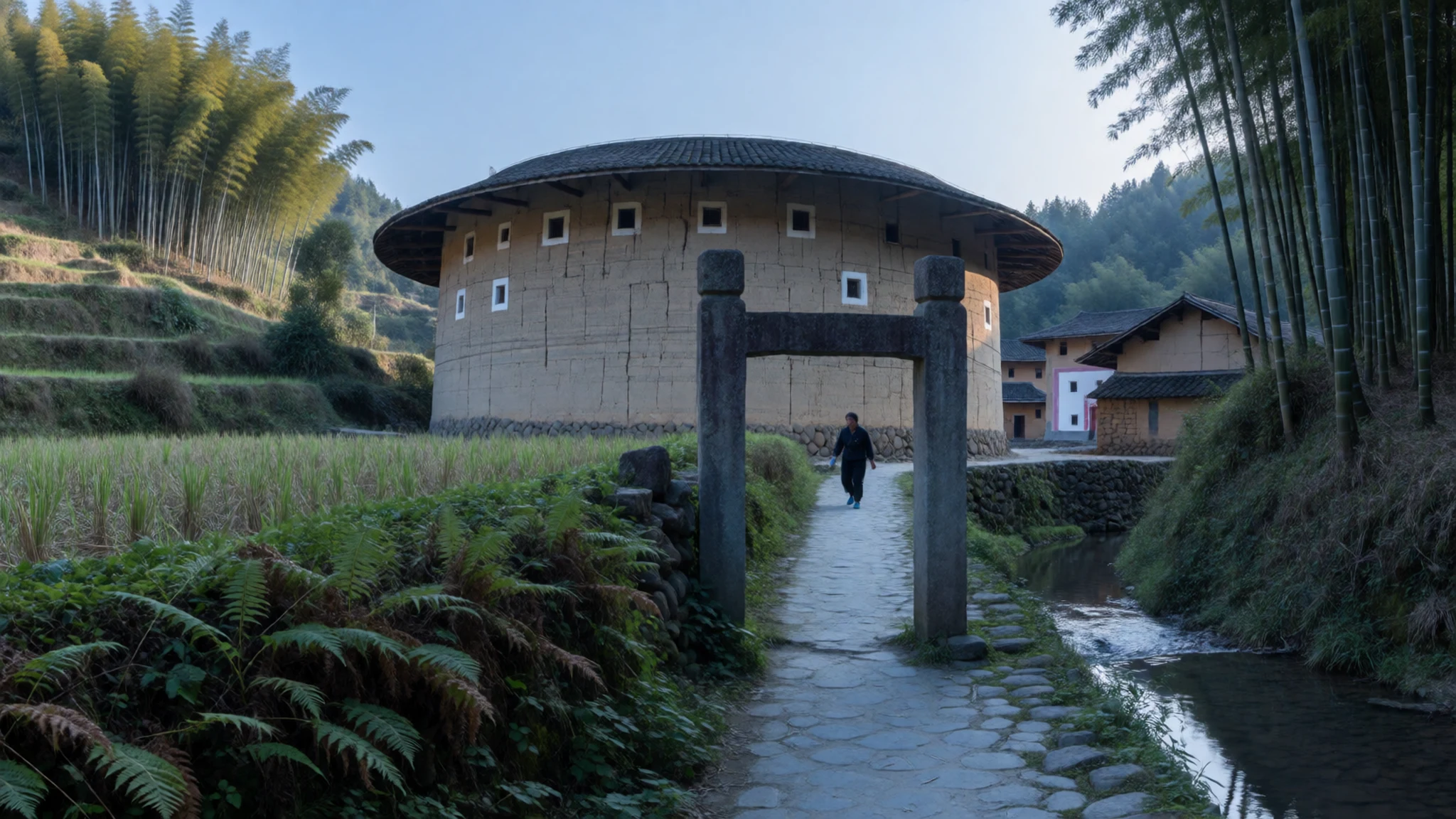
- Tianluokeng — Tianluokeng, Nanjing County
Tianluokeng is the Fujian Tulou cluster whose hillside layout is three round houses, one oval and one square. From the ridge the roofs read as one composition; inside, each building is a court, a gallery and an earth wall. The path down passes vegetable plots and lived-in doorways. Allow time for the descent as well as the viewpoint.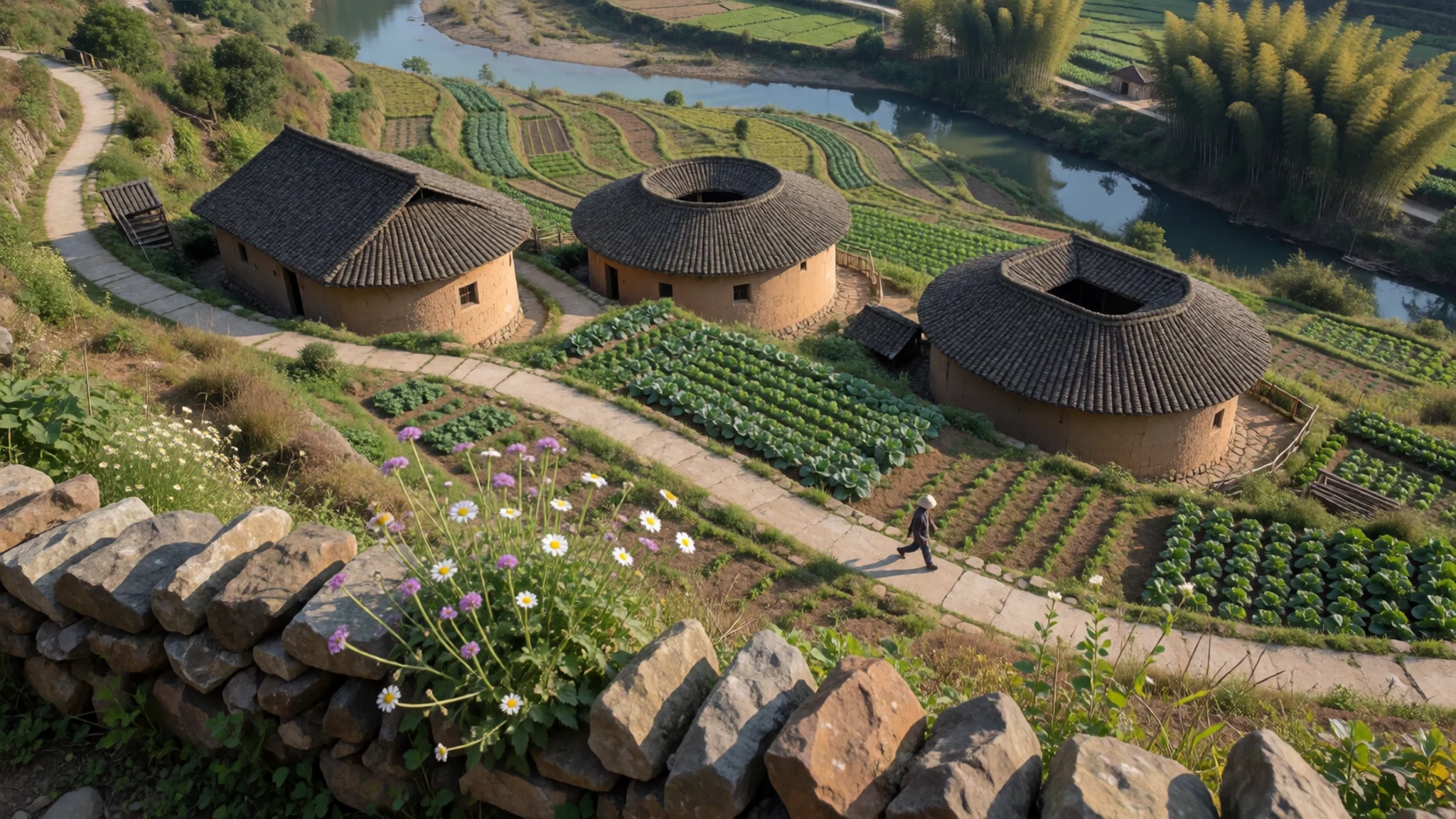
- Hekeng — Hekeng, Nanjing County
Hekeng, in Nanjing County, is a chain of Fujian Tulou, square and round houses along a lane rather than one famous circle. The walk shows the ordinary version of the form: a gate, a drying yard, a shop selling tea and snacks, and a gallery where residents watch the path. Farmland presses against the walls, and the village is the sight.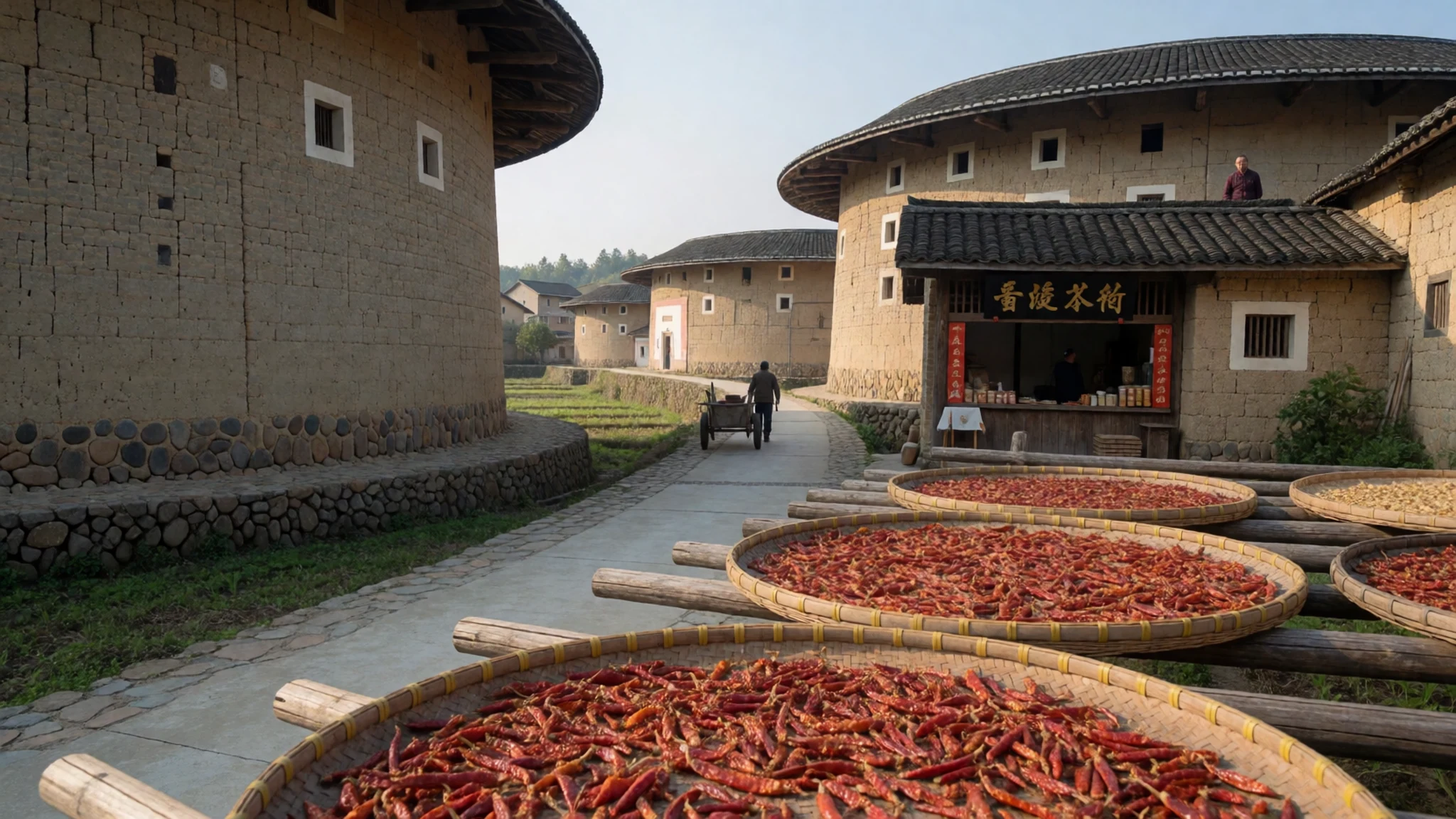
Culture
Fujian Tulou culture is Hakka clan culture written in earth and timber. A building often belongs to one surname. Households share the gate, the wells and the festival calendar, while keeping their own kitchen, a point of pride, because eating separately is how related families stay distinct under one roof. The ancestral hall holds tablets, couplets and the year's ceremonies: spring and autumn offerings, weddings, and the return of relatives who work in the coastal cities.
Language in the villages is usually Hakka, with Mandarin for visitors and official life. Sound from the galleries is as likely to be a family argument or a television as a performance. Residents farm, keep small shops, and rent rooms to overnight guests. Tourism pays for repairs, and it also means strangers on the bedroom corridor, which some households accept and others endure.
The round plan leaves rooms similar, and status shows in who sits nearest the hall and who maintains it. Visitors are welcome on the public circuit and in the hall when it is open. They are not automatically welcome in a family's kitchen.
Ask before you photograph residents or step into a private room at Fujian Tulou, and take your shoes off where a household has left slippers at the threshold.
What to wear
In the Fujian Tulou villages, older Hakka women still sometimes wear the working dress of the hills: a plain indigo or black jacket of coarse cotton, loose trousers, and a cloth shoe or sandal, with a towel or a small embroidered headscarf against the sun. Silver, when it appears, is for festivals and weddings rather than for the field: hairpins, bracelets and the occasional heavy necklace brought out of a bedroom chest. Everyday cloth was woven and dyed locally, and the colour that photographs well is that faded blue, not a costume-shop red.
Most people now dress as small-town southern China dresses. Younger residents wear T-shirts, trainers and lightweight jackets; older men wear short-sleeved shirts and dark trousers. Festival days are the exception, when a bride's red and a grandmother's silver come back into the ancestral hall. Nobody expects a visitor to put on Hakka costume, and hired outfits at the gate are a photograph, not local dress.
A day at Fujian Tulou calls for the practical layer, not the festival one. The valleys are humid and often wet, the gallery floors are smooth timber, and the paths between clusters are stone, mud and stairs. A visitor needs shoes that come off quickly, a shirt that covers the shoulders in an ancestral hall, and a light rain layer. An umbrella is more useful than a heavy coat except in the cooler weeks of winter.
What to eat
- Stuffed tofu (niang doufu) — homestay kitchens and plain village eateries
Hakka cooks around Fujian Tulou split firm tofu, fill it with minced pork and braise it in soy gravy. It is family lunch more than a banquet dish. Look in a homestay kitchen or a plain village eatery, served with rice.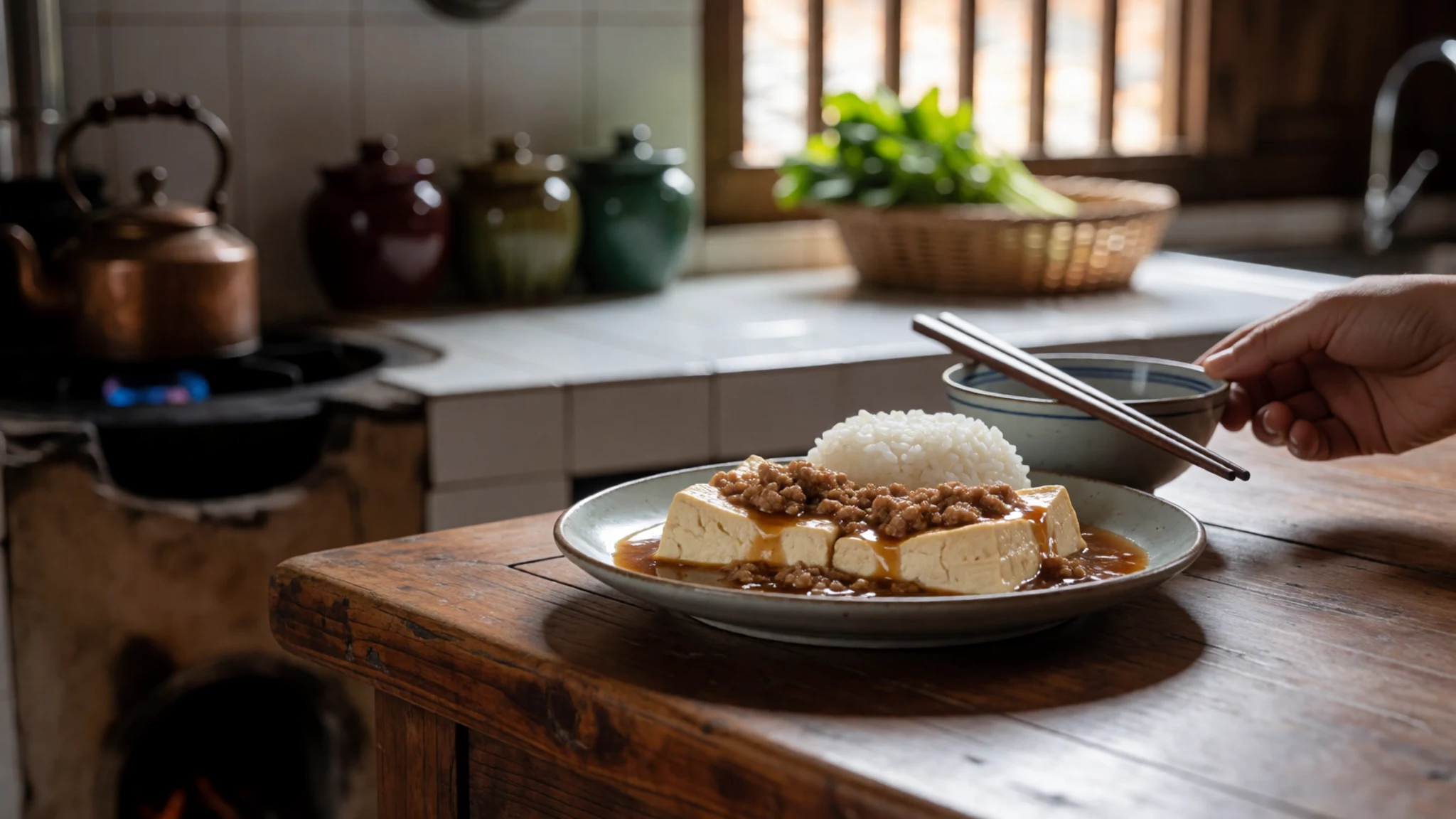
- Salt-baked chicken — Hakka eateries in Yongding and Nanjing county towns
Salt-baked chicken is a Hakka dish of a whole bird cooked under hot salt until the meat is savoury and the skin dry. Around Fujian Tulou it is food for a shared table. County-town eateries cook it more often than the smallest village kitchens.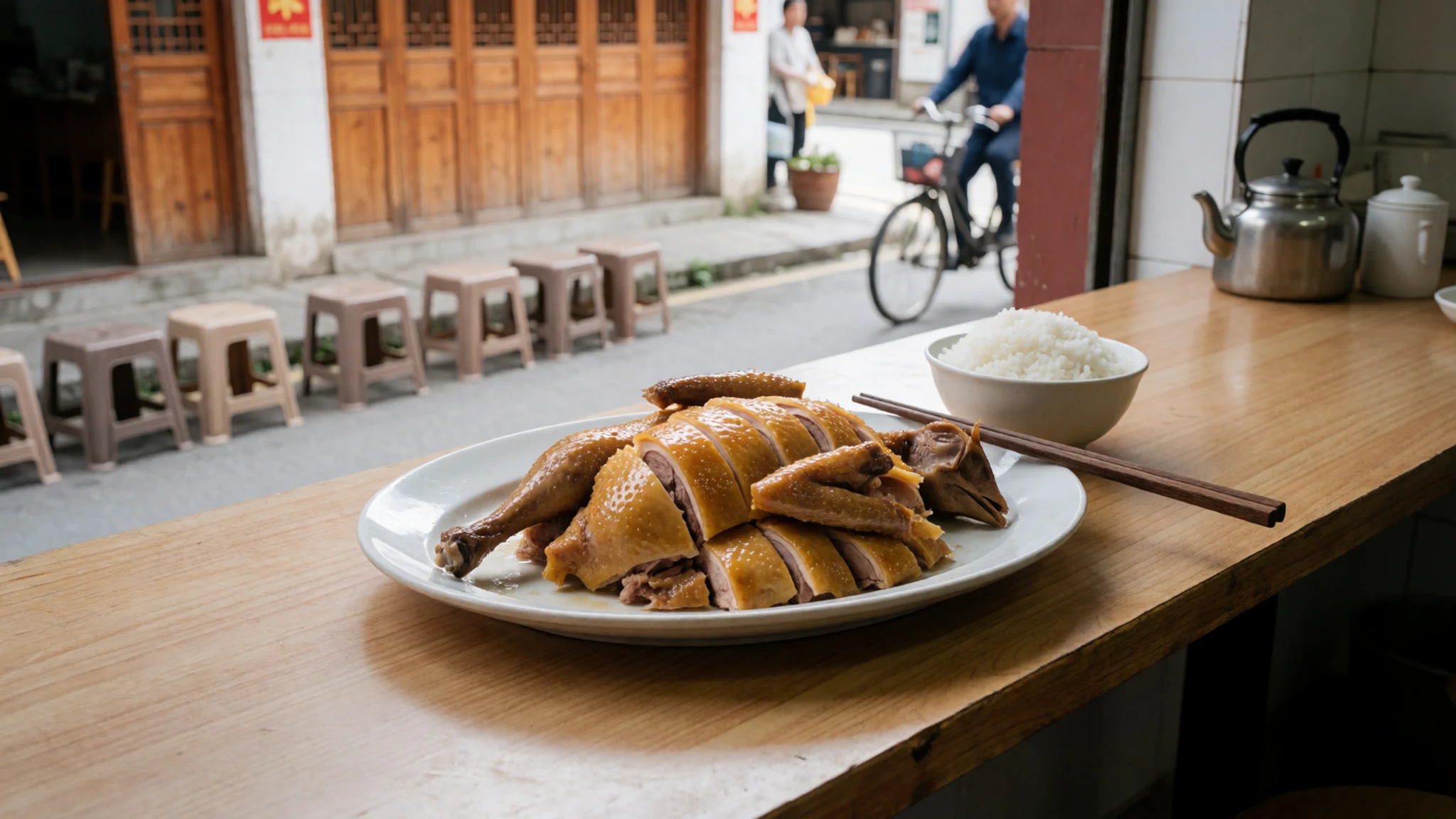
- Pork with preserved mustard greens (meicai kourou) — Yongding markets and homestay kitchens
Pork belly steamed on sweet-salty preserved mustard greens is the Hakka comfort dish of these hills. The greens, meicai, are dark and dry, and Yongding markets sell them loose. At Fujian Tulou, choose a kitchen that cooks for residents. - Pounded tea (lei cha) — Hakka households and small shops in the tulou valleys
Lei cha is pounded tea: roasted leaves, peanuts, sesame and herbs ground to a paste, then whisked with hot water into a savoury drink. Rice can make it a light meal. Fujian Tulou households sometimes offer it, and village shops sell a sweeter cup. - Rice noodles and taro cakes — morning markets in Yongding and Nanjing county towns
Breakfast in the county towns is rice, not bread: thin noodles in a clear broth, or steamed rice and taro cakes stuffed with pork and pickle. Eat them at a morning market before the bus toward Fujian Tulou. Homestay breakfasts are plainer and less reliable.
Plan it
Best time. Fujian Tulou is kindest to walkers in October, when the days stay warm and the rain eases off. Summer is hottest in June–August and wettest in May and June; winter nights in December and January fall below freezing.
How long. 2–3
Getting there. Fujian Tulou is reached via Xiamen or Longyan airports, or by train to Longyan, then a bus or hired car into the clusters. Gaobei, Hongkeng, Chuxi and Tianluokeng lie in different valleys, so that last road leg is the journey that matters.
Budget. mid
Tips
- Keep to one valley a day: Gaobei, Hongkeng, Chuxi, or the Nanjing County cluster around Tianluokeng.
- Arrive at Chengqi Lou and Tianluokeng early; coach parties fill the public galleries later in the morning.
- Carry cash. Village stalls, small entry desks and homestays often cannot take a card.
- Wear shoes with grip. Gallery timber and earthen stairs are slippery after rain.
- Treat a homestay inside a lived-in building as a house: the corridor is shared, and the kitchen may be private.
- Ask a host which buildings are open; arrangements change.
Etiquette
- Ask before photographing people, their washing, or the inside of a private room.
- Remove shoes where you see a step up and slippers waiting.
- Keep voices low in ancestral halls and do not touch the tablets.
- Do not climb, carve or lean hard on the rammed-earth walls.
- Do not fly a drone over houses where people live.
Nearby
Sources
- Wikidata (CC0)
- Wikipedia (CC BY-SA 4.0)
- Wikivoyage (CC BY-SA 4.0)