Filicudi
Filicudi, Italy
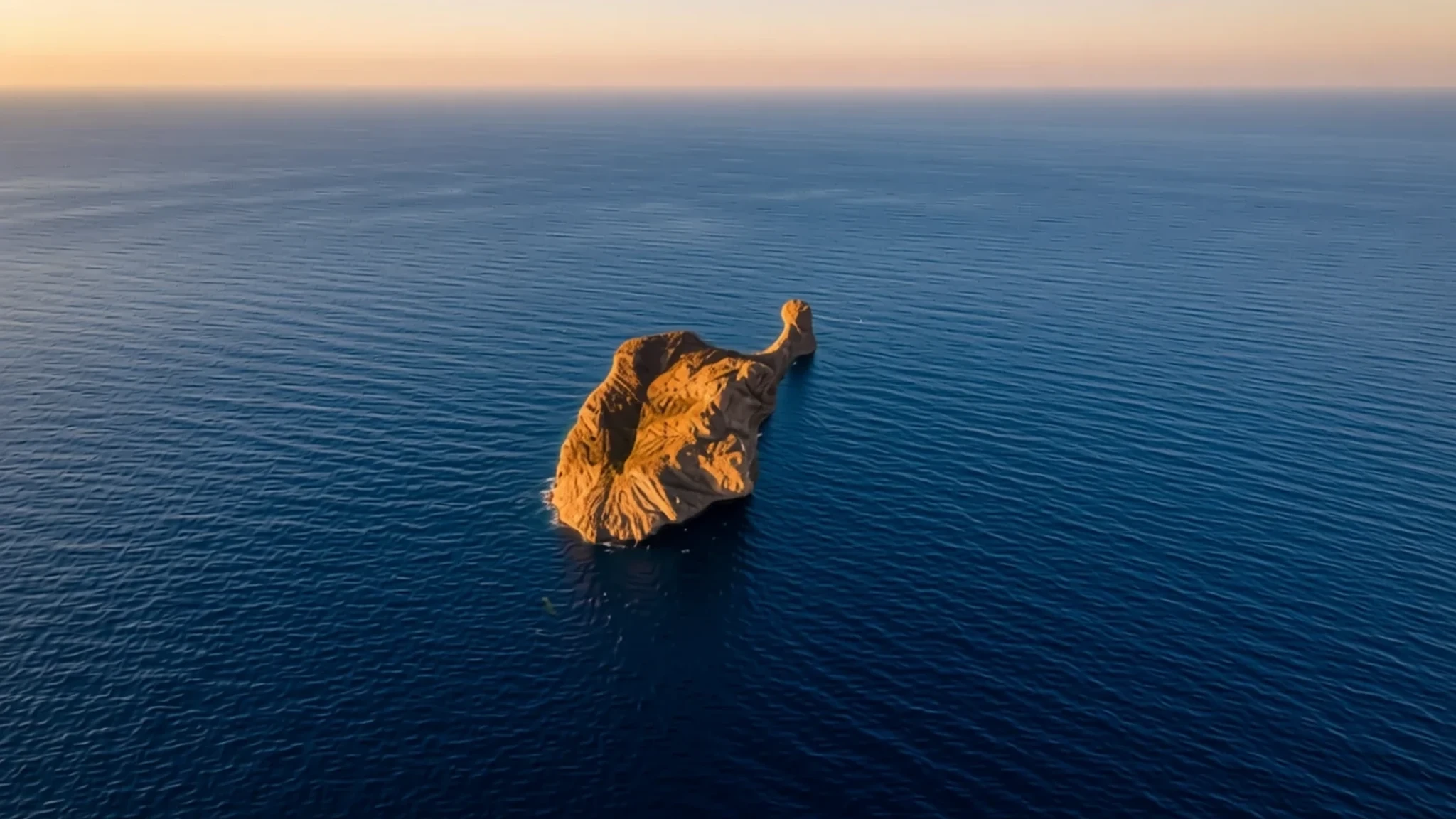
Filicudi is a quiet volcanic island in the Aeolians, with mule-track walks, Bronze Age ruins, clear water and very few other visitors.
The place
Filicudi lies in the Tyrrhenian Sea, 46 km north-east of Sicily, and is one of seven islands in the Aeolian archipelago. Administratively it belongs to the comune of Lipari. The island covers 9.5 km², yet only 235 people are counted as residents, so the scale is that of a few hamlets rather than a resort.
The shape is that of an old volcano. Monte Fossa Felci, the summit at 774 m, dominates the middle, and slopes of scrub, terraces and bare rock drop to small coves and dark cliffs. Two other hills, Montagnola and Terrione, sit lower down. Off the coast stands La Canna, a slim rock stack about 74 m high that looks like a stone finger pushed up out of the sea.
Settlement is thin. Pecorini Mare, on the coast, and Valdichiesa, higher inland, are among the villages. Farmland still yields wine, olive oil, grain and vegetables, though much of it is now given over to wild growth. In 1997 roughly three-quarters of the island, around 7 km², became a nature reserve, which explains why so much of it feels untouched.
The pace is slow and the infrastructure modest. Roads are narrow, shops are few, and ferries set the rhythm of the week. People come for walking, swimming, diving and silence, and they should expect the weather and the sea to decide plans as much as any timetable.
Its story
The name Filicudi is a worn-down form of Phoenicusa, the Greek name meaning Phoenician island. That tells of long contact with Mediterranean traders, but people were here far earlier. Settlers arrived in the Neolithic period, around 3000 BCE, and later a different people took over the island in the Bronze Age. At Capo Graziano, the remains of a village from the second millennium BCE can still be traced.
After that, the island seems to have been empty for many centuries until Greeks came to occupy it. Roman and Byzantine traces show it stayed in use, if modestly, as the Mediterranean's powers changed. Offshore, a wreck of a seventeenth-century Spanish warship is a reminder that the sea lanes here were busy and dangerous.
The twentieth century brought a sharper story. By 1971 Filicudi had 270 residents, but many were already leaving for better prospects elsewhere. On 26 May of that year, police sent eighteen suspected Mafia leaders, awaiting trial, to the island as exiles. About a third of the residents left, and within days the rest departed in protest, leaving only the exiles and their guards.
The island recovered. From the 1970s photographers, artists and writers rediscovered it, among them Sergio Libiszewsky, the designer Ettore Sottsass, the novelist Roland Zoss and the publisher Giulio Einaudi. Their attention, and their restored houses, helped introduce Filicudi to modern visitors, and it has stayed small ever since.
What to see
- Monte Fossa Felci — Centre of the island
The island's summit, reached by paths that climb through scrub and old terraces. The top gives a view over neighbouring Aeolian islands on a clear day. Start early, carry water, and allow a long morning, as there is little shade on the upper slopes.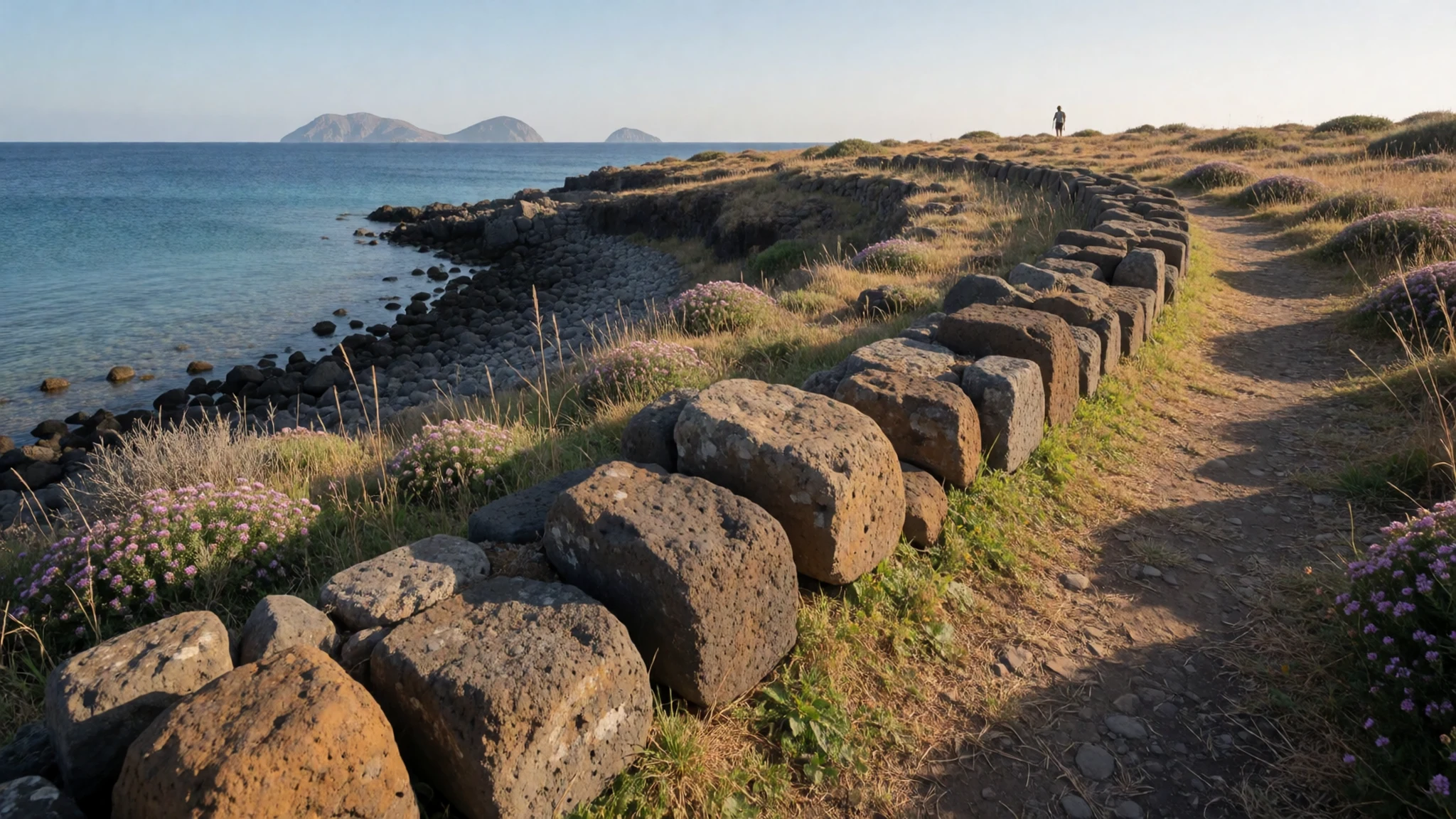
- Capo Graziano archaeological site — Capo Graziano, east coast
A headland holding the remains of a Bronze Age village from the second millennium BCE. Little is built up, so the interest lies in the setting and in imagining how early islanders lived beside the sea. Divers also explore the nearby seabed, which includes a Spanish wreck.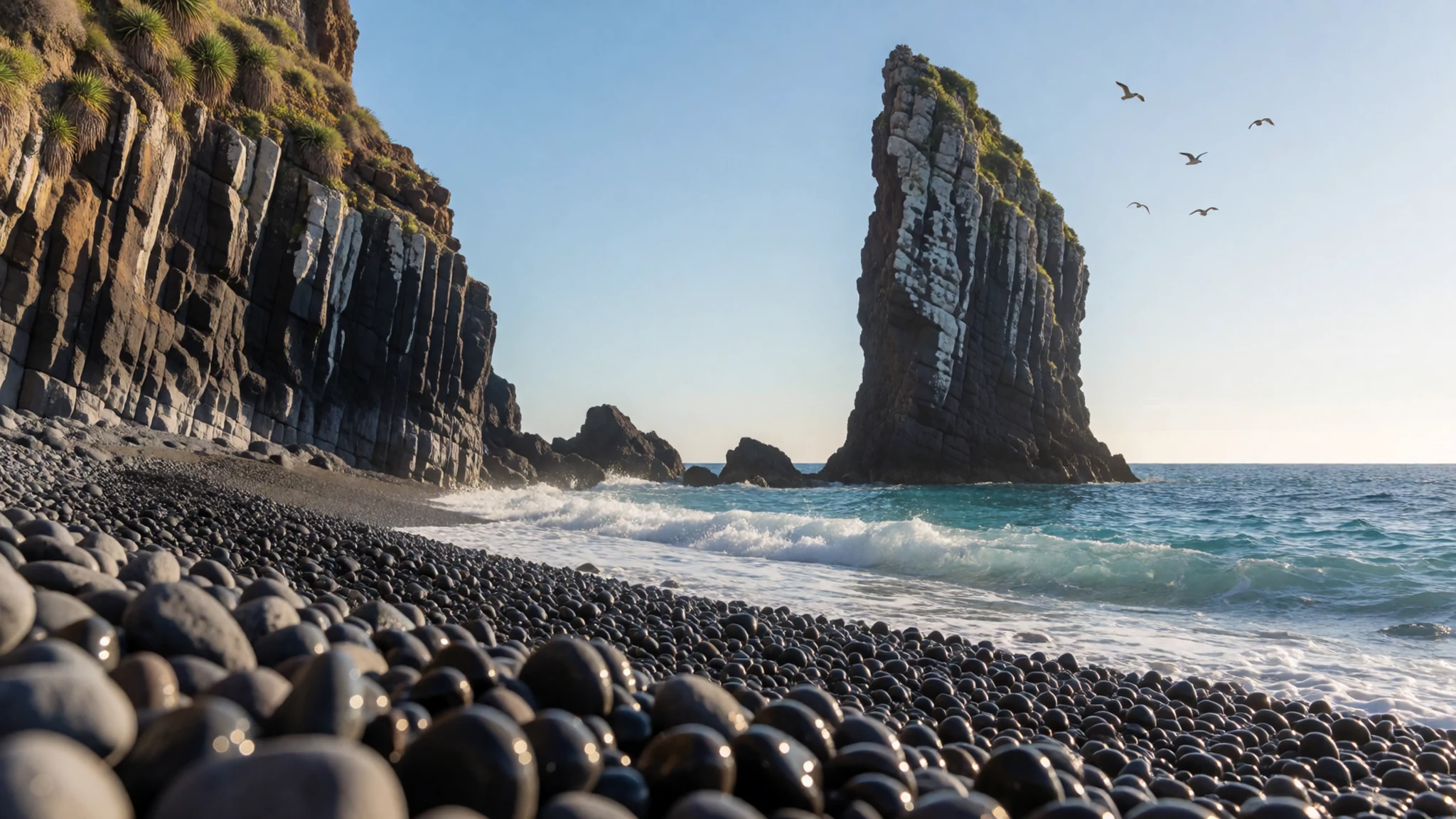
- La Canna — Off the western coast
A slender volcanic stack rising about 74 m from the water off the west coast. It is best seen from a boat, in late-afternoon light, when the rock turns darker against the sea. Local boat trips circle the island and usually include this stop.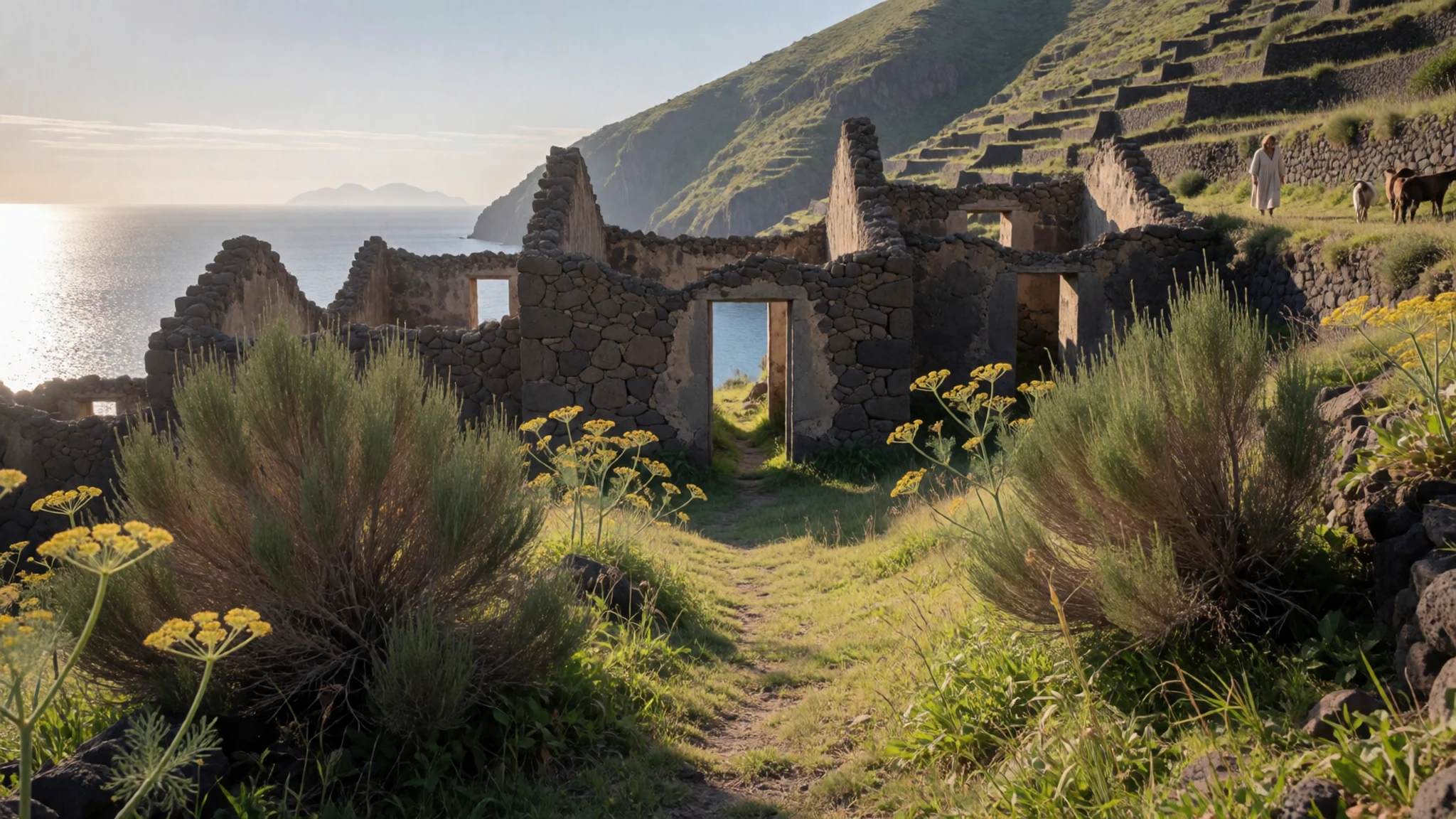
- Zucco Grande — North-east Filicudi
A cluster of mostly abandoned houses on the north-east side, reached on foot along a steep track. The ruins sit among terraces above the sea and show how people once farmed this slope. It is quiet, remote and photogenic, but bring sturdy shoes.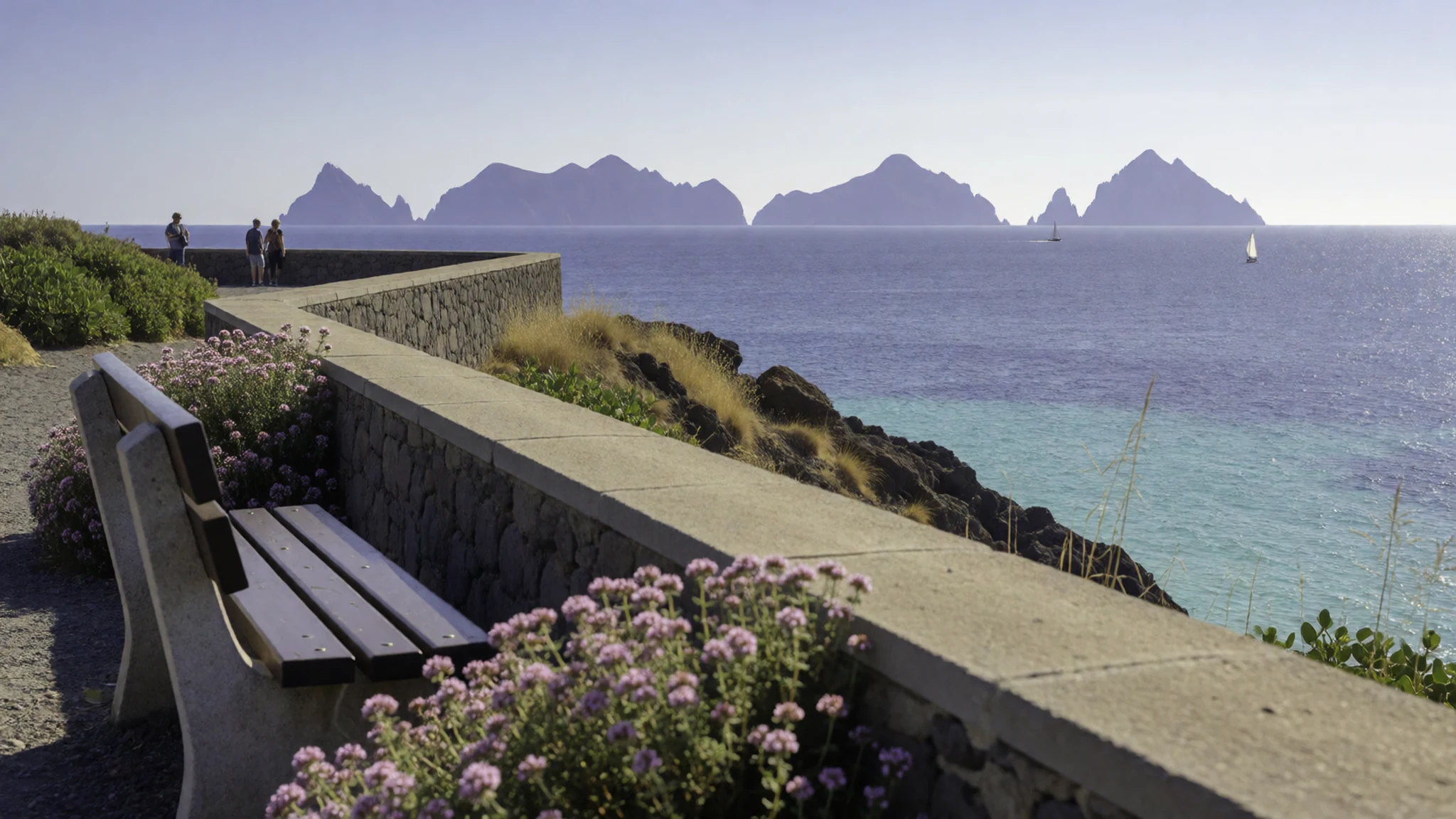
- Pecorini Mare — South coast
A small coastal village with a pebbly shoreline, a handful of eateries and boats pulled up on the stones. It is the easiest place for a swim and a long lunch, and a good base for short walks along the coast road.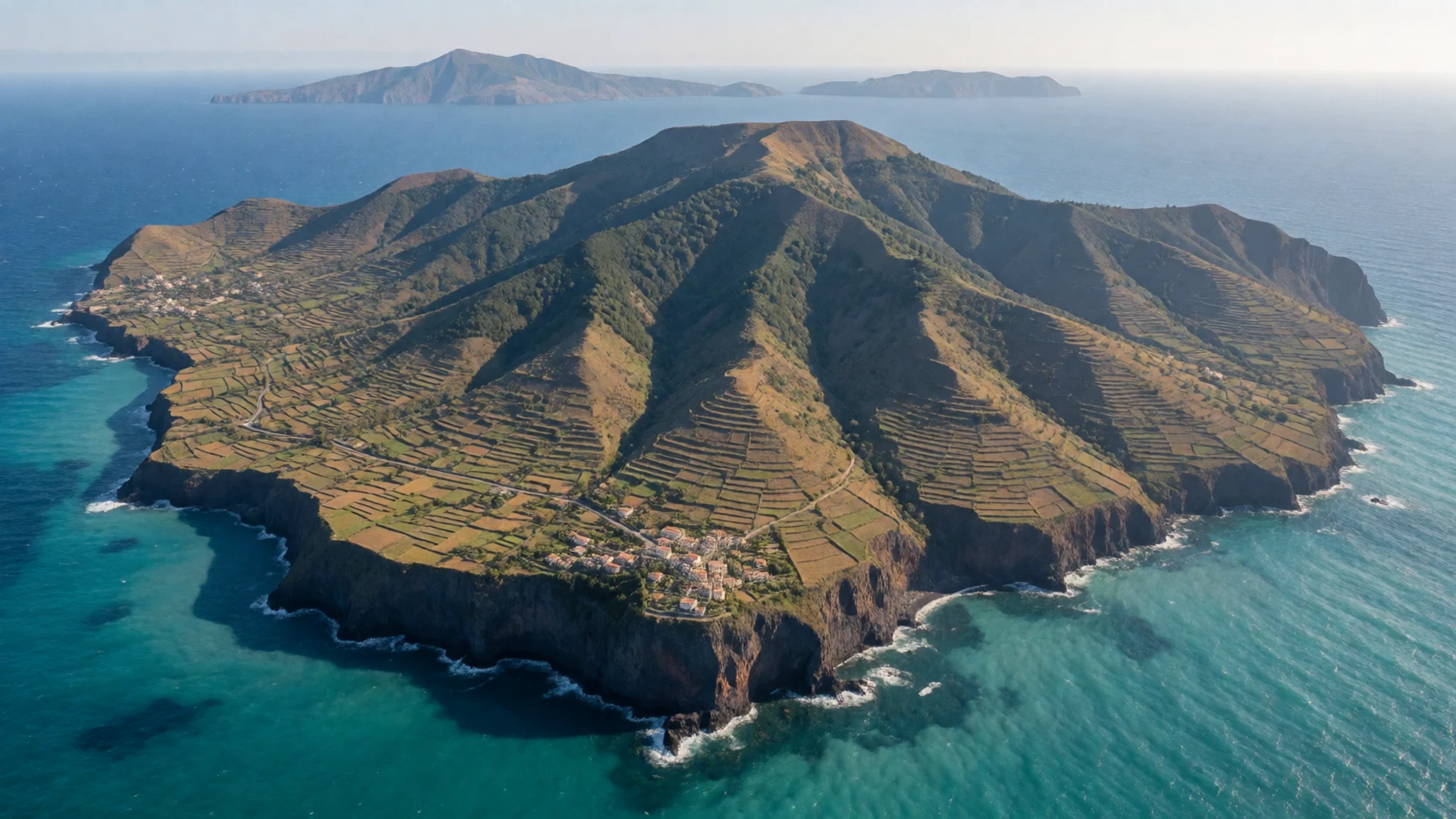
Culture
Filicudi's culture is that of a small Sicilian island community. Families have farmed, fished and kept animals here for generations, and many have relatives who left for the mainland, Australia or the Americas. Today a fair number of houses are second homes, so the village feels busier in summer and almost empty in winter.
Sicily as a whole carries layers of Phoenician, Greek, Roman, Arab, Norman and Catalan influence, and the Aeolians share part of that inheritance in their language, food and festivals. Religion remains important in daily life, with village churches, saints' days and processions marking the calendar. Older residents tend to be conservative in manner, though warm and curious with visitors who greet them politely.
The island's brief role as a place of exile for Mafia suspects in 1971 is remembered with some sensitivity. Across Sicily, many people are tired of the stereotype and actively work against organised crime through civic groups, so jokes on the subject are unwelcome. Island life is also practical: supplies come by boat, weather can cancel crossings, and neighbours help one another.
Spend time in a village and the rhythms become clear: a long lunch, a quiet afternoon, and an evening walk when the heat drops. Visitors who adapt to that pace tend to be welcomed.
Greet people with a buon giorno or buona sera when entering a shop or eatery, and never joke about the Mafia or call Sicilians mafiosi.
What to wear
Filicudi has no single dramatic costume. Traditional island dress was practical clothing for farmers and fishermen: dark wool or heavy cotton trousers, linen shirts, knitted caps and shawls for women, all chosen to cope with wind, sun and hard work. Black was common for older women, especially widows, and some elderly residents still dress this way for church. Festival days bring out better clothes rather than a distinct costume.
Now people wear what suits the climate and the terrain. In summer that means light cotton or linen, shorts, sun hats and sandals or canvas shoes. Many residents are in work clothes, with sturdy boots for terraces and paths. Evenings are casual, with a clean shirt or simple dress, and nothing formal is expected in the island's small eateries.
Visitors should bring sun protection, a hat and swimwear, but also proper shoes. Paths are rocky, steep and dusty, so trainers or light walking shoes are better than flip-flops for anything beyond the harbour. A light windproof layer helps on boats and in spring or autumn, when evenings turn cool. Dress modestly for village churches, with shoulders and knees covered, and avoid walking through villages in swimwear. A small day bag for water and a towel is practical.
What to eat
- Fresh grilled fish — Harbour-side eateries at Pecorini Mare
Fish landed by local boats is usually grilled or baked simply with olive oil, lemon and herbs. The choice depends on the day's catch, so ask what came in that morning rather than expecting a fixed menu.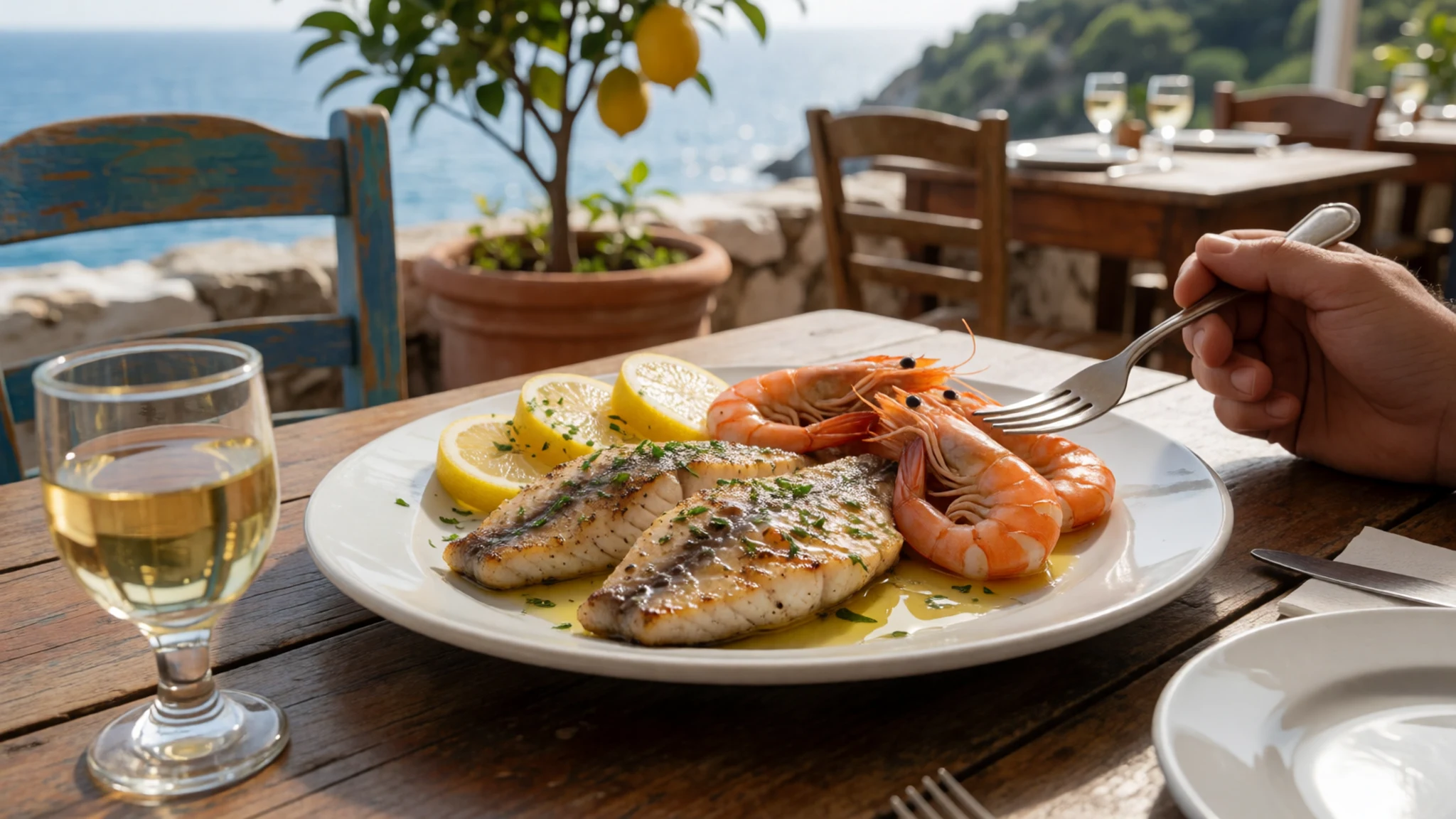
- Pasta with tomato, basil and capers — Village eateries and family-run kitchens
A simple island plate: pasta dressed with ripe tomato, basil and salted capers, which grow wild on dry walls across the Aeolians. Salty, fresh and light, it suits a hot lunch.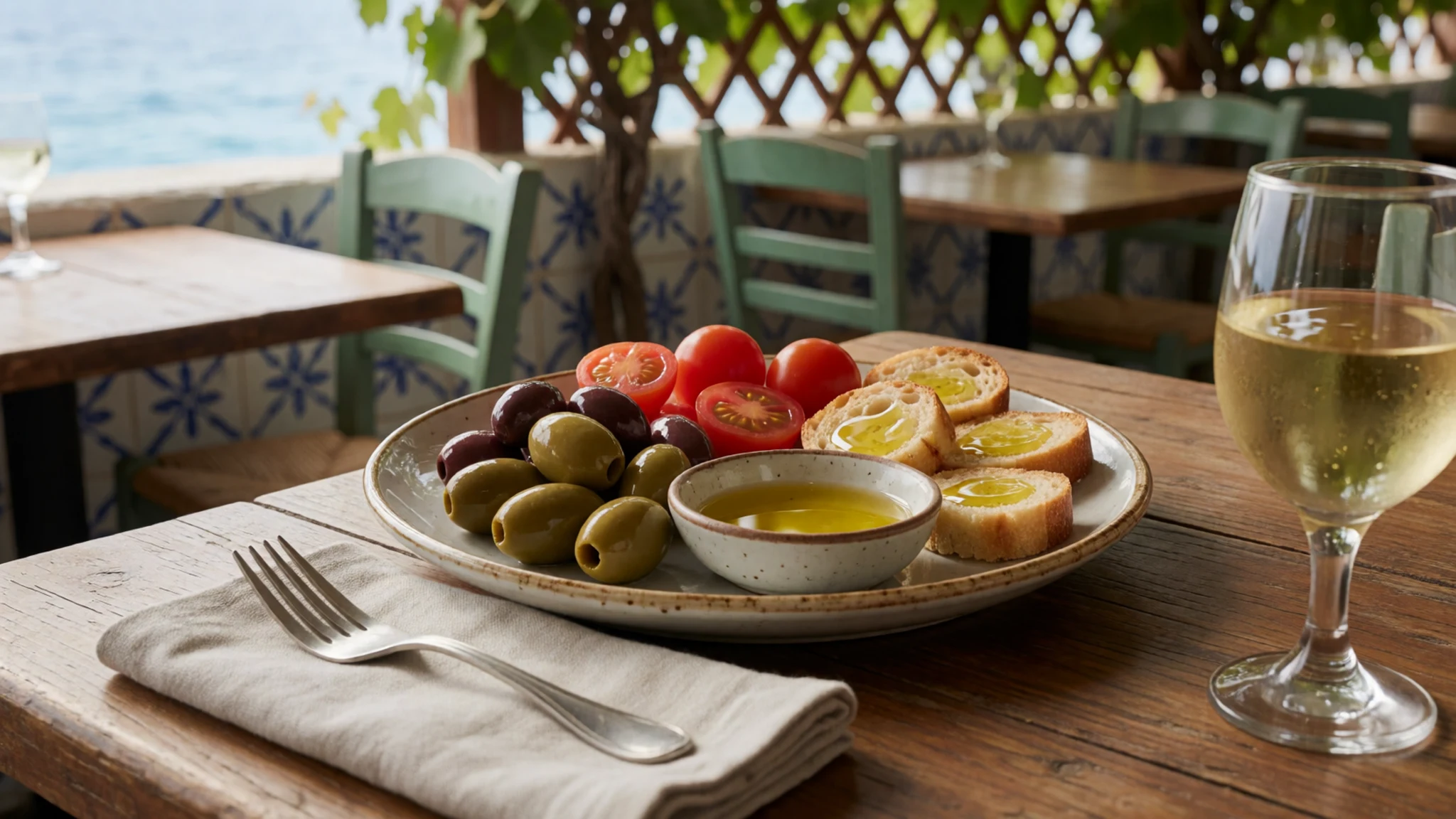
- Pane cunzato — Small bars and bakeries
A thick slice of bread dressed with tomato, olive oil, oregano, anchovies or cheese, depending on the cook. It is a traditional working meal and ideal as a picnic for a walking day. - Caper dishes — Village shops and small producers
Capers and their buds appear in salads, sauces and as a garnish on fish. Local producers pickle or salt them, and jars make a light, easy souvenir to carry home. - Malvasia wine — Eateries and wine shops on the island
A sweet, amber wine from the Aeolians, usually served with dessert or biscuits. Filicudi's soils also grow grapes for lighter table wines, which pair well with seafood.
Plan it
Best time. May–June and September–October. Spring is green and comfortable for walking, and the sea stays warm into early autumn. July and August are hot, dry and busier, while winter brings rough seas, cancelled crossings and many closed businesses.
How long. 3–4
Getting there. Fly to Catania or Palermo in Sicily, continue by road or rail to Milazzo, then take a ferry or hydrofoil to Filicudi via Lipari or Salina. Check the official site for current crossings: http://www.comunelipari.gov.it/sa/sa_p_testo.php?x=978d339f98bd8daa7f295d6ebf60dded&idservizio=10008&idtesto=26&idfoto=&fogliaClick=root1_4&fnode=4#4
Budget. mid
Tips
- Book accommodation early for July and August, as beds are limited
- Carry cash, since small shops and eateries may not take cards
- Bring water and sun protection for walks, as shade is scarce
- Allow slack in your plans, because rough seas can delay or cancel ferries
- Start hikes early to avoid the midday heat
Etiquette
- Greet people in shops and eateries before asking for anything
- Take your rubbish with you, especially in the nature reserve
- Cover up when entering village churches
Nearby
Sources
- Wikidata Q743908 (CC0)
- Wikipedia: Filicudi (rev 1379383089) (CC BY-SA 4.0)
- Wikivoyage: Sicily (rev 5320270) (CC BY-SA 4.0)
- Aerial image of Filicudi (view from the south), Carsten Steger (CC BY-SA 4.0)
- Aeolian Islands map (CC BY 3.0)
- Guardare un po' più in là, Antonio Principato (CC BY 2.5)
- Cannone spagnolo, Davide Mauro (CC BY-SA 4.0)
- Case delle Zucco Grande 2, GerritR (CC BY-SA 4.0)
- Case delle Zucco Grande, GerritR (CC BY-SA 4.0)
- Distant Islands, kuhnmi (CC BY 2.5)
- Filicudi banner, Dv.uzzi (CC BY 3.0)


