Epidaurus
Epidaurus, Greece
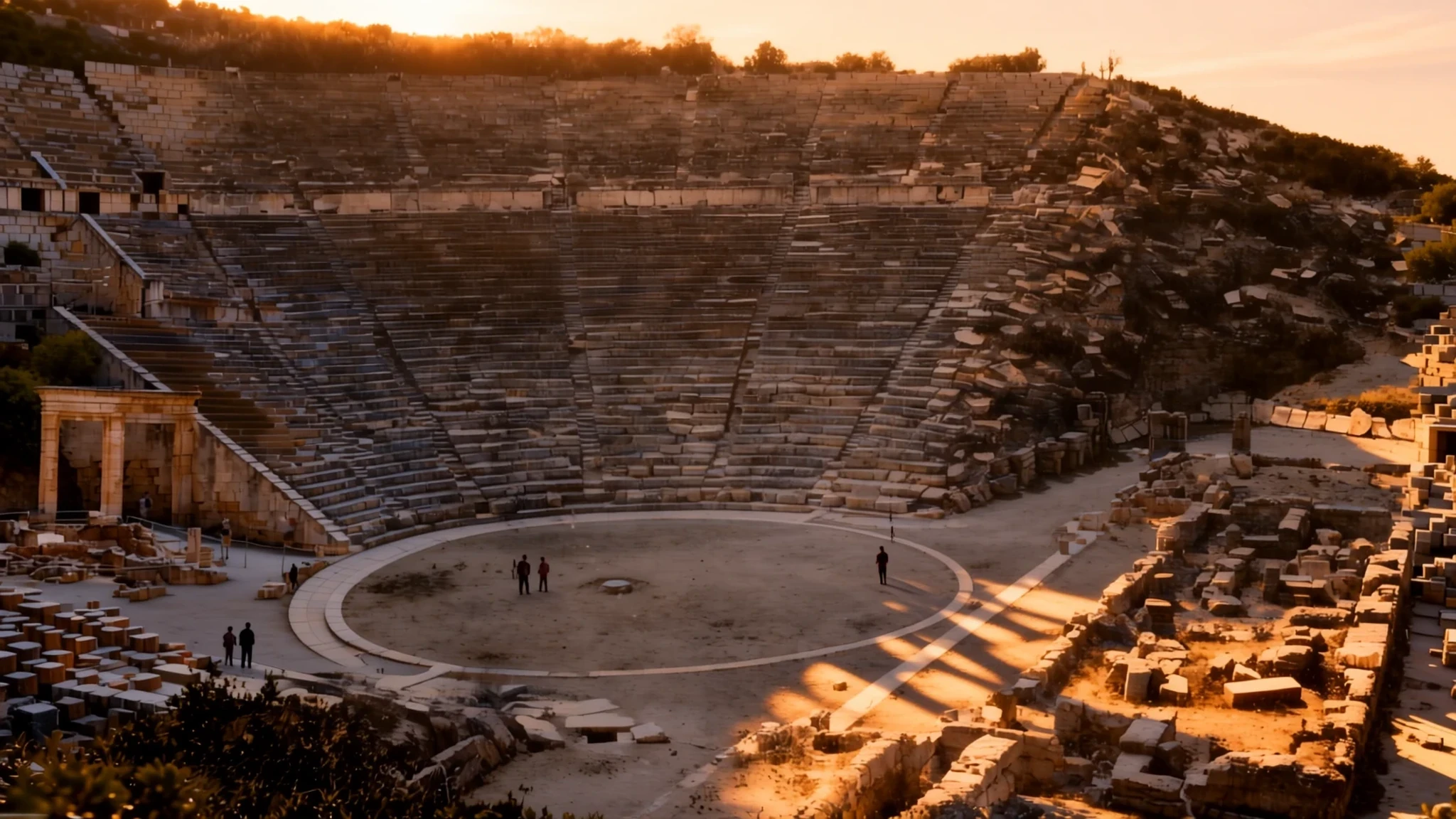
Epidaurus is where Greece's healing god had his sanctuary, and where a stone theatre still carries an actor's voice to every seat.
The place
Epidaurus sits on the Argolid Peninsula in the eastern Peloponnese, facing the Saronic Gulf. In antiquity it was a small city-state, and the name now belongs to a modern municipality in the regional unit of Argolis, formed in 2010. Two towns carry the name, Palaia Epidavros on the coast and Nea Epidavros nearby, while the municipal seat is the inland town of Lygourio.
Most visitors mean something more specific: the sanctuary of Asclepius, a few kilometres inland from the coast, in a quiet fold of wooded hills. It was a place of healing rather than a city, and the ruins reflect that. There is a great theatre, an athletics stadium, a long sleeping hall for patients, a dining hall for pilgrims and a smaller concert building. Pine, olive and scrub cover the slopes between them, and cicadas fill the air in summer.
The sanctuary and theatre were inscribed on the UNESCO World Heritage List in 1988, for their architecture and for their part in spreading healing cults across the Greek and Roman worlds.
The setting is rural. Orange and olive groves, small villages and seaside tavernas surround the site, and the nearby ports of Nafplio and Tolo make easy bases. Mycenae, Tiryns and Argos are all within the same region, so Epidaurus works well as one stop in a few days of Peloponnese touring. The site is calm outside peak season, but the theatre gets crowded when coaches arrive, and summer afternoons are hot with little shade.
Its story
Epidaurus was a small polis that stayed independent of its larger neighbour Argos, and it was not counted as part of Argolis until Roman times. With the land that supported it, it formed a modest territory called Epidauria. Its fame came less from politics than from belief.
According to tradition, the city took its name from, or was founded by, a hero called Epidaurus. It was also said to be the birthplace of Asclepius, the healer son of Apollo. That claim turned a quiet valley into a destination. Asclepius became one of the best-loved figures of Greek religion, and his sanctuary here drew the sick from across the Greek world and later the Roman one.
The cure was part ritual, part rest. Pilgrims prepared, made offerings and then slept in a dedicated hall, hoping the god would appear in a dream and prescribe or perform a remedy. The sanctuary grew a whole supporting cast of buildings, among them baths, a dining hall, a stadium for athletic festivals and a theatre, since the Greeks saw music, drama and exercise as part of wellbeing.
The theatre is credited to Polykleitos the Younger and dates to the 4th century BC. Over the centuries the sanctuary lost its role as healing cults faded, the buildings fell silent and the hillside slowly covered them. Excavation brought the site back into view, and the theatre was returned to use for performances, so the oldest part of the story is still being acted out in the open air.
What to see
- The Great Theatre — Sanctuary of Asclepius
The theatre is the reason most people come. Its curved rows of stone seating rise in a bowl against the hillside, and the circular floor below is flat and bare. Sit high up, then listen for a voice or a dropped coin from the centre. Performances are held in season; check the official programme.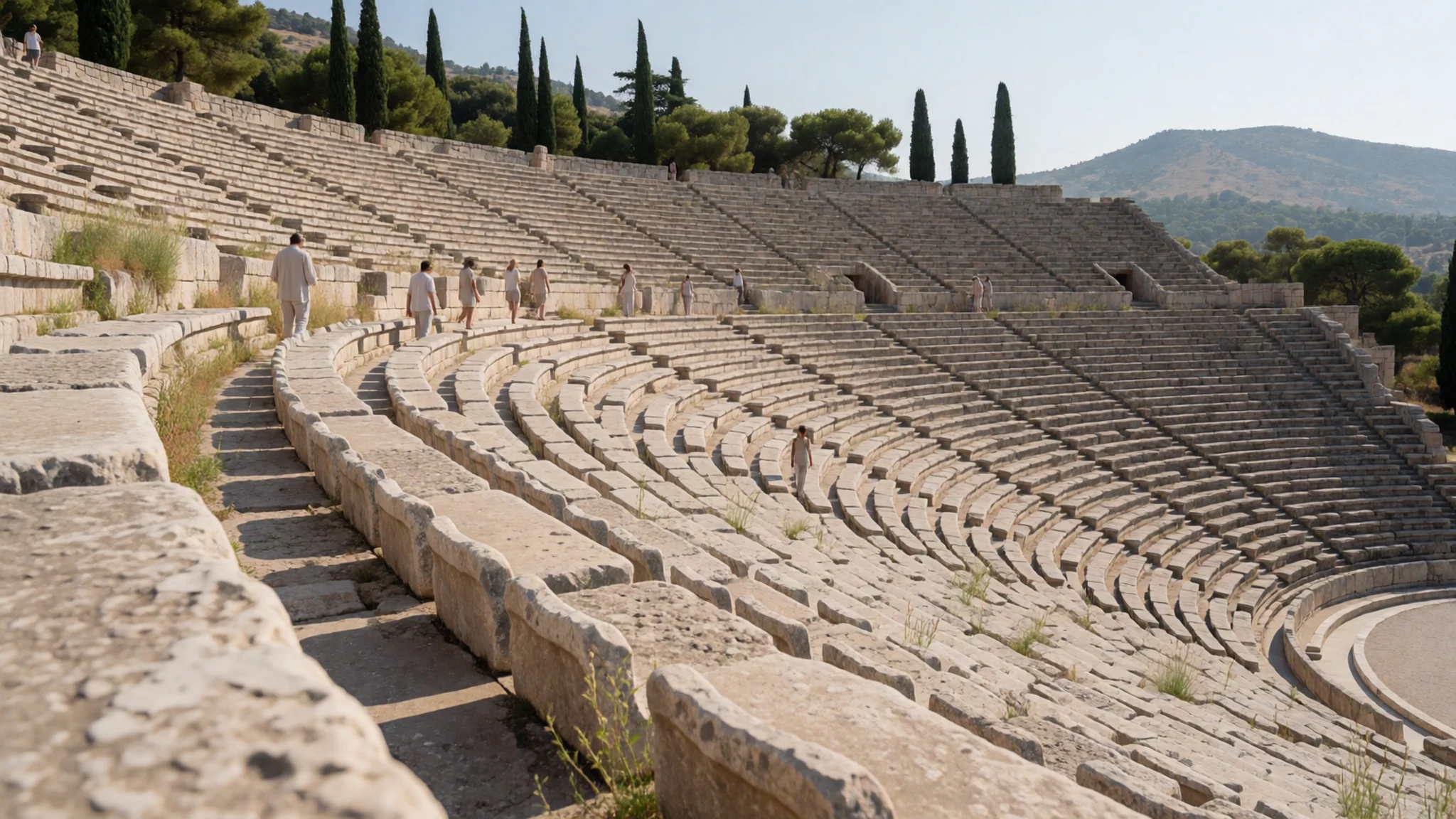
- The Abaton, or sleeping hall — Sanctuary of Asclepius
The long stoa known as the Abaton or Enkoimeterion was where patients lay down to sleep and wait for the god's visit in a dream. Only the foundations and some columns survive, but the plan is clear, and it explains better than any plaque why the sanctuary existed.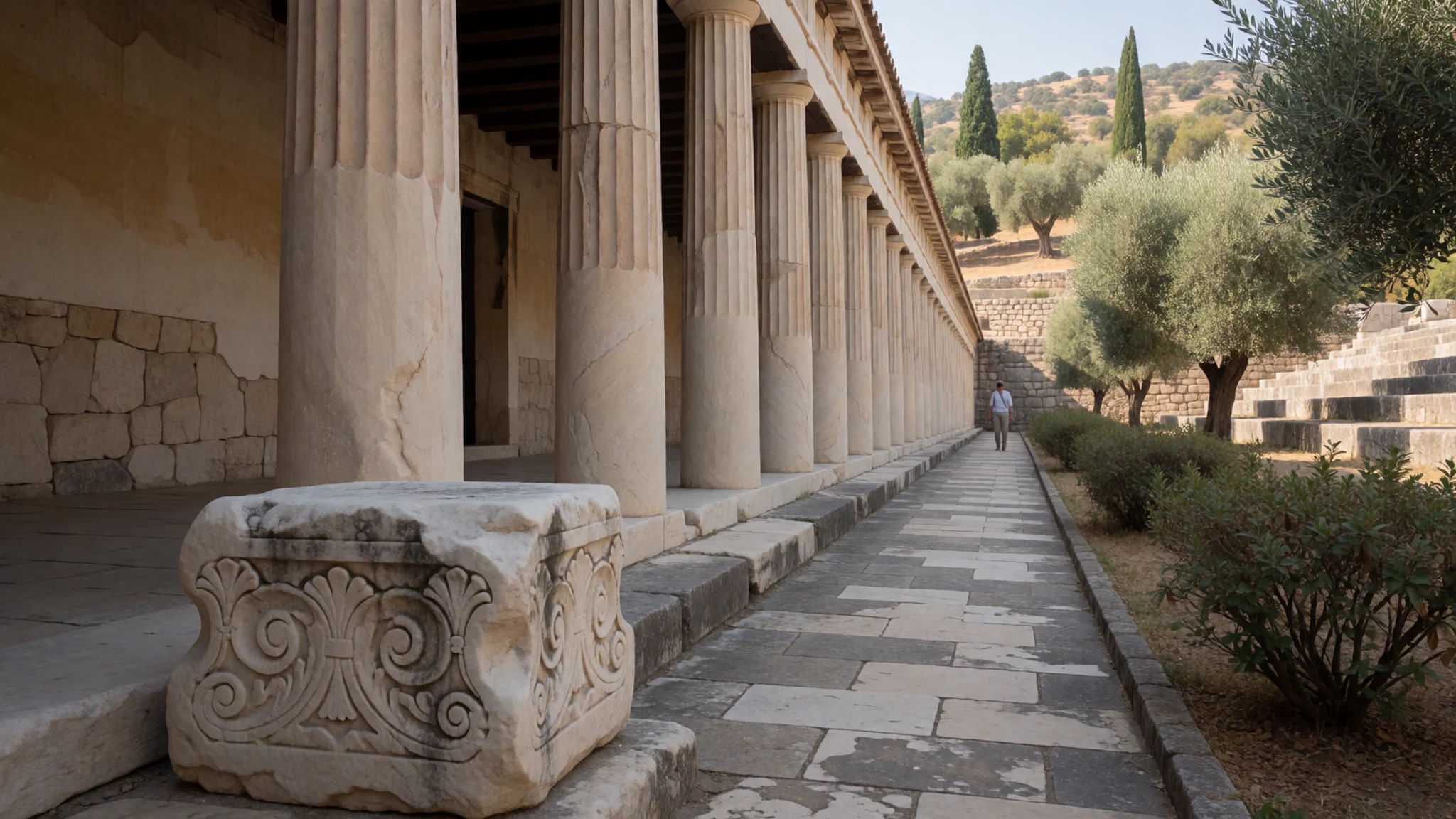
- The Ancient Stadium — Sanctuary of Asclepius
Athletic contests were part of the festivals held for Asclepius, and the stadium shows how simple a Greek running track was. A long grassy strip is framed by sloping banks where spectators sat. It is usually quiet, and a good place to rest in the shade after the theatre.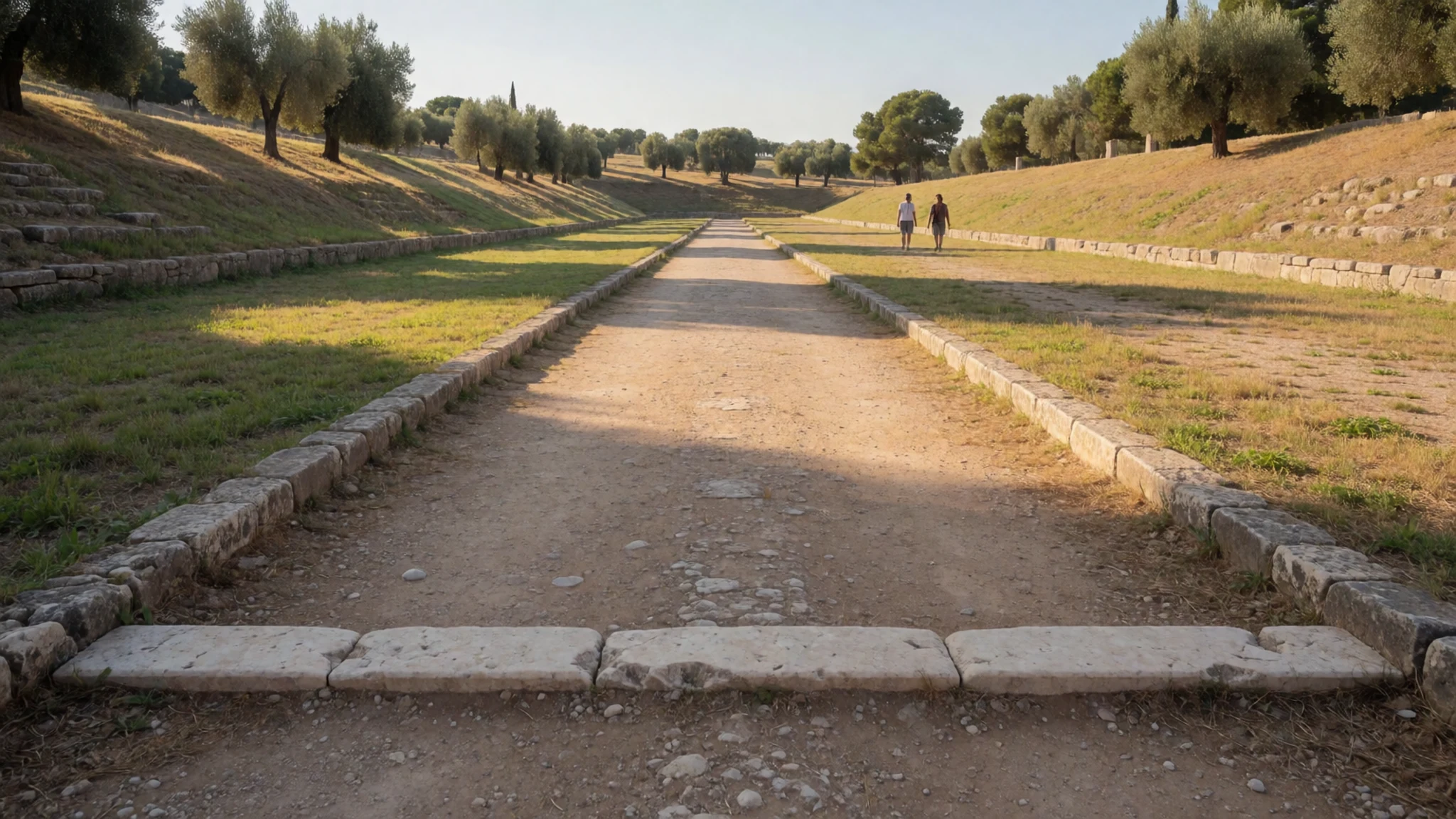
- The Hestiatorium — Sanctuary of Asclepius
The Hestiatorium was the sanctuary's dining hall, where pilgrims and priests ate together after rituals. The ruins are low and modest, mostly outlines of rooms around a courtyard. It rewards a short stop for anyone curious about the everyday side of ancient pilgrimage rather than its monuments.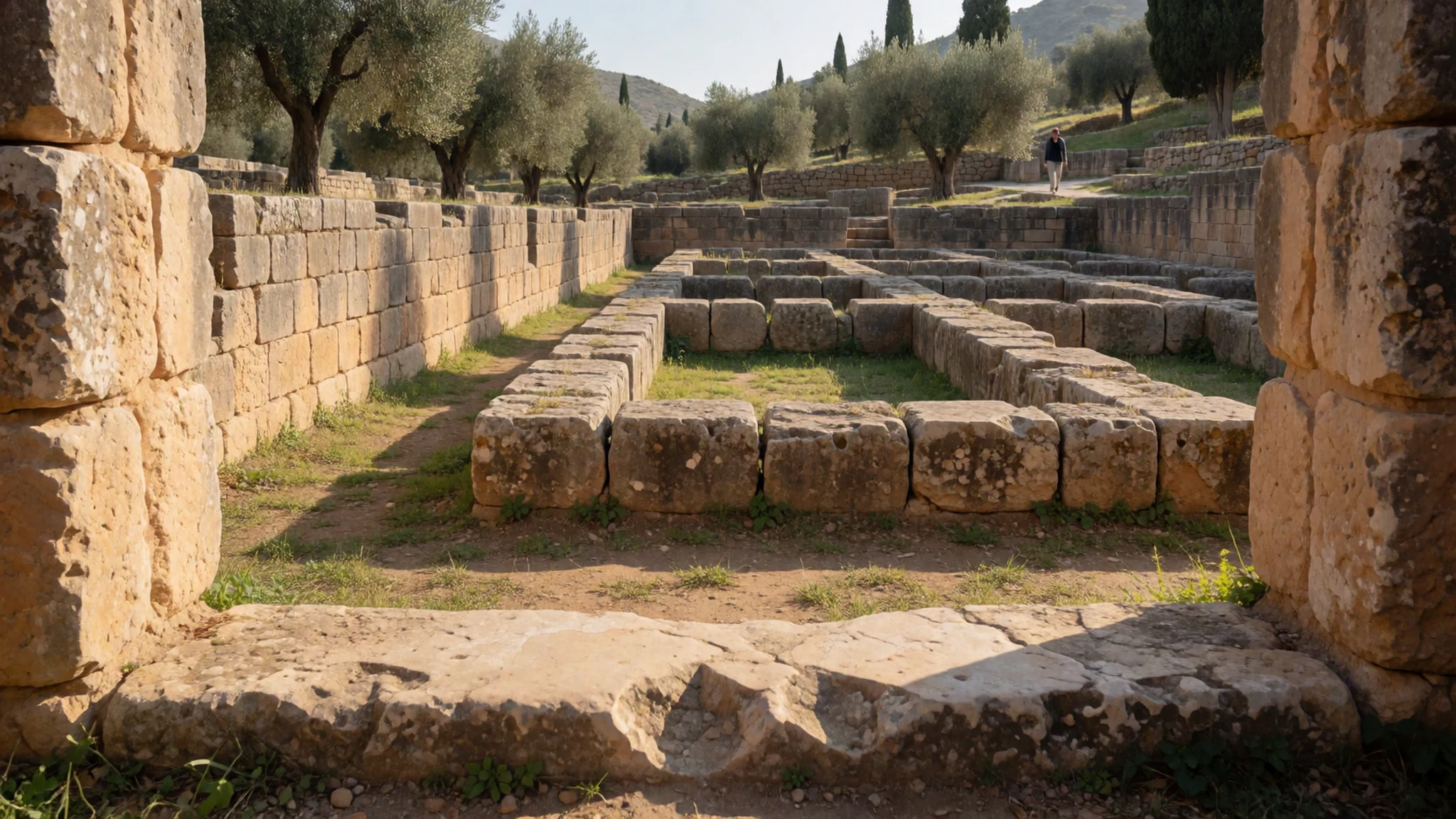
- The Odeion — Sanctuary of Asclepius
The Odeion was a smaller, roofed hall used for music and recitals, a gentler companion to the open-air theatre. Little of the structure remains, but it is a useful reminder that the sanctuary treated song and speech as part of healing, not only as entertainment.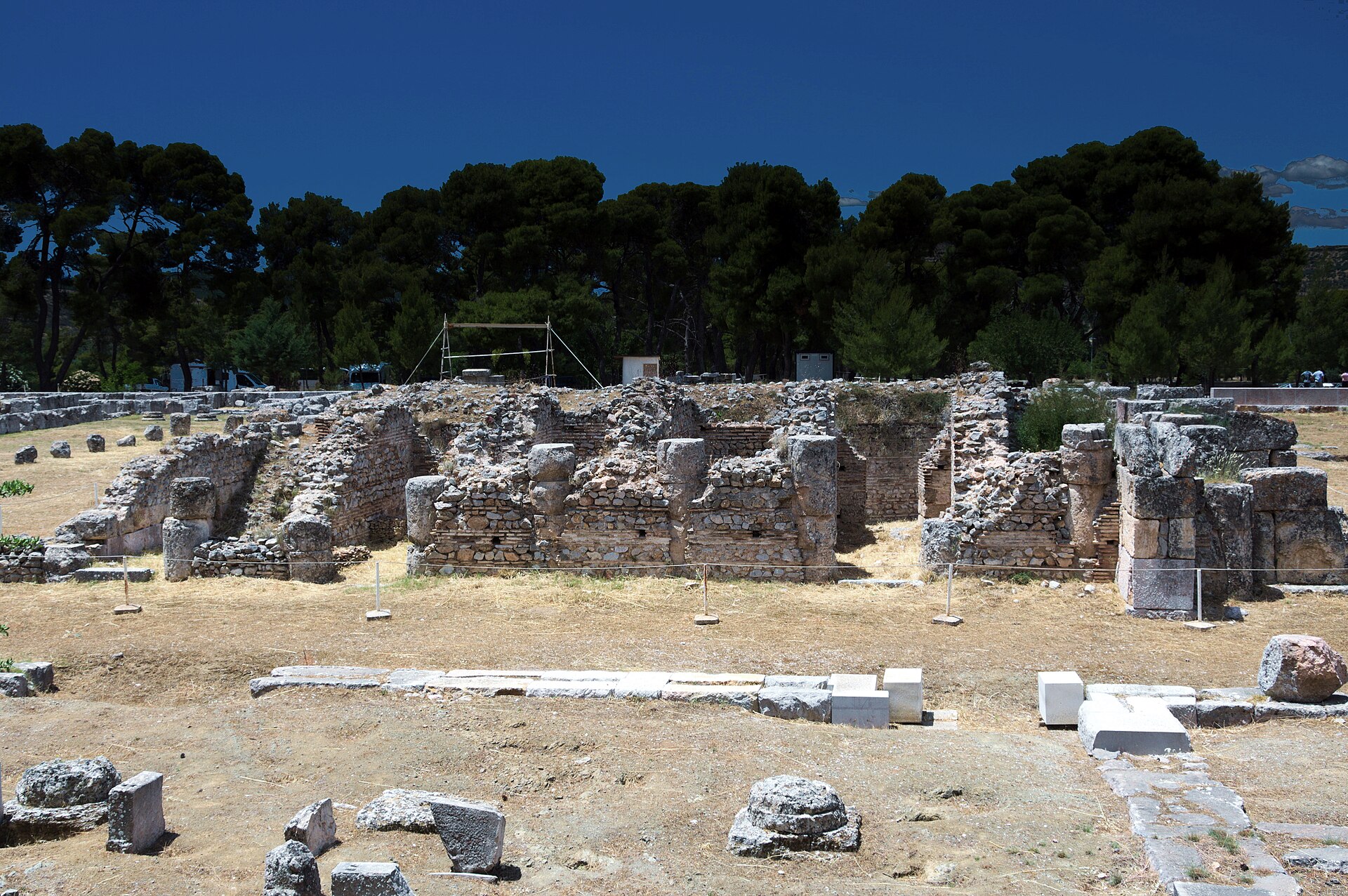
Culture
Epidaurus is best understood as a place where religion, medicine and performance overlapped. Greeks of the ancient world saw illness as something the gods could influence, and the sanctuary offered a structured route to ask for help: purification, offerings, prayer and the night in the sleeping hall. Cured pilgrims often left thanks in the form of inscriptions or carved offerings, which is how we know so much about the claims made here.
Drama belonged to the same world. Plays were part of religious festivals, and the theatre was a communal space as much as an artistic one. That tradition continues today. Summer performances of ancient Greek drama are staged in the theatre, often in modern Greek or in translation, with audiences that include Greek families, school groups and visitors from abroad.
Modern Greek life in the area is relaxed and rural. Villages keep an easy rhythm, with long lunches, evening strolls and coffee at a kafeneion, the traditional neighbourhood café. Orthodox churches and small chapels dot the hills, and many are open only at set hours. Greeks tend to be hospitable to visitors who make an effort with a few words, such as kalimera for good morning and efharisto for thank you.
The site itself is protected archaeology, and the rules reflect that: do not climb on the ancient stonework outside marked paths, and do not take anything away, not even a small stone, as a souvenir.
What to wear
Epidaurus has no single costume of its own, but the wider Argolid and Peloponnese share the traditions of Greek regional dress. Historically, village women wore embroidered dresses and aprons in wool, linen and cotton, with headscarves and woven belts, while men wore the pleated white fustanella with a vest and tasselled cap. Today these are mostly seen at festivals, dance performances and national holidays, and in folklore museums such as those in nearby Nafplio.
Day to day, people in the area dress simply and for the heat: linen shirts, cotton dresses, shorts and sandals in summer, and jeans with light jackets in the cooler months. Smart casual is the norm for an evening out, and attendees at theatre performances dress comfortably rather than formally. Sunhats and sunglasses are everywhere in July and August.
For a visitor the main issue is terrain and sun. The archaeological site means uneven stone, dust and a lot of steps, so sturdy closed shoes or trainers with good grip suit better than flat sandals, and the theatre's steps can be slippery with wear. Bring a hat, sunscreen and a light long-sleeved layer for midday sun and for cooler evening performances. Modesty norms are relaxed at the ruins, but shoulders and knees should be covered when stepping into any monastery or chapel nearby. A scarf or light shawl is handy for that and doubles as sun cover.
What to eat
- Greek salad (horiatiki) — any seaside or village taverna in Palaia Epidavros or Nea Epidavros
Tomato, cucumber, onion, olives and a slab of feta, dressed with olive oil and dried oregano. Simple, cool and filling on a hot day. Order one at any village taverna near the sanctuary, and share it with bread for dipping.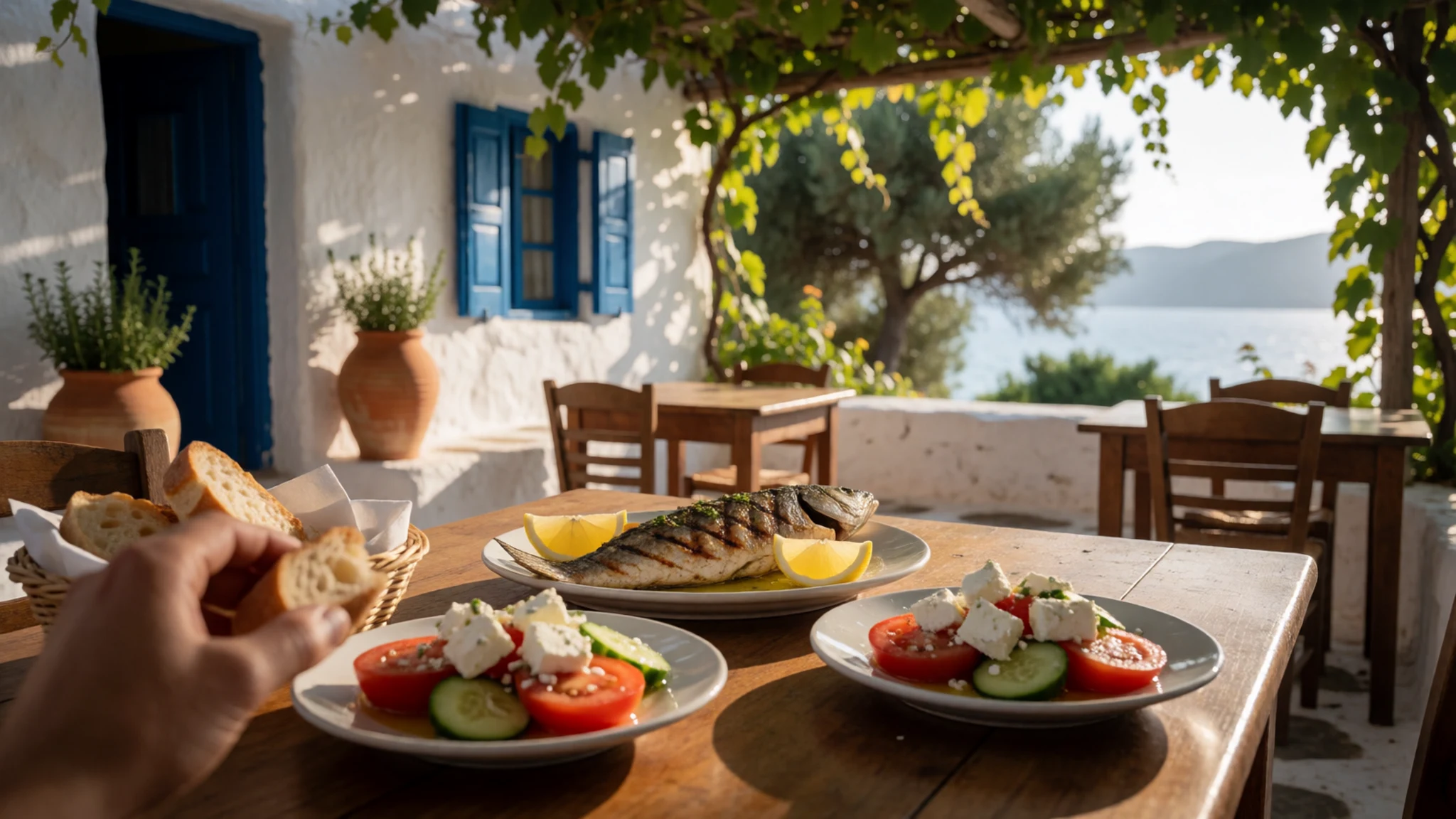
- Grilled fresh fish — harbour tavernas in Palaia Epidavros and Tolo
The coast here supplies small fish and larger catches, usually grilled whole with olive oil and lemon. Menus often display the day's fish and sell by weight, so ask before ordering. It makes a relaxed, slow lunch beside the harbour after a morning at the ruins.
- Souvlaki and gyros — grill shops in Nafplio, Argos and the larger villages
Skewered grilled meat or sliced meat from a rotating spit, wrapped in pita with tomato, onion and tzatziki. Quick, cheap and portable, it suits the hungry end of a sightseeing day. Look for the small grill shops along the main streets of the larger towns.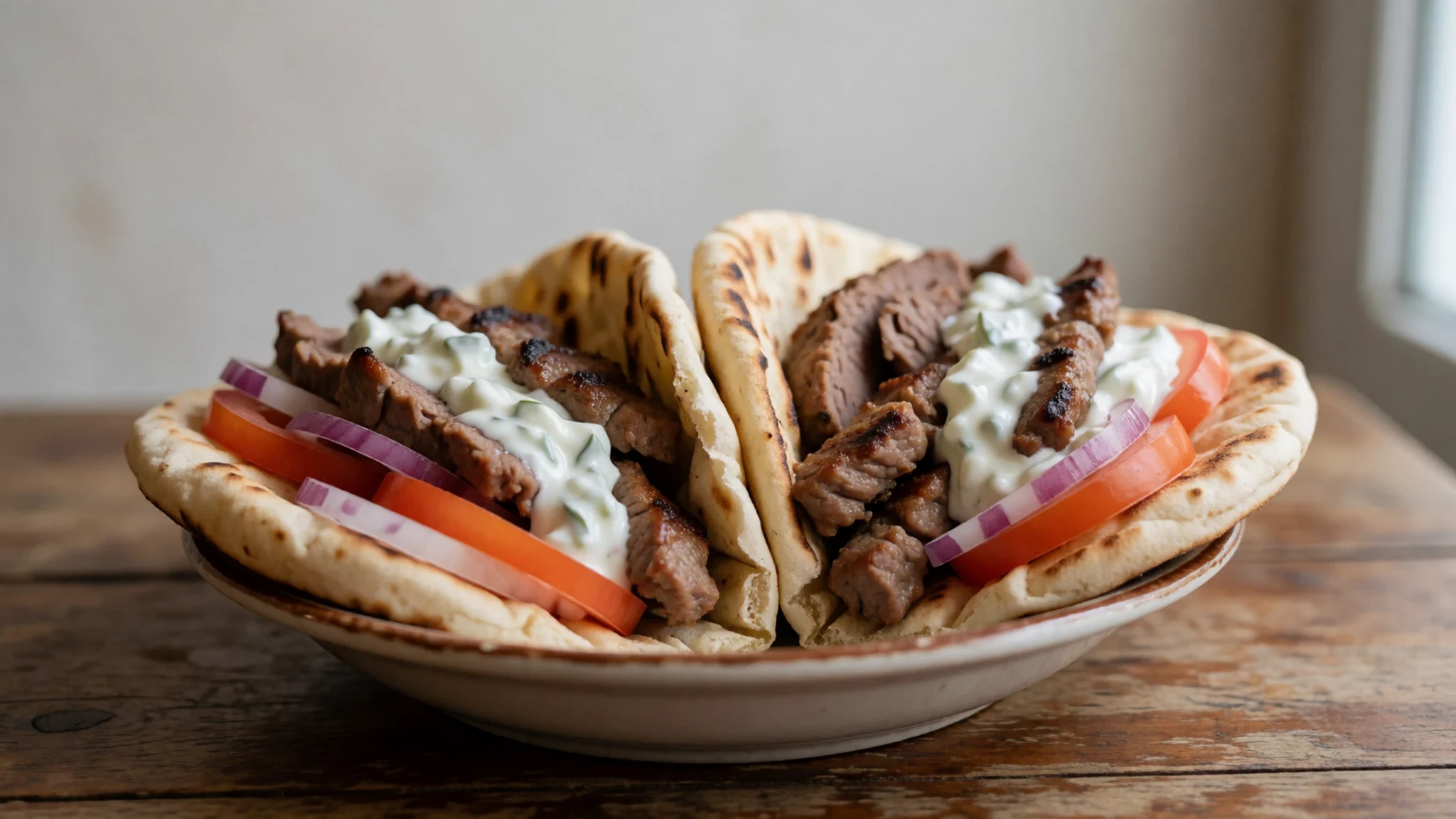
- Spanakopita and other pies — neighbourhood bakeries in town centres
Flaky pastry filled with spinach and feta, or with cheese or greens, baked in trays and sold by the slice. It is a classic breakfast or snack, good with a coffee. Bakeries open early, which helps if the plan is to reach the site before the heat.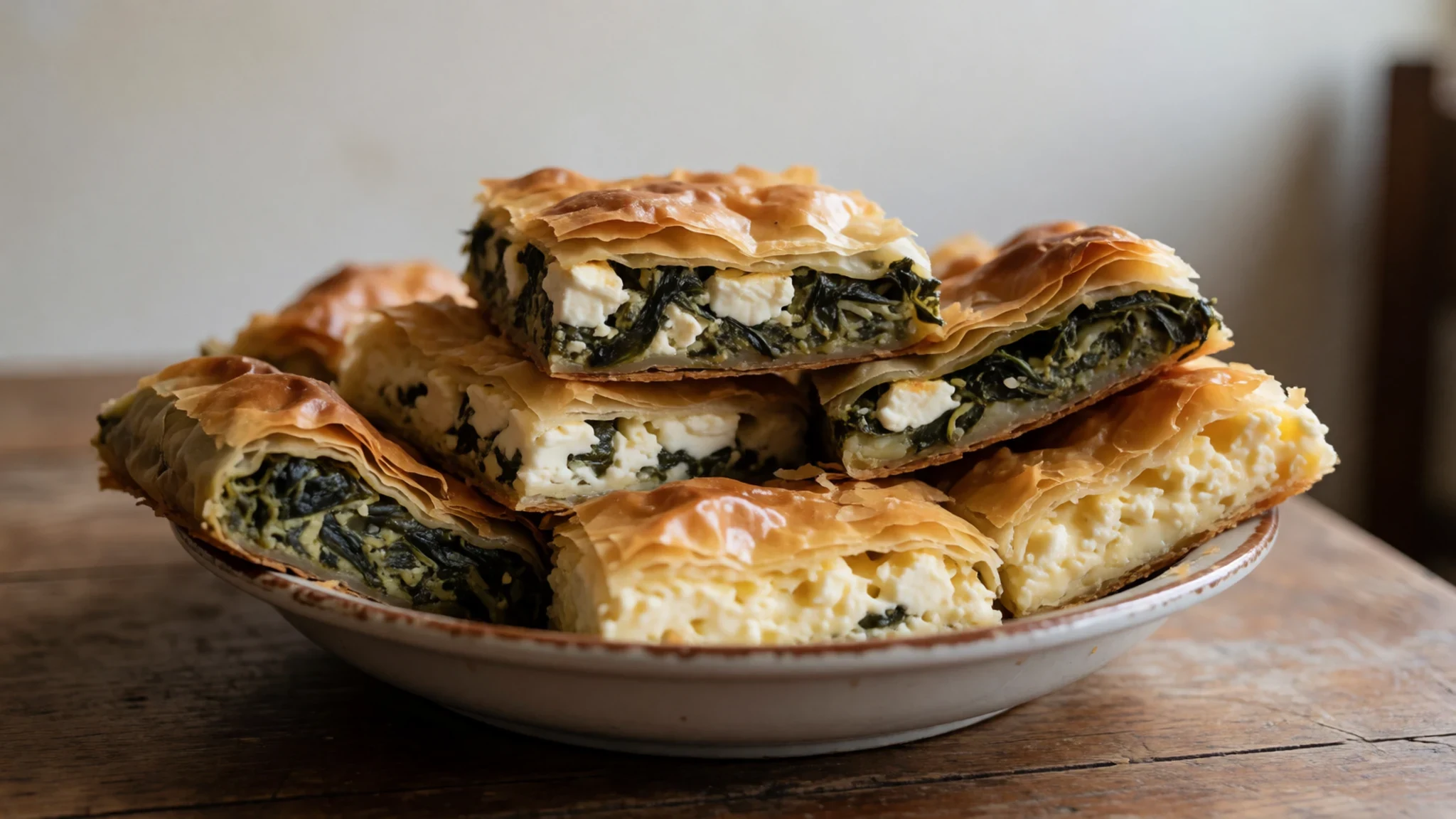
- Local oranges and olive oil — roadside stalls, village shops and weekly street markets
Argolis is known for its citrus and olive groves, and both turn up everywhere, from fresh juice to oil poured generously over food. Buy a bag of oranges at a roadside stall in season, or a small bottle of oil to carry home as a souvenir.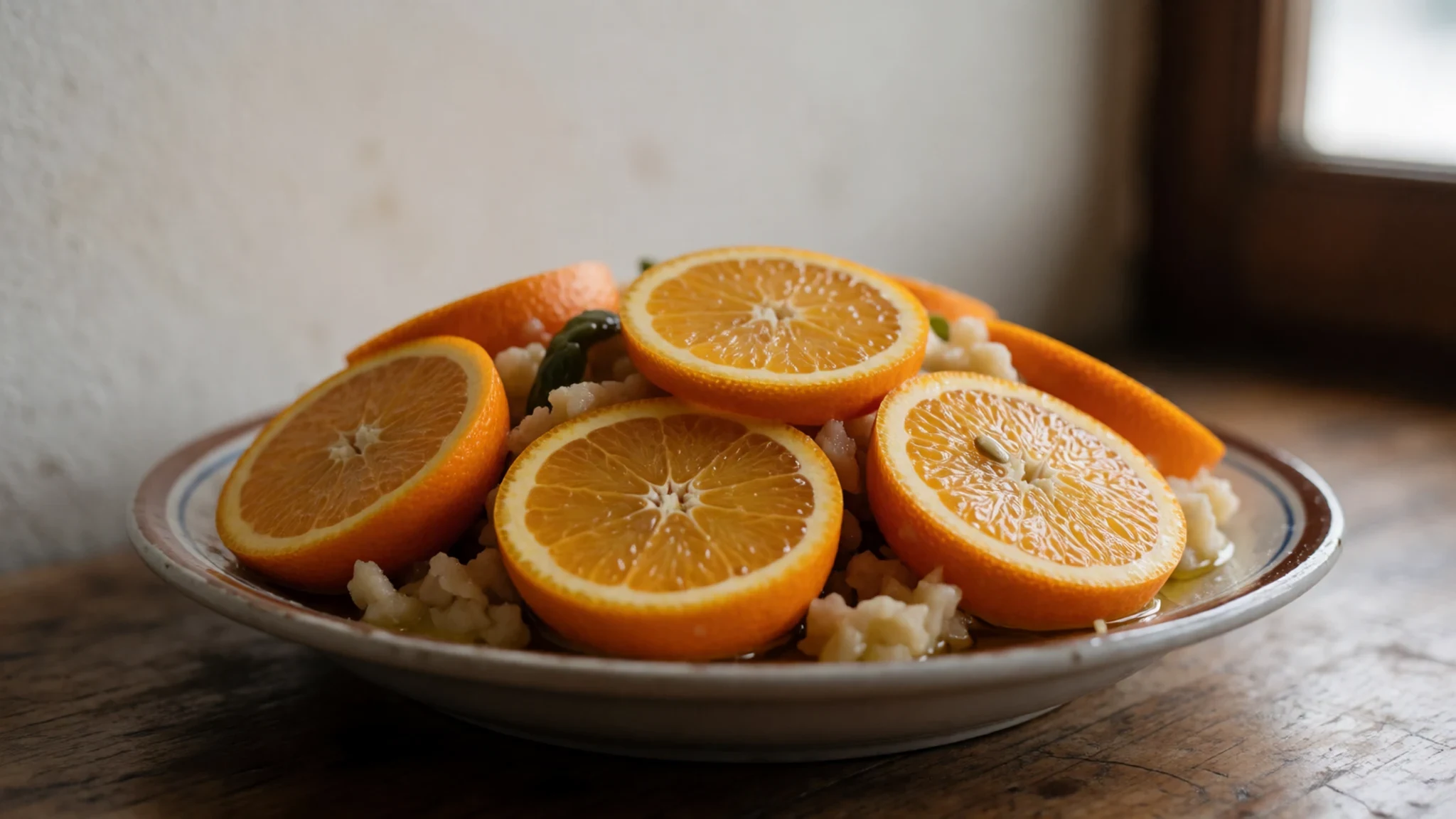
Plan it
Best time. April–June and September–October. Spring is green and comfortable, and early autumn is warm with thinner crowds. July and August are very hot, especially at midday on the exposed ruins, though that is also the main season for theatre performances. Winters are cool and quiet, with some seasonal places closed.
How long. 1–2 for the sanctuary; 3–4 if combined with Nafplio, Mycenae and the coast
Getting there. Fly to Athens International Airport, then take the X93 express bus to the Central Bus Station at Kifissos and a bus towards Nafplio or Archaea Epidavros. Driving from Athens uses the A7 highway, with the slower EO7 as an alternative. There is no train service to Argolis, so a hire car or bus plus a local taxi works for the last leg to the site.
Budget. mid
Tips
- Reach the site early, before coach groups arrive and before the midday heat builds.
- Check the official site for current opening hours, ticket prices and the festival programme, and book performance tickets ahead in summer.
- Carry water, a hat and sunscreen, as shade at the ruins is limited.
- Bring some cash for village cafés, bakeries and market stalls, though larger places take cards.
- Use Nafplio as a base if relying on buses, and check timetables the day before, as services can be infrequent.
Etiquette
- Stay on marked paths and do not climb on ancient stonework.
- Cover shoulders and knees when entering churches and monasteries.
- Keep quiet during performances and switch off phone sounds in the theatre.
Nearby
Sources
- Wikidata Q233576 (CC0)
- Wikipedia: Epidaurus (rev 1381715232) (CC BY-SA 4.0)
- Wikivoyage: Argolis (rev 4659778) (CC BY-SA 4.0)
- Photo: The great theater of Epidaurus, Carole Raddato (CC BY-SA 2.0)
- Photo: Vue du site archéologique d'Epidaure, Jean Housen (CC BY-SA 4.0)
- Photo: Locator map for Epidavros municipality, Pitichinaccio (CC BY 3.0)
- Photo: Epidaurus Theatre, Morn (Public domain)
- Photo: The Ancient Stadium of Epidaurus, George E. Koronaios (CC BY-SA 4.0)
- Photo: Hestiatorium in Epidauros, Zde (CC BY-SA 4.0)
- Photo: The stoa of Abaton, George E. Koronaios (CC0 1.0)
- Photo: Ωδείο Επιδαύρου, Kritheus (CC BY-SA 4.0)


