Dune du Pilat
Dune du Pilat, France
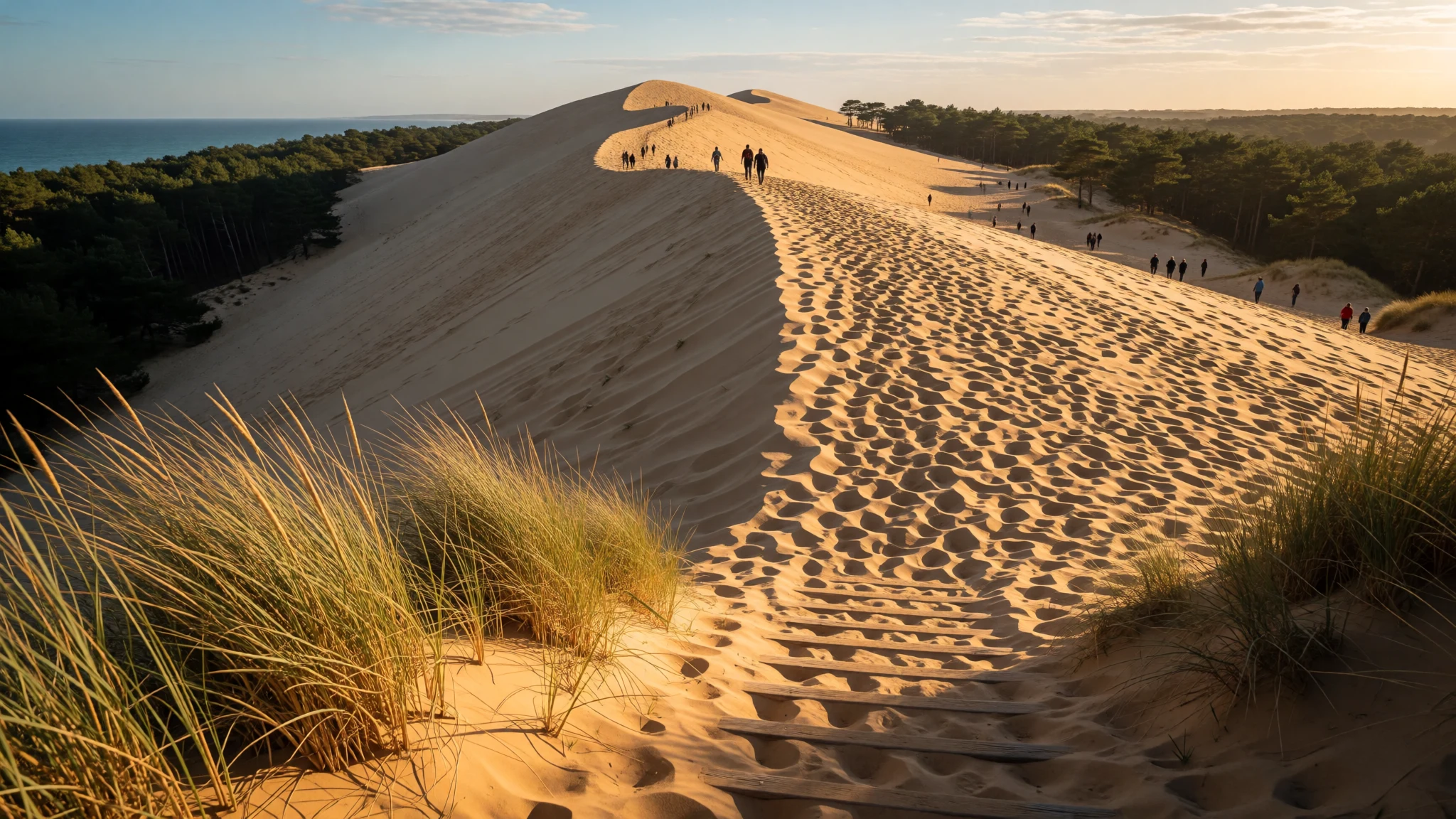
Dune du Pilat is a moving wall of sand, 107 m high, where pine forest, ocean and bay meet and the view rewards the climb.
The place
Dune du Pilat stands on the Atlantic coast of south-west France, at the southern mouth of Arcachon Bay, in the locality of Pyla-sur-Mer, which belongs to the commune of La Teste-de-Buch. Its listed height is 107 m, and it is described as the tallest sand dune in Europe. It is a long ridge of pale sand with sharply contrasting sides. The seaward face drops steeply to a broad beach and the open ocean. The landward side is gentler and presses against dark pine forest, part of the wider Landes de Gascogne. From the crest the eye travels from surf to the sandbanks of the bay and back to a green roof of trees running inland. The dune is not a fixed monument. Wind keeps shifting the sand, so the shape of the ridge and the route up change from one year to the next. It is a protected area, with 1998 given as its founding year in the facts, and it is also listed as a free-flight site, which is why paragliders drift along its slope on breezy days. Most visitors give it a few hours: a climb, a long sit with the view, then lunch in the resort towns around the bay. Bordeaux is the usual base for anyone without a car, and the airport there is the natural way in. The sand gets very hot in summer, and the car parks fill early on fine days.
Its story
Dune du Pilat has a human past that is older than most visitors guess. Long before it became an attraction, the ground where it now stands held temporary camps used by people working in sea salt production. Archaeologists began turning up evidence of this in the last century, and the story did not end there. A tourist walking at the foot of the dune once spotted a funerary urn and a smaller accessory vase sticking out of the sand. Both date from the Iron Age. That find led to a short dig by a group of amateur archaeologists, who set out to understand the layers of soil and the setting in which the objects had lain. The result was a reminder that the dune is a moving archive: wind uncovers things and buries them again. The geology explains why. Sand carried in from the Atlantic is blown inland and heaped against the forest, so the whole mass creeps slowly eastward over time. Trees at its landward edge are gradually swallowed, and old surfaces reappear on the seaward side. Today the dune is managed as a protected site, and the long-term fight is between visitors' feet, the weather and the need to keep the slopes stable. What looks like a permanent landmark is really a slow, windblown event that has been going on for a very long time.
What to see
- The crest of the dune — Pyla-sur-Mer, La Teste-de-Buch
The ridge is the reason for the trip. Walkers climb the landward slope, where a wooden staircase helps in places, and the soft sand does the rest. At the top the ground is open and windy, with the ocean on one hand and forest on the other. Sunrise and late afternoon give the best light and the fewest people.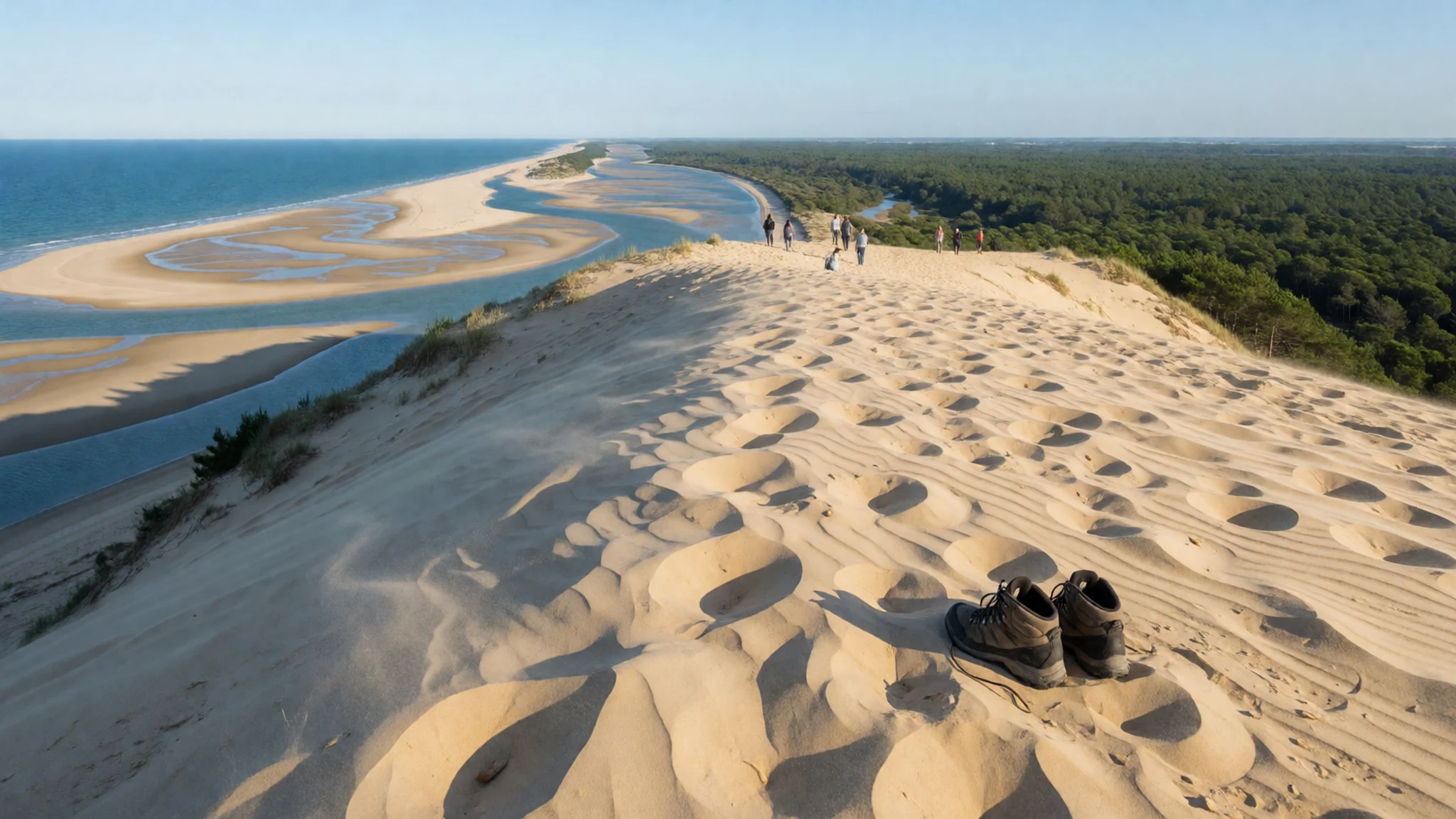
- The seaward slope and beach — Atlantic side of the dune
Below the crest, the western face runs steeply down to a wide Atlantic beach. Coming down is quick and playful, going back up is not. The beach is exposed and the currents can be strong, so most people paddle, walk the tideline and keep swimming to supervised spots when flags and signs allow.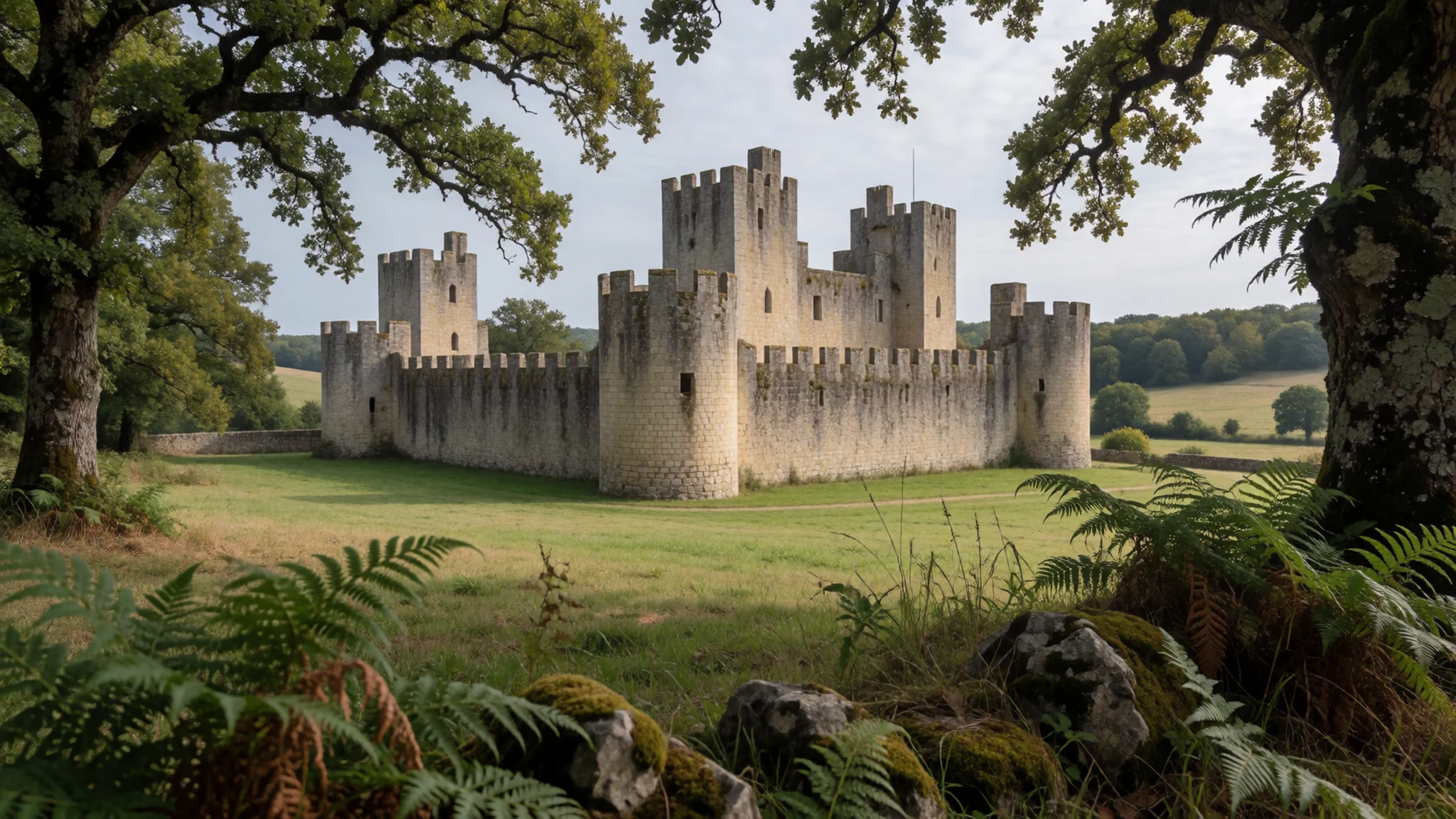
- The forest side and the Landes — Landward side, Landes de Gascogne
The eastern edge of the dune meets pine woodland, and the contrast is the best way to see how far the sand has advanced. From the crest the trees spread inland as a dark green carpet. A short walk along the foot of the slope shows where roots and trunks are being buried.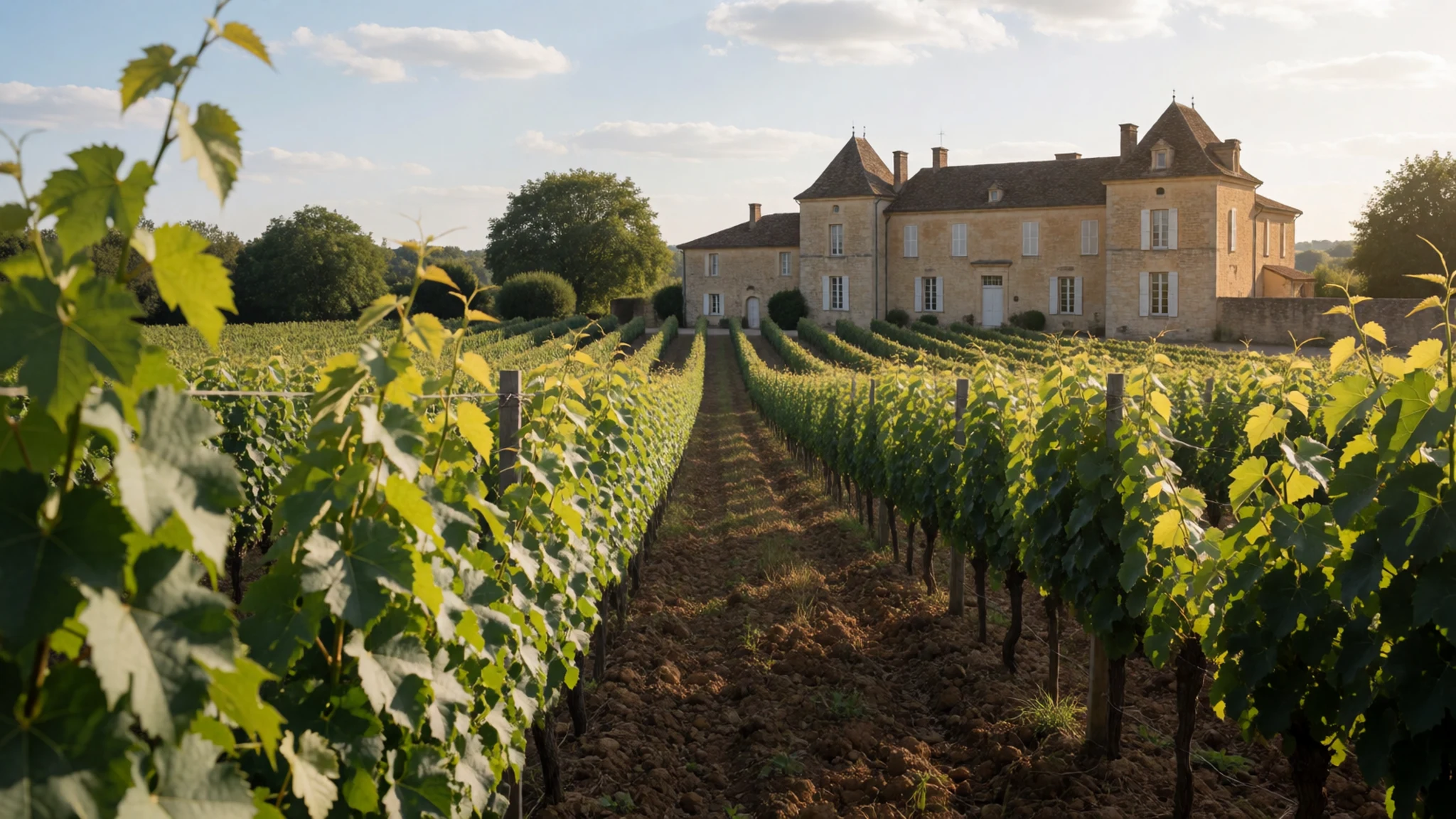
- Paragliders over the slope — Along the dune ridge
On breezy days the slope turns into a launch site, and paragliders hang along the ridge in the sea wind. Watching them from the crest is free entertainment. The dune is listed as a free-flight site, and anyone wanting to fly should arrange it with a qualified local operator.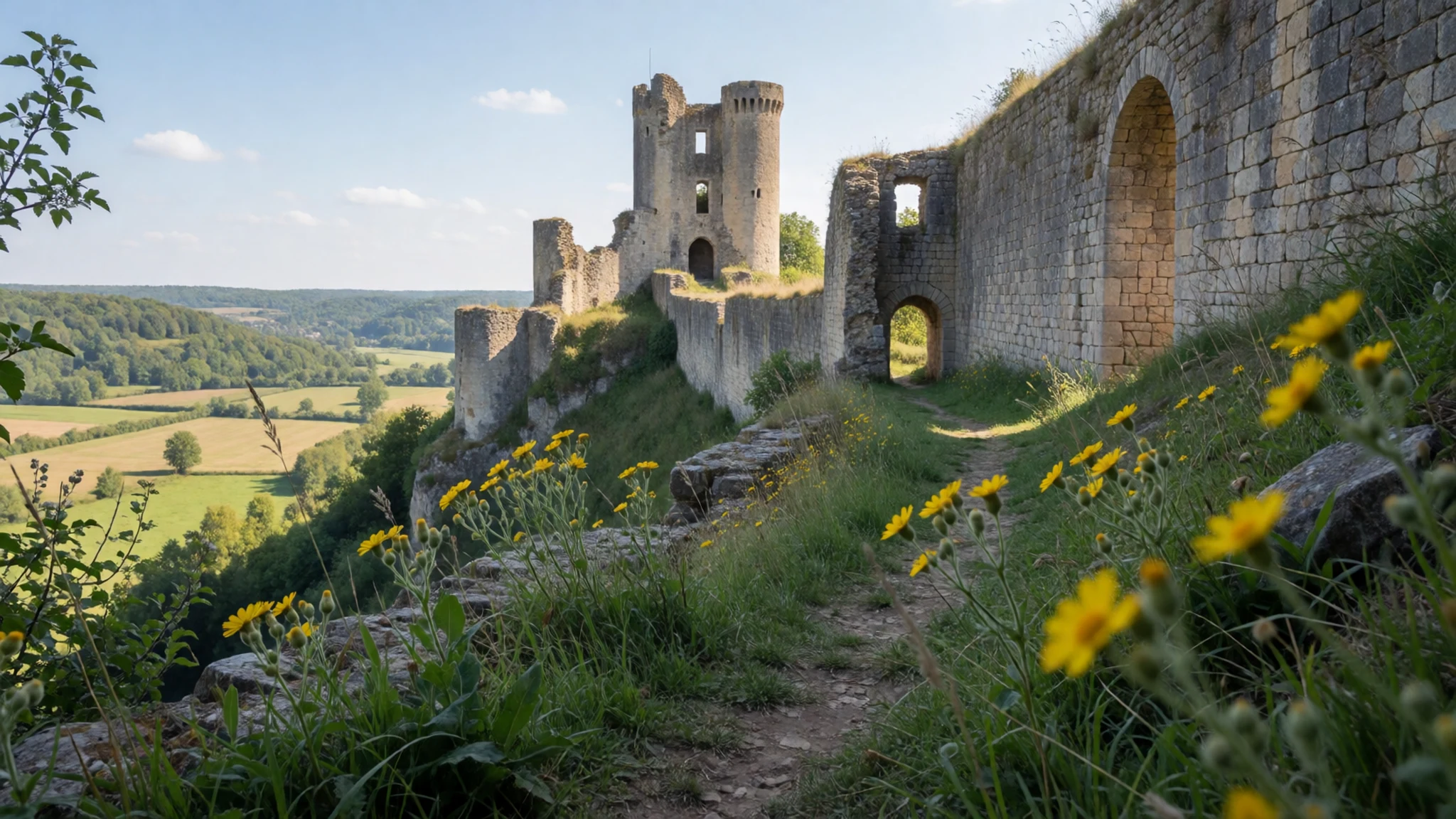
- Arcachon Bay — Arcachon and the bay shore
The bay lies just beyond the dune's northern end, and a short drive reaches the resort town of Arcachon. Its sandbanks, boats and waterfront restaurants make a gentler second half to the day, and the water is much calmer than the open Atlantic on the far side of the ridge.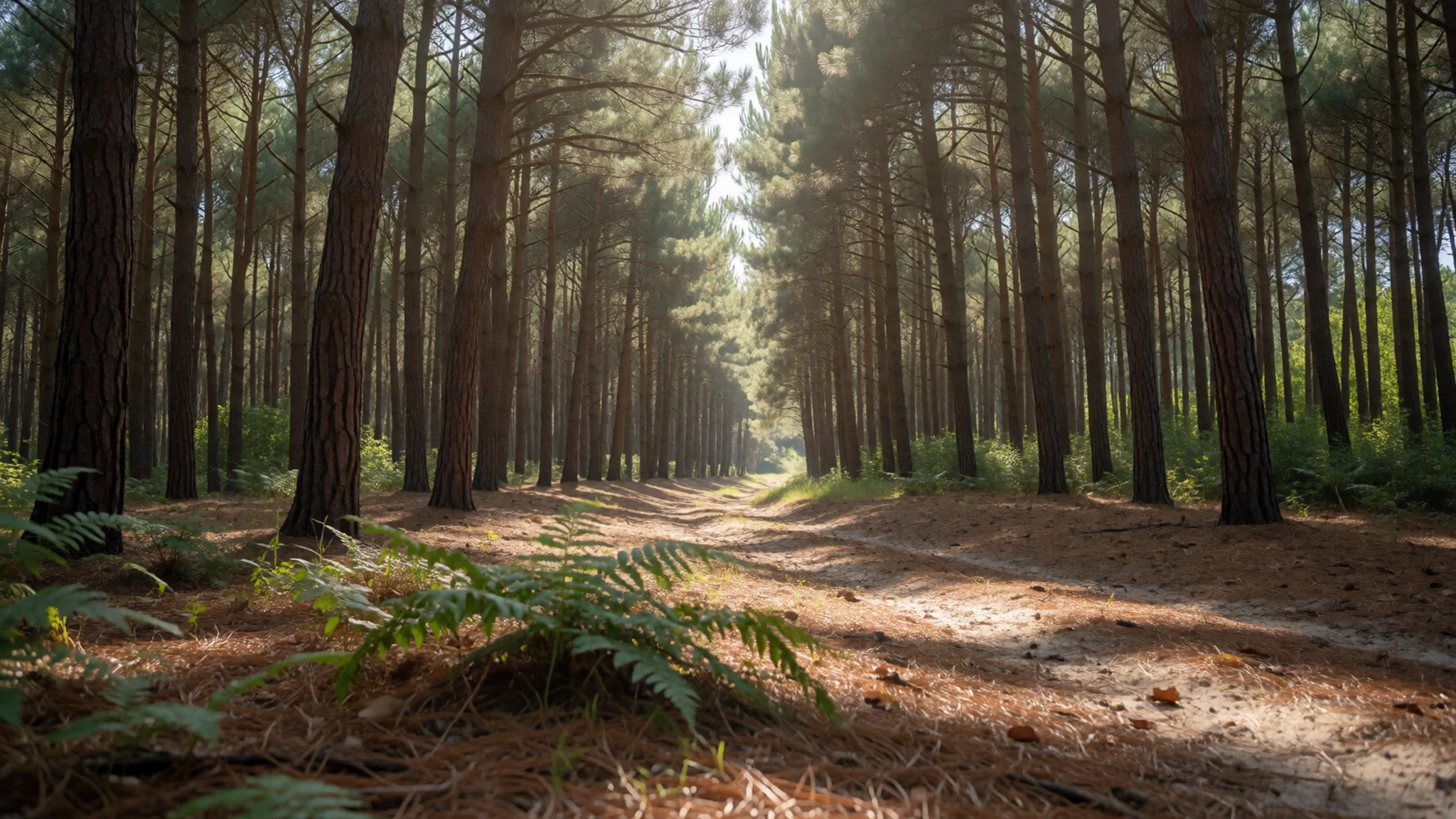
- Château de Roquetaillade — Mazères, Gironde
Inland in the Gironde, this fortified site has been occupied since the stone age. Within a protective wall stand castles that show how medieval defence and later comfort sat side by side. It is a different half-day from the dune, best reached by car from Bordeaux.
Culture
Dune du Pilat belongs to a stretch of French Atlantic coast where life revolves around the bay, the forest and the weekend. Local culture here is more about oysters, boats and long lunches than about monuments. The villages around Arcachon Bay have a strong tradition of oyster farming, and the working harbours show it, with small wooden boats, tidy huts and tasting counters. Holidaymakers from Bordeaux and across France fill the resorts in summer, so the mood is relaxed, seaside and family-led. The dune itself is a shared playground, and the local habit is to climb, sit, picnic and watch the sun go down over the ocean. Pyla-sur-Mer has a villa-lined, residential feel, with pine trees between the houses. In the wider region, the Landes forest is a planted landscape with its own history of resin and timber, and Bordeaux country nearby is defined by wine. People greet each other with a quiet bonjour in shops and cafés, and a little French goes a long way. Meals tend to be unhurried, with fixed lunch hours, and many eateries close between services. The dune is also a managed natural site, which means local rules matter. Keep to the marked routes up the slopes, carry your rubbish out, and do not walk on the fenced-off areas that are being left to recover.
What to wear
Dune du Pilat is a beach-and-forest destination, so there is no formal traditional costume to see. The old working dress of the Arcachon Bay area belongs to the oyster farmers and fishermen: waterproof oilskins, rubber boots and woollen jumpers, and the striped Breton-style knit that became a French coastal staple. Further inland, the Landes shepherds were once known for walking on stilts above the marshy ground, an image that survives in local folklore rather than daily wear. What people wear now is simple and sporty. Day-trippers turn up in shorts, linen shirts, swimwear under light clothes and sun hats, with a jumper or windcheater for the breeze on the crest. Evenings in Arcachon and Pyla-sur-Mer are smart-casual, with neat shirts, light dresses and canvas shoes. A visitor should dress for sand and sun first. In summer the surface gets very hot, so bring sunglasses, a hat, sun cream and plenty of water. Footwear is the key choice. Bare feet are common and fine in the morning, but the sand can burn by midday, so lightweight shoes that are easy to empty are a better bet. Sandals fill with sand quickly. Wind can be strong at the top, so a light layer is useful even on a warm day. There are no dress rules for religious sites here, though a cover-up is polite in town churches.
What to eat
- Arcachon Bay oysters — Oyster huts and harbour counters around Arcachon Bay
Oysters grown in the bay are the local signature, usually served raw with lemon or shallot vinegar, and often with grilled sausages and white wine. Find them at oyster huts around the bay, at harbour-side counters and at the waterfront markets in Arcachon.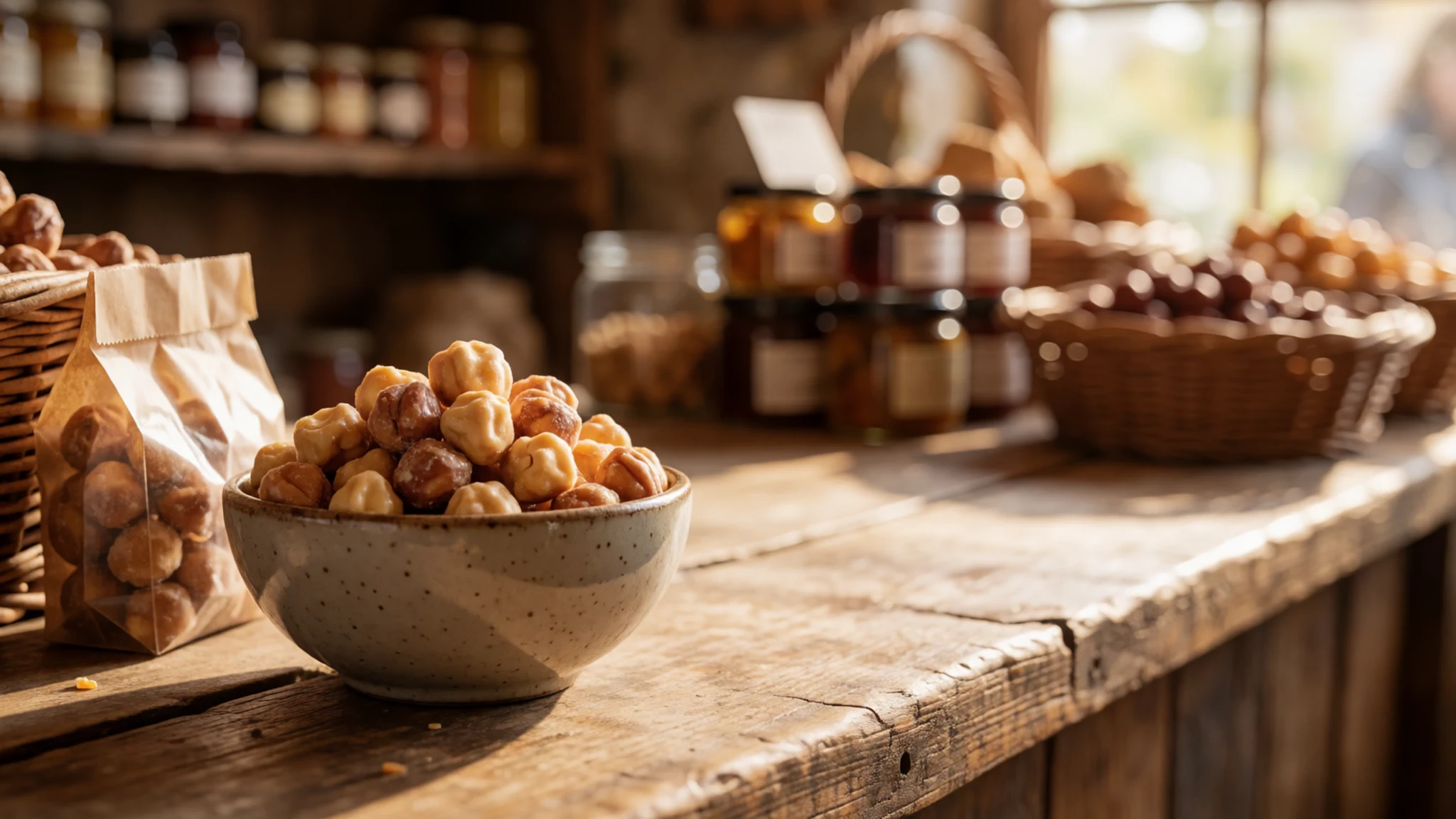
- Cannelé — Bakeries and pâtisseries in Arcachon and Bordeaux
A small Bordeaux pastry with a dark, caramelised crust and a soft custard centre scented with vanilla and rum. It is sold in bakeries and pâtisseries across the region and travels well, so it makes an easy snack for the dune.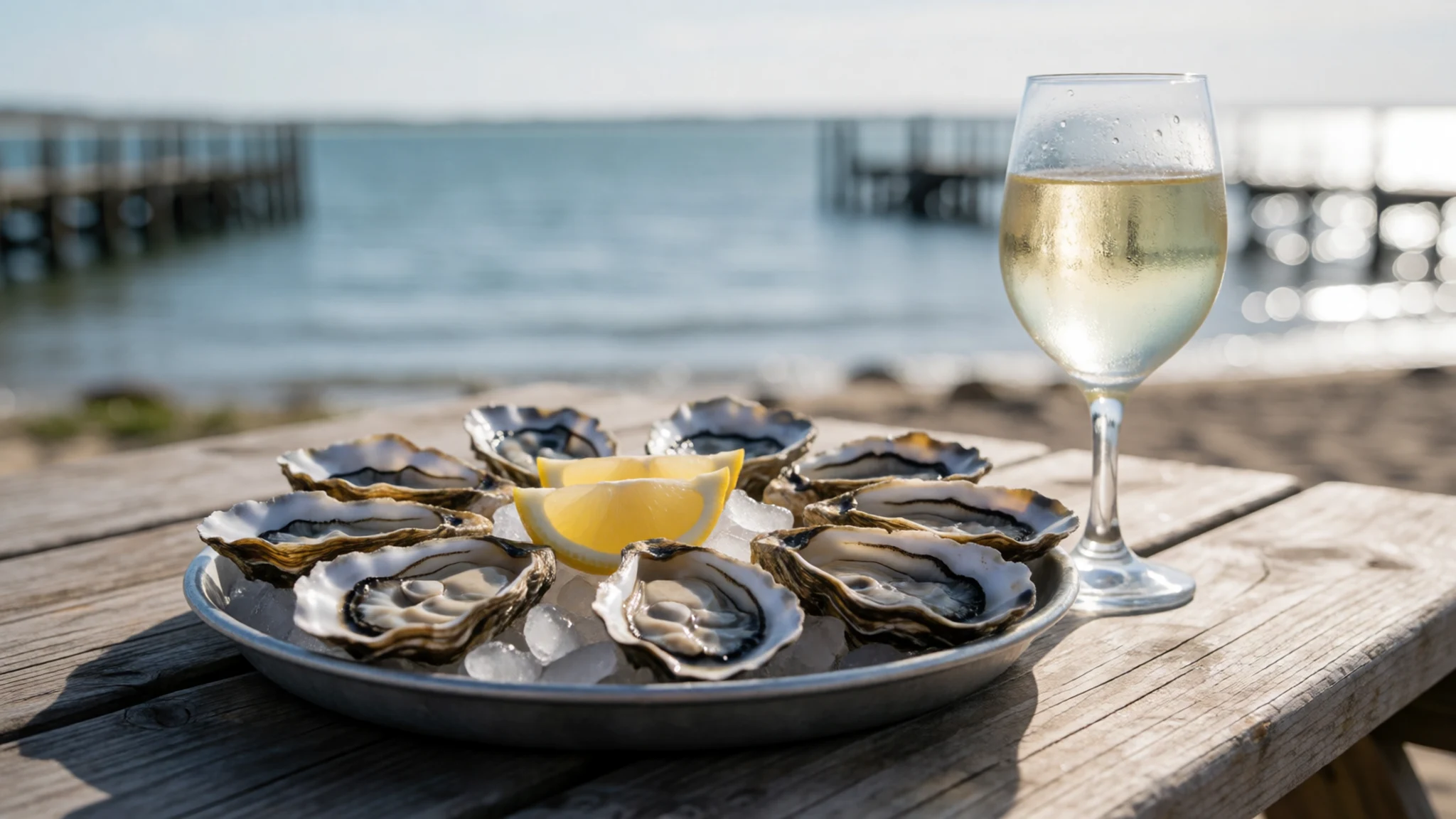
- Noisettines du Médoc — Confectioners and food shops in the Médoc
A Médoc confection built on whole hazelnuts, sold as a regional sweet. It is a good gift or a pocket snack for the climb, and the makers have a website for anyone wanting to order ahead. - Entrecôte à la bordelaise — Brasseries in Bordeaux and Arcachon
A grilled rib steak served in a red-wine and shallot sauce, a nod to the vineyards of the Gironde. It appears on many brasserie menus in Bordeaux and the towns around the bay, often with chips and a green salad. - Grilled fish and mussels — Seafront and harbour restaurants around the bay
Along the coast, simple plates of grilled fish and steamed mussels with chips are the standard seaside lunch. Quality varies with the season, so look for places that are busy with local families rather than ones with a hawker at the door.
Plan it
Best time. May–June and September–October are the best months: warm enough for the beach, with softer sand temperatures and thinner crowds than July and August, when the surface is very hot and the car parks fill early.
How long. 1–2
Getting there. Fly to Bordeaux-Mérignac Airport (BOD), then continue by car or by train and local bus towards Arcachon; the dune is close to Pyla-sur-Mer, a short drive from the town. Check the official site for current access and parking details.
Budget. mid
Tips
- Go at sunrise or late afternoon for cooler sand and softer light
- Bring plenty of water and sun protection, as there is little shade on the dune
- Check the official website, http://www.ladunedupilat.com, for current access, parking and any closures
- Wear shoes that are easy to empty of sand, and carry a light layer for the wind on the crest
- Add Arcachon Bay or a Bordeaux wine visit to make a fuller day
Etiquette
- Keep to the marked paths and fenced-off areas so the slopes can recover
- Take your rubbish with you and avoid leaving anything in the sand
- Greet shopkeepers and café staff with a polite bonjour
Nearby
Sources
- Wikidata Q501726 (CC0)
- Wikipedia: Dune of Pilat (rev 1370505661) (CC BY-SA 4.0)
- Wikivoyage: Gironde (rev 5346656) (CC BY-SA 4.0)
- Photo: Sommet de la Dune du Pilat, Jörg Braukmann (CC BY-SA 4.0)
- Photo: La Dune du Pilat, Larrousiney (CC BY 3.0)
- Photo: The Great Dune of Pyla, Mtu33260 (CC BY 3.0)
- Photo: Dune du Pyla 33, Hagen de Merak (CC BY-SA 2.5)
- Photo: Paragliding Dune de Pilat, Dennis Buntrock (CC0 1.0)
- Photo: Paragliding Dune de Pilat 2, Dennis Buntrock (CC0 1.0)
- Photo: Dune du Pilat, Atlantikküste, W. Bulach (CC BY-SA 4.0)
- Photo: Dune du Pilat, Frankreich, W. Bulach (CC BY-SA 4.0)


