Fanlu
Fanlu, Taiwan
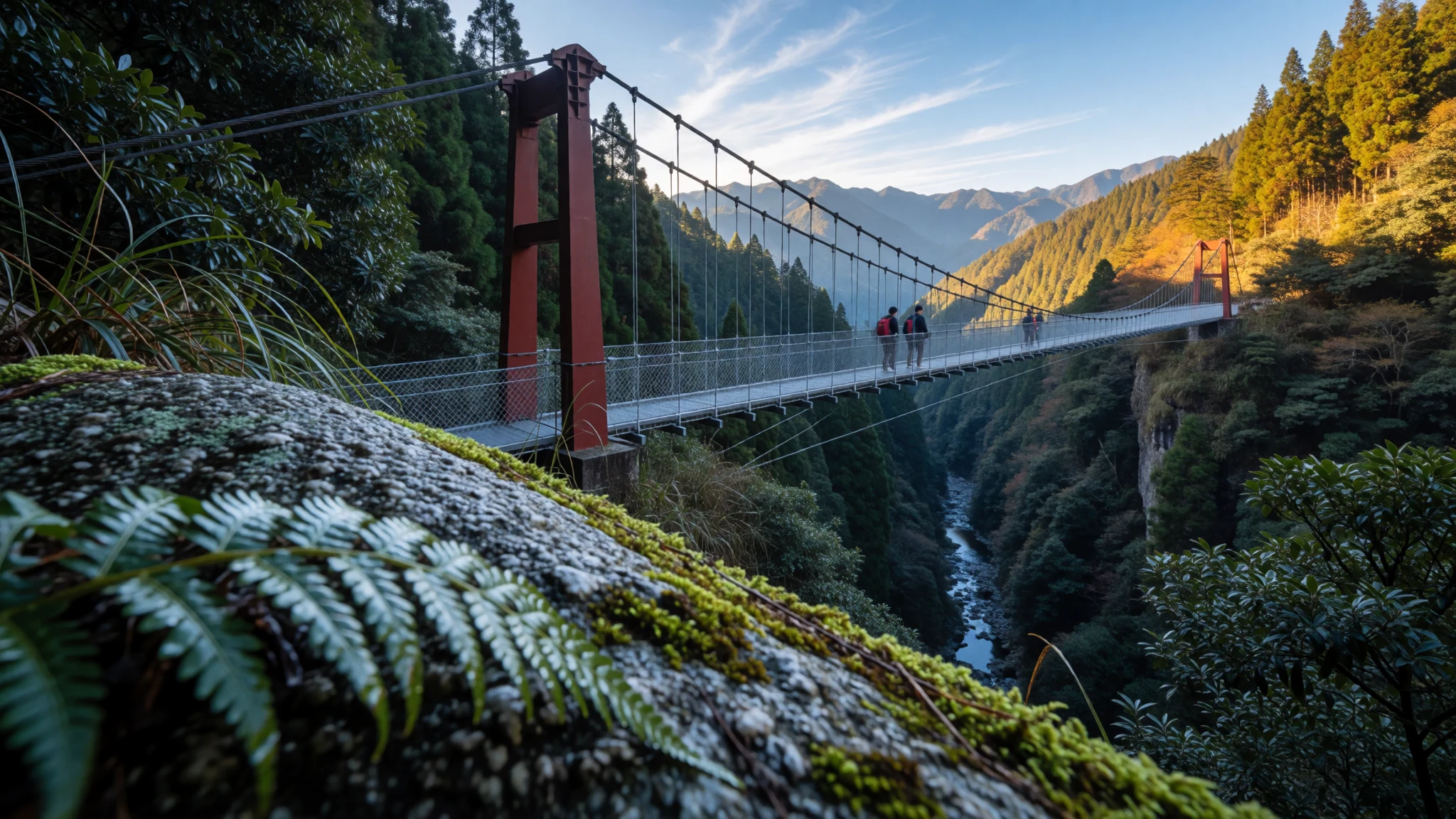
Fanlu is a quiet hill township in Chiayi County, where Taiwan's coastal plain starts to climb towards Alishan and the pace drops.
The place
Fanlu is a rural township in Chiayi County, in the hill country of south-western Taiwan. About 10,500 people live here, and the recorded elevation is 615 m, which is enough to make mornings cooler and cloudier than on the plain below. Farms, orchards, small temples and winding county roads make up most of the landscape. There is no single headline attraction, and that is part of the appeal: the township suits travellers who like to wander between villages and stop where something looks interesting.
Chiayi County stretches from the Taiwan Strait in the west to the slopes of Mount Yu in the east, and Fanlu sits on the rising ground between the two. The Tropic of Cancer crosses the county, and a monument marks the line for anyone keen on a photograph. Most visitors pass through on the way to the Alishan area, so the township stays calm outside holiday weekends.
Getting about needs some planning. County buses serve the main roads, but services are thin, and a hired scooter, a car or a driver for the day makes the area far easier. English signage is limited, so a translation app and a saved map help. The township office keeps a website at https://fanlu.cyhg.gov.tw/ for local notices. Think of Fanlu as a base for slow days: a walk along a ridge road, a roadside stall, a view back down to the plain from a bend in the hills.
Its story
Fanlu's recent administrative history is short and tidy. After the Second World War, in October 1945, the township was placed under Tainan County. A readjustment of local boundaries in October 1950 moved it into Chiayi County, where it has stayed since. That is the paper trail, but the hills carry a much longer story.
The mountains behind Chiayi have long been home to the Tsou people, and the road up towards Alishan follows routes that were used well before motor vehicles arrived. In the Japanese colonial period, timber from these slopes was cut and carried down by narrow-gauge railway, and the forestry industry shaped many of the settlements in the county. Traces of that era survive in the region: a shrine site, a memorial to the spirits of felled trees, and old railway towns whose streets still follow the line of the tracks.
The township's Chinese name, 番路 (Fānlù), is a reminder of how earlier Han settlers described the upland routes into indigenous territory. The word is old and no longer used in everyday speech about people, but it survives in place names across Taiwan.
Today the economy is quieter than in the timber years. Farming, small businesses and visitors heading uphill keep local life going, and the township is better described as a place where layers of history sit lightly in the landscape than as a site with one dramatic story.
What to see
- Fenqihu Old Street — Chiayi County hills
Fenqihu Old Street is a short lane of old houses in the hills of Chiayi County, reached by road from the Fanlu area. Stalls sell snacks to eat on the move, and it fills up on weekends. Go on a weekday or early in the day for a calmer look at the timber-town architecture.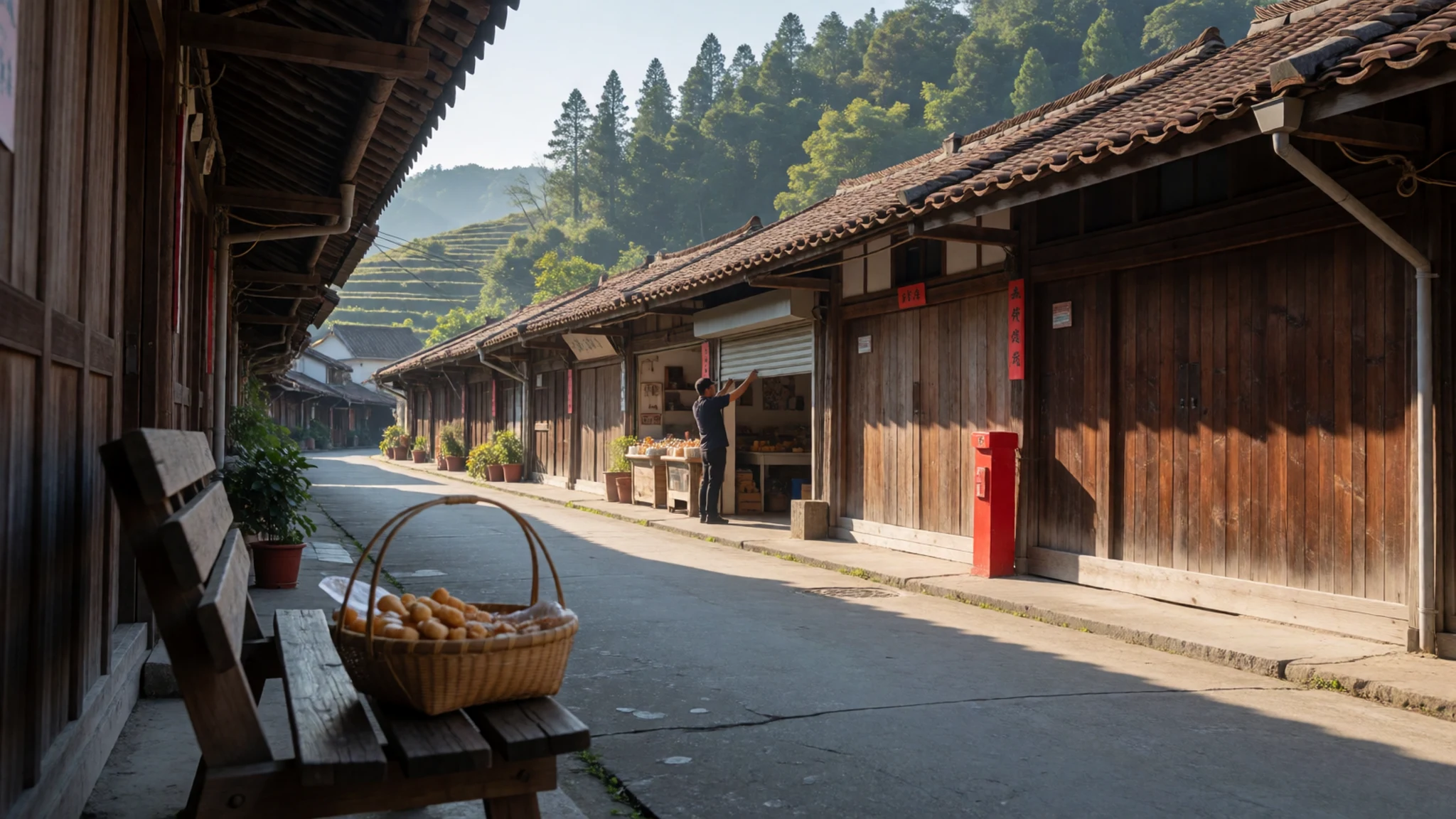
- Tree Spirit Pagoda — Alishan forest area, Chiayi County
Tree Spirit Pagoda is a memorial, not a tomb: it stands for the spirits of trees felled during the forestry years. It draws on the Japanese belief, known as Kodama, that trees hold a divine presence. It is a short, reflective stop in the forest, best combined with a day in the uplands.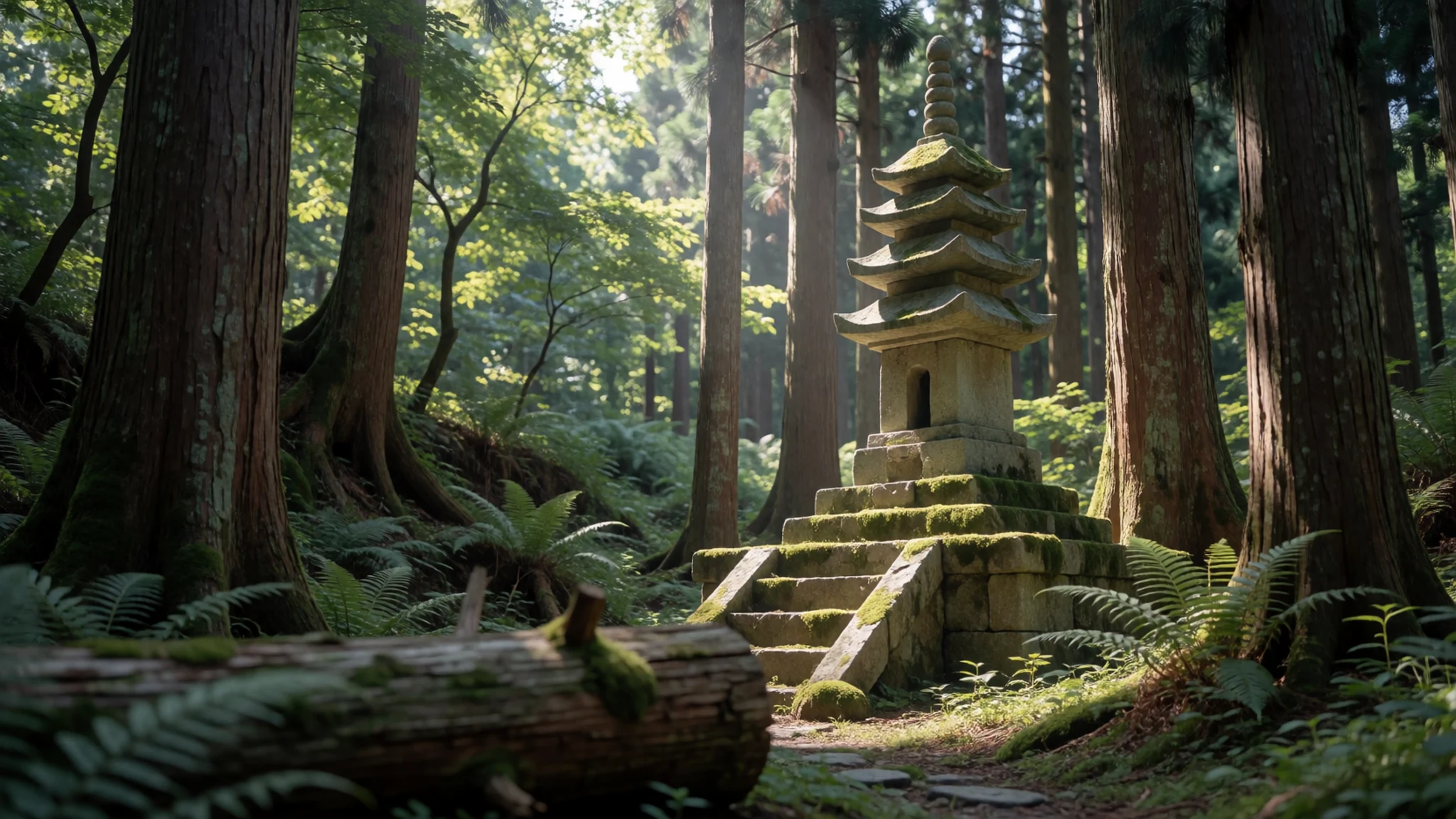
- Tropic of Cancer Monument — Chiayi County
The Tropic of Cancer Monument marks the line where the county crosses the tropics. The first marker is old, and the present structure dates from 1995. It is a quick roadside stop with a sign and a photo opportunity, and it works well as a punctuation mark between two longer visits.
- National Palace Museum, Southern Branch — Taibao, Chiayi County
The Southern Branch of the National Palace Museum is a modern building in the lowlands of Chiayi County, with a smaller collection than the Taipei original. It is well presented and air-conditioned, which makes it a useful break on a hot or rainy day. Check the official site for opening times.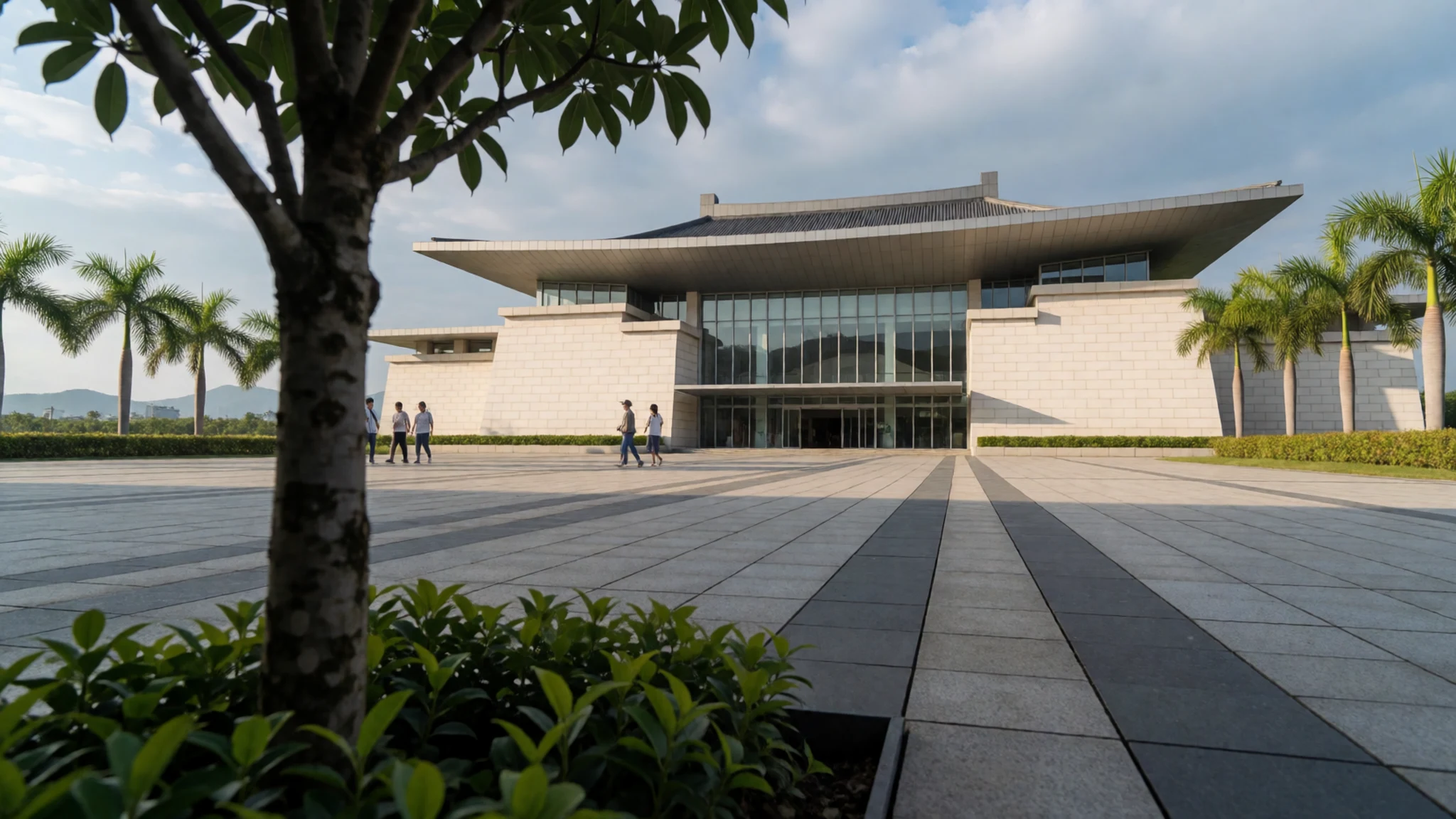
- High-Heel Wedding Church — Coastal Chiayi County
The High-Heel Wedding Church is a building shaped like a woman's shoe and covered in blue-tinted glass panels. It sits on the coastal side of the county and is popular with photographers and wedding parties. It is more a curiosity than a monument, and a quick stop is enough.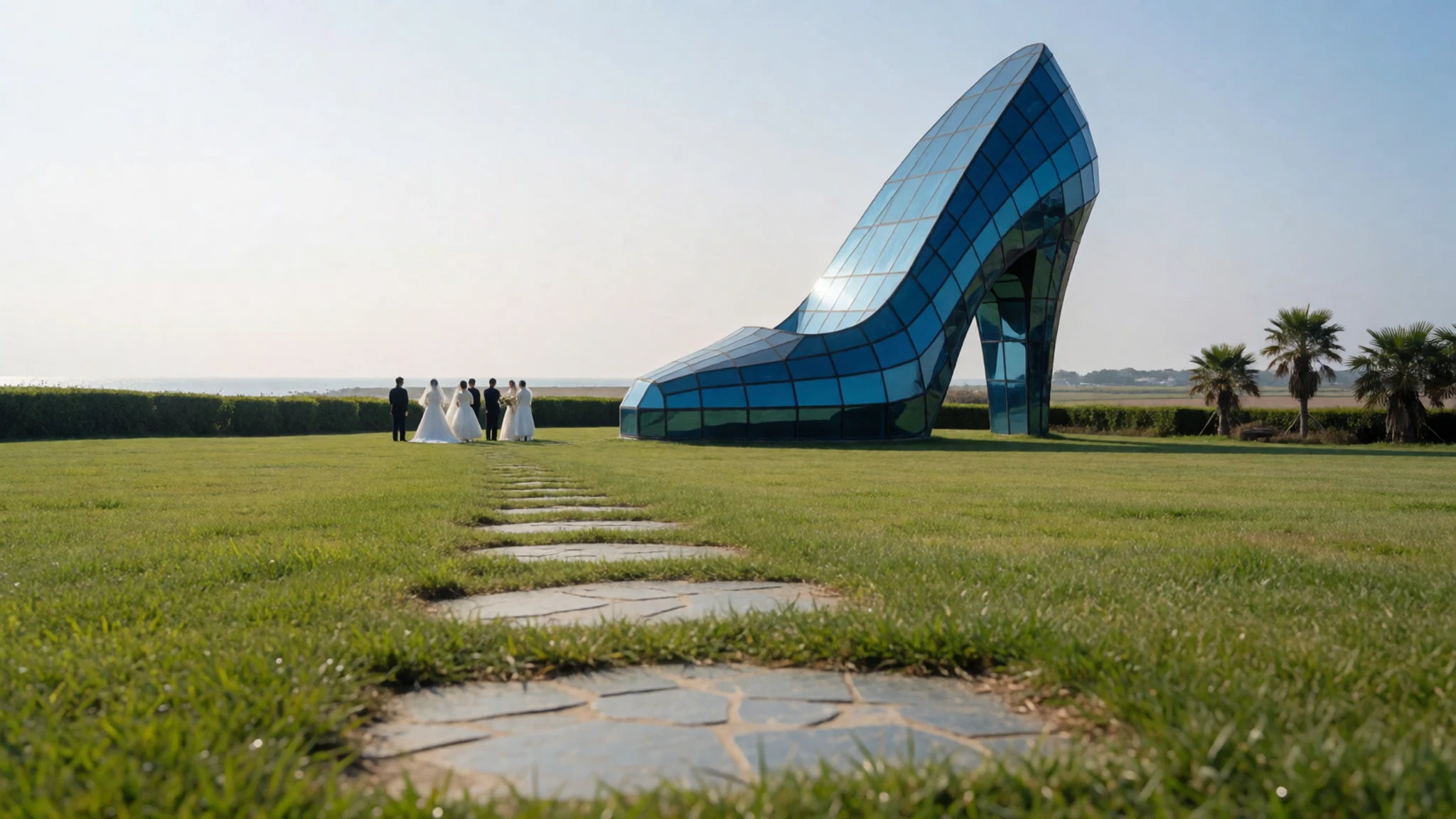
Culture
Fanlu's culture is a blend of Hoklo and Hakka farming traditions, with the older presence of the Tsou in the mountains behind. Life here follows the rhythm of the countryside: early starts, long lunches, and festivals tied to local temples. Temple fairs, processions and firecrackers can appear with little warning, and they are usually open to polite onlookers.
Religion in the township is mostly folk Buddhist and Taoist. Small village temples dedicated to local deities and earth gods are scattered along the roads, often with incense burning and an elderly caretaker nearby. Visitors are generally welcomed if they are quiet and respectful.
The Japanese period left its own marks on the uplands, from the forestry railways to memorials such as the Tree Spirit Pagoda. These sites are treated as part of local heritage rather than as colonial showpieces, and locals tend to talk about them with a mix of pride and practical interest.
In daily life, courtesy matters more than formality. People greet strangers with a nod or a smile, offer tea freely, and appreciate any attempt at a few words of Mandarin. Business is often done in cash, and small shops may close for a long midday break. In rural areas, hospitality can be generous, and refusing food outright can feel abrupt, so accept a small portion and thank the host. Please keep your voice low and ask before photographing worshippers or altars when you visit a village temple.
What to wear
Fanlu has no single costume of its own, but the traditions around it are rich. The Tsou people of the nearby mountains are known for dark leather and cloth garments, often with red and blue trim, and for headdresses with feathers, worn at festivals and ceremonies. Han farming communities historically wore indigo-dyed cotton jackets and wide trousers, and some Hakka families still keep the blue cotton tradition alive for demonstrations and cultural events.
Day to day, people in Fanlu dress for work and weather. Farmers wear long sleeves, wide-brimmed hats or cloth head coverings, rubber boots and light gloves to guard against sun and mud. Younger residents and those who commute to Chiayi city wear much the same as anywhere in Taiwan: T-shirts, jeans, trainers and a light rain jacket.
Visitors should dress for a humid subtropical climate at hill altitude. Light, breathable fabrics are best in summer, with a fleece or wind layer for cool mornings and evenings. A compact umbrella or rain jacket is useful in any month. Sturdy trainers or walking shoes suit the steep lanes and trails, and sandals are fine on warm days around villages. For temples, cover shoulders and avoid very short shorts, and carry socks if you plan to take off shoes at a doorway. Sun protection matters too: a hat and sunscreen are worth packing.
What to eat
- Chiayi turkey rice — Small eateries in Chiayi city and market streets
Chiayi turkey rice is shredded turkey over steamed rice with a savoury sauce and fried shallots. It is the signature dish of the county and an easy meal to eat without a menu. Look for small eateries in Chiayi city or along the main roads near the stations.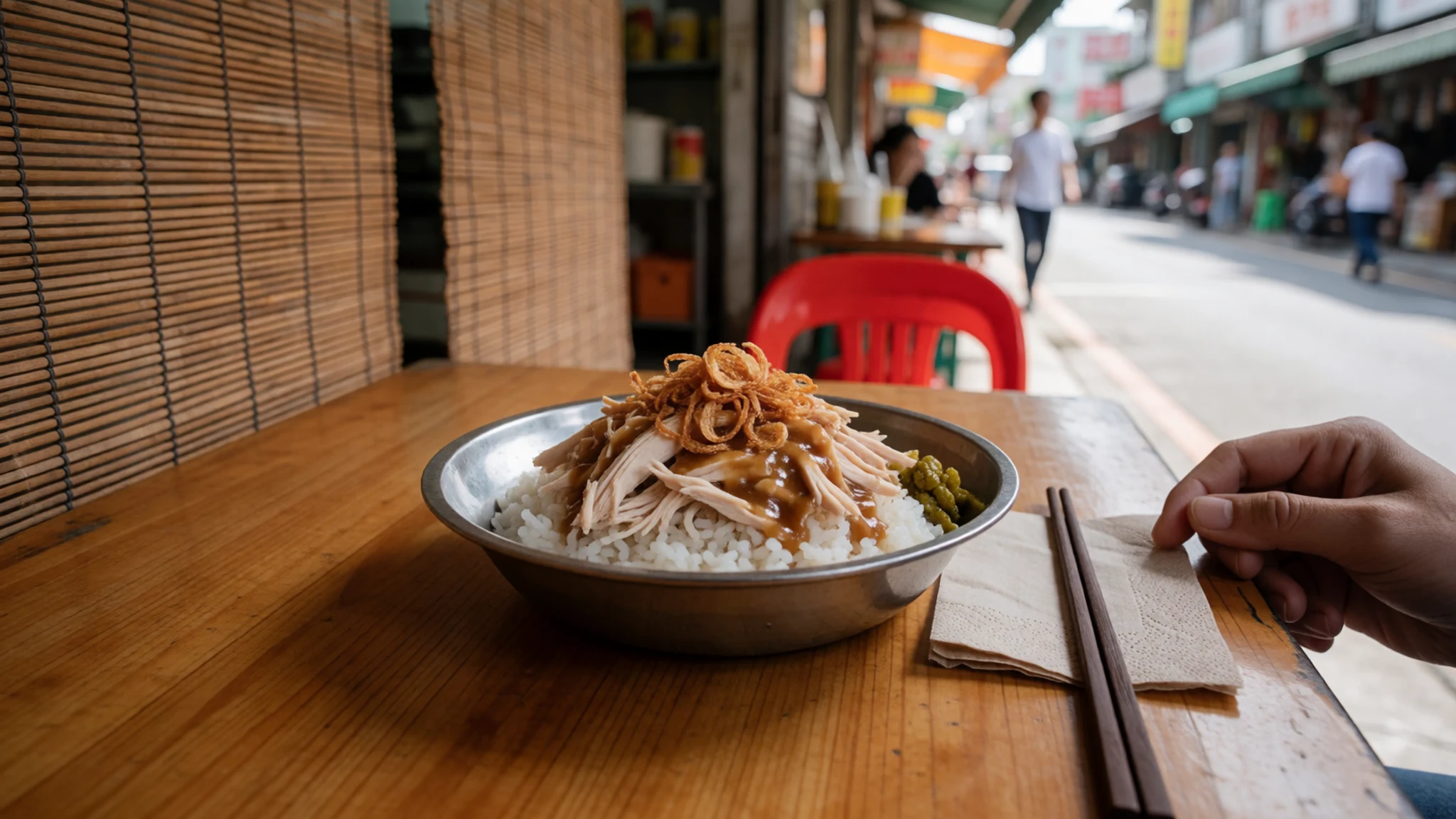
- Night-market snacks — Dalin Night Market and Minxiong Night Market
Night-market snacks cover grilled sausages, fried chicken, noodles, sweet pancakes and bubble tea. Dalin and Minxiong have night markets in the county, and the stalls reward grazing rather than sitting down. Bring cash and go in the evening, when the lanes fill up.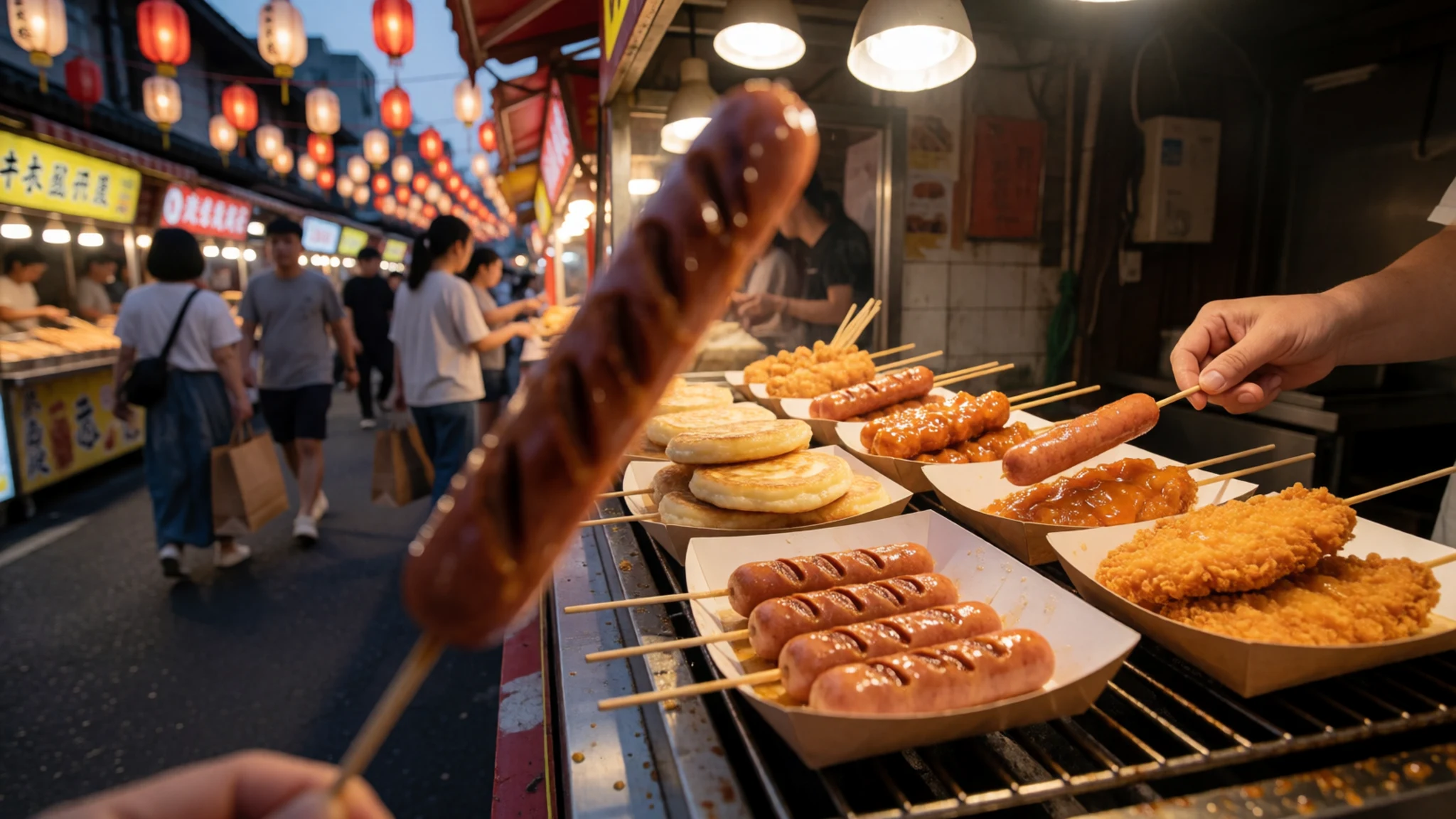
- Railway lunchbox — Old Street stalls in Fenqihu
A railway lunchbox, or biandang, is a simple box of rice, pickles, egg and braised meat or tofu. The hill railway towns are known for versions served in metal or wooden boxes. It makes a cheap, filling meal for a day on the trails. - Highland tea — Tea shops and roadside growers in the Alishan foothills
Highland tea from the Alishan area is grown in cool, misty hills and has a floral, lightly sweet character. Buying a small tin directly from a grower is a good way to support local farms. Ask to taste before you buy. - Local coffee and mountain vegetables — Roadside cafés and village restaurants in the hills
Hill farms in Chiayi County also grow coffee, and cafés along the winding roads serve it freshly roasted. Pair it with stir-fried mountain vegetables and bamboo shoots, which appear on the menu of most village restaurants in season.
Plan it
Best time. March–April and October–November are the most comfortable months, with milder temperatures and less rain than summer. The summer months are hot, humid and prone to heavy showers, and typhoon season can disrupt mountain roads from midsummer into early autumn. Winter is cool in the hills, especially at night.
How long. 1–2
Getting there. Take the high-speed rail or a Taiwan Railways train to Chiayi, then continue by county bus, taxi or hired scooter into the hills. Chiayi's airport has flights to Penghu and Kinmen; for most other routes, fly into Taipei or Kaohsiung and take the train south. Check the township website at https://fanlu.cyhg.gov.tw/ for local updates.
Budget. low
Tips
- Check bus times in advance, as services in the hills are infrequent
- Carry cash for small stalls, night markets and roadside shops
- Start early to catch clear views before cloud rolls in
- Bring rain gear in any season, as showers can arrive quickly
- Check road conditions after heavy rain or typhoon warnings
Etiquette
- Dress modestly and stay quiet inside village temples
- Ask permission before photographing people, altars or ceremonies
- Take your litter with you on trails and in rural areas
Nearby
Sources
- Wikidata Q718421 (CC0)
- Wikipedia: Fanlu (CC BY-SA 4.0)
- Wikivoyage: Chiayi County (CC BY-SA 4.0)
- Dijiu Suspension Bridge at Chukou Village, Mk2010 (CC BY 3.0)
- Renyitan Reservoir, Teng Feng-Chou (CC BY 3.0)
- Dog in Fanlu, Chiayi, Person Lin (CC BY-SA 2.0)
- Bus stop sign of the Chiayi County Bus at Renai Bridge, Person Lin (CC BY-SA 2.0)
- Chaiyi Shizhao Deng building, Teng Feng-Chou (CC BY 3.0)
- Fanlu, Fanlu Township, Chiayi County, Taiwan 602, ting wei chun (CC BY 3.0)
- Roadside outcrop on County Highway 159A, Alec @ Taiwan (CC BY 2.5)
- Spectacular cliff near Shibijiao, Mark 高維隆 (CC BY 2.5)


