Dogo Onsen
Dogo Onsen, Japan
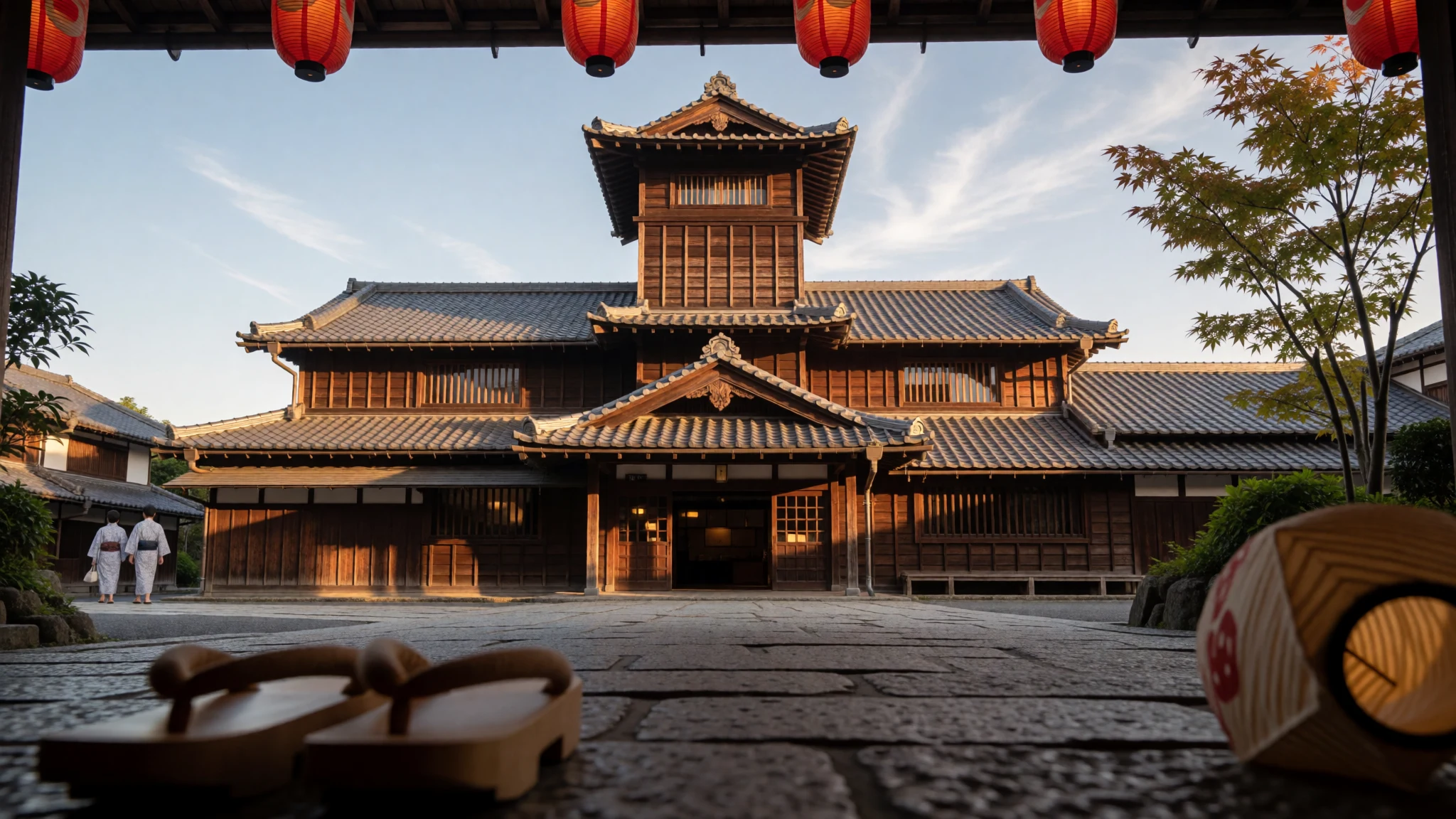
Dōgo Onsen is a working hot-spring town in Matsuyama, where a wooden Meiji-era bathhouse still draws locals and visitors in yukata.
The place
Dōgo Onsen (道後温泉) is a hot-spring district in Matsuyama, the main city of Ehime Prefecture on the island of Shikoku, Japan. Its centre of gravity is the public bathhouse known as the Honkan, a wooden building on three levels that has been taking bathers since 1894. Matsuyama's suburbs have grown up to its edges, yet the district still feels like a spa town rather than a suburb. In the evenings, guests drift between the shopping arcade, the baths and their lodgings in cotton yukata, wooden sandals clacking on the paving. The Honkan is busiest before dinner, so regulars often go first thing in the morning or late at night. Dōgo is a short tram ride from the middle of Matsuyama, and regular buses link it with the airport and the ferry port. Matsuyama itself has roughly half a million people, but it moves at a gentler pace than mainland cities of similar size. It sits in a river basin, with the Ishizuchi range to the south and the Takanawa hills to the north. The climate is mild: summers are warm and sticky, the heaviest rain arrives around the start of summer, and snow is rare. That makes the baths a sensible plan in any season, and the crowd mixes committed hot-spring devotees with people trying a Japanese bath for the first time. Beyond the Honkan there is a newer annex, a hill park with castle ruins, a shrine, and a covered arcade running from the tram stop towards the bathhouse door.
Its story
Dōgo Onsen has a history of well over a thousand years. The springs appear in the Man'yōshū, the early poetry anthology compiled in the eighth century, and legend adds a royal bather, Prince Shōtoku, which fits the way the place has long drawn the well-connected as well as the weary. The bathhouse standing today belongs to the Meiji era. A local mayor, Isaniwa Yukiya, championed it, and it opened in 1894 with three storeys planned to hold as many bathers as possible. The idea was practical: a public bath for townspeople, with upper floors where visitors could rest and take tea afterwards. The best-known literary link is the novelist Natsume Sōseki, who worked as a schoolteacher near Matsuyama when Shikoku was still a rural backwater. He drew on that time for Botchan, a loosely autobiographical novel whose narrator dislikes almost everything about the town except its hot springs. The book is still widely read in Japan, and it explains the Botchan motifs scattered around the district today: the chiming clock, the sweet dumplings, the souvenirs. What makes Dōgo's past easy to grasp is that so much of it is still in use. Water from the same springs fills public baths, and the building where Sōseki soaked still takes customers. Visitors do not so much look at the history as sit in it, with a towel on their head, like everyone before them.
What to see
- Dōgo Onsen Honkan — Dōgo Onsen town centre
The wooden main bathhouse is the reason most people come. Its three levels offer different bathing and resting options, and the exterior's layered roofs contrast with a plain, well-worn interior. A room linked to Sōseki is a small nod to the novelist. Evenings are crowded; early or late is calmer. Check dogo.jp for current arrangements.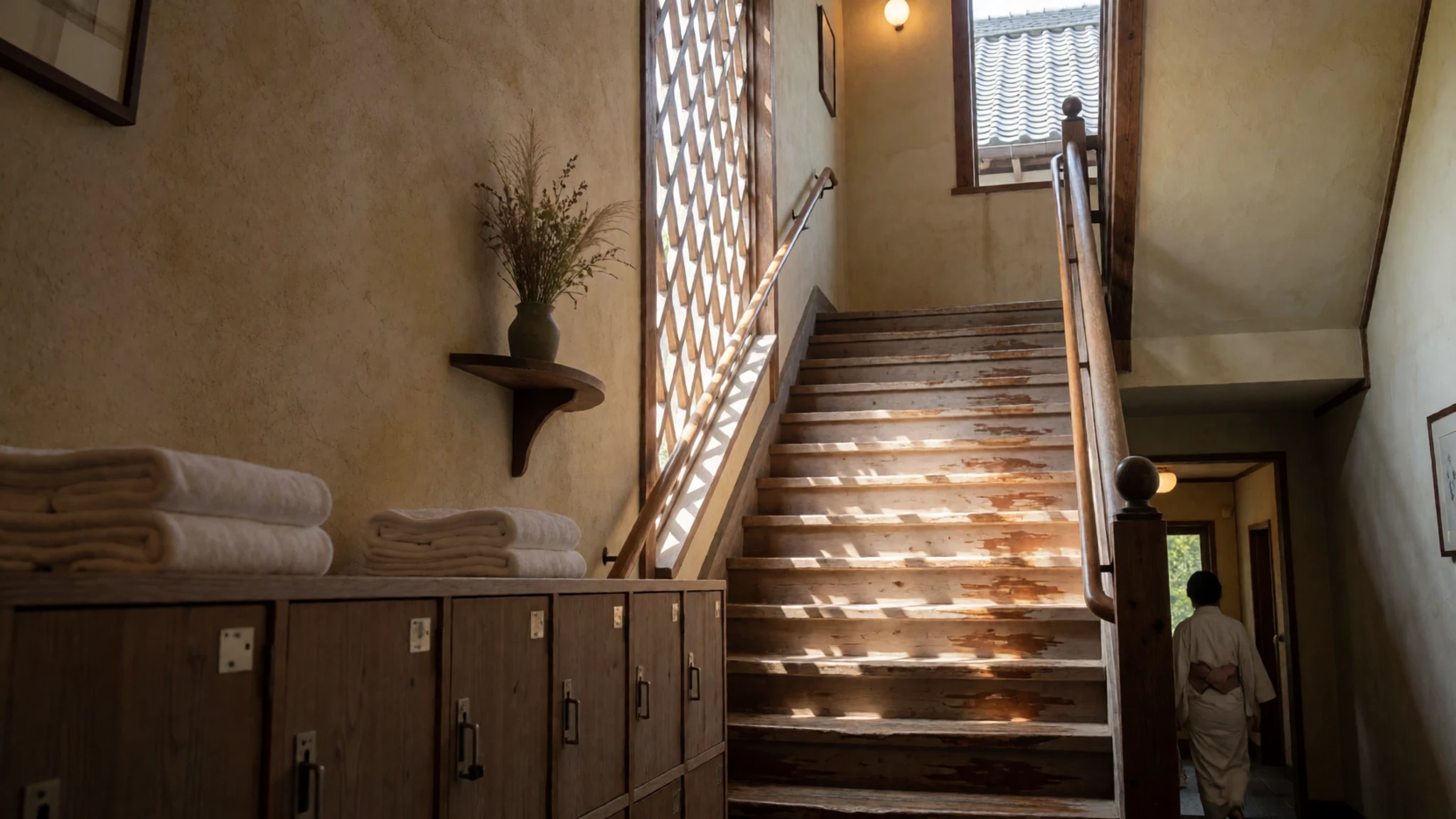
- Asuka-no-Yu annex — Dōgo Onsen town centre
A newer bathhouse a short walk from the Honkan, built in a traditional style with a roomier, more modern feel inside. It suits visitors who find the main building too packed, and the exterior borrows the district's familiar rooflines. Each building has its own character, so check the official site for what is on offer and when.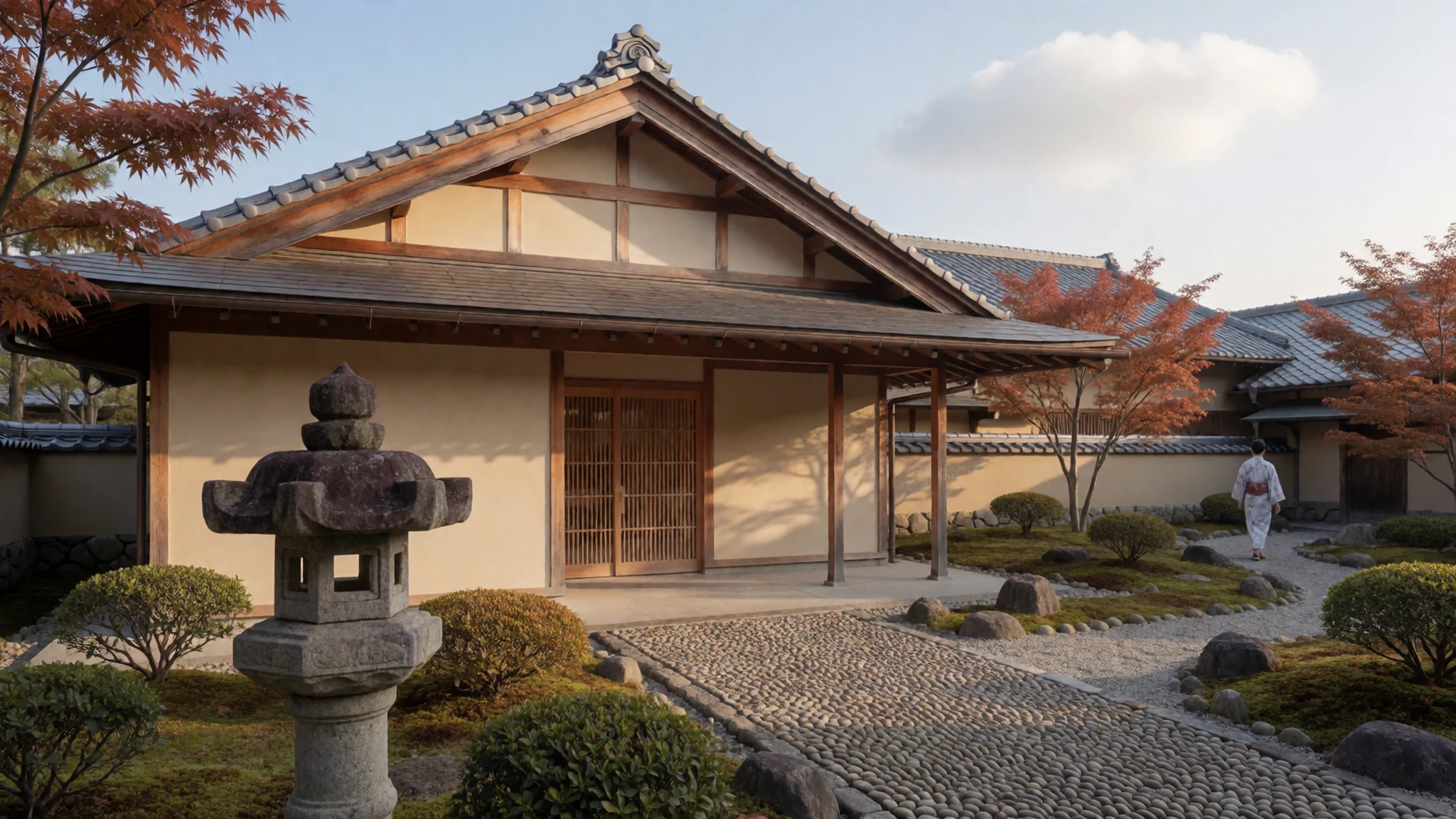
- Botchan Gizmo Clock — Dōgo Onsen Station
Beside the tram station at the mouth of the shopping arcade, this mechanical clock performs on the hour and half hour, with figures from Sōseki's novel appearing as it chimes. It is a small, cheerful stop, handy as a meeting point, and a good moment to look up from the arcade's souvenir stalls.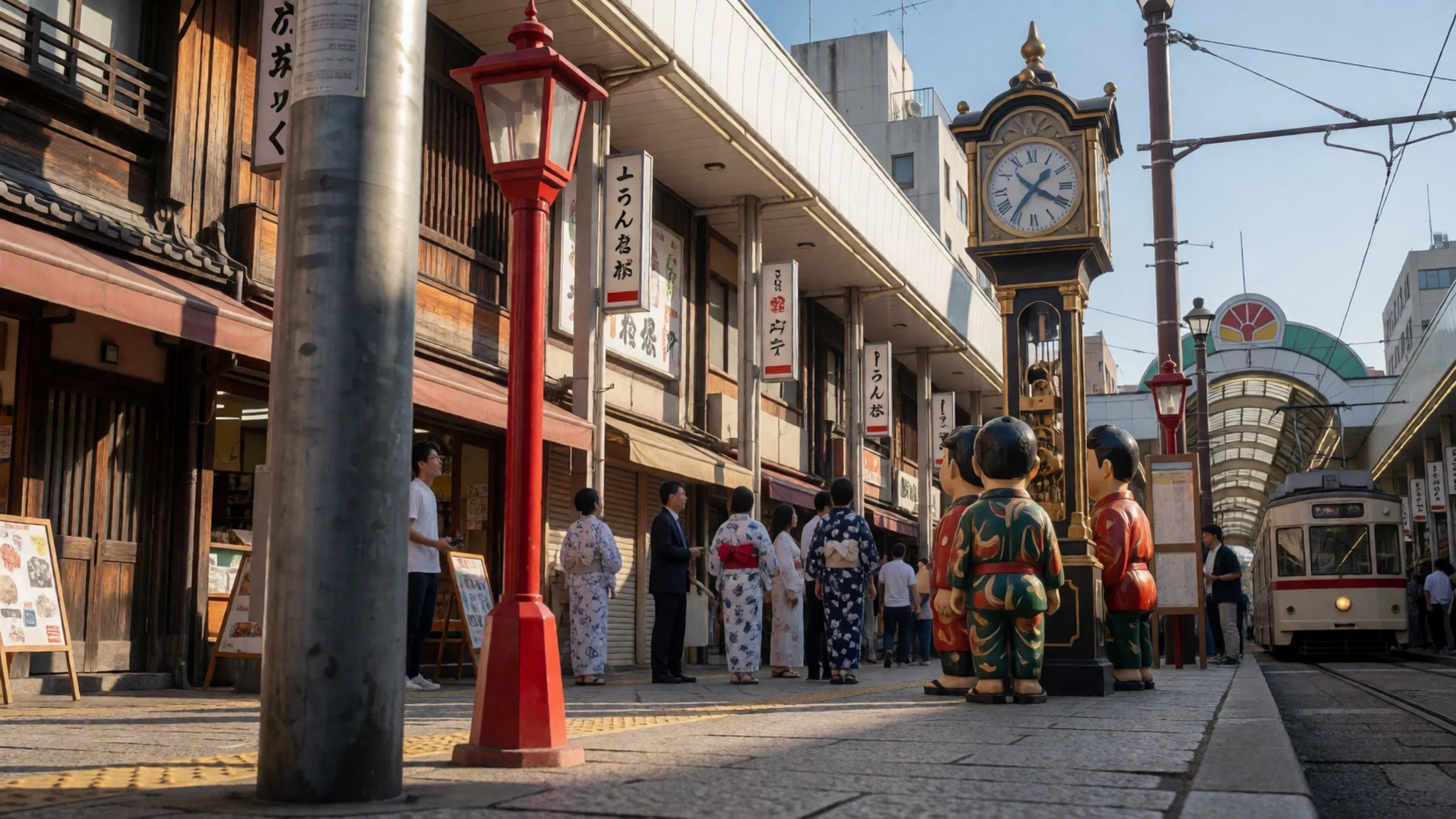
- Isaniwa Shrine — Dōgo Hill
This shrine stands on Dōgo Hill and is reached by climbing 135 stone steps, or by car. Its architecture follows the Hachiman style, linked to the god of war, and only a handful of fine examples survive in Japan. The climb is short but steep, and the hilltop is quieter than the streets below.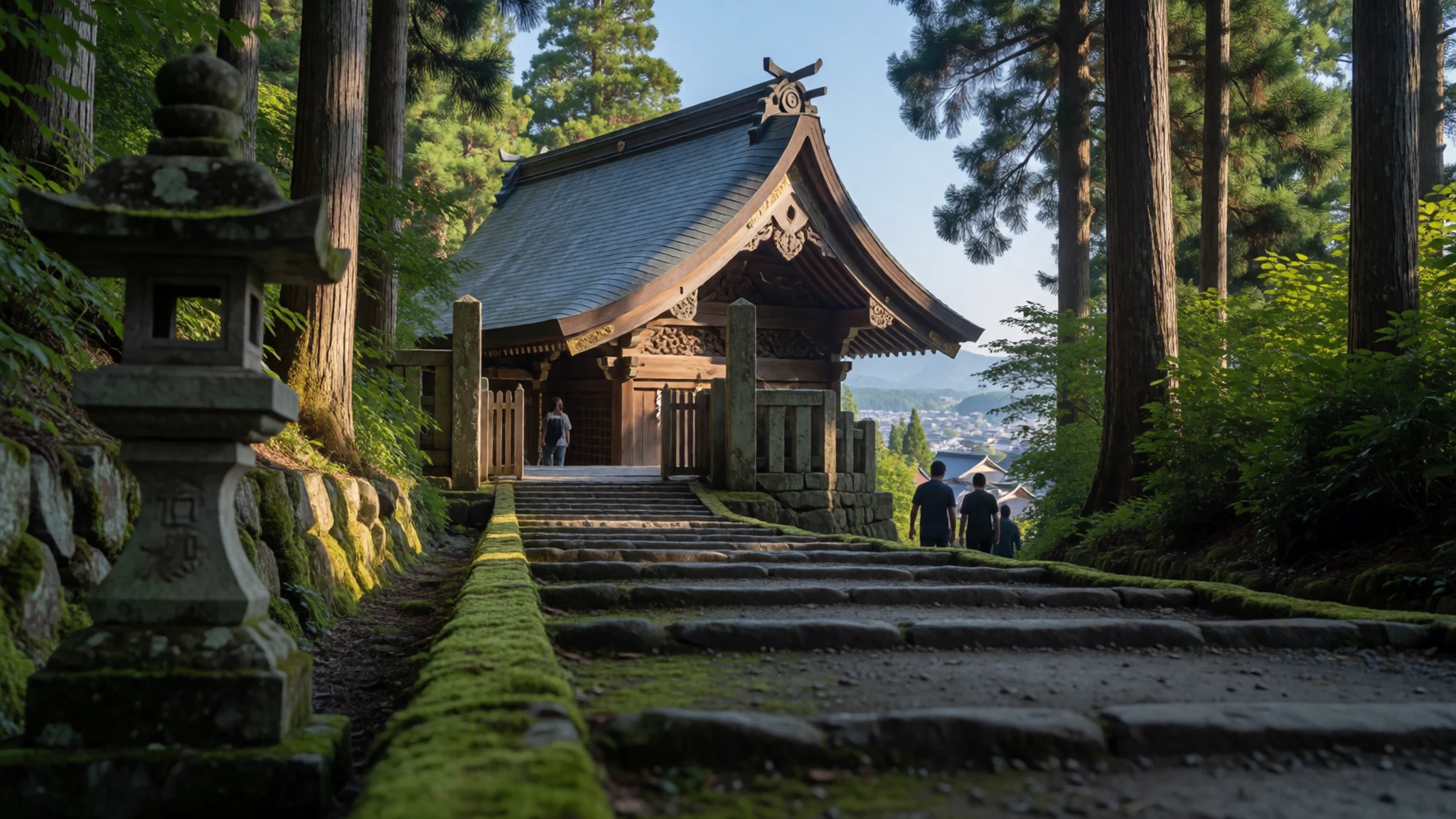
- Dōgo Park and Yuzuki Castle ruins — Dōgo, above the onsen
A hillside park above the baths, with the remains of an old castle. From mid-March through April it fills with cherry-blossom parties, with locals picnicking and stalls selling snacks, and it is noisy, cheerful and crowded. At other times of year it is peaceful, with shaded paths and views over the district.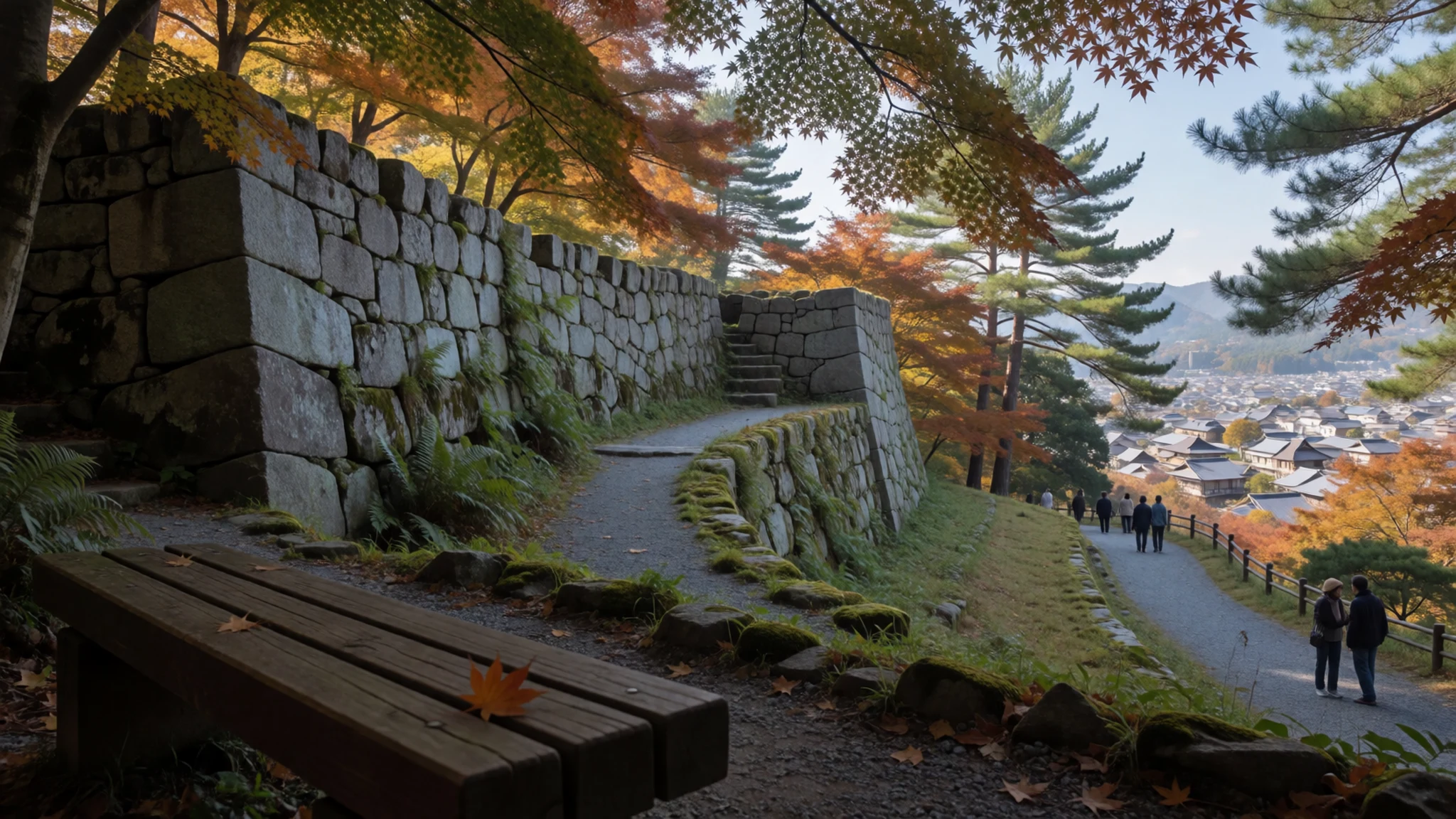
- Bansuiso — West of Dōgo, Matsuyama
A French-style villa built in 1922 for the former lord of Matsuyama Castle, Hisamatsu Sadakoto. It makes an unexpected contrast with the wooden bathhouses and shrines nearby, and suits a slower afternoon. It lies a short ride from the onsen district, so combine it with a stop at the Akiyama brothers' birthplace close by.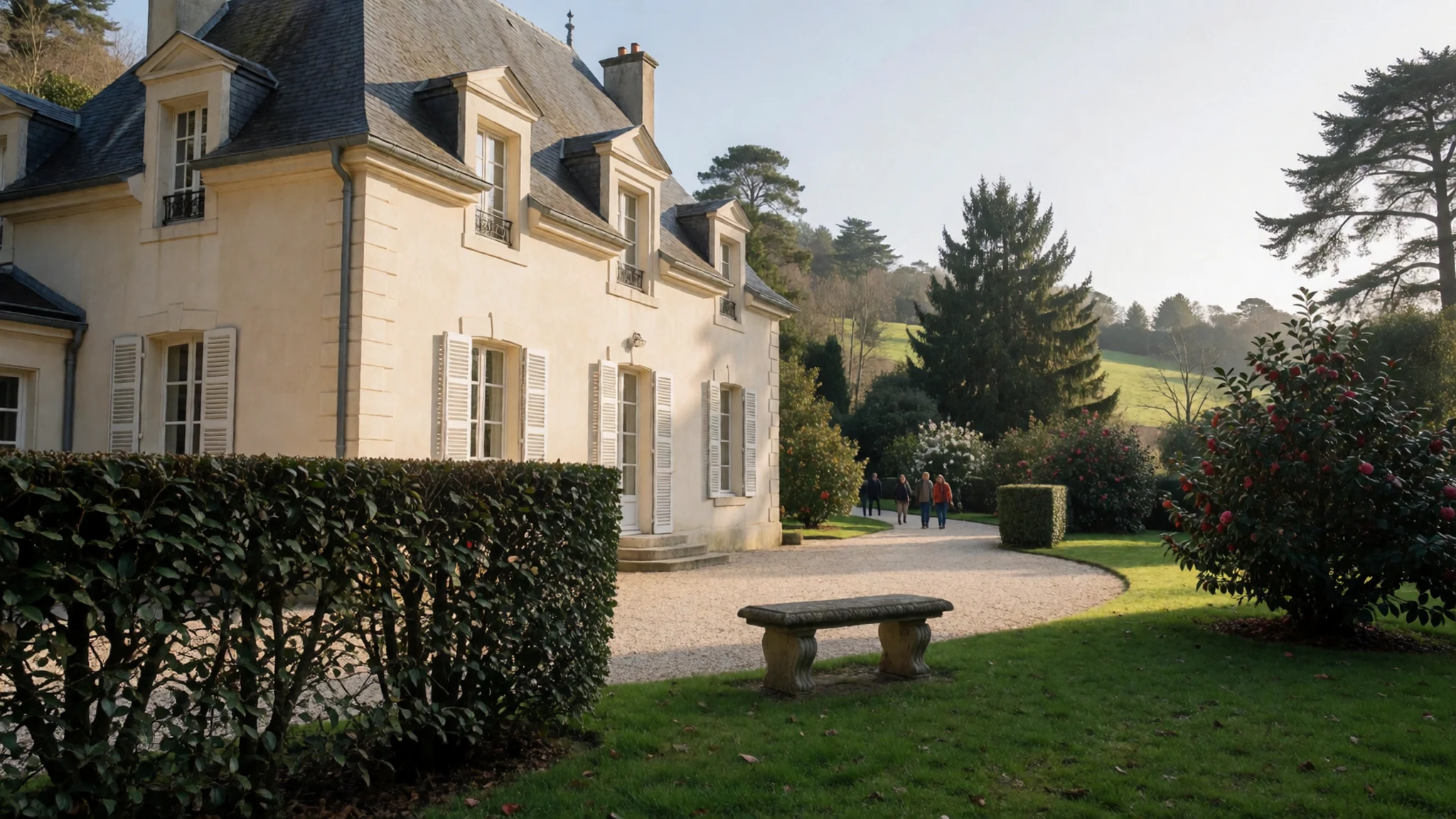
Culture
Dōgo Onsen is a place where bathing is a social habit as much as a leisure activity. Locals and tourists soak side by side, and the district is organised around that rhythm: a bath before dinner, a stroll in yukata through the arcade, perhaps tea or a beer afterwards. The Honkan carries a literary layer too. Natsume Sōseki's Botchan made the baths famous with generations of readers, and the novel's name is on clocks, sweets and souvenirs across the neighbourhood. Matsuyama also has a long samurai heritage, visible in its castle and in the story of the Akiyama brothers, local men who became military figures. The spring itself has religious associations: the nearby Isaniwa Shrine, on a hill above the town, sits in the long Shinto tradition of honouring places where hot water rises from the ground. In spring, cherry-blossom viewing in the hill park turns the district into a friendly, slightly rowdy picnic. Overall the atmosphere is relaxed, unfussy and tied to daily routine rather than staged for tourists, and that is its main appeal. Staff at the baths are used to first-timers, but the rules of the bath are strict and shared by everyone, so it helps to know them before arriving. Wash and rinse thoroughly at the stools before stepping into the water, and keep your small towel out of the bath.
What to wear
The garment most linked with Dōgo is the yukata, a light cotton robe worn after bathing and on summer evenings, usually with wooden geta sandals. Rented or lent by lodgings, it is the unofficial uniform of the district, and guests wander the streets in it. Ehime's own textile tradition is Iyo kasuri, a cotton cloth woven with softly blurred patterns, usually in indigo, which is celebrated at a folk-craft museum in Matsuyama. Formal kimono appear at weddings and festivals but are not everyday wear. Day to day, people dress as they do in most Japanese cities: neat, casual and practical, with jeans, light jackets and trainers, and smarter clothes for work. Visitors should dress for the weather first. Summers are warm and humid, so light cotton and a spare top for the walk back from the baths are sensible, while winter evenings feel cold after a hot soak, so bring a warm layer and a scarf. Shoes should be easy to slip off, since baths and many lodgings ask for that, and flat soles help on the 135 steps up to the shrine. At shrines, shoulders and knees do not need covering as strictly as in some countries, but tidy, modest clothing is the polite choice.
What to eat
- Taimeshi — Ehime cuisine restaurants near the Honkan
Sea bream served on rice, a standard of Ehime cooking. In the Matsuyama style the fish is typically cooked or dressed with the rice, and the result is mild and savoury. Look for it at traditional Ehime restaurants around the bathhouse, often as a set meal.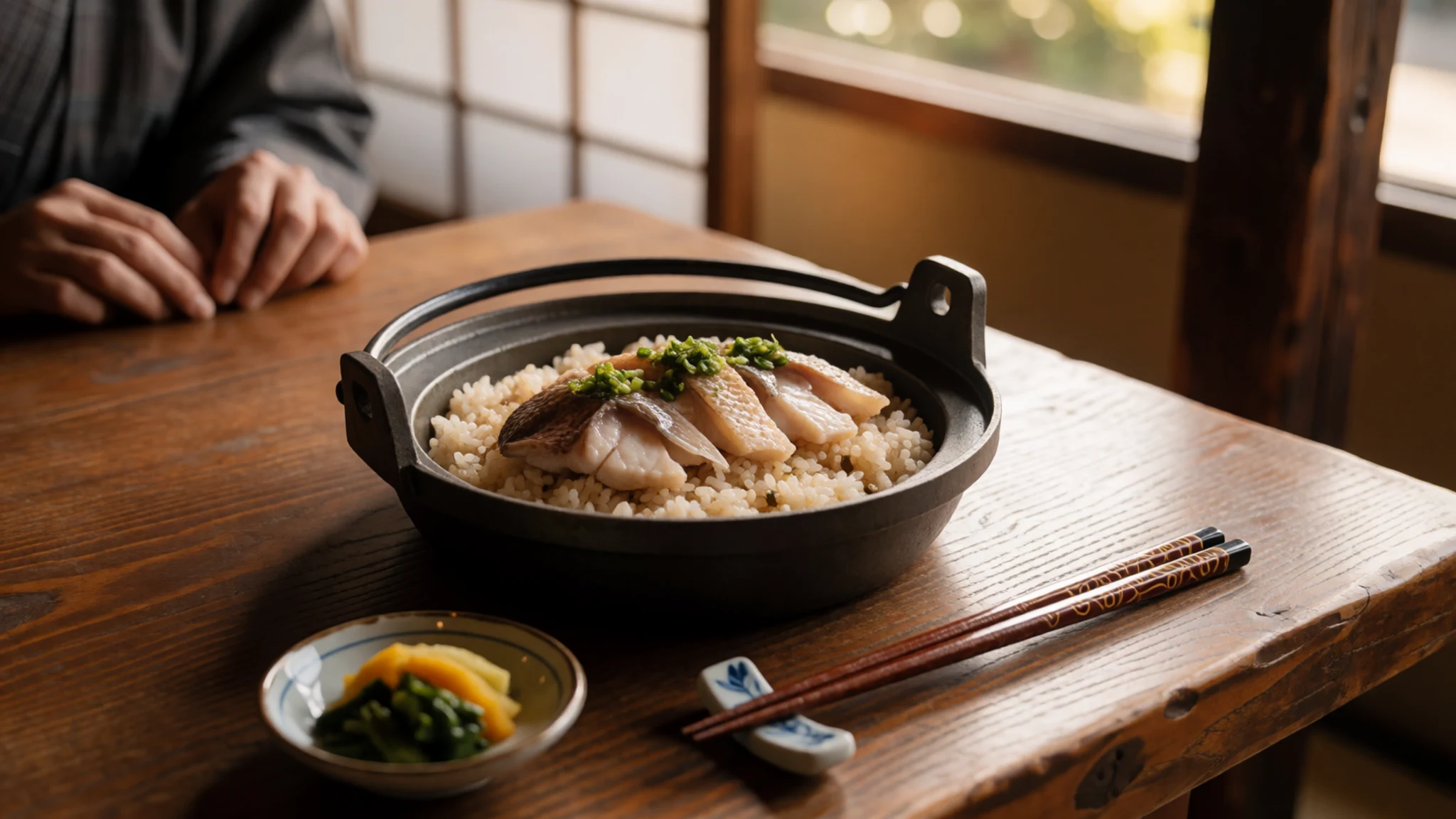
- Goshiki soumen — Regional Ehime eateries in the Dōgo area
Five-coloured thin wheat noodles, dyed in soft shades, eaten cold with a dipping sauce. They are a pretty, light local speciality that suits warm weather. Find them in restaurants serving regional Ehime dishes in and around Dōgo.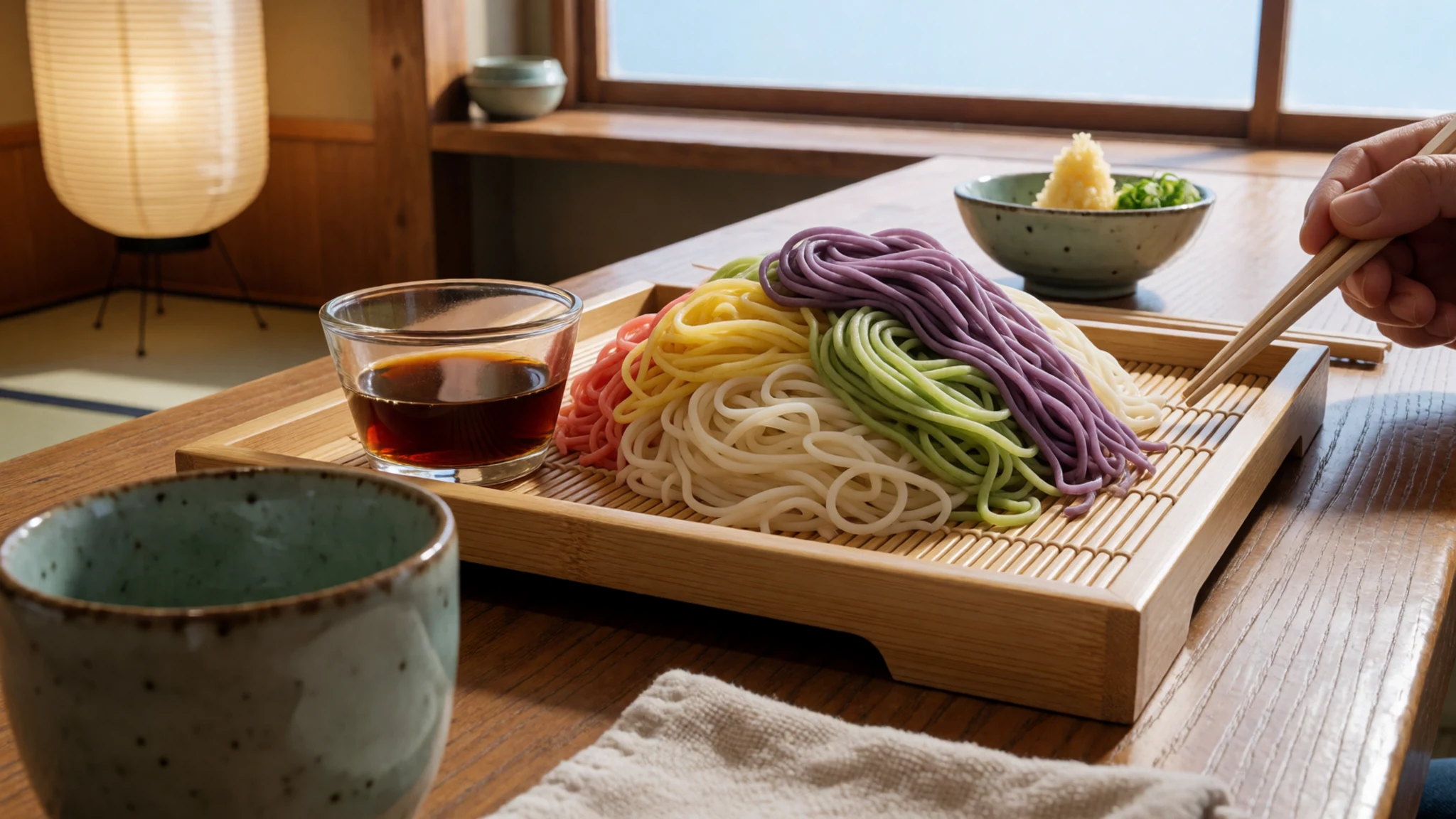
- Dōgo beer — Pubs and brasseries beside the Honkan
A local craft beer brewed for the district and poured at only a few places in town. A glass after a hot bath is the established ritual. Ask at a pub or brasserie close to the bathhouse, where the menu will say if it is on tap. - Jakoten — Arcade stalls and food shops on the shopping street
Fried fish cakes, a well-known snack from Ehime, made from small fish ground whole and fried until lightly golden. They are chewy and a little smoky, best eaten warm, and easy to eat while walking. - Botchan dango — Sweet shops and tea rooms along the arcade
Three small sweet dumplings on a skewer, in different colours, named after Sōseki's novel. They are soft, lightly sweet and good with green tea, and sold as a souvenir across the district.
Plan it
Best time. March–April for cherry blossom in the hill park, and October–November for mild, dry days that suit long soaks. Summer is warm and sticky, and the heaviest rain arrives around the start of summer. Snow is rare, so winter baths are comfortable too.
How long. 2–3
Getting there. Fly to Matsuyama Airport, then take the limousine bus to Dōgo Onsen, which runs at regular intervals. By rail, take the San'yo Shinkansen to Okayama and change to the Shiokaze limited express to Matsuyama, about three hours, then the tram to Dōgo. Buses also serve the ferry port.
Budget. mid
Tips
- Visit the Honkan early in the morning or late in the evening, since the busiest time is just before dinner.
- Check the official site, dogo.jp, for opening arrangements and which buildings are open before you go.
- Carry some cash for arcade stalls and small eateries, and a small towel in case your lodging does not supply one.
- Time a visit to the hill park for the blossom in mid-March to April, but expect crowds.
- Use the tram from central Matsuyama, which is simple and avoids parking.
Etiquette
- Wash and rinse fully before entering any bath, and keep towels out of the water.
- Keep voices low in the baths and in the streets at night.
- Follow any rules on tattoos shown at the entrance, and ask staff if unsure.
Nearby
Sources
- Wikidata Q1037748 (CC0)
- Wikipedia: Dōgo Onsen (rev 1380061324) (CC BY-SA 4.0)
- Wikivoyage: Matsuyama (rev 5430937) (CC BY-SA 4.0)
- Photo: Dōgo Onsen.jpg — Arnaud Malon (CC BY 2.5)
- Photo: Dogo Onsen Honkan long exposure — Japanexperterna.se (CC BY 3.0)
- Photo: Soseki's room — 膀胱眼球胎 (CC BY 3.0)
- Photo: Dōgo Onsen Honkan, June 2016 — NevinThompson (CC BY-SA 4.0)
- Photo: Front of Dōgo Onsen Honkan with bathers in yukata — NevinThompson (CC BY-SA 4.0)
- Photo: Asuka-no yu — Drivephotographer (CC0 1.0)
- Photo: 道後温泉別館 飛鳥乃湯 — Dokudami (CC BY-SA 4.0)
- Photo: Botchan Karakuri Clock — 松山市役所 (CC BY 4.0)


