Dodona
Dodona, Greece
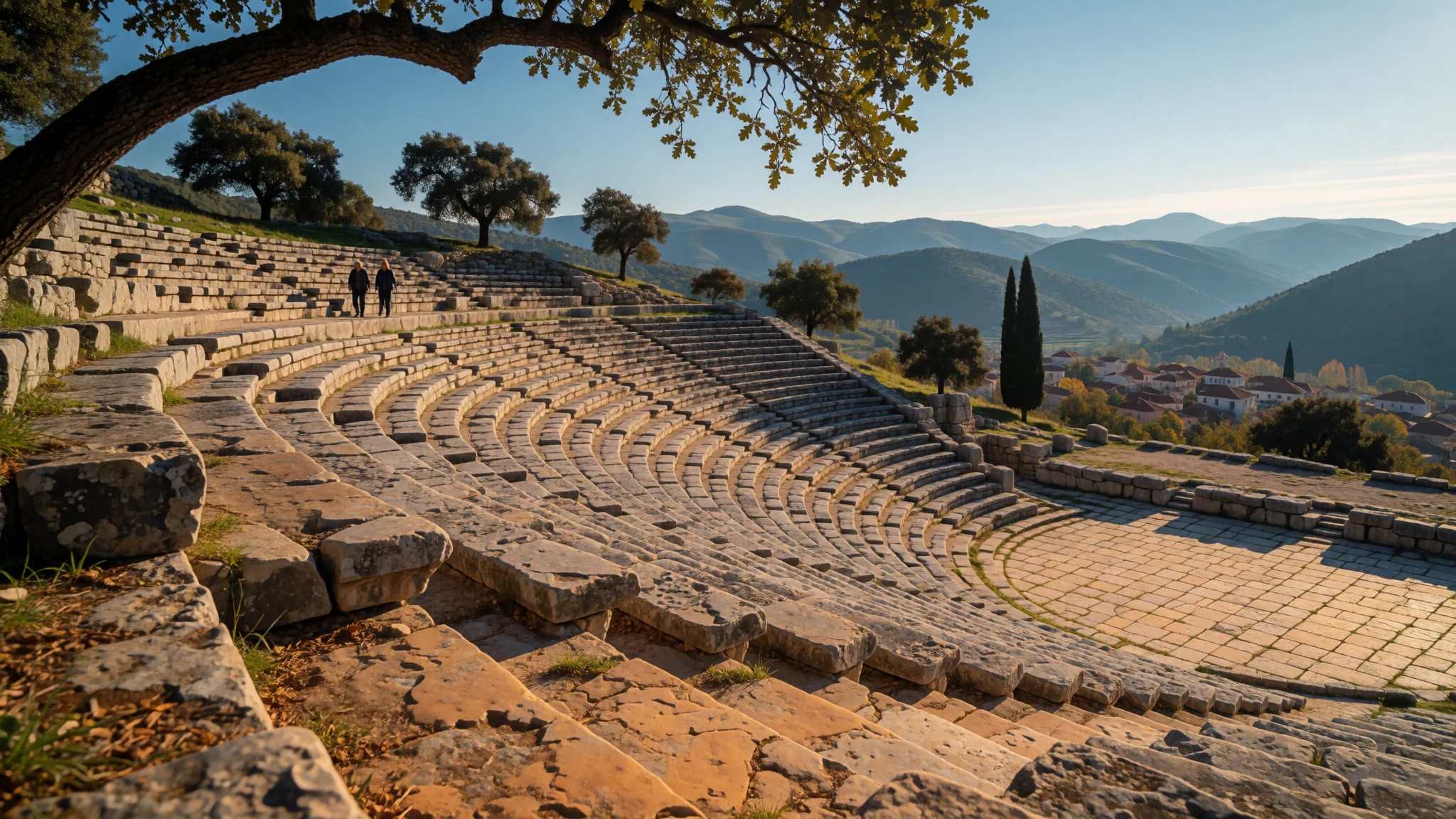
Dodona is a quiet mountain sanctuary in Epirus where Greeks once came to hear Zeus answer through wind in the oaks.
The place
Dodona lies in Epirus, in the mountainous north-west of Greece, well away from the great cities of the ancient Greek world. That remoteness is part of its character. The sanctuary was an oracle, a place where people brought questions about journeys, marriages, harvests and war, and went home with an answer from a god. Ancient writers ranked it second only to Delphi in standing, and Homer already knew it as an oracle of Zeus.
Today it is an archaeological site rather than a town, set in a valley with high ground on every side. The most obvious survivor is the theatre, whose stone seating curves up the slope and is easy to read even for first-time visitors to ruins. Around it are the footings of temples, council buildings and the enclosure where the sacred tree is thought to have stood. Much of the portable material, including bronze offerings, is kept in museums in Ioannina and Athens, so the site itself is more about space, setting and atmosphere than about spectacular standing walls.
Epirus is one of the poorer regions of Greece, and its mountains are far less developed for tourism than the coast. That means quiet roads, small villages, and a pace that suits a place built for listening. Expect fewer coaches than at Delphi or Athens, and plan around the weather: the uplands are cooler than the Ionian coast, and the valley can be wet and chilly outside summer.
Its story
Dodona's story begins long before the Classical Greeks. Excavation has recovered offerings from the Mycenaean era, including bronze objects of the 14th and 13th centuries, so some form of worship was happening here in the Late Bronze Age. Herodotus thought the oracle might go back to the 2nd millennium BCE. The earliest inscriptions found at the site are later, from about 550–500 BCE.
The first deity here may have been a mother goddess, called Dione, who was later joined and partly supplanted by Zeus. Priestesses and priests served in a sacred grove, and ancient accounts say they read the will of the god in the rustling of oak leaves, or beech in some versions. A newer interpretation points to bronze objects hung from the branches, which would have rung in the wind rather like a chime. Whichever is right, the idea is the same: the answer came through sound and weather.
There was a quiet period after the Mycenaean age, but contact with southern Greece resumed in the 8th century BCE, when bronze tripods arrived from southern cities. Offerings came from much of the Greek world and its colonies, while few came from neighbouring Illyrians, which suggests the oracle looked mainly towards the Greeks. Control passed from the Thesprotians to the Molossians. The sanctuary stayed important until Christianity took hold in the Late Roman period.
What to see
- The ancient theatre — Dodona archaeological site
The theatre is the part of Dodona most people photograph, and with good reason. Its stone tiers climb the hillside in a clean curve, and sitting at the top gives a sense of the valley the sanctuary occupies. Walk the lowest rows and the centre of the stage area too, since the acoustics are part of the point.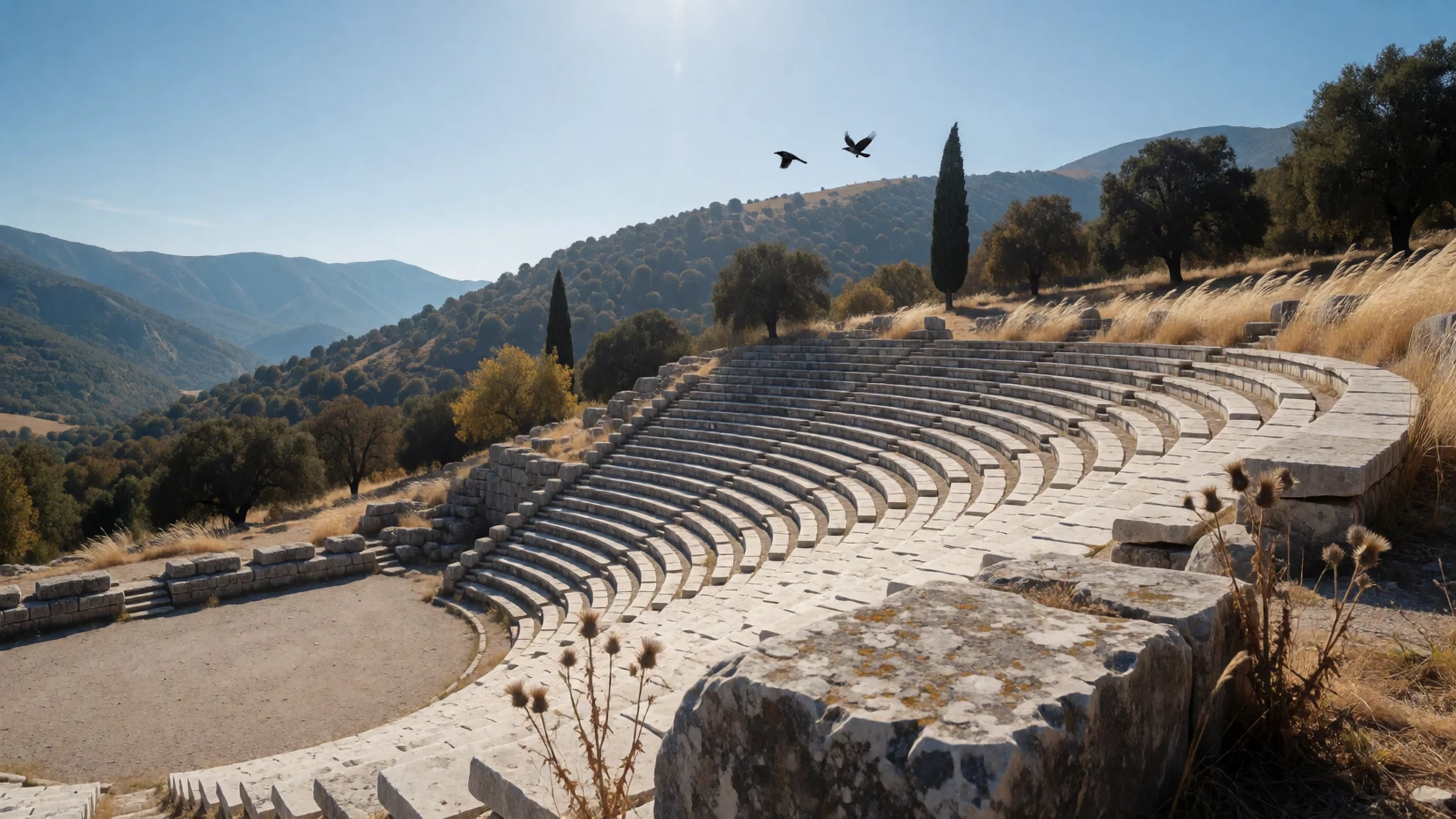
- The sanctuary of Zeus — Dodona archaeological site
Beyond the theatre lie the low foundations of the sacred precinct, where the oracle's tree was tended. There is little to see in height, so use the signs and your imagination: this is where petitioners queued with questions, and where bronze offerings were left. Come early, when it is quiet.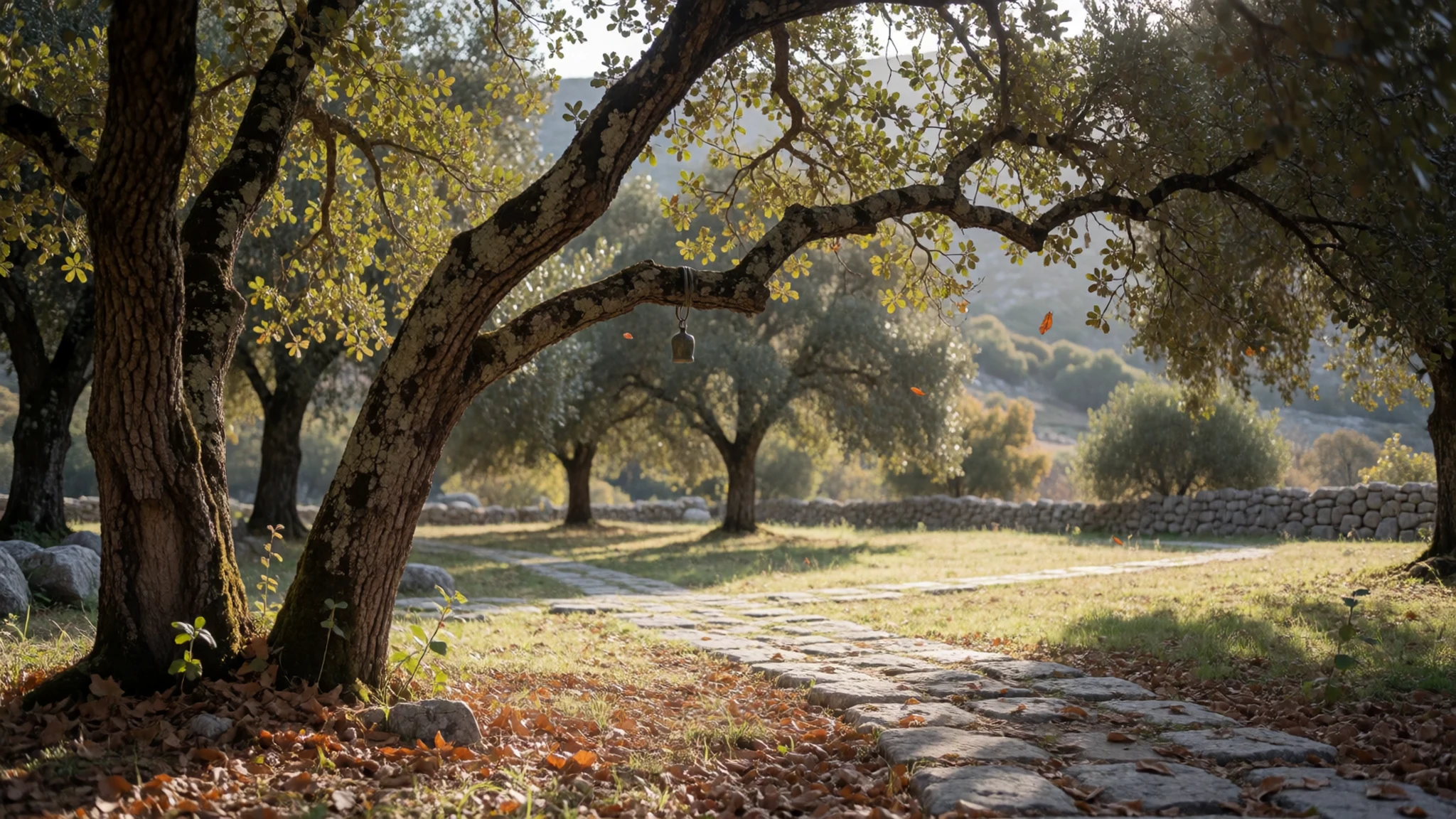
- Bronze offerings in the museums — Ioannina and Athens
The finds from Dodona, such as votive bronzes and a Louvre hammer from the 7th century BCE, show what pilgrims brought. Many pieces from the site are now in the National Archaeological Museum of Athens and the Archaeological Museum of Ioannina. Check the museum websites for opening details before you plan a day around them.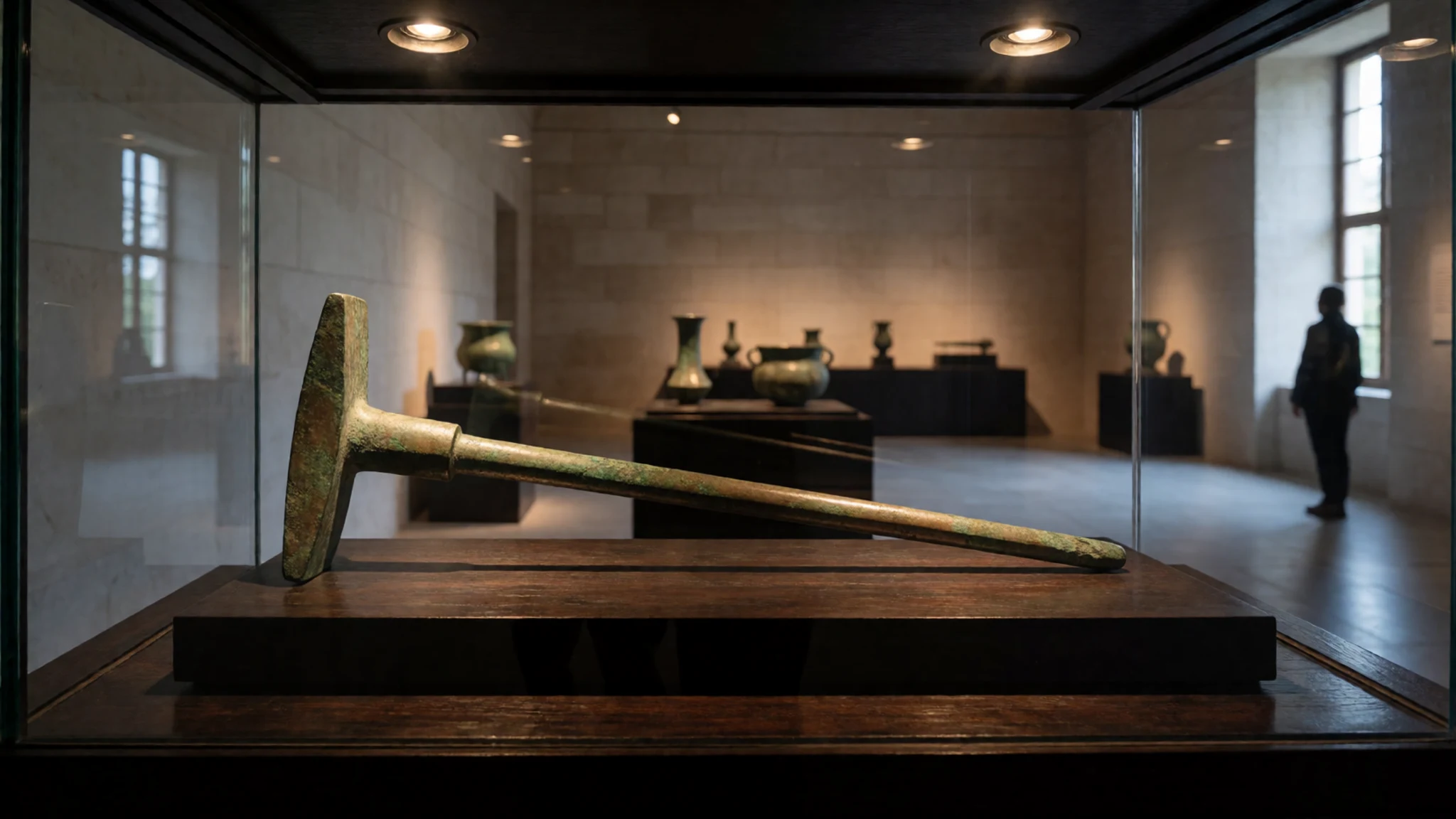
- Views across the valley — Dodona valley
Walk to the edges of the site and look back. The panoramas show how the sanctuary sits in a bowl of hills, far from the sea, which helps explain why it felt like a place apart. Spring grass and autumn colour make the best backdrops for photographs.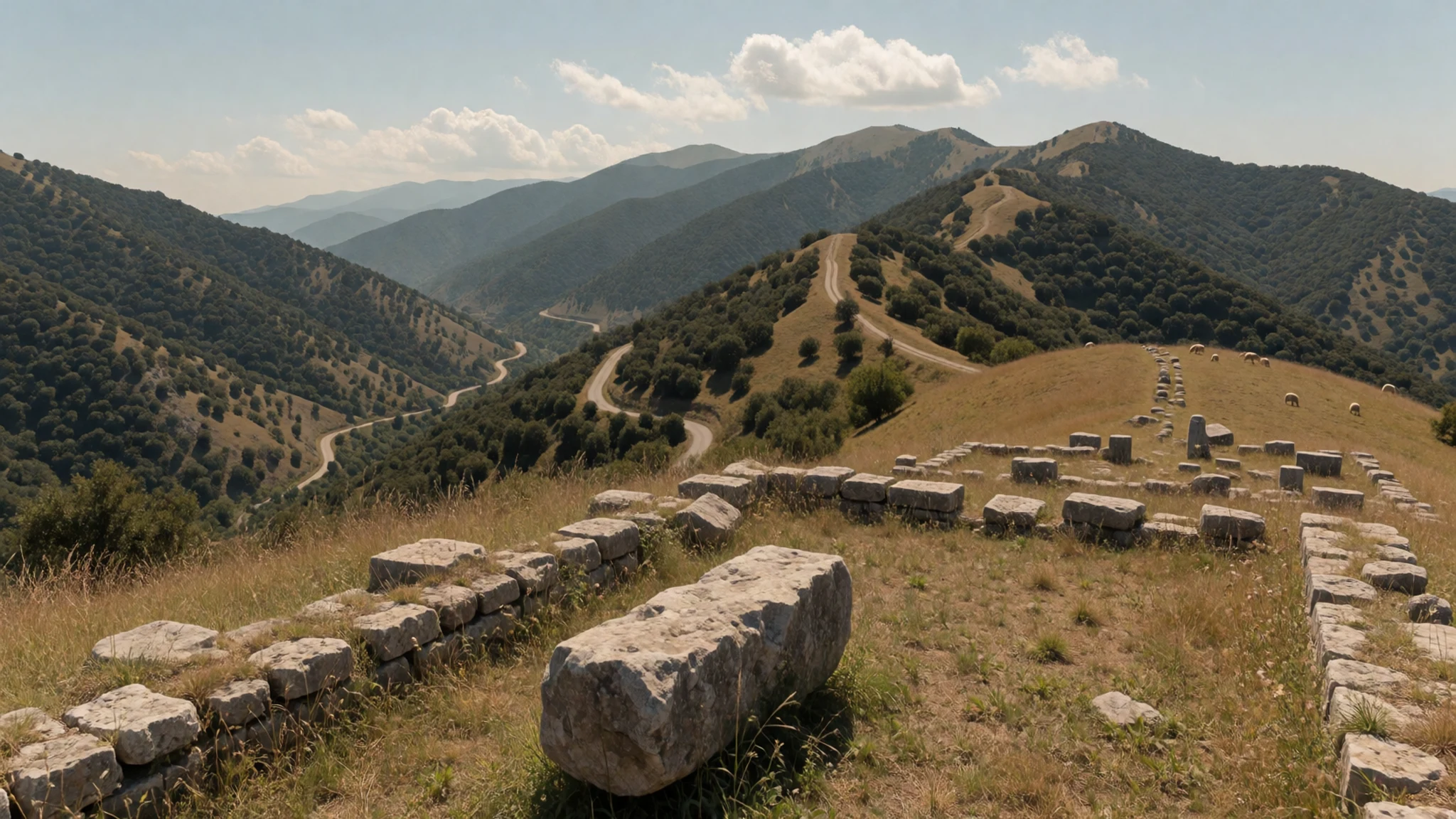
- Nekromanteion — Near Acheron, south-west Epirus
On a longer Epirus trip, the Nekromanteion is the natural companion. It was the oracle of the dead, and the brief describes it as the only one in Greece. It sits to the south-west of Dodona, so allow a separate day and check local transport or hire a car.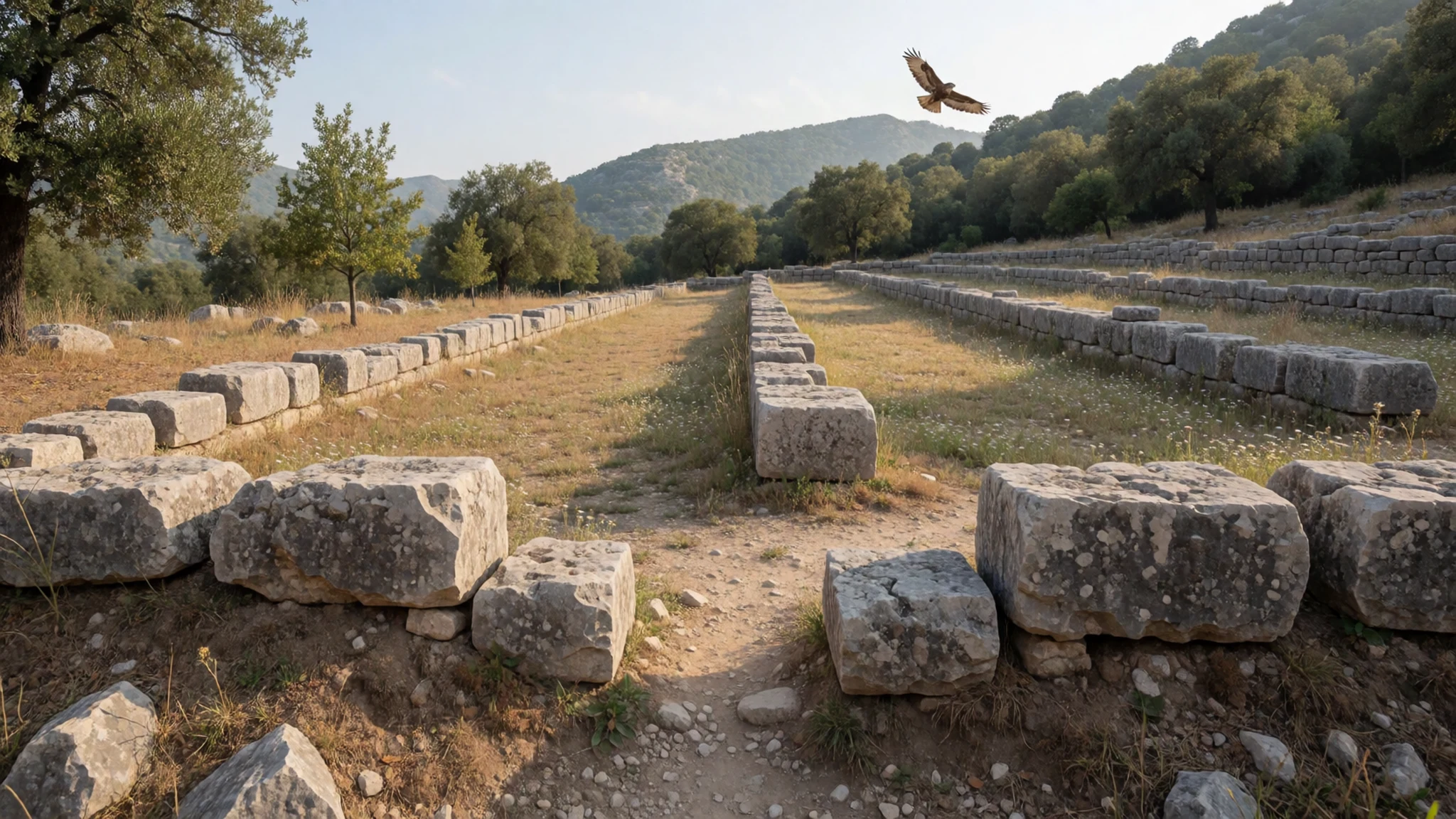
Culture
Dodona's culture is the culture of listening. People came not to watch a performance but to put a question to a god and wait for a sign, and the answer might arrive as wind in leaves or the ring of metal. That makes the site feel different from palaces and temples built to impress. It was a working religious place, used by farmers, travellers and rulers alike, and the offerings left here show how ordinary and how personal many of the requests were.
The cult itself was layered. A mother goddess, Dione, seems to have been worshipped first, and Zeus came to share and then largely take over her place. The theatre, added later, reminds visitors that the sanctuary was also a gathering place for festivals and games. Epirus kept its own character through the centuries, and the mountain villages still have a quieter, more rural rhythm than Greece's islands.
The region was under Ottoman rule until the Balkan War in 1912, and the southern part only then joined Greece. Those layers of history are visible in church architecture, village life and cooking across the area.
Walk the paths rather than climbing on the stonework, and keep your voice low in the theatre, as other visitors may be listening for the wind.
What to wear
Dodona has no costume of its own, but the wider region of Epirus does. Traditional mountain dress used wool, felt and heavy woven cloth, since winters are cold and the work was pastoral. Men wore embroidered waistcoats and the pleated kilt known as the foustanella in some parts of Greece, while women wore long dresses with embroidered aprons and headscarves. These outfits now appear mostly at festivals, weddings and folk-dance events.
Day to day, people in Epirus dress as they do elsewhere in Greece: practical layers, jeans, fleeces and waterproofs in the cooler months, lighter cottons in summer. Villages are informal, and nobody will notice a visitor in walking gear.
For a visit, think about terrain and weather rather than modesty rules. The site is open and exposed, with uneven stone and loose gravel, so wear sturdy shoes with grip. Bring a hat and sunscreen for summer, and a windproof jacket and rain layer for spring and autumn, as the valley can turn cool and wet quickly. If you also plan to visit monasteries or village churches nearby, carry a scarf or light cover-up and wear trousers or a knee-length skirt, with shoulders covered, as a courtesy.
What to eat
- Tiropita — Village bakeries and cafés in Ioannina
A pie of thin pastry filled with cheese, and the simplest of the Epirus pittas. It makes a good breakfast or road snack before a morning at the ruins. Look for it in village bakeries and in the cafés of Ioannina.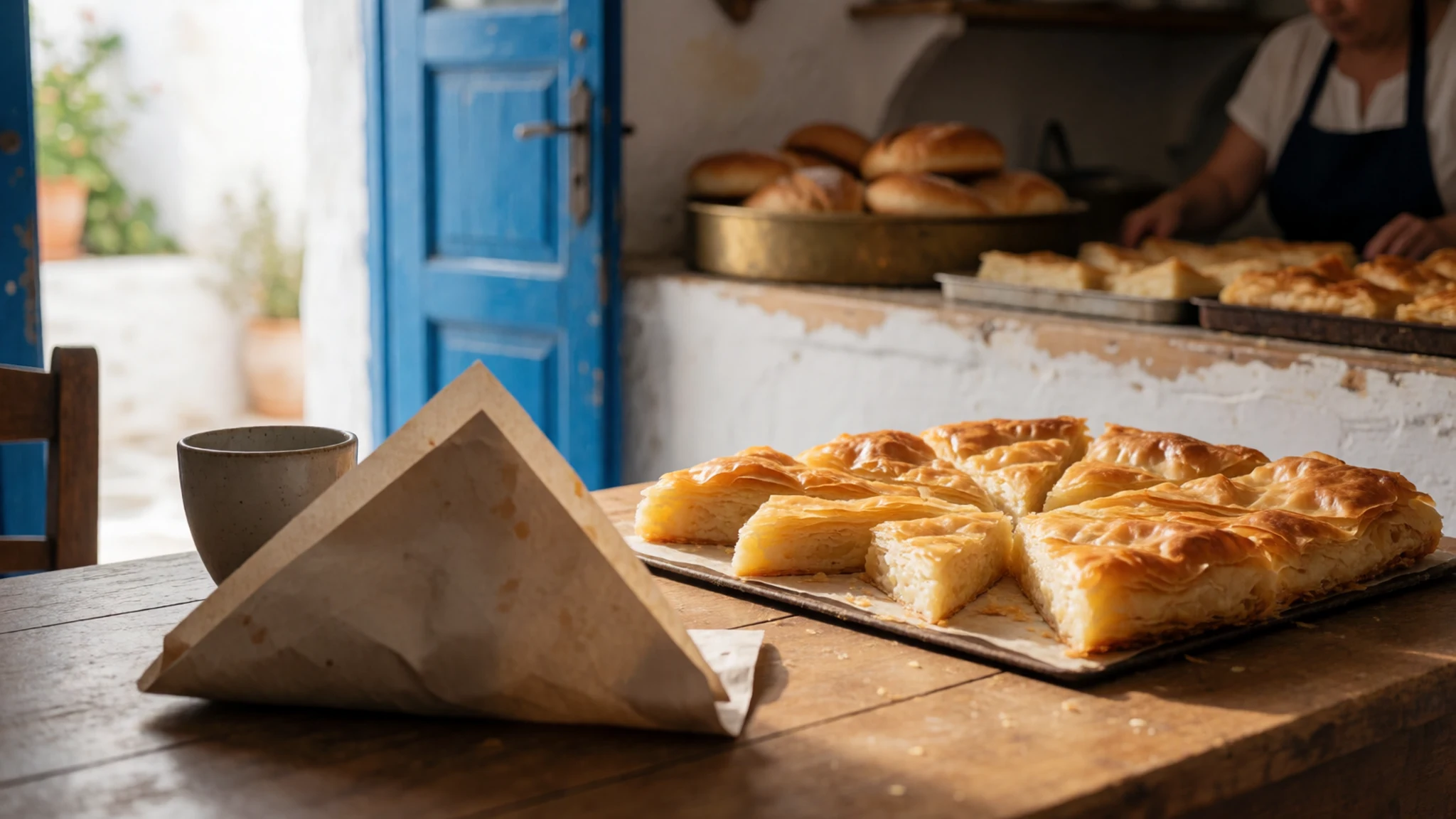
- Spanakopita — Bakeries and family tavernas in mountain villages
Spinach pie, sometimes with feta and sometimes with herbs, baked in crisp layers. The mountain versions often feel more rustic than the ones sold in cities. It is an easy vegetarian choice almost anywhere in the region.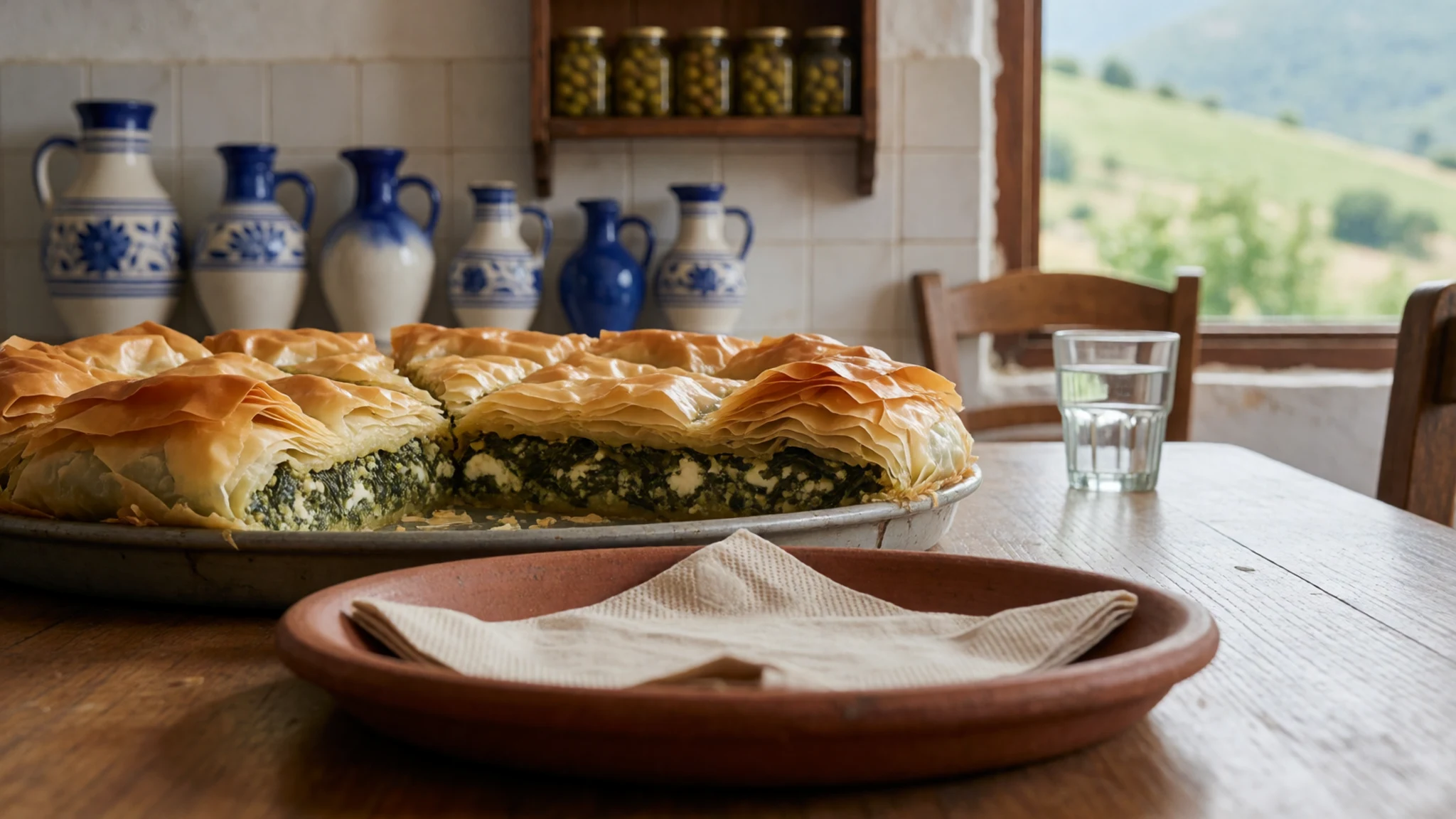
- Hortopita — Village tavernas and home-style eateries
A pie of wild greens gathered from the hills, which gives it a stronger, slightly bitter flavour than spinach alone. It is a good way to taste what the landscape actually grows. Ask what is in season.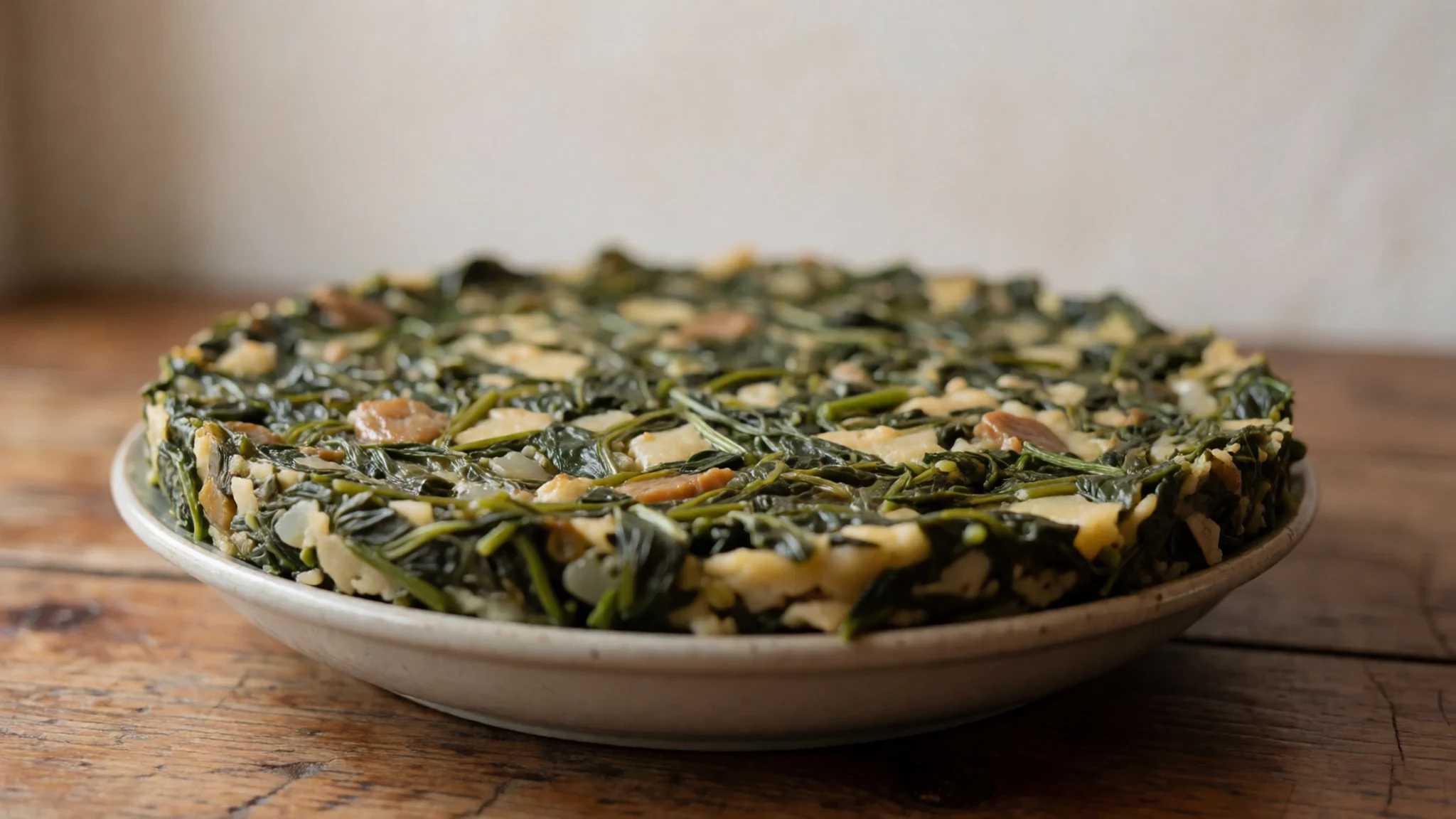
- Kolokithopita — Bakeries and pie shops in Ioannina
Pumpkin pie, made either sweet or savoury, depending on the cook. The sweet version is often dusted with sugar and cinnamon. It is worth asking which type is on offer before you order.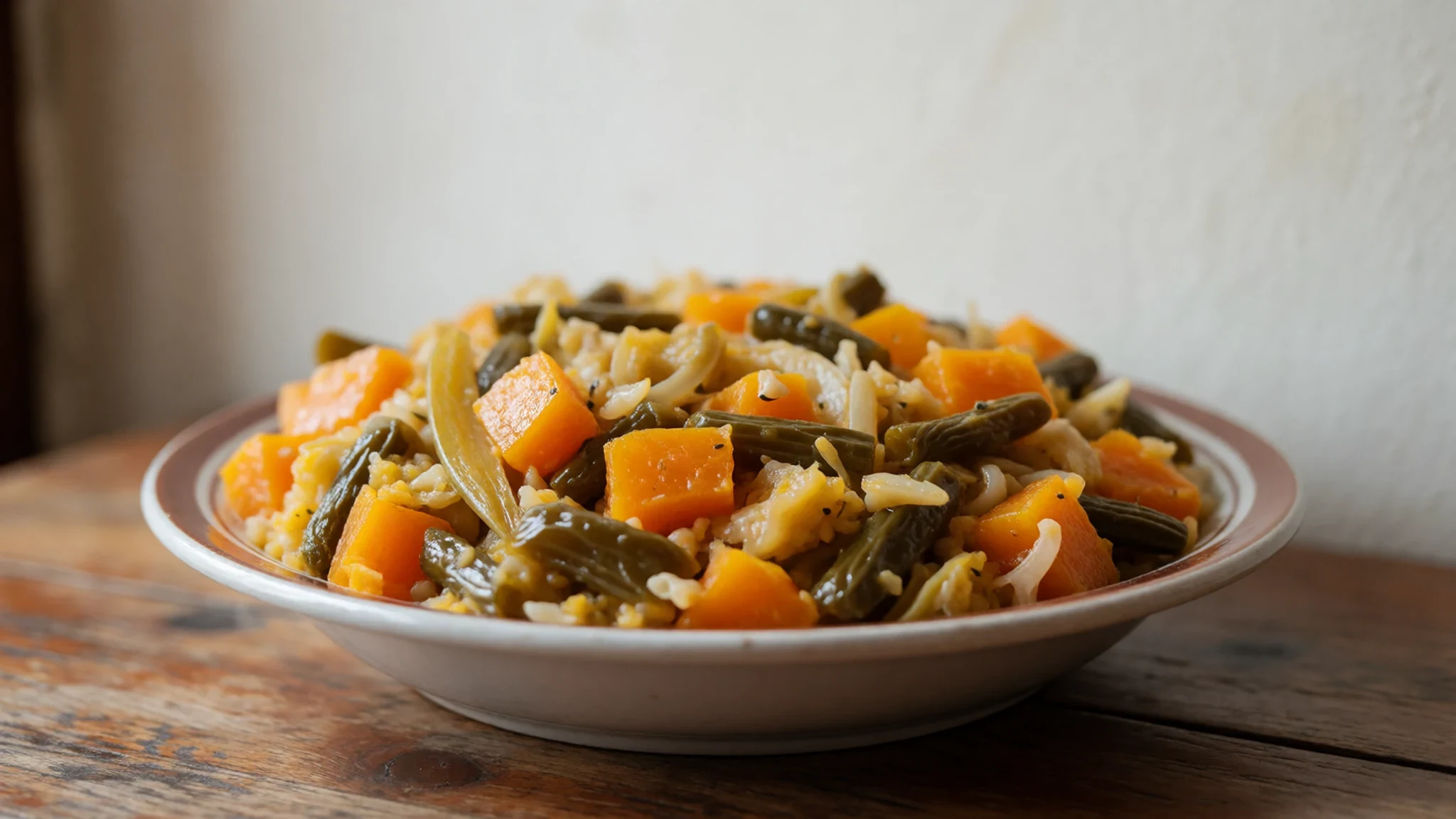
- Grilled goat or sheep — Tavernas in the mountain villages around Dodona
Local animals graze freely on many grasses and herbs, and the meat is known for its flavour. It is usually roasted or grilled and served simply. A taverna meal after a day outdoors is the natural way to end a visit.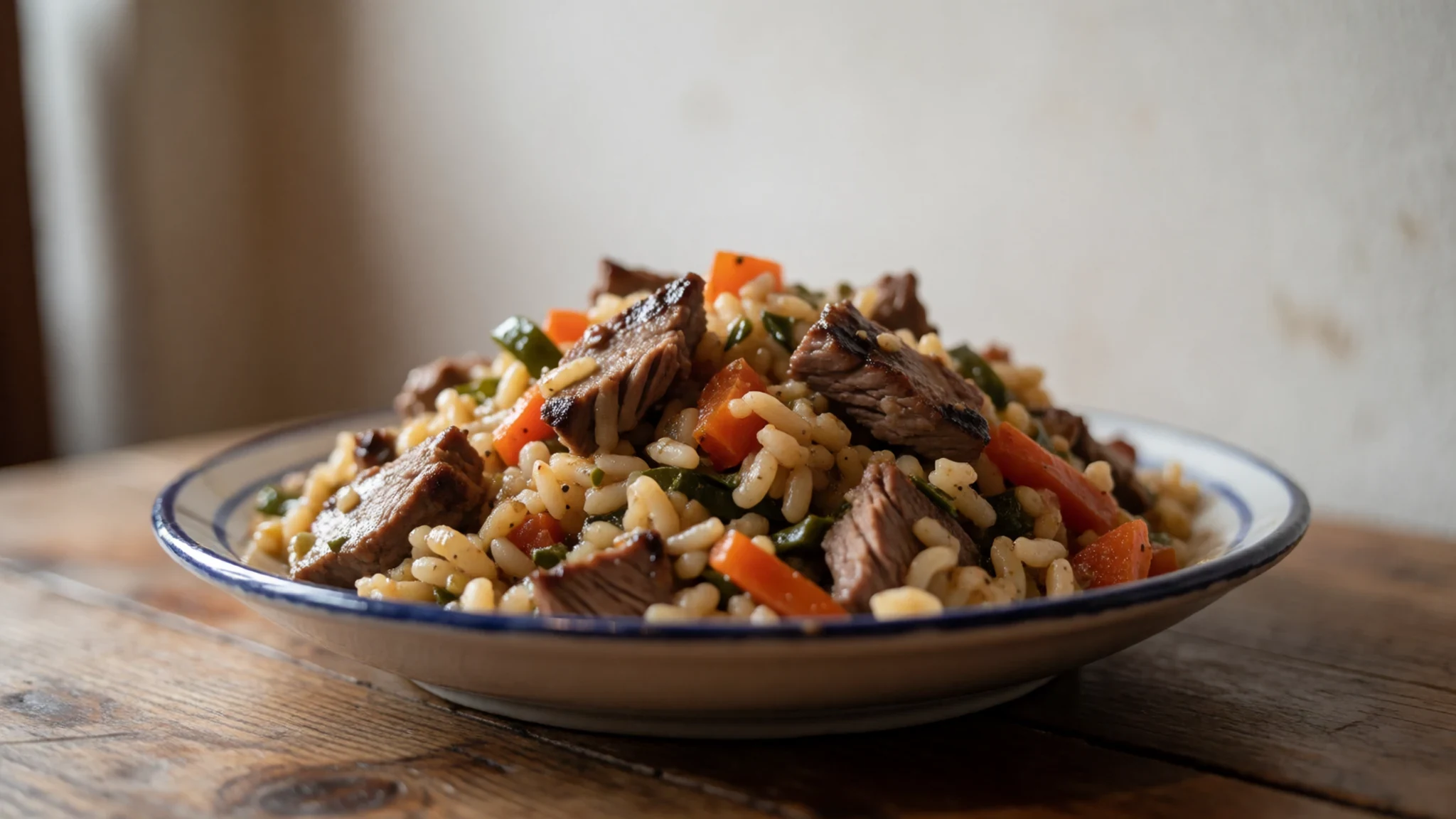
Plan it
Best time. April–June and September–October, when the weather is mild for walking the site. Summer is warm but the uplands are cooler than the coast, and winter can be cold and wet, so bring layers.
How long. 1–2
Getting there. Fly to Aktion National Airport (PVK) near Preveza on seasonal flights, or arrive by ferry at Igoumenitsa from Italian ports. The A2 motorway runs from Igoumenitsa through Ioannina; Dodona is a short drive from Ioannina, so hire a car or arrange a taxi or tour.
Budget. mid
Tips
- Check the official Greek archaeological site and museum pages for current opening times and ticket details before you go
- Go early in the day for quiet and for softer light on the theatre
- Base yourself in Ioannina, which has the museum, restaurants and more transport choices
- Carry water and a snack, as the site itself has few facilities
- Hire a car if you want to combine Dodona with monasteries and villages in the hills
Etiquette
- Do not climb on the theatre seating or ancient walls
- Keep voices low and avoid loud music at the site
- Dress modestly if you visit village churches or monasteries nearby
Nearby
Sources
- Wikidata Q382317 (CC0)
- Wikipedia: Dodona (rev 1377854456) (CC BY-SA 4.0)
- Wikivoyage: Epirus (rev 5237196) (CC BY-SA 4.0)
- Photo: Dodona: Theater — Bgabel (CC BY-SA 2.5)
- Photo: Oracle of Zeus at Dodona — Marcus Cyron (CC BY 3.0)
- Photo: Sacrificial hammer from Dodona (Louvre) (CC BY 3.0)
- Photo: The ancient theater of Dodona — Onno Zweers (CC BY 3.0)
- Photo: Greek Marble Muse Terpsichore — Gary Todd (CC0 1.0)
- Photo: Dodone site view 016 — Jean Housen (CC BY 3.0)
- Photo: Dodone site view 026 — Jean Housen (CC BY 3.0)
- Photo: Dodone site view 046 — Jean Housen (CC BY 3.0)


