Deogyusan
Deogyusan, South Korea
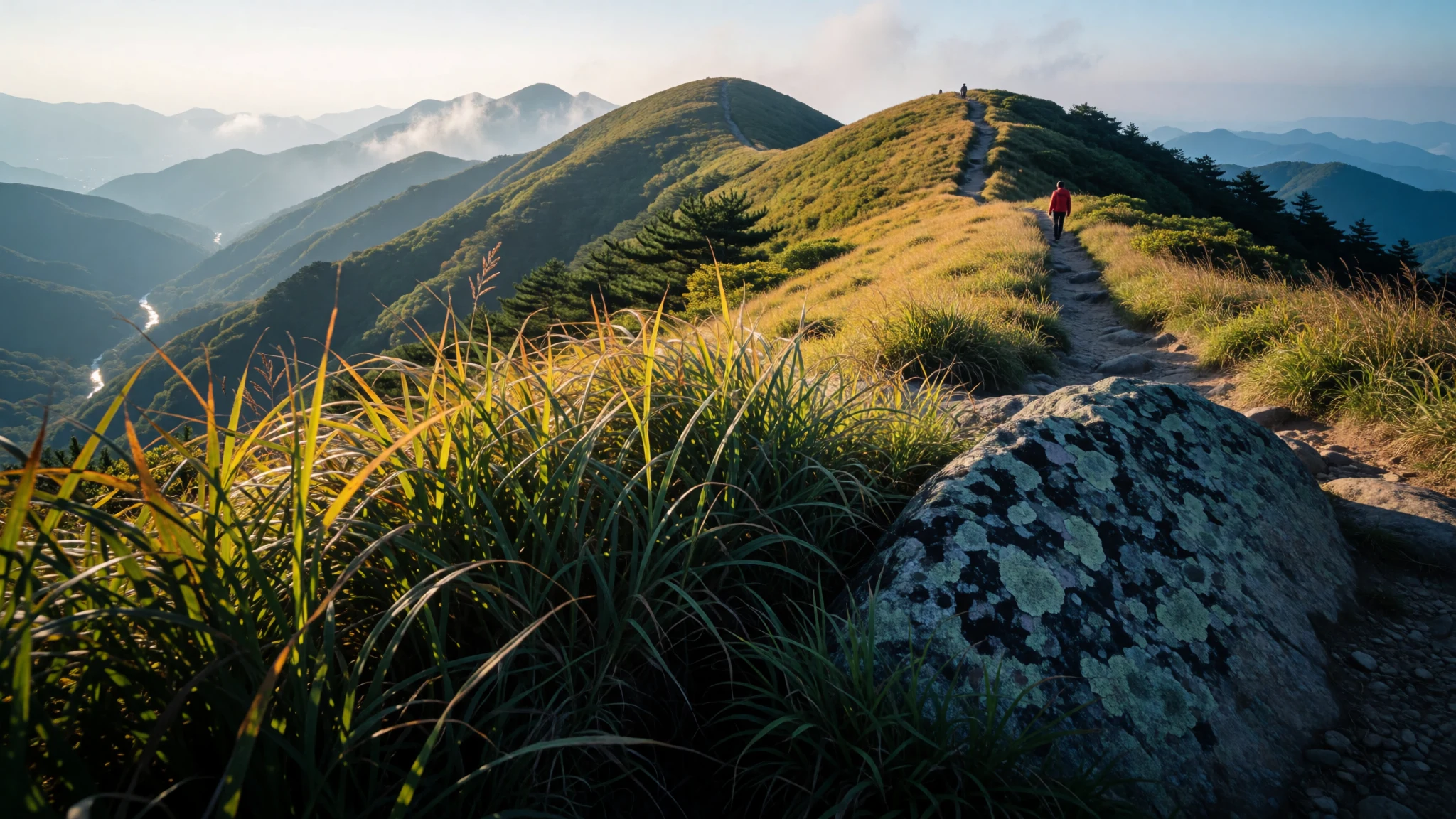
Deogyusan is a forested ridge in South Korea where valley streams, a temple path, a ski-resort gondola and winter snow share one national park.
The place
Deogyusan National Park (덕유산국립공원) straddles the border between Jeollabuk-do and Gyeongsangnam-do, in the mountainous south-west of South Korea. It was made a national park in 1975. The landscape is a long forested ridge of rounded green summits rather than jagged peaks, with streams running down both flanks into narrow valleys. The Jeolla side, around the town of Muju, holds the well-known walking route through the Gucheon-dong valley, where a stream tumbles past boulders, rock pools and viewpoints on its way up to a temple. On the Gyeongsang side, trails climb more directly to the crest from smaller villages. Ridge paths link the high points, so a strong walker can cross from one province to the other along the skyline. The forests shelter many kinds of plants, birds and insects, and rarer mammals including the Eurasian otter, yellow-throated marten and Siberian flying squirrel, though a day visitor is far more likely to meet chipmunks and songbirds. The seasons shape every visit. Spring brings fresh leaf and blossom, summer is warm and green with heavy monsoon rain, October colours the slopes, and winter coats the summits in snow, which is why a ski resort operates on the Muju side. Autumn weekends are crowded, with full car parks and queues for the gondola. Weekdays are calmer, and an early start helps in every season.
Its story
Deogyusan's story is partly one of borders. The ridge runs along the line between the Jeolla and Gyeongsang regions, and long before those names existed the area lay between the kingdoms of Baekje and Silla. Fortress walls such as those at Jeoksangsan, on the Muju side, are usually read as traces of that frontier, where garrisons watched the passes and river valleys. Mountain temples settled into the valleys over the centuries, and Baengnyeonsa, at the head of the Gucheon-dong route, is the one most walkers reach. Monks, farmers and travellers used these valleys long before anyone marked a trail for hikers. Modern protection arrived in 1975, when Deogyusan was designated the tenth national park in South Korea, part of a wave of designations that turned mountains once valued for timber, terraced fields and water into places set aside for forest and recreation. Since then the park has gained ski lifts, a gondola, signed trails and mountain shelters, which has widened who comes: families, school groups and the hiking clubs that are a fixture of Korean weekends. The balance is easy to see on a busy day, with a well-kept footpath beside the stream and a resort a short drive away. Deogyusan is old as a frontier and a retreat, and young as a park.
What to see
- Hyangjeokbong ridge — Ridge crest, Jeollabuk-do side
Hyangjeokbong is the high point most visitors aim for, and the views from it show Deogyusan's character: wave after wave of rounded, forested ridges fading into haze. The summit is reached on foot along the crest. Pick a clear day, start early, and carry layers, because the wind on the ridge is cold even in summer.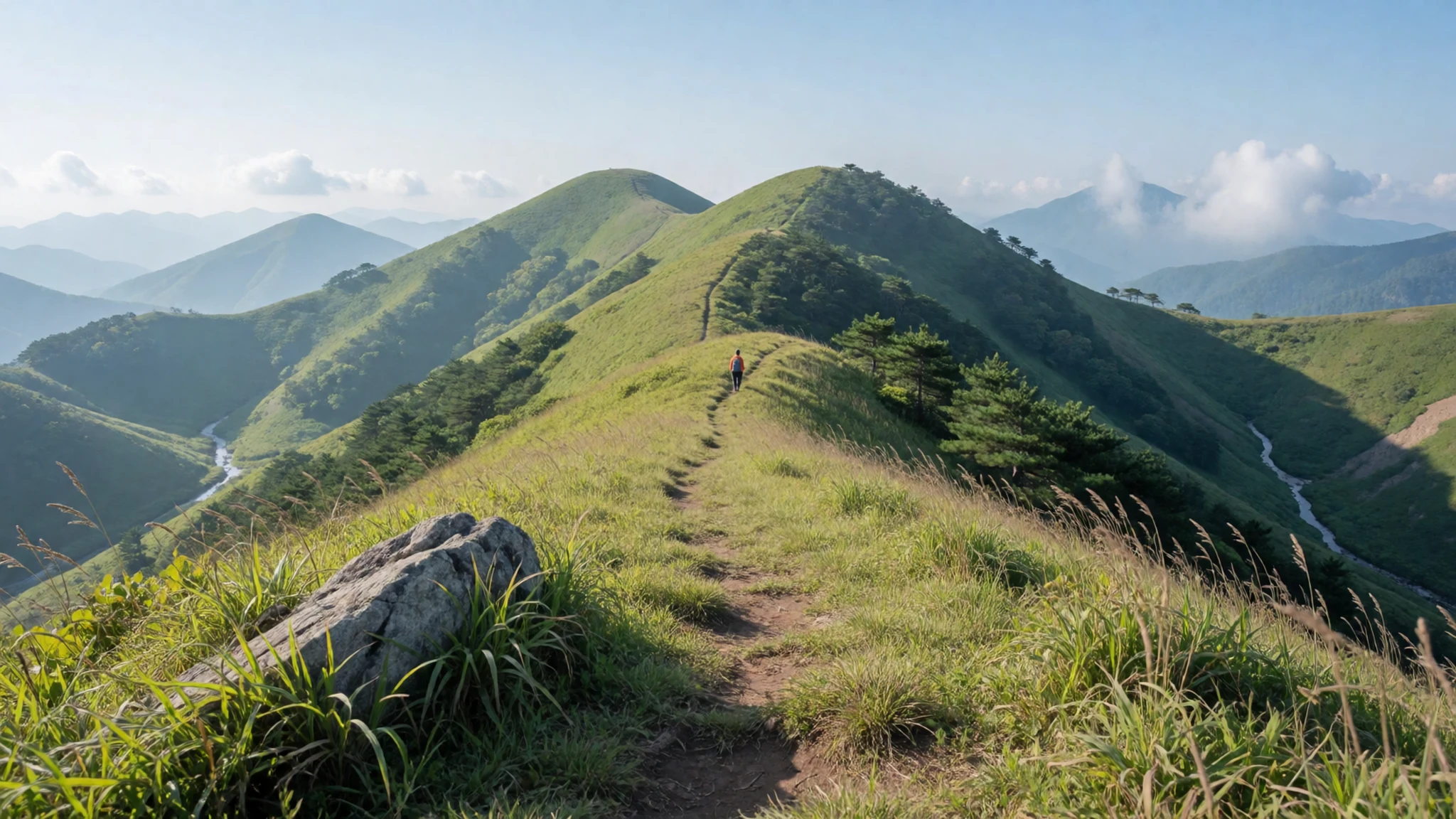
- Gucheon-dong valley — Muju, Jeollabuk-do
Gucheon-dong is the park's classic valley walk. A well-made path follows a clear stream through pools, boulders and viewing points named by earlier generations of visitors. It is mostly gentle going, suited to families, and it can be done in sections. Shade from broadleaf trees makes it pleasant in summer, and vivid in October.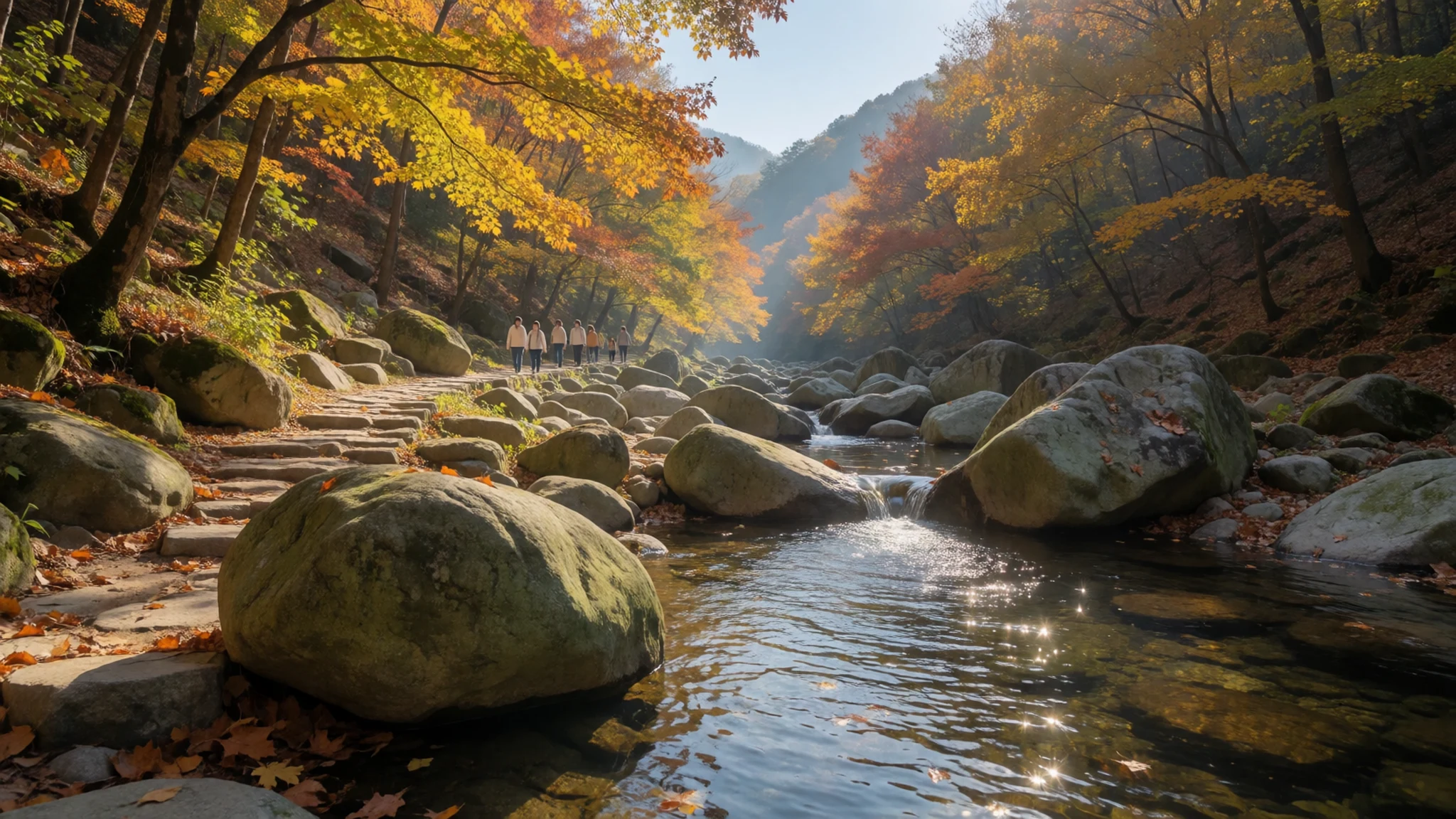
- Pahoe — Gucheon-dong, Muju
Pahoe is one of the scenic stops along the Gucheon-dong stream, where water has cut and polished the rock into pools and channels. It rewards a slow pause rather than a long hike. In dry weeks the water runs clear and low, and after monsoon rain it becomes loud and powerful. Take care on wet stone.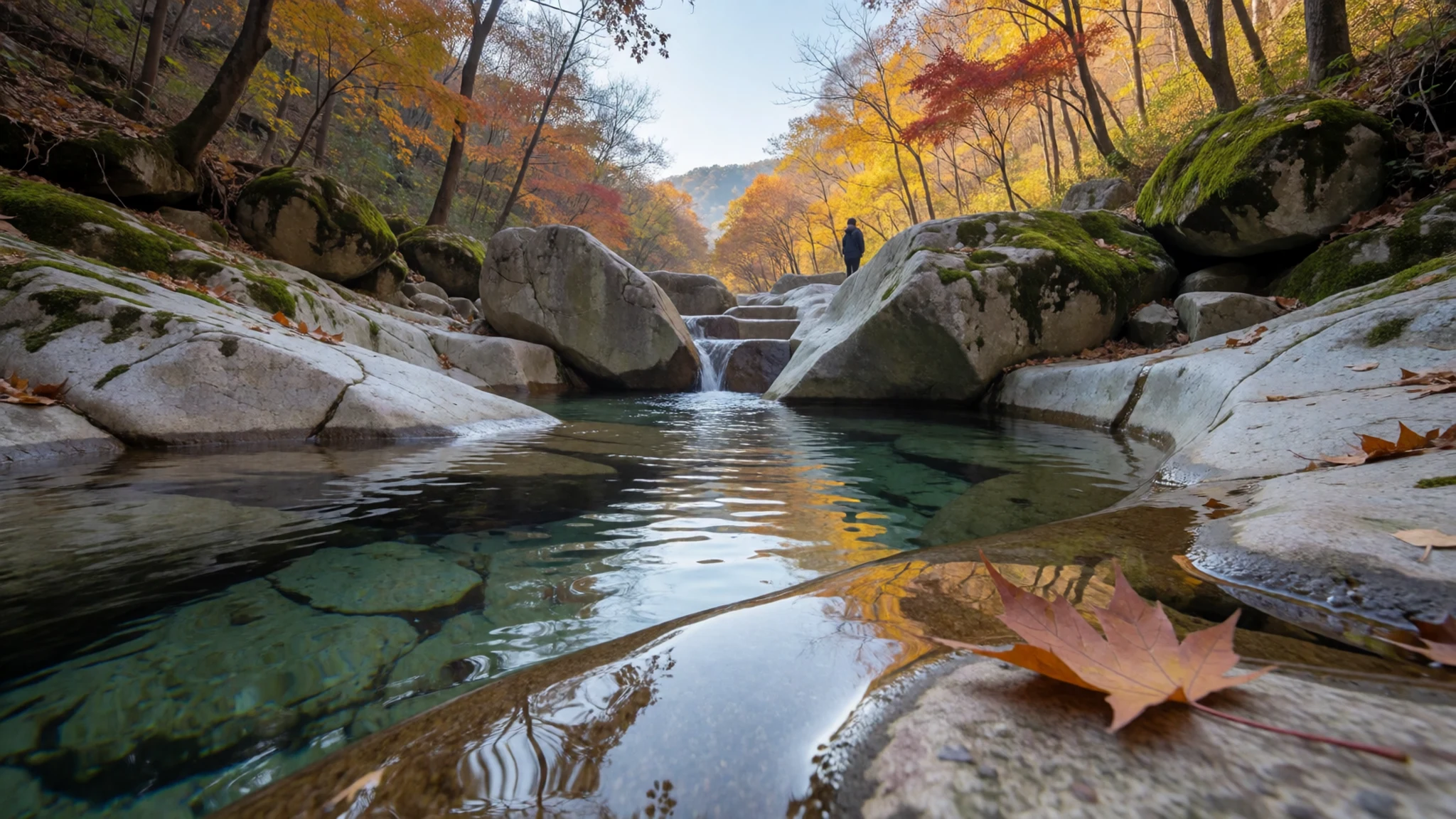
- Sushimdae — Gucheon-dong, Muju
Sushimdae is a rock outcrop beside the stream where the geology is easy to read: layered volcanic tuff, pale and sculpted by the current. The site belongs to the Jinan–Muju geopark, so signboards explain how the rock formed. It makes a good early stop on the valley path, and a good place for a picnic.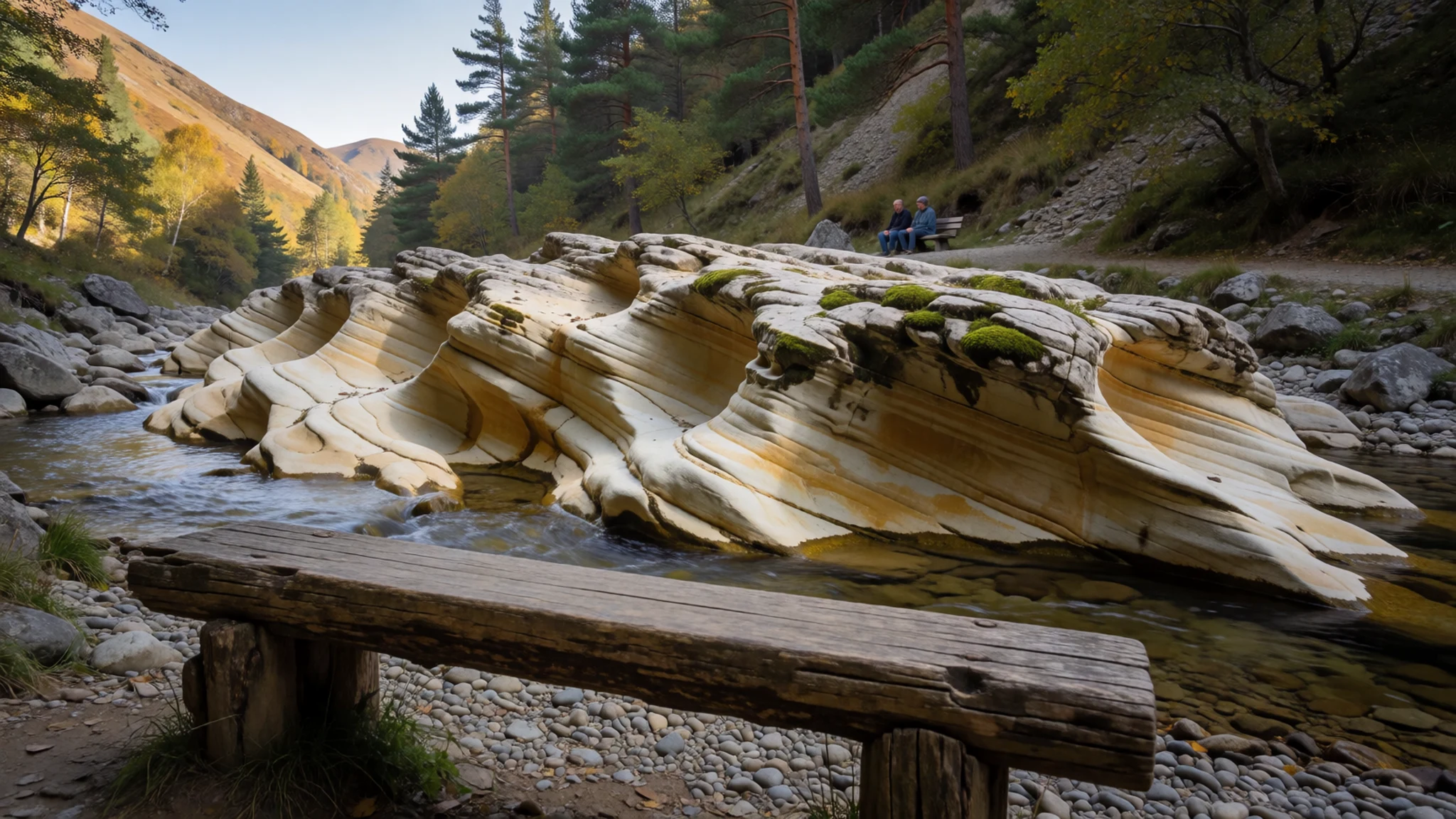
- Baengnyeonsa temple — Upper Gucheon-dong, Muju
Baengnyeonsa is the Buddhist temple at the upper end of the Gucheon-dong route, set among trees where the valley narrows. Many walkers treat it as the turning point, resting in the courtyard before heading down or climbing on towards the ridge. Visit outside prayer times if possible, and dress modestly.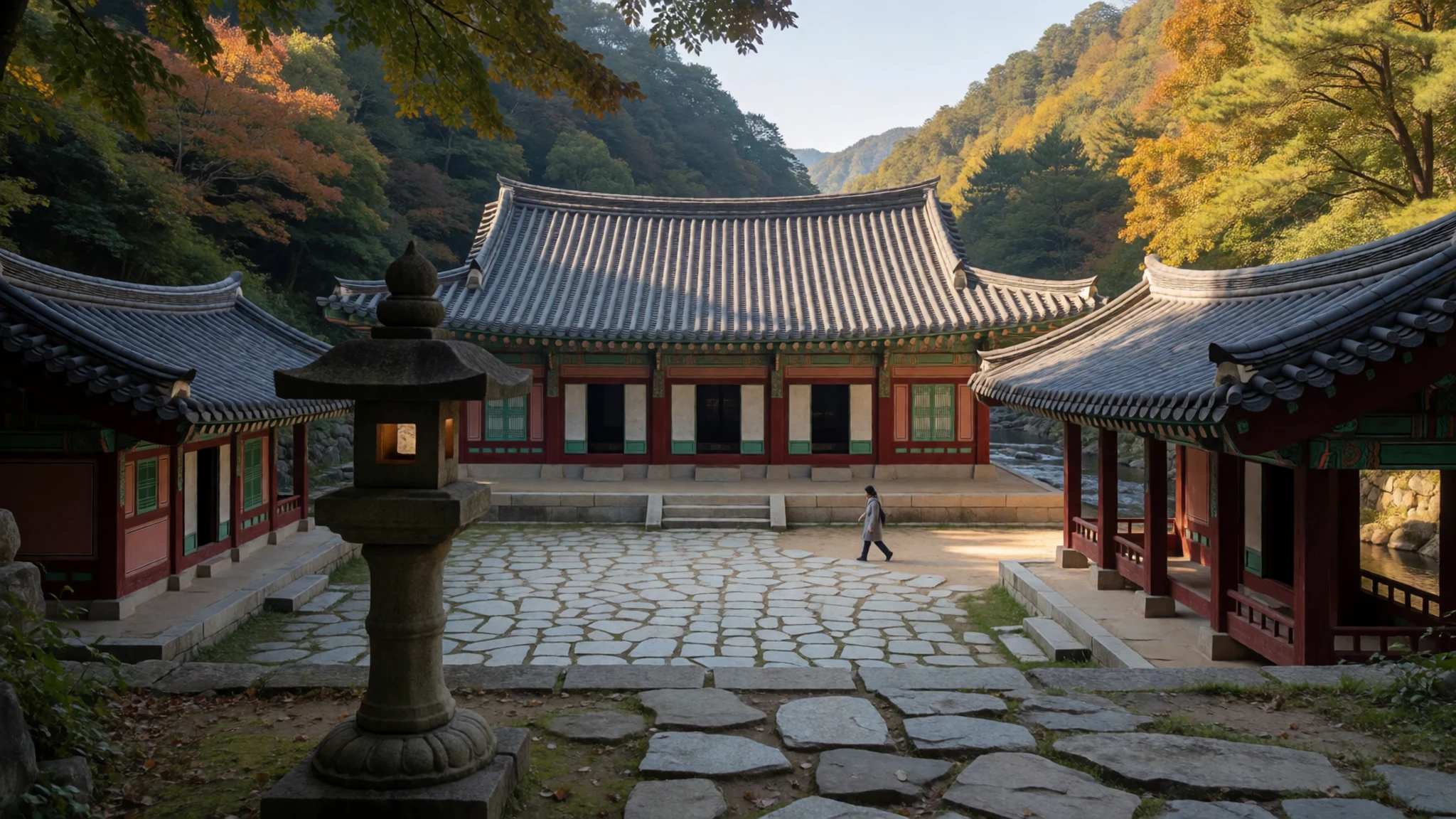
- Muju Deogyusan Resort gondola — Seolcheon area, Muju
A gondola from the Muju resort carries walkers most of the way up towards the crest, which opens the ridge to people who would rather not climb from the valley. It also runs in winter for skiers and snow-walkers. Queues build on autumn weekends, and operation depends on wind, so check the resort's official site before planning around it.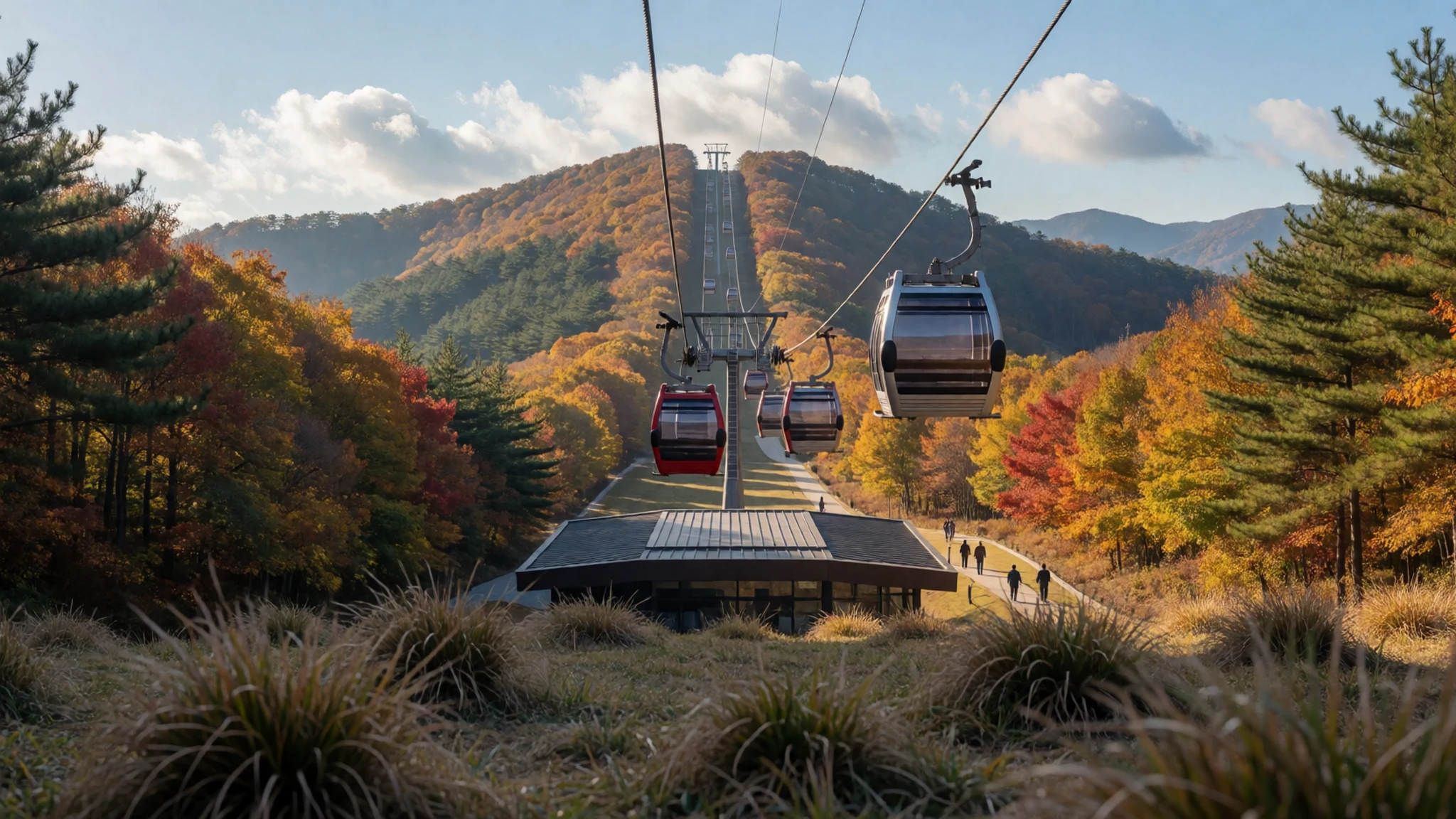
Culture
Hiking is close to a national pastime in South Korea, and Deogyusan shows it well. Weekend trails fill with walking clubs, families, school groups and retired couples, usually in full outdoor kit, and strangers pass each other with a nod or a short greeting. Walks tend to end the same way, with a meal of mountain vegetables and a bowl of makgeolli, the cloudy rice drink, at a restaurant near the trailhead. Buddhism is part of the setting, because temples such as Baengnyeonsa have stood in mountain valleys here for centuries. They are active places of worship as well as sights, so visitors share the courtyard with people who have come to pray. The mountain itself is treated with some respect: rubbish is carried out or left at the proper place, cooking on the trail is not allowed, and walkers stay on marked paths to protect the forest floor and wildlife. Ranger notices and signs may be mostly in Korean, so a translation app helps. At Baengnyeonsa, take off your shoes before entering any hall, keep your voice low, and do not photograph monks or worshippers without asking.
What to wear
The traditional Korean dress is the hanbok, with a short jacket (jeogori) over a wrap skirt (chima) for women, and a jacket with loose trousers (baji) for men. Fabrics include silk for formal wear, cotton for everyday clothes, and ramie and hemp for light summer garments. Hanbok is worn now mainly at Seollal (lunar new year), Chuseok, weddings and other family occasions, rather than around the mountains. On Deogyusan, what people actually wear is technical outdoor kit: bright jackets, quick-dry shirts, walking trousers, boots, caps, gaiters and trekking poles, often coordinated within a club. Korean hiking style is noticeably colourful and well equipped even for gentle valley paths. Visitors should dress for the weather and terrain first. Wear sturdy shoes with good grip, since the Gucheon-dong stones are slippery when wet. Bring layers, because the ridge is cooler and windier than the valley, a waterproof shell for summer monsoon downpours, and sun protection for exposed sections. In winter, add insulated gloves, a warm hat and traction spikes if walking on snow. For temple visits, shoulders and knees should be covered, and a light scarf or shirt in the bag solves it. Beyond that, no special dress code applies in the park.
What to eat
- Sanchae bibimbap — Restaurants along the village road near the Gucheon-dong trailhead
Rice topped with seasoned mountain vegetables, such as bracken and wild greens, served with chilli paste and often a side of soup. It is the standard post-hike meal and tastes lighter than city versions of bibimbap.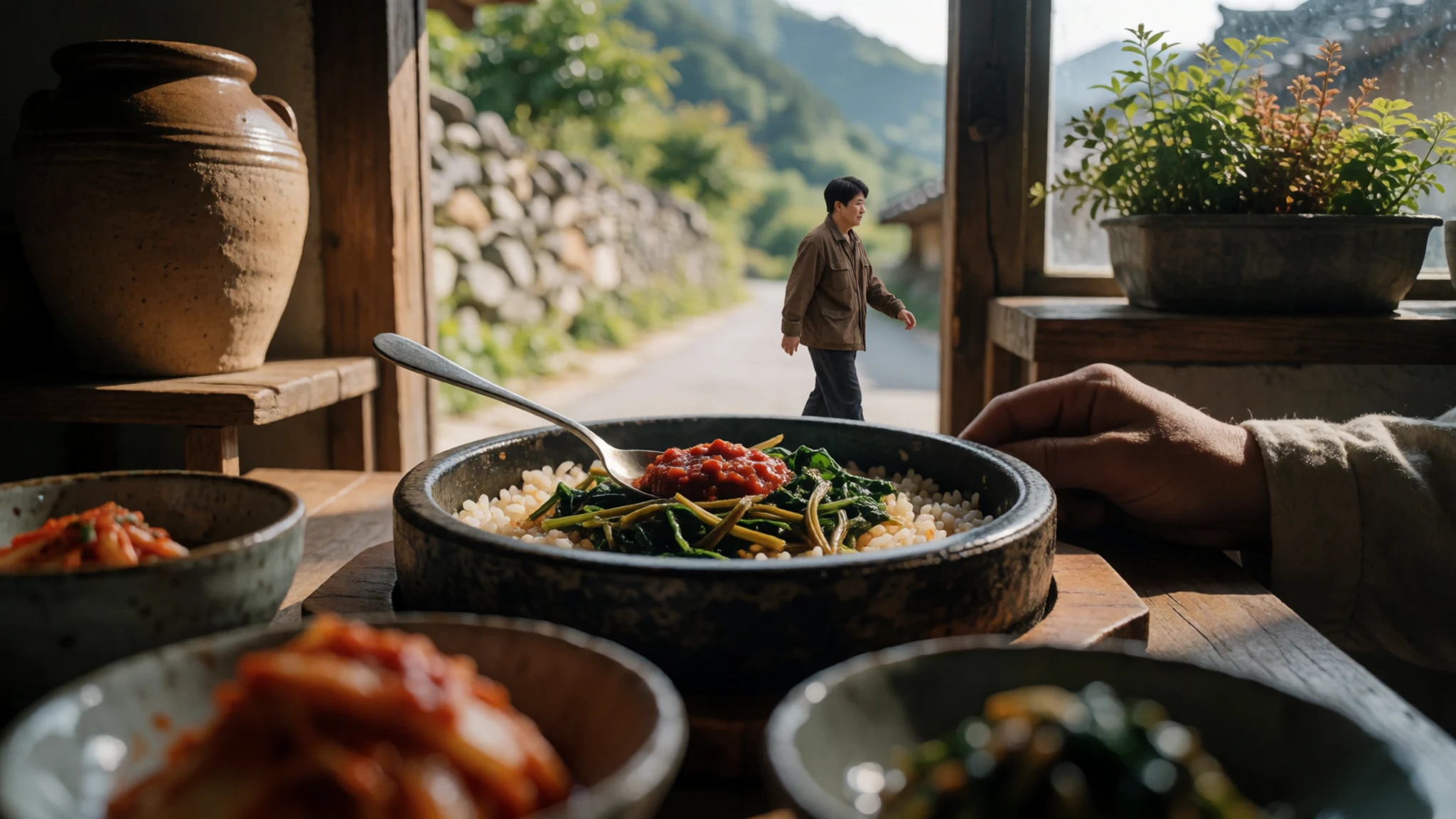
- Dotorimuk — Family-run eateries near park entrances
A soft, mildly earthy jelly made from acorn starch, served cold in a dressing of soy, sesame and chilli, or in a bowl of cool broth. A common mountain-village dish, and a good counterpoint to spicy side dishes.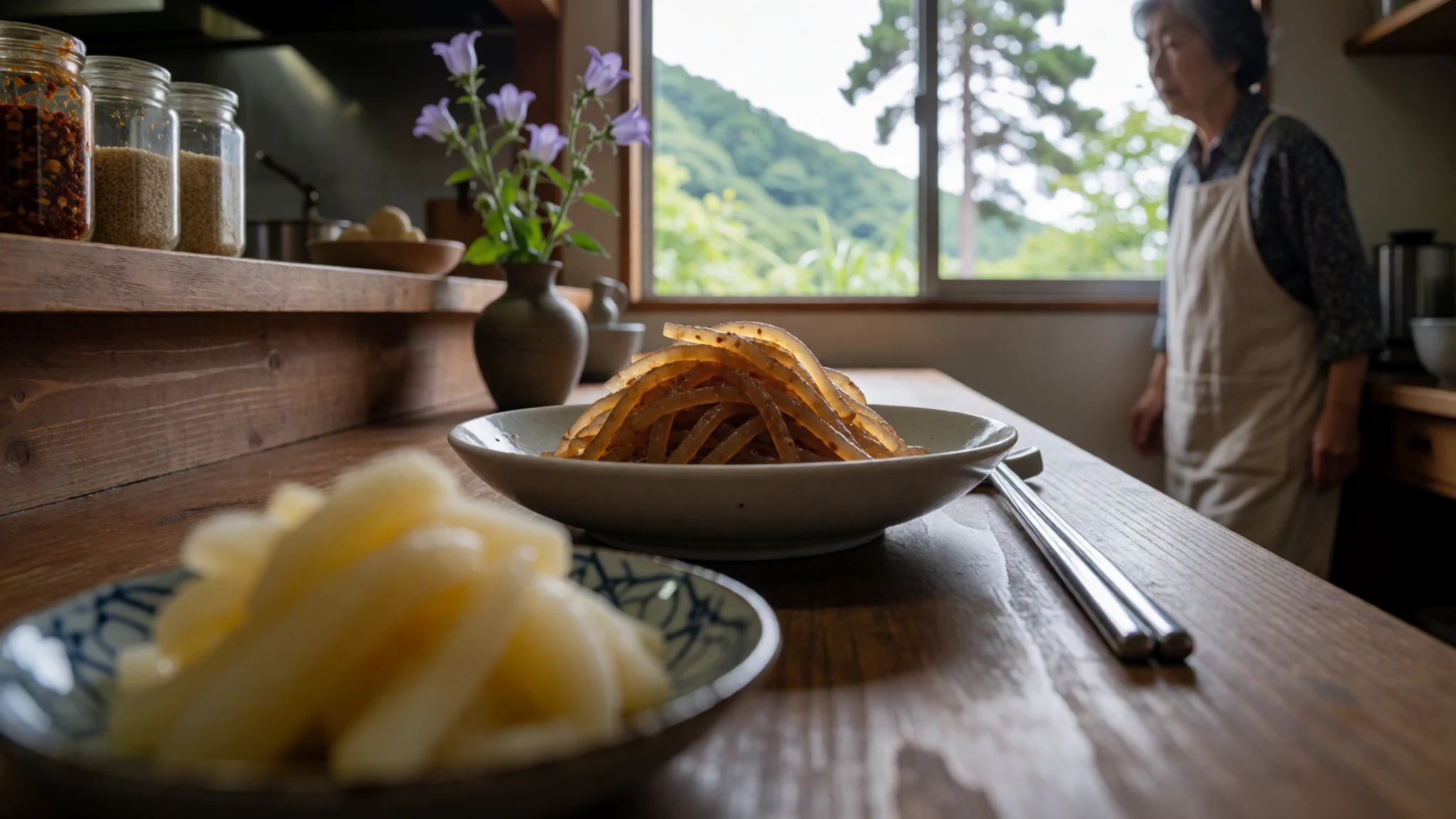
- Pajeon with makgeolli — Casual restaurants and tents at trailheads
A crisp spring-onion pancake, sometimes with seafood or vegetables, eaten with makgeolli, the lightly fizzy rice drink. It is the classic reward after a long descent, especially on a rainy day. - Doenjang-jjigae — Any local restaurant in Muju town or at the park edge
A fermented soybean stew with tofu, courgette and mushrooms, bubbling in an earthenware pot. It is salty, savoury and filling, and usually comes with rice and an array of small side dishes. - Ssambap — Sit-down restaurants in Muju and nearby villages
A spread of lettuce and aromatic leaves for wrapping rice, grilled meat or vegetables, with a spoonful of seasoned paste. It suits groups, and the wild greens vary by season.
Plan it
Best time. Late April–May for fresh leaf and mild walking, and October–early November for autumn colour. January–February suits snow and skiing. Summer is warm and humid, with monsoon rain in July, so valley walks are pleasant but ridge views can be clouded.
How long. 1–2
Getting there. Fly to Incheon International Airport and reach Seoul, then take an intercity bus to Muju (check current routes and timetables). From Muju, local buses or a taxi reach the Gucheon-dong trailhead and the resort.
Budget. mid
Tips
- Go on a weekday or start early; autumn weekends bring heavy traffic and queues
- Check the Korea National Park Service for trail closures, seasonal restrictions and weather before setting out
- Check the resort's official site for gondola operation, which depends on wind and season
- Carry water, snacks and cash or a card, as village shops are small
- Wear grippy shoes; wet stone near the stream is slippery
Etiquette
- Take your rubbish with you and stay on marked paths
- Remove shoes before entering temple halls and keep voices low
- Greet other walkers with a nod or a short hello on narrow paths
Nearby
Sources
- Wikidata Q130718 (CC0)
- Wikipedia: Deogyusan National Park (rev 1366336364) (CC BY-SA 4.0)
- Wikivoyage: Deogyusan (CC BY-SA 1.0)
- Yoo Chung, Deogyusan from Hyangjeok Peak (CC BY-SA 2.5)
- Dittwjfsdgkvkdjg, MJGeopark-Pahoe (CC BY-SA 4.0)
- Dittwjfsdgkvkdjg, MJGeopark-SushimdaeTuff (CC BY-SA 4.0)


Wildlife
- Eurasian otter (animal)
The Eurasian otter is a water-loving cousin of the weasel that eats mostly fish and guards its own patch fiercely. In Deogyusan it counts among the forest's rarer mammals, so a day visitor is unlikely to meet one; chipmunks and songbirds are much likelier. Should you search, watch from well back, keep quiet and still, and ask a guide where to look. Never feed it, and never crowd its territory.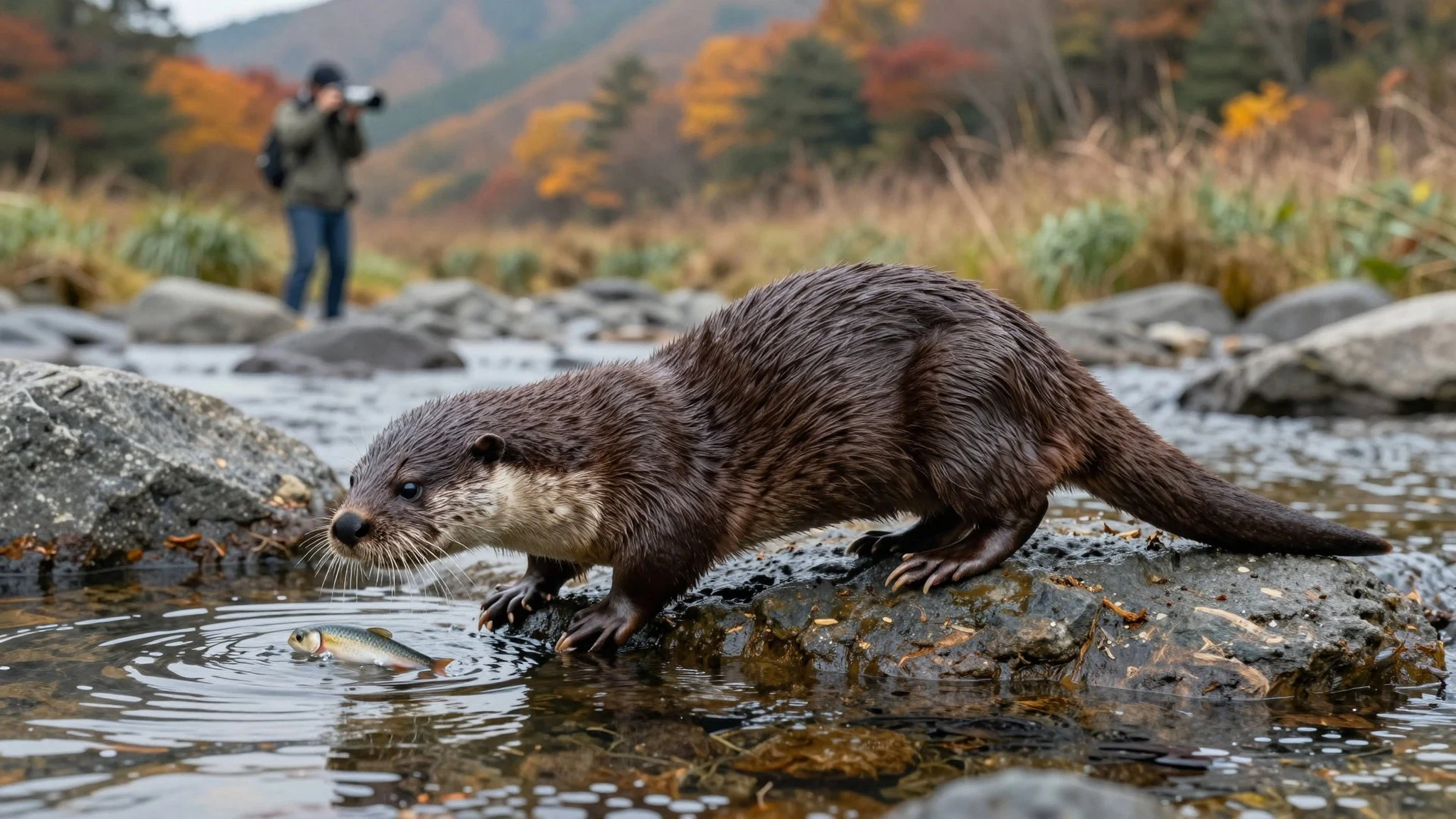
- Siberian flying squirrel (animal)
The Siberian flying squirrel is a flying-squirrel species that lives across a vast sweep of northern Asia, from the Baltic region to the Pacific shore. In Deogyusan it ranks among the forest's rarer mammals, so do not expect it on a short day walk; chipmunks and songbirds are far likelier companions. Should luck favour you, keep a respectful distance, stay quiet, and consider walking with a local guide. Never offer it food, and let it stay wild.