Daedunsan
Daedunsan, South Korea
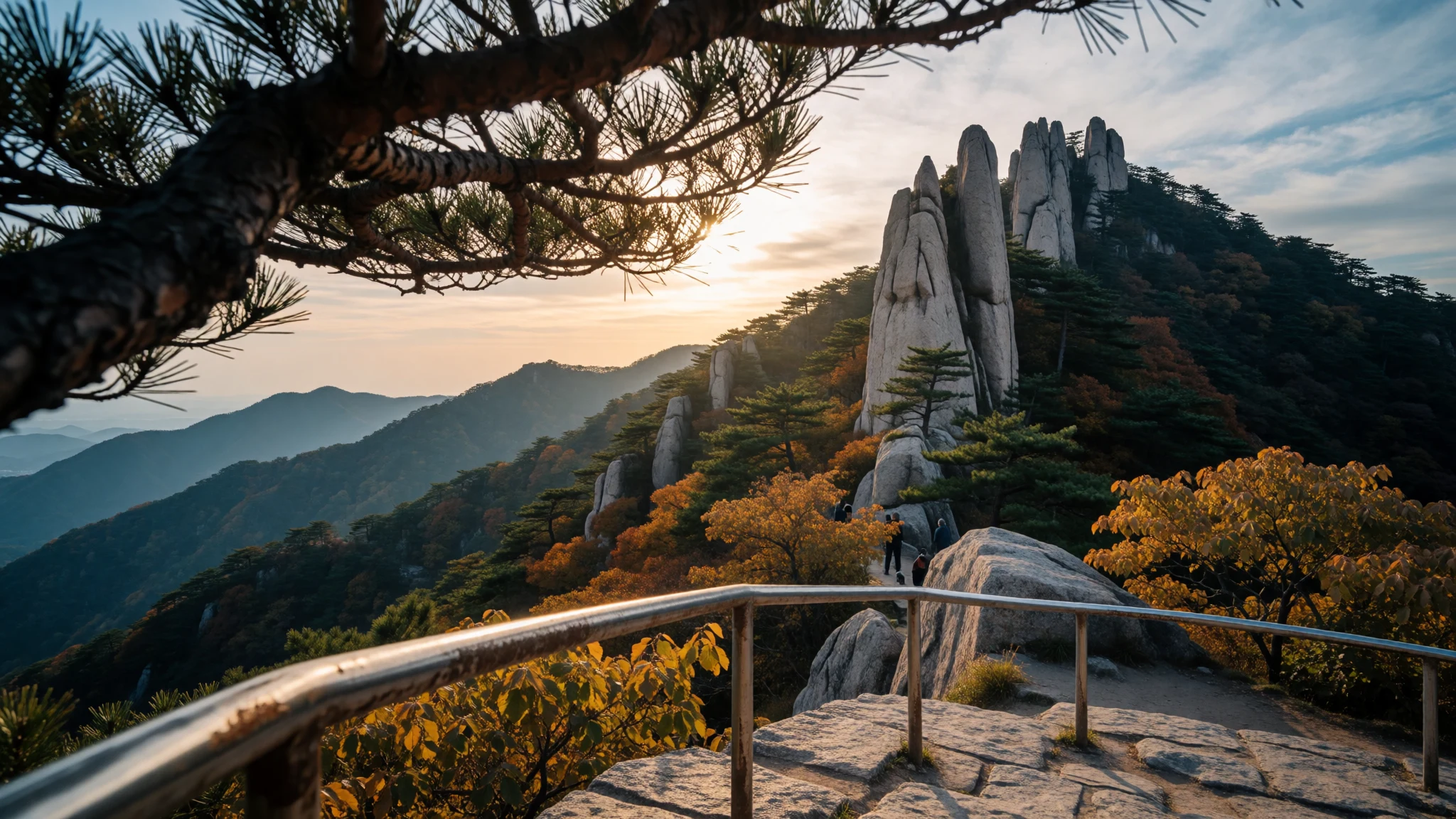
Daedunsan is a ridge of jagged rock spires in western South Korea, crimson in autumn and crossed by a high suspension bridge.
The place
Daedunsan (대둔산) is a mountain of 878 metres on the border between North Jeolla and South Chungcheong provinces in western South Korea. It is less a single peak than a jagged crest of pale rock spires, steep gullies and narrow ridgelines, and the outline is what draws people. The mountain belongs to an ancient, heavily eroded range, yet the rock still stands in sharp, sheer-sided blocks. The plants change with height. The lower slopes carry pine, oak and Korean plum-yew, while higher up broad-leaved deciduous trees take over and give the ridges their autumn colour. The park is organised around a few well-worn routes: trails climbing from the entrance areas to the main viewpoints, a cable car that spares walkers the first steep stretch, and a suspension bridge and steel stairway across a gap between two crags. Because the mountain straddles two provinces, trailheads and signs may name it from either side, and people from nearby cities such as Daejeon and Jeonju treat it as a day trip. Weekends in October are crowded, with queues at the bridge and stairs. Summer is hot and humid, and winter is cold, with ice on the rock and sometimes closed sections. Small temples and hermitages sit in folds of the hills, so a day here mixes strenuous walking with quiet stops at Buddhist sites.
Its story
Daedunsan's story is mostly one of withdrawal. Like many Korean mountains, its steep folds attracted Buddhist practitioners who wanted distance from towns and farmland, and small hermitages and temples settled in the valleys beneath the cliffs. Nakjo Sanjang, a retreat on the slopes, belongs to that tradition. Behind it a Buddha figure known as the Mae Buddha is cut into the rock, and a sign beside it places the carving in the Joseon period, the dynasty that ruled Korea before the modern era. The mountain's position across a provincial border has shaped how it is known. It is described in some sources as a South Chungcheong mountain and in others as a North Jeolla one, and the protected parkland has entrances and facilities on both sides. In more recent decades the story has become one of access. As roads improved and hiking became a mainstream weekend pastime in South Korea, the crest that once suited hermits became a destination for families and walking clubs. A cable car, a suspension bridge and steel stairways now make the rock accessible to people without climbing experience, though the mountain remains steep and the weather can change quickly. The older layer has not disappeared: the carvings, the retreat buildings and the quiet paths behind them are still there, a short walk from the busiest viewpoints.
What to see
- Chilseongbong viewpoint — Main crest, Daedunsan Provincial Park
Chilseongbong is a rocky summit on the main crest and a favourite viewpoint on Daedunsan. From the top the ridges roll away in every direction, pale rock threaded with pine and oak, and on clear days the view reaches across both provinces. Allow time for the steep final climb, and expect a queue at the top on autumn weekends.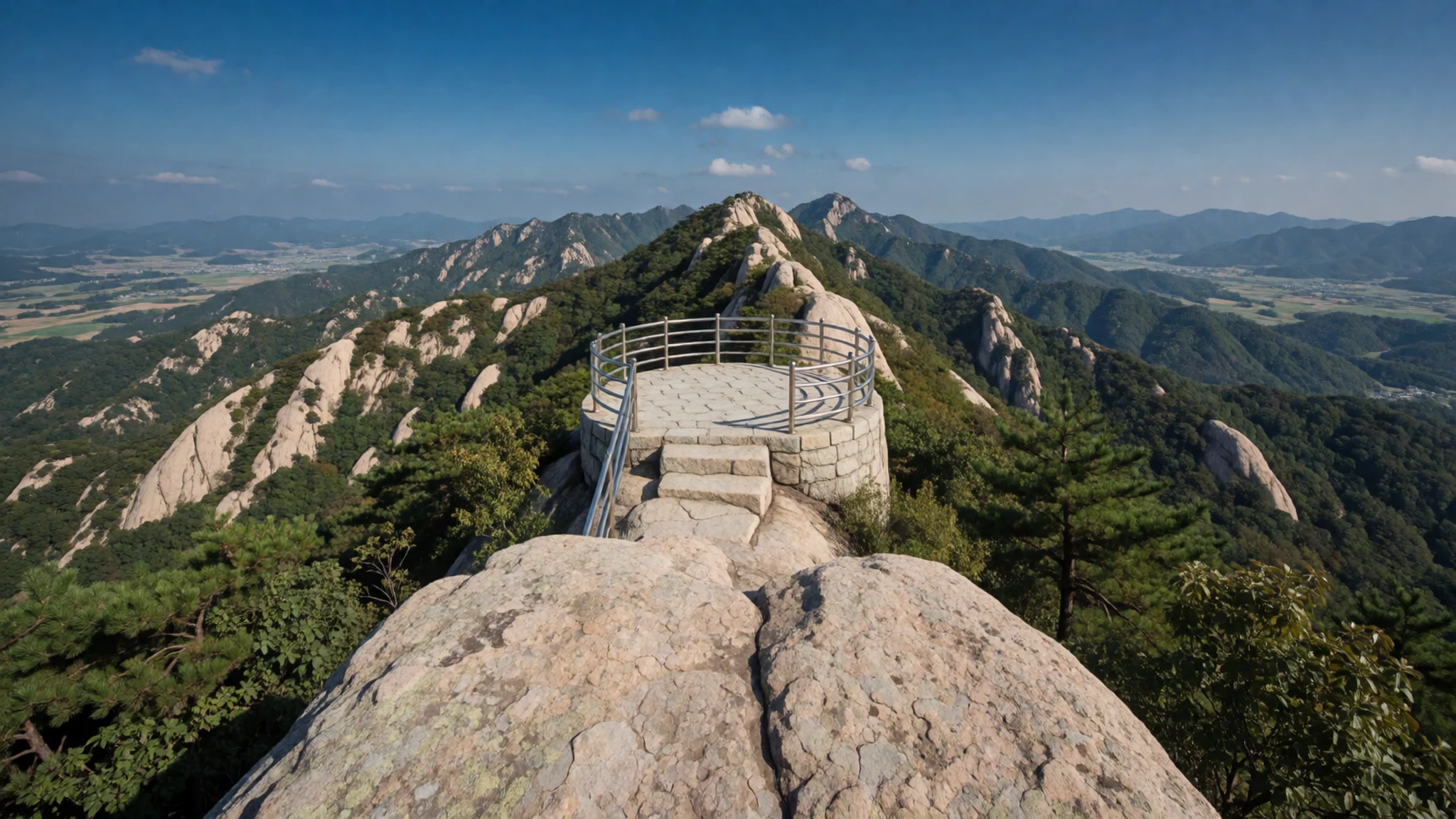
- The crimson ridgeline — Upper ridges of Daedunsan
In late October the upper ridges turn crimson and orange as the broad-leaved trees above the pine belt change colour. The views are best from the main trail and the open rock shoulders along the crest. This is also the busiest period, so start early and expect slow-moving crowds on the narrower sections.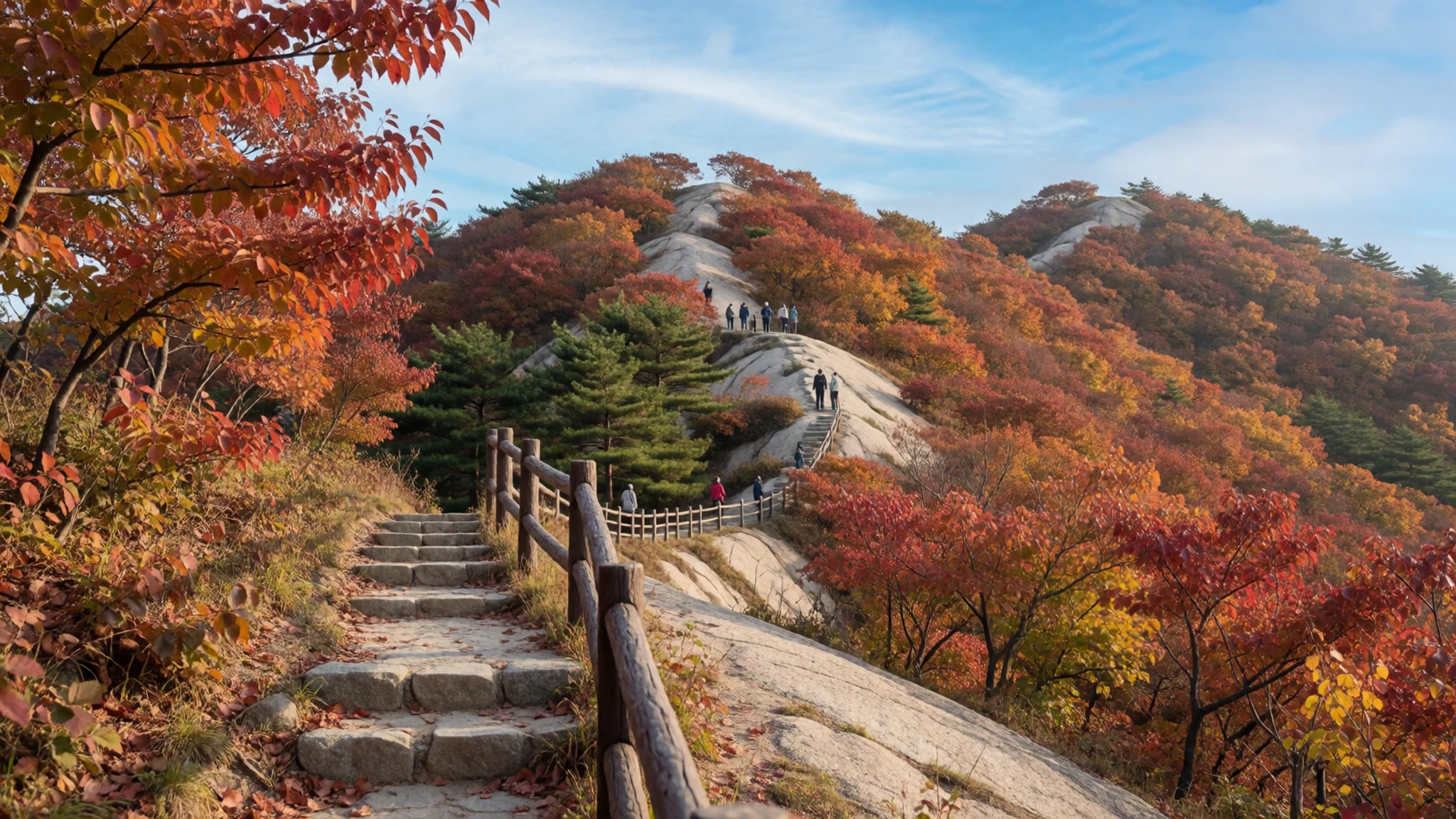
- Geumgang cloud bridge and steel stairway — Near the main crest
Geumgang Gureum-dari, the cloud bridge, is a suspension footbridge slung between two rock spires, linked to a steep steel stairway up the crag. The sway and the drop are real, so anyone uneasy with heights may prefer to watch from the viewpoint. Queues build at busy times; check the official park pages for closures.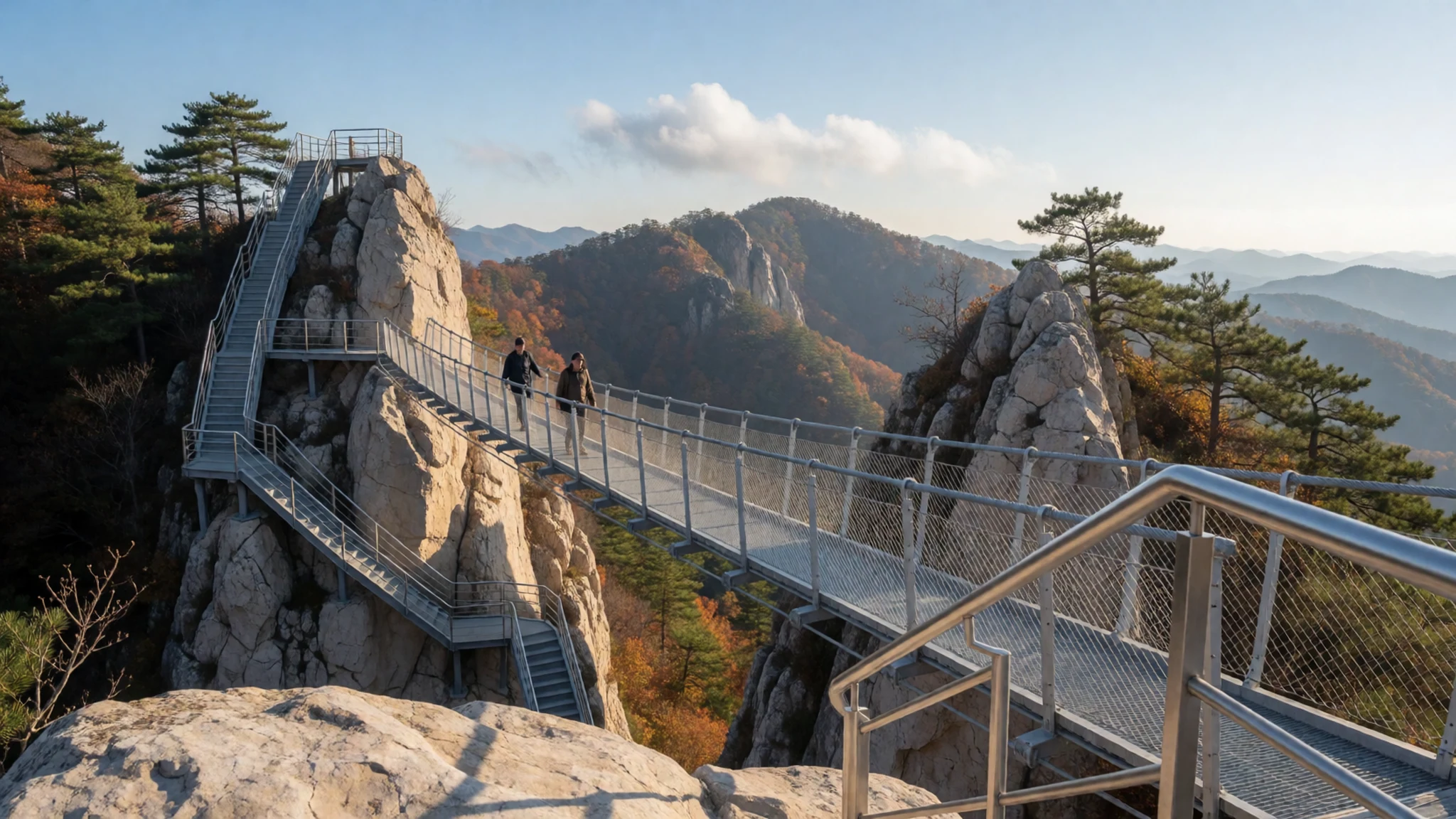
- Mae Buddha and Nakjo Sanjang retreat — Lower slopes, behind Nakjo Sanjang
Behind the Nakjo Sanjang retreat, a Buddha figure known as the Mae Buddha is carved into a rock face. A sign nearby dates it to the Joseon period. It is quiet compared with the summit routes, and best visited in spring or early autumn when the surrounding trees are in leaf or colour.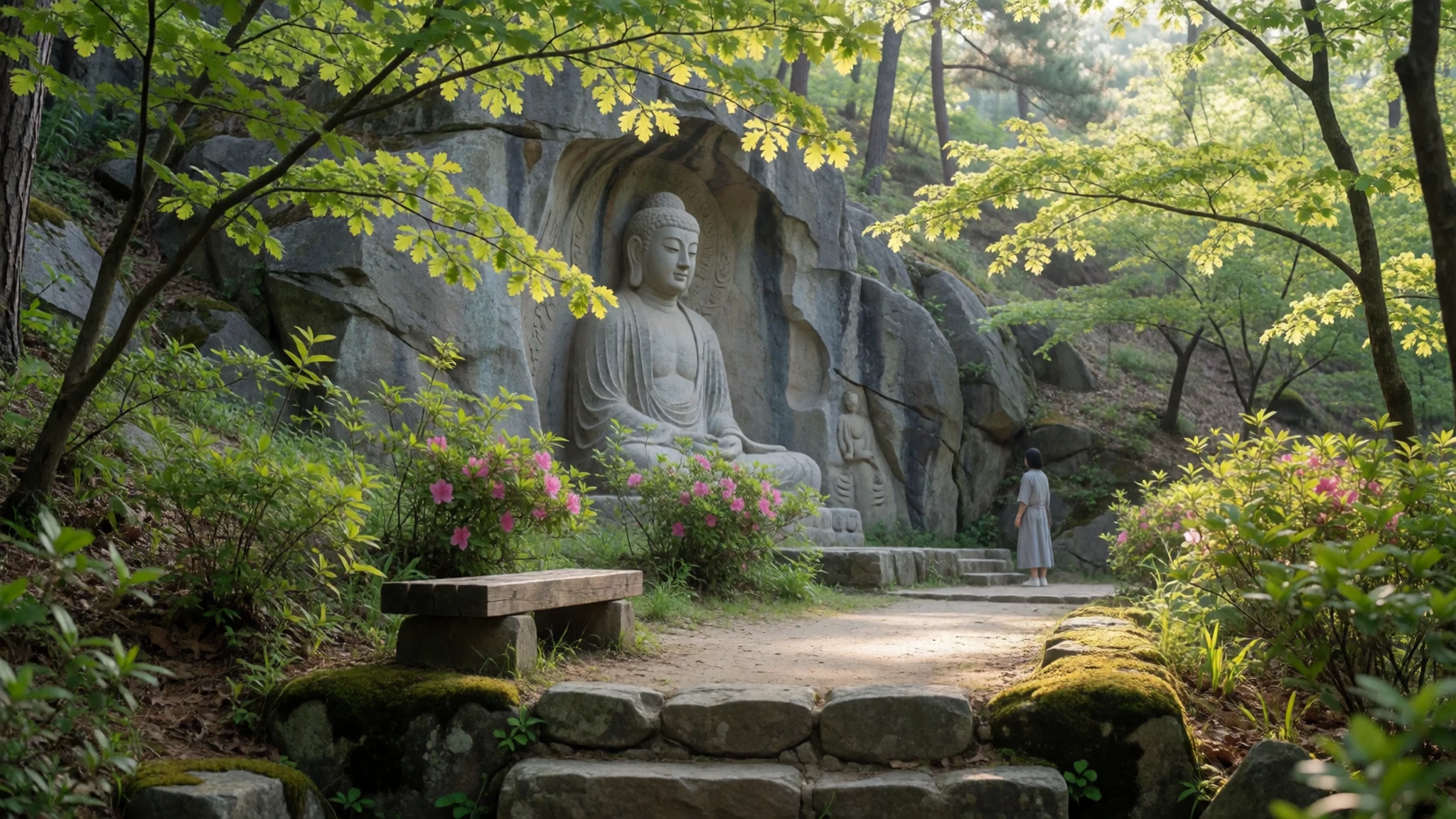
- Cable car and the park map — Main park entrance area
A cable car carries walkers from the lower station to high ground near the main crest, saving the steepest early stretch. It suits families, older visitors and anyone short of time or knees. Hours, fares and wind closures change, so check the official sources before travelling, and photograph the trail map at the entrance.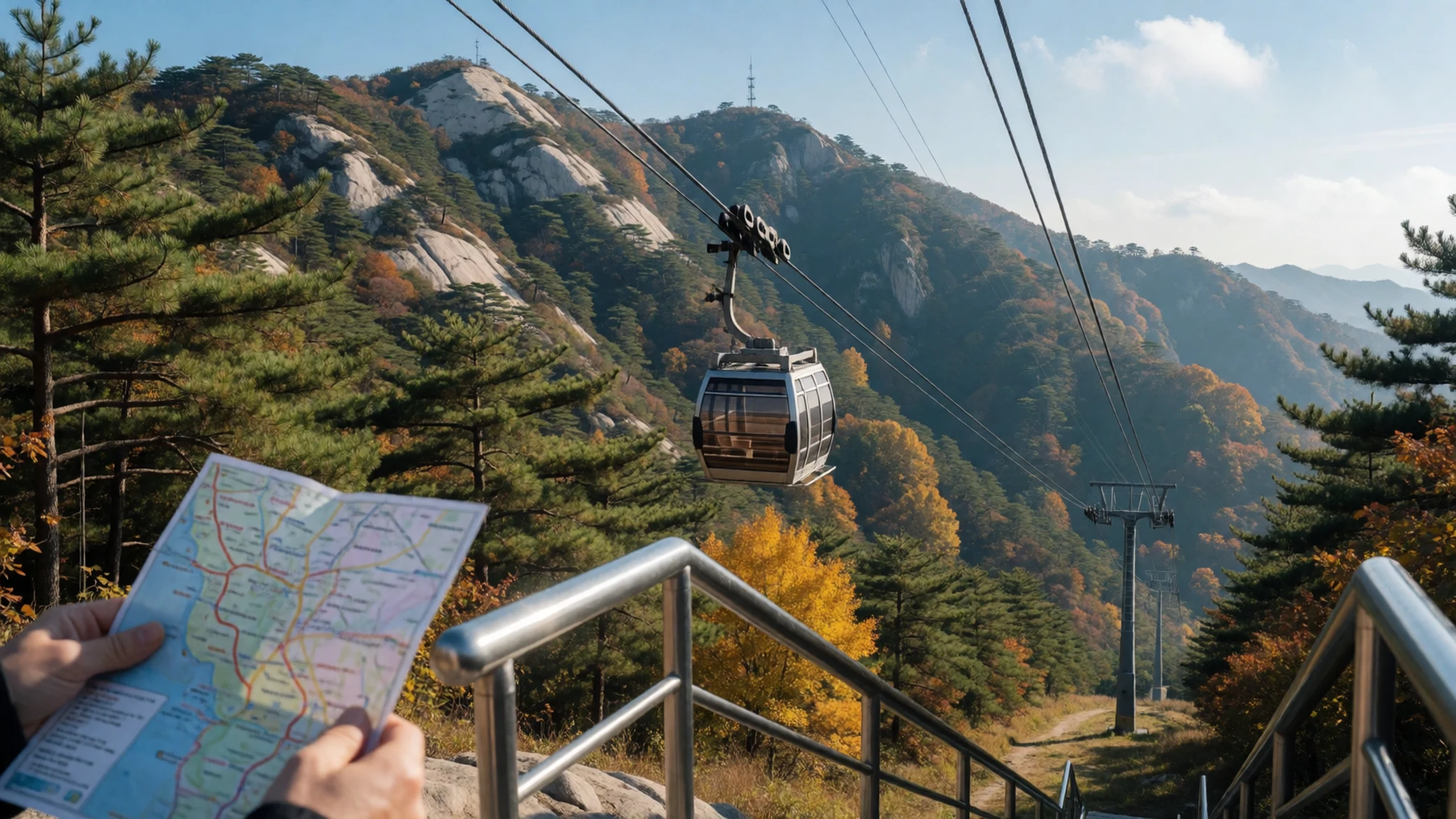
Culture
Daedunsan is a place where Korean mountain-going and Buddhist practice overlap. Hiking, known as deungsan, is a social weekend habit for people of all ages, often in groups from a town, workplace or club, and the trail fills with walkers in bright gear who exchange a quick nod or greeting on the way up. The meal and drink afterwards matter as much as the summit: a pancake, a bowl of rice wine, and talk. Alongside this runs a quieter tradition. Mountains in Korea have long hosted Buddhist temples and hermitages, and Daedunsan is no exception, with the Nakjo Sanjang retreat and the rock-carved Mae Buddha among its sacred places. Some visitors stop to bow or leave a small offering; others simply pause. Mountain spirits are also honoured in Korean folk belief, and small stone cairns often stand beside paths. Autumn is the busiest season because the colour draws crowds from nearby cities, and courtesy on narrow stairs and the bridge means waiting your turn and not stopping to take photographs mid-step. Rubbish goes home with the person who carried it up. At temples and hermitages on the mountain, take off your shoes before entering any hall, keep your voice low, and ask before photographing monks or people at prayer.
What to wear
Around Daedunsan, Korean dress appears in two quite different forms, and the traditional one rarely turns up on the trail. The hanbok has a short jacket (jeogori) over a full wrapped skirt (chima) for women, and a jacket with loose trousers (baji) for men. Silk is used for formal wear, ramie and hemp for hot weather, and cotton for daily use, with colour and cut signalling age, season and occasion. It is worn at Seollal (lunar new year), Chuseok (the autumn harvest festival), weddings and, in rented form, at palaces in the cities. On the mountain itself, people wear technical outdoor kit: windproof jackets, quick-drying trousers, hats, gloves and walking poles, often in bright colours and sometimes matching within a group. On an October weekend the trail can look like a parade of outdoor fashion. Visitors should dress for weather and terrain. Wear layers that can come off, carry a light rain shell, and choose sturdy shoes with good grip, because the rock and the steel stairs get slick after rain. Add gloves and a hat in the colder months. Trails do not require covered shoulders or knees, but modest clothing is polite at temple buildings, so keep a light top or scarf in the bag. Sandals and smooth soles are a poor idea here.
What to eat
- Sanchae-bibimbap — Eateries along the approach road to the park
Rice topped with seasoned mountain greens, fern shoots and mushrooms, mixed at the table with gochujang chilli paste. It is the standard hiker's lunch around Korean parks, and the vegetables shift with the season, so each bowl tastes slightly different.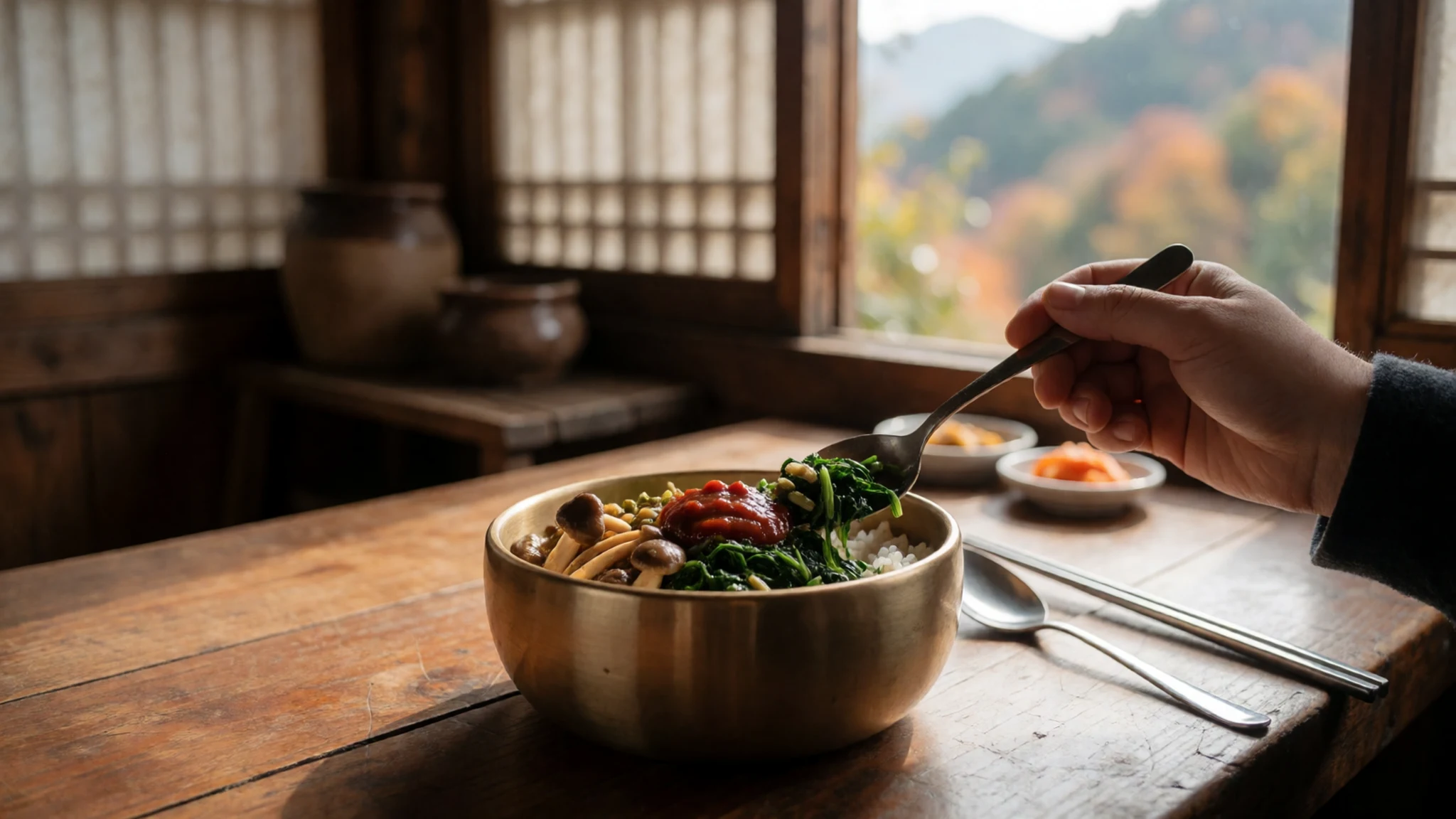
- Dotori-muk — Small restaurants and eateries near the park entrance
A wobbly, mildly bitter jelly made from acorn starch, sliced and dressed with soy, sesame and chilli, or served cold in a salad. Acorns come from the oak woods on Korean hillsides, so the dish suits the region.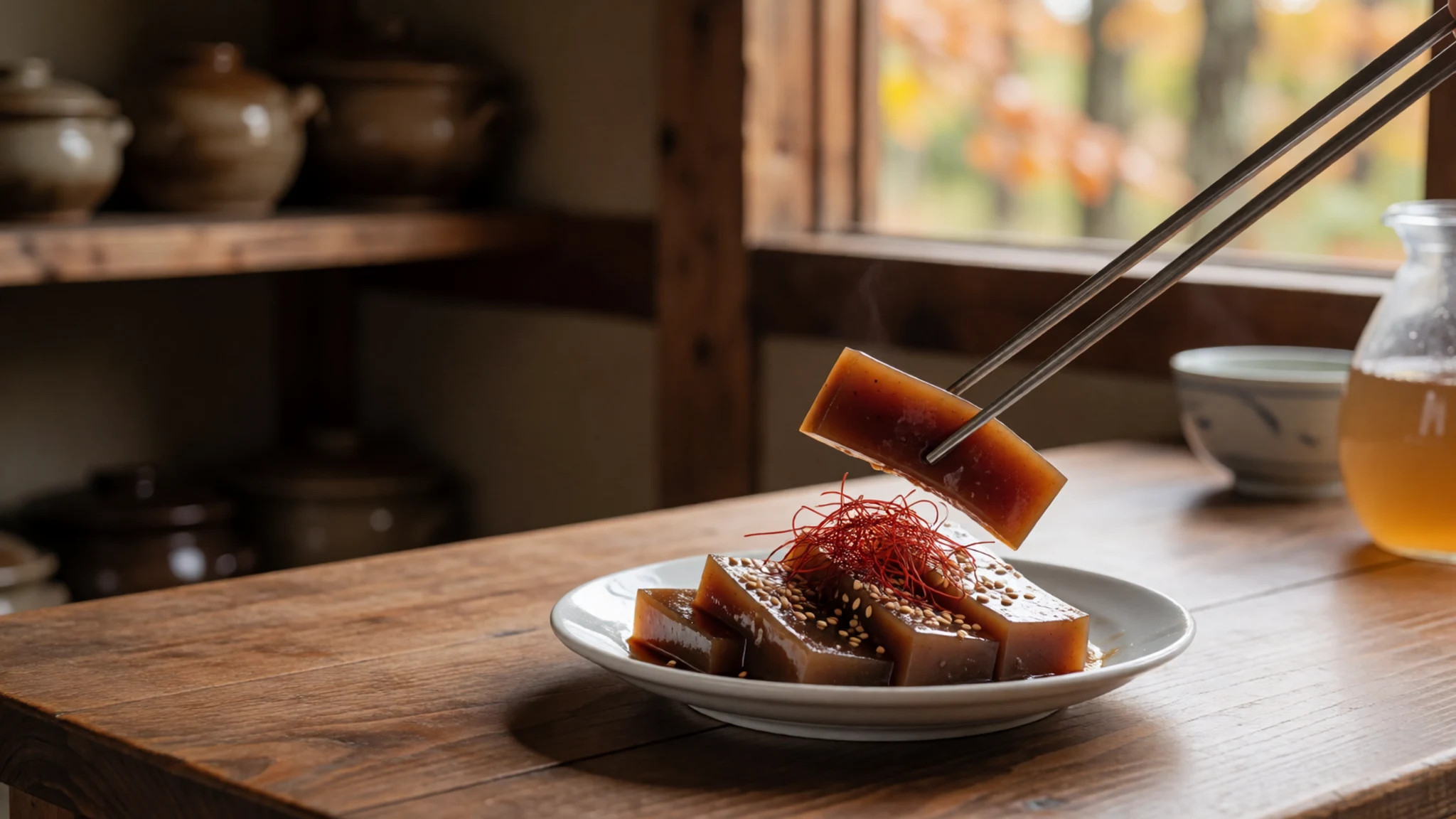
- Pajeon with makgeolli — Casual eateries and tent-style restaurants at the base of the mountain
A crisp spring-onion pancake eaten with a bowl of milky, lightly sparkling rice wine. Korean walkers often end a descent this way, sharing one plate between a group, and the pancake may carry seafood or kimchi. - Dak-baeksuk — Village restaurants in the valley towns near the park
Whole chicken poached gently with garlic, ginger and jujubes until the broth turns pale and rich, then served in a stone or metal pot with salt and dipping sauces. A restful, filling meal after a long day on the rock. - Doenjang-jjigae — Set-meal restaurants near the entrance and in nearby towns
A savoury stew of fermented soybean paste, tofu, courgette and sometimes mushrooms, bubbling in a small earthenware pot beside rice and side dishes. Plain but warming, it suits cold October mornings before a climb.
Plan it
Best time. Late October to early November for autumn colour, though it is also the most crowded period; April and May are milder and greener. Summer is hot and humid with a rainy season, and winter is cold with ice on the rock.
How long. 1–2
Getting there. Fly into Incheon International Airport near Seoul, then take a KTX train or express bus to Daejeon, the nearest big city (check current timetables). The last leg is a local bus or taxi to the park entrance on the North Jeolla or South Chungcheong side; a hired car makes it easier.
Budget. mid
Tips
- Arrive early on autumn weekends, because queues for the cable car and bridge build by mid-morning
- Check the official park and cable-car pages for hours, fares and weather or ice closures before you go
- Carry water and a snack, since food is easier to find near the entrances than on the crest
- Wear shoes with good grip for the rock and steel stairs, and bring a rain layer
Etiquette
- Greet other walkers with a brief nod or a quiet hello on the trail
- Wait your turn on the bridge and narrow stairs, and do not stop mid-step for photographs
- Take your rubbish home and keep voices low near temple buildings
Nearby
Sources
- Wikidata Q5208179 (CC0)
- Wikipedia: Daedunsan (rev 1368790778) (CC BY-SA 4.0)
- Wikivoyage: South Chungcheong (rev 5415917) (CC BY-SA 4.0)
- Photo: Chilseongbong at Daedunsan (Yoo Chung) (CC BY 3.0)
- Photo: Tourist Map of Daedunsan NP (사랑) (Public domain)
- Photo: Daedunsan (Tung Thanh Dang) (CC BY 3.0)
- Photo: Mae Buddha in Daedunsan 2023 (사랑) (Public domain)
- Photo: Mae Buddha in Daedunsan (사랑) (Public domain)
- Photo: Mae Buddha sign-3 (Sarang) (Public domain)
- Photo: Mae Budha in Daedunsan (RYU Cheol) (CC BY-SA 2.0)
- Photo: Mae Budha sign1 (RYU Cheol) (CC BY-SA 2.0)


