Cooper Island
Cooper Island, United Kingdom
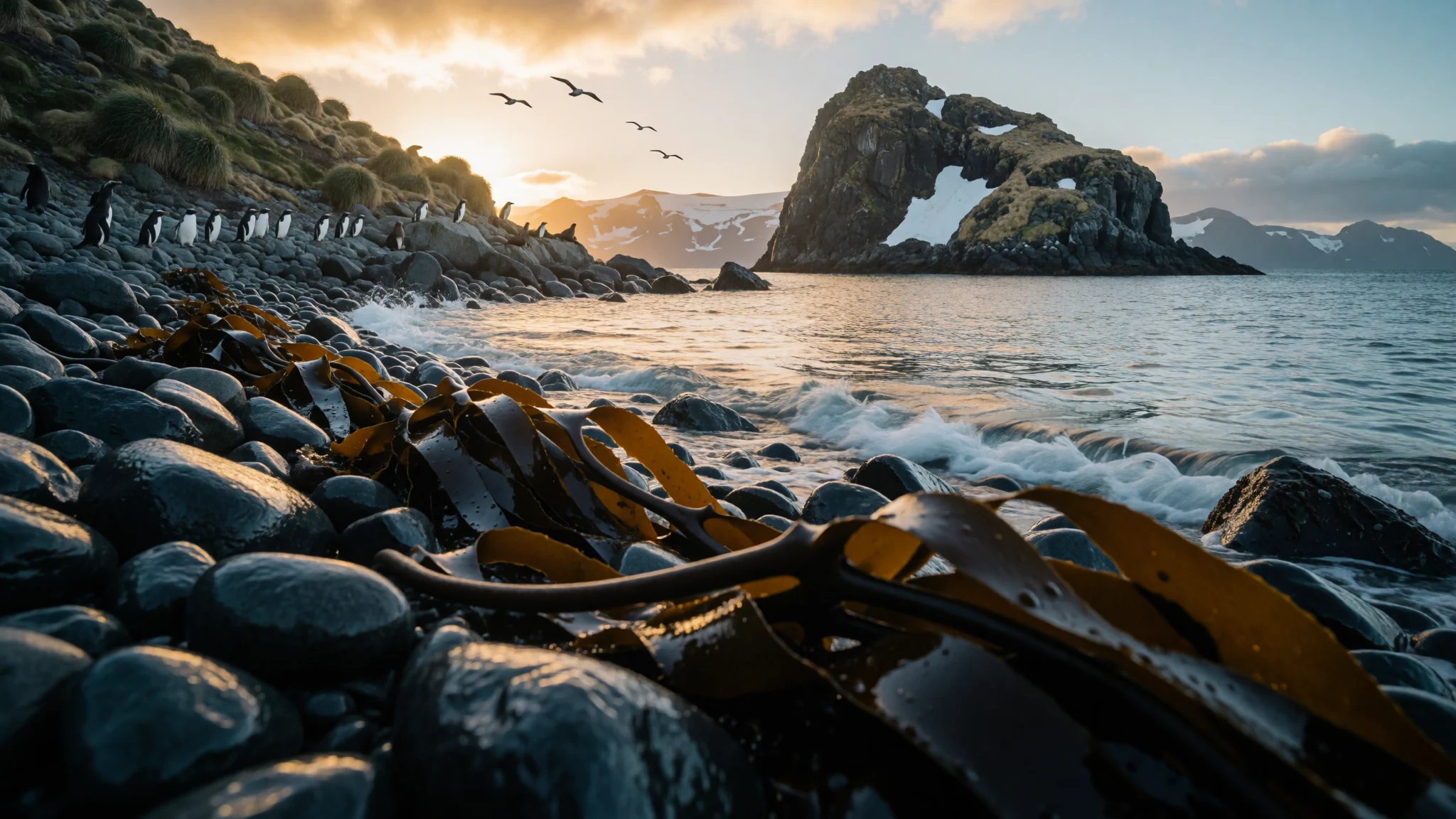
Cooper Island is a protected islet off South Georgia where visitors watch penguins, seals and seabirds from the water, never from the shore.
The place
Cooper Island is a small, rocky island off the southeast end of South Georgia, in the cold South Atlantic and far from any continent. Nobody lives on it. It is classified as a Specially Protected Area, so landing is controlled and ordinary visitors do not step ashore. The experience is of seeing it from a ship or a small inflatable boat, with the swell lifting and dropping against dark rock and tussock grass. Just across the water is Cooper Bay on the South Georgia mainland, which gives the island its setting. The coast here is steep and exposed. Kelp sways in the shallows, fur seals haul out on the stones, and penguins move between the surf and their colonies on the slopes. Nearby, Drygalski Fjord cuts a long, narrow channel between high walls of rock and ice, and expedition ships often combine the two in a single day. The weather decides everything. Wind can arrive without warning, cloud can sit on the peaks for days, and a planned landing can be cancelled because of swell alone. Even in the milder months it is cold, wet and bright by turns. There are no shops, roads, cafés or accommodation on the island, and no town within sight. The nearest settlement of any kind is on the far side of South Georgia, where a small team of government and heritage staff work near the old whaling station sites. Cooper Island is therefore less a destination than a waypoint: a wild corner that rewards patience, a long camera lens and a willingness to let the sea set the programme.
Its story
Cooper Island shares the history of South Georgia, which was claimed for Britain after Captain Cook's voyage in the age of sail. Sealers followed, drawn by the fur seals and elephant seals on the beaches, and in places they hunted the animals close to extinction. Industrial whaling came later, with shore stations built in sheltered bays on the north coast. The island became known both for Antarctic exploration and for exploitation. The best-known chapter is Ernest Shackleton's crossing of the island after his ship was lost, and he is buried at Grytviken. Cooper Island sits at the quieter end of that story, on the southeast coast, and no whaling station stood there. Over the decades the territory's government moved from harvesting to protection. Commercial hunting ended, and sensitive sites were designated as protected areas. Cooper Island's status as a Specially Protected Area belongs to that shift. Conservation has also reached the main island. Rats arrived on ships and devastated ground-nesting birds, and a long, large eradication programme has since let small songbirds such as pipits return. Today the question is how to let a few people see places like this without harming them. The answer is permits, biosecurity checks, trained guides and tightly limited landings. Anyone reading Cooper Island's name on a ship's itinerary is looking at the result of a century of changing attitudes to the Southern Ocean's wildlife.
What to see
- Cooper Island from the water — Off the southeast end of South Georgia
The island itself is the main sight, and it is seen from a ship's deck or a small inflatable boat. Look for steep, dark rock, tussock grass and snow patches, with seabirds wheeling overhead. Landing is not permitted for ordinary visitors, so a steady lens and a calm sea matter more than a long walk.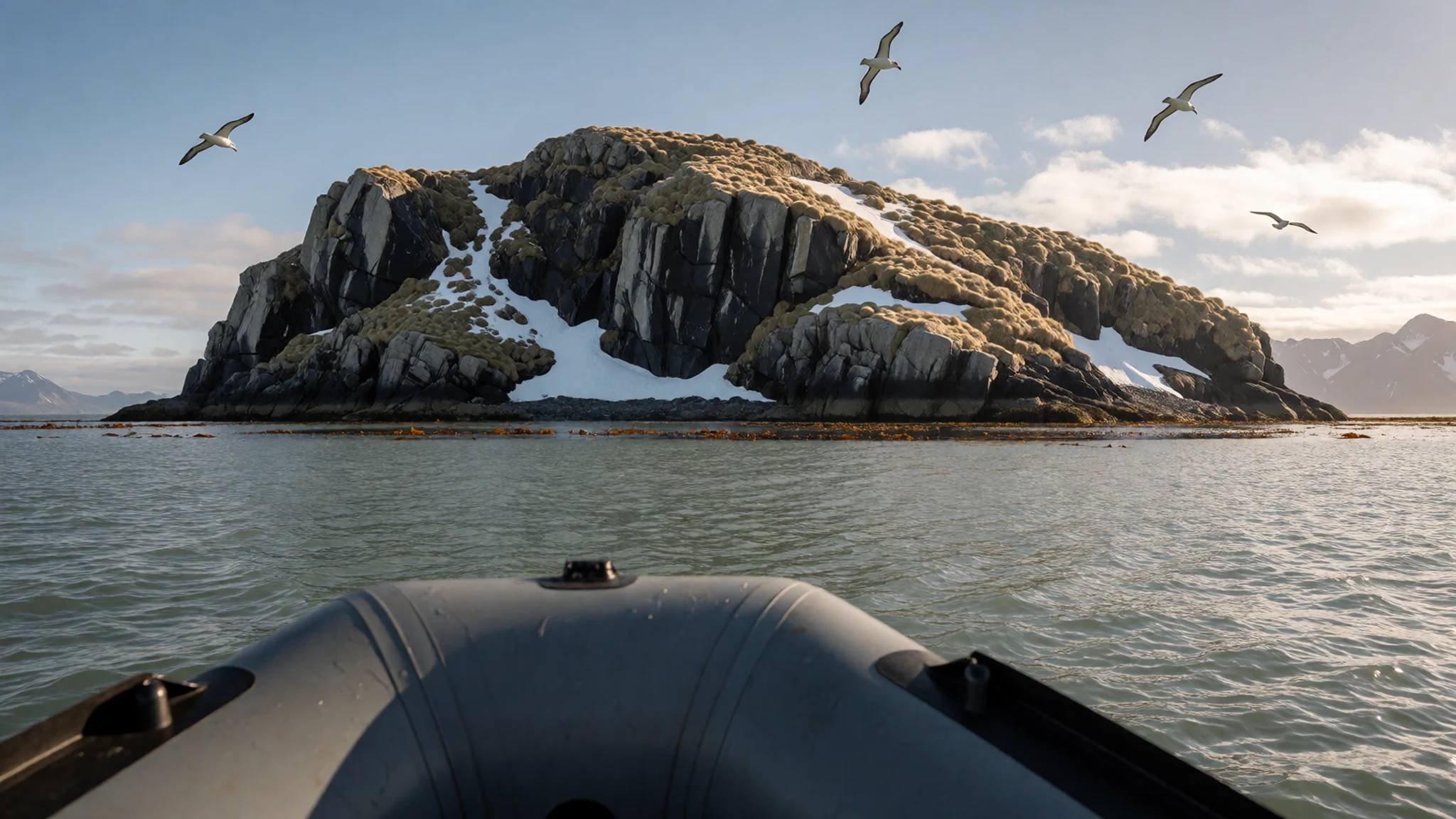
- Cooper Bay — Southeast coast of South Georgia
Cooper Bay is the mainland cove beside the island and the usual place where expedition ships stop. Penguins, including macaroni penguins, are commonly reported on the slopes, and fur seals crowd the rocks. Boat trips along the shore give close views, with distances set by the guides.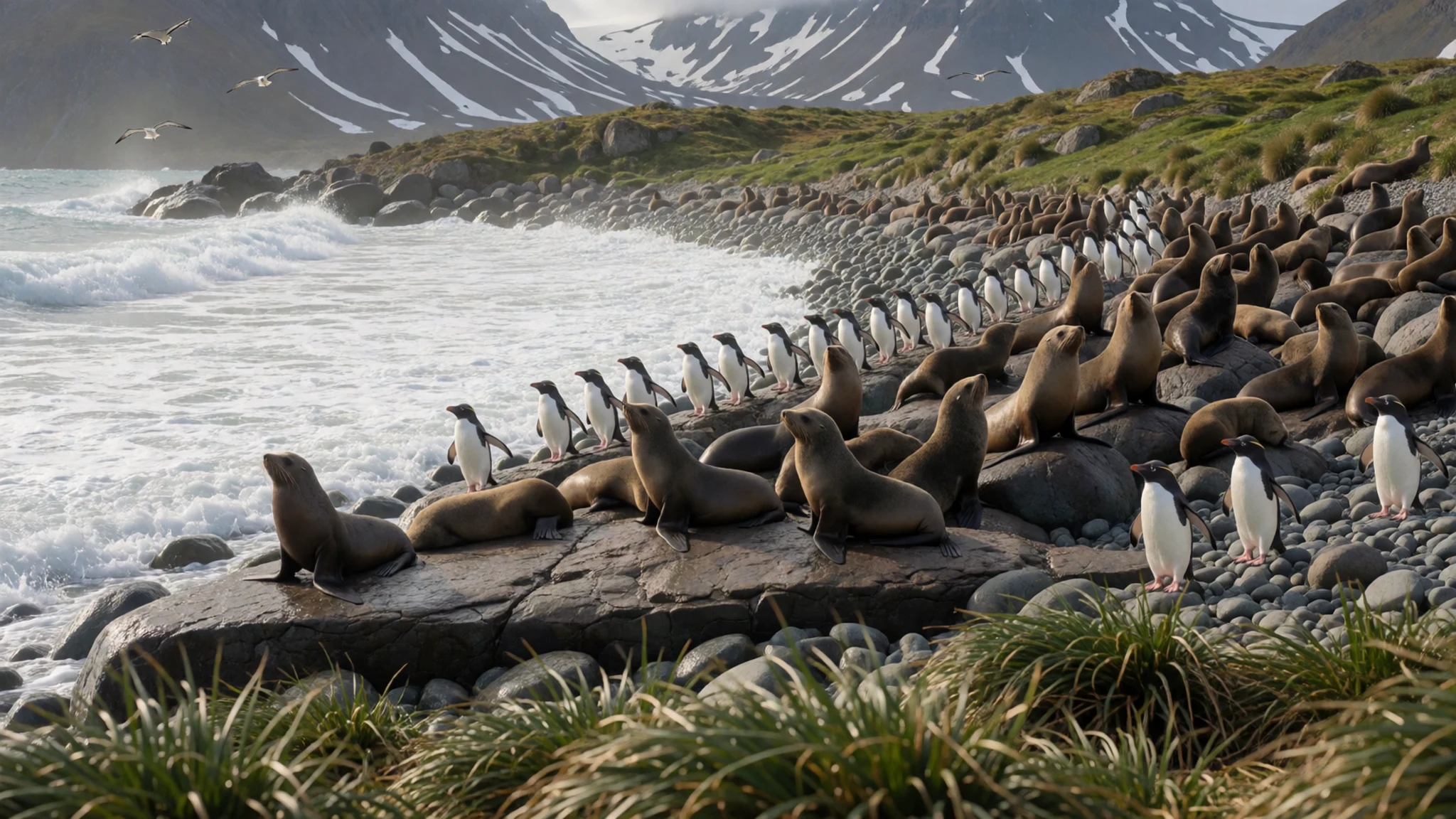
- Bull kelp at Cooper Bay — Shoreline of Cooper Bay
Durvillaea antarctica, a thick, leathery bull kelp, grows along the shoreline here and shifts with every wave. From a boat it looks like dark ribbons lifting and sinking. It shelters small marine life and is a reminder that much of the activity at this coast is below the waterline.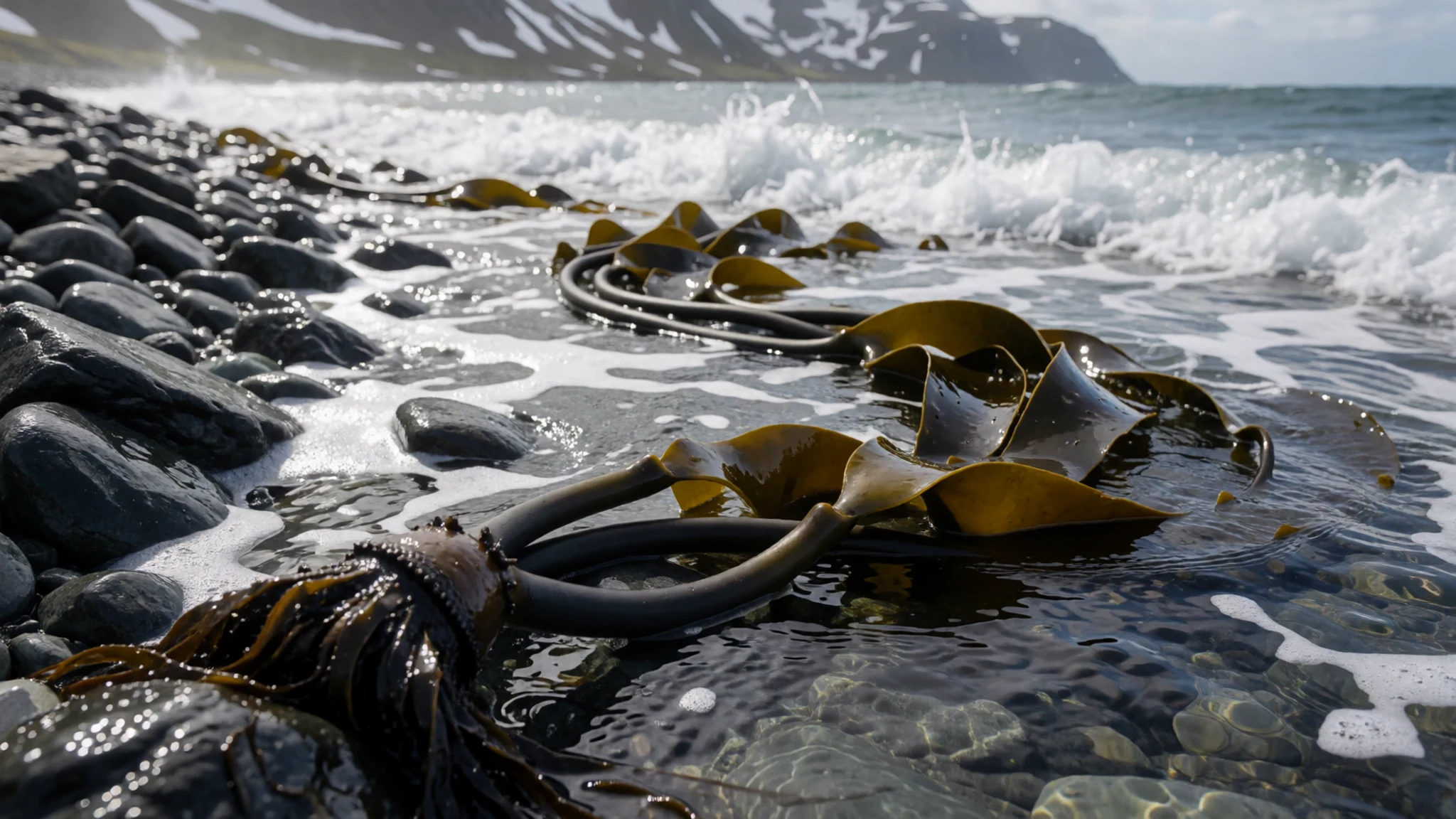
- Drygalski Fjord — Southeast tip of South Georgia
Drygalski Fjord is a narrow inlet nearby, with sheer rock walls and glacier ice at its head. Ships sail slowly in, and the wind often drops inside the walls. It is a good place to study the map and see how the coast is cut into deep arms.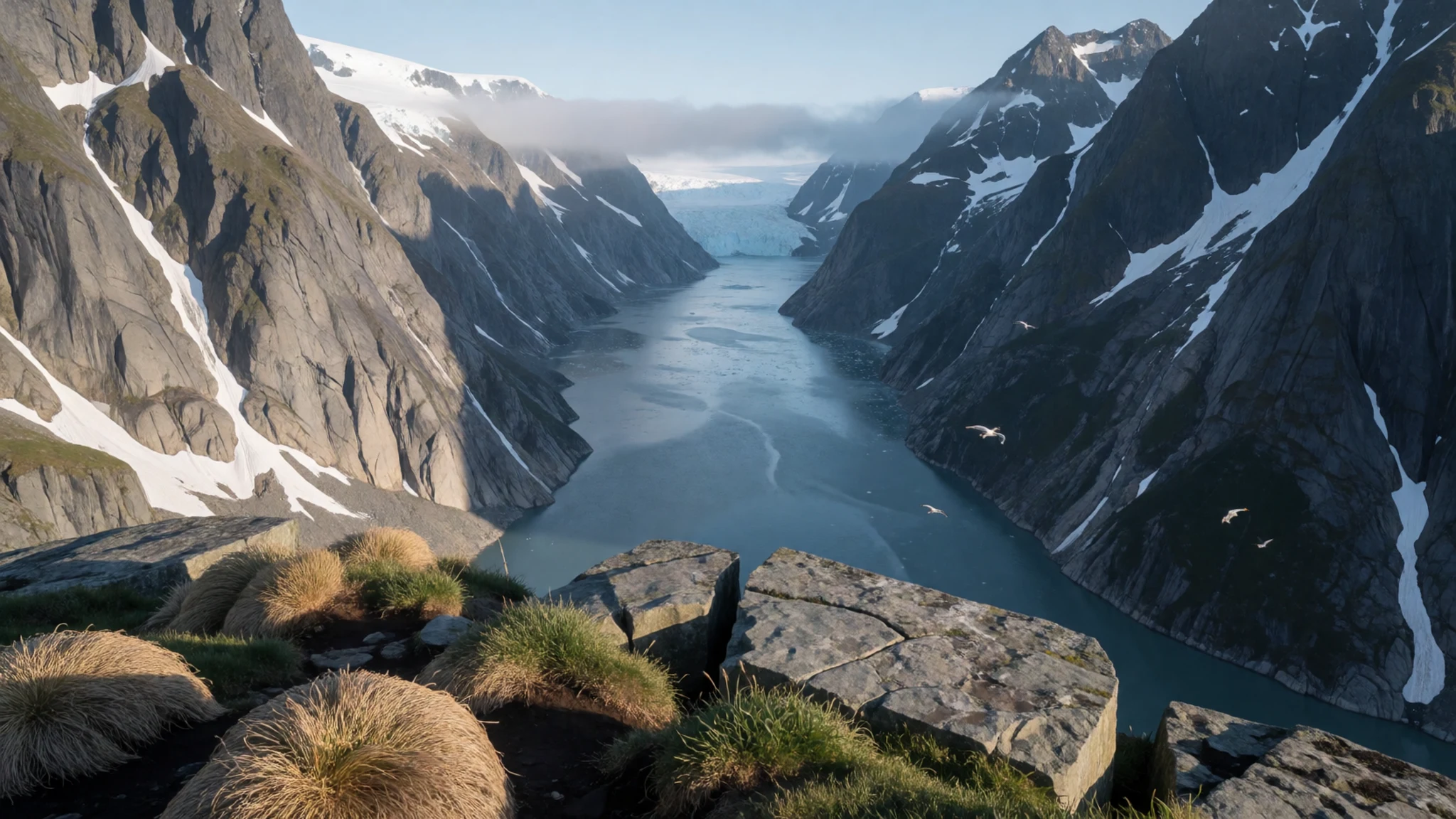
- Grytviken — North coast of South Georgia
Grytviken is on the other side of South Georgia and is not part of a Cooper Island stop, but many voyages include it. The old whaling station, a small museum and Shackleton's grave give the human history that the southeast coast lacks. Check the South Georgia government's official visitor pages for current rules.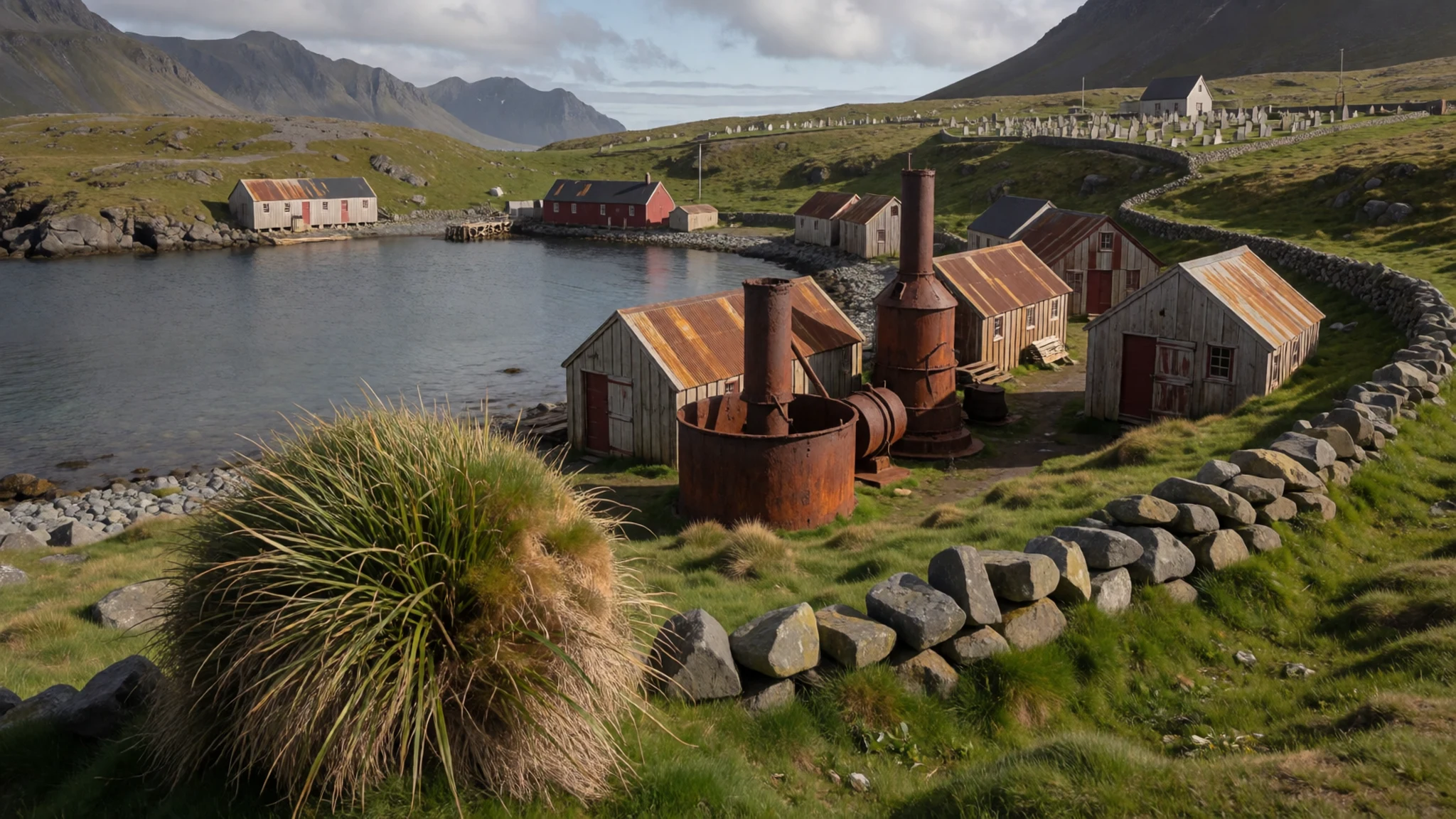
Culture
Cooper Island has no resident community and no local culture of its own, so the cultural interest lies in South Georgia's wider story. The island's modern identity is shaped by exploration and by the long argument over how to treat wildlife. Sealing and whaling left rusting machinery and bones on the north coast, while Shackleton's journey gave the place a place in popular memory. Visitors often arrive having read his story, and the island's quiet is part of why that reading feels vivid. Today's culture is one of care and rules. Those who work on South Georgia are mainly scientists, government officers, heritage staff and a few boat crews, and they take biosecurity seriously. Boots and clothing are checked before landing so that seeds, insects and rodents do not reach the island. Visitor numbers and landing sites are managed through permits issued by the territory's government, and expedition leaders brief passengers on distances and conduct. The territory is a British Overseas Territory, and English is the working language on ships and at the station. Wildlife is the community here: seals and penguins use the beaches, and humans are guests. Photographs of animals are welcome, but the animals set the pace and the people adapt. Follow your expedition guides' instructions on distance from penguins and seals, never step ashore on Cooper Island itself, and clean your boots and outer layers thoroughly before every landing.
What to wear
Cooper Island has no traditional dress or local textiles, because nobody has ever lived there permanently. The nearest thing to a heritage wardrobe belongs to the sealing and whaling era: heavy wool, oilskins and tough leather boots, built for wet decks and cold work. Shackleton-era photographs show layers of knitted wool and canvas windproofs, and some of that look survives in expedition-themed gear. People who actually work on South Georgia today wear modern technical clothing in bright colours, such as insulated jackets, waterproof trousers, fleeces and rubber boots, because the weather can change several times a day. A visitor should dress for cold, wind and spray rather than for style. Start with thermal base layers, add a warm mid-layer and a fully waterproof shell, and finish with a hat, gloves and a neck warmer. Waterproof overtrousers matter on inflatable boats, where waves splash over the sides. Boots are normally supplied or specified by the ship, and they must be clean and waterproof, with good grip for rocks and wet grass. Sunglasses and sun cream are needed on bright days, since glare off the water and snow is strong. There are no religious sites or dress codes on the island itself, so modesty norms are not an issue. Pack for practicality, keep spare dry layers in a waterproof bag, and leave anything fragile at home.
What to eat
- Ship's galley dinners — Dining room of an expedition ship
Meals on an expedition ship are the real food of a Cooper Island visit. Expect hot soups, fresh bread, pasta, fish and plenty of tea, planned around landings and cold weather. Dietary needs should be flagged to the operator well before departure.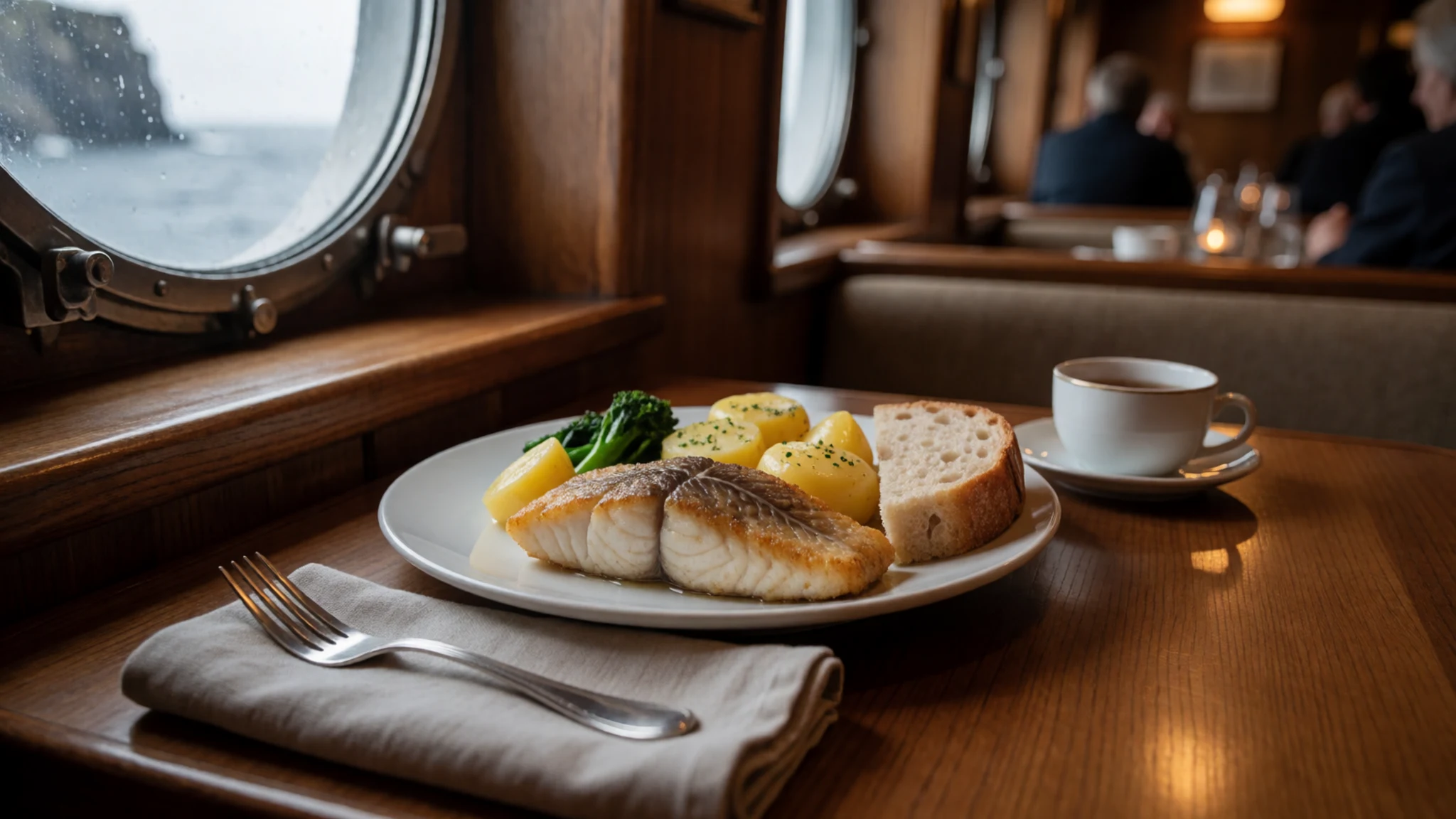
- Hot soup and bread — Gangway or lounge of the expedition ship
After a cold boat ride, a hot bowl of soup with bread is what most people remember. Ships usually serve it at the gangway or in the lounge, and it is the practical way the crew warms passengers up between landings.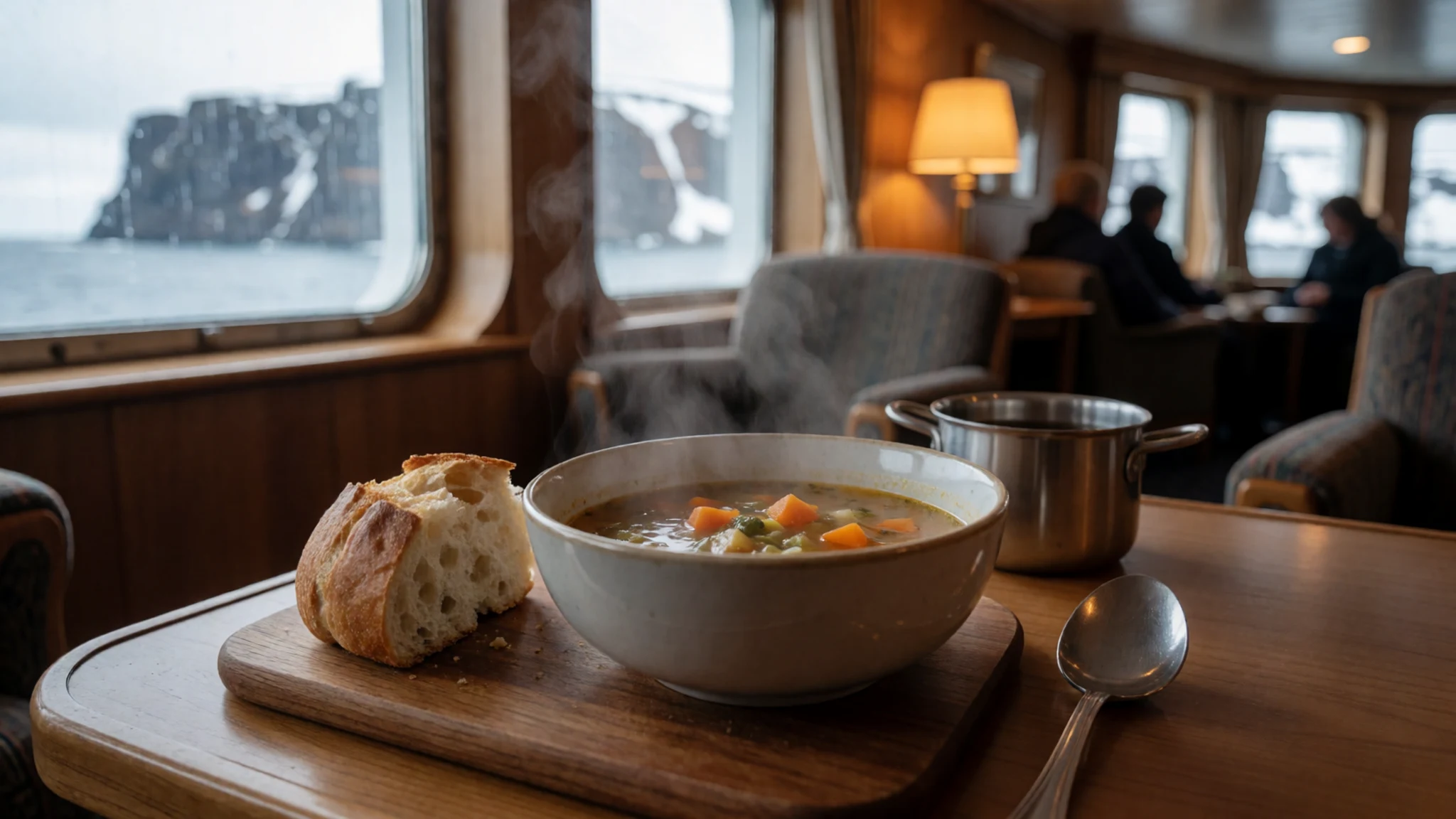
- Falkland mutton roast — Pubs and guesthouses in Stanley
Many South Georgia voyages start or stop in the Falkland Islands, where mutton is a local staple. Slow-cooked and served with root vegetables, it is typical of Stanley pubs and farm settlements, and suits a cold climate. - Fish and chips — Pubs and takeaways in Stanley
In Stanley, fish and chips is a familiar British-style meal using local catches. It is easy to find in a pub or a takeaway, and many travellers eat it before sailing south, while shops are still within reach. - Smoko tea and cake — Cafés and farm settlements in the Falkland Islands
Smoko is the Falkland Islands tradition of a mid-morning tea break with home baking. It comes from farm life and is still part of the daily rhythm in settlements, and a good way to meet islanders.
Plan it
Best time. November to March, the southern summer, when the days are long, the seas are somewhat calmer and wildlife is most active. Weather is cold, windy and changeable in every month, and landings can be cancelled without notice.
How long. 1 (a day stop within a longer voyage to South Georgia)
Getting there. There is no public airport on South Georgia. Visitors reach the area by expedition ship, usually sailing from the Falkland Islands or from Ushuaia in southern Argentina, and the voyage takes several days. The last leg is by inflatable boat from the ship to Cooper Bay, and the island itself is viewed from the water. Check the South Georgia government's official visitor pages for permits and current rules.
Budget. high
Tips
- Book an expedition voyage well ahead, because places on South Georgia itineraries are limited and sell out
- Pack waterproof layers, waterproof overtrousers and a dry bag for cameras
- Expect biosecurity checks, so bring clean boots and clothing with empty pockets and Velcro
- Bring seasickness remedies if you are prone, since the South Atlantic can be rough
Etiquette
- Keep to the distances your guides set from penguins and seals
- Never land on Cooper Island unless you hold a specific permit
- Take nothing from the shore, including stones, bones and feathers
Nearby
Sources
- Wikidata (Cooper Island) (CC0)
- Wikipedia, Cooper Island (CC BY-SA 4.0)
- Wikivoyage, South Georgia (CC BY-SA 4.0)
- Cooper Island off the southeast end of South Georgia, Wikimedia Commons (CC BY 2.5)
- Map of Drygalski Fjord, South Georgia Island, Wikimedia Commons (Public domain)
- Durvillaea antarctica at Cooper Bay, Wikimedia Commons (CC0 1.0)
Wildlife
- Macaroni penguin (animal)
Look for the bird with a bright yellow crest swept across its brow: the macaroni penguin. It is flightless, and its wings have become flippers for life at sea. On Cooper Island, you are most likely to find penguins on the slopes, moving between the surf and their colonies. Ask a guide about the best season and hour. Stay back, speak softly, move slowly, and never offer food. Let them go about their day undisturbed.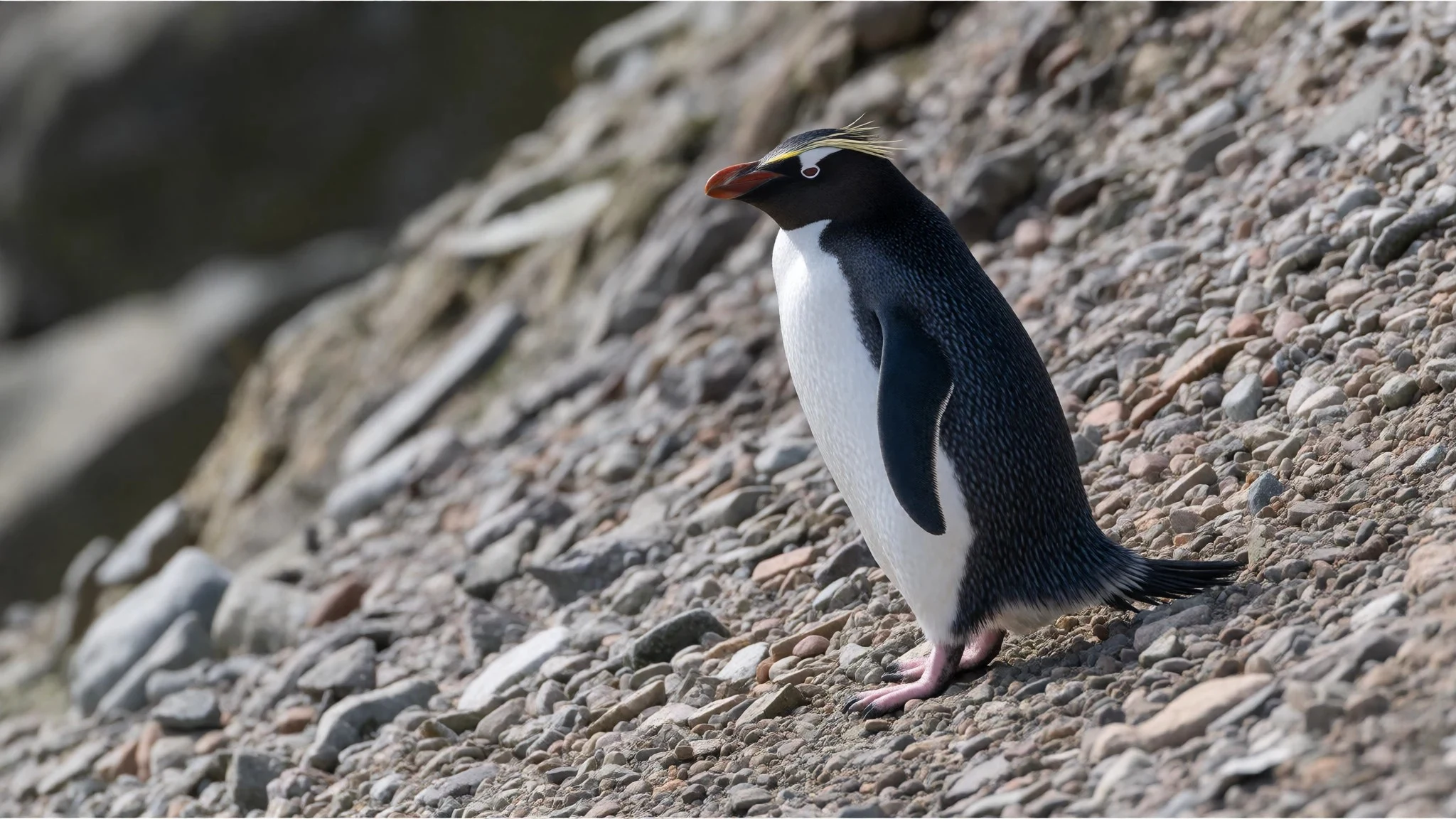
- Fur seal (animal)
The Antarctic fur seal is a seal in a thick fur coat, which is just what its name suggests. It belongs to a family of fur seals. On Cooper Island, fur seals haul themselves out onto the stones and crowd the rocks, while kelp sways in the shallows nearby. Ask your guide when they are best seen. Keep well back, stay quiet and calm, and never feed them. Let the seals decide how close things get.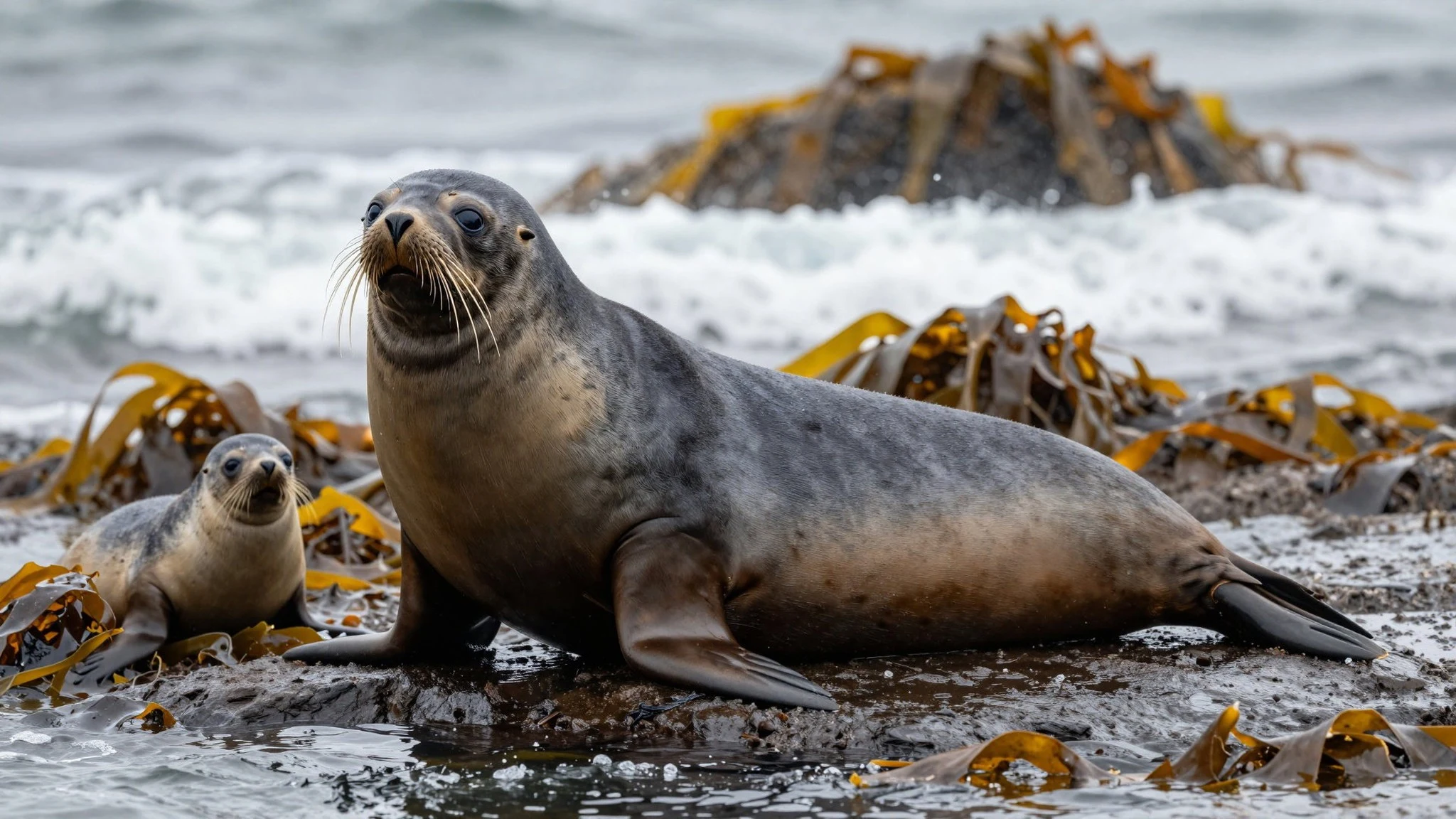
- Macaroni penguin (bird)
Look for the bird with a bright yellow crest swept across its brow: the macaroni penguin. It is flightless, and its wings have become flippers for life at sea. On Cooper Island, you are most likely to find penguins on the slopes, moving between the surf and their colonies. Ask a guide about the best season and hour. Stay back, speak softly, move slowly, and never offer food. Let them go about their day undisturbed.