Chamonix
Chamonix, France
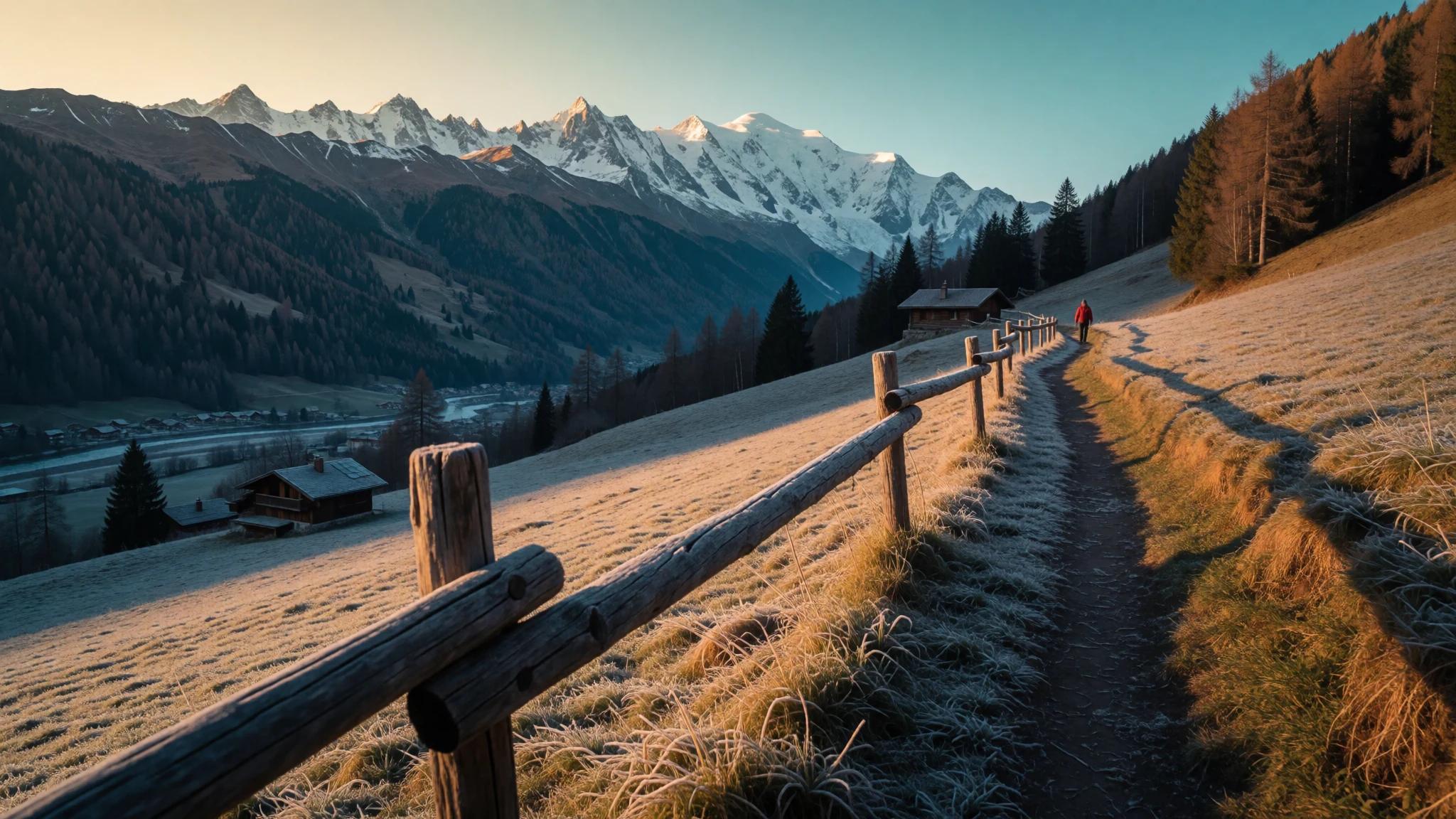
Chamonix puts a working Alpine town at the foot of Mont Blanc, with cable cars, glaciers and trails reachable without a mountaineer's kit.
The place
Chamonix, formally Chamonix-Mont-Blanc, is a commune in the Haute-Savoie department of south-eastern France, set in a valley at 1030 metres above sea level. Its population is 8,705, though the valley feels far busier whenever the ski season or the summer walking season is in full swing. Mont Blanc, the highest mountain in Western Europe, rises just to the south, while the jagged Aiguilles Rouges face it across the valley. The Swiss and Italian borders are both close, and the town has long worked as a crossroads between three countries.
The commune is not one settlement but a chain of villages and hamlets along the valley floor, from Le Tour at the northern end through Argentière and Les Praz to Les Bossons in the south. Chamonix proper sits in the middle, with a walkable centre of guesthouses, outfitters, bakeries and cafés, and the Arve river running alongside.
The climate is humid continental. Winters are cold and snowy, summers mild, and weather on the upper slopes can differ sharply from conditions in the streets. Cable cars carry ordinary walkers to viewpoints and glacier edges, while the serious mountaineering routes belong to guides and experienced climbers. Skiers take the Aiguille du Midi cable car to start the Vallée Blanche, a long glacier descent that is best done with a guide. The town works as a base for all of this, so the pavements are full of people in boots, harnesses and ski jackets, and the mountains are never out of sight.
Its story
Chamonix enters the written record in 1091, when the Count of the Genevois gave the valley to a Benedictine abbey near Turin. A priory followed, and for centuries the valley was a community of farmers and herders answering to church landlords. In 1786 the villagers bought their freedom from the canons who by then held the priory. The valley belonged to the wider territory of Savoy, ruled by a dynasty whose lands now sit across France, Italy and Switzerland, which helps explain why the town feels close in spirit to its Alpine neighbours.
Visitors for pleasure were rare. The people who came were mostly officials and bishops, and locals earned a living from hunting, farming and guiding travellers over the passes. That began to change in the 1740s, when English travellers including Richard Pococke and William Windham walked up to the Mer de Glace and published an account of what they saw. Curiosity turned into a trade. Guides, inns, scientists and early climbers followed, and the first ascent of Mont Blanc, with Jacques Balmat among the pair who reached the top, fixed the valley's reputation across Europe.
In 1924 Chamonix hosted the first Winter Olympics, which tied its name to winter sport for good. The glaciers that drew those first visitors are now shrinking, and that slow retreat has become part of the place's story.
What to see
- Saussure and Balmat monument — Town centre
This monument in central Chamonix honours the scientist Horace-Bénédict de Saussure and the guide Jacques Balmat, who was one of the two men to first reach the summit of Mont Blanc. The figures are set against the peak itself, which makes the square a favourite for photographs. Come early or late to avoid the queue for the view.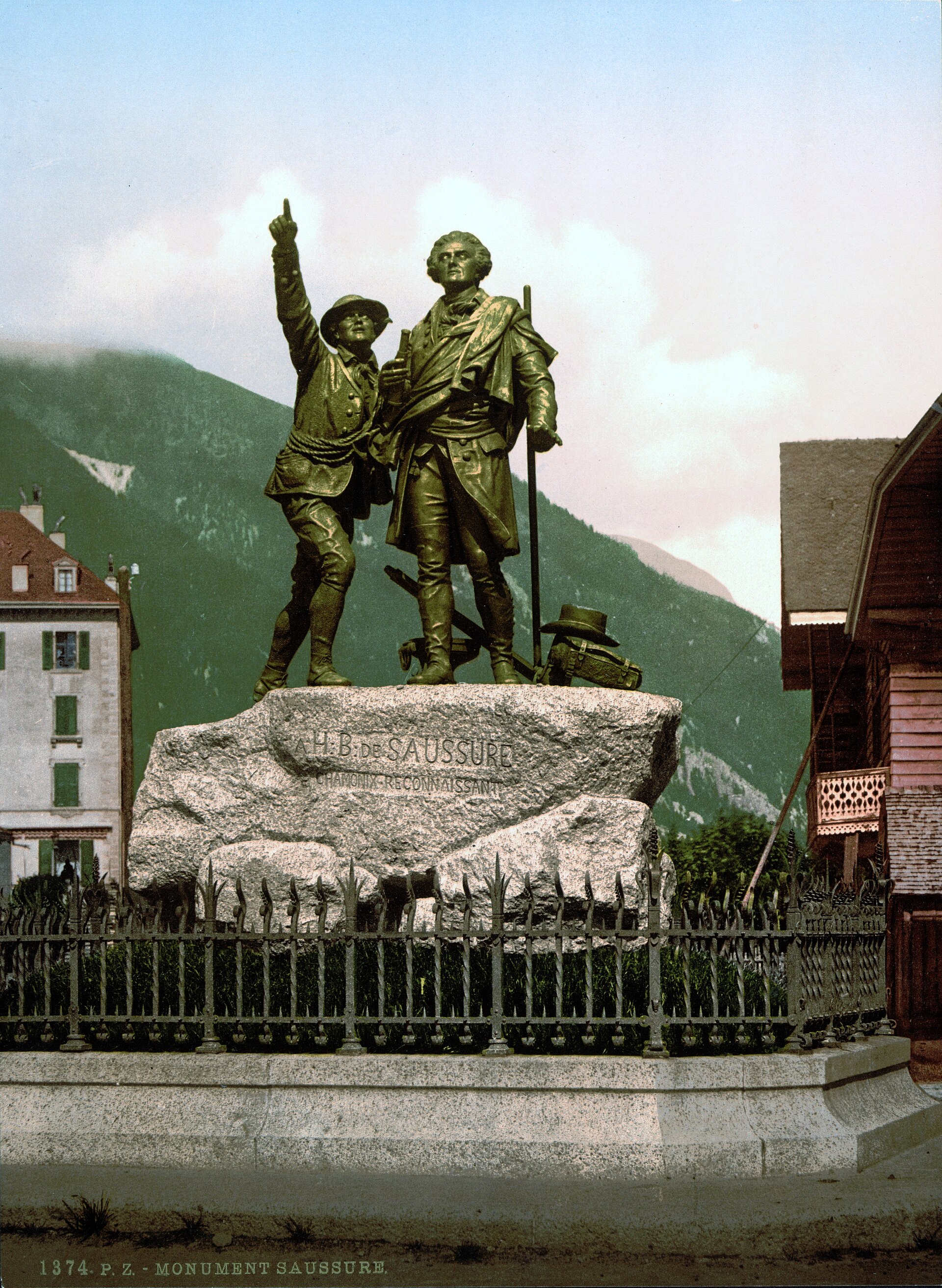
- Musée Alpin — Town centre
The Musée Alpin traces how people learned to climb and ski here, using paintings, photographs and maps that run from the early Mont Blanc ascents to modern sport climbing. It occupies a building from the early twentieth century that once housed visitors, and it is a sensible choice for a cloudy or rainy day. - Musée des Cristaux — Town centre
This small museum displays crystals, many of them found in the Mont Blanc area, notably smoky and rose quartz, alongside specimens from elsewhere in the Alps and further afield. Explanations of how crystals form inside the rock make it a useful companion to a day spent looking at the mountains from outside. - Mer de Glace — Above Chamonix, eastern side
The Mer de Glace is a long valley glacier above the town, and it is shrinking quickly. Visitors usually go up on the mountain train and see how far the ice has dropped below the old viewing points. Check the official site for current operation and access to the ice before planning the day around it.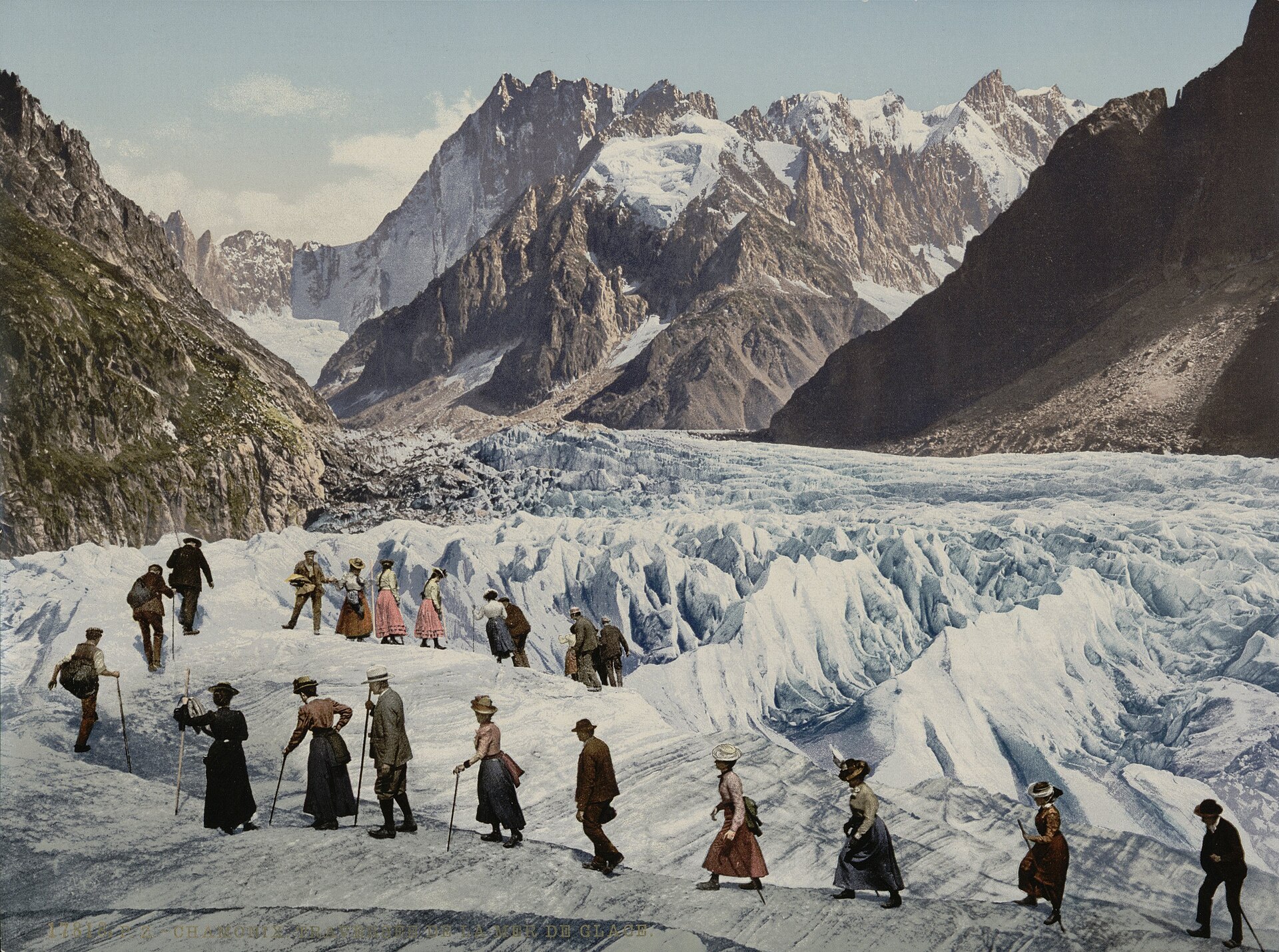
- Brévent cable car — North side of the valley
The Brévent cable car starts in the town centre and climbs the north side of the valley, directly opposite Mont Blanc, so the whole massif is spread out in front. The first section stops at Planpraz, where walkers can step off for trails or continue higher. Clear mornings tend to give the best visibility. - La Flégère — Les Praz, north of the centre
A cable car from the village of Les Praz leads up to La Flégère, a high viewing and walking area on the Aiguilles Rouges side of the valley. From here the valley, the Arve and the Mont Blanc range lie in one frame, and several trails start close to the top station.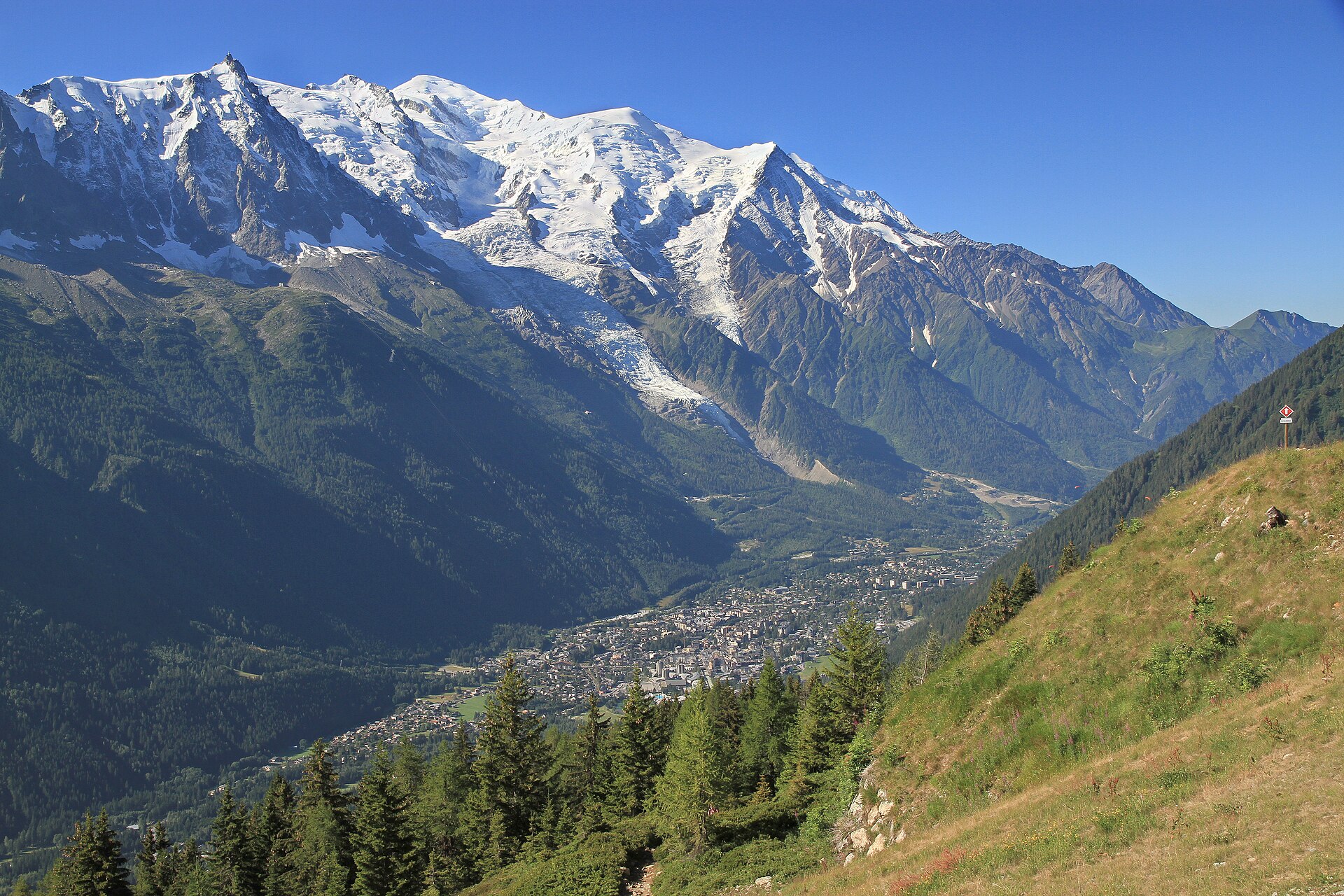
Culture
Chamonix is a mountain town first and a resort second, and its culture is built around guides, climbers, farmers and rescuers who share the same peaks. The local guides' tradition goes back to the days when travellers needed someone to lead them safely over the passes, and respect for that expertise is still strong. Mountaineering history is on show everywhere, from monuments in the squares to the museum that tells the story of alpinism.
The population is mixed. Local families live alongside seasonal workers, climbers who came for a summer and stayed, and a sizeable community from the UK and elsewhere, so English is widely understood in shops and cafés. Even so, French manners apply. Conversations begin with a greeting, meals are taken seriously, and a quick transaction does not replace a short exchange of courtesies.
The seasons set the rhythm. Winter brings skiers and a lively evening scene, summer brings walkers, trail runners and climbers, and the quieter weeks between can feel like a different town. Local people are used to visitors but are also candid about the risks of the mountains, and weather warnings and guide advice are taken seriously by everyone, including experienced residents. Cheese, cured meats and hearty dishes are part of village life, as are village festivals and agricultural fairs.
Say bonjour when you enter a shop or café, and on trails greet passers-by and keep to the marked paths so that you do not trample the pastures where cattle graze.
What to wear
Chamonix and the wider Savoie region have a traditional costume made mostly from wool and linen: for women, a bodice and full skirt with an embroidered apron and a lace cap or headscarf, and for men, a jacket of felted wool with a hat. It is worn today mainly at local festivals, folk gatherings and village celebrations rather than in daily life.
Everyday dress in Chamonix is practical outdoor wear. People walk the streets in down jackets, fleeces, walking boots and trail shoes, and ski clothes are a common sight in winter. Bright colours are popular on the slopes, while evenings are casual: jeans, a good jumper and clean boots are fine almost everywhere, and smarter dress is rarely needed.
Visitors should plan for changeable weather and altitude. Layers work best: a base layer, a warm fleece or light down jacket, and a waterproof shell. Sturdy boots with a good grip are essential on mountain paths, and trainers will not do on glacier or snow routes. At cable car summits the air is cold and the sun strong even in July, so pack a hat, gloves, sunglasses and sun cream. Chamonix has no strict dress code for churches or museums, but covering bare shoulders in a village church is courteous.
What to eat
- Tartiflette — Traditional restaurants in the town centre and mountain-side cafés
Tartiflette bakes potatoes with Reblochon cheese, onions and bacon pieces until the top is browned and the middle is soft. It is a standard dish of Alpine cooking, filling enough for a cold day on the slopes. Look for it in mountain restaurants in the town centre and in cafés beside the lifts. - Raclette — Savoyard restaurants and cheese shops
Raclette means melting the face of a wheel of cheese and scraping it over potatoes, with pickles and cured meats on the side. It is a communal, slow meal, usually eaten in the evening after a day outdoors. Many Savoyard restaurants and some cheese shops serve it. - Fondue savoyarde — Alpine restaurants in the centre and in villages such as Argentière
Fondue savoyarde is a pot of melted local cheeses, usually blended, into which cubes of bread are dipped on long forks. It suits groups and cold evenings. Restaurants that specialise in Alpine cooking offer it, and many also serve a lighter version with vegetables and potatoes. - Diots with polenta or crozets — Village bistros and dining rooms in the valley
Diots are local pork sausages, often simmered in white wine and served with polenta or crozets, small square pasta made with buckwheat. The plate is simple and filling. It appears on set menus in bistros and in the more traditional dining rooms around the valley. - Tarte aux myrtilles — Bakeries, tea rooms and mountain huts
Tarte aux myrtilles is a tart of bilberries, a small wild mountain fruit that is tarter than the cultivated blueberry. Bakeries and tea rooms sell it by the slice, and some mountain huts serve it to walkers, often with cream. Late summer is the best time for fresh fruit.
Plan it
Best time. Late June to September for walking, cable cars and climbing, when summers are mild; December to March for skiing, when winters are cold and snowy. The months between can be quiet, and some lifts and huts may be closed, so check before travelling.
How long. 3–4
Getting there. Most visitors fly to Geneva, then take a coach or car along the A40 motorway to Chamonix. By rail, the usual route is via Geneva and Martigny, or via Annecy and St-Gervais-les-Bains, joining the mountain railway that runs into the centre of Chamonix.
Budget. high
Tips
- Check the official site (https://www.chamonix.fr/) for current lift operation, and book popular cable car trips early in peak season.
- Start high-altitude trips in the morning, when skies are clearer and queues are shorter.
- Carry layers and a waterproof jacket, even on a bright day, because weather changes fast and the summit stations are cold.
- Hire a qualified guide for glacier, off-piste or climbing routes, since all high mountain activity can be dangerous.
- Carry a bank card and a little cash for huts, small cafés and village shops.
Etiquette
- Greet people with bonjour in shops, cafés and on the trail.
- Keep to marked paths and close farm gates so that grazing animals stay in their pastures.
- Take rubbish home or use the bins provided, especially at mountain huts and viewpoints.
Nearby
Sources
- Wikidata Q83236 (CC0)
- Wikipedia: Chamonix (CC BY-SA 4.0)
- Wikivoyage: Chamonix (CC BY-SA 4.0)
- Tiia Monto, Chamonix, France (Arve river) (CC BY 3.0)
- Ximonic, Chamonix valley from la Flégère (CC BY-SA 1.0)
- Detroit Publishing Company, The Saussure monument, Chamonix (Public domain)
- Zentralbibliothek Zürich, Vallée de Chamonix, Traversée de la Mer de Glace (Public domain)
- Florian Pépellin, Gare de Chamonix-Mont-Blanc (CC BY-SA 2.5)
- Chamonix panorama Aiguille du Midi (Public domain)
- AntonyB, 1921.01.16 Délibération du conseil municipal de Chamonix (CC BY-SA 4.0)
- AntonyB, 1921.11.14 Arrêté signé Millerand (Chamonix-Mont-Blanc) (CC BY-SA 4.0)


