Cebu
Cebu, Philippines
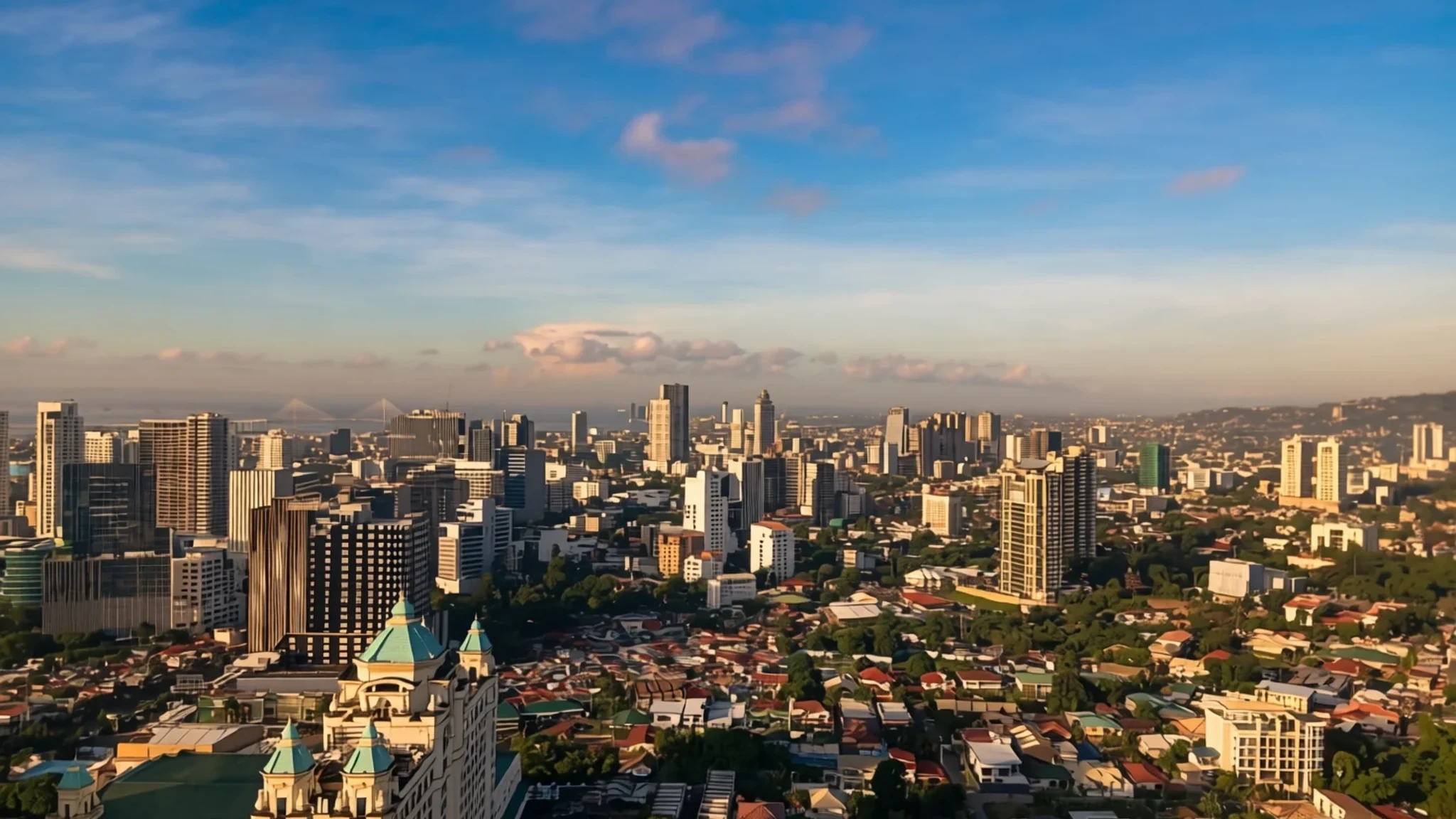
Cebu pairs a working port city with reef walls, waterfalls and island hops a short ride from the harbour.
The place
Cebu is a long island in the central Philippines, pinched between the Visayan Sea and Tañon Strait, with its main city on the eastern shore facing Mactan. The urban area works as a pair: the old port, dense and commercial, and Mactan across a short channel, where the airport, the industrial strip and a line of beach resorts share the same coast. South of the city the road follows a string of towns — Talisay, Carcar, Argao, Dalaguete, Boljoon — each with a plaza, a market and a stone church, the hills rising immediately inland. The west coast is quieter and more abrupt, looking across the strait to Negros; Moalboal sits there, known for a wall of sardines just off the beach. Farther south, Badian's river falls through limestone into green pools at Kawasan.
The island's north end frays into fishing harbours and smaller islands. Bantayan, off the northwest, is flat, sandy and slow, with saltwater lagoons such as Balidbid on the Santa Fe side. Malapascua, a small island to the north, draws divers out at dawn for thresher sharks. Between these edges the interior is farmland and ridge roads rather than empty forest. Osmeña Peak, above Dalaguete, is a walk up to a row of sharp limestone teeth, not a technical climb.
Cebu City itself is a working centre of the Visayas: container port, universities, malls, and a tight old quarter around the basilica and the cross. It is hot, often humid, and the traffic is serious. What holds the place together is ease of movement — a reef, a waterfall, a hilltop and a fiesta plaza can all sit inside the same journey — and the fact that people live in all those landscapes, not only in the postcard corners.
Its story
Cebu's story starts as a port. Long before European ships, the island sat on trade routes that moved Chinese porcelain, spices and forest goods through the Visayas, and a settlement under a local ruler stood near the present city. When a Spanish expedition arrived, its leader was received, a Christian image of the infant Jesus was presented, and a cross was raised. The welcome did not hold. On Mactan, a chief named Lapu-Lapu refused submission and the expedition's commander was killed in the fighting; the survivors left, and the image stayed.
A later Spanish fleet came to stay. The settlement that grew around the harbour became a base of Spanish presence in the central islands, and the image of the Santo Niño became the devotional heart of the city. Stone churches went up along the coasts, Boljoon's among them, while Chinese trading ships kept calling at the harbour. Faith here braided the new religion with older habits of pact and fiesta, which is why Sinulog is danced each year for the Santo Niño rather than staged as a civic parade alone.
The island's later centuries were trade and revolt. American rule, then the war, marked the city: the fighting and bombardment left the old quarter a fragment beside what was later rebuilt. Independence turned Cebu into a commercial counterpart of Manila, a port for sugar and copra and, later, for manufactured goods and migrant workers. In recent decades the economy has leaned on shipping, furniture, tourism and call-centre work, while the coasts have been redrawn by beach resorts and dive boats. The story Cebuanos still tell is the Mactan story — resistance, the child saint, and a harbour that has never stopped being a harbour.
What to see
- Basilica del Santo Niño and Magellan's Cross — Cebu City historic quarter
In Cebu City the basilica and the cross beside it form a small historic quarter just back from the port. Pilgrims visit the Santo Niño all day, and the plaza fills further on Fridays. The buildings are modest; the life is the candles, the vendors and the constant coming and going. A street away the quarter gives onto jeepneys, shops and port traffic.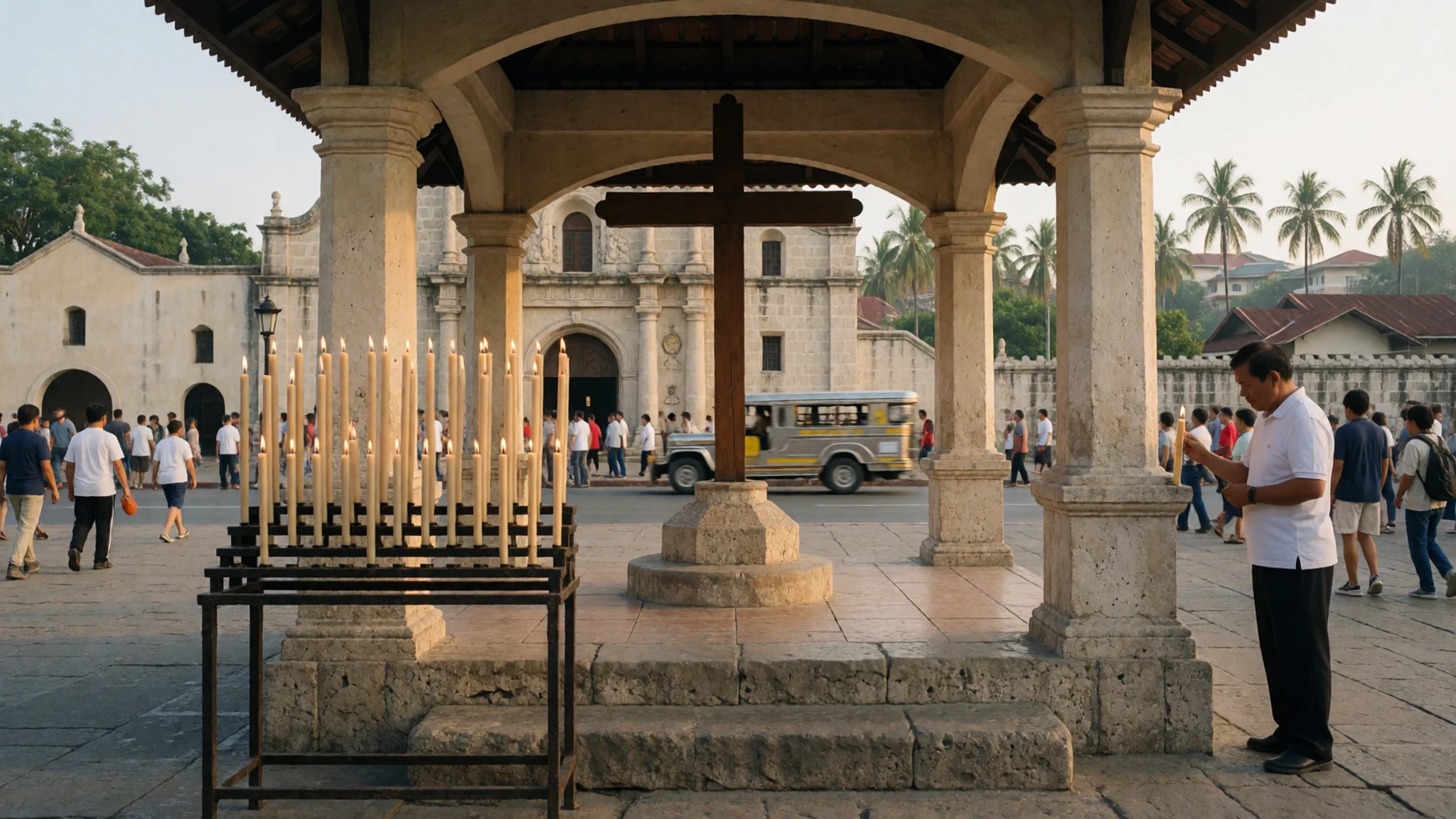
- Osmeña Peak — Dalaguete, southern Cebu
Osmeña Peak is a jagged summit in the hills above Dalaguete, in southern Cebu, reached by a short walk from a trailhead. The ridge breaks into sharp limestone teeth, and the view runs across Tañon Strait to Negros when the air is clear. The path is exposed, so the morning is the kinder time, and trainers with grip beat sandals on the rock.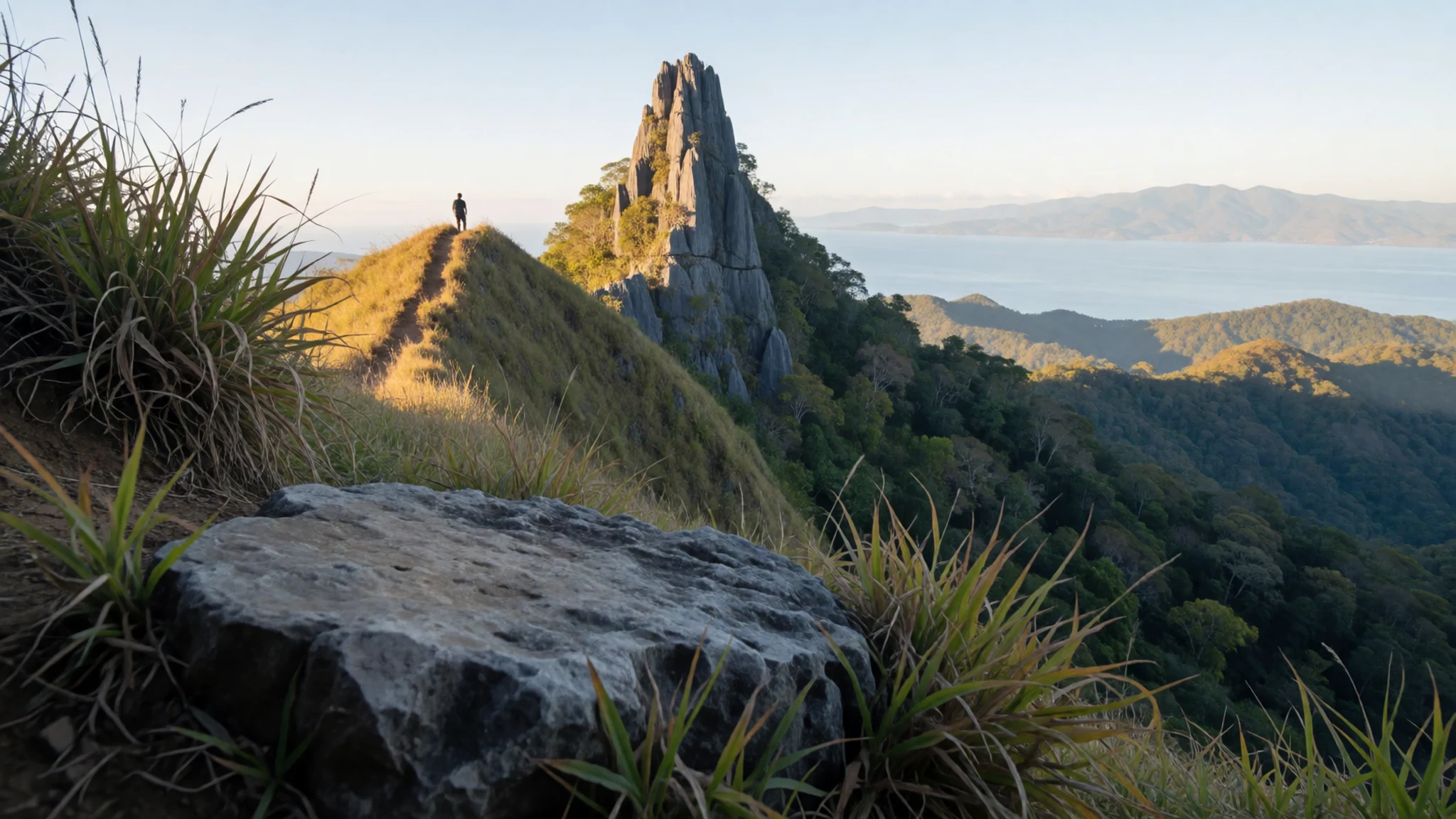
- Moalboal sardine run — Panagsama, Moalboal
Moalboal, on the west coast of Cebu, is a low-key dive town with a dense shoal of sardines just off the beach at Panagsama. Snorkellers reach the school by a short swim from shore, though the current can push, so a local boat is the easier way when the sea is up. The town itself is guesthouses, dive shops and grilled fish rather than a resort strip.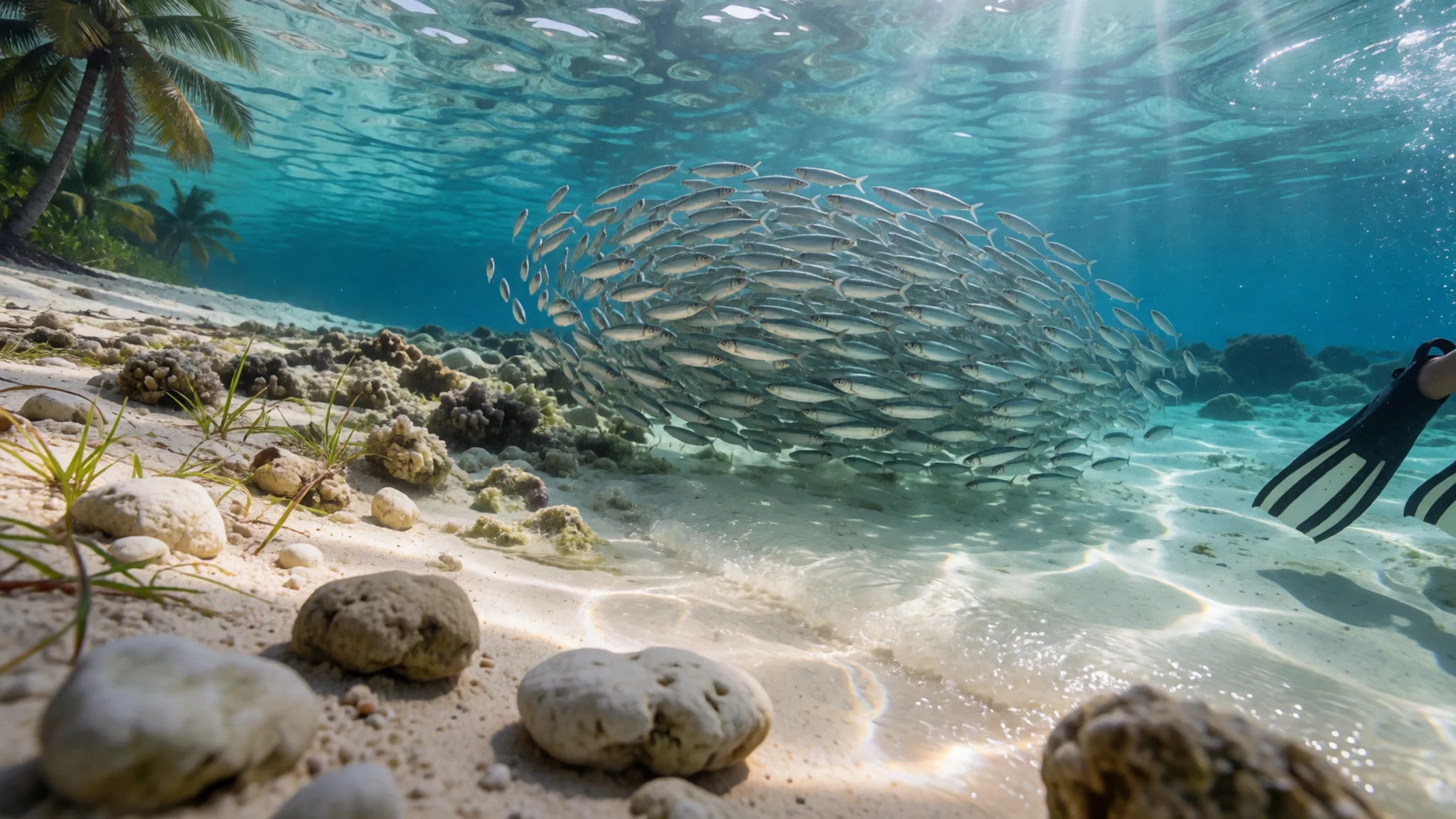
- Kawasan Falls — Badian
Kawasan Falls, in Badian on the southwest coast of Cebu, is a chain of blue-green pools in a narrow forested gorge. The lowest pool is where most people swim; guides lead canyoning further upstream. The walk in from the road is short, and by late morning the sheds and bamboo rafts make it a busy, managed swimming place.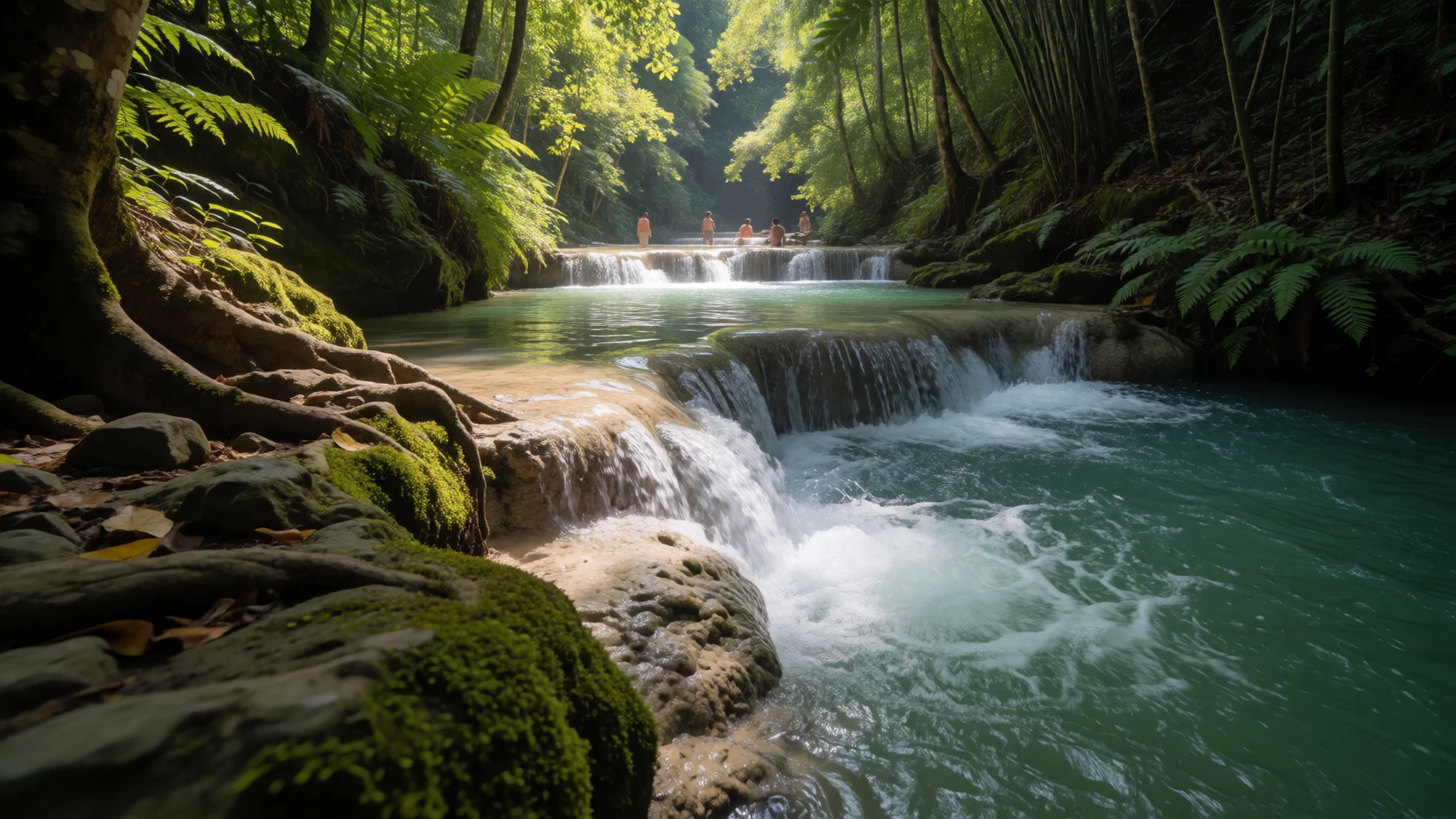
- Balidbid Lagoon — Santa Fe, Bantayan Island
Balidbid Lagoon sits on the eastern shore of Santa Fe, on Bantayan Island off northwestern Cebu. It is a shallow saltwater lagoon behind the beach, calm enough for an easy swim, with banca boats and simple cottages around it. Bantayan is flat, sandy and quiet, a place for beaches and seafood rather than sights, and the boat from the mainland is the real constraint on the day.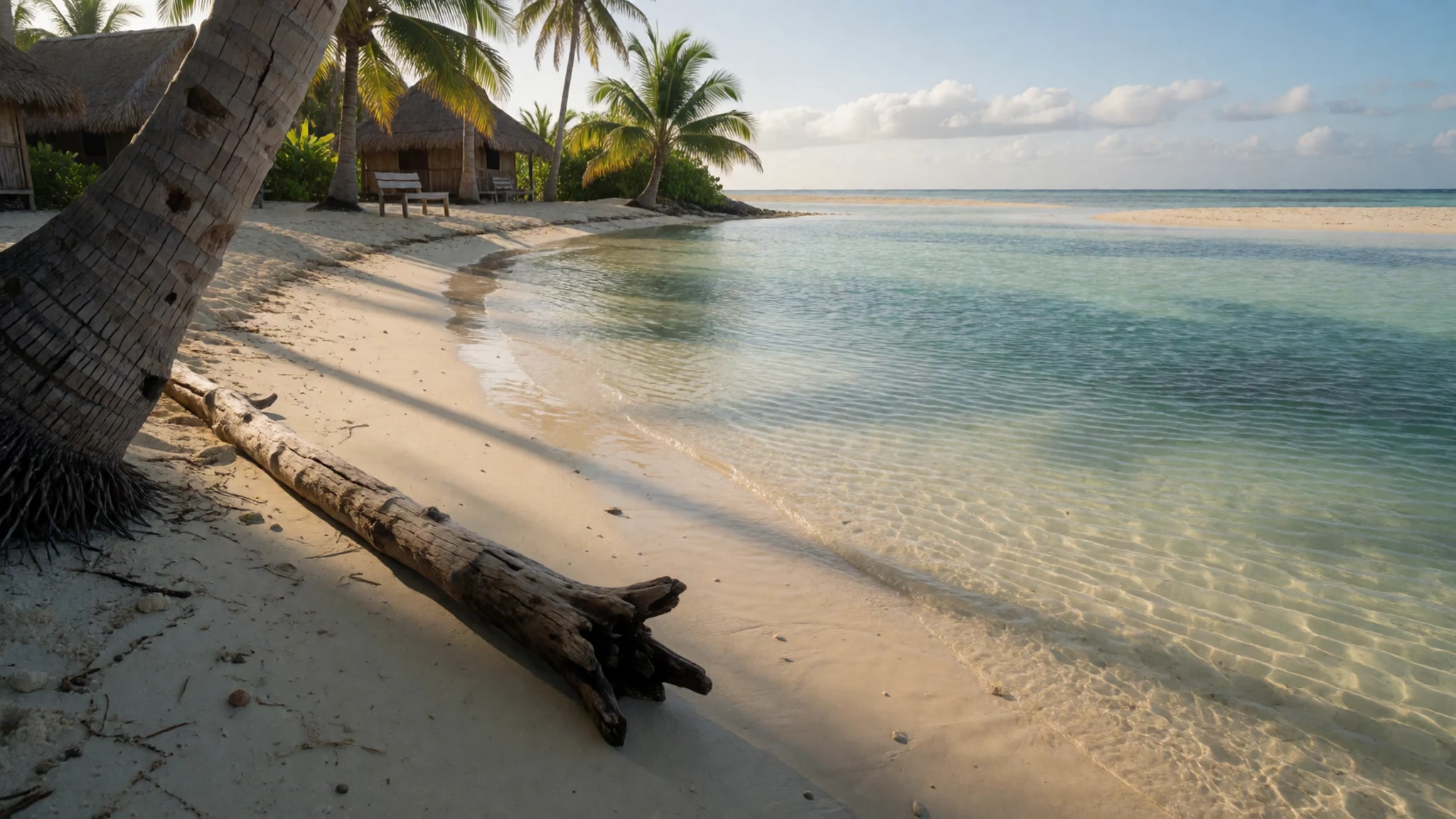
Culture
Cebu’s public life is Catholic, Visayan and loud in the busiest weeks of the year. Cebuano, also called Bisaya, is the language of the street; English runs through malls, universities and guesthouses, and Tagalog is understood, but a greeting in Cebuano changes the tone of a shop. The Santo Niño is not a museum piece. People dance the Sinulog — a forward-and-back step said to follow a river current — in January, and smaller fiestas repeat the pattern of novena, procession and shared food in coastal towns through the year. Family is the institution that organises the week: Sundays, beach cottages and lechon are what a reunion looks like. Older Chinese-Filipino merchant families remain part of the city’s trading life, which is why the downtown markets feel layered.
Humour is dry and teasing, and a newcomer is asked their home town within a minute; it is friendliness, not an interview. All Saints’ and All Souls’ days fill cemeteries with food and family. Cockpits still draw town crowds, which many visitors would rather skip than scold. Music at a barangay fiesta runs late, and joining the queue for food is the real welcome. At the basilica in Cebu, and in town churches such as Boljoon, cover shoulders and knees, keep your voice down during mass, and ask before you photograph people at prayer.
What to wear
Cebu shares the Filipino formal wardrobe and cuts it for Visayan heat. The barong Tagalog — a sheer, embroidered shirt in piña, from pineapple leaf, or jusi, a silk blend with abaca or piña — still comes out for weddings, graduations and official days. Women wear the terno, or a simpler modern baro, when the occasion calls for butterfly sleeves. Handwoven hablon, cotton and abaca from the island's weaving towns, appears in shawls, runners and the occasional formal panel. Fiestas are when these clothes leave the cabinet.
Ordinary Cebu dresses for work and weather. Offices favour collared shirts and dark trousers; students, markets and the port favour t-shirts, denim, basketball shorts and flip-flops. A cap or a small umbrella does the job of a coat.
Visitors can follow that lead. Breathable clothes, and sandals or shoes that survive a wet boat, are enough in the city. Churches expect covered shoulders and knees, so a light overshirt in the bag avoids a problem at the basilica door. A rash guard helps on limestone coasts and while snorkelling; the Osmeña ridge wants trainers with grip, not city sandals. In the wet months a thin rain jacket earns its place, and swimwear stays on the beach.
What to eat
- Lechon — Roadside stalls and public markets in Talisay and the towns just south of Cebu City
Cebu lechon is spit-roasted pig with very crisp skin, eaten with rice and a savoury liver sauce. It marks a celebration and also an ordinary weekend. Roadside stalls and public markets in the towns just south of Cebu City, especially Talisay, sell it by the kilo from late morning.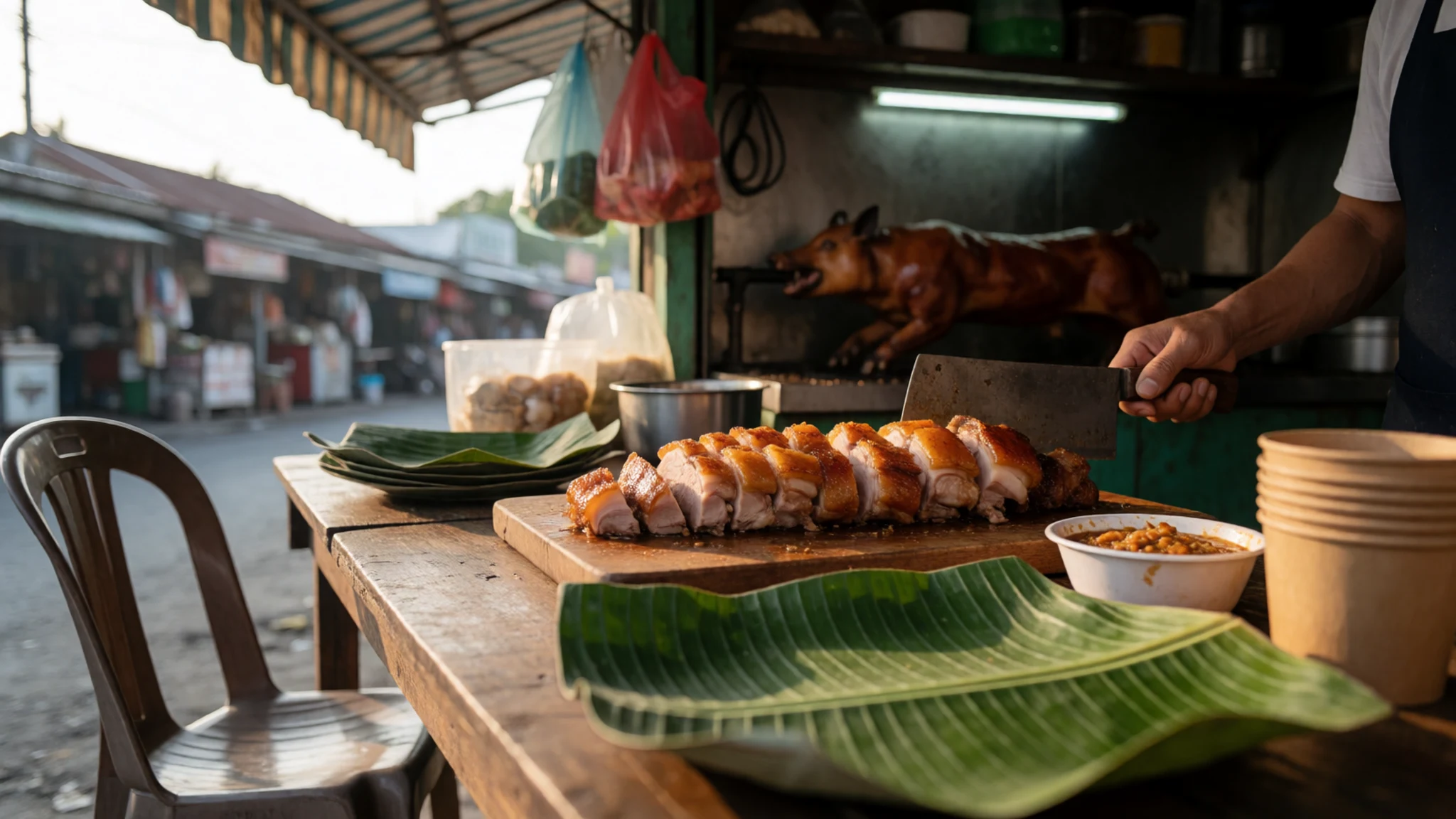
- Sutukil — Seafood eateries on the Mactan waterfront and in west-coast towns such as Moalboal
Sutukil names the usual treatments of seafood chosen from a cold display: sugba, grilled; tuwa, stewed; and kilaw, cured in vinegar and citrus. Order a mix and eat it with rice. Seafood eateries on the Mactan waterfront and in west-coast towns such as Moalboal work this way.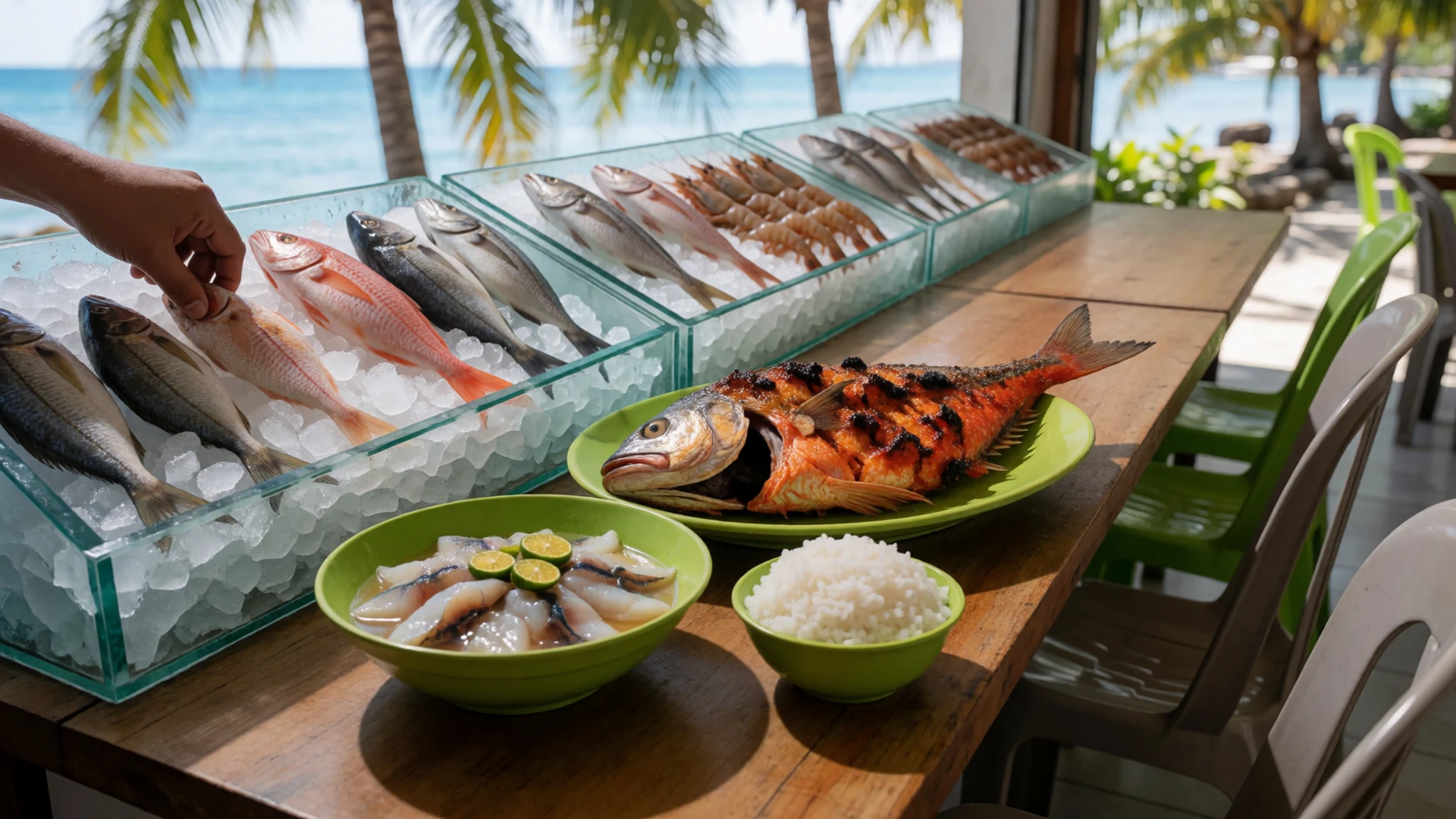
- Puso — Carinderias, barbecue stands and public markets, including Carbon Market in Cebu City
Puso is rice steamed inside a diamond of woven coconut palm, sold hanging in bunches. It is the standard starch of Cebu, peeled open and eaten with grilled meat, lechon or kinilaw. Any carinderia, barbecue stand or public market will have it, including Carbon Market in Cebu City. - Tuslob buwa — Simple eateries in the Pasil neighbourhood of Cebu City
Tuslob buwa is a Cebu City workers' dish from Pasil: pork offal and spices brought to a foam in a pan, with puso dipped into the bubbling sauce. It is rich, salty and shared. Plain eateries in that neighbourhood serve it morning and night, not as a formal meal. - Carcar chicharon — The public market in Carcar
Carcar chicharon is deep-fried pork rind, often still attached to a layer of fat and meat, seasoned hard and sold in bags. It is the town's edible souvenir and a beer snack. The public market in Carcar, south of Cebu City, is the place to buy it.
Plan it
Best time. Cebu is kinder to travellers from January to April, the drier stretch for boats, hill walks and the west-coast reefs; May turns hotter, and from June the rains make afternoon roads and island crossings less certain. Sinulog, in January, is festive and crowded.
How long. 4–5
Getting there. Mactan–Cebu International Airport is on Mactan, a bridge away from Cebu City. Buses run south along the coast and west to Moalboal; ferries leave the city for nearby islands. Bantayan and Malapascua need a northern bus and then a boat, so check the sea before you commit.
Budget. mid
Tips
- Book boats and Malapascua stays ahead of long weekends and the January Sinulog, when rooms and crossings fill.
- Start Osmeña Peak and Kawasan early; midday heat and afternoon rain both make a late start hard.
- Carry cash for boats, markets and small eateries; cards work in the city's malls.
- Leave slack around rush hour on the bridge between Mactan and Cebu City if you have a flight.
- At Moalboal, go out with a local boat when there is current rather than swimming to the sardines alone.
Etiquette
- Cover shoulders and knees in churches, and avoid flash during mass.
- Ask before photographing people, especially at prayer or in a market.
- Do not stand on coral or touch marine life while snorkelling.
- Take shoes off where a house or chapel leaves them at the door.
Nearby
Sources
- Wikidata (CC0)
- Wikipedia — Cebu (CC BY-SA 4.0)
- Wikivoyage — Cebu (CC BY-SA 4.0)
Wildlife
- Thresher shark (animal)
The pelagic thresher is a shark with a tail whose top half is as long as a whip. It is the smallest of the three thresher sharks, about 3 m long, and usually lives far from shore. In Cebu, divers head out at dawn to Malapascua, a small island in the north, to look for it. Book with a good dive guide, keep your distance, stay calm and quiet underwater, and never feed it.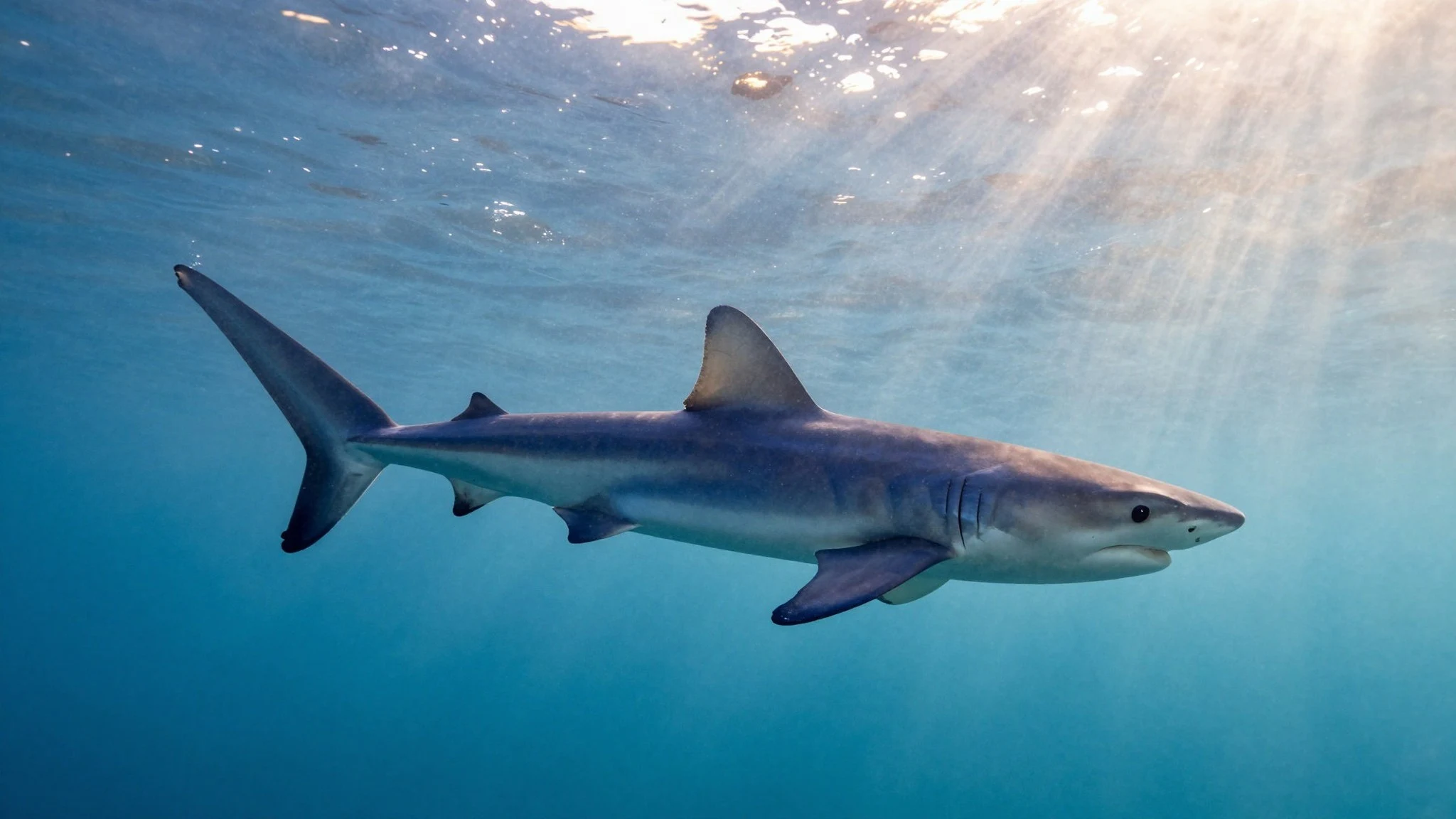
- Sardine (animal)
The Bali sardinella is a sardine, a small fish that swims so close to its friends that together they look like a moving wall. In Cebu, Moalboal is known for exactly that sight, just off the beach, so you need not go far to see it. Enter the water gently, keep a respectful distance, stay quiet and unhurried, go with a local guide if you can, and never feed the fish.